Antiquariat.de

79 611 résultats
183071112Gouache. Um 1830. 47,5 x 67 cm.
5966Two handsome albums with 21 finely-drawn technical illustrations employing black ink and wash water colors. Almost all of the illustrations are signed "Karl Hübler" and dated by him from 1890-93. Some are also signed by "Engessen" and "Sayer" who were perhaps the design engineers. Laid-in are ten further fine folding original pen-&-ink drawings with wash water coloring concerning different water and bridge engineering projects in Bavaria as well as a printed contract for engineering projects for the state from about 1900. unknown books
137010aafFrankfurt a. M., Charles Jügel, o.J. (1853), Quer-4° (18,5 25,3 cm). Mit 2 chromolithogr. Titeln von Creuzbauer und 45 gouachierten Stahlstichtafeln von Buhl, Cook, Dawson, Lang u. a. nach Dielmann. Mit d. orig. Schutzpapieren. Brauner Lederband d. Z. mit goldgepr. Deckeltitel und reicher Romantiker-Vergoldung (Gelenke alt restauriert, Kanten etwas berieben).
198365596Stuttgart, Edition Schurr (Dr. Ursula Schurr), 1982/1983. Gr.-Fol. (67 x 52 cm). 1 Bl. (Titel u. Inhaltsverzeichnis) u. 13 num., sign. u. tlw. dat. Orig.-Grafiken, lose in OLwd.-Kassette.
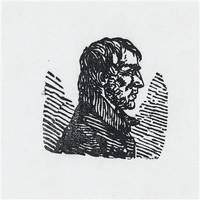
1313-16ca. 1805. Orig.-Holzschnitt auf Bütten. 67 x 25 5 cm 30 x 234 cm Blatt Neudruck von 1927 . Unter Passep. gerahmt. Literatur: Ursula Meyer Greifswalder Maler des späten 18. und 19. Jahrhunderts. Gemälde - Graphik. Museum der Stadt Greifswald 1963 Nr. 61 mit Abb. 7; - Werner Sumowksi Caspar David Friedrich-Studien Wiesbaden 1970 S. 136-138; - Helmut Börsch-Supan und Karl Wilhelm Jähnig Caspar David Friedrich. Gemälde Druckgraphik und bildmäßige Zeichnungen München 1973 Nr. 74 Abb. dort weitere Literatur; - Caspar David Friedrich und Umkreis Ausst. Kat. Galerie Hans Hamburg 2006 S. 34-37 Kat. 8-9; - Cornelia Reiter Klaus Albrecht Schröder Hg. Ausst. Kat. Welten der Romantik Ostfildern 2015 S. 112 Nr. 35. - Bei dem vorliegenden Holzschnitt handelt es sich um einen von bisher sieben bekannten Abzügen des um 1805 entstandenen Holzschnittes mit dem Selbstporträt von Caspar David Friedrich welches kurz nach der größeren Version seines Selbstbildnisses von 1803 entstanden sein dürfte Sumowski 1970 S. 136-138; Börsch-Supan und Jähnig 1973 Nr. 74. Laut Börsch-Supan ist das frühere Blatt nach einer Vorzeichnung Friedrichs von seinem Bruder Christian 1779-1843 in Holz geschnitten worden und steht möglicherweise in Verbindung mit der Produktion der drei Holzschnitte "Die Frau mit dem Spinnennetz zwischen den kahlen Bäumen Melancholie Die Spinne" "Die Frau mit dem Raben am Abgrund" und "Knabe aufeinem Grab schlafend". Im späten 18. und frühen 19. Jahrhundert fand der Holzschnitt hauptsächlich als Buchschmuck Verwendung. Börsch-Supan geht daher davon aus dass die drei erwähnten Holzschnitte als Illustrationen für ein nicht publiziertes Buch - vermutlich ein Band mit Gedichten von Caspar David Friedrich - geplant gewesen waren. Der Holzschnitt mit seinem Selbstbildnis könnte als Autorenportrait gedacht gewesen sein. Kat. Hamburg 2006 S. 34 Kat. 8 Der vorliegende Holzschnitt von 1805 stellt eine kleinere und vereinfachte Version des früheren Selbstporträts dar und könnte als alternativer Illustrationsentwurf für den Holzschnitt entstanden sein. Offenbar hat Friedrich seinem Bruder mehrere Vorarbeiten zu dem Porträt geliefert wie es eine Zeichnung in der Hamburger Kunsthalle Börsch-Supan und Jähnig 1973. Nr. 73 belegt die als Vorzeichnung zu dem Holzschnitt einen abweichenden Entwurf darstellt jedoch von Christian nicht verwendet wurde. Wahrscheinlich hat Christian Friedrich für das Selbstporträt seines Bruders in zwei Stilen experimentiert und sich dann für die Auflage der feinlinigen Fassung in größerem Format entschieden Kat. Hamburg 2006 S. 36. - Das Pommersche Landesmuseum in Greifswald besitzt fünf weitere Abzüge des vorliegenden Holzschnittes welche im Jahre 1927 nach der Übergabe des Holzstocks gemeinsam mit 8 Holzschnitten der Familie Friedrich als Neudrucke angefertigt wurden Inv. K2/647a-e. Die Blätter und der Druckstock waren danach lange in Vergessenheit geraten bis sie 1956 von Sigrid Hinz wieder gefunden wurden jedoch falsch als Bildnis des Bruders Heinrich Friedrich geschnitten von Christian Adolf Friedrich identifziert wurden Kat. Hamburg 2006 S. 36; Sumowksi 1970 S. 136138; Börsch-Supan und Jähnig 1973 Nr. 6062 und Nr. 74. Auch Ursula Meyer veröffentlichte 1963 den Holzschnitt mit dieser Identifizierung Meyer 1963 Nr. 61 mit Abb. 7. Die Identität des Dargestellten steht jedoch nach einem Vergleich mit dem früheren Selbstporträt Caspar David Friedrichs von 1803 außer Zweifel. Es dürften jedenfalls nur einige wenige frühe Probedrucke von dem Porträt angefertigt worden sein. Aufgrund der Papierqualität des vorliegenden Blattes muss jedoch ein Frühdruck ausgeschlossen werden. Wahrscheinlich ist der Holzschnitt gemeinsam mit den anderen Abzügen 1927 als Neudruck im Greifswalder Museum entstanden. [ca. 1805]. unknown
169057127Frankfurt a. M., Matthäus Merian, o. J. (um 1690). Fol. Mit illustr. Kupfertitel, 5 doppelblattgr. Kupferkarten u. 61 tlw. doppelblattgr. Kupfertafeln. S. 3-196, 7 Bll., Pgmt. d. Zt. m. durchzogenen Bünden, goldgepr. Rückentitel u. dreiseitig gespränkeltem Rotschnitt.
168057126Frankfurt a. M., Matthäus Merian, o. J. (um 1680). Fol. Mit illustr. Kupfertitel, einer doppelblattgr. Kupferkarte u. 50 tlw. doppelblattgr. Kupfertafeln. S. 3-94, 3 Bll., Pgmt. d. Zt. m. durchzogenen Bünden, goldgepr. Rückentitel u. dreiseitig gespränkeltem Rotschnitt.
95636aaf31x25 cm, 1) kl. ovales Reliquienmedaillon aus Silber mit Glasfenster und Beschriftung „Ex Oss: S. Franc: Bor:“, mit Zeugnis auf Papier, vorgedrucktes Formular mit gestochenem Bischofswappen, handschriftlich ausgefüllt u. unterschrieben, Medaillon und Zeugnis unter Glas mit ornamentaler Textilrahmung mit Stütze zum Aufstellen auf Rückseite, dazu zwei Klosterarbeiten in ähnlicher Textilrahmung: 2) Gouache-Miniatur von Johannes d. Täufer mit Stickerei, Goldborten sowie polychromen Glasperlen, Stoffblumen, Draht und Pailletten. 3) ovales Stoffmedaillon mit Glasperlen u. goldfarbenem Draht u. Pailletten auf Purpurgrund mit Goldbrokatverzierungen, guter Zustand, an den Ecken Textilrahmen teilw. etwas ausgefranst, es liegt auch ein Dossier mit einer kurzen Dokumentation zum Heiligen u. den Jesuiten bei (Ausdrucke u. Fotokopien),
92292aafNurnberg, Stettner, Entstanden um 1816/17. 2x 5 cm Durchm. / 2x 3 cm Durchm., Boden wie Deckel jedes Zinnmedaillons mit Reliefdarstellung und Umschrift, im Innern beidseitig beschriebene Textblätter und handkolorierte Stiche in Form und Grösse des Medaillons, ein Stich signiert G(eorg) Adam, insges. 15 Bl. (16 kolorierte Stiche), dazu noch eingeklebte Textbl. in jedem Medaillon, die Medaillons tragen die Herstellerangabe Stettner, im passenden Etui mit Leder, wohl aus der Zeit. (1 Schliesse von 2).
1690STAN0100Cölln an der Spree, gedruckt bey Ulrich Liebperten (Berlin, Ulrich Liebpert) 1690. 4°. Gest. Frontispiz (S. Blesendorff. Ad Viv del. et scul.), gest. Schmuckbl., Titelbl., 17 nn. Bll., 260 (=258) Ss., mit 43 gest. Taf. (dav. 1 mehrf. gef.), 7 nn. Bll., mit Initialen u. einigen Kopfleisten u. Schlussvignetten in Holzschnitt. Pergamentband d. Zeit in neuem Pappschuber, Buchschnitt gefärbt, kaum bestossen, etwas fleckig, Vorsatz erneuert, Schließbänder fehlen. Seiten u. Tafeln kaum vergilbt, gelegentlich schwach wasserrandig, sonst fast fleckenlos, Risse u. Randausrisse fachgerecht angerändert, in Blatt 5 des Vorberichts Ausriss mit geringem Textverlust, Seiten 19-22 durch sachkundige Kopien ersetzt. VD17 3:653098. Hirsch 5,394. Hayn. Bibliotheca germanorum gynaecologica,125. ADB 34,194f. Vgl. Thieme-B. 4,115 - sehr seltene Erstausgabe mit der Widmung an Kurfürstin Sophie Charlotte von Brandenburg der 'Hof-Wehe-Mutter', des ersten deutschen Hebammen-Lehrbuchs. J. Siegemund (1636-1705) die ihr geburtshilfliches Wissen autodidaktisch erwarb, wurde 1683 zur 'Chur-Brandenburgischen Hof-Wehemutter' in Berlin ernannt. Das Porträt der Autorin ist eine Arbeit des Berliner Künstlers Samuel Blesendorf d. J. (1633-1699). - Vollständiges Exemplar mit 43, teilw. gezählten Kupfertafeln (2 ungez. Taf., Taf. A-I, Taf. 1-13. 15-25. 1-7. 1 ungez. Taf.), Tafel 14 lt. Bericht an den Buchbinder "weggelassen". Rarität der geburtshilflichen und gynäkologischen Literatur des 17. Jahrhunderts in sehr gutem Erhaltungzustand.
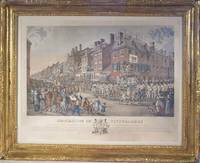
18215065Philadelphia: Published by Joseph Yeager; printed by Charles Woodward 1821. Engraving etching and aquatint with hand-coloring and mezzotint on buff wove paper plate: 50.5 x 66 cm.; image: 42.5 x 59 cm. Second state in which it is added that the view was "taken from M. Carey & Sons Book Store. S.E. corner of 4th and Chestnut Sts". There is no known extant copy of the first state but it is referred to and described in Stauffer & Fielding's American Engravers upon Copper and Steel page 556. "The procession of butchers with their carts carrying meat from a cattle market show was organized to encourage the breeding of cattle and attracted 300000 people if the Philadelphia Gazette is to be believed. It took one hundred carts to carry 86731 pounds of meat including bear and deer meat. The butchers and victualers proudly flew their banner 'We feed the Hungry.'" Nash First City: Philadelphia and the Forging of Historical Memory. ~ "The most popular of local views in aquatint was the light-hearted genre scene The Procession of the Victuallers. This is almost the only such local print of its time. Set in an atmosphere of happy holiday cheer there is in it as well the appeal of dozens of figures drawn from Krimmel 1786-1821 whose simple charm in the flat planar medium is redolent of days long gone. The Procession of the Victuallers drawn by Krimmel in the year of his death 1821 was aquatinted by Joseph Yeager c. 1792-1859 in his only engraving in that mode which has been found. This is lavish in size and in the crowded atmosphere typical of Krimmel. The Philadelphia Gazette of March 16 the day after the event reported that 'What added considerably to the novelty and beauty of the scene was the ascension of several handsome balloons during the line of march.' It has been said that the spectacle was witnessed by 300000; the population of the city at that time was 127000." Snyder Mirror of America. The 1904 auction catalogue of rare Americana from the estate of Moses Polock "the oldest bookseller in the United States" included the original watercolor later sold at Christie's New York in 2008 for $338500 and the descriptions noted that it was "from this that the now very rare engraving was made." There is loss to the margins at the lower right-hand corner and several closed tears intruding into the text or the image; paper restoration is subtle but visible. Some general discoloration but the colors remain quite bright. Framed. Rare. Stauffer & Fielding 3438ii. Published by Joseph Yeager; printed by Charles Woodward unknown books
184258395Dresden, Eduard Pietzsch, 1838-1842. 4°. Mit 3 farb. lithogr. Titeln u. 216 lithogr. Tafeln. Zus. ca. 580 S., HLwd.-Bde. d. Zt. m. etw. Rückenverg. u. goldgepr. Rückentiteln.
In-4° grande; pp. (6), 277; nel testo, 35 rami di cui uno a doppia pagina; di questi, otto raffigurano recto e verso di monete argentee e auree, uno la misura del pes augustanus; inoltre testatine figurate incise su rame e capilettera incisi su legno; legatura in piena pergamena con titolo manoscritto al dorso. Frontespizio inciso su rame, del pittore e incisore Alexander Mair nato ad Augusta (1599 ca.-post 1620), ricordato principalmente per questa pregevole acquaforte (fu anche autore di un ritratto di Wesler). Le altre illustrazioni nel testo mancano delle indicazioni di responsabilità. Di particolare interesse una cartina incisa su rame a pagina doppia raffigurante la regione della Vindelicia, corrispondente grosso modo alla Svizzera e a parte della Germania. Prima edizione, poi tradotta in tedesco, della storia di Asburgo, corredata di una parte documentaria in cui Wesler riporta fonti e testimonianze varie, come iscrizioni e monumenti. Welser scrive una ampia e dotta storia di Augusta Vindelicarum, trattando del sito geografico, delle origini, della storia attraverso I tempi, della popolazione, della costituzione civile e religiosa; dopo l’ottavo libro, raccoglie delle testimonianze di scrittori (Vetustorum aliqot scritporum testimonia…), e le presenze dei monumenti antichi, in città e nei dintorni: Antiquae Augustae Vindelicorum extant monumenta: questa parte dell’opera, specificamente dedicata a Marc Fugger, membro della famiglia di banchieri tedeschi originari di Augusta, contiene 22 illustrazioni nel testo, incise su rame, tra cui la raffigurazione dell’abaco e di un pavimento a mosaico. Marcus Welser (Augusta 1558–1614) faceva parte di una famosa famiglia tedesca di mercanti; formò la sua istruzione in Italia, e divenne successivamente una delle figure principali del tardo umanesimo della propria città natale. Adams V, 364; Andresen III, 380, 77-79; Graesse VI/2, 275; Lentner 6598; Renouard II, 182, 4; Benezit 7, p. 79; Mortimer 553. Ottima copia.
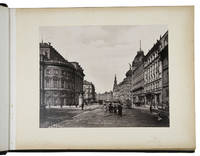
1899ABC_46445Budapest Dresden Innsbruck München: Calderoni és társa Verlag von Stengel & Co Fritz Gratl 1899. Half black leather red buckram sides blind-stamped boards gold-stamped spine with the date "1899" marbled endpapers. Oblong album 32 x 41 cm. Album with 43 photographic prints of various sizes 22 x 16.5 to 30 x 24 cm pasted on thick paperboard. From mountains in Austria to city views and interiors of churches in Budapest Vienna Innsbruck and München: all can be found in the 43 photographic prints in the present album. They were taken in at the end of the nineteenth-century probably in 1897 and 1899 according to blind-stamps in the prints. The photographers of most images are unknown except for the 6 photographs of Innsbruck which were made by the Innsbruck photographer and publisher Fritz Gratl. He likely made some of the other photographs of Austrian mountains towns and the city of Salzburg as well since his other known photographs cover similar subjects. Most prints of Vienna and some of Budapest were published by Stengel and Company in Dresden Germany in 1897. They and also Fritz Gratl were famous printers and publishers of postcards with similar picturesque images and the photographs in the present album are possibly the original images used to make the postcards.22 photos bear the blind stamp of the photographic studio. 4 photos have handwritten captions in pencil. The binding shows some minor signs of wear slight foxing or browning of the outer edges of the paperboards not affecting the photographs some photographs slightly faded or rubbed mostly at the edges not affecting the actual image the paper board of the print of "Budapest - Neues Parlament" has a slightly damaged spot in the lower margin not affecting the integrity of the board or the print. Overall in good condition. An album of 43 photos showing the sights of Hungary Austria and Germany. Calderoni és társa, Verlag von Stengel & Co, Fritz Gratl, hardcover
1769elala199Vienna: Johann Thomas Edlen von Trattnern 1769. 1769. folio. pp. 8 p.l. 282 lvi. 27 engravings in the text & 3 folding engraved plates incl. in pagination. woodcut ornaments & initials. full contemporary dark brown morocco lettered in gilt on upper cover: Constitutio Criminalis Theresiana Spectans Ad Antiquam Civitatem Voitsbergensem 1773 Antonius Josephus Schilcher P.T. Judex Civitatis Voitsberga bit rubbed some browning & foxing marginal dampstain to last section containing engravings folding plates dampstained & repaired -1 with some loss of text. Inscribed on front blank: "Mathias SchuemackerSuperioris Austriae Jo. J. Syndrins Voitsberga 1773". First Edition of the famous criminal code of Maria Theresa which redefined torture as "a subsidiary means of eliciting truth". Torture could be applied to obtain confessions only in cases where condemnation would have involved capital or severe corporal punishment. A remarkable publication including graphic illustrations of instruments and methods of torture thumb-screws stocks racks burning candles leg vices winches the Viennese shoe with detailed and precise instructions on their use. According to the Encyclopaedia Britannica 11th Edn. this illustrated edition was suppressed by Prince Kaunitz chancellor of state and advisor to the Empress a few days after its appearance. Torture was formally abolished in the empire in 1776. Signed by Authors. 1st Edition. Vienna: Johann Thomas Edlen von Trattnern, 1769. hardcover
176957355Wien: Johann Thomas Edlen von Trattnern 1769. First Edition. Folio pp. xvi 282 lvi Illustrated with 27 engravings in the text & 3 folding engraved plates included in the pagination. Some foxed and toned lacks the front flyleaf. Bound in very rubbed contemporary calf still a very good tight copy. Woodcut and typographic ornaments and initials. Text in German black letter with glosses in Latin. Bound in contemporary calf spine gilt little rubbed and recently rebacked red edges. Woodblock printed end papers. Some toning to the text The binding is a little rubbed but still a very good crisp and clean copy. Maria Theresa was the eldest daughter of emperor Charles I and of Elizabeth Christina of Brunswick. At the death of her father in 1740 she became the sole heiress of his dominions of the house of Austria. Upon her accesion to the throne the neighboring countries tried to capture parts of the empire which led to the Wars of Austrian Succession which finally concuded with the treaty of Aix-la-Chapelle in 1748. This is the famous criminal code of Maria Theresa which used torture as a means of "eliciting truth." Her insticts were absolutist and she would allow nothing that limited state power even as she reformed the education system and worked to better the lives of her citizens. And she did not forbid torture. Torture was only to be used only is capital and very serious criminal cases. Included in this volume are very graphic illustrattions of instruments of torture thumb-screws stocks racks burning candles leg vices winches the Viennese shoe! with detailed and precise instruction of their use. According to the Britannica this edition was suppressed by Prince Kaunitz chancellor of the state and an advisor to the Empress. Torture was formally abolished in the empire in 1776. Maria Theresa Walburga Amalia Christina was the only female ruler of the Habsburg dominions and the last of the House of Habsburg. Maria Theresa and her husband Francis I Holy Roman Emperor had sixteen children including Queen Marie Antoinette of France. Maria Theresa was the absolute sovereign . She promulgated financial and educational reforms promoted commerce and the development of agriculture and reorganised Austria's ramshackle military all of which strengthened Austria's international standing. Johann Thomas Edlen von Trattnern unknown books
19106040812Berlin, Reimer [de Gruyter] 1910 ff. 8°. Original Halbleder. Schwarze Kalbsledervariante, mit goldgeprägtem Rückentitel. Sehr hochwertige und saubere Ausführung. Druckfrisch.
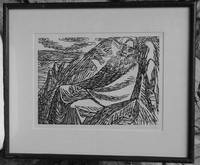
19223171922. Woodcut #7 from the suite: The Metamorphosis of God Die Wardlungen Gottes. Edition of 110. Schult 171. Signed in pencil. Image: 10¼ x 14¼. Margins: 17 x 13. Die Wandlungen Gotes: Sieben Holzschnitte . Artworks within this Set The cathedrals The divine beggar Dance of death 2 The god "Paunch" The rocks The seventh day The first day books
19223171922. Woodcut #7 from the suite: The Metamorphosis of God Die Wardlungen Gottes. Edition of 110. Schult 171. Signed in pencil. Image: 10¼ x 14¼. Margins: 17 x 13. Die Wandlungen Gotes: Sieben Holzschnitte . Artworks within this Set The cathedrals The divine beggar Dance of death 2 The god "Paunch" The rocks The seventh day The first day
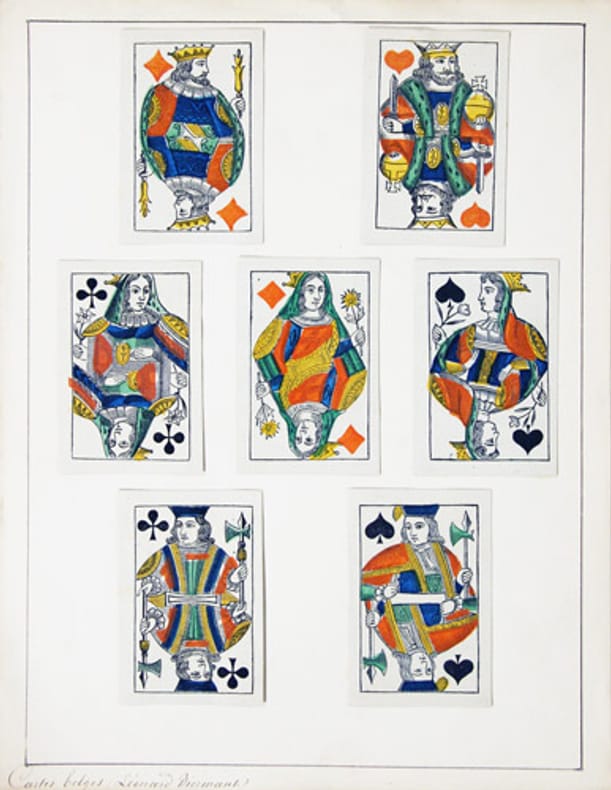
101137aafin-Folio, cartes, enveloppes etc. proprement montées sur des bristols blancs, souvent avec légendes manuscrites (origine, nom du fabricant), avec quelques brochures, cartes postales, lettres, entre les feuilles.
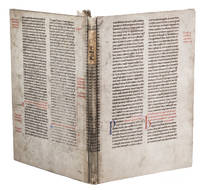
14869BDEHOBV62VDWürzburg: Georg Reyser 1486. Later bound in two leaves from a 13th-century vellum theological manuscript rubricated and decorated with alternating red and blue initials with penwork. Folio. Printed in red and black in rotunda type 32 lines; printed area: 18 x 12 cm; type: 112a. With illustrations cut from 19th- or 20th-century reproductions of early woodcuts ca. 21 x 14 cm pasted on the front Annunciation and back pastedown Christophorus with the year "cccc xx tercio". Interesting example of the study of early printing in 19th-century England. The 12 leaves come from the library of the 19th-century collector Dr C. Inglis whose father boasted an impressive collection of early printed books. Inglis believed that the leaves came from an unknown work titled De vita et honestate clericorum ex consilio Moguntinum printed in 1453 by Gerhardus Episcopus. Tipped in is a letter to Inglis by the well-known bibliographer William Blades discussing this matter. Although the text opens with "De Vita et honestate clericorum ex consilio Maguntinensis Gerhardi Archiepiscipi" it was in fact part of Statuta synodalia herbipolensia printed at Würzburg by Georg Reyser in ca. 1486. The first 6 leaves are 2-d7 and the final 6 leaves are quire g.With owner's inscription of Sir Edward Coates bookplate with initials "CC" Clifford Coates the bookplate of Dr. C. Inglis and some annotations on front pastedown; an autograph letter signed by Wiliam Blades to C. Inglis tipped to flyleaf. 12 well-preserved leaves.l Cf. BMC II 572; Goff S-741; Hain 15036; Hubay Inc. Universitätsbibl. Würzburg 1953; ISTC is00741000. Georg Reyser, hardcover
206929Altenburg, Druck der Hofbuchdruckerei, 1852 8 pièces en un portefeuille in-4, velours cramoisi, dos lisse orné de guirlandes dorées en long en tête et en queue, encadrement de guirlande dorée sur les plats, armes réalisées à l'aide de perles sur le premier plat, M couronné sur le second, gardes à soufflets doublées de tabis ivoire (reliure de l'époque). Dos un peu usé, couleur du velours un peu passée.
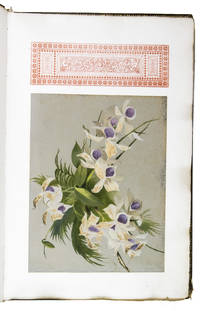
1896ABC_48884Colophon: Amsterdam 1896. Large folio ca. 51 x 33 cm. Calligrafie und Druck von Johan. K. Koning Contemporary gold-tooled burgundy leather the front board with a large gold-stamped monogram as a centrepiece the intertwined initials of the couple: AJ and EdR with the date "24-26 August" above and the year "1896" below lettered in gold both boards show a single fillet frame along the outer edges gold-tooled turn-ins beige watered silk endleaves. Wedding album comprising five manuscript texts of occasional plays 4 in German 1 in Dutch written in a neat cursive in blank ink on thick laid paper each illuminated with a 4-line decorated initial in red blue and white on a gold/bronze field richly decorated with penwork in black ink extending down into the inner margin. Each text is preceded by a letterpress title leaf set in neo-Gothic type also used for the general title several text leaves and the colophon. Further with 1 gouache illustration on grey paper sheet size ca. 32 x 24.5 cm mounted on the first leaf showing a bouquet of flowers 14 printed ephemera relating to the "Polterabend" wedding-eve party and the wedding on single or double leaves in various sizes the wedding announcement/introduction to the wedding-eve party and attached is a photo of the couple in a circular frame of red wax 5 menu cards the lyrics to 6 German songs a musical score by the German composer Wilhelm Aletter 1867-1934 and an announcement of the comic opera Des Teufels Antheil by the French composer Daniel Auber 1782-1871 performed by the Frankfurter Opernhaus on 25 August 1896 in Frankfurt am Main. Also with two manuscript wedding speeches in German written in black ink on paper two mounted albumen prints the first showing two actors dressed as a Frisian farmer and his wife and the other showing a man in Chinese dress 56 large ornamental vignettes printed in red or blue throughout 17 ornamental tailpieces printed in black blue and red and some dried flowers mounted on several leaves. 60 ll. A sumptuously executed wedding album presented to the Dutch groom August Janssen 1865-1918 and his bride Ella de Ridder 1877-1951 produced in honour of their wedding celebrations which took place on 24-26 August 1896 in Frankfurt am Main Germany. Most of the album concerns their "Polterabend" the wedding-eve party similar to present-day bachelor-/bachelorette parties except for the bride and groom joining together in the festivities. The main event now associated with a Polterabend is the smashing of porcelain by the wedding guests in order to bring luck to the couple's marriage but in general the evening is filled with plays and songs written and performed for the couple by their family and friends.A few performing actors were members of the Janssen-family a Dutch business family who had amassed their fortune with the tobacco cultivation in the former Dutch East Indies. They were also known for their generosity and philanthropic activities in the Netherlands. At the head of this family was the German-Dutch merchant Peter Wilhelm Janssen 1821-1903 one of the founders of the Deli Maatschappij in Sumatra and father of the groom who was his second son. His eldest son Christian Wilhelm Janssen 1860-1927 was married to Susanna Dorothea Anna Rehbock 1862-1933. Her brother the Dutch merchant Heinrich Carl Rehbock 1865-1938 was married to Caroline Janssen 1871-1951 one of the five daughters of Peter Wilhelm Janssen. Among the other actors were the brother of the bride Gustave von Ridder 1874-1956 the German playwright Hermann Otto Rudolf Presber 1868-1935 the German lawyer Paul Roediger 1859-1938 and his Dutch wife Julie Louise Charlotte Elink Schuurman 1875-1961 the sisters Anna Maria Humser 1876-1974 and Elisabeth Else Humser 1872-1967 daughters of the German lawyer and politician Gustav Adolph Humser 1836-1918 who was chairman of the Frankfurt city council at the time of the wedding celebration.The groom August Janssen 1864-1918 started his business career at trade offices in Bremen and London. He subsequently left for the former Dutch East Indies where he founded several enterprises. His wealth enabled him to engage in philanthropic activities. For example the municipality of Baarn benefited from his generosity he erected two public swimming pools there at his own expense. The bride Ella Elisabeth de Ridder 1877-1951 was the only daughter of the Belgian-German merchant August Cornelius de Ridder 1837-1911 known for his distinguished art collection of mainly Dutch and Flemish paintings of the 17th century which he built at his house at Kronberg near Frankfurt am Main. The famous Anglo-Hungarian artist Philip Alexius de László 1869-1937 painted Ellas portrait in 1903 in Baarn at the house of Hendrik Cornelis van den Honert 1854-1916 the successor of Peter Wilhelm Janssen as director of the Deli Maatschappij in 1898. De László had also painted her mother Johanna Elisabethe Louise May 1853-1942 around 1898 and two of her children in 1908.A unique wedding album of two members of prominent German-Dutch business families written and printed in 1896 as a special single copy publication. The album was produced in Amsterdam by Johan K. Koning who took care of the calligraphy of the texts and the printing of the divisonal titles explanatory leaves and vignettes.The spine and edges and corners of the boards show signs of wear with some minor loss of material at the foot of the sipne and the tips of the corners of the boards the leather is somewhat faded adn scratched all without affecting the general clarity of the tooling or the integrity of the binding. The watered silk on the first free flyleaf is torn some offsetting to the blank versos of the leaves and some glue residue on the leaves with dried flowers. Otherwise in good condition. hardcover
19711015FBBerlin., Edition Rene Block., 1971. 1 Blatt., 1015F Tadelloses Exemplar.
198867515ABDüsseldorf., Takako Saito., 1988. 67515AB 1 Schachstäbchen mit ausgebesserter Bruchstelle. Sonst sehr gutes Exemplar.