6 228 résultats
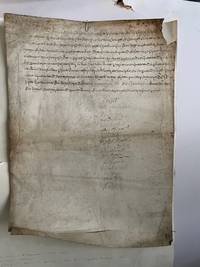
26527Dublin 2 January 1731. `One page 34 x 49cm vellum fold marks grubby top right corner missing with small loss of text some text faint small closed tear on fold missing seal. Text as follows: "We Lionel duke of Dorset lieutenant general of the most excellent prince and lord George the second king of Great Britain France and Ireland defender of the faith etc. and general governor in the said realm of Ireland and the Council of the said lord king of the same realm of Ireland aforesaid do humbly certify and transmit to the most excellent lord king in chancery of the realm of Great Britain a certain bill annexed to these presents containing the tenor of a certain act which has started to be brought forward and enacted in the present parliament which act moreover we consider fitting and necessary to be enacted in this realm of Ireland by the authority of parliament humbly beseeching that the lord king may deign to affirm and allow the bill annexed to these presents and to declare his wish that it be enacted in the same parliament and returned under the great seal of Great Britain. Witness: us the aforesaid lieutenant of the said lord king at Dublin the second day of January in the fifth year of the reign of our said lord king George the second and in the year of Our Lord one thousand seven-hundred and thirty-one.Dorset Lionel Sackville 1st duke of Dorset and lord lieutenant of IrelandHu. Armach. Hubert Boulter archbishop of ArmaghWyndham C Thomas Wyndham 1st Baron Wyndham PC Irish lawyer and politician Lord Chancellor of Ireland from 1726 to 1739.Wyndham C Thomas Wyndham 1st Baron Wyndham PC Irish lawyer and politician Lord Chancellor of Ireland from 1726 to 1739.John Dublin John Hoadly Archbishop of DublinJohn Castellien Edward Tuam Edward Synge Archbishop of TuamCavan Richard Lambart 4th Earl of CavanRalph Meath Ralph Lambert Bishop of MeathJohn Clogher John Stearne Bishop of Clogher.Southwell Edward Southwell Principal Secretary of State Ireland John Rogerson Solicitor-General Attorney-General for Ireland and Lord Chief Justice of the King's Bench in Ireland.James Reynolds Chief Justice of the Common Pleas IrelandThomas Marlay sometime Lord Chief Justice grandfather of the statesman Henry Grattan Thomas Taylor MPOwen Wynne Colonel Owen Wynne c. 1686-1755landownerW Cary" Bills in Irish Parliament 1731: c. 4 Security of Trade Act 1731 c. 9 Land improvement c. 11 Inland Navigation Act 1731Given that the Plea is dated 2 January the first of these seems most likely. Dublin, 2 January 1731 hardcover
26974Dublin 2 January 1731. `One page 34 x 49cm vellum fold marks grubby top right corner missing with small loss of text some text faint small closed tear on fold missing seal. Text as follows: "We Lionel duke of Dorset lieutenant general of the most excellent prince and lord George the second king of Great Britain France and Ireland defender of the faith etc. and general governor in the said realm of Ireland and the Council of the said lord king of the same realm of Ireland aforesaid do humbly certify and transmit to the most excellent lord king in chancery of the realm of Great Britain a certain bill annexed to these presents containing the tenor of a certain act which has started to be brought forward and enacted in the present parliament which act moreover we consider fitting and necessary to be enacted in this realm of Ireland by the authority of parliament humbly beseeching that the lord king may deign to affirm and allow the bill annexed to these presents and to declare his wish that it be enacted in the same parliament and returned under the great seal of Great Britain. Witness: us the aforesaid lieutenant of the said lord king at Dublin the second day of January in the fifth year of the reign of our said lord king George the second and in the year of Our Lord one thousand seven-hundred and thirty-one.Dorset Lionel Sackville 1st duke of Dorset and lord lieutenant of IrelandHu. Armach. Hubert Boulter archbishop of ArmaghWyndham C Thomas Wyndham 1st Baron Wyndham PC Irish lawyer and politician Lord Chancellor of Ireland from 1726 to 1739.Wyndham C Thomas Wyndham 1st Baron Wyndham PC Irish lawyer and politician Lord Chancellor of Ireland from 1726 to 1739.John Dublin John Hoadly Archbishop of DublinJohn Castellien Edward Tuam Edward Synge Archbishop of TuamCavan Richard Lambart 4th Earl of CavanRalph Meath Ralph Lambert Bishop of MeathJohn Clogher John Stearne Bishop of Clogher.Southwell Edward Southwell Principal Secretary of State Ireland John Rogerson Solicitor-General Attorney-General for Ireland and Lord Chief Justice of the King's Bench in Ireland.James Reynolds Chief Justice of the Common Pleas IrelandThomas Marlay sometime Lord Chief Justice grandfather of the statesman Henry Grattan Thomas Taylor MPOwen Wynne Colonel Owen Wynne c. 1686-1755landownerW Cary" Bills in Irish Parliament 1731: c. 4 Security of Trade Act 1731 c. 9 Land improvement c. 11 Inland Navigation Act 1731Given that the Plea is dated 2 January the first of these seems most likely. Dublin, 2 January 1731 hardcover
26785The two account books are dated April 1844 to 1845; April 1847 to 1848. The two volumes folio 20 pp and folio 18 pp. Both in the same neat hand and in uniform original bindings of green boards with green cloth spines and white decoratively-cut paper labels on front covers each carrying a description of the contents addressed to 'Königin Adelheid von Großbritannien'. The first account book 1844-1845 has part of the second leaf pp.2-3 torn away; and the second 1847-1848 is lacking the fourth leaf pp.9-10. The second has a summary 3 pp folio on bifolium loosely inserted addressed to 'Königliche Majestät' and dated 'Meiningen den 25 Juni June 1848'. The second account book also has tipped in to the front pastedown a signed autograph reference from 'E. Ballinger Housekeeper to her late Majesty Queen Adelaide' addressed from '40 Colehill Street Eaton Square' and undated for 'Hannah Feesey' who 'lived has sic Housemaid in the establishment of Her late Majesty Queen Adelaide upwards of 4 years': 'I found her a clean industrious good servant and a respectable well conducted young woman'. Expenses include 'Bauwesen und Meublement im Fürstenhaus zu Liebenstein'. The two volumes contain a total of eleven pages of 'Pensionem' with the named recipients including Löwenstern Wagner Uttenhoven Mauris Panzerbieter Zierlein. A scarce and unusual item: personal accounts for leading members of the Royal Family rarely if ever appear on the market. The two account books are dated April 1844 to 1845; April 1847 to 1848. hardcover
1954369301Dublin: Educational Company of Ireland 1954. First Edition. Softcover. Near fine pamphlet copies; edges slightly dulled. Particularly well-preserved overall; bright and clean internally. Physical description; 50 issues of Tir na nOg & 1 issue of Our Boys ; 24 cm. Subjects; Irish periodicals. Ireland; magazines. Irish fiction. Irish juvenile periodicals. Juvenile audiences. Children's magazines. Children's fiction. Tir na nOg; magazine. Our Boys; magazine. Christian Brothers of Ireland; periodicals. Dublin: Educational Company of Ireland paperback
Mappa tratta dal Cl. Ptolemaei Alexandrini, Geographiae Libri Octo, pubblicata prima a Colonia da Gottfried von Kempen (1578) e poi ristampata dallo stesso editore nel 1584 (Van der Krogt 1, 502) e poi da Isaac Elsevier per il Theatrum Geographiae veteris di Petrus Bertius (Leyden 1618). Di tutte le edizioni di Tolomeo, quella di Gerard Kremer (Mercatore), pubblicata nel 1578, e forse tecnicamente la più bella. A questo punto la Geografia di Tolomeo perdeva però ogni pretesa di “attualità”, laddove lo scopo di Mercatore era quello di produrre un atlante del mondo classico che servisse da complemento al suo atlante moderno (per tale ragione egli aveva tentato di recuperare la forma originale dell’atlante tolemaico, scartandone le moderne accrezioni). L'interpretazione di Mercatore del testo tolemaico, per le 28 carte che illustrano la sua Geographia è stata, quindi, una delle più veritiere. Egli aveva passato 13 anni a ricercare, disegnare e incidere le carte, rinunciando anche alla pubblicazione delle sue carte “moderne”. Questo esemplare proviene dal Theatrum Geographia Veteris di Petrus Bertius edita a Leida nel 1618, che combina il Tolomeo di Mercator, le 8 tavole del Moretus per rappresentare la Tabula Peutingeriana e 14 mappe storiche delle regioni d'Europa derivate dal Parergon di Ortelius. Acquaforte su rame, in buone condizioni. Ptolemaic map of British Isles. Showing landmarks, major cities and towns, rivers and parks. The map is decorated with a strapwork title cartouche, a sea monster and a fishing scene in the North Sea. Map taken from the Cl. Ptolemaei Alexandrini, Geographiae Libri Octo, first published in Cologne by Gottfried von Kempen (1578) and then reprinted by the same publisher in 1584 (Van der Krogt 1, 502) and then by Isaac Elsevier for the Petrus Bertius’ Theatrum Geographiae veteris (Leyden 1618). Mercator's interpretation of the 28 Ptolemaic text was possibly one of the truest undertaken up until that time. He had spent 13 years researching, drawing and engraving the maps at much commercial sacrifice to himself, having seen Ortelius's Theatrum and De Jodes Speculum published, to become both technical and commercial successes. In later life he devoted himself to his edition of the maps in Ptolemy's Geographia, reproduced in his own engraving as nearly as possible in their original form. This example comes from the Theatrum Geographia Veteris of Petrus Bertius published in Leiden in 1618, which combines Mercator's Ptolemy, the 8 plates of Moretus to represent the Tabula Peutingeriana and 14 historical maps of the regions of Europe derived from the Parergon of Ortelius. Copperplate, in good condition.
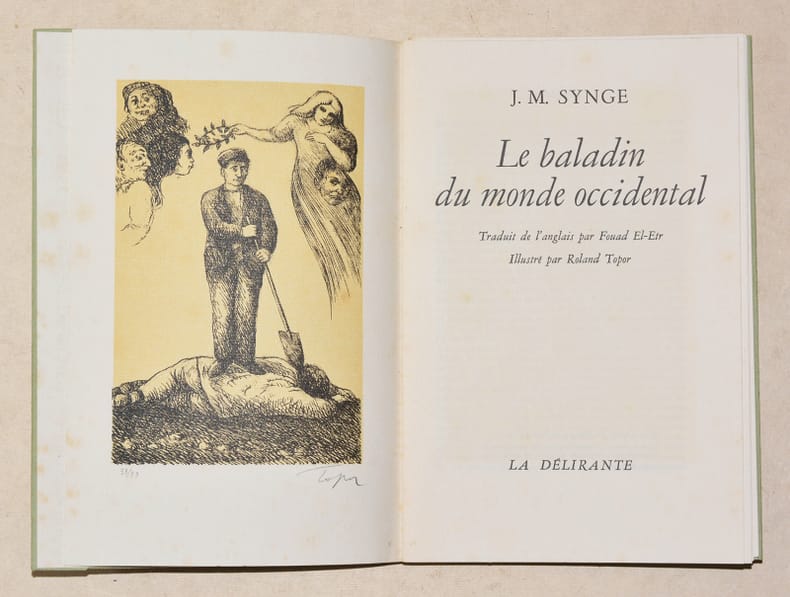
19740053681974 Paris, La Délirante, 1974. In-8 (163 X 243 mm) en feuilles sous couverture rempliée, étui cartonné de l'éditeur ; 92 pages, (1) f. de justification de tirage, 4 planches hors-texte. Quelques pointes de rousseurs, essentiellement sur les trois premiers feuillets et les tranches.
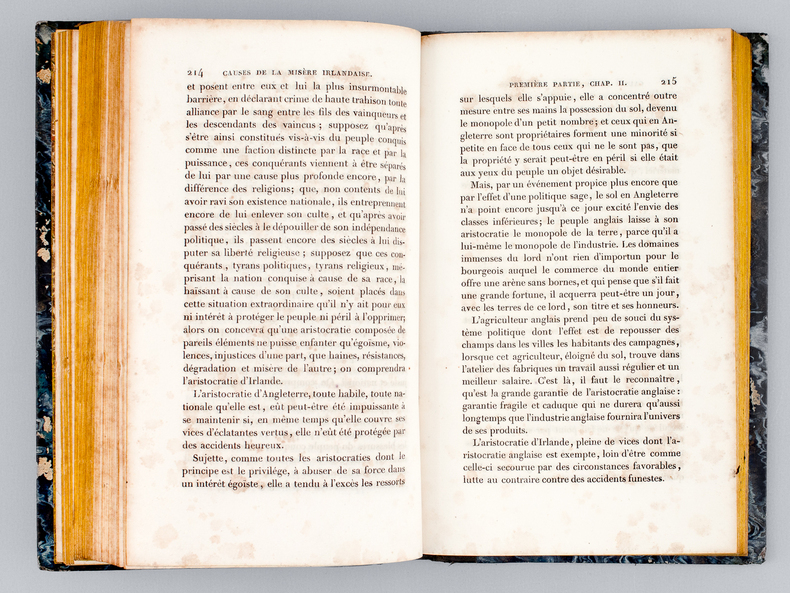
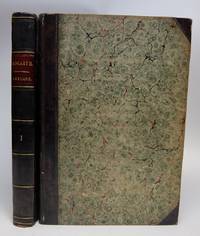
183965307Par Gustave de Beaumont, auteur de "Marie ou l'Esclavage aux Etats-Unis", l'un des auteurs du "Système pénitentiaire aux Etats-Unis", deuxième édition, 2 vol. in-8 reliure de l'époque demi-basane noire, Librairie de Charles Gosselin, Paris, 1839, 2 ff., XX-417 pp. ; 2 ff., 395 pp.
18013820London: Printed for T.N.Longman and O.Rees 1801 1801. Only edition. Small 8vo. pp. 6 201 1bl. Contemporary calf double fillet borders to boards rebacked to style with gilt decoration and black morocco label lettered in gilt. Edges and corners rubbed with a little wear to the latter. All edges speckled. Internally near fine. A very nice copy of the first book published by Ireland following his exposure as a forger. Rare in commerce only two copies appearing at auction in the last fifty years. William Henry Ireland was a type familiar in the world of letters and books - the clever but rackety fantasist. He absorbed from his father a publisher a fascination with Shakespeare and perhaps more significantly the forgers Chatterton and Macpherson. A spell working for a lawyer gave him access to old documents which he studied and copied before taking the plunge and forging a deed containing Shakespeare's signature. His father thinking it real was thrilled. Ireland began to produce more "Shakespearian" documents claiming that they were from an anonymous collector. When even a letter from Shakespeare to Elizabeth I was authenticated by contemporary experts Ireland overreached himself and brought forth a "new" play Vortigern and Rowena. Ireland's doubters led by the Shakespearean scholar Edmond Malone began to circle and the first and only performance of the play was disrupted in part by its leading actor John Philip Kemble who repeated a line including the words "solemn mockery". Although the young Ireland immediately confessed both he and his father were disgraced the latter dying in 1800 and William being forced to eke out a thin living as a poet historian and satirist. Ballads in Imitation of the Antient was a clever attempt at redemption. It was published in Ireland's name so no-one could accuse him of forgery or fakery but the book played into the contemporary taste for bogus antiquarianism which floated somewhere between historical truth and historically inspired fiction. And of course "Imitation" of which Ireland was clearly a master can be both. London: Printed for T.N.Longman and O.Rees 1801 hardcover
CARR John. L'Etranger en Irlande, ou voyage dans les parties méridionales et occidentales de cette isle, dans l'année 1805. Traduit de l'anglais par M. Keralio-Robert. Paris, Léopold Collin, 1809. Due volumi in 8vo; pp.VIII,2n.nn.,413; cc.2n.nn.,pp.401. Sei tavole spieghevoli all'acquatinta. Bazzana coeva, titolo e fregi in oro ai dorsi.
Carta geografica delle Isole Britanniche tratta dall'edizione italiana del Theatrum Orbis Therrarum di Ortelius, 1606.Terzo stato della lastra di questa importante mappa basata sulla carta murale di Mercator del 1564. Il Theatrum Orbis Terrarum è considerato il primo vero “atlante” moderno. L’opera fu pubblicata in 7 lingue e 36 edizioni, per il quale – nel 1570 - Ortelius ottenne il privilegio, ovvero una sorta di diritto d'autore che impediva ad altri cartografi di pubblicare i propri lavori. Il Theatrum rappresentava il lavoro più avanzato del lavoro della descrizione cartografica. L’Ortelius vi raccolse il sapere geografico e cartografico del suo tempo, proponendo in 147 spettacolari tavole incise l’immagine più fedele del mondo allora conosciuto e, in alcune straordinarie “carte storiche”, regioni e itinerari tratti dalla letteratura, dalla mitologia, dalla tradizione. Ortelius fu anche il primo a citare le fonti, menzionando i nomi dei cartografi nel “catalogus auctorum”. Dal 1598 al 1612 le edizioni postume del Theatrum furono realizzate dal suo collaboratore Johannes Baptiste Vrients. Incisione in rame, eccellente coloritura coeva, in ottimo stato di conservazione. Attractive full color example of Ortelius' first map of the British Isles, from Ortelius' Theatrum Orbis Terrarum, the first modern atlas of the world.A state 3 of this classic, handsome and decorative map of ancient British Isles with north orientated to the east. Italian text on verso. From the Vrients edition of 1606.Based on Mercator's 1564 map of the British isles and improved by Saxton's 1579 map and the writings of the ancient classical writers. Embellishments include seven ships and three decorative strap work cartouches. Map taken from the Theatrum Orbis Terrarum, which is considered the first true modern "Atlas". The work was published in 7 languages and 36 editions, for which - in 1570 - Ortelius obtained the privilege, a kind of copyright that prevented other cartographers from publishing his works. The Theatrum represented the most advanced work of cartographic description. Ortelius collected in it the geographical and cartographic knowledge of his time, proposing in 147 spectacular engraved plates the most faithful image of the world then known and, in some extraordinary "historical maps", regions and routes taken from literature, mythology, tradition. Ortelius was also the first to cite sources, mentioning the names of cartographers in the "catalogus auctorum". From 1598 to 1612 the posthumous editions of the Theatrum were made by his collaborator Johannes Baptiste Vrients. Copper engraving, contemporary coloring, in good condition. Broecke, Ortelius 16, state 3. Shirley (1991), map 82, plate 42.
First edition, folio (327 x 209 mm), [3], 4-28pp., ornament on title and last page, on p.28 under the word 'Finis' there are two lines of errata, some light spotting, later wrappers contained in a red cloth folding case. Sir Walter Scott "was the first of Swift's editors to print a number of extra verses which according to a note in a Ms. transcript among the Orrery Papers at Harvard 'ought to have been inserted.... if it had been safe to print them'." These verses were omitted by the printer on political grounds. No copy of an earlier Dublin edition of this masterly satire is known: this edition (published in London, 31 Dec. 1733), though described as 're-printed', is presumed to be the first. The first recorded Dublin edition was published by Hyde in 1734. Foxon, S888; Rothschild, 2147; Teerink, 741; Hayward, 153; Williams, 639.
165722250London: John Field 1657. Hardcover. Very good. Three Acts bound as one in 19th century paper over boards leather label gilt. Fine copies; the the binding is worn at the upper hinge else is in very good condition.<br /> <p><br /> The first Act banned public practice of Catholicism Catholic priests were killed when captured; Catholic-owned land was confiscated and given to Scottish and English settlers and Catholic landowners were relocated to Connacht. Hence the expression attributed to Cromwell: To Connacht or to Hell.<br /> <p><br /> The second Act set forth procedures for soldiers and officers who served in Ireland to recover a "great Arrears of pay". The third Act assessed Ireland the sum of £20000 for support of the Spanish War to be levied and paid "in such manner and form as by the Lord Deputy and Council or any three or more of them shall be Ordered and Directed."<br /> <p><br /> Rare<br /> <p>. John Field hardcover
1796153041London: Egerton 1796. Second. hardcover. very good. 2 volumes. Second Edition with additions. Extra illustrated title page and an entire new set of copper-plates in aqua-tinta. 46 sepia plates. Large 8vo contemporary marbled boards edges rubbed newly rebacked in plain brown cloth with red and black spine labels. London: T. Egerton et al. 1796.<br/><br/> Occasional foxing on plates but still a very good copy.<br/><br/> Egerton unknown books
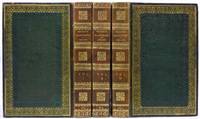
1812007809London: Messrs. Boydell & Co. 1812. Book. Very Good. Hardcover. Third Edition. Tall 8vo - over 7¾" - 9¾" Tall. Finely bound in later 19th c. dark green straight-grain morocco covers with double gilt rules bordering ornate gilt decorations and then an ornate blind tooled border backs with gilt decorations and lettering all edges gilt marbled end pages. Small label rear end pages of J.W. Robinson Co. Los Angeles Very Good spines uniformly sunned from green to brown moderate toning associated with plates boards lightly rubbed at joints and edges a quite handsome set. With 135 engraved plates as listed in Indexes Vol. I 48 Vol. II 43 Vol. III 44. The plate "Copy of Kent Altar Piece" at p. 17 Vol. III printed on blue paper. Messrs. Boydell & Co. Hardcover
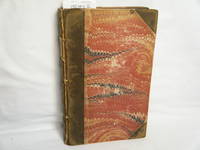
179640181London: J. Barker; Cooper and Graham. Good with no dust jacket. 1796-99. Hardcover. Later half calf with marbled boards titled label raised bands. Front board detached included. Bookplate. Vortigern: 1799. J. Barker. Some spotting. Title page; xi 76pp. Henry the Second: 1799. J. Barker. Title page iii 76pp. Miscellaneous Papers: folding frontis portrait of Shakespeare title page xix 30 156 Kynge Leare 7 Hamblett pp. Mild spotting/foxing to pages. ; 8vo 8" - 9" tall . J. Barker; Cooper and Graham hardcover
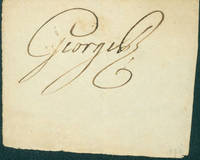
63-2351Westminster UK: St. James's Palace 1797. 7.5 x 9.5 cm. Oblong Ink on Laid Paper Autograph clipped from head of official document signed by Lord Portland with the royal seal. Good with marginal tears. [Westminster, UK: St. James's Palace], 1797. unknown
Folio 502,20+ p. The author was a member of the Long Parliament and Commander of English forces in Ireland. Hardcover Very good condition in speckled calf, hinges restored
1794206447London: Faulder 1794. First. hardcover. near fine. 2 vols. 102 copper engravings tall 8vo 3/4 brown polished calf red leather labels marbled boards. London: R. Faulder 1794. Near Fine.<br/><br/> Faulder unknown books
1800283897London: Faulder 1800. hardcover. very good. Illustrated with 21 lovely full page sepia engravings depicting the various Inns of Court. Tall 8vo handsomely bound in full contemporary blue straight grained morocco very wide and ornate gilt borders on sides spine attractively tooled in gold all edges gilt gauffered edges. Slight foxing mainly on the tissue guards and browning on some outer margins. London: Faulder 1800. Very good .<br/><br/> Faulder unknown books
1794206447London: Faulder 1794. First. hardcover. near fine. 2 vols. 102 copper engravings tall 8vo 3/4 brown polished calf red leather labels marbled boards. London: R. Faulder 1794. Near Fine.<br/> <br/> Faulder unknown
1800283897London: Faulder 1800. hardcover. very good. Illustrated with 21 lovely full page sepia engravings depicting the various Inns of Court. Tall 8vo handsomely bound in full contemporary blue straight grained morocco very wide and ornate gilt borders on sides spine attractively tooled in gold all edges gilt gauffered edges. Slight foxing mainly on the tissue guards and browning on some outer margins. London: Faulder 1800. Very good .<br/> <br/> Faulder unknown
1822290382London: Printed for John Miller and W. Wright 1822. Full Leather. Good binding. With 59 full page plates in Vol. I 9 of which are duplicates on poorer paper and 58 full page plates in Vol. II 9 of which are duplicates; with 25 white Fine Paper engravings pasted down in Vol. I and 25 in Vol. II; with 11 gray Papier de Chine engravings pasted down in Vol. I and 11 in Vol. II. Most of the engravings are illustrations of the various scenes with a few portrait plates; all of the Papier de Chine illustrations are small engraved illustrations meant for the start of each canto and are facing duplicates on Fine Paper. Hinges reinforced by a conservator with Japanese tissue paper. Signed full red morroco binding by Matthews; with gilt lettering and decorations. Marbled endpapers and gilt dentelles. Top edge gilt. Good binding. Printed for John Miller and W. Wright unknown books
1822290382London: Printed for John Miller and W. Wright 1822. Full Leather. Good binding. With 59 full page plates in Vol. I 9 of which are duplicates on poorer paper and 58 full page plates in Vol. II 9 of which are duplicates; with 25 white Fine Paper engravings pasted down in Vol. I and 25 in Vol. II; with 11 gray Papier de Chine engravings pasted down in Vol. I and 11 in Vol. II. Most of the engravings are illustrations of the various scenes with a few portrait plates; all of the Papier de Chine illustrations are small engraved illustrations meant for the start of each canto and are facing duplicates on Fine Paper. Hinges reinforced by a conservator with Japanese tissue paper. Signed full red morroco binding by Matthews; with gilt lettering and decorations. Marbled endpapers and gilt dentelles. Top edge gilt. Good binding. Printed for John Miller and W. Wright unknown
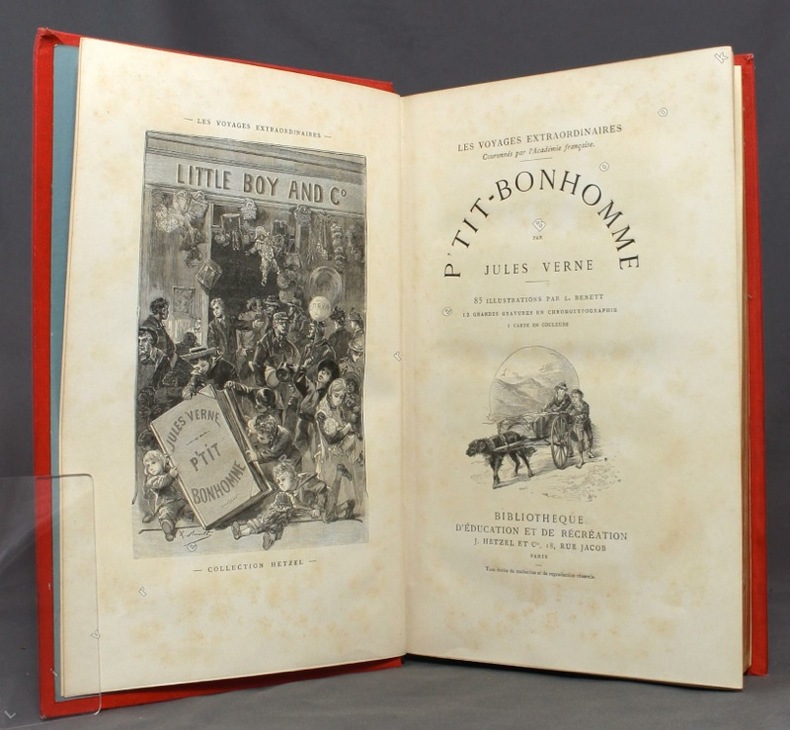
189310944Paris, Bibliothèque d'éducation et de récréation - Les Voyages extraordinaires, J. Hetzel et Cie, [1893]. Grand in-8 de [4]-458-[2]-8 (catalogue GU) pages, cartonnage polychrome d'éditeur "au portrait collé", dos au phare, tranches dorées. Dos passé, infimes accrocs en queue, pâles rousseurs, gouttière impeccable.
Carta geografica tratta dal Mercurio geografico overo Guida Geografica in tutte le parti del Mondo conforme le Tavole Geografiche del Sansone Baudran de Cantelli Data in luce con direttione, e cura di Gio. Giacomo de Rossi nella sua stamperia raccolta di carte edita a Roma tra il 1660 ed il 1730 dalla tipografia De Rossi - la datazione delle carte va dal 1669 al 1715 - la cui prima stesura si deve a Giovanni Giacomo de Rossi. Nel corso degli anni l’atlante fu arricchito da un numero sempre maggiore di carte nelle successive edizioni curate prima da Domenico de Rossi e poi dal figlio Filippo. Il Mercurio Geografico è una raccolta che raccoglie lavori di cartografi quali Michele Antonio Baudrand, Nicolas Sanson, Augustin Lubin, Filippo Titi, Giacomo Ameti, Giovanni Antonio Magini e Innocenzo Mattei e che contempla come "corpus" principale la grande produzione del geografo Giacomo Cantelli da Vignola. Le carte sono finemente copiate ed intagliate dai maggiori incisori dell'epoca tra i quali Falda, Widman, Barbey, Widman, Lhuillier, Donia, Mariotti. La carta deriva dall’opera del padre Augustin Lubin. Incisione in rame, in buono stato di conservazione. Bibliografia cfr. R. Almagià, Studi storici di cartografia napoletana, in “Archivio storico per le province napoletane”, 38 (1913), p. 645; A. Bonazzi, Il Mercurio geografico: il gioco e la differenza, in “Giacomo Cantelli: geografo del Serenissimo”, Bologna, 1995, p. 37-44 e 150-152; Bagrow 268; Phillips I 254-255; Shirley BL I, pp. 868-874. Map taken from Mercurio geografico overo Guida Geografica in tutte le parti del Mondo conforme le Tavole Geografiche del Sansone Baudran de Cantelli Data in luce con direttione, e cura di Gio. Giacomo de Rossi nella sua stamperia collection of maps published in Rome between 1660 and 1730 by the typography De Rossi - the date of the maps goes from 1669 to 1715 - whose first edition is due to Giovanni Giacomo de Rossi. Over the years the atlas was enriched by an increasing number of maps in subsequent editions edited first by Domenico de Rossi and then by his son Filippo. The Mercurio Geografico is a collection that brings together works by cartographers such as Michele Antonio Baudrand, Nicolas Sanson, Augustin Lubin, Filippo Titi, Giacomo Ameti, Giovanni Antonio Magini and Innocenzo Mattei, and which includes as its main "corpus" the great production of the geographer Giacomo Cantelli da Vignola. The maps are finely copied and engraved by the major engravers of the time including Falda, Widman, Barbey, Widman, Lhuillier, Donia, Mariotti. The map is derived from the work of Augustin Lubin. Copper engraving, in good condition. Literature cfr. R. Almagià, Studi storici di cartografia napoletana, in “Archivio storico per le province napoletane”, 38 (1913), p. 645; A. Bonazzi, Il Mercurio geografico: il gioco e la differenza, in “Giacomo Cantelli: geografo del Serenissimo”, Bologna, 1995, p. 37-44 e 150-152; Bagrow 268; Phillips I 254-255; Shirley BL I, pp. 868-874.