TAVERNIER , Jean BaptisteLivre Rare Book

24 714 résultats
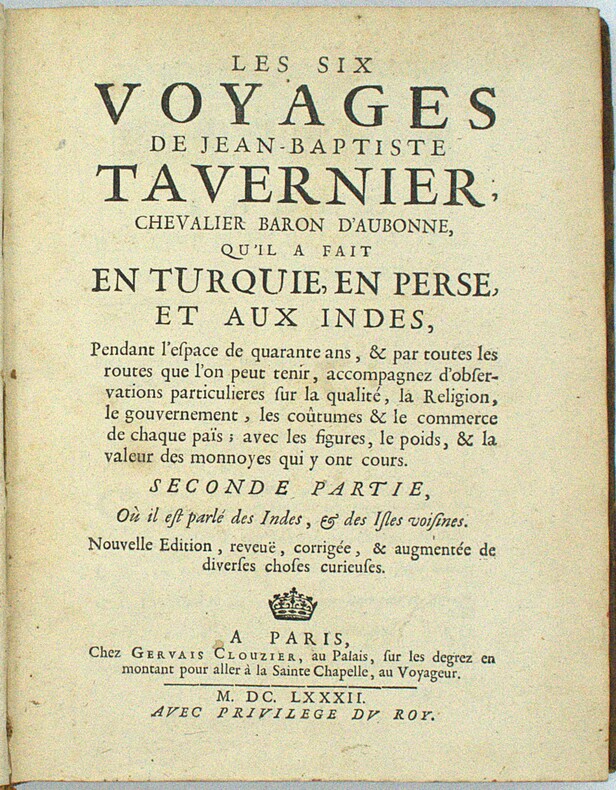
1676PHO-1352A Paris, Chez Gervais Clouzier, 1676-79, 2 volume in-4 (sur 3),30pp.- 698pp.-8pp.-2ff.,8 ff., 72 pp., 1 f., 156 pp.,2 ff., 96 pp. , 1 f., 178 pp., tome 1 ,illustré de 6 planches (7) et tome 3 ; 12 cartes et planches (complet), relié plein veau époque , dos à nerfs ornés avec titre et tomaison , tranches mouchetées , coins , coiffes et coupes usés , début de fente, manque de matière , tome 1 plus petit avec quelques rousseurs , plan d’Erevan coupé court , déchirures aux plis ,réparation carte du Tunquin , manque le tome 2.
1680PHO-1964Paris, chez Gervais Clouzier, 1682-1680, 3 volumes in-4 (246x195mm), 14ff.-636pp., 4ff.-481pp., 8ff.-72pp.-1f.-156pp.-1f.-96pp.-4ff.-1f.-178pp., Illustration : Tome 1 ; 7 planches (6 dépliantes) sur 8, Tome 2 ; 26 planches dont 15 de monnaies, 5 de pierres et 4 gravures dans le texte, Tome 3 ; 2 grandes cartes (Japon, 79x56cm et Tunquin, 56x41cm) et 8 planches dépliantes. Basane époque, dos à nerfs avec titre et tomaison, frottements, griffures et épidermures, Tome 1 ; accroc au plat, coiffe sup. absente, 2 coins usés, rousseurs, mouillure en coin puis en marge, planches avec déchirures sans manque, page 431 déchirée avec manque. Tome 2 ; fente au dos et charnière, coins usés, rousseurs et brunissures, 1 planche déchirée sans manque. Tome 3 ; coins usés, coiffes arasées, carte du Japon volante, déchirure carte du Tunquin, carte du Japon légèrement oxydée, petites rousseurs.
197212551ABTokyo, Nantenshi Gallery, 1972. Folio. With 22 signed, coloured Seriegraphics. Loose as issued in original-cloth-portfolio.
19802091202133203011University of Tokyo Press 1980. Soft Cover. Fine. Number of books: 12 books in total University of Tokyo Press paperback
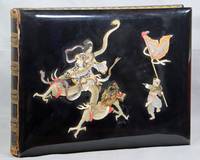
189427734O.O. (Japan), o.V., ca. 1894. Mit 51 montierten, handkolorierten Albumin-Fotografien. 49 jeweils ca. 25,8/20 cm + 2 ca. 22/13 cm, meist mit einbelichteten Titeln. 27,5/36 cm. 25 Kartontafeln mit montierten Fotografien mit etwas beschädigten Seidenpapierhemdchen in OHalblederband mit farb. ill. Lackdeckeln mit Einlegearbeiten in Bein (Bauern im Reisfeld (Vorderseite) und Ranke mit Schmetterling (Gold, Rückseite). Goldschnitt. Rücken beschädigt, Gelenke gerissen (wie meist), Deckel mit kleinen Kratzern und leichten Schäden im Rand. Vorsatz mit Besitzeintrag.
19012937248 vol. reliures diverses en demi-percaline bordeaux ou marron ou demi-toile rouge, (Messager de la Société de Marie, Apôtre de Marie, Marianiste et Présence Marianiste), couvertures conservées, Institut Sainte Marie, Nivelles, puis Paris et Colmar, 1904-1987 ;Le Messager de la Société de Marie [1897-1902 : 3 Tomes - Complet Suivi de :] L'Apôtre de Marie. Echo des Oeuvres et des Missions de la Société de Marie (Série suivie complète du n° 1 de Mai-Juin 1904 au dernier numéro n° 398 de Août-Octobre 1958 puis série suivi complète de "Marianistes", Nouvelle série de l'Apôtre de Marie, du n°1 de Novembre 1958-janvier 1959 au dernier numéro n° 54-55 d'août-décembre 1969, puis série complète de "Présence marianiste" du n° 1 de janvier-février 1970 au n°52 de numéro de Juillet-Septembre 1987, en 45 volumes reliés ) [ Exceptionnel ensemble, souvent illustré, relatant les progrès des missions marianistes en Europe, Amérique, Afrique, et surtout au Japon - Important and scarce review referring to Marianist missions in the entire world, with focus on american or japanese missions in Urakami, Tokyo, etc. ]
195516415ABJapan, The Zauho Press & The Kawada Shobo., 1955-1958. 31,5 : 22,5 cm. With many colour plates and b/w illustrations Original cloth in original board slipcase. 16 volumes (all).
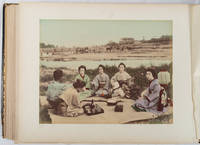
1890215089Japan. Circa 1890s. 50 hand-tinted albumen prints 30 captioned with studio stock references mounted on thick gilt-edged card leaves19.5 x 25 cms in an album 27.5 x 35 cms; elaborately lacquered boards scuffed and chipped inlaid with mother of pearl with loss over quarter calf renewed bevelled edges gilt dentelles endpapers gilt-flecked some fading and spotting to the images and toning to the margins of the card leaves but a very good handsomely bound collection.<P> Beautiful studio album containing a collection of 50 hand coloured photos of Japan with a splendid lacquered and decorated cover. The photos were commercially produced images which were sold to foreign visitors who had the studio place photographs in an album of their choice. This album is unusually interesting because unlike many where photographs were more randomly placed the images have been selected and arranged geographically beginning in Tokyo and moving southwards: Nikko Yokohama Miyanoshita & Hakone Lake Mount Fuji Kyoto Osaka Kobe and Nagasaki. <br> <br>There are fine images and portraits of geisha including an uncaptioned image of geisha seated possibly by the Kamo River in Kyoto entertaining a male guest. A lute is placed on the rice mat together with a tray of beer. One of the geisha is looking straight to camera a striking composition. Another uncaptioned in the Kyoto group is likely to be in Arashiyama shows a sandalled figure on a mountain path overlooking the leisure boating below. <br>There are also images of pagoda fishing rice planting street vendors and markets. <br> <br>More than half the photographs appear to be from the studio of the Yokohama based photographer Tamamura Kozaburo c.1856-192 who at his height was described as "the best photographer in Yokohama". As Terry Bennett has attested Tamamura's business strategy of selling souvenir albums of views and costumes to foreigners became a "winning formula". see Terry Bennett "Early Japanese Images" Tuttle 1996 and "Photography in Japan 1853-1912" Tuttle 2006<P> <b>When referring to this item please quote stockid 215089</b> . hardcover
19852110502150907678University of Tokyo Press 1985. Soft Cover. Fine. Number of books: 25 University of Tokyo Press paperback
19732091202133100495Hara shobo 1973. Soft Cover. Fine. Volume: 1 Hara shobo paperback
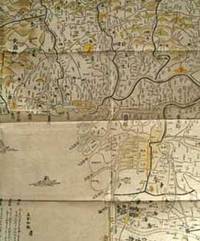
1748826931748. MAP - JAPAN. SETTSU NO KUNI MEISHO. Kyoto Kimura Juyodo Kan'en Gannen 1748. A handcolored woodblock printed map of Settsu provice containing the area of Osaka castle etc. 117.3 X 129.1 cm folds into heavy paper covers of approximately 27.7 x 18.9 cm. The original title slip is gone replaced by a handbrushed label: "Osaka no Kuni" "Carte Baie d'Osacca". Lovely and interesting map found at Beans main volume p.22 1748.1. Condition is very good printed on very strong and supple paper. For a detaiuled illustration see the record at UBC's website for the Beans copy: http://angel.library.ubc.ca/cdm4/item_viewer.phpCISOROOT=%2Ftokugawa& CISOPTR=286&DMSCALE=50&DMWIDTH=600&DMHEIGHT=600&DMMODE=viewer&DMFULL=0 &DMX=75&DMY=44&DMTEXT=&DMTHUMB=1&REC=2&DMROTATE=0&x=266&y=296 Our copy has different hand-coloring. The Beans copy hand-colors the harbor ours hand-colors the land primarily. From the collection of Roger Keyes. unknown
1748826931748. MAP - JAPAN. SETTSU NO KUNI MEISHO. Kyoto Kimura Juyodo Kan'en Gannen 1748. A handcolored woodblock printed map of Settsu provice containing the area of Osaka castle etc. 117.3 X 129.1 cm folds into heavy paper covers of approximately 27.7 x 18.9 cm. The original title slip is gone replaced by a handbrushed label: "Osaka no Kuni" "Carte Baie d'Osacca". Lovely and interesting map found at Beans main volume p.22 1748.1. Condition is very good printed on very strong and supple paper. For a detaiuled illustration see the record at UBC's website for the Beans copy: http://angel.library.ubc.ca/cdm4/item_viewer.phpCISOROOT=%2 Ftokugawa&CISOPTR=286&DMSCALE=50&DMWIDTH=600&DMHEIGHT=600&DM MODE=viewer&DMFULL=0&DMX=75&DMY=44&DMTEXT=&DMTHUMB=1&REC=2&D MROTATE=0&x=266&y=296 Our copy has different hand-coloring. The Beans copy hand-colors the harbor ours hand-colors the land primarily. From the collection of Roger Keyes. unknown books
13 vol. (avec anciennes cotes de bibliothèques et parfois d'anciens cachets) ainsi composés : 1 vol. in-8 relié demi-toile mauve (Circulaires du Père Chaminade (extrait) et Circulaires du Père Caillet jusqu'en 1863, Gauthier Frères, Lons-Le-Saunier, 1863) ; 1 vol. in-4 relié demi-percaline verte, (Circulaires du Père Caillet jusqu'en 1868 et 3 premières circulaires du Père Chevaux, avec divers tableaux très complets du personnel des établissement en 1860) ; 1 vol. in-8 relié demi-toile noire, (Circulaires du Père Chevaux 1868-1875 - du Père Demangeon Vicaire Général (1875-1876) et premières circulaires du Père Simler (1876 - 1879) ; 2 vol. in-8 dont 1 vol. relié demi-basane noire et 1 vol. relié demi-toile noire (Circulaires du Père Simler 1876-1904 sauf 2 circulaires) ; 1 vol. in-8 relié demi-toile noire (Circulaire du Père Hiss (1905 - 1922)) ; 1 vol. in-8 relié demi-toile noire (Circulaires du Père Sorret (1923 - 1933)) ; 1 vol. in-8 relié demi-percaline bleue (Circulaires du Père Kieffer (1934-1940)) ; 1 vol. in-8 relié demi-percaline bleue (Circulaires du Frère Jung Vicaire Général (1940 - 1946)) ; 1 vol. in-8 relié demi-toile noire (Circulaires du Père Juergens (1946-1956)) ; 3 vol. in-8 relié demi-percaline verte (Circulaires du Père Hoffer (1956-1971)) Cet ensemble remarquable présente les développements de la Société de Marie dans le monde entier. Ainsi, pour les Etats-Unis, on suit les développements des établissements de "Nazareth" à Dayton (Ohio), fondée en 1849, Cincinnati, Cleveland, Sanduski, Pittsburg, San Antonio (Texas) (depuis 1852), la fondation à Hawaï (Iles Sandwich) en 1883 ; on peut y suivre tous les développements de l'Oeuvre marianiste, dont leurs missions en Chine et au Japon, avec la longue (76 pages) et passionnante circulaire n° 47 du Père Simler (consacré à la "Fondation à Tôkyô" du 19 mai 1888 ; le père Simler y relate tout le détail de son voyage de fondation et de son installation au Japon, avec ses jugements sur la société japonaise et son système éducatif). On trouve d'autres circulaires du plus haut intérêt telle la fondation de la mission à Hawaï (1883, circulaire n° 28 du Père Simler) et l'importante "Notice historique" du même retraçant l'origine des missions les plus anciennes. Entre 1900 et 1945, les circulaires se recentrent plus sur l'organisation générale de la Société de Marie (les développements sur les missions étant plus spécifiquement traités dans la revue "l'Apôtre de Marie"), puis après la guerre, elles évoquent à nouveau plus précisément les développements missionnaires. On lira par exemple avec grand profit la circulaire n°6 du Père Juergens (1948) relative à sa visite au Japon, 2 ans après la fin des hostilités, avec le compte-rendu de sa visite à l'Empereur, une présentation de l'état physique et moral du Japon et le détail des visites à Tokyo (Gyosei Chu Gakko et Akebono Gaku), Nagasaki (Kaisei Chu-Gakko), Urakami (Nagasaki), Osaka (Meisei Chu-Gakko), Fukuoka (Taisei Chu-Gakko), Sapporo (Kosei Chu-Gakko)n Gora (Park Hotel), Jindai Mura (Shudoin), Kioyose Mura (Kiyoto Gakunen), ou encore la circulaire n° 23 de 1953, du Père Juergens, relatant sa visite aux missions d'Amérique : Honolulu, Waikuku, San Francisco, Alameda, Gardena, Los Angeles, Santa Cruz, San Antonio, Victoria et Sommerset (Texas), Kirkwood, Glencoe, Clayton, Saint Louis, Belleville, Chicago, Milwaukee, Galesville, Dayton, Cincinnati, Cleveland, Fairborn, Covington et Hamilton dans l'Ohio, Pittsburgh et Philadelphie (Pennsylvanie), Marcy, Beacon Brooklyn, Mineola et Tockaway Park (New York), Baltimore et Washington, San Juan et Ponce (Puerto Rico), S. Boniface et S. Anselme et Levis au Québec, Lima, Callao, Chaclayo et Chupaca au Pérou, etc., ou encore la circulaire n° 25, de 1963, du Père Hoffer relative à sa visite des missions en Afrique : Côte d'Ivoire, Togo, Nigéria, Congo, etc... Français
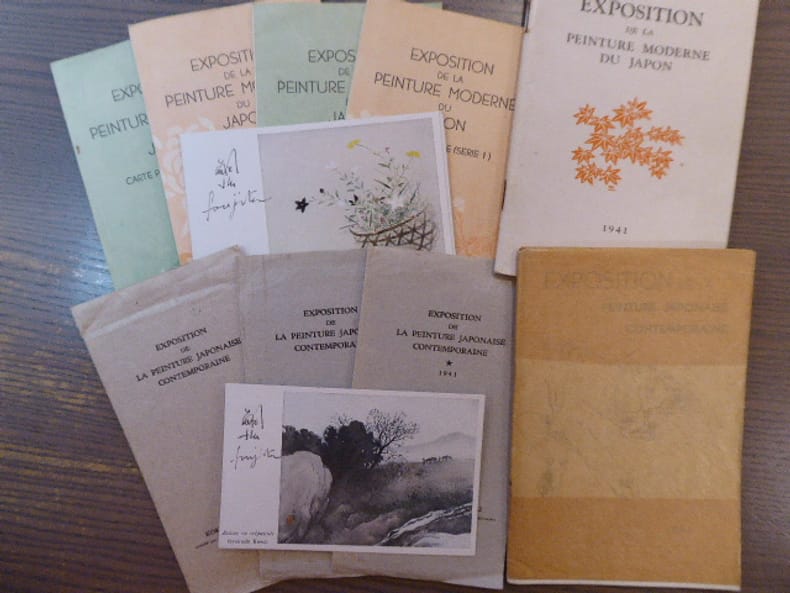
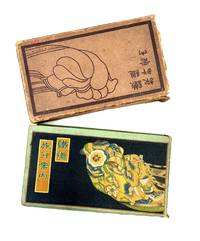
83791Kokusai Bunka Sinkokai Et Société Nippon-Indochine Hanoï et Saïgon 1941 EXPOSITION de la PEINTURE MODERNE du JAPON.Hanoï et Saïgon,Kokusai Bunka Sinkokai et Société Nippon-Indochine, sous lesauspices de l'Académie Impériale des Arts du Japon, 1941. 4 séries de cartes postales ( 17 au total : 4+4+4+5 ) dont une avec SIGNATURE AUTOGRAPHE de Léonard Tsuguharu FOUJITA, sous pochettes illustrées de l'éditeur.- Exposition de la Peinture japonaise contemporaine. KokusaiBunka Shinkokai, 1941. 3 séries de cartes postales ( 11 en tout: 3+5+3 ) dont trois avec SIGNATURE AUTOGRAPHE de Léonard Tsuguharu FOUJITA, sous délicates pochettes en papier japon gris de l'éditeur.- Exposition de la peinture japonaise contemporaine. 1941.Catalogue. Tokio, Kokusai Bunka Shinkokai, 1941. In-8 broché, sous couveture illustrée en couleurs. Reproductions en couleurs et en noir.- Exposition de la peinture moderne du Japon. 1941. [Catalogue]. Tokyo, Kokusai Bunka Shinkokai et Société Nippon-Indochine, 1941. In-8 broché, sous couverture illustrée en couleurs. Reproductions en noir. Bel et rare ensemble en parfait état.
0150-Co.J. Radierung und Kaltnadel, 1881, auf cremefarbenem Bütten, signiert und numeriert und mit Atelierstempel. 24:32 cm. Literatur: Beraldi 35. Nr. 79 der Auflage. Sehr guter und vollrandiger Abdruck, mit Lichtrand rundum.
2025253432025 Peinture à l'huile sur toile sablée, signée en bas à droite, 2026, 92 x 73 cm.
1890000012919n.p.: n.p. 1890. Hardcover. Good. Oblong 8vo. 27.5 cm x 38 cm. 50 hand-colored albumen photographs on double-sided stiff cardstock leaves. All tissue guards present. Black lacquered boards with beautiful raised decorations carved and painted on bone on the front board: a woman wearing a kimono riding a dragon and a child waving a flag the rear board with decorations stamped in orange and gold; the spine in five compartments gilt decorations and rules on the spine; all edges gilt. Binding is sewn cloth. White endpapers and pastedowns. Most photographs with a caption in the corner. Photographs measure 19 cm x 25.5 cm. The photographs depict landscapes of Nagasaki a statue of Buddha temples street life in Japan Kioto Tokyo women playing instruments clothing and porcelain shops and so much more. A stunning album of daily life in Japan at the end of the nineteenth century. The front board nearly detached from the spine but holding to the binding on the front gutter cloth. A few photographs may have had their red color touched up but it is difficult to tell. n.p. hardcover
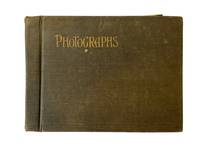
1920216411920. Japan OccupationWWII Primary-source photo album of United States military governance during the occupation of Japan with particular emphasis on the enforcement of legal authority and the administration of war crimes proceedings under Allied control. Centered on the career of General Charles Sabin Ferrin in his capacity as Provost Marshal of Tokyo the album captures the institutional frameworks through which U.S. forces maintained order supervised political transition and participated in the International Military Tribunal for the Far East IMTFE. The collection includes images of high-ranking military and political figures official proceedings connected to the war crimes trials and formal and informal interactions with Japanese leadership situating Ferrin's role within broader systems of occupation-era administration legal oversight and diplomatic engagement.<br /> <br /> The album contains 85 black-and-white silver gelatin photographs varying in size from 2.5" x 2.5" to 6" x 4.25" mounted in a clothbound album measuring approximately 7" x 5". The images begin in the United States depicting early domestic life before shifting focus to Ferrin's stationing in China from 1919 into the 1920s and later to his critical role in postwar Japan where he engaged with Japanese political and military officials at the highest levels. The China-era photographs include striking scenes of the U.S. Army's presence in Tientsin Tianjin as indicated by labeled photographs of "U.S. Army Buildings Tientsin" designed by architect Albert Benz. Other images capture American cavalrymen of the 15th Infantry Regiment on horseback lined up in disciplined formation labeled "1921 Tientsin China 15th Infantry U.S.A." The album also contains personal family moments such as a uniformed soldier cradling a small child on horseback annotated "1918 Russell" and an image of two children dressed formally on a walkway inscribed "Aug 26 1919 leaving for China." Additionally candid moments in Tientsin show a young child riding in a rickshaw pulled by a Chinese laborer and another with a Chinese woman identified as an "Ama" caring for the family's child at a beach in Chinwangtao Qinhuangdao in July 1921. <br /> By the late 1940s the album shifts focus to Ferrin's tenure as Provost Marshal of Tokyo a role that placed him at the center of postwar military governance and legal oversight. Several photographs depict U.S. military officials dining and meeting with Japanese political figures. One particularly notable photograph shows Ferrin standing beside a dignitary identified as "Prince Takamatsu Hirohito's younger brother." Other images depict high-ranking officers including Admiral James O. Richardson testifying at the International Military Tribunal for the Far East IMTFE with a caption stating: "Admiral James O. Richardson Commander-in-Chief United States Fleet testifies on the witness stand at the International Military Tribunal for the Far East during the Pearl Harbor phase of the trials of the 27 accused Japanese war criminals." A separate image shows troops of the 720 MP Battalion executing a right-dress formation in front of the War Ministry Building in Tokyo on October 13 1947. The presence of these high-ranking officials alongside candid social and formal meetings with Japanese elites underscores Ferrin's prominent role in enforcing law and order during the American occupation and his involvement in overseeing war crimes proceedings. The album is in very good condition overall. A rare and historically significant visual chronicle of General Charles Sabin Ferrin's career across pivotal moments in 20th-century history with firsthand images of U.S. military presence in China the occupation of Japan and high-level engagements with political and military leadership. unknown
19702090502126801266Japan Broadcasting Publishing Association 1970. Soft Cover. Fine. Number of pages: 78 pages Size: B5 size Number of books: 7 separate volumes Japan Broadcasting Publishing Association paperback
192485112Hakubunkan 1924. Fine. Hakubunkan 1924 19.50 x 11 cm broché Work published by the Japanese Ministry of Railways admirably illustrated with 130 double-page color illustrations by Hatsusaburo Yoshida: 2 decorating the pastedowns traditional Japanese animated scenes 26 views and 104 bird's-eye view landscape maps. Numerous black maps including a large one at the end of the Japanese railways which is detached. Pale green cloth covers. Smooth spine with title. Boards printed in black with a sample of Japanese fabric a cartouche for the title. Cardboard slipcase repeating the board motifs in black. Small lacks to slipcase rubbing and corners bumped. Fine condition of the collection with occasional light foxing. A paper lack to the pastedowns at the end of the volume. Some pages with fine manuscript notes in ink. Celebrated as the Hiroshige of the Taisho era Yoshida 1884-1955 was a painter and cartographer. His bird's-eye view maps and views are enhanced by multiple colors and changes of season and weather. A major retrospective of his works took place in Japan at the Sakai Museum in 1999. Hakubunkan hardcover
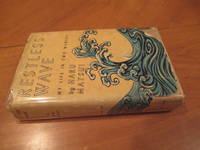
1940049441New York City Ny: Modern Age Books 1940. 1st Edition 1st Printing. Hardcover. Near Fine/Fair. 252 Pp. Beige Cloth. First Printing. Inscribed By The Author To Leftist Social Artist William Gropper And His Wife "To Sophie And Bill With Love And Best Wishes From The Author/ Aya". Book Lightly Used Dust Jacket Priced $2.50 Worn Browned And Chipped. Ayako Ishigaki Ishigaki Ayako 1903 - 1996 Was An Issei Journalist Activist And Feminist Who Was Among The First Japanese American Women To Publish A Memoir In English. She Was Born Tanaka Ayako In Tokyo Japan In 1903 The Daughter Of A College Professor. During The 1920S She Became Active In Politics. While In The United States She Became Friends With Writers Pearl S. Buck Helen Kuo And Agnes Smedley And Artist Yasuo Kuniyoshi. Tanaka First Came To The United States In 1926 Accompanying Her Sister Whose Husband A Diplomat Was Posted To Washington D.C. Soon After She Moved To New York City Where She Audited Courses At Columbia University. In New York She Met The Painter Eitaro Ishigaki Whom She Would Marry In 1931. Following The Japanese Invasion Of Manchuria In 1931 Ishigaki Became Outspoken In Protesting The Japanese Military Aggression In China And Reported On Japan For The Left-Wing Magazine The New Masses. Her Articles Emphasized The Negative Impact Of Imperialism And Industrialism On Japanese Workers Particularly Women. During This Time She Adopted The Pseudonym Haru Matsui To Protect Her Family In Japan From Possible Retaliation For Her Activism. In The Spring Of 1937 She Moved To Los Angeles Where She Contributed A Biweekly Column To The Japanese American Newspaper Rafu Shimpo Writing Under The Pen Name May Tanaka. This Column Focused On Daily Life While Incorporating Feminist And Antiwar Commentary. She Returned To New York Later That Year. In 1938 She Went On A Lecture Tour With The Modern Dancer And Left-Wing Militant Si-Lan Chen. During One Of Her Lectures She Was Invited To Write A Book By A Representative Of The Progressive Publishers Modern Age Books. Ishigaki's Memoir Restless Wave: A Life In Two Worlds Published As Haru Matsui In January 1940 And Was Widely Reviewed In Publications Such As The New Yorker And The New Republic. While Framed As A Memoir And Generally Following The Arc Of Her Life Restless Wave Also Simplifies Some Elements Of Her Biography And Later In Life She Described It As A "Novelistic Semi-Autobiographical Text. While Restless Wave Gained Critical And Popular Acclaim In The U.S. Its Strong Critiques Of Japanese Society And Militarism Also Brought Ayako Negative Attention From The Japanese Government. The Book's Publication Also Led To A Friendship Between Ayako And The American Author Pearl S. Buck Who Reviewed Restless Wave Positively And Invited Ayako To Contribute To Asia Magazine. After The Outbreak Of War Between The U.S. And Japan In 1941 Ayako And Eitaro Were Forced To Register As Enemy Aliens. Although They Were Not Incarcerated Due To Their Residence On The East Coast They Were Subject To Curfews And Random Searches And Lost Their Jobs. In 1942 She Began Working For The Office Of War Information. In The Late 1940S As The Cold War Took Hold And Anti-Communism Became Dominant In The U.S. Ayako And Eitaro Were Placed Under Government Surveillance Due To Their Left-Wing Activism. In 1951 Eitaro Was Arrested And Deported By The American Government And Ayako Returned To Japan With Him. Following Her Return To Japan Ayako Continued To Work Extensively As A Journalist Lecturer And Translator. In 1955 She Published An Article With The Title "Shufu To Iu Dai-In Shokugyö-Ron" 'Housewife: The Second Profession' In Which She Called For Japanese Housewives To Seek Fulfillment In Work Beyond The Home Which Set Off A Major Discussion In Japanese Media Termed The 'Housewife Debate'. She Continued To Write Prolifically Throughout Her Life Eventually Publishing Around Thirty Books In Japanese And Becoming A Television Commentator. <br/> <br/> Modern Age Books hardcover
19862083002117400851University of Tokyo Press 1986. Soft Cover. Fine. Number of books: 10 University of Tokyo Press paperback
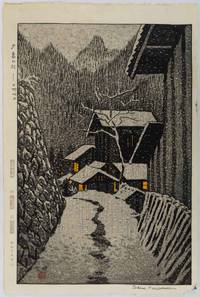
1958218327京都. Kyoto.: 芸艸堂. Unsodo. Showa 33 1958. Colour woodblock print 40.8 x 27 cms including margins published by Unsodo in 1958 the title Unsodo publisher's seal printer's seal carver's seal left margin Unsodo 'Gei' watermark Kasamatsu's signature and red seal lower left and signed in alphabet lower right kento cut due to the printing process lower right sheet a little dusty and creased but the image in very good condition. Kasamatsu Shiro 1898 – 1991 was an active member of the Shin-hanga New Wood Block movement and had a very long and successful career. After the Pacific War his style evolved embracing western techniques and this 1958 print showcases his later work. Minakami in Gunma Prefecture is located in the mountainous area north of Tokyo and is known for its hot springs. The print depicts a wintery dusk scene in the village with falling snow against the glow of house lights. <br> <br>From the collection of the late John Caiger 1930-2022 lecturer in Asian studies ANU. . 芸艸堂. [Unsodo]. unknown
189016761[Années 1880-1890] 1890 Album in-8 oblong en accordéon. Accroc de tissu, quelques ff. intercalaires déchirés mais bonne condition.
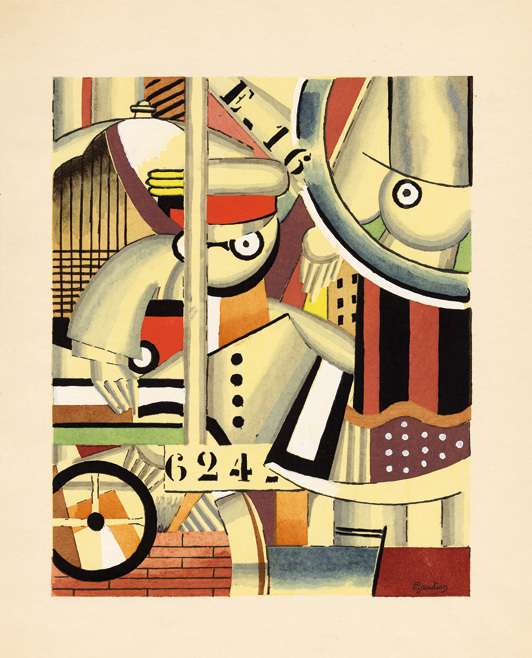
192713077Toulouse, Editions Richard, 1927 ; in-4, broché, étui de papier marbré de l'éditeur ; (4), 177, [178] pp., (1) f. achevé d'imprimer, 20 planches hors-texte en couleurs de Georges Gaudion, à la manière de : Laboureur, Marie Laurencin, Utrillo, Joseph Hémard, Henri Rousseau, Le Brun, Hermine David, Rouault, Picasso, Victor Hugo, Fernand Léger, Modigliani, Chas Laborde, Van Dongen, Gus Bofa, Henri Matisse, Cézanne, Vlaminck et Charles Martin ; couverture crème rempliée, imprimée en rouge et noir.