24 762 résultats
2081002109000208Japan Telegram Communications N.A. Soft Cover. Fine. Number of pages: 137p Size: 18cm x 12cm Japan Telegram Communications paperback
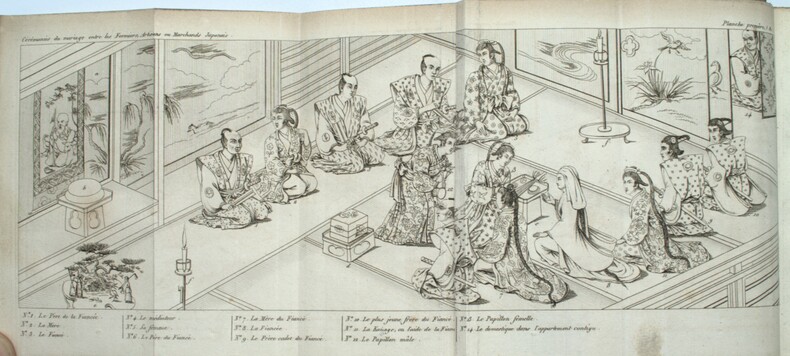
1736PHO-2144Paris, Chez Giffard, Rollin, Gandouin, Lamesle, Nyon, 1736, 2 volumes in-4 (26x21cm), 4ff.-LVIII-667pp. & 1f.-XII-746pp., titre en noir et rouge, texte sur 2 colonnes, relié plein veau époque, dos à nerfs ornés, pièces de titre et tomaison, triples filets aux plats, tranches dorées, ex-libris armorié en page de garde, charnières fendues, coins usés, coiffes arasées, manque une pièce de titre, pièce de titre avec manque, cachets effacés aux titres, réparation au titre(t2), 2 planches avec réparation, manque la page 699-700 (en copie).
1971510Chuo-koron-sha, Tokyo 1971. 1 volume petit in-4 (259 x 213 mm) relié sous cartonnage blanc de l'éditeur et jaquette imprimée en noir sur fond pourpre. Edition originale et premier tirage : 84 PHOTOGRAPHIES PAR FUKASE réparties en 6 chapitres : slaughter - Congratulation - Frolic - Memento - Mother - Music. Préface de Nada Inada en japonais et en anglais : "Rorschach, Obscenity, Taboo, Play and Fukase". In-fine une courte biographie bilingue de 1934 à 1971. Le premier livre publié par Fukase. 84 black and white photographs. Original white paper covered boards, original dust-jacket, printed in purple and black. FIRST EDITION OF FUKASE'S POWERFUL AND RARE FIRST BOOK.
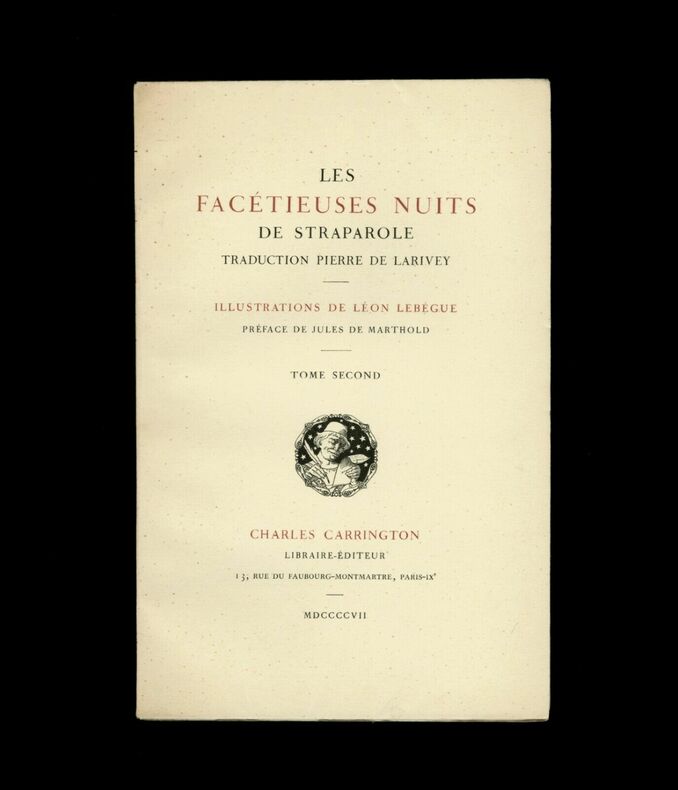
1907AMO-4479Traduction Jean Louveau. Illustrations de Léon Lebègue. Préface de Jules de Marthold. Charles Carrington, libraire-éditeur, 1907 [imprimerie nationale]. 2 volumes in-8 brochés (23,5 x 15 cm) de LXVIII-312 et 371 pages. 50 illustrations hors-texte Léon Lebègue aquarellées au pochoir (mise en couleurs par la maison Saudé). Nombreuses lettrines historiées tirées en rouge (également par Léon Lebègue). Exemplaire à l'état proche du neuf. Les dos ne sont pas fendus et en excellent état. Quelques petites rousseurs sans gravité sur les couvertures. Intérieur parfait. Tirage de tête à 50 exemplaires sur papier du Japon. Il a été tiré en outre 750 exemplaires sur vergé d'Arches. Notre exemplaire imprimé sur Japon (numéroté au composteur) ne contient ni le dessin original annoncé, ni la suite imprimée en rouge et noir sur Japon. La suite de 50 compositions par l'imagier Léon Lebègue est de toute beauté. L'artiste colle fidèlement aux scènes décrites dans les différents chapitres. Les moines sont à l'honneur dans leurs turpitudes tandis que les femmes y sont souvent malmenées, aux prises des jeux de l'amour. Très belle édition bibliophilique donnée par le libraire-éditeur sulfureux Charles Carrington spécialisé dans les éditions traitant de la flagellation et autres curiosa au tournant du siècle (1900). Bel exemplaire tel que paru du rare tirage sur Japon (sans dessin, sans la suite).
1679PHO-1446Paris , 1679 , 3 vol. in-12, plein veau sous emboîtage, dos orné , filet sur les plats , 19ffn.-780pp.-4ff. , 6ff.-616pp. , 5ff.-564pp.4ff. , charnières faibles , 1 plat détaché , coupes , coins usés, coiffes sup. tome 2 et 3 abimées, réparation au titre tome 2 , manque de papier à l’épître tome 3 , une carte avec manque , déchirure au pli à la carte du Tunquin , trace de réparation avec adhésif sur une planche coupée court .
1822PHO-1568Paris, Nepveu, 1822. 3 volumes in-16 (14.5x90mm), reliés demi-basane époque, XXX-127pp.-139pp-206pp. Illustré de 23 gravures dont 17 dépliantes, accroc au dos tome 3, légers frottements aux plats, 2 planches volantes.
19952080502106401801Not Available 1995. Soft Cover. Fine. The book is in fine condition. Not Available paperback
2092902143300073Not Available N.A. Soft Cover. Fine. Number of pages: 7 books Not Available paperback
19752090202120807145Not Available 1975. Soft Cover. Fine. Volume: 1 Not Available paperback
1925165426Japan: no stated publisher c.1925. An attractive tourist souvenir produced at a time of growing tensions between the old and the new showing high-status women in traditional clothing and settings smoking getting ready eating relaxing and travelling in rickshaws. We have located a single copy at the University of Idaho. This album follows the style of those published by the photographic studios of Takagi Teijiro born c.1875 and Ogawa Kazumasa 1860-1929 and may well be one of their unattributed productions. Landscape octavo ff. 13. With 12 hand-coloured collotypes. Original patterned cloth boards brown silk musubi toji binding spine ends capped with brown silk gilt-flecked brown pastedowns and title page. Binding still fresh spine ends worn plates clean and bright. A fine copy. hardcover
1965103454BBHamburg, Nannen, 1965. 4°. 184 S. mit 169 Tafeln. OLn. mit farbig illustr. OU. ("Die Zeit" Bücher).
81170187. BASEBALL - JAPAN Shihon Gakkou-hen. SHOGAKU TOKUHON Maki no Ichi. Aichi-ken Nagoya Shihongakko Teacher's College n.d. 1870's An interesting little elementary school reader from the first series of textbooks designed and created by the Teachers College Normal School system in Japan after the Meiji restoration to introduce "Western Learning" to the country. What follows is a series of excerpts from an informative article found online at http://wwwwp.mext.go.jp/hakusyo/book/hpbz198103/hpbz198103_2_035.html "The Normal School which was under the direct jurisdiction of the Department of Education was also requested to compile elementary school textbooks on the basis of its practical experience. Also an office for editing elementary school textbooks was set up in the Normal School in December 1872. The Department of Education encouraged independent prefectures to reprint the textbooks and other educational material which it and the Normal School had compiled and it was not long before most of the prefectures adopted this practice and the reprinted textbooks were in nationwide use. Especially following the establishment of regulations for the course of study for elementary schools by the Normal School the textbooks prepared by this institute gained wide acceptance. These textbooks included elementary school readers introductory geography outlines of Japanese topography outlines of world topography outlines of Japanese history outlines of world history elementary school arithmetic etc. .The elementary school textbooks proved to be an interesting introduction of the new knowledge based on the Civilization and Enlightenment Bunmeikaika thought and they were accepted not only as textbooks but also as popular reading material for the public at large. Thus their influence was of considerable importance in the dissemination of the new culture." It is pretty clear that the introduction of Western culture also entailed the introduction of a least a variety of baseball in the 1870's as well a fact confirmed by other sources on the origins of baseball in Japan. The American educational consultants and their Japanese colleagues in Aichi saw fit to include a cut and a story with a group of boys playing with bats and balls pitching and hitting - interesting proof that baseball is nearly as old in Japan as it is in the States. The text of the story crude. unknown
151960917Nikko Japan: n.p. possibly T. Hasegawa Publisher’s ca. 1915-1917. Oblong folio. 14.5 x 10.25 in. 24 pp unpaginated. brown bifolium leaves w/ slits cut into corners backing paper within the created pouch and 24 silver gelatin printed-out-paper hand-painted watercolour photographs a few w/ captions w/in the negative all printed on the special medium thickness gelatin printing-out-paper also no bleed-through from the nicely executed water-colouring. Contemporary beige-coloured rough raw padded silk post-binder punch-sewn at gutter margin w/ golden silk braid minor wear & fraying to upper & lower fore-edges wear to corners some scuffing occasional minor tears to brown paper fore-edges still a VG- exemplar from the library of Caroline Augusta Gray Kamm 1840-1932 noted socialite and philanthropist in Portland built home for poor women & girls with the YWCA and was daughter of PNW pioneer William H. Gray 1810-1889 who traveled to the Lapwai Mission in Lewiston ID in 1836 where he was the Nez Perce secular agent and subsequently later married Jacob Kamm 1823-1912 pioneering Oregon industrialist and entrepreneur. An exceptional Taisho-era souvenir album composed of nicely watercolour-painted gelatin printing-out-paper photographs allowing the artist to achieve an ethereal and mystical effect in the images almost as if there is frequently a mist overlaying the scene. These are definitely not photomechanical collotype or gravure process images and the softness achieved in the production indicates these were developed as glass-plate negative contact prints exposed to strong sunlight on an exceptional medium weight thickness matte-finish paper. This series of images capture the road to the Nikko Toshogu Shrine; the famed Five-Storied Pagoda located at the entrance; one wing of the Tokugawa Ieyasu Temple; the iconic Three Wise Monkeys on the inside of the shrine once part of what was originally 8 monkeys on the unpainted wooden sacred stable in front of the Yomoeimon. Also included here are photos capturing the splendid Yomeimon Gate famed for its glittering impact with more than 240000 pieces of gold leaf the Sukibei Wall at the Toshogu Shrine the Nikko Station at the Shrine and the interior of the Nikko Temple. One of the exceptional photos included here is that of the Jiun-ji Temple of the 74 Narabi Jizo Statues along the road to the Kanmangafuchi Abyss along with nicely executed photos of the Kegon Falls and Lake Chuzenji. Although unidentified by photographer’s imprint within negative or on verso of inserted images these types of souvenir photographs could be purchased from souvenir and stationery stands in Nikko Kyoto or other tourist spots from 1885 until after World War I. See: Worswick & Morris Japan: Photographs 1854-1905 1979 and Dower Century of Japanese Photography 1980. n.p., possibly T. Hasegawa Publisher’s, unknown
192812860Various locations in Hawaii and Japan 1928. 12 leaves illustrated with 123 mounted sepia-toned photographs many captioned in the image area occasional manuscript captions on the album leaves. Oblong folio. Contemporary pictorial cloth illustrated with various Japanese motifs string tied. Minor wear to cloth. Internally clean. Very good. An attractive and informative vernacular photograph album memorializing the experiences of Protestant missionaries in the Pacific. Protestant missionaries came to Hawaii starting in the 1820s and eventually became quite socially and politically influential. The first Protestant missionaries arrived in Japan in the mid-1840s. They were relegated to treaty ports and prohibited from proselytizing but once these restrictions were lifted they were fairly successful with 300 churches and 34000 converts by 1889. Their main avenue was education and by the 1920s they were well established in this sector. The present album of photographs were taken by an American missionary in Hawaii and Japan in 1927 and 1928. It is not entirely clear whether the photographer did any missionary work in Hawaii or if it was just a stop on the way to Japan; the photos from Hawaii show Honolulu harbor from the deck of the President Madison the "Club House" and Diamond Head.<br /> <br /> The photographs from Japan are more clearly missionary. The photographer was involved in teaching in Kyoto; captions include "Kami Kyoku Bishamon Cho" listed as a theological school in the 1928 Japan Mission Year Book "Japanese Language School" "The Faculty" "Nihongo Faculty" and "St Agnes Ena -- Music." There are two St. Agneses in the Year Book both middle schools one in Tokyo and one in Kyoto. Two photos of an older Japanese man in a clerical collar captioned "Mr Hayakawa" suggest this is the St. Agnes in Kyoto as Mr. K. Hayakawa is listed as the head of that school. Other individuals listed in the Year Book include Sally Rembert Thora Johnson and "Maxine" who is probably Maxine Schannep with the ABCFM. Generally the school shots are exteriors of buildings and people posing outside of them; there are also shots of Christmas trees at St. Agnes the students of "Helen’s Kindergarten" in Koriyama girls in school uniform with deer at Nara Park and several of the nurse's home at St. Luke's Hospital in Tokyo.<br /> <br /> Other photos show life around Kyoto and other cities including Nikko and Fukui. Most of the men are in Western dress while the women and children wear kimono. Two photos of Buddhist monks included in the album were taken by Japanese photographer Kurokawa Suizan; these show a KomusŠin a tengai hat playing the flute and a kasa-hatted monk on the steps of a building. Finally some uncaptioned shots show a procession taking place in front of an audience. Some in the procession carry flags a few are on horseback and a few carry plants on their heads and part of the procession carries a litter.<br /> <br /> Overall the album documents both religious education and everyday life in late 1920s Japan; of particular interest to historians of Protestant missionaries. unknown
1870811701870. BASEBALL - JAPAN Shihon Gakkou-hen. SHÔGAKU TOKUHON Maki no Ichi. Aichi-ken Nagoya Shihongakkô Teacher's College n.d. 1870's An interesting little elementary school reader from the first series of textbooks designed and created by the Teachers College Normal School system in Japan after the Meiji restoration to introduce "Western Learning" to the country. What follows is a series of excerpts from an informative article found online at http://wwwwp.mext.go.jp/hakusyo/book/hpbz198103/hpbz198103_2 _035.html "The Normal School which was under the direct jurisdiction of the Department of Education was also requested to compile elementary school textbooks on the basis of its practical experience. Also an office for editing elementary school textbooks was set up in the Normal School in December 1872. The Department of Education encouraged independent prefectures to reprint the textbooks and other educational material which it and the Normal School had compiled and it was not long before most of the prefectures adopted this practice and the reprinted textbooks were in nationwide use. Especially following the establishment of regulations for the course of study for elementary schools by the Normal School the textbooks prepared by this institute gained wide acceptance. These textbooks included elementary school readers introductory geography outlines of Japanese topography outlines of world topography outlines of Japanese history outlines of world history elementary school arithmetic etc. .The elementary school textbooks proved to be an interesting introduction of the new knowledge based on the Civilization and Enlightenment Bunmeikaika thought and they were accepted not only as textbooks but also as popular reading material for the public at large. Thus their influence was of considerable importance in the dissemination of the new culture." It is pretty clear that the introduction of Western culture also entailed the introduction of a least a variety of baseball in the 1870's as well a fact confirmed by other sources on the origins of baseball in Japan. The American educational consultants and their Japanese colleagues in Aichi saw fit to include a cut and a story with a group of boys playing with bats and balls pitching and hitting - interesting proof that baseball is nearly as old in Japan as it is in the States. The text of the story crude. unknown books
171811JAPAN. Mondokoro Kirikata. "Stencils for crest-cutting". 8 Leaves. 8vo. in a new chitsu case. Tokyo: Onoya Kinzo N.D. An extremely fragile little pamphlet with instructions on how to cut family crests from folded paper. Following the instructions ensures the destruction of the pamphlet hence its rarity with no copies listed on OCLC. unknown
19922110502150900598Japan Broadcasting Corporation 1992. Soft Cover. Fine. Volume: 1 Japan Broadcasting Corporation paperback
19922110502150901884Japan Broadcasting Publishing Association 1992. Soft Cover. Fine. Volume: 1 Japan Broadcasting Publishing Association paperback
19922110502150900880Japan Broadcasting Publishing Association 1992. Soft Cover. Fine. Volume: 1 Japan Broadcasting Publishing Association paperback
B143008-2Paris Maurice de Brunoff 1900. xv 1 277 3pp. 73 plates 68 collotype; 5 color 2 double-page each with tissue guards with descriptive letterpress. 99 text illus. Lrg. folio. Cloth. T.e.g. Compiled by Mataitci Foukoutci and Yoshio Ki; translated by E. Tronquois. Material collected under the auspices of the Imperial Museum at Tokyo. Ex-library. Paris (Maurice de Brunoff), 1900. hardcover
18812091202133201037Shinshichi Okajima and others 1881. Soft Cover. Fine. Number of books: 50 books in total Shinshichi Okajima and others paperback
19882091502133700215Rare Book Publishing Association 1988. Soft Cover. Fine. The book is in fine condition. Rare Book Publishing Association paperback
198006995Tokyo Japan: Kodansha International. As New in As New dust jacket. 1980. Revised Edition. Hardcover. All three volumes are As New tight clean and crisp in As New dustjackets. The books are housed in original clamshell boxes in Very Good or better condition with some light shelf wear and rubbing with some scratches to paper illustration to front on box of volume I. No inscriptions. No remainder mark. Not price clipped. Not ex-library. Collectible.; Folio - over 12" - 15" tall . Kodansha International hardcover
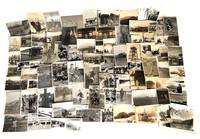
1947196441947. 11th Airborne Division paratroopers photographed during the early American occupation of Japan document airborne training and daily military life within one of the most distinguished U.S. Army airborne units of the Second World War. More than two hundred photographs dating primarily from 1947 depict members of the 11th Airborne Division conducting parachute jump training weapons drills and daily base activities while stationed in Japan after the end of the Pacific War. The photographs appear to have been assembled by a soldier identified through accompanying material as Jeff C. Wall likely assigned to a military government team in Yamagata Prefecture. The images capture the division during the transitional period between wartime combat service in the Pacific and the emerging American military presence in East Asia that characterized the early Cold War.<br /> <br /> Archive contains 217 Silver Gelatin photographs ranging from approximately 2.25 x 2.5 inches to 4.75 x 6.5 inches depicting paratroopers of the 11th Airborne Division in Japan. The archive includes twelve photographs documenting parachute jump training sequences from aircraft exit through descent and landing as well as several images of fully equipped paratroopers lined up before boarding troop carrier aircraft. Numerous photographs show soldiers around transport planes and other aircraft on base airfields. Additional images depict artillery and machine gun training exercises paratroopers assembled outside a command building displaying the slogan "Shape Up or Ship Out" and informal scenes of soldiers gathered around barracks or posing in groups. The photographs also record elements of base life including an enlisted men's club ticket associated with the Yamagata Military Government Team women service personnel including a nurse playing cards with soldiers and views of the surrounding Japanese landscape. Approximately fifteen photographs show Mount Fuji and nearby terrain around the camp in northern Japan.<br /> <br /> The 11th Airborne Division earned distinction during World War II through its combat operations in the Pacific theater particularly during the campaign for Luzon in the Philippines in 1945 where the division conducted airborne assaults and participated in the liberation of Manila. Units of the division also carried out a well known raid that freed Allied prisoners from the Los Baños internment camp. Following Japan's surrender in 1945 the division became part of the U.S. occupation force tasked with maintaining security and administrative control across parts of Japan. The 1947 photographs document airborne training and routine service during this occupation period when American military forces remained stationed throughout the country while the geopolitical tensions of the emerging Cold War began reshaping U.S. global military deployments. In later years the division was reassigned to Alaska where its airborne operations in Arctic environments led to the nickname "Arctic Angels." Minor handling wear typical of vernacular military photographs. Overall condition very good. unknown
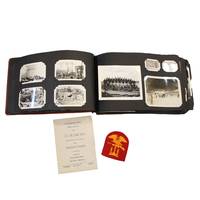
1943185431943. United States Marine Corps World War II photograph album documenting global American military operations across the Pacific and Atlantic theaters during the 1940s including combat scenes naval deployments and high level wartime leadership meetings. The album records the experience of U.S. Marine personnel during the global campaigns against Axis powers with photographs spanning the South Pacific Japan North Africa the Mediterranean Greenland and Alaska. Numerous images show Marines in active combat environments amphibious landings and wartime garrison life providing visual documentation of the operational geography of the war. The album also preserves photographic evidence of a significant wartime meeting in Hawaii on July 26 1944 when President Franklin Roosevelt met with General Douglas MacArthur and Admiral Chester Nimitz to determine the strategic direction of the Pacific campaign. Roosevelt ultimately endorsed MacArthur's plan to return to the Philippines a decision that shaped the final phase of the Pacific war.<br /> <br /> Photograph album compiled by a U.S. Marine during World War II containing 364 black and white silver gelatin photographs and 21 real photo postcards depicting American military operations across multiple theaters including Namur Island Peleliu New Guinea the Solomon Islands Tarawa Cape Gloucester Saipan North Africa and Alaska. Several photographs appear to be official Marine Corps press images with printed captions such as "Marines take cover in invasion of Tarawa" "Actual landing operations on South Sea Island" and "Two rear gunners in Guadalcanal bomb shelter." Other images show Marines moving through tropical marshes occupying foxholes standing watch in lookout towers assembling on invasion beaches and operating aboard naval vessels. The album also contains candid images of President Franklin Roosevelt General Douglas MacArthur and Admiral Chester Nimitz taken during the Pacific Strategy Conference in Hawaii with approximately twenty nine photographs documenting the leaders meeting and greeting during wartime consultations. Additional photographs depict local populations encountered by American forces in the South Pacific and North Africa scenes of war damaged buildings and the daily lives of servicemen both on duty and during periods of rest.<br /> <br /> Album containing 385 photographs in total including 364 silver gelatin prints and 21 real photo postcards with image sizes ranging approximately from 1.75 x 2.75 inches to 3.5 x 4.5 inches. Photographs mounted in an original tobacco leather album. The archive also includes several loose photographs handwritten greeting cards an invitation for officers and crew of the seaplane tender USS Pine Island dated April 26 1945 with program details and a shoulder sleeve insignia for an Engineer Special Brigade. Minor age wear present; photographs remain clear with strong contrast and legible captions. The album provides a wide ranging visual record of American Marine operations during the Second World War linking frontline combat imagery with documentation of the strategic leadership decisions that shaped the Pacific campaign. unknown