[COLLECTIF].Livre Rare Book
24 762 résultats
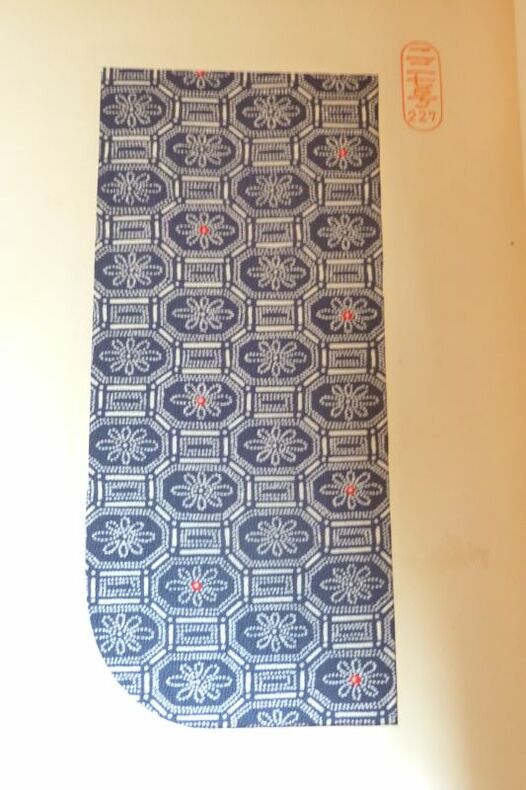
1120Sans lieu [Japon], Sans mention d'éditeur, sans date, Epoque Meiji, début du XXe siècle. In-folio - 28 x 36 cm. Reliure à la japonaise, plats de carton recouverts de soie vert d'eau à décor végétal, pièce de titre imprimée sur papier, collée sur le premier plat, 4 vis de reliure dorées pour maintenir les planches. 31 planches. Fort et beau volume comprenant 31 superbes échantillons, pleine page, de soie aux motifs variés, de style traditionnel ou plus fantaisistes, dans des tons et coloris également très divers. Chaque échantillon est protégé dans une pochette de carton fin recouverte de papier washi.
Un volume in 8o di XI-(3)-295 pagine + 3 tavole sinottiche ripiegate ft, + 17 illustrazioni incise (planches) ripiegate in fine + 1 carta geografica ripiegata del Giappone, con zone minerarie a colori. Frontespizio in giapponese. -… comprenant la denomination, l'histoire et les applications aux artes, a l'industrie, a l'economie, a la medicine des substances qui derivent des trois regnes de la nature... Partie inorganique et mineralogique. Legatura coeva in mezza pelle rossa. Bell'esemplare in ottime condizioni. Una seconda parte venne pubblicata 5 anni più tardi, nel 1883. Stampato in Giappone da dal tipografo Levy che creò nel 1870 un giornale in francese proprio a Yokohama.
192716299Lyon, Edition de l’Antilope (Imprimerie Audin), 1927 ; in-4 ; mouton citron à grand décor à froid de style renaissance, dos muet, couverture illustrée conservée ; 10 feuillets non paginés comportant 12 bois gravés y compris celui de la couverture et le frontispice. Exemplaire en partie non coupé.
1000Edition du Musée de la Dynastie LI, Kyoto, 1933.
12 volumes bound in 7. Together, these three works constitute the standard bibliography of East Asia. Monumental. 8vo. Fine in publisher's cloth.
0761-Co.J. Radierung, signiert. 28,1:19,8 cm.- Ausgezeichneter Druck von der in den Rändern ungereinigten Platte, mit etwas Plattenton, auf festem, chamoisfarbenem Bütten. Der volle Rand leicht fleckig, kleiner Einriß rechts hinterlegt, im Passepartoutausschnitt leicht gebräunt.
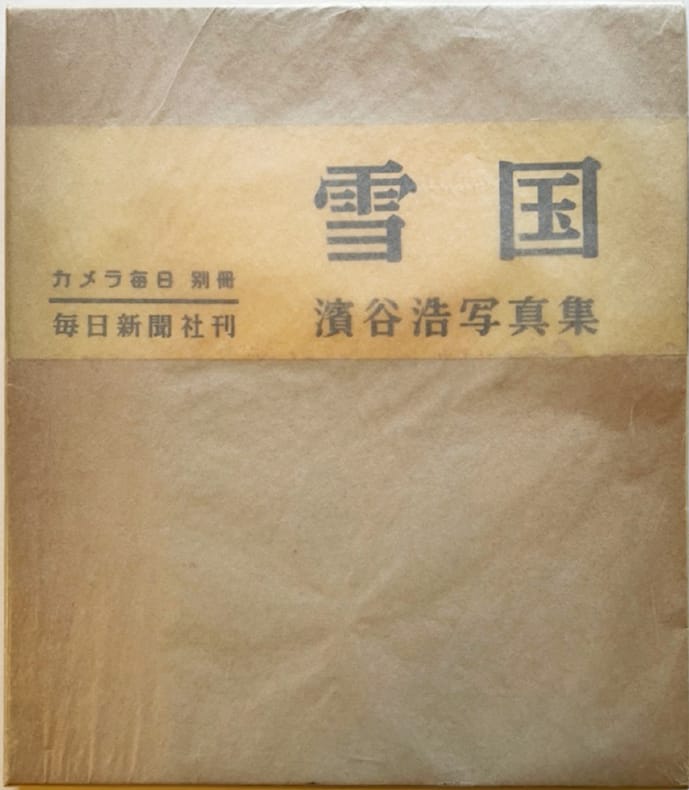
19561054371956 1 Tokyo, 1956, Mainichi Shinbunsha, 303x264mm, 138p., 108 photographies légendées de Hamaya. Préface de l'ethnologue Keizo Shibuya, notes par le photographe, postface en anglais.Bradel papier noir, jaquette photographique, titre et nom de l'auteur calligraphiés par Daigaku Horiguchi avec un feuillet de fiche technique, emboîtage en carton avec étiquette.
ERJ-340Superbe ouvrage en accordéon complet de ses 12 estampes japonaises érotiques (Shunga). Estampes en très bon état de format Oban (37 x 26 cm), orientation Yoko-e (paysage).
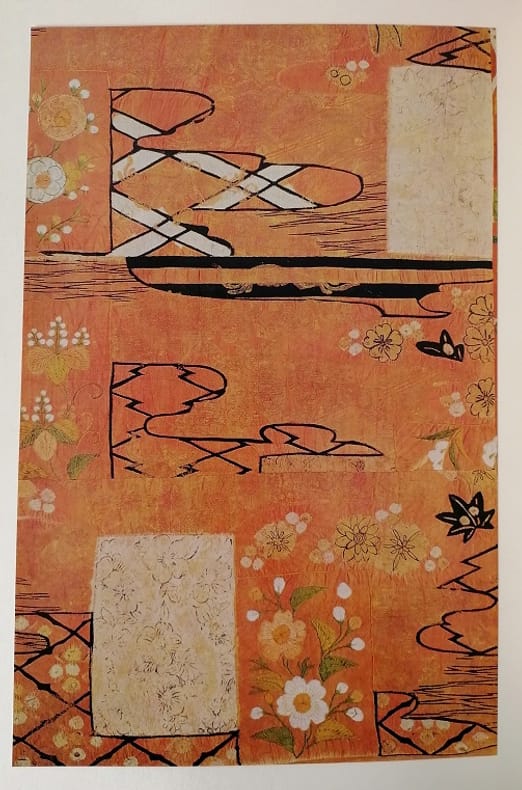
1980117241Tokyo Kodansha [1980 circa] 1 vol. relié in-folio, cartonnage éditeur en tissu teinté, titre doré au dos, 298 pp. Superbe illustration d'après les photographies de Michiaki Abe comprenant : 108 photos en couleurs en 97 planches contrecollées à pleine page et montées sur onglets, 12 photos en couleurs et 48 en noir hors-texte. Rare tirage de luxe de l'édition japonaise. Le papillon de justification du tirage contrecollé au dernier feuillet est manquant. Le Tsujigahana est une variété de kimono créée selon la technique du shibori (teinture et peinture à l'encre), utilisée durant plus de trois siècles de la période Muromachi à la période Edo.
1980117241Tokyo Kodansha [1980 circa] 1 vol. relié in-folio, cartonnage éditeur en tissu teinté, titre doré au dos, 298 pp. Superbe illustration d'après les photographies de Michiaki Abe comprenant : 108 photos en couleurs en 97 planches contrecollées à pleine page et montées sur onglets, 12 photos en couleurs et 48 en noir hors-texte. Rare tirage de luxe de l'édition japonaise. Le papillon de justification du tirage contrecollé au dernier feuillet est manquant. Le Tsujigahana est une variété de kimono créée selon la technique du shibori (teinture et peinture à l'encre), utilisée durant plus de trois siècles de la période Muromachi à la période Edo.
19767066CBTokyo, Seibundo Shinkosha, 1976. Folio. 194 (1) S. Mit 294 farb. Abb. auf Tafeln. Orig.-Leinenband mit transparentem Schutzumschlag in farbigem Schuber. + Wichtig: Für unsere Kunden in der EU erfolgt der Versand alle 14 Tage verzollt ab Deutschland / Postbank-Konto in Deutschland vorhanden +, A|B [2 Warenabbildungen]
THE ONLY COPY PRINTED ON IMPERIAL JAPAN PAPER of the first edition of this collection of stories. 2 leaves, 349 pp., 1 leaf. On verso of half-title is printed, "Exemplaire unique tirÈ sur papier du Japon pour Mademoiselle Leonie Bert." Leonie Bert was the daughter of French physiologist and politician Paul Bert (1833-1886). 8vo. Original wraps, printed in red. Uncut. FINE AND BRIGHT. Vicaire V, 115, citing only 15 copies on Dutch paper aside from the trade edition.
188057399ABBerlin, Asher und Yokohama, Buchdruckerei "Echo du Japon", 1876-1880. Folio. 452 S. Mit 25 Tafeln, Karten, Plänen, einigen Falttabellen und Textabbildungen. Halblederband der Zeit mit den eingebundenen Orig.-Umschlägen.
188857398ABBerlin, Asher und Yokohama, Buchdruckerei Meiklejohn, 1884-1888. Folio. 475 S. Mit 40 (9 kolorierte Holzschnitte) Tafeln. Halblederband der Zeit mit den eingebundenen Orig.-Umschlägen.
187657397ABBerlin, Asher und Yokohama, Buchdruckerei des "Echo du Japon", 1873-1876. Folio. Mit 37 (6 koloriert, 1 Tafel mit 4 montierten Orig.-Photographien) meist lithogr. Tafeln, Falttabellen und Textabbildungen. Halblederband der Zeit mit den eingebundenen Orig.-Umschlägen.
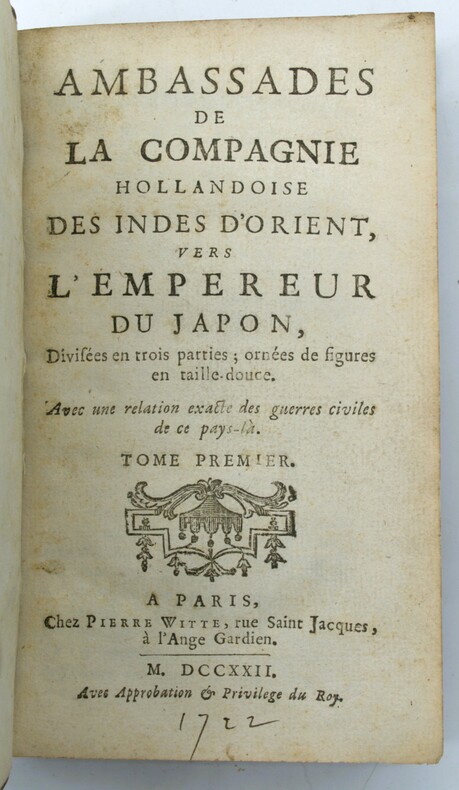
1722PHO-1657A Paris, Chez Pierre de Witte, 1722, 2 volumes in-12, relié plein cuir époque, doss à nerfs orné avec pèce de titre et tomaison, tranches rouges, dos légèrement différents, 257pp., 137pp.-158pp.-1f., illustré de 6 gravures, coiffes et coins usés, frottements. Ex-Libris en page de garde
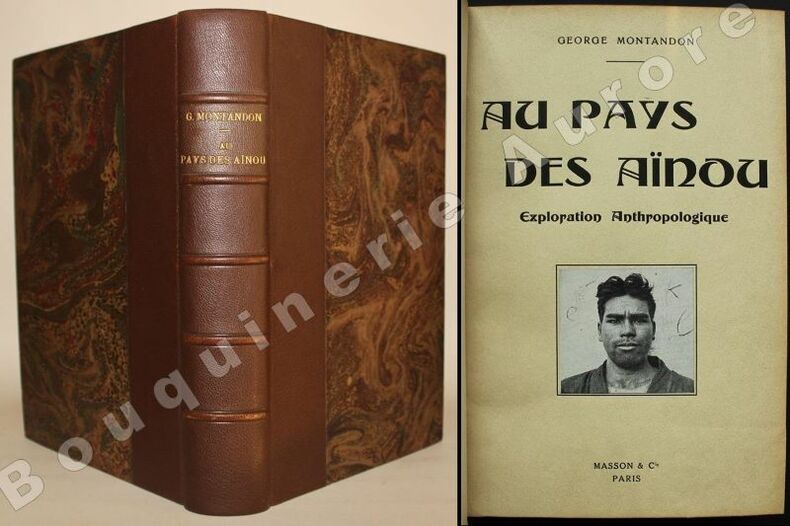
1927137651927 Paris, Masson & Cie, s.d. (avant-propos daté d'octobre 1927), 1 vol. in-8° (250 x 160 mm) reliure du temps 1/2 chagrin marron, dos à 5 nerfs, auteur et titre dorés, plats de papier marbré, première de couverture illustrée d'une vignette photographique contrecollée conservé, de VIII pp. (faux-titre, titre et avant-propos) - 240 pp. - (1) f. (sommaire) - 48pl.Très bel exemplaire.
17960038431796 A Paris, chez Benoît Dandré, Garnery & Obré, An IV [1796]. Un volume (sur 2) in-quarto (208 X 260) basane fauve granitée, encadrement de roulette dorée sur les plats, dos lisse orné de roulettes dorées en place des nerfs, chainettes et fleurons dorés, pièces de titre et de tomaison maroquin havane foncé, coupes et coiffes filetées (reliure d'époque) ; (2) ff. de faux-titre et titre, portrait-frontispice, XLIV pages de préface du rédacteur, préface de l'auteur, table des chapitres et explication des planches, 510 pages, 16 planches hors-texte. Petites galeries de ver aux 20 premiers feuillets, sans atteinte au texte ; puis deux trous de vers, en fond de cahier et de la grosseur d'une tête d'épingle, jusqu'à la page 104 pour le premier trou, et jusqu'à la fin du volume pour le second.
BN90650Adept-Media. Die TPM-Fibel: Das ganzheitliche Produktionssystem für die Prozessindustrie <br/><br/>Die TPM-Fibel: Das ganzheitliche Produktionssystem für die Prozessindustrie Mittelhäußer Wolfram; Japan Institute of Plant Maintenance and Mittelhäußer Wolfram Adept-Media unknown
1900233951900. Turn-of-the-century Japan photo archive documenting foreign commercial travel oil and mining activity rural labor and domestic life during the late Meiji era when Japan was rapidly building railways mines refineries modern ports and industrial companies after the 1868 Meiji Restoration. The material appears connected to a Western man and his family moving through Japan in connection with oil extraction or related industrial work with repeated views of derricks refinery sites pipe trenches miners labor crews interpreters servants hotels villages and named regional destinations. Images show various scenes throughout northern Japan such as Hokkaido settlements Sapporo gatherings Naoetsu refinery work Nara and coastal travel household service and encounters between foreign visitors and Japanese workers at a time when foreign technical knowledge and Japanese state-backed industrial growth were reshaping the country.<br /> <br /> Photo archive of more than 150 photographs including approximately 6 cyanotypes and numerous silver gelatin and albumen photographs sizes range between 2" x 3.5" to 4" x 6" Japan circa late 1890s to early 1900s. Nearly every image bears a handwritten caption en verso identifying places people professions work scenes and social relationships. Captions include "Launching conveying pipe to and from steamship Corea Yokohama" "Refinery location Naoetsu Japan" "Celebrating the fall of Mukden Sapporo Mar. 21st 1905" "Crowd at Naoetsu Hotel" "Working on foundation for refinery Naoetsu" "Digging a great ditch for drain pipe from refinery to ocean" "Drillers and visitors" "Japanese servants at home in the bamboo grove" "Old American Naval Hospital" and "Mines & Smelters Sumitake Hotel Omori Japan." Workers dig trenches handle pipe gather beside derricks and refinery structures pose at mine entrances stand near kilns and industrial yards and move through villages and hotel courtyards. Other scenes record women in kimono children household staff rickshaw pullers street processions with rising-sun banners thatched structures coastal views mission or hospital buildings and Western family members partaking in local culture seated in gardens or standing among Japanese attendants and guides.<br /> <br /> The archive records Japan's industrial modernization from the perspective of foreign business presence rather than official state publicity. Oil had been produced in Japan since the nineteenth century especially in regions such as Niigata while Hokkaido mining railway building and settlement became central to Meiji development; this group places those broader changes inside fieldwork travel and household arrangements. The handwritten captions add another layer of specification by naming locations and functions that would otherwise be difficult to identify especially the refinery and drilling views. Condition varies across the group with curling fading toning creasing edge wear occasional surface loss and some with missing corners; images generally clean and clear captions remain present and visible on many versos. Overall in very good condition. By the turn of the century oil fields in Niigata and Akita were part of Japan's push to build an industrial economy but domestic crude was limited and often difficult to refine. The archive also reflects the unequal social and technical relationships that accompanied Meiji industrial expansion with foreign commercial specialists Japanese labor crews domestic servants and frontier extraction zones appearing together within the same industrial landscape. unknown
181954848Washington D.C.: Army Air Forces. 10-18- 1943. Color poster / map 47 x 35 1/2 inches 120 x 90 cm folding as issued now professionally mounted on linen backing. Wear and a little paper loss along the fold lines has been infilled light toning to lower centrefold; the poster presents very well with bright color. Stunning image of a hemispherical view with Japan at the centre encompassing the area from Iran in the west Australia in the south and as far as the west coast of the U.S. at the east of the map. The map maker is F.E. Manning one of the distinguished news illustrators of the war in a style very similar to that of Richard Edes Harrison. There is a scale along the lower edge which was intended to be clipped and used to measure distances of places on the map from Tokyo. Text reads: "This map is a photographic view of the world with the center at Tokyo. Thus with the detachable scale distances can be measured along any line running thru Tokyo. It should be noted that an inch at the center represents less mileage than an inch closer to the edges. The detachable scale has been designed to compensate for this and should be used only with the center at Tokyo. The photographic process used in making this map makes all distances measured with the tape approximate only. Distances are shown in statute miles. Lines between key cities do not represent regular air routes in all cases. They show distances between points that do not fall on a line going thru the center of the projection." The Newsmap posters were displayed in offices and factories to keep the American public updated with news of the war and to encourage their participation in the winning of it. . Army Air Forces. unknown books
186028541Karlsruhe, Kunstverlag, 1860. Lex8vo. Orig. printed boards, uncut. A few scratches on covers and corners, backstrip with wear. Having the title-p.: ""Die Ausser-Europäische Welt...2.Bd."" and the separate title ""Japan"". (4),III,355 pp. and 40 pp. (Das Neueste aus der Länder=und Völkerkunde) and 25 plates mostlyof Japanese views (1 engr. frontisp., 6 tinted lithographed plates, 18 steelengraved views and 1 folded lithographed map, all). Light scattered brownspots and stains.
186028541Karlsruhe Kunstverlag 1860. Lex8vo. Orig. printed boards uncut. A few scratches on covers and corners backstrip with wear. Having the title-p.: "Die Ausser-Europäische Welt.2.Bd." and the separate title "Japan". 4III355 pp. and 40 pp. Das Neueste aus der Länder=und Völkerkunde and 25 plates mostlyof Japanese views 1 engr. frontisp. 6 tinted lithographed plates 18 steelengraved views and 1 folded lithographed map all. Light scattered brownspots and stains. <br/><br/><em>First edition of one of the earliest Western descriptions of Japan after the reopening of the country in 1854 to foreigners. </em> hardcover
2011x-9401080356Springer 2011. Paperback. New. 644 pages. 9.25x6.10x1.46 inches. Springer paperback
2092902143300135Mono fumei N.A. Soft Cover. Fine. Number of pages: 2 books Size: 27.0x18.4cm Mono fumei paperback