71 307 résultats
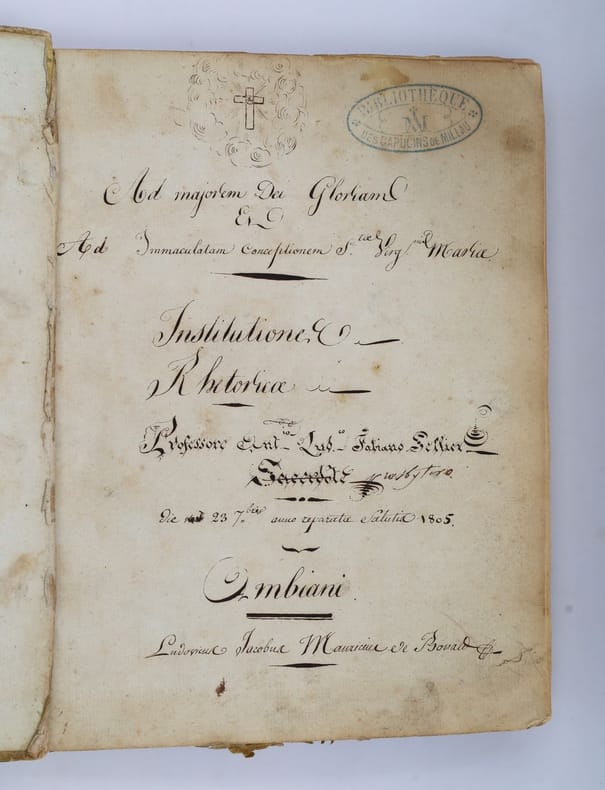
1805102924Ambiani [Amiens], Ludovicus Jacobus Mauritius de Bonald, 1805, in-8, 207-[2]-55 ff, Cartonnage de l'époque, Manuscrit en deux parties : la première ? en 207 feuillets et 2 feuillets de table ? comporte le Cours de rhétorique en latin et en français de Louis Sellier; la seconde, foliotée en chiffre romains (LV), contient une transcription en français du Discours de Ciréron pour Milon. Le jeune étudiant à l'origine de ce cahier, Louis Jacques Maurice de Bonald (1787-1870), originaire de Millau, deviendra une personnalité éminente à Lyon, dont il sera l'archevêque en 1839. Pour l'heure, il est en passe d'achever ses études classiques : né dans une famille ultraroyaliste, il est conduit chez les Pères de la Foi ? d'abord au sein du collège d'Amiens, puis à Montdidier ? par son parent, le prêtre réfractaire de Millau Louis de Sambucy. Il y suit le cours de rhétorique de Louis Sellier (1772-1854), émule de Joseph Varin avec qui il participe à la restauration de la Compagnie de Jésus. Les leçons du père Sellier débutent le 23 septembre 1805; Maurice de Bonald est alors à l'aube de ses 18 ans. L'élève a recopié ses notes sur des pages réglées au crayon, à l'encre noire, d'une écriture soignée et lisible. La page de titre calligraphique est illustrée en tête d'une croix lumineuse surgissant de nuées. Le cours se constitue d'une préface et de trois parties : I. De inventione; II. De dispositione; III. De Elocutione. À la fin se trouvent le Pro Milone, célèbre plaidoyer de Cicéron qui servit d'exercice d'éloquence à des générations d'étudiants. "Sous la conduite de maîtres aussi éclairés dans la science de Dieu que dans les sciences humaines, la semence divine fructifia abondamment dans l'âme du jeune Maurice de Bonald, si bien préparée à la recevoir. Sa vocation ecclésiastique fut le couronnement de cette éducation profondément chrétienne, commencée sur les genoux d'une pieuse mère, et achevée par les soins de vénérables professeurs, et sous la haute direction de son père" (Vie de S. Em. le Cardinal de Bonald p. 15). Les études religieuses de Maurice de Bonald sont en fait assez peu connues, contrairement à sa carrière ecclésiastique : dès qu'il quitte les Pères de la foi, il entre au séminaire de Saint-Sulpice; il est fait prêtre à la fin de l'année 1811. En 1823, il est nommé à l'Evêché du Puy tout juste rétabli, puis devient archevêque de Lyon en 1839. Cet ultramontain oeuvre avec ferveur à la rechristianisation de la capitale de la soie en fondant des dizaines d'églises, plusieurs instituts religieux et en remettant à l'honneur le culte marial. Bien qu'imprégné de l'héritage ultraroyaliste de sa famille, Maurice de Bonald adopta une attitude prudente, évitant toute opposition directe au pouvoir et s'abstenant de s'impliquer dans les affaires politiques. Le document que nous présentons ici apporte un éclairage précieux sur les jeunes années de cette figure religieuse parmi les plus marquantes du milieu du XIXe siècle. Cachet de la bibliothèque des Capucins de Millau. Papier de recouvrement des plats largement arraché, dos manquant, mais couture solide. Bon état intérieur. Vie de S. Em. le Cardinal de Bonald. Lyon, Briday, 1870. Couverture rigide
194344662Gallimard | Paris 1943 | 14 x 21 cm | relié
194544941S. n. [ Paysage dimanche] | s. l. [Paris] s. d. [1945] | 11.50 x 22 cm | 3 pages 1/2 in-4
194582300S. n. [ Paysage dimanche] | s. l. (Paris) s. d. [1945] | 11.50 x 22 cm | 3 pages 1/2 in-4
1945483431945 | - | 19 pages 1/2 in-8
192765370s. d. [après 1927] | 12.20 x 17.20 cm | trois photographies et une carte
194444930S. n. [ Journal des débats] | s. l. [Paris] s. d. [1944] | 13.50 x 21.50 cm | 2 1/2 pages in-8
194482298S. n. [ Journal des débats] | s. l. (Paris) s. d. [1944] | 13.50 x 21.50 cm | 2 1/2 pages in-8
188671943H. Launette & Cie | Paris 1886 | 18.50 x 28.50 cm | relié
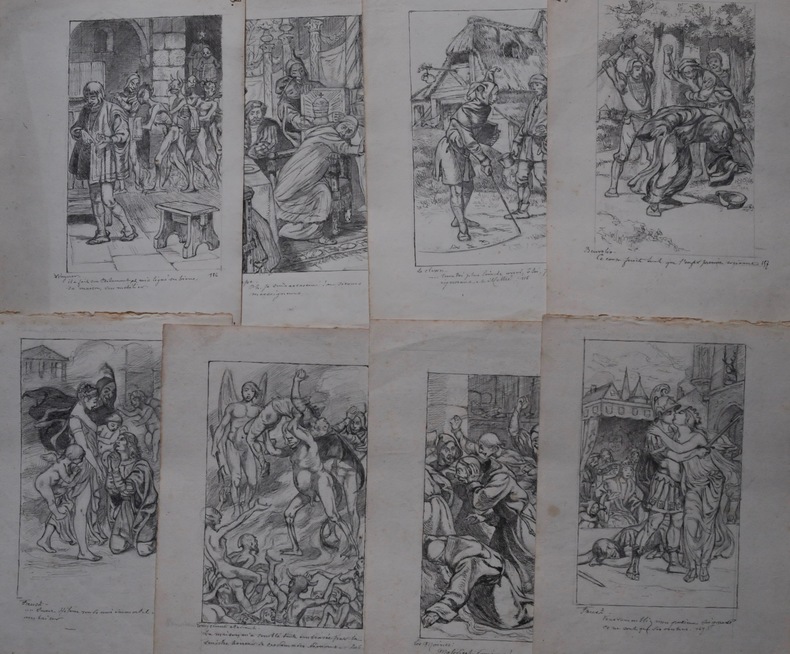
46404898, 18 x 11 cm. sur des feuilles de papier vergé de 24 x 18 cm., 8 dessins à l’encre noire légendés du texte du Faust de Marlowe. Le texte des légendes est celui de la traduction de François-Victor Hugo, les numéros de pages notés en marge des dessins correspondent à l’édition de ce texte chez Michel Lévy en 1858. Une seconde pagination des dessins qui ne se rapporte pas à l’édition Lévy pourrait correspondre à une édition en projet. L’édition d’un Faust illustrée par Van Maele semble n’avoir jamais paru.Le sujet du texte a permis à l’artiste de livrer toute la mesure de son imagination dans des scènes de diableries, cohue de moines, pape humilié. Sans qu’aucune de ces images ne soit érotique, on y retrouve les postures lascives, scènes de soumission et figures monstrueuses qu’on lui connaît dans ce registre. Le dessin montrant Hélène entourée d’angelots n’est pas sans rappeler certaines scènes de sa suite très scandaleuse “Flèches de plomb”. Si la presque totalité de l’œuvre de Van Maele est de l’illustration d’ouvrages érotiques, il a illustré quelques ouvrages fantastiques tels que les Aventures extraordinaires de Conan Doyle ou les Dix contes d’Edgar Alan Poe.
196245020Paris aux dpens d'un Amat 1962. In-folio, en feuilles, couverture illustre (embotage de l'diteur).36 illustrations de Maurice de Vlaminck, dont une lithographie en bistre sur la couverture, un portrait de lartiste, un bois sur la page de titre, 5 lithographies en couleurs (dont un frontispice, 3 sur double page et un in-texte), 10 lithographies en noir (dont un hors-texte et 9 in-texte), et 18 bois en noir (16 ttes de chapitre et 2 culs-de-lampe). Tirage limit 298 exemplaires numrots. Un des 40 premiers exemplaires sur japon nacr, comportant une suite sur vlin des 5 lithographies en couleurs et des 10 lithographies en noir, et la dcomposition des couleurs dune planche double sur vlin dArches.
196441512Paris Scripta et Picta 1964 In-4, en feuilles, couverture imprime (embotage de l'diteur).Edition originale, illustre par l'auteur de 48 lithographies originales en couleurs qui ont ncessit prs de dix ans de travail pour Maurice de Vlaminck. L'ouvrage comporte, en outre, 40 lettrines dessines par le relieur Paul Bonet. Tirage limit 260 exemplaires numrots sur vlin d'Arches, plus quelques exemplaires hors commerce. Le plus important livre illustr par Maurice de Vlaminck.
196451641Paris Scripta et Picta 1964 In-4, en feuilles, couverture imprime (embotage de l'diteur).Edition originale, illustre par l'auteur de 48 lithographies originales en couleurs qui ont ncessit prs de dix ans de travail pour Maurice de Vlaminck. L'ouvrage comporte, en outre, 40 lettrines dessines par le relieur Paul Bonet. Tirage limit 260 exemplaires numrots sur vlin d'Arches, plus quelques exemplaires hors commerce. Le plus important livre illustr par Maurice de Vlaminck.
196431593Paris Scripta et Picta 1964 In-4, en feuilles, couverture imprime (embotage de l'diteur).Edition originale, illustre par l'auteur de 48 lithographies originales en couleurs qui ont ncessit prs de dix ans de travail pour Maurice de Vlaminck. L'ouvrage comporte, en outre, 40 lettrines dessines par le relieur Paul Bonet. Tirage limit 260 exemplaires numrots sur vlin d'Arches, plus quelques exemplaires hors commerce. Le plus important livre illustr par Maurice de Vlaminck.
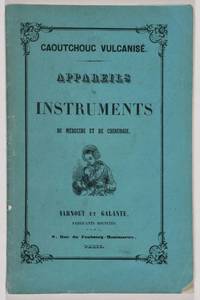
185253892Paris: Imprimerie Administrative de Paul Dupont/ Varnout et Galante 1852. First edition second printing. Softcover. g to vg. Small quarto. 49 1pp. Illustrated blue wrappers with black lettering on the covers. String-tied binding for the book block.<br /> <br /> A scarce illustrated catalog of early vulcanized rubber medical devices manufactured by the French company Varnout et Galante. Included here are more than 80 medical surgical and gynecological instruments designed under the supervision of physician and gynecologist Marie Maurice Gariel 1811-1878. The work includes numerous small engraved figures throughout illustrating various products. Each item is numbered for reference with a description some brief and some longer. The products include not only items related to reproductive medicine and women's health such as breast-feeding instruments vaginal douches tampons urethral probes and urinals for incontinence but also more general medical equipment such as crutches braces bandages protective gloves mattress pads for medical beds restraints compression belts and inflatable cushions. <br /> <br /> This publication is notable and intriguing in that it was produced at a time when both the modern medical field of gynecology was in it's infancy and the revolutionary process of vulcanizing rubber was a newly established industry. Only eight years earlier in 1844 American chemist and engineer Charles Goodyear had patented the groundbreaking process for manufacturing this material on an industrial scale and its wide range of potential uses was just starting to be discovered. The introductory pages extoll the virtues of the new technology of vulcanized rubber and include tables comparing vulcanize to un-vulcanized rubber under various metrics. Table of contents at the rear.<br /> <br /> Text in French.<br /> <br /> Wrappers with minor rubbing to extremities and small chips to the bottom right corners of the front cover and at a few points on the spine. Light foxing at the bottom of the back cover. Interior with a very few tiny sporadic stains but otherwise very clean. Wrappers in good interior in very good condition overall. Scarce. Protected in modern mylar. Full title: Catalogue des Appareils et Instruments de Médecine et de Chirurgie en Caoutchouc Vulcanisé Fabriqués sous la Direction Immédiate de M. Le Doctuer Gariel Par Varnout et Galante<br /> <br /> This second printing is the same in every way to the first printing of the previous year save that the printed year at the bottom of the title page has been adjusted to 1852 instead of 1851.<br /> <br /> Marie Maurice Gariel 1811-1878 was a French physician and gynecologist. He was a member of the Société anatomique de Paris Anatomical Society of Paris and a notable figure in the focus of reproductive medicine and women's health at a time when the field of gynecology was in its early stages. His son was noted French physician and medical engineer Charles-Marie Gariel 1841-1924. Imprimerie Administrative de Paul Dupont/ Varnout et Galante unknown
1922307356Paris: M. de Brunoff 1922. Profusely illustrated with full-color covers mounted and full-page plates and photographs. 187 of 188 leaves. Folio. Original cloth with inlaid illustrated upper cover from "The Firebird" by Natalia Gontcharova. Covers and spine rubbed and soiled internally fine but lacking cover for Ballets Russes program from May 1921 featuring Picasso illustration on recto and verso. Bakst Léon. Profusely illustrated with full-color covers mounted and full-page plates and photographs. 187 of 188 leaves. Folio. An outstanding visual record of Diaghilev's Ballets Russes and Ida Rubinstein's Galas Russes in their most influential years lavishly illustrated with the works of Bakst Gontcharova Larionov Picasso Matisse Massine Derain and others. The collection is comprised of special issues of the theatrical periodical "Comoedia Illustré" and souvenir programs devoted to Ballets Russes and Rubinstein's Galas Russes for the seasons 1909-1921 with introductory letterpress text for each season by V. Svetloff. With splendid color and gilt illustrations of costume and set designs as well as numerous photographic portraits of dancers and production artists. Bakst is the most frequently represented artist in the group; the illustration inlaid to the upper cover is by Natalia Gontcharova. M. de Brunoff unknown books
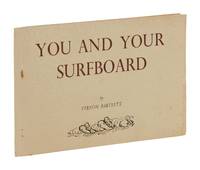
1953140946678Rye Sussex: Vernon Bartlett at Mermaid Cottage 1953. First Edition. Near Fine. First edition first printing. Staple-bound in publisher's textured cream colored wraps lettered in brown and black. 24 pp. Near Fine with soiling and wear to covers. Rusting to staples with light toning to contents. A charming how-to British surfing guide for beginners. The author a politician and journalist was forward thinking in telling his readers not to litter beaches “You wouldn’t show yourself so unworthy of the beautiful beaches on which you are privileged to spend your holidays.†No other copies listed according to WorldCat. Vernon Bartlett at Mermaid Cottage unknown
1928135601Paris: Studio Soulat-Boussus 1928. Vintage double weight photograph from the set of the 1928 film. Shot by Jean Soulat and Mauric Boussus of Studio Soulat-Boussus in Paris with respective stamps on the verso. <br/><br/>An excessively rare photograph from Dreyer's masterpiece capturing Maria Falconetti in what one could accurately described as "in character." Franconetti became a stage actress in Paris in 1918 and had appeared in only one other film. For this role today still considered one of the most astonishing performances ever committed to celluloid director Dreyer reputedly pushed her to the brink of emotional collapse. It was to be her final film role after which she returned to producing and starring in light stage comedies including work at the Comedie-Francais in Paris. In 1946 having fled to South America during World War II and having suffered a lifetime of mental illness she committed suicide in Brazil. <br/><br/>6.5 x 8.75 inches. In an archival mat. Fine. Studio Soulat-Boussus unknown books
1857462459Trenton: Printed at the Office of the True American 1857. Hardcover. Very Good. First edition. Octavo. 211pp. 11 plates plus large folding map in color. Brown cloth stamped in blind and gilt. Library of Congress duplicate stamp bottom of the front board and corners bumped very slight loss at the spine ends small tears and faint stain in the margins of the map with a minor archival repair on the verso overall very good or better. Inscribed by the author George H. Cook to Spencer F. Baird of the Smithsonian who is acknowledged on p.11 for his survey of fishes in the area: "Prof. Spencer F. Baird with the respects of Geo. H. Cook." Baird's small ownership stamp on the titlepage. Baird's comprehensive geological and natural history survey of the County with Beesley's informative and relatively early historical sketch including early mentions of sea bathing at the County resorts. A noteworthy association copy the map by Egbert L. Viele is highly prized in its own right. Printed at the Office of the True American hardcover
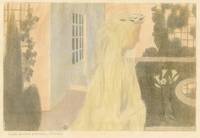
18982730<p>1898. Original lithograph printed in colors from the set AMOUR. P. Cailler 118. 11 x 16 margins: 16 x 21 Deckled edge. SIGNED IN PENCIL LOWER RIGHT. In fine condition with full margins.</p> Ambroise Vollard
19266068Paris: H. Floury 1926-27. First edition. 28 cm; 2 volumes. 4 307 4; 4 282 2 pages. Six original drypoint sketches each printed in two states included. LACKS as commonly the 4 original lithographs from the second volume. Volume 1 with 9 color lithograph plates including front cover 17 black and white lithograph plates and 32 black and white lithographs paired with a second striking in brownish ink. Volume 2 with 13 color lithograph plates including front cover 2 tinted "helogravures" and 32 lithograph plates each reproduced in black-and-white and green-tint versions. Volume 1 one of 175 copies numbered "75" in ink over original number scratched out and volume 2 one of 200 copies legitimately numbered "75" in ink. Bound in early 20th-century gray buckram with leather title labels. Original color lithographed wraps bound in. <br /><br /> H. Floury paperback
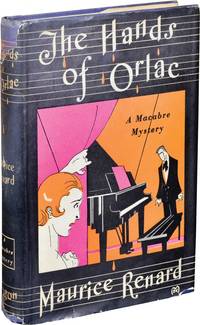
1929133042New York: E.P. Dutton 1929. First Edition. First Edition in English and first edition in hardcover preceded by the French edition "Les mains d'Orlac" in 1920. With the publisher's wraparound band. <br /> <br /> A seminal horror novel rare in dust jacket written by one of the most important French genre fiction writers of the early twentieth century. The basis for several films including the classic German silent film starring Conrad Veidt "Orlacs Hande" The Hands of Orlac 1924 and its American rival the sound version starring Peter Lorre "Mad Love" directed by emigre Karl Freund for MGM in 1935 and today considered one of the greatest horror films of the 1930s. <br /> <br /> Near Fine in a Very Good dust jacket with the publisher's wraparound band "The Dutton Prize Mystery for November". The jacket's deco design is bright and striking with some toning to the spine jacket and band a chip at the crown affecting a portion of the title "The Ha" and part of "n" a portion of the publisher name at the heel the "Du" in "Dutton" and a few tiny chips nicks and closed tears. <br /> <br /> Barron 1999 4-125. Bleiler 1948 US. Clute & Nicholls US. Hubin 1994 US. Locke US. Reginald 12140. Senn US. E.P. Dutton unknown
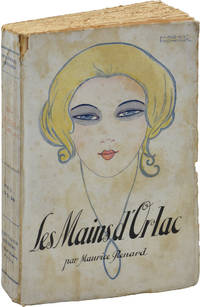
1920148871Paris: Editions Nilsson 1920. First French Edition a trade softcover original preceding the first English language edition by nine years. Text in French. Cover illustration by Maggy Monier. Rare.<br/><br/>A seminal horror novel written by one of the most important French genre fiction writers of the early twentieth century. The basis for several films including the classic German silent film starring Conrad Veidt "The Hands of Orlac 1924 and its American rival the sound version starring Peter Lorre "Mad Love" directed by emigre Karl Freund for MGM in 1935 and today considered one of the greatest horror films of the 1930s. <br/><br/>Very Good in illustrated wrappers. All edges uncut. Slight lean some vertical wrinkling to the spine small chips at a couple of corners and wrappers foxed particularly rear wrapper.<br/><br/>Barron 1999 4-125. Bleiler 1948 US. Clute & Nicholls US. Hubin 1994 US. Locke US. Reginald 12140. Senn US. Editions Nilsson unknown books
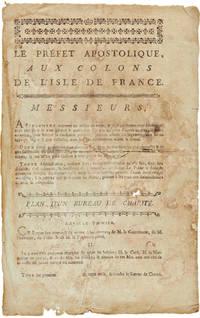
1788284311788. Folio. Broadsheet 12 3/4 x 8 inches. Moderate wear and soiling small hole in center of sheet affecting a few letters of text. Early and unrecorded imprint from the colonial press at the French colony of Mauritius also known as the Ile de France. The text contains the articles for establishing a Bureau de Charité for the island. The Dutch were the first Europeans to become interested in the island taking possession in 1598. After exploiting the island's dense forests for a century and introducing the cultivation of sugar cane and cotton the Dutch abandoned the colony in 1710. The French soon claimed it as "Ile de France" and the island remained under the control of the French East India Company until 1767. During the long war between France and England at the beginning of the 19th century Mauritius proved to be an important strategic naval base and as a result the British took charge of the island in 1810 and the Treaty of Paris confirmed official British possession in 1814. It remained an important sugar producing colony and in the 20th century agricultural production was expanded to include tea rice and other produce. Printing began on Mauritius in 1768. During the French period until 1810 only about 400 imprints were produced mostly in the form of official documents and newspapers though there are also almanacs and a few other items. All are quite rare. No copies located in OCLC and not recorded by Toussaint in his bibliography of Mauritius imprints. unknown books
1788WRCAM48600Isle de France: Imprimerie Royale 1788. Broadsheet 12 3/4 x 8 inches. Moderate wear and soiling; small hole in center of sheet affecting a few letters of text. Good. Early and unrecorded imprint from the colonial press at the French colony of Mauritius also known as the Ile de France. The text contains the articles for establishing a Bureau de Charité for the island. <br> <br> The Dutch were the first Europeans to become interested in the island taking possession in 1598. After exploiting the island's dense forests for a century and introducing the cultivation of sugar cane and cotton in 1710 the Dutch abandoned the colony. The French soon claimed it as "Ile de France" and the island remained under the control of the French East India Company until 1767. During the long war between France and England at the beginning of the 19th century Mauritius proved to be an important strategic naval base. The British took charge of the island in 1810 and the Treaty of Paris confirmed official British possession in 1814. It remained an important sugar producing colony and in the 20th century agricultural production was expanded to include tea rice and other produce. <br> <br> Printing began on Mauritius in 1768. During the French period until 1810 only about 400 imprints were produced mostly in the form of official documents and newspapers though there are also almanacs and a few other items. All are quite rare. No copies are located in OCLC and not recorded by Toussaint in his bibliography of Mauritius imprints. Imprimerie Royale unknown books