71 408 résultats
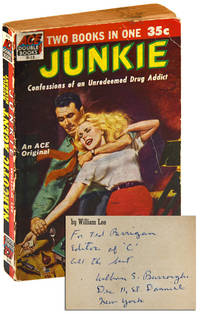
19535711New York: Ace Books Inc 1953. First Edition. First Printing a paperback original novel bound together with Maurice Helbrant's Narcotic Agent. Octavo 16.25cm; original pictorial card wrappers; 45-1492; 169pp. Inscribed by Burroughs on the title page to Ted Berrigan: "For Ted Berrigan / Editor of 'C' / All the best / William S. Burroughs / Dec.11 St. Daniel / New York." Modest wear and rubbing to extremities a few faint creases to wrappers tanning to text edges with some dust-soil to upper edge of textblock; preliminary leaf on the Junkie side detached but present though lacking on the Narcotic Agent side; just Very Good. <br /> <br /> Burroughs's first book a semi-autobiographical field report from the seedy underbelly of post-war America chronicling his experiences using and selling drugs and vacillating between addiction and recovery. While undated this copy was inscribed in 1964 the year Burroughs made contact with Ted Berrigan "the bearded overweight father figure of the Lower East Side poetry scene. He was the editor of C: A Journal of Poetry and had published one of Bill's experimental texts "Giver of Winds Is My Name" in the summer of 1964 the first of his texts to use Egyptian glyphs. Berrigan was enthusiastic about his work so Bill gave him another text "Fits of Nerves with a Fix" which he published that February. Berrigan arranged to publish Bill's own thirty-two-page version of Time magazine a three-column collaged text using the cover and title page of the November 30 1962 issue of Time which had contained the libelous review of Naked Lunch called "King of the YADS" Young American Disaffiliates in which it claimed that Burroughs had cut off a finger joint to avoid the draft" Miles Barry. Call Me Burroughs: A Life pp.434-435. Berrigan drew from Burroughs's cut-up technique while writing The Sonnets 1964 his best-known work and in 1965 he and Burroughs along with Jayne Mansfield Edie Sedgwick Gerard Malanga and Andy Warhol et al. were featured in Ed Sanders's 24-minute film Poem Posters. A cornerstone work of the Beat Generation and a significant copy acting as a bridge between the Beats and the New York School. Maynard & Miles A1a. Ace Books, Inc unknown
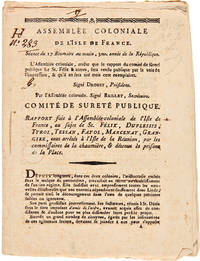
1794284251794. Small quarto. 28pp. Stitched as issued. Contemporary notation on first page some contemporary underlining in text. Minor soiling. Very good. A remarkable early imprint from the colonial press at the French colony of Mauritius also known as the Ile de France in the south Indian Ocean. The text contains a report of the French Revolutionary Committee of Public Safety regarding prisoners arrested on the island of Réunion being held as enemies of the Revolution. The document was printed in the capital Port Louis which was called Port de la Montagne from 1792 to 1795. The Dutch were the first Europeans to become interested in the island taking possession in 1598. After exploiting the island's dense forests for a century and introducing the cultivation of sugar cane and cotton in 1710 the Dutch abandoned the colony. The French soon claimed it as "Ile de France" and the island remained under the control of the French East India Company until 1767. During the long war between France and England at the beginning of the 19th century Mauritius proved to be an important strategic naval base and as a result the British took charge of the island in 1810 and the Treaty of Paris confirmed official British possession in 1814. It remained an important sugar producing colony and in the 20th century agricultural production was expanded to include tea rice and other produce. Printing began on Mauritius in 1768. During the French period until 1810 only about 400 imprints were produced mostly in the form of official documents and newspapers though there are also almanacs and a few other items. All are quite rare. No copies located in OCLC; Toussaint locates a copy at the Archives Nationales in Paris.<br/> <br/>Toussaint A247. unknown books
1794WRCAM48588Port de la Montagne i.e. Port Louis: Chez F.N. Bolle 1794. 28pp. Small quarto. Stitched as issued. Contemporary notation on first page some contemporary underlining in text. Minor soiling. Very good. A remarkable early imprint from the colonial press at the French colony of Mauritius also known as the Ile de France in the south Indian Ocean. The text contains a report of the French Revolutionary Committee of Public Safety regarding prisoners arrested on the island of Réunion being held as enemies of the Revolution. The document was printed in the capital Port Louis which was called Port de la Montagne from 1792 to 1795. <br> <br> The Dutch were the first Europeans to become interested in the island taking possession in 1598. After exploiting the island's dense forests for a century and introducing the cultivation of sugar cane and cotton in 1710 the Dutch abandoned the colony. The French soon claimed it as "Ile de France" and the island remained under the control of the French East India Company until 1767. During the long war between France and England at the beginning of the 19th century Mauritius proved to be an important strategic naval base. The British took charge of the island in 1810 and the Treaty of Paris confirmed official British possession in 1814. It remained an important sugar producing colony and in the 20th century agricultural production was expanded to include tea rice and other produce. <br> <br> Printing began on Mauritius in 1768. During the French period until 1810 only about 400 imprints were produced mostly in the form of official documents and newspapers though there are also almanacs and a few other items. All are quite rare. No copies located in OCLC; Toussaint locates a copy at the Archives Nationales in Paris. TOUSSAINT A247. Chez F.N. Bolle unknown books
1973BB012PRESENTATION COPY the first volume inscribed by the artist on the half-title: "For dear Judy - with all my love! Maurice Sendak Dec. '73" which was actually the earliest month the book was available. ALSO INCLUDED is a folded paper chemise inscribed by the artist "For Judy from her loving friend Maurice / Oct. 2002." Inside is a complete set of all 27 page illustrations as individual prints handsome impressions on large paper each sheet measuring 8-3/4 x 6-5/8 inches compared to the published sheet size in the book of 6-7/8 x 5-1/2 inches.<br />The recipient of these two inscriptions is Sendak's close friend Judy Taylor his British editor The Bodley Head from 1960 onwards who is largely credited with having helped to promote and popularize Sendak's illustration art in Europe. Farrar, Straus & Giroux hardcover books
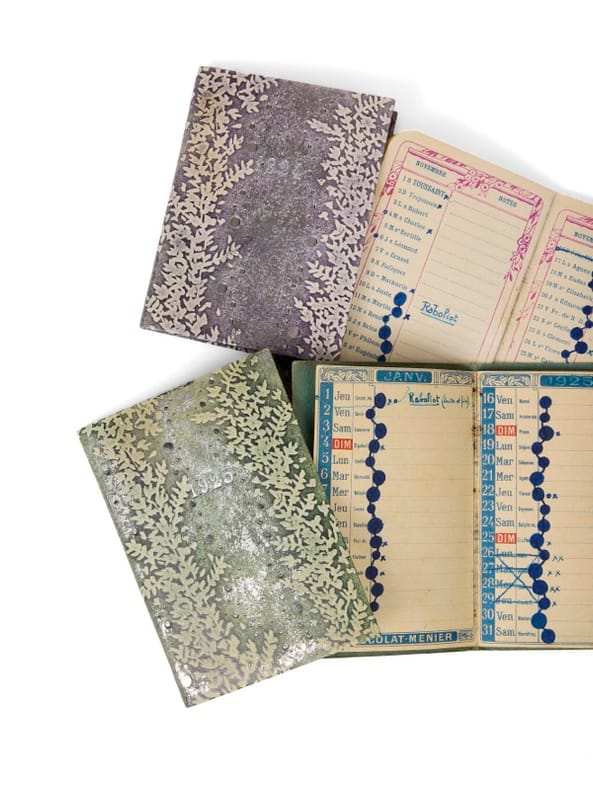
316471924 et 1925. 2 vol. 55 x 80 mm et 60 x 80 mm. Brochés sous chemises en veau naturel estampé d’une eau-forte originale au motif de feuillages teintée mauve pour l’une et vert pour l’autre semis de points au palladium gardes de chèvre velours gris chemise et étui bordés signée de Louise Bescond titres Claude Ribal 2025. Témoignage exceptionnel du processus créatif de Genevoix : deux agendas manuscrits qui documentent jour après jour l’avancement de trois œuvres majeures : Euthymos Raboliot et La Boîte à pêche. . Chaque page porte tracées à l'encre bleue des pastilles journalières marquant le travail d'écriture dont la taille et la densité signalent l'intensité du labeur. Ces carnets permettent ainsi de suivre l'auteur au plus près dans le temps de la création. Le premier carnet s'ouvre sur les journées d'écriture qui concernent la rédaction d'Euthymos janvier-avril 1924 un roman antique inspiré du pugiliste éponyme triple champion olympique. Publié chez Flammarion en juin 1924 quelques semaines avant l'ouverture des Jeux de Paris le 5 juillet 1924. Euthymos marque une tentative certaine de s'évader du traumatisme de 14-18. Un texte pour lequel Genevoix attendra 1960 pour en permettre la réédition sous le titre Vaincre à Olympie. Passé la rédaction d'Eutymos Maurice Genevoix a déjà sûrement bien en tête son prochain roman. Il sera régionaliste et il sera naturaliste. Depuis 1919 il est revenu vivre à Châteauneuf-sur-Loire qui lui avait inspiré un merveilleux Rémi des Rauches publié en 1922 et qui mettait en scène la Loire par la grâce d'un tonnelier offrant déjà au lecteur de magnifiques descriptions. Mais cette fois il veut traverser le fleuve : au sud commence la Sologne qu'il explore depuis son retour dans la région. Né à Decize Nièvre mais élevé à Châteauneuf-sur-Loire Genevoix perçoit dès l'enfance la présence silencieuse de la Sologne : forêts brumes oiseaux landes pauvres et villages retirés. Dès son retour du front et pour sa convalescence dès 1919 il commence à l'arpenter et plusieurs séjours sont attestés en son coeur à Brinon-sur-Sauldre à Nouan-le-Fuzelier à Lamotte-Beuvron où il s'imprègne des moeurs des récits et du parler local. Il fait sienne l'idée d'en dire davantage : « je voulais faire pour la Sologne ce que j'avais fait trois auparavant pour le Val de Loire : l'évoquer la traduire selon moi mon engagement depuis l'enfance ma gratitude pour tout ce qu'elle était à mes yeux ». C'est à Brinon-sur-Sauldre qu'après la guerre son oncle avait acquis un territoire de chasse et c'est là que cédant peut-être au même appel et même élan vers la nature Maurice Genevoix décide de s'installer au cours de l'été 1924 : « Je pris un soir mon vélo à l'épaule le petit train sur route qui me conduirait à Brinon. J'y arriva à la brunante sautai en selle et mit pied à terre après six kilomètres devant la maison du garde-chasse Trémeau » in Trente mille jours p. 200. C'est là face à l'étang des Clouzioux - qui devient celui de la Sauvagère dans le roman - que ses cogitations prennent formes : « la Sologne est éminemment giboyeuse. Le héros de mon futur roman vrai fils de ce terroir de chasse ne peut donc être qu'un chasseur . mais un chasseur d'instinct un homme libre insoucieux des contraintes sociales qui ne relève que de sa race des appels qui le sollicitent et l'obligent autrement et précisément dit : un braconnier ». Brinon est la commune natale de celui qui est « le plus fameux le plus malin le plus habile le plus sensationnel braco du cru : Alphonse Depardieu » dit Carré avec lequel Genevoix obtient une « audience » à l'automne quand la certitude du roman et le bal de ses personnages se mettent en place. Un rendez-vous est pris à Brinon. Un rendez-vous manqué : suspicieux le braconnier ne s'y rendra pas. Il n'empêche ; Genevoix décidé à façonner ce braconnier universel en fusionnant plusieurs personnages tous bien réels va créer « son » braconnier : Pierre Fouques dit Raboliot. Maurice Genevoix racontera précisément dans Jeux de glaces en 1961 cette rencontre avortée avec Carré-Depardieu lequel « n'a pas été le dernier à prétendre à croire peut-être qu'il m'avait servi de modèle. Et vraiment je lui dois beaucoup à cet homme qui n'est pas venu un jour de l'automne 1924 dans l'arrière-salle de l'auberge rustique où je l'ai vainement attendu » p. 90. Il y explique également le sobriquet de son héros : le nom de Raboliot - désignant un jeune garenne encore au nid dans la « rabolière » - lui vient des chasseurs solognots : vif rusé libre. Dans le carnet la date du 21 octobre est précisément nommée avec cette mention : Brinon. C'est probablement la date précise du rendez-vous manqué éminemment fondateur. Moins de trois semaines plus tard Genevoix peut s'attaquer à la rédaction du roman le 10 novembre 1924 pour la terminer le 23 janvier 1925 sans interruption. De Brinon-sur-Sauldre Genevoix aura beaucoup pris tel un épicentre idéal : la commune est tout simplement celle du département qui occupe - encore aujourd'hui - la plus grande superficie territoriale : elle s'étend sur 11600 hectares et est sillonnée par quelque 340 km de chemins ruraux ! En 2025 seules 132 communes en France occupent plus de 100 km2 de superficie. À la suite de Raboliot c'est la rédaction de La Boîte à pêche qui débute s'étendant du 1er mai au 15 juillet 1925. L'ouvrage paraîtra toujours chez Grasset en octobre 1926. Merveilleux et unique document révélateur du rapport de Genevoix au temps : un travail on ne peut plus régulier écrit d'un seul souffle dans une concentration totale. Ce système qu'il ne commente jamais mais applique avec constance dit beaucoup de la rigueur intérieure de l'écrivain et de son attachement à un rythme quotidien presque rituel. Ces deux carnets sont conservés dans un ' habillage ' intelligemment et délicieusement pensé et réalisé par Louise Bescond : deux petites chemises au décor verdoyant rappelant à la fois l'univers du roman et le rythme de sa composition dans ces deux petits agendas. L'ensemble est conservé dans un étui et des chemises à l'unisson. [1924 et 1925]. 2 vol. (55 x 80 mm et 60 x 80 mm). Brochés, sous chemises en veau naturel estampé d’une eau-forte originale unknown
192431647Témoignage exceptionnel du processus créatif de Genevoix [1924 et 1925]. 2 vol. (55 x 80 mm et 60 x 80 mm). Brochés, sous chemises en veau naturel estampé d’une eau-forte originale au motif de feuillages, teintée mauve pour l’une et vert pour l’autre, semis de points au palladium, gardes de chèvre velours gris, chemise et étui bordés (signée de Louise Bescond, titres Claude Ribal, 2025). Témoignage exceptionnel du processus créatif de Genevoix : deux agendas manuscrits, qui documentent jour après jour l’avancement de trois œuvres majeures : Euthymos, Raboliot et La Boîte à pêche.
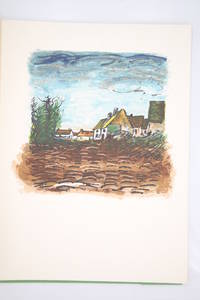
196230768Paris Aux dpens d'un amat 1962 Grand in-4 mont sur onglets, maroquin noir orn sur le premier plat dun dcor abstrait de formes gomtriques mosaques en partie en relief en maroquin rouge et gris et en box lilas, gris, bordeaux, vert et vermillon, rehauss par des jeux de filets verticaux et horizontaux pousss froid ; le dcor se prolonge sur le dos sans nerfs et le second plat avec un graphisme invers et sans relief ; doublures de box gris, gardes de sudine framboise, tranches dores sur brochure, couverture illustre. Chemise, tui.36 illustrations de Maurice de Vlaminck, dont une lithographie en bistre pour la couverture, un portrait de lartiste, un bois pour la page de titre, 5 lithographies en couleurs (dont un frontispice, 3 sur double page et un in-texte), 10 lithographies en noir (dont un hors-texte et 9 in-texte), et 18 bois en noir (16 ttes de chapitre et 2 culs-de-lampe). Tirage limit 298 exemplaires numrots. Un des 40 premiers exemplaires sur japon nacr, comportant une suite sur vlin des 5 lithographies en couleurs et des 10 lithographies en noir, et la dcomposition sur vlin dArches des couleurs dune planche double. Exemplaire enrichi dune des 100 suites sur vlin dArches de 5 gravures originales grandes marges et non plies de Maurice de Vlaminck, dont un autoportrait inutilis grav au burin et 4 lithographies dont 2 indites, le tout runi sous un portfolio de lditeur en toile gris-vert.
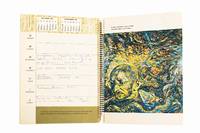
1969655281969. Fine. Autograph personal diary for the year 1969 1969 16.80 x 21.60 cm carnet en spirales Personal diary handwritten by Maurice Béjart written in a 1969 diary celebrating the centenary of the birth of Mahatma Gandhi. 52 handwritten leaves written in red and blue pen in a spiral-bound notebook. This diary features amongst Béjart's very rare privately owned manuscripts the choreographer's archives being shared between his house in Brussels the Béjart foundation in Lausanne and the Théâtre Royal de la Monnaie. The choreographer Maurice Béjart's diary written during the year 1969. An extremely rare collection of thoughts questions and introspections from the point of view of Hinduism and Buddhist wisdom which Béjart adopts following his first trip to India in 1967. The diary is an emblematic testimony of the indo-hippie era of the 1960s spiritual and artistic renaissance that inspired numerous ballets of the choreographer Messe pour le temps présent Bhakti Les Vainqueurs. A selection from this diary was published by Maurice Béjart in the second volume of his memoirs La Vie de Qui Flammarion 1996. During the year 1969 Béjart wrote daily notes in a diary published in memory of Mahatma Gandhi. Fascinated by Hindu mysticism since his trip to India in 1967 he filled in this spiritual journal with numerous mantras and prayers Krishna guide my chariot the light is at the end of the path. OM; Buddha is everywhere; Let God enter but how to open the door and he calls upon the Hindu deities as well as the Bodhisattvas Mañjur et Tr soothing figures of the Buddhist pantheon. Béjart's Indian period was particularly rich in choreographic masterpieces the progress of which can be followed in his diary Baudelaire at the beginning of the year the first performance of the Vainqueurs in Brussels and the Quatre fils Aymon in Avignon as well as the filming and screening of his Indian ballet Bhakti. At the crossroads of New Age and the hippie movement Béjart's conversion is symptomatic of an era that refuses progress and has a thirst for spirituality: Calcutta is not India but our western face. It is not religion or traditional thinking that is to blame but capitalism. India a rich country before colonisation. The Beatle's visit to the guru Maharishi's shram and Ravi Shankar's concert at Woodstock in 1969 marks the beginning of a real western passion for Indian music and culture which was decisive in Béjart's ballets at the time. In Béjart's eyes India presents itself as a place where art and ancestral traditions have not suffered the perversions of positivity. In his creations he seeks to express the spirit of a culture that intimately links the body and the spirit and in which dance plays a major cosmic and spiritual role. Included in his ballets were Indian dance systems and Vedic songs that were discovered thanks to Alain Daniélou in 1968 he opened the Messe pour temps présent with a long vînâ solo that lasted fifteen minutes: Béjart is in his Hindu quarter-hour. And over there Hindu quarter hours can last for hours. commented Jean Vilar director of the Avignon festival. A wave of Indian fashion also passes through the costumes of the Ballet du XXe siècle company: large silk trousers tunics jewellery and oriental eyes. In the diary Béjart states that there is no truth without yoga an art discovered from an Indian master that can be found in many of his ballets in the form of dance exercises on the barre. He also decides to make Bhakti an act of Faith by filming himself the ballet choreographer and during the summer he prepares the Vainqueurs an unusual meeting between Wagner and traditional Indian ragas. Beyond the prolific artist we also discover the choreographer's troubled personality in the diary in the grips of doubt and melancholy: vague state of physical weightlessness and moral emptiness. Lethargy or laziness. Weakness. Dizziness. Drowsiness. Unconsciousness. Desp unknown
192887423Sous étui et chemise cartonnés. Couverture illustrée en rempliée.Belle édition publiée d'après une maquette typographique de François-Louis Schmied, illustrée de 33 compositions en couleurs de George BARBIER gravées sur bois par Pierre Bouchet.
GOR013575432Paperback. Like New. paperback
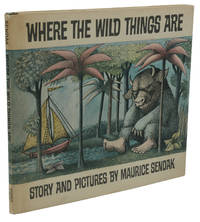
1963140941462New York: Harper & Row 1963. First Edition. Near Fine/Near Fine. First edition first printing in lovely example of the first issue dust jacket. Illustrated paper-covered boards with gray cloth backstrip. Near Fine with slight toning to covers tiny area rubbed through at bottom edge of rear board in a Near Fine dust jacket with light toning and trivial wear with publisher's original price of $3.50 is present on the top corner of the front flap and lower corner clipped three paragraphs of text on the front flap and no Caldecott Medal on the front panel. A groundbreaking work for its honest treatment of children's emotions especially anger and winner of the 1964 Caldecott Medal. Harper & Row unknown books
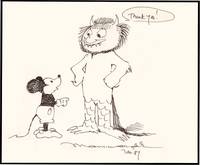
33312n.p.: n.p. 1987. Fine. Original signed pen-and-ink drawing by Sendak depicting Mickey Mouse looking up to a Wild Thing. Because Mickey and Sendak were "born" the same year Sendak had a special affinity to Mickey. A fantastic drawing. 7'' x 7''. Signed by Sendak and dated 1987. n.p. unknown
193167032Sous étui bordé et sous chemise en demi-maroquin brun à recouvrements. Reliure plein maroquin chaudron. Plats ornés d'un décor de listels mosaïqués fauve accompagnés de petits triangles de maroquin brun, dos lisse orné de même. Tranches dorées sur témoins. Chaque contreplat présente un bois sur soie or encadré de maroquin chaudron, gardes de satin, doubles gardes. Couverture gaufrée et dos conservés. Reliure signée G. CRETTÉ.Édition illustrée de 53 bois en couleurs par Jules CHADEL, avec le concours de Germaine de Coster et de Savinienne Tourrette, tirés à la main par Yoshijito Urushibara. Préface de Louis Barthou.
160050o.J. Mit handschr. Konzertprogramm bzw. Autogrammkarte und den Autographen auf einer Albumseite, ab 1954 mit eingeklebtem Programmheft und den Autographen auf der gegenüberliegenden Albumseite, teils auch auf dem Programmheft signiert. 4°. Ledereinbände mit Goldschnitt, teils mit Fileten, ein Leinen-Einband, ein Halblederband mit Holz.
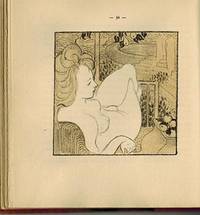
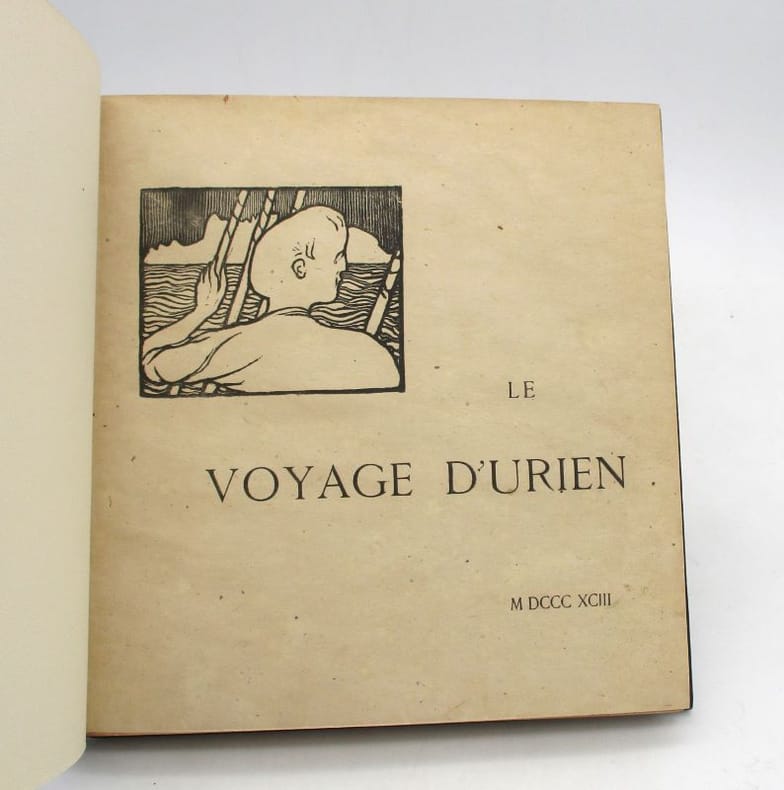
51-4187Paris: Librairie de l'Art indépendant 1893. Small square 4to. Contemporary half burnt orange morocco with 5 raised bands.; slight rubbing along the very top and bottom edges of the spine. 8 106 4 pp : ill. ; 20 x 19 cm. With 30 mainly 2 color Symbolist lithographs by Denis. An early and influential livre d'artiste. Very good. to fine.Printer: Paul Schmidt Paris text Edw. Ancou Paris lithographs. References: Pierre Cailler Catalogue raisonné de l'œuvre gravé et lithographié de Maurice Denis. Nouv. éd. Alan Wofsy Fine Arts 2000 nos. 37-67; Nicolas Rauch Les Peintres et le Livre Alan Wofsy Fine Arts 1991 no. 11;Monod no. 5370; Gordon Ray II no. 375; The Artist and the Book no. 76; .In-8 demi-maroquin pain d'épice à coins dos à cinq nerfs tête dorée Reliure de l'époque.Édition originale illustrée de 29 lithographies originales de Maurice Denis. Tirage limité à 300 exemplaires numérotés sur papier de Hollande après un chine et un japon. Expertise by Julie Sallé Aguttes Neuilly France. Paris: Librairie de l'Art indépendant, 1893. hardcover
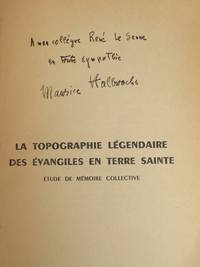
19413840Paris: Presses Universitaires de France 1941. First edition. Paperback. Very Good. True first edition inscribed by Halbwachs to a Sorbonne colleague philosopher Rene Le Senne. Halbwachs was later taken by the Nazis and died at Buchenwald in 1945. Halbwachs' death is described in Jorge Semprun's harrowing account of the concentration camp. Halbwachs first studied philosophy with Henri Bergson but later became Emile Durkheim's most important student. The Legendary Topography is his masterpiece one of the truly great works of European sociology. The book is by far the most sophisticated discussion of how the monuments we see in the Holy Land were created by humans looking for the sacred. Halbwachs reaches an intellectually elegant and humane conclusion about the shrines of the Holy Land: "These are not traces of a human or supernatural individual but rather of groups animated by a collective faith that remains moving even if one does not really know its true nature." The first edition is rare and inscribed copies are nearly impossble. Book is clean throughout paper loss at the base of the spine just clipping off "de France" at the bottom of the publisher's information still very good. <br/><br/> Presses Universitaires de France paperback
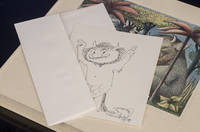
03815New York: Harper & Row 1988. One of 220 Copies Specially Bound and Signed by Maurice Sendak<br/>With an Original 'Wild Thing' Pen & Ink Drawing<br/><br/>SENDAK Maurice. Where the Wild Things Are. Story and Pictures by Maurice Sendak. New York: Harper and Row 1988. <br/><br/>Twenty-Fifth Anniversary Edition. Limited to 220 copies of which this is No. 85 signed by the author on the half-title and additionally a signed original drawing of a 'Wild Thing'. <br/><br/>Oblong quarto 8 15/16 x 9 7/8 inches; 227 x 252 mm. 40 pp. <br/><br/>With an original pen & ink drawing measuring 6 x 5 inches; 151 x 126 mm. of a 'Wild Thing' signed and dated Oct. 1988. <br/><br/>Publisher's full blue morocco front cover decoratively stamped in yellow spine lettered in yellow multi-patterned end-papers all edges gilt. Housed in the original purple felt-lined cream buckram clamshell case with color plate on front panel similar to the color illustration on page 33 and rectangular limitation label with "85" written in black ink on inside. A very fine copy.<br/><br/>Where the Wild Things Are is a 1963 children's picture book by American writer and illustrator Maurice Sendak 1928-2012 and was originally published by Harper & Row. The story of only 338 words focuses on a young boy named Max who after dressing in his wolf costume wreaks such havoc through his household that he is sent to bed without his supper. Max's bedroom undergoes a mysterious transformation into a jungle environment and he winds up sailing to an island inhabited by malicious beasts known as the "Wild Things." After successfully intimidating the creatures Max is hailed as the king of the Wild Things and enjoys a playful romp with his subjects; however he decides to return home to the Wild Things' dismay. After arriving in his bedroom Max discovers a hot supper waiting for him.<br/><br/>The book has been adapted into other media several times including an animated short in 1974 with an updated version in 1988; a 1980 opera; and a live-action 2009 feature-film adaptation directed by Spike Jonze. The book had sold over nineteen million copies worldwide as of 2009 with ten million of those being in the United States.<br/><br/>Sendak won the annual Caldecott Medal from the children's librarians in 1964 recognizing Wild Things as the previous year's "most distinguished American picture book for children". It was voted the number one picture book in a 2012 survey of School Library Journal readers not for the first time. This 25th Anniversary edition had the color reproductions done to Maurice Sendak's exact specifications. New York: Harper & Row, 1988 unknown books
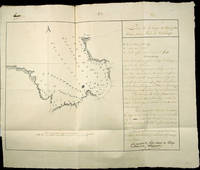
1803WRCAM40583N.p. but probably Tobago 1803. 68pp. plus two folding manuscript plans. Approximately 14500 words. Folio. Folded sheets stitched together. Stitching loose some sheets loosely laid in. Spine chipped. Titlepage lightly soiled some small chips and tears around the edges. Some light soiling and dampstaining to outer leaves else clean and bright. Written on the right half of each page with some additional notes or corrections on the left. Near fine. An important document in French detailing the functions of the island of Tobago written by Louis-Maurice Le Rat De Magnitot 1757-1823 colonial prefect of Tobago and Saint Domingue. Tobago changed hands many times during the 18th century and the island was briefly in French possession again in 1802-03 before being captured by the British in June of 1803. In this document Magnitot summarizes the situation of the newly reclaimed island. The first four sections of his MEMOIRE deal with military matters. In the first section "Troupes" he lists seventy-seven men garrisoned on Tobago noting that the garrison is a varied blend of men. He includes details on discipline causes of sickness and mortality among the men and uniforms. The second section "Artillerie" provides details of the number of guns and munitions at Tobago. The third section "Fortifications" includes two plans of Man of War Bay complete with soundings observations and important locations marked. This is followed by a section entitled "Marine" in which he details the condition of the ports and harbors. In the next four sections Magnitot gives details about the civil operations of the island: Laws Police Agriculture and Commerce. The section on the law is very detailed giving the organization of the courts civil and criminal. The section on police is perhaps the most interesting in which he gives not only information on keeping the public peace but on the public itself. Magnitot delineates in several separate points policing among the black populace the conduct of masters toward slaves and the condition of roads and the means of their maintenance. In the last of these points he gives numbers on both the European and colored populace. The "population blanche" numbers no more than 600 while the "population noire" at the time of the assessment numbers 17485. Breakdowns within each group are also given dividing rural from urban and free from slave. <br> <br> In the seventh section "Agriculture" Magnitot declares Tobago's agriculture to be flourishing. He lays out the reasons for that success before going into specific crop information detailing production of coffee cotton rum and sugar. The final section "Commerce" is the most extensive. It lays out details of Tobago's trade with France and reasons for variation on the flow of commerce as well as discussing the cost of national trade versus trade with other nations. Clearly the French administrators hoped Tobago would become a productive colony but Napoleon's entire American strategy collapsed in 1803 with the loss of Saint Domingue to the freed slaves the sale of Louisiana and the choking off of Caribbean commerce by the Royal Navy. <br> <br> First colonized by the Dutch in the early 17th century over the next two hundred years Tobago changed hands thirty-three times among the Spanish Dutch English and French all of them rival colonists. In 1763 Tobago was ceded to Britain captured by the French in 1781 and then recaptured by the British in 1793. In 1802 Trinidad was ceded to the British through the Treaty of Amiens and Tobago returned to the French. Britain re- captured it in 1803 when the peace broke and the Napoleonic Wars resumed. At the end of the Napoleonic Wars in 1814 Britain gained formal possession of Tobago with the Treaty of Paris. <br> <br> A fascinating and detailed document illuminating this last brief period of French rule on the island of Tobago a small part of Napoleon's strategy to build a French empire in America. unknown books
196477448Paris: Scripta et Picta 1964. Fine. Scripta et Picta Paris 1964 28.50 x 38 cm en feuilles sous chemise-étui First edition illustrated with 48 color lithographs by the author one of a few named copies on japon reserved for the principal collaborators of the publication ours specially printed for the celebrated bibliophile Colonel Sickles deluxe issue. This copy is complete as stipulated in the justification with the duplicate set of lithographs in black and in color. The work is also illustrated with 40 decorated initials designed by the prestigious bookbinder Paul Bonet. This is Maurice de Vlaminck's most important illustrated book which took him nearly ten years to complete. A fine copy complete with its slipcase and box. Scripta et Picta unknown
1985C93912L. Carre. As New. 1985. Hardcover. 2865740056 . FREE UPGRADE to Courier/Priority Shipping Upon Request - IN STOCK AND IMMEDIATELY AVAILABLE FOR SHIPMENT - Flawless copy brand new pristine never opened -- 212 pages over 250 illustrations. Catalogue Raisonné Catalogue Raisonne Catalog Raisonnee uvre Oeuvre -- with a bonus offer-- - May be EITHER: out of print OOP and extremely rare in this pristine condition; signed by author or contributor; or a first or special edition; inquire for details . L. Carre hardcover
1963140947882New York: Harper & Row 1963. First Edition. Near Fine/Very Good. First edition first printing in a first issue dust jacket with publisher's original price of $3.50 present on the top corner of the front flap and lower corner clipped three paragraphs of text on the front flap and no Caldecott Medal on the front panel. Bound in publisher's illustrated paper-covered boards with gray cloth backstrip. Near Fine with light lean to binding former owner names at half-title and title page. In a Very Good unclipped dust jacket with light tanning light edge wear including closed splits to the foot of the spine and front flap fold minor abrasions to front cover small tidemark to top of front joint. A lovely copy of the children's classic a high achievement of 20th century book design and children's storytelling that won Sendak the 1964 Caldecott Medal. Hanrahan A58. Harper & Row unknown
1964CLL-466Paris, Scripta et Picta, 1964 Grand in-4 de 154pp., (2) ff., 1 f. bl., en feuilles sous couverture imprimée rempliée et emboîtage d'éditeur.
192531955Un des 13 sur japon, en reliure à décor Paris, Grasset, (25 septembre) 1925. 1 vol. (120 x 180 mm) de 349 p. et 1 f. Maroquin havane, plats ornés d'un imposant décor en relief figurant une forêt, constitué de pièces de papiers glacés, rehaussé d'un jeu de filets dorés et argent, titre doré, date en pied, tête dorée, contreplats de papier havane et gardes de papier vert, couvertures et dos conservés (reliure signée de [Alain] Devauchelle). Édition originale. Un des 13 exemplaires sur japon (n° 2).
22302Paris, Librairie de l'art indépendant, 1893. In-8 carré, maroquin bleu nuit, dos long, tête dorée, couverture conservée (petites et pâles mouillures marginales sans atteinte, quelques rousseurs éparses, notamment en début et fin de volume).
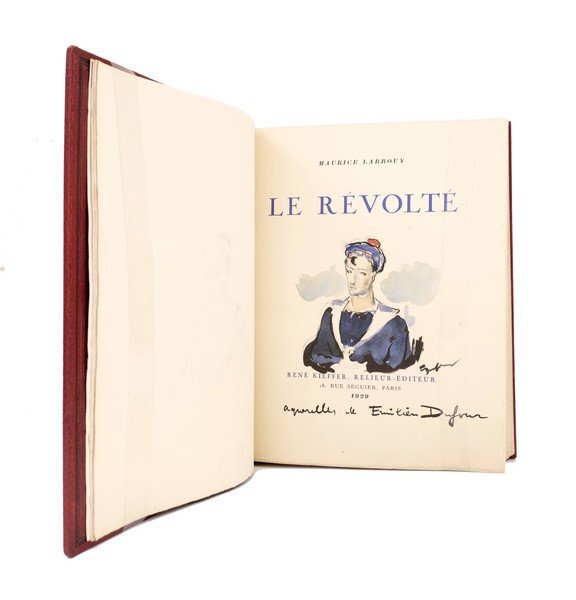
19281179Paris : René Kieffer, 1928. ILLUSTRÉ À EXEMPLAIRE UNIQUE DE 225 AQUARELLES ET DESSINS ORIGINAUX, EXEMPLAIRE DE LA BIBLIOTHÈQUE PERSONNELLE DE RENÉ KIEFFER