41 775 résultats
Neuchatel, L'Imprimerie de la Société Typographique), 1771-83. 4to. Bound in 19 contemp. uniform full mottled calf. Raised bands. Gilt spines. Title-and tomelabels with gilt lettering. Spine-ends on nearly all volumes strenghtened. Stamp on title-pages. Each volume around 650 pp. With 508 fine engraved plates.
Large 4to (324 x 250 mm). Engraved throughout. 86 plates (including decorative title-page) with many hundreds of different designs. Contemporary German tree calf, flat spine with contemporary ink lettered paper label; original dove grey printed wrappers bound within, entitled "Sammlung der Zeichnungen sämmtlicher Architektur- und Meubles-Verzierungen aus der Fabrike von Joseph Beunat, zu Sarreburg in Lothringen". An important trade catalogue of furniture ornament and interior decorative designs manufactured by a patented process at Beunat's factory in Sarrebourg in the Alsace. Beunat was the first to manufacture and distribute pre-fabricated moulded elements of ornamentation. His designs were in the French Empire style, pioneered by the architect duo Percier and Fontaine. - Beunat's trade catalogue shows about 800 decorative designs of friezes, panel ornaments, pilasters, capitals, mouldings, candelabras, vases, heads, mythological figures and motives, rosettes, frames for pictures and mirrors, door surrounds, etc. There are also a handful of designs of entire rooms together with floor plans. The designs were offered in plasterwork as stucco decorations for interiors, but some must also have been offered in bronze as furniture ornament. The plates are finely detailed and drawn with measurements. - This copy bears proof of Beunat's international ambitions: the plates and title-page of the trade catalogue are French, while the wrappers give all the necessary information in German. There is a German summary of the designs contained in the catalogue, as well as practical information indicating that the measurements are in French with a scale. There is also a reference to Beunat's "Erfindungs-Patent". We could not locate another copy with the German wrappers. Some of the plates are dated "1812", some "1813", the latest date is "18 December 1813". Plates nos. 83 and 85 have neat ink ms. additions. Some of the plates were engraved by Louis Marie Normand, August Montferrand, or A. P. Giraud. - An excellent copy, clean and crisp, from the Donaueschingen Fürstenberg library (their small stamp to verso of title-page). Kat. der Ornamentstichslg. Berlin 1387 (72 plates, dated 1812).
16 leaves with original gouaches. Original wrappers. Folio. Stunning collection of 16 original gouaches with accompanying descriptive text (handwritten in an elegant hand in French and mounted on cardstock to versus opposite image they are describing) all by a skilled artist (one "J. Baten" as noted on cover). The monotone (with occasional highlights of color) fashion plates are executed in a striking white on dark grey heavy stock, lending the entire production a ghostly quality not out of place in these studies of bygone French fashions. Based on design and handwriting, we date most likely to the first half of the 20th century. The style of the gouaches themselves - somewhere between Deco and Nouveau - would lend credence to this assessment. 5 plates show men, one of a man and woman, ten of women only. Exceptional.
17445061DBPadova, Nella Stamperia del Seminario, appresso Gio: Manfrè, (pubbl. dal abbate Gius Toaldo), 1744. 4°. (4) Bl., LXXXVIII, 601 S; (2) Bl., 564 S.; (2) Bl., 486 S.; (4) Bl., 342 S., (1) Bl., mit vielen Vignetten, Holzschnitt Abbildungen und Diagrammen im Text, Porträt von Galileo Galilei von Zucchi, gefalteter Kupfertafel. Kalblederbände mit Rückenvergoldung, Rückentitel und Supralibros. + Wichtig: Für unsere Kunden in der EU erfolgt der Versand alle 14 Tage verzollt ab Deutschland / Postbank-Konto in Deutschland vorhanden +, 5061DB|5061DB_2|5061DB_3|5061DB_4 4 Bände. [4 Warenabbildungen]
XIV pp., [1] ff. bl., 282-[2] pp. ; et 29-[2] pp. pour les Recherches sur les bruits du souffle demi-basane bleu nuit de l'époque, dos lisse et fileté 1857 [et 1860], 1857 [et 1860], in-8, XIV pp, [1] ff. bl, 282-[2] pp. ; et 29-[2] pp. pour les Recherches sur les bruits du souffle.., demi-basane bleu nuit de l'époque, dos lisse et fileté, Édition originale de ce livre publié par Eugène Huzar (1820-1890), auteur de la toute première philosophie du catastrophisme technologique. Cet ouvrage extrêmement rare fait suite à un livre au titre significatif, La fin du monde par la science (1855). Dans ces écrits, l'auteur développe la thèse d'une apocalypse technologique et environnementale, qui serait la conséquence du décalage entre les capacités techniques et et les capacités de prévision. Ses travaux, qui furent des succès de librairie et qui reçurent les éloges de la presse de l'époque, sont curieusement tombés dans l'oubli, jusqu'à leur redécouverte actuelle. La pensée d'Huzar s'inscrit dans l'héritage "technocritique", qui remonte au Siècle des Lumières et à la première Révolution industrielle ; elle présente cependant une originalité propre et un caractère visionnaire stupéfiant. C'est en effet la première critique progressiste du progrès : Huzar n'est pas un décliniste, au contraire ; il admire la science. La question qu'il pose, et qui fait toute sa singularité, est celle du dysfonctionnement des lois de la nature et des catastrophes liées à l'intervention de l'homme sur son environnement : les conséquences du progrès ne traduisent non pas la maîtrise technique de la nature, mais bien au contraire, sa perte (Fressoz). Les chemins de fer, les bateaux vapeur et les usines produiront des milliards de mètres cubes de dioxyde et d'oxyde de carbone, qui troubleront l'harmonie du monde, puisque les forêts auront disparu ; l'espèce humaine ira vers sa dégénérescence à cause de la vaccination ; etc. "Tout mal appelle après lui un remède" : Huzar pense ainsi qu'il est possible de mettre en place des moyens palliatifs pour retarder l'apocalypse finale, notamment la création d'une "édilité planétaire", qui aurait son siège dans une grande ville du monde, et qui se chargerait de régler le travail humain. "(...) chaque fois qu'une nation voudra entreprendre une de ces tentatives audacieuses qui peuvent troubler l'harmonie du monde, elle devra s'adresser aux édiles, qui pourront lui donner ou lui refuser l'autorisation, car ils seront là pour veiller à la conservation de l'harmonie du globe. La nation qui enfreindrait l'ordre des édiles serait mise au ban des nations comme s'étant rendue coupable du crime de lèse-humanité" (L'arbre de la science, p. 275). Huzar fut une sorte de touche-à-tout fortuné, issu de la bourgeoisie catholique parisienne : il a reçu une formation de juriste et s'est également intéressé à la médecine. On lui doit notamment un petit mémoire sur les bruits du souffle du coeur, qui a été relié ici à la suite de l'Arbre de la science. Les débats actuels sur l'effondrement environnemental et sociétal remettent ses travaux à l'honneur ; La fin du monde par la science a notamment fait l'objet d'une édition critique parue en 2008 (Paris, Ère). D'une certaine manière, les écrits d'Huzar préfigurent la collapsologie récente. Bon exemplaire de cet ouvrage rarissime : seuls quatre exemplaires en bibliothèques publiques sont connus. Quelques épidermures au dos, coins légèrement abîmés. Intérieur frais. Jean-Baptiste Fressoz, "Introduction à L'arbre de la science d'Eugène Huzar (1857)". Socio-anthropologie [En ligne], 28 | 2013, mis en ligne le 23 septembre 2015, consulté le 29 janvier 2020. Jean-Noël Jeanneney. La fin du monde par la science : genèse d'une angoisse. Concordance des temps. France Culture, 14/11/2015. 59 minutes
8vo. (30) pp. With two initials and vignette of the Officina Vindobonensis. Red endpapers, heightened in gilt. Original giltstamped cloth. One of 140 copies of the second book (of a total of only 21) issued by the "Officina Vindobonensis", the private press inaugurated in 1925 by Robert Haas, Carry Hauser, and Fred Siegle. The initials were cut by Haas, the binding was designed by Elisabeth Karlinsky. Printed on handmade paper by Zerkall. - Some browning to first and last leaf as well as to edges, otherwise a perfectly preserved copy of this memorial volume for the great Gustav Klimt.
Folio (245 x 378 mm). (4), 44, (2) pp. MWith engraved title vignette and 60 (21 folding) engraved plates showing horizontal and cross sections of residences. - (Bound with) II: Schübler, Johann Jacob. Acht Tabellen von der alten Civilbaukunst. Nuremberg, Christoph Weigel, 1783. (4) pp. With 8 engraved plates. Contemporary half calf with brown marbled covers and gilt-stamped spine label. Coloured paper pastedowns. First edition, reprinted as late as 1824. A rare, spirited and pointedly witty discussion of the architecture of private residences from an enlightened point of view: "Whoever has read Tristram Shandy may gladly call building my hobby-horse; though I should regret it if my sections were not more useful than Uncle Toby's fortifications and sieges on the bowling green" (cf. p. 5). Taking aim against the imitation of Renaissance and southern European architecture, the author ridicules the "symmetromania" of classicism and makes a plea for practical, modern building styles. "[Bothmer's] ironic voice puts him outside the serious, tradition-bound tone of most architectural treatises. Given his advocacy of buildings never much included in serious treatises, Bothmer can only write as someone who does not belong to the architectural profession [... He] has something of the know-nothingism of the healthy bourgeois, albeit in the context of the Enlightenment drive to eliminate prejudice and to encourage independent thought [...] Bothmer [was] writing for an educated, nonaristocratic class that had never made the grand tour but had encountered instead only regional examples of classical buildings" (Purdy, p. 42f.). - II: Bound with Bothmer's work is the last original edition of "Acht kurtzgefasste Tabellen, in welchen die antique Architectur enthalten" ("Eight concise tables containing the classical architecture"), first published in 1732 by the Nuremberg architect Johann Jakob Schübler (1689-1741), who was in his time much read by theoreticians and practicioners alike. The 24 profiles on eight plates show mouldings, pediments, bases and capitals. Rare; OCLC lists a single copy (at the Getty Research Institute). A reprint appeared in 2017. - Binding a little rubbed, spine-ends bumped, hinges starting. Interior a little browned and spotty; a tear to a single text leaf has been repaired. - From the library of the Piarists of Vác in Hungary with their 18th century handwritten ownership to the title-page, small stamp on verso, and printed Vác shelfmark label to front pastedown. This copy, the only one ever to have surfaced in the trade, was sold at Hartung & Karl's first auction, in 1972, and acquired by the Viennese-born scholar of monuments, Othmar Birkner (1937-2020, with his bookplate on the front free endpaper); it has now re-entered the market from his estate. I: Ornamentstichslg. Berlin 2031. Holzmann/B. I, 6286. D. L. Purdy, On the Ruins of Babel (Ithaca, 2011), p. 42f. VD 18, 14406837. OCLC 311286651. II: OCLC 82265965.
In folio (337x220), pagg. (12), compreso frontespizio architettonico inciso in rame, 55 e 154 tavole a piena pagina incise in rame (tavola 21 e 12 invertite).<BR>Legatura coeva in cartone d'attesa e titolo manoscritto al dorso, tagli a spruzzo.<BR>Trattato di ingegneria meccanica, la cui prima edizione latina è del 1662, con numerose tavole di invenzioni e macchinari che trovano spiegazione del relativo funzionamento nella prima parte del testo: si va dalle macchine per il pompaggio dell'acqua, per il sollevamento di pesi, per la macinatura, per la fusione e la lavorazione dei metalli, alle macchine per la produzione della carta.<BR>Boeckler (1648-1685), architetto ed ingegnere tedesco, si occupò della costruzione di una gran quantità di strumenti meccanici, ingranaggi complessi e congegni alcuni dei quali hanno avuto l'ammirazione dei tecnici d'oggi.<BR>Esemplare in ottimo stato di conservazione.<BR>Hoover, 142; per la prima edizione del 1662: Brunet I, col. 1024; Graesse I, p. 459; Honeyman 359.<BR>
In-8 p. (mm. 228x168), p. pergamena antica, 8 cc.nn., 184 pp., con 10 belle tavole raffiguranti l’anatomia dell’orecchio, con una o più figure, inc. in rame e tutte descritte. "Prima edizione" di questa fondamentale opera sull’orecchio, considerato testo classico per più di un secolo. Questo trattato, il più completo apparso fino allora, contiene una minuziosa descrizione anatomica e alcune scoperte come quella della membrana nel vestibolo e altre che presero il suo nome. Valsalva (1666-1725), allievo di Malpighi e maestro del Morgagni, fu medico e chirurgo insigne, ed è considerato il fondatore dell’anatomia scientifica dell’orecchio. Cfr. Garrison-Morton,1546: “Valsalva is best remembered for his work upon the ear, in which he described and depicted its most minute muscles and nerves. He divided the ear into ‘external’, ‘middle’, and ‘internal’; his method of inflating the middle ear (Valsalva’s manoeuvre) is still practised. this book includes a description of ‘Valsalva’s dysphagia’” - Blake, p. 468 - Castiglioni, pp. 529-531. Con numerosi timbri di apparten.; 1 carta con picc. restauro per ang. infer. mancante; 3 cc. con lieve alone, altrimenti fresco esemplare ben conservato.
187851467(London, Harrison and Sons, 1878). 4to. In the original wrappers. Offprint from ""Philosophical Transactions"" 1877 - Vol. 167. Author and title written in light pencil to front wrapper. Wrappers with a bit of soiling and part of spine is missing. Corners bended. Internally fine and clean. Pp. 313-349.
176256316Königsberg und Leipzig, Kanter (Berlin, Stettin, Leipzig, Rüdigern), 1762-75. 4to. Bound in 13 uniform contemp. full calf. Raised bands. Richly gilt spines. Titlelabels with gilt lettering. On all boards the gilt monogram on red background of King Christian VII. A stamp on title-pages. Around 6000 pp., 4 folded tables and 366 folded engraved plates (1 plate in xerox-copy). Occassionally a few minor brownspots, but fine and clean.
(London, Harrison and Sons, 1878). 4to. In the original wrappers. Offprint from ""Philosophical Transactions"" 1877 - Vol. 167. Author and title written in light pencil to front wrapper. Wrappers with a bit of soiling and part of spine is missing. Corners bended. Internally fine and clean. Pp. 313-349.
Königsberg und Leipzig, Kanter (Berlin, Stettin, Leipzig, Rüdigern), 1762-75. 4to. Bound in 13 uniform contemp. full calf. Raised bands. Richly gilt spines. Titlelabels with gilt lettering. On all boards the gilt monogram on red background of King Christian VII. A stamp on title-pages. Around 6000 pp., 4 folded tables and 366 folded engraved plates (1 plate in xerox-copy). Occassionally a few minor brownspots, but fine and clean.
12909San Jose CA: Gist & Erdmann Inc. / Panoramic Map Productions 1989. Color printed map on sturdy glossy paper 39 x 26.75 inches. Small piece of old cellophane tape in the upper margin tiny puncture in image area near top-middle portion of the map lightly wrinkled previously rolled. Overall in very good condition. A rare and charming 1989 pictorial cartoon map and calendar of Silicon Valley illustrated by Pham Bach Phi one of at least three such works produced by the artist during the tech boom of the late 1980s and early 1990s. Copyrighted and published as a joint venture between Gist & Erdmann Inc. and Panoramic Map Productions the view employs an inviting almost pastoral aesthetic that deliberately downplays the burgeoning urban sprawl brought on by the explosion of the computer industry. By depicting major freeways as rustic roads and rendering corporate headquarters in a modest commercial style the artist fosters a small-town atmosphere in a region that was at the time undergoing a radical industrial transformation.<br /> <br /> The poster is populated with company logos and vignettes that celebrate a local economy rapidly centralizing around the technology sector. Notable names include Oracle IBM Apple and Hewlett-Packard practically a "Who's Who" of the era's digital vanguard. The bottom portion of the work is printed with a calendar for the upcoming year of 1990 underscoring the item's original purpose as a functional office product in itself. The year 1990 like most years since the '70s marked the dawn of the digital era in Silicon Valley highlighted by Tim Berners-Lee installation of the first World Wide Web server on a NeXT computer -- Steve Jobs' post-Apple venture -- at CERN. The year also saw the launch of LambdaMOO at Xerox PARC the inaugural Photoshop Invitational in Mountain View and key early developments in 3D graphics and networking that set the stage for the dot-com boom and current computer technologies. Gist & Erdmann, Inc. / Panoramic Map Productions unknown
174929077Hamburg und Leipzig, Grund, Grunds Witwe und A.H. Holle, 1749-62. 8vo. Bound in 22 cont. uniform hcalf. Titlelabels in leather on backs, gilt. Small paperlabel pasted on lower compartment. A few spine ends worn. Light wear to backs. Stamp on titles and verso. Light occasional browning, but a good, sound copy. Having numerous engraved folded plates. With Kätners: Zwiefaches Universalregister über die ersten XXV Bände von den Abhandlungen...der Königl. Schwed. Akademie der Wissensch. nach der deutschen Uebersetzung des Herrn Kästners gefertiget. Lpz., Holle, 1771. Cont. hcalf. (6),302 pp.
Hamburg und Leipzig, Grund, Grunds Witwe und A.H. Holle, 1749-62. 8vo. Bound in 22 cont. uniform hcalf. Titlelabels in leather on backs, gilt. Small paperlabel pasted on lower compartment. A few spine ends worn. Light wear to backs. Stamp on titles and verso. Light occasional browning, but a good, sound copy. Having numerous engraved folded plates. With Kätners: Zwiefaches Universalregister über die ersten XXV Bände von den Abhandlungen...der Königl. Schwed. Akademie der Wissensch. nach der deutschen Uebersetzung des Herrn Kästners gefertiget. Lpz., Holle, 1771. Cont. hcalf. (6),302 pp.
17431726Augsburg, J. G. Mertz (später E. Klett), 1743-1769. Mit 5 gestochenen Vignetten und 219 teils gefalteten Kupfertafeln. Folio (34 x 22,5 cm). Halblederbände der Zeit mit goldgeprägten Rückenschildern und floraler Rückenvergoldung.
In-16 gr. (mm. 184x120), p. pelle settecentesca, dorso a cordoni (restaur. per manc.) con decoraz. e tit. oro su tassello, 12 cc.nn., 448,38 pp.num.; al frontesp. cornice architettonica con lo stemma della città di Burgos; ornato da pregevoli grandi capilett. figur. a vignetta; con 1 ritratto di Christopher Acosta e con interessantissime e inedite illustrazioni xilografate nel t. Sono ben 46 tavv. di cui: 41 (a p. pag.) raffigurano piante, 2 portano l’immagine di due elefanti (a p. pag.) e 3 (più piccole) con figure di foglie, tutte disegnate da Acosta. L’opera chiude con un “Tractado del Elephante”, il primo studio monografico su questo animale. "Edizione originale" di questa rara e preziosa opera che ebbe notevole influenza in Europa perchè fece conoscere le piante asiatiche più importanti, sia dal punto di vista medicinale che del loro utilizzo come spezie; fra queste segnaliamo: ginger, cannella, pepe, noce moscata, oppio e cardamomo. In realtà questo trattato è una versione rivista ed accresciuta dei “Coloquios dos simples e drogas he cousas medicinais da India” di Garcia da Orta, pubblicato a Goa nel 1563. Medico e botanico portoghese il da Orta aveva a lungo studiato la flora locale di Goa, concentrandosi specialmente su quelle piante che potevano essere impiegate in campo medico. Acosta, medico gesuita, fece la conoscenza di da Orta nel corso dei suoi viaggi in India e la sua versione dei “Coloquios” risulta pertanto molto interessante per le sistematiche e dirette osservazioni sul campo. Cfr. Palau,I, p. 10 (con le varie traduz. in latino, italiano, francese e inglese) - Pritzel,13 - Wellcome,20 per l’ediz. di Venezia, 1585 - Morton,1819 - Cat. of British Museum,I, p. 9. Biographie Universelle,I, p. 160: “Christophe Acoste, chirurgien portugais, naquit en Afrique, dans les établissements qu’y possédait sa nation au 16 siècle. Il eut de bonne heure le gout des voyages, et étant allé en Asie pour y rechercher les drogues que l’on en tire pour l’usage de la médecine, il fut pris par des pirates qui l’emmenèrent en esclavage. Il trouva enfin le moyen de sortir de sa captivité, et continua ses voyages. Ce ne fut qu’après en avoir fait plusieurs, surtout aux Indes Orientales, qu’il revint en Europe, où il exerça la médecine et la chirurgie. Ayant eu connaissance de l’ouvrage de Garcia "ab horto", sur les drogues, il en entreprit un sur le meme sujet, qui parut à Burgos en 1578.” Mancano 2 carte: 1 con figura (pp. 419/420) e l’ultima con il nome dello stampatore e data di ediz., qui riprodotte su carta antica. Leggerm. corto del marg. super., con aloni e lievi uniformi arross. interc. nel t., ma complessivam. un buon esemplare.
Oblong small folio (280 x 285 mm). 58, (4) pp. With 5 original woodcuts by Kirchner, of which 1 in black and blue, 4 in blue. 100 numbered plates, of which 4 in colour. Contemporary full cloth with blindstamped title to cover and spine. Top edge red. Blue paper dustjacket. In original cardboard slipcase with title-label to spine. Number 247 of 800 numbered copies. Rare hardcover edition of the excellent monograph on Ernst Ludwig Kirchner - a "masterpiece of German book art of the 1920s" (cf. Kornfeld). - Designed by Kirchner himself, this monumental publication constitutes the first thorough overview of the artist's manifold work. Lavishly appointed, it includes 5 woodcuts created by Kirchner specially for this work, as well as reproductions of many of his oil paintings, etchings, lithographs, sculptures and drawings. The sumptuous cover features another woodcut by Kirchner. - Printed in a run of 800 copies, of which a considerable number were not bound in hardcover but sold as "cassette editions", featuring the plates and a text brochure loosely inserted in a cloth cassette. Bound editions are considerably scarce. The uncommon slipcase and dust jacket add to the rarity of the present edition. - Slipcase and dust jacket somewhat worn and faded; book in mint condition. One of the great "milestones of 20th century art publishing" (cf. Jentsch). Jentsch 160. Kornfeld 202. Schauer II, 120. Dube 852-853, 855-858. OCLC 906271905.
176226629Berlin, Stettin und Leipzig, Johann Heinrich Rüdigern, 1762-75. 4to. Bound in 13 fine uniform full calf, raised bands, gilt backs. Remains of paperlabels on backs. Top of spine on one volume frayed. Small rubber stamp on titles. A few brownspots. A good copy. Having in all 374 (of 585) fine engraved plates (1 plate supplied in xerox-copy). Plates measure around 37x24cm.
Berlin, Stettin und Leipzig, Johann Heinrich Rüdigern, 1762-75. 4to. Bound in 13 fine uniform full calf, raised bands, gilt backs. Remains of paperlabels on backs. Top of spine on one volume frayed. Small rubber stamp on titles. A few brownspots. A good copy. Having in all 374 (of 585) fine engraved plates (1 plate supplied in xerox-copy). Plates measure around 37x24cm.
Folio. Title page with woodcut border. 34 unnumbered ff. and 30 engr. plates. Somewhat later marbled half vellum. First and only edition. These highly original mezzotints present the 28 larger-than-life bronze statues guarding the tomb of Emperor Maximilian in the Innsbruck Court church. In reference to this sculptural program, commissioned by the Emperor himself but not completed until 1584, this burial church located at the fringe of the old town is known to this day as "Schwarzmanderkirche". - Very rare; only two copies on German postwar auctions (1953 and 1987, both severely defective). Not in ABPC or in the last decades' trade. Not in OCLC. Wurzbach XVIII, 312. Thieme/Becker XXIV, 557.
In-8 p. (mm. 221x172), 2 parti in 1 volume, p. pergamena coeva, titolo ms. al dorso, 10 cc.nn., 868 pp. (testo e numeraz. delle pagg. su due colonne), 11 cc.nn. (Indice); marca tipograf. al frontespizio e al verso dell’ultima carta, ornato da grandi iniziali e con alc. figure nel t., tutte inc. su legno. Vi sono contenuti testi di: “Cleopatra, Albucasis, Trotula, Rocheus, Bonacioli, Sylvius, Moschione con ‘De passionibus mulierum liber Graecus’.” La seconda parte, con proprio frontespizio, contiene: MOSCHIONIS Medici Graeci (Mustio o Muscio), "De morbis muliebribus" liber unus: cum Conradi Cesneri viri clariss. scholijs & emendationibus, nunc primum editus opera ac studio Caspari Vuolphij Tigurini medici, pp. (8),63, testo in greco. Una delle prime opere specificatamente dedicate alle ostetriche. "Rara prima edizione" di questa importante raccolta di classici di ginecologia, vera e propria enciclopedia di questo ramo della scienza medica. Cfr. Durling,2252 e 3320 (x Mustio) - Wellcome,I,3033 - Garrison and Morton,6011: “A celebrated collection of classics, collected and edited by Wolff. It forms a record of contemporary ginaecological knowledge” e n. 6136: “Muscio was a pupil of Soranus (the greatest obstetrical writer of antiquity). His book is arranged in catechism form; it was first published in Caspar Wolff’s "Gynaeciorum", 1566”. Con uniformi lievi arross. interc. nel t. e antiche note mss. a penna, ma certamente un buon esemplare.
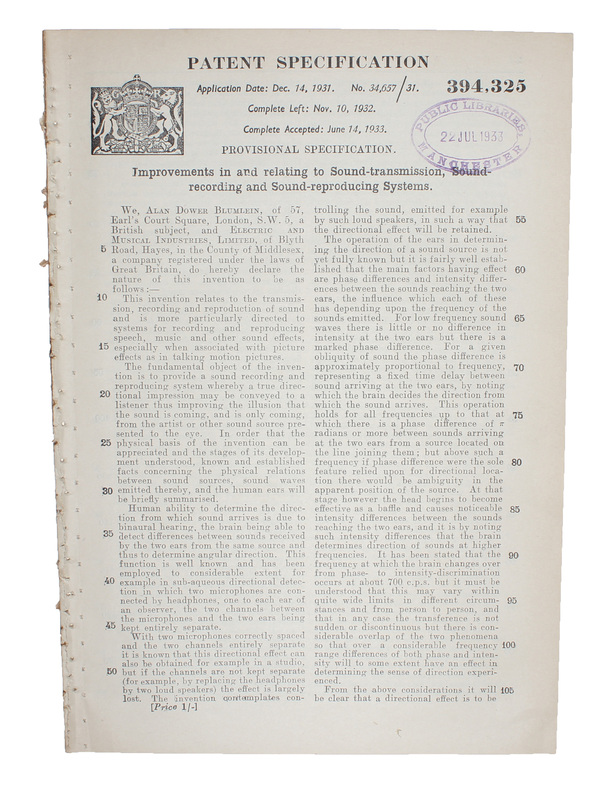
193349181[London, Eyre and Spottiswoode], 1933, 14th June. 8vo. Disbound. Stamp to p. 1. 22 p + 1 folded plate.
186947528Paris, 1869. 8vo. Contemporary green half cloth with gilt red leather title-label to spine. A bit of wear to extremities and title-label with wear. A bit of brownspotting to first and last leaves. VII, (1), 238 pp. Illustrated.