34 831 résultats
2081502111904612Chinese social sciences N.A. Soft Cover. Fine. The book is in fine condition. Chinese social sciences paperback
180063904Tokyo & Kyoto Japan: Kano School ca. 1800-1810. One 4to. art sample design portfolio sized 12.5 x 14 in. which folds out into giant montage of six large original late-Edo-Period Kano School screen designs on durable handmade Japanese rice paper measuring 110 x 75 in. carefully pasted as montage some titled as well as featuring ink manuscript painting instructions ordered counter-clockwise: “Bamboo scene†47 x 38.5 in.; King Tang of Shang court scene 36.5 x 39 in.; 2nd Court scene 38.75 x 38.75 in.; Pine tree landscape 38.75 x 38.75 in.; Crane 28.75 x 39 in.; and Island pagoda landscape & pine trees 31 x 41.75 in six w/ original colour painting some colour painting & material instructions in Japanese all arranged to compactly fold and bound with colour woodblock illustrated cloth and old bookseller labels mounted on verso some repairs to corners to reattach the boards thumbing & minor tears a fold creases w/ a few occasional paper repairs at the first most frequently used fold minor creasing & edgewear dustsoiling to fold creases interior offset toning from sizing & paint colours still an extraordinary exemplar. This exceptional late-Edo-period original Kano School painting montage incorporates many of the elements developed by the famed multi-generational painters whom over four centuries revived and shaped Chinese idealist traditions into a uniquely vigorous Japanese art style. The Kano school painters emphasized landscapes Imperial court interior & exterior architectural elements colours uses of gold animal and botanical subjects often creating crowded panoramic scenes typically used in wall & door screens as well as triptych folding wall screens. The repeated instructions on these designs in Japanese by Sasayama Tsutsumu -- one of several Sasayama painters who took that name from the 18th- to 19th-Centuries in the Kano School beginning with Sasayama Yoi d. 1743 student of Kano Sunnobu 1636-1713 and subsequently four more generations afterwards nearly all adopted and chiefly serving the Chofu domain -- specify these designs are each one of three pieces. In addition there are ink manuscript memos appearing with directions on pigments for the final design work such as adding mica flecks or other paints & dyes and these sketches captured key features of a design so that students or other Kano artists could sufficiently enlarge recreated and fully understand the steps required for the finished decorative artwork pieces. The upper right first image presents bamboo looming in the weather emphasizing their connections to architectural features; The second and third designs capture the golden age Curt of the King of Shang in 1600 B.C. memorialized later as the Xia Dynasty; the fourth presents a rugged hillside and trees shrouded in clouds; the fourth a wonderful large crane apparently intended as part of a much larger piece; and finally the sixth lower right features distant pagoda temple shrouded mountains flower-bedecked pine tree in foreground and with delicate colouring and shading. Naganobu Kano fl. 1775-1828 and his son Osanobu Seisenin Kano 1786-1846 were of the Kobikicho family which carried on the Kano School traditions from 1730 until the Meiji Period and were instrumental in producing designs and screens for the Nishinomaru and Honmaru palaces which burned down in 1838 and again in 1844. Even though the paintings no longer exist similar original design such as these do survive in the Tokyo National Museum. Seisenin Kano was especially well known for his art adapted from his studies from ancient paintings at the end of the Edo-period. See: Kano School After the Middle of the Edo Period Art Nomura 2026; Matthew P. McKelway Rediscovering the Kano School Artforum Vol. 53 No. 5 Jan. 2015; Brief Biographies of Scholars Painters and Haiku Poets of Chofu Records of the Sasayama Family Painters of the Chofu Domain 2026. Kano School, hardcover
Bulino, 1530, firmato in lastra, in basso nell’immagine, con il monogramma “L” seguito dall’iscrizione “SPES”. Esemplare nel primo stato, di tre.Superba prova, ricca di toni e ben contrastata, impressa su carta vergata coeva, rifilata alla linea del rame, in eccellente stato conservativo.Della serie “Le Virtù”, composta da sette tavole. La data, 1530, è riportata sulla prima e sulla quarta tavola, raffiguranti le virtù della Fede e della Prudenza.“Le Virtù cristiane, dette teologali, erano Fede, Speranza e Carità, e a queste ultime i padri della chiesa aggiunsero le quattro virtù cardinali descritte nella repubblica di Platone: Giustizia, Prudenza e Temperanza. Cosicchè questi soggetti trattati dagli artisti come serie, alle volte in contrasto con i Vizi Capitali (che Luca non eseguì) erano graditi al Clero. Luca, sempre attento a eseguire immagini che potessero essere facilmente apprezzate, si impegnò a fondo eseguendo questi sette nudi nel suo stile italianeggiante in cui gli effetti di monumentalità e di tutto tondo sono particolarmente riusciti.” (Salamon, 114) Engraving, 1530, signed with the monogram "L" and lettered "SPES". First state, of three.Magnificent work, printed on contemporary laid paper, trimmed close to platemark, in excellent condition.A nude allegorical figure of hope sits on a stone ledge in profile to right, her hands are raised before her and she looks out of a doorway at back right toward a ray of light in the sky at upper right; an angel at upper left holds a halo over her head.The plate is the second in a series of seven plates of the Virtues. Two of the seven plates bear the date 1530.The Christian Virtues, called theological, were Faith, Hope and Charity, and to the latter the fathers of the church added the four cardinal virtues described in Plato's republic: Justice, Prudence and Temperance. So these subjects treated by the artists as serious, sometimes in contrast to the Capital Vices (which Luke did not perform) were appreciated by the Clergy. Luca, always careful to execute images that could be easily appreciated, worked hard to execute these seven nudes in his Italian style in which the effects of monumentality and all-round are particularly successful. Bartsch VII.420.128; Hollstein 128; Filedt-Kok, 128; The New Hollstein, 128; TIB, 115; Salamon, n. 114.
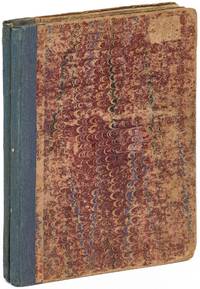
1890460264Fredonia New York 1890. Hardcover. Good. Two notebooks with printed title: Normal Rhetorical Exercise Correction Book. Fredonia N.Y.: F.C. Chatsey Publisher Copyright 1886. Small quartos. Bound in quarter cloth and marbled paper over boards. Covers are rubbed and worn one front cover has some staining good overall. Both notebooks contain several book reports and essays on special topics written by Walter Pettit when he was a teenage student at the Fredonia Normal School.<br /> <br /> Both notebooks date from the late 1890s. In addition to reports on The House of the Seven Gables Gulliver’s Travels The Merchant of Venice Oliver Twist and other books; the notebooks include both fictional essays such as “My Flying Machine†and “A Trip to the North Pole†and personal essays on special topics. Here for example is an excerpt from an essay titled: “Should Lynching be Suppressedâ€:<br /> <br /> “One of the greatest evils in existence is lynching. That it should be abolished is evident. Many innocent people have met their death by this means and it still is in existence in the Southern States. Perhaps some person … suspected of a crime is imprisoned. A crowd collects and is excited by somebody over the crime … the jailor gives up the suspected criminal to the mob who immediately carry the poor man to the nearest tree … This incident is kept from the newspapers and the suspected criminal dies unmourned unknown. With hanging by authorities … the criminal has a chance for his life; he may plead his case before unprejudiced men. His death is not embittered by the taunts of an unfeeling multitude of men women and children many of whom are as bad as the criminal. The wretches who are the leaders in such a mob are far worse than the victim …â€<br /> <br /> Also included is a travelogue from Sitka Alaska to Dawson City then at the height of the gold rush written in the form of a letter:<br /> <br /> “Feb. 18 1898: Dawson City Canada / Dear Friend … We started from San Francisco … arrived at Sitka … the town consists of a number of Indian huts a few Russian and American residences … we accompanied an excursion party to the Yukon. This river is one of the largest in the world … upon its banks are a few Indian villages … and here and there ‘Totem poles’. These totem poles … are made of wood grotesquely carved with figures of men beasts and birds. Upon them are kept the records of the Indian’s ancestors. These Indians are a half civilized sneaking dirty race short in stature with small eyes. They act as guides around the settlements … While at Sitka we bought a large stock of groceries … We carried these with us when we went to Dawson. Our party consisted of ten Indians my partner and I. Our journey took three weeks … we reached this city in October and immediately rented the only vacant building in town … I wish you where here to wait on some of our customers. They bring in a bag of gold dust and we weigh out enough to pay for the groceries they buy. This city is in the midst of the gold fields. It is composed principally of saloons dancing halls theaters and gambling houses. The miners sleep in tents … we have rows nearly every night and thieves are as thick as mosquitos …â€<br /> <br /> A graduate of the Class of 1901 Pettit had quickly shed such early external prejudices against indigenous peoples and gold miners. He taught high school in the Philippines 1901-09 attended Teacher’s College at Columbia and served as a U.S. Government Special Relief Assistant in Russia during World War I. As Director of the New York School of Social Work Pettit won international acclaim for his work on the “interdependence of peoples and the strengthening of international relationsâ€.<br /> <br /> A compelling pair of notebooks that sheds light on Pettit’s early education in upstate New York. American Sociological Review December 1961 pp. 959-60. hardcover
1816271<p>New York: J. Seymour American Board of Commissioners for Foreign Missions Agents Appointed to Establish a School for Heathen Youth 1816. first edition. modern 1/4 niger morocco. Good. Inspiration for the First Mission to Hawaii. <br /><br />Rare in commerce most copies have been acquired by American institutions. Few copies have come to documented auction in the past 100 years. Of those made available about half are decommissioned library copies including a copy that sold for over $15000 at a 2006 Sotheby's auction.<br /><br />Condition: Very Good<br /><br />IMPORTANCE & BACKGROUND<br /><br />A biographical account of the lives of five Hawaiian youths who would come to form a core of initial students enrolled at the new Foreign Mission School established at Cornwall Connecticut in 1816. The vivid accounts of Captain Cook's and others explorers' voyages to the Sandwich Islands Hawaii and other Pacific islands generated interest in the U.S. to properly educative Hawaiians in both academic and Christian teachings. The school formed under the direction of the American Board of Commissioners for Foreign Missions ABCFM would serve to educate foreign students in preparation for missionary work in their native lands and elsewhere. <br /><br />A Narrative of Five Youth from the Sandwich Islands was the first of many publications intended to raise funds and stir up popular support for the new school as well as for the first Christian mission sent to the Hawaiian Islands three years later. The publications were a great success leading to the significant funding and public support critical to early efforts to fold Hawaii within the cultural and commercial influence of the United States.<br /><br />BOOK INFO<br /><br />Published in 1816 in New York by J. Seymour under the direction of ".agents appointed to establish a school for heathen youth" e.g. American Board of Commissioners for Foreign Missions. First edition first printing. Bound in modern 1/4 green niger morocco with gilt spine lettering over finely woven green cloth backed boards. Refreshed endpapers. Thin Octavo 8 1/2" x 5 1/8". Collated and complete: 3 4-44 p. <br /><br />ABOUT THE WORK & HISTORICAL CONTEXT<br /><br />By the early 1800s Hawaii had become a key aspect of America's growing trade with China. It was a critical resupply port for American ships on the trade route to China and a lucrative source for sandalwood. American merchants saw commercial possibilities that could be expanded. Protestant missionaries saw heathens in need of salvation via Christian conversion.<br /><br />This is a biographical account of and strong bit of fundraising propaganda on how five Hawaiian youths were saved from their heathen ways and savage pasts through a civilized education and Christian conversion. While the backgrounds of the youth vary - one was the son of a chief and another the survivor of brutal inter-tribal warfare for example-- the stories of these five youths share a number of common elements. All had spent time as sailors on American trade ships. Three had served at sea in the War of 1812. Most had experienced periods of extreme hardship after reaching New England. All found sponsors teachers and spiritual guides who helped them on their path to converting to Protestantism.<br /><br />CONDITION INFO<br /><br />The book is Good to Very Good by early 19th century American imprint standards.<br /><br />Binding is tight. Leather is supple. Areas of dust and light soiling to cloth. Lightly toned pages overall with light foxing. Some abrasion to paper along gutter margins of first few pages. Browning to first and last page with some brittleness and chipping. The paper used by the printer was quite thin so the text block background is darkened a bit by opposing page text on the same leaf as in all copies. No writing ex libris marks or library markings. Slight loosening at the head of the first few leaves where binding cords are exposed. A few smudges marginal paper nicks and other signs of light handling.<br /><br />.</p> J. Seymour, American Board of Commissioners for Foreign Missions (Agents Appointed to Establish a School for Heathen Youth)
18306526London 1830. Aquatints coloured by hand. A fine complete series of four anonymous prints of hunting scenes possibly after the Alkens.<br/> <br/> The style and naming of these prints suggests an Alken origin for the series. Siltzer records a number of series by the Alken family in which the first plate is titled "Unkennelling." This title appears to be unique to them and supports the supposition that the present series are after the Alkens. Henry Thomas Alken was born into what became an artistic dynasty. He studied under the miniature painter J. T. Barber and exhibited his first picture a miniature portrait at the Royal Academy when he was sixteen. From about 1816 onwards he "produced an unending stream of paintings drawings and engravings of every type of field and other sporting activity. He is best remembered for his hunting prints many of which he engraved himself until the late 1830s.To many sporting art is "Alken" and to describe his work or ability is quite unnecessary." Charles Lane British Racing Prints pp. 75-76<br/> <br/> Cf. Siltzer pp.57-76. unknown
18306526London 1830. Aquatints coloured by hand. A fine complete series of four anonymous prints of hunting scenes possibly after the Alkens.<br/> <br/>The style and naming of these prints suggests an Alken origin for the series. Siltzer records a number of series by the Alken family in which the first plate is titled "Unkennelling." This title appears to be unique to them and supports the supposition that the present series are after the Alkens. Henry Thomas Alken was born into what became an artistic dynasty. He studied under the miniature painter J. T. Barber and exhibited his first picture a miniature portrait at the Royal Academy when he was sixteen. From about 1816 onwards he "produced an unending stream of paintings drawings and engravings of every type of field and other sporting activity. He is best remembered for his hunting prints many of which he engraved himself until the late 1830s.To many sporting art is "Alken" and to describe his work or ability is quite unnecessary." Charles Lane British Racing Prints pp. 75-76<br/> <br/>Cf. Siltzer pp.57-76. unknown books
Xilografia, 1510 circa, firmata con il monogramma in basso al centro, nell’immagine. Della serie “La Piccola Passione”. Esemplare dalla prima edizione latina, edita nel 1511. Magnifica prova, ricca di toni e ben contrastata, rifilata alla linea del margine, testo latino al verso, in ottimo stato di conservazione. Nota Strauss che l'apostolo in primo piano ricorda "l’Altare Heller", mentre la Vergine ha una stretta somiglianza con quella di Schäufelein nel foglio corrispondente Conformemente alla Scrittura, i seguaci di Cristo sono sormontati da "lingue di fuoco" (Atti 2:1-3) che simboleggiano "l'effusione dello Spirito Santo". Contrariamente a Schäufelein, l'evento si svolge all'aria aperta, e ci sono molti partecipanti in quanto non c'è evidenza che alla scena assistitano solo i discepoli. Uno studio dettagliato, condotto dalla Hass, rivela l’interpretazione personale dell'artista. L'aspetto più sorprendente della versione di Dürer della Penecoste è che l'effusione dello Spirito Santo non è limitata a Maria e ai discepoli: quindici fiamme escono dalle corone di Maria e dei vecchi e nuovi seguaci di Cristo, mentre sullo sfondo tre dei devoti ebrei menzionati negli Atti sono ancora seduti e, guardando, discuno gli eventi davanti a loro. Mentre l'ampliamento del numero – da dodici a quindici - esseri illuminati dallo Spirito può essere giustificata in termini di descrizione fornita negli Atti, rimane una licenza in termini pittorici. I precursori locali, tra cui il maestro di Dürer, Wolgemut, mostrano principalmente dodici figure benedette tra cui la Vergine. Inoltre, nel suo testo di accompagnamento per questa immagine Chelidonius commenta la discesa dello Spirito Santo solo in relazione ai discepoli; anche questo è in contrasto con l'evidenza visiva nell'immagine di Dürer. Intorno al 1509, mentre stava ancora completando la Grande Passione, Dürer iniziò la sua serie più estesa delle passioni di Cristo, La Piccola Passione, che comprende trentasette xilografie. La serie fu pubblicata come libro; ogni tavola è accompagnata da un testo narrativo-descrittivo composto dall'amico di Dürer, il chierico umanista Benedictus Chelidonius, che aveva precedentemente collaborato con l'artista per i testi delle serie di xilografie della Vita della Vergine e della Grande Passione. Fu Friedrich Winkler che nel 1941 suggerì che a fornire il modello per la Piccola Passione fosse stato Hans Schäufelein, uno degli allievi di Dürer, ma questa proposta non è accettata all'unanimità dagli studiosi. Angela Hass nota che, dato ciò che sappiamo del carattere di Dürer e delle relative doti dei due artisti, il rapporto maestro/allievo da solo è in contraddizione. Così come il fatto che c'è un’alterazione sia nella scelta che nell'interpretazione dei soggetti. Dürer include nove temi che non appaiono nella serie di Schäufelein, il frontespizio e le quattro scene introduttive che precedono l'Entrata di Cristo a Gerusalemme, altre quattro scene leggendarie sono state aggiunte, includono i Santi Veronica, Pietro e Paolo; due scene che figurano nell'arco della serie di Schaufelein sono omesse da Dürer, la Spogliazione di Cristo e, più importante, l'Incoronazione della Vergine. Un'altra ragione per mettere in dubbio l'opinione di Winkler deriva dal fatto che una parte sostanziale dell'iconografia che Dürer impiega nella serie della Piccola Passione può essere ricondotta a opere d'arte contemporanee e precedenti che erano facilmente accessibili per entrambi gli artisti. Bibliografia Hollstein, 160; Bartsch, 51; Panofsky, 271; Strauss, 135; TIB 1001.251; A. Hass, Two Devotional Manuals by Albrecht Dürer: The "Small Passion" and the "Engraved Passion." Iconography, Context and Spirituality, in Zeitschrift für Kunstgeschichte 63. Bd., H. 2 (2000), pp. 169-230 (62 pages) Woodcut, 1510 circa, signed lower centre in the image with monogram. From the series The Small Passion. Example from the first latin book edition of 1511. Magnificent proof, printed with tone on contemporary laid paper, irreguralely trimmed to the borderline, very good condition. The apostle in the foreground is reminiscent of the “Heller Altarpiece”, whereas the Virgin bears a close resemblance to Schäufelein’s in the correspondong sheet. Conforming to Scripture, Christ’s followers are surmounted by “cloven tongues as of fire” (Acts 2:1-3) that symbolize the “outpourung of the Holy Spirit”. Contrary to Schäufelein, the event takes place in the open air, and there are many participans as there is no record that the scene was witnessed only by the disciples. However, a detailed study reveals the artist’s personal understanding. The most striking aspect of Dürer’s version of the Penecost is similarly that th inspiration of the Holy Ghost is not confined to Mary and disciples: fifteen flames issue forth from the crowns of Mary and Christ’s old and new followers, while in background three of the devout Jews mentioned in Acts are still seated, looking on and discussing the events before them. While Dürer's expansion of the common number of twelve to fifteen enlightened beings can be justified in terms of the description provided in Acts, it remains a license in pictorial terms. Local forerunners, including Dürer's teacher Wolgemut, principally show twelve blessed figures including the Virgin. Further, in his accompanying text for this image Chelidonius comments on the descent of the Holy Ghost in relation to the disciples only; this too is at odds with the visual evidence in Dürer’s image. The original wood block is in the British Museum. Around 1509, while still completing the Large Passion, Dürer commenced his most extensive series of the Passion of Christ, The Small Passion, which comprises thirty-seven woodcuts. The series was published as a book; each platesi s accompanied by a descritive narrative text composed by Dürer’s friend, the humanist cleric Benedictus Chelidonius, who had previously collaborated with the artist on the texts for the woodcut series of the Life of Virgin and the Large Passion. It was Friedrich Winkler who in 1941 suggested that Hans Schäufelein, one of Dürer’s students, provide the model for the Small Passion, but this proposal is not unanimously accepted by scholars. Angela Hass notes that given what we know of Dürer character and of the relative gifts of the two artists, the Master/pupil relationship alone speaks against it. So, too, does the fact that there is an altered emphasis in both the choice and interpretation of subject matter. Dürer includes nine themes that don't appear in Schäufelein's series , the title page and the four introductory scenes that precede Christ's Entry to Jerusalem, further four legendary scenes were added , they include Sts Veronica, Peter and Paul ; two scenes that feature in Schaufelein's series arc omitted by Dürer , the Disrobing of Christ and , more importantly , the Coronation of the Virgin . Another reason for questioning Winkler’s view arises from the fact that a substantial parte of the iconography which Dürer employs in the Small Passion series can be traced back to contemporary and prior works of art which were readily available to both artists. Bibliografia Hollstein, 160; Bartsch, 51; Panofsky, 271; Strauss, 135; TIB 1001.251; A. Hass, Two Devotional Manuals by Albrecht Dürer: The "Small Passion" and the "Engraved Passion." Iconography, Context and Spirituality, in Zeitschrift für Kunstgeschichte 63. Bd., H. 2 (2000), pp. 169-230 (62 pages)
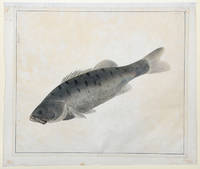
179346Calcutta early 19th-century. A sensitive visual language A superbly observed study of aquatic life in the Company School style. Artists from diverse Indian traditions combined miniature painting with Western naturalist techniques. Characteristically made with watercolour depth is introduced through linear perspective and tonal change through shading. The governor-general of Bengal from 1798 to 1805 Richard 1st Marquess Wellesley was a major patron. The style emerged from the interaction between Indian and European cultures after the British East India Company gained administrative control of Bengal in 1757. "Although the essential impulse of the Company School was assimilative its results were quite the opposite: what emerged was a unique genre in its own right characterized by a plethora of hybrid styles and a blending of visual vocabularies" Mathur p. 86. It arose in different cities each distinguishable by style. Artists came from traditions such as Mughal Maratha Punjabi Pahari Tamil and Telugu. "Calcutta was among the important early production centers as the site of one of the oldest British trade houses" Sardar. One of Calcutta's most enthusiastic patrons was Wellesley 1760-1842. He found documenting the knowledge of Indian fauna crucial: "To facilitate and promote all enquiries which may be calculated to enlarge the boundaries of general science is a duty imposed on the British Government in India by its present exalted situation" Martin p. 674. His Scottish surgeon Francis Buchanan 1762-1829 was appointed to collect materials "for a correct account of all the most remarkable quadrupeds and birds in the provinces subject to the British Government in India and to extend his enquiries as circumstances shall admit to the other divisions of this great continent and the adjacent isles" Martin p. 674. Wellesley established the Institute for Promoting the Natural History of India with a menagerie and aviary at Barrackpore. Specimens were collected for scientific study often with commissioned drawings by Indian artists. According to Wellesley's accounts 500 rupees were reserved for the upkeep of the birds and animals 300 for capturing them 100 for painters and 60 for stationery and paints. The institute survived until 1878 and the animals were moved to Alipore later Kolkata Zoo. Provenance: "West-East: The Niall Hobhouse collection" Christie's London 22 May 2008 lot 33. Hobhouse b. 1954 established the gallery Eyre and Hobhouse focused on Indian art from the colonial period and worked as an advisor specializing in Anglo-Indian art. The Hobhouse family has ties to India Arthur 1st Baron Hobhouse serving as a legal member to the governor-general of India and vice-chancellor of the University of Calcutta from 1872 to 1877. Watercolour and gum arabic pen pencil and ink touches of body colour paper size 320 x 380 mm window-mounted framed and glazed. "Rowhee" in pencil in upper left corner. General light creasing short tear to lower edge of carp paper foxed: a very good example. Montgomery Martin The Despatches Minutes and Correspondence of the Marquess Wellesley Vol. IV 1836-40; Saloni Mathur India by Design: Colonial History and Cultural Display 2007; Marika Sardar "Company Painting in Nineteenth-Century India" 2004. unknown
18508857Paris 1850. Pencil pen and wash drawing with numerous detailed measurements. A fascinating and beautiful drawing--or "rendu"--of an ancient Roman sarcophagus.<br/> <br/>A fine drawing from an architectural student at the Ecole des Beaux-Arts in Paris the most influential architectural school in existence during much of the 18th century the whole of the 19th century and the first part of the 20th century. 'Students were eligible for the Ecole if they were at least fifteen years old or under thirty. They began with the seconde classe in which they competed in the concours d'émulation. These alternated between an esquisse --a rough sketch for which up to twelve hours was allowed--and a rendu --the large-scale finished drawing for which one to three months were allowed.Two to four years were usually required for a student to accumulate enough credits to enter the première classe. The same system was followed again usually for two to three years after which the student should have accumulated enough credits to compete for the Grand Prix de Rome. The winner of the Grand Prix was entitled to five years study under the auspices of the French Academy in Rome. For each of his first three years he was required to submit an analytical study of an ancient monument. For his fourth year he had to submit a complete reconstruction of a major classical work. For his fifth year he was required to submit an original work designed to a program of his own invention. "This study of the sarcophagus of Lucius Cornelius Scipio Barbatus was part of an Ecole de Beaux Arts student's portfolio. The sarcophagus was one of many in the Scipio family tomb on the Via Appia just outside of Roma and it dates from c. 290 B.C. The obituary text reads English "Lucius Cornelius Scipio Barbatus son of Gnaeus a valiant gentleman and wise whose fine form matched his bravery very well was aedile consul and censor among you he conquered Taurasia and Cisauna in fact Samnium he overcame all the Lucanian lands and brought back hostages."<br/> <br/>Arthur Drexler The Architecture of the Ecole des Beaux-Arts. New York MoMA 1977. unknown books
193258217Leighton PA: Leighton High School. 1932. Hardcover. Very Good with no dust jacket; Two Yearbooks From Leighton High School Leighton Pennsylvania 1931 and 1932. Franz Kilne was a student there and was Artist for the Yearbook in his Junior Year. Most of the cartoons and decorations were done by him. His Signature appears in both books. Franz Kline was part of abstract expressionist movement in New York City in the 1940's and 50's. Both Books are in good condition. The 1931 Yearbook has a weak and loose spine. The 1932 Yearbook has a weak spine. Both have some edgewear. ; B&W Illustrations . Leighton High School hardcover
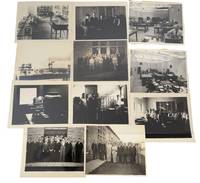
1930232561930. Stanford University Military Engineering Archive Documenting the First Army Ordnance Reserve Gauging Program ca. 1930. Stanford University photo archive documenting the emergence of interwar military-industrial technical education ordnance gauging instruction and precision engineering research on campus during the early development of Stanford's engineering and applied science programs. Rather than depicting science classrooms in a general sense these photographs specifically document the technical culture surrounding Army ordnance training instrumentation systems machine calibration and laboratory-based engineering instruction that linked universities to the expanding infrastructure of American military preparedness between World War I and World War II. Taken together the archive captures Stanford at the moment when higher education increasingly merged scientific research industrial precision manufacturing and military technical training into a unified research model that later shaped the wartime and Cold War defense university system.<br /> <br /> Photo archive of 11 large silver gelatin photographs each approximately 8" x 10" Stanford University California dating from 1930 into the 1950s; two later views mounted to decorative yellow board. Several photographs depict laboratory interiors filled with precision instrumentation gauging apparatus optical and mechanical measuring devices machine-tool equipment calibration benches microscopes drafting stations and technical worktables arranged for instruction and inspection work. One especially important close-up photograph shows a large precision gauging or rotational calibration apparatus associated with ordnance measurement and machine tolerance testing. Surrounding the device are machined cylindrical components threaded fittings gauge rings and polished metal parts likely used in dimensional inspection bore alignment concentricity testing or interchangeable manufacturing instruction. Another darkened workshop view depicts what appears to be a heavy precision lathe or gauging bench fitted with a mounted cylindrical test component equipment consistent with ordnance inspection and military engineering instruction during the interwar period. Additional photographs show groups of students and instructors posed around technical apparatus inside instrumentation laboratories while later mounted photographs document more formalized postwar engineering office and drafting environments associated with large-scale technical administration and research organization.<br /> <br /> Most important is a detailed handwritten verso inscription reading: "Equipment used Feb 1930 Ordnance School at Stanford University. This was first time a course in gauging was given in any Army Ordnance Reserve Unit permanent facilities excepted. Instructor; Lieut Merrill S. Hingo. Photo; Lieut Howard Story Taylor." The inscription firmly identifies the archive as documentation of early Army ordnance reserve technical instruction conducted at Stanford and specifically ties the machinery to military gauging education. In the 1920s-30s "gauging" referred not merely to ordinary measurement but to the specialized science of precision dimensional inspection used in artillery manufacture weapons-part standardization shell tolerances bore measurement interchangeable machining systems and industrial calibration. Such instruction formed a critical component of modern military-industrial production where even minor deviations in machining tolerances could affect artillery accuracy chamber pressure shell seating or mechanical reliability.<br /> <br /> Several outdoor group portraits further reinforce the military context. One large group stands beneath a doorway marked "Military Science and Tactics" while another includes Colonel Donald C. Cubbison a career U.S. Army officer and West Point graduate who served as professor of military science and tactics at Stanford from 1930 to 1935 before later attaining the rank of major general during World War II. His appearance situates the archive directly within Stanford's interwar military training system and links the photographs to broader national efforts to train technically educated reserve officers in engineering ordnance artillery science and industrial preparedness.<br /> <br /> The archive also reflects Stanford's broader transformation into a modern research university centered on applied science and engineering. During the interwar years Stanford's scientific departments expanded laboratory instruction instrumentation programs and research-based technical education under faculty including Robert E. Swain John P. Mitchell William H. Sloan and George S. Parks. Parks in particular became associated with analytical chemistry and geochemical laboratory science disciplines heavily dependent upon precision instrumentation and calibrated measurement systems. The engineering and laboratory culture documented here overlaps with contemporary developments in industrial metrology applied physics materials testing optical measurement and machine-tool inspection that increasingly tied university research to industrial production and military logistics.<br /> <br /> What makes the archive especially significant is the way it documents the transitional infrastructure between traditional university instruction and the emerging defense-oriented research university model. These photographs preserve not simply classrooms but the physical systems of technical education itself: calibration benches inspection machinery gauging apparatus optical instruments drafting rooms and laboratory spaces where students and reserve officers were trained in the precision engineering practices underlying twentieth-century industrial warfare and mass manufacturing. In doing so the archive visually traces the early foundations of the university-based defense engineering culture that would later expand dramatically during World War II and the Cold War throughout California research institutions and the broader military-industrial complex.<br /> <br /> Photographs are sharp and highly detailed with clear views of equipment and interiors; handwritten identifications remain legible. The two mounted 1950s photographs have several large tears without image loss with lighter handling wear elsewhere. Overall good condition. unknown
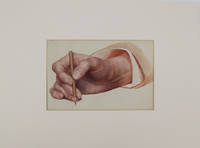
27351Original artwork. c.1880s. A series of six highly accomplished watercolour studies of hands and feet by a pupil of the South Kensington Art Schools renamed the Royal College of Art in 1896. The largest measuring 21.5 x 15 cm. Each bearing the embossed stamp E.S.K. Examined South Kensington. The set is in very good condition with just the occasional dot of foxing and a small area of browning to the foot of one image. The colours remain fresh and vivid. Housed in a bespoke quarter leather solander case. A remarkably realistic series of late nineteenth-century watercolours which skilfully capture the delicacy and nuance of their subjects executed by a pupil at what would soon become the prestigious Royal College of Art. Hung together they form a most attractive and unusual group. Further details and images for any of the items listed are available on request. Lucius Books welcomes direct contact with our customers. Original artwork. c.1880s hardcover
88321aafAmsterdam, by de Erwen de Wed J. Ratelband en J. Bouwer, 1803, 31x41 cm ( Bild) / 36.5x47 cm (Rahmen), handbemalter Holzschnitt auf Papier (urspr. gefaltet), mit Darstellungen frommer Szenen in den Ecken und gr. ovaler Rokokokartusche in der Mitte mit kalligraph. handgeschriebenem Text in schwarzer Tinte, kl. Kopf- und Fusskartuschen mit Psalmen (Text u. Musiknoten), gest. Druckerei-Angaben unterhalb, unter Glas in Holzrahmen, leichter Wasserfleck am unteren Bildrand. gerahmt im Orig.-Holzrahmen
1967ZB254453University of Michigan. Law School 1967. volumes 4-12 15-22 1967-1988 mostly bound ex library else text clean & bindings tight. - If you are reading this this item is actually physically in our stock and ready for shipment once ordered. We are not bookjackers. Buyer is responsible for any additional duties taxes or fees required by recipient's country. Photos available upon request. University of Michigan. Law School unknown
1931ZB643019University of Chicago Press 1931. Volumes 1-61 partly bound minor library markings else text clean & bindings tight. - If you are reading this this item is actually physically in our stock and ready for shipment once ordered. We are not bookjackers. Buyer is responsible for any additional duties taxes or fees required by recipient's country. Photos available upon request. University of Chicago Press unknown
Acquaforte, 1930 circa. Lastra mm 125x165, figlio mm 355x505. Firma a matita in basso a destra “L. Bartolini”. Dedica incisa in lastra, in basso “V. Cardarelli”. Dalla biografia di Luigi Bartolini si evince che nel gennaio 1928 ha inizio la corrispondenza epistolare con Vincenzo Cardarelli, che durerà fino al febbraio 1930. Pertanto, la datazione della lastra viene ricondotta a tale periodo. Luigi Bartolini è considerato uno dei maggiori incisori italiani del Novecento, insieme a Giorgio Morandi e Giuseppe Viviani. Oltre ad essere un prolifico incisore (al suo attivo oltre mille acqueforti), fu anche pittore e scrittore. Partecipò sia come pittore che come incisore a diverse edizioni della Biennale di Venezia dal 1928 al 1962. Presente a varie manifestazioni artistiche, sviluppò diverse maniere definite: ‘maniera bionda’, ‘lineare’ e ‘nera’. Ricordiamo soprattutto le acqueforti della serie Marche e della serie Sicilia. Iniziò la sua produzione grafica nel 1914 e il suo stile si rifà alla tradizione naturalistica dell’Ottocento. Molte sue incisioni si possono ricollegare ad alcune opere del Goya, di Telemaco Signorini e di Giovanni Fattori. Eccellente nella rappresentazione della natura morta e del paesaggio, spesso il Bartolini rappresentò dolcemente le cose e gli oggetti più umili, i soggetti di natura più dimessi. In essi ritroviamo il sentimento che diviene immagine e la forma che si sviluppa in espressione. Con Bartolini l’incisione torna ad essere un mezzo di espressione poetica libera dal simbolismo e dal vedutismo allora in voga presso le accademie. Nelle sue acqueforti prevale ora un tratteggio leggero (genere biondo), ora una ricerca del chiaroscuro alla Rembrandt (genere nero). Opera rarissima, non descritta dai repertori. Etching, circa 1930. Plate mm 125x165, son mm 355x505. Pencil signature at lower right "L. Bartolini". Dedication engraved on plate, at bottom "V. Cardarelli". From Luigi Bartolini's biography it is clear that in January 1928 he began his correspondence with Vincenzo Cardarelli, which lasted until February 1930. Therefore, the dating of the plate can be traced back to that period. Born in Cupramontana near Ancona, Luigi Bartolini was the twentieth century Italian etcher, who came closest to the stature of his great rival, Morandi. As a teenager, he saw the collection of etchings, including work by Callot, owned by the Corradi family in Iesi. From 1907 to 1910 Bartolini studied at the Istituto di Belle Arti in Siena, and started to etch c. 1909. He moved to Rome in 1910, where until 1912 he frequented the Accademia di Belle Arti, while also attending lectures on literature and the history of art, and courses on anatomy at the University in Rome. Bartolini studied the etchings of Goya and took lessons on drawing at the Accademia di Spagna. From there, he went to Florence in 1913, where he attended the Scuola del nudo. Bartolini continued his anatomical research, as well as studying architecture, making himself the most assiduous student of all Italian twentieth century printmakers. He also visited the Uffizi and Florentine print dealers to look at the etchings of Rembrandt and Fattori. Bartolini painted his first oils just before the outbreak of the First World War. Although he painted pictures throughout the rest of his career, and was awarded the Premio Marzotto for them in 1956, they have been far eclipsed in fame by his etchings and writings. During the First World War, Bartolini published his first collection of poetry. A very prolific and accomplished writer, in this field he is best known today as the author of the novel, 'Ladri di biciclette' (Bicycle thieves), of 1946, which was quickly turned into a celebrated film by Vittorio de Sica and Cesar Zavattini. After the First World War, Bartolini held a series of minor teaching posts in Macerata, Sassari, Avezzano, Pola, and Caltagirone, while he continued to etch, and started a long career as a polemical journalist and critic of art and architecture. From 1923 to 1929, he wrote for the Naples periodical, 'Cimento', but he also contributed to 'Il Selvaggio', 'Quadrivio', 'Italia letteraria', and 'L'Ambrosiana'. Bartolini's 1924 exhibition of etchings at the Casa d'Arte Bragaglia in Rome was a great success, and later that year he showed 70 etched landscapes of the Marches at the Casa Palazzo di Roma. The following year he visited Paris, where he paid particular attention to the paintings of Van Gogh. Bartolini's political convictions led him to being assaulted by Fascists and hospitalised in 1928. Two years later, he won a prize at the Venice Biennale, where he had exhibited a portfolio of etchings. In 1930, the Turin publisher, Buratti, began to issue a series of portfolios of etchings by contemporary Italian artists under the editorship of Cipriano Oppi, selecting Bartolini for the first album. The following year, Buratti published 'Le carte parlanti', a portfolio of 10 of Bartolini's etchings, which was published in an edition of 20. In 1932, Bartolini shared the first prize at the Prima mostra dell'incisione moderna at the Uffizi with Morandi and Boccioni. His close friend, the leading anti-Fascist art historian, Lionello Venturi, acted as his agent selling his etchings in Paris. Bartolini's correspondence with his compatriots in exile led to his imprisonment, from which he was released on Mussolini's personal intervention. He was then placed under political surveillance. From 1933 to 1938, Bartolini taught in Merano, where he painted and etched in the open air, finding subjects on the banks of the fast flowing Adige. Despite being under political suspicion, he was given a one - man show of 50 etchings at the second Rome Quadriennale in 1935, when he was awarded ...
Xilografia, 1513, senza monogramma. In una lettera indirizzata a Dürer da Nikolaus Kratzer (1486-155), astronomo di corte del re Enrico VIII d'Inghilterra, Kratzer chiede a Dürer: "Ti prego di mandarmi il ritratto di Stabius, raffigurato come San Kolman, tagliato in legno". La paternità dureriana di questa xilografia non è stata ancora accettata da tutti. Strauss la include tra le xilografie per la forte possibilità che sia basata su un disegno di Dürer, forse frettoloso, e poi tagliata nel blocco senza la sua super visione. Dodgson attribuisce questa stampa a Springinklee, come fa Meder, mentre Schoch afferma che la figura è disegnata troppo bene per essere stata disegnata da Springinklee. L'assenza del suo monogramma non può essere necessariamente interpretata come un'indicazione che Dürer non sia l'autore, perché la xilografia serviva come illustrazione di un foglio accompagnato da un'ode saffica di Stabius, e recante, sopra l’immagine, il seguente testo 'Divo Colomanno martyri sancto: Austrieque patrono/ presentissimo: Joann. Stabius. Au. voti reus. Hoc/ carmen dedicat. Anno dni. etc. M.D.xiij' Dürer conosceva bene Johannes Stabius (morto nel 1522), filosofo e astronomo di corte dell'imperatore Massimiliano. Stabius accompagnò l'imperatore nella sua visita a Norimberga, 3-15 febbraio 1512, ma a quanto pare rimase più a lungo perché il 30 luglio ha preparato un oroscopo a Norimberga per Matthäus von Gurk . Stabius è qui raffigurato nelle vesti di San Colomanno, venerato in Austria. Il santo fu impiccato nel 1020 a Stockerau. Indossa un cappello da pellegrino e tiene nella mano sinistra una frusta intrecciata. I quattro stemmi sono (in senso orario) quelli dell'Impero, dell'Arciducato d'Austria, della Scozia e di Stabius. San Colomanno, secondo la leggenda, era un discendente della famiglia reale scozzese. Magnifica impressione, impressa su carta vergata con filigrane doppia croce e lettere ICP”, in perfetto stato di conservazione. Esemplare nella seconda edizione descritta da Meder e pubblicata da Adam von Bartsch utilizzando la matrice originale conservata all’Albertina di Vienna e datata 1781. Woodcut, 1513, without monogram. In a letter, addressed to Dürer by Nikolaus Kratzer (1486-155), court astronomer to King Henry VIII of England, Kratzer asks Dürer: “I beg you to send me the portrait of Stabius, portrayed as Saint Kolman, cut into wood. "Yet Dürer's authorship of this woodcut has not gained general acceptance Dodgson attributes this print to Springinklee, as does Meder, while Schoch states that the figure is drawn too well to have been designed by Springinklee. Strauss included it among on Dürer’s woodcuts because of the very strong possibility that it is based on a drawing by Dürer, perhaps a hasty one, due to his preoccupation with the master engravings of this period, and then cut into the block without his super vision. The absence of his monogram cannot necessarily be construed as an indication that Dürer was not the author because the woodcut served as illustration of a broadsheet accom panied by a sapphic ode by Stabius, lettered above the woodcut on left sheet: 'Divo Colomanno martyri sancto: Austrieque patrono presentissimo: Joann. Stabius. Au. voti reus. Hoc carmen dedicat. Anno dni. etc. M.D.xiij' Dürer was well acquainted with Johannes Stabius (d. 1522), philosopher, and court astronomer to Emperor Maximilian (see the following woodcuts). Stabius accompanied the emperor on his visit to Nuremberg, 3-15 February 1512, but apparently stayed on for some time because on 30 July he prepared a horoscope at Nuremberg for Matthäus von Gurk. Stabius is pictured here in the guise of St. Coloman, venerated in Austria. The saint was hanged in A.D. 1020 at Stockerau. Wearing a pilgrim's hat, he is holding in his left hand a braided whip. The four coats of arms are (clockwise) those of the Empire, the Archduchy of Austria, Scotland, and of Stabius. St. Coloman, according to legend, was a descendant of the Scottish royal family” (cf. Strauss. p. 483). Example of the second issue described by Meder, printed by Bartsch from the block in the Albertina dated MDCCLXXXI. A fine impression, printed on laid paper with “ICP with Doublecross” watermark, perfect condition. Bartsch, 106; Meder n. 194; TIB 1001.306 (137): Strauss, p. 483-485, n. 169.
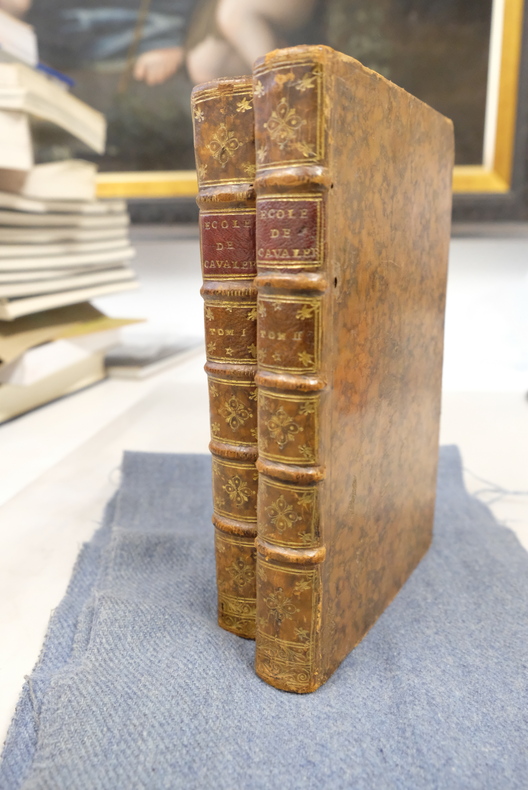
1736CHE2987MReliés, 319 et 298 pages, paru en 1736 à Paris, chez Jacques Guérin, libraire-imprimeur, 19,5x13,5cm. Très bon état général, très bien conservés, reliures légèrement usées, certaines pages légèrement brunies ou présentant des rousseurs.
1930ZB254450University of Michigan. Law School 1930/31-1953/54. volumes 30-53 lacking 33 and 45; bound ex library good; PRICE IS FOR THE LOT. - If you are reading this this item is actually physically in our stock and ready for shipment once ordered. We are not bookjackers. Buyer is responsible for any additional duties taxes or fees required by recipient's country. Photos available upon request. University of Michigan. Law School unknown
94 pages plus 3 pages of advertisements at back. "The five lectures which are here reproduced are necessarily confined to certain aspects of the wide subject indicated by the title. They are printed essentially as they were delivered." - from Preface. Lectures include: National Monetary Systems; The Function and Mechanism of International Flows of Money; Independent Currencies; International Capital Movements; The Problems of a Really International Standard. Blue cloth-covered boards. Gilt lettering legible upon spine despite moderate sunning. Binding and hinges intact. Unmarked. Average wear. Very light foxing to front endpaper - even less to back endpaper. Moderate foxing to edges. A sound copy. COHEN 916, MACHLUP B-3. Book
xv, 889 pp. Index. A comprehensive and systematic treatise on economics, social philosophy, and the social sciences. A survey of the science of human action, its epistemology, its theories derived by reasoning logically from a priori axioms, and their application to specific economic phenomena. A rewritten version of Nationalokonomie, Theorie des Handelns und Wirtschaftens, published in 1940. Usual library markings. Ink markings to page 265. Above-average wear to grey boards. Binding intact. A worthy first printing example of this, the author's masterwork. Greaves & McGee B-16. Hutchinson 351. Fundaburk 1806. Book
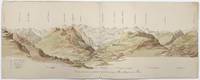
184023481840. Watercolor graphite and grayish ink on two sheets of cream laid paper with an 1836 M and smiling sun watermark 10 1/4 x 25 7/8 inches 260 x 658 mm the full sheet. Titled in ink in French on the recto. In very good condition with minor edge wear including creasing and nicks. A splendid panorama with each of the major peaks and point of interest labeled and identified in French. The iconic symbol of the Swiss resort the "Sun of St. Moritz" was adopted from early European heraldic marks and rebranded around 1930 by graphic designer Walter Herdeg. The image was patented in 1937 by spa director Walter Amstutz becoming the world's first visual trademark for a tourist destination. unknown
20172081502111906635Chinese book office 2017. Soft Cover. Fine. The book is in fine condition. Chinese book office paperback
18912092902143300143Mono fumei 1891. Soft Cover. Fine. Number of pages: 26 Size: 32cm Mono fumei paperback