Columbia High School Aquila Yearbook Staff ; [subject, Mark David Chapman; John Lennon; The Beatles]Biblio.com

34 831 résultats
005982Columbia High School Yearbook Staff 1973 1973. Hardcover. Very Good/No Jacket. 31 cm. green and blue cloth ; numerous photos several in color ; extremely rare Beatles-related collectible: This is the high school annual for the senior year of MARK DAVID CHAPMAN the murderer of JOHN LENNON. Chapman is featured in the seniors section with the photo that was first used in worldwide distribution during the breaking news story in 1980. Included are photos of Chapman's teachers friends and siblings ; VG <br/> <br/> [Columbia High School Yearbook Staff], 1973 hardcover
2081502111901819beijing chinese bookstore N.A. Soft Cover. Fine. The book is in fine condition. beijing chinese bookstore paperback
19312092902141000173Watanabe Print Shop 1931. Soft Cover. Fine. The book is in fine condition. Watanabe Print Shop paperback
18072092902144201822Not Available 1807. Soft Cover. Fine. The book is in fine condition. Not Available paperback
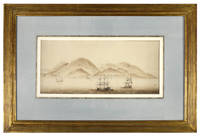
87196ca. 1830 . Sepia ink and pencil early view of Hong Kong showing sailing boats in the foreground probably executed by an English military or naval officer. Laid on card size: 320mm x 143mm.<br /> <br /> ca. 1830] unknown
1775c2412110474xbvkLouvain / Leuven, Belgium; 1775. Titlesheet (former blank front flyleaf), (9) pages 'Proemium Rhetorica / ...' and 'Deperiodo.', 5 blank sheets, pages 17-257 (of?), 1 blank sheet, blank rear flyleaf. - Vellum binding of the period over 5 raised bands with colour-marble-paper covered panel with vellum corners and red edges; small 4to.(ca. 19 x 16 x 2 cm).
1934ZB3938091934-1984. volumes 1-51. 1934-1984. partly bound library markings textually clean & tight price is for the set. - If you are reading this this item is actually physically in our stock and ready for shipment once ordered. We are not bookjackers. Buyer is responsible for any additional duties taxes or fees required by recipient's country. Photos available upon request. unknown
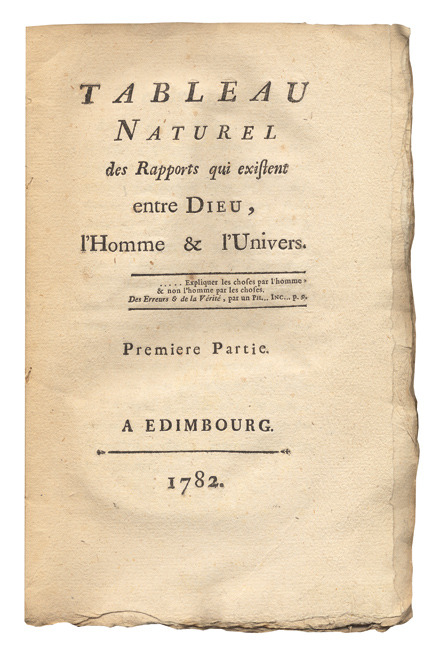
178216243A Edimbourg (Lyon), s.n., 1782 ; 2 tomes in-8, brochés dans leur première couverture de papier dominoté en couleurs marqué "A Orléans chez Leblond N°68" ; (4) de titre, blanc, avis des Editeurs et table, 276 pp. ; (4) faux-titre et titre, 244 pp.
Bulino, 1600 circa, in basso a sinistra: 'Joannes ab Achen invenetor. / Joan. Mullerus sculpsit"; in basso a destra: "H Muller [HM intrecciato] excud:". Sei righe latine, su tre colonne nel margine in basso: Cum fera tela sinus rimantur pectoris altus / / Et lacerata tua membra crucis madent / / Tum dulcis tibi .... Esemplare nel secondo stato, di quattro, secondo Filedt Kok. Da un dipinto di Hans von Aachen realizzato nel 1590 per il collegio gesuita Saint-Michel di Monaco. Magnifica prova, ricca di toni, impressa su carta vergata coeva con filigrana “scudo di Strasburgo” (simile a The New Hollstein, Muller II, p. 308), rifilata al rame o con piccoli margini, pieghe di carta visibili nella parte inferiore, minimi restauri nelle scritte in basso, per il resto in buono stato di conservazione. L’opera, secondo formule stereotipate nella consuetudine della controriforma, distingue il piano terrestre da quello celeste. In basso, in primo piano, la scena del martirio: sulla destra il gruppo degli arcieri costituisce il nucleo drammatico della scena, con un contrasto intenso fra i loro volti turbati, le loro sagome parzialmente in ombra, i muscoli tesi nello sforzo da una parte e, dall’altra, la bellezza radiosa del santo, il cui corpo, definito da un deciso plasticismo e da una massiccia volumetria, si offre docilmente al martirio, persino incurvandosi in una posizione parallela agli archi ostili. Nella parte superiore un angelo giunge in soccorso del Santo avendo nelle mani la corona d’alloro – simbolo della vittoria attraverso il martirio – e la palma simbolo del martirio e della rinascita. Bibliografia The New Hollstein (Muller Dynasty) part 2.98.23 ii/iv; The New Hollstein (Aachen) 114.44 ii/iv; Bartsch, III.273.23. Engraving, 1600 circa, arched plate, lettered in plate, lower left: 'Joannes ab Achen invenetor. / Joan. Mullerus sculpsit.'; lower right: 'H Muller [HM entwined] excud:'. Six lines Latin in three columns in margin below: Cum fera tela sinus rimantur pectoris altus / / Et lacerata tua membra crucis madent: / / Tum dulcis tibi .... Example in the second state, of four, according Filedt Kok. After a painting by Hans von Aachen in the Jesuit church of St Michaels Hofkirche. Magnificent proof, rich in tone, printed on contemporary laid paper with "Strasbourg shield" watermark (similar to The New Hollstein, Muller II, p. 308), trimmed at the copper or with small margins, paper creases visible at the bottom, minimal restorations in the bottom lettering, otherwise in good condition. Sebastian is bound to a tree with one of his arms raised over his head and tied at the wrist to a broken limb; a group of archers aim their weapons at him; a winged putti holding a palm and wreath hovers overhead. Literature The New Hollstein (Muller Dynasty) part 2.98.23 ii/iv; The New Hollstein (Aachen) 114.44 ii/iv; Bartsch, III.273.23.
Bulino, 1600 circa, firmato nell’immagine, in basso al centro "B. Spranger invent. / Fig. Sadeler sculp.". Nel margine inferiore, quattro versi in latino su due colonne “Non datur; eximas veneret, ut inscius artes, solus eas quaerens noscere, gestit amor…” e al centro “Inscius non honorabitur” Da un dipinto di Bartholomäus Spranger, 1596 circa, conservato a Vienna Magnifica prova, ricca di toni, impressa su carta vergata coeva, rifilata alla linea marginale, restauri perfettamente eseguiti agli angoli, tracce di piega orizzontale, per il resto in buono stato di conservazione. La composizione rappresenta l’allegoria della vittoria della saggezza sull’ignoranza. La saggezza è nelle sembianze di Minerva che ha un piede sull'ignoranza - un uomo con le orecchie d'asino, con le mani legate da una corda. Un putto la onora con una corona di alloro. Intorno a loro ci sono sette personificazioni delle sette arti libere: astronomia, musica, geometria, pittura, scultura e retorica, tra le altre. Sotto la rappresentazione c'è una didascalia latina di quattro righe che sottolinea che gli ignoranti sono incapaci di adorare le arti. Bibliografia Hollstein, XXI,115; Wurzbach 82. Engraving, 1600 circa, inscribed "B. Spranger invent. Fig. Sadeler sculp." in the plate, bottom centre. In margin below, four Latin lines in two columns “Non datur; eximas veneret, ut inscius artes, solus eas quaerens noscere, gestit amor…”, at centre: “Inscius non honorabitur”. Magnificent proof, rich in tone, printed on contemporary laid paper, trimmed at the marginal line, perfectly executed restorations at the corners, traces of horizontal crease, otherwise in good condition. After the painting by Bartholomäus Spranger, around 1596, in the Kunsthistorisches Museum, Wien Wisdom is in the form of Minerva with one foot on ignorance, a man with donkey ears. A putto honors her with a laurel wreath. She has tied the hands of the man with a rope. Around them are seven personifications as a variation on the seven liberal arts: astronomy, music, geometry, painting, sculpture and rhetoric. Under the representation a four-line, Latin caption emphasizes that ignorant people are incapable of worshipping the arts. Literature Hollstein, XXI,115; Wurzbach 82.
2081502111905940Chinese social sciences N.A. Soft Cover. Fine. The book is in fine condition. Chinese social sciences paperback
19242091202133203081book series 1924. Soft Cover. Fine. Number of books: 4 books in total book series paperback
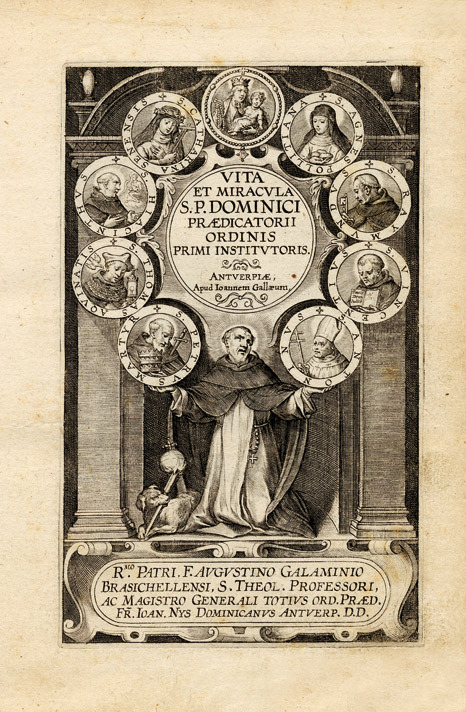
163011321Antverpiae, Joan Galle, (circa 1630) ; F. Ioannes Nys invenit, Peter de Jode figuravit, Theodor Galle sculpsit et excudit ; titre gravé, portrait et 32 planches légendées. SUIVI de 4 planches gravées par JOAN GALLE : I- Prudentia, II- Justitia, III- Fortitudo, IV- Temperantia (les 4 vertus cardinales). SUIVI de 14 planches de sujets religieux, gravées par CORNELIUS GALLE le Vieux : Silva sacra, Fugit familia sacra, S. Barbara, S. Ianvarius Neapolis patronis, S. Lucia, S. Leontius martyr miraculis gloriossus in Muris Helvetiorum, S. Iacobus Maior, Benedicite omnes bestiae et pecora domino, S. Hieromymus, Vierge à l'Enfant, etc. Soit en tout 52 planches, reliées en 1 volume petit in-4 ; plein vélin ivoire, titre au dos, tranches rouges (reliure du XIXe).
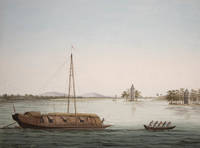
100986Canton circa 1810. . A Group of forty pencil water colour and body colour drawings of craft heightened with white on paper watermarked 'J Whatman 1804' and '1805'. Each 36.5 x 48 cm.<br /> Well executed and highly atmospheric watercolours capturing the importance of the river for trade in early nineteenth century China.<br /><br />An unusual and very attractive drawings of river life. Typically with the river in the foreground with a finely executed drawing of a native boat the backgrounds showing landscape scenes interspersed with occasional architectural details.<br /><br />The Pearl River is so named because of the pearl-colored shells that lie at the bottom of the river in the section that flows through the city of Guangzhou. Formerly often known as the Canton River it is an extensive river system in southern China. The name 'Pearl River' is also often used as a catch-all for the watersheds of the Xi 'West' Bei 'North' and Dong 'East' rivers of Guangdong. These rivers are all considered tributaries of the Pearl River because they share a common delta the Pearl River Delta. Measured from the farthest reaches of the Xi River the Pearl River system is China's third-longest river 2400 kilometres after the Yangtze River and the Yellow River and second largest by volume after the Yangtze.<br /> Canton, circa 1810]. unknown
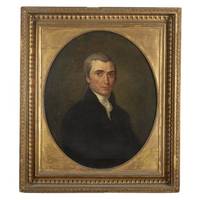
1815690611815. 25 inches x 20 inches. 25 inches x 20 inches. A Great Nineteenth-Century Pennsylvania Jurist American School 19th Century. Read John Meredith 1797-1874. Portrait of John Meredith Read. Philadelphia c.1815. 25" x 20" image size. Oil on canvas in ornate nineteenth-century gilded wood frame. Some minor nicks and chips to frame gilding slightly dulled otherwise fine. $3000. Read was elected to the Pennsylvania House of Representatives in 1822 and 1823 and served as City Solicitor of Philadelphia from 1830 to 1833. He was appointed District Attorney of the Eastern District of Pennsylvania in 1837 and held the office until 1845. Read became Justice of the Supreme Court of Pennsylvania in 1858 and Chief Justice of the Supreme Court of Pennsylvania in 1872. Read gained an international reputation for the depth of his knowledge eloquence and masterly arguments in the courtroom. Active in politics Read was an early supporter and organizer of the Republican Party. This portrait belonged to the Philadelphia Bar Association. Founded in 1802 it is the oldest association of lawyers in the United States. Its library where this portrait was last displayed was renamed the Theodore F. Jenkins Memorial Law Library in 1967. unknown books
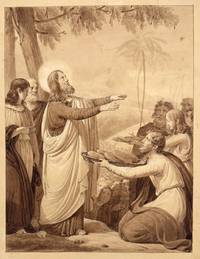
2260Ink and wash in black sepia and grayish brown ink with white heightening on wove paper 12 1/4 x 9 3/4 inches 311 x 248 mm the full sheet. In very good condition with some minor areas of light discoloration in the margins. Pencil inscription in French on the verso. unknown
183426035Italy 1834. Pen-and-ink watercolour and gouache painted black border titled and dated in white gouache in the lower margin within the border. Lovely 19th-century watercolour of Palermo.<br/> <br/>Catering to the foreigners flocking to the region on the Grand Tour this lovely watercolour shows the town of Palermo with its beautiful hills and mountains in the background with a large fort in the harbour with a British and French ship beside it. The sky is awash in pinks and blues displaying the incredible light of the region. unknown books
006911Chefoo China: Women's Bible School American Presbyterian Mission No Date circa 1930. Near Fine pages with light toning. Oblong folio 10" x 13 3/4". Bound in beautiful red pictorial embossed silk over limp boards string-tied 28 pp of cut-out illustrations in black and white many with colorful silk inlays with tissue guards publisher's 1 page explanatory leaf laid in also an original 6 1/2" x 10 1/2" cut-out with colorful silk inlays and string hanger readt-to-hang laid in. Cut-out chapter headings are Travel and Transportation Customs and Habits Chinese Birth-Year Cycle latest date 1935 Occupations The Eight Immortals Myths and Legends Chinese Recipes Chinese Children Chinese Junks and The Magician. Well over 100 cut-outs in all including the bonus laid in cut-out and SCARCE THUS. First Edition. String Tied. Near Fine/No Jacket As Issued. Oblong Folio . Women's Bible School, American Presbyterian Mission Paperback books
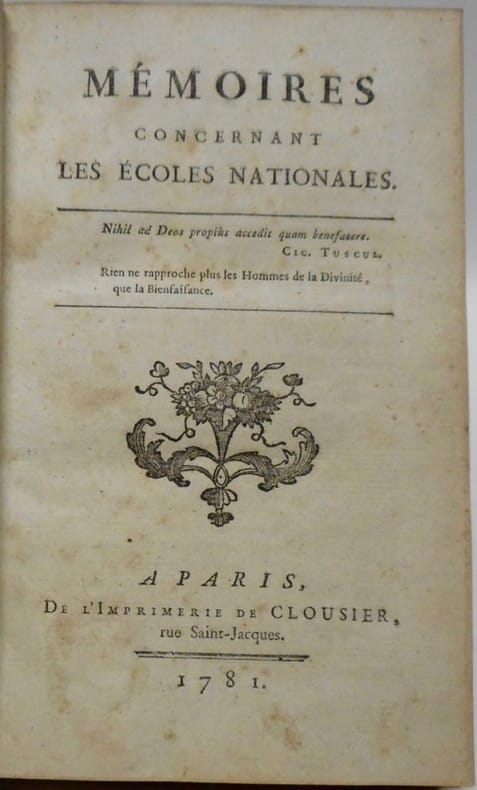
224240Paris, Imprimerie de Clousier, 1781-[1783] 9 (sur 18) parties en un vol. in-8, pagination multiple, maroquin vieux-rouge, dos lisse cloisonné et fleuronné, pièce de titre verte, encadrement de triple filet doré sur les plats, armes au centre, simple filet doré sur les coupes, tranches dorées, guirlande dorée en encadrement sur les contreplats (reliure de l'époque).
Acquaforte e punta secca, 1939. Misure della lastra, 260x 185 mm misure del foglio 283x203 mm. Esemplare unico, come da iscrizione a matita “p. e. u” (prova esemplare unico) in basso. Variante dell’opera I guerrieri dello stesso anno (Marino, 866, Ficacci, 85), con numerose modifiche e su una lastra di dimensioni diverse. Firma e data incise sulla lastra in basso a sinistra, firma e titolo a matita in basso “I guerrieri P. e. u Luigi Bartolini”. Luigi Bartolini è considerato uno dei maggiori incisori italiani del Novecento, insieme a Giorgio Morandi e Giuseppe Viviani. Oltre ad essere un prolifico incisore (al suo attivo oltre mille acqueforti), fu anche pittore e scrittore. Partecipò sia come pittore che come incisore a diverse edizioni della Biennale di Venezia dal 1928 al 1962. Presente a varie manifestazioni artistiche, sviluppò diverse maniere definite: ‘maniera bionda’, ‘lineare’ e ‘nera’. Ricordiamo soprattutto le acqueforti della serie Marche e della serie Sicilia. Iniziò la sua produzione grafica nel 1914 e il suo stile si rifà alla tradizione naturalistica dell’Ottocento. Molte sue incisioni si possono ricollegare ad alcune opere del Goya, di Telemaco Signorini e di Giovanni Fattori. Eccellente nella rappresentazione della natura morta e del paesaggio, spesso il Bartolini rappresentò dolcemente le cose e gli oggetti più umili, i soggetti di natura più dimessi. In essi ritroviamo il sentimento che diviene immagine e la forma che si sviluppa in espressione. Con Bartolini l’incisione torna ad essere un mezzo di espressione poetica libera dal simbolismo e dal vedutismo allora in voga presso le accademie. Nelle sue acqueforti prevale ora un tratteggio leggero (genere biondo), ora una ricerca del chiaroscuro alla Rembrandt (genere nero). Bibliografia C. Barsanti, Catalogo ragionato dell’opera grafica di Luigi Bartolini, Galleria Marino Roma (1972), n. 866; Ficacci, Luigi Bartolini alla Calcografia, n. 85. Etching and drypoint, 1939. Plate size, 260x 185 mm sheet size 283x203 mm. A unique example, as per pencil inscription "p. e. u" at bottom. Variant of the work I guerrieri of the same year (Marino, 866, Ficacci, 85), with numerous changes and engraved on a plate of different size. Signature and date engraved on the plate at lower left, and signature and title in pencil at bottom "I guerrieri P. e. u Luigi Bartolini". Born in Cupramontana near Ancona, Luigi Bartolini was the twentieth century Italian etcher, who came closest to the stature of his great rival, Morandi. As a teenager, he saw the collection of etchings, including work by Callot, owned by the Corradi family in Iesi. From 1907 to 1910 Bartolini studied at the Istituto di Belle Arti in Siena, and started to etch c. 1909. He moved to Rome in 1910, where until 1912 he frequented the Accademia di Belle Arti, while also attending lectures on literature and the history of art, and courses on anatomy at the University in Rome. Bartolini studied the etchings of Goya and took lessons on drawing at the Accademia di Spagna. From there, he went to Florence in 1913, where he attended the Scuola del nudo. Bartolini continued his anatomical research, as well as studying architecture, making himself the most assiduous student of all Italian twentieth century printmakers. He also visited the Uffizi and Florentine print dealers to look at the etchings of Rembrandt and Fattori. Bartolini painted his first oils just before the outbreak of the First World War. Although he painted pictures throughout the rest of his career, and was awarded the Premio Marzotto for them in 1956, they have been far eclipsed in fame by his etchings and writings. During the First World War, Bartolini published his first collection of poetry. A very prolific and accomplished writer, in this field he is best known today as the author of the novel, 'Ladri di biciclette' (Bicycle thieves), of 1946, which was quickly turned into a celebrated film by Vittorio de Sica and Cesar Zavattini. After the First World War, Bartolini held a series of minor teaching posts in Macerata, Sassari, Avezzano, Pola, and Caltagirone, while he continued to etch, and started a long career as a polemical journalist and critic of art and architecture. From 1923 to 1929, he wrote for the Naples periodical, 'Cimento', but he also contributed to 'Il Selvaggio', 'Quadrivio', 'Italia letteraria', and 'L'Ambrosiana'. Bartolini's 1924 exhibition of etchings at the Casa d'Arte Bragaglia in Rome was a great success, and later that year he showed 70 etched landscapes of the Marches at the Casa Palazzo di Roma. The following year he visited Paris, where he paid particular attention to the paintings of Van Gogh. Bartolini's political convictions led him to being assaulted by Fascists and hospitalised in 1928. Two years later, he won a prize at the Venice Biennale, where he had exhibited a portfolio of etchings. In 1930, the Turin publisher, Buratti, began to issue a series of portfolios of etchings by contemporary Italian artists under the editorship of Cipriano Oppi, selecting Bartolini for the first album. The following year, Buratti published 'Le carte parlanti', a portfolio of 10 of Bartolini's etchings, which was published in an edition of 20. In 1932, Bartolini shared the first prize at the Prima mostra dell'incisione moderna at the Uffizi with Morandi and Boccioni. His close friend, the leading anti-Fascist art historian, Lionello Venturi, acted as his agent selling his etchings in Paris. Bartolini's correspondence with his compatriots in exile led to his imprisonment, from which he was released on Mussolini's personal intervention. He was then placed under political surveillance. From 1933 to 1938, Bartolini taught in Merano, where he painted and etched in the open air, finding subjects on the banks of the fast flowing Adige. Despite being under political suspicion, he was given a one - man show of 50 etchings at the second Rome Quadri...
Acquaforte, 1740 circa, monogrammato in lastra in basso al centro A.C. Esemplare nel secondo stato finale, dopo le aggiunte e con la sigla in basso al centro. Della serie Vedute altre prese da i Luoghi altri ideate. In basso a sinistra in primo piano, la continuazione della barca e del ponte parzialmente visti nell'acquaforte Il carro che passa sopra un ponte. Sulla riva lontana del fiume il monumento, incorniciato da un albero e dal fogliame. In lontananza, oltre una zona collinare, vista di una città con torri, campanile, cupole e una piramide. Originariamente questa stampa e Il carro che passa sopra un ponte formavano una lastra unica che venne tagliata forse per un difetto di morsura verificatosi nella zona dell’albero sovrastante il piccolo monumento. Per tale ragione la parte destra della lastra subì una riduzione di circa 25 mm in altezza. Non si conoscono impressioni prima del taglio del rame che venne operato dallo stesso artista, come dimostra l’apposizione – nel secondo stato – della sigla A.C. sul margine inferiore della lastrina con Il Piccolo Monumento. L’elemento decorativo posto alla sommità dell’edificio, forse un leone, è assai prossimo alla scultura, pure enigmatica, che compare sulla colonna ionica del dipinto Capriccio con tempio e colonna. L’opera appartiene alle Vedute altre prese da i luoghi altre ideate… serie delle acqueforti dedicate al console ed amico Joseph Smith, la cui esecuzione va dal 1740 al 1744 circa. Si inserisce nello sviluppo artistico del Canaletto non come parentesi marginale, ma come un momento essenziale di alcuni problemi stilistici, che troveranno la loro piena realizzazione nei primi capolavori eseguiti nel soggiorno inglese. La serie raggruppa fogli che evocano un itinerario che partendo dalla laguna, cioè da Marghera, passando per Mestre, risale il corso del Brenta fino a Padova, non solo inscenata nel cosmorama del Prà della Valle ma in una veduta che segna il passaggio tra la realtà dei luoghi e la fantasia del capriccio. Se il Portico con la lanterna, indubbiamente una delle prove più alte dell’arte incisoria del Canaletto, è una veduta di piena fantasia, l’acquaforte con la cosiddetta Casa del 1741, ricongiunta con la Casa del colonnato, è l’evocazione di una città, che se pur manca di precisi riferimenti topografici, è intrisa di atmosfera veneziana. Giovanni Antonio Canal detto Canaletto (Venezia 17 ottobre 1697 – Venezia 19 aprile 1768)) fu il più illustre protagonista del vedutismo veneziano del Settecento. Grazie a contatti con amatori e collezionisti inglesi in viaggio a Venezia o residenti nella città lagunare, Canaletto beneficia di grande notorietà in Inghilterra presso la più alta aristocrazia e perfino la famiglia reale. Attorno al 1730 suo agente esclusivo è un inglese, il console Joseph Smith: divenuto mercante di quadri, questi si adopera con abilità e tenacia per introdurre il suo protetto nel mercato britannico delle opere d’arte, il più florido al tempo. Titolare di una grande bottega e affiancato da innumerevoli assistenti, Canaletto è artista e abile imprenditore. Nelle opere del Canaletto la città lagunare era raffigurata con grande oggettività: le sue composizioni erano sempre rigorosamente studiate attraverso numerosi disegni preparatori, tratti direttamente dal vero. La “veduta” fu uno dei generi più caratteristici della pittura del Settecento. Si differenzia dal paesaggio (altro genere molto diffuso nel XVIII secolo) per la rappresentazione oggettiva di luoghi e architetture, realizzata attraverso una prospettiva ben studiata. Venezia fu il centro di maggior produzione di “vedute”, con alcune personalità di grande spicco. Al verso, timbro di collezione di James Henry Lockhart (Pittsburgh 1912-Rotonda West 2002) - Lugt 4387. Magnifica prova, impressa su carta vergata coeva, con margini, in ottimo stato di conservazione. Bibliografia Bromberg, n. 33 p. 169; Succi, I, p... Etching, 1740 circa, signed with monogram bottom centre: A. C. Second final state, with the signature added and other additions. From the series: Vedute alter prese da i Luoghi altri ideate - In the lower left foreground, the continuation of the boat and bridge partially seen on the etching The Waggon Passing over a Bridge. On the far bank of the river the monument, framed by a tree and foliage. In the distance beyond a hilly area, view of a town with towers, campanile, domes and a pyramid. Originally this print and The Waggon Passing over a Bridge formed a single plate that was cut perhaps because of a morsure defect occurred in the area of the tree above the small monument. For this reason, the right side of the plate was reduced in height by about 25 mm. There are no known impressions before the cutting of the copper, which was done by the artist himself, as shown by the affixing - in the second state - of the initials A.C. on the lower margin of the plate with The Little Monument. The work belongs to the Vedute altre prese da i luoghi altre ideate... series of etchings dedicated to the consul and friend Joseph Smith, whose execution goes from about 1740 to 1744. It is part of the artistic development of Canaletto not as a marginal parenthesis, but as an essential moment of some stylistic problems, which will find their full realization in the first masterpieces executed in his English stay. The series groups together sheets that evoke an itinerary that starting from the lagoon, that is from Marghera, passing through Mestre, goes up the course of the Brenta to Padua, not only staged in the cosmorama of Prà della Valle but in a view that marks the passage between the reality of places and the fantasy of caprice. If the Portico with the lantern, undoubtedly one of the highest proofs of Canaletto's engraving art, is a view of full fantasy, the etching with the so-called House of 1741, rejoined with the House of the colonnade, is the evocation of a city, which even though it lacks precise topographical references, is imbued with Venetian atmosphere. Giovanni Antonio Canal called Canaletto (Venice 17 October 1697 - Venice 19 April 1768)) was the most illustrious protagonist of the Venetian vedutismo of the eighteenth century. Thanks to his contacts with English amateurs and collectors travelling to Venice or living in the lagoon city, Canaletto enjoyed great notoriety in England among the highest aristocracy and even the royal family. Around 1730 his exclusive agent was an Englishman, the consul Joseph Smith: having become a picture dealer, he worked with skill and tenacity to introduce his protégé into the British market of works of art, the most flourishing at the time. Owner of a large workshop and flanked by countless assistants, Canaletto is an artist and a skilled entrepreneur. In Canaletto's works the lagoon city was depicted with great objectivity: his compositions were always rigorously studied through numerous preparatory drawings, taken directly from life. The "veduta" was one of the most characteristic genres of eighteenth-century painting. It differs from landscape (another genre widespread in the eighteenth century) for the objective representation of places and architecture, achieved through a well-studied perspective. Venice was the center of greater production of "views", with some very important personalities. On verso, collection mark of James Henry Lockhart (Pittsburgh 1912-Rotonda West 2002)- Lugt 4387. A fine impression, printed on contemporary laid paper, good condition. Bibliografia Bromberg, n. 33 p. 169; Succi, I, p. 278, n. 7.
Acquaforte, 1625, firmata in basso al centro N. Deson Rem. In. Sculp. Et ex. Magnifica prova, nel secondo stato di tre con l’imprint dell’artista; esiste un terzo stato con l'excudit di Edmé Moreau, che apparentemente acquistò la lastra dopo la morte dell'artista. Impressa su carta vergata coeva e rifilata al rame, piega di stampa nella parte inferiore sinistra, minime abrasioni al verso, per il resto in ottimo stato di conservazione. Rara acquaforte della facciata della cattedrale di Reims dell'artista locale Nicolas de Son (attivo dal 1625 al 37), che fece parte di una breve stagione della stampa autoctona nella provincia di Champagne dagli anni 1620 agli anni 1640 insieme ad artisti come Edmé Moreau, Jean Colin e Nicolas Regnesson. La grande stampa rappresenta la facciata ovest della cattedrale in grande dettaglio, mostrando non solo le composizioni più ampie dei principali programmi scultorei chiaramente delineati, ma anche diversi passaggi architettonici e scultorei secondari, come i doccioni dell'edificio e i trafori delle sue rinomate finestre in vetro dipinto. La tavola sembra aver seguito il successo dell'acquaforte di Moreau del 1623 dello stesso soggetto, ma l'ha superato per qualità tecnica e sfumature storiche ("Quella eseguita da Nicolas de Son è migliore"; "In questa stampa, Nicolas de Son dimostra la sua sorprendente comprensione dell'arte gotica, rara all'epoca" [Age of the Musketeers, p. 124]). De Son, le cui prime opere mostrano l'influenza di Jacques Callot (c. 1592-1635), dimostra molta della maestria tecnica del famoso incisore lorenese: egli contrappone gli attori di pietra della storia sacra raffigurata nell'architettura con i variegati abitanti della città del XVII secolo, minuziosamente resi, che interagiscono con la cattedrale medievale, una gamma di personaggi dai mendicanti al portale principale, ai negozianti nelle loro bancarelle, ai cittadini di classe superiore con i loro cavalli e carrozze. De Son rende magistralmente il paesaggio urbano mentre si allontana, mostrando i recinti del palazzo arcivescovile (il Palais du Tau) sulla destra e i tetti di paglia (uno riparato dagli operai) delle abitazioni sulla sinistra. Le prime incisioni in pendant di De Son, Cristo e la donna di Samaria e La cena di Emmaus, mostrano ancora una notevole aderenza a Callot, ma le sue scene di genere un po' più tardive (per esempio La fiera del villaggio) e il suo capolavoro, Suite di dodici paesaggi, dimostrano scelte di disegno più originali. La presente acquaforte e un'opera simile che raffigura la chiesa abbaziale di Saint Nicaise, ora distrutta, sono le uniche due opere datate dell'artista, entrambe del 1625. Poco è noto della vita di Nicolas de Son, che lavorò come disegnatore e incisore a Reims, a parte alcune incisioni firmate e un riferimento alla sua morte nel 1637. De Son produsse un piccolo corpus di incisioni di Callot, Vignon e Jan Lys, così come due vedute della Cattedrale di Reims di sua invenzione, entrambe datate 1625. Bibliografia S. Reed, French Prints from the Age of the Musketeers, p. 124-5, no. 55; LeBlanc 15; M. Sutaine, Nicolas de Son Graveur, Travaux de l’Académie Impériale de Reims, vol. 35, no. 4 (1862), pp. 122-9. Etching, 1625, signed at the bottom center N. Deson Rem. In. Sculp. Et ex. Magnificent proof, rich in tones, of the second state of three with the artist's imprint, printed on contemporary laid paper, trimmed to the copperplate, printing crease in the lower left corner, minimal abrasions on the verso, otherwise in excellent condition. Rare etching of the façade of Reims Cathedral by the local artist Nicolas de Son (active 1625-37), who was part of a brief flourishing of native printmaking in the province of Champagne from the 1620s through the 1640s along with such artists as Edmé Moreau, Jean Colin, and Nicolas Regnesson. The large print represents the cathedral’s west front in great detail, with not only the broader compositions of the major sculptural programs clearly delineated, but also several ancillary architectural and sculptural passages, such as the building’s gargoyle waterspouts and the tracery of its renowned painted glass windows. Le somptueux frontispiece seems to have followed upon the success of Moreau’s 1623 etching of the same subject, but surpassed it in technical quality and historical nuance (“The one executed by Nicolas de Son is better”; “In this print, Nicolas de Son demonstrates his astonishing understanding of gothic art, rare at the time” [Age of the Musketeers, p. 124]). De Son, whose early works show the influence of Jacques Callot (c. 1592-1635), demonstrates much of the technical mastery of the famous Lorraine etcher: He contrasts the stony actors of sacred history depicted in the architecture with the varied, minutely rendered inhabitants of the seventeenth-century town interacting with the medieval cathedral, a range of characters from beggars at the main portal, to shopkeepers in their stalls, to upper-class citizens with their horses and carriages. De Son masterfully renders the townscape as it recedes in the distance, showing the precincts of the archbishop’s palace (the Palais du Tau) at the right and the thatched roofs (one being repaired by workmen) of dwellings at the left. De Son’s early pendant etchings, Christ and the Woman of Samaria and The Supper of Emmaus, still show considerable adherence to Callot, but his somewhat later genre scenes (e.g. The Village Fair) and his masterpiece, Suite of Twelve Landscapes, demonstrate more original design choices. The present etching and a similar piece depicting the now destroyed abbey church of Saint Nicaise are the artist’s only two dated works, both 1625. This impression of Le somptueux frontispiece carries De Son’s signature and his excudit, indicating that it is from the print’s second state; a third state exists with the excudit of Edmé Moreau, who apparently acquired the plate after the artist’s death. Virtually nothing is known about the life of Nicolas de Son, who worked as a draughtsman and etcher in Reims, apart from a few signed etchings and a source reference to his death in 1637. De Son produced a small corpus of etchings after Callot, Vignon and Jan Lys as well as two views of the Cathedral of Reims after his own invention, both of which are dated 1625. Bibliografia S. Reed, French Prints from the Age of the Musketeers, p. 124-5, no. 55; LeBlanc 15; M. Sutaine, Nicolas de Son Graveur, Travaux de l’Académie Impériale de Reims, vol. 35, no. 4 (1862), pp. 122-9.
x, 361 pages. Index. Footnotes. "An analysis of the causes of the great American depression which began in 1929." - dust jacket. Murray Rothbard [1926-1995] was a prominent American economist, libertarian and adherent of the Austrian School. Gift greetings upon front free endpaper, otherwise book clean and bright with light wear to publisher's red cloth. Binding tight. Average wear to dust jacket now preserved in archival-grade Brodart. A quality first edition copy of this profound and most timely treatise which contends that "crises and depressions are caused, not by the free market economy of capitalism, but by government intervention in that economy - by credit expansion, cheap interest rates, the propping up of wage rates." - dust jacket. Book
Warmly signed and inscribed atop half-title page by Margit von Mises, author of the Foreword, to her friend, Ruth Matthews. Ms. Matthews was the wife of Dr. J.B. Matthews, "foremost Communist fellow traveler of the early 1930s, who by the end of that decade was the chief investigator for the Dies Committee... Matthews had been converted from socialism partly by reading Mises's 'Socialism'" - Murray Rothbard. Publisher's promotional slip and Ms. von Mises' unsigned 'Compliments of' card laid in, plus a 1978 Wall St. Journal clipping bearing a review of this book. 181 pages. Index. Minimal light pencil markings to contents. Light overall wear. Dust jacket now preserved in archival-grade Brodart. A solid addition to the collection of any adherent of the Austrian School. Book
15531DBo.J. (Friedrich Eduard Meyerheim, geboren am 7. Januar 1808 in Danzig, gestorben am 18. Januar 1879 in Berlin. Deutscher Maler. Erste Studien beim Architekturmaler Johann Adam Breysig. Studium an der Dresdner Kunstschule, ab 1830 an der Berliner Akademie, die von Johann Gottfried Schadow geführte wurde, Lehrer waren Eduard Daege und Johann Gottfried Niedlich). [3 Warenabbildungen]