[CHINESE SCHOOL].Biblio.com
34 831 résultats
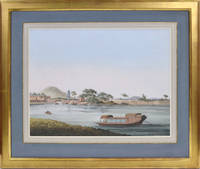
101452Canton circa 1810. . Pencil water colour and body colour drawing of craft heightened with white on paper watermarked 'J Whatman 1804' and '1805'. Framed and glazed overall size: 67.8cm x 57.3cm x 2cm.<br /> 87 mp22pic Well executed and highly atmospheric watercolours capturing the importance of the river for trade in early nineteenth-century ChinA<br /><br />An unusual and very attractive depiction of river life. Typically with the river in the foreground with a finely executed drawing of a native boat the backgrounds showing landscape scenes interspersed with occasional architectural details.<br /><br />The Pearl River is so named because of the pearl-colored shells that lie at the bottom of the river in the section that flows through the city of Guangzhou. Formerly often known as the Canton River it is an extensive river system in southern China. The name 'Pearl River' is also often used as a catch-all for the watersheds of the Xi 'West' Bei 'North' and Dong 'East' rivers of Guangdong. These rivers are all considered tributaries of the Pearl River because they share a common delta the Pearl River Delta. Measured from the farthest reaches of the Xi River the Pearl River system is China's third-longest river 2400 kilometres after the Yangtze River and the Yellow River and second largest by volume after the Yangtze.A<br /> Canton, circa 1810]. unknown
101453Canton circa 1810. . Pencil water colour and body colour drawing of craft heightened with white on paper watermarked 'J Whatman 1804' and '1805'. Framed and glazed overall size: 67.8cm x 57.3cm.<br /> 88 mp22pic Well executed and highly atmospheric watercolours capturing the importance of the river for trade in early nineteenth century China.<br /><br /><br /><br />The Pearl River is so named because of the pearl-colored shells that lie at the bottom of the river in the section that flows through the city of Guangzhou. Formerly often known as the Canton River it is an extensive river system in southern China. The name 'Pearl River' is also often used as a catch-all for the watersheds of the Xi 'West' Bei 'North' and Dong 'East' rivers of Guangdong. These rivers are all considered tributaries of the Pearl River because they share a common delta the Pearl River Delta. Measured from the farthest reaches of the Xi River the Pearl River system is China's third-longest river 2400 kilometres after the Yangtze River and the Yellow River and second largest by volume after the Yangtze.<br /> Canton, circa 1810]. unknown
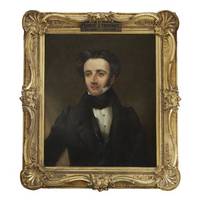
1837690621837. 29 inches x 24 1/4 inches. 29 inches x 24 1/4 inches. An Important Nineteenth-Century Pennsylvania Jurist American School 19th Century. Troubat Francis Joseph 1802-1868. Portrait of Francis Joseph Troubat. Philadelphia c.1837. 29" x 24-1/4" image size. Oil on canvas in ornate nineteenth-century gilded wood frame small plaque reading "Francis J. Troubat/ Born 1802-Died 1868" to head of frame. Some minor nicks and chips to frame gilding slightly dulled otherwise fine. $5000. A prolific writer of legal texts Troubat is best known as the co-author with William W. Haly of The Practice in Civil Actions and Proceedings in the Supreme Court of Pennsylvania in the District Court and Court of Common Pleas for the City and County of Philadelphia and in the Courts of the United States 1837. This portrait belonged to the Philadelphia Bar Association. Founded in 1802 it is the oldest association of lawyers in the United States. Its library where this portrait was last displayed was renamed the Theodore F. Jenkins Memorial Law Library in 1967. unknown books
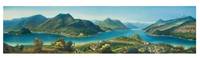
185042495Italy 1850. Gouache over faint etched line black gouache border. Period gilt and faux bois frame. A splendid panoramic view of Lake Como.<br/> <br/> Catering to the foreigners flocking to the region on The Grand Tour this hand-painted print beautifully depicts the famed picturesque lake with rich bands of blue highlighting the water and sky with the surrounding hills and mountains dotted with luxurious villas. The view looks north up the lake towards Switzerland from above Bellagio which occupies the point at which the lake divides in two. unknown
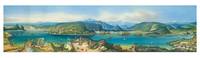
185042496Italy 1850. Watercolour over faint etched line black gouache border. Period gilt and faux bois frames. A splendid panoramic view of Lake Maggiore.<br/> <br/> Catering to the foreigners flocking to the region on The Grand Tour this hand-painted print beautifully depicts the famed picturesque lake with rich bands of blue highlighting the water and sky with the surrounding hills and mountains dotted with luxurious villas. In this view of Lake Maggiore we see from a very high vantage point the Borromean Islands: Isola Bella Isola Madre and Isola dei Pescatori with their extraordinary gardens. unknown
19400009110BRIDPORT DORSET SOUTHWEST ENGLAND UK. Good. 1940. On offer is an exceptional document of World War 2 history. This is a diary and log book of a teacher at a school in Dorset in Southwest England. Beginning in July 1940 the book details what the author endures while the terror and destruction of the German Blitzkrieg and attempts to continue on with life and with the teaching of the children at the St. Marys Primary School in the town of Bridport. The diary recounts the letters sent and received the concerned parents who visited their children the outings to doctor dentists and more for the students all alongside entries that speak of emergency preparations Air Raids and people killed and wounded in the Blitzkrieg. The war keeps the authors life in significant disarray and the entries reflect the many ways in which the children and their parents coped with War. The book is also filled with reports of the actions of the children eg. lying hitting each other the meting out of punishments etc. The Blitz ends on May 11 1941. The author writes the next day of the the Return of Evacuees along with a count of the official and unofficial evacuees from towns such as Portsmouth Westham Bristol Sussex Cornwall and Essex. The following days consist of efforts and logistics to get the returning evacuees back into school. As the school year ends and the summer begins the diary focuses on the authors normal logistics letters sent and received people visited children coming and going meetings of teachers etc. The diary is in good condition. The cover reads London County Council Name and School but none are filled out with any information. Cover is in good condition showing a bit of creasing in the front and back and a small bit of tearing on the spine. The pages are in good condition showing little discoloration or wear. About 20 pages in the middle are slightly or fully detached and show evidence of burn holes in a few spots in the middle of the page possibly from a cigarette or fire ember. The handwriting is clear and legible throughout in a combination of blue and black ink. The ink is faded at points but this does not affect the legibility of the words. Overall: G. Sample Text: July 19th. Air Raid warmup 2:45 - 3:30pm. Sheltered in ground floor corridor - Nursery class in corner of nursery. Worked on emergency time-table.; Aug 13th: Air Raid 12.0 - 12.50pm; 1.45 - 2.25; 3.30 - 5.30pm ; Aug 23rd. Visit from Mr. Kay to discuss return of teachers to London. It was decided that Miss Darnell should report in London on September 30th and that Miss Burditt and Miss Sentles should report in London on Sept. 9th 1940. W. Watson to be assistant in charge at the Wesleyan after Sept 30th.; October 24th. Mr. and Mrs. Osmond on day trip to see children- chdrn. allowed to leave school for short time. Phone to Dorchester re: Half Term.; Mr. Evans visited. re Fred Dobson - who has been dishonest. is accused of begging in streets - and confesses to stealing. Has been suspected before - but this is second time proven. Has been punished in school.; January 28 1941. Mrs. Berry called - wishes for two girl evacuees. Officer is willing to make arrangements re: evacuations lists completed.; Mon. March 3rd. One day closure also local schools. No communal Dinners.; May 23rd. Commonwealth Day celebrations open day. Collection for War Weapons Week. Visit of His Worship the Mayor of Bridport accompanied by Mr. Andrew Spiller. Distribution of National Savings Stamps 1/- each to children. Letter to The Mayor acknowledging gift and sending process 12/6 for War Weapons Week. Miss Haustrom visited with news of Ron. Kent who is expected to entered Bridport on Saturday.; Manuscript; 8vo - over 7¾" - 9¾" tall; KEYWORDS: HISTORY OF DORSET ENGLAND ENGLISH CHANNEL COAST UNITED KINGDOM THE BLITZ SOUTHWEST ENGLAND DURING WORLD WAR 2 BRIDPORT GERMAN BLITZKRIEG ST. MARY'S CE PRIMARY SCHOOL EFFECT OF WWII ON CHILDREN LONDON COUNTY COUNCIL DIARY AIR RAIDS IN BRITAIN EVACUEES DURING THE BLITZ BRITANNICA HANDWRITTEN MANUSCRIPT DOCUMENT LETTER AUTOGRAPH WRITER HAND WRITTEN DOCUMENTS SIGNED LETTERS MANUSCRIPTS HISTORICAL HOLOGRAPH WRITERS AUTOGRAPHS DIARY JOURNAL DIARIES PERSONAL MEMOIR MEMORIAL ANTIQUITÉ CONTRAT VÉLIN DOCUMENT MANUSCRIT PAPIER ANTIKE BRIEF PERGAMENT DOKUMENT MANUSKRIPT PAPIER OGGETTO D'ANTIQUARIATO ATTO VELINA DOCUMENTO MANUSCRITTO CARTA ANTIGÜEDAD HECHO VITELA DOCUMENTO MANUSCRITO PAPEL . unknown
231101(XVIIIème siècle) à vue : 55 x 67,5 cm chaque , Techniques mixtes d'aquarelle, crayon et rehauts de gouache, cadre en bois et stuc doré à décor de frises et de rangs de perles. Agrandies en partie inférieure.
Acquaforte, acquatinta brunita e bulino, 1799. Dalla rara prima edizione di dodici della serie detta Los Caprichos, tavola 15. Magnifica prova, particolarmente nitida, impressa su carta vergata coeva, con usuali ampli margini, piccoli strappi di carta alle estremità dei margini, per il resto in perfetto stato di conservazione. La serie chiamata Los Caprichos, è composta da ottanta incisioni. Questa prima edizione del 1799, l’unica a non essere pubblicata postuma, è impressa su soffice carta vergata di gran qualità ed è stampata usando un delicato inchiostro seppia. Curata in fase d’edizione dallo stesso artista, la serie fu commercializzata e dopo poco tempo ritirata dal mercato. Infatti, a causa dei numerosi soggetti che ironizzavano sulla società spagnola di fine secolo, il Goya subì una censura. Per questo ne sono stimati solo circa 300 esemplari. L’interpretazione dei soggetti rappresentati su queste lastre, sempre enigmatiche, è spesso controversa - First edition -Etching, burnished aquatint and engraving, 1799. From the rare first edition (of twelve) of Los Caprichos, plate 15. A very fine impression, showing a good contrast, on contemporary paper, with usual wide margins, small tears at left white margin, otherwise in perfect condition. The series called Los Caprichos, consists of eighty etchings. This first edition of 1799, the only one not to be published posthumously, is imprinted on soft laid paper of great quality and is printed using a delicate sepia ink. Cured in phase edition by the same artist, the series was marketed and before long withdrawn from the market. In fact, because of the many subjects that mocked the Spanish society of the century, Goya suffered censorship. For this it is estimated only about 300 copies. The interpretation of the subjects represented on these plates, always enigmatic, is often controversial. The title can be translated into: Pretty teachings. Harris 50, Delteil 52.
Acquaforte, acquatinta brunita e bulino, 1799.Dalla rara prima edizione di dodici della serie detta Los Caprichos, tavola 54.Magnifica prova, particolarmente nitida, impressa su carta vergata coeva, con usuali ampli margini, in perfetto stato di conservazione.La serie chiamata Los Caprichos, è composta da ottanta incisioni. Questa prima edizione del 1799, l’unica a non essere pubblicata postuma, è impressa su soffice carta vergata di gran qualità ed è stampata usando un delicato inchiostro seppia. Curata in fase d’edizione dallo stesso artista, la serie fu commercializzata e dopo poco tempo ritirata dal mercato. Infatti, a causa dei numerosi soggetti che ironizzavano sulla società spagnola di fine secolo, il Goya subì una censura. Per questo ne sono stimati solo circa 300 esemplari. L’interpretazione dei soggetti rappresentati su queste lastre, sempre enigmatiche, è spesso controversa In questo soggetto Goya affronta il tema del mondo alla rovescia. Nella scena ci sono tre personaggi, il centro dell'attenzione è l'uomo che sta mangiando, e che cerca di evitare tutti gli sguardi, vergognandosi dei tratti osceni del suo viso. L'artista ha chiaramente indicato il suo pensiero disegnando la cintura di un paio di pantaloni sopra la testa del personaggio. I nasi sono una presenza notevole sul viso, e nel linguaggio popolare "nasi" è un chiaro eufemismo sessuale. Il modo in cui il viso è costruito, in modo che sopracciglia, occhi e naso evochino l'apparato genitale maschile, rafforzerebbe lo stesso senso. Altri commenti insinuano che la figura, nel piano superiore, con i suoi grandi pugni serrati, stia commettendo sodomia con la figura che tiene il vaso da cui mangia l'uomo vergognoso. L'anno 1799 è uno dei momenti chiave nella vita e nel lavoro di Francisco de Goya. Oltre ad essere nominato primo pittore da camera di Goya, a godere di un crescente prestigio come ritrattista e ad inaugurare la cappella di San Antonio de la Florida, che aveva decorato, il 6 febbraio il Diario de Madrid pubblicò un annuncio in cui venivano messe in vendita le ottanta stampe che compongono la serie dei Caprichos. Bellissimo esemplare. Al verso timbro di collezione HENRI MARIE PETIET (Saint-Prix, Seine-et-Oise, 1894-1980), editore, libraio e mercante di stampe a Parigi (Lugt 5031). - The rare first edition -Etching, burnished aquatint and engraving, 1799.From the rare first edition (of twelve) of Los Caprichos, plate 54.A very fine impression, showing a good contrast, on contemporary paper, with usual wide margins, perfect condition.The series called Los Caprichos, consists of eighty etchings. This first edition of 1799, the only one not to be published posthumously, is imprinted on soft laid paper of great quality and is printed using a delicate sepia ink. Cured in phase edition by the same artist, the series was marketed and before long withdrawn from the market. In fact, because of the many subjects that mocked the Spanish society of the century, Goya suffered censorship. For this it is estimated only about 300 copies. The interpretation of the subjects represented on these plates, always enigmatic, is often controversial. In this print Goya approaches the theme of the world upside down. In the scene there are three characters, being the focus of attention the man who is eating, and tries to avoid all eyes, ashamed of the obscene features of his face. The artist has clearly indicated his thinking by drawing above the character's head the waistband of a pair of pants. The noses take on a notable presence on the face, and in popular language "noses" is a clear sexual euphemism. The way the face is constructed, so that eyebrows, eyes and nose evoke the male genital apparatus, would reinforce the same sense. Other comments insinuate that the figure, in the upper plane, with his large clenched fists, is committing sodomy with the figure holding the vessel from which the shameful man eats. The year 1799 is one of the key moments in the life and work of Francisco de Goya. In addition to being named first chamber painter, enjoying a growing prestige as a portrait painter and the inauguration of the chapel of San Antonio de la Florida, which he had decorated, on February 6 the announcement of the sale of the eighty prints that form the series of the Caprichos was published in the Diario de Madrid. Here, Goya focuses his social criticism on the bestiality of a deformed man whose head emerges from his breeches. Among the slight variations between the print and the preparatory drawing, the most striking is that, in the former, he wears his trousers, but in the latter, he does not. As a result, the latter came to be known as The satire of man’s lechery. Moreover, this is the only drawing in the series to mix red-ink wash with pen. Valentín Carderera’s handwritten commentaries on the Caprichos, which are in both the Biblioteca Nacional and the Museo del Prado, further clarify this subject. The first reads: Men with large noses also tend to have large arrows [here, “arrow” is a euphemism for penis] and fat gandumbas [testicles]. As they are often sodomites, this one is depicted with his breeches on his head, with his pudenda hanging out as he lies on top of a poor devil and pulls up his skirts. The second commentary completes the information: There are men whose face is the most indecent part of their body, and it would be good if those whose face is that disgraceful and ridiculous would stick it in their breeches. Example from the HENRI MARIE PETIET (Saint-Prix, Seine-et-Oise, 1894-1980) collection (Lugt 5031). Harris 1964, 89.
"Ranks with Smith's Wealth of Nations, Ricardo's Principles, Marx's Capital, Marshall's Principles, and Keynes' General Theory, as one of the six most important books ever written in its influence upon the development of modern economic theory. Menger's influence was not, however, confined to theoretical economics. The Austrian School of which he was the founder, was a fountainhead of classical liberalism in the European continent. The ideas of the school and its founder are, therefore, relevant to the modern debate between socialism and liberalism. Since many of the staunchest modern advocates of laissez faire, such as L.M. Mises and F.A.V. Hayek, find their intellectual roots in Menger's Principles, the translation of his work is of interest to those concerned about the relations between government and business as well as to economic theorists." - dust jacket. The long overdue first English edition of the 1871 German first edition. Menger [1840-1921] "attacked the half-decayed fabric of economics and is to be ranked among those who have torn down the structure of a science and placed it upon entirely new foundations." - Joseph Schumpeter. "Menger's Principles are the best introduction to the understanding of the theory of value which we possess." - F.A. Hayek. Former library copy with usual markings and moderate wear to original black cloth lettered in silver. Above-average wear to undulating dust jacket which is patched on spine and now preserved in archival-grade Brodart. A sound copy of this economic tour de force. Fundaburk 9739, Hutchinson 347, Hazlitt p.115, Blaug p.160-162, Pressman p.89-94. Book
20192081502111905767Xizang People's Publishing House 2019. Soft Cover. Fine. The book is in fine condition. Xizang People's Publishing House paperback
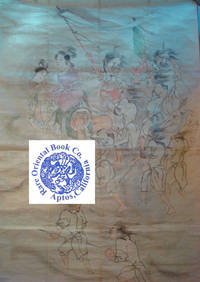
36023801Japan 1860 n.p. Large sheet 96 x 1m 44 cm. gouachevery clean work no worming or other condition issues painted on 16 joined sheets of Washi paper to make one large sheetfine water-color painting. THIS IS AN ORIGINAL PAINTED ART WORK . . . AM ORIGINAL COLOR PAINTING IN GRAND SIZE . . . FROM JAPAN'S OLDEST MYTHOLOGY: . . . THE KOJIKI & NIHON SHOKI PANTHEON . . . THE ORIGINS OF THE EMPEROR . . . OTOHIME GYO RETSU ZU: . . . THE PROCESSION OF OTOHIME DAUGHTER OF THE SEA GOD . . A stunning color painting by Kyosai. Probably done for a temple donation or as an expression of his faith to Japan's historic heroine. . OTOHIME is a goddess in Japanese mythology and is featured in the Kojiki as well as Nihon Shoki. Also known as "Luminous Jewel". A Japanese goddess the beautiful daughter of the sea-king Ryujin. She married Hoori and gave birth to a son after which she turned into a dragon. . Per the Japanese text brushed on the verso upper left corner: "239 ban dated Ansei 7th Kanoe-Saru-doshi 2 gatsu jojun end of February OTOHIME GYO RETSU ZU" . English: "#239 dated Ansei 7th monkey zodiac year end of Feb.: 1860 . PAINTING TITLE PER VERSO: "THE FIGURE OF PRINCESS OTOHIME'S PROCESSION THE DAUGHTER OF THE SEA GOD" . "Toyotama-hime" Japanese for "Lady Bountiful Soul" better known as Otohime is a goddess in Japanese mythology and is featured in the Kojiki as well as Nihon Shoki. She is the beautiful daughter of Ryujin the "God of the Sea." . A STUNNING ORIGINAL POLYCHROME GOUACHE PAINTING: . This original color watercolor painting shows the lively procession of OTOHIME and her hand maid. She is followed by a flag and umbrella bearer. Also following is a man with a pair of deer antlers good omen a man with a small red offering table with peaches the Wind God and his thunder-drum. Another flag bearer his helper followed by two others one holds a staff the other an offering of golden egg. . The items carries are symbolic good fortune and wealth in terms of deer antlers peaches and the golden egg represent ancient Chinese also used by the Japanese of omens of good fortune and good luck. . THE PAINTING: . Per the Japanese brushed text on the verso there is a number found meaning this panel of several was part of a larger work per the chronology found in Clark see below. . This panel of several paintings was part of a restoration of Zojo-ji temple in Shiba. In 1859 KANO Toei & Kyosai "participates in a repair project at the Zojo-ji temple." See Clark. . Although Kyosai had officially left the Kano school in 1854 by participating in the restoration of Tokugawa's family temple in Shiba he was showing loyalty to the Tokugawa family a good reason to volunteer his skills to the temple. It is also noteworthy that his mentor Kano Toei also participated in the restoration and in all likelihood Kyosai joined his master in a sign of respect and loyalty to him. . Based on this chronology it is clear Kyosai was one of the painters who worked at Zojo-ji temple along with his mentor and master teacher Kano Toei. It was not uncommon at this time for schools to volunteer teachers and students to do temple restoration and art work painting replacing or enhancing paintings and large murals. . This item's date matches the restoration dates for the Zojo-ji temple which began in 1859 and continued into 1860. . This panel was unused in the restoration it may have been a precursor to the final painting which was actually used in the restoration project. It matches the scenes found in Zojo-ji temple restoration. The work is the exact style of others painted by Kyosai and his genre. The caricatures of the people in this painting reflect Kyosai's style exactly the theme of his eccentric humor expressing his love for creativity and the joy of painting. . It is entirely within Kyosai's bizarre character to undertake and devote himself to such a project as illustrating the famous myth of OTOHIME in more than 200 deluxe extra-large-size format paintings. . This restoration project could also have been a 'paying job' for Kyosai as at that time he did not seem to be employed but in 1858 he began to design "Kyoga crazy pictures. It was in 1857 he married Okyo the daughter of a Rimpa painter Suzuki Kiitsu but Okyo died in 1859 and he remarried Tose who died in 1860. . It is more than likely Kyosai being a Buddhist he felt it was his religious obligation to do pennants by contributing to and drawing Buddhist or such traditional images as a way to placate the loss of his wife. . THE STORY OF OTOHIME DAUGHTER OF THE SEA GOD: . Because this work was part of the Zojo-ji temple restoration it cannot be considered a commercial painting one that was casually drawn and put on the market for sale. This was part of a commissioned restoration financed by some benefactor to the temple and most likely supported by the Tokugawa family. . ONE OF JAPAN'S EARLIEST AND MOST FAMOUS MYTHS: . The story of OTOHIME DAUGHTER OF THE SEA GOD is one of Japan's oldest and most famous myths known to all Japanese. Treasured as one of the most important in the ancient pantheon it is found in the earliest writing about the origin of Japan and the Emperor in the KOJIKI and the NIHON SHOKI. . This kind of larger paper illustrated story would take months to complete by It would also take devotion to the subject and focus with responsibility to produce a good number of paints daily. This was something Kyosai could and would do ! . THE ARTIST/PAINTER: This work is unsigned which is expected as part of a larger series of paintings. If this was the work of Kyosai it falls entirely within the dates during his period of work produced when he was 29 years old. . The caricature in the faces and fluid bodies in motion the "flowing" style are his. Although there is no signature and it is a true reflection of Kawanabe's work we are attributing it to him. . Another convincing point is that this kind of painting and meticulous style is also found in his famous instructional showing various 'schools' of painting in his KYOSAI GADEN. See below. . WHO WAS KAWANABE GYOSAI/KYOSAI: 1831-1889: Kawanabe Kyosai was a superb artist in the words of a critic "an individualist and an independent perhaps the last virtuoso in traditional Japanese painting". . Living through the Edo period to the Meiji period Kyosai witnessed Japan transform itself from a feudal country into a modern state. Born at Koga he was the son of a Samurai. His first aesthetic shock was at the age of nine when he picked up a human head apart from a corpse in the Kanda river. . After working for a short time as a boy with Utagawa Kuniyoshi he received his artistic training in the Kano school but soon abandoned the formal traditions for the greater freedom of the popular school. During the political ferment which produced and followed the revolution of 1867 Kyosai attained a reputation as a caricaturist. His very long painting on Makimono" scroll The battle of the farts" may be seen as a caricature of this ferment. . He was arrested three times and imprisoned by the authorities of the Shogunate. Soon after the assumption of effective power by the Emperor a great congress of painters and men of letters was held at which Kyosai was present. . He again expressed his opinion of the new movement in a caricature which had a great popular success but also brought him into the hands of the police this time of the opposite party. After this time he changed his name from Kyo crazy or wild to any one of 19 other "Go" studio names he used. However after the police jailed him he avoided use of "Kyo" but returned back to it with three other "GO" that used the same character "Kyo" crazy & wild such as #7 "Baiga Kyosha" #10 "Kyosai #12 Kyosha Gaishi #16 "Shosho Kyosai" Quoted from Roberts below see that reference for more details. . Kyosai is considered by many to be the greatest successor of Hokusai as well as the first political caricaturist of Japan. His work mirrored his life in its wild and undisciplined nature and occasionally reflected his love of drink. . Color photos are posted to our website. . REFERENCE: . More on OTO HIME: heon-org/articles/o/otohime-html KAWANABE Gyosai later known as Kyosai: Is well collected by world museums I GADAN: 1887 4 vol. set: In this work he outlines and exhibits a wide variety of "styles" of painting. In this work there are several examples of this kind or school of painting. Wikipedia stated about this book: "The most important work about Kyosai's art and life was written by himself: Kyosai Gadan or "Kyosai's Treatise on Painting" half autobiography and half painting manual. WESTERN APPRECIATORS: Many westerners came to visit Kyosai and their memoirs about the artist are valuable. The two important ones both rare were: Emile Etienne Guimet Promenades Japonaises Paris 1880. Josiah Conder: "Paintings and Studies by Kawanabe Kyosai" Tokyo 1911. Conder was a serious student of Japanese art; after some initial rejections he was accepted as Kyosai's pupil and accompanied him for ten years until the master's death. Timothy Clark Demon of painting: the art of Kawanabe Kyosai p.186 chronology and the drawing #21 p.58 is very similar to the pose found in our painting of OTOHIME Toyotama-hime both in pose facial quality hair style and the general perspective. ROBERTS Laurance P.: A DICTIONARY OF JAPANESE ARTISTS: PAINTING SCULPTURE CERAMICS PRINTS LACQUER p.100 stated of him: Kyosai ".was marked by a wild eccentric humor.caricatures of full of fantasy and invention." KAWANABE KYOSAI MEMORIAL MUSEUM. KAWANABE KYOSAI DOKU HON. OTOHIME: Nihon Jinmei Daijiten Toyotama-hime. Tokyo: Shogakukan. 2012. . . unknown
19122111902154801240Not Available 1912. Soft Cover. Fine. Number of books: 1 Not Available paperback
76547aafin-4to. Vor 1700 begonnen, reichen die Einträge in seltenen Fällen bis 1818. Titel + 513 S. + (1) + 3 Bl. (Register), im oberen Seitendrittel durchgehender Wasserschaden mit Textverlust auf mehreren Seiten, die ersten und letzten Seiten oben eingerissen und mit kleinen Fehlstellen, Schweinslederbd. d. Z. mit reicher Blindprägung u. Rücken auf 6 Bünden, im oberen Drittel starker Wasserschaden, Rücken leicht gespalten.
17462110502151103514Kara Bookstore Kichizaemon 1746. Soft Cover. Fine. Number of books: 2 Kara Bookstore Kichizaemon paperback
A PRISTINE COPY ON JAPANESE PAPER OF ONE OF THE TRULY GREAT LIVRES D'ARTISTE, AND PERHAPS THE MOST BEAUTIFUL BOOK DEVOTED TO MARSEILLES. Illustrated with 94 original etchings by Raoul Dufy. From a total edition of 340 copies, this is ONE OF ONLY 35 COPIES ON LUMINOUS JAPON SUPERNACR… PAPER (common called "pearl Japan" in English). Folio. Loose as issued in original wraps. Cloth case. FINE AND BRIGHT, WITH NO DEFECTS. Chapon, p. 281; Erving 12; Skira 107; Rauch 47; Manet to Hockney 85; Strachan, p. 331; Garvey & Wick 15; Stern 38; Wheeler, pp. 42 and 101; The Artist & the Book 93; Jentsch 22; Johnson 185.
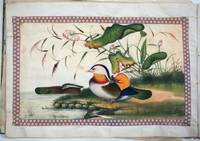
183027903Canton: SunQua Studio 1830. Silk covered boards. The 12 bird images are full page finely done with grass rocks and flowers with shrubs or trees. Unusually the half page images are mounted on the verso of the sheets of bird images. The half page images include collections of shells 4; women playing musical instruments 8; men sitting a scribe man smoking butcher melon fish and vegetable sellers and a few of the punishment images. <br /> <br /> Oblong 4to 8 1/4 x 13 1/4". Leaves mounted with to paper leaves with an unusual paper border with a purple circle pattern on pale background paper. Chinese style binding opening from the back of the album. Bound in a green gold blue and red silk woven in a daisy pattern which sometimes appears with a Sunqua stamp. Without background painting. The first image with some cracking but not affecting the characters some slight browning. Most in very good condition. SunQua Studio unknown
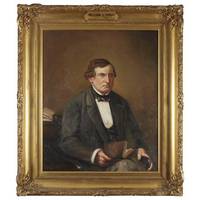
1876690691876. 39-1/2" x 31-1/4. 39-1/2" x 31-1/4" A Notable Nineteenth-Century Philadelphia Lawyer and Democratic Politician American School 19th Century. Hirst William L. 1804-1876. Portrait of William L. Hirst. 31-1/4" x 39-1/2" image size. Oil on canvas in ornate nineteenth-century gilded wood frame. Some minor nicks and chips to frame gilding slightly dulled otherwise fine. $3750. Hirst had a thriving private law practice and was active in Democratic politics. In 1853 Hirst was elected President of the Democratic State Convention. He was an early proponent of the City of Philadelphia consolidation. This portrait belonged to the Philadelphia Bar Association. Founded in 1802 it is the oldest association of lawyers in the United States. Its library where this portrait was last displayed was renamed the Theodore F. Jenkins Memorial Law Library in 1967. unknown books
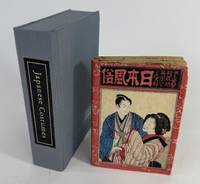
18902044Osaka: Poole Women's College 1890. <p>A delicate and magnificent Japanese rarity in fine condition: 3 volumes contained within a printed wrap-around band together in a single pictorial sleeve each volume approx. 4½ x 3¼" printed and bound in the Japanese manner in decorative paper wrappers each with a double-page folding color woodblock panorama The Daimyos Procession The Procession of the Mikado and The Bridal Procession of the Common People and each followed by 26 for a total of 78 color woodblocks of samurai court officials nobles servants merchants girls of high and low station nurses weavers cooks soldiers courtiers fishermen etc. - the entire panoply of Japanese society. "Every page has color woodcuts showing people of all classes and professions each with caption in English and Japanese. The books were written by an English teacher at the 'Pool' School for Girls." - Miles.</p> <br /> <p>From the Preface "These books are not only designed to please children but to show the manners and customs of the ancient and modern people of Nippon. The fine illustrations afford an important aid in this respect. It is through the eye that the understanding itself is most quickly reached." </p> . Poole Women's College unknown
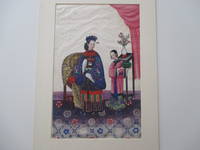
14997AB19th century 33 : 22 cm. 8 coloured paintings on stiff paper mounted under passepartout. A set of beautiful Chinese pith paper paintings from the Cantonese School from the 19th Century. All paintings are carefully and detailled elaborated showing all the small details. The beautiful aquatints show courtly scenes: A servant bringing tea to the empress - A servant bringing a flower arrangment to the empress - The Emperor sitting at a table and writting etc. unknown
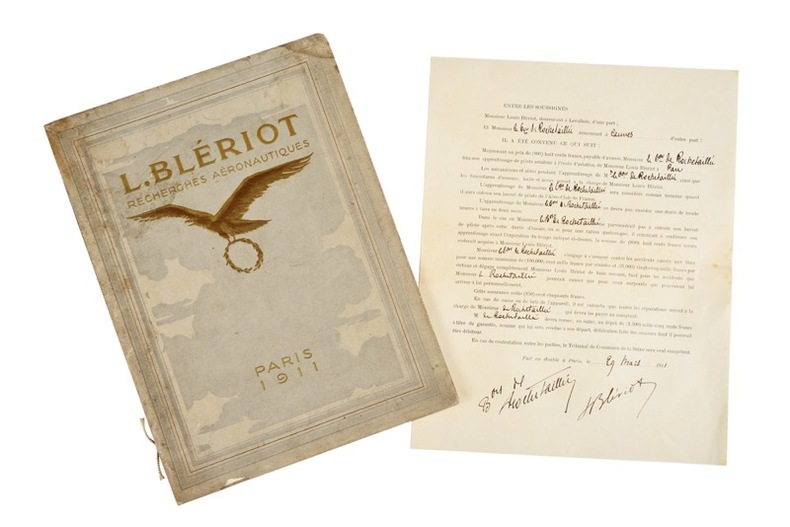
21757formulaire imprimé et complété et signé des deux parties (1 feuillet blanc recto, 274 x 212 mm), en vue d’obtenir le brevet de pilote de l’Aéro-Club de France. L’apprentissage coutait 800 francs soit en terme de pouvoir d’achat 251 455 € d’aujourd’hui !
Bulino, 1610/20 circa, in basso al centro l'excudit di Claes Janz. Visscher (CJV intrecciate). Sotto l'immagine una spiegazione in francese e in olandese e un riferimento al testo biblico di Matteo (15:14). Numerato 3, in basso a destra. Da un soggetto di Pieter Brueghel il Vecchio. L'opera traduce in immagini la parabola evangelica del cieco che guida un altro cieco, riportata da Matteo 15:14, in cui Cristo si rivolge ai Farisei: «Sono ciechi e guide di ciechi. E quando un cieco guida un altro cieco, tutti e due cadranno in un fosso!». Il cui significato è: quando l'incompetente consiglia altri incompetenti, le cose vanno male. L'acquaforte pubblicata da Claes Jansz. II Visscher è apparentemente ispirata a De parabel der blinden [La parabola del cieco], dipinta da Pieter Bruegel il Vecchio nel 1568. Questa ipotesi è stata avanzata dal Rijksmuseum, che conserva due impressioni di questa incisione. È incisa al contrario rispetto al quadro, e utilizza la stessa composizione: uomini ciechi, vestiti come vagabondi, seguono una linea diagonale attraverso il quadro, che porta a un fiume in cui cadranno presto; hanno mancato per poco un piccolo ponte di assi a monte, vicino a un albero. Come nel quadro, c'è un villaggio sullo sfondo. Tuttavia, ci sono solo tre ciechi invece dei sei del quadro di Bruegel, e quello di fronte, con la stessa ghironda del quadro sulla spalla, non è ancora caduto in acqua. Non descritto da Leeber, Bastealer e Hollstein. Il Rijksmuseum, che suggerisce una data del 1643 nella descrizione di una delle loro due impressioni, certifica che quest'opera è inserira dalla serie Theatrum Biblicum Hoc Est Historiae Sacrae Veteris et Novi Testamenti Tabulis Aeneis Expressae. Crediamo che una datazione più pertinente per l'opera sia tra il 1610 e il 1620 e che solo successivamente venga a far parte della Bibbia pubblicata da Claesz J. Visscher. L'incisore rimane anonimo, ma è possibile che si tratti dello stesso autore. Figlio di Jan Claesz Visscher, un incisore e editore di Amsterdam, padre di Nicolaes e nonno di Nicolaes II, fu attivo nella sua città natale dal 1601 fino al 1652. Nel 1605 lavorò come incisore per l'editore di Amsterdam Willem Jansz. Blaeu, realizzando tra l'altro alcune vedute dei più importanti monumenti di Amsterdam, e per Theodoor Galle. Molto presto però, Visscher iniziò a pubblicare stampe di propria fattura, caratterizzate dal logo del “pescatore”, riferimento al suo nome latino di Piscator. Immagazzinò, inoltre, stampe, acquisendo su larga scala lastre di rame da altri editori e stampatori, non solo prodotte da artisti viventi, ma anche vecchie tavole da Maarten van Heemskerck e altri noti pittori, prodotte da Hieronymus Cock e dai suoi successori. Contribuì, in questo modo, a costituire una delle più importanti case editrici dell'epoca. Rappresentò soggetti religiosi, paesaggi, in particolare invernali, e architetture, e realizzò stampe di devozione. Nonostante la più importante pubblicazione dell'epoca, la “Bibbia”, nella versione autorizzata nei Paesi Bassi, fosse senza illustrazioni, Visscher, come pure altri editori dell'epoca, realizzarono stampe, che, inizialmente separate dal testo religioso, vi furono in seguito incorporate. Bellissima impressione, su carta vergata coeva, con ampi margini, in perfetto stato di conservazione. Engraving, signed at the lower center with the excudit of Claes Janz. Visscher (CJV entwined). Beneath the image an explanation in French and in Dutch and a reference to the Bible text in Matthew 15:14. Numbered 3. After Pieter Brueghel the Elder. The blind leader is about to step into a ditch, taking his equally blind followers with him. The guide has a hurdy-gurdy under his cloak. A village can be seen in the background. The scene is a depiction of the proverb and parable: “if the blind lead the blind, both shall fall into a ditch”. The meaning of which is: when the incompetent advises other incompetents, things go wrong. The etching published by Claes Jansz. II Visscher is seemingly inspired by De parabel der blinden [The parable of the blind], painted by Pieter Bruegel the Elder in 1568. This hypothesis has been put forward by the Rijksmuseum, which keeps two impressions of this etching. It is etched in reverse compared to the painting, and uses the same composition: blind men, dressed like vagrants, follow a diagonal line across the picture, leading to a river in which they will soon fall; they narrowly missed a small plank bridge upstream, next to a tree. As in the painting, there is a village in the background. However, there are only three blind men instead of six in Bruegel's picture, and the one at the front, wearing the same hurdy gurdy as in the painting over his shoulder, hasn't fallen into the water yet. Not described by Leeber, Bastealer and Hollstein. The Rijksmuseum suggests a date of 1643 in the notice to one of their two impressions, this work is taken from the series Theatrum Biblicum Hoc Est Historiae Sacrae Veteris et Novi Testamenti Tabulis Aeneis Expressae. We believe that a more pertinent date for the work is between 1610 and 1620 and that it only later became part of the Bible published by Claes Jansz. Visscher. The engraver remains anonymous, but it is possible that it is the same author. Visscher, who was born and died in Amsterdam, was also known as Nicolas Joannes Piscator or Nicolas Joannis Visscher II, after his father who lived ca. 1550–1612. He learned the art of etching and printing from his father, and helped grow the family printing and mapmaking business to one of the largest in his time. It was a family business; his son Nicolaes Visscher I (1618–1679), and his grandson Nicolaes Visscher II (1649–1702) were also mapmakers in Amsterdam on the Kalverstraat. The times were with the Visschers for other reasons; due to the Protestant reformation, the older Bibles with their "Roman Catholic" illustrations were seen as outdated and apocryphal, but to liven up the new Protestant Bibles for the less well-read clergy, the Visschers produced illustrated maps and even landscapes of the places in the Bible. This became a very successful family business, with collaboration with many respected draughtsmen of the day. A new translation of the Bible was underway in the Netherlands, and until then, the new German translation done by Johannes Piscator, published in 1602–1604, was translated into Dutch. Though probably not a relative, his Bible translation was accepted by the Dutch Staten-General in 1602, which only lent more publicity and authenticity to the "Fisher" name. The trademark of the Visschers was a “fisherman”, after their name (thus the Latin nickname Piscator). A small fisherman would be strategically placed somewhere near water. If the subject was a landscape without a stream or pond, then often a figure walking with a fishing rod can be seen. Their map plates were reused for a century by other printers who unknowingly copied the entire plates, including the tell-tale fishermen. Observant scholars are thus able to trace the provenance of Bibles, maps, and landscapes from these signs. A fine impression, printed on contemporary laid paper, with margins, perfect condition.
Xilografia, 1505 circa, monogrammata nella tavoletta in basso a destra. Stato unico, nella terza variante, di cinque, descritte da Meder (n. 233 c/e) Magnifica prova, nitida e ben contrastata, nella terza variante descritta da Meder, caratterizzata da una piccola rottura del legno che comporta una mancanza di circa 5 mm nella parte superiore della linea d’inquadramento. In ottimo stato di conservazione. San Nicola, a sinistra, è identificato dal pane che tiene in mano, che gli fu portato durante una carestia sull'isola dove viveva, dalla barca sullo sfondo. Sant'Erasmo, a destra, sta portando le sue viscere, avvolte intorno a un rocchetto, e inoltre, è identificato dalla ruota con una candela accesa. Al centro c'è Sant'Ulrico, il patrono di Augusta, con in mano il suo simbolo, un pesce. Poiché è al posto d'onore, è stato ipotizzato che questo foglio sia stato commissionato o inteso per essere venduto ad Augusta. Il nome Ulrich non era comune a Norimberga. Questa stampa è spesso considerata come la controparte di un’altra xilografia, raffiguranti i SS. Lorenzo, Sisto e Stefano, sebbene le figure siano più allungate. Alcuni critici hanno anche riconosciuto un concetto spaziale che sembra corrispondere ad alcuni fogli de La Piccola Passione. Di conseguenza, datano questo foglio dopo il ritorno di Dürer dal suo secondo viaggio in Italia, cioè verso il 1508. Ma – osserva Strauss - questa xilografia corrisponde in troppi dettagli ad altre due: il soggetto, lo sfondo, gli uccelli, e inoltre il tipo di carta su cui è stampata, che non la distingue affatto dalle altre cosiddette "modest woodcuts", tutte riferibili agli anni 1503-1505. La forma della tavoletta che porta il monogramma è unica, ma rudimentale. Queste differenze possono essere più propriamente attribuite alla presenza di un'altra mano nella bottega di Dürer che ha modificato il disegno di Dürer in fase di intaglio. Bibliografia Bartsch, 118; Meder, 233 (c/e); Tietze, 398; Panofsky 338; Strauss n. 88. Woodcut, 1505 circa, signed with monogram on tablet lower right. Only state. Impression of Meder variant c/e, with a 5 mm gap in the upper border. Good impression, black, full-bordered, with a 5mm gap in the upper border according the variant c/e described by Meder. Very good condition “St. Nicholaus, on the left, is identified by the bread he is holding, which was brought to him during a famine on the island where he lived by the boat in the background. St. Erasmus, on the right, is carrying his entrails, wound around a reel, and in addition, is identified by the wheel with a burning candle. In the center is St. Ulrich, the patron saint of Augsburg, holding his symbol, a fish. Because he is in the place of honor, it has been surmised that this sheet was commissioned or intended to be sold in Augsburg. The name Ulrich was not common in Nuremberg. This print is often regarded as the counterpart to the preceding one (no. 87), although the figures are longer elongated. Some commentators have also detected a spatial concept that seemingly corresponds to some of the sheets of "The Small Passion' (nos. 106-142). Accordingly, they date this sheet after Dürer's return from his second Italian journey, i.e. c.1508.2 We find that assumption highly speculative. This woodcut corresponds in too many details with at least the two preceding ones: the subject, the background, the birds, and moreover the type of paper that it is printed on, which in no way sets it apart from the other "modest" woodcuts. The shape of the tablet bearing the monogram is unique, yet primitive. These differences can more properly be ascribed to the presence of another hand in Dürer's workshop who modified Dürer's design in preparation for the cutter.” (cf. Strauss, n. 88, p. 296). Literature Bartsch, 118; Meder, 233 (c/e); Tietze, 398; Panofsky 338; Strauss n. 88.
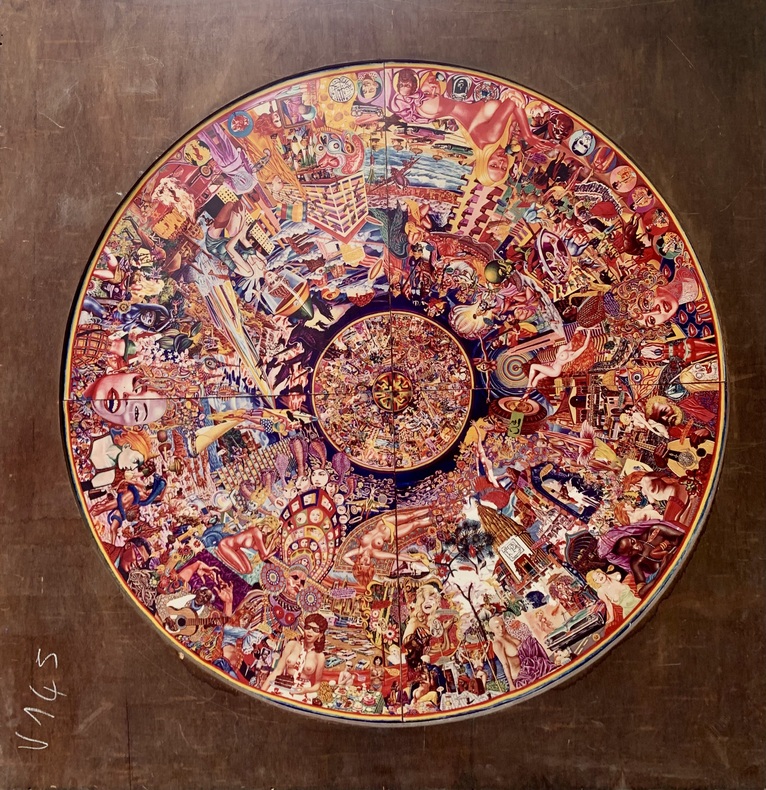
awd-1157Important tirage photographique en couleurs monté dans un encadrement carré en bois, ajouré en cercle au centre. Très rare épreuve, peut-être tirée pour un essai de couleurs lors de la commercialisation d’une affiche en 1969. Mentions Mati Klarwein, Grain of Sand, Robert Crandall Assoc., 1968 sur le côté avec échelles chromatiques, petits manques de pigmentation dans la partie basse (111,5/117,2 cm dans un cadre de 122/122 cm).
Veduta della festa di Sant’Andrea ad Amalfi, tratta da un disegno di Luois Jean Desprez. Amalfi festeggia Sant’Andrea, patrono della città, ben due volte all'anno, una il 30 novembre, l'altra il 27 giugno nell'anniversario del miracolo che salvò la città di Amalfi dall'invasione del pirata Kair-Ad-Din detto Barbarossa nel 1544. Sant'Andrea è protettore dei pescatori di tutto il mondo, di pescivendoli e di tutti coloro che hanno a che fare con la pesca. Ai festeggiamenti del 30 novembre, partecipa tutta la popolazione, ed è in questa occasione che avviene il “miracolo di Sant’Andrea”, per tanti versi molto simile al miracolo della liquefazione del sangue di San Gennaro. Probabile che il Desprez realizzi il disegno durante il suo viaggio in Italia, durante il quale descrive molto luoghi dell'Italia meridionale, poi base iconografica per il "Voyage Pittoresque" dell'abate Richard de Saint-Non.Incisione all'acquatinta ad inchiostro bistro, lievemente rifilata all'interno della linea marginale, piccole crepe di carta, per il resto in ottimo stato di conservazione. Rarissima. View of the feast of St. Andrew in Amalfi , taken from a drawing by Louis Jean Desprez. Amalfi celebrates St. Andrew, patron saint of the city, twice a year, on Nov. 30, the other June 27 anniversary of the miracle that saved the city from the invasion of Amalfi pirate Kair -Ad- Din said Barbarossa in 1544. St. Andrew is the patron of fishermen from all over the world, fishmongers and all those that have to do with fishing . The celebrations of November 30 , participates in the entire population, and it is on this occasion that happens the "miracle of St. Andrew " , in many ways very similar to the miracle of the liquefaction of the blood of San Gennaro.Likely that the realized design Desprez during his trip to Italy, during which describes a lot of places in southern Italy , then iconographic basis for the " Voyage Pittoresque " by the Richard de Saint-Non.Aquatint printed with bistro ink, slightly trimmed within the marginal line, small cracks of paper, otherwise in excellent condition. An extremely rare work. Frölich, Johan Fredrik Martins gravyrer, Stockholm, 1939, 291 II.