34 831 résultats
90 pages. "Communist plotters, in the United States as elsewhere, are preparing for the conquest of political power. The discerning student, however, should consider how interventionism, under various enticing labels, is setting the stage for the final overthrow of the voluntary society, the market economy and constitutional government. [This work], by a world-famous expert, will prove a valuable aid to understanding in this field. It will help to explain the errors of those who believe a system based on individual freedom can be 'mixed' with socialism." - Foreword. Prior owner's details upon toned front free endpaper. Another person's name inside front board, otherwise contents clean and unmarked. Binding tight. Average wear to publisher's green cloth. Dust jacket not included. Greaves & McGee B-14. Book
187719616Montevideo: Imprenta a vapor de La Tribuna 1877. FIRST EDITION. Original printed wrappers. First printing. On May 15 1877 this first publication of the regulations of the medical school appeared in Montevideo establishing a five-year curriculum which included a course on hygiene in the second year and legal medicine and toxicology in the fourth. The professors who taught these courses were medical doctors of great renown. <br /> <br /> OCLC locates nocopies in America just a single copy at the BnF. Imprenta a vapor de La Tribuna unknown
19142092902144101357Zenrinji Temple Kyoto Eikando 1914. Soft Cover. Fine. Number of books: 32 Zenrinji Temple (Kyoto Eikando) paperback
Opera tratta dai "Los Caprichos", per la prima volta pubblicati nel 1799. Prova della quinta edizione di dodici, stampata dalla calcografia di Madrid, circa 1883. Acquaforte, acquatinta brunita e puntasecca, in perfetto stato di conservazione. La serie chiamata Los Caprichos è composta da ottanta incisioni, la cui prima edizione [l’unica a non essere pubblicata postuma] venne alla luce nel 1799. Curata in fase d’edizione dallo stesso artista, la serie fu commercializzata e dopo poco tempo ritirata dal mercato. Infatti, a causa dei numerosi soggetti che ironizzavano sulla società spagnola di fine secolo, il Goya subì una censura. L’interpretazione dei soggetti rappresentati su queste lastre, sempre enigmatiche, è spesso controversa Plate 1: portrait of the artist wearing hat, bust-length to left; Fifth Edition c.1883 impression. 1799 Etching, aquatint, drypoint and burinFrom the fifth edition of twelve of the so-called "Los Caprichos" series, edited by the Madrid Calcografia [circa 1883].A very good impression, with good contrast, printed on contemporary paper, customary margins, in very good conditions. The series called Los Caprichos, consists of eighty etchings. This first edition of 1799, the only one not to be published posthumously, is imprinted on soft laid pape. Cured in phase edition by the same artist, the series was marketed and before long withdrawn from the market. In fact, because of the many subjects that mocked the Spanish society of the century, Goya suffered censorship. The interpretation of the subjects represented on these plates, always enigmatic, is often controversial. Harris 36, Delteil 38.
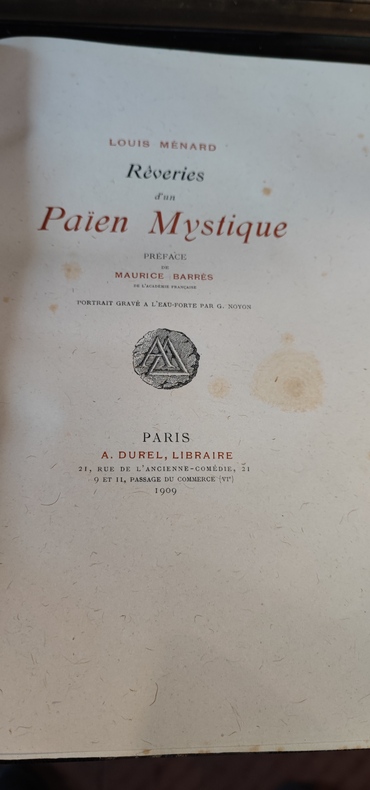
19093500Durel, 1909 In-4 (27,3 x 18,5 cm), demi-maroquin violet, coins, dos à quatre nerfs finement orné, tête dorée, couverture et dos conservés (Kieffer). Ouvrage originellement paru en 1876. Portrait-frontispice de l'auteur gravé à l'eau-forte par Georges Noyon d'après René Ménard. Il fut ami de Charles Baudelaire, Leconte de Lisle et Maurice Barrès.Edition tirée à 240 exemplaires, celui-ci un des 20 sur papier de Chine, non numéroté.
Acquaforte stampata in verde / blu, tratta da The tapestry hangings of the House of Lords: representing the several engagements between the English and Spanish fleets, in the ever memorable year MDLXXXVIII, with the portraits of the Lord High-Admiral, and the other noble commanders, taken from the life. To which are added, from a book entitled, Expeditionis Hispanorum in Angliam Vera Descriptio, A.D. 1588, done, as is supposed, for the said tapestry to be work'd after, ten charts of the sea-coasts of England, and a general one of England, Scotland, Ireland, France, Holland, &c. shewing the places of action between the two fleets; ornaments with medals struck upon the occasion, and other suitable devices. Also an historical account of each day's action, collected from the most authentic manuscripts and writers. By John Pine, engraver. London, MDCCXXXIX. Sold by J. Pine in Old Bond Street near Picadilly. Poco dopo la sconfitta dell'armata spagnola del 1588, Lord Howard of Effingham, comandante della flotta britannica, commissionò a Robert Adams la produzione di una serie di disegni che rappresentavano le varie fasi dell'azione; poi commissionò H.C. Vroom la realizzazione di una serie di disegni per arazzi, basati sul lavoro di Adams. Le tele furono tessute da Francis Spiring di Haarlem. Alcuni anni dopo, i disegni furono venduti a Giacomo I e, successivamente, arredarono le pareti della Camera dei Lord. Tutti gli arazzi, tranne uno rubato precedentemente, furono bruciati insieme a gran parte del Palazzo di Westminster nel 1834. La grande opera di Pine che raffigura questa famosa battaglia navale è, ora, di grande importanza storica. A parte il notevole dettaglio dell'incisione e la ricchezza dell'invenzione nei vari cartigli, l'uso contenuto dell'inchiostro colorato per stampare la superficie della lastra produce un effetto sorprendentemente attraente e rappresenta un importante esempio primordiale della stampa a colori per le illustrazioni. Bellissimo esemplare, stampato su carta vergata coeva, con pieni margini, in ottimo stato di conservazione. Etching printed in green/blue, taken from The tapestry hangings of the House of Lords: representing the several engagements between the English and Spanish fleets, in the ever memorable year MDLXXXVIII, with the portraits of the Lord High-Admiral, and the other noble commanders, taken from the life. To which are added, from a book entitled, Expeditionis Hispanorum in Angliam Vera Descriptio, A.D. 1588, done, as is supposed, for the said tapestry to be work'd after, ten charts of the sea-coasts of England, and a general one of England, Scotland, Ireland, France, Holland, &c. shewing the places of action between the two fleets; ornaments with medals struck upon the occasion, and other suitable devices. Also an historical account of each day's action, collected from the most authentic manuscripts and writers. By John Pine, engraver. London, MDCCXXXIX. Sold by J. Pine in Old Bond Street near Picadilly. Shortly after the defeat of the Spanish “Armada” in 1588, Lord Howard of Effingham, commander of the British Fleet, commissioned Robert Adams to produce a series of charts representing the various phases of the action and then H.C. Vroom to produce a series of designs for tapestries, based on the work of Adams. They were woven by Francis Spiring of Haarlem. Some years later, they were sold to James I and eventually came to furnish the walls of the House of Lords. All the tapestries, except one stolen at an earlier date and now lost, were burned in the fire that destroyed most of the Palace of Westminster in 1834. Pine's great work depicting this famous naval battle is therefore now of great historical importance. Apart from the remarkable detail of the engraving and the wealth of invention in the various cartouches, the restrained use of coloured ink to print the plate surface produces a strikingly attractive effect, and represents a very early example of the colour-printing of illustrations. T.Clayton, 'The English Print 1688-1802', New Haven and London, 1997, pp.87; Berlin Catalogue 1677.
Acquaforte stampata in verde / blu, tratta da The tapestry hangings of the House of Lords: representing the several engagements between the English and Spanish fleets, in the ever memorable year MDLXXXVIII, with the portraits of the Lord High-Admiral, and the other noble commanders, taken from the life. To which are added, from a book entitled, Expeditionis Hispanorum in Angliam Vera Descriptio, A.D. 1588, done, as is supposed, for the said tapestry to be work'd after, ten charts of the sea-coasts of England, and a general one of England, Scotland, Ireland, France, Holland, &c. shewing the places of action between the two fleets; ornaments with medals struck upon the occasion, and other suitable devices. Also an historical account of each day's action, collected from the most authentic manuscripts and writers. By John Pine, engraver. London, MDCCXXXIX. Sold by J. Pine in Old Bond Street near Picadilly. Poco dopo la sconfitta dell'armata spagnola del 1588, Lord Howard of Effingham, comandante della flotta britannica, commissionò a Robert Adams la produzione di una serie di disegni che rappresentavano le varie fasi dell'azione; poi commissionò H.C. Vroom la realizzazione di una serie di disegni per arazzi, basati sul lavoro di Adams. Le tele furono tessute da Francis Spiring di Haarlem. Alcuni anni dopo, i disegni furono venduti a Giacomo I e, successivamente, arredarono le pareti della Camera dei Lord. Tutti gli arazzi, tranne uno rubato precedentemente, furono bruciati, insieme a gran parte del Palazzo di Westminster nel 1834. La grande opera di Pine che raffigura questa famosa battaglia navale è, ora, di grande importanza storica. A parte il notevole dettaglio dell'incisione e la ricchezza dell'invenzione nei vari cartigli, l'uso contenuto dell'inchiostro colorato per stampare la superficie della lastra produce un effetto sorprendentemente attraente e rappresenta un importante esempio primordiale della stampa a colori per le illustrazioni. Bellissimo esemplare, stampato su carta vergata coeva, con pieni margini, in ottimo stato di conservazione. Etching printed in green/blue, taken from The tapestry hangings of the House of Lords: representing the several engagements between the English and Spanish fleets, in the ever memorable year MDLXXXVIII, with the portraits of the Lord High-Admiral, and the other noble commanders, taken from the life. To which are added, from a book entitled, Expeditionis Hispanorum in Angliam Vera Descriptio, A.D. 1588, done, as is supposed, for the said tapestry to be work'd after, ten charts of the sea-coasts of England, and a general one of England, Scotland, Ireland, France, Holland, &c. shewing the places of action between the two fleets; ornaments with medals struck upon the occasion, and other suitable devices. Also an historical account of each day's action, collected from the most authentic manuscripts and writers. By John Pine, engraver. London, MDCCXXXIX. Sold by J. Pine in Old Bond Street near Picadilly. Shortly after the defeat of the Spanish “Armada” in 1588, Lord Howard of Effingham, commander of the British Fleet, commissioned Robert Adams to produce a series of charts representing the various phases of the action and then H.C. Vroom to produce a series of designs for tapestries, based on the work of Adams. They were woven by Francis Spiring of Haarlem. Some years later, they were sold to James I and eventually came to furnish the walls of the House of Lords. All the tapestries, except one stolen at an earlier date and now lost, were burned in the fire that destroyed most of the Palace of Westminster in 1834. Pine's great work depicting this famous naval battle is therefore now of great historical importance. Apart from the remarkable detail of the engraving and the wealth of invention in the various cartouches, the restrained use of coloured ink to print the plate surface produces a strikingly attractive effect, and represents a very early example of the colour-printing of illustrations. T.Clayton, 'The English Print 1688-1802', New Haven and London, 1997, pp.87; Berlin Catalogue 1677.
Acquaforte stampata in verde / blu, tratta da The tapestry hangings of the House of Lords: representing the several engagements between the English and Spanish fleets, in the ever memorable year MDLXXXVIII, with the portraits of the Lord High-Admiral, and the other noble commanders, taken from the life. To which are added, from a book entitled, Expeditionis Hispanorum in Angliam Vera Descriptio, A.D. 1588, done, as is supposed, for the said tapestry to be work'd after, ten charts of the sea-coasts of England, and a general one of England, Scotland, Ireland, France, Holland, &c. shewing the places of action between the two fleets; ornaments with medals struck upon the occasion, and other suitable devices. Also an historical account of each day's action, collected from the most authentic manuscripts and writers. By John Pine, engraver. London, MDCCXXXIX. Sold by J. Pine in Old Bond Street near Picadilly. Poco dopo la sconfitta dell'armata spagnola del 1588, Lord Howard of Effingham, comandante della flotta britannica, commissionò a Robert Adams la produzione di una serie di disegni che rappresentavano le varie fasi dell'azione; poi commissionò H.C. Vroom la realizzazione di una serie di disegni per arazzi, basati sul lavoro di Adams. Le tele furono tessute da Francis Spiring di Haarlem. Alcuni anni dopo, i disegni furono venduti a Giacomo I e, successivamente, arredarono le pareti della Camera dei Lord. Tutti gli arazzi, tranne uno rubato precedentemente, furono bruciati, insieme a gran parte del Palazzo di Westminster nel 1834. La grande opera di Pine che raffigura questa famosa battaglia navale è, ora, di grande importanza storica. A parte il notevole dettaglio dell'incisione e la ricchezza dell'invenzione nei vari cartigli, l'uso contenuto dell'inchiostro colorato per stampare la superficie della lastra produce un effetto sorprendentemente attraente e rappresenta un importante esempio primordiale della stampa a colori per le illustrazioni. Bellissimo esemplare, stampato su carta vergata coeva, con pieni margini, in ottimo stato di conservazione. Etching printed in green/blue, taken from The tapestry hangings of the House of Lords: representing the several engagements between the English and Spanish fleets, in the ever memorable year MDLXXXVIII, with the portraits of the Lord High-Admiral, and the other noble commanders, taken from the life. To which are added, from a book entitled, Expeditionis Hispanorum in Angliam Vera Descriptio, A.D. 1588, done, as is supposed, for the said tapestry to be work'd after, ten charts of the sea-coasts of England, and a general one of England, Scotland, Ireland, France, Holland, &c. shewing the places of action between the two fleets; ornaments with medals struck upon the occasion, and other suitable devices. Also an historical account of each day's action, collected from the most authentic manuscripts and writers. By John Pine, engraver. London, MDCCXXXIX. Sold by J. Pine in Old Bond Street near Picadilly. Shortly after the defeat of the Spanish “Armada” in 1588, Lord Howard of Effingham, commander of the British Fleet, commissioned Robert Adams to produce a series of charts representing the various phases of the action and then H.C. Vroom to produce a series of designs for tapestries, based on the work of Adams. They were woven by Francis Spiring of Haarlem. Some years later, they were sold to James I and eventually came to furnish the walls of the House of Lords. All the tapestries, except one stolen at an earlier date and now lost, were burned in the fire that destroyed most of the Palace of Westminster in 1834. Pine's great work depicting this famous naval battle is therefore now of great historical importance. Apart from the remarkable detail of the engraving and the wealth of invention in the various cartouches, the restrained use of coloured ink to print the plate surface produces a strikingly attractive effect, and represents a very early example of the colour-printing of illustrations. T.Clayton, 'The English Print 1688-1802', New Haven and London, 1997, pp.87; Berlin Catalogue 1677.
Acquaforte stampata in verde / blu, tratta da The tapestry hangings of the House of Lords: representing the several engagements between the English and Spanish fleets, in the ever memorable year MDLXXXVIII, with the portraits of the Lord High-Admiral, and the other noble commanders, taken from the life. To which are added, from a book entitled, Expeditionis Hispanorum in Angliam Vera Descriptio, A.D. 1588, done, as is supposed, for the said tapestry to be work'd after, ten charts of the sea-coasts of England, and a general one of England, Scotland, Ireland, France, Holland, &c. shewing the places of action between the two fleets; ornaments with medals struck upon the occasion, and other suitable devices. Also an historical account of each day's action, collected from the most authentic manuscripts and writers. By John Pine, engraver. London, MDCCXXXIX. Sold by J. Pine in Old Bond Street near Picadilly. Poco dopo la sconfitta dell'armata spagnola del 1588, Lord Howard of Effingham, comandante della flotta britannica, commissionò a Robert Adams la produzione di una serie di disegni che rappresentavano le varie fasi dell'azione; poi commissionò H.C. Vroom la realizzazione di una serie di disegni per arazzi, basati sul lavoro di Adams. Le tele furono tessute da Francis Spiring di Haarlem. Alcuni anni dopo, i disegni furono venduti a Giacomo I e, successivamente, arredarono le pareti della Camera dei Lord. Tutti gli arazzi, tranne uno rubato precedentemente, furono bruciati, insieme a gran parte del Palazzo di Westminster nel 1834. La grande opera di Pine che raffigura questa famosa battaglia navale è, ora, di grande importanza storica. A parte il notevole dettaglio dell'incisione e la ricchezza dell'invenzione nei vari cartigli, l'uso contenuto dell'inchiostro colorato per stampare la superficie della lastra produce un effetto sorprendentemente attraente e rappresenta un importante esempio primordiale della stampa a colori per le illustrazioni. Bellissimo esemplare, stampato su carta vergata coeva, con pieni margini, in ottimo stato di conservazione. Etching printed in green/blue, taken from The tapestry hangings of the House of Lords: representing the several engagements between the English and Spanish fleets, in the ever memorable year MDLXXXVIII, with the portraits of the Lord High-Admiral, and the other noble commanders, taken from the life. To which are added, from a book entitled, Expeditionis Hispanorum in Angliam Vera Descriptio, A.D. 1588, done, as is supposed, for the said tapestry to be work'd after, ten charts of the sea-coasts of England, and a general one of England, Scotland, Ireland, France, Holland, &c. shewing the places of action between the two fleets; ornaments with medals struck upon the occasion, and other suitable devices. Also an historical account of each day's action, collected from the most authentic manuscripts and writers. By John Pine, engraver. London, MDCCXXXIX. Sold by J. Pine in Old Bond Street near Picadilly. Shortly after the defeat of the Spanish “Armada” in 1588, Lord Howard of Effingham, commander of the British Fleet, commissioned Robert Adams to produce a series of charts representing the various phases of the action and then H.C. Vroom to produce a series of designs for tapestries, based on the work of Adams. They were woven by Francis Spiring of Haarlem. Some years later, they were sold to James I and eventually came to furnish the walls of the House of Lords. All the tapestries, except one stolen at an earlier date and now lost, were burned in the fire that destroyed most of the Palace of Westminster in 1834. Pine's great work depicting this famous naval battle is therefore now of great historical importance. Apart from the remarkable detail of the engraving and the wealth of invention in the various cartouches, the restrained use of coloured ink to print the plate surface produces a strikingly attractive effect, and represents a very early example of the colour-printing of illustrations. T.Clayton, 'The English Print 1688-1802', New Haven and London, 1997, pp.87; Berlin Catalogue 1677.
Acquaforte stampata in verde / blu, tratta da The tapestry hangings of the House of Lords: representing the several engagements between the English and Spanish fleets, in the ever memorable year MDLXXXVIII, with the portraits of the Lord High-Admiral, and the other noble commanders, taken from the life. To which are added, from a book entitled, Expeditionis Hispanorum in Angliam Vera Descriptio, A.D. 1588, done, as is supposed, for the said tapestry to be work'd after, ten charts of the sea-coasts of England, and a general one of England, Scotland, Ireland, France, Holland, &c. shewing the places of action between the two fleets; ornaments with medals struck upon the occasion, and other suitable devices. Also an historical account of each day's action, collected from the most authentic manuscripts and writers. By John Pine, engraver. London, MDCCXXXIX. Sold by J. Pine in Old Bond Street near Picadilly. Poco dopo la sconfitta dell'armata spagnola del 1588, Lord Howard of Effingham, comandante della flotta britannica, commissionò a Robert Adams la produzione di una serie di disegni che rappresentavano le varie fasi dell'azione; poi commissionò H.C. Vroom la realizzazione di una serie di disegni per arazzi, basati sul lavoro di Adams. Le tele furono tessute da Francis Spiring di Haarlem. Alcuni anni dopo, i disegni furono venduti a Giacomo I e, successivamente, arredarono le pareti della Camera dei Lord. Tutti gli arazzi, tranne uno rubato precedentemente, furono bruciati, insieme a gran parte del Palazzo di Westminster nel 1834. La grande opera di Pine che raffigura questa famosa battaglia navale è, ora, di grande importanza storica. A parte il notevole dettaglio dell'incisione e la ricchezza dell'invenzione nei vari cartigli, l'uso contenuto dell'inchiostro colorato per stampare la superficie della lastra produce un effetto sorprendentemente attraente e rappresenta un importante esempio primordiale della stampa a colori per le illustrazioni. Bellissimo esemplare, stampato su carta vergata coeva, con pieni margini, in ottimo stato di conservazione. Etching printed in green/blue, taken from The tapestry hangings of the House of Lords: representing the several engagements between the English and Spanish fleets, in the ever memorable year MDLXXXVIII, with the portraits of the Lord High-Admiral, and the other noble commanders, taken from the life. To which are added, from a book entitled, Expeditionis Hispanorum in Angliam Vera Descriptio, A.D. 1588, done, as is supposed, for the said tapestry to be work'd after, ten charts of the sea-coasts of England, and a general one of England, Scotland, Ireland, France, Holland, &c. shewing the places of action between the two fleets; ornaments with medals struck upon the occasion, and other suitable devices. Also an historical account of each day's action, collected from the most authentic manuscripts and writers. By John Pine, engraver. London, MDCCXXXIX. Sold by J. Pine in Old Bond Street near Picadilly. Shortly after the defeat of the Spanish “Armada” in 1588, Lord Howard of Effingham, commander of the British Fleet, commissioned Robert Adams to produce a series of charts representing the various phases of the action and then H.C. Vroom to produce a series of designs for tapestries, based on the work of Adams. They were woven by Francis Spiring of Haarlem. Some years later, they were sold to James I and eventually came to furnish the walls of the House of Lords. All the tapestries, except one stolen at an earlier date and now lost, were burned in the fire that destroyed most of the Palace of Westminster in 1834. Pine's great work depicting this famous naval battle is therefore now of great historical importance. Apart from the remarkable detail of the engraving and the wealth of invention in the various cartouches, the restrained use of coloured ink to print the plate surface produces a strikingly attractive effect, and represents a very early example of the colour-printing of illustrations. T.Clayton, 'The English Print 1688-1802', New Haven and London, 1997, pp.87; Berlin Catalogue 1677.
Acquaforte stampata in verde / blu, tratta da The tapestry hangings of the House of Lords: representing the several engagements between the English and Spanish fleets, in the ever memorable year MDLXXXVIII, with the portraits of the Lord High-Admiral, and the other noble commanders, taken from the life. To which are added, from a book entitled, Expeditionis Hispanorum in Angliam Vera Descriptio, A.D. 1588, done, as is supposed, for the said tapestry to be work'd after, ten charts of the sea-coasts of England, and a general one of England, Scotland, Ireland, France, Holland, &c. shewing the places of action between the two fleets; ornaments with medals struck upon the occasion, and other suitable devices. Also an historical account of each day's action, collected from the most authentic manuscripts and writers. By John Pine, engraver. London, MDCCXXXIX. Sold by J. Pine in Old Bond Street near Picadilly. Poco dopo la sconfitta dell'armata spagnola del 1588, Lord Howard of Effingham, comandante della flotta britannica, commissionò a Robert Adams la produzione di una serie di disegni che rappresentavano le varie fasi dell'azione; poi commissionò H.C. Vroom la realizzazione di una serie di disegni per arazzi, basati sul lavoro di Adams. Le tele furono tessute da Francis Spiring di Haarlem. Alcuni anni dopo, i disegni furono venduti a Giacomo I e, successivamente, arredarono le pareti della Camera dei Lord. Tutti gli arazzi, tranne uno rubato precedentemente, furono bruciati, insieme a gran parte del Palazzo di Westminster nel 1834. La grande opera di Pine che raffigura questa famosa battaglia navale è, ora, di grande importanza storica. A parte il notevole dettaglio dell'incisione e la ricchezza dell'invenzione nei vari cartigli, l'uso contenuto dell'inchiostro colorato per stampare la superficie della lastra produce un effetto sorprendentemente attraente e rappresenta un importante esempio primordiale della stampa a colori per le illustrazioni. Bellissimo esemplare, stampato su carta vergata coeva, con pieni margini, in ottimo stato di conservazione. Etching printed in green/blue, taken from The tapestry hangings of the House of Lords: representing the several engagements between the English and Spanish fleets, in the ever memorable year MDLXXXVIII, with the portraits of the Lord High-Admiral, and the other noble commanders, taken from the life. To which are added, from a book entitled, Expeditionis Hispanorum in Angliam Vera Descriptio, A.D. 1588, done, as is supposed, for the said tapestry to be work'd after, ten charts of the sea-coasts of England, and a general one of England, Scotland, Ireland, France, Holland, &c. shewing the places of action between the two fleets; ornaments with medals struck upon the occasion, and other suitable devices. Also an historical account of each day's action, collected from the most authentic manuscripts and writers. By John Pine, engraver. London, MDCCXXXIX. Sold by J. Pine in Old Bond Street near Picadilly. Shortly after the defeat of the Spanish “Armada” in 1588, Lord Howard of Effingham, commander of the British Fleet, commissioned Robert Adams to produce a series of charts representing the various phases of the action and then H.C. Vroom to produce a series of designs for tapestries, based on the work of Adams. They were woven by Francis Spiring of Haarlem. Some years later, they were sold to James I and eventually came to furnish the walls of the House of Lords. All the tapestries, except one stolen at an earlier date and now lost, were burned in the fire that destroyed most of the Palace of Westminster in 1834. Pine's great work depicting this famous naval battle is therefore now of great historical importance. Apart from the remarkable detail of the engraving and the wealth of invention in the various cartouches, the restrained use of coloured ink to print the plate surface produces a strikingly attractive effect, and represents a very early example of the colour-printing of illustrations. T.Clayton, 'The English Print 1688-1802', New Haven and London, 1997, pp.87; Berlin Catalogue 1677.
14740DBo.J. Thomas Struth, geboren 1954 in Geldern. Studium an der Staatlichen Kunstakademie Düsseldorf 1973 - 1980, Malerei bei Gerhard Richter und Peter Kleeman, ab 1976 Fotografie bei Bernd Becher. Fotograf der Düsseldorfer Fotoschule. [4 Warenabbildungen]
Hardcover Like New. Ships directly from publishers being a new release book . Pls. allow a minimum of 25 business days delivery time.
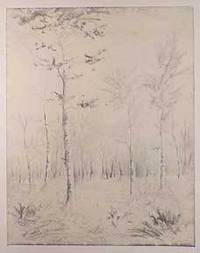
03-0474France ca. late 19th cent. Album of 76 drawings in the style of the School of Barbizon. Mainly landscapes with a few nudes. Bound in leather with losses of leather. 26 x 19.5 cm page size. France, ca. late 19th cent. hardcover
19302082402113510833Not Available 1930. Soft Cover. Fine. Number of books: 23 Not Available paperback
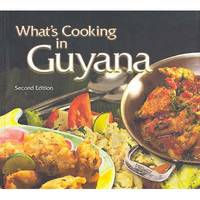
20041-1405013133Macmillan Carribean 2004. Paperback. New. 2nd edition. 356 pages. 9.37x8.58x1.42 inches. Macmillan Carribean paperback
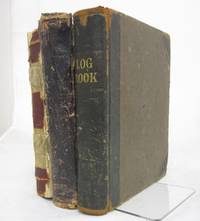
16093Education Daily or weekly handwritten reports in many hands on a school in Kent from the years 1863-1939. The logs chronicle the school's development from single gender instruction to a "mixed school" with classes of boys and girls learning together. The final pages of the log detail WWII-era preparations to train students in gas mask procedures and to prepare the school and community to begin receiving the children evacuated from London and other major cities. 9.5 x 8 in. Quarter morocco. 3 volumes each 500 pages. Original cloth boards. Marbled end papers. 2 entries from 1939: "Aug. 30. Time was spent today with fitting gas masks and gas-mask drill. The time table was to a certain extent disorganized particularly in Gps. I & III." "Sept. 1. The evacuation of London children commenced today. The school was hurriedly closed in view of the arrival of parties of children with their Teachers." In the first four days of September 1939 nearly 3000000 people were transported from places identified as vulnerable to quieter more rural sites. <br/><br/>There were opportunities for women to each and girls to learn as the school became "mixed" at the behest of teachers who believed it would be better for their students' academics. 1885: New teacher "Examined Boys in Arithmetic - about 3 passed in standards I to VII. Reading fair but "sing song" manner. Spelling bad except few boys in 1st class. My conviction is that a "mixed school" would bring better results as practically one teacher has 7 standards to teach--which cannot be well done. Average for the week 52 Boys. Discipline is bad." Includes many entries from women teachers such as this entry from July 15 1872. "Entered upon my new duties as School Mistress of the Wrotham National Infant School having been provisionally certificated on the recommendation of my late Inspector.Found the children to be very backward indeed their being several . years of age and knowing only the alphabet; and not one able to read words of one syllable without spelling. The average attendance of the Infants for the week 28.6. The elder girls from the boy's school attending the Infants school . of an afternoon to receive instruction in needlework and cutting out."<br/><br/>Depending on the principal teacher there are daily or weekly handwritten entries on school business including attendance students' progress with academic material such as spelling and Arithmetic and other notes such as interesting lessons. "School Diary or Log-Book. In every school receiving annual grants the managers must provide out of the school funds besides registers of attendance Article 17h-- a A Diary or Log-Book.The Diary or Log-book bust be stoutle bound and contain not less than 500 ruled pages.The principal teacher must maake at least once a week in the Log-book an entry which will specify ordinary progres and the facts concerning the school or its teachers such as the dates of withdrawals commencements of duty cautions illness.No reflections or opinions of a general character are to be entered in the Log-book." Includes several reports from visiting district supervisors on the progress of students. "The Mixed School.Writing-the best taught subject-is good all through the school and the papers are neat and clean generally."<br/><br/>Many issues related to attendance for holidays and seasonal harvests and notes of outbreaks of diseases and illness such as measles whooping cough and scarlet fever. 1863: "P.J. punctual. First Class commenced writing from dictation on paper. School tin as usual at this season of Hay-making. School year commended. Girls visited by Mrs. Gowland." 1877: "Many students have been migratory this quarter roaming from school to school. Leaflets of New Education Act Laws been supplied to the parents of every child attending school." Many new teachers complained on the educational level of students who attended the school. 1887: "Admitted Thos. Skinner 7 yrs old does not know his letter nor can make one average attendance.Admitted John Broad aged 6 ½ not know his letters.Many infants absent through sickness and also being a very cold stormy week of frost and snow." Covers worn on all volumes at extremities. Spine missing and worn extremities on 1901-1939 volume. Missing front end page boards detached on 1863-1901 volume. Generally clean interior. Good condition. unknown books
1948ZB3943951948-1976. volumes 1-29. 1948-1976. partly bound library markings textually clean & tight PRICE IS FOR THE LOT. - If you are reading this this item is actually physically in our stock and ready for shipment once ordered. We are not bookjackers. Buyer is responsible for any additional duties taxes or fees required by recipient's country. Photos available upon request. unknown
19872091502135705346Army School History Compilation Committee 1987. Soft Cover. Fine. The book is in fine condition. Army School History Compilation Committee paperback
2081002109000958Nagasaki University School of Medicine N.A. Soft Cover. Fine. Number of pages: 2 70 901 68 19 10 30p 12p 13 sheets Size: 22cm Nagasaki University School of Medicine paperback
19992091202133205861Shinto University Compilation Committee 1999. Soft Cover. Fine. Number of books: 4 books in total Shinto University Compilation Committee paperback
19892111902160305199green bookstore 1989. Soft Cover. Fine. Number of pages: 1088 pages Size: B5 size green bookstore paperback
2091502135300849Not Available N.A. Soft Cover. Fine. Number of books: 4 Not Available paperback
1933175261933. Archive of Walter Johnson's 1933 Atlantic City High School yearbook and related reunion materials documents African American student life within a formally integrated but socially segregated New Jersey public school during the Great Depression. Johnson a graduating senior in 1933 appears in a yearbook extensively inscribed by classmates whose messages span both commencement year and later reunions preserving contemporaneous peer networks across four decades. Created in a city where redlining confined most Black residents to Atlantic City's Northside neighborhood the volume and accompanying ephemera situate one student's educational experience within broader histories of African American urban life public schooling in the Jim Crow North Depression-era youth culture and Black alumni civic organization.<br /> <br /> Archive dates primarily from 1933 with later additions from 1978 and subsequent reunion years; ten items total. Central volume is Atlantic City High School yearbook published by Westbrook Publishing Company Philadelphia 1933 183 pages hardcover 10.5 x 7.75 inches extensively inscribed throughout by classmates in 1933 and again at the 45th reunion in 1978. The school's divisions are organized by Technical Classical and Commercial tracks with individual portrait sections and personal profile prompts listing favorite activities characteristic phrases and anticipated futures including one sardonic entry predicting a destination "In the ranks of the unemployed." Accompanying materials include a June 16 1933 telegram in original envelope from the Negro Alumni Associates of Atlantic City High School congratulating Johnson on his graduation; two reunion pamphlets from the 45th and 50th reunions; several envelopes including one bearing a lengthy handwritten note from reunion organizer Ben Ginsburg; and two printed advertisements for Atlantic Coast Amusement Enterprises promoting comedians and song-and-dance acts associated with Atlantic City's boardwalk entertainment industry.<br /> <br /> Produced in the depths of the Great Depression the yearbook captures a graduating class confronting economic uncertainty while articulating ambition humor and collective identity. Its Art Deco stylistic elements and commercial advertising reflect Atlantic City's resort economy during its interwar peak while the presence of a formal Negro Alumni organization in 1933 demonstrates structured African American institutional engagement within a multiracial public school setting. Later reunion annotations underscore continuity of alumni networks across five decades. Light general wear consistent with age; inscriptions legible and internally clean; associated ephemera well preserved with minor handling wear. Overall very good condition. Cohesive documentation of African American secondary education alumni organization and urban community formation in Depression-era New Jersey extending into the late twentieth century. unknown
19392080502106917648Not Available 1939. Soft Cover. Fine. The book is in fine condition. Not Available paperback