PICASSO Pablo & KISLING Moïse & ZARATE Manuel Ortiz de & JACOB Max & PAQUERETTE COCTEAU JeanMareMagnum

108 944 résultats
- Paris 12 août 1916, 6,3x8,6cm, une feuille. - Original photograph likely unique taken by Jean Cocteau showing Pablo Picasso and Co in Montparnasse in front of the café La Rotonde, the 12 August 1916 Paris 12 august 1916 | 6,3 x 8,6 cm | one photograph Original photograph by Jean Cocteau taken on 12 August 1916, showing Manuel Ortiz de Zárate, Moïse Kisling, Max Jacob, Pablo Picasso and the model Pâquerette, his girlfriend at the time, posing in front of the famous café La Rotonde on Boulevard du Montparnasse in Paris. Contemporary silver print, probably unique, from Jean Cocteau's personal archives then the Maurice Sachs collection. This image was published in Billy Klüver's book entitled A day with Picasso: twenty-four photographs by Jean Cocteau (1997). However, Klüver states that he didn't know the original photograph and used a modern reprint from the negative in the Cocteau archives for his work. We have not found any other copy of our original photograph in international public collections. Billy Klüver has assembled and commented on the twenty-one photographs taken by Jean Cocteau on 12 August 1916 in Montparnasse, close to this intersection of the Boulevard Raspail and the Boulevard du Montparnasse, which was named Place Pablo-Picasso in 1994. They take us to the café La Rotonde, before which a beaming Picasso in a cap speaks with Max Jacob whose baldness shines in the sun, behind them Henri-Pierre Roché in uniform and Manuel Ortiz de Zarate, sit at a table on the terrace of the same café where Pablo is next to the glowing Pâquerette and the young Polish painter Moïse Kisling. Pâquerette, with her hair in a headband, a chic dress, is the queen of the encounter. [...] It's the relaxed life at the back. Pâquerette, or rather Émilienne Pâquerette Geslot, was then a star model of the fashion designer Poiret who was all the rage at the time. A real one-day film of Picasso outside of his studio." (Pierre Daix, Picasso) In his book, Klüver questions the presence of all these artistic authorities in the making in a Paris that is deserted by war. The answer is, according to him, to search in the direction of the Salon d'Antin, an exhibition organized by André Salmon in July 1916, in which all the protagonists of our photograph took part, with the exception of Pâquerette. It is also on this occasion that Picasso reveals his Demoiselles d'Avignon to the public. This extremely rare image, taken by Jean Cocteau with his mother's Kodak camera, immortalizes a moment of joy that depicts the artistic all-Montparnasse of the early 20th century. Provenance: Jean Cocteau's personal archives then the Maurice Sachs collection and Max-Philippe Delatte. [FRENCH VERSION FOLLOWS] Photographie originale prise par Jean Cocteau le 12 août 1916, représentant Manuel Ortiz de Zarate, Moïse Kisling, Max Jacob, Pablo Picasso et sa petite amie de l'époque, le mannequin Pâquerette, posant devant l'iconique café La Rotonde, boulevard du Montparnasse à Paris. Tirage argentique d'époque, sans doute unique, provenant des archives personnelles de Jean Cocteau puis du fonds Maurice Sachs. Cette image a été publiée dans l'ouvrage de Billy Klüver intitulé A day with Picasso?: twenty-four photographs by Jean Cocteau (1997). Klüver précise cependant qu'il n'a pas eu connaissance de la photographie originale et que le cliché illustrant son ouvrage est un tirage moderne d'après le négatif des archives Jean Cocteau. Nous n'avons trouvé aucun autre tirage original d'époque de cette photographie dans les collections publiques internationales. «?Billy Klüver a rassemblé et commenté les vingt et une photographies prises par Jean Cocteau le 12 août 1916 à Montparnasse, tout près de cette intersection du boulevard Raspail et du boulevard du Montparnasse qui a été baptisée en 1994 place Pablo-Picasso. Elles nous conduisent du café La Rotonde, devant quoi un Picasso radieux en casquette parle avec Max Jacob dont la calvitie luit au soleil, derrière eux He
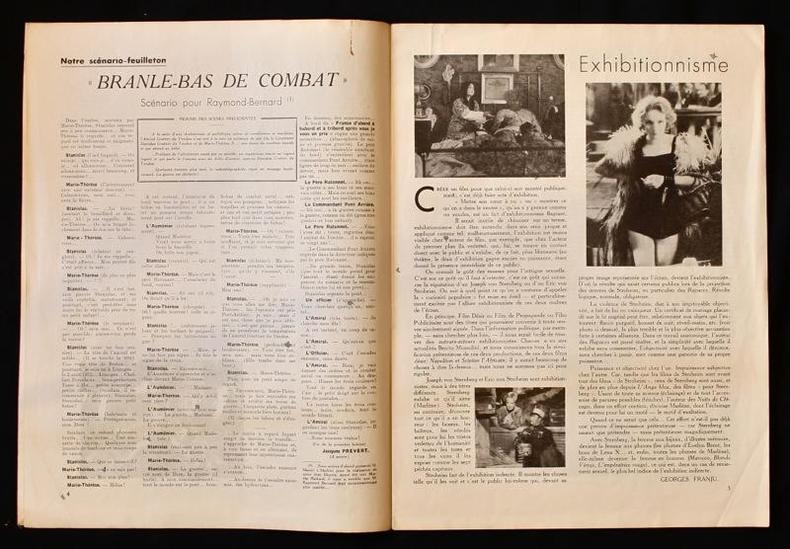
193758431937. Branle-bas de combat , 9 feuillets manuscrits autographes (27,1 x 21 cm. ) comportant de nombreuses ratures, d’un seul mot à un paragraphe entier. Quatre paragraphes sont ainsi biffés, et non repris dans la version publiée dans la revue le CINEMAtographe. On joint à ce manuscrit les deux seuls numéros de la revue CINEMAtographe, parus en mars et mai 1937, in-folio de 16p. chacun. Le texte des 9 feuillets autographes présentés ici correspond à la seconde partie, qui occupe la p. 4 de la revue. On joint un papillon annonçant les projections du tout jeune Cercle du Cinéma qui deviendra en 1936 la Cinémathèque française.
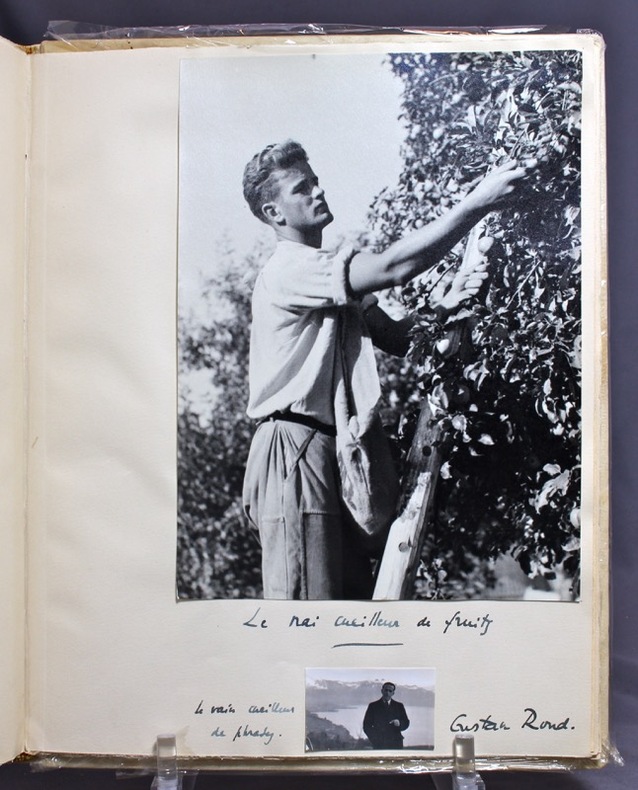
194712735[Lausanne], [Association des écrivains vaudois - AEV], [1947]. In-4 de [106] pages, plein parchemin muet, orné au premier plat d'une composition originale du peintre Jean-Jacques Mennet. Sous emboîtage avec dos toilé muet. La maison Mayer & Soutter à Lausanne a soigné la reliure de ces pages autographes.
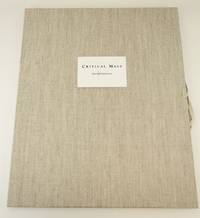
ST15816-18Los Alamos New Mexico: Meridel Rubenstein 1995. No. 3 OF 25 COPIES. 615 x 510 mm. 24 1/4 x 20". 2 leaves of text. <br/> Original linen portfolio with gray paper folder cover with paper label linen ribbon ties. Eight photocollage plates numbered and signed in pencil on verso by Rubenstein all with tissue guards. With pencilled signature and inscription: "For Arnold Horwitch with admiration and gratitude 7/15/95." The tiniest bit of soiling to label on portfolio otherwise in mint condition.<br/> <br/> This is a very rare portfolio based on Rubenstein's photo/text/video installation "Critical Mass" created between 1989 and 1993 in collaboration with Ellen Zweig with technical assistance from Steina and Woody Vasulka. According to the Exhibition description at the MIT List Visual Arts Center "The 50th anniversary of the atomic bomb developed at the Los Alamos Laboratory and first detonated in the southern New Mexico desert on July 16 1943 inspired artists Meridel Rubenstein Woody and Steina Vasulka and Ellen Zweig to probe the ironic juxtaposition of two very different elements of American society. 'Critical Mass' a multimedia installation examines the unusual meeting of J. Robert Oppenheimer and other Manhattan Project scientists with the American Indians of San Ildefonso Pueblo whose land adjoins Los Alamos New Mexico. Their worlds fused at 'the house at Otowi Bridge' Edith Warner’s Rio Grande riverside home where both groups patronized a small restaurant she operated during the 1940s." Born in Detroit Michigan in 1948 Rubenstein received her bachelor's degree in social science with a film-making emphasis from Sarah Lawrence College and a Master's and M.F.A. degree from the University of New Mexico. She is the recipient of fellowships from the Guggenheim Foundation the National Endowment for the Arts and the Pollock-Krasner Foundation and has taught photography at San Francisco State University and the Institute of American Indian Arts. The New Mexico Museum of Art the San Francisco Museum of Modern Art and Smithsonian American Art Museum are among the institutions with her works in their collections. She currently lives and works in Santa Fe. Rubenstein inscribed our copy to its original owner Arizona collector Arnold Horwitch. We could find no record of this item being offered or sold at auction. Meridel Rubenstein unknown
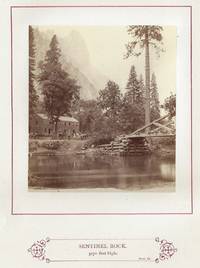
187224393Boston and New York: Alexander Moore and Lee Shepard & Dillingham 1872. Hardcover. Very good. Third edition revised and enlarged; second printing. Small quarto pp. v-x xi-xii 13-98 with two maps and 20 original mounted albumen photographs credited to Boston photographer John Soule. In publisher's green cloth with beveled edges; front board decorated in gilt black and rose; all edges gilt; each text page and each photograph bordered in red. A very good copy with rubbing and fraying to corners and spine ends bookplate of Canadian bookseller and collector G. Ducharme on front pastedown handwritten date of December 15 1872 on front free endpaper evidence of an erased ink stamp on title page. Lacks tissue guard over plate facing p. 35 all others present. Contents sound and clean. This is the rarest and most desirable edition of this work as it is the only one to contain 20 rather than 10 mounted photographs. Kneeland 1821-1888 was a physician naturalist and Professor of Zoology and Physiology at MIT. This book is based on his first visit to the Yosemite Valley in 1870 and includes a narrative of his trip from and return to Boston. "Kneeland made every effort to obtain current and accurate information and each of the later editions of the guide incorporates new material.Weston J. Naef in his book Era of Exploration the Rise of Landscape Photography in the American West 1860-1885.comments that the photographs 'are curious because there is no evidence that Soule a talented landscape photographer was ever in California.which suggests that he might have purchased the negatives from a California photographer not an uncommon transaction'" Currey & Kruska 225. Eadweard Muybridge and Martin Hazeltine are both considered strong candidates to have been the actual photographer. Farqhuar #10; Cowan p. 333. Only two copies of this edition have appeared at auction in the past 30 years and there are no others on the market as of September 2025. Alexander Moore [and] Lee, Shepard & Dillingham hardcover
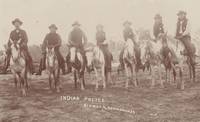
1900List1916Purcell 1900. Unmounted gelatin silver prints and one mounted boudoir card most images measuring 8 x 5 and 7 x 4 ½ inches. Varying levels of fading else about fine. With gallery stamps of Fenn Gallery Santa Fe verso. Near Fine. In the years following the Land Run of 1889 which opened land in Indian Territory to Euro-American settlement professional and amateur photographers alike moved to the region. Their motives varied with some attempting to document the vanishing indigenous culture and others trying to capitalize on the Euro-American demand for photographs of Native Americans in both traditional and western attire. Some studios would use single sets of props for different tribes. Despite these issues the images from the period do illuminate the period of acculturation and displacement in the history of the Southern Plains Indians tribes and also provide a record of the motives of the Euro-American photographers behind the camera. <br /> <br /> William J. Lenny and William L. Sawyers were photographers working out of Purcell in the years immediately following the land rush. They photographed the tribes on the Kiowa-Comanche-Apache and Wichita-Caddo reservations. Lenny was a field photographer and likely took most of the photographs while Sawyer managed the studio. Offered here are a very extensive group of photographs taken by the duo - twenty-seven in total - giving a visual record of the Kiowa and other tribes during this period. Some of these images - though not these copies - were included in the Museum of the Great Plains Exhibition In Citizen’s Garb and we have included their reference numbers where applicable. <br /> <br /> Overall an uncommonly large group in fine condition with some fading. From the collection of Forest Fenn the noted Santa Fe gallerist. <br /> <br /> 1. Indian Police / Kiowa and Comanches Supplied Title. The images shows seven mounted police officers with the one furthest to the left appearing to be Euro-American. <br /> <br /> 2. Arko Captain of the Indian Police Comanche. Supplied Title Indian police commonly earned $8-$10 per month to work on the reservation where their duties included expelling intruders bringing children to the schools curbing crime and preventing the sale of alcohol. He’s dressed traditionally including a single feather worn as a headdress. In Citizen’s Garb 32<br /> <br /> 3. Chief Tow-Wac-A-Ny and Wives. Wichitas. Supplied Title. A portrait of ‘Towacany Jim’ a famous military scout posed with a Navajo-style blanket along with his two wives. The women are wearing purchased shoes common in this period. He earned $10 per month as leader of the Indian Police and traveled to Washington D.C. on diplomatic missions. Fine contrast. <br /> <br /> 4. Big Tree’s Boy and Girl. Kiowas. Supplied Title A portrait of two children of the chief Big Tree. The pair wear traditional dress. Faded. <br /> Big Tree. <br /> <br /> 5. Kiowa Chief. Supplied Title A portrait of A’Do-Ette or Big Tree the Kiowa chief. Fine contrast. <br /> <br /> 6. Portrait of A’Do-Ette . He wears the same costume used by the photographers for various other tribal leaders including a large headdress. Faded. <br /> <br /> 7. Chief Big Tree’s Daughters. Kiowas. Supplied Title The image shows two girls identified as Alma left and Leena right. Alma wears a dress of dark buckskin. Both girls have beaded bags known as “Strike-a-Light†bags hanging from belts. <br /> <br /> 8. Lone Wolf. Kiowa Chief. Supplied Title A photograph of Mamay-day-te or Lone Wolf the Younger in the same costume used for O’Do-Ette’s portrait and others. Some fading.<br /> <br /> 9. Photograph of Laura Dunmore or Laura Pedrick. Dunmore was a graduate of Carlisle School and sister of Chief Aptone. She is pictured here with a parasol tartan cloth and tinkling cone earrings providing a striking study in fashion during this period. Fine contrast. <br /> <br /> 10. Photograph of a Camp Scene in Summer on a Reservation. This scene perhaps a Kiowa-apache camp contains a tipi made of canvas instead of hides. A man in an expensive set of purchased clothing sits in the foreground. Excellent contrast. In Citizens Garb 9<br /> <br /> 11. Photograph of a Camp Scene in Summer. A variant of our no. 10 showing the same scene from a different angle. Excellent contrast. <br /> <br /> 12. Chief Wild Horse Supplied Title Title written in ink on margin. A photograph of Kobay-O-Burra second chief of the Quahadi who took over principal chieftanship when Parra-o-Coom died in 1874. <br /> <br /> 13. Photograph of Mamay-Day-Te Lone Wolf. A variant pose as number 8 with the same dress. <br /> <br /> 14. Photograph of Five Comanche in Mixed Attire. They have been identified as Pah-do-pony top left To-pooh bottom right and Big Kiowa bottom left brother of Pah-do-pony and Perk-a-Quannard. In Citizens Garb 14<br /> <br /> 15. Apache Papoose Supplied Title. A photograph of a child in traditional dress. Faded. <br /> <br /> 16. Photograph of Four Indigenous Subjects in Mixed Attire. A portrait of a man and three women the man in a Euro-American style suit and the women in a mix of traditional dress using trade fabrics. Excellent contrast. <br /> <br /> 17. Portrait of an Unidentified Man. A portrait of a man in heavy fringe breechcloth and fringed leggings. This was marketed under the name “Big Tree’s Son†in the 1890s and the subject is identified as Kiowa in the In Citizens Garb catalog. In Citizens Garb 16<br /> <br /> 18. Kiowa Squaw and Papoose Supplied Title. A photograph of a woman and a child in a studio setting. Very good contrast. <br /> <br /> 19. Portrait of Zah-Tay or Lizzie Woodward. Zah-Tay appeared in other photographs with her niece and son. <br /> <br /> 20. Portrait of Cora Caruth. A portrait identified as Cora Caruth who graduated from an Indian School perhaps Carlisle and eventually worked as an interpreter for Wichita at Anadarko. Fine contrast. <br /> <br /> 21. Portrait of a Man in a Serape. A portrait of a seated man in a serape or striped Mexican blanket. A breechcloth legging and moccasins can be seen under the serape. In Citizens Garb 23<br /> <br /> 22. Chief Cat. Kiowa. Supplied Title A photograph of Ba’o Cat also Goon-Saudle-Te who wandered from camp in Colorado when he was twelve and was not recovered for five years. Comanches sheltered him. Fine contrast.<br /> <br /> 23. Kiowas. Supplied Title A portrait of Lizzy Woodward Oliver and her niece posed in Kiowa clothing. Oliver is in a beaded cradleboard Lizzy’s dress was tied with Tartan cloth and wears traditional Kiowa moccasins. In Citizen’s Garb 10<br /> <br /> 24. Portrait of Lizzy Woodward Her Niece and Oliver. A variant of our no. 23 with Oliver and Woodward in different dress. Fine contrast. <br /> <br /> 25. Portrait of Two Kiowa Girls. Two girls pose one in buckskin dress decorated in paint. Buckskin would become less frequent. Fading. In Citizen’s Garb 2<br /> <br /> 26. Big Tree’s Papoose. Kiowa. Supplied Title. A portrait of Alma later known as Mrs. Ahote. Fine contrast. <br /> <br /> 27. Kiowa Braves. Supplied Title A photograph of two young men on horseback. Very good contrast to foreground slight fading to background.<br /> <br /> 28. A Young Kiowa Warrior Supplied Title. A photograph of Enoch Smokey later known as Apenguadal who lived near Verden Oklahoma. His mother was noted as a beadworker and his horse is fitted with unusually decorative gear. His personal dress includes a hairpipe breastplate and a pelt around his arms. In Citizens Garb 36<br /> <br /> 29. Portrait of a Standing Kiowa Man. He wears the same headdress used in other studio photographs. Some fading. <br /> <br /> 30. Unidentified Man Possibly Euro-American Posed in a Headdress in Studio Setting. This is a mounted image unlike the others with the Lenny & Sawyers mount. The subject appears to be Euro-American and wears the same headdress used by the Indigenous subjects in several of the earlier photographs. He holds a prop bow and arrow. <br /> <br /> An uncommonly large group of images which in total provide an impressive visual record of this period of forced acculturation and transition in dress. unknown
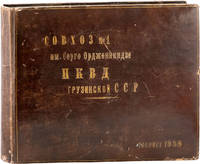
61757Tblisi: NKVD 1938. A magnificent grand-format presentation album ca 35cm x 42cm bound in full calf with heavy gilt titling to front cover; containing 113 original photographs including 90 large-format gelatin-silver prints most about 22cm x 29cm ca 8-1/2" x 11-1/2" a few slightly larger or smaller; four folding panoramas and 19 smaller-format portraits 10cm x 7cm ca 4-1/2" x 3". Rubbing to covers; mild staining to some of the mounts occasional surface scuffs to photographs; two of the panoramas have mended tears at folds. Overall a complete well-preserved album with the photographs in generally excellent condition. A complete list of captions translated into English is included. <br /> <br /> The movement for rural collectivization in the Soviet Union began in earnest in the late 1920s and reached its peak in the mid-1930's under the second Five Year Plan. In every Soviet state hundreds of thousands of rural peasants were moved off their own small holdings and relocated to one of the large collective farms kohlkozy or as here to State-run agricultural factories sovkhozy. State-owned farms like the one portrayed in this album operated under somewhat stricter conditions - in the words of one contemporary observer ".it is perhaps incorrect to speak of 'forced' labor in connection with the sovkhozy.but it is quite reasonable to designate this labor as 'militarized'." The fact that this farm was run by the NKVD the Soviet internal security apparatus means its residents were almost certainly present on a punitive or at least rehabilitative basis: as the agency principally responsible for ferreting out and suppressing counter-revolutionary tendencies among the vast Soviet populace the NKVD would have had little other reason to be involved in the operation of an agricultural enterprise. The use of the sovkhoz as a tool of repression especially in the early days of collectivization is well documented: the collective system was coercive and unwelcome to many if not most of the peasants whom it affected. "What is especially dangerous for the stability of the new agricultural system in Soviet Russia - introduced in such a hurry - is the fact that it was put into effect with coercive methods the system being forced on the peasantry and being accompanied by a cruel campaign against the well-to-do peasantry i.e kulaks quoted from Vladimir Timoshenko "The New Agricultural Policy of Soviet Russia" in Journal of Farm Economics v.13 no.2 April 1931.<br /> <br /> To counter some of the negative views of collectivization a large-scale propaganda campaign was initiated and some of the leading Soviet photographers of the period including Georgy Petrusov Evgeny Khaldei V. Teterin Ivan Shagin Arkady Shaikhet among others were employed to present an idealized version of life on the collective farms. The current album clearly intended to convey this sense of the rural ideal was likely produced by the Directors of the Sovkhoz Sergo Ordzhonikidze named ironically for a one-time ally of Stalin's who had been assassinated in the Great Purge for presentation to a regional state official. In more than 100 hand-captioned images the album portrays every aspect of the enterprise from fields of dairy cattle to chicken hatcheries to leisure-hour activities. The workers are uniformly happy and well-fed their surroundings ideally pastoral the machinery clean new and efficient. One can only speculate what conditions prevailed in the absence of a photographer's lens. <br /> <br /> The photographs themselves are clearly professional: technically and compositionally sophisticated they are exemplars of the form produced in an era when the Soviets had raised the photographic arts to a high level in service to their considerable propaganda needs. Of particular interest are numerous interior photographs documenting industrial activities at the farm - maintenance of the boiler rooms and garages; canning operations; the blacksmith's shop etc: even though staged these are extraordinary photographs of a depth and quality one would associate with the flagship Soviet photographic magazines of the period and there were several the most prominent being Sovetskoe Foto which ran from 1926-1977 and USSR in Construction 1930-1941. <br /> <br /> Despite our belief that these images were likely the work of one of the prominent Soviet photo-documentarians of the period attempts to match the images to a known photographer have proved fruitless. Of the names listed above these images most resemble the work of Evgeny Khaldei who would become famous for his photojournalism during the Second World War; but we find no evidence within the album attributing the work to him or any other photographer. Nonetheless a valuable documentation of pre-War Soviet agricultural life and a quite remarkable collection of images. unknown
24764Vers 1915-1920. Tirage argentique de l’époque, 17,4 x 12,2 cm. «Comme beaucoup de peintres Romaine Brooks utilisa la photographie; mais elle pratiqua cet art de façon très complète (…) une part très importante de son travail est constituée d’autoportraits qu’elle exécutait avec un plaisir évident». «Pour ces autoportraits, elle utilise tous les moyens à sa disposition; posant avec des costumes, prenant différentes poses devant un appareil ayant un déclencheur à retardement; posant devant une glace, variant les poses indéfiniment… Si Romaine Brooks traque son visage, essayant de se découvrir, elle le fait toujours en plasticienne ne négligeant ni la composition, ni la mise en scène, ni le cadrage». Romaine n’utilisait pas la photographie comme simple témoignage mais comme outil au service de son art, tout autant que comme un art à part entière. Voir Romaine Brooks photographe par Blandine Chavanne et Bruno Gaudichon in Catalogue Romaine Brooks, Poitiers, Musée Sainte-Croix, 1987, pp. 65-73. Cette très belle photographie semble être inédite.
466vers 1860. EXCEPTIONNELLE RÉUNION DE 5 PHOTOGRAPHIES PYRÉNÉENNES D'ALPHONSE DAVANNE
Fotografia originale timbrata e autenticata al verso, con firma di garanzia di Simone Giacomelli. Pubblicata in Enzo Carli, ''Giacomelli. La forma dentro. Fotografie 1952-1995'', catalogo della mostra di Senigallia, Rocca Roveresca 1995 Stampa alla gelatina sali d'argento. Cm 40,3x30. . . Ottimo (Fine). . . .
191778126Paris 1917 | 6.30 x 8.60 cm | une photographie
191678127Paris 12 août 1916 | 6.30 x 8.60 cm | une feuille
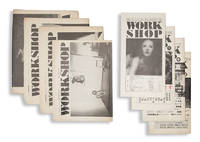
110755Tokyo Workshop Shashin Gakko September 1974-July 1976. . First editions; issue 1 loose sheets folded horizontally as issued 390 x 267 mm 15¼ x 10½ in issues 2-4 tabloids folded horizontally as issued 436 x 280 mm 17¼ x 11 in issues 5-8 narrow 4to 281 x 148 mm 11 x 5¾ in; black-and-white photographs printed in offset; issues 1-4 lightly toned occasional very minor spotting issues 3 and 4 with light wear to edges and short tear to spine at fold issues 5-8 wire-stitched photo-illustrated wrappers white printed in black lightly rubbed light handling marks oxidation to staples issue 8 with an abrasion to upper top right corner a very good to near-fine set; 16; 16; 16; 16; 72; 80; 72; 72pp.<br /> Workshop was the eponymous journal of Workshop Shashin Gakko. This independent photography school taught limited-enrolment classes by its co-founders Tomatsu Shomei Moriyama Daido Araki Nobuyushi Hosoe Eikoh Fukase Masahisa and Yokosuka Noriaki. Each photographer taught a workshop for a period of one year with a strong emphasis on one-to-one teacher-student relationships. During the first year Nakahira Takuma and Narahara Ikko also taught two additional two-month courses. The journal actively explored new trends in photography through essays and criticism by members of the group and others. Issue 4 was edited by Araki and was based on the simple theme of 'making photography' for this issue he contributed an essay on how to shoot good portraits. Issue 6 was the most controversial issue published in January 1976 which announced 'We Will Sell Photographs: An Exhibition of Photographs Selected by Twelve Photographers' which was issued to accompany an exhibition in February 1976 as an attempt to present photographs as commodities. At that time in Japan as elsewhere sales of photographs as works of art were virtually non-existent and there was some resistance to the idea most notably from Norio Asaki in Asahi Camera.<br /><br />The Workshop Photography School lasted from April 1974 until March 1976 but one last journal issue was issued in July 1976. This eighth issue featured 'A Roundtable Discussion with Names Withdrawn: Bashing Photography Magazines' in which the Workshop teachers set about challenging the conventional views of photography put forward by Asahi Camera and other photography magazines as well as criticising popular photographers including Kitai Kazuo and Shinoyama Kishin.<br /><br />The school continued briefly as Araki's Private Photo School until 1977 when Araki offered another one-year workshop. The Workshop Photography School paved the way for several independent galleries and organisations that followed such as Image Shop Camp Photo Gallery Prism and Photo Gallery Put.<br /> For a New World to Come 354-358. Tokyo, Workshop Shashin Gakko, September 1974-July 1976. unknown
194556982Un des 700 exemplaires numérotés (n° 312 imprimé pour Henri de S...), préface de Maurice Garçon, 1 vol. in-folio en feuilles sous emboîtage éditeur rigide, Ateliers d'Impressions et de Cartonnages d'Art, s.d. [ 1945 ], 3 ff. et 20 planches en héliogravure
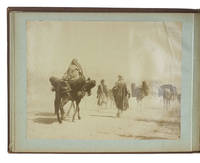
1900H9GCKI5261RRZanzibar Madagascar Mayette 1900. Brown cloth album made by M. Andouard in Paris decorated endpapers. Oblong album 25 x 34 cm with 47 silver gelatin photographic prints many with handwritten captions in French. The photographs vary in size from 8 x 5.5 cm to 27 x 20.5 cm. The 30 panorama photographs measure 5.5 x 17.5 cm. 10 10 blank ll. A unique set of views from Zanzibar and Madagascar taken five years after the French military intervention of 1894/95 also called the Second Madagascar expedition. The unidentified photographer can be seen in three of the photographs wearing a white coat and white pith sun helmet being the French tropical style as used by white colonial troops since 1878 suggesting the photographers connection with the French colonial army. His travel partner is occasionally shown as well. Their visit took place during the final years of the notorious slave trading activities of Tippu Tip 1837-1905 in Zanzibar.The photo album opens with a portrait of a young Sakalavan woman in a beautiful dress. Three other photographs show other native women as well including one family with a baby. The majority of the photographs are panoramic views showing villages harbours coasts and landscapes the first dated 28 November 1900. The only full-page photograph in the album shows an Arab caravan marching along the beach. Rare are the few photographs taken in Mayotte giving some highly uncommon scenes of the island nation's pre-development era.Binding somewhat scratched spine slightly worn. The front endleaf clipped. Only a few photographs slightly faded: in very good condition. hardcover
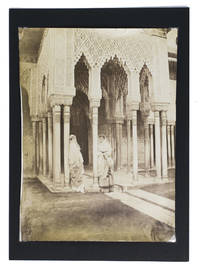
1865ABC_47974Granada 1865. All albumen photographic prints 18 x 24 cm are mounted on black card stock 29.5 x 21 cm. Collection of 19th-century albumen photographic prints of the Alhambra in Spain by Charles Mauzaisse ca. 1823-1885; fl. 1860s. The beautiful images show many different parts of the Alhambra especially of the court and palace of lions including the central fountain and the pavillion with the oriental dome that was added in 1859 and later removed. The Alhambra is a medieval palace and fort of Moorish or Muslim rulers of the Kingdom of Granada in Andalusia in the South of the Iberian Peninsula. Additionally the collection contains one photograph of the tomb of the Catholic monarchs which is located in the Royal Chapel of Granada.During the 19th century tourism was booming. Travellers wanted to take proof of their travels home and often did so in the form of photographs. Many photographers took the opportunity to sell their work to tourists. Charles Mauzaisse son of the painter Jean Baptiste Mauzaisse traveled to the south of Spain and fell in love with Granada where he would develop his professional activity alongside other renowned photographers such as Laurent Coutourier and Dubois. All of them - aware of the lucrative field of work that the image of the Alhambra offered - settled more or less definitively in the city just as Masson or Count Vigier did in Seville or Clifford and Laurent in Madrid.The prints are slightly yellowed and some images were possibly overexposed or have faded slightly all prints show clear signs of having previously been mounted on another surface. Some prints have small tears in the edges. The print of the 2 Moroccan women in the Alhambra is probably by a different photographer but the name has been cut off. The collection gives a beautiful insight into 19th-century photography in the Iberian Peninsula - showing off the beautiful Arabic- and Muslim-influences architecture in Granada. unknown
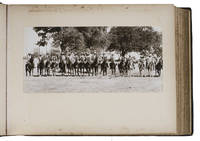
1933ABC_45905Cambridge Mumbai New Delhi: Scott & Wilkinson Clifton & Co Hamilton Studios and Kinsey Bros. 1933. Oblong half morocco photograph album by W. Johnson & sons London. With 105 photographs mounted in the album ranging from 16 x 28 cm to 4 x 6 cm 2 photographs loosely inserted and a watercolour mounted at the back 11.5 x 21 cm. Unique photograph album showcasing the vigorous "fox" hunting scene in British India in the early 1930s particularly around Delhi. Most of the photographs show members of the British upper class in India often mounted on horses or posing for a group photograph and accompanied by hounds. The album contains no titles captions or inscriptions and the photographs do not seem to figure recurring individuals which suggests that it was probably compiled to commemorate the hunting and or riding club and its activities in the early 1930s. Numerous photographs show groups of mostly men posing with hounds at lunches and possibly a hunt ball or mounted on horses at jumping events and even a few cup trophies. The very first photograph is by Scott & Wilkinson in Cambridge active before 1933 and was therefore probably taken in England. The other inscribed photographs are by Clifton & Co. and Hamilton Studios from Bombay and Kinsey Bros. which started in New Delhi in 1935.British life in India mirrored life in native Britain and included popular equestrian activities such as hunting. Starting in the second half of the 19th century foxhounds were imported from Britain and subsequently bred in India. Regiments and brigades kept their own packs but at the beginning of the 20th century these had morphed into local hunts. Hounds were kept at over 12 hunting clubs which included Delhi Meerut Narbuda Vale Jaora Poona Bombay Bangalore Ooty Madras Lahore Quetta Peshawar and Karachi. Although the Indian silver fox was sometimes hunted the most common prey was the golden jackal.A different type of hunting popular in India was pig sticking: the chase of a wild boar on horseback with the spear. Several photographs in the album show pig sticking parties either posing or in action and sometimes accompanied by spectators on elephants. In contrast to the jackal-hunt parties the pigstick groups are composed of more military looking men and also include Indian men as opposed to the British-only hound groups.Most photographs show the area around Delhi and include a hunt near Shah Alam's Tomb. A photograph of this event is loosely inserted in the album and dated 1933/34 on the back. Other photographs show the Rashtrapati Bhavan one group shows the Earl later Marquess of Willingdon India's Governor-General from 1931 to 1936. Two images show the monumental Gateway of India completed in 1924 in Bombay Mumbai which can also be seen in an aerial photograph. Several photographs show what is probably the airfield at Karachi as it shows two airplanes loading mail on apparently the first voyage of the Indian Transcontinental Airways. Imperial Airways liner "Hanno" departing from Croydon had left for Karachi on 1 July 1933 via Bahrain and Sharjah. In Karachi the cargo was transferred to the Transcontinental airliner "Arethusa" as can be seen on the photographs.It is unclear why only half of the album was used. It is possible the compiler transferred to Kut in British Mesopotamia Kut al-Imara in modern Iraq. A watercolour on the final page of the album is captioned "A river bank north of Kut".Binding slightly rubbed and worn at the edges. Album leaves foxed throughout but most of the photographs in very good condition. The paper of the large photograph of the group near Shah Alam's Tomb is heavily damaged at the top and left side but the image itself is undamaged. A unique collection of British-Indian hunting photographs in very good condition.l Cf. Hamid "Riding with the Peshawar Vale hunt" thefridaytimes.com; Hunt "Delhi" in: Ten cities that made an empire; "1933 Eastwards: Karachi to Calcutta" indianairmails.com; Lucas Hunt and working terriers pp. 116-120; Mitter et al. The artful pose. Scott & Wilkinson, Clifton & Co, Hamilton Studios and Kinsey Bros., unknown
18697140Lille, Imprimerie L. Danel, 1869. In-4 (306 x 230 mm), (4)-61-(1 bl.) pp., 14 planches de procédés de reproduction de photographies. Reliure d'époque demi-percaline, rousseurs.
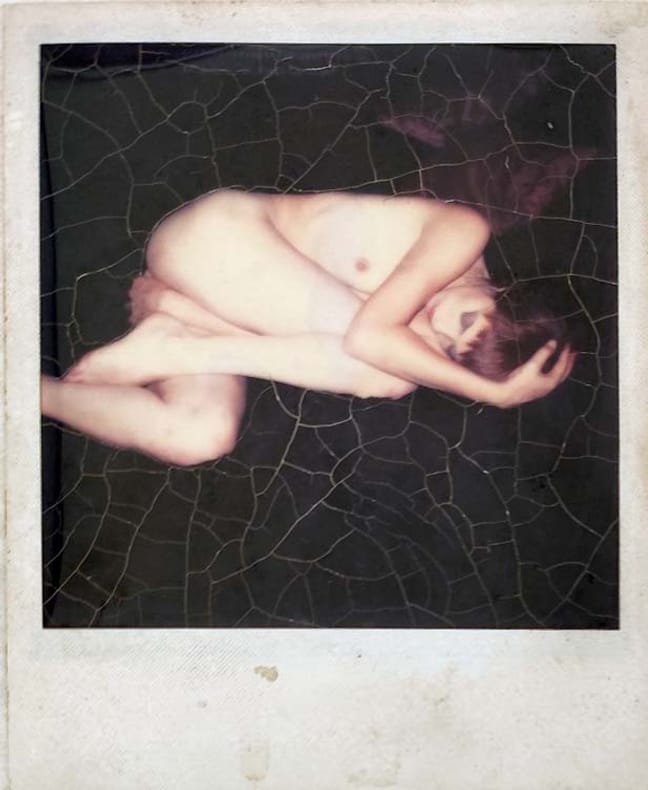
105873Epreuve photographique 79x79mm réalisé au Polaroid SX 70
- s.d. (1938), Carton : 31,8x39,5cm / photographie : 27,4x35,2cm, une photographie contrecollée sur carton. - Photographic portrait of Sigmund Freud, signed by the photographer Engelman Shot May 1938 print ca 1980 | Cardboard: 31,8 x 39,5 cm / photo: 27,4 x 35,2 cm | one photo mounted on board Original photographic portrait of Sigmund Freud, in silver print made later by Engelman from the original negative. After the Night of Broken Glass, the young Jewish photographer Edmund Engelman (1907-2000) fled to the United States leaving behind his precious but compromising negatives of his clandestine photography. He did not recover them until after the Second World War, in 1952, from the psychoanalyst's daughter Anna Freud. Handwritten inscription signed by photographer Edmund Engelman in the lower margin of the photograph: "à Nadine Nimier Cordialement Edmund Engelman" ("To Nadine Nimier Sincerely Edmund Engelman"). Nadine Nimier was the wife of the writer Roger Nimier. She hosted "Les après-midi de France Culture", a show in which she received some well-known and highly respected psychoanalysts, namely Jacques Lacan and Françoise Dolto. It was on 20 January 1980 that she interviewed Edmund Engelman, then on a visit to Paris for the exhibition of his photographs at the Erval Gallery. A beautiful portrait of the founder of psychoanalysis taken in May 1938, shortly before his departure from Vienna to London. One hundred and six photographs were taken during Engelman's clandestine visit to Freud at 19 Berggasse in Vienna. Many of these photographs depicting the psychoanalyst's practice and art collection are known, but the artist only took a few portraits of the master. This photographic session was carried out at the request of August Aichhorn and bears witness to the last moments of the birthplace of psychoanalysis, a discipline from this point forward banned by the Nazi regime: "On Sunday 13 March, a meeting of the management committee of the Viennese Psychoanalytical Society took place and two decisions were taken: all members of the Society must leave the country as quickly as possible and the headquarters of the Society must be at the place where Freud will settle." ("August Aichhorn et la figure paternelle: fragments biographiques et cliniques" in Recherches en psychanalyse n° 1, 2004) Edmund Engelman in his book entitled La Maison de Freud Berggasse 19 Vienne published in 1979 recounts: "I remember both my excitement and my fear, that rainy morning of May 1938, as I walked through the deserted streets of Vienna towards 19, Berggasse. I carried my cameras, tripod, lenses and film in a small suitcase that seemed to get heavier with each step. I was convinced that anyone who saw me would know that I was going to see Dr Sigmund Freud, to accomplish a mission that the Nazis would not have appreciated. [...] I was afraid that there was not enough light to photograph the interior of Freud's house. Using flash or spotlights was out of the question as the Gestapo kept the house under constant surveillance. This unique document on the place where Freud had lived and worked over the past forty years, would have to be executed without arousing the slightest suspicion. I feared for my own safety as for the lives of the Freuds, and did not want to compromise myself by a misstep when they were so close to leaving Vienna safe and sound. [...] One weekend in 1933, at the summer residence of a friend, outside of the city, I had the pleasure of meeting a certain August Aichhorn who was closely interested in the highly controversial field of psychoanalysis and was, to my keen curiosity, a close friend of the famous professor Freud. [...] We quickly became good friends. [...] He confided to me that Freud, after a terrible harassment (raid of his house by the Nazis, detention of his daughter Anna), had finally received permission to leave for London, thanks to the intervention of senior figures and foreign diplomats. The Freuds, he t
album in-8 (mm 140 x 208), pp. 71, (3), legatura dell'epoca in raffinata tela marrone con titolo in oro su due linee arcuate al piatto anteriore (piccolo restauro alla cuffia superiore), decorazione fogliacea impressa a secco, identica a quella della prova di stampa realizzata su velluto con al centro del piatto aggiunta la dedica "A sua Maestà il Re" (esemplare ex Pregliasco 2010). L'album si compone di occhietto, titolo, 5 pagine di Notions préliminaires, 2 pagine di indice in fine, 31 tavole in cartoncino con applicate 30 fotografie originali ed ed una carta topografica. 29 fotografie misurano 8x12 cm mentre la panoramica di Aosta con angoli arrotondati misura 10,5x16,5 cm. Le vedute sono di Pont-St.Martin, Donnaz, Bard, Arnad, Verrez, Mont-Jovet, Chatillon, Ussel, Chambave, Fénis, Nus, Quart, La-Salle, Avise, Liverogne, Chateau de Montmajeur, Arvier, Villeneuve, St.Pierre, Aymavilles, Aqueduc de Pont d'Ael; seguono 8 particolari di Aosta e la veduta generale della città. Straordinaria pubblicazione, di grande importanza per la precisione documentale che le fotografie forniscono, rispetto ad esempio alle fantasiose incisioni su acciaio o legno dell'Aubert, pubblicate soltanto 9 anni prima. E' la prima serie fotografica della Val d'Aosta, eccezionalmente precoce per la la nuova tecnica e trattandosi di una valle all'epoca chiusa e non turistica. E' praticamente contemporanea al primo album fotografico di Torino, capitale e città internazionaleche 4 anni dopo sarebbe diventata capitale d'Italia."Turin ancien et moderne", già considerato di ottima data per la fotografia nel nostro paese e gli autori italiani, fu pubblicata intorno al 1867 dal francese Le Lieure . La Vallée d'Aoste monumentale, stampato in un limitatissimo numero di copie, ed è di eccezionale rarità, in un secolo apparso sul mercato in pochissime occasioni, è conservato alla Biblioteca d'Aosta e censito anche presso la Biblioteca Angelo Mai di Bergamo e la Biblioteca romana e emeroteca di Roma. Il testo preliminare di Meuta e Riva sottolinea il loro intento – per la prima volta nella storia della Valle – non pittoresco ma stretta-mente documentario, che inizia così: "Lorsque, il y a quelques années, nous parcourûmes la Vallée d'Aoste, en simple tourists, nous la trouvames sì imposante par ses restes d'antiquité, que nous resolûmes d'y retourner pour en rapporter quelques souvenirs, reproduisant par la photographie la pluspart de ses Monuments" e dopo un breve testo storico, termina con "la reproduction des principaux Monuments anciens, unique but de cet Album". . .
1898ABC_457021898. 2 PARK Superintendent. 1898. Catalogue of photographs by Sergeant A.J. Clarke R.E. taken during Tirah Expedition 1897-1898. Kirkee Pune India Sappers and Miners' Press 1898. Small folio 22 x 14.5 cm 4 pp. With a lithographed title-page. Loosely inserted in the album. Collection of photographs taken by a British Indian Army officer who served in the Peshawar Column during the Tirah Expedition in the Northwest Frontier of India from June 1897 to April 1898 including a manuscript Key that identifies seven British officers that are in the first photo of the album and a list of captions to 10 photos in the album.The Tirah Expedition was aimed against the Afridi and Orakzai tribes in British Indias Northwest Frontier modern-day Khyber Pashtunkhwa province of Pakistan. One of many Northwest Frontier campaigns of British India the Tirah campaign concentrated on the area west and south of Peshawar in the mountainous region between the valleys of the Bara and Kohat Rivers. The album primarily documents the actions of the Tirah field forces Peshawar Column under command of Brigadier-General Arthur George Hammond 1843-1919 which followed the route of the Bara Valley.The present photo album contains 8 large albumen photos documenting the movement of the Peshawar Column. The large photos were taken by W. Rahn according to the memoirs of Peshawar Column officer Richard Thomsett we had a photographer named Rahn with the column and he accompanied us until we arrived at Ali Masjid in December 1897 when an accident necessitated his returning to India. Rahn was a German who had come out to the East some twenty years before and seemed to be ubiquitous for wherever we were there he was with his camera ready and I must say he took some very excellent pictures.The present album also includes 43 smaller gelatin photos with manuscript captions for 10 of them on a small piece of paper perfectly describing the photos on leaves 5 and 9 of the album. The album is supplemented with a rare 4-page brochure no doubt produced in a small print-run that lists 99 photos. About 20 have been marked by hand in pencil probably by the albums compiler. The brochure indicates that the present photos could be purchased from the Bombay Sappers and Miners.8 of the large photos have contemporary manuscript captions in ink on the mounts. 2 marks on the front paste-down reading "photographs by British Royal Engineers. Tirah Expedition 1897-1898 North India. Binding slightly rubbed on extremities the original 5 cords replaced with 3 new black cords hinged to stubs . A few images mildly faded. The additional manuscript leaves foxed and worn. Otherwise in good condition.l The navy and army illustrated V no. 53 24 December 1897 pp. 150-152 4 of the 8 large photographs & no. 57 18 February 1898 p. 275; R.G. Thomsett With the Peshawar olumn. Tirah expeditionary force London 1899 pp. 103-104. unknown
1879G84BDE85OGMKBerlin: H. Schnaebeli & Co 1879. Oblong 8vo 33 x 26.5 cm album with 16 original albumen prints ca. 20.5 x 15 cm mounted on paperboard. Original richly decorated cloth. Title on front cover: "Album des Trabrenn-Sport. H. Schnaebeli & Co. Hof-Photographen u. Kunstverlag. Berlin Unter den Linden 30". Fine album of original albumen prints depicting trotting. All horses and jockeys are identified in handwriting on the opposite page. 1 Cremien. 2. Lump. schw. H. v. Lump a. d. Nelly Parker. Züchter u. Bes. Gestüt Mariahall. 3. Mazeppa. Fahrer J. W. Raymer. 4. anon. 5. France's Alexander. Schwarzer Hengst v. Ben Patschen a. d. Jenny Martin. Besitzer Gestüt Mariahall. 6. Lynwood. Schimmel-Hengst v. Clinker a. d. Belton Maid. Besitzer. Berliner Trabrenn-Verein. 7. Sunol. Braune Stute v. Electioneer a. d. Wazana. Besitzer Rob. Bronner. 8. Djelowaja. Schimmel-Stute v. Atlasnuyi a. d. Delni. Besitzer und Fahrer Herr G. Barthels. 9. Blue belle. Fuchs-Stute v. Blue Bull. Besitzer: Gestüt Mariahall. Trainer u. Fahrer L. Raymer. 10. Polly. Braune Stute v. Hamdallah a. d. Belle. Besitzer: Herr Ehrich. Trainer u. Fahrer Joe Raymer. 11. Tiger. F. H. gez. in Russland 1873 v. Stroining a. d. Saszita. Besitzer: Albas Singer in Wien. 12. Lumpazius. br. H. v. Lump a. d. Addre E. C. Züchter u. Bes. Gestüt Mariahall. 13. Sametz. 14. Maud. S. Fuchs-Stute v. Harlod a. d. Miss Russell. 15. Ledenaja. Fahrer J. W. Raymer. 16. Jersey Thorne brauner Hengst v. Thorndale a. d. Martha Besitzer Mr. Wilson. - Most photographs signed in the negative "H. Schnaebeli"; one dated 1879. Very early example of an album illustrating horses horsemanship and trotting. Extremely scarce: we were unable to trace another copy in any public library according to OCLC-Worldcat and KVK; not in JAP or ABPC. Binding a bit discoloured otherwise very well preserved. Boards show some browning and foxing; albumen prints in very good condition. H. Schnaebeli & Co, hardcover
1917ABC_48426Iran and Iraq 1917. Contemporary cloth one album in in red and one in grey with 'Kodak' lettered in gold on the front board and a black classical meander border tooled near the foot. The albums are kept together by a black ribbon. Oblong 8vo ca. 15.5 x 20 cm. With 191 resp. 95 and 96 gelatin silver prints all ca. 4 x 6 cm. 2 volumes. Remarkable set of Kodak photo albums with nearly 200 photographs of military life and the oil industry in Iran and Iraq in the early 20th century. The photographs were most likely taken by the compiler of the albums and show scenes from his daily life. Most of them are captioned. Included are images of Persian oil fields Abu Zenema Sinai coast Port Sudan Bushehr Basra various locations along the Tigris Euphrate and Shatt al-Arab rivers Ashwaz and Shush. The photographs also show locals involved in various activities including races shark hunting and selling wares. The compiler of the album was likely a British soldier who was stationed in Basra and other locations in Iran and Iraq after the First World War.The edges and corners of both albums are slightly scuffed with a few light stains on the back board of the red album. The paper on which the photographs are mounted is slightly browned ten of the photos have either creased corners or a damaged surface some photographs a little loose within their windows missing a photo on the final page of the red album. Otherwise in good condition. hardcover
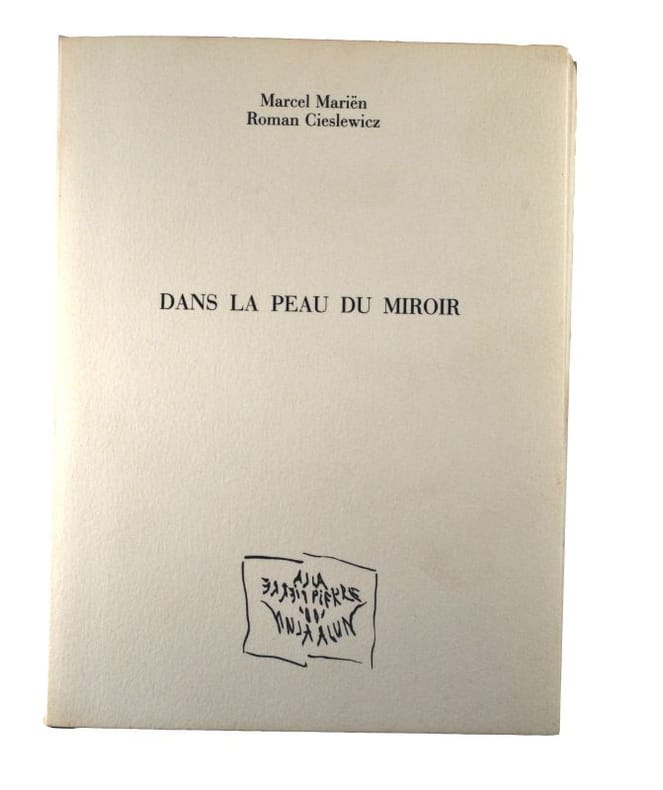
19881040951988 Bruxelles, La Pierre d’Alun, 1988, 224x166mm, 84pp., en feuilles sous couverture imprimée.Le texte de Marcel Mariën est illustré de 10 photomontages originaux de Roman Cieslewicz.Exemplaire 15/50 réservés aux amis de « La Pierre d’Alun » signés par les auteurs et comportant en frontispice une sérigraphie originale signée et numérotée de Roman Cieslewicz.Exemplaire unique comprenant les dix photomontages originaux, 360x265mm, portant tous au dos le cachet de la vente de l’atelier, l'ensemble contenu dans une boîte spécialement conçue et réalisée par l'Atelier Devauchelle.Roman Cieslewicz commence sa carrière cher « Elle » en 1963 ou il est rapidement nommé directeur artistique ; puis il dirige l’agence M.A.F.I.A. ou il conçoit des campagnes pour Prisunic, Woolmark, 3 Suisses ou Lancaster ; puis il crée la revue « Opus International », la revue « Kitsch » avec Topor et Sternberg, puis commence une longue collaboration avec le Centre Pompidou pour lequel il crée de nombreuses affiches et catalogues. Dans cette collaboration avec Marcel Mariën on reconnait l’influence du surréalisme belge.Provenance des photomontages : vente atelier Cieslewicz, Paris,19 mars 2006 , lot 238.(104095)