859 259 résultats
787 SS. Original-Ziegenledereinband. 8vo. Nr. 225 von 300 im Druckvermerk signierten Exemplaren der Vorzugsausgabe der Jubiläumsausgabe zum 50. Jahr des Erscheinens. Der Garamond-Antiqua-Satz wurde von W. Kohlhammer, Stuttgart, besorgt; der Einband stammt von Gustav Lachenmaier, Reutlingen. - Tadellos erhalten.
Large 8vo. 3 pp. Bifolium with integral address panel. Comprehensive letter to the French philosopher and writer Pierre-Simon Ballanche. Maurice describes quite hauntingly his loneliness in cold St. Petersburg, where he was suffering from a long winter, but especially under the insulation and the intellectually less fertile environment ("isolement et la sterilite intellectuelle dans laquelle je m'y trouve"). He feels lonesome and lost ("isole et perdu"), and only the Grand Duchess's graciousness keeps him at St. Petersburg (je n'aime ici person et si ce n'etait la bonte de Madame la Gd. D[uch]esse, je n'y resterais"): "[…] Grace au ciel je me porte bien. En fait de maladie depuis mon entrée sur le territoire russe je n'ai éprouvé qu'une assez violente nostalgie qui me tourmente depuis un mois, ou deux, et me plonge dans un allanguissement que je ne puis surmonter. Tout travail m'est impossible, à peine si le courage me reste pour donner mes leçons et lire un peu. C'est qu'aussi l'hiver est ici bien long. Il n'y a que trois jours que la Névà a brisé ses glaces et bien des rives de la ville sont encore couvertes d'une épaisse couche de glace que l'on casse à grands coups de hache. Les canaux qui traversent la ville […] sont encore couverts d'une glace qui n'a pas moins d'un mètre d'épaisseur. Pas une feuille encore, pas un brin d'herbe, et cependant le ciel est presque toujours paré de ce froid soleil qui n'est là sans doute que pour éclairer et se faire moquer de lui, il est presque aussi froid que chez nous la lune.Les jours commencent à être très longs. Avant quatre heure déjà le soleil est levé et à neuf heures du soir il est encore grand jour […]". - Moreover, Maurice comments Ballanche's failed aspirations on a seat in the French Academy; Ballanche, who had repeatedly run for a seat, was defeated by, among others, Victor Hugo, and should gather a seat in the year after.
Image size 164 x 126 mm. Inscribed in Russian on verso. Photographer unknown, perhaps a press photograph (stamped "2882" on verso). A very rare signed photograph, inscribed to Kliment Danilovich Lyovichkin (1907-84) - a Soviet diplomat, at this date ambassador in Denmark - and his wife, Ludmila Konstantinovna. Sholokhov's masterpiece, "Quiet Flows the Don", published in four volumes between 1928 and 1940, is perhaps the most popular work of historical fiction in Russian: it was to gain Sholokhov the Nobel Prize in 1965. - Very rare at auction; ABPC and RBH record only a single signature specimen.
LCS-A61Edition originale de ce «virulent libelle cotre l’arbitraire de la justice de son temps» écrit par Mirabeau au donjon de Vincennes. Hambourg, 1782. 2 tomes en 1 volume in-8 de xiv pp., (1) f., 366, (2) pp., 237 pp., mouillure dans la marge sup. des pp. 1 à 17 de la seconde partie. Plein veau marbré, filet à froid autour des plats, dos lisse orné, tranches rouges. Reliure de l’époque, mors et coiffes frottées. 195 x 125 mm.
20259Paris, Bernard Grasset, 1925. In-8, 260 pp., en feuilles, 2 couvertures originales conservées, chemise et étui cartonnés de l'éditeur (insolation et petites taches à la chemise et l'étui, quelques rousseurs).
105:92 mm. In ink. To the landscape and genre painter Adrien Dauzats (1804-68), asking him for a letter of recommendation for his friend, the writer Théophile Gautier (1811-72), whom he knew since 1826, when they struck a friendship at the Collège Charlemagne: "Je viens avec Théophile voir si vous pourriez lui donner une petite lettre, ou une recommandation, ou le conduire. Il n'ose se présenter avec une simple recommandation verbale. S'il était possible qu'il vit cela dimanche ou lundi cela serait aussi agréable à lui qu'utile à vos connaissances [...]". - Some minor brownstaining.
4to. (6), 189, (5) pp. Original full cloth with silver stamped spine-title. Original illustrated dust jacket. First edition. This copy signed to the title-page by the author as well as by Nicholas Cage, the lead actor in the film adaptation. - Source material for the 1995 American drama film of the same name, directed by Mike Figgis and starring Cage and Elisabeth Shue. The film was a critical and commercial success, garnering four Academy Award nominations, of which it won one (Best Actor - Nicolas Cage), along with a number of nominations and awards from other film critic organizations. - Internally clean and tight, all edges trimmed. Dust jacket unclipped. A fine copy. OCLC 645832021.
30 SS. 4to. "Wenn man so oft vor seinen Lesern als Erzähler und Schilderer gestanden, so wird es wohl gestattet sein, auch einmal von sich selbst etwas zum besten zu geben. So will ich denn zurückkehren in den Sonnenschein meines Lebens und dem freundlichen Leser einen kleinen Walddorf-Spielmann vor Augen führen, der ich selbst gewesen. Wenn man vier Jahrzehnte auf seinen Schultern trägt und sich das Haar langsam mit den gewissen silbernen Fäden zu schmücken beginnt, dann ist die Zeit der inneren Einkehr, des zaghaften Vorwärts- und beglückenden Rückwärtsschauens gekommen, wo man so gern im weichen Schatze der Erinnerung schwelgt […]. Mein Leben hat das nicht erfüllt, was ich von ihm gehofft. Doch war mir eine lichte, freudenreiche Kindheit beschieden, um die mich mancher hätte beneiden können […]. Der stolze Böhmerwald mit seinen unerforschlichen Nadelforsten und gewaltigen Kiefern und grünen Auen hat seine gewaltige Sprache tief in mein Herz geredet. Im Wald und auf der Heide war ich daheim, Sommer wie Winter, keine Witterung war mir zu schlecht, keine Krankheit war mir im Wege, um meinen angeborene Naturfreude zu betätigen […]. In meinem Vaterhause war die Musik ein vielgeschätzter Gast […]. Als ich sechs Jahre alt war und kaum noch recht wusste wie man die Fibel in die Hand zu nehmen habe, da war's um die Ruhe meines Vaters geschehen. Auf Schritt und Tritt verfolgte ich ihn mit der ungestümen Bitte, mich nun auch endlich in die Geheimnisse des Gegenspielens einzuweihen, trotzdem er immer wieder versicherte, dass ich dazu noch viel zu klein wäre und keine Geige halten könne […]". - Johann Peter schrieb in der literarischen Tradition seines Vorbilds Adalbert Stifter u. a. "Charakter- und Sittenbilder aus dem Böhmerwald".
8vo. 4 pp. on bifolium. With autogr. envelope. To his solicitor, John Sudlow, at Manchester, on his worries about his youngest daughter Florence (1827-1904), who is married to a British officer serving in India, and who is in great danger through the Indian uprising: "Pardon my abruptness, and pardon also my egotism - which in this case is inevitable. Here is my case, and the one insurmountable excuse for my delay in writing. Two years ago my second daughter married Lt. Col. Baird Smith - favorably known as an Artillery officer, and by his plans of Irrigation for Scinde, Lahore, &c. The station, at which he resided, was a small and obscure one, viz. Rourkee [...] However the Sappers and miners, all natives, that happened to be quartered at Rourkee, were among the earliest Mutineers [...]". Next up the exact description of an "alarming incident" that was completed by his son-in-law, who had captured the insurgents, and was transferred to Delhi afterwards: "There at once my poor Florence was stripped of her special protector; and already in the earliest stage of the tumult she had given birth to a daughter; so that secret escape, in the event of necessity arising, would become 10 times less feasible. After this my anxiety became insupportable [...] This day's second telegraphic report leaves me no other fear than that the Scoundrels will never stand to face us, or give us an opportunity of that vengeance which every just man desires [...]". - Richard Baird Smith died in 1861 of an injury; Florence and her two young daughters returned to England.
(8), 106, (2) SS. Originalverlagsumschlag. 8vo. Mit einer Beilage (s. u.). Zweite Auflage. Der Vortitel mit eigenh. Widmung und U. an "Gräfin Valentine Robilant-Mocenigo / aufs Ergebenste: der Verfasser. / Venedig, Ende May 1912". Die Adressatin (1876-1950) stammte aus der venezianischen Patrizierfamilie der Mocenigo, die insgesamt sieben Dogen gestellt hatte, und gehörte zum venezianischen Bekanntenkreis von Rilkes Gönnerin Marie von Thurn und Taxis. - Beiliegend der zweite Band "Der Neuen Gedichte anderer Teil" in erster Ausgabe (ebd., 1911). Beide Bände unaufgeschnitten und unbeschnitten, die Umschläge stärker stockfleckig, gebräunt und bestoßen; Bd. 1 innen durchgehend leicht gebräunt und an einigen Stellen etwas fleckig, Bd. 2 innen sehr sauber und hell. R. E. 19; Sarkowski 1352 A & 1354.
2 SS. 8vo. Im Versuch einer Wiederbegründung seiner 1843 verbotenen "Jahrbücher für Wissenschaft und Kunst" getätigter Aufruf an potentielle Abonnenten, dieselbe durch Pränumeration zu unterstützen: "Nachdem ich mich mit einer Anzahl Gelehrter in und außer Deutschland über die Fortführung der Jahrbücher verständigt, zwei jüngere Freunde in Deutschland (Bremen) zu Mitredacteuren und den Dr. juris Herrn Obergerichtsanwalt Johannes Rösing in Bremen als Rechtsbeystand und Kassenführer des Blattes gewonnen habe; fordre ich Alle, denen die Wiederherstellung der Zeitschrift wünschenswerth erscheint, auf: Ihr Abonnement darauf mit 8 rt. (Acht Thalern Current) für den Jahrgang bei Herrn Dr. juris Johannes Rösing in Bremen oder bei dem Buchhändler Herrn Heinrich Strack brieflich und so rasch als möglich anzumelden. Sobald 1000 bis 1200 Anmeldungen erfolgt sind, wird Herr Dr. juris Johannes Rösing, den ich dazu bevollmächtigt habe, zur Einzahlung des Abonnementbetrags an ihn nach Bremen auffordern. Diese Jahresabonnenten auf den Jahrgang 1858 sind die Wiederbegründer der Jahrbücher, und ich würde ein solches Ereignis als eine große Genugthuung ansehen [...]".
8vo (206 x 134 mm). 3 pp. on a single bifolium. Autograph memorandum, bearing instructions for the preparation of the map appearing in his "Saint Paul" (1869), the third (and arguably best) part of Renan’s "Histoire des origines du christianisme", the magnum opus which had begun in 1863 with "Vie de Jésus" and became a succès de scandale. Published by Michel Lévy Frères in 1869, "Saint Paul" contained the fruits of the journey Renan made with his wife Cornélie Scheffer following in the footsteps of the historical Paul. It also contained a detailed map with coloured itineraries of each of the journeys. The present memorandum provides the colour-coding for each of these, together with no less than 33 amendments to the details of the map. - Offered with a carte de visite of the architect Edmond Guillaume (1826-94) with Renan’s autograph pencil notes to verso giving directions to his house in Sèvres (tipped to paper mount) and a letter (20 May 1893) from Noémie Psichari, Renan’s daughter. - Provenance: Von Scholl collection.
199 x 74 mm. 5 lines. Receipt for the allowance that de Sade received from his second-born son Claude-Armand during his imprisonment in the Charenton asylum: "Je soussigné reconnais avoir reçu de Monsieur Armand de Sade mon fils la somme de deux cent cinquante-deux francs savoir celle de cent cinquante-six pour le mois de Septembre et celle de quatre-vingt-seize pour un objet particulier". - In 1801, Napoleon personally ordered the arrest of the anonymous author of "Justine" and "Juliette" after he had received a copy of the novel. De Sade was arrested at his publisher's office and imprisoned without trial. After two years of imprisonment in Sainte-Pélagie and in the Bicêtre Asylum, his family managed to have him declared insane and placed in the Charenton asylum with favourable treatment. There he would spend the rest of his life in captivity but with some personal freedom and comfort. - After the death of his eldest son Louis-Marie in the Napoleonic Wars in 1809, Claude-Armand (1769-1847) became the head of the family. A devout catholic, Claude-Armand was eager to eradicate the memory of his scandalous father and destroyed all remaining manuscripts upon his death in 1812. - Minimally stained and creased.
1 p. with address and fragments of a broken red wax seal on verso. To Gaspard-Francois-Xavier Gaufridi (Gaufridy, 1757-99), his father's longtime legal advisor, describing a complicated legal and financial incident involving six francs, the knowledge of de Sade's family, and a reimbursement, and mentioning his brother Louis-Marie: "Votre lettre m'a extrêmement touché mon cher Gofredi, je vois avec douleur tous les chagrins qu'ont vous donné et je suis prêt à trouver les moyens de les réparer. Si vous n'aviez pas parlé de ses six francs à quelqu'un, je ne vous les aurai point ôté. Mais célà étant venue à la connaissance de ma famille je suis obligé de vous prier de remettre le billet entre les mains de mon frère ou de ma mere. Mais ne vous en affligez pas, car vous en ferez serez bien dedamager parvenu que ceci ne transpire pas et qu'au contraire vous disiez que je vous ai abandonné. Vous saurez bientôt de quoi il est question. Sade" (punctuation added). - Old folds, toning, corners folded.
LCS-11554Le premier opéra-ballet de notre histoire par la poétesse Madame de Sainctonge. SAINCTONGE, Louise-Geneviève Gillot de. Poésies galantes de Madame de Sainctonge. Paris, Jean Guignard, 1696.
16799294A Paris, Chez Jacques Langlois, 1679. 2 parties en 1 vol. in-12 de (20)-229-(2) pp. et (4)-248-(2) pp., basane brune granitée, dos orné, tranches jaspées (reliure de l'époque).
Large 8vo. 2¾ pp. on bifolium. To an unnamed "Monsieur et cher confrère", regarding Louis Maillard's work on the Île de Réunion: "[…] Louis Maillard […] vient de publier un ouvrage de fonds très important et intéressant sur l'ile[!] de la réunion [...] Cet Ouvrage avec figures lui revient fort cher et il ne pourrait pas répandre ses exemplaires au hasard dans les journaux. Il faudrait qu'il sut á quels rédacteurs spéciaux il doit les remettre avec [?] de rendre compte [...]". - On stationery with embossed monogram. - Small label, monogram stamp "LS" and ms. number "183" on the reverse of fol. 2.
8vo. 1 p. with integral address panel. In French, to Anténor Joly; about her novel, Engelwald "[…] Please allow me to complete my novel before I see about selling it. I have done some calculations and found out that the courier did not offer me much less than I could ask for somewhere else, without being greedy. However, judging by reasonable standards your figures are somewhat too low. The difference is not so big that I might reject your offer, but it will give us the opportunity to discuss it a little further before we conclude a deal […]. So I am going to finish my story and in a few days, I will write to you it is finished, come and see me". - On stationery with her embossed initials.
2 SS. Folio (ca. 212:335 mm). In einer Schuldsache, von Schreiberhand: "Demnach Thomas Wißmer, Bürger und Schreiber alhier, wegen seines Schwehr Vatters Conrad Fischers, dem Stipendiaten-Kasten zu Marpurg mit Sechzig Reichsthaler Capital verhafft, und auf gnedige Verwilligung, des Durchleuchtigen, Hochgebornen Fürsten und Herrns Herrn Georgens, Landgrafens zu Hessen [...] solch Capital [...] professori eloquentia, M. Schuppio, dergestalt gut gemacht, daß der Kasten nunmehr sich an M. Schuppium zu halten, und an Obbemelten Wißmer nichts weiters zu sprechen hat, sondern ihm vielmehr die haubt Verschreibung so bald zurück gegeben werden solte, und aber zu selbiger Obligation und Verschreibung für dißmahl nicht zu gelangen ist, So ist mehr erwehntem Wißmer zu seiner Sicherung, und daß er solche 60 Rth. dem Stipendiaten Kasten obberürtermaßen gut gemacht, ihm auch die verschloßen liegende Obligation [...] zurück gegeben, und deswegen nichts mehr an ihn gefordert werden soll [...]". - Darunter die Erklärung Schupps: "Daß obgemelde sechszig Reichsthaler mir von Thomas Wißnern gelieffert seyen, bekenne ich mit meiner eygnen Handt, undt verspreche ihm bey meinen wahren Worten, Ehr und Glauben auch Verpfändung meiner Güter [...], daß ich ihn aller dings wegen der Hauptverschreibung schadlohß halten wolle [...]". Der aus Gießen gebürtige Barockschriftsteller Schupp ist "vor allem als Satyriker bekannt, aber auch als praktischer Theologe und als Pädagoge von nicht geringer Bedeutung" (ADB XXXIII, 67). - Mit kleinem Siegelrest und unbedeutenden Randläsuren.
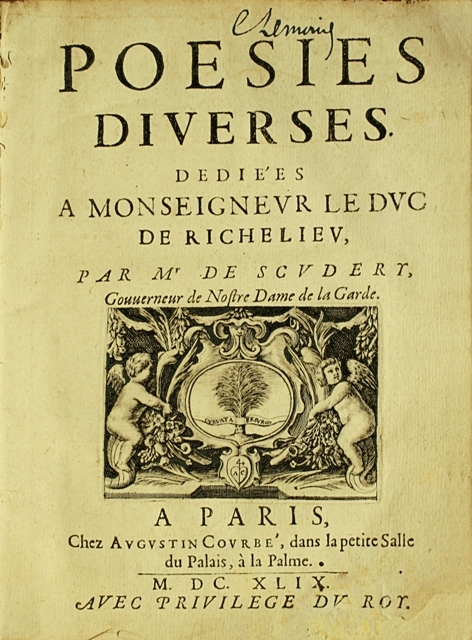
LCS-15785Exemplaire très pur conservé dans son vélin de l’époque. Paris, Augustin Courbé, 1649.In-4 de (10) ff., 328 pp., petite galerie de vers dans la marge blanche des pp. 143 à 150 et 293 à 308. Vélin souple de l’époque, dos lisse avec le titre inscrit à l’encre en tête. Reliure de l’époque. 168 x 220 mm.
Oblong large 8vo. 1 p. To the Austrian Secession, confirms his consent for taking a picture of his "L'Angelo della Vita" that was shown in an exhibition. - Punched holes at upper edge, and strong damage to edges.
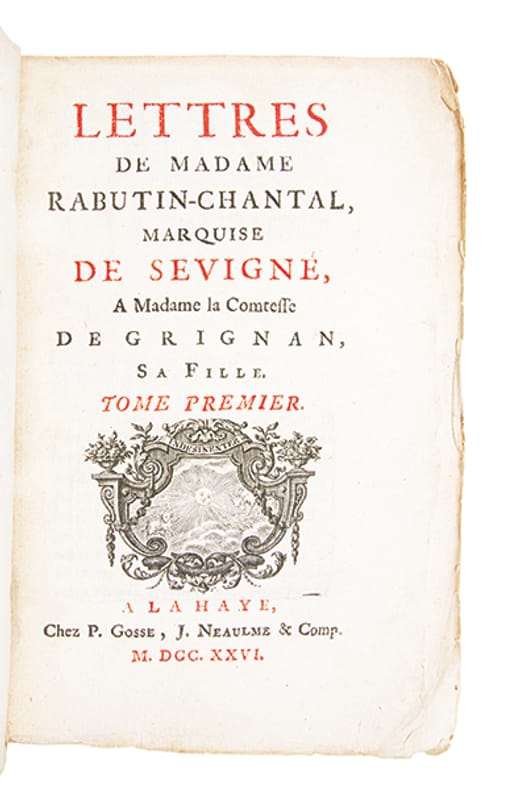
391532 volumes in-12 (175 x 114 mm), plein parchemin ivoire à petit recouvrement (reliure moderne), (10) f., 344 p., (1) f. derrata et (1) f., 298 p., (7) f. derrata et de table, exemplaire entièrement non rogné. La Haye, P. Gosse, J. Neaulme & Comp., 1726.
Oblong 8vo. 2 pp. Framed and glazed together with a portrait of Shaw. Backing leaves with a window for the recto of the letter. To the poet and dramatist Newman Howard (1861-1929) with brutal criticsm of Howard's blank verse tragedy "Constantine the Great". Shaw lauds Howard's workmanship but rejects the historical theme as irrelevant to the questions of their time, elevating William Morris as a counterexample and urging him to write about "the things we are all thinking about" even if the press will reject him for that: "This is all right: you can handle words like a master, but what the devil do I care about Constantine the Great? Constantine the Apostate as Anatole France calls him. Why should I wade through all this blank verse when it is not about anything that I care about, or want to know anything about, or that you could tell me anything about if I did? I began it with great pleasure; for it is pleasant to sample good workmanship. But that soon palls [...]. If you only knew how Literature bores a man who has taken to Life! Of course Morris loathed reading other mens' verses. How do you like it yourself? But he read Dickens and Dumas père. If you would write about the things we are all thinking about and the people we all know, the papers would revile you and we should read you [...]" . The now largely forgotten author Newman Howard wrote a series of blank verse tragedies called "The Christian Trilogy", of which "Constantine the Great" was the third instalment. Though Shaw did not like the works, they were well received by most critics. - With a vertical fold and some browning.
Postcard format. 1 p. With autograph address. Framed, matted and glazed together with a portrait of Shaw. To the Reverend J. Parke Bachman in Brooklyn, thanking him for praise of his 1923 play "Saint Joan" and repeating his claim not to have romanticized the heroine: "I am glad St. Joan enlivened your voyage ... But really the praise must be to her. I cannot too often repeat that I have been only her reporter - fortunately one with sense enough to know that she needed no romantic beleaguerings from any playwright." - With insignificant stains and pinch folds.
Postcard format. ½ p. With autograph address. Framed and glazed. Laconic response to the impresario Percy Burton: "All right: whatever is usual with the Half Hours With The Best Dramatists. I forget what we did before; but no doubt we can do it again". - Shaw spent many summers at the Hydropathic Hotel in Torquay. His 1897 play "You Never Can Tell" is set in Torquay, satirizing the upper-class holidaymakers. - With pinch folds.