42 325 résultats
186018931860. Watercolor and pencil on cream wove J Whatman 1827 paper with a partial watermark 7 x 10 1/8 inches 176 x 256 mm the full sheet. The left sheet edge has significant wear; the result of its removal from a page in an album to which the sheet was tipped in. There is also a horizontal tear in the center left sheet edge which extends approximately one inch into the image through the image of the figure with outstretched arms. Small corner losses at the the top right and left sheet as well as a small 1/4 inch at the lower left corner. Colors are extensive and saturated. unknown
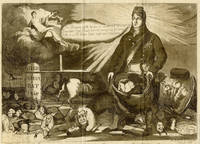
18111538London: The Satirist 1811. Etching with aquatint on buff wove paper with an 1808 watermark 9 3/4 x 13 inches 248 x 330 mm wide margins. Scattered paper repairs on the verso as well as four vertical hard creases and one horizontal crease in the lower quadrant of the sheet. Scattered uniform age tone. The Satirist or the Censor of the Times was a controversial 19th-century British newspaper which featured reports of scandals involving well known residents of London. It was published by Barnard Gregory who faced multiple libel charges and was later imprisoned due to its articles. The Satirist unknown
18602206161860. With Inscription and descriptive text in pencil. 1 vols. 19 x 14 inches 48.3 x 35.6 cm. Framed and glazed. Fine. With Inscription and descriptive text in pencil. 1 vols. 19 x 14 inches 48.3 x 35.6 cm. unknown books
1937147541N.p.: N.p. 1937. Draft script for the 1937 film. With the name of character Mary Field and actor Suzanne Kaaren uncredited in the final film added to the cast list in holograph pencil and with a few minor holograph pencil emendations throughout. Screenplay divided into eight alphabetical Sequences A through H.<br/><br/>A melancholic romantic comedy by Ernst Lubitsch about a love triangle between Lady Maria Barker Marlene Dietrich her husband the British diplomat Sir Frederich Barker Herbert Marshall and the charming traveler Anthony Halton Melvyn Douglas set throughout Europe with an oncoming war looming.<br/><br/>Set in London Paris and Vienna. <br/><br/>In a custom quarter leather clamshell box. <br/><br/>Untitled self wrappers. 175 leaves with last page of text numbered H-19. Mimeograph duplication rectos only with white revision pages throughout dated variously between 1/28/37 and 2-1-37. Pages Very Good plus some front leaves with light soiling wrapper Very Good lightly soiled dampstaining separating at the spine side stapled with three staples. N.p. unknown books
1935194582<p>ORIGINAL TAN BOARDS STAMPED IN GREEN; ACCORDING TO AHEARN ONLY 2500 COPIES WERE ISSUED HENCE IT'S RARITY FIRST AMERICAN EDITION VERY GOOD</p> LITTLE, BROWN hardcover books
1943195010<p>a head and shoulders profile. 1943. 5" x 7" tipped-on a photographer's mount 10 3/4" x 8 1/2". Signed photos of Hilton are scarce and this is a fine example. Boldly signed and inscribed: "For Adele with all good wishes James Hilton October 22 1943." Hilton 1900-1954 English novelist; several of his novels were filmed "Lost Horizon" "Goodbye Mr. Chips" "Random Harvest" etc.</p> unknown books
1943195010<p>a head and shoulders profile. 1943. 5" x 7" tipped-on a photographer's mount 10 3/4" x 8 1/2". Signed photos of Hilton are scarce and this is a fine example. Boldly signed and inscribed: "For Adele with all good wishes James Hilton October 22 1943." Hilton 1900-1954 English novelist; several of his novels were filmed "Lost Horizon" "Goodbye Mr. Chips" "Random Harvest" etc.</p> unknown
1839284332Londini : Sumptibus Societatis 1839-1848 1839. 1st edition. Hardcover. Very good copies all in the original gilt-blocked pebble-grain cloth over plain boards. Slight suggestion only of dust-dulling to the spine bands and panel edges. Remains a particularly well-preserved set overall; tight bright clean and strong. Series; Publications of the English Historical Society ; 7. Half-title: Chartae Anglosaxonicae. Physical description; 6 volumes 3 unnumbered leaves of plates : facsimiles ; 22 cm 8vo. Notes; Title page printed in red and black. Title vignettes medallion of society with motto: Clio gesta canens transactis tempora reddit. With a list of members of the English Historical Society dated June 1st 1838 v.1 1839 v.2 and 1944 v.3. Includes bibliographical references and indexes pages 251-359 of v. 6. Source documents in Latin with introductory texts in English. Subjects; 449-1066. Law Anglo-Saxon ; Sources. Law Anglo-Saxon. English literature Old English ca. 450-1100.Charters. Great Britain ; Charters grants privileges. Great Britain History Anglo-Saxon period 449-1066 ; Sources. Great Britain. Great Britain History Norman period 1066-1154 ; Sources. Great Britain History Anglo Saxon period 449-1066. Charters Anglo-Saxon period 449-1066. Language; English & Latin. Londini : Sumptibus Societatis 1839-1848 hardcover
34893LUGANO OFFICINA BODONI 1924. A PRESENTATION COPY FROM HANS MARDERSTEIG FOUNDER OF THE OFFICINA BODONI TO W J BURCH. LIMITED TO 224 COPIES PRINTED ON HAND-MADE PAPER BOUND IN GREEN VELLUM WITH THE ORIGINAL TYPES OF GIAMBATTISTA BODONI. A NEAR FINE COPY IN THE ORIGINAL SLIPCASE WHICH IS WORN AND DAMAGED BUT HAS DONE ITS JOB IN PROTECTING THE BOOK. LUGANO, OFFICINA BODONI, 1924 hardcover
36040LONDON THE FOLIO SOCIETY 2005. LIMITED TO 1000 COPIES THIS BEING NUMBER 487. SMALL FOLIO TWO VOLUMES FINELY BOUND IN QUARTER GOATSKIN ILLUSTRATED BY WILLIAM BLAKE. A FACSIMILIE OF THE 1743 EDITION. CONTAINED IN A MATCHING SOLANDER BOX. LACKS THE COMMENTARY. A VERY FINE COPY. LONDON, THE FOLIO SOCIETY, 2005 unknown
FIRST AND ONLY EDITION of this extremely important compilation of legal and historical writings relating to English legal and political history from Anglo-Saxon times down to the Civil War. 12, 412, 60, 68, 15 pp. LEAVES Nn3 AND Qq4 ARE BOTH PRESENT IN TWO STATES (CANCELLANDUM AND CANCELLANS). This bibliographical quirk is entirely unrecorded: no source mentions any cancels in this volume. Each of the three tracts has a separate title-page, but the pagination is continuous. Printed mainly in Roman types, but with many words and phrases printed in black letter (Gothic) types. The appendix is taken entirely from the Domesday book, and is thus in Latin. The extensive glossary (68 pp) represents an important advance in English legal lexicography. Many terms in this glossary are given in Anglo-Saxon and Middle English. Folio. Beautifully bound in 19th-century half morocco and marbled boards. Binding somewhat worn at extremities, but still very solid and attractive. Internally FINE AND BRIGHT. A rare and important book, perhaps unique in this state.
Acquatinta stampata ad inchiostro bistro, 1781, firmata in lastra in basso a destra e datate in basso al centro. Magnifica prova, impressa su carta vergata coeva con filigrana, sottili margini, leggere abrasioni al verso, nel complesso in eccellente stato di conservazione. Una delle quattro famose vedute del carnevale romane incise dal Sandby su disegno di David Allan (Alloa 1744 - Edimburgo 1796). Alla grande maggioranza di pitture, incisioni,acquerelli e disegni che illustrano le feste del carnevale romano con un eccesso di "colore", si contrappone questa serie, che descrive quei medesimi festosi eventi con un asciutto e spiritoso sguardo pur rilevandone la nascosta eleganza e sontuosità. Le acquetinte di Sandby sono tratte da una serie di dieci disegni di Allan eseguiti durante i suoi soggiorni romani e ora conservati nella Collezione Reale del Castello di Windsor. La tecnica dell’acquatinta, conferisce all’opera quel particolare tono simile all’acquarello rendendo le opere molto affascinanti. Aquatint printed in bistro ink, 1781, signed in plate at lower right and dated at lower center. Magnificent proof, printed on coeval laid paper with watermark, thin margins, light abrasions on verso, overall in excellent condition. One of the four famous Roman carnival views engraved by Sandby from a drawing by David Allan (Alloa 1744 - Edinburgh 1796). To the great majority of paintings, engravings, watercolors and drawings that illustrate the festivities of the Roman carnival with an excess of "color", is contrasted this series, which describes those same festive events with a dry and witty look while noting the hidden elegance and sumptuousness. Sandby's aquatints are taken from a series of ten drawings by Allan made during his Roman sojourns and now housed in the Royal Collection of Windsor Castle. Paul Sandby was a landscape painter and printmaker. David Allan was one of the first painters in Scotland to record the everyday life of ordinary people. He was based in Rome from around 1767 to 1777 where he painted historical subjects, portraits and the everyday life around him in a series of watercolours. In Scotland he enjoyed a successful career as both an artist and a teacher of art. Some of David Allan's watercolours of Rome were copied by Paul Sandby in London, as prints. The technique of aquatint (used here) allowed the engraver to create the effect of colour washes with the addition of etched lines for detail. This is a technique that provides an additional layer of meaning to the scene. The aquatint allows tonal variation and contrast which in turn creates atmosphere. There is a tremendous amount of detail in the print, and any British observer at the time would have received a good impression of what Rome was like from this print. Sandby's re-creation of Allan's watercolour would have made the image much more accessible through multiple copies. Only the most popular or marketable images would be copied as prints. The composition is quite complex. The background of the street and buildings is rendered with single point perspective, where the landscape appears to recede away to a single point in the distance. The viewpoint Allan chose was a low one. This means that the buildings appear to loom over the scene and a lot of sky is shown. In contrast, the action on the ground occupies only the lower third of the composition; Allan did not "zoom in" on any one aspect but created a general view of the scene. In this view, two British travellers on horseback are confronted by the extravagant costumes and masked figures from the entertainers at a Roman carnival. Despite their politeness these grotesque figures are slightly disturbing. Perhaps this scene demonstrates the alien and disorientating feeling of visiting a new city and discovering bizarre customs which the traveller has never experienced before.
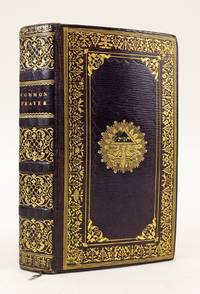
1820ST15600London: Printed by George Eyre and Andrew Strahan 1820. 142 x 80 mm. 5 5/8 x 3 1/8". 510 pp.; 80 2 pp. <br/> VERY FINE CONTEMPORARY STRAIGHT-GRAIN PURPLE MOROCCO ELABORATELY GILT covers with frame of gilt rules and anthemion-and-flower roll central panel with arabesque corners central sunburst medallion containing the Tetragrammaton within a triangle from which the dove of the Holy Spirit descends raised bands spine panels gilt in a floral and arabesque design gilt titling turn-ins with zig-zag gilt roll orange endpapers all edges gilt. Front pastedown with large morocco bookplate of Louisa Smyth dated 25th Dec. 1821 and signed with the initials E. P. Front flyleaf inscribed: "Harriet E. Thorpe / From her affectionate / Brother-- / As a remembrance of / her dear Aunt L. Dickens. / Nov. 1841." Griffiths p. 246. ◆A breath of rubbing to corners but A BEAUTIFUL COPY with no signs of use--clean fresh and bright internally and in a sparkling ORNATE binding.<br/> <br/> Bound in somber purple but with religious imagery in bright gilt this pretty little prayer book is very typical of an era in which such luxurious volumes were popular gifts among the moneyed classes as was the case here. Miss Louisa Smyth must have treasured this Christmas gift from "E. P." as its condition clearly indicates it was seldom if ever used for daily devotions. It likely served as a perfect accessory for Louisa's Sunday finery and perhaps she carried it at her 1831 wedding to Lt. Col. Thomas Mark Dickens of the Royal Engineers. After Louisa's 1841 death the book passed to Harriet E. Thorpe wife of Louisa's nephew Rev. William Smyth Thorpe. Both families are well documented in the county of Norfolk where their eminent lineage goes back generations. Whoever inherited our prayer book from Harriet continued to care for it assiduously as it appears little changed from the days when Louisa first held it in her hands. Printed by George Eyre and Andrew Strahan unknown
179923757Philadelphia: Pr. by A. Bartram 1799. 4to. viii xvi 488 pp.; 196 8 pp. <br><br>George Campbell 171996 was a minister of the Church of Scotland theologian and principal of Marischal College. He wrote a number of theological works including a defense of miracles in response to David Hume and was noted for originality of argument as well as charity towards his opponents. This translation of the Gospels was first published in England in 1789; the work consists of a preface and preliminary dissertations the actual translation and the notes with the whole being very scholarly resorting frequently to the Greek in the dissertations and notes.<br>Â Â Â Â Campbell's translation of the Gospels were first printed in the U.S. in 1796 and was the first privately accomplished translation of the Gospels printed in America. This is only the second edition printed in America. <br>Â Â Â Â <br>Â Â Â Â ESTC W4382; Evans 35200; Hills English Bible in America 71. On Campbell see: The Dictionary of National Biography. Publisher's brown leather rebacked board edges refurbished original spine-label reused. Old library pressure-stamps and a bit of pencilling stamped numberwith a properly deaccessioned. Occasional light foxing and with some marginal waterstains. Overall a rather nice copy. Pr. by A. Bartram hardcover books
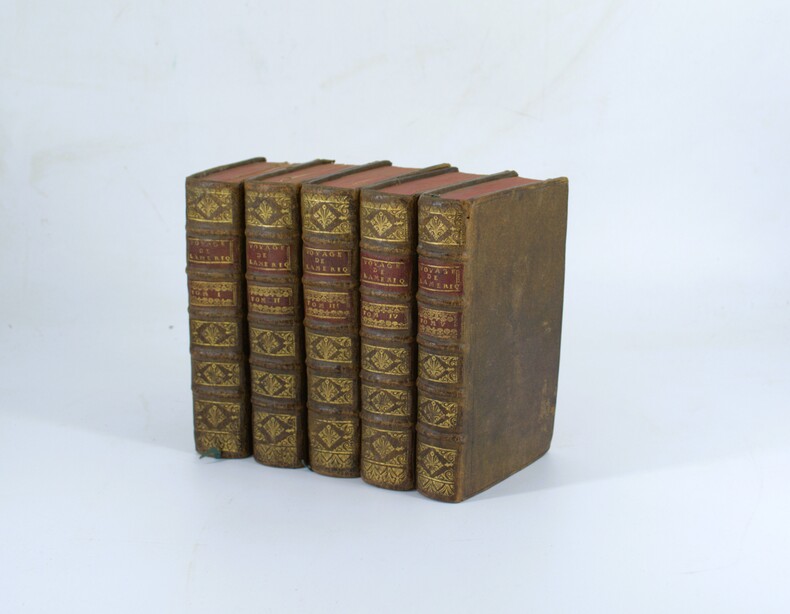
1722PHO-2275Guillaume Cavelier, Paris, 1722, 5 volumes (6) in-12 (17x10cm), T1 ; xxxvi-5ff.-522pp., 21 planches, T2 ; 3ff.-598pp., 20 planches, T3 ; iv-549pp., 31 planches, T4 ; vi-558pp., 14 planches, T5 ; vi-524pp., 6 planches, 90 planches et cartes. Veau époque, dos à nerfs orné avec pièces de titre et tomaison en maroquin rouge, filets aux coupes. Frottements, 3 planches avec manques au tome 1, déchirure sans manque carte de la Martinique Édition Originale.
190759328Edited by William B. Slater and Arthur J. Sarl, with map and illustrations, 8vo full original red cloth, John Murray, Albemarle Street, London, 1907, xvii-380 pp. with a folding map
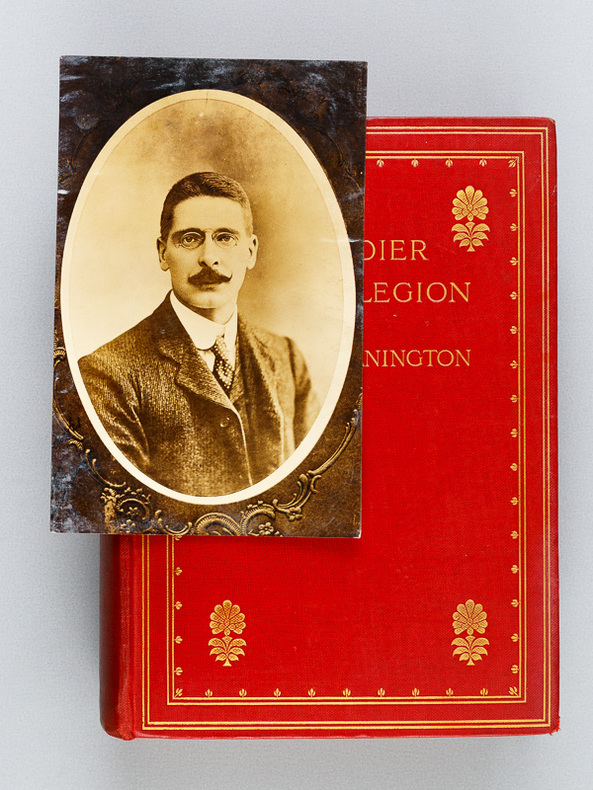
Edited by William B. Slater and Arthur J. Sarl, with map and illustrations, 8vo full original red cloth, John Murray, Albemarle Street, London, 1907, xvii-380 pp. with a folding map Good condition (very small lack on top joints, otherwise a very good copy) for this copy, complete with the 12 illustrations and the folding map, in which was joined an original photographic portrait of George Manington, signed on a paper pasted on the verso, by himself ! This portrait, preserved under silk paper, appears highly scarce, and no other portrait of George Manington appears to be available or published. As explained in the editors' note, "though well under forty years of age, he had been a student in France and Germany, a prospective doctor in Paris, a soldier in Algeria and Tonquin, a man of commerce in Indo-China, an interpreter, traveller, and journalist in South China, besides a participator in more fleeting occupations in many lands, including Japan and the Philippines. [... ] An educated gentleman, Mr Manington has given an insight into the unusual experiences of an Englishman in the French Foreign[Pg xiii] Legion, such as no ordinary "mercenary" could have done". Anglais
Acquaforte stampata in verde / blu, tratta da The tapestry hangings of the House of Lords: representing the several engagements between the English and Spanish fleets, in the ever memorable year MDLXXXVIII, with the portraits of the Lord High-Admiral, and the other noble commanders, taken from the life. To which are added, from a book entitled, Expeditionis Hispanorum in Angliam Vera Descriptio, A.D. 1588, done, as is supposed, for the said tapestry to be work'd after, ten charts of the sea-coasts of England, and a general one of England, Scotland, Ireland, France, Holland, &c. shewing the places of action between the two fleets; ornaments with medals struck upon the occasion, and other suitable devices. Also an historical account of each day's action, collected from the most authentic manuscripts and writers. By John Pine, engraver. London, MDCCXXXIX. Sold by J. Pine in Old Bond Street near Picadilly. Poco dopo la sconfitta dell'armata spagnola del 1588, Lord Howard of Effingham, comandante della flotta britannica, commissionò a Robert Adams la produzione di una serie di disegni che rappresentavano le varie fasi dell'azione; poi commissionò H.C. Vroom la realizzazione di una serie di disegni per arazzi, basati sul lavoro di Adams. Le tele furono tessute da Francis Spiring di Haarlem. Alcuni anni dopo, i disegni furono venduti a Giacomo I e, successivamente, arredarono le pareti della Camera dei Lord. Tutti gli arazzi, tranne uno rubato precedentemente, furono bruciati insieme a gran parte del Palazzo di Westminster nel 1834. La grande opera di Pine che raffigura questa famosa battaglia navale è, ora, di grande importanza storica. A parte il notevole dettaglio dell'incisione e la ricchezza dell'invenzione nei vari cartigli, l'uso contenuto dell'inchiostro colorato per stampare la superficie della lastra produce un effetto sorprendentemente attraente e rappresenta un importante esempio primordiale della stampa a colori per le illustrazioni. Bellissimo esemplare, stampato su carta vergata coeva, con pieni margini, in ottimo stato di conservazione. Etching printed in green/blue, taken from The tapestry hangings of the House of Lords: representing the several engagements between the English and Spanish fleets, in the ever memorable year MDLXXXVIII, with the portraits of the Lord High-Admiral, and the other noble commanders, taken from the life. To which are added, from a book entitled, Expeditionis Hispanorum in Angliam Vera Descriptio, A.D. 1588, done, as is supposed, for the said tapestry to be work'd after, ten charts of the sea-coasts of England, and a general one of England, Scotland, Ireland, France, Holland, &c. shewing the places of action between the two fleets; ornaments with medals struck upon the occasion, and other suitable devices. Also an historical account of each day's action, collected from the most authentic manuscripts and writers. By John Pine, engraver. London, MDCCXXXIX. Sold by J. Pine in Old Bond Street near Picadilly. Shortly after the defeat of the Spanish “Armada” in 1588, Lord Howard of Effingham, commander of the British Fleet, commissioned Robert Adams to produce a series of charts representing the various phases of the action and then H.C. Vroom to produce a series of designs for tapestries, based on the work of Adams. They were woven by Francis Spiring of Haarlem. Some years later, they were sold to James I and eventually came to furnish the walls of the House of Lords. All the tapestries, except one stolen at an earlier date and now lost, were burned in the fire that destroyed most of the Palace of Westminster in 1834. Pine's great work depicting this famous naval battle is therefore now of great historical importance. Apart from the remarkable detail of the engraving and the wealth of invention in the various cartouches, the restrained use of coloured ink to print the plate surface produces a strikingly attractive effect, and represents a very early example of the colour-printing of illustrations. T.Clayton, 'The English Print 1688-1802', New Haven and London, 1997, pp.87; Berlin Catalogue 1677.
Acquaforte stampata in verde / blu, tratta da The tapestry hangings of the House of Lords: representing the several engagements between the English and Spanish fleets, in the ever memorable year MDLXXXVIII, with the portraits of the Lord High-Admiral, and the other noble commanders, taken from the life. To which are added, from a book entitled, Expeditionis Hispanorum in Angliam Vera Descriptio, A.D. 1588, done, as is supposed, for the said tapestry to be work'd after, ten charts of the sea-coasts of England, and a general one of England, Scotland, Ireland, France, Holland, &c. shewing the places of action between the two fleets; ornaments with medals struck upon the occasion, and other suitable devices. Also an historical account of each day's action, collected from the most authentic manuscripts and writers. By John Pine, engraver. London, MDCCXXXIX. Sold by J. Pine in Old Bond Street near Picadilly. Poco dopo la sconfitta dell'armata spagnola del 1588, Lord Howard of Effingham, comandante della flotta britannica, commissionò a Robert Adams la produzione di una serie di disegni che rappresentavano le varie fasi dell'azione; poi commissionò H.C. Vroom la realizzazione di una serie di disegni per arazzi, basati sul lavoro di Adams. Le tele furono tessute da Francis Spiring di Haarlem. Alcuni anni dopo, i disegni furono venduti a Giacomo I e, successivamente, arredarono le pareti della Camera dei Lord. Tutti gli arazzi, tranne uno rubato precedentemente, furono bruciati, insieme a gran parte del Palazzo di Westminster nel 1834. La grande opera di Pine che raffigura questa famosa battaglia navale è, ora, di grande importanza storica. A parte il notevole dettaglio dell'incisione e la ricchezza dell'invenzione nei vari cartigli, l'uso contenuto dell'inchiostro colorato per stampare la superficie della lastra produce un effetto sorprendentemente attraente e rappresenta un importante esempio primordiale della stampa a colori per le illustrazioni. Bellissimo esemplare, stampato su carta vergata coeva, con pieni margini, in ottimo stato di conservazione. Etching printed in green/blue, taken from The tapestry hangings of the House of Lords: representing the several engagements between the English and Spanish fleets, in the ever memorable year MDLXXXVIII, with the portraits of the Lord High-Admiral, and the other noble commanders, taken from the life. To which are added, from a book entitled, Expeditionis Hispanorum in Angliam Vera Descriptio, A.D. 1588, done, as is supposed, for the said tapestry to be work'd after, ten charts of the sea-coasts of England, and a general one of England, Scotland, Ireland, France, Holland, &c. shewing the places of action between the two fleets; ornaments with medals struck upon the occasion, and other suitable devices. Also an historical account of each day's action, collected from the most authentic manuscripts and writers. By John Pine, engraver. London, MDCCXXXIX. Sold by J. Pine in Old Bond Street near Picadilly. Shortly after the defeat of the Spanish “Armada” in 1588, Lord Howard of Effingham, commander of the British Fleet, commissioned Robert Adams to produce a series of charts representing the various phases of the action and then H.C. Vroom to produce a series of designs for tapestries, based on the work of Adams. They were woven by Francis Spiring of Haarlem. Some years later, they were sold to James I and eventually came to furnish the walls of the House of Lords. All the tapestries, except one stolen at an earlier date and now lost, were burned in the fire that destroyed most of the Palace of Westminster in 1834. Pine's great work depicting this famous naval battle is therefore now of great historical importance. Apart from the remarkable detail of the engraving and the wealth of invention in the various cartouches, the restrained use of coloured ink to print the plate surface produces a strikingly attractive effect, and represents a very early example of the colour-printing of illustrations. T.Clayton, 'The English Print 1688-1802', New Haven and London, 1997, pp.87; Berlin Catalogue 1677.
Acquaforte stampata in verde / blu, tratta da The tapestry hangings of the House of Lords: representing the several engagements between the English and Spanish fleets, in the ever memorable year MDLXXXVIII, with the portraits of the Lord High-Admiral, and the other noble commanders, taken from the life. To which are added, from a book entitled, Expeditionis Hispanorum in Angliam Vera Descriptio, A.D. 1588, done, as is supposed, for the said tapestry to be work'd after, ten charts of the sea-coasts of England, and a general one of England, Scotland, Ireland, France, Holland, &c. shewing the places of action between the two fleets; ornaments with medals struck upon the occasion, and other suitable devices. Also an historical account of each day's action, collected from the most authentic manuscripts and writers. By John Pine, engraver. London, MDCCXXXIX. Sold by J. Pine in Old Bond Street near Picadilly. Poco dopo la sconfitta dell'armata spagnola del 1588, Lord Howard of Effingham, comandante della flotta britannica, commissionò a Robert Adams la produzione di una serie di disegni che rappresentavano le varie fasi dell'azione; poi commissionò H.C. Vroom la realizzazione di una serie di disegni per arazzi, basati sul lavoro di Adams. Le tele furono tessute da Francis Spiring di Haarlem. Alcuni anni dopo, i disegni furono venduti a Giacomo I e, successivamente, arredarono le pareti della Camera dei Lord. Tutti gli arazzi, tranne uno rubato precedentemente, furono bruciati, insieme a gran parte del Palazzo di Westminster nel 1834. La grande opera di Pine che raffigura questa famosa battaglia navale è, ora, di grande importanza storica. A parte il notevole dettaglio dell'incisione e la ricchezza dell'invenzione nei vari cartigli, l'uso contenuto dell'inchiostro colorato per stampare la superficie della lastra produce un effetto sorprendentemente attraente e rappresenta un importante esempio primordiale della stampa a colori per le illustrazioni. Bellissimo esemplare, stampato su carta vergata coeva, con pieni margini, in ottimo stato di conservazione. Etching printed in green/blue, taken from The tapestry hangings of the House of Lords: representing the several engagements between the English and Spanish fleets, in the ever memorable year MDLXXXVIII, with the portraits of the Lord High-Admiral, and the other noble commanders, taken from the life. To which are added, from a book entitled, Expeditionis Hispanorum in Angliam Vera Descriptio, A.D. 1588, done, as is supposed, for the said tapestry to be work'd after, ten charts of the sea-coasts of England, and a general one of England, Scotland, Ireland, France, Holland, &c. shewing the places of action between the two fleets; ornaments with medals struck upon the occasion, and other suitable devices. Also an historical account of each day's action, collected from the most authentic manuscripts and writers. By John Pine, engraver. London, MDCCXXXIX. Sold by J. Pine in Old Bond Street near Picadilly. Shortly after the defeat of the Spanish “Armada” in 1588, Lord Howard of Effingham, commander of the British Fleet, commissioned Robert Adams to produce a series of charts representing the various phases of the action and then H.C. Vroom to produce a series of designs for tapestries, based on the work of Adams. They were woven by Francis Spiring of Haarlem. Some years later, they were sold to James I and eventually came to furnish the walls of the House of Lords. All the tapestries, except one stolen at an earlier date and now lost, were burned in the fire that destroyed most of the Palace of Westminster in 1834. Pine's great work depicting this famous naval battle is therefore now of great historical importance. Apart from the remarkable detail of the engraving and the wealth of invention in the various cartouches, the restrained use of coloured ink to print the plate surface produces a strikingly attractive effect, and represents a very early example of the colour-printing of illustrations. T.Clayton, 'The English Print 1688-1802', New Haven and London, 1997, pp.87; Berlin Catalogue 1677.
Acquaforte stampata in verde / blu, tratta da The tapestry hangings of the House of Lords: representing the several engagements between the English and Spanish fleets, in the ever memorable year MDLXXXVIII, with the portraits of the Lord High-Admiral, and the other noble commanders, taken from the life. To which are added, from a book entitled, Expeditionis Hispanorum in Angliam Vera Descriptio, A.D. 1588, done, as is supposed, for the said tapestry to be work'd after, ten charts of the sea-coasts of England, and a general one of England, Scotland, Ireland, France, Holland, &c. shewing the places of action between the two fleets; ornaments with medals struck upon the occasion, and other suitable devices. Also an historical account of each day's action, collected from the most authentic manuscripts and writers. By John Pine, engraver. London, MDCCXXXIX. Sold by J. Pine in Old Bond Street near Picadilly. Poco dopo la sconfitta dell'armata spagnola del 1588, Lord Howard of Effingham, comandante della flotta britannica, commissionò a Robert Adams la produzione di una serie di disegni che rappresentavano le varie fasi dell'azione; poi commissionò H.C. Vroom la realizzazione di una serie di disegni per arazzi, basati sul lavoro di Adams. Le tele furono tessute da Francis Spiring di Haarlem. Alcuni anni dopo, i disegni furono venduti a Giacomo I e, successivamente, arredarono le pareti della Camera dei Lord. Tutti gli arazzi, tranne uno rubato precedentemente, furono bruciati, insieme a gran parte del Palazzo di Westminster nel 1834. La grande opera di Pine che raffigura questa famosa battaglia navale è, ora, di grande importanza storica. A parte il notevole dettaglio dell'incisione e la ricchezza dell'invenzione nei vari cartigli, l'uso contenuto dell'inchiostro colorato per stampare la superficie della lastra produce un effetto sorprendentemente attraente e rappresenta un importante esempio primordiale della stampa a colori per le illustrazioni. Bellissimo esemplare, stampato su carta vergata coeva, con pieni margini, in ottimo stato di conservazione. Etching printed in green/blue, taken from The tapestry hangings of the House of Lords: representing the several engagements between the English and Spanish fleets, in the ever memorable year MDLXXXVIII, with the portraits of the Lord High-Admiral, and the other noble commanders, taken from the life. To which are added, from a book entitled, Expeditionis Hispanorum in Angliam Vera Descriptio, A.D. 1588, done, as is supposed, for the said tapestry to be work'd after, ten charts of the sea-coasts of England, and a general one of England, Scotland, Ireland, France, Holland, &c. shewing the places of action between the two fleets; ornaments with medals struck upon the occasion, and other suitable devices. Also an historical account of each day's action, collected from the most authentic manuscripts and writers. By John Pine, engraver. London, MDCCXXXIX. Sold by J. Pine in Old Bond Street near Picadilly. Shortly after the defeat of the Spanish “Armada” in 1588, Lord Howard of Effingham, commander of the British Fleet, commissioned Robert Adams to produce a series of charts representing the various phases of the action and then H.C. Vroom to produce a series of designs for tapestries, based on the work of Adams. They were woven by Francis Spiring of Haarlem. Some years later, they were sold to James I and eventually came to furnish the walls of the House of Lords. All the tapestries, except one stolen at an earlier date and now lost, were burned in the fire that destroyed most of the Palace of Westminster in 1834. Pine's great work depicting this famous naval battle is therefore now of great historical importance. Apart from the remarkable detail of the engraving and the wealth of invention in the various cartouches, the restrained use of coloured ink to print the plate surface produces a strikingly attractive effect, and represents a very early example of the colour-printing of illustrations. T.Clayton, 'The English Print 1688-1802', New Haven and London, 1997, pp.87; Berlin Catalogue 1677.
Acquaforte stampata in verde / blu, tratta da The tapestry hangings of the House of Lords: representing the several engagements between the English and Spanish fleets, in the ever memorable year MDLXXXVIII, with the portraits of the Lord High-Admiral, and the other noble commanders, taken from the life. To which are added, from a book entitled, Expeditionis Hispanorum in Angliam Vera Descriptio, A.D. 1588, done, as is supposed, for the said tapestry to be work'd after, ten charts of the sea-coasts of England, and a general one of England, Scotland, Ireland, France, Holland, &c. shewing the places of action between the two fleets; ornaments with medals struck upon the occasion, and other suitable devices. Also an historical account of each day's action, collected from the most authentic manuscripts and writers. By John Pine, engraver. London, MDCCXXXIX. Sold by J. Pine in Old Bond Street near Picadilly. Poco dopo la sconfitta dell'armata spagnola del 1588, Lord Howard of Effingham, comandante della flotta britannica, commissionò a Robert Adams la produzione di una serie di disegni che rappresentavano le varie fasi dell'azione; poi commissionò H.C. Vroom la realizzazione di una serie di disegni per arazzi, basati sul lavoro di Adams. Le tele furono tessute da Francis Spiring di Haarlem. Alcuni anni dopo, i disegni furono venduti a Giacomo I e, successivamente, arredarono le pareti della Camera dei Lord. Tutti gli arazzi, tranne uno rubato precedentemente, furono bruciati, insieme a gran parte del Palazzo di Westminster nel 1834. La grande opera di Pine che raffigura questa famosa battaglia navale è, ora, di grande importanza storica. A parte il notevole dettaglio dell'incisione e la ricchezza dell'invenzione nei vari cartigli, l'uso contenuto dell'inchiostro colorato per stampare la superficie della lastra produce un effetto sorprendentemente attraente e rappresenta un importante esempio primordiale della stampa a colori per le illustrazioni. Bellissimo esemplare, stampato su carta vergata coeva, con pieni margini, in ottimo stato di conservazione. Etching printed in green/blue, taken from The tapestry hangings of the House of Lords: representing the several engagements between the English and Spanish fleets, in the ever memorable year MDLXXXVIII, with the portraits of the Lord High-Admiral, and the other noble commanders, taken from the life. To which are added, from a book entitled, Expeditionis Hispanorum in Angliam Vera Descriptio, A.D. 1588, done, as is supposed, for the said tapestry to be work'd after, ten charts of the sea-coasts of England, and a general one of England, Scotland, Ireland, France, Holland, &c. shewing the places of action between the two fleets; ornaments with medals struck upon the occasion, and other suitable devices. Also an historical account of each day's action, collected from the most authentic manuscripts and writers. By John Pine, engraver. London, MDCCXXXIX. Sold by J. Pine in Old Bond Street near Picadilly. Shortly after the defeat of the Spanish “Armada” in 1588, Lord Howard of Effingham, commander of the British Fleet, commissioned Robert Adams to produce a series of charts representing the various phases of the action and then H.C. Vroom to produce a series of designs for tapestries, based on the work of Adams. They were woven by Francis Spiring of Haarlem. Some years later, they were sold to James I and eventually came to furnish the walls of the House of Lords. All the tapestries, except one stolen at an earlier date and now lost, were burned in the fire that destroyed most of the Palace of Westminster in 1834. Pine's great work depicting this famous naval battle is therefore now of great historical importance. Apart from the remarkable detail of the engraving and the wealth of invention in the various cartouches, the restrained use of coloured ink to print the plate surface produces a strikingly attractive effect, and represents a very early example of the colour-printing of illustrations. T.Clayton, 'The English Print 1688-1802', New Haven and London, 1997, pp.87; Berlin Catalogue 1677.
Acquaforte stampata in verde / blu, tratta da The tapestry hangings of the House of Lords: representing the several engagements between the English and Spanish fleets, in the ever memorable year MDLXXXVIII, with the portraits of the Lord High-Admiral, and the other noble commanders, taken from the life. To which are added, from a book entitled, Expeditionis Hispanorum in Angliam Vera Descriptio, A.D. 1588, done, as is supposed, for the said tapestry to be work'd after, ten charts of the sea-coasts of England, and a general one of England, Scotland, Ireland, France, Holland, &c. shewing the places of action between the two fleets; ornaments with medals struck upon the occasion, and other suitable devices. Also an historical account of each day's action, collected from the most authentic manuscripts and writers. By John Pine, engraver. London, MDCCXXXIX. Sold by J. Pine in Old Bond Street near Picadilly. Poco dopo la sconfitta dell'armata spagnola del 1588, Lord Howard of Effingham, comandante della flotta britannica, commissionò a Robert Adams la produzione di una serie di disegni che rappresentavano le varie fasi dell'azione; poi commissionò H.C. Vroom la realizzazione di una serie di disegni per arazzi, basati sul lavoro di Adams. Le tele furono tessute da Francis Spiring di Haarlem. Alcuni anni dopo, i disegni furono venduti a Giacomo I e, successivamente, arredarono le pareti della Camera dei Lord. Tutti gli arazzi, tranne uno rubato precedentemente, furono bruciati, insieme a gran parte del Palazzo di Westminster nel 1834. La grande opera di Pine che raffigura questa famosa battaglia navale è, ora, di grande importanza storica. A parte il notevole dettaglio dell'incisione e la ricchezza dell'invenzione nei vari cartigli, l'uso contenuto dell'inchiostro colorato per stampare la superficie della lastra produce un effetto sorprendentemente attraente e rappresenta un importante esempio primordiale della stampa a colori per le illustrazioni. Bellissimo esemplare, stampato su carta vergata coeva, con pieni margini, in ottimo stato di conservazione. Etching printed in green/blue, taken from The tapestry hangings of the House of Lords: representing the several engagements between the English and Spanish fleets, in the ever memorable year MDLXXXVIII, with the portraits of the Lord High-Admiral, and the other noble commanders, taken from the life. To which are added, from a book entitled, Expeditionis Hispanorum in Angliam Vera Descriptio, A.D. 1588, done, as is supposed, for the said tapestry to be work'd after, ten charts of the sea-coasts of England, and a general one of England, Scotland, Ireland, France, Holland, &c. shewing the places of action between the two fleets; ornaments with medals struck upon the occasion, and other suitable devices. Also an historical account of each day's action, collected from the most authentic manuscripts and writers. By John Pine, engraver. London, MDCCXXXIX. Sold by J. Pine in Old Bond Street near Picadilly. Shortly after the defeat of the Spanish “Armada” in 1588, Lord Howard of Effingham, commander of the British Fleet, commissioned Robert Adams to produce a series of charts representing the various phases of the action and then H.C. Vroom to produce a series of designs for tapestries, based on the work of Adams. They were woven by Francis Spiring of Haarlem. Some years later, they were sold to James I and eventually came to furnish the walls of the House of Lords. All the tapestries, except one stolen at an earlier date and now lost, were burned in the fire that destroyed most of the Palace of Westminster in 1834. Pine's great work depicting this famous naval battle is therefore now of great historical importance. Apart from the remarkable detail of the engraving and the wealth of invention in the various cartouches, the restrained use of coloured ink to print the plate surface produces a strikingly attractive effect, and represents a very early example of the colour-printing of illustrations. T.Clayton, 'The English Print 1688-1802', New Haven and London, 1997, pp.87; Berlin Catalogue 1677.
First edition, 3 vols., folio, [4], v-xiv, [1], ii-cviii, [22], 7-714; [2], iii-xvi, 860; [2], iii-viii, 702, [1] ii-ccxxxpp., 97 engraved plates, 2 large folding maps, 13 facsimile leaves, 13 folding pedigrees, some light staining to frontis and title to vol. II with repairs, some occasional scattered foxing, several plate lightly offset, cont. full Russia leather, marbled boards, spines gilt tooled extra, slight stain to head of vol. I, a couple of short cracks to joints, lightly rubbed, a.e.g. a handsome set. Provenance: Signature of "William Hardman, Norbiton Hall, 1867" to title-page on vol. I; Bookplate of James S. Burgett to front paste-down. Upcott III, pp. 1209-1216.
19686368001Blackwell Publishing pp. 1968 . Hardback. New. Blackwell Publishing hardcover