ANONYMEBiblio.com
253 628 résultats
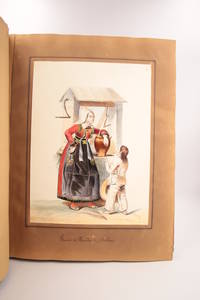
185089124s.l. : S.n. 1850. Fine. 44 coloured plates of Breton costumes S.n. s.l. s. d. ca 1850 30.5 x 40.5 cm Relié Album comprising 44 plates of Breton costumes the first two drawn in pencil the others delicately watercoloured mounted on heavy paper some with captions unsigned.Bound in contemporary half green sheep spine decorated with gilt and black fillets gilt garlands and fleurons some rubbing to the spine embossed cherry-red cloth boards bumped corners a few scuffs along the edges.A handsome album of Breton costumes in the manner of Hippolyte Lalaisse and his Galerie armoricaine of 1848.Particularly focused on the Breton-speaking departments Western Morbihan and Finistère: 1. Seated bagpipe player. 2. Peasant dance. 3. Woman from the Auray area Morbihan. 4. Young shepherd from Morbihan. 5. Woman from Plouay Morbihan. 6. Man from Faouët Morbihan. 7. Women from Josselin Morbihan. 8. Woman from Pluméliau Morbihan. 9. Women from Ploemeur Morbihan. 10. Woman from Ploërmel and nearby farmer Morbihan. 11. Woman from Auray Morbihan. 12. Woman from Lanzac Morbihan. 13. Man from Lanzac. 14. Woman from Guémené near Pontivy Morbihan. 15. Woman from Elven Morbihan. 16. Milkmaid from St-Paterne in Vannes Morbihan. 17. Woman from Douarnenez Finistère. 18. Man from Pont-lAbbé Finistère. 19. Woman from Pont-lAbbé. 20. Fisherman from Douarnenez Finistère. 21. Milkmaid from Douarnenez. 22. Bride from Kerfeunteun Finistère. 23. Man from Châteauneuf-du-Faou Finistère. 24. Women from Plougastel near Brest Finistère. 25. Man from Plougastel. 26. Woman from Locmaria near Quimper and farmer from Elliant Finistère. 27. Peasant from Riec Finistère. 28. Young girl from Bannalec Finistère. 29. Man from Saint-Thégonnec Finistère. 30. Women from the area of Pont-Lannay Finistère. 31. Bride and groom from Kerlouan Finistère. 32. Men and women from the area of Pontcroix Finistère. 33. Farmer from Saint-Évarzec Finistère. 34. Woman and two children. 35. Presentation of a newborn at a calvary. 36. Woman from Ploëne near Moncontour Côtes-du-Nord. 37. Woman from Antrain Ille-et-Vilaine. 38. Man and woman from Cancale Ille-et-Vilaine. 39. Woman from Saint-Servan and Dinan near Saint-Malo Ille-et-Vilaine. 40. Young ladies from Pornic Loire-Inférieure. 41. Man from Bourg-de-Batz in festive costume Loire-Inférieure. 42. Woman from Bourg-de-Batz in festive costume. 43. Bride and groom from Bourg-de-Batz. 44. Young salt-workers in working attire.Copy from the library of Léon Noël with his ex-libris label pasted on the front endpaper. S.n. hardcover
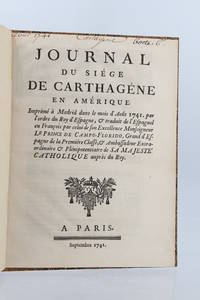
174182479Paris: S. n. 1741. Fine. S. n. Paris septembre 1741 19.50 x 25 cm relié Journal du siège de Carthagène en Amérique Diary of the Siege of Cartagena in America n.p. Paris September 1741 4° 195x25cm 16 pp. bound. First edition of the French translation. Originally published in Spanish a month before. Translated by Luis Reggio Branciforte and Colonna Prince of Campoflorido Spanish ambassador in France. Later half camel cloth binding boards in caillouté paper the first one with a gilt black morocco label. Spine-top a little rubbed white end-papers shaded. Contemporary handwritten notes on the upper part of the title page. Extremely rare copy of this diary about one of the greatest naval campaigns of the British Navy and its bitter defeat against the Spanish Treasure Fleet West Indias Fleet. S. n. hardcover
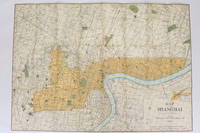
193367432Shanghaï Shanghai: North China Daily NewsHerald limited 1933. Fine. North China Daily News Herald limited Shanghaï Shanghai 1933 100 x 74 cm une feuille rempliée Rare original folding colored map of the city of Shanghai printed on heavy paper and including the street names in English as well as an extensive grid to find locations. It was published under the authority of the Shanghai city council in 1933. A skillfully repaired tear touching the index. There is a variation of this map in existence without the grid or the key of which an example is preserved in the University of Chicago library. We have not otherwise been able to find any other example of this map. This very detailed map still shows the old town under the name «Chinese City.» Each district or foreign concession particularly the French one is marked out and named in a miniaturization on the bottom right of the map these concessions will finally be returned in 1943. Significant places and places of interest are shown as well as the railway lines. Maps of Shanghai before the Battle of Shanghai are rare and sought after. North China Daily NewsHerald limited unknown
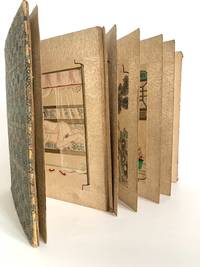
185073724Chine China 1850. Fine. Chine China 1850 S.d. 19 x 25.40 cm autre 12 Chinese erotic watercolors ink and colors on paper each painting depicting an erotic scene in an interior or garden. Accordion binding with cover of green silk embroidered in various colors. All leaves of the album are covered with damask raw silk. Each painting 16x19.2cm is mounted on silk. Some fabric losses at edges 2 small losses on the back cover. One of the accordion folds partially cut at the fold. All paintings are in very good condition. Chinese erotic games as represented in paintings appear extremely different from their Japanese neighbors. Furthermore Chinese erotic art remains relatively unknown compared to Japanese erotic art. There is undoubtedly a humorous atmosphere in these paintings whether we see a man examining a woman's genitals with a magnifying glass an old man seemingly supplicating a woman who carries a child on her back or the presence of children. The women are always wearing shoes and have very small feet as one was not supposed to see a woman's feet and small feet were a sign of beauty and eroticism. In drawing and execution the presence of line is characteristic whether it clothes the scene with a screen or represents the bodies strangely stylized. Primacy is given to lines and curves rather than volumes. The authors of these paintings are initially groups of students learning to create erotic images under a master's tutelage by copying masterpieces. The paintings are rarely signed so as not to compromise the artist's reputation. The date is given as an indication the collection possibly being earlier or later. hardcover
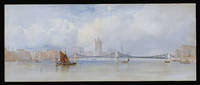
186112471c.1861. 240 by 600mm 9.5 by 23.5 inches. Watercolour on paper. The first modern bridge at Lambeth was a suspension bridge designed by Peter W. Barlow. Sanctioned by an Act of Parliament in 1860 it opened as a toll bridge in 1862 but doubts about its safety coupled with its awkwardly steep approaches deterring horse-drawn traffic meant it soon became used almost solely as a pedestrian crossing. It ceased to be a toll bridge in 1879 when the Metropolitan Board of Works assumed responsibility for its upkeep it was by then severely corroded and by 1910 it was closed to vehicular traffic. unknown
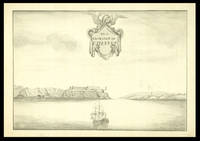
176011350c1760. 280 by 390mm. 11 by 15.25 inches. Manuscript map in pen and ink en grisaille on paper. View of the mouth of Havana Harbour taken from a shipboard vantage point emphasising the two forts that guarded the mouth: on the left the 'Castillo de los Tres Reyes Magos del Morro' Morro Castle and on the right 'Castillo de San Salvador de la Punta and marking the boom chain barrier stretched between the two. Havana was attacked by the British towards the end of the Seven Years' War and this would seem an appropriate date for this image. Seeing that Morro Castle presented a formidable challenge should it be attacked from the seaward the British simply landed troops on Cuba who approached from the landward side and commenced siege operations on 11th June gradually battering the walls into ruin. A breach was made on 30th July and the castle taken by storm. With the key to its defences lost Havana was quickly compelled to surrender. unknown
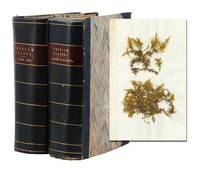
1860140948358Norfolk UK: No publisher 1860. Very Good. Two large herbaria with hundreds of plant specimens collected in 19th-century Norfolk England pertaining to flowering plants and mosses. Bound in contemporary half leather over marbled boards with morocco spine labels stamped in gilt. British Plants contains approximately 90 specimens with no manuscript identifcations. British Flowers contains 186 specimens with manuscript Latin identifications. 276 specimens all together. Each 15 x 10 x 4.5". Folios. Very Good with rubbing at extremities of each binding toning to marbled boards split at rear joint of Flowers bookplates of Norfolk history enthusiast noted bibliophile and collector of Admiral Lord Nelson materials Ronald C. Fiske d. 2018 on front pastedowns. Plant roster in old hand laid in front of Flowers. All specimens intact with only a few spots of loss heavy rodent gnawing to British Plants at mid-gatherings affecting some plates at edges and manuscript notations. <p>Carefully compiled by an anonymous botanical enthusiast over the course of nearly 25 years each mount is artfully arranged and beautifully preserved. Herbaria of this size from the 19th century are increasingly scarce particularly hailing from one single location. [No publisher] unknown
184467691John Churchill 1844. Hardcover. Used very good. First edition MDCCCXLIV" on title page. Rebound in like new attractive dark red cloth with gold lettering and two thin double bands on spine 390pp. Interior in generally nice condtion. Small stamp of the Working Men's College on title page and first page of text; pencil notes on FFEP won't quite completely erase; signed presentation in neat old script dated March 1866 on title page not Chambers; page edges very lightly soiled; text pages in very nice condition with just a few age spots. We are a small family business selling fine new and pre-owned books online since 1999. We provide professional service and individual attention to your order daily shipments and sturdy packaging. John Churchill , hardcover
1760052729London: D. Chamberlaine 1760. The Third Edition . Hardcover. Good/No Jackets. 16mo - over 5¾" - 6¾" tall. 2vol.set: v1: 136&138pp. v2: 148&170pp. HBs full leather w/red&gilt-5 bands; covers detached ft.coverv1; both coversv2; rubbedscuffed&worn; staining on endpapers; ft.endpaperv2 detached; PON Geo. King 1779; cleantight pgs. Sterne's experimental fiction about fiction writing <br/> <br/> D. Chamberlaine hardcover
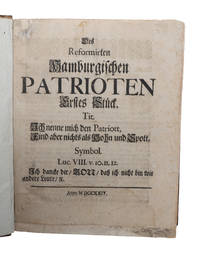
172661963No place but Hamburg no printer 1724 - 1726. 4to. In contemporary full calf with four raised bands and gilt lettering to spine. Light wear to extremities. A few leaves closely trimmed slightly touching text but generally nice and clean. 321 ff. No. 1 - 156. All that was published. <br/><br/><em>Exceedingly rare first edition fully complete of the famous Hamburg-journal “Der Patriot†– it was the most significant German weekly journal at the beginning of the 18th century and served as an important platform for the emerging Enlightenment. It was published weekly in Hamburg from 1724 to 1726. Due to its popularity it saw four reprints until 1765 and was also translated into Dutch and French. The genre of moral weeklies was inspired by English periodicals particularly the highly successful publications edited and written by Joseph Addison and Richard Steele which appeared three times a week or even daily The Tatler The Guardian and The Spectator. Unlike some other German moral weeklies Der Patriot had an independent editorial team that did not simply translate English counterparts but instead selected and developed its own topics. Many German scholars and writers contributed to Der Patriot but all published their articles under pseudonyms. Their true identities were not revealed until three years after the last issue was published. “In the course of the seventeenth and especially the eighteenth centuries Hamburg’s press evolved from a mere supplier of information to a vehicle of public opinion. During the first half of the eighteenth century Hamburg’s growing print culture was closely connected to the development of the city’s enlightened reform movement embodied in the first Patriotic Society 1724–1726. For example Hamburg’s own moral weekly Der Patriot a product of the Patriotic Society informs both the rise of periodical press and the spread of enlightened ideals. Modeled on British periodicals The Tatler and The Spectator Der Patriot contained instructive essays on a variety of subjects generally articulating middle-class norms and values. By appealing to a wide audience and disseminating useful knowledge and enlightened philosophy such journals aimed to reorient the reader’s moral outlook and lifestyle in particular to raise the intellectual and moral standards of its readers. Hamburg’s Der Patriot ran from 1724 until 1726 and was so popular that it was published in book form several times between 1728 and 1765. It was the most influential of the German moral weeklies. Der Patriot seeking to enlighten and influence the morals of its readers set itself in direct competition with the church. Aiming to “root out or at least expose all ridiculous or dangerous actions mistakes abuses and harmful habits through the orderly use of human reason†Der Patriot's elevation of reason over faith angered Hamburg’s strong orthodox Lutheran church which initiated a “pamphlet war†denouncing the journal. Der Patriot found both a multitude of detractors and supporters; roughly thirty-five pamphlets against and twenty-one in favor of the periodical appeared. This ‘battle of the pens’ certainly encouraged popular interest in Der Patriot and caused the publisher to print six thousand copies instead of the four hundred initially planned reflecting both an expanding readership and growing popular interest in Enlightenment tenets. Der Patriot furthermore reflects the republic’s civic morality as it strove to promote the common good. If its attitude toward Hamburg’s governance was generally positive it openly presented concrete proposals for improvement in the republic as well as the dangers of extravagance and excess the loss of civic-mindedness and political apathy. Indeed Der Patriot asserted both the right and the duty of Hamburgers to speak out on any question regarding the welfare of their city-state.†Aaslestad Place and Politics. </em> hardcover
17904147London: Published by Robert Sayer 1790. Colour printed mezzotint with additional hand-colouring. State vi/viii with the publication line altered to: ' Printed for ROBERT SAYER Map & Printseller No. 53 Fleet Street London'. A magnificent portrait of Lord Grosvenor's celebrated Arabian horse by the master equine painter George Stubbs.<br/> <br/>George Stubbs is considered one of the greatest English painters. His ingenious animal and sporting pictures remain unrivalled in their passionate depiction of emotion and their commitment to naturalistic observation. Stubbs was briefly apprenticed to the painter Hamlet Winstanley a relationship that quickly ended leaving the young artist to his own tuition. In contrast to contemporary academic theory Stubbs' attached great importance to the belief that art should imitate nature not the work of other artists. He spent years carefully studying human and equine anatomy so that he could truthfully represent natural form and movement. A result of this study was his famous 'Anatomy of the Horse' which details with beautiful engraving the various elements of a horse's anatomy from skeletal form to muscular definition. Continuing in search on innovation Stubbs began experimenting with a myriad of different mediums becoming accomplished in both enamels and printmaking. Through arduous application he became a talented mezzotint engraver and worked with ease in both soft ground and etching techniques. Stubbs' masterful paintings inspired some of the greatest engravers of the day to reproduce his work for publication. Stubbs was elected director of the Society of Artists and a Royal Academician and today his prized paintings are housed in some of the finest museums in the world. Stubbs was often commissioned to paint accurate portraits of specific mares for proud aristocratic patrons who wished to highlight their horses' racing success. This practice is expertly exemplified in this magnificent print. The Arabian horse in this print belonged to the first Lord Grosvenor one of Stubbs' earliest and most important patrons. Lord Grosvenor had two passions horse racing and collecting paintings; by glorifying one passion he was able to indulge the other. In this clever work Stubbs made the Arabian horse the clear center of attention even the groom is made to appear secondary to the horse. The artist's anatomical knowledge is displayed in the musculature of the horse's legs and shoulders and by the veins on the muzzle and right hind leg.<br/> <br/>Lennox-Boyd George Stubbs 21 vi/viii; Gilbey Life of George Stubbs no.28; Siltzer The Story of British Sporting Prints p.270. Published by Robert Sayer unknown books
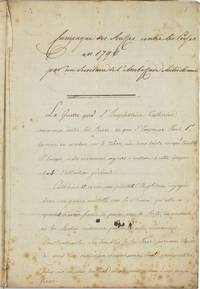
18193652France Late 18th–early 19th century. Manuscript in French written in brown ink with corrections and deletions protected with a somewhat later added cover-page. From the collection of General Martin de Vignolle. Light stains and occasional dog-earing otherwise in fine condition. Manuscript in French written in brown ink with corrections and deletions protected with a somewhat later added cover-page. 21 pages in-folio. <p><br /> Unpublished French account of the 1796 Russian campaign against Persia written by a secretary of the Austrian embassy.<br /> <p><p><br /> A contemporary or near-contemporary draft mémoire in French by a secretary of the Austrian embassy possibly in Paris describing the Russian campaign against Persia in 1796. The manuscript appears to be unpublished. The title identifies the author as attached to the Austrian diplomatic service suggesting a perspective shaped by contemporary European diplomatic observation.<br /> <p><p><br /> Known as the Persian Expedition of 1796 this campaign was launched by Empress Catherine II of Russia in retaliation for Persia’s invasion of Georgia the previous year. Commanded overall by Count Valerian Zubov with senior officers including General Paul Potemkin Russian forces advanced into the eastern Caucasus capturing key cities in present-day Dagestan and Azerbaijan including Derbent and Baku. The expedition ended abruptly when Catherine died in November 1796 and her successor Paul I ordered a withdrawal.<br /> <p><p><br /> Provenance: from the collection of General Martin de Vignolle 1763–1824 Count of the Empire as noted on a somewhat later added cover-page inscription by a family member identifying the manuscript as coming from his papers and indicating the writer’s familial connection as his son-in-law.<br /> <p>. unknown
1745MSA6746London: J. Fuller At the Dove. Poor with no dust jacket. 1745. Hardcover. Hard cover published by J. Fuller at the Dove in London in 1745. No dust jacket. Both covers are detached. Title page is with front cover. Rear endpaper is with back cover. Leather covers. Spine has creases lengthwise and has wear at the ends. Corners of covers are bumped and worn. Pages have some tanning and spotting and some pages have foxing. Several pages at beginning of book have a cut in them near bottom. Book is in acceptable condition. 396 pages .8 lbs.; 24mo 5" - 6" tall; 396 pages . J. Fuller At the Dove hardcover
2628<p> 1. Palau 29755 one record in OCLC: Northwestern; 2. Palau 80255 no OCLC records; 3 4 5 6 7. Palau 259767 NUC records NYPL Hispanic Society no locations in OCLC. NOTE: Palau calls for 13 plates but the two copies listed in the NUC contain only 11; this copy has 12. separate issues: 4. Palau 193624; 5. Palau 156972 20 pp.; 6. Palau 156973 19 pp.; 7. Palau 156974; 8-9. Palau 259934 separate record for 9: Palau 156976 12 pp. Rare illustrated collection of nine ephemeral fête programs documenting three generations of royal entries into Barcelona: Charles III in 1783 his son Charles IV in 1802 and grandson Ferdinand VII in 1827. This group of pamphlets affords a comparison between royal entries staged before and after the French occupation of Catalonia 1808-1823.LIST OF TITLES:1. Bilingue Obsequiosa Consonancia en 92. decimas… y las vistosas Mascaras Moxiganga Luminarias Adornos afectuosas públicas y privadas Festivas Alegrias que tributa al Rey Supremo y al de Espana la Inclita y Fidelisima Barcelona en los dias 8 9 y 10 del mes de Dbre. de 1783. Barcelona Imp. Viuda Piferrer 1783. 31 ff. 2. Epitalami à las Reals Bodas dels serenissims senyors princep y princesa de Asturias Don Fernando y Dona Maria Antonia y dels serenissims senyors princep y princesa de las dos Sicilias Don Francisco y Dona Isabel. Barcelona Imp. Thomas Gorchs 1802. 28 pp. 3. Relacion de las Diversiones Festejos Públicos y otros acaecimientos que lan ocurrido en la ciudad de Barcelona desde el 11 de Setiembre hasta principios de Noviembre de 1802. Barcelona Compania de Jordi Roca y Gaspar 1802. 35 1 pp. with 1 folding plate. 4. Noticia Individual de la Entrada de los Reyes Nuestros Senores y real familia en la ciudad de Barcelona la tarde del once de Setiembre del presente ano de mil ochocientos dos. Barcelona Jordi Roca y Gaspar 1802. 30 pp. 1 blank leaf. 5. Máscara real para la primera noche. Cinco de Octubre. Barcelona Jordi Roca y Gaspar 1802. 12 pp. 5 plates. 6. Máscara real para la Segunda Noche. Seis de Octubre. Barcelona Jordi Roca y Gaspar 1802. 13-23 1 pp. 5 plates. 7. Máscara real para la Noche siete de Noviembre. Barcelona Jordi Roca y Gaspar 1802. 1 f. 6 pp. 1 plate. 8. Relación de la entrada de los Reyes nuestros Senores en la ciudad de Barcelona la manana del 4 de diciembre de 1827 y de los demas festejos públicos. Barcelona la Viuda de D. Agustín Roca 1828. 25 1 pp. 5 plates. 9. Máscara real para la noche del 6 de enero de 1828. Barcelona Imp. Vda. de Agustín Roca 1828. 10 pp. 3 ff. 3 plates. The printing house of Jordi Roca and Gaspar was active in the latter years of the 18th century; its tradition of printing topical works continued at least until the 1830s under the helm of Agustín Roca's widow. Agustín Roca published clandestine leaflets during the Napoleonic invasion and was forced to flee to Tarragona and Mallorca. According to Palau the pamphlets pertaining to both the 1802 and 1827 festivities were issued separately as well as in the collected editions found here. A more detailed description of this item can be supplied on request.</p>
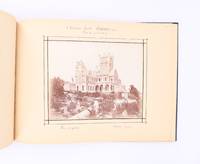
187889796Cannes: Sans nom d'éditeur 1878. Fine. Sans nom d'éditeur Cannes s. d. 1878 40.2 x 30 cm Relié Handsome and uncommon album comprising 36 vintage silver-print photographs 18.5 × 23 cm mounted and captioned by hand depicting exterior viewsfaçades gardens and architectural perspectivesof this English neo-Gothic estate built between 1868 and 1872 by Thomas Smith and the Cannes contractor Scavy for one Michael Hugh Scott who never lived in it: the property quickly passed to the businessman Debionne who resold it to Lord Wolverton after furnishing and decorating the interior.Publishers blue percaline binding smooth unlettered spine blind-ruled frame on the boards gilt-lettered title to the upper cover marbled endpapers and pastedowns; contemporary binding.A few black spots to the slightly warped upper board; pleasing internal condition.Facing the first photograph presentation inscription from the second owner Alexandre-Louis Debionne to his brother-in-law dated 15 April 1878. Sans nom d'éditeur hardcover
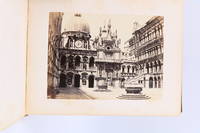
187089863No Location: Chez Charles Ponti opticien 1870. Fine. Chez Charles Ponti opticien No Location s. d. 1870 23.3 x 18.5 cm Reliure de l'éditeur Album comprising 30 original albumen prints mounted on heavy card leaves.Bradel binding in full black boards smooth unlettered spine gilt-ruled frame on the covers title set within a central panel on the upper cover corners rubbed; contemporary binding except for the renewed spine.The first 22 photographs approx. 12.5 × 17 cm depict views of the City of the Doges; the following seven various formats reproduce paintings by Italian masters Veronese Titian Raphael Murillo. held in Venice Florence and Paris; the final print shows a water-carrier.Captions in Italian in black ink on the mount on the verso.The sequence of photographs is as follows: Prospetto della Basilica di S. Marco Piazza di S. Marco presa dalla chiesa Panorama del molo e gondola veneziana Piazza di S. Marco dalla curia patriarcale Prospetto del palazzo Ducale verso la piazzetta Cortile des palazzo Ducale Piazza S. Marco presa dal palazzo Ducale con campanile intero Ponte dei Sospiri Panorama della chiesa della Salute Isola di S. Giorgio maggiore presa dal campanile di S. Marco Panorama preso dal campanile verso la Dogana di mare Panorama e gondola preso da S. Giorgio Palazzo Ducale e l'isola di S. Giorgio Palazzo Pisani-Moretta Chiesa di Sta Maria della Salute Canal grande preso dall'Accademia Canal grande coi palazzi Rezzonico Giustiniani e Foscari Ponte di Rialto Antica scuola di S. Marco ora ospedale civile Palazzo Ca Doro Une gondole à quai Bucintoro nave particolare dei Dogi di Venezia.Strong well-defined tonal contrasts throughout most of the prints. Chez Charles Ponti opticien hardcover
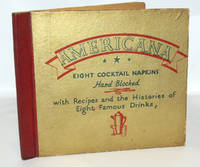
1925TB33810n.p.: n.p circa 1925. First Edition. Good in its original 1/4 red paper and gold jacquard printed covered boards with blue and red text and decorations on the front board. An oblong small octavo of 7 1/2 by 8 3/4 inches with wear to the paper covering all around the edges of the boards. The text is printed on a thin and extremely fragile paper stock which is well tanned with a number of closed tears and minor chips to the margins. All eight cocktail napkins are present and in fine condition in bright colors. 18 pages 17 numbered rectos mounted with illustrated hand-colored cocktail napkins versos with cocktail recipes. Nothing known of author publisher or date or place of publication. However it is rather obvious that this volume was published during the era of Prohibition Jan. 1920 to Dec. 1933 as all of the cocktail recipes call for nonalcoholic beverages. The modified Prohibition ready recipes are for: Manhattan Blue Blazer Deadwood Duck Rip Van Winkle Sleeper Belmont Park Alabama Barbary Coast and New Orleans Drip. The dedication in the book asserts its tongue-in-cheek intent: To Serious Drinkers Everywhere. Of particular interest is the fact that a small 7/8 by 5/16 inch slip of paper with blue and red printing with the word "France" is pasted to the upper fore corner of of the front paste down for each copy that has come to market. The importation laws in the US at the time required all foreign goods to have some indication of where they were coming from. This title was therefore printed in France. The Internet site of Barina Craft in their essay on Barbary Coast Cocktails includes a footnote which reads: "Americana Recipes And The Histories Of Eight Famous Drinks is a rare bartending book not only because of the limited number of copies of its first and only edition but also due to its binding and illustrations. Each of the eight cocktails . were depicted by a hand colored woven fabric cloth cocktail napkin with tassel ends." This rarity is borne out by OCLC reporting only one copy is held by an institution Bowling Green State Univ. n.p hardcover
17000000629Paris: Author 1700. Full leather. Very Good. 8vo. Modern quarter red morocco binding with on marble boards. Collation: Premier Section- 2 52 14 – 7 engraved tables dated Paris 1716 pp. 2- Blank; Seconde Partie- 2 72 5 pp.; Troisieme Partie- 1 60 pp. numerous diagrams throughout and 17 page table in Premiere Partie. There is extensive treatment of sundial theory geometry application and construction and application of different cadrans sundials. It is copiously illustrated with accurate finely executed drawings. The last part of the manuscript discusses and illustrates the use of portable and curious types of dials that could by use when making observations sun off surfaces separate dials for use with moon or stars. The use of two hands as a dial for determining time is also covered in a separate section. <br />This is a rare and thorough treatise for dialing with little evidence of author. No reference to the title could be found checking numerous reference sources. The date of 1700 on the title pages for each section may be accurate. However the printed geographical tables for longitude and latitude inserted as part of the first section have a date of 1716. <br/><br/>This is a rare and thorough treatise for dialing with little evidence of author. No reference to the title could be found checking numerous reference sources. The date of 1700 on the title pages for each section may be accurate. However the printed geographical tables for longitude and latitude inserted as part of the first section have a date of 1716. Author hardcover books
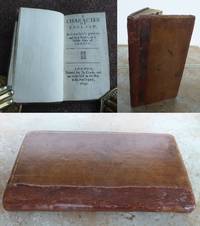
165952785<p>A CHARACTER OF ENGLAND. As it was lately presented in a letter to a noble man of France. SECOND EDITION 1659. The Second edition is one of three printed in the same year. The editions are easily recognised the title page in the first edition has present-ed and a small "s" after London and a different collation the second edition has present-ted and a comma after London the third edition has it printed on title page. 12mo small thin book approximately 120 x 60 mm 5 x 2½ inches pages: 6 1-66 collation A-C12 6 leaves in section "B" have paper fault to lower margins with slight loss of paper no loss to text see attached image and all leaves in this section have pale age-browning ESTC R213652. A PERFECT DESCRIPTION of the PEOPLE and COUNTRY of SCOTLAND London printed for J.S. 1659. Anonymous James Howell or Sir Anthony Weldon see Library Hub Discover. Pages: 2 1-22 last page blank pale age-browning throughout including title page ESTC R204012. Bound together in polished calf covers with old amateur repair to spine marbled endpapers engraved bookplate James Brindley Esq M.A.F. S.A to first pastedown. Spine rubbed corners worn at tips first inner paper hinge cracked a good tight copy. The Noble Man of France finds London to be a city with narrow streets and without fountains or running water. He admires St. Paul's and the Banqueting-house at Whitehall but is disgusted at the meanness of their surroundings. he then returns to complaints about the inconveniences of London and of the 'cloud of sea-coal'. . He has much to say of the national practice of drinking in Ale-houses and of the vile manners of the ladies and being Gaudy. He dislikes English social manners at dances at dinners in Hyde-park and in the Spring Garden. He is very difficult to please." - see full article in Keynes page 61. See Geoffrey Keynes John Evelyn A Study in Bibliophily with a Bibliography of his Writings page 60-67 No. 15 " A True first edition of A Character of England containing 42 leaves and 71 numbered pages is an exceedingly rare book. It was soon reset and reprinted on 36 leaves with 66 numbered pages as our copy listed and this is also very uncommon"; Christies The Evelyn Library Part iv page 87 No.1682 listing a third edition; Sotheby's The Collection of Robert S Pirie Volume I page 217 No. 354 listing the second edition; Bloomsbury Auctions The Cetus Library page 40 lot No.118 this is the same copy as the Pirie copy. MORE IMAGES ATTACHED TO THIS LISTING ALL ZOOMABLE FURTHER IMAGES ON REQUEST. POSTAGE AT COST.</p> London, printed for Jo. Crooke, and are to be sold at the Ship in St. Paul's-yard, 1659. hardcover
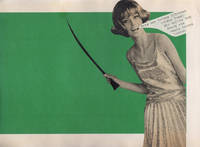
196043382np 1960. Very good. An extraordinary and unique handmade artist's book elaborately assembled by an anonymous artist. A kinky but lighthearted celebration of female flagellantism the book appropriates quintessentially 1960s fashion models and recontextualizes them in dozens of original collages so that they are weilding whips switches and various similar tools. Paired with self-referential and irreverant texts as well as black-and-white hand-penned drawings presumably by the assembler of bondage spankings and other S&M-themed scenes the book humorously imagines Mod Girls as doms - a perhaps intentional visual pun. The collages many spanning across page spreads and including one fold-out exhibit a strikingly skillful and stylish retraint suggesting an ambition and audience beyond the merely pruriently personal. An outsider book of rare sophistication and wit: the Swinging Sixties meets Dada. Yeah baby. 6.5'' x 9.25''. Likely commercial scrapbook but possibly ad-hoc collages boards. Containing 66pp. plus covers and one fold-out all mounted both recto and verso with color collages consisting mainly of magazine models with occasional textual elements in German many typed. Spine appears perished. But otherwise sound and apparently complete. Very good. Housed in custom Talas archival clamshell box. hardcover
17904138London: Published by Robert Sayer 1790. Hand-coloured mezzotint. State vi/viii. A remarkable portrait of Lord Grosvenor's Pangloss by the master equine painter George Stubbs.<br/> <br/>George Stubbs is considered to be one of the greatest English painters. His ingenious animal and sporting pictures remain unrivalled in their passionate depiction of emotion and their commitment to naturalistic observation. Stubbs was briefly apprenticed to the painter Hamlet Winstanley a relationship that quickly ended leaving the young artist to his own education. In contrast to contemporary academic theory Stubbs attached great importance to the belief that art should imitate nature not the work of other artists. He spent years carefully studying human and equine anatomy so that he could truthfully represent natural form and movement. A result of this study was his famous Anatomy of the Horse which details with beautiful engraving the various elements of a horse's anatomy from skeletal form to muscular definition. By the 1760's Stubbs had developed a considerable reputation as a sporting artist and had attracted a number of distinguished patrons. Continuing in search of innovation Stubbs began experimenting with a myriad of different mediums becoming accomplished in both enamels and printmaking. Through arduous application he became a talented mezzotint engraver and worked with ease in both soft ground and etching techniques. Stubbs' masterful paintings inspired some of the greatest engravers of the day to reproduce his work for publication including his own son George Townly Stubbs who reproduced with faithful accuracy the sublime emotion inherent in his father's exquisite works. Stubbs was elected Director of the Society of Artists and a Royal Academician and today his prized paintings are housed in some of the finest museums in the world. Stubbs was often commissioned to paint accurate portraits of specific racehorses for proud aristocratic patrons who wished to highlight their horses' racing success. This practice is expertly exemplified with this magnificent print of Pangloss Lord Grosvenor's beloved horse. Pangloss was foaled in 1755 and named after a character in Voltaire's Candide; little is known about Lord Grosvenor's horse apart from the fact that his racing career was ended by a broken leg. This print was the second of a series of engraved horse portraits begun by the publisher Ryland in 1771 and extended by Robert Sayer in 1777. Although the inscription on the print establishes Stubbs as the painter the painting has not been identified making this print extremely intriguing since it is the only record of Stubbs' lost work.<br/> <br/>Lennox-Boyd George Stubbs 20 vi/viii; Gilbey Life of George Stubbs no.39; Siltzer The Story of British Sporting Prints p.270. Published by Robert Sayer unknown books
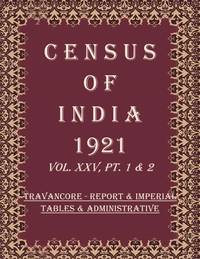
2024Gyan-9788121271356Gyan Publishing House 2024. 21 Vols. In 65 Bindings. Paperback. New. 21.59 x 27.94 x 187.306. English Gyan Publishing House paperback
2024Gyan-9788121271356Gyan Publishing House 2024. 21 Vols. In 65 Bindings. Paperback. New. 21.59 x 27.94 x 187.306. English Gyan Publishing House paperback
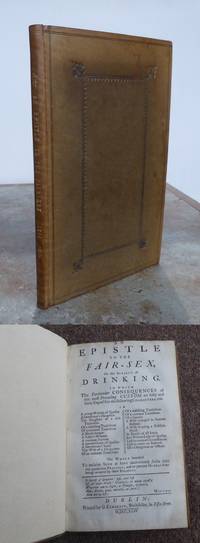
52413<p>Dublin printed by G. Faulkner Bookseller in Essex-Street MDCCXLIV. 1744. TITLE CONTINUED: In which the Particular CONSEQUENCES of this most Prevailing CUSTOM are fully and fairly Exposd in the following Characters viz. In a young Woman of Quality. A Gentlemans Daughter. The Daughter of a rich tradesman. Of a middling Tradesman. Of a common Tradesman. A House-Keeper. A Ladys-Woman. A common Servant. A married Lady of Quality. A Gentlemans Lady. The Wife of a Clergyman. Of an eminent Tradesman. Of a middling Tradesman. Of a common Tradesman. Of a Captain. A Wife engaged in separate Business. A Wife keeping a Publick-House. In Nurses of all kinds. In a Widow Lady of Quality. Left in narrow Circumstances. Left to carry on Business. Of a Clergyman or Officer. The Whole intended To reclaim Such as have inadvertently fallen into this pernicious Practice; and to prevent Others from being corrupted by their Examples followed by a poem by Milton. Pamphlet 1744 stab holes in inner margins. Small slim 4to approximately 190 x 115 mm 7½ x 4½ inches pages: 4 1-55 1 - last page is an advert bound in full modern calf vertical gilt title to spine blind decoration to covers new endpapers. Some fading to binding see image title page and next page trimmed in top margin no loss to text 1 tiny old ink correction plus 2 further tiny ink spots otherwise a very clean copy. ESTC T184559. MORE IMAGES ATTACHED TO THIS LISTING ALL ZOOMABLE FURTHER IMAGES ON REQUEST. POSTAGE AT COST.</p> Dublin, printed by G. Faulkner, Bookseller, in Essex-Street, MDCCXLIV. [1744].
2024BIBHB0331650722024. Hardcover. New. Due to the very old age and scarcity of this book some pages are missing and may be hard to read due to the blurring of the original text. The Title 'Census of India 1931 written/authored/edited by Anonymous' published in the year 2024. The ISBN 9788121271240 is assigned to the Hardcover version of this title. This book has total of pp. 20878 Pages. The publisher of this title is Gyan Publishing House. This Book is in English. The subject of this book is History Census India. Size of the book is 22.59 x 28.94 cms Vol: Volume 28 Vols. In 52 Bindings hardcover