AnonymousBiblio.com
253 627 résultats
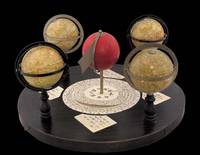
195015336Japan c1950. 280 by 230mm. 11 by 9 inches. Four small globes on turned stands surrounding a red sphere with a directional wind tail attached to a demi-meridian ring all mounted on a central metal pole fitted on a circular wooden base. Two manuscript paper disks overlapping on the wooden base with the top one movable and the bottom attached to the base. Four other manuscripts are attached to the base in between the stands. A unique fortune-telling astronomical instrument made in Edo Japan based on the "Nine-star Ki" ky seikigaku form of divination adapted and refined from traditional Chinese methods by Shinjiro Sonoda 1876-1961 in 1924. "Nine-star Ki" refers to nine-year and nine-month cycles of the Ki/Qi element on Earth which relate to the solar and seasonal cycles. These cycles are believed to have common effects across the planet on mental and physical development and life experiences. The 'stars' of "Nine-Star Ki" are numbers representing those cycles which can be calculated for anyone using their birthdates. This instrument was specifically designed to calculate the numbers of "Nine-Star Ki". Constructed on a circular wooden plate are four small terrestrial globes on turned stands which surround a red sphere mounted on a metal pole at the centre. A bronze signpost attached to the sphere is engraved with three characters " " " " " " "cold" "warm" and "hot" respectively referring to the seasons . Directly beneath the sphere are two circular manuscript charts. The smaller uppermost chart is rotatable bearing the title " " "Fortune-telling Nine astronomical bodies rotating chart". It shows three concentric rings radially divided into sixty sections. The first ring shows a cycle from " " one to " " sixty in anti-clockwise order and there are two characters " " "this year" marked in red above the former indicating the beginning of the cycle. In the second ring every consecutive nine characters represent the Navagraha or "nine celestial bodies of universe" in Hindu astrology. They represent different elements of nature as well as season personality family and direction. These are " " the Sun " " the Moon " " Mars " " Mercury " " Jupiter " " Venus " " Saturn " " Solar Eclipse and " " Lunar Eclipse. The third ring shows the names of Bagua the eight symbols of Taoist cosmology which are " " Heaven " " Earth " " under" "Water" "Mountain" "Wind" "Flame " " Lake. The larger chart beneath is attached to the plate showing two more rings. The first ring is an extension on the Bagua ring it encircles. It shows the sexagenary cycle which is a cycle of sixty terms each corresponding to one year used for reckoning time in China and other parts of East Asia. The outermost ring has thirty divisions each containing a character that represents one of the "Five Phases' " ": " " Wood " " Fire " " Earth " " Metal and " " Water. The system of five phases was used for describing interactions and relationships between phenomena including geomancy and astrology. Rotating the top chart to align the divisions on the five rings would give a combination of numbers and signs. Hence using one's date of birth one could rotate the chart to reveal a set of numbers and figures that signifies one's fortune according to the divination of the "Nine-Star Ki". Surrounding the main chart are four sheets of manuscript text. The top right sheet bears the date " " "May 9th Eleventh year of Bunsei era - 1828" yet this does not appear to be the year of publication since Korea is labelled as " " "Republic of Korea" and China " " "Republic of China" on the terrestrial globes. Given the establishment of the Republic of Korea in 1948 and the Republic of China in 1949 the instrument can be dated to roughly the following decade. This instrument is extremely rare and perhaps unique. We are unable to trace any other examples. unknown
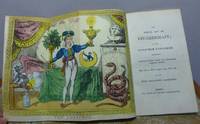
53218<p>Derby Thomas Richardson circa 1830. FIRST EDITION circa 1830 pamphlet approximately 185 x 100 mm 7¼ x 4 inches folding hand coloured plate as frontispiece pages: 4 5-24 last page not numbered original publisher's yellow printed wrappers. Spine neatly repaired frontispiece slightly trimmed with slight loss to border not affecting image pale offset to title page upper wrapper slightly dusty near spine otherwise a very good copy. See: Raymond Toole Stott A Bibliography of English Conjuring 1581-1876 page 236 No. 718; Some Printers & Publishers of Conjuring Books and other Ephemera 1800-1850 by Trevor Hall and Percy Muir page 54. MORE IMAGES ATTACHED TO THIS LISTING ALL ZOOMABLE FURTHER IMAGES ON REQUEST. POSTAGE AT COST AND ALL PARCELS SENT FULLY TRACKED AND FULLY INSURED.</p> Derby, Thomas Richardson, circa 1830.
1950019790New York 1950. Minor surface wear ink light at a few points with "Bill" on the dark portion of his suit but still visible. Near Fine. A scarce 8" x 10" Black-and-White Formal Photograph SIGNED by Bill Wilson: "To Martie C--/With affection/and thanks/Bill/NY -- 9/50." <br/><br/> unknown
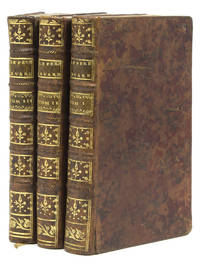
1770307572Paris: Desventes de Ladoué 1770. First edition. xvi 359 iii; 334; 360pp. 3 vols. 12mo. Bound in full contemporary mottled calf. With the bookplate of the Vicomte de Noailles engraved by Agry in each volume. Upper joint of vol. III with short start at foot otherwise a fine and fresh copy. First edition. xvi 359 iii; 334; 360pp. 3 vols. 12mo. A satirical response to Rousseau's Emile ou l'Education 1762. Where Émile is guided by a wise tutor the author of Le Père avare mocks from the outset Rousseau's dictum "le véritable précepteur est le père" for the narrator's father M. d'Erigny grew up poor and gained wealth through his friendship with a government minister; his child has been spoiled from infancy. <br /> While M. d'Erigny is drunk his mistress gets him to sign an order from her jeweler for 20000 francs of precious stones and skips out. The extravagance is discovered and the father becomes miserly in the extreme. The son now 15 years old is entrusted to a unscrupulous précepteur or tutor who involves the youth in a swindle and vanishes with the money. <br /> This is a confessional so we learn it all: the narrator soon discovers love and devotes himself to pleasure using the family name to run up accounts everywhere before being deceived and fleeced. M. d'Erigny is furious; Madame intercedes: his debts are paid and he is sent off to exile in a provincial town. He is befriended by a well-connected gentleman but repays this trust with deceit. Besotted with an actress he forges a criminal denunciation of a rival but his scheme is discovered and his in consigned to "une de ces maisons de force" a private prison for the reform of licentious youth. <br /> To escape this close confinement the narrator embarks with a flotilla of colonists bound for the island of C in the new world. His mother's continued good influence follows him across the ocean cushioning him from the worst excesses of a brutal colonial regime amply detailed. Florainville a mistress who has managed her money well comes to the colony to rescue him but falls afoul of the corrupt Intendant and her health fails her. She dies but not before she has made him her legatee. The narrator assists the colonial governor in prosecuting the Intendant and returns to France. He retires to a rural abbey and contemplates his experiences. Before long he becomes the benefactor of a village community and sees it thrive.<br /> Only edition of this little-known work of fiction set partly in the Americas. OCLC records two copies in N. America Princeton UCLA two in France and one at Trinity College Dublin Desventes de Ladoué unknown
6685N.p. but likely New York 1839. Lithograph 10.25†x 12†plus margins. CONDITION: Good narrow margins upper margin expertly extended lightly soiled paper pulp reinforcements on verso. <p>A rare and anonymously-produced political cartoon attacking Henry Clay’s duplicitous position on slavery the issue that was at the fulcrum of so many political moral and legal conflicts in antebellum America.</p> <p>Clay at the time a Senator from Kentucky and one of the country’s most popular politicians grew infamous for his attempts to play both sides of the slavery issue. This cartoon takes the opportunity of one of his 1839 Senate speeches to skewer his views on slavery as he angled for another presidential nomination. The text points out the hypocrisy and contradictions in his words and attitudes. Audiences above the Mason-Dixon Line hear Clay proclaim: “I consider Slavery as a Curse a curse to the Master and a grievous wrong to the Slave†insisting he was “no friend to slavery†while those in the South are assured that as an owner of three-score humans he “will continue to oppose any scheme whatever of emancipation gradual or immediate.â€Â The text also points out his contradictory views on dueling. An illustration of Mason & Dixon’s Line separates his views on slavery. South Carolina’s John Calhoun who with Clay was two-thirds of the Senate’s “Great Triumvirate†and was the country’s most prominent slavery advocate shakes Clay’s hand and promises his support. He assures Clay that abandoning his “‘folly & delusion’ about liberty†and endorsing slavery as the “‘most safe & stable basis for free institutions’†will also secure South Carolina’s support in his next presidential run: “you shall be made President for life.â€</p> <p>Both men are mindlessly standing with one foot upon a prone enslaved man. In addition Clay stands upon a torn portion of a Kentucky Convention Bill likely addressing the issue of fugitive slaves and Calhoun’s left foot stands on a torn part of a memorials and resolutions from Vermont and Massachusetts affirming that “All men are created equal and entitled to liberty &c.’†The afflicted and enslaved African-American man on which they trample to the viewer in a quote from the Old Testament Book of Micah 7:8 relating to the rise of Israel: “Rejoice not against me O mine enemy when I fall; I shall arise.â€</p> <p>Though this print bears no publication information the style and substance point toward the work of H.R. Robinson of New York who produced a number of sharp political attacks in the form of satirical prints in the 1830s.</p> <p>Not in Reilly. Rare with only three copies recorded in OCLC at the Library of Congress Boston Public Library and the American Antiquarian Society.</p> <p>REFERENCES: Weitenkampf p. 60; OCLC 741723538 and 1038126677.</p> [N.p., but likely New York, 1839] unknown
177868338A Collection of Five Eighteenth-Century British Revolutionary Pamphlets Anonymous. T.M. A letter to His Grace the Duke of Buccleugh of national defence to which is now added a postscript relative to the regiments of fencible men raising in Scotland. Edinburgh Sold by J. Dickson bookseller 1778. A reissue of the London edition of the same year with a cancel title-page and the addition of a postscript dated: LincolnÃs Inn July 20th 1778. 4 72 10 Postscript. With the letter signed "T.M." Previous owner's old ink signature on title-page. This also includes remarks on Adam Smith's Wealth of Nations. Adam Smith's Remarks were not in the London Edition. We could find no other copies at auction. ESTC T179898. Bound with DOUGLAS JOHN Anonymous. A Letter Addressed to Two Great Men on the Prospect of Peace; And on the Terms necessary to be insisted upon in the Negotiation. London: A. Millar 1760. First edition first issue with no errata below Finis on final leaf. 4 55 1 blank pp. With half-title and final leaf verso blank. " This tract relating to the Treaty of Utrecht and the French Canadian question has been attributed to Junius also to William Pulteney Earl of Bath but with more probability to John Douglas. The ìTwo Great Menî were Wm. Pitt and the Duke of Newcastle. The writer urges upon the government in making peace with France to require from her the relinquishment of all Canada Guadaloupe and Senegal." Sabin 40263. ESTC T37753. Bound with Macpherson James Anonymous. The rights of Great Britain asserted against the claims of America: Being an answer to the declaration of the general Congress. The third edition with additions. London Printed for T. Cadell 1776. The Third edition. 6 96 pp. With folding chart "Appendix." Half-title and advertisement leaf after the title-page. "Also attributed to Sir John Dalrymple Lord George Germaine and Henry Mackenzie." ESTC T45081. Half-title is soiled and some minor toning to a few pages." A reply to the July 1775 declaration of the Continental Congress commissioned and widely distributed by the British government. ìThis celebrated performance is said to have been written printed and liberally distributed both in Great Britain and America at the instance and expense of government; but whether this be true or not the work itself we are afraid will answer no other purpose than to exasperate the people of Great Britain against their brethren of America; and by inflaming misrepresentations and invective aggravate the evils of our present civil discord.î---Monthly Review." Sabin 18347. Howes D37. Evans 14727. Bound with LIND JOHN. Anonymous. An answer to the Declaration of the American Congress. The Fourth Edition. London Printed for T. Cadell 1776. Fourth Edition. 1-132 pp. Leaves D2 and D3 trimmed close at fore-edge just slightly affecting the printed marginal notes. " This anonymous work was ascribed to English barrister John Lind by Richard Price and others. In the work Lind a close associate of Jeremy Bentham treats each of the Declaration's grievances individually refuting them on philosophical and factual grounds. Pages 119-132 include a discussion of the Preamble to the Declaration which he describes as an "absurd and visionary" theory of government." National Book Auctions. " In these later editions the outline of a counter declaration is omitted. With regard to the theory of government set forth in the preamble to the ìDeclarationî the writer adds ìa theory as absurd and visionary as the system of conduct in defence of which it is established is nefarious;î indeed each article of the Declaration of Independence is carefully examined and every assertion disputed." Sabin 41281. Howes L349 ESTC N5626. Bound with Burke William Anonymous. Remarks on the letter addressed to two great men. In a letter to the author of that piece. London Printed in the year 1760. A pirated reprint According to Todd 263 item 98. 32 pp. Bound without the half-title. Previous owner's old ink signature on title-page." Occasionally attributed to Charles Townshend but more generally assigned to William Burke and Ãin partà to Edmund" Todd. A respond to the first pamphlet in this volume "The ÃLetter addressed to two great menà is by John Douglas Bishop of Salisbury." "Argues against giving Guadeloupe to the French. Attributed to Charles Townshend by Evans; however the Dictionary of national biography attributes the Remarks to William Burke secretary to Guadeloupe" Evans 8751. ESTC N26297. Octavo 8 1/4 x 5 inches; 210 x 128 mm. All pamphlets bound together in contemporary half calf over marbled boards. Red morocco spine label lettered in gilt. Some occasional foxing but otherwise very clean. Previous owners old ink notes on front endpapers. A very good copy. HBS 68338. $5000 Sold by J. Dickson, bookseller hardcover books
2024Gyan-9788121271363Gyan Publishing House 2024. 21 Vols. In 65 Bindings. Hardcover. New. 22.59 x 28.94 x 267.58. English Gyan Publishing House hardcover
2024Gyan-9788121271363Gyan Publishing House 2024. 21 Vols. In 65 Bindings. Hardcover. New. 22.59 x 28.94 x 267.58. English Gyan Publishing House hardcover
2024Gyan-9788121271301Gyan Publishing House 2024. 28 Vols. In 49 Bindings. Hardcover. New. 22.59 x 28.94 x 253.21. English Gyan Publishing House hardcover
2024Gyan-9788121271301Gyan Publishing House 2024. 28 Vols. In 49 Bindings. Hardcover. New. 22.59 x 28.94 x 253.21. English Gyan Publishing House hardcover
1770307572Paris: Desventes de Ladoué 1770. First edition. xvi 359 iii; 334; 360pp. 3 vols. 12mo. Bound in full contemporary mottled calf. With the bookplate of the Vicomte de Noailles engraved by Agry in each volume. Upper joint of vol. III with short start at foot otherwise a fine and fresh copy. First edition. xvi 359 iii; 334; 360pp. 3 vols. 12mo. Contemporary Satire of Rousseau's 'Émile'. A satirical response to Rousseau's Emile ou l'Education 1762. Where Émile is guided by a wise tutor the author of Le Père avare mocks from the outset Rousseau's dictum "le véritable précepteur est le père" for the narrator's father M. d'Erigny grew up poor and gained wealth through his friendship with a government minister; his child has been spoiled from infancy. <br/>While M. d'Erigny is drunk his mistress gets him to sign an order from her jeweler for 20000 francs of precious stones and skips out. The extravagance is discovered and the father becomes miserly in the extreme. The son now 15 years old is entrusted to a unscrupulous précepteur or tutor who involves the youth in a swindle and vanishes with the money. <br/>This is a confessional so we learn it all: the narrator soon discovers love and devotes himself to pleasure using the family name to run up accounts everywhere before being deceived and fleeced. M. d'Erigny is furious; Madame intercedes: his debts are paid and he is sent off to exile in a provincial town. He is befriended by a well-connected gentleman but repays this trust with deceit. Besotted with an actress he forges a criminal denunciation of a rival but his scheme is discovered and his in consigned to "une de ces maisons de force" a private prison for the reform of licentious youth. <br/>To escape this close confinement the narrator embarks with a flotilla of colonists bound for the island of C in the new world. His mother's continued good influence follows him across the ocean cushioning him from the worst excesses of a brutal colonial regime amply detailed. Florainville a mistress who has managed her money well comes to the colony to rescue him but falls afoul of the corrupt Intendant and her health fails her. She dies but not before she has made him her legatee. The narrator assists the colonial governor in prosecuting the Intendant and returns to France. He retires to a rural abbey and contemplates his experiences. Before long he becomes the benefactor of a village community and sees it thrive.<br/>Only edition of this little-known work of fiction set partly in the Americas. OCLC records two copies in N. America Princeton UCLA two in France and one at Trinity College Dublin Desventes de Ladoué unknown books
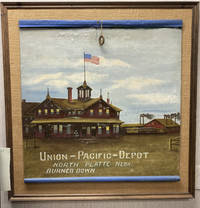
190039803North Platte: Artist Unknown n.d. ca 1900. 1900. First edition. 28" x 28" full color painting of the Union Pacific Railroad's Bailey Yard in North Platte Nebraska. It was named for the president of the Union Pacific Edd H. Bailey. It is the largest railroad classification yard in the world as it is 8 miles long and 2 miles wide. The yard covers 2800 acres and within it are 315 miles of track. Today every 24 hours Bailey Yard handles 10000 railroad cars 3000 of which are sorted in either the eastward or westward yards nicknamed "hump" yards with 120 - 140 trains a day that pass through Bailey Yard. The first train to enter North Platte was on December 3 1866. By January 2 1867 the main line of operations officially commenced in North Platte. From 1873 to 1913 "Buffalo Bill" Cody lived and organized his Wild West Show from his ranch north of the rail yard and transported his show via rail and wagon. In 1897 E. H. Harriman purchased the Union Pacific at an auction held in Omaha Nebraska. The construction of the second main line commenced through North Platte in 1910. This art is painted on a 28" x 28" linen window shade and depicts the Bailey Yard Railroad Depot and hotel both of which burned on November 17 1915. An important painting of the depot and hotel along with train cars and an iron worker's factory building prior to that fire. Minor flaking and an old small repair to the linen else a fine example of both window shade art and a depiction of the historically important Union Pacific Rail Road Depot at North Platte Nebraska. Artist Unknown, n.d. (ca 1900). unknown
179268343A Collection of Five Political Tracts from the Years 1792-1793 Anonymous. Six essays on natural rights liberty and slavery consent of the people equality religious establishments the French Revolution which were greatly approved and have been in much request since their original appearance in the Public Advertiser. London Printed for S. Woodfall 1792. First edition. 8 48 pp. We could find no copies at auction and only four are listed at libraries according to ESTC N62745 Bound with ANDERSON George. A general view of the variations which have been made in the affairs of the East-India Company since the conclusion of the war in India in 1784. By George Anderson. London Printed in the Year 1792. First Edition. 8 102 2 blank 11 folding appendix tables pp. With half-title and 11 folding appendix tables. There have been no copies at auction since 1978. George Anderson was a colonial official and writer. In 1792 he published this present highly regarded study as to the condition of Indian trade and finance. ESTC T97303 Bound with Anonymous Callender James T. The political progress of Britain; or an impartial account of the principal abuses in the government of this country from the revolution in 1688. The Whole tending to prove the ruinous Consequences of the popular System of War and Conquest. Part first. Edinburgh Printed for Robertson & Berry 1792. First edition. 80 pp. We could find no copies at auction in over 50 years. Previous owner's old ink notes on blank verso of title-page. "In February 1792 Callender published in the Edinburgh Bee the first of eight parts of what was to become a very successful pamphlet The Political Progress of Britain. As an inflammatory critique of imperialism war and corruption with a strong Scottish nationalist flavour Callender's work rivalled Thomas Paine's in its radicalism. It sold well although not in the numbers of the Rights of Man." Oxford DNB. ESTC T43967. Bound with CARLYLE Alexander. A sermon on the death of Sir David Dalrymple Bart. Lord Hailles; from Eccles. VII.3. Preached In the Church of Inveresk on Sunday the 9th day of December 1792. By Alexr. Carlyle D. D. F. R. S. E. Chaplain to His Majesty & Minister of that Parish. With an address to the congregation suited to the circumstances of the times. Edinburgh Printed for John Balfour 1792. First edition. 33 1 blank pp. We could find no copies at auction in over 50 years. ESTC T53279. "Carlyle was a Church of Scotland minister and memorialist. During the French Revolution he was equally conservative in regard both to domestic issues.and to foreign issues such as the war with France which he exalted as a divinely sanctioned cause and a test of British virtue and resolve in three published sermons including: Sermon on the Death of Sir David Dalrymple Bart. Lord Hailes 1792." Oxford DNB. Bound with Mallet du Pan M. Jacques. ConsidÈrations sur la nature de la rÈvolution de France et sur les causes qui en prolongent la durÈe. A Bruxelles et se trouve a Londres chez Owen 1793. Early edition. viii 79 1 table pp. ESTC T75704. Mallet du Pan was a Swiss journalist who "Published with the approval of the foreign representatives a work which was to make a prodigious sensation and which is still the best know of his writings his Considerations on the Revolution." Mallet du Pan and the French revolution by Mallet Bernard. He is considered a pioneer of modern political journalism. Octavo 8 1/8 x 4 7/8 inches; 205 x 125 mm. All tracts bound together in contemporary half calf over marbled boards. Red morocco spine label lettered in gilt. Some occasional foxing but otherwise very clean. Previous owners old ink notes on front endpapers. Outer hinges cracked but holding. Top of spine chipped. Otherwise a very good copy. HBS 68343. $5000 Printed for S. Woodfall hardcover books
197226416San Francisco: Hermes Free Press 1972. First edition. Paperback. Very Good . Folio. Sewn wrappers. 6 pp. Printed on Bergstrom papers with the text set on Centaur & Cloister types. Rare anonymous collaboration between Allen Ginsberg and Gary Snyder. Subtitled "Being the Assignment of Same to the Honorable Senators Lawmakers of the United States Government toward the Preservation of Life and Spirit in these Lands. This Investiture Proclaimed in Grace Cathedral at the Autumnal Equinox 1971." Published by the Hermes Free Press an offshoot of the Zephyrus Press of San Francisco. Noted on page 175 of Alistair Johnston's "Zephyrus Image: A Bibliography" who notes "10 1/4 x 14 3/4" 12 page book sewn into brown Tweedweave cover "printed on Bergstrom papers at Hermes Free Press in San Francisco Spring 1972" Centaur type in brown on cover. This book assigns specific endangered plants and animals to each U.S. Senator. Originally in printed manila envelope lacking with this copy. One copy was mailed to each U.S. Senator. Rob Rusk writes . The Totem Protectorates appeared in another issue of Place magazine half on the inside front cover and half on the inside back cover - the Neon Rose issue - tho I'm unsure whether it was photocopied or reset". Interestingly neither the Morgan bibliography of Ginsberg or the McNeil bibliography of Snyder makes mention of this independent piece. Only four copies located in O.C.L.C. Although the print run is unstated according again to Johnston the typical Zephyrus Image publications were generally produced in small quantities perhaps 100 to 200 copies. Scarce item. Hermes Free Press paperback books
158520907<p><b>1585 DUTCH History Chronicle Divisiekroniek Netherlands Holland Zealand Woodcuts</b></p><p><b><u>"The keystone work of Middle Dutch historiography!"</u></b></p><p>The "<i>Divisiekroniek</i>" was the first and most important 16th-century Dutch national chronicle. It was notable for containing some of the most famous descriptions of Dutch history providing insight into the Renaissance in Northern Netherlands – Holland Zealand and Friesland – first printed in 1517. According to Blok the '<i>Divisiekroniek'</i></p><p>"was the usual reading-book in the 16th- and 17th-centuries for the ancient history of the countship of Holland and may be reckoned as the keystone of Middle Dutch historiography."</p><p>While the contents of this work are indisputably important the in-text woodcuts of kings and Dutch royals with their coats-of-arms are highly desirable and make this already famous work highly coveted.</p><p>Item number: #20907</p><p>Price: $4950</p><p>anonymous</p><p><b><i>Die cronycke van Hollant Zeelant ende Vrieslant. Noch is hier byghevoecht een cort verhael vande regeringe totten jare 1584</i></b></p><p>Dordrecht: Pieter Verhaghen 1585.</p><p><br /></p><p><u>Details</u>: </p><p>· Collation: Complete with all pages; 2 parts</p><p>o 16 CCLXXXIIII 284 leaves; XCIIII 94 leaves</p><p>o 19 woodcut engravings</p><p>· References: Petrus Blok <i>History of the People of the Netherlands </i>p. 396</p><p>· Language: Dutch</p><p>· Binding: Leather; tight and secure</p><p>o Includes two clasps</p><p>· Size: ~12in X 8in 30.5cm x 20cm</p><p>· Exceedingly rare valuable and desirable with auction records and price comparisons at upwards of $7500-$10000</p><p>Our Guarantee:</p><p>Very Fast. Very Safe. Free Shipping Worldwide.</p><p>Customer satisfaction is our priority! Notify us with 7 days of receiving and we will offer a full refund without reservation!</p><p>20907</p><p>Photos available upon request. </p> Pieter Verhaghen hardcover
26281. Palau 29755 one record in OCLC: Northwestern; 2. Palau 80255 no OCLC records; 3 4 5 6 7. Palau 259767 NUC records NYPL Hispanic Society no locations in OCLC. NOTE: Palau calls for 13 plates but the two copies listed in the NUC contain only 11; this copy has 12. separate issues: 4. Palau 193624; 5. Palau 156972 20 pp.; 6. Palau 156973 19 pp.; 7. Palau 156974; 8-9. Palau 259934 separate record for 9: Palau 156976 12 pp. Rare illustrated collection of nine ephemeral fête programs documenting three generations of royal entries into Barcelona: Charles III in 1783 his son Charles IV in 1802 and grandson Ferdinand VII in 1827. This group of pamphlets affords a comparison between royal entries staged before and after the French occupation of Catalonia 1808-1823.LIST OF TITLES:1. Bilingue Obsequiosa Consonancia en 92. decimas y las vistosas Mascaras Moxiganga Luminarias Adornos afectuosas públicas y privadas Festivas Alegrias que tributa al Rey Supremo y al de Espana la Inclita y Fidelisima Barcelona en los dias 8 9 y 10 del mes de Dbre. de 1783. Barcelona Imp. Viuda Piferrer 1783. 31 ff. 2. Epitalami à las Reals Bodas dels serenissims senyors princep y princesa de Asturias Don Fernando y Dona Maria Antonia y dels serenissims senyors princep y princesa de las dos Sicilias Don Francisco y Dona Isabel. Barcelona Imp. Thomas Gorchs 1802. 28 pp. 3. Relacion de las Diversiones Festejos Públicos y otros acaecimientos que lan ocurrido en la ciudad de Barcelona desde el 11 de Setiembre hasta principios de Noviembre de 1802. Barcelona Compania de Jordi Roca y Gaspar 1802. 35 1 pp. with 1 folding plate. 4. Noticia Individual de la Entrada de los Reyes Nuestros Senores y real familia en la ciudad de Barcelona la tarde del once de Setiembre del presente ano de mil ochocientos dos. Barcelona Jordi Roca y Gaspar 1802. 30 pp. 1 blank leaf. 5. Máscara real para la primera noche. Cinco de Octubre. Barcelona Jordi Roca y Gaspar 1802. 12 pp. 5 plates. 6. Máscara real para la Segunda Noche. Seis de Octubre. Barcelona Jordi Roca y Gaspar 1802. 13-23 1 pp. 5 plates. 7. Máscara real para la Noche siete de Noviembre. Barcelona Jordi Roca y Gaspar 1802. 1 f. 6 pp. 1 plate. 8. Relación de la entrada de los Reyes nuestros Senores en la ciudad de Barcelona la manana del 4 de diciembre de 1827 y de los demas festejos públicos. Barcelona la Viuda de D. Agustín Roca 1828. 25 1 pp. 5 plates. 9. Máscara real para la noche del 6 de enero de 1828. Barcelona Imp. Vda. de Agustín Roca 1828. 10 pp. 3 ff. 3 plates. The printing house of Jordi Roca and Gaspar was active in the latter years of the 18th century; its tradition of printing topical works continued at least until the 1830s under the helm of Agustín Rocas widow. Agustín Roca published clandestine leaflets during the Napoleonic invasion and was forced to flee to Tarragona and Mallorca. According to Palau the pamphlets pertaining to both the 1802 and 1827 festivities were issued separately as well as in the collected editions found here. A more detailed description of this item can be supplied on request. unknown books
18500000269Bretagne 1850. Contemporary pebbled green morocco. Very Good. Collection of 119 expertly pressed mounted and labeled marine algae from Bretagne coast circa. Mid 1800's. Small 4to24.5 x 17.2 cm. Contemporayry green morocco binding. Collation: 119 lv each leaf mounted on stub with single labeled specimen. Each specimen is identified with earlier Latin name in black ink and later additions in red ink. All specimens are well preserved and beautifully displayed on the page. Binding has raised bands; title in gilt in upper panel. There is sunning on the spine and along the hinges and edges of boards less so for the later. Minor wear to ends of spine. Monogram "SB" in calligraphic style in gilt in each corner of boards. The inner covers are elaborately detailed in gilt dentils and additional inner borders. Pastedowns and free end papers in fine marble paper. This private collection is the most elaborate that we have had and represents a personal collection of "SB" who has made the presentation of the algae growing along the coast of Britany most appealing and scientifically important. <br/><br/> unknown books
2024Gyan-9788121271202Gyan Publishing House 2024. 27 Vols. In 58 Bindings. Hardcover. New. 22.59 x 28.94 x 234.03. English Gyan Publishing House hardcover
2024Gyan-9788121271202Gyan Publishing House 2024. 27 Vols. In 58 Bindings. Hardcover. New. 22.59 x 28.94 x 234.03. English Gyan Publishing House hardcover
178989656Bastia: Batini 1789. Fine. Batini Bastia 2 juin 1789 16.3 x 22.4 cm Broché Very rare first edition bilingual quarto in format and printed on laid paper of the Corsican cahier de doléances.Cf. Starace 4747. Not in Roland Bonaparte. Conlon xxiv 89:1617 who notes only the 32-page octavo edition. No copy located in CCF or Worldcat.Our copy is preserved in a plain grey paper wrapper with minor internal flaws a few discreet paper restorations to the lower right margin of the opening leaves not affecting the text.""Les cahiers des Tiers en même temps que des mesures spécifiques exigent les mêmes réformes que le reste du royaume. Cette imbrication du régional et du national est jalonnée d'événements illustrant la dynamique révolutionnaire: agitation lors des assemblées primaires émeute de Bastia le 1er mai 1789 ""révolution municipale"" du mois d'août à l'annonce du 14 Juillet parisien et sous le signe de la cocarde tricolore."" Soboul Dict. hist. de la Révolution française.Among the specific measures requested are the following: authorisation for Corsican vessels to fly the Moors Head on the French white ensign as several towns and provinces of the kingdom already displayed their own arms; establishment of a university at Corte funded by the former revenues of the Carthusians Jacobins and Olivetans; establishment of a lazaretto to facilitate trade with the Levant; creation of a free port; preference in appointments to be given to Corsicans or to French inhabitants established on the island etc.Light foxing to the lower and upper right corners of the leaves not affecting the text.A well-preserved and appealing copy. Batini unknown
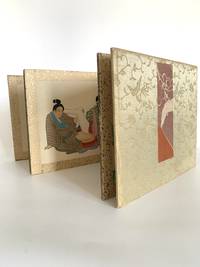
1920734821920. Fine. 1920 16 x 19 cm autre An album containing 14 gouaches on silk including 12 erotic paintings. The first painting on each side of the folding shows a bird and on the other side maple leaves thus masking on each of the first pages the erotic aspect of the collection. Shunga is the generic Japanese term that designates erotic art it literally means Spring Image spring being a euphemism and figure of style expressing sexuality. The term Shunga having been reserved for a long time for prints collections or albums have often been designated by the appellation Pillow Books or notes for the pillow etc. Utamaro: The Song of the Pillow 1788. Japanese accordion album covered with damask silk with flowers and birds in pale gold. Silk band on the first cover serving as a label but mute. Each painting 12.8x16cm is mounted on cardboard. The cardboard folding sections are covered with cream paper speckled with gold. Very fine condition edges rubbed with small lacks to fabric. The paintings respect the canons of Japanese erotic representation: oversized genitals body hair women with white skin and men of flesh color. No decorative element comes to distract the eye from the sexual act only one painting contains a mirror the bodies being most of the time clothed in rich kimonos. These collections were still in the modern era offered to newlyweds particularly to women. The whole is of fine workmanship the 2 introductory paintings the bird and the maple leaves are particularly successful. This type of representation was forbidden in Japan and therefore contains no signature it is however evident that there existed painters whose profession and specialty this was and whom one went to see for private commissions; it is also not forbidden to think that the painter made several on his own initiative and that he offered them for sale as was done with collections of colored photographs at the end of the 19th century. Precious and rare ensemble in superb condition. hardcover
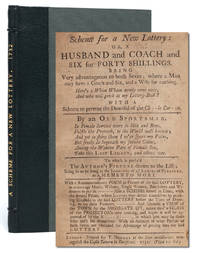
17326120London: Printed for T. Dormer 1732. First edition. Modern quarter morocco over cloth with gilt to spine. Measuring 180 x 111mm and collating complete including frontis folding game board and concluding woodcut: 2 62 2. From the collection of stage magician Ricky Jay with his bookplate to upper pastedown. Top margin trimmed close with consistent loss to running headers and occasional loss to page numbers with no other text effected. Pages somewhat toned with minor marginal chips but otherwise unmarked. A scarce satire playing both on the rising popularity of get-rich-quick schemes and on the economics of the marriage market the present is the only example to appear in the auction record. OCLC locates only twelve institutional copies. The present is the only example currently in trade.<br /> <br /> A Scheme for a New Lottery warns readers against the dangers posed by get-rich-quick schemes targeting large-scale scams like the recently burst South Sea Bubble sometimes called the world's first Ponzi scheme and the pawn-broking swindle of the so-called Charitable Corporation. These scams were appealing to ordinary people at a time when few were "successful in using wealth from trade to found a landed family" Rapp. Mocking both the conmen and the conned A Scheme satirically proposes "Another Lottery which may prove a general benefit to all concern'd; as there is no better Remedy for a Bite from a Mad Dog than the Liver of the Dog that bit." The proposed lottery filled with abstruse rules and convoluted promises ensures that the cycle continues.<br /> <br /> A Scheme also mocks marriage as a scam in which women could either make a wise match in a rich man or lose it all by marrying down. The lottery provides "Fifty Thousand tickets to be deliver'd to Maids or Widows or any that appear to be such" in the hopes of winning a financially stable husband represented by the tickets drawn. Such a match could be a good one: "A Ware-House Keeper with the Salary of a Hundred Pounds" or "the Governour." It could also by virtue of lottery be a loss: "2 Scotchmen both Pedlars 500 Broken Booksellers" and a range of other ruinous bounders are also listed as prizes. For those who desire an advance attempt the folding game bound in the book invites blindfolded women to stick a pin in the board to claim their prize. The present copy was played gently with pin marks revealing a Blacksmith and a Valet de Chambre among those husbands won<br /> <br /> The popularity of A Scheme resulted in a reissue the same year with a canceled title page as The Ladies Lottery and falsely attributed to Swift.<br /> <br /> ESTC N20921. Printed for T. Dormer unknown
19301715341930. HAENZI Erich. Farbenlehre. 23 Original watercolour plates some with multiple images. Folio 340 x 240 mm. original cloth. N.p.: n.d. ca. 1930. A wonderfully executed manuscript on colour theory by a Swiss commercial artist whose objective was to enhance the work of decorators fashion designers graphic artists and set designers. Divided into ten sections comprising colour and achromatic antagonism colour values light-dark antagonism cold-warm antagonism quality contrast intensity contrast quantity contrast complementary contrast simultaneous contrast and successive contrast. According to the seller the work is by a Swiss commercial artist named Erich Haenzi. hardcover
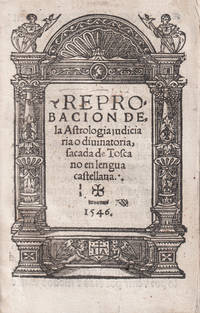
154610843Salamanca: Juan de Junta 1546. First Edition — Primera edición. Hardcover — Tapa dura. 134x94mm. 5¼x3¾". Salamanca Juan de Junta 1546. En 8º menor 134 x 94mm. TipografÃa gótica. 83 folios. Signaturas a-k<sup>8</sup> l<sup>4</sup>. Portada renacentista dentro de un tabernáculo arquitectónico xilográfico. Encuadernación del siglo dieciocho en pergamino. Primera y única edición de gran rareza de este libro publicado anónimo que ataca la astrologÃa judiciaria aquella que con sus predicciones se pueden declarar los efectos en las personas según la posición de los astros. Al tiempo que defiende la <em>astrologÃa natural</em> aquella que predice los fenómenos naturales según los movimientos del sol la luna y las estrellas denuncia el uso de la <em>astrologÃa judiciaria</em> para elegir el momento de las acciones como totalmente falsa y rechaza que la acción humana esté sujeta a la determinación de las estrellas debido a la existencia de la libre voluntad. No puede sacarse por ninguna parte de la obra ni el nombre del autor italiano ni el del traductor castellano si bien está generalmente admitido que el autor es Girolamo Savonarola. Nicolás Antonio menciona una obra de Antonio de Beja titulada <em>Tratado de astrologÃa judiciaria</em>. Buen ejemplar de este atractivo gótico castellano en su estado original. Pequeño taladro que afecta a una palabra de la última linea hasta mitad del volumen por lo demás perfecto. Juan de Junta hardcover
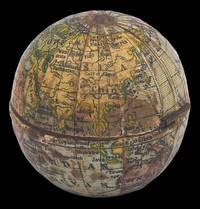
185015729c1850. Diameter: 51mm 2 inches. Sign on the meridian line Globe hand-coloured engraved gores on two concave brass hemispheres hinged containing internal glass inkwell spring mounted seal gilt finish to interior flattened base. With old paper label to base. One or two inkstains. Prior to the widespread use of fountain pens in the late nineteenth century it was common to carry ink while travelling. Portable inkwells also known as travel wells or travellers were devised for this purpose. It was of the utmost importance for the design to prevent the ink inside the travel wells from leaking and the well itself was usually made from glass and concealed within a case. These cases took on many decorative forms including the present example designed as a globe. Geography The cartography is typical of Victorian maps but simplified with no relief shown on the land. The continents and many of the countries are identified by name along with some major rivers. unknown