109 144 résultats
19560008133HONG KONG KOWLOON CHINA. Good. 1956. On offer is an interesting military diary from the immediate post WWII years. It measures 5.5 inches by 3 inches and contains 365 page plus memoranda. The cover is in good condition and all pages are intact. It is about 66% complete although many entries are quite brief. K.J. Fillery is the author of this diary. In 1956 he is a Corporal in the Royal Electrical and Mechanical Engineers REME. Casual research has not turned up any additional information but he has noted his service ID number which would make a detailed search successful. Fillery belongs to a Light Aid Detachment LAD attached to the 27th HAA Reg't RA Heavy Anti-Aircraft Regiment Royal Artillery. The 27th was stationed in Hong Kong and the REME LAD unit was attached to it to assist with engineering tasks. On Dec 30th 1956 he embarked for Hong Kong to join the Regiment. He arrived Jan 25th: "Total - 9255 miles. Arrived Kowloon about 0800. Very busy harbour good views of the island. Letter from Mum and Sheila. Weather cool - rather cold in fact. Ferry to Victoria arrived about 1100. Transported with mob of gunners to Stanley Bks miles away over twisty hilly road. Impressive scenery. Installed in L.A.D quarters." Jan 25. Almost immediately he is out shipping - important when you consider the rationing in effect in England at the time: "Started work in gunnery sets. Payday - $40.00. . bought cable release and PO medium filter $4.50. Went to tailors place bottles of pilsner steak egg supper in Sailors Mission House went to New York Theatre - saw "A Day to Remember"." Jan 26. All told he spent 9 months in Hong Kong before being rotated back to England Oct 17th. In those 9 months he travelled throughout Hong Kong visiting shops restaurants theatres cinemas etc. He also details his work whether standing guard duty or working with electrical equipment: ". Everyone knocked off at 1100 to attend Regt sports meeting Boundary Road. Stayed there about 5 min walked & then bus back to Ferry. Went to American Library. Spent couple of hours rooting around. Reasonable selection of books." Feb 16 "Went to town with Dave Fishback over to Kowloon visited YMCA etc. then saw King Henry V for free in evening excellent film though the presentation was not exactly 'West End' . apparently blokes caught a snake cobra down by flying dhobi . " May 19 "Hot day. Did minute portion of work on 4/7. Chemical de-bugging session . " July 31. He was present for the Kowloon Riots of 1956. He notes: "Admin put off owing to riots in Kowloon . Many gunners mobilized into riot squads. Curfew on Kowloon 1930-1030." Oct 11 He shipped out Oct 17th on the British troop ship SS Captain Hobson. Hobson had served as a Royal Navy hospital ship HMHS Amarapoora throughout WWII. En route they stopped in Dakar: "Dakar pop. About 295000 of whom 28000 Europeans. French naval base and commercial port." Nov 26. They docked in Liverpool Dec 5th. His last entry is Dec 8th: "Demobbed!!! He is an avid photographer and has purchased camera equipment in Hong Kong. Some of his memoranda pages contain notes about focal lengths etc. This is an excellent first-hand account of post-war garrison duty in the Far East. There is sufficient detail to paint an interesting picture of a young English soldier dropped into the exotic Far East. Historians will appreciate the corroborating information contained within. His description brings to life the bustling port city of Hong Kong.; Manuscript; 24mo - over 5" - 5¾" tall; KEYWORDS: HISTORY OF POST-WW2 1950S EAST ASIA HONG KONG ENGLAND K.T FILLERY; ROYAL ELECTRICAL AND MECHANICAL ENGINEERS; REME; 27TH HAA REG'T RA; ROYAL ARTILLERY; POST-WAR HONG KONG; KOWLOON; HONG KONG RIOTS; SS CAPTAIN HOBSON; HMHS AMARAPOORA; HOSPITAL SHIPS; BRITISH FORCES OVERSEAS; BRITISH MILITARY IN EAST ASIA IN THE 1950S; LIGHT AID DETACHMENT LAD LIFE IN HONG KONG IN 1956; 1956 FILMS; CULTURAL LIFE IN HONG KONG IN 1950; ENTERTAINMENT IN POST-WAR HONG KONG; STANLEY BARRACKS IN HONG KONG; BRITISH SOLDIERS IN HONG KONG HANDWRITTEN MANUSCRIPT DOCUMENT LETTER AUTOGRAPH WRITER HAND WRITTEN DOCUMENTS SIGNED LETTERS MANUSCRIPTS DIARY DIARIES JOURNALS PERSONAL HISTORY SOCIAL HISTORY HISTORICAL HOLOGRAPH WRITERS AUTOGRAPHS PERSONAL MEMOIR MEMORIAL ANTIQUITÉ CONTRAT VÉLIN DOCUMENT MANUSCRIT PAPIER ANTIKE BRIEF PERGAMENT DOKUMENT MANUSKRIPT PAPIER OGGETTO D'ANTIQUARIATO ATTO VELINA DOCUMENTO MANOSCRITTO CARTA ANTIGÜEDAD HECHO VITELA DOCUMENTO MANUSCRITO PAPEL . unknown
19160009183CAMP COTTON EL PASO TEXAS TX. Good. 1916. On offer is a fascinating journal kept by an officer or high ranking NCO at Camp Cotton in El Paso Texas. He appears to be an officer with the 9th Massachusetts infantry fresh off training from Camp Framingham in Massachusetts who have come down to Camp Cotton. It appears that the troops were sent down to Camp Cotton to take place in the Pancho Villa Expedition attempting to hunt down Mexican Revolutionary Pancho Villa for his role in attacking New Mexico though they may have also been used to provide support for the ongoing Border War between Mexico and America. Beginning in June of 1916 and ending in September of the same year the journal documents the daily every day duties of the officer's command. Such looks into the darily Army command responsibilities in the early 20th century are not easy to come by. Such daily entries offer fantastic glimpses as to the uniform routine and daily activities of the officers and the enlisted men. One entry even goes over each detail of a meeting in which the Infantrys camp was set up:El Paso. Camp Cotton. Sunday July 2 1916. 1st meeting 11 am. Push all work till next meeting later in day. 2nd meeting 5-20 pm. Capt. Lawless will require spare parts and cleaning materials. Tops. 10 pm. Roll call chief and repeat to Regmt. Officers can buy for cash at Depot Quartermaster. Draw for Enlisted Men: 1 hat 1 cord. 1 O.T. shirt. 6 jean undershirts. 6 jean underdrawers. Belt if necessary. 3 breeches - cotton. 1 pr. Leggings. 6 pr. Socks for work. 1 pr. Shoes. 4 pr. Leggings laces. 4 pr. Shoe laces. All men must have one new outfit at all times. The above will be paid for by each man from his ____ of $4.00 for 1set 6 mos. Then $6 or $7 allowance for each 6 mos thereafter. Muster In Rolls. Col. Buck is sending the roll for correction. they must bear names of all officers and men. Ammunition 100 rds must be issued to each man. 6:30 pm. Recd 5 cases of 1200 rounds each from Capt. Lawless same as usual. At 7 pm each man recd 90 rounds which is all they belt can carry. Balance for present will be held by 1st srgt in his tent for immediate distribution. Tents must be ditched and cinders placed in Company seets. Calls Reveiller at 6am and all other calls same as those need used at Framingham. Tents Loop up early in morning drop at 9 am until further advised. Cots Request in for cots. Mess An officers mess will be established. Pay It is understood that Col. Parker is on his way here and will arrange to pay men for 8 days from Mass state funds. There are many more meetings in the new few days as the camp is set up for the soldiers arriving soon to the Camp. The men arrive a few days later around July 11th. There is an officer's meetings: 11 July. Meeting at 10 am. Meat only 2 times a day. Coffee twice a day. Muster and pay bills. Men to keep away from the citizens of the city. Physical inspection this weekend. Thereafter once a week. There is a tremendous amount of information about the nitty gritty details of running a camp full of enlisted men in the early 20th century. What to do if men go AWOL What happens when they are ready to be discharged Who will set up the latrine What supplies to order for the cook staff Who will staff the canteen and what will be served All these details come from the many notes the author took in the twice daily officers meetings held at the camp. The journal ends with notes on a 15 day hike about to take place. This hike may very well be the Infantry getting ready to hunt down Pancho Villa in Mexico though it is unknown: Revelle 4:45 am. Men carry two blankets. One man left believed in prison. Regtl surgeon will decide men who are to be excused. Carry 3 days dry components. Have men report to Capt. Doly 5:30 am. There journal is an absolute wealth of fascinating information and provides a really great amount of daily officer work and details of the life of an enlisted man on the border of the U.S. and Mexico during the Mexican Revolution. The books cover and spine are still in good condition. The covers are marbled paper and show some wear and fading. The book opens from top to bottom not from right to left. There are approximately 65 handwritten pages and the book itself is 110 pages in length. The paper is still in good condition showing only minimal wear and aging. While the binding is still intact it is no longer very tight. The book should be handled with care. The handwriting is clear throughout in pencil. There is so smudging and fading in a few pages but in general the handwriting is clear and legible. The Pancho Villa Expeditionnow known officially in the United States as the Mexican Expedition but originally referred to as the "Punitive Expedition U.S. Army"was a military operation conducted by the United States Army against the paramilitary forces of Mexican revolutionary Francisco "Pancho" Villa from March 14 1916 to February 7 1917 during the Mexican Revolution of 19101920. The expedition was launched in retaliation for Villa's attack on the town of Columbus New Mexico and was the most remembered event of the Border War. OVERALL: G; Manuscript; 8vo - over 7¾" - 9¾" tall; KEYWORDS: HISTORY OF CAMP COTTON EL PASO TEXAS BORDER WAR BORDER CAMPAIGN MEXICAN REVOLUTION PANCHO VILLA EXPEDITION MEXICO-UNITED STATES BORDER U.S.-MEXICAN RELATIONS PERSHING EXPEDITION PUNITIVE EXPEDITION U.S. ARMY 9TH MASSACHUSETTS INFANTRY CAMP FRAMINGHAM WORLD WAR ONE ERA UNITED STATES ARMED FORCES SOUTHERN BORDER RIO GRANDE RIVER HIGH RANKING OFFICER DUTIES ESTABLISHMENT OF ARMY CAMP DAILY OFFICER DUTIES AMERICANA HANDWRITTEN MANUSCRIPT DOCUMENT LETTER AUTOGRAPH WRITER HAND WRITTEN DOCUMENTS SIGNED LETTERS MANUSCRIPTS HISTORICAL HOLOGRAPH KEEPSAKE WRITERS AUTOGRAPHS PERSONAL MEMOIR MEMORIAL ARCHIVE DIARY DIARIES JOURNAL LOG ANTIQUITÉ CONTRAT VÉLIN DOCUMENT MANUSCRIT PAPIER ANTIKE BRIEF PERGAMENT DOKUMENT MANUSKRIPT PAPIER OGGETTO DANTIQUARIATO ATTO VELINA DOCUMENTO MANUSCRITTO CARTA ANTIGÜEDAD HECHO VITELA DOCUMENTO MANUSCRITO PAPEL . unknown
19190002415ALASKA. Fair. 1919. On offer is a fascinating original 100 page or so manuscript diary dated September 3rd 1919 to May 18th 1922 handwritten by an unidentified trapper hunter fisherman in the Alaskan Peninsula. While the writer is unidentified we feel certain that there are enough clues that local researchers or historians of the place and time should be able to ascertain the author's identity. Rather than a solitary worker it appears the unknown author manages traplines and works with other trappers and fisherman. Found in an old cabin in Alaska the paper cover and first page or so has some issues related to damp and poor storage and some small loss of narrative; perhaps 10% of the first page bottom left far less of the second but the rest of the pages are quite good. Here are some snippets: "Arrived at Unagastick at 4 PM with stores discharged and cleaned the house Strong easterly wind clear and fine the natives held church today Quite a bit of ice in the creek glass about 25 Serge came from Illwick and hauled his boat up 3 Drakes arrived from Chignick also one boat from Northbound somewhere around Cape Sennewine the natives did not bring any mail One boat arrived from Illnick at 12 AM Gustia and Boy Gustia left for Illnick this morning I am repairing the wind break Noon blowing quite a breeze from Northwest the natives are going to Illnick to hunt Caraboo Fred Nielson left for his place this morning the natives came back to much wind took quite a few fish out of the net No natives showing up yet no more fish in Unagashack took my net in one bydarkie arrived from Illnick bound for Chignick trying to get the mail at the same time One boat arrived from Illnick with Serge Ocyntia and wife and the boys Fred Nilson left for his camp this morning 8 AM the mail arrived from Chignick at 6 PM Aleck Artinnie and father left for Illnick at 3 PM in a bydarkie .took a look over the trapping grounds shots few ducks Boys out goose hunting a gale from the Southeast no geese in the afternoon Justia and Falmilie arrived from Illnick also Marcie and Ignetty from Bear River Gustier and boys left for Illnick this morning to trapping grounds in bydarkie took out some of my traps and drove stakes Blowing from Northwest a real snowstorm cannot see anything glass down to zero Breeze from North and getting colder at 3:30 PM there teams 1 from Illnick and 2 from Bear River arrived Boys making ready to go to Port Heiden snow drifting .glass 10 above cannot go to Port Heiden today dug out some of my traps and reset them Sent 2 teams to Port Heiden for supplies left at 2 AM Blowing hard from Northeast at 4 PM one team with Gustia and three Natives arrived from Chiswick. One team left for Port moller at 8 AM in the morning 2 teams old and Scotty left at 9 AM for Chiswick and 2 teams for Bear River and Port Moller glass about 20 above team arrived from Bear River bound for Chignick boys arrived from Port Heiden at 9 AM also Mr Culver the teacher bound for Chignick Clear and cold took a walk to Fred Nielson Camp returned from Fred's camp at 9 AM Arrived at trapping ground Hot Spring River cleared a place for cabin and cut grass took a walk to King Salmon and worked at the House Wind finished the adding of the house did not go to Scotty Took out some of my traps water coming over the bank of the creek caught 2 foxes creek is overflowing the banks and I have to go to King Salmon to Chris in the morning at 7 AM during the night caught 1 fox 1 mink Scotty Nick and Gustia arrived last night at 8PM from Chignick Gustia left this morning for Unagastick Chris left at noon for Scotty's place in my skiff put out a few traps Scotty and Nick down to mouth of river caught 1 fox " Overall G.; Manuscript; 4to - over 9¾" - 12" tall; KEYWORDS: HISTORY OF ALASKA TRAPPER HUNTER FISHERMAN PENINSULA ESKIMOS NATIVES CHIGNICK INDIGENOUS PEOPLE ABORIGINALS FIRST NATION ALUTIIQ CIRNIQ KODIAK BERING STRAIT LIVING OFF THE LAND LIVING ROUGH HUNTING TRAPPING ALEUTIAN ISLANDS CAPE SENNEWINE ILLNICK UNAGASHACK PORT HEIDEN FRED NIELSON CAMP NEAR ARCTIC ALASKAN PENINSULA AMERICANA HANDWRITTEN HANDWRITTEN MANUSCRIPT AUTOGRAPHED AUTHORS DOCUMENT LETTER AUTOGRAPH KEEPSAKE WRITER HAND WRITTEN DOCUMENTS SIGNED LETTERS MANUSCRIPTS HISTORICAL HOLOGRAPH WRITERS AUTOGRAPHS PERSONAL MEMOIR MEMORIAL PERSONAL HISTORY ARCHIVE DIARY DIARIES JOURNAL LOG PRIMARY SOURCE FIRST HAND ACCOUNT SOCIAL HISTORY PERSONAL STORIES LIVING HISTORY ANTIQUITÉ CONTRAT VÉLIN DOCUMENT MANUSCRIT PAPIER ANTIKE BRIEF PERGAMENT DOKUMENT MANUSKRIPT PAPIER OGGETTO D'ANTIQUARIATO ATTO VELINA DOCUMENTO MANOSCRITTO CARTA ANTIGÜEDAD HECHO VITELA DOCUMENTO MANUSCRITO PAPELBIOGRAPHY BIOGRAPHICAL AUTOBIOGRAPHICAL AUTOBIOGRAPHY PERSONAL NARRATIVES . unknown
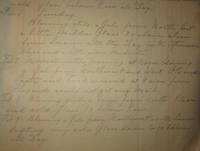
19580010010On offer is an outstanding first-hand account of the life of Nathan S. Y. Yuan a Chinese refugee in the years immediately following the rise of Mao Zedong and culminating in the Great Leap Forward an economic and social plan initiated by the Communist Party of China in 1958 to increase the economic prosperity of the country which resulted in tens of millions of Chinese citizens starving to death.<br /><br />Yuan was a civil servant who worked as a customs librarian in Shanghai when the Communist Party took over. Yuan eventually escaped to Taiwan where he worked as Librarian of the Customs Reference Library and later as a Senior Expert in the Ministry of Finance of Taiwan. <br /><br />His manuscript is dated 1958. However he notes that it was serialized in 1952 possibly as newspaper articles. The manuscript is titled "The Tale of a Chinese Refugee." It is unclear whether this manuscript was ever published in book form. Yuan did later publish a book entitled <i>Crossing the Rubicon: The Story of a Chinese Refugee Family</i> in 1980 which may be based in whole or in part on this manuscript. <br /><br />In the preface of this manuscript Yuan opens with: "This is a story of my life after the arrival of the Communists in Shanghai and of my struggle to rejoin the Government of China on Taiwan. It was originally written and published in 1952 as espisodes sic for readers in Taiwan. These separate articles are now rewritten into a complete story for presentation to our American friends as a human document and an indictment against Communism and also an admonition to the peoples in uncommitted countries and in the so-called 'neutral' countries." <br /><br />He goes on to say: "Written almost five years ago my observations on the Chinese Communists as I saw them with my own eyes have been proven by independent reports of mainland conditions that the free world has since then received. My story is not stale because the wickedness of Communism has a perpetual pattern and like cancer it grows but never changes its form or essence." <br /><br />The table of contents offers a brief summary of what can be found inside: <br /><br />Making the Decision<br />First Experiences As A Refugee In Hong Kong<br />Life in Red Shanghai<br />The Birth of A Crook<br />Daughter Applied for a Job<br />Desperate Advanture sic<br />Inside a Hong Kong Jail<br />Life in Hong Kong<br />To Taiwan At Last<br /><br />In describing the takeover of the customs office where he worked Yuan writes: "Wang was a native of Shantung from whose appearance one could immediately see that he was a calculating and cunning man and possibly a TB victim. He was dressed in a threadbare suit without any marks or decorations with bare feet in cotton shoes. His worldly belongings were worth less than US$1.00 but this was the man who did more than anyone else to wreck a Service that had claimed world renown for nearly a century . . . When freedom was lost living ended and mere existence began. I also learned that freedom was not completely lost until one was denied knowledge of its existence or disabled to protest against its loss or fight for its recovery." <br /><br />The manuscript measures 8.5 inches by 11 inches. It consists of 163 single-sided typed onion-skin pages. The pages are bound with a string and the cover page is detached. Other than some chipping and wear marks on the edges the pages are in good condition. <br /><br />This is an impressive well-written document by an intelligent and thoughtful man. It provides a valuable detailed first-hand account of the harrowing experiences Yuan endured in his quest for freedom from the People's Republic of China. His manuscript bears witness to momentous events that happened in the recent past offering valuable historical information about a turbulent and controversial time in Chinese history. <br /><br />Keywords: Nathan sy yuan; republic of china; roc; prc; people's republic of china; communist party; great leap forward; mao zedong; crossing the rubicon; chinese history; asian studies; handwritten; manuscript; document; letter; autograph; writer; hand written; documents; signed; letters; manuscripts; diary; diaries; journals; personal history; social history; historical; holograph; writers; autographs; personal; memoir; memorial; antiquité contrat; vélin; document; manuscrit; papier antike; brief; pergament; dokument; manuskript; papier oggetto d'antiquariato; atto; velina; documento; manoscritto; carta antigüedad; hecho; vitela; documento; manuscrito; papel
18620001070HAMILTON PORT STANLEY AMHERSTBURG CANADA WEST. Good. 1862. Hardcover. On offer is a remarkable 1862 - 1865 original handwritten manuscript 'letters book' wherein the author Mr. John Rowe residing in Hamilton Ontario for the most part has kept a meticulous record of his correspondence to friends family business associates and intimates. Local collectors and historians of Canadiana relating to Canada West Ontario Hamilton the Niagara area and the author's hometown of Port Stanley and Canada's attitudes and involvement in the American Civil War will delight in the treasure trove of historic content in his writings and revel in the different threads of correspondence. Mr. Rowe writes of romance commerce and war. He works for the noted Isaac Buchanan of Buchanan Harris and Co. who one on-line source notes: 'In 1863 Buchanan established the 13th Battalion of the militia now the Royal Hamilton Light Infantry. He gave the regiment its first colors and also coined its motto "Semper Paratus". When the 13th Battalion fought in the Battle of Ridgeway in 1866 the wounded were treated at Buchanan's estate 'Auchmar'. Almost eighty years later injured men from the RCAF would also convalesce there.' Rowe in what might seem rather telling kept copies of his love letters too; he writes to women in a courting manner but when rebuffed he can be bitter in his comments to an intimate regarding the woman and her other partners and friends. His letters professing love to 'Lizzie' from Toronto are classic. Then there is the American Civil war and his keen interests in militaria; firearms drilling and action. John corresponds with a very diverse group: Capt John Brown No. 4 Co. 13 Batt'n V Md; his mother his sister in Stoke Devonport England; Grace Rosevear of Guelph Schell of Campbellton and his cousin Sergeant G. Ford 2nd Battal Sco Fusilier Guards Montreal to name just a few. Mr. Rowe is a great writer and provides much detail with much personality and covers many areas with most of his correspondence making this an almost diary like collection. Here are some of the details of his participation regarding the Civil War: to his cousin Sergeant Ford Jan 14 1863: "We have formed several companies of volunteers in Hamilton. We are gazetted a "Light Infantry" and formed into a battalion of which Mr. Buchanan my governor has been appointed Lieut. Colonel. I have joined one of the camps. We were first drilled by a Guardsman Sergt major Henry. he was a splendid drill and we all liked him very much but he has been removed and we have now a Colon. Serg't of the Rifle Brigade." Later he writes: Dear Schell February 7 1863 . Pete Buchanan is ensign. Stuart enjoys the rank of Corporal. he just returned from New York where he went to see his brother who was wounded before Fredericksburg where I believe Stuart has the great honor of drinking with the Governor of Nebraska and some U.S. Generals. Since his return he is full of his exploits - dining with General Char-them-up. There is a spring meeting tonight at Mrs. Thom Clark's." As to the book condition proper someone probably a young girl or woman used pages 1 to 40 as a scrapbook glueing newspaper clippings of poems and verse to both sides of the handwritten pages. Pages 40 to 282 are all handwritten and all the letters are dated addressed and signed. This extraordinary unique book of 240 pages provides a super rendering of life in Southern Ontario at this pre-Confederation time. Condition overall is Good and would be better save for some faults to the cover the worst being chipping and some loss to the spine. Interior is good though Rowe cut some leaves out and there are some tears chips etc to the fragile onion skin type papers. This is truly a one of a kind archive of first hand history given Mr. Rowe's almost compulsive retention of his writings - lucky for us!; Manuscript; 4to - over 9¾" - 12" tall; PORT STANLEY CIVIL WAR WAR BETWEEN THE STATES ONTARIO CANADA WEST BUCHANAN UPPER CANADA NIAGARA PENINSULA PRE CONFEDERATION HANDWRITTEN MANUSCRIPT DOCUMENT LETTER AUTOGRAPH KEEPSAKE WRITER HAND WRITTEN DOCUMENTS SIGNED LETTERS MANUSCRIPTS HISTORICAL HOLOGRAPH WRITERS AUTOGRAPHS PERSONAL MEMOIR MEMORIAL PERSONAL HISTORY AMERICANA ARCHIVE DIARY DIARIES CANADA CANADIANA ECONOMICS COMMERCE ONTARIO DUNDAS HAMILTON AMHERSTBURG TORONTO . hardcover
19850001649CHINA PRC. Good. 1985. On offer is an interesting manuscript workplace diary handwritten by an unidentified man who details his workplace experiences and the changes caused by the economic reform in 1980s. He faithfully records and takes notes during workplace meetings led by the factory workshop director. Of particular interest to historians and researchers of the era are the writer's own perspective and opinions of the economic reforms. Approximatley 92 pages 17.5 cm x 13 cm. Overall VG. ; Chinese Language; 16mo - over 5¾" - 6¾" tall; KEYWORDS: HISTORY OF TIANANMEN SQUARE GREAT PROLETARIAN CULTURAL REVOLUTION CULTURAL REVOLUTION CONFESSIONS RECENT ANTI SOCIALIST ACTIVITIES ANTI CAPITALISM MAO ZEDONG WANG CHEN HUA MAO TSE TUNG GREAT LEAP FORWARD MAOIST SOCIALISM COMMUNISM MOVEMENT OF SUPPRESSING COUNTER-REVOLUTIONARIES MIAO ZI YU COMMUNIST CHINE CHINESE SINO POLITICS JIANG QING GRASSROOTS SOCIALISM PROPAGANDA POST FIVE YEAR PLAN 5 YEAR PLAN GANG OF 4 GANG OF FOUR LIN BIAO BEIJING PENG LUO LU AND YANG ZHONGFA 267 INDOCTRINATION RED CHINA CHAIRMAN MAO MARXISM-LENINISM MAOISM LIN YURONG HANDWRITTEN MANUSCRIPT CHINA DOCUMENT LETTER AUTOGRAPH DIARY JOURNAL LOG KEEPSAKE WRITER HAND WRITTEN DOCUMENTS SIGNED LETTERS MANUSCRIPTS HISTORICAL HOLOGRAPH WRITERS DIARIES JOURNALS LOGS AUTOGRAPHS PERSONAL MEMOIR MEMORIAL PERSONAL HISTORY antiquité contrat vélin document manuscrit papier Antike Brief Pergament Dokument Manuskript Papier oggetto d'antiquariato atto velina documento manoscritto carta antigüedad hecho vitela documento manuscrito . unknown
Signed and affectionately inscribed by Carter Glass upon front free endpaper. "Here is a character composed of truth, sincerity and courage. He hates deceit and detests a lie. But this Jeffersonian Democrat possesses a rarer integrity which we call intellectual integrity. Appointed to the Banking and Currency Committee in 1904, the supreme opportunity soon came to him to be the chief architect of the Federal Reserve System. He became the great post-WWI Secretary of the treasury and won Woodrow Wilson's intimacy, trust and praise. He came to the Senate and is the most outstanding Senator Virginia has ever contributed to the nation's chief deliberative council." - Introduction. xv, [1], 519 pages. Index. Four black and white plates. Unmarked with average wear to publisher's navy blue cloth. Binding sound. Above-average wear to dust jacket now preserved in mylar. Photocopy of New York Times book review, dated May 28, 1939, laid-in. A sound signed copy of the life story of this highly-influential Virginian. Book
1745000649Toulon France. Good. 1745. Hardcover. On offer is a stunning look into the the mind finances and economy of Rudelle Dalzon a landlord caterer and food supplier in pre Revolutionary France on the French Riviera. Many layered very thick elephant folio list many many hundreds of transactions for rents properties listed supplies purchased traded sums loaned and paid plus many pieces of ephemera stuffed inside. Unpaginated in original boards on thick paper there are at least 200 pages at two inches thick. Rudelle begins in 1745 and writes well into 1780s. There are at least two businesses running and ancilliary loans with corresponding notes. Mentions of trade with members of the King's staff. Many years of research in this ancient ledger. Rudelle diarizes his thoughts regarding most years in a special middle section of the book. Truly fascinating pre-Revolution manuscript and a delight for historians of the French Riviera. This journal boasts a very discreet Ex Libris HPK label identifying it from the library of the famed book collector Hans Peter Kraus.; French; Elephant Folio - over 15" - 23" tall; ANCIENT MANUSCRIPT COMMERCE HANDWRITTEN HAND WRITTEN JOURNAL LEDGER MEMOIR PERSONAL LOG HOLOGRAPH AUTOGRAPH DIARY DIARIES ANCIENT ANTIQUE TOULON LANDLORD APARTMENT REAL ESTATE CATERING PRE FRENCH REVOLUTION FRENCH RIVIERA MONACO . hardcover
19320001553PHILADELPHIA PENNSYLVANIA PA. Very Good. 1932. On offer is an amazing archive of three 3 original manuscript diaries 1932 1934 and 1935 handwritten by Sidney Irving Brody future medical doctor Naval Captain flight surgeon and the first commanding officer at the Naval Hospital at Quonset Point. Sidney was born in Philadelphia Pennsylvania. Extensive biographic notes follow the description. The first diary was written during his senior year at Northeast High School where he was an excellent student. The other two diaries were written while he was attending the University of Pennsylvania with the latter written during the author's senior year at U of P and he wrote of taking an aptitude test for a medical career and making application to medical school. He eventually graduated from the Hahnemann Medical College in Philadelphia. This diary is a stand out for a number of reasons. On the one hand this is a truly unique study in the beginnings of a young man's adulthood with a considerable future ahead of him that will require him to perform great physical and emotional feats. The author reveals himself intimately expressing his feeling and even base desires. Researchers and historians of men's studies or gender studies of this era will be appreciative of the opportunity to see his psyche revealed even before he ever began his studies of medicine we do note however that Sidney studied anatomy and chemistry in relation to the opposite sex with gusto and successfully so it seems. It really is quite unique to read a young man so expressive in a diary. The 1932 book is quite full and there is an entry for every day. He wrote about his daily activities both school and social. He was an avid tennis player and included in this lot is a framed Tennis Team award. His father bought him a car in his senior year of high school and while attending college the author lived at home. In the summer he was a camp counselor and also traveled to NYC and Atlantic City where his family vacationed each year. Dr. Brody was very interested in all sports and wrote about meeting some baseball greats: April 13."Babe" Ruth and his wife came to school today. We gave him a cup April 19."Mickey" Cochrane came up to school today. Interviewed him. He gave a nice talk Jun 19.Got up early and went to school. The St Louis Cards were there. Met them." He had many girlfriends throughout these years and seemed to put them in two categories - those he took on formal dates and treated with the utmost respect and those that he either picked up in his car or those that would "neck": Jan 24 1932 Got up late and lounged around. Went down to the library about 4:00. After supper went over to Stan's. Took Rochelle to Beth Sholom dance. Was pretty nice. She seemed to take more interest in the other guys. I guess I'll take someone else out next time I go out. Feb 1 Arose late as usual - lounged around in the afternoon. Today was Rochelle's 17 th birthday and I had the extreme honor of taking her out. Bought her an expensive box of candy and we went out with Milt and Eleanor. Went to the State and the Golden Gate. Spent a lot of money tonight. Had a nice time. Sep 21 Drove Stan to the doctor. Then we went to Ethel Horvanti's where I saw Adelle. I then painted the fenders and lights on my car. At night I went over Cooper's where the gang was. Walked Rochelle home. Sat and talked to her. She said that she thought she was in love with me !!! Believe it or not !!!!! Dec 31 Went over to Rochelle's in the afternoon. Had it out with her. Then went to Ruth Koppenheim's. Wright took Rochelle to Harry Grossman's affair at the Ben Franklin. Kissed Rochelle for the first time in over a year. Got in at 9:30 Had a swell time. July 30 Got up at a reasonable hour. Then went to Dittenfast and played tennis with Mort. Had a nice match. After supper at Mort's we went around trying to pick up some broads. Cruised around the whole city including Woodside. Finally got two near home. Took them for a ride and got a good feel. Aug 5 Arose late and sent over to Rochelle's for about an hour with Lena. Left and drove her to get her bathing suit. After supper took family for a ride. Then got Mort and we took the Germantown girls for a ride. Got a good feel and was stopped for driving one handed. May get a summons." A couple of times the author described his sexual experience in clinical terms once adding he didn't have a very good time. He also wrote of problems with girls: "Aug 24 Up early. Was Bernice's birthday. Went over Ruth Koppenheims with Stan Rochelle and Audrey. Audrey fainted on account of Stan not loving her. At night called for Rochelle and Audrey at the Colby theater. Went up to Rochelle's apartment. Audrey tried to take iodine and commit suicide the dope because Stan didn't love her. He had to do some tall convincing to get her to believe him. Took them for a ride. Dec 25 Lounged around in the afternoon. Had the family and friends over for dinner. At night took Mimi to RI . Rochelle was was there and I had my hands full." Although the author wrote much about his experiences with girls social activities parties etc. he approached adulthood with a sense of purpose in both his education and his path towards becoming a doctor. He often wrote about someone named Martin in the diaries. Martin must have been a physician as the author occasionally wrote of going to Philadelphia General with Martin. He once observed an autopsy and wrote of assisting in a couple of very minor surgeries. Martin seemed to have an influence on the author's decision to become a doctor: "Apr 6 Nothing much doing in school. After school went with Harry Green to Convention Hall. Saw General Motors exhibit. Went in Phila General Hospital and saw Martin. Went all around Psychopathic department. Ate supper with him in the hospital. He then gave me material for talk. Came home and did lessons. Aug 11 Got up slightly late. Rochelle called up so I went over there. Stayed there all afternoon. At night got Mort and went over to Rochelle's. Went for a ride and stopped at Kemmer's. Came home and Uncle Steve and Martin and all the girls were here. Took them home. Martin showed me his place at the Hospital. It's swell. Mar 17 Arose pretty early and went to the Philadelphia General Hospital. Saw an autopsy. Apr 20 After school went over to Martin's. We then went to the Phila Gen Hospital and I made the rounds with him. Attended a conference led by Dr. Robinson." Sidney Irving Brody went on to graduate from the Hahnemann Medical College in 1941 He was affiliated with the Frankford Hospital in Philadelphia. The three diaries are all hardcover one is a Wanamaker the other two are slightly larger at 8 1/2" x 5 1/2" and both cover are attached but have detached from the spine on the front hinge. All three diaries have an entry for everyday of the year. Overall VG. BIO NOTES: Obituary: Sidney Brody 1st commanding officer of Quonset Naval Hospital dies at 96. Capt. Sidney I. Brody the first commanding officer of the Naval Hospital at Quonset Point and the first physician to pilot a Navy jet and land on an aircraft carrier died Saturday at his home in Brookline Mass. at the age of 96. A native of Philadelphia and the husband of the former Muriel Myers to whom he was married 69 years Brody was a pioneer in the field of aerospace medicine. When the Navy developed its F-9 jet he was the first to take it to an altitude of 60000 feet. Commissioned a Navy lieutenant junior grade in the Navy Medical Corps in 1942 Brody worked as a Navy flight surgeon in several venues including China and the Philippines when he developed his interest in flying according to his wife. By 1947 he had undergone training as a naval aviator and became the medical officer for Carrier Air Group 4 serving aboard the aircraft carrier Franklin D. Roosevelt. After becoming a physician and test pilot he served as a liaison to the Naval Bureau of Aeronautics and the Bureau of Medicine and Surgery and in the early 1950s was part of team that developed the first pressurized flight suit for pilots for high-altitude flights. Brody eventually became the first senior medical officer aboard the Saratoga. Then influenced by President John F. Kennedy's physician Janet Travell he developed innovative treatments for myofascial pain discovering that sore throat pain often originates in the neck muscles. In 1966 he became the first commanding officer at the Naval Hospital at Quonset Point continuing there until his retirement as a Navy captain in 1970. It was then that he moved to Cumberland where he continued to practice internal medicine for 28 years focusing on chronic pain and immune disorders. He also taught for a short time at Brown Medical School and made rounds at Rhode Island Hospital. Burial with military honors in B'nai Israel cemetery. ; 8vo - over 7¾" - 9¾" tall; KEYWORDS: HISTORY OF USN UNITED STATES NAVY PHYSICIAN FLIGHT SURGEON SIDNEY IRVING BRODY PHILADELPHIA PENNSYLVANIA UNIVERSITY OF PENNSYLVANIA HAHNEMANN MEDICAL COLLEGE QUONSET POINT NAVAL BUREAU OF AERONAUTICS BUREAU OF MEDICINE AND SURGERY MYOFASCIAL PAIN BROWN MEDICAL SCHOOL DEPRESSION ERA JEWISH JUDAICA JEWISH DOCTORS JEWISH SERVICEMEN JEWISH AMERICAN SERVICEMEN DOCTORS MEDICINE TEST PILOTS PRE WORLD WAR II HANDWRITTEN MANUSCRIPT AMERICANA DOCUMENT LETTER AUTOGRAPH DIARY JOURNAL LOG KEEPSAKE WRITER HAND WRITTEN DOCUMENTS SIGNED LETTERS MANUSCRIPTS HISTORICAL HOLOGRAPH WRITERS DIARIES JOURNALS LOGS AUTOGRAPHS PERSONAL MEMOIR MEMORIAL PERSONAL HISTORY antiquité contrat vélin document manuscrit papier Antike Brief Pergament Dokument Manuskript Papier oggetto d'antiquariato atto velina documento manoscritto carta antigüedad hecho vitela documento manuscrito . hardcover
19480001733FALKLAND ISLANDS MALVINAS STH ATLANTIC ANTARCTICA. Very Good. 1948. On offer is a very unique pair of original 1948 - 1949 manuscript relics of Antarctic exploration being a diary and typed proposal with tucked in ephemera handwritten by "Wm. Gwynn Thomas Base F Argentine Islands West Graham Land" a crew member of the British Falkland Island - Argentine Island Base Camps for supply and research to the Antarctic Region. The main book is a handwritten diary and then there is a typed diary of a special expedition. The author does an exceptional job putting the reader right in the thick of this most interesting and historically well known island group. Dated February 24th 1948 through January 22nd 1949 he writes approximately 100 pages this is a triplicate book ruled feint lines - the carbon has only been used to copy one sheet at a time not triplicate of everyday life from the mundane daily chores on what they ate weather the dogs they had with them the maintenance tasks they had to undertake etc. and the many trials and tribulations of one living in a weather challenged remote and contested area. Along with the book there is a typescript journal on loose sheets of paper. By way of an introduction it begins: 'The John Biscoe arrived at Base F this evening and we met the chaps who were leaving when we took over. I went ashore fairly early and stayed chatting with the boys until quite late. The four who had been here a year seemed very pleased that their time was up & that they were getting out of it at last. Burd met the base leader Watson and Reeve the two general assistants and Stock wireless operator. From their tales I gather they have had quite a pleasant year one or two complaints but nothing serious. Most of the time we were together Stock & I discussed the radio set up here; he said he had managed to keep communications going very well during the year but did not have much to say in praise of the transmitter which in his opinion was too low powered for this job and suggested a bigger transmitter would greatly ease the work. March 31 It has been very cold today but I managed to keep fairly warm. Dave and Frank caught four seals this afternoon and had a bit of a job getting them back through the brash ice. April 1 Frank overhauled the small German engine today but it is of no use there's more rust than engine. I worked on the Villiers and had great success for a change. August 29 Base A party have got back safely so the 'panic stations' is over. Apparently they had been cut off and have had quite a time. September 16 There was a code message in today from base E telling of arrangements for a new Base K and also saying that I would be going to Signy a subantarctic island in the South Orkney Islands next year.Nov 2 .Jumbo brought back some sea urchins a limpet and a very strange looking item in the shape of an overgrown worm. We haven't decided what it might be yet but we have pickled it for future reference. We had penguin steaks livers and hearts today and a few eggs found in the victims. The taste of these compare favourably with the corresponding items in a chicken. Personal opinion only Dave did a pilot balloon ascent using a Langersed 150" balloon it reached 15000 feet before disappearing into some cloud.' Included in the journal are also 2 blank documents entitled 'COLONY OF THE FALKLAND ISLANDS AND ITS DEPENDENCIES JUDICIAL OATH. I. do swear that I will well and truly serve Our Sovereign lord King George VI in the office of Justice and Peace and I will do right to all manner of people after the laws and usages in force in this Colony without fear or favour affection or ill-will. Sworn at. The typed document is entitled Base D Hope Bay Grahamland Diary for the 5th Sledge Journey. The proposal was that a party of five with four teams should set out on a journey to Snow Hill Island with the object of completing the survey and geology of Ross Island.Weds Sept 1st to Thurs Sept 30th including a summary page on number of days miles made good total miles accumulative average etc & a report on the Condition of Hut of Swedish Expedition on Snow Hill Island. This document does not seem to be for the same year as the larger journal as there is no mention of a Sledge trip in there for September. HISTORICAL NOTES: RRS John Biscoe 1944 1584 tonnes operated from 1947-55. Named after the English explorer John Biscoe who discovered parts of Antarctica in the early 1830s. When a party of British scientists attempted to land from John Biscoe at Hope Bay Graham Land on February 2 1952 an Argentine shore party fired shots over their head ref Wikipedia There is a hand drawn map of the Argentine Islands where Base F is marked. The journal measures 11"x 8.25" x 1" has light wear to edges of cover and pages tightly bound. Overall VG.; 4to - over 9¾" - 12" tall; KEYWORDS: HISTORY OF WM. GWYNNE THOMAS WILLIAM GWYNN THOMAS JOHN BISCOE FALKLAND ISLANDS ANTARCTIC EXPLORATION ANTARCTICA ARGENTINE ISLANDS MALVINAS POLAR EXPLORATION ANTARCTIC REGION COLONY OF THE FALKLAND ISLANDS ANTARCTIC RESEARCH STATION TRAVEL SOUTH AMERICA SOUTH ATLANTIC ARGENTINA BRITAIN BRITISH COLONIES BRITISH COMMONWEALTH BASE D HOPE BAY GRAHAMLAND DIARY FOR THE 5TH SLEDGE JOURNEY SNOW HILL ISLAND SWEDISH EXPEDITION HANDWRITTEN MANUSCRIPT DOCUMENT LETTER AUTOGRAPH DIARY JOURNAL LOG KEEPSAKE WRITER HAND WRITTEN DOCUMENTS SIGNED LETTERS MANUSCRIPTS PHOTO ALBUM PHOTOGRAPHIC ALBUM HISTORICAL HOLOGRAPH WRITERS HANDSCHRIFT HANDGESCHRIEBEN MANUSKRIPT DIARIES JOURNALS LOGS AUTOGRAPHS PERSONAL MEMOIR MEMORIAL PERSONAL HISTORY antiquité contrat vélin document manuscrit papier Antike Brief Pergament Dokument Manuskript Papier oggetto d'antiquariato atto velina documento manoscritto carta antigüedad hecho vitela documento manuscrito Papel . unknown
19420001290MUNICH MUNCHEN GERMANY GDR. Very Good. 1942. On offer is the remarkable original World War II manuscript German home front diary handwritten by renowned European Opera star Augusta Gusty Rainhoff Marie Watzlawik later then Hart. The 6 ¼ x 7 ¼"diary written in German is dated 1942 through 1945 with over 67 ½ pp handwritten entries pages Gusty provides a riveting and intimate narrative. Culture and love fate and practicality with the backdrop of war collide as the writer has to deal with the realities of war the tangled web of her personal life as well as concern about her career if she should become pregnant. Intimate and a rather unique perspective on the war from within Germany makes for what collectors and researchers of the era will agree is quite rare coming from the heart of Hitler's favored city of Munich the city known as Hauptstadt der Bewegung "Capital of the Movement". The diary begins with her personal conflict. Here are some snippets: "May 14 This book shall capture my experiences after my parting with Clemmens. I'll be alone I hope.we want to be good friends and help each other in dismal Munich. May 15 Today is a new beginning in my life. I said my farewells with Clemmens and it's serious he's being posted to Africa. These two last days with Clemmens were not so nice they perhaps made me unhappy. in spite of the fact that he said he loves me. but I know and feel it that I love him much more. It is after all a farewell for ever or so I suspect and it's probably for the best. I pray for him that he remains healthy . I tell . I am engaged that my husband is. This is the role I will play now. I'm much more enthusiastic I will write him letters because in hot Africa he will need me. God grant that I don't have a child I don't want one. I want to be free for the Theatre. I was too happy now I have to pay. That's how life is. June 3. Rehearsals.I sing Elixsir. Mr leads . he was nice and very courteous. The men are interested an officer. the work gives me pleasure. June 7. Work and more work. It all works. Often I am lonely. I love him so I pray every evening for him. June 15. The premiere is over. All went well and I am satisfied. . Flowers.I am just tired because of the rehearsals. June 16 . God give me strength. July 23. the intrigues of Margot Adam have they backfired. August 8 Soon I will be 27 years old. I can't give up my career. What's the matter with Clemmens I love him. August 12. A letter came back. Lord God what is the matter I love him. yes I don't know anything it's enough to make me crazy. What is my life without Clemmens There can't be anything I can't stand it. Lord God love him and keep him safe for me. August 17. Clemmens is wounded. I hope he'll be okay. . I can't work how is he" Along with the diary is an autograph letter postmarked Beuthen 1944 addressed to her in Munchen Munich 4 pp written front and back for total of 8 pp. Overall VG. BIO NOTES: Originally from Austria she was a rather famous operetta soubrette soprano in Nürnberg in the late 40's and early 50's. She married an American officer Major Charles J. Hart in 1951 and lived in Texas.; German Language; 8vo - over 7¾" - 9¾" tall; GUSTY HART RAINHOFF OPERA OPERETTAS SINGERS SOPRANOS HOME FRONT WORLD WAR TWO WORLD WAR II WWII WW2 WHITE ROSE MOVEMENT GERMANY GERMAN THIRD REICH NAZIS HITLER WATZLAWIK HANDWRITTEN MANUSCRIPT DOCUMENT LETTER AUTOGRAPH DIARY JOURNAL LOG KEEPSAKE WRITER HAND WRITTEN DOCUMENTS SIGNED LETTERS MANUSCRIPTS HISTORICAL HOLOGRAPH WRITERS DIARIES JOURNALS LOGS AUTOGRAPHS PERSONAL MEMOIR MEMORIAL PERSONAL HISTORY AMERICANA CORRESPONDENCE TAGEBUCH Heimatfront Zweiter Weltkrieg Handgeschrieben antiquité contrat vélin document manuscrit papier Antike Brief Pergament Dokument Manuskript Papier oggetto d'antiquariato atto velina documento manoscritto carta antigüedad hecho vitela documento manuscrito Papel Hauptstadt der Bewegung Capital of the Movement . unknown
19110008136NEW ORLEANS WASHINGTON DC NEW YORK USA. Very Good. 1911. On offer is a rare and absolutely outstanding train log detailing a nearly 10000 mile journey around the United States. The log book measures 11 inches by 8 inches and contains 60 typewritten pages. The heavy paper cover has a small tear but otherwise the journal is in excellent condition. E.M. Martin is the author of the California Conductor's Excursion or A Trip of 9800 Miles. The journal was written immediately following this 1911 odyssey. In 1911 between May 2nd and June 6th 110 railroad conductors from California boarded a California Conductors Special and embarked on an epic journey around the United States. The conductors were travelling with their wives and were members of El Capitan division No 115 of the Order of Railway Conductors ORC a labour union representing train conductors in the United States their destination was ORC National Convention held in Jacksonville in May 1911. In that month they would pass through 27 states and 2 foreign countries covering some 9800 miles. The Special consisted of an Observation Car a Dining Car 4 Sleeping Cars and 1 Baggage Car. Altogether they would travel on tracks owned by 17 different railroad companies. Some of the entries are quite terse: "Los Angeles May 6 Arrived here 7:30 A.M. and made a 25 min stop. Seven of us took an automobile ride through the principal parts of the city." Other entries are much more extensive such those for New Orleans Washington D.C. and New York City. "New Orleans May 6 Arrived here 8:30 A.M. . A crowd of us hired a sightseeing auto and saw the principal points of interest. The longest street also the principal street is called Canal St. It is four miles long. The highest part of the city is three feet below the level of the sea. We saw the Post Office building the cornerstone of which Henry Clay laid Liberty Monument and the Old St. Louis Hotel. . Don Pedro Emperor of Brazil was once its guest. Henry Clay was banqueted here on one occasion at a cost of $20000. Ex President McKinley was banqueted here on his first visit to New Orleans while Governor or Ohio. . While the Hotel was used as the State Capital Gen Phil Sheridan during the troublesome period of reconstruction drove out the Legislature in session at the point of the bayonet. ."; "Washington May 11 . we had no time to lose as the reception at the White House was from five to six. From the reception hall we were ushered out upon the lawn in single file in the President's private grounds where we were presented to the President and Mrs. Taft who stood upon the lawn waiting to welcome us. One of the guards served Mrs. Taft and she drank with us. . After luncheon the waiters passed cigars to the men . While being served the President sat upon a lawn seat talking ." He describes in detail the rooms they visited in the White House as well as other places of interest in the city. They spent several days in New York City and toured extensively. Martin has a sharp eye for detail as this example illustrates: ". One of the main parlours is trimmed in dark Spanish Oak with tapestry panels. The ceiling is decorated with beautiful paintings. In the Louis XVI Dining Room the wainscoting and pilasters are of Circassian walnut enclosing panels of golden silk tapestry." His descriptions in many cases conjure up images of old sepia-coloured photographs: "El Paso May 4th. Here in El Paso we saw for the first time a street car water wagon. We saw the big smelter and the old adobe houses where the Mexicans lived. Between two and three thousand 'insurrectos' were camped just across the river. The hillsides sand gulches were lined with their camps which were very poor. Red Mexican blankets were seen all over the hillsides. Some of the men were bathing in the river; others were washing their clothes. They all seemed very poorly clad. .". Thousands of Mexicans flew to El Paso and the United States following the Mexican Revolution in 1910 which started with insurrection of several states in northern Mexico. It started the first large wave of Mexican immigration into the United States. "Detroit May 24th. . Visited Garhartts Glove and Overall Factory. Here we saw them cut fifty-four pair of overalls at one time with an electric cutter. The head cutter gets from $25 to $35 per week. Workers at the machines get $10 a week. They work by the piece. ." The journey finished back in San Francisco at 7:00 A.M. on June 6th. This is a rare and superb look at life communities all around the United States at one moment in time. Historians and geographers will find in it a goldmine of information and observations. Martin is a very good writer and a keen observer. This Journal can serve as an excellent benchmark for any number of comparisons whether historical geographic the Salton Sea for example economic or social. Whether large industrial cities or small communities across the south or up the Atlantic seaboard Martin lets his reader have a window seat on this epic journey around America.; Manuscript; 4to - over 9¾" - 12" tall; KEYWORDS: HISTORY OF EARLY 20TH CENTURY TRAVEL RAILROADIANA 1910s PROGRESSIVE ERA; UNITED STATES CALIFORNIA; CALIFORNIA CONDUCTORS EXCURSION 1911; E.M. MARTIN; ORDER OF RAILWAY CONDUCTORS OF AMERICA ORC; EL CAPITAN DIVISION NO. 115 ORDER OF RAILWAY CONDUCTORS NATIONAL ORC CONVENTION IN JACKSONVILLE; LABOUR UNION OF TRAIN CONDUCTORS AMERICAN RAILWAY UNIONs RAIL TRANSPORT IN THE UNITED STATES; RAILROADS OF AMERICA; PRESIDENT WILLIAM TAFT; TRAIN TRIPS; AROUND THE UNITED STATES; CALIFORNIA RAIL TOUR; TRAVEL JOURNAL; AMERICA BY TRAIN IN THE EARLY 20TH CENTURY CALIFORNIA CONDUCTORS SPECIAL; TRAINS OF THE EARLY 20TH CENTURY MEXICAN REVOLUTION REFUGEES MEXICAN REFUGEES IN EL PASO WHITE HOUSE IN THE EARLY 20th CENTURY AMERICANA HANDWRITTEN MANUSCRIPT DOCUMENT LETTER AUTOGRAPH WRITER HAND WRITTEN DOCUMENTS SIGNED LETTERS MANUSCRIPTS DIARY DIARIES JOURNALS PERSONAL HISTORY SOCIAL HISTORY HISTORICAL HOLOGRAPH WRITERS AUTOGRAPHS PERSONAL MEMOIR MEMORIAL ANTIQUITÉ CONTRAT VÉLIN DOCUMENT MANUSCRIT PAPIER ANTIKE BRIEF PERGAMENT DOKUMENT MANUSKRIPT PAPIER OGGETTO D'ANTIQUARIATO ATTO VELINA DOCUMENTO MANOSCRITTO CARTA ANTIGÜEDAD HECHO VITELA DOCUMENTO MANUSCRITO PAPEL . hardcover
18450001065Providence Rhode Island RI. Good. 1845. On offer is a remarkable historic handwritten manuscript relic of Rhode Island's involvement in the Mexican War and regional commerce being the journal and ledger of George W. Guild who was a soldier in the Mexican War a merchant and a Justice of the Peace in Providence Rhode Island. This 266 page hand numbered book was used from 1845 - 1850 as a ledger for Mr. Guild's prosperous business. He tended to do most of his invoices notes sales and orders on the right side of the open book. The left side was saved for other notes relating to store operations. It is here on these mostly blank pages than George Guild wrote his Mexican War travels and adventures very soon upon his return from service. There are about a dozen pages of written narrative detailing travel vessels conditions battles brothers-in-arms etc and then more pages of point form notes possible chapter headings etc. It seems without doubt that Guild is documenting his immediate memories with an intent to later flesh out for either a book or memoir. A noted dated 1850 in the book confirms this as Guild makes mention of the cost of publishing 100 copies of a 100 page book at a cost of $1.00 per book. Students of the time period will know that when Congress declared war against Mexico on May 13 1846 volunteers in large numbers enlisted to fight against her. About this period the movement of General Taylor or "Old Rough and Ready" as his men called him from Corpus Christi to the relief of Fort Brown on the Rio Grande River was the theme of general conversation throughout the state. Meetings were called by the commanders of the various military companies after the battles of "Palo Alto" and "Resaca-de-la-Palma" for the purpose of offering their services to the government. The act passed by Congress to increase the strength of the army by adding ten additional regiments to be enlisted for the war defined the "quota" of Rhode Island to be one company of infantry. Now there were four companies in process of organization at this time but only one could be mustered into service. In January 1847 the Legislature of Rhode Island made an appropriation of $2500.00 for volunteers for the Mexican War. To Captain Joseph S. Pitman and Lieutenant John S. Slocum was assigned the duty of preparing the company intended for the field. The Second-Lieutenancy was subsequently filled by the appointment of John Glackin of Woonsocket R. I. George W. Guild was appointed First Sergeant. Frequent changes were made in the "non-commissioned" officers as their various qualifications developed. The following is the "roster" after entering the valley of Mexico. His narrative is first hand and well expressed. This was a fascinating time in Rhode Island history and this rare journal is a unique first hand original relic of that time. Overall G. ; 24mo - over 5" - 5¾" tall; MEXICAN-AMERICAN WAR TEXAS REVOLUTION MEXICAN WAR MEXICO VOLUNTEERS RHODE ISLAND HANDWRITTEN MANUSCRIPT DOCUMENT LETTER AUTOGRAPH DIARY JOURNAL LOG KEEPSAKE WRITER HAND WRITTEN DOCUMENTS SIGNED LETTERS MANUSCRIPTS HISTORICAL HOLOGRAPH WRITERS DIARIES JOURNALS LOGS AUTOGRAPHS PERSONAL MEMOIR MEMORIAL PERSONAL HISTORY AMERICANA ECONOMY COMMERCE MERCHANTILE; Signed by Autograph . unknown
19010002413ABOARD THE USTS ENTERPRISE. Good. 1901. On offer is a super group of four 4 folio manuscript logbooks 2 and exercise books 2 handwritten and compiled by Navy cadet Herman T. Parker who served aboard the United States Naval training ship USTS Enterprise between 1901 - 1902. Beginning under the command of Edward Merritt Hughes from June 1 1901 to Oct 12 1901 and then commanded by Edward David Taussig June 14 1902. Uniquely the group of four presents the historian and researcher of Naval education an opportunity to view the education alongside the performance as the official USTS Enterprise logs are filled with the standard data all sailors have recorded since the Age of Sail: weather winds nautical or ship observations position and status. There are any number of fascinating entries: the Prince and Princess of Norway boarding the Enterprise an encounter with the Russian Fleet a review by the Czar of Russia's Royal Yacht a German royal yacht in review and boarding ships; a number of exchanges with the British German and French Navy. There are many cases were the Enterprise encounters Fleets of the Russian Navy. Another interesting entry: "Port watch -went on liberty at 9 commanding officer made official calls on U.S. consul charge d'affaires Vice Admiral De Loviui Command of Port Vice Admiral Avalon Admiralty Molars." The cross-Atlantic includes ports in Scotland Copenhagen Denmark Saint Petersburg Russia Kiel Germany Antwerp Belgium Gravesend England Gibraltar Funchal Madeira before going back to Boston Massachusetts. The trip and education of a lifetime for this young man who by the end of the voyage would be an 'old salt'. The folio sized books have about 200 pages in total with writing. The books show some signs of ageing but overall G.; Manuscript; Folio - over 12" - 15" tall; KEYWORDS: HISTORY OF HERMAN T. PARKER 1ST EDITION ILLUSTRATED SIGNED HANDWRITTEN JOURNAL LOGBOOK DIARY LEDGER US NAVY RUSSIAN NAVY UNITED STATES NAVAL TRAINING SHIP USTS ENTERPRISE GERMANY GERMAN NAVY TRAVEL JOURNAL RUSSIAN NAVY NAVAL MANEUVERS ROYAL YACHTS MARINE MARINERS SAILORS MIDSHIPMEN NAUTICAL HANDWRITTEN HANDWRITTEN MANUSCRIPT AUTOGRAPHED AUTHORS DOCUMENT LETTER AUTOGRAPH KEEPSAKE WRITER HAND WRITTEN DOCUMENTS SIGNED LETTERS MANUSCRIPTS HISTORICAL HOLOGRAPH WRITERS AUTOGRAPHS PERSONAL MEMOIR MEMORIAL PERSONAL HISTORY ARCHIVE DIARY DIARIES JOURNAL LOG PRIMARY SOURCE FIRST HAND ACCOUNT SOCIAL HISTORY PERSONAL STORIES LIVING HISTORY ANTIQUITÉ CONTRAT VÉLIN DOCUMENT MANUSCRIT PAPIER ANTIKE BRIEF PERGAMENT DOKUMENT MANUSKRIPT PAPIER OGGETTO D'ANTIQUARIATO ATTO VELINA DOCUMENTO MANOSCRITTO CARTA ANTIGÜEDAD HECHO VITELA DOCUMENTO MANUSCRITO PAPELBIOGRAPHY BIOGRAPHICAL AUTOBIOGRAPHICAL AUTOBIOGRAPHY PERSONAL NARRATIVES . unknown
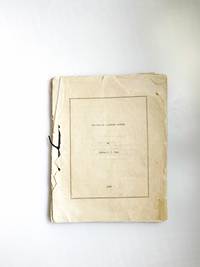
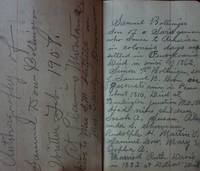
19070002567MONTANA OTTUMWA IOWA SHERIDAN COUNTY DAKOTA. Very Good. 1907. On offer is an original significant historic record of late 1800s and early 1900s pioneer and western life being the original handwritten manuscript diary of a fascinating and eclectic Montana pioneer whose many job titles included lawman judge Civil War veteran teacher miner and newspaper editor Samuel Dow Bollinger 1848 - 1917. The 3½ x 6 inch 40 page book begins in 1907 though much is retrospective with annual entries through 1917. The last two entries of 1917 seem to indicate he was ill and likely died about that time. The first page or so gives history of his parents who had come from Pennsylvania writing entries covering his birth through the rest of his life and a very interesting life and one uniquely reflective of the times in which he lived. In the early 1860s he worked for a couple newspapers in Ottumwa; The Courier and The Mercury from 1866 - 1869 Bollinger and he also served with the US Army in the Dakota Territory. After the army Bollinger headed to Missouri marries his first wife and then in 1880 he moves to Montana where he joins the Odd Fellows Lodge at Virginia City. He did some freighting work for the railroad became justice of the peace at Sheridan County. He details several accounts of criminals that he encountered. Later he became an itinerant teacher at several different locations. In 1889 he founded and published a newspaper at Pueblo Colorado called "The Pueblo Democrat" - he adds that his partner W.G. Jackson who "beat him out of his interest and then let the paper die" runs for Supt. of Schools in 1890; in 1894 he is in Cripple Creek doing some mining and also working with a newspaper and publishing the "Daily Crusher"- then back to Missouri and then back to Montana in 1898 as Justice of the Peace again in 1904 at Sheridan County and the in 1913 he goes to Arkansas where it appears his life ended. Here are some snippets: Inside front cover: After I'm dead send the book to Emolyn Bowman or Mrs S.M. Hatfield Samuel Dow Bollinger Fifth Son of Simon P Bollinger and Ruth Bollinger Davis Born at Ottawa Iowa Oct 22 1848; Earliest recollection 1852 cut off sister Mary's Finger. 1852-1862 Helped father at carpentering and furniture making educated at public schools and private college in Ottawa. 1862-66 Worked at printing "Mercury" and "Currier "offices in Oltuwna. Walked to Dallas Co Iowa 125 miles and spent summer with uncle George Hills returned in fall and had first R.R. ride for Pella to Ottuma 60 miles. 1866 Drove an Ox train from Ottawa to Hamburg 1869 Worked passage on boat from New Orleans to La Grange MO than walked to Kirksville MO. 1866 Went to Hawsburg Iowa 200 miles in company with mother and sister Susan and her husband Ehias P Day worked on first issue of "Fremont Co Times" Published by Eaton Brothers. Went to Caldwell co Mo thence to Ottawa on foot. 1866-69 Served three years in US Army CO E 10th infantry at 71 Wadsworth now in N Dakota. 1870 Broke prairie with four yoke of oxen in Adams Co Missouri built frontier shop at Shars Mill and thought school at Ball Knob district 1871 Married to Mary M Vanlaningham 1872 Bought 40 arches of brush land taught school and cleared land until 78. 1881 Man killed by lighting near Sheridan found corpse in a box just as he been pecked up took him out washed and shaved him got clothes and coffin at county expense and buried him decently. 1882 Settled in Sheridan built frontier store and shop Esther came back from MO after burying a baby boy that was born during her visit of ten months. 1882 -1885 Served several terms as Justice of the Peace at Sheridan Montana disarmed John Mitchell a murderer and committed him to jail. Defied a masked mob from Laramie who came for the prisoner in the night in face of threats of personal violence turned over the man who shot Mitchell the leader of the mob eventually sent to prison. From the Great Falls Genealogical society: MITCHELL John Laurin MT shot Daniel Kane Mitchell was killed soon after he reached Sheridan MT March 12 1885. 1888 -Bad Man of the plains rode into the post office in Stuart issued warrant constables afraid Arrested him myself and committed him to Los Amias jail for 90 days broke up gang.' Overall G.; Manuscript; 12mo - over 6¾" - 7¾" tall; KEYWORDS: HISTORY OF SAMUEL DOW BOLLINGER MONTANA PIONEER LAWMAN WILD WEST VETERAN TEACHER MINER NEWSPAPER EDITOR OTTUMWA IOWA SHERIDAN COUNTY DAKOTA TERRITORY PUEBLO COLORADO THE PUEBLO DEMOCRAT MONTANA TERRITORY WESTERN LAWMEN GENEALOGY AMERICANA HANDWRITTEN MANUSCRIPT DOCUMENT LETTER AUTOGRAPH WRITER HAND WRITTEN DOCUMENTS SIGNED LETTERS MANUSCRIPTS HISTORICAL HOLOGRAPH WRITERS AUTOGRAPHS PERSONAL MEMOIR MEMORIAL AMERICANA ANTIQUITÉ CONTRAT VÉLIN DOCUMENT MANUSCRIT PAPIER ANTIKE BRIEF PERGAMENT DOKUMENT MANUSKRIPT PAPIER OGGETTO D'ANTIQUARIATO ATTO VELINA DOCUMENTO MANOSCRITTO CARTA ANTIGÜEDAD HECHO VITELA DOCUMENTO MANUSCRITO PAPEL . hardcover
19350001270AROUND THE WORLD. Very Good. 1935. Full-Leather. On offer is the super beautifully printed diary specifically for the British Medical Association World Tour of 1935. This official diary was owned by Sir William Willcox as evidenced by the personal letters and other related ephemera in the book's pouch. The book contains the itinerary for every day of the tour with information and maps relating to places visited as well as all the travel and dining arrangements and travel tips given in detail. Space meant for the purpose and other blank spaces are used by the author many many pages of handwritten entries relating to the voyage the crew the other doctors and medical related observations and traded words of wisdom from other practitioners. Here are some biographical notes based on an online review of a biography of Sir William: The Detective-Physician: the Life and Work of Sir William Willcox by PHILIP H.A. WILLCOX London Heinemann Medical Books 1970 pp. xiv 332 illus. £3.50. In this book Dr. Philip Willcox has described the life and work of his father Sir William Willcox K.C.I.E. C.B. C.M.G. M.D. F.R.C.P. who was physician to St. Mary's Hospital from 1907 to 1935 and an expert forensic adviser to the Home Office from 1904 to 1941. It is much more than a work of filial piety. It describes a brilliant career she like of which is no longer to be seen in the modern world. As Dr. Willcox writesin his introduction: 'Here was the case of a man who without outside influence or financial support in his youth at first earned his living as a schoolmaster paid for his own medical education at St. Mary's Hospital at a time when there were no state sponsored scholarships qualified as a doctor became a Home Office pathologist and analyst consultant physician and lecturer in several subjects at his medical school.' Before the first world war Sir William Willcox gave evidence in twenty-five trialsfor murder or manslaughter including those of Crippen Steinie Morrison and Seddon. After the war he gave evidence in other famous trials and throughout the whole of these periods he was on the consultant staff of St. Mary's Hospital treating patients and teaching students and also running a large private practice in the West End of London. His retirement from the staff of St. Mary's was marked by a packed and emotional final ward-round about which the Dean the late Lord Moran wrote: 'What everybody thinks was shown by the turnout. I have never seen anything like it.'Sir William Willcox was born at Melton Mowbray in 1870 and throughout his life he indulged in the hobbies of a country squire: hunting hacking and shooting. In the sunset of his life I myself remember shooting with him when he was on a visit to my parents in Buckinghamshire. Sir William Wilcox first took a degree in chemistry and then taught chemistry for four years in a private school becoming a Fellow of the Institute of Chemistry. Clearly these years laid the foundation of his great knowledge of toxicology. He did not begin to study medicine until the age of twenty-five and he qualified with brilliant Honours in the London M.B. at the age of thirty. Soon Willcox joined the distinguished line of Home Office pathologists-Sir Thomas Stevenson Pepper Luff Webster-and in his turn he trained Spilsbury and Roche Lynch. It is interesting to record that all of Willcox's distinguished honours from the State were won on war service in World War I. He served with the Gallipoli expedition and in Mesopotamia where he made a great contribution to the recovery of the British Army from the early disasters of the campaign. Everyone who is immunised with TAB vaccine as I myself am each year should remember that this was pioneered by Willcox and Sir Robert Archibald. In 1918 General Sir Alfred Keogh the great Director-General of Army Medical Services in World War I who was honoured with the Grand Cross of the Order of the Bath a very singular honour for a medical man wrote to Willcox and cast his mind forward to the post-war period: 'To you and to me the great interest is of course the question of the national health its relation to national efficiency to housing to poverty and the relation of industrialism thereto. I have some-but not very stronghopes that the medical profession will come to realise that its part in these great questions is bigger than they have been in the habit of imagining. But we have to get away from the ideas that are so prevalent if not voiced that we are merely technical advisers and cannot like other professions produce leaders of men. I see little signthat "Public Health" is really recognised to be that which it is. All the talk is of sick benefit clubs halfcrowns for the practitioner and so on. The great things are forgotten.' Sir William Willcox was one of the first to be concerned about the problem of barbiturate addiction and in 1926 while engaged on this topic we find him writing: 'The BMA representatives are very obstinate and very difficult to deal with.' Plus Ca change plw c'est la meme chose. Sir William Wilcox lived in considerable style in Welbeck Street in the house where he had his private consulting rooms. He kept horses and rode every morning in Rotten Row. I remember a very senior general practitioner in the country just after World War II bemoaning the decline in standards of dress. He remarked that consultants now come to consultations in the country in small fast cars and wearing tweed jackets whereas Sir William Willcox used to be driven down from London by his chauffeur in a Rolls Royce car and wore a morning coat and top hat and 'the patients were very pleased to pay a guinea a mile for that'. Dr. Willcox has rightly eschewed any temptation to sensationalize the narrative of his father's great work in forensic medicine and in dealing with drug addiction. The facts stand on their own and the life and work of Sir William Willcox make fascinating reading. Unfortunately the book is somewhat marred by a considerable number of printing errors for example 'tetronal' is wrongly spelt on page 255 and Norman Kerr's name is wrongly spelt twice on page 284. What has happened to the proofreaders that all publishers used to employ But this small imperfection does not diminish the great interest of this biography and Dr. Willcox is to be warmly congratulated on it. E. GREY-TURNER. Unpaginated but very thick leather bound 13 x 21 cm and overall VG.; Manuscript; 8.25 x 5.25 OBLONG; POLICE ENFORCEMENT EXPERT TESTIMONY TRAVEL WORLD TOURS AROUND THE WORLD TRAVEL DOCTORS FORENSICS MEDICAL MEDICINE HANDWRITTEN MANUSCRIPT DOCUMENT LETTER AUTOGRAPH WRITER HAND WRITTEN DOCUMENTS SIGNED LETTERS MANUSCRIPTS HISTORICAL HOLOGRAPH WRITERS AUTOGRAPHS PERSONAL PERSONAL HISTORY MEMOIR MEMORIAL DIARY JOURNAL DIARIES JOURNALS LOG LOGS KEEPSAKE Travel Steamships Steamers Trains Railroad . hardcover
18810008188HOLYOKE MASSACHUSETTS. Good. 1881. On offer is a rare manuscript from late 19th century Massachusetts. This municipal record book details the matters pertaining to a vital municipal Board in America's first planned industrial city. Measuring 10.5 inches by 8 inches it contains 143 pages and is 100% complete. The cover binding and pages are in good condition. The handwriting is legible. There are also several pages of notes and correspondence tucked inside. Located on the Connecticut River Holyoke MA was one of the first planned industrial communities in the United States. The city features rectilinear street grids which was a novelty in New England. In 1847 merchant investors began construction of dam and canal system along the Connecticut River. With this construction came an elaborate complex of mills and worker's housing which evolved into the city of today. As an interesting side note volleyball was invented here and Holyoke is home to the Volleyball Hall of Fame. To say that water and water management were important matters to the citizens of Holyoke would be an understatement. Its very existence its jobs and its prosperity were totally reliant on it. This gives an inkling into the importance of its Board of Water Commissioners. Hence this original ledger of the Holyoke Board of Water Commissioners is a vital piece of municipal history. Holyoke was home to numerous paper mills giving rise to its longtime nickname as the "Paper City." Among the many water-powered paper companies and mills referenced here include the Albion Paper Co. Union Paper Mfg. Co. Parsons Paper Co. Hampden Glazed Paper Co. Newton Paper Co. Excelsior Paper Co. etc. In 1888 Holyoke's paper industry spurred the foundation of the American Pad & Paper Company which is still one of the largest suppliers of office products in the world. Timothy Merrick the Town Clerk maintained this journal. The journal's entries chronicle all matters pertaining to the city's busy water board. At the time the board was active in extensive affairs ranging from dealings with companies such as the Connecticut River Railroad and Holyoke's many paper mills to bodies of water throughout the city. "Voted and approved 19 bills including payroll for Frely amounting to $575.44" p. 3; "On motion voted to allow Jolly Brothers to make connection with the City pipe and to use water the work to be done at their own expense buy under the supervision of the Supt. of the Works" p. 7; "Voted that the Registrar notify George D. Robinson Atty for P. Dolan that a hearing on his claim for damages for diverting Tannery Brook be held over Dec 19th at 2:30 p.m." p. 22; "Voted to loan to V.J. O'Donnell $1800 of mortgage on house on Price St." p. 23; "Voted to rebate to Parsons Paper Co on July $56.48 on August $14.03. Also to G Burnett $20.00 on Nov." p 46. The names of numerous Holyoke residents businesses landmarks street addresses intersections etc. can be found throughout journal. Also many other Holyoke based companies from other industries can be found throughout the pages of this early volume such as the Jolly Brothers custom iron and steel forgings Daniel O'Connell Farr Alpaca textile mill Tuttle Rubber Co. Valley Pipe Co. Crafts & Fraser Store etc. Various local charitable and religious organizations are mentioned such as the Sisters of Charity at Mount Saint Vincent. This is a very important historical document as this Board was for practical purposes the most important government body in the city. Political scientists and historians would find this a treasure trove. It is a perfect view of local government in action. Its detailed recording of actions taken and events responded to provide a rich history of the city and a fascinating view of how it worked in the late 19th century. It is an excellent resource for genealogists as it provides complete name details and other identifying information such as addresses.; Manuscript; 4to - over 9¾" - 12" tall; KEYWORDS: 1881 HOLYOKE MASS HISTORY OF; 19TH CENTURY; 1880s; HOLYOKE MA; HAMPDEN COUNTY; MASSACHUSETTS; NEW ENGLAND; UNITED STATES; PAPER CITY; VOLLEYBALL HALL OF FAME; HOLYOKE BOARD OF WATER COMMISSIONERS; TIMOTHY MERRICK; AMERICAN PAD AND PAPER COMPANY; INDUSTRIAL NEW ENGLAND; URBAN HISTORY; WATER MANAGEMENT IN THE 19TH CENTURY; HOLYOKE BUSINESSES; INDUSTRIES IN 19TH CENTURY HOLYOKE; GENEALOGY OF THE HAMPDEN COUNTY; ECONOMIC HISTORY OF HOLYOKE; ECONOMIC HISTORY OF HOLYOKE; MUNICIPAL BOARD OF HOLYOKE; HOLYOKE CITY HALL; CITY CLERKS OF HOLYOKE; LOCAL GOVERNMENT OF 19TH CENTURY HOLYOKE; AMERICANA HANDWRITTEN MANUSCRIPT DOCUMENT LETTER AUTOGRAPH WRITER HAND WRITTEN DOCUMENTS SIGNED LETTERS MANUSCRIPTS DIARY DIARIES JOURNALS PERSONAL HISTORY SOCIAL HISTORY HISTORICAL HOLOGRAPH WRITERS AUTOGRAPHS PERSONAL MEMOIR MEMORIAL ANTIQUITÉ CONTRAT VÉLIN DOCUMENT MANUSCRIT PAPIER ANTIKE BRIEF PERGAMENT DOKUMENT MANUSKRIPT PAPIER OGGETTO D'ANTIQUARIATO ATTO VELINA DOCUMENTO MANOSCRITTO CARTA ANTIGÜEDAD HECHO VITELA DOCUMENTO MANUSCRITO PAPEL . unknown
19170001524BROOKLYN TO CONSTANTINOPLE TO PARIS. Good. 1917. On offer are two 2 absolutely super original World War I and post-War manuscript diaries handwritten by American Foreign Service agent and Central Intelligence Agency operative Grace Phillips Cogswell. A woman of many talents and accomplishments living a life one usually reads about in fiction. The diaries date from 1917 - 1926 No.1 1917-1920 800 entries; No.2 1923-1926 475 entries covering the World War I years and then while she was working for the O.S.S. and American CIA Central Intelligence Agency. It should also be noted that she was married to the famed naval commander Captain Francis Cogswell whose diary we list separately. She traveled abroad extensively and writes of being in many different countries / cities including Venice Constantinople Rome Edinburgh Paris and many many more. From the mundane daily activities to super expamples of her sparkling personality and keen eyed observations. Here are some snippets: "Annapolis - Dined at The McNairs disgraced myself by eating too much. F. teasing me Brklyn - Fleet due today minus destroyers. Went to Governors Island and watched the fleet come in. Mr. Blairs to watch land parade with Miss Hunt. Brklyn - celebrated today with a parade and welcome home cards in every window and all sorts of parties for Soldiers Francis home from Lisbon brought me much laces and embroideries for my birthday. Regent Palace. Got military permit. Met Ambassador Davis. Saw the King drive out of the Palace Grounds on his way to the memorial services of the Princess of Denmark at Winchester . Chandler sailed at 1 p.m. Mrs Chandler and I left on 5:40 train for Paris London - Went to headquarters with Capt. Hellweg and Bones. Sat in Comdr. Brooks office and waited for dope. Met Mrs. Schuyler. Mr. Copehard and Brooke had our money changed for us at Guarantee Trust Co. took Capt. Hellweg and Brooke to lunch at Ritz Edwinburgh - Went aboard to sew on F's blouse. Mrs. Chandler came down for tea. Capt. Hellweg aboard most of time as his dog Spottie lives on board. In route Rome. Changed at Modane and had all my clothes stripped off by a horny handed female she had the time of her life. Found 3 gold pieces of 5 ea. and was wild when the French official let me thru with them. Magnificent scenery Mts. and scroll painted houses. Rome. Hotel Flora saw bones of monks made into fanciful designs in vault of church. Constantinople Pera Palace - Mrs. Day birthday. Mrs Wetherby gave large dinner Embassy crowd at Russian Club. Most remarkable violinist I've ever heard there food perfect. Danced at Pera Palace later with Ital. officer and will never be the same after trying to dance with him Lunch at Harvid Beys house in Asia Minor. Met the Princess his wife who is a daughter of last Sultan and niece of present __ . She did not appear at lunch but rec'd the ladies upstairs afterwards. Remarkably carved easle birds supporting mirror. She gave me a rose heavy course rug pred. cream color Constantinople - We are to lunch on the Scorpion with Capt. McCulloulgh and go for climb up mountain. Mr. Smith assoc. press man came with us . Venice - Mrs. J___ wife of Ambassador of Rome called at 10:30 and we took her to the Ital. ship Scills to see the war orphans . Comdr. Bryant told me that Francis is a hero. When a Calif. plane nose dived into the ocean near them they swung out of column at a snappy speed and picked it up it having turned bottom up and the aviators crawled around and sat on the keel. F. was afraid it would sink and wanted to back down to it but the Capt. voted for a boat to be lowered which picked them off. The W. VA. crew cheered the ___ cheered Francis so Mr. Bryant said. Think he stretched that a bit." BIOGRAPHY: GRACE PHILLIPS COGSWELL b. June 7 1887 d. Dec. 21 1971 was born Grace Woodman Phillips the daughter of Lee Phillips and Clara Cushing. She married Lieutenant Henry Burnet Post b. June 15 1885 d. Feb 9 1914 San Diego CA on 25 Jan 1907 at St Paul's Methodist Episcopal Church New York NY. Henry Burnet Post was the son of Henry Albertson Van Zo Post b. May 16 1832 New York - d. January 1914 and Caroline Burnet McLean b. July 14 1843 Cincinnati Ohio. In 1900 Henry A V Post was a Banker and they were living at 140 W 77th St New York NY. Henry Burnet Post was in the US Army Air Force and died in an aircraft accident in 1914 aged 28 after establishing an American altitude record of 12120 feet. Henry Post Army Airfield at Fort Sill Oklahoma is named in his honour. Grace Phillips married for the second time in New York NY on November 25 1916 to Francis Cogswell. She served in the U.S. Foreign Service and later in the Central Intelligence Agency O.S.S./CIA 1917 - 1926. From her 1919 US passport application she was living in Brooklyn NY and Francis Cogswell was residing on board the USS Chandler. In the 1920 census she is living with her parents at 508 3rd St Brooklyn NY. From Oct. 4 - 10 1922 she sailed on the SS President Cleveland from Honolulu to San Francisco CA and her US address was San Diego CA. From her 1925 US passport application Grace P Cogswell was living in New York NY and Francis Cogswell was residing with the US Pacific Fleet. From 1-10 Sep 1925 Grace Cogswell sailed from Auckland New Zealand to Honolulu on the Aorangi. Grace P Cogswell died Dec. 21 1971 and is buried at SECTION 6 SITE 8709 next to Francis Cogswell in Arlington National Cemetery. Overall VG.; 16mo - over 5¾" - 6¾" tall; KEYWORDS: GRACE PHILLIPS COGSWELL WORLD WAR I WWI WW2 CIA OSS CENTRAL INTELLIGENCE AGENCY SPYCRAFT DIPLOMACY DIPLOMATIC CORP HISTORY OF OSS SUFFRAGE WOMEN'S STUDIES GENDER STUDIES ESPIONAGE OFFICE OF STRATEGIC STUDIES WOMEN SPIES POST WORLD WAR I WWI THE GREAT WAR WORLD WAR I HANDWRITTEN HAND WRITTEN AUTOGRAPH AUTOGRAPHS SIGNED LETTERS DOCUMENT DOCUMENTS MANUSCRIPT MANUSCRIPTS WRITERS WRITER AUTHOR HOLOGRAPH PERSONAL AMERICANA ANTIQUITÉ CONTRAT VÉLIN MANUSCRIT PAPIER ANTIKE BRIEF PERGAMENT DOKUMENTLETTER AUTOGRAPH DIARY JOURNAL LOG KEEPSAKE WRITER HAND WRITTEN DOCUMENTS SIGNED LETTERS MANUSCRIPTS HISTORICAL HOLOGRAPH WRITERS DIARIES JOURNALS LOGS AUTOGRAPHS PERSONAL MEMOIR MEMORIAL PERSONAL HISTORY . hardcover
1990815a2005Riverside New Jersey U.S.A.: Prima Publishing. Very Good in Very Good dust jacket. 1990. First Printing. Hardcover. 1559580372 . Signed and inscribed by Oscar Peterson upon front free endpaper. "For the millions who know and love the music of Oscar Peterson here's the definitive biography by his friend and former Down Beat editor Gene Lees." - dust jacket. "Oscar Peterson 1925-2007 was a Canadian jazz pianist and composer. As a virtuoso who is considered to be one of the greatest jazz pianists of all time Peterson released more than 200 recordings won eight Grammy Awards as well as a lifetime achievement award from the Recording Academy" - Wikipedia. 294 p. Black and white photographic plates. Clean and bright with negligible wear. Occasional underlining in blue ink. Dust jacket now in glossy new archival-grade protection. A lovely signed example.; 8vo - over 7¾" - 9¾" tall; MUSICIANS PIANISTS BIOGRAPHY AUTOBIOGRAPHY COMPOSERS Signed and Inscribed By Oscar Peterson Jazz Pianists Canada Canadian Performers; Signed by Authors . Prima Publishing hardcover
1990422j2028London: Ebury Press. Very Good in Very Good dust jacket. 1990. First Edition. Hardcover. 0852238584 . Signed without inscription by Jean Shrimpton upon title page. "Jean Shrimpton was the look of the sixties. The most famous model in the world. Her gamine face adorned the cover of every fashion magazine both in Britain and America. But despite being one of the most photographed women of the twentieth century she brought her modelling career to an abrupt end at the age of thirty. Now for the first time she describes the childhood that destined her for stardom and how aged seventeen her discovery led to fame and fortune. Courageous and honest Jean Shrimpton's autobiography is an enthralling testament to both the pleasures and the pain of being one of the most beautiful women in the world." - dust jacket. 191 pages. Index. Black and white photographic plates. Clean bright tight and unmarked. Light wear to complete dust jacket now in glossy new archival-grade protection. A rare and marvelous signed example of this incredible life story. ; 8vo; Signed by Author . Ebury Press hardcover
19380011043Italy Costa Rica Libya Newfoundland: Società Italia Flotte Reuniti Italia Società Anonima Di Navigazione. Very Good with no dust jacket. 1938. Hardcover. On offer is an outstanding collection of three engineering log books of vessels sunk in World War Two WWII. The log books are those of three ships of the Italian merchant navy MN Cellina MN Fella and MN Rialto. In addition to the main or Deck Log maintained by the ship's Master a separate log was maintained by the Chief Engineer for the recording of all vital information about the ship's engines mechanical systems pressures operating temperatures etc. It may also contain technical drawings and specifications. The Chief Engineer had overall responsibility for the Engineering Department and reported directly to the Master or Captain. In 1938 the Italian merchant fleet numbered 1050 vessels grossing 3180000 tons. By comparison the British merchant fleet numbered 9050 ships grossing 20 150000 tons. In 1932 due to the depression and widespread unemployment of Italian ships the major Italian shipping companies were combined into one state-controlled syndicate under the name Società Italia Flotte Reuniti. By 1937 this syndicate had made rapid recovery and repaid the Government bonds which had supported it. It was then changed into a Limited Company under the name Italia Società Anonima di Navigazione. These three ships - Cellina Fella and Rialto were part of this syndicate. The ships plied the world's major shipping routes including the Mediterranean Atlantic and Pacific. In 1940 most Italian ships were requisitioned for military service and by 1945 few were left afloat. Among the losses were these three ships. M. N. CELLINA was built in 1926. She was seized as a prize by Britain at Gibralter in 1940. She was renamed EMPIRE SAILOR and sailed as part of the British Merchant Navy. In 1942 she was torpedoed and sunk off Cape Race Newfoundland with a loss of 22 lives. M. N. FELLA was built in 1926. In 1940 she was interned at Costa Rica. In 1941 to avoid her capture she was burnt by her crew. M. N. RIALTO was built in 1926. In 1941 she was torpedoed and sunk by British aircraft off the coast of Libya. Each of these log books contains detailed descriptions of the engineering aspects of the relevant ship. They are written in Italian. For the most part the pages are typed resulting in excellent readability. In addition to the notes there are engineering drawings of various components blueprints and performance graphs. They also contain photographs of each ship. The CELLINA's log book details her voyage in 1935 from Trieste Italy to Vancouver Canada The FELLA's log book contains a number of newspaper clippings including some full-page articles all of various aspects of the shipping business. Interestingly there are two pages of notes written in English regarding spare equipment These are an excellent reference pieces. Easily translated they give an authoritative picture of the engineering features of each of these ships. A naval historian would find these useful in filling in gaps in knowledge of these ships as their records were mostly lost when the ships themselves were lost. A naval architect or engineer would find these to be and excellent reference work as to how the engineering and mechanical systems were built and maintained in ships at this time. All three log books measure 11 inches x 8.5 inches. They are 148 pages plus inserts and can be considered 50% complete since entries are on one side of each page only. Covers bindings and pages are Good in all three log books. ; 8vo 8" - 9" tall; 444 pages; Keywords: handwritten manuscript document letter autograph writer hand written documents signed letters manuscripts historical holograph writers autographs personal memoir memorial antiquité contrat vélin document manuscrit papier antike brief pergament dokument manuskript papier oggetto d'antiquariato atto velina documento manoscritto carta antigüedad hecho vitela documento manuscrito papel MN Cellina; MN Fella; MN Rialto; Empire Sailor; Società Italia Flotte Reuniti; Italian Merchant Marine; Merchant Ships Lost in WWII; Battle of the Atlantic; convoy system World War Two Naval Ships Second World War European Ships War Ships Battles Lost at Sea . Società Italia Flotte Reuniti, Italia Società Anonima Di Navigazione, hardcover
19090001023GIBRALTAR TANGIERS FEZ MOROCCO. Very Good. 1909. On offer is a simply sensational seventeen 17 page handwritten original journal detailing a British Legation mission of some importance to meet with the Sultan of Morocco in 1909. This 100 year old coverless folio sized journal is an account of a political mission most likely from April 19 1909 to December 1909. Historians and collectors of the World War I era and the history running up to the 'Great War' and of North Africa will acknowledge this was a critical period of Moroccan history when European countries were trying to influence Morocco. One online source claims: "The first years of the 20th century witnessed a rush of diplomatic maneuvering through which the European powers and France in particular furthered their interests in North Africa. Disputes over Moroccan sovereignty were links in the chain of events that led to World War I." In a strong neat hand our author Corporal Stanley R.A.M.C. Medical Orderly reports just such a mission and he begins with a list of all the members of the mission; the Minister the Hon. R. Lister a Doctor Major C.E.P. Fowler Military Attache Colonel Count Albert Edward Wilfred Gleichen who appears to have published Journal of our Mission to Fez 1909 By the Military Attaché London: Harrison & Sons 1909 and a number of other WWI related books that may very well have come from this manuscript or his own parallel journal wives secretaries attaches valets/grooms etc. This is an absolutely stunning record of the trip with the commentary beginning on Gibraltar then on to Tangiers and then Fez. Along the way Stanley notes many mishaps of early exotic travel; wild camel attack causing multiple injuries and a broken leg insurgent attacks shootings deserters storms visiting royalty . Living in tents and traveling across deserts this is very well written by an intelligent keen observer and in many ways typical British soldier and citizen who has a great handle on the written language of the day. Some of the super commentary includes Corp. Stanley's description of a presentation of gifts to the Sultan wherein the Minister gifted the Sultan a beautiful gold Bulldog statue. In return the Sultan gifts a moth eaten camel blanket a rogue stallion that was returned due to its wildness and further embarrassed the company by not giving the traditional gift of a curved silver knife to all members. The Corporal's disdain for the event drips from the page. This is fascinating relic of British colonial times and the global politics pre World War I. VG.; Manuscript; Folio - over 12" - 15" tall; MOROCCO MAROC BERBERS MOORS TANGIERS FEZ PRE WORLD WAR I WORLD WAR ONE AFRICA NORTH AFRICA HANDWRITTEN MANUSCRIPT DOCUMENT LETTER AUTOGRAPH DIARY JOURNAL LOG KEEPSAKE WRITER HAND WRITTEN DOCUMENTS SIGNED LETTERS MANUSCRIPTS HISTORICAL HOLOGRAPH WRITERS DIARIES JOURNALS LOGS AUTOGRAPHS PERSONAL MEMOIR MEMORIAL PERSONAL HISTORY BRITAIN BRITISH BRITISH EMPIRE RAF World War I WW I TRAVEL GERMANY ANTIQUITÉ CONTRAT VÉLIN MANUSCRIT PAPIER ANTIKE BRIEF PERGAMENT DOKUMENT ROYAL ARMY MEDICAL CORPS RAMC BRITTANICA Alaouite Rattigan Gleichen Travel British Empire King George . unknown
18890001470USS IROQUOIS PACIFIC STATION. Very Good. 1889. On offer is a super 19th Century relic of United States Naval and marine history being the original manuscript 18 month "Cruise Journal / L.A. Kaiser / U.S. Navy Class of '89". Kaiser does a wonderful job and is a keen observer. Entries run from Captain's comments day to day activities sailing sightings seamanship special detail work going to 'quarters' and remarkable events and observations in this log dated July 1 1889 to December 31 1890. Fresh from the Naval Academy the future captain and Governor of Guam Louis A. Kaiser begins the last leg of his naval education aboard the historic USS Iroquois. In 131 well written pages we learn that Kaiser was aboard the U.S.S. Iroquois from Mare Island to Honolulu then onto Samoa and back. From 1882 to 1892 with the Pacific Squadron Iroquois patrolled to South America Hawaii Australia and Pacific islands protecting American interests and commerce. She took part in naval action in Panama in the spring of 1885 helping to land Marines to protect American commerce during the revolution. After 10 years of service on the Pacific Station Iroquois arrived at Mare Island on 24 April 1892 and was decommissioned there 12 May 1892. BIO NOTES: Louis A. Kaiser Wikipedia Louis A. Kaiser 1870-August 12 1939 was a Captain in the United States Navy as well as briefly acting-Governor of Guam. He was a pioneer in the Navy on the use of wireless telegraphy prior to World War I. Early career Kaiser was born in Kirkwood Illinois. He graduated from the United States Naval Academy in 1889 and was commissioned an Ensign in 1891. His first assignment was the USS Chicago. In 1894 he was transferred to the USS Detroit and again onto the USS Michigan two years later. In 1896 he was also reassigned to the USS Concord. In the Spanish-American War he continued to serve on the Concord and he fought in the Battle of Manila Bay. In December 1898 he was promoted to Lieutenant junior grade. In 1899 he was briefly made acting-Governor of Guam in preparation for the arrival of Governor Richard Phillips Leary. In 1900 he was transferred to the USS Solace then again to a post in Newport Virginia. In 1904 he was transferred again to the Bureau of Equipment. In this role Kaiser was a pioneer in early wireless transmissions and conducted many of the early tests of wireless telegraphy. In 1905 he demonstrated a 1100 mile range while testing it aboard the USS Brooklyn. In July 1905 he was promoted to a full lieutenant commander and invited to speak on these innovations to the Washington Society of Engineers in Washington DC. In 1910 he was transferred to the Bureau of Steam Engineering. In 1912 he was given his first command the cruiser USS Montgomery. The following year he was given command of the USS Tennessee before being promoted to a full commander. He served in the Boston Naval Yard and Naval War College in Newport Rhode Island in 1915 before returning to the command of the battleship USS New Jersey and receiving a promotion to captain. In the 1920s Kaiser was assigned to the hydrographic office in Galveston Texas. In 1923 he was briefly the acting-commandant of the 8th Naval District before being assigned to the New York hydrographic office. He retired April 1 1925. He died in 1939 and is buried in Arlington National Cemetery. In period half sheep leather binding. Laid in are Naval Academy assignments and a manuscript map. VG; Manuscript; 4to - over 9¾" - 12" tall; KEYWORDS: USS IROQUOIS US NAVAL ACADEMY MARE ISLAND NAVIGATION NAVIGATORS OFFICERS SCHOOL ACADEMY NAVAL MARINE BATTLESHIPS GOVERNOR OF GUAM BUREAU OF STEAM ENGINEERING HONOLULU SAMOA HAWAII BOSTON NAVAL YARD NAVAL WAR COLLEGE HANDWRITTEN MANUSCRIPT DOCUMENT LETTER AUTOGRAPH KEEPSAKE WRITER HAND WRITTEN DOCUMENTS SIGNED LETTERS MANUSCRIPTS HISTORICAL HOLOGRAPH WRITERS AUTOGRAPHS PERSONAL MEMOIR MEMORIAL PERSONAL HISTORY ARCHIVE DIARY DIARIES antiquité contrat vélin document manuscrit papier Antike Brief Pergament Dokument Manuskript Papier oggetto d'antiquariato atto velina documento manoscritto carta antigüedad hecho vitela documento manuscrito Papel . hardcover
19310002175ICELAND NORWAY SPITSBERGEN ARCTIC CIRCLE. Good. 1931. On offer is a super original 1931 diary photo journal and manuscript relic of a trip to the Arctic Circle via Iceland and Spitzbergen handwritten in French by l'abbe and Professor P. Roure. Father P. Roure was a priest in Igney in Lorrainne and a professor at the private Catholic college 'Institut Saint Joseph' in Épinal France. Wonderfully executed in French the Professor details his trip over 156 hand numbered pages with 30 black and white photos mounted with corners. Beginning July 14th through to August 25th the author and his party leave Hamburg to Paris to Cherbourg dallying around the coast of Great Britain they then travel by way of the Hamburg-American Line's 'Resolute' commanded by the celebrated and renowned Captain Fritz Kruse going north passing the Faroe Islands to Iceland for five days and over two dozen pages including a super description of Reykjavík then a small city of 24000 the intrepid party leaves Iceland. Keenly observant we learn of a sighting of a whale pod the Vatna Glacier the Vestmannaeyjar the volcanic region of Thingvellir the Almannagjá gorge spectacular and famous geysers including the 30 foot Gryla at Gufudalur Steam Valley and the geothermal Efri-Reykir field. A seasoned observer Roure does a superb job annotating and referencing the photos to the narrative and he leaves few details out of his voyage: the intricacies of reading a compass by compensating for polar magnetic declination; the distant mountain peaks and jagged ice of enormous proportion evocative of voyages of discovery: Adams Glacier Wagon Way and Gully Gullybreen Glaciers in Magdalenefjorden are compared and photographed. Announcing their arrival 'Cercle Polaire 66º 33' the Polar Circle 66º 33'' he notes a sudden drop in temperature increase in fog cover and the very late daylight through the cabin window. The expedition held a soiree that evening. At a calmer time in glacial waters an inspection of the luxury steamship becomes opportune with a super passage on the equipment. On July 30th they arrive at Magdalena Bay Spitsbergen. The day ends with the spectacle of the Midnight Sun: "31 Juillet. 5h. Nous sommes à la frontière du monde polaire; la mer libre est coupée nettement par une immense barrière de glace." 31 July. 5 o'clock. We are at the frontier of the polar world; the sea cut clean with an immense ice barrier. They travel to a northernmost point of 529 miles from the North Pole along a near endless ice wall The Professor is overcome by Kings Bay Kongsfjorden Cross Bay Haakon promontory Moller Bay the Mont du Prince Olav and scattered imposing icebergs. Returning to Kongsfjorden they visit the coal-mining village Ny-Ålesund located on its southern shore one of only four permanent settlements on Spitsbergen to this day. Roure finds himself reminiscing about Roald Amundsen who flew on the airship Norge from Ny-Ålesund to Alaska in 1926 with Umberto Nobile and also having departed from there on his fatal flight only 3 years prior to the writer's arrival. They pass Bear Island in the Barents Sea which was at the time owned by a federal Norwegian mining company and festivities begin onboard. In total more than two dozen pages are devoted to their time in Spitsbergen. The approximately 8¾ x 6¾ inch red cloth over paper boards inscribed and labelled on the front cloth splitting at bottom of spine overall G.; French Manuscript; 8vo - over 7¾" - 9¾" tall; KEYWORDS: HISTORY OF PROFESSOR P. ROURE ARCTIC SPITSBERGEN ICELAND CAPTAIN FRITZ KRUSE NORWAY NORSE NORWEGIAN TRAVEL EXPEDITION EXPLORATION ARCTIC CIRCLE HAMBURG-AMERICAN LINE RESOLUTE VATNAJÖKULL VATNA GLACIER VESTMANNAEYJAR WESTMAN ISLANDS THINGVELLIR ALMANNAGJÁ GRYLA GUFUDALUR STEAM VALLEY EFRI-REYKIR IGNEY INSTITUT SAINT JOSEPH ÉPINAL SPITZBERGEN FRANCE SPITZBERGEN SCANDINAVIA POLAR TRAVEL TO THE ARCTIC KINGS BAY KONGSFJORDEN CROSS BAY HAAKON PROMONTORY MOLLER BAY THE MONT DU PRINCE OLAV ICEBERGS NY-ÅLESUND ROALD AMUNDSEN NORGE UMBERTO NOBILE HANDWRITTEN MANUSCRIPT AUTOGRAPHED AUTHORS DOCUMENT LETTER AUTOGRAPH KEEPSAKE WRITER HAND WRITTEN DOCUMENTS SIGNED LETTERS MANUSCRIPTS HISTORICAL HOLOGRAPH WRITERS AUTOGRAPHS PERSONAL MEMOIR MEMORIAL PERSONAL HISTORY ARCHIVE DIARY DIARIES JOURNAL LOG PRIMARY SOURCE FIRST HAND ACCOUNT SOCIAL HISTORY PERSONAL STORIES LIVING HISTORY ANTIQUITÉ CONTRAT VÉLIN DOCUMENT MANUSCRIT PAPIER ANTIKE BRIEF PERGAMENT DOKUMENT MANUSKRIPT PAPIER OGGETTO D'ANTIQUARIATO ATTO VELINA DOCUMENTO MANOSCRITTO CARTA ANTIGÜEDAD HECHO VITELA DOCUMENTO MANUSCRITO PAPELBIOGRAPHY BIOGRAPHICAL AUTOBIOGRAPHICAL AUTOBIOGRAPHY PERSONAL NARRATIVES . hardcover
19080008190RUSSIA. Fair with no dust jacket. 1908. Unbound. On offer is a wonderful description of an American girl visiting Tsarist Russia in the years before the revolution. The author of this travel journal is Olive Whipple Peabody 1886-1969 the adopted daughter of the American lawyer and philanthropist Philip G. Peabody 1857-1934. To learn about Philip & Olive please see BIO NOTES at the conclusion of the listing. In this journal Olive describes a trip she took with her adoptive father Philip in 1908. This amazingly detailed diary is exceptional with its fascinating details of all that she saw and did in St. Petersburg and Moscow. The journal opens with them in Sweden: "Dad and I returned from Kristiania this morning. Our train left Kristiania at 6 o'clock last night and we rode without any change of cars until 7: 50 this morning when we entered the large Central Station of Stockholm ." May 17They spent several days visiting historical sites in Stockholm before sailing for Finland and Russia. They arrived in St. Petersburg on May 21st: "All the Russian churches and many of the people have a sort of unclean odor. Found St. Isaac's Cathedral more impressive than the Kazan Cathedral. This Cathedral stands in the Nevsky Prospekt - the long main street of St. Petersburg. It has an arched colonnade of 136 pillars in imitation of St. Peter's at Rome". May 22"A guide took us about St. Isaac's Cathedral and showed us the valuable stones set in the gold icons until we really believed that the wealth of Russia is in the Cathedrals. I visited twice The Memorial Church built on the exact spot where Alexander II was murdered. The stones in the pavement are left just as they were The Cathedral of Peter & Paul is an oblong building 210 feet in length and 98 in breadth. All the sovereigns of Russia since the foundation of St. Petersburg lie buried in the Cathedral except Peter II. The bodies are deposited under the floor of the church and the marble tombs above marking the sites of the graves." May 22"We asked admissions to the Winter Palace and we were sent on from one man in charge to another then another & so on till at least we were shown into a little room where we sat down on benches and waited. We did not know how long we would have to wait before someone came. No one spoke English or French. We decided to go on to another Cathedral for we had only the afternoon before we left for Moscow. We went to the bazaars but really most of them were closed for some sort of a holiday. Lots of things were very expensive. Dry goods priced in the windows of the shops were terribly high. A very large good natured cat sat in the door way of every shop. Candy and fruit were very expensive. Car fares cheap - hotels poor & expensive - cab fares moderate." May 23"Passports are compulsory in Russia. Anywhere & everywhere you go a passport is demanded. At every Russian hotel it is taken by the manager then given to the police official of the hotel. The next day it is returned to us after there has been a most careful examination. Even my age is required. We have been delighted to get permission in London of the Russian consul to enter Russia! To remain in St Petersburg and permission to remain in Moscow. Then permission to leave the country. Police officials attend to all this and a charge is made each time. Often times you need a passport even to enter a public building". May 23"We left the Hotel de France at 6 o'clock yesterday and drove to the Nicholas R. R. Station. The cab was so small we could barely get in with our luggage. My suit case had to ride outside in the pouring rain. At the station only two small settees near the door to accommodate the hundreds of people who would wait for trains. I managed to get a seat on one bench. The moment anyone moved 20 people were after that seat. Dad was standing in line 40 minutes for our tickets. Our train to Moscow was the largest one I ever saw. We walked nearly a quarter of a mile before we came to our places. Dad had to ride in a men's compartment in the car behind mine. I was put in with 3 women & a child; all Russian; all very nice. Extra fees are charged on this train for speed as it goes between St. Petersburg & Moscow in 12 hours instead of 24 hours. Also there is extra charge for use of a berth. The ride was uninteresting. We passed woods and meadows pastures and little hills. We entered Moscow station at 8: 45 this morning just on time. A very ordinary station for so many travelers" May 24; "We had good rooms in the Hotel Bazar-Slav Hotel Slaviansky Bazar; room numbers 104 & 105 - with electric lights red plush furniture & hard wood floor - no carpet but one or two rugs. The first place we visited was the Kremlin about a 10 minute walk from the hotel. The life of a Russian soldier is very hard. They must be ready any moment to go where ever ordered. Their pay is only a few cents a day. At one time they were allowed to write one letter a month free of postage but when later they were obliged to pay that postage they often had to go two months without sending a letter. They look very forlorn & dirty". May 26"We passed The Great Riding School on our way to an electric car stopping place - as we had come out of the Kremlin through the Trinity Gate. This remarkable building was built in 1817 and is one of the largest rooms in the world unsupported by pillars or props of any kind. The place was well lighted and we thought it a good opportunity to look in. The room was full of automobiles and the wealthy people of the city were evidently spending the evening at an automobile show ." May 27"I have visited the Iberian Chapel several times. It is very small and the inside is bad air. The chapel which is illuminated by silver lamps with wax candles is always beset by worshippers whose donations amount to a very large sum. The Iberian Mother is often taken out to ride in a splendid coach drawn by 6 horses with priests and servants. It goes to the houses of the sick to weddings and to new houses etc. For this honor large sums are paid sometimes the fee received amounts to 100 Rs. $58.00. While it is absent from the chapel another copy is put in its place. On visiting Moscow the Emperor always dismounts and prays at this chapel before entering the Kremlin. It is generally surrounded by nuns and other beggars". May 27. Unfortunately her diary ends here. Olive has lightly affixed 17 Real Photo Post Cards RPCC to the pages; several are written on with detailed descriptions. There are also two small pressed flowers tucked between the pages; original florets from 1908. The amount of detail in this journal is outstanding. Olive is a keen observer and writes well. This is an excellent source document for a Russia historian as it paints a vivid picture of life under the Tsars. The photo post cards that she has pasted into her journal bring her descriptions to life especially the street scenes. This is an excellent picture of a world that was soon to spiral into a very dark place for many years to come. Condition: Measuring 8.25 inches by 6.25 inches this journal has 35 pages and is 100% complete. The front and back covers are missing and the spine has been broken. All of the pages are intact. The handwriting is quite legible. BIO NOTESOlive Whipple Peabody Beardwood 1886-1969 born Hamilton Essex County Massachusetts USA. She married James Beardwood 1884-1968 of Lancashire England in 1920. They had one child Jamie W. Beardwood 1930-2003. She was the adopted daughter of Philip G. Peabody. Philip G Peabody 1857-1934 was a noted American financier and philanthropist who lived in Boston in the early years of the 20th century. He was the son of a Justice of the NY Supreme Court of the United States and was himself an attorney by profession. He also was involved with several social campaigns of his day. In particular he was active in the anti-vivisectionist movement and a supporter of a major project of the nascent NAACP. Peabody had adopted Olive in 1904 when she was 18 years old. Their friendship was somewhat unusual. They had met on a local train when she was 14. He was an avid world traveller and in his lifetime he crossed the Atlantic an astounding 145 times and visited 43 different countries. He told her stories of his adventures and a friendship ensued. Over the years he gave her gifts and money took her places and showed her the world he lived in. ; Manuscripts; 8vo - over 7¾" - 9¾" tall; 35 pages; KEYWORDS: HISTORY OF; 1900s; EARLY 20TH CENTURY; RUSSIA; OLIVE WHIPPLE PEABODY; PHILIP G PEABODY; NAACP; TSARIST RUSSIA; TSAR NICHOLAS II; ST. PETERSBURG; MOSCOW; AMERICANS IN RUSSIAN EMPIRE; AMERICAN TRAVELERS IN THE EARLY 20TH CENTURY; PREREVOLUTIONARY RUSSIA; TRAVEL JOURNALS; SWEDEN; STOCKHOLM; TRAIN TRIPS IN PREREVOLUTIONARY RUSSIA; RUSSIAN HOTELS IN 1900s; THE MANEZH RIDING SCHOOL; RUSSIAN CAPITAL IN 1900s; LANDMARKS OF EARLY 20TH CENTURY RUSSIA; IBERIAN MOTHER; RUSSIAN CHURCHES; REAL PHOTO POST CARDS RPCC; SLAVIANSKY BAZAR; STREET SCENES OF MOSCOW AND ST. PETERSBURGH; URBAN LIFE IN PREREVOLUTIONARY RUSSIA; SOCIAL CONDITIONS IN TSARIST RUSSIA; RUSSIAN ECONOMY IN 1900s AMERICANA HANDWRITTEN MANUSCRIPT DOCUMENT LETTER AUTOGRAPH WRITER HAND WRITTEN DOCUMENTS SIGNED LETTERS MANUSCRIPTS DIARY DIARIES JOURNALS PERSONAL HISTORY SOCIAL HISTORY HISTORICAL HOLOGRAPH WRITERS AUTOGRAPHS PERSONAL MEMOIR MEMORIAL ANTIQUITÉ CONTRAT VÉLIN DOCUMENT MANUSCRIT PAPIER ANTIKE BRIEF PERGAMENT DOKUMENT MANUSKRIPT PAPIER OGGETTO D'ANTIQUARIATO ATTO VELINA DOCUMENTO MANOSCRITTO CARTA ANTIGÜEDAD HECHO VITELA DOCUMENTO MANUSCRITO PAPEL; Signed by Author . unknown