[SPANISH CIVIL WAR] COMINTERNBiblio.com
119 839 résultats
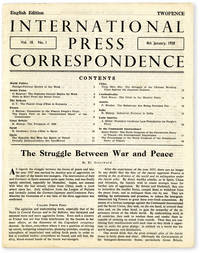
193452881London: H.R.G. Jefferson et al 1934-1939. NOTE: Other identified publishers all London include: Unthanks Bookshop; R. Bishop; William Massey. Beginning in July 1938 title changes to "World News and Views." <br /> <br /> Collection of two hundred forty-nine quarto issues in original staple-bound self-wrappers. Each issue 27cm x 21cm; most issues ca 20pp numbered sequentially. General wear occasional creasing or small losses; some copies marked as "File Copies;" some with red pencil annotations presumably for publication; a few issues with ink pressure stamp of the Los Angeles Workers Library. With the exception of a few issues in 1934 the journal was printed on high-quality newsprint; the run is well-preserved Very Good overall and fully readable.<br /> <br /> The periodical was issued irregularly from one to as many as three issues per week; our run collates as follows: <br /> <br /> Vol. 14 1934: 28-14161719-232629-3234-3638-4043-455760-63 32 issues<br /> Vol. 15 1935: 1-58-3136383944474850555658596163646668-72 49 issues<br /> Vol. 16 1936: 1246-3032-384042-58 53 issues<br /> Vol. 17 1937: 248-242642444547-5355-57 47 issues<br /> Vol. 18 1938: 1-35-81012-2325273031333436-4044-47525456-60 38 issues <br /> Vol. 19 1939: 2-91415181920-2628-3235-4155 30 issues. Beginning in 1918 immediately following the Russian Revolution International Press Correspondence usually called by its acronym INPRECOR became the Communist International's principal international organ for distributing "official" news of the global spread of Marxist ideology. The paper was issued in four languages English French Spanish and German and at its height no fewer than one and as many as three issues per week appeared. The chief audience was the editorial staffs of COMINTERN-aligned newspapers where many of INPRECOR's articles would be republished verbatim. Thus INPRECOR served as a de facto press service for the left-wing media in Europe North and Latin America.<br /> <br /> In our experience cohesive runs of INPRECOR in any size are unusual; this collection represents a veritable treasure-trove of official COMINTERN policy during the Popular Front period especially valuable for its day-by-day coverage and interpretation of events in Spain before during and after the Civil War and for documenting the rise of fascism across the European continent. Our run ends in August 1939 on the eve of Germany's invasion of Poland and the outbreak of the Second World War. Between that date and 1934 despite occasional lacunae the issues offered here provide a clear and compelling narrative of the sweep of world events leading to the World War and an intimate view of the communist left's response to those events. <br /> <br /> Even individual issues are somewhat scarce in commerce. Earlier issues of INPRECOR have been digitized by the Marxist Internet Archive ending in 1934. Much of the run is available in microfiche produced by the Communist Party of Great Britain but the imaging is of legendarily poor quality basically illegible in many places. Holdings for physical issues are spotty per WorldCat with many institutions holding small samples or partial runs. H.R.G. Jefferson [et al] unknown
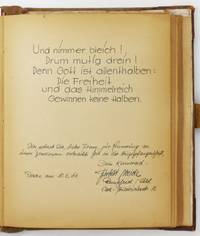
19456431<p>Huntsville Tx 1945. Very good. 84pp. Primarily in German. Quarto. Brown cloth album with leather corners and snap closure. Manuscript initials on front cover. Corners lightly worn. Contents evenly toned. A rare friendship album kept by Franz Kozian a German prisoner of war at the POW camp in Huntsville Texas. The album contains over seventy-five entries from fellow incarcerated soldiers all of them lengthier than just an autograph. Many of them include lengthy expressions of friendship or quotations from famous German-language authors such as one that copies out the text of Rilke's poem "Herbst" "Autumn" with the illustration of a tree with falling red leaves. Most of the entries also include details of the internees' home towns and other camps they've been in. At the end of the album is a detailed list of fellow prisoners with their home addresses. By the end of World War II there were over 425000 enemy prisoners on U.S. soil and Texas had twice as many POW camps as any other state due to space and climate. The Geneva Convention specifies that prisoners must be kept in a climate similar to that of where they were captured and Texas was considered similar to northern Africa resulting in a serious influx. The present item seems to be a relatively unusual survival from the POW camps and is quite detailed in its contents. A valuable research tool for this unusual chapter of American military history.</p>
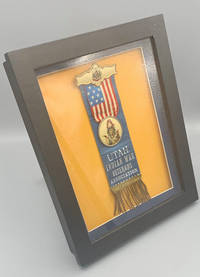
189658334Newark NJ: Whitehead and Hoag and Company 1896. Near fine. Commemorative ribbon in shadow box frame 11 3/4" x 9 3/4". Lacking the original display box. Blue ribbon with the statement "Utah Indians War Association" stamped in silver and a top bar of white enamel bordered in gilt with a Territory of Utah seal at the center. Also attached is an American flag ribbon with a hanging white enamel medallion depicting an American Indian in captivating full headdress. Tassels at the foot. The ribbons and attached medallions are exceptionally well-preserved and bright.<br /> <br /> Given to Indian War Veterans who suppressed hostilities in Utah during the years 1850 through 1872. Remarkably unfaded. A fine very bright example of a ribbon which represents a historically important juncture in Utah and American history. Whitehead and Hoag and Company unknown
194560559Washington DC: Adjutant General’s Office in the Pentagon August 12 1945. 4to. 194 pp sections all separately paginated I-XIII A1-A5. w/ first 4 leaves litho-printed on recto only. Cream-coloured litho-printed softcovers w/ “Released for Publication _________†on lower front cover dittoed notice at lower right corner of “Distributed by Technical Information Section of the Bureau of Aeronautics†stapled at gutter margin as issued minor soiling & spotting to front cover minor rust to staples minor bumping to corners light scuff to fore-edge of textblock printed in multiple grades of paper as issued w/ some sections more toned than others still a VG- copy numbered in ink at lower right corner. First lithoprint edition 3rd printing of 6000 total copies prepared by secretly lithoprinting in the Pentagon NOT 1000 copies as previously posited by Coleman & others in sections from modified dittoed versions which had been distributed under General Groves’s orders to correct the master copies with eventually whole paragraphs deleted or added in some chapters. This copy is entirely complete with none of the often missing pages especially p. VI-12 duplicates or misbound signatures which often appear due to the speed and paper requirements and also bears the colophon 25-56388-2M on page A5-1 at the rear indicating this was one of those printed on the high-sulphide paper often bearing signatures of varying toning. As per Arnold Kramish 1923-2010 nuclear physicist who worked Oak Ridge TN on the Manhattan Project and at the behest of Harry Smyth researched the printing history before 1985 of the original report and determined that there were 2000 copies released initially past the dittoed and mimeograph versions to the press and senior lab people. Due to early complaints of lack of access another 2000 were released followed by the much demanded 3rd release all before Princeton University Press released their published print run less than 1 month later in 1945. The famed Smyth report released to the public just after the United States had obliterated the cities of Hiroshima and Nagasaki using the first two atomic bombs at the end of World War II -- is “a remarkably full and candid account of the development work carried out. . . by the American-directed by internationally recruited team of physicists under the code name of Manhattan District. . . .†The introduction opens with statement that “The purpose of this report is to describe the scientific and technical developments in this country since 1940 directed toward the military use of energy from Atomic nuclei.†As an aside it should be noted that Michael Zinman has the original Arnold Kramish TLS identifying the printing history and an article is being prepared by Brett Tomlinson noted historian of science. See: Printing and Mind of Man 422e; Coleman The Smyth Report: A Descriptive Checklist Princeton University Library Chronicle Vol. 37 No. 3 Spring 1976 No. 3 pp. 206-207; For fuller explication of Linus Pauling’s dittoed version at OSU 1 of 2 known survivor copies see blog by Ann Bahde Serifs and Secrecy: The Smyth Report in SCARC Nov. 2 2021. [Adjutant General’s Office in the Pentagon], paperback
D17848Album 60 pp recto and verso "Autographs and Sketches" stamped in gilt to front cover with approx. 35 gelatin silver prints laid in and letters maps diagrams postcards and foreign press clippings tipped in label "J.M. de Beaufort / Author Soldier War Correspondent late with the Belgian Army" attached to front cover de Beaufort's business card taped to inner front cover photographs laid in to front and back covers. Many pages loose or stained some loss to three leaves edgewear and toning throughout. Covers worn with tape remnants. Sold as is. <br/><br/>J.M. de Beaufort was a war correspondent for the London Daily Telegraph and New York American attached to the Belgian Army during World War I. De Beaufort described his wartime experiences in his 1917 book Behind the German Veil: A Record of a Journalistic War Pilgrimage. In this journal's inner front cover de Beaufort wrote: "Never to be forgotten of my days with the Belgian Army 1914-1915 J.M. de Beaufort". The journal is written and drawn in various hands and languages and mainly involves the areas around Furnes in Belgium circa October-December 1914. At that point the Belgian Army had only recently entered the war and was being routed by the German Army's superior numbers. Belgium's high command cleverly devised a plan to flood the vicinity of Furnes to keep the Germans at bay. There are several fairly detailed hand-drawn diagrams in pen colored pencil and pencil of the flooding plan. The photographs in the journal mainly depict Belgian and French soldiers; de Beaufort is visible in several. One image shows two unexploded bombs with "aeroplane bombs" written on its verso in pencil beside de Beaufort's note about how they landed close to his room in Furnes. Other photographs show bombed-out buildings. There are cartoonsmostly anti-Germandrawn at various points throughout. De Beaufort also known as Count de Beaufort was quite an elusive figure. His real name was Uilenbroek and he was a Dutchman thought to have been a deserter. He came to Chicago in 1909 married a steel magnate's daughter and entered show business. By 1912 he was divorced and took up newspaper work; he became known as the "Dude Reporter." See American Cinematographers in the Great War 1914-1918 2015. unknown books
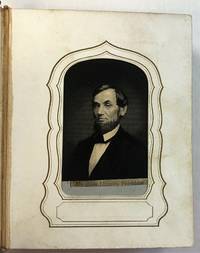
186337056New York: Elias Dexter; one by L. Prang 1863. Forty-eight handsome portrait engravings of important Civil War figures including Lincoln and Cabinet members Union Army and Navy leaders Jefferson Davis and others. Each mounted within a decorative stiff card frame with gilt border. Portraits are clear and clean most with an identifying slip the slips are loose and not pasted to the engravings only one or two with some light wear to picture. They are preceded by a decorative title page. Bound in original cloth "Album" stamped in gilt on the spine. Spine cloth chipped at head and foot slightly shaken but covers firm. The portraits are not glued in but rather placed into the frame from the bottom and the bottom then sealed. The cards have the name of the subject below the portrait and the imprint at the bottom and are in Near Fine to Fine condition.<br/><br/> The portrait of Lincoln is based on a popular photograph taken by Mathew Brady on or around May 16 1861. The remaining portraits include: Seward Stanton Chase Welles Winfield Scott Wool Commodore Davis Foote Wilkes Porter Farragut Stringham Com. Dupont Lieut. Worden McClellan Halleck Dix Gen. Grant Gen. Curtis Franklin Mitchel Burnside Pope Fitz Porter Sigel Banks Lander Heintzelman Rosecrans McDowell Buell Ben Butler Anderson Baker Shields McCook Col. Wilcox Benham Sherman Lyon Mansfield Hunter Parson Brownlow Gov. Sprague Jefferson Davis Gen. Beauregard Magruder. The imprints are from Elias Dexter with the exception of the Magruder which has the imprint of L. Prang & Co. Boston & Washington; and possibly one other.<br/> Elias Dexter 1816-1897 was an engraver publisher photographer and frame maker. He is best known for his 1862 publication The St.-Memin Collection of Portraits. Louis Prang 1824-1909 was a printer lithographer and publisher. He is sometimes called the father of the American Christmas card. Elias Dexter; one by L. Prang unknown books
1861100126<p>Group of three daily diaries for 1861 1863 1865 and two others for 1866 and 1867. Together five diaries. Various places: 1861-1867. Each 12mo morocco wallet style bindings four black one red. Diaries for 1861 and 1863 in pencil others combination of pencil and ink. All bindings are worn 1863 is more so and a couple have some tears along edges and hinges. The 1866 diary has more significant wearm and some cracks along the edges. Group of 10 pages are loose in 1863. Condition of writing varies but generally fairly legible. Overall the group is in very good condition.Herrick was from Syracuse New York and served in Company D of the 110th Regiment of the New York Volunteers. However information from the National Park Service archive suggest he served with the 12 Regiment out of New York. He appears to have served during the siege at Port Hudson and did garrison duty at the infamous Union prison Fort Jefferson in Florida. The first diary covers his enlistment in April 1861 to the end of that year. The diary describes training and the trip to Washington where the regiment was reviewed by President Lincoln. It appears that in July 1861 he was discharged for medical reasons but for some reason he re-inlisted in August 1862. The diary for 1863 covers the entire year and includes descriptions of the siege and assault on Port Hudson. Herrick seems to have been ill during this period and stayed in camp a lot. In February 1864 Herrick and the 110th began garrison duty at Fort Jefferson the much reviled Union prison located on Garden Key Island in the Gulf of Mexico. While Herrick’s descriptions often seem somewhat monotonous the weather his health which ships came in his impressions of various drills this diary is one of very few first hand accounts inside the prison. There are some interesting entries including a prison detail discovering coffins while digging a foundation for a new building an officer arrested for selling whiskey to prisoners and a prisoner being "strung up" for stealing. Perhaps the most significant content of this diary is related to Lincoln’s assassination. In an entry on April 22nd a ship brings news to the prison "they had three prisoners slung up for rejoicing over it" Then in an entry dated July 24th the naval transport Florida brought three of the Lincoln assassination conspirators Samuel Arnold Michael O’Laughlin and Dr. Samuel Mudd to the prison. This prison wasn’t known for kindly treatment of prisoners the weather usually very hot and humid and the place was infested with bugs and misquotes. The food was what you would expect and Samuel Arnold was reported to have said the meat was so rotten "dogs ran from it." nps.gov/civilwar/soldiers</p> books
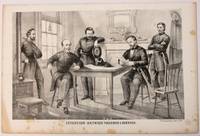
186537368Philadelphia: P.S. Duval & Son LIth. 1865. Broadside lithograph oblong 10-1/8" x 6-3/4." Some foxing at the margins else Very Good.<br/><br/> This is an extremely rare lithograph by Duval depicting General Joe Johnston's surrender of his army to General Sherman on April 18. "Peter Stephen Duval the most prominent Philadelphia lithographer of the 19th-century was born ca. 1804/5 in France. He emigrated from France to Philadelphia in the fall of 1831 to accept a job as a lithographer with the printing firm of Childs & Inman. By 1837 he had established his own lithographic printing shop and remained in business until his retirement in 1869" online Library Company article on Duval. <br/> "Sherman studies the surrender terms as his vanquished opponent Confederate General Joseph E. Johnston waits with evident unease in this rare depiction of the meeting at the Bennett House in Durham North Carolina. The print erred in showing the principals with their staffs; Sherman remembered that 'we were alone together.' Unlike Appomattox the Bennett House surrender quickly had a shadow cast over it when the War Department disallowed Sherman's terms and this scene never rivalled the meeting of Lee and Grant in iconographic memory." Neely and Holzer THE UNION IMAGE: POPULAR PRINTS OF THE CIVIL WAR NORTH. UNC Press: 2000. Page 194 Figure 98. In our copy the face of the man standing behind Sherman differs slightly from the Neely-Holzer illustration.<br/>Neely & Holzer 194. Not located in Reilly Weitenkampf Bartlett Sabin Eberstadt LCP or on OCLC or the AAS online site as of January 2021. P.S. Duval & Son, LIth. unknown books
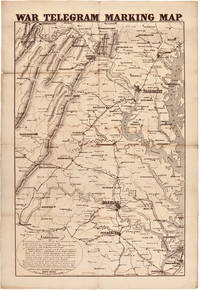
1862WRCAM52854Boston: L. Prang & Co. 1862. Large lithographic poster 38 x 26 inches. Backed with later paper. Old fold lines some minor soiling and wear. Minor loss at a few folds. Nearly very good. A handsome and large-scale map of Virginia from Norfolk to Lynchburg and north to Baltimore and Harper's Ferry. The explanatory cartouche indicates "The extraordinary large scale on which this map is drawn has been adapted to make it just what we designed it to be namely 1st. The most distinct map ever published of the whole Virginia Territory; 2nd. A Marking Map that is a map to mark the change of positions of the Union Forces in red pencil and the Rebel Forces in blue on the receipt of every telegram from the seat of war; for this latter purpose we want plenty of space and a distinctness combined with enough detail not to crowd but to enable us to follow the march of the army as advised by the telegrams. The pencils which we also furnish should be used with a light hand to enable obliterating the marks with the aid of a little soft bread if found necessary. These peculiarities combined with extreme cheapness will make this Map a welcome companion to every person interested in the pending struggle of our nation." L. Prang & Co. unknown books
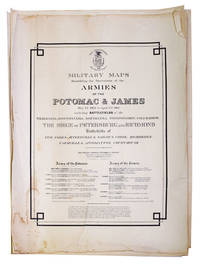
1869267611Washington D.C.: War Department Office of the Chief of Engineers Lithographed by Julius Bien New York 1869. First Edition. Prepared under the direction of Bvt. Brig. Gen. N. Michler Major of Engineers and Bvt. Lieut. Col. P.S. Michie Capt. of Engineers. 16 maps on 17 sheets. All but one double-page. Folio 23-5/8 x 18-1/2 inches. Unbound sheets. Light stains at top edges of several maps title with tape repair. First Edition. Prepared under the direction of Bvt. Brig. Gen. N. Michler Major of Engineers and Bvt. Lieut. Col. P.S. Michie Capt. of Engineers. 16 maps on 17 sheets. All but one double-page. Folio 23-5/8 x 18-1/2 inches. The topographic maps comprise:<br/>1A. Gettsburg to Appomattox Court House northern<br/>1B Gettysburg to Appomattox Court House southern <br/>2. Fredericksburg<br/>3. Chancellorville <br/>4. The Wilderness<br/>5. Spottsylvania<br/>6. North Anna single page<br/>7. Totopotomoy <br/>8. Cold Harbor<br/>9. Richmond<br/>10. Bermuda Hundred <br/>11. Petersburg and Five Forks <br/>12. Jetersville and Sailor's Creek<br/>13. High Bridge<br/>14. Appomattox Court House<br/>15. Antietam<br/>16. Harper's Ferry. Phillips Atlases 3688 listing only 15 maps; Civil War Maps 518; Stephenson and McKee "Virginia in Maps" p. 194: "Topographers had already surveyed more than 1300 miles and issued more than 1200 maps prior to the army's passage over the Rapidan River on the night of 3-4 May 1864 the beginning of U.S. Grant's major offensive in Virginia that led from the Battle of the Wilderness on 5 and 6 May to the ten-month siege of Petersburg beginning in mid-June and finally to R.E. Lee's surrender at Appomattox on 9 April 1865. Bvt. Brig.-Gen. Nathaniel Michler's men made more than 1600 photographic sketches between the time of the river crossing and 30 July 1864. The vast number of surveys that Michler directed led to the publication of this atlas. War Department, Office of the Chief of Engineers [Lithographed by Julius Bien, New York] unknown books
175738668Newtown NJ 1757. 1p. Signed by Henry Simson Joseph Byram John Anderson Thomas Woolverton and Joseph Parry. The French and Indian War on the New Jersey "Front Tears."<br/> <br/>In the wake of Braddock's defeat with tensions with the Delaware Valley Indian tribes rising and with a perceived threat that the tribes of the Delaware Valley would invade into New Jersey at the end of November 1755 Governor Belcher detached hundreds of West New Jersey troops to the New Jersey/Pennsylvania border and into Pennsylvania many under the command of Colonel Abraham van Campen. The present document concerns the death of a resident of Sussex County who evidently travelled with Van Campen and Colonel Jacob Ford to the "front tears" to "parley or hold a treaty with the Indians there" but "hath never returned & by report was near about that time killed." The document advocates for his bereaved wife and suggests that his eldest son be appointed heir and estate administrator. Another copy of this document addressed to "Your Honour" appears in the Documents Relating to the Colonial History of the State of New Jersey first series vol. xxxii p. 326. unknown books
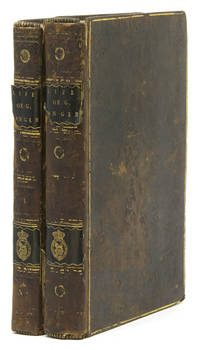
1766237662London: Edward and Charles Dilly 1766. Third edition revised and corrected of vols.I-III; second edition of vols. IV & V. With 41 portraits and 8 folding maps. iv 495; 464; 480; 470 26 Index pp. 5 vols. 8vo. Bound in contemporary panelled reversed calf boards tooled in blind leather title labels. Extremities worn joints rubbed front hinge of volume I detached and front endpaper laid in. Very good. Text clean. Bookplate. Third edition revised and corrected of vols.I-III; second edition of vols. IV & V. With 41 portraits and 8 folding maps. iv 495; 464; 480; 470 26 Index pp. 5 vols. 8vo. History of the French and Indian War drawn largely from primary source material and with much pertaining to the war in North America and the West Indies. Entick 1703-1773 was a prominent lexicographer and historian. Howes E165a; Sabin 22667 Edward and Charles Dilly unknown books
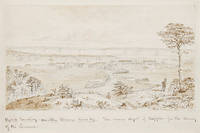
1863WRCAM56150Aquia Landing Va 1863. One pen and ink drawing 7 x 10 1/2 inches sight and one pencil sketch 6 3/4 x 9 3/4 inches sight each in recent matching frames 11 1/2 x 15 inches; plus 2pp. letter on folded folio sheet. Slight soiling and smudging to sketches. Short tape repairs to two closed tears at top margin of letter minor separation at fold text not affected. Very good overall. Two drawings by an unnamed artist submitted as potential accompaniments for articles in HARPER'S WEEKLY which was well-known for the copious Civil War illustrations that supplemented its text. Such illustrations were usually either drawn by reporters or artists sent into the theater by HARPER'S or less often by soldiers in the field. These two works were done by a Union Army Division Post Master and are accompanied by a letter from his commanding officer submitting them for publication. <br> <br> The first work done in pen and ink on paper is entitled "Aquia Landing on the Potomac River Va. The main depot of Supplies for the Army of the Potomac" and depicts a river scene with steamers and sailing vessels along with a pier in the middle distance with a supply train approaching in the foreground which is observed by two soldiers. In the foreground are delicately drawn trees and shrubs; in the background one can see more ships and the other side of the river possibly Simms Point. In early March 1862 the Confederates abandoned Aquia Landing a strategically important post on the Potomac River and Union forces quickly seized the point. The Union Army used the wharves and storage building at Aquia Landing until June 7 1863 when the army headed north for the Battle of Gettysburg and again used the facilities in 1864 during the Overland Campaign. <br> <br> The second work is a pencil sketch titled "Army Bakery in charge of Capt. James Gillette Commissary of Subsistence to Genl. Geary's Division." One medium-sized and two small cabins are at the left side of the image with barrels and a large cauldron nearby; presumably this is where the bakers prepared bread and other items for baking. On the right side of the image is a large wooden lean-to sheltering at least nine ovens. Two bakers are carrying trays of bread and one stands near an open oven with a large peel. To the right of the lean-to is a tent partially open and filled with loaves of bread with three more bakers loading in loaves. In the background are bare trees suggesting this scene is set in winter. <br> <br> The accompanying letter on "Office of the Commissary of Subsistence" letterhead is from Capt. James Gillette to John Bonner then editor of HARPER'S WEEKLY. Gillette writes that he encloses three sketches of which two are included here: "These sketches were made under my own supervision by our division post master are as accurate in detail as any I have seen." Gillette then describes additional material he has enclosed and notes "Some time since a few sketches of scenes in Richmond furnished by my experience found place in your weekly eliciting from you the request that I should occasionally forward to your address such representations of military scenes as might be of interest. Hence these enclosures which in truthfulness cannot be excelled." <br> <br> James Gillette 1838-81 enlisted as a private and rose quickly through the ranks. By this time he was Captain and Assistant Commissary of Subsistence for the 2nd Division XII Corps under Gen. John W. Geary. For his meritorious service he was breveted lieutenant colonel U.S. Volunteers and for gallantry at the battle of Chancellorsville he was breveted major in the regular Army. John Bonner 1829-99 was one of the best known newspaper writers in America at this time. He started as a writer at the NEW YORK HERALD and then moved on to be an editor at HARPER'S. After the Civil War he made a small fortune on Wall Street and then lost it in a most dramatic fashion. He drifted west working for the LEADVILLE CHRONICLE and LEADVILLE NEWS in Colorado and the SAN FRANCISCO CHRONICLE and SAN FRANCISCO CALL among other Bay Area newspapers. <br> <br> An attractive pair of original Civil War drawings from a Union soldier in Virginia in the middle year of the war accompanied by the letter from the Army Commissary officer submitting them for publication to HARPER'S WEEKLY. unknown books
1961010278London: Hutchinson 1961 very rare first edition in near fine DW unclipped minor foxing to edges or folds of DW small area foxing to closed fore edge of pages not written in or marked minor foxing from accumulated dust to closed top edge very scarce with a near pristine DW when the English edition was published it met with controversy and totally different reviews to the blockbuster French edition and is consequentially a rare item 487pp. First Edition. Hard Cover. Fine/Fine. Illus. by Val Biro. 8vo - over 7 - 9 tall. Hutchinson hardcover
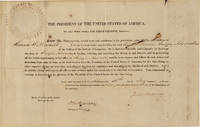
1813WRCAM54812Washington D.C. 1813. 1p. partially-printed document completed in manuscript. Paper seal of the United States affixed to upper left corner. Old folds. Light tanning mild surface wear a few ink blotches one small area of ink burn not affecting text. Overall very good. Matted framed and glazed. A War of 1812-era presidential appointment signed in ink by President James Madison and by Secretary of War John Armstrong. Here Madison appoints Maryland attorney James Sewall Morsell to the position of Judge Advocate of the Militia of the District of Columbia. In addition Morsell has fully endorsed and docketed the document on the verso pledging to "carefully & diligently perform the duties of a Judge Advocate.to the best of my Skill & Judgement and that I will support the Constitution of the United States." Morsell would serve as a Judge Advocate for almost two years. From January 15 1815 until March 3 1863 he would serve as a circuit court judge in the District of Columbia. Earlier in his career and during his years in private practice Morsell represented numerous African-American families who petitioned for freedom in the nation's capital. Judge Morsell passed away in Maryland in 1870. unknown books
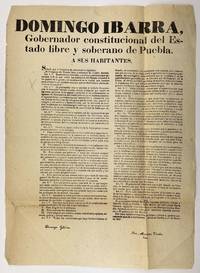
18471731Puebla 1847. Good plus. Broadside approximately 17 x 12.25 inches. Previously folded near lower and right edges to fit in a folio volume with several small stab holes at left edge where previously bound. Some separation from left edge along lower fold line and small area of loss at fold point not affecting text. Light tanning and faint foxing. A rare broadside that promulgates a March 16 1847 decree of the Puebla state government that sought to raise emergency funds for the army facing the American invasion at Veracruz during the Mexican-American War. This decree printed and published in Puebla the following day under the authority of its governor Domingo Ibarra orders the formation of a group to be called the "Patriotic Board of Aid" in order to assure the participation of its citizens. The first article of the decree announcing the establishment of the junta reads as follows:<br /><br />"Entretanto se decretan y realizan contribuciones generales á fin de que todos los habitantes del Estado cooperen á los goastos de la guerra se establecerá en la capital una reunion para proporcionar prontos recursos que se denominará 'Junta patriotica de auxilios.'"<br /><br />The subsequent sixteen articles define the constitution authority and goals of the group. The second article for example stipulates the specific legislative judicial religious and municipal bodies that will nominate two members each to the junta. The fourth article outlines the responsibilities of the board -- to acquire a loan of up to 100000 pesos using the state income as collateral; to seek cash and military supplies via donation loan or purchase; to administer the delivery of goods and money to the army at Veracruz; and to issue state treasury bonds to lenders. The group according to the last article has eight days to amass a much as possible before reporting their results to the state.<br /><br />At this point in the war not only was the entire country under enormous pressure from the landing of Winfield Scott's army but Puebla was also suffering from the significant unrest of the Polkos Revolt which had led to an unsuccessful insurrection aided by a portion of the military garrison in the city just a week prior to the publication of this decree. Indeed the need to ensure the participation of all citizens in the costs of the war is mentioned and emphasized at several points in the decree. The larger size of this broadside underscores the importance of the message and its distribution as well. <br /><br />A fascinating and rare document of emergency efforts at the state level to support the war effort against the United States. We locate only one copy of this rare broadside at Yale. books
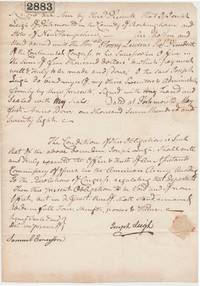
3201DS. 1pg. 7 ¼†x 10 ¼â€. May 1 1778. Portsmouth New Hampshire. A document signed “Joseph Leigh†and co-signed “Samuel Emersonâ€. The important document states “Know all Men by these Presents that I Joseph Leigh of Portsmouth in the County of Rockingham and State of New Hampshire are holden and stand bound unto the Honble Henry Laurens Esq. President of the Continental Congress or his Successor in Office in the Sum of Five Thousand Dollars to which payment well & truly be made and done I the said Joseph Leigh do bind myself my Heirs Executors & Administrators firmly by these presents. Signed with my hand and sealed with my seals: Dated at Portsmouth May first Anno Dom: one Thousand Seven Hundred and Seventy Eight. The Condition of this obligation is such that the above bounden Joseph Leigh shall well & truly execute the Office & Trust of an Assistant Commissary Officer in the American Army According to the Resolutions of Congress regulating that Department then this present obligation to be void and of none effect but in default thereof shall stand remain & abide in full force strength power & virtue.†A few weeks later the New Hampshire Committee of Safety wrote to Leigh stating that “You are hereby appointed Commissary to proceed immediately to that post of the Continental Army where the regiments from this state are stationed - to take charge of & Issue such stores as may be sent there from this state - and you are to observe such orders and instructions as you may from time to time receive from the General Assembly of this state or in the recess thereof from their Committee of Safety - or at any time from the board of war for this State in regard to any matters or things deliver to your care & charge - and you are to render a particular account of your Conduct in and about yr premises and make remittances for the stores delivered to your charge as aforesaid agreeable to the instructions from time to time sent you as aforesaid - and you are to be allowed and paid for your time & expense while in said service such wages as the issuing Commissarys for the other New England States have & receive for similar services.†There is a paper seal to the right of the Leigh autograph and a small label on the top margin. An unusual Revolutionary War financial document. unknown books
1801302703London: J. Debrett 1801. Complete with half-titles and one illustration to text. 339; 475 4 ads pp. 2 vols. 8vo. Contemporary calf black morocco labels to spine gilt slightly shelf-worn extremities a little rubbed presentation inscription to title-page. Complete with half-titles and one illustration to text. 339; 475 4 ads pp. 2 vols. 8vo. AUTHOR'S PRESENTATION COPY. Presentation copy signed "From the Author" on the title-page. This copy formerly belonged to Sir George Chetwynd; it has both his bookplate and discreet embossed library stamps from Grendon Hall where his collection was housed. A manuscript note to the front free endpaper states that this copy also belonged to the Duke of York.<br/><br/>Having served as aide-de-camp to Clinton during the Charleston campaign he was wounded at Charlotte in 1782 Hanger was appointed Major of Tarleton's Dragoons. With further connections to Carleton Gen. Dickenson and Major Andre among others he was well placed to produce one of the best accounts of the Revolutionary War in the South. <br/><br/>Sabin notes the "curious prophecy" to be found in the second volume: "one of these days the Northern and Southern powers will fight as vigorously against each other as they both have united to do against the British" Howes H-158; Sabin 30227 J. Debrett unknown books
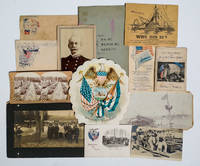
21688On February 15 1898 a mysterious explosion destroyed the battleship USS Maine while it was anchored in Havana Harbor killing 260 men and helping to propel the United States into war with Spain. Although the cause of the explosion was unclear American newspapers were quick to allege that the ship had been brought down by a Spanish bomb. Led by William Randolph Hearst in the New York Journal and Joseph Pulitzer in the New York World the press demanded action. Hearst's headline "Remember the Maine!" became a rallying cry that helped turn American public opinion strongly in favor of war with Spain. By April President McKinley had given into to additional pressure from hawkish senators and his own vice-president Theodore Roosevelt and war was declared. Although brief the Spanish-American War had important consequences. It ended Spain's colonial empire in the Western Hemisphere and secured the position of the United States as a Pacific power. "U.S. victory in the war produced a peace treaty that compelled the Spanish to relinquish claims on Cuba and to cede sovereignty over Guam Puerto Rico and the Philippines to the United States. The United States also annexed the independent state of Hawaii during the conflict. Thus the war enabled the United States to establish its predominance in the Caribbean region and to pursue its strategic and economic interests in Asia" Office of the Historian U.S. State Department.<br/><br/>This collection consists of approximately 120 items including original photographs printed and real photo postcards stereoviews commemorative programs patriotic covers postal stamps calling cards song sheets lithographs and other ephemera showing the Maine as she appeared before the disaster the wreckage and salvage efforts the funeral service and burials of the victims first at Cristobal Colon Cemetery in Havana later at Arlington National Cemetery and some of the myriad ways in which the Maine was memorialized and mythologized in American popular culture. Original photographs and real photo postcards capture the ship and crew prior to the disaster crowds of sailors lined up to pay their respects to the victims the coffins being transported the cemetery dotted with freshly dug graves elaborate floral wreaths and memorials and salvage efforts in the immediate aftermath of the disaster and in 1911 when the ship was raised before being towed out to sea to its final resting place at the bottom of the ocean. The wide reach of the patriotic feelings aroused by the disaster can be seen in two cabinet cards of young children wearing U.S.S. Maine hats as well as on items that have no military or national connection e.g. a high school commencement program a blotter advertising corsets yet bear images of the Maine or the "Remember the Maine" slogan. On envelopes and stationery we see images of Uncle Sam punching a Spainiard an eagle dubbed "the New Bird in Havana Harbor" and troops walking toward a ship under the heading "On to Cuba." A mendicant uses the Maine as his theme on a card handed out to solicit alms; a song by a writer of sensational crime broadsides is reported to have been "composed and written during the indecision of the U.S. Government" and urges "Let's show all foreign powers Aye the haughty sons of Spain they will brook no insult like the Sinking of the Maine." A particularly unusual item is an envelope illustrated with an image of the remains of the ship captioned "WHO DID IT" containing illustrated sheets of tissue with instructions to blow them up via a small "fuse" on the back. In all an illuminating collection that helps demonstrate the impact of both the incident and how it captured the popular imagination -- such that many Americans still recognize the "Remeber the Maine!" rallying cry today even if they no longer know what it represents. unknown books
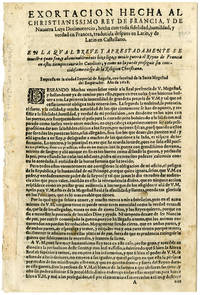
1626WRCAM39190Impressa en la ciudad Imperial de Augusta i.e. Trier: con facultad de la Sacra Magestad del Emperador 1626. 16pp. Small folio. Dbd. Contemporary manuscript docketing on p.16 and contemporary ink underscoring on p.7. Some loss repaired in silk from chipping at gutter and from worming in several leaves the latter affecting some text but not exceeding 1 x 1 inch in area. Closed tears in final leaf repaired with very early paper on verso. Light staining and foxing. Overall very good. The original Spanish translation of an important invective against Louis XIII during the first phase of France's involvement in the Thirty Years' War. At the time of this publication in 1626 France had actively begun to support the Protestant side in the conflict concerned with the political threat of the Hapsburg states that surrounded it on three sides in Spain and Spanish-controlled Flanders to the south and north and the Holy Roman Empire in Germany to the East. In 1624 Cardinal Richelieu was appointed to the Royal Council of Louis XIII and immediately began to institute a vigorous anti-Hapsburg policy. The following year France joined England in subsidizing the efforts of Christian IV of Denmark to defend Lower Saxony against the Holy Roman Empire beginning an involvement in the war that would eventually lead to its own military participation against its fellow Catholic powers. <br> <br> The present document is a long and detailed warning to Louis XIII against pursuing a course of actions that would pit France against the rest of the Catholic world. According to the document itself the text was first composed in French and subsequently translated into Latin and thence into Castilian Spanish. It immediately occasioned a number of responses and refutations and its anonymous authorship soon became the subject of a 200-year-long debate. In his exhaustive and authoritative bibliography on the Jesuits BIBLIOTHÈQUE DE LA COMPAGNIE DE JÉSUS Augustin de Backer seems to have put the question of authorship to rest attributing it to the German Jesuit Jacob Keller. Keller 1568-1631 was a German scholar and controversialist widely regarded as a genius and best known for a counter- Calvinist tract on Tyrannicide and a celebrated defense of the Papacy in a debate with Lutheran theologian Jacob Heilbrunner. Backer lists both the French and Latin versions of the EXHORTATION. and refers to a German translation but he omits any mention of the present Spanish version. He also describes the document as having been printed in Italy which may result from confusion regarding the city name of Augusta. While Augusta Syracuse was under anti- French Spanish control in 1626 and may thus be a candidate for the printing location all other signs and context point to Trier "Augusta Treverorum" in Latin including the publisher's imprint which calls Augusta an "imperial city" and declares permission for publication from the Holy Roman Emperor. <br> <br> An extremely interesting and rare document anticipating the violent wars between France and the rest of Catholic Europe of the following decade and offering a view of the French-Hapsburg rivalry from the Austro- German Hapsburg perspective and translated for the Spanish Hapsburg audience. One copy is held at the Casa de la Cultura Ecuatoriana BenjamÃÂn Carrión in Quito; OCLC lists one additional copy at the New York Public Library. Backer BIBLIOTHÈQUE DE LA COMPAGNIE DE JÉSUS NOUVELLE ÉDITION PAR CARLOS SOMMERVOGEL Louvain 1960 Vol. IV Cols. 992-3. "Jacob Keller" THE CATHOLIC ENCYCLOPEDIA http://www.newadvent.org/cathen/08613c.htm. con facultad de la Sacra Magestad del Emperador unknown books
19781281651978. First Edition. Signed. ROSHOLT Malcom. Days of the Ching Pao. Amherst Wisconsin: Palmer Publications 1978. Quarto original red paper boards original dust jacket. $2500.First edition of this history of this ""photographic record of the Flying Tigers-14th Air Force in China"" signed by 17 of the Tigers including nine aces.Prior to the United States entry into World War II approximately 15000 Americans joined flying units already engaged in combat. At the request of Madame Chiang Kaishek General Claire Lee Chennault recruited a squadron of fighter pilots in order to throw a small but well-equipped air force into China to attack Japanese supply lines. With the official designation ""American Volunteer Group"" AVG but popularly known as ""The Flying Tigers"" this celebrated group of pilots has been described as ""the most colorful group of warriors in modern times"" and ""the world's most illustrious squadron"" History Channel.Signed next to their photographs by Charlie Bond Joe Rosbert Dick Rossi D.L. Rodewald ""Tex"" Hill Bob Keaton Bob Layher Charlie Mott Ed Rector Eric Shilling ""Duke"" Hedman R.T. Smith Kim Jernstedt C.H. Laughlin Chuck Older P.J. Green and Robert Raines. Of these Rossi Rector R.T. Smith Bond Jernstedt Rosbert Hill Hedman and Older were aces more than five enemy planes shot down. Bond an ace with 9-1/2 victories was the first of the Flying Tigers to paint his Curtiss P-40 Warhawk with the shark mouth on the nose of his plane an iconic decoration that would become characteristic of the Flying Tigers. Fine condition. hardcover
19451139691945. WORLD WAR II. Pre-battle map of Okinawa Island. Washington: Army Map Service 1945. Single sheet measuring 22-1/2 by 20 inches with black-and-white topographical map on Side A and color oceanographic map on Side B. $2500.Official doubled-sided U.S. Army map of Okinawa Island before the Battle of Okinawa labeled ""SECRET.""The Battle of Okinawa code name ""Operation Iceberg"" took place on Okinawa Island between April 1 1945 and June 22 1945. One of the Ryukyu Islands extending southwest of the Japanese mainland Okinawa was of paramount strategic importance. Allied forces needed it to launch Operation Downfall the large-scale on-the-ground invasion of Japan anticipated to take place in November 1945. Allied forces the bulk of which were U.S. Army and marines faced off against the Imperial Japanese Army and conscripted indigenous Okinawan civilians that spring. The Allies launched a multi-pronged amphibious assault of Okinawa and surrounding islands. Although the Allies significantly outnumbered defenders the Japanese brooked their efforts with kamikaze and other extreme defense tactics. Approximately 250000 died from war starvation illness and mass suicide in what would be the bloodiest battle in the Pacific Theater.Side A of this map shows Beach Landing zones coded by color and number extending down the western coast of southern Okinawa Island and corresponding to the area around modern day Yomitan. Kedena Air Base from which Allied forces planned to transport troops in Operation Downfall is located just a little further inland outside of the map limits. The map shows roads airports railroad and radio towers and lighthouses as well as underwater currents obstacles and cables. Gun pill box block house and earth-covered installations are demarcated as are limited topographical features. A Japanese-English glossary of helpful topographical terms underscores the nature of the foreign invasion.Side B shows a composite image of an aerial photo map overlaid with a topographical map also reproduced in February 1945 a few months prior to Operation Iceberg. This map shows landmarks like airports docks and major cities while also giving a sense of water currents and depth.On April 1 1945 Commander of the Tenth Army Simon Bolivar Buckner Jr. successfully launched an amphibious assault against this very coastline. His Army divisions and Marines commanded by Lemuel C. Shepherd Jr. Roy Geiger John R. Hodge and Pedro de Valle among others landed in waves on Hagushi Beaches shown on both sides of this map. Allied forces met such little resistance that they captured Yomitan Air Base shown as ""Yontan Airport"" on Side A and Kedena Air Base within hours. Lieutenant General Buckner was killed by coral shrapnel just days before the battle's conclusion on June 18 1945.This map and scant others like it facilitated the Allied invasion by introducing troops to the topography landmarks and place names of Okinawa Island. Accurate maps depended on military intelligence collected using the latest technology. Maps related to the Battle of Okinawa are significantly scarcer than D-Day maps which are highly coveted. Fine condition. unknown
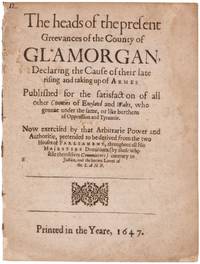
164721028431647. London: n.p. 1647. Small 4to. Disbound pp. 2 6; a little toned a few stains to title light dampstaining to outer margin of A1-2 but overall a very good and crisp copy.First and only edition very rare of this denunciation of the abuses of the Parliamentarian County Committees in Wales issued at the height of the Civil War.By the summer of 1647 one surviving copy is dated in manuscript ""1 July"" the war had dragged on for nearly five years. Parliament was steadily gaining the advantage largely through the network of County Committees manned with loyal supporters. These officials collected the taxes that sustained the war effort requisitioned horses and supplies for the army and carried out Parliament's decrees. Their growing power - together with the ever-heavier burden of taxation to maintain the army - provoked widespread resentment and in turn revived support for the Royalist cause.This pamphlet sets out the grievances against the Parliamentarian committees in Glamorgan South Wales and denounces their exactions and abuses. The rising it encourages was less an expression of loyalty to Charles I than a reaction to Parliament's oppressive rule. Indeed it contains no Royalist propaganda and no expressions of loyalty to Charles. Instead it reads as a near-anarchic denunciation of arbitrary power itself of its arrogance remoteness and disregard for the people.ESTC R201640 recording only five copies BL National Library of Wales Cardiff Central Library Oxford Folger. unknown
1847189591Deal: Printed by J. Deveson 1847. The battlefields of the Punjab seen from the ranks First and only contemporary edition of this brief but spirited and entirely unembroidered account in the authentic voice of an enlisted man. The 31st were one of the most heavily engaged units of the conflict seeing action at Mudki Ferozeshah Aliwal and Sobraon. Scarce with just two locations traced BL and Boston Public Library unrecorded at auction. Vivid vignettes from the battle front are set within the context of a diary account of an uneventful voyage back from Calcutta to Gravesend. Cleveland opens on 23 October 1846 "weather continues fine and the wind steady" reminiscing of Moodkee "the first battle in which I had even been engaged I have often since endeavoured to imagine what my feelings were on that occasion but the hurry and confusion of that Action prevented the exercise of thought". One thing remains clear in his memory "So confident were our Officers and men that the Sikh Army was composed of nothing but a rebel mob that they did not believe they would hazard an engagement. this entire ignorance of the Sikh Army it is wonderful that all were alike involved even the Governor and Commander in Chief each of whom it should fairly be supposed ought to have been possessed of correct information on so important a subject". Of Ferozeshah he recalls the "lurid flames" of the burning Sikh camp "gleaming through the darkness diffusing sufficient light to make the horrors of our situation more apparent" the shot from the Sikh guns falling "among us by far to thick and fast to be agreeable". The situation only saved by what Cleveland - along with Sikh commander Tej Singh - read as the Commander in Chief's order for the cavalry to make a "false charge" which was in fact the withdrawal of the Horse Artillery desperately short of ammunition to Ferozepur to resupply while under cavalry escort. At Aliwal the 31st were on the extreme right of the British line "When we had arrived within a short distance of the village under heavy fire from the enemy who were waving their swords and cutting a great variety of menacing capers in front of us General Smith galloped up and said 'take that village boys and carry it along with you' when the whole regiment broke into a rapid double which they did not abate until they had cleared the village captured the guns upon its left and caused the whole of the enemy's left flank to run for dear life. We now quietly took possession of the whole of their camp equipage ammunition and stores; and having amply supplied ourselves. we turned in for the night near the banks of the Sutlej". And so to Sobraon "At 9 A. M. the battle had reached its warmest point - shot and shell were then whizzing through the air in rapid succession. on their fearful missions of mischief. from the muzzles of 150 pieces of ordnance - about half past 9 a low rumbling sound was heard resembling distant thunder which was caused by the report of musquetry - as the infantry ad passed the Enemy's breastworks. thus concluded the most severe contest in the annals of Indian warfare and not a second to any fought in Europe with the exception of Waterloo". Following the ratification of the Treaty of Lahore the 31st marched to Calcutta and embarked for home Cleveland composing this very personal and telling NCO's witness to world-changing events while under weigh. Octavo. pp. 24. Original thin paper printed wrappers. Wraps rubbed and soiled with some minor chips and splits at the edges no loss of text creases to the corners; pale toning and some finger-soiling to the text; but a well preserved copy very good. paperback
Very Good Turkish, Ottoman (1500-1928) Original handsome brown quarter leather binding with Ottoman lettered gilt to spine. Five raised bands to spine, separated from each other with lined gilt. Slight stains on the title page. Else a fine copy. Roy. 8vo. (23 x 16 cm). In Ottoman script (Old Turkish with Arabic letters). 99 p. Hegira: 1313 = Gregorian: 1895. Extremely rare first printed edition of this one of the earliest travel accounts, of an Ottoman admiral's early expeditions to the Indian Ocean, Arabian Sea, Red Sea, and Persian Gulf to counter Portuguese piracy and attacks on Muslim pilgrim ships, which describes the lands he has seen during his voyage from India to Constantinople by Sidi (Seydi) Ali Reis (1498-1563) sent by Sultan Suleiman the Magnificent covering the years 1553-1556. During these naval wars, after two marine battles against the Portuguese fleet and a great storm named The Elephant Typhoon (Tufan-i Fil) by the locals, Reis' remaining six galleys drifted to India. The fleet was unserviceable, resulting in his return home overland with 50 men. Reis then arrived at the royal court of the Mughal Emperor Humayun in Delhi, where he met the future Mughal emperor Akbar, who was twelve years old at the time. He returned to the Ottoman Land over Muslim states in South Asia; Afghanistan, Central Asia, and Iran. But he delayed his return because of the war between the Ottoman and the Safavid Empires in Iran. Finally, following the treaty of Amasya in 1555, he was able to return home and present his book of this narrative journey to the Sultan in 1557. This work offers an extensive insight into the Muslim situation in 16th century South and Central Asia and the Middle East, Islamic navigation, and Turkish - Portuguese relations as well as Persian, Afghan, and Indian geography, naval routes, flora, and fauna. Seydi Ali Reis, formerly also written Sidi Ali Reis and Sidi Ali Ben Hossein, was an Ottoman admiral and navigator. Known also as Katib-i Rumi, Galatali, or Sidi Ali Çelebi, he commanded the left wing of the Ottoman fleet at the naval Battle of Preveza in 1538. He was later promoted to the rank of fleet admiral of the Ottoman fleet in the Indian Ocean, and as such, encountered the Portuguese forces based in the Indian city of Goa on several occasions in 1554. Seydi was able to unite several Muslim countries on the coast of the Arabian Sea (such as the Makran Kingdom, Gujarat Sultanate, and Adal Sultanate) against the Portuguese. He is famous today for his books of travel such as the Mir'ât ül Memâlik [i.e. The Mirror of Countries], and his books of navigation and astronomy, such as the Mir'ât-i Kâinât (Mirror of the Universe) and the Kitâb ül Muhit: El Muhit fî Ilmi'l Eflâk ve'l Buhûr [i.e. Book of the Regional Seas and the Science of Astronomy and Navigation] which contain information on navigation techniques, methods of determining direction, calculating time, using the compass, information on stars, sun and moon calendars, wind and sea currents, as well as portolan information regarding the ports, harbours, coastal settlements and islands in the various regions of the Ottoman Empire. His books are translated into numerous languages including English, French, Italian, German, Greek, Arabic, Persian, Urdu, Russian, and Bengali, and are considered among the finest literary works dating from the Ottoman period. "When Sultan Suleiman had taken up his winter residence in Aleppo, I, the author of these pages, was appointed to the Admiralship of the Egyptian fleet and received instructions to fetch back to Egypt the ships (15 galleys), which some time ago had been sent to Basrah on the Persian Gulf. But, 'Man proposes, God disposes.' I was unable to carry out my mission, and as I realized the impossibility of returning by water, I resolved to go back to Turkey by the overland route, accompanied by a few tried and faithful Egyptian soldiers. I traveled through Gujarat, Hind, Sind, Balkh, Zabulistan, Bedakhshan, Khotlan, Turan, and Iran