RUSSIAN CIVIL WAR - STANFORD, EdwardBiblio.com
119 839 résultats
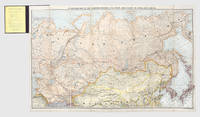
1917170670London: Edward Stanford 1917. Navigating a region in crisis The 1917 edition of this long-running map the working copy of Captain Noël Louis St Pierre Bunbury a member of Major-General Alfred Knox's British Military Mission to Siberia. Bunbury travelled along the Trans-Siberian Railway between April and November 1919 training White Russian officers and soldiers. Important stops along the railway are marked in blue pencil. Appointed by Lloyd George and Winston Churchill Knox was a logical choice being fluent in Russian and having served in St Petersburg in diplomatic posts before the First World War. His mission running parallel to the deployment of British troops arrived in Omsk in October 1918. Knox was tasked with organizing Russian units to fight the Bolsheviks and strategically advising Admiral Kolchak who was installed as Supreme Ruler of Russia at Omsk the following month. Bunbury 1890-1971 served in several campaigns in Waziristan received the DSO in 1937 and earned promotion to brigadier in the Indian Army in 1941. Between 1943 and 1944 he was aide-de-camp to George VI. Colour lithographed map 750 x 1140 mm laid down in sections on linen as issued folding away into octavo cloth covers front board with yellow label lettered in black. Map bright a little soiling more so on verso and to boards spine sunned: a very good example. hardcover
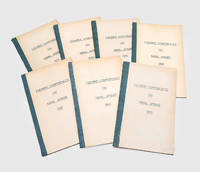
1947188776London: Admiralty Technical Reproduction Branch 1947. Documents from the heart of the Nazi state First edition a complete set of this internally circulated series reproducing the detailed minutes of meetings held between Hitler and his naval commanders in the period 1939-45. The material formed part of a large tranche of the German Naval Archives captured by Allied forces at Tambach Castle in Bavaria in April 1945 the documents having been moved from Berlin in 1943 for safekeeping. After the surrender material with intelligence value was moved to the Admiralty and American intelligence headquarters in London and analysed. These volumes were edited by Admiralty staff from translations made by British and American naval personnel and distribution occurred in three-week intervals per volume in the UK and US. Volume I opens with records of top-secret preparations for war in April 1939 and the series closes with supplementary material from early May 1945 following Hitler's suicide including the German government's final communications with Japan. Loosely inserted in the first volume is a notice dated 15 May 1947 embargoing news of the series until following day. 7 vols quarto. Text printed in duplicated typescript. With 4 maps and plans; tables in text. Original buff card wrappers green cloth backstrips front cover lettered in black. House in original green cloth slipcase with title label. Volumes annotated on spines in white. Wrappers of first and last vols creased and with some old adhesive tape repairs a little wear to spines general light toning to text as expected tan burn on 2 leaves in final vol.: a near-fine set in like slipcase. hardcover
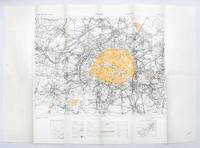
1944156766London: War Office 1944. The liberation of France First of this edition revised from a French map dated 1937 photolithographed in 1942 and corrected to August 1944. Maps such as these were used in the planning and execution of the liberation of Paris from 19 to 25 August 1944. This map intended for use in the field focuses on areas of particular importance for the army. These include good viewing points dangerous areas forest paths practicable in dry weather isolated hotels and buildings hospitals forts radio stations and factories. The heart of the city is highlighted in orange and distances are centred on Notre Dame Cathedral whose Emmanuel bell rang out to welcome the arrival of General Leclerc's division. It was first produced by the War Office in 1941 after a Michelin map of 1937. Photolithographed map 713 x 981 mm printed on one side only highlights in orange and green text lettered in red and black key on recto. Later pen inscription "Paris" outside printed area. Map bright two closed tears to edges sometime repaired with tape light nicks and finger-soiling at edges small stain to verso: a very good copy. unknown
1949136920London: Air Historical Branch Air Ministry 1949. The first attempt to write the history of the war in the air Copy number 8 from a small restricted circulation classified "secret." Drawing on high-level government papers and reports this report follows extensive background with discussion of individual operations and assessments of efficacy tactics and strategy. The only copies traced are in the complete sets held by the Imperial War Museum and the National Archives. The Air Historical Branch was revived in 1941 under the leadership of John Combes Nerney 1890-1973 and immediately began gathering material for a six-volume narrative The R.A.F. in the Bombing Offensive Against Germany. Volume I on the development of Bomber Command up to 1939 was completed by the end of hostilities and the remainder were finalized in the immediate postwar years. In this volume chapters are devoted to major offensives including Operation Pointblank Operation Chastise and the Battle of Berlin as well as the devastation of the industrial city of Hamburg. The text cites large quantities of sensitive information and data. Although there is no stated limitation we have located no volume with a copy number above 17. The narrative formed the basis of The Strategic Air Offensive Against Germany 1939-1945 written by Sir Charles Webster and Noble Frankland and published for the public in 1961. Frankland's 1951 monograph The Planning of the Bomber Offensive and its Contribution to German Collapse was published by the Air Historical Branch as a companion to the original six volumes. Large quarto 340 x 210 mm. With 3 maps 2 folding 1 colour 7 folding tables chart; tables in text. Leaves printed with duplicated typescript. Original brown quarter cloth boards fixed with metal posts front cover with white label printed in black. "Supplied for the public service" ink stamp on inner boards. Covers worn as expected couple of text pages only partly bound in Appendix 13 repaired along fold: very good. hardcover
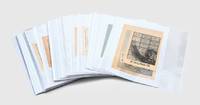
1941191050c.1941-1945. Promising comfortable captivity rather than death on the Eastern Front A substantial collection of Soviet aerial propaganda leaflets in German dropped behind enemy lines to encourage surrender most incorporating safe-conduct passes for presentation upon capitulation. These passes carry wording such as: "I a German soldier refuse to fight against Russian workers and peasants. I voluntarily surrender to the Red Army" translated. Evocative imagery is used such as one leaflet showing a skeleton in SS uniform pointing to a gravestone beneath the warning: "This is your place! You'll be next!" Many employ explicitly socialist appeals urging German workers and peasants not to fight their fellow labourers on behalf of their oppressors. Others claim that numerous German generals have already surrendered insist Germany's defeat is inevitable and warn soldiers not to throw their lives away. Some point to overwhelming American war production as further proof that the war cannot be won. A recurring theme is the favourable treatment allegedly awaiting those who surrender. One leaflet depicts prisoners dining with the caption: "The German prisoners of war are received by the Russians with a tasty fatty and nutritious lunch" alongside the assurance: "All who surrender to the Red Army are guaranteed life good treatment and to return home after the war ends" - an extraordinary claim given that the death rate among German POWs in Soviet captivity has been estimated at roughly one third. 131 leaflets varying sizes. Each leaflet in a removable mylar sleeve housed together in a red cloth solander box. Some toning else in excellent condition. hardcover
19281819931928. The scars of war heal An album signed twice by the editor and photographer W. Donald Wise on the introductory leaf pairing photographs of 100 battlefield scenes of 1918 with the same locations in 1928 commemorating a decade since the end of the war. Hise of Salem Ohio "went to France with the A.E.F. and when the American Army gave up its private battle with the franc he stayed on. For nine years he has been taking before-and-after pictures of the battlefields" Brooklyn Daily Times 5 April 1929. In his introduction he writes "This albumn sic has been edited and issued with two ideas predominating: one to present a comprehensive photographic survey of the battle fields of France and Belgium in their devastated state of 1918; two to visualize the stupendous reconstruction work accomplished Ten Years After in these same regions. In making the present day photographs special care was taken by the editor to find the exact location of the war scene." "These two hundred photographs cover principally the battle fields where the American Expeditionary Forces fought such as the Marne Oiuse-Aisne St. Mihiel Flanders Fields the Somme and the Argonne. But others include some French and British sectors where American soldiers were in training or on detached service. They are shown in sequence of battles from town to town as our men advanced and therefore constitute a complete sketch of the American effort concurrently with the French restoration ten years later." The contrasting images starkly reveal the scale of the destruction and the work done to repair the devastation. They demonstrate the rapid rebuilding of places sometimes in the old style sometimes entirely anew the transformation of provisional and rudimentary graves into well-kept military cemeteries the sprouting of memorials and the forests reclaiming the trenches. The typed captions describe the scenes including the military manoeuvres and encampments and the prior and current state of the locations. The final photograph shows the American Suresnes Cemetery near Paris. The photograph album was evidently produced in a small run - we trace two at auction Heritage 2009 and Waverly 1994; the former was this copy the latter possibly so. None could be traced in institutions. Most of the photographs as far as we can determine are otherwise unpublished. Oblong quarto 329 x 232 mm. With 201 black and white photographs 209 x 154 mm each with a typed caption mounted on grey card leaves prefaced with an introductory text leaf. Original brown morocco. Restored at extremities. Slight rubbing at extremities repair to first leaf fore edge all photographs present and sharp. In very good condition. unknown
Paris, Librairie Rue Visconti, 22, s. d. (ma 1834). Seconda edizione francese con incisioni dai dipinti originali di Carl Vernet. In folio, legatura originale in percallina rossa, titolo e stemma alle armi in oro, tagli oro, occhietto, ritratto di Napoleone I in antip., front., elenco delle tavole contenute nell’album, 5 ritratti dei generali incisi a p. p. dal Bovinet, seguono le 50 tavole di battaglie. Il volume, in seconda edizione, è una splendida raccolta di incisioni, interessantissime dal punto di vista storico e artistico; ma non include, a differenza della prima edizione, le lunghe relazioni di battaglie. L’opera rappresenta una celebrazione di Napoleone e delle sue imprese, con le tavole che descrivono le campagne d’Italia, d’Egitto, di Germania e di Polonia, e con una relazione dell’incoronazione di Napoleone imperatore e della sua consorte. I disegni preparatori per le tavole furono forniti dal pittore, disegnatore e incisore Carle Vernet, discendente di una celebre famiglia di artisti settecenteschi; la trasposizione dei disegni su lastra spetta a validi incisori transalpini, tra i quali L. J. Masquelier, Daudet, P. P. Choffard, Dambrun, Dupréel, J. Bosq; le vedute della campagna d’Italia, dall’accurata topografia e ricche di figure, illustrano le principali battaglie, nonché gli ingressi trionfali delle truppe francesi; tra le località rappresentate: Millesimo, Mondovì, il Po’, Lodi, Milano, Pavia, Livorno, Castiglione, Roveredo, San Giorgio, Arcole, Rivoli, la Favorita, il Tagliamento, Venezia, Mantova, Torino, Napoli, il valico del Monte San Bernardo, Montebello e Casteggio, Marengo. Manca in questa nostra seconda edizione (e a differenza della prima edizione) la carta geografica dell’Italia a doppia pagina e quella di Piacenza (mancanti in origine e non perché siano state asportata). Legatura con alcune macchie, dorso staccato, peraltro esemplare con le tavole in vigorosa morsura e in eccellente stato stato di conservazione. . ,.
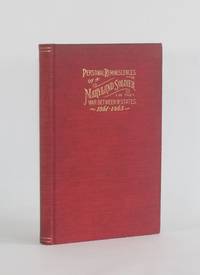
189810826Baltimore: Press of Fleet McGinley & Co 1898. Hard Cover. Very Good binding. Octavo. 177 pp. First edition. Limited to 125 copies. Signed and inscribed by Booth on the first blank. As issued in publisher's red cloth with title in gold on the front cover. A bright copy with very light soiling to the cover; early and short bookseller's description pasted to the bottom of the front pastedown; trivial closed tears to the fore-edge of the first page else clean and sharp. <br /> <br /> Coulter notes that this is more reliable that many of the longer narratives written well after the war because Booth is scrupulous about not including information he couldn't possibly have remembered after so many years Coulter 46. Nevins notes "Written by a young solider who participated in many battled before his capture this work contains so much on affairs both on and behind the lines that it is deserving of republication" CWB I 61. It was eventually reprinted by Butternut Press in the 1980s. This copy signed and warmly inscribed by Booth to Wm. H. Fitzgerald who was in the 12th Virginia until he was wounded in action at the Battle of Malvern Hill in 1862. Fitzgerald was born in Maryland and lived in Baltimore for several decades after the war. This book is remarkably uncommon in commerce particularly in this condition. Howes B-613; Dornbusch II 529. Press of Fleet, McGinley & Co unknown
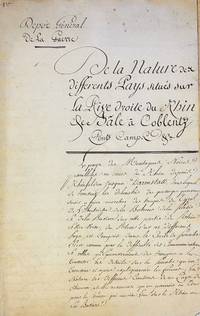
3342France late 18th century. Manuscript on paper. Text in French written in a neat hand. Sewn. Occasional spotting. Overall in fine condition. Manuscript on paper. Text in French written in a neat hand. Sewn. ff. 46 last blank. <p><br /> An important 18th-century manuscript from the Dépôt de la Guerre providing a strategic analysis of the right bank of the Upper and Middle Rhine used for military reconnaissance and planning.<br /> <p><p><br /> This manuscript produced by the Dépôt Général de la Guerre presents a detailed strategic analysis of the right bank of the Rhine from Basel to Koblenz. The Dépôt de la Guerre established in 1688 was the principal institution responsible for French military intelligence cartography and strategic planning. It played a crucial role in gathering and disseminating geographic and strategic data to support military operations. This manuscript is a testament to that work offering valuable insights into potential military routes positions and logistical considerations along the Upper and Middle Rhine—a region of significant strategic importance.<br /> <p><p><br /> The manuscript is divided into four sections each providing specific strategic information.<br /> <p><p><br /> De la Nature des differents Pays situés sur la Rive droite du Rhin de Bâle à Coblentz: The main section offers a comprehensive overview of the nature and strategic value of regions on the right bank of the Rhine from Basel to Koblenz. It discusses the terrain routes suitable for army movements locations favorable for establishing camps and available agricultural resources. Regions such as Baden the Palatinate Worms Mainz Württemberg and others are examined from a military perspective.<br /> <p><p><br /> Positions militaires sur la Rive droit du Rhin de Bale à Coblentz: This section focuses on analyzing potential military positions along the right bank of the Rhine identifying defensible locations natural barriers and strategic points for effectively deploying troops and artillery.<br /> <p><p><br /> Indication des principaux lieux où il seroit possible à l’ennemi de Jetter des Ponts sur la Rive droite du Rhin de Bâle à Coblentz: Identifies key locations along the right bank where an enemy might construct bridges to cross the Rhine highlighting strategic points that could be critical for defense or control to prevent such crossings.<br /> <p><p><br /> Indications des différens lieux entre Bale et Philisbourg où l'on pourrait Jetter des Ponts sur la Rive Gauche du Rhin pour se porter dans les Pays situés sur sa Rive Droite: Discusses potential sites between Basel and Philippsburg on the left bank of the Rhine where bridges could be established to launch operations onto the right bank. This section is essential for planning offensive maneuvers or controlling river crossings.<br /> <p><p><br /> To the best of our knowledge this manuscript was never published in print and was presumably circulated only in a few copies this one bears the inscription “1er†on the first leaf making it a rare and significant example of 18th-century military reconnaissance and planning. Comparable manuscripts are found in the archives of the Service Historique de la Défense such as the Exposé sommaire de la nature des différents pays situés sur la rive droite du Rhin de Bâle à Coblenz entre les montagnes Noires et le Rhin which includes additional reconnaissance reports from 1730 and 1743 1 M 1504. Similarly another version of the Exposé sommaire appears in Louis Tuetey's Catalogue général des manuscrits des bibliothèques publiques de France: Archives de la guerre no. 1941 underscoring the careful documentation and strategic importance of the Rhine region by the Dépôt de la Guerre.<br /> <p><p><br /> Koblenz located at the confluence of the Rhine and Moselle rivers was a critical strategic point during this period. It was occupied by French forces from 1794 to 1814 serving as a key administrative and logistical hub during the French Revolutionary and Napoleonic Wars. The kind of intelligence contained in this manuscript would have been invaluable for controlling the Middle Rhine region and planning military operations.<br /> <p><p><br /> Although this manuscript predates the Napoleonic Wars its detailed geographic and strategic insights regarding potential military positions river crossings and logistical planning would have been highly useful to French commanders. The systematic efforts of the Dépôt de la Guerre in compiling such data were essential for shaping military strategies and ensuring effective operations along the Rhine and beyond. This manuscript remains a significant historical resource for understanding the military geography and strategy of the late 18th century.<br /> <p>. unknown
1st edition. Folio. Newspaper. Illustrated throughout. Includes many advertisements and numerous personal family announcements. Following the Kristallnacht pogroms of November 1938, Jewish life in Germany and Czechoslovakia was even further curtailed and all remaining Jewish newspapers were shut down by the government. In their place, the Nazi Party ordered the creation of a single, new Jewish newspaper, "Das Jüdische Nachrichtenblatt, " that would be directly under Gestapo control. It was published concurrently in Berlin, Vienna and Prague and was occupied to a large extent with announcing the ever-increasing number of anti-Semitic discriminations, orders and exclusions imposed by the Reich government. Over the course of its history, the editors of the Jüdische Nachrichtenblatt were Leo Kreindler (1938-42) and Willi Pless (1942-43) . The Berlin edition ran from the 23rd November, 1938 until the final issue of 4th June 1943. The Prague edition continued until 1945. In a ghoulish twist of Nazi irony, Gentiles were forbidden from reading the Jüdische Nachrichtenblatt yet the newspaper's targeted readership, the Jews, were literally hounded to their deaths by the very authorities who presided over the newspaper's ownership! See Reiner Burger, Von Goebbels Gnaden: "Jüdisches Nachrichtenblatt" 1938-1943 (2001) . A mixed collection of 102 issues from Berlin and Prague sold at auction in 2015 for 9225.00 USD. These issues were at one point bound, but the binding was at some point removed. The newsprint is brown and quite fragile, with edgwear and old dampstains, but there is generally little text loss, except to a few letters on the lower outer margins of the final 10 issues. Now housed in an acid-free sleeved portfolio, with each issue in a separate clear sleeve for easy protected viewing. Fair condition, but very rare, very important, and very powerful. (kh-5-47)
1861-1862: Prima due annate rilegate in legatura coeva in mezza pelle con titolo al dorso. 30 numeri, tutto il pubblicato, dal 6 giugno al 24 dicembre, tutti i numeri presentano 8 pagine a parte due numeri che ne contiene 12. Prima della raccolta presenti una brossura rosa illustrata, una carta con titolo e annata entro cornice ed una carta (con strappo ma senza perdita di carta) con il titolo illustrata. Seguono (rinforzo al margine esterno bianco della prima ed ultima carta del primo numero e al centro di un numero per ridurre uno strappo). L’annata si chiude con una brossura rossa satirica illustrata.1862 Tutto il pubblicato. Brossura verde illustrata, seguono, dal primo numero della seconda annata uscito il 4 gennaio all’ottantaduesimo ed ultimo numero uscito il 24 dicembre. Tutti i numeri sono formati da 8 pagine a parte tre numeri che presentano 12 pagine. 1863-1864: Terza e quarta annata, rilegate in mezza pelle con titolo e fregi in oro al dorso. 1863, Anno III, n. 1 (1 gennaio 1863) – n. 135 (31 dicembre 1863) compreso supplemento al 122 e al 124, 1864 Anno IV, n. 136 (7 gennaio 1864) – n. 187 (29 dicembre 1864). L'ultimo numero del 1864 presenta uno strappo con perdita di carta alla terza carta dell'ultimo numero, il 187. Due annate complete1868 Tutto il pubblicato. Dal primo numero dell’annata, il 344 del 2 gennaio all’ultimo numero dell’anno, il 396 uscito il 31 dicembre. Legatura in mezza tela con piatti foderati da carta marmorizzata coeva (qualche difetto ai piatti). All’interno in ottime condizioni di conservazione. Tutti i numeri sono formati da 8 pagine. Alla fine del volume sono raccolte tutte le brossure editoriali di ogni numero di colore paglierino e arancione. 1869 Tutto il pubblicato. Dal primo numero dell’annata, il 397 del 6 gennaio all’ultimo numero dell’anno, il 448 uscito il 30 dicembre. Legatura in mezza tela con piatti foderati da carta marmorizzata coeva (qualche difetto ai piatti). All’interno in ottime condizioni di conservazione. Tutti i numeri sono formati da 8 pagine.1870 Tutto il pubblicato (a parte 5 numeri, il 469, il 483, il 485, il 487, il 498 mai aggiunti in questa collezione). Dal primo numero dell’annata, il 449 del 6 gennaio all’ultimo numero dell’anno, il 500 uscito il 29 dicembre. Legatura in mezza tela con piatti foderati da carta marmorizzata coeva. All’interno in ottime condizioni di conservazione.1872 Tutto il pubblicato a parte i numeri 580 e 603. Dal primo numero dell’annata, il 553 del 4 gennaio all’ultimo numero dell’anno, il 604 uscito il 26 dicembre. Due strappetti alle prime tre carte dell’ultimo numero, restaurati, senza perdita di carta. Legatura in mezza tela con piatti foderati da carta marmorizzata coeva (qualche difetto ai piatti). All’interno in ottime condizioni di conservazione. Tutti i numeri sono formati da 8 pagine, a parte un numero che è composto di 4 pagine.1873 Tutto il pubblicato a parte i numeri 622, 623, 629, . Dal primo numero dell’annata, il 605 del 2 gennaio all’ultimo numero dell’anno, il 656 uscito il 25 dicembre. Due strappetti alla prima pagina del primo numero senza perdita di carta. Legatura in mezza tela con piatti foderati da carta marmorizzata coeva (qualche difetto ai piatti). All’interno in ottime condizioni di conservazione. Tutti i numeri sono formati da 8 pagine, a parte un numero che è composto di 4 pagine.<BR>1874 Tutto il pubblicato. Dal primo numero dell’annata, il 657 del 1 gennaio all’ultimo numero dell’anno, il 709 uscito il 31 dicembre. Legatura in mezza tela con piatti foderati da carta marmorizzata coeva (qualche difetto ai piatti). All’interno in ottime condizioni di conservazione. Tutti i numeri sono formati da 8.<BR>1875 tutto il pubblicato. Entro carpetta con lacci. Dal primo numero dell’annata, il 710 del 7 gennaio all’ultimo numero dell’anno, il 761 uscito il 30 dicembre. Tutti i numeri presentano 12 pagine la prima e l’ultima carta sono alcuni di brossura arancione, alcuni rosa e gli altri gialli). Varie tavole a colori, numerosi numeri ancora a fogli chiusi. I numeri si presentano ancora a fogli chiusi.1876 tutto il pubblicato. Entro carpetta con lacci. Dal primo numero dell’annata, il 762 del 6 gennaio all’ultimo numero dell’anno, il 813 uscito il 28 dicembre. Tutti i numeri presentano 12 pagine (la prima e l’ultima carta sono in brossura paglierina). Varie tavole a colori, numerosi numeri ancora a fogli chiusi. Varie tavole a piena pagina in cromolitografia a colori (qui compare anche il primo ritratto della “Galleria Cromolitografica dello Spirito Folletto”). I numeri si presentano ancora a fogli chiusi.1877 tutto il pubblicato. Entro carpetta con lacci. Dal primo numero dell’annata, il 814 del 4 gennaio all’ultimo numero dell’anno, il 865 uscito il 27 dicembre. Tutti i numeri presentano 12 pagine (la prima e l’ultima carta sono alcuni di brossura arancione e gli altri gialli). Varie tavole a colori, numerosi numeri ancora a fogli chiusi. 1878 tutto il pubblicato. Entro carpetta con lacci. Dal primo numero dell’annata, il 866 del 3 gennaio all’ultimo numero dell’anno, il 917 uscito il 26 dicembre. Tutti i numeri presentano 12 pagine (la prima e l’ultima carta sono alcuni di brossura arancione e gli altri gialli). 1879 tutto il pubblicato. Entro carpetta con lacci. Dal primo numero dell’annata, il 970 del 1 gennaio all’ultimo numero dell’anno, il 969 uscito il 25 dicembre. Tutti i numeri presentano 12 pagine (la prima e l’ultima carta sono di brossura marroncino). 1880 tutto il pubblicato. Entro carpetta con lacci. Dal primo numero dell’annata, il 918 del 2 gennaio all’ultimo numero dell’anno, il 1022 uscito il 30 dicembre. Tutti i numeri presentano 12 pagine (la prima e l’ultima carta sono di brossura paglierina). Quasi tutti i numeri sono a fogli chiusi e presentano una grande tavola a colori. 1881 tutto il pubblicato. Entro carpetta con lacci. Dal primo numero dell’annata, il 1023 del 6 gennaio all’ultimo numero dell’anno, il 1074 uscito il 29 dicembre. Tutti i numeri presentano 12 pagine (la prima e l’ultima carta sono di brossura azzurrina). Lo Spirito Folletto fu una delle riviste umoristiche milanesi, più celebri dell'ottocento e rappresenta anche la prima impresa editoriale del celebre editore italiano, Edoardo Sonzogno (Milano, 21 aprile 1836 – Milano, 14 marzo 1920) subentrato da pochissimo al padre Lorenzo, nella guida dell'azienda di famiglia. Il giornale uscì per la prima volta nel 1861 con il titolo “Lo Spirito Folletto, giornale umoristico-illustrato” riprendendo il titolo del primo famoso giornale satirico lombardo, uscito per un solo anno, nel turbolento 1848 con il titolo “Lo Spirito folletto, Giornale diabolico, politico, umoristico, comico, critico, satirico, pittoresco.”. Nel 1863 Sonzogno acquista la testata satirica de “L'Uomo di Pietra” che viene poi assorbito dallo Spirito Folletto. Il giornale si avvaleva all'inizio della preziosa opera di Vespa e Camillo, al secolo Vespasiano Bignami e Camillo Marietti ma pochi dopo pochi numeri la collaborazione si allarga ad alcuni dei più importanti illustratori dell'ottocento come Francesco Gonin ed il figlio Guido, Francesco Fontana, Taccani, Giuseppe Galli, Giulio Gorra, Camillo Cima (Don Pacifico Pinzo), Iacopo Parera (Don Sancio), Casimiro Teja (Jetta), Carlo Gallina, Sebastiano De Albertis, ed il bergamasco, Luigi Borgomainerio fra i più attivi rappresentanti della Scapigliatura. Nel 1881, il giornale venne poi acquistato dal Secolo d'Italia e la parte grafica venne poi affidata a grande illustratore fioretino Mata, Adolfo Martinelli (1832 – 1887), che si era creato grande fama di acuto caricaturista politico sulle testate fiorentine quali “Il lampione”, “La Lanterna di Diogene” e “L'Arlecchino”. A partire dal 1880 il giornale iniziò anche a pubblicare tavole a colori ma la sua esperienza editoriale stava andando verso la conclusione che avvenne nel 1884 quando divenne un mensile e ridusse il suo formato. Nel corso della sua vita, fu uno dei giornali milanesi più celebri e seguiti dove la satira era solo una scusa per fornire informazioni politiche e di costume su Milano e l'Italia. Raro a reperirsi un insieme così congruo di annate, in buone-ottime condizioni di conservazione.
17916424A Paris, Chez F. Buisson, Imprimeur-Libraire, rue Hautefeuille, n°20. (1791). 1791 2 vol. in-8° (200 x 125 mm.) de : I. [2] ff. (titre, f. t.), viii, 466 pp.; II. [2] ff. (titre, f. t.), 486 pp. Initiales manuscrites à l'encre "L R" surles faux titres. Demi-basane dépoque, dos lisses ornés et titrés à l'or, coins de parchemin, plats recouverts de papier à la colle bleu.
un vol in 4 cm. 25,6x18,5 pp. ib-frontespizio inciso su doppia pag. con fastosa cornice , due tavv. a doppia pag. del luoghi citati nelle tavv. in ordine alfabetico, una tav. d'insieme a doppia pag.:seguono 22 tavv. a doppia pag. del territorio: Boneville-Martinach; Sutten ou Syon; Varesse et Ugona; Bergame, Come et Lecco; Monstier et Morges; Aouste et Varallo; Sesto et Biagrasso; Milan; Suse et S.t Jean de Morienne; Ivree, Chivass et Verrue; Novara et Mortara; Lodi, Pavie et Plaisance; Briancon et Mount Dauphin; Turin, Carmagnole et Savillan; Alessandrie et Tortone; Bobbio et Pontremoli; Barcelonette et Beuil; Coni, Tende et Albenga; Genes Savone et Finale; Rapallo et La Specie; Castellane et Antibes; Monaco Vintimille et Oneille. Atlante ben completo anche se nella tavola doppia d'insieme sono indicate 24 tavv. ma la 23 e 24 non sono riportate in quanto bianche perchè rappresentano il mare Ligure senza la presenza di alcun litorale. Le carte topografiche rappresentano con dovizia di particolari orografici ed idrografici e con la indicazione astronomica di latitudine e longitudine e con i confini di queste località contornate con acqurellatura d'epoca i territori interessati dalla guerra franco-prussiana. Esemplare originale cucito senza dorso con solo due copertine colorate marmorizzate d'epoca con qualche mancanza e piccoli strappetti ai bordi. Interno solo con piccola gora angolo sup delle prime 4 tavv non numerate. Tutte le 22 tavv sono pulite ben inchiostrate e perfettamente conservate.
In-8 gr. (mm. 270x194), p. pergam. antica, dorso a cordoni con titolo oro su tassello, tagli rossi; bel frontespizio stampato in rosso e nero, entro pregevole e ricca cornice figur., con marca tipografica; ornato da eleganti grandi capilett. figur. a vignetta su fondo nero criblé, tutto in silografia. L’opera, a cura di Robert Goullet, è così composta: - “De Antiquitatibus Libri viginti nunc primum cum duplici ad biblia concordantia: unaquidem generali ad leges & historiales biblie libros: altera vero speciali ad singula eorundem capitula”, cc.num. 194. - “De Judaico bello Libri septem ad octo novissimos eiusdem de antiquitatibus libros: necnon ad Agesippi.. de hierosolimitano excidio quiq:..”, cc.num. 96. - “De Antiqua Judeorum origine contra Grecos & Manethonem aegyptium: necnon contra Appionem Alexandrinum libri due”, cc.num. 97-110. - Seguono altri testi fra cui: “Roberti Goullet sacre pagine professoris eruditissimi.. sine magnolabore excoluit Tretramonom: ex ipsius Iosephi biblie historiae scolastice Agesippi epithomatibus solerter conciliatum”, cc.nn. 88 (l’ultima è bianca). “La "Guerra giudaica", storia ebraica da Erode il Grande alla distruzione di Gerusalemme è il capolavoro dello storico giudeo Giuseppe Flavio (37 d.C. - m. dopo il 100), di casta sacerdotale; più letterarie sono le "Antichità giudaiche", storia del popolo ebraico dalle origini al 66 d.C. La sua opera ebbe grande fortuna, specialmente in età cristiana, ed ebbe frequenti traduzioni e rielaborazioni.” Così Diz. Treccani,V, p. 450. Cfr. Graesse,III,481 - British Museum “Cat. of French books 1470-1600”, p. 246 - Adams,I, p. 591 cita l’ediz. del 1514. Con uniformi arross. più o meno lievi ma certamente un buon esemplare. Edizione molto rara.
Incisione a bulino mm 417x290. Bella impressione nel I stato di III, avanti gli indirizzi degli stampatori Salamanca e De Rossi. Dell'incisione, tratta da un disegno di Raffaello conservato a Chatsworth. esiste una replica fedele di Marco Dente da Ravenna (TIB 26/14, 210). Ottima impressione stampata con inchiostrazione brillante e ben contrastata, sebbene lievemente rifilata: la linea di riquadro si intravede in qualche punto. Scena grandiosa e complessa. La fama di Marcantonio (S.Andrea in Argène 1480 - Bologna prima del 1534) fu all'epoca tale che viene così chiamato più spesso che con il cognome. Formatosi nell'ambiente umanistico bolognese, si perfezionò dal niello all'incisione a Venezia (1506), dove tra l'altro traspose a bulino le xilografie della Vita della Vergine di Dürer, e due anni dopo a Firenze, indi a Roma dal 1510, dove fu introdotto nell'ambiente antiquario. Dopo l'incontro con Raffaello, incise e diffuse insieme ai suoi allievi un gran numero di suoi disegni e affreschi (Lucrezia, la Strage degli Innocenti, il Morbetto, il Giudizio di Paride, il "Quos ego" tra le altre), raggiungendo col tratto nuove possibilità di tono e chiaroscuro. Le sue composizioni autonome armonizzano elementi tratti da varî artisti e presentano spesso elementi fantastici, come l'Incendio sul lago, noto come Sogno di Raffaello, e "Lo Stregozzo", che porta la sigla di uno dei suoi allievi, Agostino Veneziano. Incise anche da Giulio Romano (fu coinvolto in uno scandalo di stampe licenziose tratte da suoi disegni) e da B. Bandinelli.. Bartsch, n. 209; Delaborde, p. 291, n. 43; Massari, p. 236, n. 1; Bertelà, n. 396.
Incisione a bulino mm 417x290. Bella impressione nel I stato di III, avanti gli indirizzi degli stampatori Salamanca e De Rossi. Dell'incisione, tratta da un disegno di Raffaello conservato a Chatsworth, esiste una replica fedele di Marco Dente da Ravenna (TIB 26/14, 210). Ottima impressione stampata con inchiostrazione brillante e ben contrastata, sebbene lievemente rifilata: la linea di riquadro si intravede in qualche punto. Scena grandiosa e complessa. La fama di Marcantonio (S.Andrea in Argène 1480 - Bologna prima del 1534) fu all'epoca tale che viene così chiamato più spesso che con il cognome. Formatosi nell'ambiente umanistico bolognese, si perfezionò dal niello all'incisione a Venezia (1506), dove tra l'altro traspose a bulino le xilografie della Vita della Vergine di Dürer, e due anni dopo a Firenze, indi a Roma dal 1510, dove fu introdotto nell'ambiente antiquario. Dopo l'incontro con Raffaello, incise e diffuse insieme ai suoi allievi un gran numero di suoi disegni e affreschi (Lucrezia, la Strage degli Innocenti, il Morbetto, il Giudizio di Paride, il "Quos ego" tra le altre), raggiungendo col tratto nuove possibilità di tono e chiaroscuro. Le sue composizioni autonome armonizzano elementi tratti da varî artisti e presentano spesso elementi fantastici, come l'Incendio sul lago, noto come Sogno di Raffaello, e "Lo Stregozzo", che porta la sigla di uno dei suoi allievi, Agostino Veneziano. Incise anche da Giulio Romano (fu coinvolto in uno scandalo di stampe licenziose tratte da suoi disegni) e da B. Bandinelli.. Bartsch, n. 209; Delaborde, p. 291, n. 43; Massari, p. 236, n. 1; Bertelà, n. 396.
186222500<p>Mainer Edgar Alphonso Burpee describes the Battle of Fredericksburg providing previously-unknown details regarding order of battle Union movement through city streets <i>"unbecoming"</i> ransacking of civilian property and Confederates shelling Union-occupied parts of their city. He also includes drawings of the city's streets.</p> <b>CIVIL WAR. EDGAR A. BURPEE.</b>Autograph Letter Signed to Alexander Burpee. Fredericksburg Va. December 15 1862 12 pp. 5 1/8 x 7¾ in.<p><b>Partial Transcript</b></p><p><i>"Being our orderly I summoned the company at 4 o'clock and gave them my orders.a report of a gun was heard that sounded like thunder. It was a signal gun and to us indicated that something was in process of being done. Then another was heard and immediately after that musketry and some other guns.we stacked arms and lay down waiting the order to move forward.waiting for the pontoon bridges to be laid so we could pass.guns of both forces were constantly being fired and such a roar I never heard before. It seems as if the very heavens were filled with thunder and it was very stirring that our forces were engaged in shelling the city.Then later at double quick we crossed the pontoon bridge and set foot in the doomed city for our first time. We filed into the street that runs along the river bank having the honor of being the first regiment of our brigade in. As we entered marched up the street some 5 or 6 rods in front of us skirmishing and the bullets of the rebels came whistling thickly over our heads and around our ankles.</i></p><p><i>The streets are laid out in regular squares I shall draw you a plan. Because skirmishing was going on in the next street above us we were protected from the rebel shots. the rebel sharpshooters were about six rods away in the houses.their sharpshooters rapidly picked off our men.Our batteries too poured into the rebels showers of shells so that they completely riddled the homes nearby killing a large number of the enemy.By this time 7 o'clock the firing had ceased.our men commenced.ransacking the houses and stores tearing down fences & out buildings.It was alarming to see the scenes of unbecoming behaviors around us.All this time the dead and wounded were being brought down the street. The surgeons were busy attending to those badly wounded.On going up the street we would stumble over the dead of both sides some shot in the heads with shells still there were others killed by bullets. Some wounded would crawl off to some place of shelter.It was indeed a sad scene.</i></p><p><i>Morning came.we formed into line of battle.We were ordered to lie low or march in a stooping position.The ambulance corps were also engaged in carrying off the dead & wounded.In the street where we were two or three rebels lay. One had his whole side and his arms shot off. Another had the top of his head and brains carried away.Towards morning December 13 when it became light enough for the rebels to see our men they began to shell us and the pieces would fly.About 12 o'clock skirmishing commenced on our left.The streets were now filled with moving lines of soldiers.We could see and hear nearly the whole field and our brave men as they advanced under heavy fire from the enemy's batteries and musketry fire.Gen Howard marched often along our line & encouraged us by his words and presence. A balloon was in the rear of the city to observe all movements.About 4 o'clock our brigade was ordered in and down the street with a rush we went.bang went the rebel guns and whiz came their shells at us.Our regiment remained firm.Gen. came along after dark and said 'men of the 19th reg. you have done nobly. Your consistency deserves great praise.' To be continued - Ed."</i></p><p><b>Edgar A. Burpee</b> 1839 – 1919 of Rockland Maine mustered into the 19th Maine Infantry on August 25 1862. He rose to captain's rank was wounded at Gettysburg and was captured at the Battle of Jerusalem Plank Road Virginia in June 1864. He returned to Rockland married Annie Farwell and eventually joined his family's funeral business.</p><p><b>Condition</b></p><p>Fine. Written in light pencil. With some separation at edge of folds.</p> books
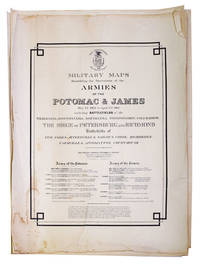
1869267611Washington D.C.: War Department Office of the Chief of Engineers Lithographed by Julius Bien New York 1869. First Edition. Prepared under the direction of Bvt. Brig. Gen. N. Michler Major of Engineers and Bvt. Lieut. Col. P.S. Michie Capt. of Engineers. 16 maps on 17 sheets. All but one double-page. Folio 23-5/8 x 18-1/2 inches. Unbound sheets. Light stains at top edges of several maps title with tape repair. First Edition. Prepared under the direction of Bvt. Brig. Gen. N. Michler Major of Engineers and Bvt. Lieut. Col. P.S. Michie Capt. of Engineers. 16 maps on 17 sheets. All but one double-page. Folio 23-5/8 x 18-1/2 inches. The topographic maps comprise:<br /> 1A. Gettsburg to Appomattox Court House northern<br /> 1B Gettysburg to Appomattox Court House southern <br /> 2. Fredericksburg<br /> 3. Chancellorville <br /> 4. The Wilderness<br /> 5. Spottsylvania<br /> 6. North Anna single page<br /> 7. Totopotomoy <br /> 8. Cold Harbor<br /> 9. Richmond<br /> 10. Bermuda Hundred <br /> 11. Petersburg and Five Forks <br /> 12. Jetersville and Sailor's Creek<br /> 13. High Bridge<br /> 14. Appomattox Court House<br /> 15. Antietam<br /> 16. Harper's Ferry. Phillips Atlases 3688 listing only 15 maps; Civil War Maps 518; Stephenson and McKee "Virginia in Maps" p. 194: "Topographers had already surveyed more than 1300 miles and issued more than 1200 maps prior to the army's passage over the Rapidan River on the night of 3-4 May 1864 the beginning of U.S. Grant's major offensive in Virginia that led from the Battle of the Wilderness on 5 and 6 May to the ten-month siege of Petersburg beginning in mid-June and finally to R.E. Lee's surrender at Appomattox on 9 April 1865. Bvt. Brig.-Gen. Nathaniel Michler's men made more than 1600 photographic sketches between the time of the river crossing and 30 July 1864. The vast number of surveys that Michler directed led to the publication of this atlas. War Department, Office of the Chief of Engineers [Lithographed by Julius Bien, New York] unknown
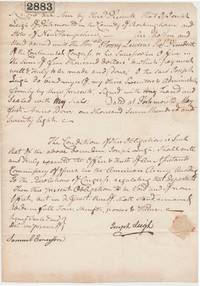
3201DS. 1pg. 7 x 10 . May 1 1778. Portsmouth New Hampshire. A document signed Joseph Leigh and co-signed Samuel Emerson. The important document states Know all Men by these Presents that I Joseph Leigh of Portsmouth in the County of Rockingham and State of New Hampshire are holden and stand bound unto the Honble Henry Laurens Esq. President of the Continental Congress or his Successor in Office in the Sum of Five Thousand Dollars to which payment well & truly be made and done I the said Joseph Leigh do bind myself my Heirs Executors & Administrators firmly by these presents. Signed with my hand and sealed with my seals: Dated at Portsmouth May first Anno Dom: one Thousand Seven Hundred and Seventy Eight. The Condition of this obligation is such that the above bounden Joseph Leigh shall well & truly execute the Office & Trust of an Assistant Commissary Officer in the American Army According to the Resolutions of Congress regulating that Department then this present obligation to be void and of none effect but in default thereof shall stand remain & abide in full force strength power & virtue. A few weeks later the New Hampshire Committee of Safety wrote to Leigh stating that You are hereby appointed Commissary to proceed immediately to that post of the Continental Army where the regiments from this state are stationed - to take charge of & Issue such stores as may be sent there from this state - and you are to observe such orders and instructions as you may from time to time receive from the General Assembly of this state or in the recess thereof from their Committee of Safety - or at any time from the board of war for this State in regard to any matters or things deliver to your care & charge - and you are to render a particular account of your Conduct in and about yr premises and make remittances for the stores delivered to your charge as aforesaid agreeable to the instructions from time to time sent you as aforesaid - and you are to be allowed and paid for your time & expense while in said service such wages as the issuing Commissarys for the other New England States have & receive for similar services. There is a paper seal to the right of the Leigh autograph and a small label on the top margin. An unusual Revolutionary War financial document. unknown
186358199Camp near Brooks Station Saturday April 11 1863. Fine original condition. 15-1/2 x 9-3/4 inches. ".Yesterday I witnessed one of the grandest sights that I ever beheld. Our whole corps was reviewed by the President Generals Hooker McLain Howard Steinway Secretary Seward and an innumerable host of Brigadier Generals and it was a sight that has paid me for coming to war." The spectacle is described in great detail. Private Penfield was soon to be captured at Chancellorsville spending 12 days as a prisoner of war before being exchanged. He survived the war to carry on his father's carriage making business in Monroe Connecticut and later founded a small private academy. unknown
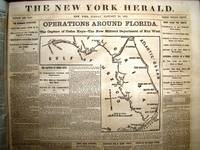
18620078071862. Hardcover. Spine rubbed. Overall a Very Good and fascinating compilation. Large folio 16" x 21-1/2" bound in half sheep and marbled boards. Includes a number of triple sheets. Extensive reportage of the war with numerous maps throughout. In addition to the war news the papers have ads and other news. Bound in at the front is a rather scarce broadside: "The New Year's Address of the Newsmen of the New York Herald" illustrated around the border with portraits of Lincoln and various cabinet members and generals. The broadside has a few small library stamps; otherwise it and the newspapers are generally clean with only occasional browning and a handful of long horizontal tears with no loss. While one occasionally sees individual Civil War issues of this paper offered for sale rarely does a run even this short though more than 2" thick appear on the market. <br/><br/> hardcover
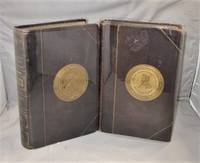
188527459New York:: Charles L. Webster & Company 1885. First Printing of the First US Edition. This is a Near Fine tight set with light wear to the extremities in the publisher's deluxe brown morocco leather over brown cloth boards with gilt circular emblems on the front and rear covers. This set is complete with the facsimile letter of Grant's original terms for Lee's surrender that is often missing. Mark Twain was the publisher of this monumental memoir as well as its editor and proof reader. Twain was extremely fond of and a close friend of Grant and encouraged the President and war hero to write his memoirs. Grant was dying of throat cancer but completed his two volume opus dictating the second volume to a secretary. Twain noted in a letter to his daughter that the manuscript was not even set yet and 20000 sets had been ordered from only two states. "Wait till you hear from the other 37." Grant finished his memoirs on July 18 1885 and died five days later on July 23rd. Following his death advance orders of the memoirs reached 300000 sets realizing close to $450000 for his family which was otherwise penniless. In a 1992 New York Times book review General Schwarzkopf is quoted as using Grant's two-volume work as his model calling it the finest military history of the Civil War. Charles L. Webster & Company, hardcover
1918A43470France: Self Published. Very Good. 1918. Flexible covers. B&W Illustrations; World War I Scrapbook 13" x10" approx with 48 pages from an instructor at the Second Aviation Instruction Center at Tours France 1918. <P> The scrapbook was the property of and photographed by James FFred Chappell who is best known as one of the early photographers at the Lick Observatory and for whom the Chappell Crater on the Moon is named. <P> The scrapbook includes 48 pages of various sized photographs taken by Chappell starting with photographs of shipboard activities on the transport from the US to Tours France candid photos of France and the French rural folk on their travel from the coast to Tours and then to the compound of 2nd AIC Second Aviation Instruction Center which was founded by the French at the Tours Aerodrome and then given over for the use of the United States as a place for instructors in aerial observation and aerial gunnery to teach students. <P> James F. Chappell became an instructor in Aerial Observation -- and ironically because the airplanes were crashing so often and had so many injuries and fatalities Chappell and other instructors were forbidden from flying into combat to keep from having excessive losses in the instructor corps. <P> The latter half of the scrapbook includes many photographs of different styles of airplanes both whole and in pieces the ambulance crew fire brigade the camera guns and aerial photographs and sundry accoutrement dealing with aerial photography gunnery or observation. There are several rank advancement tickets small souvenirs and occasional newspaper clippings associated with the school. <P>Chappell graduated as one of the first classmen of the U. S. Army Aerial Photography class held at Cornell University in Ithaca NY. <P> In all 278 photographs plus other ephemera regarding Chappell's tour of duty starting from his transport in the US to the fields of Tours France. <P> This scrapbook holds an amazing amount of visual information regarding the early days of the Army Air Corps which became the United States Air Force in 1947. . Self Published unknown
47618Various publishers & dates. Extensive photographic archive documenting events on both sides of the U.S.-Mexico Border during the Mexican Revolution focused primarily on the Border Wars in Texas and the Veracruz Incident of 1914 comprised entirely of contemporary images all but a few of which are original vintage prints. The collection includes: <br /> <br /> • Sixty-one commercially-produced real-photo postcards ca. 14cm x 9cm or the reverse; <br /> • Six commercially-printed postcards using non-photographic processes same dimensions;<br /> • Three carte-de-visite portraits ca 9cm x 6cm mounted to cards;<br /> • Eight small-format photographs ranging from 14cm x 8cm to 11cm x 16cm of which three appear to be commercial images; <br /> • Three 8x10 20cm x 25cm photographic prints printed at some later date from original plates but apparently not contemporary; <br /> • One vintage 4x6 10cm x 16cm photograph mounted on board. <br /> <br /> All but a dozen or so images are captioned in the negative and most are additionally captioned in pencil in a later hand on verso. Approximately half the images include no photo credit; of those that do we have identified the following photographers: W.H. Horne D.W. Hoffman Walter P. Hadsell Van Zile & Chalk and L.O. She. <br /> <br /> Condition is generally Very Good. Two of the photo postcards are damaged with abrasions to significant portions of image area; the remainder show various degrees of edge wear aging and creasing but by and large image quality remains excellent. None of the postcards are postally used though a few include brief contemporary notes on verso. The refusal of Mexican President Porfirio Dîaz to cede power to his rival Francisco Madero in the elections of 1910 resulted in a violent large-scale revolt by campesinos and leftists setting off the thirty-year long Mexican Revolution. American involvement in the conflict began in 1911 when President William H. Taft under the guise of heightening border security moved to back Díaz against the rebels. The resulting mobilization - Taft sent more than 20000 American troops nearly a quarter of all American forces to the Mexican border with especially heavy concentrations in Texas and New Mexico - was to that date the largest mobilization of American military forces in peacetime. At the same time many Americans whose sympathies were not aligned with the Díaz dictatorship including anarchists wobblies Native Americans and more than a few soldiers of fortune went south to fight on the side of the rebels. The resulting border conflict which took place over nearly a decade occasionally pitting American insurrectos against American Federal troops resulted in thousands of Mexican and hundreds of American deaths. <br /> <br /> The Border Wars reached their climax around the period 1912-1914 which happened to coincide with a near-hysterical vogue for postcards among the American public. The result is that the Mexican Revolution is perhaps the first major armed conflict to have been extensively photo-documented in real time and certainly the first to have had a significant mass audience for that documentation. At least three hundred commercial photographers have been identified in association with the Mexican Revolution and they produced tens of thousands of images ranging from the relatively innocuous e.g. peaceful street and harbor scenes in Veracruz to the horrific lynchings and sidewalk cremations. <br /> <br /> This entire range of content is represented in the current collection along with portraits of most of the key players on the Mexican side including El Presidente Porfirio Díaz; his primary rival and successor Francisco Madero; Madero's successor by coup Victoriano Huerta; and various military figures including General Juan Navarro Felipe Angeles Ramírez and numerous others. Many of these semi-professional images though produced with commercial intent "professional" remains a guarded term in the context of what was essentially battlefield exploitation photography are valuable for their almost off-hand depictions of violent day-to-day life on the contested border including the casual destruction and acceptance of death from both sides that seemed to define this conflict. Of particular note are numerous of photographs of African-American troops the so-called "Buffalo Soldiers" as well as at least one image depicting Native American soldiers in uniform. Locales represented include Camp Grossmont in California; El Paso and Laredo in Texas and their cross-border sister cities Juarez and Nuevo Laredo; Veracruz site of the American incursion of 1914 known as the "Veracruz Incident"; and various unidentified encampments and battle sites in both Texas and Mexico. <br /> <br /> A wide-ranging and compelling photographic collection documenting not only a key period in U.S. military diplomacy - one which for better or worse set the tone for American-Mexican relations for the succeeding century - but also a tangible manifestation of the first widespread public incarnation in America of the picture-postcard as a vehicle for both propaganda and photojournalism. unknown
1960List3237United States Norway and Germany 1960. 320 items: 276 letters thirty-eight modern photographs five CDVs and one cabinet card; with a large amount of unsorted ephemera. Of the letters 198 are from the nineteenth century with most from the 1840s through 1870s; and seventy-eight are from the twentieth century with most from the 1940s and 1950s. Excellent. A broad archive mainly of letters spanning over 130 years. The letters were mostly sent between members of the Hill family of Pennsylvania and other families Lewis Hosack and Weeks that married in. In the nineteenth century George Hill 1815–1895 his wife Harriet Lewis 1820–1852 and their two oldest daughters Jane Hosack 1842–1878 and Harriet Hill 1844–1928 are the main correspondents; in the twentieth letters are mainly from Cornelia 1863–1948 and Charlotte 1874–deceased Lewis Harriet Lewis’ nieces and the family of Nancy Weeks 1909–1992 her great-granddaughter-in-law. Weeks also had several correspondents in Europe immediately after World War II.<br /> <br /> Earlier letters discuss family affairs temperance societies and church business—George Hill was a Presbyterian minister and writes to his family from trips to the General Assembly. For instance he describes the 1843 Assembly:<br /> <br /> “We have dispatched a good deal of business this week in the Assembly. The question which detained us longest was with regard to the right of Elders to impose hands in the Ordination of Ministers this was discussed for the greater part of two days and finally decided against the right to impose. But of all the questions which have yet come before us none has excited so much interest or called forth half the feeling which the question on the approval of the records of the Synod of Pittsburgh did. The committee on the records took exception to the mention of the Synod on the subject of Temperance . On this I let them know my mind at considerable length and in the course of the proceedings voted down the very same proposition which was adopted by the last Gen. Ass. on the subject of Temperance.†May 27 1843<br /> <br /> At the same time Hill was preaching around Pennsylvania and Ohio to raise funds to start the Blairsville Female Seminary which was open from 1851 to 1913. Among his travel correspondence is an interesting description of antebellum Athens Ohio:<br /> <br /> “On Tuesday morning I rode 6 or 7 miles to Athens . which is wholly given over to abolition. This subject is to that people ‘The one thing needful’. It is the law and the gospel; it is philanthropy patriotism morality and religion. It swallows up everything else and enlists the sympathies & energies of the people to the exclusion of almost everything besides.†January 29 1844<br /> By the outbreak of the Civil War Jane and Harriet are young adults and Harriet gets involved with the war effort. She writes to her stepmother Abigail Hawes:<br /> <br /> “I was in sewing for the Soldiers yesterday. I made a Havelock. I guess there were over thirty ladies there sewing. The Bardstown ladies are making clothing for Capt. S’s company. They leave on next Monday. . I went in early last Monday morning to see our company off. The flag was presented by Mr Beaumin to Capt. Nesbit. Then Mrs Thompson & Luther Martin presented Testaments & ‘Prayer Books’ some of Mrs. McAfee’s work they then marched up to the depot followed by men women & children. Such a sight I never witnessed. Some of the soldiers large men cried like children – bade goodbye to every body – men that I never saw before came up & bade me goodbye & then turned their heads away to hide the tears. . But to go back to our Sewing Society you ask ‘will they really do anything’ I tell you they really have done something. Made seventy five shirts & intend making so many more of blue & red flannel & forty five or fifty Havelocks about thirty five towels eighty pin cushions or needle books. Then when the company went away the ladies supplied them with either a blanket or a comfort apiece . The ladies also intend making bandages or something to fasten tight round their stomachs to keep them from taking dysentery so readily.†June 4 1861<br /> <br /> Harriet notes that Abigail doesn’t “seem to be much disturbed about the war†May 20 though she requests that although “We all admire your patriotism . be sure & dont send us an envelope with ‘Death to Traitors’ on it†June 4.<br /> <br /> Other letters from Harriet and Jane discuss school family and especially health; a number of deadly diseases were rampant throughout the century and many letters read as litanies of dead and dying friends and family. The CDVs from this era mainly taken in studios in Blairsville seem to be mostly family friends or employees at the Female Seminary; many of the subjects are identified verso.<br /> <br /> The family’s letters in the twentieth century are similar though with less sickness and death and from more dispersed locations in the US—seemingly few family members remained in Pennsylvania.<br /> <br /> One particularly interesting thread is Nancy Weeks’ correspondence with several Europeans immediately after World War II. One is Benjamin Molnar a Hungarian living in Munich and in the process of emigrating to the US. Molnar describes himself and continental Europeans generally as “prejudiced and very nationalistic†and explains that he would prefer to live in the American midwest or west as the “types of people†on the east coast “are rather unamerican looking†July 14 1949. He ends up in California and complains to Weeks that:<br /> <br /> “Everybody here seems to be violently pro-negro and pro-Jewish. Jews and negroes are all right I suppose and I have nothing against them but is it a sin for a white man to prefer to live among his own kind†December 27 1949<br /> <br /> On the other end of the spectrum are the Bjelkes a Norwegian family who write a number of times to Nancy. They describe the Nazi invasion:<br /> <br /> “Reidar drove me and the children 7 & 2 years up in the country the first day thinking we would be safe there he had to leave right away to do his duty of course and we were left alone. Not many days later we were in the middle of the whole war shooting and bombing all around then the middle of the nite we had to flee out in the snow two children and no place to go at last I could no more and together with some others we broke the window of a little mountain home and crawled thru finding the house empty. . But the peace was short not long after some soldiers came and said we must off as the germans would soon be there. Well out in the deep snow again and we struggle thru and at last came to a little mountain farm where we were allowed to stay. But they had little food and for four weeks we starved . At last Reidar found us and we wandered our way towards home . to Bygdo. Mother had been there all the time and everything had been fine there.†October 10 1945<br /> <br /> They also tell Weeks about Oslo during the war and their experience of the occupation:<br /> <br /> “We demonstrated our hate as far as we dared to – by not sitting beside any Germans for example on the car it went so far that they put up a ticket saying ‘no seat must stay vacant or we would be arrested.’ The result was that we just stood all the time then a new ticket came up we were not aloud to stand. Well I had to jump off the car several times in order not to seat myself beside a uniform. Then they started taking our red caps & scarfs – we used them as a demonstration you see & they not only took them off us but kept them. They even took our red jackets from us if we dared wear them on the street & so many dared! On our Kings last birthday during the war several hundred were arrested because they wore flowers in their buttonholes– Oh the Germans & Naszi were so childish.†May 11 1945<br /> <br /> They also describe the difficulties of postwar life including the dangers of unexploded ordnance left around the area which stop the ferries from running to Oslo and injure the family’s young son Per.<br /> <br /> Overall the archive is notable for its breadth spanning at least four generations of a family and many historical eras and events. unknown