Nyiszli, Dr. Miklos; Bettelheim, Bruno [Foreword]; Kremer, Tibere; Seaver, Richard [Translators]MareMagnum

119 832 résultats
xviii, 222 pages. Black and white photographic plates. "When the Germans invaded Hungary in 1944, they immediately shipped virtually the entire Jewish population to Auschwitz. Separated from his family, Dr. Miklos Nyiszli [1901-1956] was chosen to direct the medical pathology work carried on among the prisoners by the Nazis for the purpose of 'scientific research' in that most infamous of all concentration camps. Through the doctor's eyes, we relive not only the day-to-day horrors of life in the KZ but also witness the slow disintegration of an empire built to last a thousand years. What Dr. Nyiszli lived through few will want to believe or even read about." - dust jacket. "Tells of events which, though gruesome, need to be told and retold until their meaning for our times is accepted." - Foreword. Tight and square with moderate external wear. Foxing to top edge. Prior owner's details written and stamped upon front endpaper. Name stamped on top edge. Average wear to dust jacket which is now preserved in archival-grade Brodart. A sound copy of this important account. Laska 1317, Enser p.114. Book
2 volumes, [4]-XXXVI-520-[1] pp., 5 pl. depl. + [4]-673-[7] pp demi-basane de l'époque, dos lisses orné de roulettes dorées, pièces de titre rouges et tomaisons vertes, tranches jonquille 1787, 1787, in-8, 2 volumes, [4]-XXXVI-520-[1] pp, 5 pl. depl. + [4]-673-[7] pp, demi-basane de l'époque, dos lisses orné de roulettes dorées, pièces de titre rouges et tomaisons vertes, tranches jonquille, Première édition française, publiée deux ans après l'originale anglaise (The History of the Revolution of South Carolina. Trenton, 1785), de l'un des rares ouvrages imprimés sur la Caroline du sud, contemporains de la Révolution américaine. David Ramsey (1749-1815), médecin et historien originaire de Charleston, relate ici la tentative de la Grande-Bretagne d'envahir la Caroline du Sud dans les années 1780-1781. Devant cet échec, l'armée britannique se déplaça sur Yorktown en Virginie, où elle fléchit devant les troupes de Washington et ses alliés français. Bien complet des cinq cartes gravées par Picquet, dont le Plan du siège d'York et de Gloucester par les armées alliées en septembre et octobre 1781, fameuse bataille décisive qui signa la défaite de la Grande-Bretagne. Usures et réparations au niveau des mors. Rares petites rousseurs. Sabin 67693. Chadenat 4108
1539YRG-405In-12 plein vélin, dos lisse 582 pages, lettrines, fin de paragraphe en pyramide inversé, quelque rousseurs éparses, ainsi de des surlignages ancien et des annotation essentiellement dans le livre des macchabées reliure postérieur.
18291511300026Roma Tip. della Societa editrice 1829 - 1838. First Edition. Hardcover. Good. 8 volume set. 848 pl. of 850. Folios 46 cm. Bound in contemporary 3/4 green leather. Marbled boards. Top edge gilt. Wear and rubbing to extremities. Library bookplates. Markings to spine and verso of title page. Front board detached to Vols. IVIVII. Front boards starting to Vol. I-III. Chipping and loss to head and tail of Vol. I III and VII. Lacking two plates. Pages clean and unmarked. Brunet IV p. 677. <br>Collated: Vol. I: 304p. 86 pl. complete; Vol. II: 294p. 68 pl. plate LXVII as plate LXVI matching plate list then to pl LXVIII resulting from pl. XI printed as X and number continuously as such complete; Vol. III: 280p. 113 pl. complete; Vol. IV: 279p. 115 pl complete; Vol. V: 230p. 118 pl. complete; Vol. VI: 188p. 106 pl. complete pl 90-100 misbound; Vol. VII: 128p. 98 pl lacking pl 19; Vol. VIII: 170p. 152 pl. lacking pl 92. This is an oversized or heavy book that requires additional postage for international delivery outside the US. Roma, Tip. della Societa editrice hardcover
193064035Enshih Shihnan Hubei China: R.J. Mueller Rev. Gebhardt Miss Simon LCMS ca. 1930-1937. Two vols. 1st - Oblong folio. 11.25 x 15 in. 48 pp unpaginated. thick black paper stock w/ 103 original silver gelatin photographs sized 2.75 x 3.5 in. all neatly numbered in ink MS at corners affixed to the leaves. Contemporary black flexible board post-binder punch-sewn & glued at spine in black paper paper title label partially torn on front cover Building Committee title label affixed to first page minor chipping edgewear to fore-edges some scuffing tidemark to fore-edges still a VG- exemplar w/ all images with bright strong contrast; 2nd - 4to. 8 leaves carbon copy typescript on onion-skin ruled paper some ink annotations corrections 1 pencil MS annotated correction still VG signed by R.J. Mueller on first leaf dated April 24 1937 from the library of David G. Kohl 1946-2025 former art teacher at the Hong Kong International School musician artist and historian. A remarkable photo album with images shot by three different Lutheran Church Missouri Synod LCMS missionaries in China along with the descriptive contents list compiled by Rev. R.J. Mueller detailing the purpose and composition. He writes that the Enshih Shihnan Mission had prepared three albums “one for the Mission Board one for the Building Committee of General Conference and one at the Enshih Station. The numbers all agree. However not all pictures listed appear in all books.†This “Building Committee†album was intended to focus primary on the structures homes chapels of the mission as well as surrounding areas and was intended to aid in speeding up communications for fundraising and building affairs issues as correspondents could then merely refer to the master list of numbers held by all three parties. Enshih China was one of the final mission stations established by the LCMS far from their other missions and when Gebhardt returned to Enshih following the Civil War in 1928 there was significant damage to the mission structures to be repaired. Looting by bandits and marauding soldiers had caused over $ 2000 in damage but was encouraged to find that the Lutheran evangelist Shen had continued the mission chapel school orphanage. He would later be joined by Mueller and others although primarily composed of Chinese Staff. These photos in the album includes views of Mueller’s residence windows frames and gutters looted; screens torn doors boarded up as well as views of the native house and threshing floor adapted into an orphanage at Yao Wan after 1930. Several others show the extent of the protective walls built around the properties farm houses the gates as well as farms bridges and nearby fields at Enshih. Landmarks such as rocks shaped like Elephants in the river and Big and Little Hog creek below farmland. A very nice series of photos depict the Ts’i Ts-ung-fu funeral the blind deaf and other orphans about 1931 as well as textiles drying in the sun. Other photos capture the Ch’i-li-ping market fortune teller temple noodle stand and the T’ai shan shrine at Ch’i-li-p’ing. More photos depict Hu Ping-chih the orphanage secretary Yuen Ye-chih cashier in 1934 Hsieh T’i-ya seminary student who died later in 1937; along with the mission pulpit nearby streets and the rear view of the Yao Wan houses.Of additional interest are the images of the rugged roads to Liang Shui-chin the temple and steep steps drying opium in Kuan-p’e which was a small town between the East Gate and Yao Wan before opium raising was banned in 1934; along with the nearby Ch’ing-Ching Clear River at the high water stage the front of the True Light Chapel in 1934 as well as the gravestone of Mr. & Mrs. Wang Japanese-Lutherans who had died in 1930. The final photo No. 169 again shows the Clear River below the city. Mueller 1905-1998 graduated from seminary in 1929 and left for China with his wife Dorothy for the Evangelical Lutheran Foreign Mission Board returned briefly to the U.S. from 1937-1940 spent 1939-1942 teaching at a Lutheran seminary in China while being bombed by the Japanese and also served in Shanghai where he would supervise the Lutheran Hour and Lutheran Hour offices. Although he and his wife briefly returned to the United States in 1946 following World War II they subsequently served again in Shanghai China into the early years of Communist rule by Mao tse-tung before returning again to the U.S. See: David Kohl Lutherans on the Yangtze: A Hundred Year History of the Missouri Synod in China 2014 pp. 103 124 131 132 166 174 99-131. R.J. Mueller, Rev. Gebhardt, Miss Simon, LCMS, unknown
25188Partly printed documents completed in manuscript varying sizes measuring in the range of 7-7.5" x 9-9.75". Matted and mounted behind glass in a 17" x 34" gilt decorative frame. Very Good.<br/><br/> Former Confederates were required to sign oaths of loyalty before regaining citizenship and voting rights. The language of these three oaths differs slightly but each requires the signer to "defend the Constitution of the United States" particularly in reference to the emancipation of slaves.<br/> Davis's oath taken in the District of Columbia is printed at page 105 of Stanley Turkel's book "Heroes of the American Reconstruction" 2005. Davis's background and State of residence are not disclosed. Arthur McMurtry was a corporal in the 26th Texas Cavalry. He is listed in the 1870 Federal Census and two later Galveston directories 1888-1891 as a bookkeeper. Cousinard was mayor of East Baton Rouge from 1857-1859. He enlisted with Company B of the 9th Battalion Louisiana Infantry in 1862. After signing his amnesty oath he became sheriff of East Baton Rouge on May 11 1864.<br/> Arthur McMurtry is distantly related to Pulitzer Prize winner Larry McMurtry: his great-grandfather John McMurtry 1748-1790 was the brother of Larry McMurtry's great-great-great-great-grandfather Samuel McMurtry 1744-1796. Lineage determined using several family trees on Ancestry web site and cross-referencing with Federal Censuses death records and information found on the Texas State Cemetery website. unknown books
In-folio (345 x 242mm), 6 parti in un volume. Pagine [12], 299 (i.e 303), [1] pp (registro e marca). Frontespizio con vignetta xilografica raffigurante un cannone con zappa e vanga a inizio primo libro e a inizio sesto, ritratto calcografico dell'autore al verso della carta a6 inciso da Wolfgang Kilian, numerosissime illustrazioni xilografiche nel testo, raffiguranti piante di fortificazioni, schemi di attacco e difesa, strumenti di lavoro, marca tipografica al verso della carta 2B4, iniziali e fregi xilografici (alcune tracce di polvere, bruniture e fioriture, piccole tracce di tarlo al margine inferiore, qualche strappetto marginale). Pergamena coeva, titolo manoscritto al dorso (alcune macchie, piccole perdite e difetti, abilmente restaurata).
100899aafNuremberg, Gabriel Nicol. Raspe, 1768, gr. in-8vo, 1 f. de titre gravé + 150 planches coloriées à la main (sur 164) + 1 f. de table, cartonnage violet d’origine, plats encadrés d’ornements à l’or, dos avec étiquette de bibliothèque.
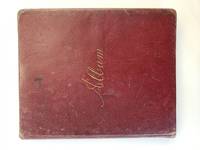
16387WORLD WAR I Scrapbook of artwork and poetry from WWI-era British soldiers recovering at Fourth London General Military Hospital at Denmark Hill King's College Hospital. Poems and artwork dated 1915-1919. Size: 9 x 7 ½ in. 120 pages. Full burgundy leather with "Album" gilt on front cover. Contains artwork poetry signatures or other mementos from convalescent soldiers on each page; most are signed and dated with military rank. <br/><br/>The subject matter reveals much of what must have been on a recovering soldier's mind: many detailed drawings of beautiful women including angelic nurses; poems recollecting their days in battle; and hopes for life once they could leave the hospital. The artwork is equally diverse in medium with dozens of drawings in graphite and ink vivid watercolors original cartoons and even an interactive double-faced Janus portrait of a man wearing a hat attached by metal fastener that can pivot to reveal either a smiling or frowning face. Unique content that reveals mindset of soldiers fresh off of the battlefield. Some artwork on the notebook others attached with glue or tape. Some tape repairs along edges. Overall very good with bumps scuffs and wear to cover especially at extremities. Some thumb-soiling. Repair to inner hinges. But overall very artful and attractive item and in very Good condition. unknown books
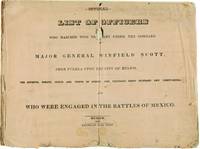
1848247009Mexico: American Star Print 1848. 24pp. plus map. Errata pasted to verso of title leaf. Obling 4to. Original printed wrappers stitched as issued. Contemporary ownership inscription on front wrapper. Wrappers lightly soiled and chipped; small paper loss to front wrapper affecting two letters in the third line of the title. Slight paper loss to same area on title page minutely affecting text; likewise the map and first leaf of text with loss becoming progressively smaller. Light soiling and wear. Still a good copy of a scarce work. In a folding cloth case. 24pp. plus map. Errata pasted to verso of title leaf. Obling 4to. The text in the form of detailed tables lists the officers with Scott where they were employed and whether they were killed or wounded or distinguished themselves. "Printed on the occupying army's own press" - Howes. This copy includes the plan of the battles in the vicinity of Mexico City which is often lacking and it include the extra two lines of errata. This copy has the ownership inscription of Mexican War veteran J.R. Smith of Sackett's Harbor N.Y. Smith is listed on page fourteen of this work; he participated in the battles at San Geronimo and Contreras & Churubusco on August 19th and 20th where he was severely wounded and disabled for the remainder of the campaign.<br /> <br /> A scarce work in original condition made particularly nice through interesting provenance. Howes S243 "aa." Garrett p.131. Haferkorn pp. 53-54 American Star Print unknown
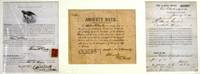
186110065752 folded and docketed uniform manuscript resolutions mostly 4to typically written on one side and docketed on the back includes a contemporary cover sheet that originally held resolutions together two small pictures of Lincoln and Grant included housed in modern photo album. A few with folds at the top and minor chips normal aging and browning; overall in very good condition. These resolutions were passed by the Public Aid Committee which was created by the Newark City Council at the beginning of the Civil War to advance money to soldiers' families. These resolutions would then be given to a clerk for filing. This clerk seems to have had strong anti war or Copperhead sympathies and gradually began editorializing as he wrote out the docketing on the back of each folded document. He titled the 31 March 1862 resolution "For aid to families. in the war to abolish slavery." On 2 September it was "the war for the ruin of the country." On 26 November it became "the Negro War" and 2 December it says "the Army of Abm. Lincoln to subjugate the Southern States." This obscure city clerk took things a step further after the Emancipation Proclamation. On 4 February 1863 he titled a resolution "In aid of families of volunteers. in the Nigger War!" He must have been spoken to after this remark because he drifts into sarcasm rather than outright racism. In a later resolution he states "for the benefit of our coloured fellow citizens of African decent." However by 14 September 1863 he was back to his old tricks again referring to "Lincoln's nigger war." He continued his editorializing through June 1864. These docketed resolutons were found in the included wrapper on which a a Union soldier later wrote: "The name if it can be found out of the miserable traitor who booked the within resolutions should go down in posterity as one who should receive the contempt of loyal men." The name of that Union soldier appears to be Major W. W. Morris.
186458358Various places including Methuen Lawrence Andover Boston and Lowell Massachusetts 1864-1865. modern calf antique with original gilt-lettered label "Company Clothing" laid down on front panel. Folio. Two pages list "Price of Clothing Camp & Garrison Equipage Year 1864." Following are 204 pages one to a soldier listing name company place and date of enlistment articles of clothing issued value itemized date of clothing issue and signature of soldier and witness. In some cases date of discharge desertion or demise is also noted. A "colored" under cook is also listed along with the soldiers. hardcover
186810671New York: Blelock & Co 1868. Hard Cover. near Very Good binding. 12mo. vi 139 1 pp. First edition. As issued in publisher's cloth. Binding has some wear to the spine ends and corners and is slightly sunned at the spine; a few places on the rear board where the cloth is rippled; contents generally toned with occasional and scattered soiling; one leaf with minor loss to the bottom corner affecting the margin only. While this copy has it's minor condition issues it is rarely found in better condition. Generally it is as nice a copy as is typically found of this scarce book. This copy with the contemporary ownership marking of Confederate veteran from Georgia Elisha Thurmond and dated 1869. <br /> <br /> Harwell writes "Robertson in Civil War Books describes this as 'an overly sentimental tribute' but there is a time for sentiment and such a time came to the Reverend Edwards when he was called upon to write about twin brothers one who died at Centreville Virginia June 30 1861 and the other who died on the battlefield of Fair Oaks June 30 1862" In Tall Cotton 51. CWB 1 85. Blelock & Co unknown
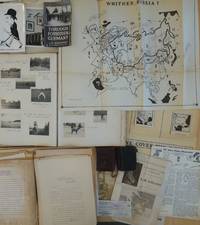
1950List2425Europe and California 1950. Includes two small diaries from 1901 and 1917 with sporadic entries a large photo album measuring 14 x 11 with appx. 400 small photographs from 1906-1909 attached to album pages most measuring 3 x 2 as well as a few larger format images laid in. With 100 plus pages of typed pages including retained correspondence story ideas and various other manuscripts. With eleven maps produced for his “Of Men and Maps†series including five copies of a large map entitled “Whither Russia†in varied states and in large sizes up to 30 by 36 inches and a handful of small ephemeral pieces. Generally near fine condition with the exception of the album which is missing its rear board and has some pages loose and torn. Very Good. J.M. de Beaufort a war correspondent for the London Daily Telegraph and New York American during World War I recounted his wartime adventures in the 1917 book "Behind the German Veil: A Record of a Journalistic War Pilgrimage." Originally arriving in Chicago in 1909 he married a steel magnate's daughter and pursued a career in show business. However by 1912 he had gone through a divorce and transitioned to newspaper work earning the moniker of the "Dude Reporter." Originally born in the Netherlands as Jacques Albert Uilenbroek he was thought to be a deserter. He spent the latter part of his life in the United States apparently jailed in San Francisco for a stint in the 1920s and eventually settled in Los Angeles. <br /> Offered here is an interesting smattering of material from the life of the mysterious De Beaufort which bookends his most unusual career and life with a large visual photographic record of his life in Europe as a young man and over a hundred pages of manuscript material from late in his life with a highlight being several maps in draft form for an apparently unpublished project called “Of Men and Maps.†As a group the material shows the work of an ex-con artist and war correspondent trying to regain his form while living in Los Angeles. He was still writing as a “Special Correspondent†at this point though the title seems to have been fully honorary. Also included are two small pocket journals with sporadic notations from his life in Europe in 1900 and in 1917. In its entirety the group gives an interesting visual and manuscript record of a literary fraudulent and imaginative transatlantic life and intellect. <br /> The cartographic highlight of the group is several iterations of a large map called “Whither Russia†in varied forms which show an interesting interpretation of the sphere of influence of the USSR and its growth from 1939 to 1946. Also included are two drafts of a map of Operation Market-Garden in the Netherlands in 1944 an unidentifed tactical map of a military battlefield a map called “Middle East Jackpot†showing the division of territory between the Allied and Axis powers a map called “Dawn’s Early Light some reproduced small format maps from the De Beaufort’s and a small map called “Gifts from Yalta.†De Beaufort was working on these maps for a column called “Of Men Maps and Memories†that was published in the East Los Angeles Tribune. He also sent the columns out in newsletter form from his address at 1635 N. Ogden Drive in Los Angeles. <br /> The collection of manuscripts drafts and retained correspondence tackle a range of subjects perhaps most interestingly those detailing De Beaufort’s creative process - drafts of stories lists of ideas for stories and letters. His over the top style is on display in a lot of the writings some of which are of unknown origin and purpose. The documents contain correspondence between De Beaufort and Edwin Pauley the oil man and presidential advisor. In one untitled essay he asks himself the question “What has been your most thrilling experience†and his reply is “ Silly questions. Who or at least what newspaperman of some 25 turbulent years standing - and falling - could answer such a question. A reporter’s life has a thousand thrills. There was that rainy day in Marcy 1915 in the fortress of Loetzen when I stood face to face with Hindenburg. Hm yes that was quite a thrill…†De Beaufort was entrenched in the Los Angeles journalistic scene at this point and the documents show the degree to which he relied on his former glories to attempt various career revitalizations endeavors. <br /> The album of photographs from 1906-1909 over 400 in total give a visual record of the young Uilenbroek’s life in Europe. The star of the collection is his bulldog Bob who travels throughout Europe with him and eventually comes to America by 1907. Mary who we presume to be his future wife is featured heavily in the images. It is unclear whether he was working at this point the images show affluent young people and their dog in varied cities and are purely of a personal nature. Other photographs laid in are relics from his war correspondent period. The loose photographs and ephemera are a mix of portraits from different periods from his life including two pictures of Sydney Turing Barlow Lawson one signed by his widow. The journals are sporadically filled and hard to decipher though one legible passage says “drinking all day.â€<br /> Overall the group gives evidence of this intriguing life and is the only extant group of material relating to Beaufort to our knowledge with the exception of a single journal from his time in Belgium during WWI that was sold at Bonhams and is still available in the trade as of this writing. unknown
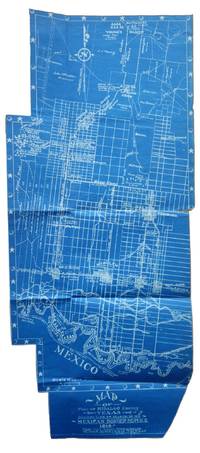
1917List2530VP 1917. Scrapbook measuring 15 ½ x 10 ½ inches. With forty leaves most with newspaper clippings and varied ephemera attached. Boards detached contents generally fine. Laid in is a blueprint map entitled Map of Part of Hidalgo County Texas Showing Line of March in my Mexican Border Service 1916. Made from Survey Notes taken on the march by Corp. C.A. Rice 74 Inf. N.G.U.S. Buffalo N.Y. Armory. Map measuring 33 ½ x 14 ¾ inches irregularly shaped and apparently complete. Very Good. A scrapbook documenting the military service of 1st Sergeant Samuel Gaffney of the 74th National Guard New York in the Mexican Border Service. Gaffney documents the campaign in great detail through printed matter - with each of the forty leaves containing material affixed including panoramic photographs advertisements from local businesses along the routes programs from entertainment offered to the troops military orders and official correspondence and many affixed newspaper articles and photographs. <br /> <br /> The scrapbook is most notable for the inclusion of an unrecorded map by Charles A. Rice the Buffalo native who would eventually map the campaign in larger fashion in a map entitled Map Showing Lines and March and Border Patrols in my Mexican Border Service 1916-1917. The map here just showing the route through Hidalgo County is unrecorded. The larger map - which was produced as souvenirs for the other members of the 74th - is quite scarce as well with five copies known to exist per OCLC with two different numbers. This blueprint map which appears to be complete cartographically and missing only the ornamental border on one portion shows the route taken early in the campaign in 1916. The Buffalo native Rice 1885-1931 who would eventually settle in Texas after the conflict also wrote a history of the 74th during the campaign. Rice published the maps and memoir himself. The map shows the route in great detail showing the location of wells farms roads and identifying landowners. Water quality and abundance is understandably a common theme in Rice’s notes. Some notes show the location of bandits smugglers and the like. We find no other examples of blueprint maps by Rice. <br /> <br /> Other highlights from the scrapbook include seven panoramic photographs of the 74th encamped at Pharr; a broadside advertisement for the shop of Agustin Acevedo in Pharr listing prices of goods; a handbill advertising the 74th’s Minstrels and Great Entertainment show on September 16 1916; an advertisement for a production entitled Glorious Liberty at the National Theatre in Pharr; two circulars instructing troop movement issued by Headquarters Brownsville District; several postcards with songs about the campaign; several snapshots; a mounted albumen photograph of troops at rest with the notation “Corp Frederick Paid†verso; a typed poem entitled “Home Again†and a notebook page describing his activities from January 1917 onward; and a thanksgiving menu for 1916 for the holiday spent at Pharr. The remainder of the scrapbook is composed of affixed newspaper clippings which provide extensive information on the 74th collected in a single volume. <br /> <br /> Overall a significant scrapbook with much information to glean for students of the 74th’s activities with the map providing a unique cartographic reference of the early days of the campaign. unknown
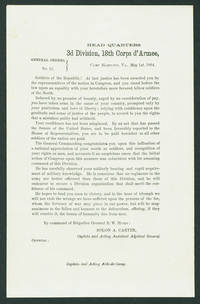
1864WRCAM55912Camp Hamilton Va 1864. 1p. on an octavo sheet. Faint tideline to upper left corner. Near fine. An important order announcing equal pay for "colored troops" in the Union Army issued by Capt. Solon Carter on behalf of Gen. E.W. Hinks. This is a field press printing of one of Hinks' earliest and most consequential orders upon taking command of 3rd Division of the 18th Corps of the Union Department North Carolina composed entirely of United States Colored Troops U.S.C.T. This order was issued over a month before Congress finally authorized equal pay for U.S.C.T. troops on June 15 1864. Until then black soldiers were paid $7 per month plus $3 for clothing while white soldiers earned $13. The order begins: "Soldiers of the Republic! At last justice has been awarded you by the representatives of the nation in Congress and you stand before the law upon an equality with your heretofore move favored fellow soldiers of the North." <br> <br> One of Hinks' other early orders was to appoint Carter then captain of Company G 14th New Hampshire Volunteers as Assistant Adjutant General of Volunteers and Aide-de- Camp to Hinks. Carter later served on the staff of Gen. Charles J. Paine 3rd Division 25th Corps. For his service and bravery he was breveted Major and then Lieutenant Colonel at the end of the war. In 1900 at a meeting of the Military Order of the Loyal Legion of the United States Commandery of Massachusetts Carter presented a paper titled "Fourteen Months' Service with Colored Troops" in which he praised the service of the U.S.C.T.: <br> <br> "The object of the present paper is to tell in simple language without exaggeration or embellishment the story of what the Colored Division of the Eighteenth Corps did and how they did it throwing here and there a side light upon previous descriptions of their deeds of valor and heroism. That the lights are of such exceedingly limited power must be attributed to the fault of the instrument rather than lack of loyalty to the memory of the gallant officers and brave men living and dead whose acts are commemorated." <br> <br> Carter went on to describe their role in the Bermuda Hundred Campaign leading up to the Siege of Petersburg and how they earned the respect and admiration of their fellow white soldiers. <br> <br> The United States Colored Troops were regiments in the Army composed primarily of African-American soldiers although members of other minority groups also served including Native Americans Pacific Islanders and Asian Americans. By the end of the Civil War U.S.C.T. regiments constituted about one-tenth of the Union Army although they had a casualty rate about thirty-five percent higher than white Union troops. The U.S.C.T. fought with distinction: fifteen U.S.C.T. soldiers received the Medal of Honor among numerous other awards. <br> <br> In July 1862 Congress passed the Confiscation Act freeing slaves whose owners were in rebellion against the United States and then the Militia Act of 1862 empowered the president to use former enslaved men in any capacity in the army. Lincoln opposed early efforts to recruit black soldiers although he approved of the army using them as paid workers. However once he issued the Emancipation Proclamation recruitment of African Americans became widespread. On May 22 1863 the War Department issued General Order 143 establishing the Bureau of Colored Troops to better facilitate the recruitment and mustering of African-American soldiers. Regiments of infantry cavalry engineers light artillery and heavy artillery units were recruited from all states of the Union. 175 regiments totaling more than 178000 "colored" soldiers served during the last two years of the war. <br> <br> U.S.C.T. regiments were led by white officers and rank advancement was limited for black soldiers with very few receiving commissions. The courage displayed by black troops during the war played an important role in African Americans gaining new rights after the war. In his speech "Should the Negro Enlist in the Union Army" delivered at National Hall Philadelphia on July 6 1863 Frederick Douglass stated: "Once let the black man get upon his person the brass letter U.S. let him get an eagle on his button and a musket on his shoulder and bullets in his pocket there is no power on earth that can deny that he has earned the right to citizenship." Douglass was a prominent supporter of recruitment for the U.S.C.T. and Douglass' two sons Lewis and Charles were two of the first to enlist in Massachusetts. <br> <br> We could find only two copies of this general order held in institutions: Hampton History Museum and the University of Rochester. An important early step on the road to racial equality in the United States armed forces. OCLC 1101179313. Solon A. Carter "Fourteen Months' Service with Colored Troops" in CIVIL WAR PAPERS READ BEFORE THE COMMANDERY OF THE STATE OF MASSACHUSETTS MILITARY ORDER OF THE LOYAL LEGION OF THE UNITED STATES Boston: F.H. Gilson 1900 vol. 1 pp.155-179. hardcover books
186110065752 folded and docketed uniform manuscript resolutions mostly 4to typically written on one side and docketed on the back includes a contemporary cover sheet that originally held resolutions together two small pictures of Lincoln and Grant included housed in modern photo album. A few with folds at the top and minor chips normal aging and browning; overall in very good condition. These resolutions were passed by the Public Aid Committee which was created by the Newark City Council at the beginning of the Civil War to advance money to soldiers' families. These resolutions would then be given to a clerk for filing. This clerk seems to have had strong anti war or Copperhead sympathies and gradually began editorializing as he wrote out the docketing on the back of each folded document. He titled the 31 March 1862 resolution "For aid to families. in the war to abolish slavery." On 2 September it was "the war for the ruin of the country." On 26 November it became "the Negro War" and 2 December it says "the Army of Abm. Lincoln to subjugate the Southern States." This obscure city clerk took things a step further after the Emancipation Proclamation. On 4 February 1863 he titled a resolution "In aid of families of volunteers. in the Nigger War!" He must have been spoken to after this remark because he drifts into sarcasm rather than outright racism. In a later resolution he states "for the benefit of our coloured fellow citizens of African decent." However by 14 September 1863 he was back to his old tricks again referring to "Lincoln's nigger war." He continued his editorializing through June 1864. These docketed resolutons were found in the included wrapper on which a a Union soldier later wrote: "The name if it can be found out of the miserable traitor who booked the within resolutions should go down in posterity as one who should receive the contempt of loyal men." The name of that Union soldier appears to be Major W. W. Morris. books
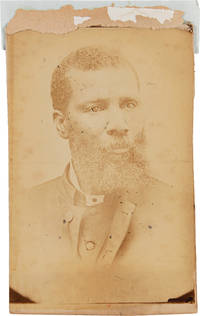
1865WRCAM55438N.p. likely Boston 1865. Albumen photograph 8 3/4 x 5 3/4 inches mounted on card. Moderate fading a bit of spotting in the image. Verso darkened from exposure to wooden backing now removed from backing and period frame backing tape still attached to verso along top edge. Remnants from previous mat at top edge. Good and a worthy candidate for professional conservation. An apparently unrecorded image of Rev. Samuel Harrison a former slave and fierce abolitionist who served as Chaplain of the 54th Regiment Massachusetts Volunteer Infantry the famous Civil War regiment of U.S. Colored Troops. Colonel Robert Gould Shaw led the 54th Mass. Regiment the second unit of colored troops formed by the Union Army but ultimately the most famous all-black infantry unit to fight in the Civil War as seen in the film GLORY. After Shaw was killed at the Battle of Fort Wagner Massachusetts Governor John A. Andrew recommended that Rev. Samuel Harrison serve as Chaplain to help the unit's morale. Harrison accepted and was also instrumental in getting equal pay for black soldiers. Harrison's demand that he receive the same pay as white chaplains led Gov. Andrew and United States Attorney General Edward Bates to write letters to President Lincoln to end the discriminatory practice of unequal pay among white and black soldiers in the Union army. In June 1864 legislation requiring equal pay for black units retroactive to January 1864 was passed in the Army appropriations bill. <br> <br> Images of Rev. Samuel Harrison are rare and online exemplars seem to vary widely. The present example appears to be a much younger version of Rev. Harrison compared to the image of him at age eighty-one held by the Samuel Harrison House. Here he also appears to be wearing a chaplain's uniform indicating this is a wartime or near-wartime image of him. The verso of the photograph has a penciled note reading: "Rev Samuel Harrison 54th Mass." unknown books
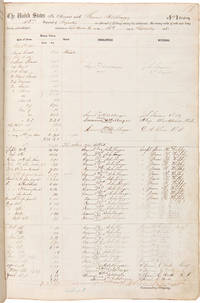
1865WRCAM55621Various locations in Pennsylvania Virginia and South Carolina 1865. 21987pp. Large folio. Contemporary three-quarter maroon calf and black cloth boards gilt spine titles reading: "PENN. CLOTHING BOOK COS. C & D 52nd INFANTRY P. & P. OFFICE." Spine partially split chipped and rather worn; boards soiled edges and corners worn. Binding a bit tender and bowed. Scattered occasional soiling and foxing to text. Good. A voluminous manuscript account book used to track the clothing and equipment transmitted to the soldiers of two companies of the 52nd Pennsylvania Infantry Regiment between 1861 and 1865. The meticulous records herein provide significant research material on the outfitting of Civil War troops and show that an army marches not just on its stomach but on its shoes and clothing as well. <br> <br> The majority of the entries relate to clothing including shorts pants coats caps blouses shoes socks and other materials needed by the Civil War foot soldier on the move during the conflict. Equipment listed here includes haversacks and blankets among other items. Each page is dedicated to a single soldier whose name company enlistment location and enlistment date are all recorded in the pre-printed form at top with various line items their costs the rank of the soldier and his signature recorded in the body of the ledger-like account book. Often accounts are noted as settled either before discharge or by death or desertion. Over two-thirds of the entries pertain to Company C of the 52nd Infantry. <br> <br> Importantly in addition to equipment and clothing the account book also records transfers death discharges and desertions. The first five entries for example provide a snapshot of the fates of various soldiers. The first soldier is noted as discharged with the last date of equipment listed as February 28 1862. The second and third soldiers were both "Killed in action at Fair Oaks Va." aka the Battle of Seven Pines May 31 - June 1 1862. The fourth soldier was discharged sometime after June 1862. And the fifth soldier "Died from wounds" after May 18 1862. Others here are noted as "Died from Disease" "Died of wound received by accident" and "Supposed to be killed by the explosion of the Gun Boat Mound City." <br> <br> The 52nd Pennsylvania Infantry Regiment was an important unit during the Civil War. The regiment formed in the late summer and early fall of 1861. They were assigned to the Peninsula Campaign in March 1862 and swiftly saw action at the Battle of Williamsburg and the Battle of Seven Pines also known as the Battle of Fair Oaks which is the name used for the soldiers recorded as dying there in the present account book. The regiment then moved to South Carolina at least one soldier in the present account book enlisted there and by mid-summer they were in Charleston to witness the ill-fated Battle of Fort Wagner. For the remainder of 1863 and most of 1864 the regiment moved around South Carolina until participating in the occupation of Charleston in February 1865. Afterwards the regiment joined Sherman's march through the South and some of the regiment ended the war in North Carolina where they witnessed the final surrender of Gen. Joseph E. Johnston. <br> <br> A valuable and research-worthy record of Civil War service covering the span of the conflict filled with unique information on the ground level needs of the Union foot soldier. hardcover books
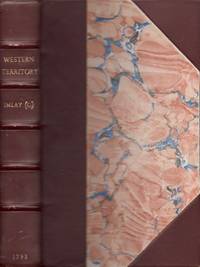
179332480London: Printed for J. Debrett 1793. The Second Edition with Considerable Additions. Three-quarter leather. Good. Octavo. 1 xvi 433 pages 1 page blank 19 page index 1 page errata 2 pages advertisements 1. Recased binding with three-quarter brown leather and marbled paper covered boards. Gilt title and five raised bands on the spine. Newer front and rear end papers and one front blank end sheet inserted. The original rear end sheet is present. The folding frontispiece map is toned on the verso with an old repair made also on the verso. Some light edge wear to the map. The folding view of the Rapids of the Ohio and the State Map of Kentucky are in very good condition with light toning. <br /> <br /> Pages 417-433 includes a "Report of the Secretary of State to the President of the United States of the Quantity and Situation of the Lands not Claimed by the Indians Nor Granted to Nor Claimed by Any Citizens Within the Territory of the United States. Read in the House of Representatives Nov. 10 1791" by Thomas Jefferson. <br /> <br /> Howes I 12; Howes Reference Filson - F 129; Sabin 34355; Streeter III 1523; Clark II 41 "An early account of the western country.which was produced by a man who left Kentucky without settling his obligations who seems to have been involved in efforts to organize a French expedition to take the lower Mississippi Valley and who treated Mary Wollstonecraft Shamelessly. This book was written in the form of letters from Kentucky to a friend in England. In all probability they were written in Europe. Printed for J. Debrett unknown
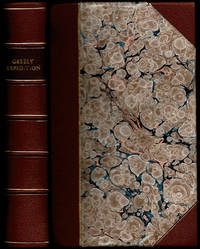
1884E0873<p>21-3101-265 pages with 6 folding maps 7 photo-lithographs on 4 plates and appendix containing correspondence relating to the Lady Franklin bay expedition 1881-83 and index. Royal octavo 9 1/2" s 6 1/4" bound in half leather with five raised spine bands and gilt lettering to spine over marbled boards. Senate Executive Document 100 48th Congress 1st Session. First edition.</p><p>The Lady Franklin Bay Expedition of 1881–1884 a.k.a. the Greely Expedition to Lady Franklin Bay on Ellesmere Island in the Canadian Arctic was led by Lieutenant Adolphus Greely and was promoted by the United States Army Signal Corps. Its purpose was to establish a meteorological-observation station as part of the First International Polar Year and to collect astronomical and magnetic data. During the expedition two members of the crew reached a new Farthest North record but of the original twenty-five men only seven survived to return.</p><p>The Lady Franklin Bay Expedition was led by Lieutenant Adolphus W. Greely of the Fifth United States Cavalry with astronomer Edward Israel and photographer George W. Rice among the crew of twenty-one officers and men. They sailed on the ship <em>Proteus</em> and reached St. John's Newfoundland in early July 1881. <em>Proteus</em> arrived without problems at Lady Franklin Bay by August 11 dropped off men and provisions and left. In the following months Lieutenant James Booth Lockwood and Sergeant David Legge Brainard achieved a new Farthest North record at 83°24′N 40°46′W off the north coast of Greenland.</p><p>By summer of 1882 the men were expecting a supply ship from the south.<em> Neptune</em> laden with relief supplies set out in July 1882 but cut off by ice and weather Captain Beebe was forced to turn around prematurely. All he could do was leave some supplies at Smith Sound in August and the remaining provisions in Newfoundland with plans for their delivery the following year.</p><p>In 1883 new rescue attempts by <em>Proteus</em> commanded by Lieutenant Ernest Albert Garlington and Yantic commanded by Commander Frank Wildes failed with Proteus being crushed by pack ice. In the summer of 1883 in accordance with his instructions for the case of two consecutive relief expeditions not reaching Fort Conger Greely decided to head South with his crew. It had been planned that the relief ships should depot supplies along the Nares Strait around Cape Sabine and at Littleton Island if they were unable to reach Fort Conger which should have made for a comfortable wintering of Greely's men. But with <em>Neptune</em> not even getting that far and Proteus sunk in reality only a small emergency cache with 40 days worth of supplies had been laid at Cape Sabine by <em>Proteus</em>.</p><p>When arriving there in October 1883 the season was too advanced for Greely to either try to brave the Baffin Bay to reach Greenland with his small boats or to retire to Fort Conger so he had to winter on the spot.</p><p>In 1884 Secretary of the Navy William E. Chandler was credited with planning the ensuing rescue effort commanded by Cdr. Winfield Scott Schley. While four vessels—<em>USS Bear USS Thetis HMS Alert</em> and <em>Loch Garry</em>—made it to Greely's camp on June 22 only seven men had survived the winter. The rest had succumbed to starvation hypothermia and drowning and one man Private Henry had been executed on Greely's order for repeated theft of food rations. Of the seven rescued Joseph Elison died on July 8 following multiple amputations. The relief party arrived at St. John's Newfoundland on July 17 1884 from which the news was telegraphed throughout the States and a sketched portrait of the members of the Greely Expedition both living and dead was published. After a stay of ten days the ships left for New York.</p><p><strong>Condition: </strong>Rebound in period binding with refreshed end papers else very good.</p> Government Printing Office hardcover
Very Good English In contemporary full black leather bound. 4to. (28 x 20 cm). In Ottoman script. 627 p. 10 maps. Light wear on cover edge. Limited and special edition printed for members of the Republic of Turkey parliament. (Protocol copy). Cover and 10 maps was printed separately in Vienna by Ahmed Ihsan. Framed, illustrated and with maps edition (luxury paper) for protocol. Famous speech of Mustafa Kemal Atatürk, (1881-1938). Extremely rare. Özege: 15583. 1000 copies were printed.
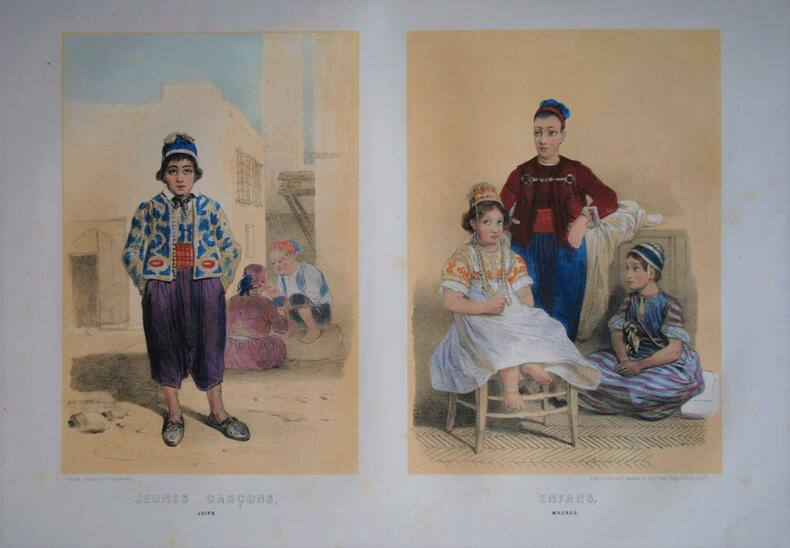
1843P1-3DA Paris, Chez J. Delahaye Éditeur, 1843. 1er Volume , 1ere partie , Province d’Alger : I. XIV-(2f.)-80pp , illustré de 51 planches et 2 cartes coloriés aux contours , un frontispice teinté , un titre chromo lithographié en couleur . Plat cassé , dos frotté , tache sur les 18 premiers feuillets ( en s’amenuisant) , 6 planches brunies , 2 légèrement brunies , quelques rousseurs . 3eme Volume , 4eme partie : Province de Constantine : IV. (2f.)-42 pp , illustré de 16 planches , 1 planche brunie , quelques rousseurs . 5eme partie : Races algériennes, monnaies, flore d'Algérie : (2f.)-21-18-16-(1f.) , illustré de 3 planches (sur 6) de races algériennes dont 1 en couleurs (enfants) et 10 planches de botaniques en couleurs , 2 planches brunies dont une légèrement. Plats frottés avec manque de papier , dos frotté , manque au dos , coins usés plus 103 lithographies à deux teintes de vues et portraits dont 1 en double exemplaire, 2 cartes in fine qui correspondent aux planches des 1ere , 2eme et 3 partie. Importante mouillure en marge supérieure touchant parfois le haut de la lithographie, rousseurs (une douzaine de planches uniformément roussies), une planche volante. La partie lithographiée conserve toutefois assez fréquemment sa fraîcheur. In-folio à l’italienne, broché, couverture manquante. Au total un titre chromo lithographié compris dans la pagination et 133 planches lithographiées à fond teinté dont 1 en couleur , 2 cartes et 10 planches de flore à plusieurs sujets coloriés.
1955009647Paris (Gretry Wols) 1955 En feuilles, sous chemise cartonnée bleue éditeur.
1812012295Northampton: Printed By And for T. E. Dicey W Sutton And R. Smithson 1812. 1812. Saturday January 4th 11th 18th 25th February 1st 8th 15th 22nd 29th March 7th 14th 21st 28th April 4th 11th 18th 25th May 2nd9th 16th 23rd 30th June 6th 13th 20th 27th July 4th 11th 18th 25th August 1st 8th 15th 22nd 29th September 5th 12th 19th 26th October 3rd 10th 17th 24th 31st November 7th 14th 21st 28th December 5th 12th 19th 26th. 1813 Saturday January 2nd 9th 16th 23rd 30th February 6th 13th 20th 27th March 6th 13th 20th 27th April 3rd 10th 17th 24th May 1st 8th 15th 23rd 29th June 5th 12th 19th 26th July 3rd 10th 17th 24th 31st August 7th 14th 21st 28th September 4th 11th 18th 25th October 2nd 9th 16th23rd 30th November 6th 13th 20th 27th December 4th 11th 18th 25th. 1814 Saturday January 1st 8th 15th 22nd 29th February 5th 12th 19th 26th March 5th 12th 19th 26th April 2nd 9th 16th 23rd 30th May 7th 14th 21st 28th June 4th 11th 18th 25th July 2nd 9th 16th 23rd 30th August 6th 13th 20th 27th September 3rd 10th 17th 24th October 1st 8th 15th 22nd 29th November 5th 12th 19th 26th December 3rd 10th 17th 24th 31st. 1815 Saturday January 7th 14th 21st 28th February 4th 11th 18th 25th March 4th 11th 18th 25th April 1st 8th 15th 22nd 29th May 6th 13th 20th 27th June 3rd 10th 17th 24th July 1st 8th 15th 22nd 29th August 5th 12th 19th 26th September 2nd 9th 16th 23rd 30th October 7th 14th 21st 28th November 4th 11th 18th 25th December 2nd 9th 16th 23rd 30th. Complete 4 years. Book measures 54.5x40.cm. Binding heavily worn lacking top board. Internally about 20 issues have some loss of text mainly minor loss or single hole some light browning spotting heavier in places some minor staining. Generally text in good clean condition. . Near Very Good. Folio. Printed By And for T. E. Dicey, W, Sutton, And R. Smithson unknown