119 846 résultats
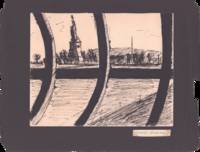
1941List2962New York City 1941. Thirty-three sketches mainly measuring 6 x 8 or 8 x 10 inches affixed to black construction paper. Sketches are pen and ink or pencil some with captions. With seventeen typed pages mainly measuring 6 ½ x 7 inches. In an 11 x 14 ½ inch portfolio. Spine of portfolio missing all pages separated; sketches excellent construction paper with much marginal chipping; typed pages with adhesive verso else excellent. Overall very good to excellent. Bitia Rosendor 1920–2011 was a Jewish artist born in Jerusalem and raised in Antwerp Belgium. Rosendor studied painting and sculpture at the Koninklijke Academie voor Schone Kunsten in Antwerp but her studies were interrupted by the outbreak of World War II. The Rosendor family fled Europe via Portugal in 1941 and were detained at Ellis Island where these sketches were produced.<br /> <br /> The sketches include portraits of other detainees and immigration employees and views from the island. Most have captions including brief notes about the subjects such as “She became hysterical and was taken to the hospital†“A little orphan going all alone to the Dominican Republic†and “‘Liberty’ through barsâ€â€”the latter on an illustration of the Statue of Liberty seen through the bars on the internment center’s windows.<br /> <br /> The typed text describes Rosendor’s experience waiting for the family’s Visa to be approved. The ordeal is mostly one of boredom; she writes:<br /> <br /> “Everyone had the same endless day to pass but everyone passed it differently. There was no possible way to be original but each of us retained her or his personality. The emptiness of the hours was heavy to bear.â€<br /> <br /> The boredom though is punctuated by “incidentsâ€; some negative as when “Once a Chinese girl wept for three days uninterrupted refused to eat refused everything†and some positive as when “A friend seen last time at the Antipodes†disembarks “from a newly entered ship . and suddenly: ‘YOU’! -’YOU’â€.<br /> <br /> Rosendor would live with her family in Brooklyn until the 1950s when she returned to Europe with her husband Jewish-American painter Martin Reisberg a fellow immigrant whom she met in the city. The pair returned to Belgium where they ran a gallery and created exhibitions together until Rosendor’s death in 2011.<br /> <br /> Of interest to scholars of the Holocaust American immigration and the Jewish immigrant experience in the 1940s. unknown
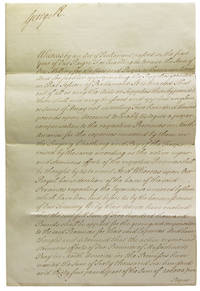
1761319882Great Britain 1761. 2pp. plus integral blank. Docketed on verso "King's Warrant / Province of Massachusetts / Bay £60634 in part / of £200000 Granted for / the North American / Provinces." Signed by George III at the head of the first page countersigned on the second page by William Wildman Barrington James Oswald and Gilbert Elliot. Folio 14 1/4 x 9 1/2 inches. Usual folds. 2pp. plus integral blank. Docketed on verso "King's Warrant / Province of Massachusetts / Bay £60634 in part / of £200000 Granted for / the North American / Provinces." Signed by George III at the head of the first page countersigned on the second page by William Wildman Barrington James Oswald and Gilbert Elliot. Folio 14 1/4 x 9 1/2 inches. Towards the end of the French and Indian War William Pitt started a specie grant program to reward colonies for raising troops thus putting the colonies in competition with each other for a share of an annual 200000 pounds. With specie scarce in the colonies the colonial assemblies were thus incentivized to raise troops to fight against the French. The present document authorizes Henry Fox to make payment to Massachusetts via their colonial agent William Bollan for their share of the annual grant. Although successful the policy was abandoned in favor of direct taxation after 1762 leading to the Sugar Act and most notably the Stamp Act. <br/><br/>This undated document -- the space for the date being left blank suggesting it to possibly be a draft -- is countersigned by William Wildman Barrington Chancellor of the Exchequer 21 March 1761 to 8 May 1762; Sir Gilbert Elliot third Baron Minto Lord of the Treasury 1761-62 and James Oswald Commissioner of the Treasury 1759-63. The date would therefore appear to be 1761 or early in 1762.<br/><br/>George III documents relating to North America from the early years of his reign are particularly scarce. unknown books
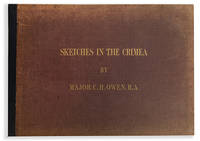
114199London Colnaghi 1856. . First edition; landscape folio 37.1 x 56.8 cm; hand-coloured lithographed title with vignette 8 hand-coloured lithograph plates on 6 leaves one folding armorial bookplate to front pastedown some light spotting and fraying to title and final folding plate with margins and fold repaired the rest of the plates have only very light marginal spotting and remain bright; original morocco backed cloth boards title lettered in gilt to upper boards a very good copy.<br /> Very rare. There is no copy in the Blackmer Atabey or Abbey collections.<br /><br />Henry Charles Cunliffe-Owen 1821-1867 had a distinguished military career from 1839 until 1850 when he accepted a civilian appointment under the Royal Commission for the Great Exhibition of 1851. He rejoined the army on the outbreak of the Crimean war and saw Sevastapol but was wounded and invalided home before the heavy fighting of the siege. After the War he rose in rank to Lieutenant-Colonel and amongst his achievements was the fortification of Devonport.<br /><br />The illustrations depict: The Chapel in the Caves at Inkermann title vignette; 2 views of the dockyard at Balaklava; Sebastopol from the picket battery; Harbour of Sebastopol from the Crow's Nest Inkermann; Greek battery Sebastopol; Monastery of St. George and the Valley of Baidar; Sebastopol from the 2nd Parallell Right Attack folding plate.<br /> Bobins 207; not in Blackmer Abbey or Atabey. London, Colnaghi, 1856. hardcover
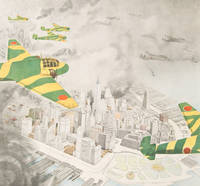
1943260152Tokyo: Dai Nihon Kaiyo Bijutsu Kyokai Greater Japan Pacific Art Association 1943. 35 mounted color plates with captioned tissue-guards. 1 vols. Oblong folio. Publisher's blue cloth boards printed paper label on cover. Fine. 35 mounted color plates with captioned tissue-guards. 1 vols. Oblong folio. "The purpose to publish this book is nothing but to let the people in Japan understand well the bravery and activity of the Japanese Navy. Every picture contained in this book signifies how vigorous and brave our Navy is fighting a desperate battle in the Pacific ." translated from the Preface. An imposing and colorful work of WWII propaganda by Imperial Japan illustrating events both true and wished-for. In the former category are the bombing of Pearl Harbor the sinking of the British Prince of Wales and Repulse at the Battle off Molaya the Japanese occupation of Singapore the Japanese assault on Wake Island showing captured Allied soldiers stripped to their briefs and waving a white flag and the Japanese landing on the Alaskan Aleutian Islands. In the latter category a Japanese plan to attack New York City showing Japanese bombers assaulting lower Manhattan. Dai Nihon Kaiyo Bijutsu Kyokai [Greater Japan Pacific Art Association] unknown
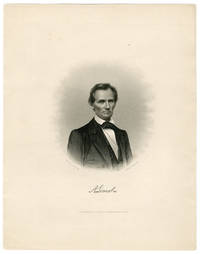
1863WRCAM49849New York 1863. Fifty engraved portraits each 9 1/4 x 11 3/4 inches. Each stored inside its own paper sleeve and housed together in two contemporary brown leather portfolios stamped in gilt. Portfolios worn and rubbed. Images in excellent condition. A wonderful contemporary collection of Civil War-related engravings. Featured personalities are mostly Union generals colonels commodores and other officers and figures of note plus presidents Abraham Lincoln and George Washington. Also includes an engraving of William Gannaway Brownlow the anti-secessionist Tennessee newspaper editor and later governor of Tennessee immediately after the end of the Civil War. At the time of the publication of this set Brownlow was a celebrity in the North for his ardent anti-secessionist stance. <br> <br> Due to the portrait poses on which the engravings are based as well as the stated ranks of the military leaders and the general selection of personalities chosen for the set it must have been published in late 1862 or 1863. Of particular note is the image of Ulysses S. Grant who was still so relatively unknown in comparison to some of the other military leaders that the publisher either erred and used the likeness of another man or could not find a suitable portrait and used a different subject. Also the portrait of Lincoln is early as it shows the president without his trademark beard. While we have seen some of these engravings before we have never seen the full set in the original leather portfolios. All engravings include the facsimile signature of the subject and credits the engraver as J.C. Buttre of New York with many also crediting the original artist or photographer whose image the engraving is based on most by Brady with others by Fredricks Appleton German Silsbee et al; the Washington image is based on a Stuart painting. This is a very rare wartime-published collection of Union officers. <br> <br> The following is a full list in alphabetical order: <br> <br> 1 Anderson Brig. Gen. Robert <br> <br> 2 Baker Col. Edward <br> <br> 3 Banks Nathaniel P. <br> <br> 4 Blenker Maj. Gen. Louis <br> <br> 5 Brownlow William G. <br> <br> 6 Buell Maj. Gen. Don Carlos <br> <br> 7 Burnside Brig. Gen. Ambrose E. <br> <br> 8 Butler Maj. Gen. Benjamin F. <br> <br> 9 Carr Col. Joseph B. <br> <br> 10 Clay Maj. Gen. Cassius M. <br> <br> 11 Corcoran Col. Michael <br> <br> 12 Cox Brig Gen. J. Dolson <br> <br> 13 Curtis Maj. Gen. Samuel R. <br> <br> 14 Dix Maj. Gen. John A. <br> <br> 15 Doubleday Brig. Gen. Abner <br> <br> 16 Du Pont Com. Samuel F. <br> <br> 17 Ellsworth Col. Elmer E. <br> <br> 18 Foot Capt. John <br> <br> 19 Foote Com. Andrew H. <br> <br> 20 Fremont Maj. Gen. John C. <br> <br> 21 Grant Maj. Gen. Ulysses <br> <br> 22 Halleck Maj. Gen. Henry W. <br> <br> 23 Hawkins Col. Rush C. <br> <br> 24 Heintzelman Brig. Gen. Samuel P. <br> <br> 25 Hunter Maj. Gen. David <br> <br> 26 Lander Brig. Gen. Frederick W. <br> <br> 27 Lincoln President Abraham <br> <br> 28 Lyon Brig. Gen. Nathaniel <br> <br> 29 Mansfield Brig. Gen. J.K.F. <br> <br> 30 McCall Brig. Gen. George A. <br> <br> 31 McClellan Maj. Gen. George B. <br> <br> 32 McDowell Brig. Gen. Irvin <br> <br> 33 Meagher Col. Thomas Francis <br> <br> 34 Mitchel Maj. Gen. O.M. <br> <br> 35 Mulligan Col. James A. <br> <br> 36 Pope Maj. Gen. John <br> <br> 37 Rosecrans Brig. Gen. W.S. <br> <br> 38 Scott Lieut. Gen. Winfield <br> <br> 39 Shields Brig. Gen. James <br> <br> 40 Sigel Maj. Gen. Franz <br> <br> 41 Slemmer Maj. Adam J. <br> <br> 42 Sprague Maj. Gen. & Gov. of Rhode Island William <br> <br> 43 Stringham Com. S.H. <br> <br> 44 Wallace Maj. Gen. Lewis <br> <br> 45 Wallace Maj. Gen. W.H.L. <br> <br> 46 Washington President George <br> <br> 47 Weber Col. Max <br> <br> 48 Wilkes Capt. Charles <br> <br> 49 Wilson Col. Henry <br> <br> 50 Wool Maj. Gen. John E. <br> <br> There is only one similar item in OCLC a collection called PORTRAITS OF CIVIL WAR OFFICERS calling for 110 plates including Lincoln's cabinet and an engraving of his childhood home also by Buttre located at the Public Library of Cincinnati & Hamilton County. That collection is bound and was likely issued as a slightly different item by the publisher than the collection presented here. OCLC 20140615. hardcover books
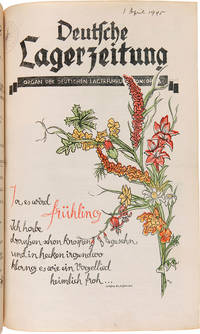
1945WRCAM55330Concordia Ks.: Camp Concordia 1945. Two volumes. Vol. 1: Nos. 34-35 1944 2. Jhrg. Nos. 1-3 6 8-13 1945; Vol. 2: Nos. 1-12 1945. Two-sided sheet laid into Vol. 1 with an essay on peace from Karl Teufel on one side and an anonymous reflection on the German occupation of Holland on the other. Folio. Original three-quarter green cloth and paper-covered boards manuscript title in green on cover of Vol. 1. Minor wear and spotting to covers tidelines to front cover of Vol. 1 stain to upper corner of Vol. 2 reaching corners of about half the pages no text affected. Trimming to lower margins with slight loss of text to a few pages. Tight binding partially obscures inner margin in a few issues. Many issues have purple ink stamp and initials of the camp censor; occasional manuscript annotations including translations. Front free endpaper of Vol. 2 is a dedication page: "To Captain Karl C. Teufel as Souvenir for the Time from June to September 1945 signed Dr. Georg Graf Kesselstatt Editor DER AUSBLICK." Occasional tanning. Very good overall. Collected issues of a German prisoner-of-war camp weekly newspaper which began as NEUE STACHELDRAHT NACHRICHTEN LAGER CONCORDIA NEW BARBED WIRE NEWS CAMP CONCORDIA. With issue number eight in the second year March 11 1945 the title changed to DEUTSCHE LAGERZEITUNG: ORGAN DER DEUTSCHEN LAGERFÜHRUNG CONCORDIA "GERMAN CAMP NEWSPAPER: ORGAN OF THE GERMAN CAMP COMMAND CONCORDIA" likely to align with titles of newspapers at other prisoner-of-war camps. After the war ended the title changed again to DER AUSBLICK: ZEITUNG DER DEUTSCHEN KRIEGSGEFANGENEN LAGER CONCORDIA THE OUTLOOK: NEWSPAPER OF GERMAN PRISONERS OF WAR. This collection contains some two dozen issues from the final years of World War II. <br> <br> The layout and printing of all versions of the newspaper is sophisticated. The title piece of NEUE STACHELDRAHT is hand-designed possibly a linocut featuring an image of a watch tower. The article text was initially produced on a typewriter but the rest of the paper's contents - illustrations maps titles and captions - are all hand-drawn and then reproduced along with the typed content via offset printing. The issues are inconsistently paginated and most articles are unsigned unless reproduced from external sources; translators are sometimes noted. The editorial staff is not mentioned in earlier issues although some articles are signed "Hrg." "Ed.". The issue for April 1 1945 is the first to name an editor "Schriftleitung: Oblt. Walberg". <br> <br> The U.S. agreed to construct P.O.W. camps initially to support the British who were running out of room for prisoners. The U.S. camps grew quickly; by the end of the war there were some 400000 German prisoners held in the U.S. Camp Concordia operated from 1943-1945 and primarily housed German Army prisoners captured in North Africa including Rommel's notorious "Afrika Korps." Concordia was the largest P.O.W. camp in Kansas averaging 4000 prisoners during its operation. The camp's aptly-named assistant executive officer and head of indoctrination Capt. Karl C. Teufel Teufel can mean "devil" in German described the prison population as follows: "For the most part they were members of the crack German Afrika Korps which had fought under Rommel and had nearly won the North African Campaign.No better German soldiers existed anywhere and these men came to this country still proud of their accomplishments still assured of the coming victory of National Socialism over the rest of the World still confident and arrogant in their own strength and fully prepared to make things as difficult for their custodians as safely possible. There were a thousand Officers among them ranging from second lieutenants to Colonels two of whom were later promoted to General rank and hence some of Hitler's best military brains were here also." Healthy enlisted prisoners were required to work mostly on neighboring farms. Non-commissioned officers could only work in supervisory positions and while officers could not be forced to work they could volunteer. All prisoners were paid for their work in scrip which could be spent in the camp canteen or used to buy newspapers like these books and magazines. <br> <br> The first issue in these volumes is the "Christmas Issue" No. 34 December 24 1944 which calls on the prisoners to rebuild their physical strength and mental toughness in order to continue the struggle against the Allies. It also reproduces an article from the Associated Press exaggerating the impact of the V-2 rocket attacks on England. Later articles criticize the Allied bombing of German cities for the loss of German civilian lives and historic buildings. Also included are updates about battles and German military advances. But then there are schedules for Christmas services for both Catholics and Lutherans Christmas hymns and stories announcements of concerts including Rossini and Tchaikovsky updates on camp sports mainly soccer and handball upcoming film screenings and a list of birthdays for the week. Nevertheless keeping the peace in the camps was challenging. One of Capt. Teufel's main jobs at Concordia was weeding out the hardcore Nazis from the merely patriotic soldiers and then relocating them to Camp Alva in Oklahoma a maximum security facility specifically for uncompromising Nazis. This not only served to maintain peace in the camps for the American guards but also kept average German soldiers safe from more extreme soldiers. <br> <br> The newspaper content was inspected and censored before publication. Blatantly pro- Nazi messages were prohibited though oblique references slip in but patriotic sentiment is allowed. Subsequent issues have similar recurring content as in the Christmas issue especially pro-German material such as uplifting passages to stay strong in the "Kampf" and slanted articles highlighting German successes in contrast to Allied laziness and incompetence. For instance in a recurring section "Kultur und Leben" Culture and Life in the issue from January 14 1945 there are several articles on Heinrich von Kleist 1777-1811 a Romantic poet who had been appropriated by the Nazis for his nationalistic leanings. Included is a passage from Kleist: "Was gilt es in diesem Kriege.Eine Gemeinschaft gilt es deren Wurzeln tausendästig einer Eiche gleich in den Boden der Zeit eingreifen; eine Gemeinschaft.in deren Schoss die Götter das Urbild der Menschheit reiner als in irgendeiner aufbewahrt hatten." What is important in this war.It is a community whose roots branch into the soil of time like an oak; a community.in whose lap the gods had kept the archetype of humanity more pure than in any other. The article concludes: "Uns hat dieser Krieg reif und hart gemacht auch für ein letztes Begreifen jener Kleistschen Welt." This war has made us ripe and ready for a final realization of that Kleistian world. <br> <br> There are regular updates from the Pacific front but also a wide variety of general interest articles and stories including: oilfields in the Middle East and the evolving "concession areas" in Saudi Arabia Iran Iraq et al.; German history; the Chinese Civil War; Japanese culture; astronomy historical and contemporary; U.S. politics and history along with feature articles on various states; economics and biographies of important industrialists; health concerns; and reviews of local beers. There are also lists of new books purchased or donated to the camp library on topics from German history to agricultural engineering to quite surprisingly Aaron Copland's WHAT TO LISTEN FOR IN MUSIC in English; and crossword puzzles and other games. <br> <br> The April 15 1945 issue is the first to acknowledge that the Nazis may not in fact be winning the war after all. The cover features the first stanza "Daimon" of Goethe's ominous poem "Urworte Orphisch" Orphic Primal Words: "Wie an dem Tag der Dich der Welt verliehen/Die Sonne stand zum Grusse der Planeten/Bist alsobald und fort und fort gediehen/Nach dem Gesetz wonach Du angetreten./So musst Du sein Dir kannst Du nicht entfliehen/So sagten schon Sibyllen so Propheten;/Und keine Zeit und keine Macht zerstückelt/Geprägte Form die lebend sich entwickelt." As on the day you were granted to the world/The sun stood to greet the planets/You likewise began to thrive forth and forth/Following the law that governed your accession./You must be so you cannot flee yourself/Thus sibyls long ago pronounced thus prophets/And neither time nor any power can dismember/Characteristic form living self-developing. There is no editorial acknowledgement of Germany's occupation but there are several translated excerpts from TIME magazine noting Gen. Lucius Clay's appointment as "der Spitze der Zivilverwaltung" "Head of Civil Administration" for occupied Germany. <br> <br> The final iteration of the camp newspaper DER AUSBLICK: ZEITUNG DER DEUTSCHEN KRIEGSGEFANGENEN LAGER CONCORDIA inlcudes a monthly insert on current affairs entitled QUERSCHNITT CROSS-SECTION along with a less regular insert on arts and culture entitled SYMPOSION SYMPOSIUM. A brief editorial introduction to the new newspaper sets forth a stark assessment of the prisoners' situation: "Wir beurteilen unsere Lage nüchtern und haben nur ein Ziel: alle Kraft so rasch wie möglich unserem deutschen Vaterland zur Verfügung stellen zu können. Wenige in der Heimat werden den kommenden Aufgaben körperlich und geistig so gut gewachsen sein wie wir. Est ist unsere Pflicht unsere Leistungsfähigkeit immer weiter zu steigern.Möge sie dazu beitragen unsere Lagergemeinschaft sachlich und klar zu unterrichten und zum Nachdenken anzuregen." We assess our situation soberly and have only one goal: to be able to provide all our strength as quickly as possible to our German Fatherland. Few at home will be as physically and mentally up to the tasks ahead as we are. Thus it is our duty to keep enhancing our abilities.This paper will help keep our camp community objectively informed and will stimulate thought. The introduction goes on to note that they really do intend to provide objective information without aligning to any particular party. After all: "Denn jeder von uns ganz gleich wie er zur Vergangenheit eingestellt sein mag muss in voller Klarheit erkennen dass das System des Nationalsozialismus mit seiner Staatsform nicht mehr besteht." Because each of us no matter how he feels about the past must recognize with complete clarity that the system of National Socialism no longer exists as a form of government. Not much has changed with the paper otherwise all features about camp life etc. are still included. The QUERSCHNITT features reprinted and translated articles from major publications NEW YORK TIMES MAGAZINE BUSINESS WEEK TIME FOREIGN AFFAIRS et al. but there is very little editorial comment. <br> <br> Interestingly in the June 17 1945 issue of DER AUSBLICK there is a full page letter from the Senior German Spokesman Col. Eduard Waltenberger: "Ich bin überzeugt im Sinne des Lagers zu sprechen wenn ich folgendes festelle: Die durch den vorgeführten Film und die uns vorgelegte amtliche Broschüre belegten Grausamkeiten und Massenmorde in den Konzentrationslagern erfüllen uns mit tiefstem Abscheu gegen jeden der in irgend einer Form schuldhaft an ihnen beteiligt war. Wir sind der Auffassung dass die Täter und ihre Auftraggeber den deutschen Namen auf das schändlichste befleckt und sich für immer aus der Gemeinschaft aller ehrenhaften Deutschen ausgeschlossen haben. Wir deutschen Soldaten des Kriegsgefangenenlagers Concordia haben offen und anständig unter Einsatz des eigenen Lebens für unsere Heimat gekämpft. Weder wir an der Front noch unsere Angehörigen haben gewusst dass gleichzeitig in den deutschen Konzentrationslagern ein Verbrechertum der niedrigsten Art am Werk war. Wir halten es für ein Gebot unserer Soldatenehre zu erklären dass wir mit ihm nichts gemein haben." I am convinced that I speak for the whole camp when I set forth the following: The atrocities and mass murders in the concentration camps documented by the film shown and the official brochure presented to us fill us with the deepest disgust towards anyone who was guilty of them in any form. We are of the opinion that the perpetrators and their associates have stained the German name in the most shameful way and have forever excluded themselves from the community of all honorable Germans. We German soldiers from the Concordia Prisoner of War Camp risked our own lives fighting honorably for our homeland. Neither we on the front line nor our relatives knew that at the same time there was a crime of the lowest kind going on in the German concentration camps. We think it is imperative to our soldier's honor to declare that we have nothing in common with them." There is no mention of Jews however there is an article on mass movements and mass psychosis later in the issue. <br> <br> One month later in the July 15 1945 issue there is a brief article in German and English from Capt. Teufel. Attempting to calm prisoners' anxiety about repatriation timelines Teufel explains that he simply does not know what the repatriation procedure will be: ".it is my opinion that repatriation may not come for many months. This is only a personal opinion and not to be construed as an official statement. The fact that some men are being transferred out of this camp is not proof that they are being repatriated immediately. The fact that you have not been transferred out is equally not an indication that you will be repatriated later than those who have been transferred nor that there is necessarily a prejudice against you." Of course while the war was over in Europe at this point the war in the Pacific continued. The August 5 1945 issue included extended treatment of the Potsdam Conference and Declaration and then the August 12 1945 issue begins with the article "Am Ende des 2. Weltkrieges." At the End of the Second World War. A few pages later there is a brief article inset titled "Heimkehr der PoW" Homecoming of the P.O.W. which begins: "Am letzten Donnerstag gab Unterstaatssekretär im Kriegsministerium Patterson in Washington bekannt die Amerikaner beabsichtigen 400000 deutsche und italienische Kriegsgefangene so bald als praktisch möglich - aus den Vereinigten Staaten nach Europa zurückzuführen." Under- Secretary of State Patterson at the Department of War announced in Washington last Thursday that the Americans intend to return 400000 German and Italian prisoners of war from the United States to Europe as soon as it is practical. <br> <br> The postwar articles tend to focus on rebuilding in Germany and speculation on when the prisoners will finally return but most continue the regular content of reproduced news articles and so forth. However some policy developments have immediate repercussions in the camp. As is usually the case in POW camps the Nazi soldiers continued to wear their uniforms during their detention with American uniform manufacturers providing replacements as time went on. In the August 30 1945 issue there is a brief inset article announcing updates to the uniform regulations: "Durch Verordnung der letzten noch zu Recht bestehenden Deutschen Regierung unter Gross- admiral Dönitz wurde die Einheit von Partei und Staat sowie von Partei und Wehrmacht aufgelöst. Da das mit dem Hakenkreuz versehene Hoheitsabzeichen auf den Uniformstücken kein militärisches Abzeichen sondern das Symbol der Einheit Partei- Wehrmacht darstellt entspricht das Tragen dieses Abzeichens zumindest aber des daran befindlichen Hakenkreuzes weder der entsprechenden Verordnung der letzten Deutchsen Regierung noch den inzwischen eingetretenen Verhältnissen." By decree of the final legitimate German government under Grand Admiral Dönitz the unity of party and state as well as the unity of the party and the armed forces has been dissolved. Since the sovereign swastika is not a military symbol but the symbol of the Wehrmacht Nazi armed forces party unit wearing uniform devices with the swastika on it does not correspond to the decree of the last German government or the current conditions. In the same issue is the announcement that the U.S. government will start returning German P.O.W.s to assist with reconstruction as soon and as quickly as is feasible. However no timeliness are provided. <br> <br> The final issue in this collection as possibly the last one produced is that of September 9 1945. On the first page is an announcement from the editor: "Mit dem Grossteil unserer Kameraden haben von vierzehn ständigen Mitarbeitern des "Ausblick" elf in dieser Woche Concordia verlassen. Die heutige Ausgabe kann daher nur in gekürzter Form gebracht werden." Along with the majority of our comrades eleven out of the fourteen permanent employees of AUSBLICK left Concordia this week. Today's edition can therefore only be published in abbreviated form. Indeed the issue is less than half the size of previous issues. The sole article on the first page is titled "Courage" which means the same in German and English and includes encouraging words about rebuilding a broken Germany. The rest of the issue includes similar articles and updates but with much less flourish as one would expect with a diminished staff. Nevertheless there's one more soccer game announced before all the prisoners departed in October and the camp finally closed in November. <br> <br> This newspaper is rare with most institutional holdings being incomplete and then often only in microfilm. The Deutsche Nationalbibliothek holds almost the same physical copies as found here starting with No. 34 suggesting there may have been additional similar collections assembled. We were unable to identify any complete physical collections with the possible exception of the Kansas Digital Newspapers program at the Kansas Historical Society. OCLC 15160000 84823569 Deutsche Nationalbibliothek 15155315 15155342. Karl C. Teufel "The History of Camp Concordia from Site Survey to Deactivation." Record Group 389 Box 1612 Washington D.C.: National Archives 1945. Mark P. Schock "Bloodied Kansas: Nazi Retribution in a Kansas POW Camp" in FAIRMOUNT FOLIO JOURNAL OF HISTORY Vol. 7 2005: pp.45-56. Kirk Wetters DEMONIC HISTORY: FROM GOETHE TO THE PRESENT Evanston Il.: Northwestern University Press 2014. [Camp Concordia] hardcover books
51493Some wear throughout the archive some poor quality typing paper browned but a very good archive important as reporting and analysis by an actor in the events covered.<br/> For the archive 1 Uhl Alexander. Spain's Cry for Freedom. Madrid nd ca. 1975. Ribbon-copy typescript with some pages in carbon for an unpublished work of non-fiction exploring the effects of the Spanish Civil War on Spanish Society. 4to. 8 379 pp. rectos only with a dozen pages of manuscript and numerous manuscript corrections additions and deletions many substantive. The manuscript portions are in several hands presumably Uhl's and perhaps his wife's or editors.<br/>2 Uhl Alexander. Gates of the Sun. NP 1938. Carbon typescript for an unpublished novel set during the Spanish Civil War. 4to. 477 pp. rectos only with occasional simple overtype corrections to punctuation and missed strikes. First leaf with tears resulting in loss of a number of words next few leaves rumpled.<br/>3 Uhl Alexander. Not Thy Hate. Tuckahoe NY nd ca. 1960. Ribbon-copy typescript for an unpublished novel set during the Spanish Civil War a substantially reworked manuscript of Gates of the Sun. 4to. 2 371 pp. rectos only with occasional simple overtype corrections to punctuation and missed strikes. <br/>4 Uhl Alexander. Notes - April 18 - May 31 1944 for John P. Lewis Managing Editor Newspaper PM. Various troop planes and ships en route from the United States to North Africa with the American Army 1944. Ribbon-copy typescript. 4to. 3 86 pp. rectos only with several manuscript deletions corrections and additions. With a "Field Press Censor" stamp on the title page and a note in red pencil "These notes must not be published in part of whole without re-submission to War Dept." Vivid reports and analysis by a veteran war correspondent.<br/>5 Uhl Alexander. Notes - June 1 - July 18 for John P. Lewis Managing Editor Newspaper PM. Various places in North Africa and Italy with the invading American Army 1944. Ribbon-copy typescript with some pages in carbon copy. 4to. 1 159 3 pp. rectos only with several manuscript deletions corrections and additions. With a "Field Press Censor" stamp on the title page and a note in red pencil "These notes must not be published in part of whole without re-submission to War Dept." Vivid reports and analysis by a veteran war correspondent.<br/><br/>6 Uhl Alexander. Notes - July 19 - October 1 1944 Property of Alexander H. Uhl Newpaper PM. Various places in Italy and France 1944. Carbon-copy typescript. 4to. 1 41 pp. rectos only with several manuscript deletions corrections and additions. Vivid reports and analysis by a veteran war correspondent.<br/>7 Uhl Alexander. Notes - October 2 - December 4 Property of Alexander H. Uhl Newpaper PM. Paris 1944. Ribbon-copy typescript with several pages in carbon. 4to. 1 7 pp. rectos only with several manuscript deletions corrections and additions. Vivid reports and analysis by a veteran war correspondent.<br/>8 Three folders of notes telegrams newspaper clippings and other printed material primarily from correspondents to Uhl mostly from the immediate post-World War II era dealing with the events in Spain and France and with a small archive concerning the role of "activist" newspaper reporters. Approximately 250 pages.<br/><br/>Uhl a native of New York City graduated from City College of New York and studied at Columbia University's School of Journalism before embarking on a career in newspaper work. After serving on a number of east coast papers he joined the AP press service working for that organization before being named bureau chief for its Madrid office a post he held during the Spanish Civil War 1935-1938. From 1940 until 1948 Uhl was foreign editor of PM newspaper and covered the European theatre during World War II being award the French Legion Of Honor for his service. He died in Madrid while working on the first manuscript described above. <br/><br/> unknown books
1943260152Tokyo: Dai Nihon Kaiyo Bijutsu Kyokai Greater Japan Pacific Art Association 1943. 35 mounted color plates with captioned tissue-guards. 1 vols. Oblong folio. Publisher's blue cloth boards printed paper label on cover. Fine. 35 mounted color plates with captioned tissue-guards. 1 vols. Oblong folio. The Japanese Bomb Lower Manhattan. "The purpose to publish this book is nothing but to let the people in Japan understand well the bravery and activity of the Japanese Navy. Every picture contained in this book signifies how vigorous and brave our Navy is fighting a desperate battle in the Pacific ." translated from the Preface. An imposing and colorful work of WWII propaganda by Imperial Japan illustrating events both true and wished-for. In the former category are the bombing of Pearl Harbor the sinking of the British Prince of Wales and Repulse at the Battle off Molaya the Japanese occupation of Singapore the Japanese assault on Wake Island showing captured Allied soldiers stripped to their briefs and waving a white flag and the Japanese landing on the Alaskan Aleutian Islands. In the latter category a Japanese plan to attack New York City showing Japanese bombers assaulting lower Manhattan. Dai Nihon Kaiyo Bijutsu Kyokai [Greater Japan Pacific Art Association] unknown books
1st edition. All original paper wrappers, 4to, each copy is 1 leaf folded in half, making [4] pages. Included are: No.50 (September 17, 1940), No. 52 (October 1, 1940), No. 62 (December 30, 1940), No. 71 (March 3, 1941), Nos. 74-80 (March 24 -May 5, 1941), No. 82 (May 19, 1941), Nos. 84-151 (June 2- September 21, 1942), Nos. 153-223 (October 5-February 7, 1944), Nos. 226-234 (February 28-April 24, 1944), Nos. 236-305 (May 8, 1944-December 15, 1945). The numbering system then changed and continues as Vol. VII, Nos 1-19 (January 1-October 1, 1946), all present. 249 issues total, nearly complete and uninterrupted from March 1941-October 1946. Fascinating exile publication, published weekly to alert other refugees, and American decision makers as well, about Nazi abuses in Czechoslovakia and resistance to them, from the great ("Sokol Property Seized: Nazis Destroy Great Czech National Monument) to the small ("Czech Farmers Refuse to Breed Pigs") . Some material on Jews. "News Flashes From Czechoslovakia Under Nazi Domination" ran 1939-1945, then, following the end of the war, continued as simply "News Flashes from Czechoslovakia, " through 1946. The Czechoslovak National Council was established during WWI to help with war efforts. Headlines include, Over 50,000 Czechs in Nazi Torture Chambers, (no. 50) New Persecution of Czech Catholics, (no. 52) Nazis admit Invasion of Czechoslovakia Before Dr. Hacha signed Agreement, (no. 74) German Refugees in Czechoslovakia, (no. 77) Nazis Selling Out in Protectorate, (no. 95) President F.D. Roosevelt on American-Czechoslovak Relations, (no. 115) New Nazi Government for Czechs, (no. 119) Every Seventh Worker in Hitlerland a Foreigner, (no. 120 Nazis Discover Sabotage in Czech Literature and Art, (no. 128) Just Retribution to Nazis Pledged by Czechoslovaks, (no. 139) Czechoslovak Labor Under Nazism, (no. 205) and Religious Situation in Czechoslovakia (Vol VII, no. 19). SUBJECT(S): History. 1938-1945 Czechoslovakia. Also included a publisher's notice about new name and printing schedule. OCLC: 2449105. A few issues have minor tearing and chipping, some are sunned, some have additional creasing from mailing. All are legible and intact. Majority are in Near Perfect Condition. Very Good Condition. (HOLO2-159-10)
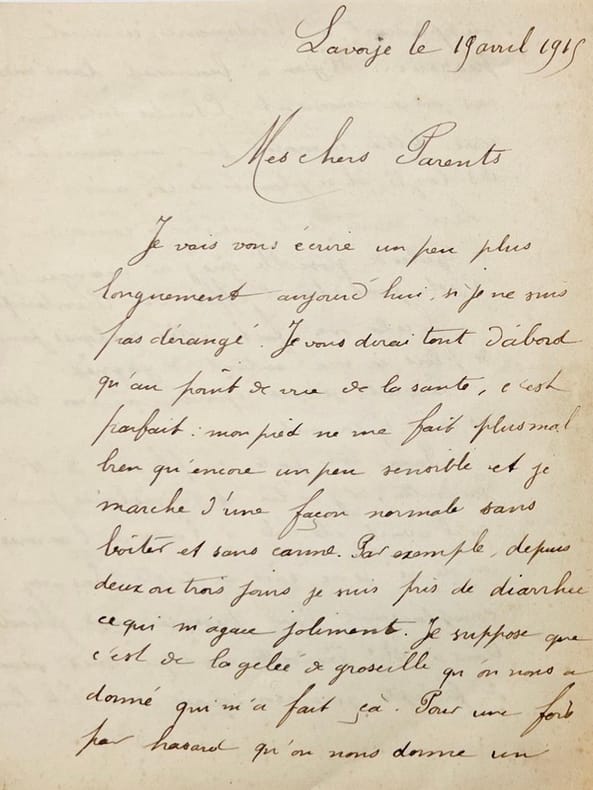
190943739, , 1909-1931. 831 lettres et cartes militaires manuscrites.
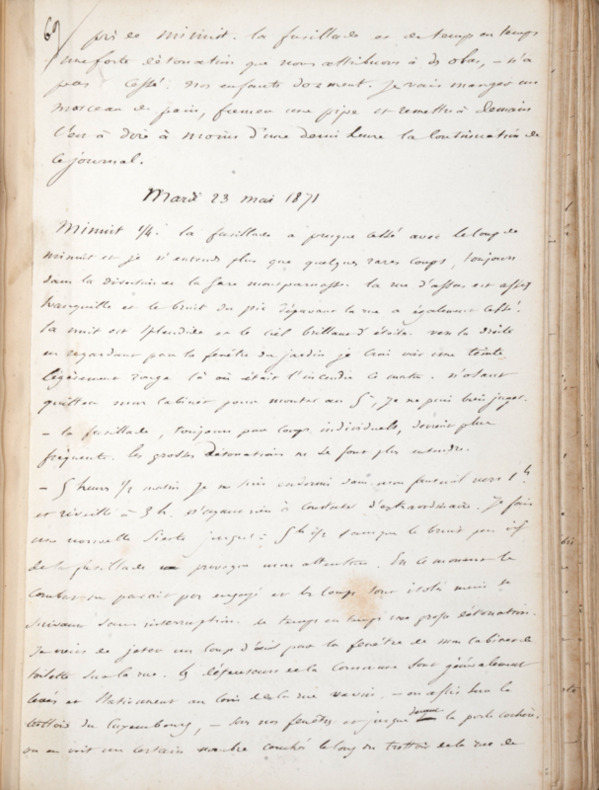
187141289Paris, , 1871. In-8 manuscrit en belle page (15 x 21 cm) de (2)-131 ff. montés sur onglet à 30 lignes par page, demi-chagrin vert, dos à nerfs, titre doré (reliure de l’époque).
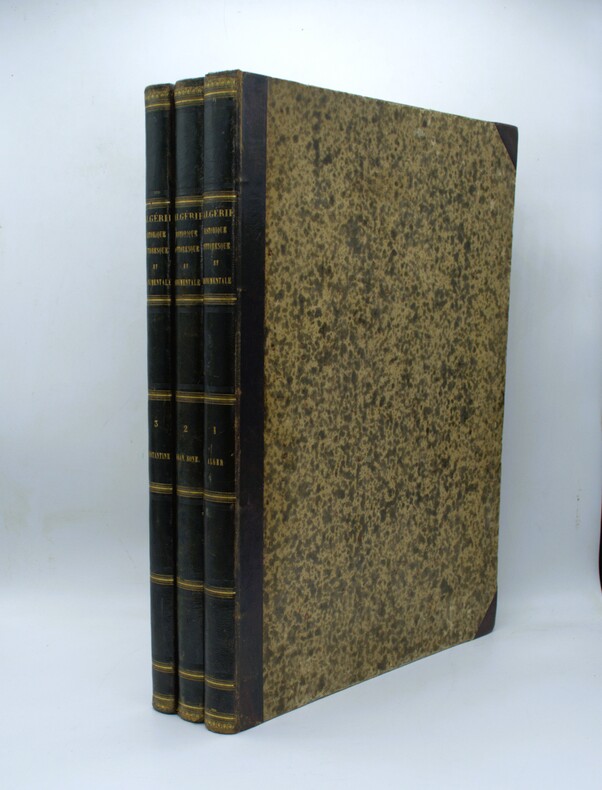
1843PHO-2292Paris, Chez J. Delahaye Éditeur, 1843. Cinq parties reliées en 3 volumes in-folio demi basane brune à coins, dos lisse cloisonné de filets or, titre doré (Koenig). Quelques planches roussies, comme toujours, petites rousseurs.
[Figurato Militaria] (cm39) ottima piena pergamena originale, titolo manoscritto al dorso. -- cc. 3 nn., pp. 166 (numerate da 15 a 166), cc. 3 nn. Occhietto, ritratto, frontis figurato + 27 tavv. f.t. e 37 tavole nel testo di cui 15 a piena pagina. Il ritratto e lo stemma sono incisi da D. A. Bricio Delin., L. Tintus Sculp. Edizione originale rarissima (manca a molti repertori biliografici) di uno dei più celebri figurati del '600 consacrato all' arte militare. Uso della picca e del fucile, tattica di fanteria e delle truppe in battaglia. Di grande interesse anche per i costumi. Magnifico esemplare fresco e marginoso. Con incisioni in rame in prima tiratura con alta definizione come raramente si incontra. * Gelli 139; * Dayala 40;* Lipperheide Qb49; * Haym 578; * Capponi 249; * Michel-Michel V 138; * Britisch M. Cat. XVII Cent. Italian Books II 552.[f55] Libro
1865222651865. Hardcover. Very Good. Book. Bound collection of separately printed General Orders from the Adjutant General's office for 1865. Containing 168 of 175 consecutive orders and a 94-page index at front. Bound for Major General William Scott Ketchum with his name in gilt on the spine and his markings or wartime notes on numerous pages. 4 3/4 x 7 in. Early resolutions concern the rates of pay for officers' servants equal clothing allowances for commissioned and non-commissioned officers and widow's rights to prize money and equal pay for both black and white volunteers Order No. 31/Public No. 57 and freedom for the wives and children of any army or navy volunteer Order No. 33/Public Resolution No. 25. Also includes several orders relating to the assassination of President Lincoln: Order No. 66 announcing the assassination; Order No. 67 announcing Andrew Johnson's ascent to President; and Order No. 69 announcing the closing of military bases in observance of the funeral of Abraham Lincoln with the official Order of the Procession for the ceremony on April 19th; also includes a Special Order regarding the transportation of President Lincoln's remains to Springfield Illinois and Order No. 72 assigning the Honor Guard to accompany the casket.Orders signed in type by Andrew Johnson concern ending the blockade and restrictions on internal commerce with the exceptions of weapons and gray cloth.Lacking order numbers 15 97 128 133 140 148 & 168 apparently never bound in.Condition Very good. Minor rubbing some staining to top of index pages. Later ink stamps of the Office of the Chief of Finance on front endpapers.William Scott Ketchum 1813-1873 graduated from West Point in 1834. He served in the Seminole Wars and on the Western frontier. As a captain he fought in the 1857 Expedition against the Cheyenne and the Battle of Solomon's Fork where he commanded the 6th Infantry Regiment. During the Civil War in February 1862 he was appointed brigadier General of Volunteers serving in Washington DC. hardcover books
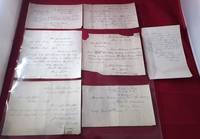
18633837Goodrich's Landing LA: Original 1863. Original Letters. Very Good. Important collection of six war-date letters written by Union Brigadier General John Parker Hawkins while in command of Colored Troops at Goodrich's Landing LA. Goodrich's Landing was the name for the cotton plantation owned by Henry Goodrich that was siezed by Union troops early in the war. The site was prepared as a staging area for an eventual attack on Vicksburg. As early as 1862 escaped slaves sought refuge at Goodrich's Landing. Hawkins was promoted to Brigadier General and named to command the District of Northeastern Louisiana with a division of colored soldiers in 1863. Every single original letter in this collection is written by Hawkins from Goodrich's Landing.<br /> <br /> John Parker Hawkins 1830 - 1914 born in Indiana graduated 40th in the West Point class of 1852. He began the Civil War as assistant commissary in St. Louis was promoted to chief commissary of the XIII Corps and then chief commissary of the Army of the Tennessee. In 1863 Hawkins was promoted to brigadier general of volunteers and named to command the District of Northeastern Louisiana with a division of COLORED SOLDIERS. He commanded at Vicksburg for much of the rest of the war and took part in the Mobile campaign of 1865. At the end of the war he was promoted to major general of volunteers and of regulars.<br /> <br /> The collection includes the following letters:<br /> <br /> ALS. John P. Hawkins Brig. Genl. Comdg. H.Q. Dist. N.E. La / Goodrich's Ldg. / Oct. 28 1863. Addressed to: Brig. Genl. J.L. Kieman / Milliken's Bend. "A Boat is in route to take the priisoners to Vicksburg have them ready and escort one capt two Lieuts & twenty five men. John P. Hawkins Brig. Genl. comdg." In ink. 4 3/4 X 7 7/8 Inches.<br /> <br /> ALS. John P. Hawkins Brig. Genl. Comdg. Head Qrs. Dist. N.E. La / Goodrich's Ldg. / Oct. 28 '63. Addressed to: Brig. Genl. Kiernan / Comdg / Milliken's Bend. "Genl Search and take from the Rebel deserters all arms of any kind place them under a strong guard and send them to Vicksburg by first Boat under strong guard. John P. Hawkins Brig. Genl. Comdg." In ink. 7 3/8 X 7 3/4 Inches.<br /> <br /> ALS. John P. Hawkins Brig. Genl. Comdg. Hd Qrs Dist N.E. La. / Goodrich's Ldg. Nove 8th 1863. Addressed to: Commdg Office / Milliken's Bend. "It is reported four-thousand rebels have crossed below Grand Gulf into La. Key out scouts on Richmond road. John P. Hawkins Brig. Genl. Comdg." In ink. 6 X 7 7/8 Inches.<br /> <br /> ALS. John P. Hawkins Brig Genl. Comdg. Goodrich's Landing / Nov. 9 63. Addressed to: Brig. Genl. J.L. Kiernan / Comdg. / Milliken's Bend. "Four Thousand Rebel Cavalry & eight Pieces of Arty are reported at Floyd. John P. Hawkins Brig. Genl. Comdg." In ink. 4 7/8 X 7 3/4 Inches. <br /> <br /> ALS. John P. Hawkins Brig. Genl. Comdg. Goodrich's Landing / Nov. 17 1863. Addressed to: Maj. Genl McPherson / Vicksburg. "Colonel Ballinger at Milliken's Bend telegraphs that Rebel Cavalry yesterday and today were crossing the Mississippi River below Perkins Ldg. Reported to be Wirt Adams Command. John P. Hawkins Brig. Genl. Comdg." In ink. 6 1/2 X 7 7/8 Inches.<br /> <br /> ALS. John P. Hawkins Brig. Genl. Comdg. Goodrich's Ldg. / Jany 24 64. "Have the Madison & Dligent left Vicksburg / John P. Hawkins / Brig. Genl. / Comg. / To Maj. Genl. McPherson." In ink. 4 5/8 X 7 3/4 Inches.<br /> <br /> Accompanied by what appears to be a field copy of a seventh letter from Hawkins to Col. Ballinger - ALS Secretarial. John P. Hawkins Brig. Genl. Comdg. No date. Circa 1863. "Col. Ballinger / Lieut. Johnson a recruiting officer from Vicksburg is reported conscripting Negroes near Omega Ldg. Should he visit your place put him in close arrest and report the fact to these H.Qs. By order & c. John P. Hawkins Brig. Genl. Comdg." In pencil. 7 7/8 X 5 Inches.<br /> <br /> Julian Bryant the nephew of famed journalist editor and poet William Cullen Bryant served in 1863 as a Major of the newly organized regiment the 1st Mississippi Infantry African Descent. He and his regiment fought at Milliken's Bend a brutal engagement where colored soldiers and white officers of colored regiments were targeted by the Confederate Army. With the help of this uncle Bryant participated in the campaign to allow colored units equal responsibilities including combat with regular white units. Bryant filed a full and detailed report on HAWKINS on October 10 1863. In his report he found that the contrabans were nearly always unfairly treated and government contracts with the blacks were often ignored treating them as nothing more than a slave labor force. Upon reading the report GENERAL HAWKINS commented that if improvements were not made soon then the newly free blacks would be better off with their former masters. <br /> <br /> CONDITION: Light toning and some wear to edges. A few fold marks. VG overall. <br /> <br /> PROVENANCE: From the personal collection of Thomas Truxton Moebs author of "Black soldiers - Black sailors - Black ink : research guide on African-Americans in U.S. military history 1526-1900 Original unknown
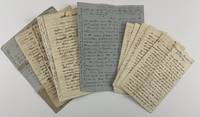
18656112Mainly South Carolina but also Massachusetts and Florida 1865. Very good. Fifteen autograph letters signed totaling approximately fifty-six pages and about 7000 words. Original mailing folds minor overall wear. An insightful collection of original correspondence from Joshua Giddings Dodge written to his brother-in-law Samuel Douglas Wilson with information on family business matters in the South Civil War news his postwar life in Iowa and most importantly Dodge's work with the Freedmen's Bureau in South Carolina. Joshua Giddings Dodge 1813-1904 was born and raised in Massachusetts worked as a farmer in Illinois for awhile then returned to Massachusetts to work as a gilder and dealer in fine art. At the age of just 19 Dodge met William Lloyd Garrison and shortly thereafter became an important figure in the Boston abolitionist movement serving in leadership positions for the Middlesex New England and Massachusetts anti-slavery societies as well as the Boston Vigilance Committee. During the Civil War Dodge served as a superintendent in the Freedmen's Bureau in South Carolina and Florida where he was also appointed as supervisor of Mitchelville a town built for former slaves on Hilton Head Island. Following the war Dodge farmed in Iowa for a while before returning to Massachusetts to live out his remaining years.<br /> <br /> Dodge's critical work for African Americans in South Carolina is covered in some depth in five letters in the present collection which also reveal his opportunistic business dealings in South Carolina and Florida. His earliest letter is dated November 8 1863 from the Graham Plantation on Hilton Head. Here Dodge discusses possible investment for himself and Wilson on Hilton Head should they wish to purchase the plantations for sale on the island. Dodge informs Wilson that "the Graham plantation contains 2000 acres appraised 4000 dolls & will be sold if no more than 2000 is bid but not less." He also discusses the value of buildings and "pine land." Dodge then details a long selection of items he wants Wilson to send to him noting that he "can always sell to the negroes what I dont want although the gov't does not allow me to make money out of them."<br /> <br /> Dodge's next South Carolina letter here comes later on February 17 1865. In fact the final four of Dodge's South Carolina letters are dated between February 17 and April 21 1865 and contain critical information on his work with the Freedmen's Bureau and his business activities in the South. His February 17 letter is datelined from Atwood on Hilton Head; here Dodge discusses the fact that he has recently returned from Florida as he worked for the Freedmen's Bureau there too during this period. He also advises against opening a family business in Savannah in light of the impact of General Sherman's activities there: "Shermans Army has left in consequence that market is shattered & many are now suffering serious losses. Good I am told can be purchased for less there than here." Dodge discusses much about his business activities namely land purchases recently made in Florida. He notes that "Negroes are now at work in our cotton field to which I shall turn my attention for a little." Dodge's letter of March 13 is the shortest here at two pages and the first of two datelined "Office Supt. Freedmen;" in it he follows up with Wilson on expected shipments to him on Hilton Head and again mentions Sherman: "Business grows dark here as SHerman with his great army recedes & the Sect. of War is changed. Think business in my office is more lively perhaps than in any other."<br /> <br /> Dodge's last two letters from South Carolina are easily the most important and content-rich letters present here. His penultimate letter dated March 27 is again datelined from the Freedmen's Bureau's Superintendent's Office. Dodge opens with detailed information on some sent letters that were apparently lost in the mails noting that he had written previously to Wilson about various matters including a meeting with General Rufus Saxton in Savannah and "His offer of an Island on which to colonize negroes" as well as another letter where Dodge informed Wilson of the sale of their cotton plantation and "my appointment as Gen'l Superintendent of Freedmen." Dodge writes that he has his hands full with superintendent duties and mentions that General Saxton has issued him a "free pass throughout the 'department of the South'" which he hopes to use more. Dodge concludes the letter with an important notice: "Today have been to Beaufort with Gen. Littlefield to see Saxton & get things fixed to our minds allowing me to be supervisor of Mitchelville as well as Superintendent of Hilton Head Island." Mitchelville was a town created in 1862 for former slaves. Residents of Mitchelville supported themselves largely through manual labor for the Union Army and eventually died out after northern authorities left during Reconstruction.<br /> <br /> Dodge's final letter from South Carolina is dated April 21 1865 and contains the most content regarding his duties for the Freedmen's Bureau. He writes: "My hands are full of various matters. The care of the negroes here & at Mitchelville requires much time. Held court for them at the latter place today calling to my aid as associate judges two of the negroes. Since that adjournment have been riding about with Provost Marshall trying to secure justice for half dozen negroes who have been dispossessed of their lands." He also notes that he "purchased an entire island for 250 dolls" and deems it a great bargain; whether the island was purchased for personal enrichment or for the Freedmen's Bureau is unclear. Dodge then proceeds to discuss the "mixture of terribly sad & gloriously good news" received lately namely the assassination of President Lincoln the surrender of Lee and Johnson and the capture of Mobile. He wishes that "For the latter let us thank the Lord & Gen. Sherman. For the former invoke the wrath of the Almighty on the head of the Confederacy."<br /> <br /> The present collection also includes two war-date letters from Dodge written from Florida during his brief sojourns there while working for the Freedmen's Bureau but also pursuing his own business interests. His first letter is datelined from Fernandine Florida on December 28 1864 with an additional letter written in pink ink between the lines of the earlier letter and dated December 30. In this letter Dodge relates to Wilson his attempts to purchase land in Florida for himself or the Atwood plantation. He also remarks on Fernandine: "It is a pretty town built on an Is. & considered a healthy location. The winter weather here is charming. Much like what we had in N.Y. in Sept. Gardens here look green & flourishing. Some are planting while others are gathering the fruit of their planting in the fall. Green peas are now being picked from some & notice peach trees in blossom. Flowers also of various kinds are not scarce. Water fowl of different kinds are abundant & birds are met with wheresoever we journey." He thereafter provides a detailed description of Dungeoness Dungeness Castle on Cumberland Island Georgia which he had recently visited. One of the aspects of the castle he describes are "a long row of brick chimneys marking the spot where the slaves were quartered" and he also mentions the Butler Plantation: "But little distance from Cumberland is the island on which was situated the cotton plantation of Pierce Butler made famous a few years since by the Tribune's account of the auction sale of the slaves & still more so since by the published letters of his wife Fanny Kemble Butler." Dodge's December 30 letter beginning on the third page here and written between the lines of the December 28 letter relates his reception of war news including Sherman's capture of Savannah the "glorious victory" at Nashville and the supposed death of Jefferson Davis.<br /> <br /> Dodge's second letter from Florida emanates from St. Augustine about a month later on January 20 1865. He spends a great deal of the initial part of the letter expressing his sympathies and offering advice regarding a disastrous fire that happened at Wilson's premises in New York. He then swiftly turns to his recent experiences in St. Augustine describing the area thusly: "The house is a very good one. Comfortable & pretty but not extravagant. The grounds surrounding however are charmingly beautiful. Within reach of my hand at the window where I sit hang large golden oranges which barrels of them may be seen hanging on the trees in various parts of the grounds. Other fruit bearing trees are in reach of my eyes such as lime lemon citron olive date pomegranate guava fig grape peach banana plum & others while flowering shrubs add beauty to the picture & fragrance to the atmosphere."<br /> <br /> The collection also includes five earlier letters written between August 9 and September 13 1863 when Dodge was still living in West Cambridge Massachusetts. These letters provide fuller context and greater detail regarding the family's mercantile business in the South. Notably in his first letter of August 27 1863 Dodge comments on his later position in South Carolina: "Am expecting letter this morning from a Boston Committee assigning me a position as servant to the darkies in S.C. Probably superintendent of plantations. Shall keep you fully advised." In his next letter Dodge comments on the impact of their business based on "whether Charleston is taken or not." In his last three letters Dodge writes about the family turpentine business Indian rubber "Boston spirits" and other goods commenting in his last letter that he plans to take to South Carolina "a lot of various trinkets cheap kinds for the darky children which may be distributed from time to time to my advantage." He then remarks that his "mission south is of course but an experiment & may soon reach a termination."<br /> <br /> The final three letters in the archive were written by Dodge during his brief years as a farmer in Iowa. The first two letters are addressed from Dodge's residence in Grinnell Iowa and written to Wilson in the summer of 1868. He writes about personal finance matters harvesting "some 16 or 18 acres" of wheat local railroad matters his investments in South Carolina and more. His final letter is also written from Grinnell but addressed to Wilson's wife and his own sister Susan Wilson Dodge in December 1869. He discusses various family health education and business matters and most notably mentions a recent situation regarding a family member's flirtation with women's suffrage: "Am greatly pleased at what you say of Auntie in relation to the Women's Rights meeting. Hope she will become a confirmed convert & identify herself with the movement make acquaintance with its advocates & labors in its behalf."<br /> <br /> An excellent archive containing vital information on Dodge's business activities some might call them profiteering amid his work for the Freedmen's Bureau in the South during the Civil War with much to mine for further researchers. unknown
186327010Washington: Coastal Survey Office 1863. Folding map 24 x 25 1/2 inches mounted in twenty-four sections on linen. Original card covers with printed paper label. Contemporary ownership inscription on label. Light wear. Minor foxing and wear to map. Rare field operations map of Mississippi.<br/> <br/>This rare Civil War map was created by the Coast Survey office the main cartographic arm of the Union Army for use in the Union campaigns into the South. This copy was owned and used by Colonel Joseph Corson Read the Chief Commissary of the Army of the Cumberland. In November 1863 the Union armies captured Chattanooga the "Gateway to the South" enabling them to stage a prolonged offensive into the Southern heartland. Grant moved very quickly to overwhelm the South and immediately ordered Sherman to move against Atlanta and its vital railroad supply lines at the same time as he sent Nathaniel Banks to attack Mobile Alabama. Joseph Corson Read 1831-1889 was one of the first wave of men to take up Abraham Lincoln's call for volunteers to put down the rebellion in April 1861. He remained continuously in the army serving first on General Jesse Reno's staff and rising to the rank of Chief Commissary for the Army of the Cumberland commanded by George H. Thomas. Thomas was impressed with Read and on May 1 1864 with the spring campaign against Atlanta imminent Thomas named Read Chief Commissary of the Army of the Cumberland in the Field. This meant that although Colonel A.P. Porter was the Army's overall chief Read would serve alongside Thomas in the field and had the responsibility to supply the entire army as it moved South. During the long and arduous Atlanta campaign he was the man on the ground making the supply side work. Read developed a close relationship with Thomas one with both personal and professional aspects. This map scaled at ten miles to the inch shows Mississippi and Alabama from Jackson to Montgomery starting about fifty miles north of those two points and continuing south to New Orleans and the Gulf of Mexico. Rivers roads and rail lines and all the towns they connect are detailed with waterways printed in blue. Two of the railroads the Mobile & Pensacola and the Mobile & Great Northern construction and removal dates during the war. An important map that would have been used by the Union Army in the field specifically by the Chief Commissary of the Army of the Cumberland.<br/> <br/>Library of Congress Civil War Maps 260.1; Library of Congress Railroad Maps 140. Coastal Survey Office unknown books
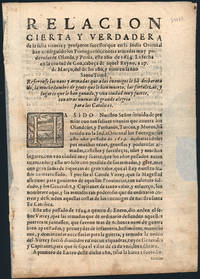
1625WRCAM39163Madrid: Bernardino de Guzman 1625. 4pp. In Spanish. Decorative woodcut initial on first page. Small folio. Dbd. Light contemporary annotations in margins of each page. Early folds. Loss repaired in silk to gutter and outer margins and along one fold affecting a few characters of text on p.4. Overall very good. Rare Spanish newsletter reporting on recent victories by the Portuguese against the Dutch the Persians and others throughout Asia in 1624. The early 17th century saw the Dutch begin to present a serious threat to Portuguese power and commerce in the East and by the mid-1620s the Portuguese were beleaguered by constant attacks by the Dutch navy and its various Asian allies. The present Spanish newsletter celebrates one of the last great series of Dutch defeats by the Portuguese who are lauded here by their Iberian partners as worldwide defenders of the Catholic faith holding their ground against overwhelming odds. Within a few years the Dutch would clearly gain the upper hand in Asia both militarily and commercially and by 1663 would control much of the Malabar Coast Ceylon Indonesia Malacca and European trade with Japan leaving Portugal only with bases at Macao East Timor and Portuguese India. <br> <br> The newsletter discusses several naval battles off the coast of Persia down the Malabar Coast to Ceylon to Malacca China and Macao. A significant portion of the pamphlet describes the heavy Portuguese losses sustained by repeated attacks on Macao by the Dutch who by this time had established a base in the Pescadores Islands. In the last paragraph attention is turned to the activities of the Jesuits in Ethiopia described here as the "Realm of Prester John" and the recent conversion of Ethiopian King Suseynos to Roman Catholicism. Palau records four printings of the text assigning priority to the present document and locating one copy at the National Library in Madrid. Palau also notes that a copy of this printing was sold by Maggs Bros. for £5 5s in 1927 and by Melchor GarcÃÂa for 35 pesetas in 1934. OCLC locates four copies at the Bavarian State Library in Germany the University of Amsterdam the Newberry Library and the University of Chicago. PALAU 257729. Bernardino de Guzman unknown books
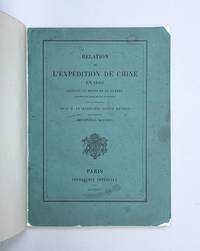
1862160274Paris: Imprimerie Impériale 1862. With the atlas of eight finely engraved maps First edition with the scarce wrappers retained of this official French account of the Franco-British expedition northwards to Beijing together with a well-preserved first edition of the accompanying atlas volume. The detailed narrative encompasses such pivotal moments as the third battle of the Taku Forts the taking of Tianjin the burning of the Summer Palace and the battles of Zhangjiawan and Tongzhou. The finely engraved atlas includes maps of the Chinese coast the December 1857 capture of Canton the occupation of Tianjin by Anglo-French naval forces in May 1859 and the Western camp at Chefoo. Four other maps all folding show the Franco-British landing at Peh-tang the battles of Zhangjiawan and Baliqiao and the route of the Western advance from the mouth of the Peiho to Beijing. These works were produced at the behest of the Dépôt de la Guerre the country's principal military archive and cartographic institution. Between 1852 and 1867 the Dépôt was run by Antoine Lucien Blondel 1801-1883 a major military cartographer. From 1859 Blondel reported to Jacques Louis César Alexandre Randon 1795-1871 a veteran of Napoleon's European campaigns and Marshal of France from 1856. Two works. Atlas comprising 8 maps 4 folding with occasional hand-colouring all engraved by Erhard Schièble. Relation: quarto 281 x 200 mm. Mid-20th-century green boards Claude Honnelaitre brown spine label lettered in gilt original green wrappers tipped-in top and bottom edge trimmed fore edge untrimmed. Atlas: folio. Original green cloth-backed orange boards front cover lettered in black. Wrappers well-preserved with some staining and a few small losses atlas volume with soiling to boards couple of surface losses on rear cover and wear to extremities text and maps clean atlas with just occasional foxing. Very good copies indeed. Cordier 2nd edition 2496. hardcover
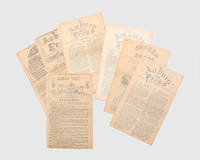
1945185980Pacific theatre: 1945. Iwo Jima's first American newspaper Scarce examples of this American naval publication. In 1945 Auburn participated in the assault on Iwo Jima allowing the editors to bill the Auburn Press as "Iwo Jima's first American newspaper". We have traced physical copies at the Wisconsin Veterans Museum Research Centre and the University of Wisconsin-Madison only. According to the 4 March 1945 instalment the circulation numbered 700 copies. As typical for the genre each number combines news with lighter-hearted and recreational content including at times a crossword. That for 16 March proudly proclaims "Iwo Secured" on its special front page while under the headline "Jap Suicides Becoming Popular" the 15 September number describes the abolition of Japan's Imperial General Headquarters and the drastic measures taken by some senior military and government officials to escape accountability for the war. A separate notice issued in late September gives the current newspaper staff and surveys the ship's contribution to the Allied victory. a Volume III Number 4 4 March 1945 8 pp. 1 page blank. b Volume III Number 16 16 March 1945 12 pp. c Volume III Number 17 17 March 1945 8 pp. d Volume III Number 19 19 March 1945 8 pp. e Volume IX Number 15 15 September 1945 10 pp. f Volume IX Number 21 21 September 1945 10 pp. g Single-sheet notice c. 28 September 1945. 6 issues and single-sheet notice c. 330 x 200 mm. Text mimeographed across 57 sides in total. Issues wire-stitched top-left. For a full inventory see note. Couple of contemporary annotations. Generally in well-preserved condition toning and printing inconsistencies as expected one sheet detached from wire stitching old creasing and occasional short closed tears: very good. unknown
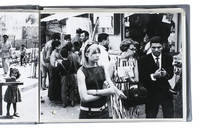
1967ABC_47179Israel 1967. Oblong album ca. 20 x 26 cm; photographs in slightly varying sizes ca. 18.5 x 24 cm. Grey faux-leather photo album with a small white label on the front board: "42 x Israël 1967 23-24-25 Juli". 44 silver gelatin photographs including 2 duplicates and 1 other loosely inserted. 44 photographs in an album with 30 clear plastic inserts. A rare collection of fascinating original photographs capturing the first Western tourists in Israel and Israeli captured territories approximately a month after the Six-Day War in 1967 by Dutch journalist and photographer Bianca Maria Dony. The 44 photos in the album show the passenger ship SS Pegasus soldiers local people in the streets of Jerusalem and other cities an early war monument checkpoints destroyed military vehicles and other remnants of the war. The album is from the archive of the photographer; some of these photographs were sold to and published in national Dutch and international newspapers and magazines while others remained unpublished.Bianca Dony was part of a group of 150 Christian tourists from various European countries who were now - after the Israeli capture of these areas - able to visit the holy places in the old city of Jerusalem Bethlehem and other places that had previously been inaccessible. The tourists in the present photographs were the first of many and Dony took this opportunity to not only document the trip itself but also the general aftermath of the war.With an additional leaf in the inside front pocket of the album containing notes of how many photographs were sold to different newspapers and magazines including 10 to the "Haagsche Courant" written in blue and red ink and in pencil. Added to the first photograph in the album is a newspaper clipping from the "Jerusalem Post" with the headline "Haifa direct to old city for first time" about the first tourists visiting Israel after the Six-Day War. Some of the clear plastic inserts have small round white stickers on them with different abbreviations connecting the photographs to the newspapers and magazines that possibly printed them for example "HC" for Haagsche Courant etc. 3 photographs are loosely inserted and 2 of these are duplicates of other photo's in the album the 2 duplicates contain a blue stamp "foto bianca dony 147 Malakkastraat Den Haag - Tel. 5582540 Giro 303814" and a manuscript caption in red ink on the back. Most other photographs are simply numbered in pencil on the back. This rare collection of 44 historically significant photographs is in very good condition.l Cf. Rebecca L. Stein "Souvenirs of conquest: Israeli occupations as tourist events" International Journal of Middle East Studies vol. 40 no. 4 2008 pp. 647-669. hardcover
Munchen, 1851 (data impressa nella litografia al frontespizio e nella successiva pagina di avvertenza). Album in folio massimo in oblungo (cm 43,5 x 59,8), le tavole (cm 42 x 59), front. in tavola tonolitografica + 24 tavole in b/n ciascuna delle quali protetta da velina con ampia descrizione didascalica dell'evento. Le tavole: 1. Scene aus dem Starssenkampf zu Mailand. Marz 1848; 2. Santa Lucia. 6 Mai 1848; 3. Erstürmung der villa Rotonda bei Vicenza. 1 Juni 1848; 4. Vor Vicenza. Am 10 Juni 1848, 5. Auszug nach der capitulation von Vicenza. Am 11 Juni 1848; 6. Sommacampagna. 23 Juli 1848; 7. Schlacht von Custozza. Der 25 Juli 1848; 8. Reitergefecht bei Volta. Am 27 Juli 1848; 9. Volta. Am 27 Juli 1848; 10. Vor Mailand. Am 4 August 1848. 11. Der Uebergang über den Tessino bei Pavia. 20 marz 1849; 12. San Siro. 21 Marz 1849; 13. Mortara (Den 21 Marz 1849); 14 Schlacht von Novara. 23 Marz 1849; 15. Erstürmung der Casa Visconti. 23 Marz 1849; 16. Die Rückkehr des Marschalls. Am Tage nach der Schlacht von Novara; 17. Verwundete Piemontesen in der Kirke zu St. Peter. Nach der Schlacht von Novara den 26 Marz 1849; 18. Vignale. Am 24 Marz 1849. 19. Auf dem Guelphenthurm zu Mestre. 4 Mai 1849; 20. Aus der Belagerung von Malghera; 21. Croaten – Quartier (in Casa Picozzi bei Mestre Vor Venedig); 22. Malghera; 23 Malghera. Nach der einnahme am 27 mai 1849; 24. Vorposten in den Lagunen während der Belagerung von Venedig, bei Campalto. Leg. in tutta tela verde con impressioni in oro al piatto. Opera completa di tutte le tavole. Tracce marginali di usura alla legatura e una macchia di sbiancamento al piatto, all'angolo inferiore sinistro; un certo allentamento, ingiallimento alle bianche e al frontespizio con sporadiche fioriture a certe tavole. Nell'insieme buone tutte le tavole, e l'album può dirsi in buono stato di conservazione.
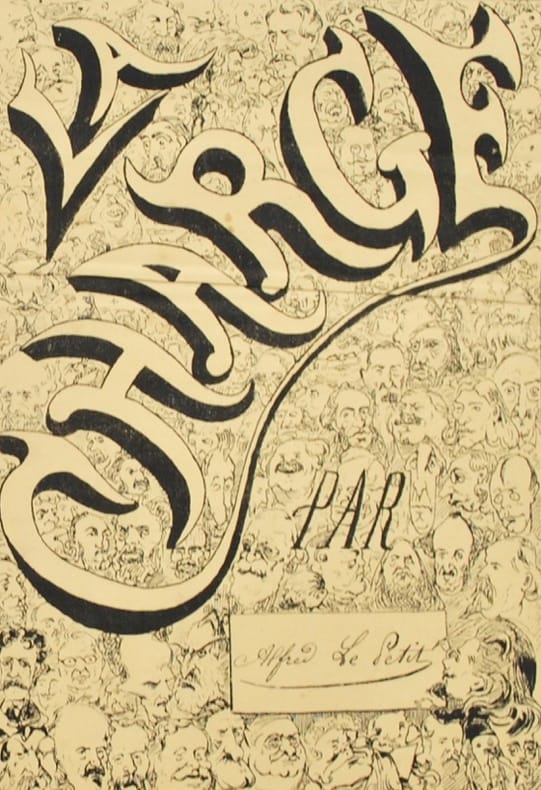
187042347Paris, Typ. de Rouge frères et comp., 1870. 2 séries de 13 et 24 livraisons montées en 1 vol. in-folio, demi-percaline verte, dos lisse, couverture illustrée conservée portant Album de la Charge (reliure de l'époque).
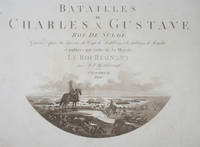
180645461Stockholm 1806. Large folio oblong. 44 x 61 cm. Contemp. hcalf covers with marbled paper. Titlelabel in red and gilt pasted on frontcover. Wear to foot of spine otherwise fine. Engraved titlepage battle view engraved plate depicting the Carl Gustav on horseback in front of a battle scene and 11 engraved plates showing battlescenes after Dahlberg's drawings. All engravings in beautiful toned sepia aquatint. A few marginal brownspots. A very fine copy. <br/><br/><em>Very scarce first printing of this series of plates aiming at glorifying the Swedish victories showing battlescenes - Warsaw Carnova Columbi Guesne and the crossing of the Belt in Denmark - from the wars against Poland and Denmark 1655-58 in fine engravings by Skjöldebrand. </em> unknown
180645461Stockholm, 1806. Large folio oblong. (44 x 61 cm.). Contemp. hcalf, covers with marbled paper. Titlelabel in red and gilt pasted on frontcover. Wear to foot of spine, otherwise fine. Engraved titlepage (battle view), engraved plate depicting the Carl Gustav on horseback in front of a battle scene and 11 engraved plates showing battlescenes after Dahlberg's drawings. All engravings in beautiful toned sepia aquatint. A few marginal brownspots. A very fine copy.