Collectif .Livre Rare Book
119 832 résultats
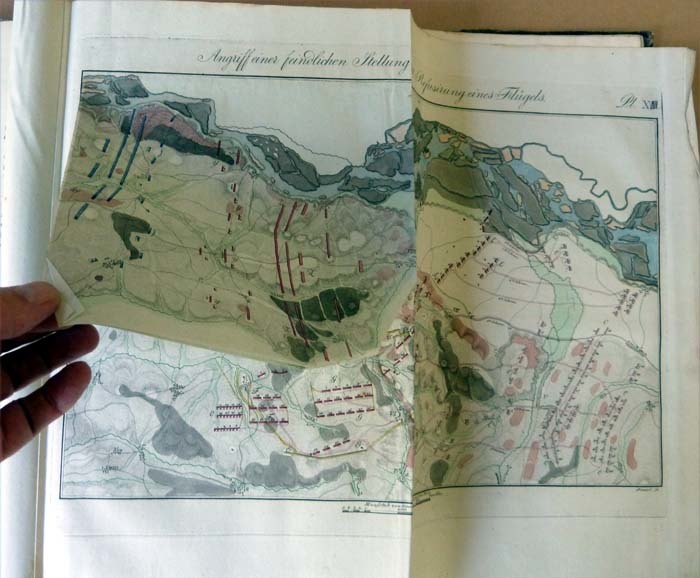
180813913Vienne Wien Aus Der Kaiserl. Königl. Hof-Und Staatsdruckerey( Edité par le Kaiser-Impression de l'Etat). 1808 1 Un fort volume de format fort in folio de 169 pp. et 25 cartes dépliantes, gravées sur cuivre et coloriées; en hors texte; certaines cartes comportent des parties doublées qui proposent des variantes stratégiques. Reliure cartonnée de l'époquerecouverte d'un papier" gris armée".
In 4° (19,7x14 cm); (40), 803, (1) pp. Legatura dei primissimi dl settecento, in piena pergamena, con titolo ed autore impressi in oro al dorso. Piatti interni foderati con bella carta settecentesca a motivi floreali. Frontespizio anticamente ed abilmente rinforzato al recto da carta settecentesca, un forellino di tarlo al margine esterno bianco da pagina 157 a 302 che in alcune pagine diventa un piccolo tunnel, sempre lontano dal testo ed ininfluente. Due quaderni leggermente ed uniformemente bruniti a causa della qualità della carta. Nel complesso esemplare in ottime condizioni di conservazione. Bella marca tipografica al frontespizio con immagine di idra con sette teste ed in una cornice figurata, il motto "Virescit vulnere virtus". Antica firma di appartenenza settecentesca privata al frontespizio “Ex libris Cristophori V. Ill.s Scipionij”, probabilmente lo storico napoletano, Cristoforo di Scipione autore nel settecento di una celebre biografia di Giannantonio Summonte e di alcuni opere di genealogia ed araldica delle famiglie napoletane. Prima, non comune, edizione italiana, di questa celeberrima opera del famoso cronista e politico francese, Philippe de Commynes, o de Commines (Hazebrouck, 1445 o 1447 – Châteauroux, 18 ottobre 1511). Una delle principali opere storiografiche sulla storia francese ed italiana della seconda metà del quattrocento che divenne un classico in Italia, vedendo numerose riedizioni, anche grazie alla puntigliosa traduzione del noto umanista genovese, di origine ebraica (il padre era un noto medico ebreo), Lorenzo Conti. Fra i partecipanti della congiura dei Fieschi, Conti studiò legge a Padova, Parigi, Tolosa ed Avignone. Ma è "è con le lotte intestine del 1575 che il C. assunse un ruolo di rilievo nella vita pubblica della città, in stretto collegamento con i gruppi più radicali della nobiltà "nuova": nella primavera era fra gli organizzatori delle "messe dello Spirito Santo", in cui si tentò un coinvolgimento di massa dei ceti popolari nella lotta contro la nobiltà "vecchia". Lorenzo fu tra i principali propagatori degli studi d’oltralpe in Italia ed in particolare, degli studi legati alla figura di Bodin ed Aristotele. "Legata probabilmente al nuovo clima culturale venutosi a creare in città dopo la fondazione dell'Accademia degli Addorment ati (1587) fu la nuova iniziativa letteraria del C., la traduzione dei Mémoires di Comines, dedicata al marchese Ambrogio Spinola (Delle memorie di Filippo di Comines... tradotte dal Mag.co L. Conti, Genova 1594). Nella dedica il C., dopo un parallelo tra Tacito e Comines, annuncia un suo volume di discorsi che non sono per altro rimasti. Una traduzione questa di Comines che, a differenza della precedente parziale di Nicolas Raince, ebbe un notevole successo editoriale (Milano 1610, Brescia 1611, Venezia 1613, Milano 1623, Venezia 1640)". Philippe de Commines, di nobili origini, fu fin da bambino, educato all’arte diplomatica ed alla conoscenza della storia. "In un primo tempo consigliere di Carlo il Temerario, passò al servizio di Luigi XI, grazie al quale ottenne ricchezza, onori e titoli. A causa della sua partecipazione alla congiura degli Orléans, venne arrestato ed imprigionato. Grazie a Carlo VIII rientrò negli ambienti di corte prima di ricevere l'incarico di ambasciatore a Venezia. Negli anni seguenti si ritirò a vita privata per comporre le sue Mémoires, opera composta da otto libri, i primi sei costituiscono la Cronaca di Luigi Xi e gli ultimi due la Cronaca di Carlo VIII. Grazie a questi libri viene considerato uno dei padri degli storici moderni, grazie alla sua obiettività ed alla profondità psicologica dei suoi personaggi posti in relazione con i fatti politici in un gioco di cause, effetti, previsioni". Prima edizione italiana di uno dei testi storiografici più celebri del cinquecento e della prima metà del seicento italiano che ricostruisce la storia di Francia e dei territori italiani nella seconda metà del quattrocento. Rara prima edizione italiana in esemplare in buone-ottime condizioni di conservazione. Rif. Bibl.: ICCU IT\ICCU\RMLE\005167; non citata in BM STC e non nell’Adams.
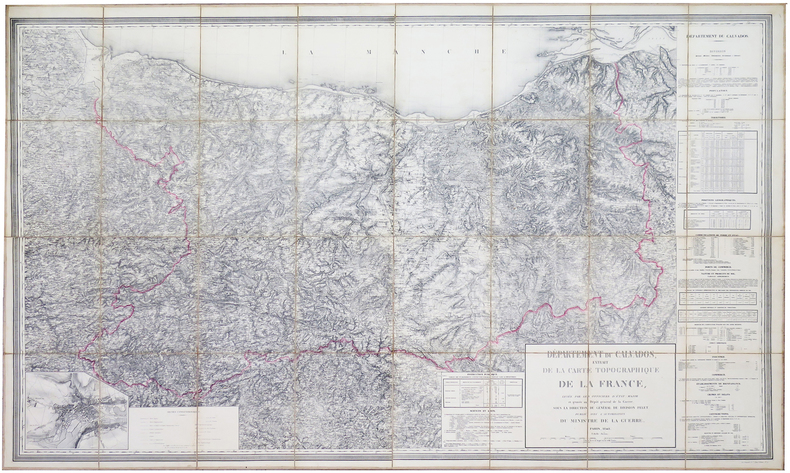
1848LBW-6015Paris, Heuguet, 1848. En 32 sections montées sur toile et pliées, formant une carte de 1,22 x 1,98 m, sous chemise de papier marbré ; étiquette de l'éditeur au dos.
055755Paris Calmann-Lévy 1959 in 4 (27,5x21,5) 1 fort volume broché en faux-feuillets sous couverture rempliée, chemise et étui, 317 pages 2; avec une lithographie originale d'après un dessin de Marc Chagall en frontispice ( Frontispiece lithograph by Marc Chagall, printed in black and grey ). Marc Chagall, 1887-1985. Traduit du hollandais par Tylia Caren et Suzanne Lombard, précédé d'extraits de lettres inédites adressées à M. Otto Frank. Nouvelle édition de la traduction française. Tirage limité, celui-ci un des 470 exemplaires numérotés sur vélin d'Arches ( one of 470 copies printed on vélin d'Arches, from the total edition of 495, on Arches wove paper ). Bel exemplaire ( Photographies sur demande / We can send pictures of this book on simple request )
In 8°, br. edit. ill. a col., pp.246-(2nn). Ediz. orig. assai rara. Con tavv.f.t. su carta patinata + schizzi cartografici che illustrano i movimenti dello scontro fra nazionalisti e repubblicani nella Guerra Civile.
In-4°, (8), 135pp, numerose illustrazioni, legatura in pergamena, titolo manoscritto al dorso. Il Discorso inizia con un proprio frontespizio, marca editoriale (Pace: sensum exuperat omnem). Lieve restaura a una carta. In-4 °, (8), 135pp, numerous illustrations, vellum binding, manuscript title on the spine. The Discorso begins with its own title page, printer’s mark (Pace: sensum exuperat omnem). One leaf slightly restored.
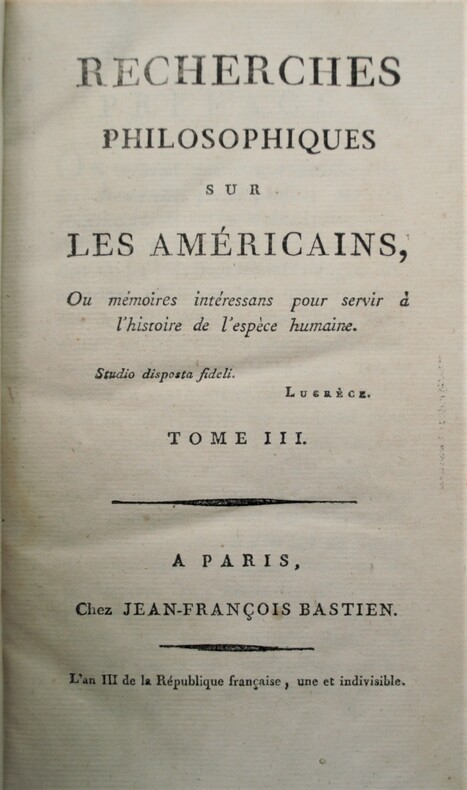
1795PHO-1044Paris : Bastien, An III. (1795) 7 volumes in-8 ; AVEC , PAUW recherches philosophiques sur les Américains , An III , 3 volumes in-8 , XIV-421pp, 475pp,482pp. AVEC : PAUW : Recherches philosophiques sur les Égyptiens et les Chinois. Paris : Bastien, An III, 2 volumes in-8, carte dépliante (déchurure sans manque), XVIff,472pp , 466pp; AVEC : PAUW : Recherches philosophiques sur les Grecs. Paris : Bastien, An III, 2 volumes in-8 , XVI-400pp,366pp . Reliure d’époque en basane marbrée, dos lisse orné avec titre et tomaison , quelques manques de cuir , petit travail de ver sur 10ff ,Tome 1.
1833PHO-1493Paris, Arthus Bertrand, 1833. — 3 volumes in-8, 210x130, et un Atlas in-4, 305x235 : XV, 286 pp., 1 carte ; (2 ff.), 326 pp.; (2 ff.), 439 pp.; (2 ff.), 30 pl. pour l’Atlas. Texte : Demi basane bleue, dos lisse orné avec auteur et titre, tranches mouchetées, plats légèrement frottés, petites rousseurs, accompagné de son Atlas, Titre, explication des planches et 30 planches, relié plein papier bleu, dos lisse avec auteur, titre et tomaison, frottements, trace de réparation, mouillure angulaire, quelques rousseurs.
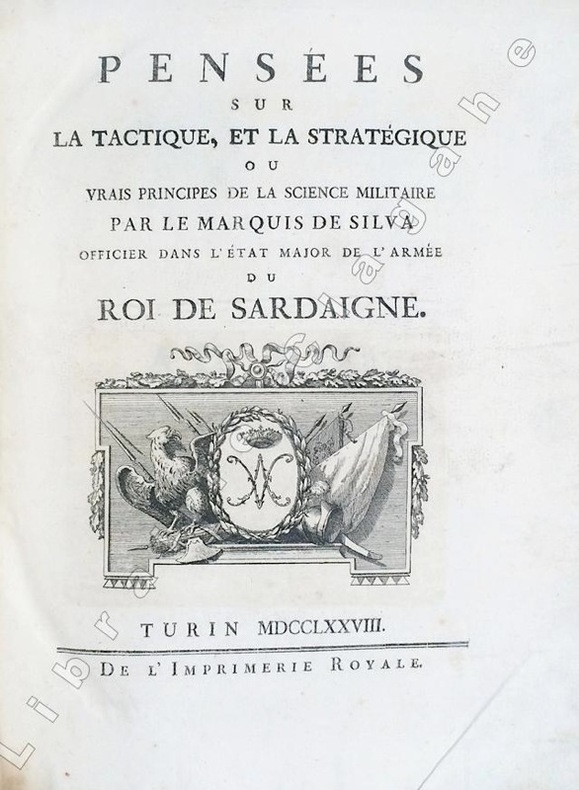
17786494Turin, Imprimerie Royale, 1778 ; in-4 ; demi-veau glacé havane, dos à faux-nerfs dorés et palettes décoratives, pièce de titre vert-pistache, tranches mouchetées de bleu (reliure de l'époque) ; (14), 359, (1 bl.) ; (4), 55, (1) pp. et 30 planches gravées dépliantes.SUIVI DE : "CONSIDERATIONS SUR LA GUERRE DE 1769 ENTRE LES RUSSES ET LES TURCS. Nouvelle édition corrigée et augmentée de plusieurs notes historiques."
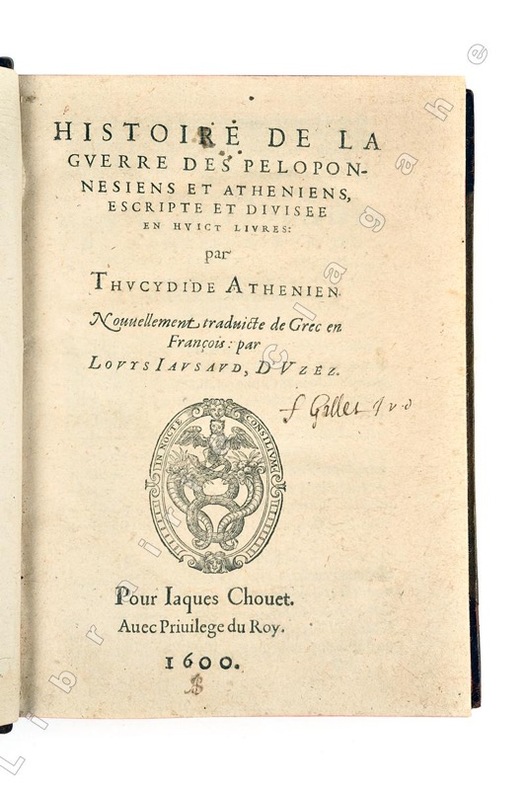
160020037[Genève], Iaques Chouet, 1600; marque de l’imprimeur au titre avec la devise “In nocte consilium” ; in-4, demi veau fauve à coins, dos lisse, pièce de titre grenat décoré, tranches rouges (reliure ancienne) ; [12], XIV, [1] f. blanc, 551, [1] bl., [23-1 bl.] ff. ; Col. 4, 2, -, A-Z, AA_ZZ, AAA-ZZZ, a-c4.
59 pages. Author's signature and inscription atop half-title page. Reflets de guerre et d'exil. Text in French. Above-average but not excessive wear. Top corner of front cover clipped. Some library markings. Book
pp. ix, 326. Index. Bibliography. Black and white reproductions of photos. Diagrams. "Now, for the first time, the insider's view of the Enigma story and other clandestine operations is revealed by Gordon Welchman, a top British mathematician who was largely responsible for the crucial achievements at Bletchley Park in the first months of WWII. Goes beyond Bletchley to show how the lessons learned from Germany's errors in using the Enigma codes can - and must - be applied to the use of military communications today." - dust jacket. Book clean, bright and unmarked with very light wear. Moderate wear to dust jacket now preserved in Brodart. A quality copy of this essential cryptographic chronicle. Enser p.75. Book
186634908Philadelphia: J.B. Lippincott & Co. 1866. 2 volumes. First Edition. 8vo publisher’s original brown cloth gilt lettered and gilt ruled on the spines. xii 392; 480 pp. An unusually nice set in the publisher’s original cloth binding. A fine and bright copy beautifully preserved Internally sturdy and sound. SCARCE FIRST EDITION AND AN UNUSUALLY FINE COPY THE BEST WE HAVE SEEN. With recommendations from influential southerners including a memorial from John Tyler and members of the Virginia secession convention to Jefferson Davis Jones was able to secure employment as a high-ranking government clerk in the Confederate States War Department at the first Confederate capitol in Montgomery. When the Confederate government moved to Richmond Virginia his family joined him. From the first day of his flight from the North Jones kept a diary to preserve the details of these eventful times for future publication.<br> After the war Jones and his family returned to his home in Burlington New Jersey and prepared his manuscript for publication. In 1866 it was published as A Rebel War Clerk's Diary at the Confederate States Capital. <br> The published diary is one of the best sources of everyday life in Richmond during the war; also with details concerning the inner workings of the War Department. James I. Robertson Jr. has called him "The Civil War's Most Valuable Diarist." <br> John Beauchamp Jones 1810 –1866 was a novelist particularly of the American West and the American South whose books enjoyed popularity during the mid-19th century. He was also a well-connected literary editor and political journalist in the two decades leading up to the American Civil War. During the war he served as a senior clerk in the Confederate War Department and is today remembered for his diary as offered here. J.B. Lippincott & Co. hardcover
Very Good Turkish, Ottoman (1500-1928) Original illustrated wrappers. Chipping on top edge and front cover. Occasional foxing on pages. Overall a good copy. Roy. 8vo. (23 x 15 cm). In Ottoman script (Old Turkish with Arabic letters). 103 p., b/w plates (19 unnumbered b/w plates and 1 map). First edition of this extremely rare first-hand and historically significant eyewitness account of the Syrian and the Suez Canal Operations during the Great War by an Ottoman soldier and statesman. Erden describes in this book his return to Istanbul after his military attaché duty in Paris and his departure to Damascus to join the 4th Army in Syria under the command of Cemal Pasha (1872-1922). He then discusses the Arab Revolt in Hejaz and its possible effects on the Ottoman Empire (The Arab Uprising was initiated by Sharif Hussein bin Ali in June 1916 during the Great War with the aim of creating an independent and united Arab state comprising of Aden in Yemen and Aleppo in Syria against the Imperial Ottoman). After disclosing his views and the actions of the army in the region, he goes on to describe Jerusalem, the Suez Canal, and the wars that took place there. Erden gave new information on the reasons and results of the Canal operation, the condition of the Turkish army along Palestine and Syria fronts, the relations among the Turkish staff, and the nature of the Arab revolt through his views and observations in Egypt, Palestine, and Syria fronts accumulated as he was Cemal Pasha's chief of staff. Erden was a Turkish soldier and war historian. After graduating from the Military Academy in 1903, he worked in the units and headquarters in Yemen, as the staff of the 3rd Corps in the Balkan War and as the Paris Military Attaché. During the Great War, he served as the Chief of Staff of the 4th Army within the entourage of Admiralty Minister Cemal Pasha in Syria. Özege 16174. Kursun p. 51.
Very Good Persian First Edition of this extremely rare bilingual tractate including Prince Reza Khan's thoughts on Anglo-Persian agreement in1919. Mirza Reza Khan also known as Prince Rezâ Arfa', was a diplomat and poet of the late Qajar period who serviced in Constantinople. During his years of service abroad Reza became acquainted with a number of European political leaders. He was reported to entertain Russian sympathies and was certainly instrumental in negotiating the first Russian government loan to Persia, in 1317 / 1900. Nevertheless, he also appears to have supported the Anglo-Persian Agreement of 1919. In 1332 / 1914 he served as minister of justice (wazîr-e 'adlîya) in Tehran for about a year. This agreement in 1919 was a provisional agreement made between the British and the Persian governments which, if ratified, would have granted the British a paramount position of control over the financial and military affairs of Iran. From the days when Napoleon conceived the idea of invading India with the help of Alexander I, the Tsar of Russia, Great Britain contemplated with apprehension the invasion of India by Russia via Persia and Afghanistan. Under the Anglo-Russian Convention of 1907 (q.v.), which divided Persia into rival spheres of influence, southern Persia was assigned to Britain while Russia controlled the northern portion. Later, according to the terms of "The Secret Treaties of Constantinople" of 18 March 1915, Constantinople was promised to Russia, and England was allowed to incorporate within her sphere of influence the neutral zone of Persia. (Source: Encyclopedia Iranica). Original wrappers. Slightly chipped on extremities and occasionally foxing on cover. Otherwise a very good copy. Roy. 8vo. (23 x 16 cm). Bilingual in Persian and Ottoman script. [34] p., 7-18 pp. text in Persian, 19-34 pp. translation to Ottoman Turkish, a portrait of Prince Mirza Riza Han with a printed signature and inscription, and facsimile litho page of his manuscript poem in his calligraphy. Turkish chapter is in nashkh, Persian chapter is in taliq script. Lithography. Not in OCLC.; Özege 25155.; TBTK 8061. First Edition. Extremely rare.
AQ14084St. Petersburg and London: s.n. 1856-58 Manuscript on paper. 52ff the remainder unused. Contemporary red sheep ruled in gilt and lettered 'COMPTE GENERAL' to upper board. Marbled endpapers and edges. Some rubbing to spine extremities small hole to upper joint. With: Three others manuscript notebooks related including one in a contemporary Russian binding with cyrillic lettering The manuscript account book of John Wodehouse 1st Earl of Kimberley 1826-1902 British liberal politician and sometime Lord Lieutenant of Ireland for the duration of his time as Minister Plenipotentiary to St. Petersburg in the immediate aftermath of the Crimean War. Included amongst the lavish ambassadorial household expenses are details of his journey to St. Petersburg and a note of his departure in May 1858. Provenance: From the recently dispersed collection of Ron Fiske Morningthorpe House with his neat shelf-labels to endpapers. . Folio. [s.n.], 1856-58 unknown
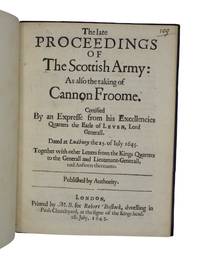
1645AQ22725London: Printed by M. B. for Robert Bostock 1645. 2 6pp. Modern navy morocco lettered in gilt to spine T.E.G. Marbled endpapers early alternate manuscript pagination to upper corners. With a loosely inserted letterpress receipt from bookseller Frank Hammond addressed to Lord Cottesloe acknowledging payment of £12 for the book in 1961. The sole edition of a decidedly uncommon news-book account of the actions of the Army of the Solemn League and Covenant - led by veteran Scottish Army officer Alexander Leslie 1st Earl of Leven c.1580-1661 - in the summer of 1645 reporting most particularly on their taking of a royalist garrison within the moated house at Cannon Froome Herefordshire. Following the defeat of a Royalist rebellion against the Covenanting-led Scottish Government in the Spring of 1645 the Scottish army of the Solemn League and Covenant - named after the 1643 treaty between the reforming parliaments in England and Scotland- led by the Earl of Leven marched south to assist their allies. As this news-book reports a 'party of 4500 Horse Foot and Dragoons' en route to Hereford became aware of a Royalist garrison led by 'Governor Colonell Barnold' in the small Herefordshire village of Castle Froome. After the Royalist commander refused to surrender the moated house which had been reinforced with Irish volunteers after the battle of Newark Leven the 'Lieut. Generall.gave order for storming the place'. The heat of the battle is described thus from a purely Roundhead perspective: 'The Grasses were about nine foot deep and as broad and in most places full of water; The Works above the Grasses were so high that all the Ladders we could get were too short; the Enemy behaved themselves valourously but it pleased the Lord to give our Souldiers to much courage that after a hot dispute they were beate from their works after which they fled to the house where they fought desparately till a great part of them were killed. We lost about 16. and 24. are wounded; of the Enemy were killed about 70. Colonell Barnold deadly wounded Captain Briskoe Capt. Houke & thirty others taken Prisoners.' ESTC records copies at just seven locations in the British Isles Advocates Library BL Hereford Cathedral Newcastle NLS Oxford Trinity College Dublin and just three further elsewhere California State Harvard Texas and Yale. Provenance: Recently dispersed from the Cottlesloe Military Library 'probably the most extensive private collection of early printed books focused on military matters'. ESTC R200176 Thomason E.294 Wing L557. First edition. Quarto. Printed by M. B. for Robert Bostock unknown
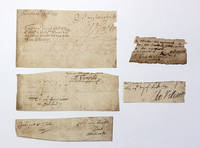
1650031291UK 1650. First Edition . Paper. Very Good. 48mo - over 3" - 4" tall. A group of 5 Ink Signatures of Royalist soldiers who fought in the 1st Civil War. They include 2nd Viscount Molyneux of Maryborough George Monck 1st Duke of Albemarle Sir William Compton General William Legg; Edward Villiers and Guilford Slingsby. Dated between 1640/1680. All removed from various paper documents and comprising signatures of: Richard 2nd Viscount Molyneux of Maryborough c. 1617-1654 'R. Molyneux' signed at the foot of a small piece with text in another hand being a list of supplies and countersigned by Corporal Griffith Standen; George Monck 1st Duke of Albemarle 1608-1670 'Albemarle' on an irregularly trimmed piece dated 4 February 1660; Sir William Compton 1625-1663 'W. Compton' written at the foot of a possible autograph sentiment sent to General William Legg; Edward Villiers 1620-1689 'Edw. Villiers' on a small piece dated 29 April 1680; Guilford Slingsby 1610-1643 'Gylf. Slyngsby' on an irregularly cut piece with autograph sentiment 'your loving friend' Richard Molyneux 2nd Viscount Molyneux of Maryborough about 1617-1654 was a Royalist officer in the English Civil War. Molyneux was present at the siege of Manchester in September 1642 and on 20 April 1643 was defeated by Captain Ashton at Whalley. After the surprise capture of Wakefield on 21 May 1643 the Earl of Derby being then with Queen Henrietta Maria at York Molyneux was ordered to conduct the Lancashire forces thither. He was defeated on 20 August 1644 by Major-general Sir John Meldrum at the battle of Ormskirk and narrowly escaped capture by hiding in a field of corn. He was at Oxford on 24 June 1646 when the city surrendered to the Parliament. George Monck 1st Duke of Albemarle 1608 -1670 was an English military officer and politician who fought on both sides during the Wars of the Three Kingdoms. A prominent military figure under the Commonwealth his support was crucial to the 1660 Stuart Restoration of Charles II. Sir William Compton 1625 - 1663 was an English royalist army officer. He earned the name of the "godly cavalier" in 1648 from Oliver Cromwell for his conduct at the siege of Colchester. William Legge 1608 - 1670 was an English army officer and politician who was a close associate of Prince Rupert of the Rhine. On the outbreak of the First English Civil War Legge joined the king's army and was taken prisoner in a skirmish at Southam Warwickshire on 23 August 1642. Committed by the House of Commons to the Gatehouse Prison he escaped about 4 October 1642 and rejoined King Charles at Oxford. Henceforth he closely attached himself to Prince Rupert and was wounded and again taken prisoner while under his command at the siege of Lichfield in April 1643. At the Battle of Chalgrove Field on 18 June 1643 he was temporarily taken prisoner on the field. After the first Battle of Newbury 20 September 1643 the king presented him with an ornate hanger and wanted to knight him. On 19 May 1644 Prince Rupert appointed him temporary Governor of Chester. Guilford Slingsby 1610-1643 was a member of the Yorkshire gentry who was confidential secretary to Thomas Wentworth 1st Earl of Strafford and present during the trial which ended in his execution in April 1641. Slingsby sat in the Parliament of Ireland as Member of Parliament for Carysfort from 1634 to 1635 and during Strafford's period as Lord Deputy of Ireland was appointed to several administrative posts. When the First English Civil War began in August 1642 he raised a regiment for the Royalist army in Northern England; he was badly wounded in a skirmish near Guisborough on 16 January 1643 and died three days later. Some occasional spotting age toning and paper sizes 11 x 18.5 cm and smaller. Ref19239 <br/> <br/> unknown
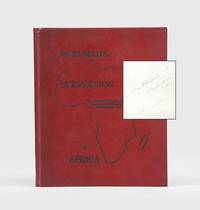
1966179873Accra: Ministry of Information 1966. First edition presentation copy inscribed by the chairman of the Ghanaian National Liberation Council on the front pastedown "Joseph Arthur Ankrah Chairman N.L.C. Ghana. With compliments." Above the inscription is the book label of Malcolm MacDonald a former British high commissioner in Ghana and Whitehall's Special Representative to East and Central Africa 1965-70. During the second half of the 1960s MacDonald worked closely with Ankrah to try and bring conflicting parties in the Nigerian Civil War to the negotiating table. He also made a favourable impression on senior leaders of communist China whose deep-rooted political and practical support for Nkrumah is documented in this accusatory publication. According to Premier Zhou Enlai MacDonald was "the only capitalist we can trust" New York Times. Quarto. Tables and illustrations in text. Original red cloth front cover blocked in black. Cloth darkened in place light rubbing to extremities offsetting on title page: very good. "Malcolm MacDonald British Envoy and Son of Ex-Prime Minister" New York Times 12 January 1981. hardcover
1914GT102London: His Majesty's Stationery Office 1914. 1st Edition . Hardback. Fine. 16mo. 171; 80pp. 14cms Part 2 has 80 leaves each printed on one side only. The facing pages are all unmarked.Figures throughout and folding plates.Boundin the original satin weave cloth with the original pasted paper lavel to the spine. All fine. 40 War Office 2054/ 40 W.O. 1893. The first part was published in May 1914 and the second part in June 1914 and in cludes Military Wing in the title. The adverts found in the original paper issues are lacking in this part 1 and 2 binding. 14x11cms. <br/> <br/> His Majesty's Stationery Office hardcover
1919147489Tbilisi: no stated publisher February 1919. First edition of this rare book of satirical sketches showing British forces and the locals during the occupation of Batumi an oft-overlooked conflict in the final year of the war. There are cartoons of Gurkhas Chinese Punjabis Turks and Cossacks reflecting the wide diversity of people involved in the conflict. We have traced only two other copies at the Imperial War Museum and the Museum of Modern Art. Batumi the capital of the region of Adjara in southwest Georgia changed hands multiple times in the immediate aftermath of the First World War. First it was controlled by the Russian Empire until the October Revolution where the Treaty of Brest-Litovsk transferred the region to the Ottomans. However the Transcaucasian Federation opposed this deal and Ottoman forces proceeded to invade in April 1918. After the defeat of the Ottoman empire in the First World War 3000 men from one British and two Indian battalions part of the Army of the Black Sea were sent to supervise their withdrawal in December 1918. The 1st Battalion Cameron Highlanders were present in this conflict as part of the 27th Division and the large number of Scottish soldiers pictured in these cartoons indicate that perhaps Baxley was one of them. The region was eventually ceded to the newly independent state of Georgia in 1920. The loosely inserted photographs show a cafe in Batumi the Bosporus a farewell party among soldiers of the Royal Flying Corps the British Army HQ in a bombed-out street and the locals. Octavo. Cartoon illustrations printed on recto of 14 leaves. With 10 loosely inserted gelatin silver prints approximately 85 x 118 mm 3 captioned in pencil on verso 3 numbered in pencil on verso. Original brown paper wrappers wire-stitched as issued front wrapper lettered and decorated in black. Wrappers chipped and loose at lower staple spine separated but holding contents browned; photographs a little bowed and silvered: a very good copy. Rowell & Wye 217. unknown
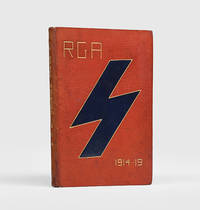
1919189318Fareham: Henry Coles Printer 1919. First and only contemporary edition privately printed and subsequently rare here in a fine period binding with two original sepia-toned gelatin silver prints mounted on preliminary blanks: one a group portrait of officers and NCOs is reproduced in half-tone in the book; the other shows a gun team limbered up and pulling what appears to be a 60-pounder. Among the first recruits to Kitchener's Army 9 Heavy Battery deployed to France in May 1915 and served on the Western Front until the end of the war. It was at Armentières Arras Somme and Festubert. In the winter of 1916-17 it joined 77th Brigade. Posted to the Chemin des Dames in 1918 it was mauled and overrun during the German Spring Offensive losing its guns but was re-equipped in time to join the Hundred Days Offensive This succinctly comprehensive account includes a "battle log" listing of wagon lines appreciations from High Command honours and awards casualties brief service histories of officers and names and addresses of NCOs and other ranks. We trace just four copies institutionally at the Imperial War Museum Alex Turnbull Library New Zealand US Army War College and Toronto Public Library. Octavo 210 x 125 mm 54 pp. With 5 half-tone photographic plates. Title page within a decorative border. Contemporary reddish brown morocco gilt-lettered spine and front cover the latter with the unit's "lightning bolt" insignia in a gilt-edged dark blue sheep onlay marbled endpapers. Binding slightly bowed a few marks to covers some leaves toned: very good. unknown
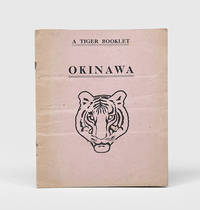
1945165899No place or publisher: 1945. First edition first printing of this guide issued to members of the RAF's heavy bomber Tiger Force during the preparations for Operation Downfall. Of the 5500 copies originally printed none are now found in institutional collections. Victory in the Battle of Okinawa gave the Allies a foothold in the Pacific from which they could mount offensives against the last surviving Axis combatant. For the planners of Operation Downfall air superiority was a key tactical advantage. In early July 3000 personnel were therefore reassigned from RAF Bomber Command Europe to the newly formed Tiger Force ready to conduct sorties into Japan's Asian possessions and support an offensive push on the ground. Preparations for Downfall occurred alongside planning for a nuclear attack and after Japan's unconditional surrender in August Tiger Force was wound down. The booklet provides an overview of Okinawa's history populations climate and culture. Personnel are given advice on disease prevention personal hygiene and options for recreation. As the final page notes "you will no doubt have gathered by now that Okinawa Jima is not altogether an earthly paradise. On the other hand it might be vastly worse and it is a great deal better than the jungles of Burma and New Guinea" p. 6. Square octavo pp. 6. Folding map of Okinawa map in text. Original pink wrappers wire-stitched as issued front cover lettered in black with tiger vignette. Faint contemporary ownership inscription on front cover. Two old horizontal folds throughout wrappers a little toned occasional foxing internally folding map bright with horizontal fold to upper part. A very good copy. unknown
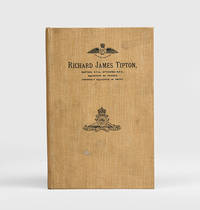
1918184775No stated place: privately published c.1918. First edition with a loosely enclosed autograph letter signed from Tipton's mother: "Dearest Maggie: I am sure you and Charlie would like this little remembrance of Dick - so hope you will accept it with our love. Yr. loving cousin Mary Tipton." Only one copy is held institutionally Imperial War Museum. Mentioned twice in despatches Tipton 1892-1918 served with the Royal Field Artillery on the Western Front and was then transferred to Egypt with the Royal Flying Corps in 1916. Shot down during a bombing raid over El Arish he was taken prisoner by Ottoman forces and imprisoned for 14 months in Kastamonu. His daring escape in the company of two other imprisoned officers was profiled in a May 1918 issue of Blackwood's Magazine two months after Tipton's death in France. This volume includes the text of the Blackwood's article and copies of letters of tribute sent to Tipton's parents by commanding officers and comrades. Several additional printed tributes are loosely inserted. Octavo. Half-tone frontispiece portrait of Tipton 14 plates. Original brown cloth front cover lettered in black between badges of Royal Flying Corps and Royal Artillery edges gilt. A few marks on cloth and internally: near-fine. hardcover
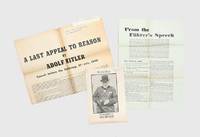
19401867851940. Three leaflets dropped by German planes over Britain in 1940 - two comprising Hitler's speeches to the Reichstag appealing for Britain to make peace and an anti-Churchill "wanted" poster mock-up. The "wanted" poster uses one of the most famous images of Churchill holding a Tommy gun and smoking a cigar. The verso of the leaflet claims "This gangster who you see in his element in the picture incites you by his example to participate in a form of warfare in which women children and ordinary civilians shall take leading parts. This absolutely criminal form of warfare which is forbidden by the Hague Convention will be punished according to military law. Save at least your families from the horrors of war!". "Goebbels had thousands of the leaflets dropped over Britain. He ceased the program within two weeks when he realized the image was only boosting Churchill's popularity among Britons" Manchester & Reid p. 190. That summer the Germans targeted more than one hundred towns and cities with leaflet raids hoping to force Britain to make peace and depose Churchill. Later that year they switched to bombing effectively ending their peace efforts. Only a tiny proportion of copies survives: many landed in streams or trees while police and air-raid wardens retrieved others for wastepaper drives. The leaflets are stored in an envelope with a note that the owner J. Cahill was then serving with the Ministry of Home Security; one is stamped "Intelligence Branch" and another has a later note "German leaflet dropped during the Battle of Britain". Three leaflets varying sizes. Slight toning and minor peripheral chips Last Appeal with contemporary appeal to save paper attached. In very good condition. William Manchester & Paul Reid The Last Lion: Winston Spencer Churchill Defender of the Realm 1940-1965 2012. unknown