[MANUSCRIT]Livre Rare Book
30 333 résultats
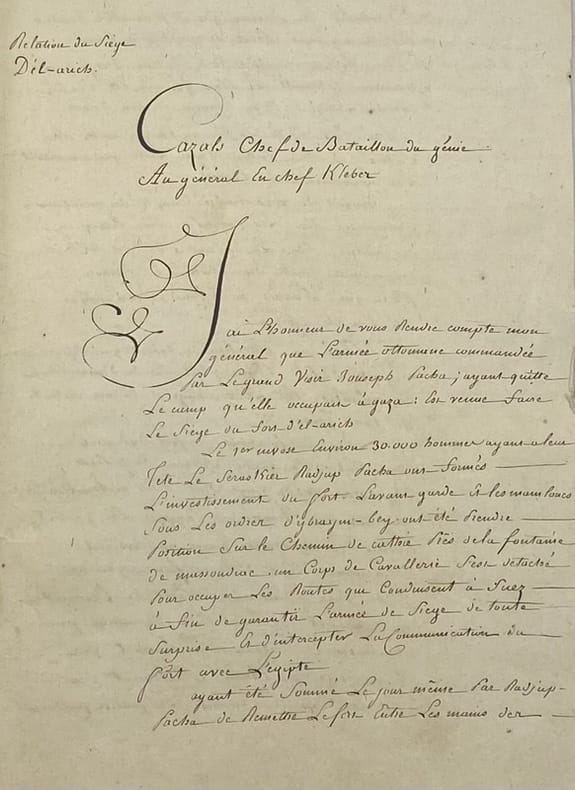
216041S.l., s.d. (1726) 2 vol. in-4, titre, 155 ff., ff. 47-49 reliés par erreur après 51, avec 12 tableaux dépliants hors texte ; titre, 137 ff. (avec de nombreuses erreurs de chiffrage), avec 29 pièces dépliantes hors texte, manuscrites ou imprimées, écriture moyenne et d'une lisibilité variable (environ 30 lignes par page), basane brune granitée, dos à nerfs cloisonnés et fleuronnés, tranches mouchetées de rouge (reliure de l'époque). Dos légèrement frottés.
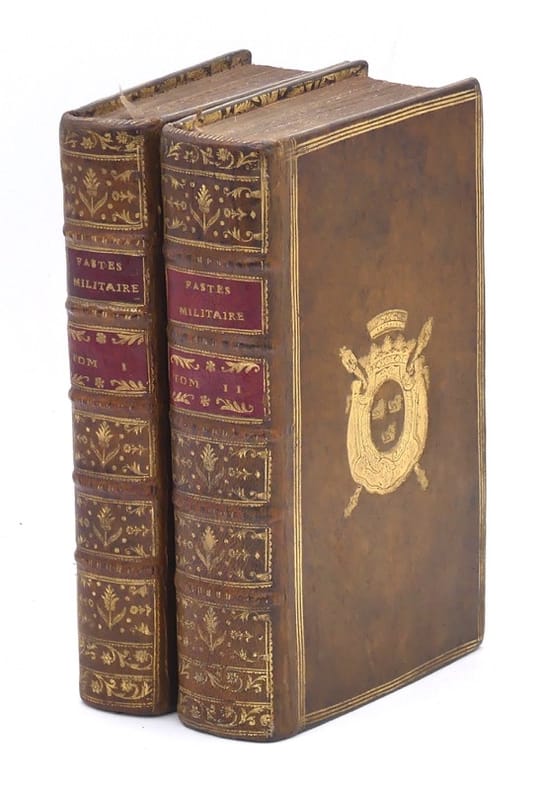
233862Paris, Alexandre Jombert Jeune (de l'Imprimerie de François Ambroise Didot l'aîné), 1783 2 parties en un vol. in-4, [7] ff. n. ch. (faux-titre, titre, dédicace, table), 116-60 pp., un feuillet non chiffré (approbation et privilège), avec une belle vignette en-tête héraldique en couleurs, et 11 très belles planches dépliantes insérées sur le mode de collettes summitales, très finement gravées et colorisées par Louis-Martin Bonnet, sous serpentes, légendées chacune d'un feuillet de texte ; exemplaire dans lequel il y a interversion alternante des ff. 33-34 à 39-40 de la première partie, sans manque, veau fauve écaille, dos lisse orné, tranches marbrées (reliure de l'époque). Mors restaurés.
209874La Haye, Hendrik Hond, 1632 in-folio, [4] ff. n. ch. (titre gravé avec grande figure allégorique, dédicace aux Etats des Provinces-Unies, au lecteur, privilège et table des planches), 21 pp., puis pp. 21-65, [2] pp. n. ch. de table des matières, avec 26 figures gravées dans le texte (dont une avec collette dépliante), et 10 planches hors texte (9 à double page ou en dépliant montrant les différents cantonnements de l'armée, un plan à simple page entre les pp. 64 et 65, non signalé à la table des figures), réparation de papier angulaire f. 39-40, veau blond à l'imitation, dos à nerfs orné de caissons dorés, grand encadrement de guirlande, pointillé, triple filet dorés avec larges décors floraux en écoinçon sur les plats, double filet doré sur les coupes, tranches dorées, dentelle dorée en encadrement sur les contreplats (Ch. Weill, Orléans).
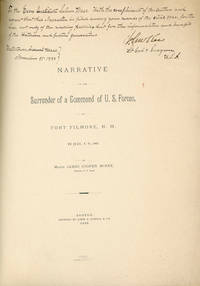
188647058Boston: Printed By John A. Lowell & CO. 1886. 1886. First edition. 11" x 8 3/4" Original plain stapled wrappers 32 pp. introductory maps index. Third edition according to Howes M125 and the only edition with maps. He also notes 300 copies printed but only a few have been on the rare book market. AE locates only the 1960 Houston edition and only one copy of the 1886 edition in 1922. Eberstadt’s had a copy of the 1886 edition in 1954. In our copy there is a long presentation note to Essex Institute Salem Mass.: "With the compliments of the author and request that this narrative be filed among your records of the Civil War for the use not only of the reading public but for the information and benefit of the Historian and future generations." Graff 2621. Nicholson p.586. Nevins I p.126: "Important only because it recounts a singular and unknown event in an isolated region." Tis book includes eye-witness accounts of the battle at Old Mesilla the first clash in the far west between Union and Confederate forces. In July 1861 Texas Confederates hit the Union outpost at Fort Filmore 40 miles north of El Paso. Under the command of Major Isaac Lynde the fort was surrendered after very little resistance and McKee a young Union surgeon privately published this bitter account. The first edition was printed in very small quantities for friends. This edition is the best edition and a well written account. McKee added an index and two maps not found in the first or second editions. All are very rare. A faint library stamp to the top corner of the front cover minor chipping and nicks to the cover fore-edges else a near fine tight copy. Printed By John A. Lowell & CO., 1886. unknown
185751098ABBerlin, Ferd. Dümmler's Verlagsbuchhandlung, 1857-1863. 8° (21x14), XXIV,318 S., 1 Bl.; VI,386 S.; VI,330 S.; (VI),297 S., mit mehrfach gefalteter lit Karte; (IV),463 S.; VI,339 S.; XII,404 S., mit 1 mehrfach gefalteten gestochenen Karte und 1 mehrfach gefalteten Tab.; VI,194 S.; XX,235 S.; VIII,296 S., einheitl marmor Hlnbde d.Zt mit goldRTitel, 10 Bände in 10 [so komplett], [4 Warenabbildungen] 2. Aufl. unveränderter Abdruck kleiner Besitzvermerk, teils etwas stockfleckig, gelegentliche Marginalie von alter Hand, gute gepflegte Exemplare,
221827S.l., s.d. (vers 1860) in-4, titre (détaché), 202 pp., couvertes d'une écriture fine, régulière, extrêmement soignée (environ 25 lignes par page), présentant aussi des notes infra-paginales de la même main, des biffures et ajouts au crayon de bois semblent postérieurs à la rédaction, de même que quelques ajouts marginaux à l'encre d'une autre main, demi-chagrin Bradel bouteille, dos muet orné de filets à froid, encadrements de filets à froid sur les plats de toile chagrinée, titre poussé en lettres dorées au centre du plat supérieur, tranches jaunes (reliure de l'époque). Plat supérieur un peu taché.
239499S.l., 1914 - 1917 7 carnets in-16, in-12 ou in-8, [759] ff. n. ch. [Cahiers II-VII] ; 287 pp., avec 2 ff. différents chiffrés 167-68 [Cahier VIII], percaline ou toile noire, le tout dans une grande boîte (33 x 23 cm) de demi-toile verte (reliures de l'époque).
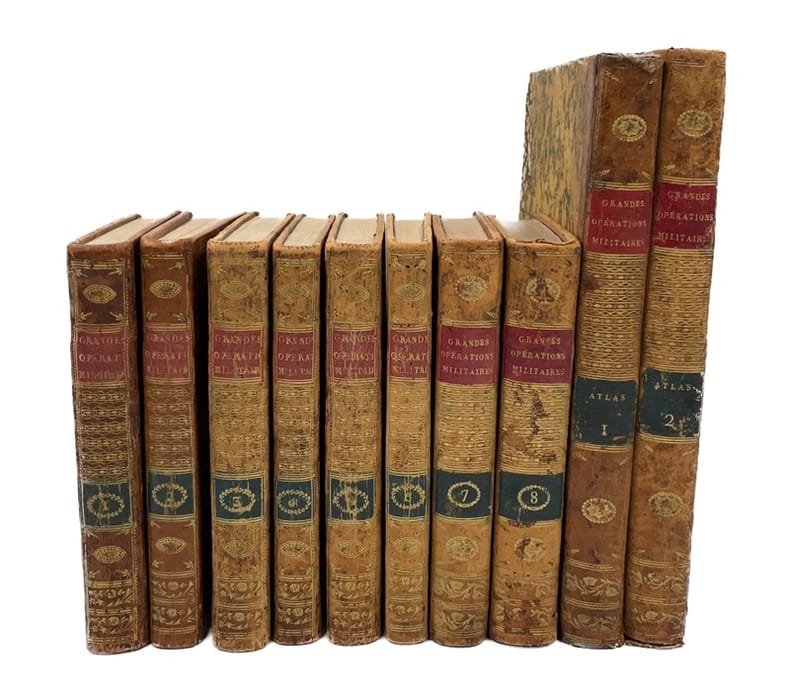
239762À Paris, Chez Magimel, 1811-1816 8 vol. in-8 et 2 atlas in-4, nombreux tableaux dépliants h.-t. représentant les ordres de batailles, rehauts de couleurs à certaines cartes, basane fauve, dos lisse orné (reliure de l'époque). Petites usures.
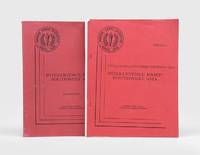
179352Washington DC & Arlington Virginia: Specialized Skill Training Department Marine Corps Institute 1998 & 1991. Preparing the USMC for desert warfare A scarce set of training and examination manuals with exercise questions completed by an unknown marine. They are a basic introduction designed to familiarize the corps with desert warfare terrain and the cultures and histories of the Middle East. We have traced no records of a two-volume set. The US army had little experience of desert warfare prior to the Gulf War 1990-91. "For many years US doctrine failed to address desert warfare. During World War II US forces suffered heavy losses in the opening phase of the North Africa Campaign 1942-43. Stung by these defeats American forces learned quickly and fared somewhat better later. After the war American military doctrine focused on the defence of Europe and desert warfare was again ignored" Chambers p. 212. Brief is a 10-lesson course "designed to familiarize the student with the terrain weather climate physical environment armed forces and the geopolitical and sociopolitical influences which apply to military operations in the area" p. i. It covers four units: "Introduction" "Military and Paramilitary Forces" "Terrorism" and "Culture Economics and History". Each unit is illustrated and includes a set of exercise questions which in this copy have been filled in. Readings was to be consulted alongside the Culture Economics and History unit of Brief. The 27 articles are mostly by Westerners such as John Bulloch Bruce Kuniholm Edward Mortimer William Polk and Maxime Rodinson. The Lebanese academic Fouad Ajami is an exception as is Palestine-US historian Rosemarie Said Zanian Edward Said's sister. The articles explain Saddam's actions in Iraq the history of Islam the Iranian Revolution Saudi Arabia's oil industry US policy in Palestine and many other crucial areas. Readings is the 1991 first edition of which only six copies are listed on WorldCat in American military institutions. Brief is the 1998 reissue listed with no known locations. 2 vols octavo. Illustrations maps and tables throughout. Original red paper wrappers. Brief: front wrapper lettered in black stapled without rear wrapper; Readings: spine and front wrapper lettered in black. Exercise questions in Brief sometime completed in pen answer key to Unit II exercises excised and loosely inserted answer key to Unit IV exercises missing. Wrappers creased and a little scratched light abrasions to wrapper edges of Readings old adhesive remains to p. 1 of Readings contents bright: a very good set. John Whiteclay Chambers The Oxford Companion to American Military History 2000. unknown
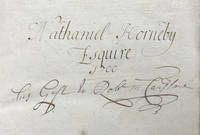
169757867<p>PEACETIME ARMIES ENABLE ABSOLUTISM - AN IMPORTANT DEBATE WITH ENDURING IMPLICATIONS - GIFTED BY A JACOBITE LONDON BANKER TO AN IRISH LANDOWNER</p><p>Collection of 5 items bound together on the issue of a Standing Army being:- <br /><strong>TRENCHARD John</strong> An Argument shewing that a Standing Army is inconsistent with a Free Government and absolutely Destructive to the Constitution of the English Monarchy.<br />London: Printed in the Year: 1697 4to. iv numbered v in error 30 2 advertisement & blankpp. . bound with<br /><strong>MOYLE Walter</strong> The Second Part of an Argument shewing that a Standing Army is inconsistent with a Free Government and absolutely destructive to the Constitution of the English monarchy. With remarks on the late published list of King James's Irish forces in France.<br />London: Printed in the Year: 1697 4to. 27 1 blankpp. . bound with<br /><strong>SOMERS John</strong> A Letter ballancing the Necessity of keeping a Land-Force in times of Peace: with the Dangers that may follow on it.<br />London: Printed in the year: 1697 4to. 2 blank 2 title 16pp. complete with preliminary blank . bound with<br /><strong>TRENCHARD John</strong> A Letter from the Author of the Argument against a Standing Army to the Author of the Balancing Letter.<br />London: Printed in the Year: 1697 4to. 15 1 blankpp. . bound with<br /><strong>FLETCHER Andrew</strong> A Discourse concerning Militia's and Standing Armies with relation to the Past and Present Governments of Europe and of England in particular.<br />London: Printed in the Year: 1697 4to. 2 30pp. <br />The five items bound together in contemporary mottled calf decorative blind tooled panels on sides marbled endpapers very small stain at outer top corner of the last two items small piece of shaved calf repair to the calf skin prior to binding flaked away near upper edge of rear board else a fine fresh copy. Contemporary signature on title of first item "Natt. Horneby" and inscribed on a preliminary blank leaf in a calligraphic hand "Nathaniel Horneby/ Esquire/ 1700" and below that probably at a slightly later date "his gift to Robt. Mc Causland".</p><p><br />1 Trenchard: ESTC r509611 WING T2110. This issue has a press-figure dagger only on leaf B1v and an advertisement on final leaf. Signature C2 is under the "ere is" of "there is". This edition is rare with ESTC locating 5 copies only 2 in B.L. 2 in Oxford & 1 other. See ESTC R16216 for another edition. Wing does not distinguish between the editions. <br />2 Moyle ESTC r177336 WING M3030 ESTC notes "The first part entitled An argument shewing that a standing army is inconsistent with a free government was written by John Trenchard and Walter Moyle. It is often thought Trenchard also assisted in the second part; however attributed solely to Moyle by BM Wing".<br />3 Somers ESTC r11547 WING S4642 <br />4 Trenchard ESTC r16213 There are 2 printings this one line 8 of title page has: 'Balancing'; there is no press-figure on p. 7; p. 15 has additional paragraph beginning: "Now Sir if a Parliament should subject all the Lands .". WING T2113 <br />5 Fletcher ESTC r5238 WING F1294</p><p>Following his invasion of England in 1688 the Glorious Revolution William of Orange became King William III and reigned jointly with his wife Mary. The English parliament's Bill of Rights of 1689 established a constitutional monarchy with extensive restrictions on the royal prerogative. One of those restrictions was that the Sovereign could not raise a standing army during peacetime without parliamentary consent. While William opposed such constraints he accepted them and chose not to engage in a conflict with Parliament. In the following years William was much engaged in European wars that ended with the Treaty of Ryswick in 1697.<br />The wars now over parliament to the king's displeasure decided to reduce the size of the army to 10000 men and later to 7000.<br />The ideological and political significance of the issue was argued out in a series of pamphlets of which these five are probably the most important on both sides of the issue. "The pamphlets . had a powerful effect upon the immediate controversy of 1697-99. The anti-army tracts moreover played a vital role in the formulation of an anti-army attitude which lived on in eighteenth century England and was transmitted along with many other ideas in liberal and republican seventeenth political thought to the American colonies. . Against the peacetime army were principally John Trenchard Walter Moyle Andre Fletcher of Saltoun the Rev. Samuel Johnson and John Toland. Arguing for the king's proposal were chiefly the lord chancellor John Somes and Daniel Defoe . Outstanding among the men who opposed the army was John Trenchard who may be regarded as the leader of the pamphleteers" Schwoerer.<br />Trenchard 1662 - 1723 educated at T.C.D. studied law in London and was a man of considerable wealth through inheritance and marriage. From initial support of the 1689 Revolution he became disenchanted with William and used his wide knowledge of sixteenth and seventeenth century republican political thought to oppose what he judged to be a potentially dangerous power grab by the monarchy. His Argument written in conjunction with Moyle the first pamphlet in this collection launched the debate and determined its parameters. Moyle's <em>Second Part</em> continued their argument. Somers apparently without great conviction argued for retention of a standing army and Trenchard in turn wrote a riposte.<br />Fletcher of Saltoun 1655 - 1716 Scottish writer patriot and politician had returned from European exile with William of Orange in 1688 but terminated his support when he judged that William also King of Scotland was only interested in using the country to help fight foreign wars. He like the other anti-army writers argued that history indicated a direct relationship between absolutism and a peacetime army. He perceived a decay in liberty around 1500 a product of economic and social changes that produced luxury and an abandonment of an old frugal military way of life. Such circumstances allowed defence of the realm to slip into the hands of princes who eliminated ancient rights and freedoms. England the last bastion of liberty faced following 'all the other kingdoms of Europe' along this path unless she avoided a standing army in peacetime.<br />Trenchard and his supporters the group of Whig religious political and economic reformers later sometimes Commonwealth men through their writings promoted republicanism in Britain. However while they were rejected in Britain their ideas were widely influential in British colonial America and on Republicanism in the United States.<br />Nathaniel Hornby or Horneby a London goldsmith and banker served as a Commissioner of Excise 1683 to 88 and in 1691. From the Restoration in 1660 to 1683 the state's excise was farmed out to investors willing to pay the government for the right to collect taxation. In 1683 a new group of Commissioners was chosen to be more efficient in collection than the foregoing. The Revolution of 1688/89 overturned the leadership of the excise branch and only 2 of the 7 Commissioners in office in Feb. 1688 survived a purge in April 1689 with most removed for political reasons. In 1684 when a remodelled department was considered "Sir John Somers whose influence was rising as the Whigs ascended recommended dismissal for virtually all of the commissioners. In particular he singled out Nathaniel Nornby and Thomas Aram who 'were such avowed Jacobites that there was nothing to be said for them'" Krenzke.<br />Nathaniel Hornby perhaps to provide himself with a bolt-hole far from London in the early 18th century rented a house and farm at Muff now Eglinton in Co. Londonderry from Ireland richest commoner and Speaker of the Irish parliament William Conolly himself a head tenant of the London Grocer's Company. Robert McCausland lived at Fruit Hill now Drenagh only a few miles from Muff and near Limavady. That estate was bequeathed to him on his death by William Conolly in 1729 and thereafter alternate eldest sons in the family were named Conolly. Modern McCausland family sources state that Robert was married to a daughter of Conolly but the latter was officially at least childless. Conolly did however support the families of his siblings which may be the connection. Evidently it was as neighbours that a rich London Jacobite banker came to know McCausland and present him with an important collection of pamphlets flagging the perils of creeping central power. From the inscription both men perceived the pamphlets as significant both in themselves and as a gift.<br />Lois G. Schwoerer 'The Literature of the Standing Army Controversy 1697-1699' <em>Huntington Library Quarterly</em> vol. 28 no. 3 1965 p. 187-212 <br />John Krenzke <em>Change in Brewing. Industrialization of the London Beer Brewing Trade 1400-1760</em>.</p> hardcover
172777(1800) , 28 pp. in-4 en cahier.
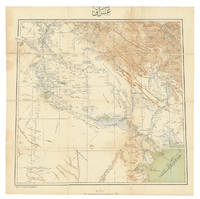
1915ABC_47201Istanbul: Erkan-i Harbiye-i Umumiye 1915. Colour-lithographed map of Iraq Kuwait and southwestern Iran 65.5 x 66 cm in black brown blue and green at a scale of 1:1000000 dissected into 12 sections and mounted on contemporary cloth. First edition of the first accurate Ottoman general map of Central and Southern Iraq Kuwait and Khuzestan southwestern Iran; the authoritative map used by the Ottoman army for strategic planning during the "Mesopotamia Campaign" where Ottoman-German forces mounted a unexpectedly strong resistance to Britain's invasion of Iraq in World War I. Examples of the present map were used by Ottoman commanders who oversaw the successful Ottoman-German defence of Baghdad at the Battle of Ctesiphon 22-25 Nov. 1915 as well as the capture of the main British army at the Siege of Kut-al-Amara 7 Dec. 1915-29 April 1916. It shows the tip of the Gulf and the Tigris and Euphrates vallies including Kuwait most of Iraq and Khuzestan province in southwestern Iran. Mountain ridges are rendered in brown with rivers and marshes in blue permanent bodies of water in green and parallels and meridians at every degree ranging from about 43.5 to 49.5°E longitude and 29 to 34°N latitude. With the text entirely in Ottoman Turkish the map is based on the British War Office's "Lower Mesopotamia between Baghdad and the Persian Gulf" 1911 which was itself in part based on Ottoman sources. Both maps were dramatically superior in all respects to previous efforts forming the culmination of over three generations of reconnaissance capped by critical late-breaking discoveries.Some light stains in the margins and the lower-right quadrant but generally in good condition. Very rare. [Erkan-i Harbiye-i Umumiye], hardcover
Ensemble de 15 volumes de format in 4° carré; reliure uniforme de l'époque en demi veau fauve richement orné; illustré de 179 planches gravées et numérotées (sur 193). Le volume XII est entièrement consacré à la vie de Confucius avec de superbes planches. Célèbre et monumentale histoire de la Chine dans tous ses aspects, militaires, agricoles, religieux, géographiques, généalogiques... Une encyclopédie sur la Chine à l'usage des Européens. Notre exemplaire ne comprend pas les planches hors texte des T. I et II; sauf le portrait frontispice du Tome I et présente donc 152 planches hors texte sur 166; ou 179 planches numérotées sur 193. Les tomes III à XV sont bien complets . Quelques petits défauts de reliure et travaux de vers intérieurs principalement en marge. Deux volumes de suppléments parurent en 1814. Curieuse signature manuscrite "Montgolfier" sur chaque page de titre. Voir les photos.
177910650Paris, Lambert, Valade et chez l’auteur, 1779. Deux volumes in-12 (164 x 96 mm), 2 ff. n ch., 12 pp., 499 pp. ; 2 ff. n ch., 687 pp., 4 pp. n. ch. Maroquin vert olive, triple filet doré sur les plats, armes au centre, dos à nerf orné de motifs dorés, filet doré sur les coupes, roulette sur les chasses, tranches dorées, gardes de papier décoré d'un semis alterné d'étoiles et de points dorés, mors légèrement frottés, charnière fendue sur 2 cm en pied du second volume et infime manque de cuir à la coiffe de queue, petite auréole sur la page de titre (reliure de l’époque).
209185La Haye, veuve Van Duren, 1760 in-4 oblong (20 x 27 cm), [32] ff. n. ch. de texte (titre, avertissement, journal des opérations) dans un bel encadrement de guirlande, 49 cartes chiffrées 1-56 (certaines planches regroupent plusieurs numéros, à savoir : 18-19-20-21 / 39-41 / 50-51), et enfin 4 dépliants (ordre de bataille de l'armée du maréchal d'Estrées ; carte des limites des Hanovriens ; plan du château d'Harbourg ; carte des cantonnements de l'armée du comte de Clermont), veau fauve marbré, dos lisse cloisonné et fleuronné, armes en pied, pièce de titre cerise, encadrement de simple filet à froid sur les plats, double filet doré sur les coupes, tranches rouges (reliure de l'époque). Restaurations aux coins et aux coiffes.
162165315Siena, H. Gori, 1621. Qu.-4°. Mit rad. illustr. Titel, einer rad. Portraittafel, einem rad. ganzs. Portrait, 54 blattgr. Radierungen. 2 Bll., 315 (recte 321) (1) S., Ldr. d. Zt. m. goldgepr. Eckfleurons, Rückenverg., goldgepr. Rückenschild, Stehkantenverg. u. Rotschnitt.
19459000C1945. (ca. 31,5 x 23 cm). 2 S. (Fraktur). Original-Zeitung im kleinen Format, beidseitig bedruckt, mit Titel im oberen Bereich. Papier gebräunt und gefaltet, sonst wohlerhalten. Altersentsprechend guter Zustand.
19412110502150407699Tsuru shobo 1941. Soft Cover. Fine. Volume: 1 Tsuru shobo paperback
20002080502106406404Kuresushuppan 2000. Soft Cover. Fine. The book is in fine condition. Kuresushuppan paperback
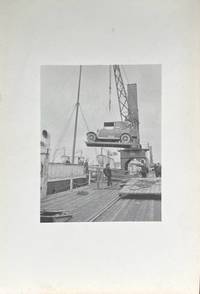
191259779Horsham West Sussex & Haymarket London UK: H.W.C. James A. Sinclair & Co. Ltd. 1912. Two vols. Oblong 8vo. 8.5 x 5 in. 64; 69 leaves unnumbered. including 2 calligraphic titles 63 & 68 platinum print matte finish photographs w/ images sized from 2 x 3 in. up to 3.25 x 3.75 in. on 4.75 x 7 in. prints all expertly hinged at gutter margin a few w/ pencil annotations on versos occasional light toning from the platinum salt emulsions coating the papers. Uniformly bound in striking full green morocco bindings by Zaehnsdorf gilt ruling on covers gilt inner dentelles 5 raised bands on spines title lettering ownership & dating in gilt a.e.g. marbled endpapers very slight shelfwear incremental rubbing at corners still a NF set. An exceptional pair of automobile travel albums composed of platinum print photographs by Dr. E. Stevens apparently presented to fellow Royal Photographic Society member and platinum photograph enthusiast H.W. Child. The motor car was a grey 1912 35 CWT Delaunay-Belleville depicted in 15 of the images bore the GB License Plate of BP1945 registered in 1912 to Charles Stevens c/o Dr. Stevens of Sarcelles Horsham West Sussex July 4 1912. The Delaunay-Belleville in the Brass Era was one of the most expensive and prestigious touring cars for travelers and enthusiasts whose owners at the time included Evalyn Walsh McLean original owner of the Hope Diamond as well as Mann who traveled “Round the World†in 1912 in a similar model. The intrepid travelers clearly intended to photograph and put their new motor through its paces traveling about 3000 miles. The album opens with photos of the auto loaded at Portsmouth and by ferry to Le Havre and then driving down through Normandy Alencon Le Mans Tours Bordeaux and onto Biarritz. The tour extended across the Pyrenees into Spain visiting San Sebastian followed by drives to Pau Lourdes Toulouse Narbonne and then along the South of France into Italy. The drive was not without pitfalls as they suffered punctured tires with two different images showing repairs one with a crowd as well as the photo waiting for a massive rock slide of giant boulders fallen onto the roadway and being removed by wooden wheelbarrows. They continued their tour across the Alps into Switzerland with views of the travelers at a Swiss border station and then capturing scenic vistas and driving onto Salzburg & Linz. One of the images captures advertising and awning of a “Buchdruckerei†specializing in photographic books supplies and photo albums. At that point the motorists had reached the most Eastern point and drove along the Danube route crossing overland to the river Necker Heidelberg and finally into the Netherlands with visits of Amsterdam Haarlem often with picturesque images capturing the Dutch in their iconic wooden shoes windmills canals and even electric railways. One particular image documents the “Art Store†selling Volendam silver & brass and antiques. The final image shows the car being loaded back on the steamship to England from Rotterdam. The platinum photographs were processed by James A. Sinclair & Co. Ltd. at 34 Haymarket in London specializing in photographic prints & equipment and at the time the Platinum prints were Alfred Stieglitz’s process of choice celebrating the images for their aesthetic qualities and permanence. As the Platinum prints were printed direction on coated paper with platinum salts the image was absorbed directly into the paper creating a softer and less-detailed image which was quite durable. Dr. Stevens fl. 1910-1918 who during World War I served as surgeon with the Royal Army Medical Corps joined the Royal Photographic Society in 1915 and exhibited three of his photographs presumably from this excursion including “In the Paese†“Making Port Concarneu†and “Santa Maria della Pace Lago di Como.†Child b. 1859 was a very successful merchant who by 1897 was also an active member of the Royal Photographic Society Platinum print enthusiast and automobile traveler as well. He exhibited several times with the RPS often appearing in their exhibitions from 1898-1915 the last being “Citadel and Church Dinant†shot in 1914 and displayed as an Autochrome. See: Ordinary Members The Photographic Journal Vol. 41 January 1917 pp. 32 41; Exhibition Catalogue of 1898 43rd Annual Exhibition of the Royal Photographic Society 1898; 44th 1899; 45th 1900; 47th 1902; 60th 1915. H.W.C., James A. Sinclair & Co., Ltd., hardcover
19362080502106917695Not Available 1936. Soft Cover. Fine. The book is in fine condition. Not Available paperback
226402A Amsterdam, Chez Zacharie Chatelain et Fils, 1753 7 vol. in-4, [6]-XXIV-C-[5]-242, [4]-XXII-[2]-336-[19], [4]-XXIV-[6]-314, [4]-25-[6]-368-[22], [4]-XXVIII-414, [4]-LXIV-478-[18] et [8]-XII-273 pp., deux frontispices, 4 cartes dépl. et 131 pl. généralement dépl., veau fauve, dos à nerfs orné, tranches rouges (reliure vers 1820). Qqs usures.
1788AMO-24644 forts volumes in-4 (27 x 21,5 cm) de (10)-XLIV-522, (3)-566-(4), (3)-710-(6) et (3)-560-(1) pages. Portrait de Frédéric le Grand en frontispice du premier volume (gravé par H. Marais en 1788 d'après A. Graf). Exemplaire bien complet des 59 tableaux dépliants (ou non) qui se trouvent à leur place intercalés dans les volumes (les feuillets de placement des tableaux sont présents en tête de chaque volume). Le tome III contient un planche symbolique hors-texte gravée par Ransonnette "Grand Ordre de Monsieur" (p. 489). Cartonnage plein papier à la colle bleu à l'imitation des cartonnages de l'époque. Entièrement non rogné, cartonné sur brochure, pièces de titre imprimées sur papier (modernes), étuis cartonnés de papier à la colle (un fond d'étui fêlé, sans gravité). Ensemble en superbe état. Intérieurs généralement d'une très grande fraîcheur. Quelques cahiers légèrement teintés ou avec quelques rousseurs. Sans l'atlas in-folio vendu séparément et contenant 10 cartes sur double page, dressées par Mentelle et gravées par Pierre François Tardieu, 93 planches de tactique non signées. « Cette importante étude, fort bien documentée, sur la Prusse est le résultat d’une vaste enquête » ; « C’est une œuvre conçue par Mirabeau selon son plan, d’après sa conception de l’histoire économique et philosophique », il « fondait de grands espoirs sur cet ouvrage pour établir sa réputation d’écrivain et obtenir enfin un emploi digne de son talent, de son origine et de son ambition. » (H. Aureille, Bibliographie de Mirabeau.). On y trouve d'intéressantes informations sur l'organisation militaire de la Prusse, sa législation, son administration et son économie, ainsi qu'un certain nombre de considérations sur la population. Les données statistiques sur les habitants de la Prusse s'y trouvent en grand nombre. On y trouve également de l'économie-politique, les productions agricoles et les richesses naturelles, les manufactures, le commerce, la constitution civile et politique, les revenus et dépenses, le système militaire (tactique) et la religion. Le premier volume s'ouvre sur une délicate et reconnaissante épître "à mon père" (Mirabeau père). Mirabeau a été aidé pour cet ouvrage par Jakob Mauvillon (1743-1794), physiocrate allemand. On accusé Mirabeau de n'avoir rédigé que quelques passages et préambules de l'ouvrage, le gros du travail revenant à Mauvillon. La correspondance échangée entre Mirabeau et Mauvillon prouve le contraire. Mirabeau était non seulement à l'origine de cet important ouvrage mais encore le maître d'oeuvre et principal rédacteur (certaines études récentes présentent toutefois Mauvillon comme le nègre de Mirabeau pour cet ouvrage). Jean-Charles Laveaux (1747-1829), professeur de langue française à Bâle, puis professeur de littérature française à Stuttgart et à Berlin, à la demande de Frédéric le Grand, a participé à la documentation historique pour cette histoire de la monarchie prussienne. Provenance : Exemplaire offert par Mirabeau à Nicolas Frochot (1761-1828). Attesté par un petit billet autographe (non signé) par Nicolas Frochot et daté de Paris le 4 avril 1790 présent en tête du premier volume. Frochot y remercie M. le comte de Mirabeau de l'envoi qu'il lui a fait de son ouvrage sur la monarchie prussienne. "Comme il a été bien entendu entre nous que je ne lui vendais pas le petit Cicero de amicitiâ, et que d'ailleurs j'aurais dans ce cas un retour considérable à lui donner. J'accepte ce cadeau non comme un prix d'échange du petit traité de l'Amitié mais comme un don que je m'honorerai toujours de tenirde celle de l'auteur. (en haut du billet il est écrit de la main même de Frochot : Copie de mon billet de remerciement à M. le comte de Mirabeau). Très émouvant billet quand on sait que Nicolas Frochot s'est lié d'une réelle amitié avec Mirabeau qui fit de lui son exécuteur testamentaire. Élu député des États généraux le 25 mars 1789, il est chargé de rédiger les cahiers de doléances du tiers état de sa province, avant de siéger à la Constituante (il se lie à Mirabeau à ce moment là). Il est l'auteur du titre VII de la Constitution, publié sous le titre De la souveraineté nationale dont l'exercice n'est pas constamment délégué. D'abord administrateur de la Côte-d'Or, il est emprisonné sous la Terreur. Libéré à la suite de la chute de Robespierre, il occupe divers postes administratifs avant d'être élu député de la Côte-d'Or en décembre 1799. Quelques mois plus tard, le 22 mars 1800 (1er germinal an VIII), nommé préfet de la Seine par Bonaparte, il démissionne de son mandat de député. Il devient ainsi le premier Préfet de la Seine et de Paris (Étienne Mejan lui est adjoint comme secrétaire général de la préfecture). Il propose de nombreuses réformes à caractère social (prisons, hôpitaux, Mont-de-piété et service des enfants abandonnés), qu'il ne parvient toutefois pas à mettre totalement en application. Il réalise les premiers embellissements et aménagements de voirie décidés par Napoléon, dont la numérotation des immeubles. Il fait percer de nouvelles rues, voies, ponts et marchés. Il fait acheter des terrains, hors des limites du Paris de l'époque, qu'il fait transformer en 4 cimetières : cimetière du Père-Lachaise, cimetière de Montmartre, cimetière du Montparnasse et cimetière de Passy. Il est mis en retraite en 1812, à la suite de la Conspiration de Malet. Il est nommé comte d'Empire. Conseiller d'État honoraire sous la première Restauration, il se rallie à Napoléon qui le nomme préfet des Bouches-du-Rhône durant les Cent-Jours. Il est destitué lors de la deuxième Restauration pour être remplacé par le comte de Vaublanc. Il se retire alors définitivement de la vie publique. (source : wikipédia). Nous pensons que Nicolas Frochot a été gratifié de cette exemplaire sous forme brochée, tel que paru. Un cartonnage a sans doute été donné ensuite à cet ouvrage par Frochot. Le présent cartonnage est à l'imitation du premier. Mirabeau meurt tout juste un an après la rédaction de ce billet de remerciement (2 avril 1791). Bel exemplaire de cet important ouvrage, offert par Mirabeau à Nicolas Frochot, son ami et exécuteur testamentaire.
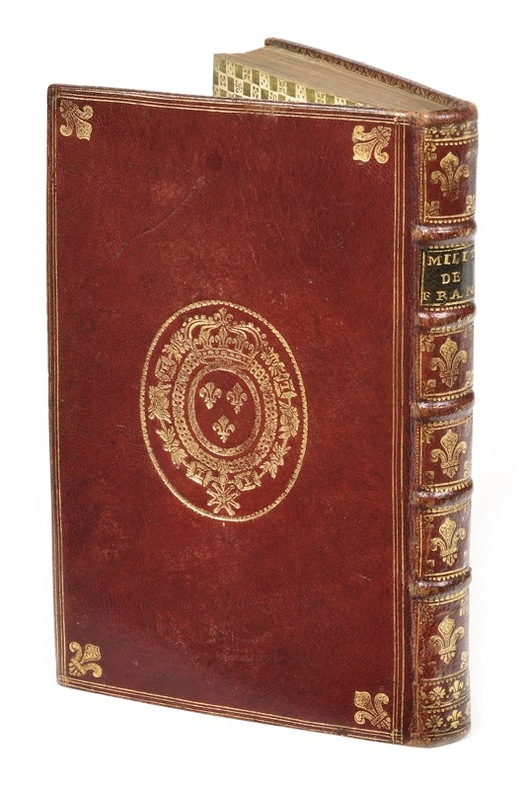
173410689Paris, chez l’auteur, Quillau, Briasson & Jaillot, 1734. In-12 (167 x 102 mm), VIII pp., 200 pp. Maroquin rouge, triple filet doré d’encadrement sur les plats, fleur de lys en écoinçon, armes de la maison royale de France au centre, dos à nerfs orné, fleur de lys en caisson et en écoinçon, pièce de titre en maroquin vert foncé, roulette dorée sur les coupes et les chasses, tranches dorées sur marbrures, gardes de papier dominoté de petits carrés dorés alternés de petits motifs dont la fleur de lys, petite tache sombre sur le premier plat (reliure de l’époque).
235037[Paris], Dépôt de la Guerre, 1817 - 1818 grand in-folio, demi-veau vert moucheté, dos à nerfs orné (reliure postérieure).