30 333 résultats
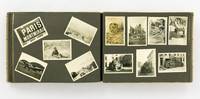
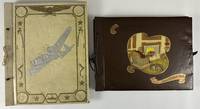
194512886Various locations mainly Texas Oklahoma and Arkansas 1945. Two albums. Album I: 24 leaves illustrated with twenty-four original photographs over two dozen postcards mostly photographic original letters and military documents and a large quantity of ephemeral items. Folio. Contemporary cream cloth decoratively stamped on front board in gilt and silver string tied. Album II: 11 leaves illustrated with ninety-eight photographs in mounting corners six loose photos and a couple of ephemeral items. Oblong folio. Contemporary brown cloth decoratively stamped on front board in gilt yellow and red string tied. Overall minor wear. Very good condition. A pair of annotated vernacular photograph album / scrapbooks compiled by Lt. Erma J. Frazier and her mother during her wartime service in the U.S. Army Nurse Corps. Frazier served in the Nurse Corps at various hospitals in the Trans-Mississippi West at Camp Swift in Bastrop Texas; Fort Sam Houston in San Antonio Texas; Okmulgee Oklahoma; and Camp Robinson Arkansas. Frazier hailed from East Brady Pennsylvania and worked as a Registered Nurse at the nearby Kittanning Hospital before she entered military service. She enlisted in early 1945 and served throughout the conclusion of the Second World War. The present albums record her service time in unusual detail with a mixture of original photographs picture postcards original military documents a few manuscript letters and various ephemeral items.<br /> <br /> The first album was compiled by Frazier's mother who inscribes the first page: "I dedicate this book to my daughter Erma Jean Eberhart Frazier who entered the Armed Services on March 17 1945 as a 2nd Lt. in the Nurse Army Corps a Camp Swift Texas." This album focuses mainly on Frazier's time at Camp Swift and Okmulgee Oklahoma. This album contains the lion's share of the ephemera including a patch the floral corsage she wore on the day she left for service military paperwork and forms and various newspaper clippings. The military paperwork includes enlistment documents including her "Application for Appointment" a manuscript postcard from the director of the Red Cross describing Frazier as a "professional qualified for military service" Army documents on qualifications for nurses and more. Other ephemera includes letters and cards received by her at Camp Swift a page of five pressed "Flowers from Texas" each preserved in a small plastic bag shipping tags from packages of clothing sent home by Frazier a couple of church programs a page of ten small postcards from her visit to Austin a menu from Brooke General & Convalescent Hospital at Fort Sam Houston some greeting cards and so forth. The photographs include portraits of Frazier from 1943 and 1944 while a nursing student; eight pictures of Frazier and other soldiers at Camp Swift; and eight shots of Frazier fellow soldiers and their barracks and administration buildings at Okmulgee Oklahoma.<br /> <br /> The second album was compiled by Frazier herself who provides a manuscript title on the inside front cover: "Memories of the Army Nurse Corps." There are also two photographs inscribed in the first person "Me on arrival at G.G.H." and "side entrance to my barracks G.G.H.". This album is almost entirely comprised of captioned photographs particularly valuable for identifying numerous fellow soldiers serving with Frazier. The images emanate from the last three locations at which Frazier served which she lists on the inside front cover: Brooke General Hospital at Fort Sam Houston Glennon General Hospital in Okmulgee and Regional Hospital at Camp Robinson Arkansas. Perhaps Frazier felt her mother's album largely focused on Camp Swift sufficiently memorialized here time there. The photographs are presented in chronological order and include portraits of dozens of men and women with whom Frazier served or patients served by Frazier often accompanied by informative and sometimes humorous manuscript captions on the album leaves or directly on the images. The photos also picture the hospitals themselves and include a handful of images taken during leisure time on base.<br /> <br /> A unusually informative pair of World War II-era albums and scrapbooks preserving the service of a highly-qualified Army nurse from Pennsylvania serving in the American West during the last year of the war. unknown
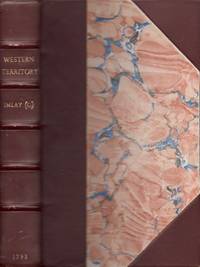
179332480London: Printed for J. Debrett 1793. The Second Edition with Considerable Additions. Three-quarter leather. Good. Octavo. 1 xvi 433 pages 1 page blank 19 page index 1 page errata 2 pages advertisements 1. Recased binding with three-quarter brown leather and marbled paper covered boards. Gilt title and five raised bands on the spine. Newer front and rear end papers and one front blank end sheet inserted. The original rear end sheet is present. The folding frontispiece map is toned on the verso with an old repair made also on the verso. Some light edge wear to the map. The folding view of the Rapids of the Ohio and the State Map of Kentucky are in very good condition with light toning. <br /> <br /> Pages 417-433 includes a "Report of the Secretary of State to the President of the United States of the Quantity and Situation of the Lands not Claimed by the Indians Nor Granted to Nor Claimed by Any Citizens Within the Territory of the United States. Read in the House of Representatives Nov. 10 1791" by Thomas Jefferson. <br /> <br /> Howes I 12; Howes Reference Filson - F 129; Sabin 34355; Streeter III 1523; Clark II 41 "An early account of the western country.which was produced by a man who left Kentucky without settling his obligations who seems to have been involved in efforts to organize a French expedition to take the lower Mississippi Valley and who treated Mary Wollstonecraft Shamelessly. This book was written in the form of letters from Kentucky to a friend in England. In all probability they were written in Europe. Printed for J. Debrett unknown
238169Paris et Milan, 1800 - 1801 7 pièces en deux vol. in-8, demi-veau fauve, dos lisses ornés de dent-de-rat et filets dorés, pièces de titre crème, coins en vélin (reliure un peu postérieure). Des mouillures claires au premier volume.
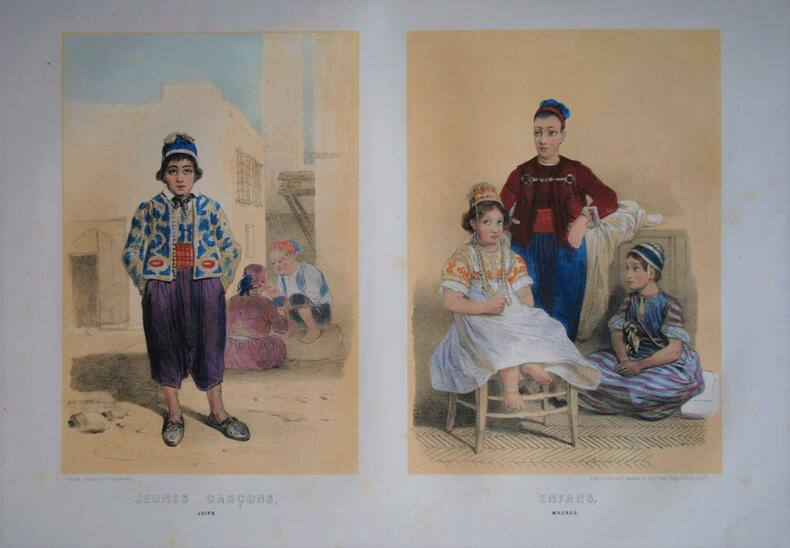
1843P1-3DA Paris, Chez J. Delahaye Éditeur, 1843. 1er Volume , 1ere partie , Province d’Alger : I. XIV-(2f.)-80pp , illustré de 51 planches et 2 cartes coloriés aux contours , un frontispice teinté , un titre chromo lithographié en couleur . Plat cassé , dos frotté , tache sur les 18 premiers feuillets ( en s’amenuisant) , 6 planches brunies , 2 légèrement brunies , quelques rousseurs . 3eme Volume , 4eme partie : Province de Constantine : IV. (2f.)-42 pp , illustré de 16 planches , 1 planche brunie , quelques rousseurs . 5eme partie : Races algériennes, monnaies, flore d'Algérie : (2f.)-21-18-16-(1f.) , illustré de 3 planches (sur 6) de races algériennes dont 1 en couleurs (enfants) et 10 planches de botaniques en couleurs , 2 planches brunies dont une légèrement. Plats frottés avec manque de papier , dos frotté , manque au dos , coins usés plus 103 lithographies à deux teintes de vues et portraits dont 1 en double exemplaire, 2 cartes in fine qui correspondent aux planches des 1ere , 2eme et 3 partie. Importante mouillure en marge supérieure touchant parfois le haut de la lithographie, rousseurs (une douzaine de planches uniformément roussies), une planche volante. La partie lithographiée conserve toutefois assez fréquemment sa fraîcheur. In-folio à l’italienne, broché, couverture manquante. Au total un titre chromo lithographié compris dans la pagination et 133 planches lithographiées à fond teinté dont 1 en couleur , 2 cartes et 10 planches de flore à plusieurs sujets coloriés.
185625375Angers Lainé Frères 1856-60 -in-folio plein-chagrin deux volumes, reliure plein chagrin chocolat in-folio Editeur (binding full shagreen in-folio Editor)(45 x 31,5 cm), RELIURE ÉDITEUR DE LUXE D'ÉPOQUE SIGNÉE : HUARD, en pied, dos 5 nerfs (spine with raised bands,) décoré "or" et à froid (gilt and blind stamping decoration), Titre et Tomaison frappés "or" dans un encadrement d'un filet "or", entre-nerfs à caisson à froid formés d'un filet large à froid et d'un filet fin à froid en encadrement avec rinceaux floraux "or" aux angles intérieurs, 2 filets fins "or" en place des nerfs se rejoignant de part et d'autre en pointe par un fleuron "or" avec un filet large à froid de part et d'autre des nerfs, 2 filets fins "or" et un filet perlé "or" en tête et en pied, HUARD frappé "or" en pied, plats décorés "or" et à froid, ornés d'un décor "Floral" "or" au fer évidé aux angles supérieurs et inférieurs se rejoignant par deux filets fins "or", dans un encadrement d'un filet large "or" et d'un filet fin "or", lui-même dans un encadrement d'un filet large et d'un filet fin à froid (plaques spéciales Editeur), filet "or" sur les coupes (gilt line on the cuts) et dentelle "or" sur les chasses (lace-like decoration on the turn-ins), toutes tranches lisses dorées, gardes blanches moirées, orné de 125 lithographies hors-texte en deux teintes par Daniaud d'après les dessins de Tom DRAKE montées sur onglets, Première partie: faux-titre, titre, 108 p., [4p. Table, Errata]; Deuxième partie: faux-titre, titre, 92p., [2p. Table], 1856 - 1860 Angers: Imprimerie et Librairie Lainé Frères Editeur,
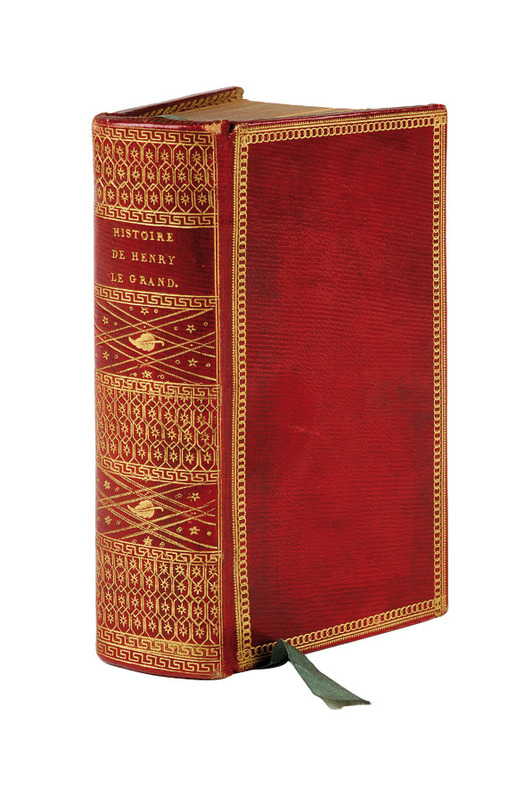
166417474Amsterdam, Daniel Elsevier, 1664; in-12, maroquin rouge, dos lisse à faux nerfs dorés, entièrement décoré et doré «à la Bozérian», roulettes d'encadrement des plats, filet sur les coupes, roulette d'intérieur, tranches dorées (sort très probablement de l'atelier des Bozérian) ; (6) ff. y compris le frontispice gravé et le titre, 566 pp. , (10) ff. , le dernier blanc, Henry le Grand au Roy. Poème par Cassagnes.
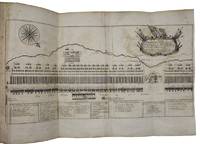
AQ22662London: Sold by J. Oliver.and J. Sellar junior s.d. c.1686 Single engraved sheet folded vertically and housed in modern blue paper wrappers. Some old folds with occasional minor tearing offsetting and browning - especially to gutter. Short tear to the head of spine of the enclosing wrappers. A rare survival of a choice engraved plan of the annual military review of King James II's troops at Hounslow Heath in July 1686. The Restoration settlement of Charles II provided the King with just a small defensive military; a standing army in name only. This was expanded greatly during the 1660s and 1670s largely as a result of the Anglo-Dutch - and Franco-Dutch - wars. But the accession of his brother James II himself intent on expanding his armed presence in part out of necessity given the threat of rebellion as demonstrated by the efforts of the Duke of Monmouth in 1685 led to significant expansion of the English armed forces. Annual military manoeuvres and reviews were hosted at Hounslow Heath each summer between 1685 and 1688 in order to train this enlarged and increasingly professional force and in no small part to demonstrate the substantial military support that the King - always in a politically precarious position in relation to the Church Parliament and landed gentry despite apparent popularity amongst his subjects - could muster. The English puritan minister and journalist Roger Morrice noted in his diaries that several thousand visited the camp - the early-modern equivalent of the earlier chivalric tournament - represented by this engraving. It is perhaps therefore unsurprising that a number of commercial opportunities from prostitution to printing arose from the impressive and novel gathering. Whilst ESTC locates a single copy Oxford of this plan finely engraved for English print and map-seller's John Seller 1668–1698 and John Oliver OCLC adds a further example at Cambridge and reproductions have supposedly been made from an 'original in the Huntington Library' which we have been unable to locate other editions of the same view are also known. A broadside version of this prospect 'printed for and sold by Richard Palmer' - with letterpress titling and woodcut illustration - was also issued. Another also in broadside format and with a variant title with an exact date specified An exact prospect of his Majesty's forces as they are encamped on Hounslow Heath 19 July 1686 London 1686 bears the imprint of 'Walter Davis in Amen-Corner' is recorded by ESTC at three location Ashmolean BL and Oxford. ESTC R25579. Wing R25579. Dimensions: Sheet - 490 x 310 mm; Engraved area - 462 x 230 mm. Sold by J. Oliver...and J. Sellar junior, [s.d., c.1686?] unknown
19692110502150414835Akita shoten 1969. Soft Cover. Fine. Number of books: 14 Akita shoten paperback
140779Very Good. A commercial photograph album 225 × 320 mm containing 163 snapshot photographs mainly 57 × 70 mm or 64 × 90 mm loosely mounted behind photo-corners on 24 leaves mainly on the rectos with captions regularly throughout the album. A postcard-format studio portrait of the compiler is attached to the front pastedown and he has identified himself in a number of photographs. In one snapshot he is standing with former German Olympic boxer Hans Schönrath 1902-1945 who has signed the photograph in ink. Cord-bound boards covered with coarsely-woven multi-coloured fabric; extremities a little rubbed and bumped with minor wear to some corners; patterned tissue-guards occasionally chipped and torn; minimal signs of age and use including a few loose snapshots - and only a handful appear to be no longer present; overall in excellent condition. The portrait has a personal inscription on the verso unfortunately not fully identifying the subject. The snapshots are basically in chronological order with the first group captioned 'R.A.D. 1937'. 'The Reichsarbeitsdienst RAD or National Empire Labour Service had its origins with the formation of a volunteer labour force that was created to off-set the high unemployment before the Nazis came to power. Work camps were set up to house these volunteers sponsored by the government administration in 1931. Under Hitler's leadership service in the RAD was obligatory for all males of 17-25 years of age for a period of six months from 26 June 1935' Imperial War Museum. Next follows a period of military training at Neuhammer; a number of photographs in this part of the album suggest the young man may have had training as a chef. There are about 40 photographs of the young man working or training in camps in barracks or at ease. <p>The majority of the photographs depict the unstoppable and destructive course of the German army as it embarks on the occupation of Czechoslovakia fortifications captured tanks and aircraft military parades in the presence of Herman Goering and Sudetenland the invasion of Poland deployed troops destroyed or burning buildings demoralised civilians and more military parades and finally the invasion of France massive destruction of buildings fortifications bridges French aircraft and tanks; a crashed Messerschmitt Bf 109; captured British soldiers. unknown
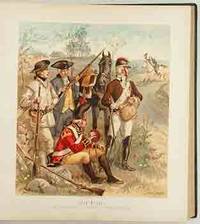
51-3684Washington D.C.: Quartermaster General of the United States under authority of the Secretary of War circa 18890. Folio. 16 x 15 inches. 42 x 38cm. Original gilt morocco expertly restored by the artisan bookbiner Sasha Mosalov. Gilt edges and dentelles on the inside of the cover. Marbled eps. Text followed by 44 color lithograph plates with tissue guards numbered I-XLIV illustrating uniforms worn between 1774 and 1889OCLC Numbers: 198503454; 6323880; not exactlythe same. Washington, D.C.: Quartermaster General of the United States, under authority of the Secretary of War, circa 18890. unknown
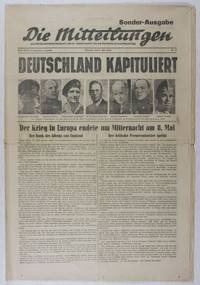
194539196Germany: The 21st Army Group 1945. First edition. Softcover. vg. Folio 12 1/2 x 18 1/2". 8pp. Published by the 21st Army Group this special issue of "Die Mitteilungen" Information announces in bold letters and across its front page the capitulation of Nazi Germany. Featured in two columns and above the b/w photographic portraits of Field-Marshal Alexander Marshal Koniev Field-Marshal Montgomery King George VI General Eisenhower Marshal Zhukov and General Bradley are the victory speeches pronounced by King George VI and Prime Minister Winston Churchill. Of special interests are the announcement of Joseph Goebbels' death Page 2; the liberation of some of Europe's political military and religious leaders such as Leon Blum Paul Reynaud Edouard Daladier General Weygand General Gamelin Dr. Kurt von Schuschnigg Pastor Niemöller Belgian King Leopold III etc. Page 2; Information on Hitler's suicide Page 4; The San Francisco conference Page 5 and 8; article with four gruesome photographs on the liberation of the Death Camps Page 6; five b/w photographic portraits of the following allied statesmen: General de Gaulle Marshal Stalin Winston Churchill President Franklin Delano Roosevelt who died less than a month before Germany's capitulation and President Harry Truman Page 8. 'The 21st Army Group newspaper "Mitteilungen" was distributed as follows: Laer 700 copies; Greven 560 copies; Wunsdorf and Neustadt 1000 copies; Basthorst 500 copies; Celle 3000 copies; Lübeck 4000 copies; Bergen-Belsen camp 2500 copies' Extracts from War Diary of 14 Amplifier Unit & 19 Leaflet Unit. Folding mark at center. Tiny closed tear along spine. Minor age-toning. Text in German. Newspaper in overall very good condition. The 21st Army Group was a World War II British headquarters formation in command of two field armies and other supporting units consisting primarily of British and Canadian forces. Established in London during July 1943 under the command of Supreme Headquarters Allied Expeditionary Force SHAEF it was assigned to Operation Overlord the Western Allied invasion of Europe and was an important Allied force in the European Theatre. The 21st Army Group operated in Northern France Luxembourg Belgium the Netherlands and Germany from June 1944 until the end of the war in Europe in 1945. After the German surrender 21st Army Group was converted into the headquarters for the British zone of occupation in Germany. It was renamed the British Army of the Rhine BAOR on 25 August 1945 and eventually formed the nucleus of the British forces stationed in Germany throughout the Cold War. The 21st Army Group unknown
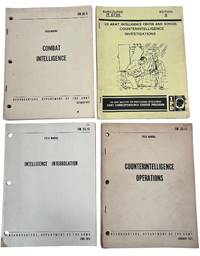
232441972. US Army manuals on counterintelligence interrogation and combat. FM 30-17 Counterintelligence Operations FM 30-15 Intelligence Interrogation FM 30-5 Combat Intelligence and the Fort Huachuca subcourse Counterintelligence Investigations trace the Army's printed intelligence doctrine from January 1972 to June 1989. The sequence begins after the Army established Military Intelligence as a distinct professional branch in 1962 and after the Military Intelligence Corps relocated its school to Fort Huachuca in 1971. By 1989 the printed curriculum had shifted from broad field doctrine toward formal professional instruction for Counterintelligence Special Agents at the U.S. Army Intelligence Center and School. FM 30-17 indexes topics including "Rights" "Witness" "Wiretapping" and the "U.S. Army Security Agency"; FM 30-15 appends the 1949 Geneva Conventions and states that coercion is neither acceptable nor effective.<br /> <br /> 1972-1989 Washington D.C. and Fort Huachuca Arizona. Archive of 4 military intelligence training publications: three Headquarters Department of the Army field manuals and one Army Intelligence Center and School correspondence-course subcourse all in original printed wrappers and stapled or punched for binder storage.<br /> 1 United States Department of the Army. FM 30-17 Counterintelligence Operations. Washington D.C.: Headquarters Department of the Army January 1972. Issued under the printed authority of General W. C. Westmoreland and Adjutant General Verne L. Bowers the manual sets out the Army's investigative framework for sworn statements interrogations surveillance audio surveillance surreptitious entry false documentation secret writing and polygraph procedure.<br /> 2 United States Department of the Army. FM 30-15 Intelligence Interrogation. Washington D.C.: Headquarters Department of the Army June 1973. Sets forth doctrine for Army intelligence interrogations of non-U.S. personnel prohibits physical or mental torture coercion and threats and reproduces the 1949 Geneva Conventions in Appendix E.<br /> 3 United States Department of the Army. FM 30-5 Combat Intelligence. Washington D.C.: Headquarters Department of the Army October 1973. Issued the year of final U.S. combat withdrawal from Vietnam the manual expands combat intelligence into "cold war" "limited war" "general war" and "stability operations" with sections on civilian sources insurgent intelligence collection rear-area sabotage and terrorist threats and counterintelligence planning.<br /> 4 United States Army Intelligence Center and School. Counterintelligence Investigations. Subcourse IT 0735 Edition 9. Fort Huachuca Arizona: Army Institute for Professional Development Army Correspondence Course Program June 1989. A six-credit-hour professional course for the Counterintelligence Special Agent covering doctrine for initiating CI cases procedures for selected CI investigations and techniques for handling physical evidence.<br /> The group follows the Army's post-1962 effort to professionalize intelligence as a branch and concentrate its training system at Fort Huachuca after the 1971 move from Fort Holabird. FM 30-15 1973 is the Army's printed official position that torture and coercion are prohibited with the Geneva Conventions reproduced in full. That manual was the governing interrogation doctrine on paper through the early 2000s. It's the document that the post-9/11 interrogation debates the 2002 OLC memos and Abu Ghraib were measured against. Owning the actual printed doctrinal manual that says "coercion is neither acceptable nor effective" is the headline. One booklet is missing its rear cover and one volume contains annotations throughout. Overall good condition. The 1972 and 1973 manuals set out combat collection interrogation surveillance evidence and counterintelligence support in cold war and stability operations; the 1989 Huachuca subcourse narrows that material into school-based instruction for case initiation and judicial-type investigations. unknown
Very Good Turkish, Ottoman (1500-1928) Original 110 autograph letters (ALS) and several autograph postcards with almost all their original envelopes, one signed cabinet photograph, and one photograph album including Pertev Pasha's funeral photos which shows many famous politicians and soldiers beside his daughter Nevin Demirhan [Bengisu] and his wife Leman Demirhan. Various sizes. All material in Ottoman script. Most of letters addressed to his daughter Mrs. Nevin. His funeral album includes one newspaper clipping contains his short life, six newspaper obituaries, 20 b/w photos, of his funeral and famous people attending the funeral, one telegraph of condolences by Kazim Orbay, (1886-1964) and his wife Mrs. Orbay. Sait Pertev Demirhan, (1871-1964), was a Turkish soldier and politician. He is a graduate of Erkân-i Harbiye. He was an author, intellectual, Erkân-i Harbiye School teacher, 6. Army chief of staff, Harbiye Undersecretariat, 3rd Army Chief of Staff, 1st Corps and 4. Corps Commands, Military Schools Inspector, Member of History and Geography Councils, Member of Military Appeals Court, a deputy of Erzurum. He was the son of Yanyali Mustafa Pasha. He graduated from Harbiye as a staff captain (1892). In 1894 he was sent to Germany to advance his military education. After being a colonel, he was appointed to the Staff School as a teacher (1904). He was sent to the Russian-Japanese War as an observer. So, he written a book titled 'Japonlarin asil kuvveti: Japonlar niçin ve nasil yükseldi?' [i.e. The principal power of Japan: Why and how did Japan rise?] printed in 1937 in Turkish. He returned to Istanbul in 1906 and was promoted to "Pasha", and was appointed as the 6th Army Chief of Staff. He participated in the Balkan Wars (1912-1913) and was on the Caucasian front during the First World War. He was sent to Vienna as a military diplomat. Upon his return, he moved to Anatolia to participate in the Turkish War of Independence. He died in Moda district of Kadiköy. A fine and rare collection.
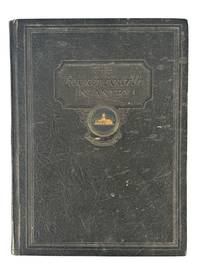
1923215951923. African American MilitaryWWI Muller William G. The Twenty-Fourth Infantry 1923 documents the service of a Black regiment in the United States Army tracing its development from Reconstruction through the Mexican Border War. Written by Captain William G. Muller the volume situates the regiment's origins in the 1869 consolidation of the 38th and 41st Infantry regiments among the first post-Civil War units composed of Black enlisted men and follows its campaigns across the Western frontier Cuba during the Spanish American War and Mexico during the 1916 to 1917 Punitive Expedition. Produced at a time when Black military service was constrained by segregation the work offers insight into the service of Buffalo Soldiers in the decades preceding formal desegregation.<br /> <br /> Muller William G. The Twenty-Fourth Infantry. 1923. The text opens with a dedication "To those colored non-commissioned officers and soldiers whose unswerving loyalty and devotion of the regiment made possible these brilliant pages of history." Extensively illustrated with photographic portraits of senior Black noncommissioned officers among them Regimental Sergeant Major Walter B. Williams Color Sergeant Wm. G. Wilcox and Regimental Color Sergeant Abraham Hill identified as "one of the Army's great rifle shots." Additional images document encampments in New Mexico and Texas scenes from Mexico during the Punitive Expedition and regimental athletics including a football team that competed against historically Black colleges such as Tuskegee and Talladega. The narrative emphasizes the regiment's record of discipline and cohesion asserting that its "high character.unsullied for 54 years" reflected institutional stability amid shifting national racial politics.<br /> <br /> The history reflects an effort to commemorate the service record of Black soldiers at a moment when their contributions to westward expansion the Spanish American War and border conflicts were indispensable. The sustained attention to leadership merit marksmanship and athletic competition underscores the high professional standards Black soldiers were held to in the face of systemic discrimination. Minor edge wear and light rubbing to the binding; interior generally clean with occasional light toning; illustrations clear and complete. Overall very good. unknown
26996Middle East 1919-1926. 1.69 Envelopes "On His Majesty's Service" 13 x 10cm 1919 each containing at least one negative. Dowson writes the subject and place usually Iraq agricultural with other information. SEE IMAGE of composite photo.2.62 envelopes as above mainly "Basrah-Cairo Airmail" and "On His Majesty's Service" 13 x 10cm contents as 1.3.C.30 Glass negatives c.16 x 12.5cm incl. people eg. An apparent Sheikh- see Image.4.Small Box 11 x 17 x 3cm containing 10 glass plates labelled "Old Goerz. New Series 65-83 1926" and "Old Goertz Plates 1925 494-501". N.B. Goertz was manufacturer of photograph related items. See Wikipedia "Goertz Company".5.10 Envelopes 15.5 x 10cm containing multiple negatives dated 1926-7 one labelled "America Spring 1926" another "Pompei and Florence" another "factor"6.4 Envelopes 15.5 x 10cm containing multiple negative dated 1928-9 labelled C.P.F. in Construction China Petrol Store Ranjan "Wreckage from my Canberra wheat in Potatoes in ridge".7.Notebook Cover title "Army Book Correspondence Book FIELD SERVICE" poor condition interleaved with negatives people and scenes title on front cover "Negatives Old Goertz 519-562 Kut unreadable."8."Army Book Correspondence Book 152 FIELD SERVICE" so Notebook poor condition interleaved with negatives people and scenes title on cover "Negatives 393-518 Old Goertz 1923-4". Pencil note in different hand says "60 negs".9.Ibid. title front cover "Old Goertz 143-200 N.A. & Bd 1922". Additional note says "FROM 1918" and other title-notes. Notes in Dowson's hand obscured by adhering negatives but extensive agricultural notes dating from 1918. See Image reporting from 5/6/18 "Jinub" 10.Kodak Cardboard Box 15 x 10 x 5cm glass plates entitled ""Old Goertz. 1923 384-398 1924 399-413".11.Tin Box 18 x 125 x 8cms glass plates entitled "Old Goertz. 1923 384-398 1924 399-413.12.Notebook poor condition interleaved with negatives No annotation Cover/Spine Entitled "Negatives Old Goertz 1 to 142".13.Five loose glass plates first entitled "New Series 1926".14.Eight negatives 12 x 7cm WITH 10 negatives 14 x 10cms subjects plants people and scenes.15.Four envelopes "On His Majesty's Service" all "Amara" with one or more negatives labelled as follows: Battery of Pumpsat Dairy Farm; Servants dependents etc. of Shaikh Salim playing at Rowa; Young Sindi Stock Dairy Farm; Babaol sown March 19 Dairy Farm.16.Six Photographs 11 x 5.5cm mainly of people mainly in farmwork environment. See Image combined with 17. Below.17.Eleven Photographs 14.5 x 10.5cms plant orientated. See Image combined with 16.18.Five loose negatives people and plants.Sample subjects from Item One 1919 - mainly date related: Nursery; Donkey and foal; Minaret Bagdad; Koran Support; Cathedral Baghdad; Officer on Horseback; Ploughing BarleyKut - place appears many times; Boom landed for Kuwait; Well Cultivated Garden; Chibchab Tamar dates; Dates available in Baghdad market; Cotton.Item 2: Gardens in the Bank of the Husaini; small Japan ground nuts; 4 bunches dates in 10 year old Halawi; Araq factory Basra several; Kuwait photos/Abdar Rojah at Amir etc; view from water tower; factory construction; Ahwaz; Buch of Tmar Khadrhrawi on twelve year old palm many similar shots; Sindi Working bullocks Dairy Farm several = Amara; Servants dependents etc. of Shaikh playing Nowa; fish cooked; The ruined Mosque of Shabashia; From Notebook interleaved with negatives "Old Goerz 143-200" 1922 commences with manuscript notes by Dowson heavily annotated throughout see photographs even listing photos to be taken and interleaved with negatives. Middle East, [1919-1926] unknown
191959006401Washington: U.S. War Department - General Staff G-3 1919. Bound in one half brown leather over gray boards. five raised bands gilt still bright. Tabs for 93 divisions from 1917-1918 with 4-5 pp. per division. Lists no. of enlisted men officers headquarters generals casualties etc. Exceedingly rare. Approximately 400 leaves. Contains charts no maps in this volume. States Copy No. 41. First Edition. Hard Cover. Very Good /No Jacket. 4to - over 9¾" - 12" tall. U.S. War Department - General Staff G-3 Hardcover
244335Amsterdam, Henry & Théodore Boom, 1670-1671 2 parties en un fort vol. in-12, [6] ff. n. ch. (titre-frontispice gravé, titre, dédicace à Cornelijs Tromp, avis au lecteur), 60 pp., [453] pp. mal chiffrées 153, titre, 320 pp., veau blond, dos à nerfs orné, triple filet doré en encadrement sur les plats, tranches dorées, filet doré sur les coupes, dentelle intérieure (Bauzonnet).
1834002750Paris, Vimont, 1834
1771144411771 un volume, reliure plein veau brun raciné (reliure de l'époque) in-quarto (binding full calfskin in-quarto), dos à nerfs (spine with raised bands), décoration or (gilt decoration) à filets or (gilt lines) et à froid (blind-stamping decoration) - entre-nerfs à fleuron au fer plein (between the raised bands floweret with full blocking stamp) - compartiments à fleurons (compartment with floweret) - titre frappé or (gilt title) - pièce de titre sur fond bordeaux (label of title) avec filet or (label of title with gilt line) - légèrement manquante dans la partie supérieure mais trés léger (it misses a little of the label of title) - dos légèrement frotté avec léger manque de dorure (blurred gilding) , plats avec de légères épidermures (front cover with light scratches) - plats muets (cover without text), coins émoussés (corners blunt) écornés (corners dog-eared), filet sur les coupes (gilt line on the cuts) manque de dorure (blurred gilding), marque-page en tissu (bookmark in tissue), tête lisse (top edge smooth), toutes tranches lisses (all smooth edges) rouges (all red edges) avec une tache d'encre sur la tranche de tête, texte à manchette (marginal note), sans illustration (no illustration) excepté vignettes de titre aux armes royales (certaines légèrement hachurées à l'encre brune ou recouverte d'un lavis bleu-blanc-rouge "Révolution Oblige" (title page decorated with a vignette of title) gravées sur bois en noir + et orné de bandeaux - lettrines et de culs-de-lampe (illuminated of headpieces and dropped initials and of tailpieces) gravées sur bois en noir, Quelques rares trous de vers mais n'atteignant pas le texte, XIII, 344, 7, 11, 8, 27, 12, 14 pp. + 48 pages de table des matières pour ORDONNANCE DU ROI, CONCERNANT LA MARINE DU 25 MARS 1765 + Règlement concernant les Etats-Majors et Equipages dont les Vaisseaux et autres Bâtiments du Roi seront armés; ensemble les Appointements et Soldes et ceux qui doivent les composer (Brest Malassis 1768) 22 pages + Règlement contenant les Canons, les Armes et les Ustensiles et Munitions qui en dépendent, pour l'Armement de Vaisseaux et autre Bâtiments du Roi (-52 pages- Imprimerie Royale 25 mars 1765) + Règlements contenant les Aménagemens qui seront à l'Avenir pratiqués dans les Vaisseaux et autres Bâtiments du Roi; ensemble les Agrès, Ustensiles et Munitions pour leur Armement et Equipement en Tems de Guerre et en Tems de Paix, pour six mois de Campagne (Brest Malassis 1766 - 188 pages) + Ordonnance du roi concernant la Régie et Administration Générale et Particulière des Ports et Arsenaux de Marine du 27 septembre 1776 (Paris Imprimerie Royale 1776 - 160 pages) + Ordonnance du Roi pour régler les Fonctions dont les Officiers de la Marine seront chargés sur les Escadres et à Bord des Vaisseaux, relativement aux consommations et remplacements des Munitions et des Effets, et aux Revues des Equipages dans le cours des Campagnes du 27 septembre 1776 (Paris Imprimerie Royale 1776-23 pages-) (dont Ordonnance du Roi pour donner le Rang de Lieutenant-Colonel aux cinquante plus anciens Lieutenans de Vaisseaux du 10 mai 1777 - 2 pages- de l'imprimerie royale 1777- intercalée entre la page 10 et 11) + Ordonnance du Roi concernant les Officiers de Port du 27 septembre 1776 (4 pages- Paris Imprimerie Royale 1776) + Ordonnance du Roi portant réglement sur les Pavillons et Marques de Commandement que les Vaisseauxl porteront à la mer du 19 novembre 1776 (Paris Imprimerie Royale -12 pages) + Ordonnance du Roi pour la suppression du Corps des Officiers d'Administration et des Ecrivains de la Marine du 27 septembre 1776 (4 pages- Paris imprimerie Royale 1776) + Ordonnance du Roi portant établissement des Commissaires Généraux et Ordinaires des Ports et Arsenaux de Marine, et de Gardes-Magasins du 27 septembre 1776 (8 pages - Paris Imprimerie Royale 1776) + Ordonnance du Roi portant établissement de Commissaires et de Syndics des Classes du 27 septembre 1776 (4 pages- Paris Imprimerie Royale 1776) + Ordonnance du Roi portant établissement de Controleurs de la Marine du 27 septembre 1776 (4 pages- paris imprimerie royale 1776) , 1765- 1776 Paris Imprimerie Royale + Brest Malassis Editeur,
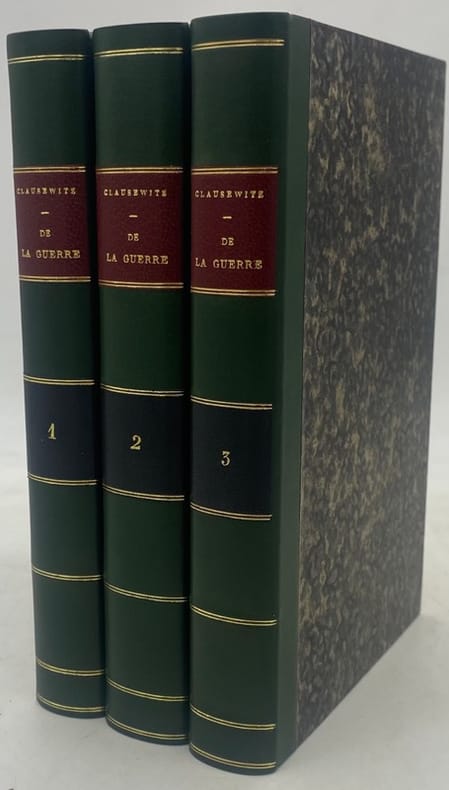
220648Paris, J. Corréard, 1849-1851 3 vol. in-8, XXIV-479 pp., 599 pp. et 503 pp., demi-veau vert, dos lisse, filets dorés (reliure moderne). Cachets (annulés) Qqs rousseurs.
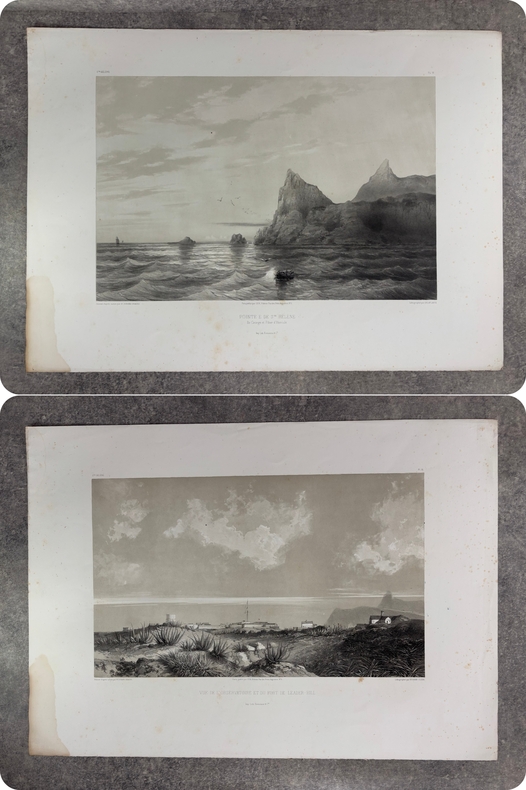
1844778PARIS. GIDE, EDITEUR. 1844. IN-PLANO EN FEUILLES (63 X 45 CENTIMETRES ENVIRON DE (6) + 54 ET (2) PAGES, SOUS COUVERTURES DE LIVRAISON D’ORIGINE, PAPIER BLEU, TITRE IMPRIME EN NOIR. EDITION ORIGINALE ET PREMIER TIRAGE. CONTIENT 29 LITHOGRAPHIES (LA TABLE DES PLANCHES EN DONNE 30, MAIS UNE NOTE INDIQUE QUE LA PLANCHE 17 A ETE SUPPRIMEE, CAR FAISANT DOUBLE EMPLOI AVEC LA PLANCHE 16), SOIT 5 PORTRAITS PAR LEVEILLE ET STAAL (PRINCE DE JOINVILLE, BARON GOURGAUD, COMTE DE LAS CASES PERE, COMTE DE LAS CASES FILS, ABBE COQUEREL AUMONIER DE LA BELLE-POULE), ET 24 VUES PAR DURAND-BRAGER : 1. POINTE DE SUGAR-LOAF. 2. RADE ET VILLE DE JAMES’S TOWN. 3. DEBARCADERE DE JAME’S TOWN. 4. VUE INTERIEURE DE LA VILLE DE JAME’S TOWN. 5. VUE DE JAME’S TOWN PRISE DU CHEMIN QUI MENE A LONG-WOOD. 6. VUE DE LA CASCADE DE BRIARS. 7. SOMMET DE RUPERTS-HILL. 8. VUE DU SOMMET DE LADDER-HILL. 9. EMBRANCHEMENT DE LA ROUTE MENANT A LA VALLEE DU TOMBEAU. 10. VUE DE LA VALLEE DE LONG-WOOD. 11. LONG-WOOD. 12. VUE DE LA VALLEE DU TOMBEAU PRISE EN REGARDANT LE TOMBEAU. 13. VUE DU TOMBEAU PRISE EN REGARDANT LA MER. 14. LE TOMBEAU. 15. POINTE EST DE SAINTE-HELENE. 16. OBSERVATOIRE ET FORT DE LADDER-HILL. 18. SOMMET DE LADDER-HILL. 19. RADE DE JAME’S TOWN LE MATIN DE LA CEREMONIE. 20 MOLE DE JAME’S TOWN AU MOMENT DE LA CEREMONIE. 21. LA CEREMONIE, ARRIVEE DE LA CHALOUPE CONTRE LE BORD DE LA BELLE-POULE. 22. LA BELLE-POULE LE SOIR DE LA CEREMONIE. 23. DEPART DE SAINTE-HELENE. 24 ET 25. VUE GENERALE DE SAINE-HELENE, 1° ET 2° FEUILLES. QUELQUES DEFAUTS EN MARGE DE CERTAINES PAGES OU PLANCHES SANS ATTEINTE AU TEXTE OU A LA LITHOGRAPHIE, AINSI QUE SUR LES COUVERTURES, MANQUE DE PAPIER AU NIVEAU DE LA TABLE DES PLANCHES AVEC INFIME ATTEINTE AU TEXTE, SINON BON EXEMPLAIRE DE CET OUVRAGE RARE. PRIX ETABLI, COMPTE-TENU DES DEFAUTS SIGNALES.
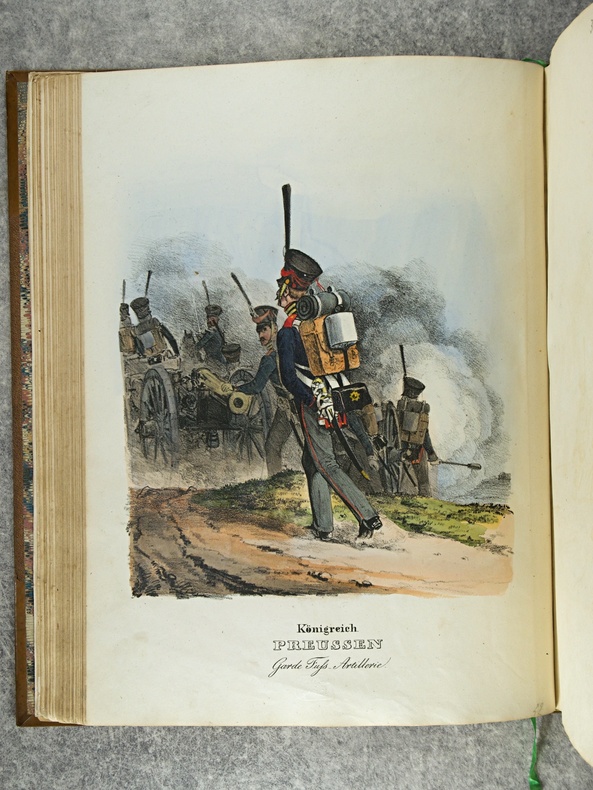
18381865WURZBURG. CHRISTIAN WEISS. 1838-1842. ENSEMBLE DE 91 LITHOGRAPHIES COLORIEES A LA MAIN ET GOMMEES D’UNIFORMES AUTRICHIENS (42) ET PRUSSIENS (49) DONT 79 HORS TEXTE PORTANT EN MARGE INFERIEURE LA LEGENDE IMPRIMEE AINSI QUE LE TIMBRE SEC DE L’EDITEUR. 91 PLANCHES MONTEES SUR ONGLET ET RELIEES EN UN VOLUME FORMAT IN-FOLIO (29 X 35,5 X 4 CENTIMETRES ENVIRON), RELIURE POSTERIEURE FIN XIX° PLEIN VEAU BLOND A COINS, DOS A CINQ NERFS ORNE DE CAISSONS A FLEURONS DORES, TITRE DORE, ETIQUETTE CONTRECOLLEE SUR LE PLAT SUPERIEUR : « W. GARFORTH. XCVII REGT ». QUELQUES PLANCHES ANCIENNEMENT RESTAUREES, AVEC QUELQUES DEFAUTS, LA GRANDE MAJORITE EN BEL ETAT.
156010Paris, Simart, 1725 2 forts vol. in-4, titre-front. gravé, [10]-XXII-[2]-739 et [2]-642 pp., avec 31 pl. gravées, veau fauve raciné, dos lisse à caissons richement ornés, hachures dorées sur les coupes, tranches citron (rel. de la fin du XVIIIe ). Dos uniformément insolés.
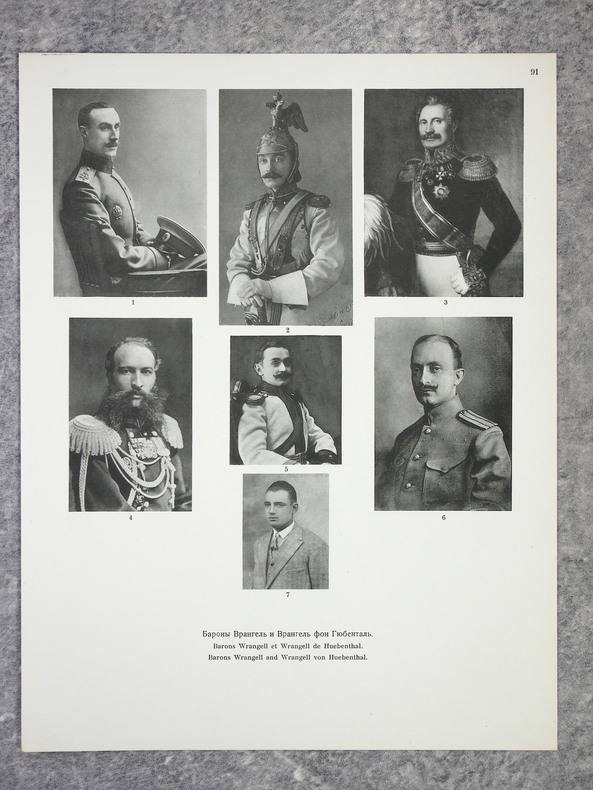
19611523(PARIS). PRINCE BELOSSELSKY-BELOZERSKY. 1961. 13 VOLUMES GRAND IN-4, 12 VOLUMES DE PLANCHES SOUS CHEMISES REMPLIEES ET UN VOLUME DE TEXTE BROCHE, LE TOUT SOUS EMBOITAGE TOILE NOIR DE L’EDITEUR (27 X 34 X 7,5 CENTIMETRES ENVIRON), PLAT SUPERIEUR ILLUSTRE D’UNE GRANDE COMPOSITION EN COULEURS A L’AIGLE BICEPHALE PAR ZWORIKINE. TEXTE TRILINGUE: RUSSE-FRANCAIS-ANGLAIS. ILLUSTRE DE 244 PLANCHES HORS TEXTE, 198 EN NOIR ET 46 EN COULEURS EDITION ORIGINALE. TIRAGE LIMITE A 300 EXEMPLAIRES NUMEROTES, NON MIS DANS LE COMMERCE, CELUI-CI PORTANT LE NUMERO 236. COMPREND:- TEXTE. HISTOIRE DU REGIMENT DE LA GARDE A CHEVAL. (6) + 39 ET (1) PAGES. BIEN COMPLET DE SON FEUILLET D’ERRATA.- I. UNIFORMES DU REGIMENT. 25 PLANCHES, DONT 12 EN COULEURS.- II. MEMBRES DE LA FAMILLE IMPERIALE, CHEFS ET OFFICIERS DE LA GARDE IMPERIALE. 47 PLANCHES, DONT 21 EN COULEURS.- III. PALAIS IMPERIAUX ET EDIFICES HISTORIQUES. 23 PLANCHES, DONT 1 EN COULEURS.- IV. JOURNEES MEMORABLES DANS LA VIE DES OFFICIERS DE LA GARDE A CHEVAL. 16 PLANCHES, DONT 8 EN COULEURS.- V. PORTRAITS D’OFFICIERS DE LA GARDE A CHEVAL. 25 PLANCHES, DONT 1 EN COULEURS.- VI. ANCIENNES FAMILLES DES GARDES A CHEVAL. 14 PLANCHES EN NOIR.- VII. OBJETS D’ART AYANT RAPPORT A LA GARDE A CHEVAL. 11 PLANCHES, DONT 1 EN COULEURS.- VIII. CHATEAUX ET DOMAINES DES OFFICIERS DE LA GARDE A CHEVAL. 19 PLANCHES, DONT 1 EN COULEURS.- IX. LES CASERNES DU REGIMENT. 18 PLANCHES EN NOIR.- X. LE REGIMENT DE LA GARDE A CHEVAL EN TEMPS DE PAIX. 22 PLANCHES EN NOIR.- XI. LE REGIMENT DE LA GARDE A CHEVAL PENDANT LA GUERRE. 17 PLANCHES, DONT 1 PLANCHE EN COULEURS.- XII. LES ANCIENS DE LA GARDE A CHEVAL DANS L’EMIGRATION. PLANCHES SUPPLEMENTAIRES. 7 PLANCHES EN NOIR.PETITE FENTE A L’EMBOITAGE, QUELQUES FINES ROUSSEURS EPARSES SUR LA PREMIERE PLANCHE DE CHAQUE POCHETTE, SINON BON EXEMPLAIRE DE CETTE MONUMENTALE EDITION.
220736Liège, Everard Kints, 1734-1735 3 vol. in-4, [9] ff. n. ch. (faux-titre et titre, dédicace, préface)-546-[26]-8 pp. ; [4]-643-[37] pp. ; [6]-XI-[3]-622-[39] pp., avec un frontispice équestre, un tableau dépliant (au volume III), 44 belles vignettes en-tête, la plupart représentant des scènes de bataille, et 644 armes gravées dans le texte, veau fauve marbré, dos à nerfs orné, tranches rouges (reliure de l'époque). Manques aux coiffes, petites épidermures sur les plats, coins usés. Rousseurs et feuillets brunis. Ex-libris Roger Magadoux.