30 331 résultats
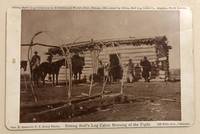
189353398Chicago: World's Columbian Exposition 1893. 1893. First edition. Original Photograph of Sitting Bull's log cabin where Sitting Bull was shot and killed December 15 1890. Cabinet Card. Image: 5.5"x3.875". Mount: 6.5"x4.25". Photograph shows Sitting Bull's log cabin with 6 men and three horses in front of or beside the cabin. All are dressed in coats with one man holding a rifle and another holding a pistol. All appear to be white men and likely soldiers or officers at Standing Rock Agency Fort Randall or Fort Yates. Printed across the blank top edge of the mount is the following: Sitting Bull's Log Cabin now on Exhibition at World's Fair Chicago 1893 owned by Sitting Bull Log Cabin Co. Mandan North Dakota." Across the bottom blank edge of mount is "Geo. E. Spencer U.S. Army Photo. Sitting Bull's Log Cabin Morning of the Fight. 7520 Ellis Ave. Chicago." Verso has scuffing to five 1" spots from past attachment and previous owner's name and address. Printed along top edge is "World's Columbian Exposition Chicago 1893. At bottom edge is printed "Agricultural Building." The Indian Agent for Standing Rock was James McLaughlin. With fears of Sitting Bull's intentions to join the rapidly growing Ghost Dance Craze McLaughlin ordered the Indian Police to go to Sitting Bull's cabin at dawn of December 15 1890 arrest him and return him to the agency. Following those orders 39 Indian Police surrounded Sitting Bull's cabin at dawn with the 3 officers knocking on the door before entering the cabin. They awoke Sitting Bull and informed him of their plans for his arrest and taking him to the agency. Eventually taking him outside in the interim many of Sitting Bull's supporters gathered to defend him. As the police attempted to force Sitting Bull to mount a horse a supporter shot the head officer Lt. Bull Head who in turn shot Sitting Bull in the side of the chest. As gunfire broke out 2nd Sgt. Red Tomahawk shot Sitting Bull in the back of the head. Within minutes Sitting Bull's supporters had killed or mortally wounded 6 of the police including 2 of the 3 officers. The Indian Police had killed Sitting Bull and 7 of his supporters. The police moved to the corral area for defense and awaited the arrival of the Army forces in order to safely return to the agency. As noted on the cabinet card Sitting Bull's cabin was disassembled and then moved to the World's Fair Exhibition in Chicago in 1893. Image is clean and clear in near fine condition. World's Columbian Exposition, 1893. unknown
196483035Washington DC: Department of the Army Headquarters 1964. Presumed First Edition First printing. Disbound three hole punched held together with a binder clip. Some of the punch holes are torn. Fair. Format is approximately 9 inches by 11 inches. Approximately 50 pages plus many tabs. Rare surviving original copy. Table of Contents includes: Introduction including Instructions for the use of the nuclear play calculator Strike Assessment Procedures including sections for cannons free rockets missiles air delivered weapons atomic demolition munitions and partisan atomic demolition munitions and new Aggressor weapons; Damage Determination References and Nuclear Play Calculator Aids in envelope. The Aids are present. This manual includes 11 tables in Chapter 2 and 15 tables in Chapter 3. This manual provides guidance on procedures and techniques for evaluation the nuclear play of aggressor forces during tactical exercises. This manual provides the necessary aids for the Aggressor to determine the damage to United States and Allied forces from nuclear strikes. The weapons systems in this manual are based on material contained in the Handbook on Aggressor Military Forces FM 30-102. Chapter 2 contains the tables for Aggressor strike assessments from nuclear weapons. Chapter 3 contains the damage radii tables from the nuclear weapons employed by the aggressor forces. Large Strategic Weapons 20MT-100MT were not included. Source date were extracted from FM 101-31-1. Aids envelop includes 8 plastic sheets of horizontal dispersion templates scaled 1:50000 and 1:25000 for cannons free rockets and Guided missiles and air delivered weapons and Damage circle templates for 1:50000 and 1:25000. Plastic sheets show wear and loss of text. The nuclear play calculator is a device for applying performance probabilities to nuclear delivery systems. The horizontal dispersion template is an aid used to determine the actual ground zero of a nuclear weapon. The damage circle template is an aid used in conjunction with the damage letters to evaluate the damage to personnel and equipment. The target element table describes target categories and the damage to be expected within each letter damage circle. The Damage circle radii tables are a series of tables showing the damage radii based on the height of burst and the weapon yield. Pagination is i; Chapter 1 1-1 to 1-3; Chapter 2 2-1 through 2-13 with tabs for Cannons Free Rockets Guided Missiles Air-Delivered Weapons and Atomic Demolition Munitions; Chapter 2 3-1 through 3-29 with tabs for 0.1 kt 0.5kt 1 kt 2 kt 5 kt10 kt 20 kt 50kt 100 kt 500 kt 1 mt 2 mt 5 mt Appendix is A-1 through A-2. Last page unpaginated is a distribution list. The envelop with the aids is affixed inside the back cover. Among the Aggressor weapons address were the 203-mm gun/howitzer 240-mm mortar 310-mm gun 400-mm mortar Nerono and Kolosso free rockets Tondro Fulmo Supro Sago and Aglo missiles Pafago Detruizo and Forviso air delivered weapons and atomic demolition munitions. This manual reflects the state-of-the-art the state of knowledge the state of training and the state-of-tactical nuclear weapons employment during the height of the cold war after the Cuban Missile Crisis and before the focus of the Army shifted to ground combat in Vietnam. Department of the Army, Headquarters unknown
194425953USA: N.P. 1944. 7 Volumes. 13"x9&1/4". Volume I stamped 'Secret" at top. Other volumes have "Secret" scratched out. Boards worn and scuffed. Operations Annexes 1 thru 20 in 6 subsequent volumes. Stamped "unclassified" with handwritten designations of declassification. Other occasional stamps. Two volumes have stamps at base. Library pocket at rear of two volumes. One also has date due form tipped in. Small stain at base to several backings for maps in Volume I. "Classification of Report. Report of operations Hq First U.S. Army for period 20 October 1943 - 1 August 1944 is classified as "Secret" until conclusion of hostilities with Germany at which time the classification will be changed to "Confidential". By Command of Lieutenant General Bradley:.". Hard Cover. Good/No Jacket. N.P. Hardcover
1942233621942. Army Air Forces B-25 pilot training at Columbia Army Air Base is documented through 2nd Lt. Floyd J. Good's flight records B-25 questionnaire training papers base photographs and an associated TB-25 cockpit checklist marked "Horg L. M. / 45-B / C-1." Good's file places him in the 376th Squadron 309th Bombardment Group with records tracking day and night flying first pilot time instructor time combat crew entries and related duty. One later flight sheet notes that Good was "killed in accidental explosion July 1944" while the Horg checklist dated January 26 1945 carries working cockpit procedures for takeoff single-engine drills supercharger use landing and shutdown.<br /> 1943 to 1945 chiefly Columbia Army Air Base Columbia South Carolina. Mixed archive of 66 items including 17 Individual Flight Record sheets 29 black-and-white photographs Good's Pilot's Information File and related training status medical and administrative papers a multi-page "B-25 Questionnaire" with handwritten answers and one folding "TB-25 CHECK LIST" with printed procedures and pencil notes. Good's flight records and training papers 1943 to 1944. Seventeen Individual Flight Record sheets and related forms record Good's progress through B-25 training including aircraft type flight hours instructor time medical classification and duty status. The B-25 questionnaire includes handwritten answers on hydraulic pressure emergency brakes landing gear flaps bomb bay doors and cockpit procedure.<br /> Columbia Army Air Base photographs circa 1943 to 1944. Twenty nine photographs record classroom instruction before a chalked airfield diagram formation drill band and flag ceremony barracks leisure barbering reading room interiors B-25 activity on the field and aircrew posed in flight gear before aircraft. Several versos carry crop measurements or layout marks.<br /> Also includes a wartime B-25 flight checklist dated January 26 1945 documenting cockpit procedure while B-25s were still in active combat service rather than training. Horg L. M. "TB-25 CHECK LIST." Folding cockpit checklist marked "HORG" and "Horg L. M. / 45-B / C-1" with sections for pre-inspection starting engines taxi single-engine stopping and starting drills before takeoff climb landing and stopping procedure. Its pencil reminders including "BOOSTERS ON / WHEELS DOWN" "LEARN" and "150 FLAPS" show use as a working pilot's reference at the height of the final wartime training cycle when Army Air Forces pilots were still being prepared for medium-bomber operations for 7 months before Japan's surrender. This gives the archive a direct war-date cockpit component connecting Good's stateside B-25 training file to the procedural discipline required of pilots flying an aircraft still central to Allied tactical bombing anti-shipping and ground-support missions.<br /> Columbia Army Air Base trained medium bomber pilots for an aircraft used in tactical bombing anti-shipping strikes airfield attacks and ground-support missions across the Mediterranean and Pacific theaters. Good's file records the institutional threshold for that work through flight time medical status instructor approval and technical examination while Horg's checklist records the cockpit habits expected of a pilot moving toward operational flying: single-engine control at 140 m.p.h. supercharger use above 11000 feet booster pump commands landing-gear timing and radio calls. The archive connects the classroom personnel office flight line and cockpit preserving the chain between stateside instruction and the emergency procedures required of Army Air Forces B-25 pilots. Documents and checklist with toning filing holes creasing soiling and handling wear; photographs with light fading silvering and occasional surface abrasions. Overall good condition. unknown
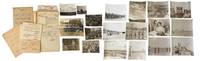
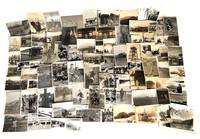
1947196441947. 11th Airborne Division paratroopers photographed during the early American occupation of Japan document airborne training and daily military life within one of the most distinguished U.S. Army airborne units of the Second World War. More than two hundred photographs dating primarily from 1947 depict members of the 11th Airborne Division conducting parachute jump training weapons drills and daily base activities while stationed in Japan after the end of the Pacific War. The photographs appear to have been assembled by a soldier identified through accompanying material as Jeff C. Wall likely assigned to a military government team in Yamagata Prefecture. The images capture the division during the transitional period between wartime combat service in the Pacific and the emerging American military presence in East Asia that characterized the early Cold War.<br /> <br /> Archive contains 217 Silver Gelatin photographs ranging from approximately 2.25 x 2.5 inches to 4.75 x 6.5 inches depicting paratroopers of the 11th Airborne Division in Japan. The archive includes twelve photographs documenting parachute jump training sequences from aircraft exit through descent and landing as well as several images of fully equipped paratroopers lined up before boarding troop carrier aircraft. Numerous photographs show soldiers around transport planes and other aircraft on base airfields. Additional images depict artillery and machine gun training exercises paratroopers assembled outside a command building displaying the slogan "Shape Up or Ship Out" and informal scenes of soldiers gathered around barracks or posing in groups. The photographs also record elements of base life including an enlisted men's club ticket associated with the Yamagata Military Government Team women service personnel including a nurse playing cards with soldiers and views of the surrounding Japanese landscape. Approximately fifteen photographs show Mount Fuji and nearby terrain around the camp in northern Japan.<br /> <br /> The 11th Airborne Division earned distinction during World War II through its combat operations in the Pacific theater particularly during the campaign for Luzon in the Philippines in 1945 where the division conducted airborne assaults and participated in the liberation of Manila. Units of the division also carried out a well known raid that freed Allied prisoners from the Los Baños internment camp. Following Japan's surrender in 1945 the division became part of the U.S. occupation force tasked with maintaining security and administrative control across parts of Japan. The 1947 photographs document airborne training and routine service during this occupation period when American military forces remained stationed throughout the country while the geopolitical tensions of the emerging Cold War began reshaping U.S. global military deployments. In later years the division was reassigned to Alaska where its airborne operations in Arctic environments led to the nickname "Arctic Angels." Minor handling wear typical of vernacular military photographs. Overall condition very good. unknown
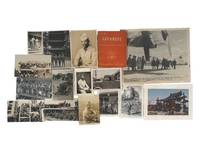
1943215491943. Photo archive documents the experiences of African American and white soldiers during and after World War II with a particular focus on the postwar occupation of Japan and the Philippines. African American and white United States Army soldiers in occupied Japan and the Philippines appear throughout this World War II and immediate postwar photograph archive of 16 original photographs documenting the military presence established in Asia following Japan's surrender in 1945. United States occupation forces entered Japan under the authority of the Allied command led by Douglas MacArthur overseeing demilitarization economic stabilization and reconstruction of Japanese infrastructure. The photographs document American servicemen returning from deployment in the Pacific and participating in the early occupation environment including logistical operations military transport and everyday life among U.S. troops stationed abroad. Several images specifically depict African American soldiers providing visual evidence of Black military service during a transitional moment when the U.S. armed forces remained segregated yet were increasingly dependent on specialized technical personnel and logistical units supporting large occupation forces across Asia.<br /> <br /> Archive of 16 items consisting of 15 black and white silver gelatin photographs and one language manual documenting American military personnel in Japan the Philippines and the United States during and immediately after World War II. Photographs range in size from approximately 3.5 x 2 inches to 10 x 8 inches and include formal portraits group images of soldiers disembarking from a military transport ship in San Francisco after returning from Asia scenes of military activity in Japan and documentation of damaged wartime infrastructure. One portrait shows an African American soldier in full uniform wearing a shoulder patch for the Japan Logistical Command a unit responsible for supply distribution transportation networks and infrastructure support for American occupation forces in Japan. Another photograph depicts an African American soldier with technician rank insignia on his sleeve chevron indicating a specialized technical role within the Army's wartime ranking system. Informal photographs provide glimpses of daily life including a soldier seated in a rickshaw with an inscription on the reverse reading "This is what is used for a taxi over here it's called a RICKSHAW. The guy in the seat is sometimes called a sgt. when they can think of nothing worse Ha Ha." Another image captures soldiers gathered outside a military barracks while a photograph captioned "Shadow of C-54 falls upon Sons of the Rising Sun on arrival at Ie Shima 20 August 1945 enroute to Manila" records the arrival of a U.S. transport aircraft shortly after the end of the Pacific war.<br /> <br /> Japanese: A Guide to the Spoken Language. Washington: War Department 1943. Issued to American military personnel preparing for operations in the Pacific the manual reflects the practical linguistic training provided to soldiers expected to interact with Japanese civilians and local labor forces during military operations and the occupation period. The guide includes phonetic instruction and dialogues designed for rapid language acquisition. One instructional passage advises soldiers: "To learn to imitate the sounds of Japanese you should listen to the records at least six or seven times. The English will be given first followed by the Japanese. Then repeat the Japanese out loud and say it good and loud. Remember! Repeat every Japanese phrase right after you hear it." Illustrated dialogue exercises show soldiers asking for directions in Japanese while another voice interjects "Hey! Anybody here speak any English" The photographs and language manual together illustrate everyday realities of U.S. military life in Asia during the transition from wartime operations to occupation governance following Japan's surrender. Photographs exhibit minor edge wear and light creasing consistent with period handling. The language guide shows moderate handling wear with slight staining and creased pages but remains fully legible. Overall condition very good. unknown
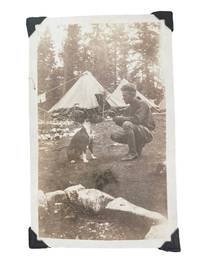
1918232501918. World War I Fort Bliss soldier training and camp life photo album from El Paso ca. 1918 recording the rapid wartime expansion of a border post into a large World War I training environment through tent rows drill formations truck convoys gas-mask instruction and group portraits of enlisted men in uniform. The album grounds that setting in specific internal evidence including the handwritten caption "Thanksgiving Ft. Bliss Texas 1918" beneath a group portrait the tent sign "Ambulance Company No. 10 / Men Wanted" and a large camp scene captioned "Ready for Business / W.H. Horse Co / El Paso Tex." Additional photographs follow soldiers through inspection lines recreational and theatrical moments camp interiors and exteriors and transport scenes giving the album a broad documentary range centered on military routine rather than formal ceremony alone.<br /> World War I era training album at Fort Bliss El Paso Texas. Circa 1917-1918. Photograph album containing 49 original black-and-white photographs mounted on black cardstock photographs ranging approximately from 2 x 3 inches to 3.5 x 5 inches. Images include extensive camp views including long rows of tents men standing in formation a soldier posed before camp quarters and a large gathering identified in manuscript as "Ready for Business." One image shows a woman in military-style uniform saluting the camera possibly a YWCA servicewoman. A substantial section documents motor transport and field organization through ambulance and truck lines crowded vehicle scenes and the recruiting sign for Ambulance Company No. 10 but these sit within a wider record of ordinary post life that includes mess and tent arrangements wooded camp settings dogs and mascots informal portraits a gas-mask training portrait stage performance views beneath an American flag rail lines and trestles mountain roads canyon routes and several personal portraits among them a woman in military dress and another street portrait with a uniformed soldier. The sequence suggests a soldier-assembled working album built from service experience at Fort Bliss and nearby western travel rather than a commercially produced souvenir.<br /> The album places Fort Bliss within the wartime transformation of the U.S. Army on the Mexican border and in the Southwest when posts such as El Paso functioned as training transport and staging environments for newly mobilized troops. Its strongest documentary value lies in the accumulation of ordinary but specific military details: tent architecture vehicle organization gas defense drill troop formations mess arrangements rail infrastructure and the handwritten Thanksgiving 1918 notation that fixes part of the sequence to the closing months of the war. Black paper album with spiral binding; photographs corner-mounted throughout; several prints with creases abrasions or edge losses but images in overall very good condition; album itself sound and complete. Overall very good condition. A photographic record of Fort Bliss that preserves how soldiers organized camp life training movement and leisure in El Paso during the World War I years. unknown
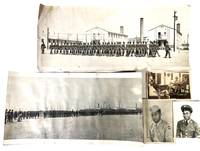
1941193561941. Partially identified Black Airmen photographs and Tuskegee Airmen signatures. African American airmen associated with the United States Army Air Forces during the World War II era document the struggle the struggle of entry into military aviation during a period when the armed forces remained racially segregated. This archive contains sixteen items including photographs of Black airmen in uniform and autographs of Tuskegee Airmen the pioneering African American pilots and support personnel trained beginning in 1941 after federal pressure forced the Army Air Corps to open limited aviation training opportunities to Black candidates.<br /> <br /> Five original photographs of African American airmen in Army Air Forces or early U.S. Air Force uniforms and nine signed note cards bearing the signatures of Tuskegee Airmen veterans. The archive also includes a contemporary pamphlet and photograph of a monument commemorating the Tuskegee Airmen. Signatures appear on white unlined cards measuring approximately 5 x 3 inches and include Claude Platt of the 301st Fighter Squadron and an Army primary flight instructor Charles A. Lane Jr. of the 99th Fighter Squadron Charles McGee of the 302nd Fighter Squadron Luther E. McIlwain Eldridge Williams of the 332nd Fighter Wing Leroy Bowman of the 301st Fighter Squadron Edward E. Tillman of the 477th Bombardment Group Utota Knox of the 302nd Fighter Squadron and Curtis C. Robinson of the 99th Fighter Squadron. The five photographs include two panoramic images measuring approximately 8 x 15 inches and 8 x 17.5 inches and three smaller photographs measuring roughly 3 x 5 inches. <br /> <br /> One panorama shows a large formation of troops assembled in ranks with a band and flag bearers present with African American personnel grouped separately from white soldiers and women within the formation. A second panorama shows approximately four dozen Black airmen marching in formation near a military installation. The smaller photographs depict African American airmen wearing service uniforms with airman caps and winged shoulder insignia; one image bears the inscription "To Mother - From Son in the service" while another real photo postcard shows a Black airman posing with a Black woman seated in a prop carriage behind a decorative mule annotated with "me" above the woman and the initials "T.B." above the man. <br /> <br /> The Tuskegee Airmen program began in 1941 when the U.S. Army Air Corps initiated training for African American pilots at Tuskegee Army Air Field in Alabama following federal directives requiring the military to allow limited Black participation in aviation roles. Units such as the 99th Fighter Squadron and the 332nd Fighter Group became the most visible African American flying units during World War II flying escort and combat missions in the European theater while operating within a segregated military structure. Their service challenged long standing claims that African Americans were unsuited for combat aviation and became a major milestone in the broader campaign for racial equality in the armed forces. The experience of these aviators and the public recognition of their accomplishments contributed to growing pressure for the desegregation of the military culminating in President Harry S. Truman's 1948 order ending official racial segregation in the armed forces. Five photographs ranging from approximately 3 x 5 inches to panoramic formats up to about 8 x 17.5 inches accompany nine signed note cards. One panoramic photograph shows slight water staining and a fold at the left corner; the remaining photographs and signatures remain well preserved. Overall condition very good. The material preserves visual documentation of African American participation in military aviation alongside signatures of several Tuskegee Airmen who served in fighter and bomber units during the war. unknown
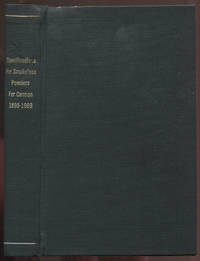
1909553425Washington D.C.: Ordnance Department U.S. Army 1909. Hardcover. Very Good. First editions. Small octavo. 18 volumes totaling approximately 230pp. 10 volumes contain a chart one fold-out and three contain fold-out graphs. Bound with wrappers into black clothcovered boards with spine gilt and page edges sprinkled red. Several volumes with ownership stamps or signatures or inked or stamped notes on the cover. A clean sammelband save for a large dampstain on the front endpapers causing light rippling on the first 30 pages or so and unobtrusive occasional staining at the very top of the gutter one fold-out graph with about ¼ missing and occasional small chips or tears on the wrappers; altogether very good.<br /> <br /> A bound series of Army-issued instructional pamphlets dating from 1898 to 1909 which were distributed to manufacturers of smokeless powders guncotton Ballistite Cordite etc. to instruct them on the specifications required by the U.S. Army. The pamphlets range in length anywhere from six to 30 pages. The earliest pamphlet stands out as it is comprised primarily of mimeographed pages from specifications written for three earlier contracts one from 1895 and two from 1897 and is the only volume in the collection constructed in this manner. We suspect that before these specifications were made more generalized in these frequently updated pamphlets they were written out contract by contract. Three of the pamphlets contain the owner signature of Odus Creamer Horney on the front wrapper. Horney was in charge of the building and launching of the Army's first smokeless powder factory starting in 1907 while in command of the Picatinny Arsenal in New Jersey.<br /> <br /> The collection contains two titles that eventually combine into one. Specifications for Smokeless Powders for Cannon later titled Specifications Governing the Manufacture of Smokeless Powder for Cannon and Standard Methods of Chemical Tests of Nitrocellulose and of Smokeless Powder for Cannon eventually combine into Official Methods for Examination of Nitrocellulose and of Smokeless Powder for Cannon and Specifications Governing Manufacture of the Same for about a year before the title was changed to No. 405 Instructions to Bidders and Specifications Governing the Manufacture Test and Inspection of Nitrocellulose and of Smokeless Powder for Cannon. A complete list of each title and a brief description is available upon request.<br /> <br /> As a collection this chronicles the evolution of the criteria required by the US Army for the manufacture of smokeless powders when that technology was still quite new in terms of use. OCLC locates four individual pamphlets but we could not find a similar example of this expansive collection. Ordnance Department, U.S. Army hardcover
1867005330Salem OH: Hudson & Son Printers 1867. Book. Very good condition. Paperback. First Edition. Octavo 8vo. ii printed wrapper with verso blank 12 pages of text followed by ii blank rear wrapper. Moderate soiling and age-toning to wraps with a few small tears to edges and a few tiny stains on front wrapper. This publication canonizes the First National Encampment of the Grand Army of the Republic. Includes a Preamble and 23 Articles and Resolutions. General John M. Palmer Major B. F. Stephenson surgeon of the Fourteenth Illinois regiment and General S. A. Hurlbut were present and appear to have been involved in the formation of the national rules. Rare imprint. No institutional holdings according to WorldCat/OCLC. The American Antiquarian Society Library holds a similarly titled GAR publication regarding a meeting held a month later December 21 1866 pertaining only to the Department of the Massachusetts. First edition. Hudson & Son, Printers Paperback
191095145Calcutta: Superintendent Government Printing India 1910. First Edition. Leather bound. Near Fine. Leatherbound volume. First edition from 1910 has been rebound in greenish-black Morocco leather with title and regiments listed in gilt on front. Spine has five raised bands with gilt decoration on each band. All edges gilt. Marbled endpapers. Condition of binding is near fine--there are a few small nicks at edges and a spot of wear to cardboard at the corners. Interior pages are clean and fresh with the occasional light spotting. A brief narrative history of the regiment is followed by lists: of colonels commandants native commandants and Risaldar Majors; of regimental lists; of war services of officers all followed by an Appendix and and Index and all preceded by an explanation of abbreviations. Laid in is a photo of the regiment in 1909 cut out from another volume. The book is not available on any of the listing sites and World Cat lists only two copies: one in New York and one in Australia. The book is available on Google Books; Small 4to. 172 pp. From the estate of Donald G. Skinner Canadian military collector extraordinaire. <br/><br/> Superintendent Government Printing, India hardcover
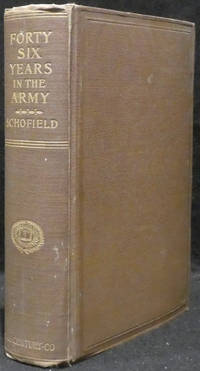
189720240031<p>Forty-Six Years in the Army by Lieutenant-General John M. Schofield. Published by The Century Co. New York 1897. Sm4to. xvi 577pps. Very good first edition book. Inscribed by the author on the FFEP. Narrow-ribbed brown cloth covered boards with blind-stamped borders around edges of front and back panels; gilt-stamped lettering and graphics on spine. Upper page edges are gilt. External lower edges are untrimmed side edges are rough trimmed. and both are age- and likely soil-darkened. Several scuffs on panels and spine diagonal scrape at upper right corner of back panel. Edges at head and tail of board spine have crimps and horizontal creases rubbed but not fraying. Fore-edge corner tips are scuffed very small rub-through on the lower right front tip. Back inside gutter has crack of 2 3/16". Gutter is cracked at pp. xii-xiii pp. 16-17 and pp. 288-289. Pencilled margin mark on page 13. Faint damp stains along the upper margin edges off and on through-out the book heaviest varies from approx. 1/8"-1/2" adjacent to the gutter by 2 1/2." The slightly duller areas of the upper edge photo is an indication of the pages impacted. Text pages are age-toned. Light intermittent foxing. Spine block is loose from the boards but held in place by the endpapers. Also includes a 4-page advertisement pamphlet. Photos are intended as part of the descriptions. Please use close-up options for best inspection. Additional photos available at your request.</p><p>From: Kansas City Public Library Civil War on the Western Border:</p><p>John M. Schofield served as the senior Union Army officer in Missouri during part of the war as both commander of the Army of the Frontier and the Department of Missouri. In 1864 he joined William T. Sherman's forces in Georgia and led one of the three federal armies in the Atlanta Campaign and subsequent "March to the Sea." Detached to protect the federal position in Tennessee he successfully fought John Bell Hood's remnants at the Battles of Franklin and Nashville.</p> The Century Co. hardcover
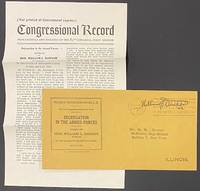
1951186401951. Dawson William L. African American congressman from Chicago and World War I veteran of the segregated 366th Infantry Regiment House of Representatives speech delivered April 13 1951 addressing segregation in the United States armed forces during the early years of the Cold War. Dawson served in Congress for nearly three decades and became the first African American to chair a congressional committee. His speech was delivered during a critical period in the history of American civil rights and military policy following President Harry Truman's 1948 Executive Order 9981 directing the desegregation of the armed forces. Debates in Congress during the early 1950s addressed the pace and implementation of integration and Dawson used the floor of the House to argue that racial segregation contradicted the principles for which American soldiers fought.<br /> <br /> Dawson William L. "Segregation in the Armed Forces." Speech of Hon. William L. Dawson of Illinois in the House of Representatives April 13 1951. Congressional Record 82nd Congress First Session. Single printed sheet measuring approximately 6 x 9 inches preserved with original mailing envelope. The printed text reproduces Dawson's remarks opposing segregation within the military establishment. In the speech Dawson declared: "If there is one place in America where there should not be segregation that place is in the armed services among those who fight for this country." He continued with a broader appeal to constitutional ideals and national unity: "I would give up this life of mine to preserve this country and every American in it white or black. Deny to me today if you will all that American citizenship stands for I will still fight to preserve our Nation knowing that someday under the Constitution of the United States all of these restrictions will be removed and that we will move forward before the world as one people American people joined in a democracy which shall set the pattern for all the world."<br /> <br /> Dawson's remarks formed part of the ongoing political struggle over civil rights and military policy during the early Cold War. The Korean War had begun the previous year and questions about equality within the armed forces remained under active debate as the military implemented Truman's desegregation order. Dawson's own wartime service in a segregated unit during World War I informed his critique of racial discrimination within the military establishment. As a senior African American political leader in Congress his advocacy contributed to broader legislative and political pressure supporting the continued dismantling of segregation in the armed forces. Minor wear consistent with age; overall condition very good. unknown
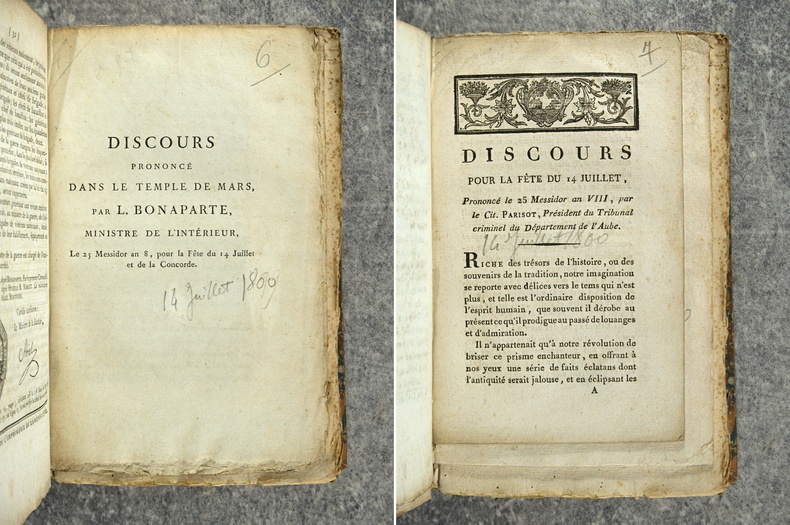
17992671799-1805. EXCEPTIONNEL ENSEMBLE DE 31 DOCUMENTS EN UN VOLUME, RELIURE POSTERIEURE A LA BRADEL 1/2 VELIN IVOIRE, TITRE EN NOIR SUR DOS LISSE. COUVRE L’ASCENSION DE BONAPARTE DEPUIS SA NOMINATION COMME CONSUL, JUSQU’AU TITRE D’EMPEREUR HEREDITAIRE. CONTIENT : - MESSAGE CONCERNANT BONAPARTE EN EGYPTE. 5 OCTOBRE 1799. A PARIS. DE L’IMPRIMERIE NATIONALE. VENDEMIAIRE AN 8. 12 PAGES.- COUPLETS CHANTES A SAINT-SULPICE LE 6 NOVEMBRE 1799. PARIS. BAUDOUIN, IMPRIMEUR DU CORPS LEGISLATIF. 2 PAGES.- DIALOGUE ENTRE UN ANCIEN ET UN DES CINQ-CENTS. (18 BRUMAIRE). (PAR ROEDERER). 8 PAGES.- DIALOGUE ENTRE DEUX DEPUTES (18 BRUMAIRE). 6 PAGES.- ARRETE CONTENANT REGLEMENT SUR LES REVUES DES TROUPES DU 26 VENTOSE AN VIII. (17 MARS 1800). A PARIS. DE L’IMPRIMERIE DE LA REPUBLIQUE. 32 PAGES.- DISCOURS PRONONCE DANS LE TEMPLE DE MARS PAR L. BONAPARTE, MINISTRE DE L’INTERIEUR, LE 25 MESSIDOR EN 8, POUR LA FETE DU 14 JUILLET ET DE LA CONCORDE (14 JUILLET 1800). A PARIS. DE L’IMPRIMERIE DE LA REPUBLIQUE. AN VIII. 14 PAGES.- DISCOURS POUR LA FETE DU 14 JUILLET, PRONONCE LE 25 MESSIDOR AN VIII, PAR LE CIT. PARISOT, PRESIDENT DU TRIBUNAL CRIMINEL DU DEPARTEMENT DE L’AUBE (14 JUILLET 1800). A TROYES. CHEZ F. MALLET, IMPRIMEUR DU DEPARTEMENT. 15 PAGES.- DISCOURS PRONONCE DANS LE TEMPLE DE MARS PAR L. BONAPARTE, MINISTRE DE L’INTERIEUR, LE 1° VENDEMIAIRE EN 9, POUR LA FETE DE LA REPUBLIQUE (23 SEPTEMBRE 1800). A PARIS. DE L’IMPRIMERIE DE LA REPUBLIQUE. VENDEMIAIRE AN 9. 14 PAGES.- TRIBUNAT. DISCOURS PRONONCE PAR ANDRIEUX, PRESIDENT DU TRIBUNAT, LE PREMIER VENDEMIAIRE EN 9, JOUR ANNIVERSAIRE DE LA FONDATION DE LA REPUBLIQUE (23 SEPTEMBRE 1800). A PARIS. DE L’IMPRIMERIE NATIONALE. VENDEMIAIRE AN 9. 16 PAGES.- BULLETIN DES LOIS DE LA REPUBLIQUE N° 333. CONSTITUTION DE LA REPUBLIQUE FRANCAISE. (ETABLISSEMENT DU CONSULAT, 14 OCTOBRE 1800). A PARIS. DE L’IMPRIMERIE DE LA REPUBLIQUE. 22 PAGES.- BULLETIN DES LOIS DE LA REPUBLIQUE N° 335. PROCLAMATION DES CONSULS DE LA REPUBLIQUE DU 24 FRIMAIRE AN VII. A PARIS. DE L’IMPRIMERIE DE LA REPUBLIQUE. 3 PAGES.- ROEDERER. LA PREMIERE ANNEE DU CONSULAT DE BONAPARTE. EXTRAIT DU JOURNAL DE PARIS DU 19 BRUMAIRE AN IX (20 NOVEMBRE 1800). 15 PAGES. LA SECONDE ANNEE DU CONSULAT DE BONAPARTE. EXTRAIT DU JOURNAL DE PARIS DU 19 BRUMAIRE AN X (20 NOVEMBRE 1801). 36 PAGES.- EXTRAIT DES REGISTRES DES DELIBERATIONS DES CONSULS DE LA REPUBLIQUE DU 1° FRIMAIRE, AN X DE LA REPUBLIQUE (22 NOVEMBRE 1801). EXPOSE DE LA SITUATION DE LA REPUBLIQUE. A PARIS. DE L’IMPRIMERIE DE LA REPUBLIQUE. FRIMAIRE AN X. 26 PAGES.- TRIBUNAT. PROPOSITION FAITE PAR CHABOT (DE L’ALLIER). SEANCE DU 16 FLOREAL AN 10. (6 MAI 1802). VOEU EN FAVEUR DE BONAPARTE A TRANSMETTRE AU SENAT ET AU CORPS LEGISLATIF. A PARIS. DE L’IMPRIMERIE NATIONALE. FLOREAL AN 10. 3 PAGES.- TRIBUNAT. DISCOURS PRONONCE PAR SIMEON, ORATEUR DE LA DEPUTATION CHARGEE DE PORTER AUX CONSULS LES FELICITATIONS DU TRIBUNAT SUR LA RATIFICATION DE LA PAIX AVEC L’ANGLETERRE. (18 FLOREAL. 8 MAI 1802). A PARIS. DE L’IMPRIMERIE NATIONALE. 18 FLOREAL AN 10. 3 PAGES.- EXTRAIT DU PROCES-VERBAL DES SEANCES DU CORPS LEGISLATIF DU 20 FLOREAL, AN 10 DE LA REPUBLIQUE (10 MAI 1802). DECLARE BONAPARTE REELU PREMIER CONSUL POUR DIX ANS. A PARIS. DE L’IMPRIMERIE NATIONALE. FLOREAL AN 10. 6 PAGES.- TRIBUNAT. EXTRAIT DU PROCES-VERBAL DU TRIBUNAT DU LUNDI 20 FLOREAL, AN 10 DE LA REPUBLIQUE FRANCAISE (10 MAI 1802). DECLARE BONAPARTE REELU PREMIER CONSUL POUR DIX ANS. A PARIS. DE L’IMPRIMERIE NATIONALE. FLOREAL AN 10. 6 PAGES.- TRIBUNAT. EXTRAIT DU PROCES-VERBAL DU TRIBUNAT DU 21 FLOREAL AN 10 (11 MAI 1802). DEMANDE DE PLEBISCITE POUR QUE BONAPARTE SOIT NOMME PREMIER CONSUL A VIE. A PARIS. DE L’IMPRIMERIE NATIONALE. FLOREAL AN 10. 7 PAGES.- CORPS LEGISLATIF. DISCOURS PRONONCE PAR SEGUR DANS LA SEANCE DU 22 PRAIRIAL (19 MAI 1802). PROPOSE QUE LE CORPS LEGISLATIF DECLARE TOUT DE SUITE BONAPARTE PREMIER CONSUL A VIE. A PARIS. DE L’IMPRIMERIE NATIONALE. FLOREAL AN 10. 3 PAGES.- CORPS LEGISLATIF. DISCOURS PRONONCE PAR VIENNOT-VAUBLANC, ORATEUR DE LA DEPUTATION ENVOYEE PAR LE CORPS LEGISLATIF, PRES LE GOUVERNEMENT, LE 24 FLOREAL AN 10 (14 MAI 1802). A BONAPARTE ET REPONSE DE CE DERNIER. A PARIS. DE L’IMPRIMERIE NATIONALE. FLOREAL AN 10. 3 PAGES.- TRIBUNAT. DISCOURS PRONONCE PAR CHABOT (DE L’ALLIER), ORATEUR DE LA DEPUTATION CHARGEE DE PORTER AU GOUVERNEMENT LES VOTES INDIVIDUELS DES MEMBRES DU TRIBUNAT SUR LA QUESTION PROPOSEE AU PEUPLE FRANCAIS. 24 FLOREAL AN 10. (14 MAI 1802). A PARIS. DE L’IMPRIMERIE NATIONALE. FLOREAL AN 10. 4 PAGES.- PROCLAMATION DU SENAT CONSERVATEUR, QUI DECLARE QUE NAPOLEON BONAPARTE EST NOMME PREMIER CONSUL A VIE, DU CONSENTEMENT UNANIME DU PEUPLE FRANCAIS. 14 THERMIDOR AN 10. (2 AOUT 1802). A PARIS. DE L’IMPRIMERIE DE VINCENT. 4 PAGES.- (JORDAN). VRAI SENS DU VOTE NATIONAL SUR LE CONSULAT A VIE. SE TROUVE A PARIS, CHEZ LES MARCHANDS DE NOUVEAUTES. (1802). 41 PAGES.- DISCOURS DE LUCIEN BONAPARTE SUR LA LEGION D’HONNEUR, PRONONCE AU CORPS LEGISLATIF DANS LA SEANCE DU 29 FLOREAL AN 10 (19 MAI 1802). PARIS. BAUDOUIN, IMPRIMEUR DU CORPS LEGISLATIF. PRAIRIAL AN X. 23 PAGES.- ARRETE DU GOUVERNEMENT DU 2 VENTOSE AN XI DE LA REPUBLIQUE (21 FEVRIER 1803). EXPOSE DE LA SITUATION DE LA REPUBLIQUE. A PARIS. DE L’IMPRIMERIE DE LA REPUBLIQUE. VENTOSE AN XI. 20 PAGES.- TRIBUNAT. DISCOURS PRONONCE PAR LE CITOYEN ALBISSON, SUR LA MOTION RELATIVE AU GOUVERNEMENT HEREDITAIRE. SEANCE EXTRAORDINAIRE DU 11 FLOREAL AN 12 (1° MAI 1804). A PARIS. DE L’IMPRIMERIE NATIONALE. FLOREAL AN XII. 7 PAGES.- TRIBUNAT. PROPOSITION FAITE PAR LE TRIBUN ALBISSON, DANS LA SEANCE DU 29 FLOREAL AN 12 (19 MAI 1804), APRES LA PRESENTATION ET LA LECTURE FAITE PAR LES ORATEURS DU GOUVERNEMENT DU SENATUS-CONSULTE DE LA VEILLE, QUI DEFERE LE TITRE D’EMPEREUR AU PREMIER CONSUL. A PARIS. DE L’IMPRIMERIE NATIONALE. PRAIRIAL AN 12. 2 PAGES.- TRIBUNAT. DISCOURS PRONONCE PAR CARRION-NISAS, SUR LA MOTION RELATIVE AU GOUVERNEMENT HEREDITAIRE. SEANCE EXTRAORDINAIRE DU 11 FLOREAL AN 12 (1° MAI 1804). A PARIS. DE L’IMPRIMERIE NATIONALE. FLOREAL AN 12. 24 PAGES.- SENAT CONSERVATEUR. SEANCE DU 2 BRUMAIRE AN XIII (24 OCTOBRE 1804). PROJET DE SENATUS-CONSULTE RELATIF AU RECENSEMENT DES VOTES EMIS PAR LE PEUPLE FRANCAIS POUR L’HEREDITE DE LA COURONNE IMPERIALE, PRESENTE AU SENAT DANS SA SEANCE DU 2 BRUMAIRE AN XIII, PAR MM. BIGOT PREAMENEU ET RAGNAUD (DE SAINT-JEAN D’ANGELY), ORATEURS DU CONSEIL D’ETAT. 70 PAGES, AVEC DE NOMBREUX TABLEAUX REPLIES COMPRIS DANS LA PAGINATION.- SENAT CONSERVATEUR. SEANCE DU JEUDI 22 FRIMAIRE AN XIII (3 DECEMBRE 1804) PRESENTATION AU SENAT DES ACTES DE NAISSANCE DES PRINCES FRANCAIS NAPOLEON CHARLES, ET NAPOLEON LOUIS, FILS DE MGR LE PRINCE LOUIS, FRERE DE L’EMPEREUR. 22 PAGES.- TRIBUNAT. DISCOURS PRONONCE PAR M. PICTET, TRIBUN, A L’OCCASION DE LA COMMUNICATION FAITE PAR L’ORDRE DE S. M. L’EMPEREUR. SEANCE DU 19 PLUVIOSE AN 13 (8 FEVRIER 1805). A PARIS. BAUDOUIN, IMPRIMEUR DU CORPS LEGISLATIF ET DU TRIBUNAT. 16 PAGES.PAGES NON ROGNEES, BEL EXEMPLAIRE.
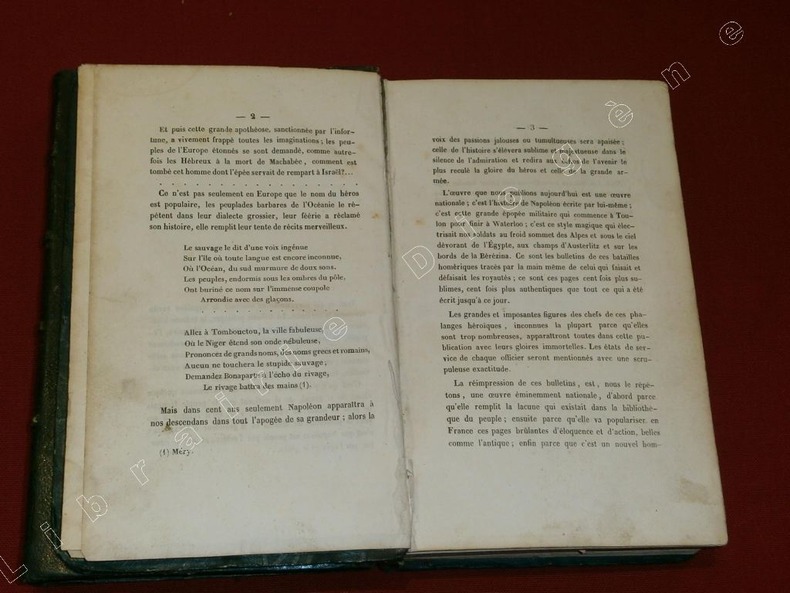
88147Paris, E. Prieur Editeur/ J. Dumaine, sans date (1845), 5/6 volumes de 135x215 mm environ, tome I : (2)-492 pages +27 planches, tome II : 480 pages + 30 planches, tome III : 478 pages+30 planches, tome IV : 482 pages +20 planches, tome V : 475 pages +41 planches soit 143 gravures hors-texte, demi-chagrin vert sapin, titres et tomaisons dorés sur le dos, gardes marbrées. Des rousseurs, des mouillures des petits manques de papier dans les coins, quelques erreurs de pagition, petit trou sur 2 feuillets (495-498, tome I), cuir et cartonnage frottés, un pli sur le coin supérieur du tome II, ensemble rare, manque le tome 6.
19451556PARIS. LAMBUSIER. (AU PROFIT DES OEUVRES DE LA CROIX ROUGE FRANCAISE POUR LES PRISONNIERS DE GUERRE). 1945. IN-4 EN FEUILLES (28 X 22,5 X 2,5 CENTIMETRES ENVIRON) DE 147 PAGES, COUVERTURE CREME REMPLIEE, TITRE IMPRIME EN ROUGE, SOUS ETUI CARTONNE (29 X 23 X 3 CENTIMETRES ENVIRON). ILLUSTRE D'UN FRONTISPICE GRAVE EN MEZZOTINTE PAR DARAGNES, UNE GRAVURE AU BURIN (PORTRAIT DE FRANCOISE GILLOT) ET DEUX IN-TEXTE DE PICASSO, QUATRE HORS TEXTE GRAVES A L'EAU -FORTE ET DIX-SEPT DESSINS IN-TEXTE DE DIGNIMONT, QUATRE HORS TEXTE GRAVES A L'EAU-FORTE ET VINGT-CINQ DESSINS DANS LE TEXTE DE TOUCHAGUES. PREFACE DU GENERAL KOENIG, TEXTES PAR PAUL ELUARD, PAUL VALERY, COLETTE, ANDRE BILLY, ETC. LE BURIN ET LES DEUX DESSINS DE PICASSO ILLUSTRENT LE POEME «DANS UN MIROIR NOIR» DE PAUL ELUARD. EDITION ORIGINALE. TIRAGE LIMITE A 1070 EXEMPLAIRES NUMEROTES, TOUS SUR VELIN DE LANA, DONT 50 HORS COMMERCE, CELUI-CI PORTANT LE NUMERO 543. DEFAUTS SUR L’ETUI CARTONNE, PETITE DECHIRURE SANS MANQUE AU DOS, QUELQUES ROUSSEURS EPARSES, SINON BON EXEMPLAIRE.
200506130Paris, 1961 ; grand in-8 oblong, br. Les 6 volumes. COMPLET RARE DES SIX POCHETTES (1717-1836, cahier n° 1 au dernier 16, modeles réglementaires. 1833-1861 chargement bouche & percussion 5 cahiers. chargement culasse 1858-1818. 5 cahiers.armement d'essai 1759-1917,3 cahiers. total 6 pochettes contenant 29 cahiers complet.) détail par cahier N° 1 systeme 1822 modeles d'ordonnance. n° 2 systeme 1816 n° 3systeme an 9 & 13. n° 4 carabines de versailles modeles 1793 & an 12. n° 5 systeme 1777 - 2e série l'évolution des armes 1763-66 & les fusils d'infanterie 1773 & 1774 n° 7 systeme 1763 - 1766 armes complémentaires n° 8 systeme 1763 -66 n° 9 la période de 1746 à 1759 n° 10 le fusil mle 1717 & le systeme 1728-1734. - 3e série cahier n° 11 maison du Roi restaurations.n°12 manufre de Versailles, gardes du directoire, garde consulaire & impériale. n° 13 armement révolutionnaire. n°14 marine &colonies 1777 ans 13. n° 15 maison du Roi ancien régime. n° 16 et fin armements divers. Nouvelle série1833-1861 chargement bouche & percussion n° 1 le système 1822 t. etr 1822 t. bis, cahier n° 2 le systeme 1840 le systeme 1842 et 1842 T. n°3 me systeme 1853 et 1853 T. le systeme 1854 dit " de la garde impériale" le systeme 1857, n° 4 les armes à chambre rétréci n° 5 les armes à tige n° 6 les armes particulières Nomenclature des munitions; Nouvelle série 1858-1918 chargement culasse cahier n° 1 les révolvers de marine, n° 2 le système 1866 dit " chassepot" n° 3 le systeme 1867 dit " a tabatière" n° 4 le systeme 1874 dit " gras" n° 5 le systeme 8 mm. 6e et dernier volume armement d'essai 1759-1917 cahier n° 1 chargement bouche, n° 2 chargement culasse. amorçage séparé , n° 3 chargement culasse. cartouche amorcée. fin) - bon état broché(fascicules) - Pochettes plastifiées.
214700Grenoble, Lithographie de l'Ecole du Génie, s.d. (1890) in-4 oblong, titre lithographié, [4] ff. n. ch., texte autographié sur deux colonnes, avec une carte en couleurs et 18 vues lithographiées chiffrées I-XVI (il y a des planches bis), en feuilles, agrafées. Couverture détachée comportant qqs manques de papier et déchirures.
190041La Haye, et se trouve à Paris, Antoine Boudet, 1760-1764 8 vol. in-12, veau blond, dos lisses cloisonnés et fleuronnés, pièces de titre et de tomaison, encadrement de simple filet à froid sur les plats, simple filet doré sur les coupes, tranches rouges (reliure de l'époque). Léger disparate dans les pièces de titre et de tomaison à partir du volume V, mais bon exemplaire.
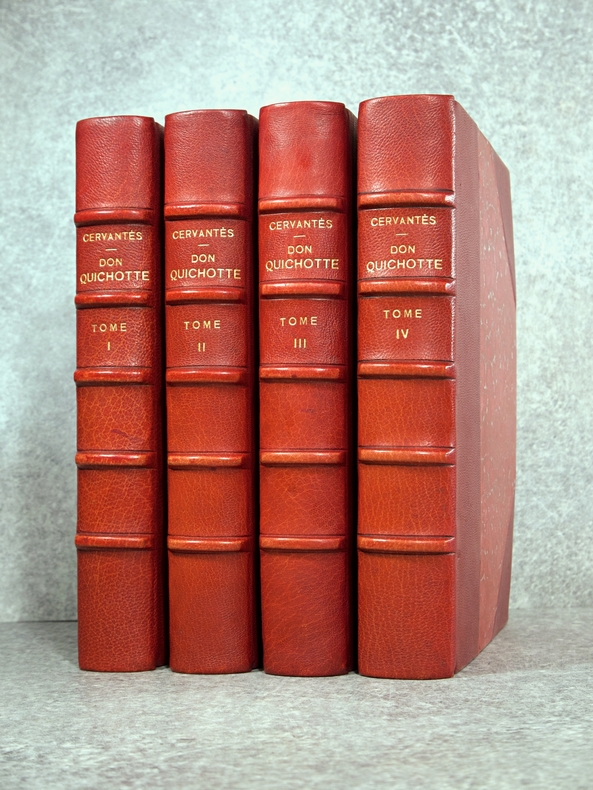
243742Paris, Soc. des ed. Militaires, 1929-1931 4 vol. in-4, demi-chag. brun à coins, dos à nerfs, couv. cons. (rel. de l'époque). Dos et coins légt frottés.
214524S.l., 1859 in-16, [7] ff. n. ch., couvertes d'une écriture très fine et lisible (environ 30 lignes par page), 3 ff. vierges, en feuilles.
207106S.l., s.d. (1915-18) in-8, [68] ff. n. ch., réglés (cahier scolaire), écriture large et lisible, et [39] ff. volants, toile Bradel grise modeste, dos muet (reliure de l'époque).
1866262831866 UN MANUSCRIT ORIGINAL, reliure demi-chagrin vert foncé in-octavo (binding half shagreen in-8), RELIURE D'ÉPOQUE, dos 4 nerfs (spine with raised bands), décoration "or" et à froid (gilt and blind-stamping decoration), titre frappé "or" (gilt title) dans un encadrement d'un filet "or", entre-nerfs à fleuron "or", filet à froid de part et d'autre des nerfs, 2 filets à froid en tête et en pied, plats de percale verte plus claire décorée à froid, de 2 filets à froid en encadrement se rejoignant aux angle dans un encadrement d'un filet large à froid, toutes tranches non-rognées, page de garde manuscrite de l'auteur à l'encre brune : "Paru dans le Journal L'ÉVÈNEMENT ...... Combe-Noire ... Le Bernard Mars 1863 - Paris Janvier - Juin 1866 ..... Histoire d'une Commune ... Les Guerres Civiles 1793-1800 ... (signé) Jean DUBOYS... à mon Ami Mondenoire qui sait mieux conserver les manuscrits que moi et à qui je sais que celui-ci fera plaisir .... Paris 16 Novembre 1866 ... (signé) Jean DUBOYS...", texte manuscrit à l'encre brune de 232 feuillets écrits d'un seul côté( dont 4 écrits des deux côtés) soit 236 pages avec une Table des Matières manuscrite en bas de la dernière page,
189688Brest, 14 août 1811 , 1 pp. grand in-folio en partie imprimée, grande vignette marine en en-tête, avec grandes armoiries impériales et Légion d'Honneur, encadrement gravé aux attributs de la marine de commerce, cachet rouge à l'aigle et timbres ; tache brune dans un angle, pli.
141428À Paris, De l'imprimerie d'Antoine Boudet, 1755 in-4, XX-446-[2] pp., 16 pl. depl., veau blond marbré, dos à nerfs orné aux petits fers dorés, tranches rouges (reliure de l'époque). Petit accroc à la coiffe supérieure, qqs épid. sur les plats.