ESQUER, Gabriel.Livre Rare Book
30 331 résultats
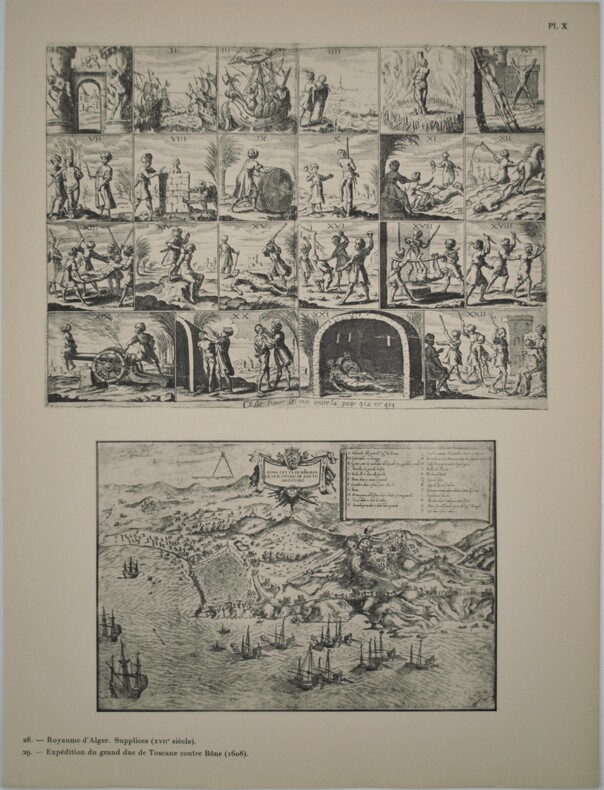
1930PHO-1046Paris : Plon, 1929. 3 grands volumes in-folio ; 354 planches dont 18 en couleurs, tables des noms et des matières. En feuilles sous chemise cartonné à lacets. Quelques rousseurs sur les feuillets de texte préliminaire.TomeI: Texte. Planches I à 66 (XVIesiècle-1826); TomeII: Planches 67 à 217 (1827-1837); TomeIII: Planches 218 à 354 (1838-1871) Les planches rassemblent plus de mille illustrations constituées par des peintures, dessins, estampes, images populaires, sculptures, médailles, représentant des portraits, vues de ville et vues du pays.
36159Imprimerie Royale, Paris, 1785, édition originale, 322 p., in-8, pleine reliure d'époque, dos décoré à 5 nerfs, bon état.
19561585031st Edition 2nd Printing. 1956. 1950s Chinese Nuclear Science Poster set incomplete 15 posters of 30 in colour. Each poster is numbered and depicts a detailed image for example a variety of types of nuclear weapons and defence construction with explanative notes. <br> <br>This broken set comprises poster numbers 6 8 9 10 11 12 13 14 15 21 22 23 24 25 and 26 of the 30 issued in this set. The posters in this group vary from being in reasonable secondhand condition to poor condition. Each shows signs of wear creasing closed tears and some with loss mainly on edges and corners. Most posters are torn with considerable loss at one corner and in two cases this has caused loss to the image. Many have been mended with tape on the reverse along some edges there is some marking mainly on reverse though in one case on the poster itself. On the reverse of poster 23 there is an amateur painting and some painted text. Text in Chinese. The poster sizes vary ranging approximately from approximately 55 x 77 to and 77 x 53cm. An interesting collection of posters which clearly shows that China was as deeply concerned about nuclear war during the Cold War as it's neighbours Russia and the United States across the Pacific. <br> <br>Poster no. 6 shows details of the lethality and destruction factors of the atomic explosion including shock weaves radiation and radioactive contamination. <br> <br>Poster no. 8 shows the materials to be used to build nuclear protection trenches as well as the construction methods. <br> <br>Poster no. 9 displays the images of the type of bomb shelter known "below chest-level bulletproof shelter" giving its floor plans with information on an estimated time to build and materials to use. <br> <br>Poster no. 10 shows images of the type of bomb shelter known "light bomb shelter" and a floor plan with information about its accommodation capacity 8-10 people estimated time to build 15 days and materials to use. Also it suggests every infantry platoon should install one of these shelters. <br> <br>Poster no. 11 shows images of the type of bomb shelter known "heavy bomb shelter" and a floor plan with information about an estimate time to build 35 days and materials to use. The heavy bomb shelter is used as a command office when needed. <br> <br>Poster no. 12 includes 9 images showing different nuclear protection bunkers built for various weapons and equipment such as 57 x 85cm cannon 122 x 152cm howitzer rocket artillery tank self-propelled artillery trucks and communication equipment. The poster also shows floor plans for each type of the bunkers an estimate time to build and materials to use. <br> <br>Poster no. 13 includes 8 images showing different nuclear protection field war warehouses to store materials and equipment such as ammunition mines explosives fuel barrels PT-10 and PT-25 fuel tanks and army provisions. The poster also shows floor plans with information about an estimate time to build and material to use. <br> <br>Poster no. 14 includes two images showing special squads for detecting radition levels on the upper section of the poster together with action plans below the images. A legend on the lower section shows correspondent names for the coloured routes. Detailed plans designed for searching nuclear contamination source and safe routes to take within the contamination zone. The routes are shown and numbered. Each squad consists of one squad leader. <br> <br>Poster no. 15 features an image of the special squad for detecting radiation level and very detailed information on their responsibility and action plans. An inset includes three images showing how to extract contaminated soil and a legend showing correspondent names for the coloured routes lower right section. <br> <br>Poster no. 21 includes 9 images showing different ways to remove radiative contamination on the roads and on battle field. Two blue charts in the middle section one chart showing different types of vehicles to remove contamination on the roads the other various warning signs according to radiation levels. <br> <br>Poster no. 22 shows images of different types of water supply wells cistern etc. and ways to protect the water supply from radioactive contamination. An image featured in the centre shows the layout of a water plant and how it processes contaminated water. The instruction above the image suggests that processed water shall be consumed only when no clean water is available. Four images with detailed instruction lower section show various water purifying methods distilling filtering and ion exchanging <br> <br>Poster no. 23 displays images of soldiers disinfecting radiation contaminated food with package or without and containers for food storage. <br> <br>Poster no. 24 features a Soviet Union made AN-1-A radiac set left section and two images right section of soldier measuring radiation level and soldier carrying the set. <br> <br>Poster no. 25 shows a circuit diagram of the AN-1-A radiac set with a legend showing different coloured current circuits. <br> <br>Poster no. 26 features another Soviet Union made AN-11-A radiac set. The parts of the set are highlighted upper section. Front view and back view of the set are shown lower section. A small image of the set in use upper right section. . unknown
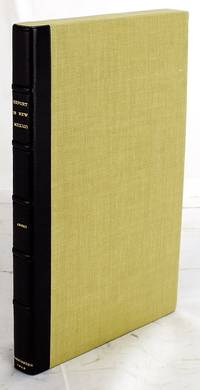
18481805130019Washington D.C: U.S. Government Printing Office Depart of War 1848. First Edition. Hardcover. Good. 1st edition Senate issue. Housed in a custom made morocco leather backed slipcase. Bound by Jacques Desmonts James Macdonald Norwalk Conn. 24.5 cm. Bound in original printed wrappers. Wraps are worn and nearly detached. Loss to bottom corner of front and rear wrap. Contemporary signature on front wraps. 132 pages: 24 plates folded map; 24 cm. Large folding lithographic "Map of the Territory of New Mexico." Pages are clean and unmarked. Includes plates of Santa Fe Fort Marcy San Felipe and Native Americans. Howes A-11; Sabin 57; Wagner-Camp 143; Streeter I.168; Graff 5 Rittenhouse 2. One of the earliest U.S. government sponsored explorations of the Southwest. James Abert left Ft. Leavenworth in Kansas along the Santa Fe trail in order to map the newly won territory. He made his way via Bent's Fort and returned to back His map was the most detailed up to that point. Abert had served in Gen. Stephen W. Kearny's Army of the West in the Mexican American War and had been part of Fremont's earlier California expedition. 30th Cong. 1st sess. Senate. Ex. doc. no. 23. U.S. Government Printing Office, Depart of War hardcover
18414444951<p>printed for the author by F. B. Penniman hinges cracked and weak but still holding title page coming loose black cloth worn remnants of spine label light foxing pages 145-148 missing from pagination no actual missing pages unmarked rare.</p> self-published hardcover
1943277008Kamnik district Slovenia: Tehnika RK VI 1943. 30pp. 8vo mimeographed text with images original tan wrappers with mimeographed cover.<br/> <br/> This rare surviving pamphlet from World War II was produced by the Yugoslav Partisans the most accomplished armed resistance movement against the Axis occupation of Europe. Starting out as a guerilla group the Partisans soon created a complete underground society based on Communist principles including schools government and medical institutions financial systems and publishing presses. This pamphlet produced by one such press likely hidden in the mountains or forests of Slovenia addresses an emergent need in such a new clandestine society: that for maps. It proceeds in logical order: geographical vocabulary instructions for making field maps and later more sophisticated and symbolic drafting techniques. Within this technical know-how it also communicates tactical military advice that the Partisan guerillas employed in their battles with Axis armies. This tactical quality of the publication is most in evidence in the pamphlets many striking diagrams which demonstrate the importance of visual knowledge in situations of survival.<BR> <BR> This pamphlet was one of many Partisan publications designed to educate protect and encourage members of the movement. It is particularly fascinating for its simple means of production since the secrecy of Partisan operations limited them to mechanical methods such as mimeographs--in witness here--as well as heliotypes linocuts and typewriting. Given its fragility the pamphlet is in excellent condition with clean text. Slight stains and some very small tears in margins. As one of the few Partisan publications on cartography this pamphlet is a rare and fascinating record of the World War II resistance.<br/> <br/> Tehnika RK VI unknown
First edition, 8vo (203 x 125 mm), [4], vii, [1 errata], 152p., with half-title, engraved frontispiece, some light spotting, cont. calf, re-backed, corners re-newed, morocco spine label lettered in gilt, ruled in gilt. George Montagu (1753?1815), English army officer and naturalist. In 1770 he joined the army as an Ensign in the 15th Regiment of Foot and In December 1775 George was promoted to the rank of Captain on the same day that the regiment was ordered to America. He resigned his commission as a Captain in 1777, but eventually rose to the rank of Lieutenant-Colonel in the Wiltshire Militia. This, his first publication, is little known and is rare, he is better known for his pioneering two-volume Ornithological Dictionary; or Alphabetical Synopsis of British Birds of 1802, which for the first time accurately defined the status of Britain's birds. He is remembered today for species such as the Montagu's harrier, named for him. ESTC locating 3 UK copies (BL, Cambridge and St. Andrews), with just 1 copy located in North America (Smithsonian).
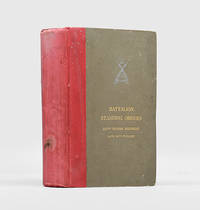
1931183065Allahabad: The Pioneer Press 1931. First edition one of 125 copies only. The orders for this unit first raised during the Indian Rebellion and subsequently seeing extensive service worldwide lay down regulations across a wide range of subjects. It was signed by Captain Mark Bwye of the 10th Battalion 15th Punjab Regiment a sister unit. We have traced no copies in institutions or in commerce. During the Indian Rebellion of 1857 Captain H. T. Bartlett raised the 18th Regiment of Punjab Infantry at Peshawar. Under Lord Kitchener's reforms in 1903 it was reconstituted as the 26th Punjabis then in 1922 it was merged with four other units to form the 15th Punjab Regiment. This was made up of five battalions of which the 2nd Battalion was the former 26th Punjabis. Over the course of its history from 1857 they fought in the Second Afghan War Third Anglo-Burmese War both world wars and the Indo-Pakistan War of 1965. In 1931 they were stationed in Mingaladon Burma and commanded by Lieutenant Colonel O. D. Bennett. Octavo. Battalion badge in silver to p. 292 diagram and tables some folding in text; interleaved with blanks for notes as issued. Original red half cloth grey green cloth boards lettered in gilt and decorated with battalion crest in silver. Marginal pencil notes to appendix. Binding variably soiled spine sunned stained and rumpled tips a little worn: a very good copy. hardcover
1814381814 Londres, William Bulmer & Co., 1814.
19322501200027xbvkBerlin, wohl Ende 1931 bzw. Anfang 1932. Bedruckte Original Schellackplatte in neutraler brauner Papierhülle der Zeit mit rundem Mittelausschnitt (ca. 25 x 25 cm); Spieldauer je Seite ca. 3 Minuten und 15 Sekunden.
NC02AA-00581The Infantry Journal. Collectible - Good. Washington: The Infantry Journal Inc. 1943. 3rd edition. 24mo. 360pp. Illus. maps. Good book. Owner's name on front cover. mortars ordnance handbooks and manuals Inquire if you need further information. The Infantry Journal unknown
Vol. 1: fine Vol. 2: light bumping to upper corners. Vol 3: very light soiling to spine. Light wear to one corner; vol. 4: light chip to top of spine else fine. Vol. 5: small chip to base of spine. Else fine. Set appears unread. Volumes range from VG+ to Fine. ; Publishing years 2008-2009. Isbns: 9025612359, 9025612369, 9025612423, 9025612474, & 9789025612528 ; 5 Volume Set COMPLETE. Supplementi Di Lexis; 2439 pages
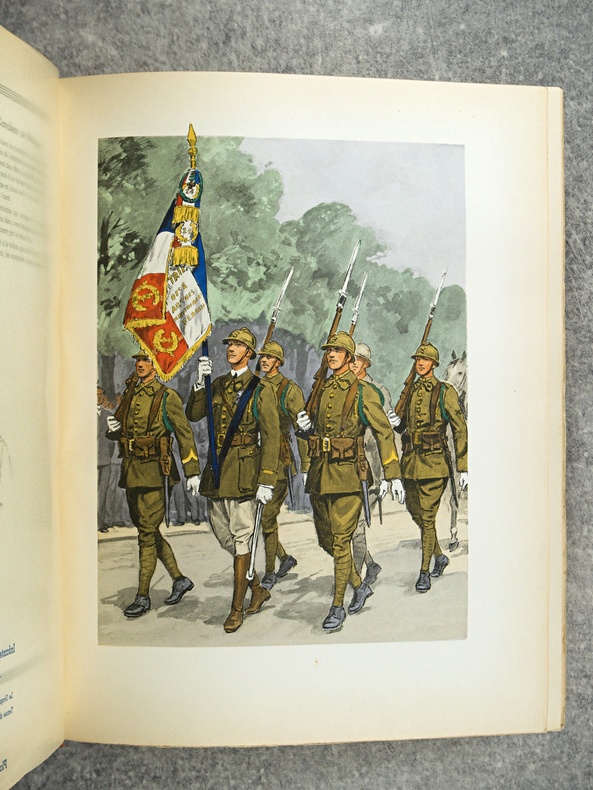
1935814PARIS. LES EDITIONS MILITAIRES ILLUSTREES. 1935. GRAND IN-4 (26 X 32,5 X 7,5 CENTIMETRES ENVIRON) DE (14) + 269 ET (2) PAGES, RELIURE D’EPOQUE PLEIN CHAGRIN MOSAIQUE TRICOLORE BLEU-BLANC-ROUGE, DOS LISSE ORNE D’UN SEMIS D’ETOILES,TITRE ET TETE DORES, COUVERTURE IMPRIMEE ET DOS CONSERVES. ILLUSTRE DE 124 PLANCHES HORS TEXTE EN COULEURS, SOUS SERPENTE LEGENDEE, DONT 15 DE DECORATIONS, DRAPEAUX, BRASSARDS, GALONS, ETC, ET 109 DE COSTUMES MILITAIRES D’APRES LES COMPOSITIONS DE MAURICE TOUSSAINT. EDITION ORIGINALE ET PREMIER TIRAGE LIMITE A 1000 EXEMPLAIRES, DONT 500 NUMEROTES ET 5 HORS COMMERCE. DEFAUTS SUR LES CHARNIERES, SINON BON EXEMPLAIRE DE CETTE BELLE PUBLICATION.
175625586A Paris, de l'Imprimerie royale, 1756 et 1758. 2 forts vol. au format in-4 (263 x 198 mm) de 1 frontispice allégorique gravé, clxxvi - 372 pp. ; viii - 614 pp. et 1 f. bl. Reliures uniformes de l'époque de plein veau glacé et marbré blond, plats jansénistes, dos à nerfs ornés de filets gras à froid, roulette dorée sur les nerfs, doubles caissons d'encadrement dorés, caissons dentelés dorés, large décor fleuronné doré, semis de fleurettes dorées, pièces de titre de maroquin havane, titre doré, tomaison dorée sur fond ébène, palette dorée en queue, roulette dorée sur les coupes, tranches rouges.
1802001314Paris Croullebois, Bossange, Masson, et Besson 1802
1805xs2314Paris, Allais, libraire, quai des Augustins, n°44 Relié 1805 Deux volumes in-4 (20,5 x 26,2 cm), reliure plein veau, dos lisse, 308 et 299 pages, complet des 20 planches dans le premier volume et des 13 planches dans le second ; coiffes et coupes usées, mors inférieur fendu aux coiffes au tome 2, mouillure sur le bord des planches au tome 1, par ailleurs bon état général. Livraison a domicile (La Poste) ou en Mondial Relay sur simple demande.
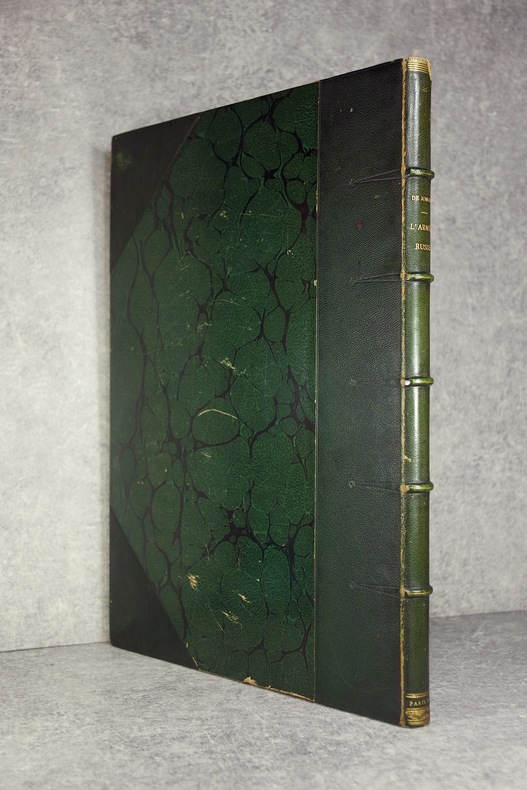
18951998PARIS. IMPRIMERIES LEMERCIER. SANS DATE. (1895). IN-FOLIO (31 X 40 X 2,5 CENTIMETRES ENVIRON) DE (6) + 151 ET (1) PAGES, RELIURE D'EPOQUE 1/2 CHAGRIN VERT A COINS, DOS A CINQ NERFS, TITRE ET TETE DORES. ILLUSTRE D'UN PORTRAIT DU TSAR NICOLAS II EN FRONTISPICE, REPRODUIT EN HELIOGRAVURE, DE 8 PLANCHES HORS TEXTE D'UNIFORMES EN COULEURS ET DE TRES NOMBREUSES PHOTOGRAPHIES EN NOIR. (LES COSAQUES - L'INFANTERIE, LA CAVALERIE ET L'ARTILLERIE DE LA GARDE - TROUPES DE LIGNE ET TROUPES SPECIALES). EXCELLENT DOCUMENT D'EPOQUE SUR L'ARMEE IMPERIALE RUSSE. EDITION ORIGINALE. L'ATELIER PHOTOGRAPHIQUE DE JONGH FRERES (CA 1880-1903) ETAIT TENU A NEUILLY-SUR-SEINE PAR TROIS FRERES : VICTOR-EDOUARD (1859-1926), LEON-FRANCOIS-FRANCIS (1861-1944) ET AUGUSTE CLEMENT (1863-1947). DEFAUTS EXTERIEURS, DONT MANQUE DE CUIR SUR LE MORS SUPERIEUR, FAIBLESSE AU NIVEAU DE LA CHARNIERE DU PLAT SUPERIEUR TOUJOURS ATTENANT, INTERIEUR TRES FRAIS.
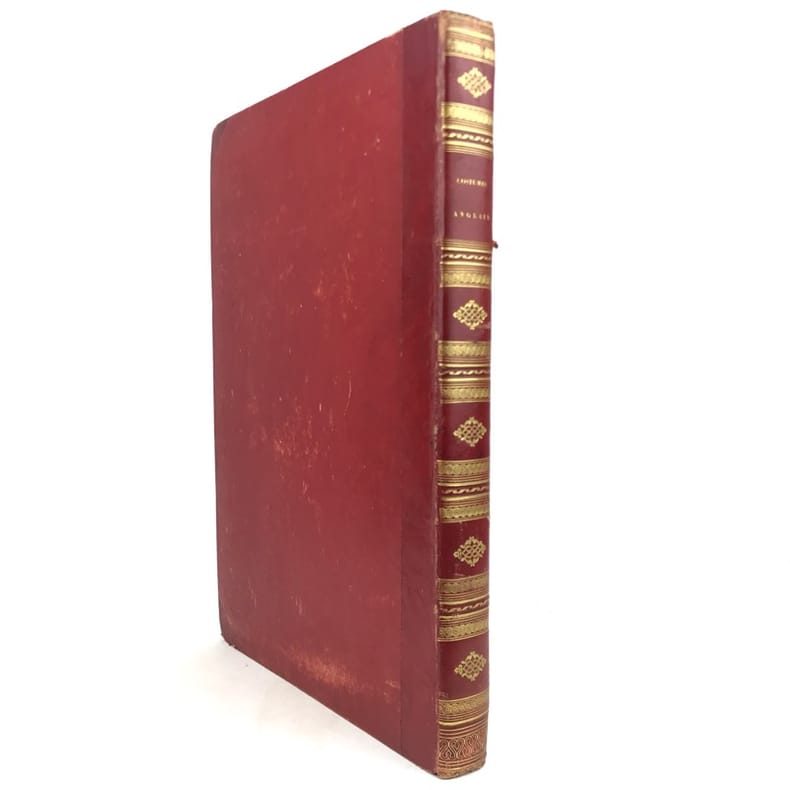
18470032661847 Paris, Imprimerie Royale, avril 1847. Grand in-quarto (229 X 300) chagrin rouge à grain long (reliure de l'époque) ; 42 pages.
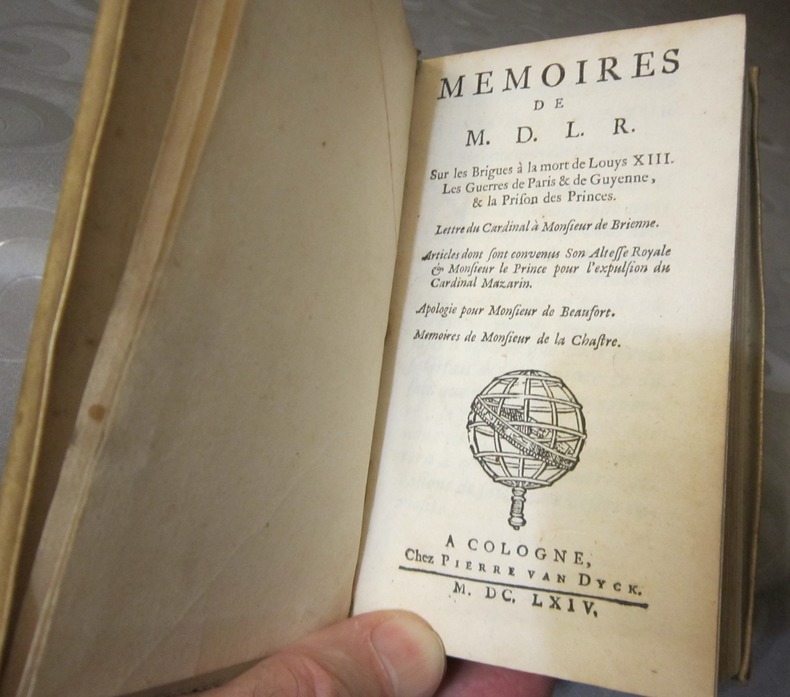
1664003335A Cologne, Chez Pierre van Dyck (Bruxelles, Foppens). in-12 (13,5 x 8 cm), 2 ff., 400 pp., reliure d'époque vélin ivoire à recouvrement, auteur, titre et date calligraphiés sur le dos, tranches jaspées et tête rouge. Sphère sur le page de titre.
17880046951788 Londres, sans nom d'éditeur, 1788. Fort volume in-quarto (216 X 270 mm) basane fauve marbrée, dos cinq nerfs filetés, caissons dorés ornés, guirlandes dorées en queue et tête, pièce de titre maroquin grenat, coupes et coifes filetées, tranches rouges (reliure de l'époque) ; (2) ff. de titre et avis des éditeurs, 424 pages, 93 planches. Epidermures sur les plats,
1812PHO-2419London, Patrick Martin and co, C.J. Barrington, 1812-1814, Half green leather with corners, smooth spine with title and volume numbering direct. Rubbing, worn corners and edges, occasional foxing. Illustré de 3 titres gravés, 24 cartes et plans sur 25 et 7 portraits sur 26, mention de seconde édition au tome 1.
1937005657Hamburg, Hanseatische Verlagsanstalt ohne Jahr [1937-1942], 1937. Zusammen 5265 Seiten. Großformatige Orig.-Leinenbände, die Kopie der beiden Register als private Broschur. Wie schon der Titel verdeutlicht, ist das Werk nicht frei von den Einflüssen seiner Entstehungszeit. Dennoch bleib diese Sammlung von 3359 zum großen Teil bebilderten Kurzbiographien der Generale von den Anfängen der kurbrandenburgisch-preußischen Armee bis ca. zum Beginn des Ersten Weltkriegs ein unentbehrliches Hilfsmittel für Historiker und Genealogen. Der Vorbesitzer hat die sehr seltenen beiden broschierten Register (die hier "Verzeichnisse" heißen) von dem Exemplar aus der Bibliothek der Führungakademie der Bundeswehr in Hamburg kopiert; das zweite, schmalere Register erschien kriegsbedingt ohnehin nur noch als Vervielfältigung des Schreibmaschinentyposkripts. Diese Register sind so unbekannt, daß sie selbst in der Berliner Staats- und der Deutschen Nationalbibliothek in Leipzig ebenfalls nur als Kopien vorliegen und die Wissenschaftliche Bibliothek des Militärgeschichtlichen Instituts der DDR 1980 sogar ein eigenes neues Verzeichnis anfertigen ließ. Der Rücken von Band 10 ist gering verblaßt, sonst handelt es sich jedoch um ein vollständiges, gut erhaltenes Exemplar mit nur leichten Gebrauchsspuren.
1833PHO-1493Paris, Arthus Bertrand, 1833. — 3 volumes in-8, 210x130, et un Atlas in-4, 305x235 : XV, 286 pp., 1 carte ; (2 ff.), 326 pp.; (2 ff.), 439 pp.; (2 ff.), 30 pl. pour l’Atlas. Texte : Demi basane bleue, dos lisse orné avec auteur et titre, tranches mouchetées, plats légèrement frottés, petites rousseurs, accompagné de son Atlas, Titre, explication des planches et 30 planches, relié plein papier bleu, dos lisse avec auteur, titre et tomaison, frottements, trace de réparation, mouillure angulaire, quelques rousseurs.
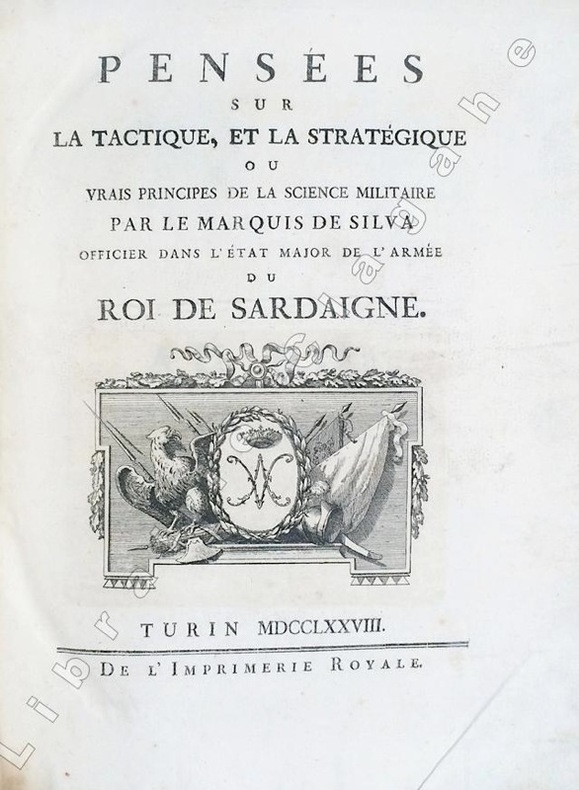
17786494Turin, Imprimerie Royale, 1778 ; in-4 ; demi-veau glacé havane, dos à faux-nerfs dorés et palettes décoratives, pièce de titre vert-pistache, tranches mouchetées de bleu (reliure de l'époque) ; (14), 359, (1 bl.) ; (4), 55, (1) pp. et 30 planches gravées dépliantes.SUIVI DE : "CONSIDERATIONS SUR LA GUERRE DE 1769 ENTRE LES RUSSES ET LES TURCS. Nouvelle édition corrigée et augmentée de plusieurs notes historiques."
19653850BOULOURIS. EDITIONS DU BANIYAN. 1965. GRAND IN-4 EN FEUILLES (39 X 29 X 7 CENTIMETRES ENVIRON) DE 289 PAGES, COUVERTURE CREME REMPLIEE ILLUSTREE D'UNE VIGNETTE AUX GRANDES ARMES IMPERIALES EN VERT, SOUS CHEMISE ET ETUI CARTONNES RECOUVERTS DE PERCALINE VERTE DE L'EDITEUR. ILLUSTRE DE 127 COMPOSITIONS MISES EN COULEURS AU POCHOIR PAR EDMOND VAIREL. PREMIER TIRAGE LIMITE A 1100 EXEMPLAIRES NUMEROTES, DONT 20 HORS COMMERCE NON JUSTIFIES. UN DES 840 EXEMPLAIRES SUR VELIN CUVE DE LANA, CELUI-CI PORTANT LE NUMERO 394 ET ACCOMPAGNE D'UNE SUITE DE 25 ILLUSTRATIONS EN COULEURS INCLUANT LA DOUBLE PLANCHE, LE FRONTISPICE, LES HORS TEXTE ET LES TETES DE CHAPITRE A MI-PAGE, SOUS CHEMISE ET ETUI A L’IDENTIQUE. ENSEMBLE DE 2 ETUIS. BEL EXEMPLAIRE.