30 332 résultats
191811652Washington: Government Printing Office 1918. First Edition. Original cloth. Octavo. 96 pages. Near Fine. Bound in coarse tan cloth over boards with title printed in black on upper board. Contemporaneous prior owner name in ink on front pastedown. Fold-out plans tables photographs. Scarce Confidential manual on the weaponry associated with U. S. Army aircraft and pilots in World War I. Sections on the Marlin the Lewis and the Vickers aircraft machine guns synchronizing gears machine gun sights bombs bomb-release mechanism bomb sighting ammunition pyrotechnics and small arms. Three fold-out plates one of which is a detailed and colored schematic of the Lewis machine gun. Notice on the first page warns that this book ".is issued for the instruction and guidance of all concerned and contains information of military importance none of which may be copied printed or published under any conditions." <br /> <br /> Only 16 copies located in OCLC. Government Printing Office unknown
Single sheet, a near fine copy. Signed simply 'Wavell' in the writer's usual manner, the letter is written to Geoffrey Moore, founder of the Buccaneers Cricket Club, and demonstrates the soldier's keen and continuing interest in the sport. It is noteworthy that Wavell was particularly proud of his membership of the MCC at Lords. The letter confirms that Wavell will propose the toast at the Buccaneers' annual dinner (held at Lords). Field-Marshal Earl Wavell (1883-1950) was one of the twentieth century's most distinguished British soldiers. Following considerable success against the Italians in North Africa, his career reached its peak with his appointment as Supreme Allied Commander, South West Pacific, ABDA (American, British, Dutch and Australian) Command in 1942 and subsequently as an outstanding Viceroy and Governor General of India from 1943-1947. He was recognised also as a scholar, compiling the well-known anthology of poetry 'Other Mens's Flowers' (1944). The bulk of Wavell's papers are now housed in the Liddell Hart Centre for Military Archives at King's College, London. Founded in 1930, The Buccaneers is one of the oldest and most famous 'wandering' clubs in English cricket (a 'wandering' club has no fixed home ground but plays as an away team relying on the hospitality of the home clubs against which it competes). The Club's history has been written twice, by Clifford Bax in 1956 and more recently by Howard Spencer. ORIGINAL DOCUMENTS SIGNED BY WAVELL ARE EXTREMELY SCARCE.
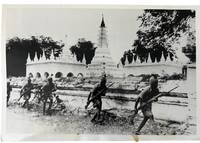
1914234921914. British Indian Army photo archive spanning both World Wars depicting colonial recruitment military training the Indian Air Force military ceremonies and Burma-front service into the final decades of British rule in India circa 1914-1945. The British Indian Army was the largest non-conscript force in history: roughly 1.3 million men were recruited during the First World War and 2.5 million during the Second. Indian troops were deployed to the Western Front Mesopotamia East Africa and Egypt during the First World War and to North Africa Italy the Middle East and Burma during the Second. British power in India had grown from East India Company conquest in the eighteenth century passed to Crown rule after the 1857 uprising and was nearing collapse during the time which these press photographs document. The Quit India movement the 1943 Bengal famine wartime censorship and anti-colonial organizing made British authority increasingly untenable even as Indian troops mobilized in record numbers. The archive records the last colonial wartime mobilizations of India before independence in 1947 and Partition remade the subcontinent.<br /> <br /> Photo archive of 31 silver gelatin photographs and four real-photo postcards various sizes ranging from 4 x 2" to 10 x 6.5 inches India France and Burma circa 1914-1945. The four French-printed real photo postcards date to the First World War and document Indian Expeditionary Force service: "1914 - Soldats anglais et indiens / Indian and English soldiers" showing a horse-drawn carriage driven by an Indian man with three uniformed soldiers seated inside; "1914 Indian Army - Attelage de Guerre / War Team" depicting a military draught team; "Indian Army Conveyer" showing an Indian soldier with four pack donkeys; and a 1919 postcard documenting the arrival of a British detachment at a colonial camp. A formal group portrait of approximately nineteen Sikh soldiers in khaki service dress and regulation dastaars stands before a row of tents at a North-West Frontier camp. Sikh troops fought throughout both World Wars in their turbans the only major military force to refuse steel helmets on religious grounds.<br /> <br /> The remaining photographs 1940-1945 document Sikh Gurkha Punjabi and other Indian troops in khaki drill tunics shorts puttees regulation turbans dastaars kullahs slouch hats pith helmets steel helmets and web belts carrying rifles at the shoulder or raised in training exercises. The combination of regulation turbans with British-style khaki uniforms was standard British Indian Army dress formally accommodating Sikh and other religious traditions within Empire military regulation. A vernacular view captioned "Some of our boys at camp Ksli India" records ten uniformed men wading through a knee-high river with rifles held across their shoulders. Troops march past Buddhist stupas in Burma kneel in brush with bayoneted rifles fire from jungle cover operate a field telescope behind sandbags and sit beside motorcycles and jeeps on a rough military road. One photograph carries the studio stamp of Mela Ram & Son Peshawar a leading early-twentieth-century North-West Frontier military photographer. Press captions identify "Punjab's in India join army" "Gurkhas open fire during a training exercise" "British troops in India prepare for Burma campaign" "Indian troops in Burma" "Burma advance" "Viceroy presents Victoria crosses to Indian heroes" "Tunisia Day celebrated in Calcutta" "Troops on the parapet of Matta Post watching the bombardment" North-West Frontier July 1940 "Supreme Commander" and "Services Sweetheart" the last identifying Miss Joy Thompson of Bombay and Sgt. A. Pickles of Leeds.<br /> <br /> British India entered both world wars by imperial decision. The same years that produced the photographs in this archive also produced the Quit India arrests of 1942 the Bengal famine of 1943 and intensified military recruitment across a country already moving toward independence. The archive preserves official publicity press distribution and soldier-level record-making from a colonial army fighting for Britain while British authority in India was approaching its end. Creasing surface wear fading caption-label remnants press stamps and occasional abrasions; overall very good condition. unknown
193243672V.p. 1932. Five original press photographs all approx. 17.5x23cm. or the inverse and ten photographic postcards 9 real photo one collotype.; typescript snipe or newsclippings versos of four press photos with some attendant cockling from adhesive; snipes slightly toned; uniformly Very Good. One image has been touched up for publication with Johnstown Mayor McCloskey mid-speech circled in black an arrow pointing to a nurse clad in white behind him. Photographs stamped on verso by Acme Photo Cleveland; Acme Newspictures New York; and the Associated Press. Photo postcards depict Bonus Army encampments and activities in Washington; most bear the "Official B.E.F. Photo" slug in image. In 1924 a grateful Congress voted to give a bonus to WWI veterans ranging from $1.00 for each day served in the U.S. to $1.25 for each day served overseas. The catch was that payment would not be made until 1945. By 1932 the nation was in the throes of the Depression and the unemployed veterans wanted their compensation immediately. In May of that year nearly 15000 veterans many unemployed destitute and hungry descended on Washington DC to demand immediate payment of their bonuses. Led by a man named Walter Waters the veterans called themselves the "Bonus Expeditionary Force" B.E.F.; the media largely sympathetic to their plight dubbed them "The Bonus Army." <br/><br/>At its height approximately 17000 veterans and their families lived in shanty towns around Washington. They built camps and roads dug latrines and nearly 43000 people lived in a well-ordered mini-society. The largest of these camps was at Anacostia Flats across the river from the Capitol where a significant portion of the veterans women and children lived in shelters built from whatever scrap materials could be scavenged. As the B.E.F. settled in they began lobbying Congress and organizing marches by day and by night; in the interim the government became paranoid about radical elements and armed revolt--indeed the newsprint snipe on verso of one photographs erroneously describes the B.E.F. as "communist" despite the fact that only three of the twenty-six leaders were card-carrying members of the CPUSA. According to journalist and eyewitness Joseph C. Harsch "This was not a revolutionary situation. This was a bunch of people in great distress wanting help.These were simply veterans from World War I who were out of luck out of money and wanted to get their bonus--and they needed the money at that moment."<br/><br/>The BEF's hopes rose in June when the House passed a bill allowing for early payment of the bonuses; their hopes were crushed when the Senate defeated the bill and the marchers refused to leave. For the most part they were peaceful and orderly but many government officials saw them as a threat especially when their leader Waters was close to openly supporting fascism. One July 28 1932 Attorney General Mitchell ordered police to remove the marchers and things quickly deteriorated. Two veterans were shot both later succombing to their wounds. President Hoover ordered the army to evict the marchers so General Douglas MacArthur with an infantry and cavalry regiment supported by six battle tanks commanded by Major George S. Patton massed on Pennsylvania Avenue. The infantry evicted the veterans and their families advancing upon them with fixed bayonets and tear gas. The marchers fled to their largest camp Camp Anacostia and while Hoover ordered the assault stopped MacArthur ignored his directive and attacked anyway. Though it remains unclear which side was the perpetrator the camp was set afire during the assault; the end result left 55 veterans seriously injured one man's spouse suffered a miscarriage and a 12-week old child died from exposure to tear-gas. Dwight Eisenhower later wrote "the whole scene was pitiful. The veterans were ragged ill-fed and felt themselves badly abused. To suddenly see the whole encampment going up in flames just added to the pity." <br/><br/>The five present photographs were taken after the events described above at the depleted Bonus Army's "Camp McCloskey" named after the mayor in Johnstown Pennsylvania August 2-5 1932 during a heat wave one of the images showing men cooling off and bathing in a creek near their camp. Of the photographs in this collection at least one made it into print the shot showing the camp in its entirety on the day members learned that Bonus Army member Eric Carlson had died of his wounds inflicted when the B.E.F. was ejected from Washington a few days earlier. Additional photographs show member Mike Matich being taken away on a stretcher after collapsing from heat stroke; another shows Johnstown mayor McCloskey looking on as another member is escorted from his tent when a typhoid outbreak threatened the camp. McCloskey eventually succeeded in ordering the men out of town offering free gas or train fare and money for food. unknown books
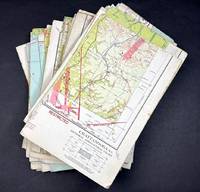
1943H40789Washington DC: Army Map Service US Army 1943. Very good. Group of 49 folding maps produced by the Army in 1942-1943 motivated by Pearl Harbor to give the US armed forces the most up to date information to help defend American cities against air raids with information on airfields commercial and municipal airports auxiliary fields seaplane bases where applicable anchorage mooring conditions lighting facilities information on radio stations beacons rotating and flashing airways restricted airways high explosive areas etc. Most of the maps measure about 45 x 24 inches some as much as 49 inches wide. In mainly very good condition a handful with more soil wear and occasionally light numerical pencil notations. The maps are of US cities and their surrounding regions and the regions all have letter-number codes which we have listed along with each map's dimensions. We have in no particular order: Washington DC T-9 35 x 24" New Orleans O-6; 44.5 x 24"; Roswell NM Q-4; 48 x 24.5"; Kansas City T-6; 44.5 x 24"; Sioux City IA V-5; 44 x 24"; Albuquerque R-4; 48 x 24" good only with a few tears and some rumpling that could possibly be ironed out; Savannah GA Q-8; 49 x 24"; San Antonio TX O-5; 46.5 x 24"; Lincoln NE U-5; 44.5 x 24"; Austin TX P-5; 49 x 24"; Beaumont TX P-6 49 x 24" with some light soil rumpling and a few pencil notations; New York U-9 45 x 24"; Aberdeen South Dakota W-5; 42 x 24" with "Property of Lt. Theodore J. Williams Nav. Crew #104" written in ink in marginal legend area below the map; Norfolk VA R S-9 42 x 26"; Winston-Salem NC S-8 47.5 x 24"; Denver T-4; 45.5 x 24"; Jacksonville P-8 35 x 24"; Dallas Q-5 49 x 24" with light wear and soil some minor pencil notes; Little Rock R-6; 47.5 x 24" with light wear and rumpling; Del Rio TX O-4 42.5 x 24"; Douglas AZ P-3 49 x 24.5"; El Paso P-4 49 x 24.5"; Salina Kansas T-5 45.5 x 24"; Tulsa S-6 34 x 24" with light wear and soil; Charlotte R-8 45 x 24"; Detroit V-8 42 x 24"; Milwaukee V-7 45 x 24"; Cheyenne U-4 45 x 24"; Duluth X-6 44 x 24"; Twin Cities W-6 45 x 24.5"; Green Bay W-7 48.5 x 24"; Salt Lake City 4U-3 4.5 x 24"; Cleveland U-8 edition of May 1947 45 x 24"; New York U-9 edition of May 11 1944 45 x 24" with some wear and general soil; Huntington WV T-8 45 x 24"; Orlando O-8 36 x 24"; Nashville S-7 46 x 24"; Dubuque V-6 42 x 24"; Mobile P-7 49 x 24"; Birmingham Q-7 April 1940 49 x 24" with some wear splitting pencil notes soil; another copy dated April 5 1945 same dimensions light wear; Casper WY V-4 44 x 24" some wear soil pencil notes; Des Moines U-6 43.5 x 24" with some wear loss etc.; Cincinnati T-7 47.25 x 24"; Miami N-8 43.75 x 28"; Mobile P-7 49 x 24" with light wear and some numeric pencil notes; Wichita S-5 45.5 x 24"; Corpus Christi N-5 48 x 24"; Cleveland U-8 Feb. 5 1942 45 x 24"; Oklahoma City R-5 47.25 x 24"; and last but not least Chattanooga R-7 48 x 24" light wear. A brief survey of what maps are currently for sale online shows dealers pricing them anywhere from $20 to $150 apiece but no one has a substantial lot of them and we have some great maps in this group! Army Map Service, US Army unknown
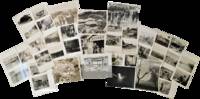
1945189141945. U.S. Army and Navy photographs of Okinawa 1945 document the immediate aftermath of the Battle of Okinawa and the establishment of American control over a strategically critical island at the close of the Pacific War. The images place American troops within the Okinawan interior and along coastal installations following the April 1945 landings including the secured Yontan airfield a primary objective of the invasion. The archive records the physical destruction resulting from one of the war's most intensive campaigns alongside scenes of civilian movement and return situating the photographs within the transition from active combat to military occupation.<br /> <br /> Archive of 37 black and white silver gelatin photographs. Okinawa Japan circa 1945. Photographs measure approximately 3.75 x 4.5 inches to 7 x 10.5 inches with brief handwritten captions on verso. Images depict American troops in villages farmland and near shrines as well as at Yontan airfield. Several photographs show destroyed aircraft including a crashed Japanese plane and associated debris along with damaged infrastructure and equipment. Naval activity is represented through images of American ships in harbor and offshore including a landing ship dock LSD transport vessel. An aerial photograph shows a harbor with multiple wrecked ships and flattened industrial areas. One image documents a column of civilians carrying belongings captioned "civilians returning to homes."<br /> <br /> The Battle of Okinawa fought from April to June 1945 resulted in extensive military and civilian casualties and widespread destruction of the island's infrastructure. The subsequent American occupation transformed Okinawa into a major U.S. military base in the western Pacific a status it retained even after reversion to Japanese administration in 1972. These photographs document both the operational objectives of the invasion and the conditions encountered in its aftermath including the displacement and return of local populations. The archive provides material for examining military strategy occupation practices and the impact of large-scale warfare on civilian landscapes in the Pacific theater. Light wear consistent with handling; overall very good condition. unknown
1856MITpoUNI14Philadelphia: Henry Carey Baird & London: Trübner & Co. 1856. 1856. folio. pp. xx 1 leaf 11-428. 25 plates 1 double-page 2 folded. original blind-stamped cloth spine ends damaged edges & corners frayed tears in 1 plate repaired no loss. ownership entry of American industrial metallurgist and academic Cyril Stanley Smith. The reports the majority of which were submitted by W.Wade as superintendent of weapons casting and experiments conducted at the government foundries date from March 1844 to July 1855. Including pp. 305-322 Description of the testing machine hydrometer and other instruments designed by Wade employed in testing metals 1854 plates 12-21. Other reports were written by George Bomford T.J.Rodman and L.A.B.Walbach. Philadelphia: Henry Carey Baird & London: Trübner & Co., 1856. hardcover
63616aafs.d. (18e s.), 33 x 21.5 cm, ms. sur papier, 68 ff. (136 p. d'une écriture dense ca. 65 lignes par feuille), cartonnage simple d’époque.
57235aafBern, (Julius Adam in München für) Dalp, o.J. (186-), gr. in-Folio, 1 Bl. (Vorwort) + lith. Titel mit Vignette + 15 getönten lith. Tafeln mit je 1 Bl. Begleittext, vereinzelt leicht stockfleckig. Textbl. aufgezogen und vereinzelt restauriert, Tafeln u. Text etwas beschnitten, lose Tafeln in H-Ln. Mappe, Orig.-Umschlag aufgezogen.
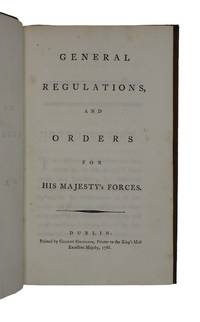
1786AQ22809Dublin: Printed for George Grierson 1786. vii 1. 248pp. Contemporary sprinkled calf tooled in gilt and blind contrasting red morocco lettering-piece. Rubbed and a trifle marked upper joint split lower joint starting spine dulled. Gatherings C and H browned scattered spotting. A rare survival of a Dublin-printed edition of the revised official standing orders of the British Army compiled by Adjutant General Henry Pigot 1750-1840 in order to 'remove the various Defects in Discipline which may have been introduced either through Negligence or Prejudice and confirmed by long Practice' in both English and Irish regiments. ESTC records copies at just two locations NLI and Queen's University of Belfast. ESTC T184243. 8vo. Printed for George Grierson unknown
8vo., First Edition thus, with portrait frontispiece, 28 plates on 14, 22 maps (several full-page) in the text, 2 large folding maps and coloured front and rear endpaper reproductions of sketch-maps by Rommel; handsomely bound in full dark red crushed morocco, sides with gilt frame border, back with raised bands, second and fourth compartments lettered and ruled in gilt, all other compartments tooled in gilt, gilt top, hand-made endpapers, ribbon marker, in custom-made-slip-case, an elegant copy ideal as a gift or for presentation. 'No commander in history has written an account of his campaigns to match the vividness and value of Rommel's'. Hart was in no doubt about the responsibility of his task, the more so since much of this unique material had to be painstakingly reassembled from its various hiding-places safe from Hitler's eyes. Half a century later, the brilliance of Hart's achievement is undimmed. An outstanding record from one of the greatest commanders of the war. SCARCE IN THIS CONDITION. Enser, p.374.
17776751Vienne en Autriche, Briffaut, 1777 ; cinq tomes, in-12 ; plein veau fauve marbré, dos à nerfs décorés et dorés, pièces de titre et de tomaison havane, tranches rouges (reliure de l'époque) ; (16), 336 ; 259 ; 327 ; 317 ; 357 ; frontispice-portrait et 12 plans dépliants de batailles (Zenta -Szentha-, Chiari, Crémone, Luzara, Hochstet -Hochstaedt-, Turin, Cassano, Audenarde, Lille, Malplaquet, Peterwaradin et Belgrade).
190235142Impr. du service géographique, 1902, 2 vol. in-4°, xvi-467 et x-526 pp, 96 planches hors texte, biblio, index, reliures percaline bleue, dos lisses avec titres et filets dorés, bon état. Rare
193420803- Le Darmous humain. (en collaboration avec M. Gaud et M. Langlais.) Extrait du Bulletin de l’Institut d’Hygiène du Maroc (N°I et II 1934) ; 82 pp., [1] f.bl. sur vergé teinté et [8] ff. de photos et documents sur papier glacé, présence du papillon d’errata.- Données nouvelles sur l’étiologie et la pathologie du darmous (en collaboration avec H. Velou). Extrait du Bulletin de l’Institut d’Hygiène du Maroc (N°I et II 1938) ; 26 pp.- Le Fluorure de calcium, son assimilation, son élimination. (s.n.l.d.) ; pp. 45-66 et [1] p.- Note sur le “Darmous”, fluorose chronique des zones phosphatées (en collaboration avec Dr Gaud) ; extrait Bull. mens. Office International Hyg. Publique Tome XXX, 1938, fasc. N°6, pp. 1280-1293, 2 planches de photographies de dentitions, [1] p. ; Laval, imprimerie (Barnecrol) (in-8).- Syndromes osseux du type hyperparathyroidien, provoqués par l’intoxication par les divers sels de fluor et des intoxications minérales associées (en collaboration avec M. Speden de Casablanca) ; Extrait du Maroc Médical, N°185 du 15 novembre 1937, in-8, [4] pp., 3 photographies de radiologie.- Chondrification, Ossification et Calcification cardiaques chez le cheval (en collaboration avec L. Faure). Extrait du Bul. de l’Inst. d’Hyg. du Maroc (N°I-II 1936) ; pp. 50-56.- Procédé de révélation des empreintes digitales sur papier. s.d. (extrait du Bulletin de l’Institut d’Hygiène du Maroc) ; pp. 65-67, 1 f. de planche photo, [2] ff. blancs.- Les scorpions du Maroc. Leur venin ; leur danger pour l’homme et les animaux (en collaboration avec L. Faure) ; extrait Bull. Inst. Hyg. Maroc (N°IV 1934); 72 pp., 4 ff. de photographies et courbes, 2 tableaux dépliants, [1] f.bl.- Pharmacodynamie de l’émetine. Extrait Bull. Inst. Hyg. Maroc (N°IV 1936) ; 28 pp.- La désinsectisation rapide des vêtements par l’acide cyanhydrique (en collaboration avec M. Bonjean) ; extrait Bull. Inst. Hyg. Maroc (N°I-II 1939) ; 7 pp., 4 p. 1/2 de photographies et croquis.
1976G116100Leuven, Leuven University Press 1976-2001 Complete series in 6 volumes, 2440 + ix,231 pp. (continuous pagination in volumes 1 to 5), 25cm., text in Latin, published in the series "Symbolae Facultatis Litterarum et Philosophiae Lovaniensis" Series A volume 3, uniform publisher's hardcover bindings in blue cloth, gilt lettering at spines, text is clean and bright, few small stamps at verso of title pages, else in very good condition, rare complete set, weight: 5kg., [Content: Volume I: Litterae A-I, Volume II: Litterae L-V, Ignoti-Incerti, Volume III: Indices, Volume IV: Supplementum I, Volume V: Supplementum II, VI: Laterculi alarum, cohortium, legionum], G116100
Complete series in 6 volumes, 2440 + ix,231 pp. (continuous pagination in volumes 1 to 5), 25cm., text in Latin, published in the series "Symbolae Facultatis Litterarum et Philosophiae Lovaniensis" Series A volume 3, uniform publisher's hardcover bindings in blue cloth, very good (fine) condition, rare complete set, weight: 5kg., [Content: Volume I: Litterae A-I, Volume II: Litterae L-V, Ignoti-Incerti, Volume III: Indices, Volume IV: Supplementum I, Volume V: Supplementum II, VI: Laterculi alarum, cohortium, legionum], G97965
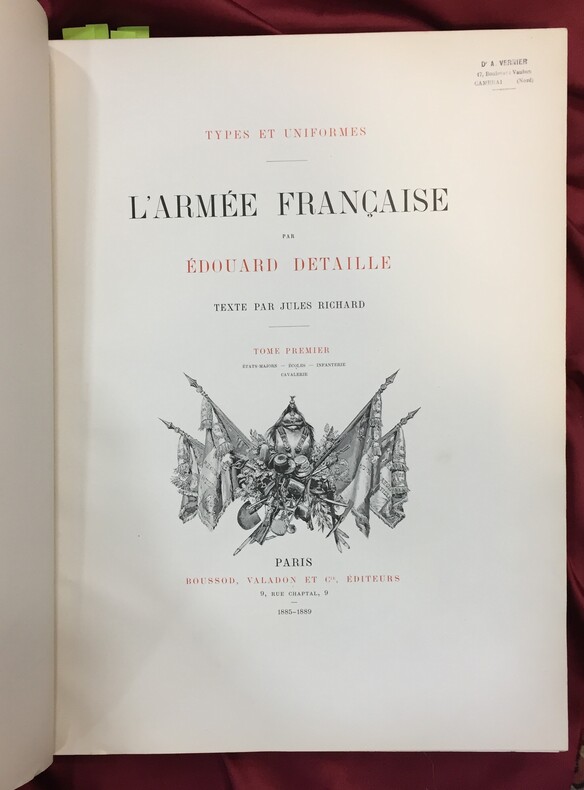
1889JLJ-819Edité par Boussod, Valadon et Cie, éditeurs, Paris, 1889 Deux volumes reliés en un. In-folio (35 x 47 cm) , 128 + 116 pages (Tome 1 : Etats-Majors Ecoles infanterie Cavalerie. Tome 2 : Armes spéciales - Corps indigènes - Corps auxiliaires -Marines). « L'illustration de l'Armée Française comprend 60 gravures hors texte en couleurs et plus de 280 planches en noir dans le texte. Tous les dessins et aquarelles sont reproduits en fac-similé par la photogravure et les planches sont tirées à la main, ce qui donne à l'ouvrage une valeur inappréciable au point de vue artistique. » Quatre de ces gravures hors texte sont manquantes : « Gendarmerie - Grande tenue ; Gendarmerie - Tenue de campagne ; Garde républicaine et sapeurs pompiers Grande Tenue ; Revue d'honneur à bord ». Sept gravures ont été ajoutées : - Quatre gravures sont contrecollées pleine page en-tête de l'ouvrage : les deux premières sans mention (la première est datée de 1859 sous la signature de Edouard Detaille), la troisième est légendée « Chevau-légers, 5eme RI 1812 ». La couverture de la 15e livraison est entière et reliée dans le corps de l'ouvrage. - Deux gravures non collées (feuilles volantes) : « Les grenadiers à cheval à Eylau » ; « 10e Régiment de Cuirassiers » (certainement découpée de la couverture de la 14e livraison lisible en haut et au vu des publicités imprimées au dos). - Deux gravures en fin d'ouvrage avec la mention Copyright 1898 par Jean Boussod, Manzi, Joyant et Co. : « Le Renseignement » ; « 7e Cuirassiers, Officier supérieur, Tenue de campagne (1807) ». Au dos de la couverture de la 15e livraison est présenté l'ensemble : « Edition de Luxe Deux magnifiques volumes in-folio brochés - Notre grand peintre militaire a consacré plus de quatre années à l'exécution des aquarelles et des dessins qui forment l'illustration de cet ouvrage, véritable monument patriotique élevé à la gloire de nos soldats : Armée royale, Volontaires, Soldats de la Révolution et du premier Empire, Armée de la Restauration, Armée d'Afrique, Armée de Crimée et d'Italie, Armée de 1870, Armée actuelle, Edouard Detaille passe tout en revue, sans oublier les Troupes des colonies et de la marine, montrant chacun dans son milieu, écrivant avec son crayon comme Jules Richard le fait avec sa plume, toute l'histoire militaire de la France depuis 1790 jusqu'à nos jours. » Relié par E. Saelens, relieur à Cambrai. Reliure demi basane marbrée à coins. Dos à 6 nerfs. Entre nerfs à motifs dorés, titre et auteur dorés. Tranche de tête rouge. Epidermure de 5 cm en bas du dos. Ex-Libris au tampon (Dr Vernier à Cambrai).
1777AMO-3500A La Haye, 1777 1 volume in-8 (20 x 13 cm) de 190-IX pages. Reliure de l'époque plein veau brun marbré, dos lisse orné aux petits fers dorés, pièce de titre de maroquin rouge, tranches mouchetées de rouge. Ensemble en excellent état. Volume resté très frais. Quelques corrections d'époque à la plume, probablement de la main de l'auteur qui corrige ainsi quelques erreurs typographiques. Edition originale et unique édition. Cette longue lettre est adressée à l'auteur du Publicole français (ou Mémoire sur les moyens d'augmenter la richesse du Prince par l'aisance des Peuples). Le Publicole français a paru pour la première fois en 1776 et son auteur en est resté inconnu. Il y analyse les idées de Sully, de Richelieu et de Colbert, avec une étude parallèle entre la France, la Hollande et l'Angleterre ; et enfin il préconise de rendre sa place à l'agriculture, à l'origine de toute prospérité. La Lettre d'un ancien munitionnaire est quant à elle datée de Paris, 25 mars 1777. L'auteur de cette lettre commente de nombreux passages du Publicole français en insistant à chaque fois qu'il le peut sur le mal-fondé qui tendrait à prouver qu'il serait profitable au roi de prendre en charge la régie des vivres des armées quand elle était alors gérée par des entrepreneurs privés (munitionnaires). Et l'auteur de conclure : "Qu'un Publicole de votre trempe serait un homme dangereux si l'on le laissait faire !". On trouve à la fin du volume une Note sur les régies des vivres et des objets de même nature. Cette note est un résumé chronologique de la régie des vivres des armées au cours du XVIIIe siècle. L'auteur de cette Lettre d'un ancien munitionnaire serait l'oeuvre de Monsieur Dampierre de La Salle (1723-1793), intendant des vivres des armées. Sur le même thème il est également l'auteur d'un Mémoire sur une question relative aux vivres des troupes de terre. (publié en 1790). Il a publié par ailleurs une comédie intitulée Le Bienfait rendu ou Le Négociant (1763) plusieurs fois rééditée. Référence : Barbier, Dictionnaire des ouvrages anonymes, II, col. 1139. Provenance : de la bibliothèque du marquis de Monteynard (1713-1791), secrétaire d'état à la guerre sous Louis XV, avec son bel ex libris armorié gravé à l'eau-forte. Il est intéressant de noter que ce volume avait toute sa place dans la bibliothèque d'un secrétaire d'état à la guerre. Le sujet était on ne peut plus intéressant pour le marquis de Monteynard. Une partie de la bibliothèque du marquis de Monteynard a été vendue le 28 mai 2004 à Paris, Drouot. Bel exemplaire de cet ouvrage peu commun.
1669003341A Cologne, chez Pierre Van Dyck. in-12 (13,8 x 8,2 cm), 2 ff. (titre et avis au lecteur), 400 pp., reliure d'époque vélin ivoire à recouvrement, dos muet, tranches jaspées, sphère sur le page de titre. (petites taches sur le vélin)
186096319P., Dutertre, 1860, 4 vol. gr. in-8°, 479, 491, 464 et 460 pp, 137 planches en couleurs d'uniformes de régiments francais et 14 gravures en noir hors texte par Philippoteaux, Charpentier, Bellangé, de Moraine, Morel-Fatio, Sorieul, etc., avec des Tableaux synoptiques représentant l'organisation des armées aux diverses époques et le résumé des campagnes de chaque corps par M. Brahaut, et des tableaux chronologiques des combats, sièges et batailles par M. le capitaine Sicard, reliures demi-chagrin violine, dos à nerfs ornés de fleurons dorés (reliure de l'époque), manque les pages de titres et de tables des tomes 3 et 4, bel exemplaire très bien relié
51-6493Philadelphia: Lippincott Grambo & Co. 1853. Large 4to. 23 x 31cm. Half goatskin and marbled paper boards by the artisan biner Sasha Mosalov.Plates with minor to major foxing in the margins.iii-v 3 9-84 pp. With 26 steel-engraved plates from drawings by Seth Eastman including the frontispiece plus steel-engraved added title; plain protective interleaves for the plates. .A series of detailed engravings after drawings by Seth Eastman who was stationed along with his wife Mary at Fort Snelling Minnesota from 1841 through 1848. These depict such revealing aspects of Native American life as transportation of wounded the medicine dance of the Winnebagoes spearing fish from a canoe an Indian woman dressing a buffalo skin etc. Wagner-Camp cautions that the work "should not be confused with Mrs. Eastman's later work published in 1854 as Chicora and again as American Annual. Mrs. Eastman's Portfolio consists of twenty-six engravings from Captain Eastman's paintings of Indian life each with a guard sheet and a short explanatory essay of two or three pages." Field 477n; Wagner-Camp 222c.; Howes E-17; Sabin 21682; Wagner-Camp-Becker 222a; OCLC Number / Unique Identifier:1870490: 84 pages 25 unnumbered leaves of plates : illustrations portrait ; 33 cm— Seth Eastman was a painter and soldier best known for his depictions of the everyday life of Dakota and Ojibwe people around Fort Snelling in the 1840s.OCLC Number / Unique Identifier:1870490: A selection of plates from volumes 1-3 1851-1853 of: Schoolcraft Henry Rowe. Historical and statistical information respecting the history condition and prospects of the Indian tribes of the United StatesAdded engraved title page: The American aboriginal port folio. With vignette "Engraved by Illman & Sons."Cover title: Eastman's aboriginal portfolioCollation: 1ⴠ2-10ⴠ11² $1 signed; 42 leaves pages i-iii iv-v vi-viii viii blank 9 10-84 25 plates each preceded by a bound-in guard sheetPlates engraved by Charles K. Burt James Smillie John C. McRae C.E. Wagstaff & J. Andrews and Alfred JonesFirst plate a portrait of Red Jacket bound as frontispieceIssued in blue cloth stamped in gold; all edges gilt Philadelphia: Lippincott, Grambo, & Co., [1853] hardcover
Madrid, Antonio Sanz, 1761, 30 x 20,5 cm., cubiertas en papel de época, portada con escudo grabado + 8 folios + 1 hoja blanca. (Obra rara. El Catálogo Colectivo registra sólo tres ejemplares, todos en Madrid, en la Biblioteca Central de Marina, igual al que anunciamos y en las Bibliotecas del Ministerio de Hacienda y Fundación Lázaro Galdiano, la reimpresión de Antonio Marín del mismo año 1671 ).
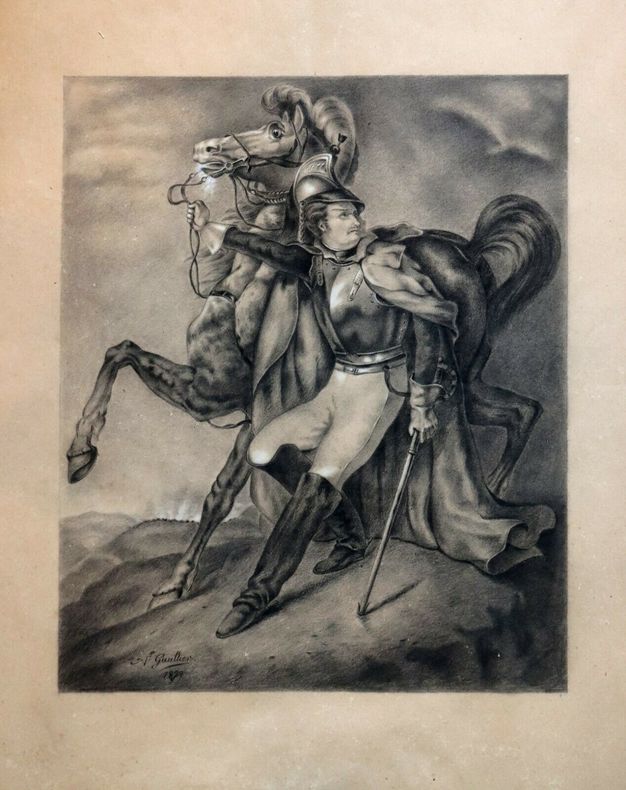
1879AMO-3730Superbe fusain original signé A. Gaultier (voir signature) et daté 1879 reprenant avec précision et parfaitement le "Cuirassier blessé quittant le feu" de Géricault (peint en 1814). Dimensions du dessin au fusain : environ 45,5 x 38 cm sur papier teinté Feuille : 60 x 49 cm environ Fusain et rehauts de blanc. Très bon état. Conservé à plat protégé depuis 1879. Fusain non fixé. Papier fragile.
8 vols., roy. 8vo., First Edition, with very numerous plates, illustrations in the text and maps throughout; cloth, gilt backs, a near fine set in the dustwrapper. VOLUMES ONE TO FOUR ARE SIGNED BY THE AUTHOR ON TITLES. Vol. 1: 1816-1850 (1973); Vol. 2: 1851-1871 (1975); Vol. 3: 1872-1898 (1982); Vol. 4: 1899-1913 (1986); Vol. 5: 1914-1919 Egypt, Palestine & Syria (1994); Vol. 6: 1917-1918 Mesopotamia (1995); Vol. 7: Curragh Incident & Western Front 1914 (1996); Vol. 8: Western Front 1915-1918; Epilogue 1919-1939 (1997). Anglesey's monumental work, now unlikely ever to be surpassed, is the defiinitive history of the final phase of the British cavalry.
053002Saint-Etienne Schneider & Cie 0 in 4 oblong à l'italienne (26,5x33,5) 1 volume reliure demi chagrin vert à coins de l'époque, dos muet, avec 173 planches de reproductions photographiques de matériels militaires et armements, planches hors-texte en noir et blanc sous serpentes montées sur onglets, et des feuillets de légendes documentaires sur papier gris. 1°/ Projectiles: 3 planches, 2). Fusées: 7 planches; 3°/ Matériel de montagne et de débarquement: 41 planches; 4°/ Canons de campagne: 30 planches. 5°/ Obusiers et mortiers: 32 planches; Matériels sur trucks: 30 planches; Matériels divers: 30 planches. Catalogue commercial édité par les établissements Schneider & Cie. Rare documentation, et livre expert pour l'identification de l'artillerie de guerre. Bel exemplaire ( Photographies sur demande / We can send pictures of this book on simple request ) Poids du colis: 5 kilogrammes