30 332 résultats
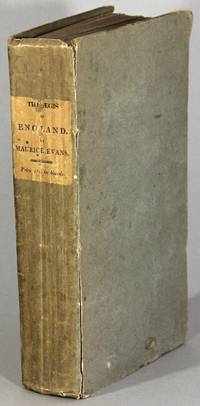
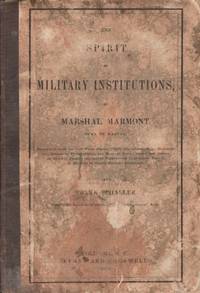
186432582Columbia: Evans and Cogswell 1864. Stiff wraps. Good. 12mo. 278 pages. Stiff paper boards with title on the front cover. Black cloth spine. Covers are worn and discolored. It appears the covers are facsimiles. Light to moderate foxing to the contents. Pencil inscription on the right front flyleaf reads "Col. Samuel W Milton from the publishers." <br /> <br /> The author wrote this book during his recovery from wounds in battle. He dedicates this work to Jefferson Davis. Jefferson Davis thanks the author and calls him "a master of the art of war" on page 12. Confederate imprint.<br /> <br /> Parrish & Willingham 4953; Confederate Hundred 60; Sabin 44651. The previous owner served as an Assistant Adjutant General under Samuel Cooper from 1863 to the end of the war. From Find A grave dot com taken from the Biography of Eminent Men of the Carolinas: <br /> <br /> Samuel Wickiff how it is spelled in the obit Melton was born in Yorkville S. C. February 7 183 hard to read. Receiving his early education in Yorkville he graduated from the South Carolina college in the class of 1852. He edited the Chester Standard published in Chester in 1852 and 1854. Then he returned to Yorkville and established the Yorkville Examiner on January 1 1855 running it until 1858 when he sold out to Lewis M. Grist. In the meantime in 1857 he was admitted to the bar and commenced the practice of law with his brother C. D. Melton at Chester continuing until the war broke out. He enlisted in the Confederate army in 1861 on the staff of Gen. M L. Bonham as aid-de-camp accompanying him to Virginia remaining with him until after the first battle of Bull Run. Subsequently he went on the staff of Maj. Gen. Gustavius W. Smith commanding the Second corps he having the rank of major. He remained with Gen. Smith until February 1863 and was then assigned to duty in the office of the adjutant and inspector general of the Confederate army at Richmond where he remained until the close of the war. He was in the first battle of Bull Run in the Peninsular campaign in the battles around Richmond at Seven Pines the campaign in 1863 in North Carolina and temporarily on the staff of Gen. Beauregard at the battle of Drury's Bluff. The chief duties however from early in 1862 to the close of the war were in the adjutant general's office in Richmond. Evans and Cogswell unknown
186720057Washington: Government Printing Office 1867. FIRST EDITIONS. First work with 178 figures; second with 5 photographic plates; third with 1 plate and errata slip. 5 heliotype plates and 1 engraved plate. Contemporary half morocco over boards worn on edges all edges marbled; a portion of pages 323/324 of first section torn away affecting text though a photocopy is included otherwise interior excellent. First editions of these three catalogues. The catalogue of the surgical section was edited by Alfred Woodhull 1837-1921. J.J. Woodward 1833-1884 edited the medical section and Edward Curtis 1838-1912 edited the microscopical section. Thousands of specimens are described nearly all the aftermath of the Civil War. Mostly human specimens the name and rank of the donor is noted as well as a brief summary of the context in which the injury or illness leading to death or amputation occurred. The catalogues also include comprehensive collections of surgical instruments medical artifacts including prosthetics and battlefield medical supplies and historical documents related to military medicine.<br /> <br /> The surgical section contains descriptions of over 4700 specimens “varying from cranium to tumors graphically detailing the wounds suffered by thousands of soldiers during the Civil War. The attending physician’s name is listed with each case. Many of these descriptions are specifically related to injuries which are further enumerated in the Medical and Surgical History of the War of the Rebellion†Rutkow. That catalogue is also significant because it is “the first publication that actually gives an idea as to the number and type of photographs taken by or for army physicians†during the war Burns. The third part contains a plate depicting an “Apparatus for Microphotography†and five plates depicting photographs of tissue specimens taken with this apparatus. The editors of the second and third parts Edward Curtis and Joseph Woodward performed the autopsy on Abraham Lincoln. Curtis was an early pioneer of photomicrography. <br /> <br /> The Army Medical Museum was founded in 1862 by U.S. Army Surgeon General William A. Hammond as a center for the collection of specimens for research in military medicine and surgery. Hammond directed medical officers in the field to collect "specimens of morbid anatomy.together with projectiles and foreign bodies removed" and to forward them to the newly founded museum for study. During and after the war Museum staff took pictures of wounded soldiers showing the effects of gunshot wounds as well as results of amputations and other surgical procedures. The information collected was compiled into six volumes of The Medical and Surgical History of the War of the Rebellion published between 1870 and 1883.<br /> <br /> Burns Early Medical Photography in America 1839-1883 New York 1983; Rutkow. The History of Surgery in the United States 1775-1900 San Francisco 1988. Government Printing Office unknown
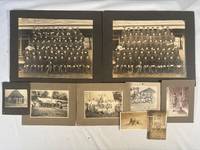
1909224671909. Soldier Harold Howard's person documentaation of service in the 11th U.S. Cavalry during the period of American military occupation and intervention in Cuba following the Spanish American War. These photographs place an enlisted cavalryman within the broader framework of U.S. expansionist policy in the Caribbean under the Platt Amendment when American troops were repeatedly deployed to Cuba to oversee political stability infrastructure and economic interests. The archive includes identified images of Sgt. Harold Howard and captures both formal military organization and informal daily life offering a ground-level record of U.S. cavalry presence during a period of continued occupation and reintervention including the second U.S. occupation of Cuba from 1912 to 1913.<br /> <br /> Archive of nine vintage silver gelatin photographs ranging approximately from 3.5 x 5 inches to 10 x 13 inches many mounted to original photographer boards and some annotated in ink or pencil. Two large-format formal group portraits depict Troop K 11th U.S. Cavalry at Fort Oglethorpe Georgia 1913 showing soldiers in full dress uniform arranged in tiered formation with visible regimental flag marked "11" and "K" with Howard identified in one image. Smaller photographs include a group portrait of U.S. cavalrymen in Pinar del Río Cuba dated 1908 showing soldiers in campaign dress posed near a stable as well as candid camp scenes featuring cooking areas barracks life and assembled troops. Two photo postcards function as personal correspondence with handwritten messages from Howard dated April 1 and September 9 1913 addressed to Mrs. A. L. Howard in Maine referencing weather conditions and upcoming exhibition drills providing direct evidence of mobility and routine within cavalry service. Additional images include a cabinet card of two uniformed soldiers and a scene depicting Black Cuban civilians posed near a thatched structure situating U.S. military presence within local social environments.<br /> <br /> Taken together the archive documents the lived experience of a U.S. cavalryman operating within the infrastructure of American imperial policy in the Caribbean linking domestic military bases such as Fort Oglethorpe with overseas deployment in Cuba. The photographs record both the formal visual culture of the U.S. Army and the everyday conditions of enlisted service while the inclusion of Cuban subjects and locations underscores the entanglement of military occupation with local populations. General edge wear throughout with occasional pinholes adhesive remnants and minor chipping to mounts; some toning to boards. Photographs remain clear and stable with annotations legible. Overall very good condition. unknown
181766691London: printed for the author. Sold by Longman and Co. Baldwin and Co.; Law and Whittaker; Black Parbury and Allen; Egerton; Westley and Parrish; and all other booksellers 1817. First edition 8vo pp. xxx 2 608; uncut and largely unopened; original drab paper-covered boards printed paper label on spine; label slightly chipped affecting 2 letters corners bumped front joint starting; all else very good and sound. Includes sections on Waterloo The Reduction of Algiers The Battle of Albuera Operations in the Eastern Seas Java The Capture of Martinique Corunna Capture Off Santo Domingo Egypt Mahratta War etc. Includes a lengthy list of subscribers including the Dukes of Kent Cumberland and Cambridge the Duke of Wellington Sir Stamford Raffles and many other naval and military figures. printed for the author. Sold by Longman and Co. Baldwin and Co.; Law and Whittaker; Black, Parbury, and Allen; Egerton; Westley unknown
190010413ABAkron, The Werner Com., 1900. Imp. Folio. 3 nn. Bll., 181 S. 41 Chromolithos. Deutscher u. engl. Text in 2 Spalten. Ldr. Verg. Deckeltit. u. farb. u. verg. Deckeldarst. Goldschn. Ecken u. Kapitale etw. bestossen, fl. Tls. m. kl. Einrissen, fl. Calf. Gilt title on boards, and coloured and gilt illustration on boards. Gilt edges. Sligthly rubbed and bumped, stained. Partly with little tears, stained. Nice copy.
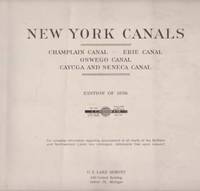
195617143Detroit: U. S. Lake Survey. 1956. Flexible covers. Very Good. Boards creased and darkened and with light rubbing to extremities. ; 8vo; Sheet 1700-1848 pages . U. S. Lake Survey unknown
18901108171890 A Paris, Librairie Haar & Steinert (C. Haar, Successeur) - 1890 - 2 volumes In-Folio, cartonnages verts, formats à l'italienne, illustrations contrecollées sur les premiers plats, étiquettes de titre manuscrites aux dos - 207 pages + environ 90 pages pour le second tome (suite des aquarelles sous serpente) - Illustrés de 620 gravures sur bois et accompagnée de 45 aquarelles en chromolithographie - Texte sur deux colonnes
190218898Essai sur les troupes de la confédération du Rhin 1806-1813 par le capitaine, puis le commandant, puis le lieutenant colonel Sauzey de la Sabretache. Nombreuses gravures en noir et en couleurs.T1/ Le régiment de Francfort, avec une préface de Henry Houssaye. - 1902 - ix pp. + 118 pp. - 3 cartes dépliantes en fin de volume.T2/ Le contingent Badois, avec une préface de M.J. Margerand - 1904 - xii pp. + 172 pp. - 1 carte dépliante en fin de volume.T3/ Les Saxons dans nos rangs - 1907 - VI pp + 265 pp.T4/ Le régiment des Duchés de Saxe, avec une préface de M. Arthur Chuquet - 1908 - xvi pp. + 204 pp.T5/ Nos alliés les Bavarois, avec une préface de M. Arthur Chuquet - 1910 - x + 422 pp.T6/ Les soldats de Hesse et de Nassau, avec une préface du général Langlois - 1912 - xiv pp. + 317 pp. - 2 grandes cartes dépliantes en fin de volume.Edition originale. Paris, Librairie militaire R. Chapelot et cie - 1902-1912. Ex-libris René Lizard.Belle reliure demi-chagrin rouge de l'époque. Dos à nerfs orné avec un aigle surmonté d'une couronne. Dos avec titre, auteur, et tomaison dorés. Menus frottements aux dos. Pas de rousseur. Très bon état pour ce bel ensemble. Format in-8° (23x15).
19872080502106509643Aoshio-sha 1987. Soft Cover. Fine. Number of books: 4 Aoshio-sha paperback
185387405Washington DC: Robert Armstrong Public Printer 1853. Hardcover. Good. Quarto. 9 in. x 6 in. pp. 495. Maroon stamped cloth boards ruled in blind. Gilt lettering to spine as well as graphic in gilt of a buffalo. Bumped corners Stained endpapers with some penciled writing. Frontis lithograph. All plates as called for though several out of order. 58 lithographed illustrations. NOTE: Several plates are latter-day facsimiles to replace the few previously missing plates. Moderate foxing light spotting throughout and af few light pencil trials.<br /> <br /> Two Maps both originals accompanying Stansbury's report were originally issued as folded in a separate hardcover binding but for protection and close study the folding maps have been removed and safely stored in a clear archival display sleeve. Maps will be mailed under separate cover in a mail-tube. Maps are in generally good condition with some staining to folds archival tape professionally applied to several folds and a few short closed tears to edges; quarter size open tear to center of second map.<br /> <br /> The first map is entitled "Map of a Reconnaissance between Fort Leavenworth on the Missouri River and the Great Salt Lake in the Territory of Utah made in 1849 and 1850 under the orders of Col. J.J. Abert Chief of the Topographical Bureau by Capt. Howard Stansbury of the Corps of Topographical Engineers aided by Lieut. J.W. Gunnison Corpos Topographical Engineers and Albert Carrington. The adjacent country laid down from the latest and most authentic data. Drawn by Lieut. Gunnison and Charles Preuss." Wheat Mapping the Transmississippi West. <br /> <br /> The second accompanying map is titled "Map of the Great Salt Lake and Adjacent Country in the Territory of Utah Surveyed in 1849 and 1850.by Capt. Howard Stansbury of the Corps of Topographical Engineers and Albert Carrington. Drawn by Lieut. Gunnison and Charles Preuss." "Captain Howard Stansbury in 1849 had taken a topographical party west to make a thorough examination of the Great Salt Lake country and the routes from it.He was accompanied by Lieutenant John Williams Gunnison and they set out together from Fort Leavenworth on May 31 1849 traveling near the tail-end of the California emigration. Both officers kept journals of the march on which Stansbury also subsequently submitted an official report. Robert Armstrong, Public Printer hardcover
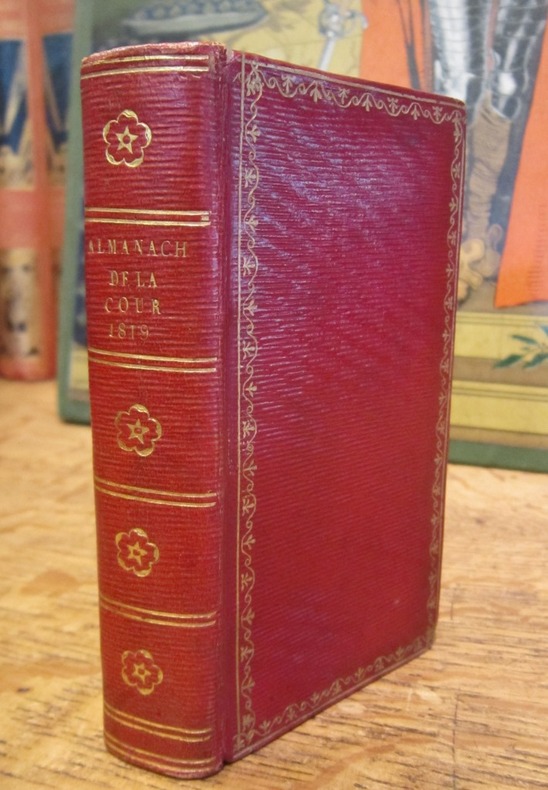
1819000014Paris Louis Janet, Janet et Cotelle 1819
18743602333Berlin, Mittler, 1874/81. Mit zahlreichen Karten und Skizzen ausgestattetes monumentales Werk. Schwarze Original Ledereinbände. Deckel der Textbde. m. Wasserschaden. S. auch teilw. etwas wellig durch Feuchtigkeit.
1416331849-1868 in-8, basane havane, dos lisse orné de filets et fleurons à froid, chiffre "H.D." en pied, armes estampées dorées encadrées d'une couronne de laurier et de chêne au centre des plats, tranches rouges (rel. de l'époque). Traces de galerie de ver sur les plats, quelques rousseurs.
M17729Couverture rigide Londres , Libraires associés , 1772 , 2 vols in8 plein veau , dos à nerfs , caissons décorés , VII - CLX - 411 -358 pp. 27 planches dépliantes hors texte . Déchirures marginales sans manque sur 3 planches. Manque la planche IV du T2 . Langue: Français
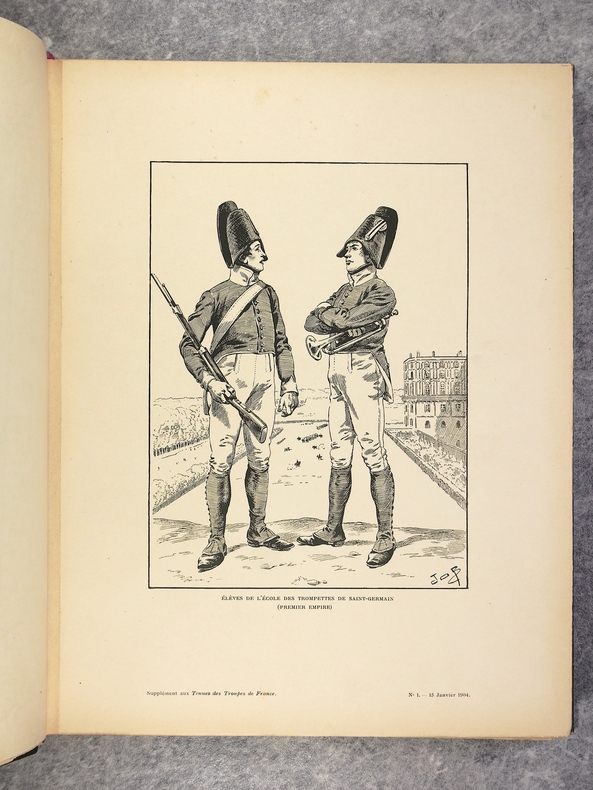
19042578PARIS. J. LEROY EDITEUR. 1904. 1 ANNEE EN 1 VOLUME GRAND IN-4 (26,5 X 33 X 4,5 CENTIMETRES ENVIRON) DE 96 ET (4) PAGES, RELIURE D’EPOQUE 1/2 CHAGRIN VERT, DOS A CINQ NERFS, TITRE DORE, COUVERTURE ILLUSTREE D’UNE VIGNETTE EN NOIR CONSERVEE. ILLUSTRE DE VIGNETTES EN NOIR ET EN COULEURS DANS LE TEXTE ET DE 48 PLANCHES D’UNIFORMES EN COULEURS HORS TEXTE, DONT 36 AVEC SUITE EN NOIR. EDITION ORIGINALE ET PREMIER TIRAGE. QUELQUES PETITS DEFAUTS EXTERIEURS SANS GRAVITE, SINON BEL EXEMPLAIRE, PLANCHES TRES FRAICHES.
44694Paris Chez la Veuve Duchesne, Libraire 1785 in 12 (17,5x10) 3 volumes reliures plein veau fauve de l'époque, dos à nerfs ornés de caissons dorés, pièces de titre de cuir marron, pièces de tomaison de cuir vert, tranches marbrées. Tome 1: 558 pages [1]. Tome 2: 523 pages. Tome 3: 600 pages. Pierre de Longchamps, 1740-1812. Première édition. Bel exemplaire ( Photographies sur demande / We can send pictures of this book on simple request )
19359489Paris, Editions de la Clé d'Or, 1935 ; grand in-4 en feuilles sous couverture crème rempliée, illustrée en couleurs, chemise-étui de l'éditeur, pièce de titre havane imprimée en doré ; 201, (5) pp., 1 photographie hors-texte et 24 aquarelles hors-texte coloriées au pochoir par le procédé Duval-Beaufumé.
200917787ST. PÉTERSBOURG, De l'imprimerie de Pluchart et Cie, 1811 ; petit in-4, XIX-288-3, cartonnage de l'éditeur. Tampons génie garde impérial etc - complet avec planches - rousseurs - rare demi-basane usagé exemplaire de travail.
221584Amsterdam, Pierre Mortier, 1750 petit in-8, [12] ff. n. ch. (faux-titre et titre, dédicace au chevalier de Saxe, avant-propos), 136 pp., avec 7 plans en dépliant hors texte, basane fauve marbrée, dos à nerfs cloisonné et fleuronné, pièce de titre cerise, encadrement de simple filet à froid sur les plats, tranches rouges (reliure de l'époque). Restaurations aux coins et aux coiffes.
224113Liège, C. Plomteux, 1773 2 vol. in-8, [2]-XCIX-275-[2] et 8-224 pp., avec 27 planches dépliantes, basane fauve marbrée, dos à nerfs orné de fleurons dorés, tranches rouges (reliure de l'époque). Coiffe supérieure absente et petit trou de vers au mors inférieur du tome I. Débuts de fente aux mors. Néanmoins bon exemplaire.
98825S.l., 1827 in-8, broché, couverture papier bleu. Étiquette au dos. Rousseurs.
156269Paris, Cellot & Jombert, 1779 in-8, VIII-426-[2] pp., avec 8 pl. dépl. "in fine", veau fauve moucheté, dos à nerfs orné, coupes guillochées, tranches mouchetées de rouge (reliure de l'époque). Dos uniformément insolé, mais bon exemplaire.
151044S.l.n.d. (vers 1780) grand placard in-folio, 94 x 63 cm, en feuille, repliée. Coin inférieur droit présentant de petites déchirures, dont l'une réparée postérieurement.
201860S.l.n.d. in-8 carré, paginé 40 à 81,
219277S.l., s.d. (fin XVIIIe) in-4, 2 ff. vierges, ff. 4-126, couverts d'une écriture très fine, appliquée et lisible (environ 35/40 lignes par page), avec des collettes aux ff. 36 et 50, ff. 127-156 vierges, table chronologique des maréchaux aux ff. 157160, ff. 161-164 vierges, demi-vélin rigide, dos lisse, tête mouchetée (rel. du XIXe s.). Exemplaire parfois rogné court en tête.