8 059 résultats
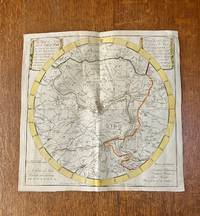
179911699<p>Printed for and sold by A. Taylor & W. Meyler. Bath. 1799. A fine and bright example of this rare map. 17.3 x 17.2 inches. Hand coloured. Paper watermarked 1797. Loosely folded into four but with no damage to the creases or edges. A remarkable survivor in such nice condition. Loosely housed in a modern marbled paper covered drop top box. ---- William Smith created his first geological map around Bath in 1799 widely regarded as the beginning of modern geological mapping and this was the map he used.</p> Printed for and sold by A. Taylor & W. Meyler. Bath. 1799
179138981791. 13 x 9 inches. Dark brown body colour on prepared paper. Inscribed "N.2.Stück" and "am 9ten Aprill 1791--nach der Natur gezeichnet von JEW" ink collector's stamp "Linel-Smlg. No." followed by pencilled number "1046" all on verso. Framed. Provenance: Linel ink collector's stamp on verso.<br/> <br/> A high quality image that clearly is drawn from life as the inscription claims. The artist's use of a dark prepared ground recalls the work of Barbara Regina Dietsch and her family. A search of Nissen's index of artists reveals one possible name: the Swiss artist Johann Emmanuel Wyss 1782-1837. However the maturity and assurance shown in the present drawing would seem to rule him out: he could have been no older than nine in April 1791. unknown
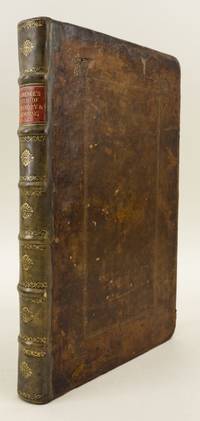
1726ST15736cLondon: Printed for Tho. Woodward by William Bowyer 1726. FIRST EDITION. One of 1000 copies according to Bowyer's ledgers per ESTC. 360 x 222 mm. 14 x 8 3/4". 12 p.l. 456 i.e. 452 pp. 4L2v is numbered 316-320. <br/> Contemporary calf covers with gilt roll frame oblique floral cornerpieces rebacked in olive-brown calf raised bands flanked by scrolling gilt rolls panels with decorative gilt centerpiece red morocco label marbled endpapers and edges neat repairs to head edge and to corners. With engraved frontispiece five small engravings in the text and two engraved plates of plants. Front pastedown with armorial bookplate of Charles Gresley; pp. 286 288-290 with contemporary ink annotations to folded fore margins. Henrey 945; ESTC T146573. ◆Boards with a number of small abrasions but the restored binding sound and perfectly agreeable; isolated faint dust-soiling to head margins other trivial imperfections but the text in very fine condition especially clean crisp and bright and with ample margins.<br/> <br/> Very fresh and bright internally especially for a book expected to incur use in an unprotected context this practical and comprehensive work would have been an indispensable resource for any 18th century husbandman interested in raising livestock and cultivating trees vegetables and fruit. Although the frontispiece depicts the stately Richmond home of the Prince of Wales with its manicured grounds and rows of neatly spaced trees the contents are just as useful to the everyman including "Husbandman Grazier Planter Gardener and Florist." John Laurence 1668-1752 was a fellow at Cambridge before becoming rector of Yelvertoft Northamptonshire where he developed a passion for horticulture while renewing a dilapidated garden there DNB tells us he was especially skilled at growing pears. Laurence wrote three books on the pleasures of gardening while living in Yelvertoft; he later moved to Bishopwearmouth Durham where he wrote the present work--his last and according to Henrey "most ambitious literary project." The author explains how to improve and maintain the land in book I with advice on planting crops and raising different kinds of livestock from cattle to silkworms. He even devotes a few chapters to using land for mines and quarries revealing the "hidden Treasures which lie couched in Nature's Bowels." Book II is devoted to forest and timber trees and books III-V offer a catalogue of fruit trees vegetables and decorative plants to grow in the Fruit Garden Kitchen Garden and Flower-Garden respectively. This is a pleasurable book to leaf through being wonderfully clean throughout and accessible to the modern reader with familiar plants that might be growing in one's backyard today. Printed for Tho. Woodward [by William Bowyer] unknown
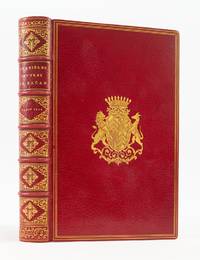
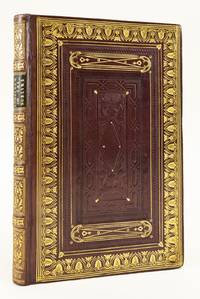
1660ST19567-160Paris: Chez Pierre Lamy 1660. FIRST EDITION. 179 x 120 mm. 7 x 4 3/4". 10 p.l. 496 35 1 pp. <br/> EXTREMELY FINE 19TH CENTURY RED MOROCCO BY HARDY stamp-signed in gilt on front turn-in covers with gilt coat of arms and French fillet border raised bands compartments ruled in gilt and with elegant gilt floral and foliate tooling gilt lettering gilt dentelles all edges gilt. Front free endpaper with bookplate of poet Auguste P. Garnier 1885-1966. Tchemerzine IX 332. ◆Trivial imperfections only: A VERY FINE COPY INSIDE AND OUT.<br/> <br/> In a very handsome binding by one of the most widely sought-after binders of the turn of the 20th century this is a beautifully preserved volume of verse by a founding member of the Académie française. A protégé of Malherbe Honorat de Bueil Seigneur de Racan 1589-1670 is primarily known for his elegant pastoral and religious poetry which as Britannica notes succeeds at "preserving the elegiac lyricism of an earlier age and foreshadowing the gentle melancholy of Alphonse de Lamartine." According to Tchemerzine the present work is "the most complete edition of Racan's religious works" and is in large part composed of his verse interpretations of the Psalms. The Hardy atelier produced luxurious volumes many of them armorial for a range of 19th century connoisseurs. Although we have not been able to identify the coat of arms on the covers the crown with pearls indicates that the owner bore the title of "Comte." Among other connections in the bibliopegic world Henri Hardy employed Jean Marius Michel as a gilder near the start of his career; he also worked with Charles Meunier and Émile Mercier before meeting Robert Hoe in Paris and agreeing to come to New York in early 1896 to serve as foreman of the newly established Club Bindery. In 1917 Hardy along with his compatriots Leon Maillard and Gaston Pilon formed the French Binders with the stated intention of "bringing together distinguished members of the craft to afford them opportunity to work under the most advantageous conditions." The present item is an excellent example of Hardy's earlier work is in outstanding condition inside and out and makes an excellent impression on the shelf. The bookplate on the flyleaf indicates that it was once owned by the French poet Auguste P. Garnier 1885-1966 who later ran the Garnier publishing house established by his family in 1833. Chez Pierre Lamy unknown
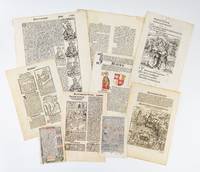
1480ST12778-08481480-1537. Largest leaf measures 428 x 307 mm. 16 3/4 x 12 1/8". <br/> 13 OF THE 15 LEAVES WITH WOODCUT OR METALCUT ILLUSTRATIONS several being a half-page or larger and one with contemporary coloring most leaves also with woodcut or metalcut initials. A couple leaves with some light dampstaining a few others with light toning thumbing and/or the occasional stain repair or other minor issue but in general excellent specimens in pleasing condition.<br/> <br/> These early printing packets present an excellent opportunity for libraries teachers and students as well as private collectors to develop or expand their teaching or personal collections and at a modest cost. Each packet includes four incunabular leaves six post-incunable leaves and five 16th century leaves printed after 1520--all hand-picked to demonstrate a variety of genres formats and countries of origin. Most of the leaves here feature woodcut or metalcut illustrations two of which can be attributed to the prominent engravers Urs Graf and Albrecht Dürer. The illustrations depict a wide variety of scenes including battles biblical episodes saints royalty and natural history. The packets are comprised of leaves from the following works listed in chronological order.<br /> <br /> 1 BIBLE IN LATIN. Ulm: Johann Zainer 1480. From the press of the first printer in Ulm the first Bible to have notices by Menardus Monachus at the beginning of each chapter briefly summarizing the contents. 2 CHRONICLE. Chronecken der Sassen. Mainz: Peter Schoeffer 6 March 1492. 3 SCHEDEL HARTMANN. Liber Chronicarum. Nuremberg: Anton Koberger 1493. 4 HORTUS SANITATIS. Strassburg: Johann Prüss OR Cologne: Heinrich Quentell 1499 or possibly 1507. 5 A BOOK OF HOURS IN LATIN PRINTED ON VELLUM. Paris: Thielman Kerver 1507. With initials finished by hand. 6 GUILELMUS PARISIENSIS. Postilla Guillermi Super Epistolas et Evangelia. Basel: Michael Furter 1513. With woodcuts attributed to Urs Graf. 7 CHRONICLES: FRANCE. Le Premier -Quatrième Vollume de la Mer des Hystoires & Croniques de France. Paris: Gaillot Du Pré; Michel le Noir 1517-18. 8 MAXIMILIAN I. Die Geuerlicheiten und Eins Teils der Geschichten des . . . Helds und Ritters Tewrdannckhs. Augsburg: Johann Schönsperger 1519. 9 SHIP OF FOOLS - COMMENTARY. Des Hochwirdigen Doctor Keiserspergs Narenschiff. Strassburg: Johanne Grieninger 1520. Using the original woodcut blocks from the First Edition of Sebastian Brant's "Das Narrenschiff'" 1494 many of which are attributed to Dürer. 10 BIBLE IN LATIN. Biblia cum Concordantijs. Lyon : Jacob Sacon for Anton Koberger ca. 1520. From one of many similar editions printed from 1512 to the early 1520s. 11 JACOBUS DE VORAGINE. Golden Legend. Westminster: Wynkyn de Worde 1527. 12 A BOOK OF HOURS IN LATIN PRINTED ON PAPER. Venice: Luca-Antonia Giunta 1532. 13 LIVIUS TITUS. Römische Historien. Mainz Juonem Johann Schoeffer 1533. 14 CHRONICLE. FORESTI GIACOMO FILIPPO. Supplementum Supplementi Delle Chroniche del Venerando Padre Frate Jacobo Philippo. Venice : Bernardino Bindoni 1535. 15 BIBLE IN CZECH. Biblij Czeska. Prague: Pawel Severýn z Kapí Hory 1537. <br /> <br /> Provenance note: These specimens were acquired by us as part of a very large group of leaves assembled by a collector who purchased widely and frequently over the course of 25 years; he did not take apart books to harvest individual leaves. unknown
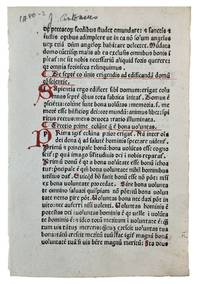
1476184820N: N 1476. 1 1476 H. Liechtenstein Levilapis Vicenza. A leaf from Virgil. L`Eneida in prosa volgare ridotta. 23 lines roman letter. 18.1 cm. x 13.5 cm. 2 1477 H. Lichtenstein Treviso for M. Manzolus. A leaf from Tortellius. Commentariorum Grammaticorum de Orthographia. 44 lines roman letter. 27.9 cm. x 20.5 cm. 3 1479-1480 Don Ippolito Florence for Giovanni di Nato. A leaf from Antoninus Confessionale. 23 lines roman letter. 20.5 cm x 14 cm. 4 1480 L. Pachel and U. Scinzenzeler Milan. A leaf from Antoninus. Confessionale. 28 lines roman letter. 20.9 cm. x 12.5 cm. 5 1480-1482 J. Antonius and B. de Honate Milan. A leaf from Meditationes etc. S. Bernardi edited by M. Venia. 30 lines gothic letter initials in red. 16.8 cm. x 11.2 cm. 6 1480 B. Celerius Treviso. A leaf from Dionysius. Antiquitates Romanae translated by Lapus Biragus. 37 lines roman letter. 27.3 cm. x 20 cm. 7 1481 A. de Mazalibus and P. Odoardus Reggio Emilia. A leaf from Tibullus Catullus and Propertius. Elegiae Carmina Elegiae. 42 lines roman letter. 27.6 cm. x 18.5 cm. 8 1486 J. Suigus de Suico Chivasso. A leaf from Angelus de Clavasio. Summa de Casibus Conscientiae. 55 lines double column gothic letter. 20.7 cm.cropped x 14.7 cm. 9 1492 Bonetus Locatellus Venice for Octavianus Scotus. A leaf from Silius Italicus. Punica cum commentariis Petri Marsi. 61 lines commentary surrounding the text. 31 cm. x 20.5 cm. 10 1493 Benedictus Hectoris Bologna. A leaf from Suetonius. Vitae Caesarum with the commentary of P. Beroaldus. 56 lines of commentary round text and headline roman letter. 30.5 cm. x 20.5 cm. 1476-1493. Together:. N unknown
39479Large oblong octavo ca. 163 x 225 mm. 2 pp. Notated in ink on 4 six-line staves per page of a bifolium. With early ownership signature to foot of first page of music. <br /> <br /> Minor spotting and browning. Crux fidelis is a hymn sung on Good Friday. This setting presents a small portion of what may be a larger composition five phrases of music for soprano alto tenor and bass voices. The first two phrases of music are composed in a homophonic style where the voices move together. The following three phrases incorporate imitation between the voices. Where the music cuts off the start of the next phrase is visible: a return to the homophonic style from the beginning. Vocalists singing multi-voice works in the 16th and 17th centuries most often used individual parts. As the music in this piece is in score and includes several cancellations and corrections it may have been the composer's working manuscript. The bottom line of each six-line staff includes numerous vertical dashes the meaning of which is not indicated by the author of the manuscript but they may shed light on the composition or performance practice of the hymn.<br /> <br /> We have not located any other sources of this setting. unknown
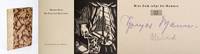
192029467AB1920. München Phantasus-Verlag 1920. Quarto. 4 58 3 Seiten. Mit elf 11 ganzseitigen Original-Bleischnitten und vier 4 kolorierten Bleischnitt-Initialen von Otto Nückel. Hardcover / Originales Halbpergament. Einband minimal fleckig. Sonst in sehr gutem Zustand mit nur geringen Gebrauchsspuren. References: Bürgin I 1a / Potempa E 4 2 / Rodenberg S. 457 / Schauer II 99 Erste Einzelausgabe des Erstlingswerkes. Nummer 98 von nur 150 numerierten und signierten Exemplaren der Ausgabe Gesamtauflage 220. Auf handgeschöpftem Bütten gedruckt und in Halbpergament gebunden. Druckvermerk von Thomas Mann und von Otto Nückel einem der bedeutenden Vertreter des Expressionismus signiert. hardcover
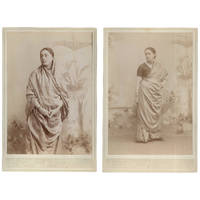
1892307182San Francisco: Abell & Priest 1892. Two fine images of pioneering physician Pauline Root dressed in a sari presumably one she wore in Madurai India while working as a doctor for the American Board of Commissioners for Foreign Missions ABCFM. <br /> <br /> Root 1859–1944 graduated from the Women's Medical College in Philadelphia and was the first female doctor to hold many posts throughout her working life. She spent seven or eight years in India establishing a Woman's Hospital in Madurai. She left India in 1891 and visited China and Japan before returning to the West Coast of the United States giving talks on her work to Christian groups along the way. She gave a lecture to the Occidental Board of Foreign Missions in San Francisco on February 3 1892 and these photographs are likely to have been taken at that time. <br /> <br /> After returning to the East Coast Root studied surgery at Cornell obtained licenses to practice in Massachusetts and New York and took a position as the resident physician at Smith College. In the 1920s she taught "social hygiene" sex-ed for the Bureau of Indian Affairs. <br /> <br /> Nineteenth century photographs of Dr. Root and other female physicians are uncommon. Drexel University has two poor condition cabinet cards of Root in Japan a few months before she arrived in San Francisco. Both images are fine with medium contrast sepia tones. The albumen silver prints measure 3-3/4 by 7-7/16 inches on 4-1/4 by 6-7/16 inch mounts. The photographer's imprint is "Abell & Priest Bancroft Building / 723 Market St. S.F. Cal." Both have blank backs with the notation "Dr. Pauline Root" and "India. Abell & Priest unknown
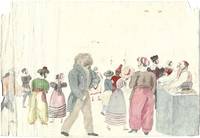
186018931860. Watercolor and pencil on cream wove J Whatman 1827 paper with a partial watermark 7 x 10 1/8 inches 176 x 256 mm the full sheet. The left sheet edge has significant wear; the result of its removal from a page in an album to which the sheet was tipped in. There is also a horizontal tear in the center left sheet edge which extends approximately one inch into the image through the image of the figure with outstretched arms. Small corner losses at the the top right and left sheet as well as a small 1/4 inch at the lower left corner. Colors are extensive and saturated. unknown
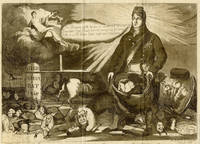
18111538London: The Satirist 1811. Etching with aquatint on buff wove paper with an 1808 watermark 9 3/4 x 13 inches 248 x 330 mm wide margins. Scattered paper repairs on the verso as well as four vertical hard creases and one horizontal crease in the lower quadrant of the sheet. Scattered uniform age tone. The Satirist or the Censor of the Times was a controversial 19th-century British newspaper which featured reports of scandals involving well known residents of London. It was published by Barnard Gregory who faced multiple libel charges and was later imprisoned due to its articles. The Satirist unknown
183426035Italy 1834. Pen-and-ink watercolour and gouache painted black border titled and dated in white gouache in the lower margin within the border. Lovely 19th-century watercolour of Palermo.<br/> <br/> Catering to the foreigners flocking to the region on the Grand Tour this lovely watercolour shows the town of Palermo with its beautiful hills and mountains in the background with a large fort in the harbour with a British and French ship beside it. The sky is awash in pinks and blues displaying the incredible light of the region. unknown
185528465Susquehanna Depot 1855. Pencil pen and ink. Signed in ink: "Theodore Krausch. Susquehana sic Depot. N.Y. and Erie Railroad. October 13 1855." A very handsome drawing of a locomotive by a prominent inventor and engineer.<br/> <br/> Theodore Krausch dates unknown was employed by what was then known as the New York and Erie Railroad at Susquehanna Depot where railway cars and locomotives were designed built and repaired. The town in northeastern Pennsylvania just below the New York border and Binghamton came into existence with the coming of the railroad. Krausch who obtained several patents during his life one for innovations in railway chair design also received a Silver Medal from the American Institute of the City of New York for a drawing of a locomotive no doubt similar to this one. During the 1850s when railway lines and companies were spreading out across the country each railroad customized its engines and cars to its specific needs. There was a large degree of standardization and this Krausch drawing is a perfect rendition of the 4-4-0 wheel arrangement and overall design that was used almost universally in 19th century America. unknown
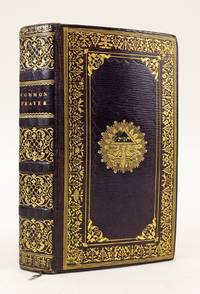
1820ST15600London: Printed by George Eyre and Andrew Strahan 1820. 142 x 80 mm. 5 5/8 x 3 1/8". 510 pp.; 80 2 pp. <br/> VERY FINE CONTEMPORARY STRAIGHT-GRAIN PURPLE MOROCCO ELABORATELY GILT covers with frame of gilt rules and anthemion-and-flower roll central panel with arabesque corners central sunburst medallion containing the Tetragrammaton within a triangle from which the dove of the Holy Spirit descends raised bands spine panels gilt in a floral and arabesque design gilt titling turn-ins with zig-zag gilt roll orange endpapers all edges gilt. Front pastedown with large morocco bookplate of Louisa Smyth dated 25th Dec. 1821 and signed with the initials E. P. Front flyleaf inscribed: "Harriet E. Thorpe / From her affectionate / Brother-- / As a remembrance of / her dear Aunt L. Dickens. / Nov. 1841." Griffiths p. 246. ◆A breath of rubbing to corners but A BEAUTIFUL COPY with no signs of use--clean fresh and bright internally and in a sparkling ORNATE binding.<br/> <br/> Bound in somber purple but with religious imagery in bright gilt this pretty little prayer book is very typical of an era in which such luxurious volumes were popular gifts among the moneyed classes as was the case here. Miss Louisa Smyth must have treasured this Christmas gift from "E. P." as its condition clearly indicates it was seldom if ever used for daily devotions. It likely served as a perfect accessory for Louisa's Sunday finery and perhaps she carried it at her 1831 wedding to Lt. Col. Thomas Mark Dickens of the Royal Engineers. After Louisa's 1841 death the book passed to Harriet E. Thorpe wife of Louisa's nephew Rev. William Smyth Thorpe. Both families are well documented in the county of Norfolk where their eminent lineage goes back generations. Whoever inherited our prayer book from Harriet continued to care for it assiduously as it appears little changed from the days when Louisa first held it in her hands. Printed by George Eyre and Andrew Strahan unknown
1781ST13831Venice: Giovanni Gatti 1781. 214 x 147 mm. 8 1/2 x 5 3/4". Four volumes. <br/> Attractive contemporary limp paper boards patterned with yellow red and black inks paper manuscript labels on spines deckle edges. With four folding engraved plates at the end of volume IV. Pastedown of volume I with a small square of paper with some inscrutable pencil notations glued down. Bolton p. 646; Cole 893; Partington III pp. 80-90. ◆Edges just a touch bumped a few pages with some very light foxing one page with a small hole affecting a word or two of text plates a little browned along the fold and one plate partially torn along the fold but still A SUPERB COPY exceptionally fresh and clean inside and out.<br/> <br/> Offered here in very pleasing contemporary paper boards this is the first combined edition in Italian of two of Macquer's most popular works: "Élémens de chymie-théorique" 1749 and "Élémens de chymie-pratique" 1751. Coherently written in a straightforward manner primarily with the classroom in mind Macquer himself was a highly respected teacher these works became instantly successful as university-level textbooks. Partington tells us that they replaced Lemery's rather outdated "Cours de Chymie" as the favored text for teaching and they were eventually translated into English German Russian and Italian. Macquer 1718-84 made a few modest chemical discoveries but his chief contributions to the science were his applications of chemistry in particular to the porcelain industry and most importantly his writing. In addition to the present work he also penned "the first dictionary of chemistry in the modern sense" according to Partington. Given that Macquer's works were often destined for the hands of students our copy is a fortunate survival indeed not to mention enormously charming with its original deckle edges clean contents and vibrant pattern. This edition also appears to be quite rare. OCLC locates only 10 copies worldwide with just one in the US Huntington and one in the UK Wellcome. Giovanni Gatti unknown
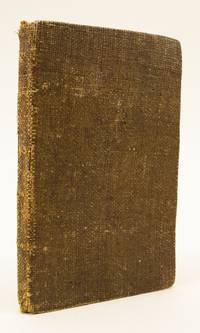
1797ST15599London: Printed for T. Longman B. Law F. & C. Rivington R. Baldwin G. & T. Wilkie and J. Walker 1797. 21st Edition. 150 x 93 mm. 5 7/8 x 3 5/8". viii 123 1 ads pp. <br/> Contemporary brown burlap flat spine. With allegorical vignette on title page and 25 half-page woodcuts illustrating items from the vocabulary lists. Pastedowns with traces of book label removal. ◆Spine slightly cocked short split to cloth on rear joint a little fraying at ends of spine but the insubstantial binding surprisingly solid. Two small stains to each pastedown where labels removed title page lightly browned leaves a shade less than bright due to paper quality other minor imperfections but an excellent copy internally clean and fresh with comfortable margins. All in all remarkably well preserved.<br/> <br/> First issued around 1711 this is the best-selling work of James Greenwood 1683-1737 an influential grammarian and a proponent of women's education. Arranged into 33 chapters the book divides vocabulary lists by topic beginning with "things" and proceeding through minerals plants animals humans and diseases to everyday items affairs of church and state the law the military and finally to the various parts of speech from verbs to conjunctions. Widely used the work was revised and reprinted until at least 1828. At about the time this work was originally issued Greenwood had founded a school in Essex where he accepted girls as well as boys as pupils; he was later recruited to serve as assistant headmaster at St. Paul's School in London. This volume is of particular interest because of its rarely seen utilitarian period binding. We would have expected it to have been worn to shreds long ago but against the odds it has withstood hard use by young pupils remarkably well and it gives us a glimpse of an important element of the English schoolroom at the turn of the 19th century. Printed for T. Longman, B. Law, F. & C. Rivington, R. Baldwin, G. & T. Wilkie, and J. Walker unknown
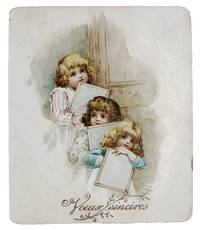
1897S14042England Switzerland:: Created by Eric de Henseler 1897-1900. 1897. Size: 9x12 inches. 30 leaves of stiff card paper. Condition: a few of the cards have separated in two pieces but in general this group is a lively collection with lots of color printing many remarkable designs and poetic quips humor. Album is bound in contemporary quarter black calf gilt tooled bands black pebbled cloth calf corners; extremities worn front joint cracked mended with kozo. Very good. OVER 160 GREETING CARDS & XMAS WISHES 1897-99 many being Xmas cards. One "Souvenir Amitie" is a pop-up variety of expensive card with a 3-dimension image of a young woman on a golden chariot with two swans toting the carriage/chariot floating on a river with rows of flowers and trees the back-drop with a landscape setting. One is a Sprungli Chocolat Zurich card. / Names found in the archive: Uncle Ranny Auntie Kate Eric. Mrs. Walker Donald Evelyn Anderson Mr. & Mrs. Watson Kaye of Ings Grove Mirfield; Ethel Kaye A. Freda F. Pilling The Hagg Mirfield; Mr. & Mrs. A E Pilling; Winnie A.W. Dodds Muriel Frank Mary Hutchinson Kathleen Jessie Eveline Helen Gertrude Whitaker Violette Frank Dona Sankey Lilly Auntie Blanche Daisy Johnson Mr. & Mrs. G. Leopold Caird etc. All should be family relatives or friends of the de Henseler family who later relocated to Switzerland. / "Feathers and Fashions" by Rev. Frederick Langbridge is printed in Germany. / Eugene Eric de Henseler "Eric" born in Fribourg 1889 and died in Geneva 1960. Of a Swiss family originating from Bremgarten Aarau/Argovie he was partly educated in Great Britain and also in Fribourg and Lausanne. He was awarded a Ph.D. by the University of Fribourg in 1928 and his doctoral thesis was 'L'ame et le dogme de la transmigration dans les livres sacres de l'Inde ancienne.' He was an active member of the 'Societe theosophique' in Geneva and frequently contributed to articles on theosophy. [Created by Eric de Henseler], 1897-1900. hardcover
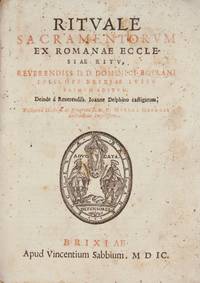
159941148Brixiæ Brescia: Apud Vincentium Sabbium 1599. Quarto. Full contemporary vellum with manuscript titling to spine. 1f. recto verso blank p. 3 dedication p. 4 "Tabula" 5-143 i blank pp. Printed in red and black. Typeset throughout. With decorative woodcut initials and woodcuts of religious scenes at head of each chapter.<br /> <br /> Title with large oval woodcut device incorporating saints and Latin motto "Ecclesiæ Brixiani Advocata Defensores."<br /> <br /> Includes ca. 35 pages of neumatic musical notation on red 4-line staves scored for solo voice. <br /> <br /> With 17th and 18th century annotations to front pastedown canceled "M. A" M. Dona . F. B. and front free endpaper in two hands: the first "Ego Carolus Fontana . 1699" and the second Barthoi Campagnola Archipbri sta Caecilia Verona dono Antonij Piccoli Verone Archibri Terrentiani Brixien Diacesis die 10 Feris 1734." Annotation to verso of rear free endpaper "L h P. Ego Carolus Fontana de Rsa Pa habita Gambar 1699." <br /> <br /> Binding worn soiled and stained with a few minor tears to edges and spine; remnants of early vellum ties. Moderate foxing to title; occasional light foxing minor soiling dampstaining and small stains; mispagination from p. 57. OCLC 1 copy only at the Sistema Bibliotecario Ticinese in Switzerland. OPAC SBN 1 copy only at the Biblioteca di Studi Giuridici e Umanistici in Milan. Apud Vincentium Sabbium unknown
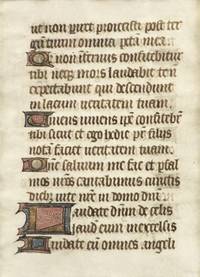
145029503Most probably Paris Circa 1450. A leaf of two pages with 15 lines per page written in brown ink with opening initials of ten lines and other decorations in red and blue and beautifully burnished with bright gilt one two line initial also heavily burnished in gilt. 125 x 90 mm approximate now handsomely presented in a very large and attractive museum quality frame the mounting designed so that both sides of the leaf may be viewed. The decoratively carved frame is of gilded red wood with ebony trim glazed with archival quality glass in all measuring 60 by 42 cm. A very beautiful example in fine condition the vellum clean the lettering dark and strong the painted and gilt initials bright and finely done. hardcover
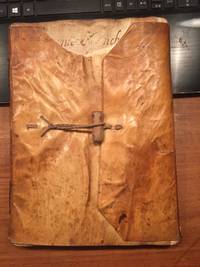
1663Bostonbookfair1Manuscript. 17th century 1663-1695<br /><p>Spanish church register of the village of Montánchez is a municipality located in the province of Cáceres Extremadura Spain. Written in several hands on paper. Folio 29 x 22 cm approx. 135 leaves. Characteristic limp vellum binding. Damage to top cover. First leaves wormed else good.</p>
178344413Neuchatel Samuel Fauche 1783. 4to. Bound in fine contemp. full sprinckled calf raised bands and richly gilt spine. Wear to head of spine. Without the 2 free endpapers. Halftitle present and with stamps. XXIV367 pp. 2 engraved plates 1 folded. The folded plate depicts his two types of Hair-Hygrometers a. 1 engraved vignette. A fine clean and wide-margined copy. <br/><br/><em>First edition of a fundamental work in Meteorology in which Saussure describes how to construct a hygrometer from human hair that can measure the relative humidity and discussing the principles behind it. Cuvier regarded this book as one of the greatest contributions to science of the eighteenth century."A milestone work in chemistry physics and meteorology which established hygrometry as an exact science. Primarely a geologist who explored and published on the Alps Saussure 1740-1788 was the first to prove that air expands and becomes less dense the more humidity it contains. In these Essais the work offered he describes his experiments with the hair hygrometer of his invention and his theory of the evaporation and hygrometry with their applications to meteorology. he also enunciates his theory of the evaporation of water in hydrogen carbon dioxide and other gases."Neville II p. 427 a."In his essay on the theoretical principles of hygrometry which he conceives as "the art of measuring the absolute quantity of water suspended in the air" De Saussure distinguishes three classes of methods of determining humidity which respectively utilize i observations of changes in the weight dimensions or shape of a hygroscopic body; ii observations of the capacity of the air for taking up water; and iii observations of the quantity of water condensing from the air under given conditions on a cold surface or of the degree of cold necessary to start such an condensation."Wolf "A History of Science Technology & Philosophy in the 18th Century" I p. 326 ff.Partington III 763. - Partington "Breakthroughs" 1783 M - Poggendorff II 755-56. </em> hardcover
1819ST15731bLondon: Printed for F. C. and J. Rivington and others 1819. 216 x 136 mm. 8 1/2 x 5 3/8". viii 9-223 1 pp.Translated from the Greek by William Smith. <br/> Attractive contemporary oxblood calf decorated in gilt and blind covers with a wide gilt palmette frame enclosing an intricately blind-stamped panel with additional gilt decoration raised bands spine heavily gilt in compartments black morocco label gilt turn-ins marbled endpapers and edges. Front free endpaper inscribed in ink: "Miss Filliter obtained this Book as a Prize by her uniform attention to the Study of Latin during the Half-year. / June 1828." Lower corners lightly bumped a little rubbing at extremities flyleaves faintly browned occasional trivial internal imperfections but still quite a fine copy the contents extremely clean and unusually bright and in a well-preserved binding with a great deal of aesthetic appeal.<br/> <br/> In a handsomely decorated binding this is an excellent translation of one of the most important treatises of literary criticism to come out of the ancient world. First published in 1737 our translation established the reputation of William Smith 1711-87 as a "talented classical scholar." DNB A later William Smith the lexicographer said of "On the Sublime" "there is scarcely any work in the range of ancient literature which independent of its excellence of style contains so many exquisite remarks upon oratory poetry and good taste in general." Although generally attributed to the third century Greek philosopher and critic Longinus the work probably preceded him. After unsuccessful attempts to determine if Dionysius of Halicarnassus Cassius Longinus Plutarch or another was the author scholars arrived at the solution of calling the creator "Pseudo-Longinus." Our pretty though unsigned binding combines gilt and blind decoration in a particularly pleasant way. Volumes of classics in ornamental bindings were popular school prizes in the 19th century but ours is distinguished by being presented to a young lady who excelled in Latin at a time when most women received little formal education and 40 percent of the women in England were illiterate. The condition here suggests Miss Filliter and her successors treasured and cared for the present volume. Printed for F. C. and J. Rivington (and others) unknown
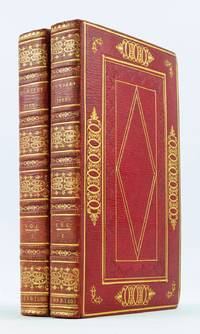
1808ST15731cLondon: J. Johnson 1808. New Edition. 220 x 135 mm. 8 5/8 x 5 3/8". Two volumes. <br/> VERY PRETTY CONTEMPORARY SCARLET STRAIGHT-GRAIN MOROCCO covers with gilt-ruled frame decorated with multiple overlapping gilt door handle tools and floral cornerpieces central panel with gilt-ruled lozenge enclosed by gilt rules and blind floral rolls raised bands compartments gilt wide turn-ins ruled in gilt and with repeating flower motif in blind and small gilt circles in the centers green inlaid cornerpieces with gilt tooling blue watered silk endpapers all edges gilt. With eight plates after Henry Fuseli including frontispiece to each volume. Verso of front free endpaper with armorial bookplate of Lewis Way. ◆Spines a little sunned corners a bit worn and tending to turn inward light scuffing to extremities plates lightly foxed but the text extremely clean and the pleasing bindings with minor issues only.<br/> <br/> This is an attractively illustrated and handsomely bound edition of the finely crafted poetry of William Cowper 1731-1800 the most notable English poet before the Romantics in terms of a tendency to be confessional in one's verse. Given the fact that he was institutionalized and that he several times attempted suicide these self-revelatory poems can easily be seen as a kind of therapeutic experience and it is testimony to the complexity of his personality that so much of Cowper's verse is light conversational and epigrammatic. His poems range widely from religious reflections to translations of Homer to poetry inspired by a lady's suggestion that he could write on any topic including a sofa see vol. II p. 1. The plates here were designed by Henry Fuseli 1741-1825 a Swiss-born painter who lived mainly in England. He was best known for his paintings exploring the supernatural as well as his influence on the young William Blake. DNB calls him "A superb and intensely dramatic draughtsman . . . notorious for his sensational demonic irrational and bizarre subjects" leading "the surrealists to claim him as a forerunner." Though unsigned the bindings here are extremely attractive with tasteful gilding and luxurious touches such as wide decorative turn-ins and watered silk endleaves. This copy was previously owned by Lewis Way an Evangelical reverend who made it his mission to promote Christianity among the Jews. It was his particular belief that returning Jews to the Holy Land would fulfill a biblical prophecy and to this end he secured several audiences with Tsar Alexander I in the attempt to persuade him to the cause. His home at Stansted Park reportedly contained a library that included rare Judaica and Hebraica. J. Johnson unknown
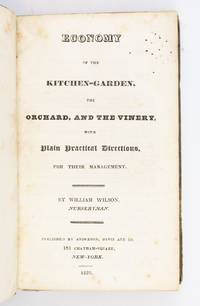
1828ST19567-013New-York: Anderson Davis and Co 1828. FIRST EDITION. 182 x 112 mm. 7 1/8 x 4 1/2". xii 13-206 pp. <br/> Publisher's gray boards backed with black roan flat spine divided into panels by double gilt rules gilt lettering. With an engraved plate depicting the recommended pruning and training of a grape vine. Front flyleaf with pencilled signature of Addie Gratacap and blue crayon signature of John Fields. Occasional neatly pencilled underlinings or marginalia in a 19th century hand. ◆Joints rubbed and cracked rear board with the tiniest bit of give spine with general wear including small losses at top and bottom boards somewhat soiled text with persistent foxing as usual in American imprints of this period; with obvious defects but what one would expect for an American book on this subject at this date.<br/> <br/> This practical guide to gardening in the United States was written in part as a rebuff to English agricultural writer William Cobbett who had cast aspersions on the type and quality of vegetables that could be grown in American kitchen gardens. After defending the honor of such American crops as lima beans Indian corn and winter squash Wilson offers advice arranged by planting season for growing asparagus peas root vegetables tender and hardy greens and varieties of squash. He doesn't quite see a central place for tomatoes in the vegetable garden finding it "the most forbidding-looking plant" and does admit that eggplant cultivation is impossible without a hothouse. Vegetables are followed by herbs for culinary and medicinal use and then by orchard fruits with apples for eating and cider leading the way. Wilson finishes with detailed instructions for grape cultivation illustrated by a plate depicting proper pruning and trellising practices. In addition to underlining key information on planting times and spacing distances in rows of vegetables a previous owner perhaps Addie Gratacap judging by her use of pencil found it amusing to count Wilson's digs at Cobbett which total 32. This work is rare in institutions and in the marketplace and is always found in unpleasant condition. RBH records just three copies at auction. Anderson, Davis and Co unknown
#[60154]The verse reads: "De schilderkonst schijnd leeven aan verw en doek te geeven. De schrijfkonst rijk van zwier geeft spraak aan stom papier." The art of painting appears to give life to paint and canvas. The art of writing rich in finery gives speach to mute paper. l Pen in brown ink and pencil on laid paper 290 x 384 mm. Unsigned and undated. Watermark: P.W. de Veyfde =Prins Willem de vijfde 1748-1806. Small repaired tear lower left and light water- or oilstains in upper corners. unknown