Nebel, Hermann - 1816 ? Koblenz ? 1892Antiquariat.de

48 779 résultats
737-Eo.J. Aquarell und Bleistift, auf Velin, rechts unten bezeichnet, signiert und datiert ?Dom zu Halberstadt 25/5 40 (zweifach) HNebel?, verso Nachlaßstempel (nicht bei Lugt). 40,4:29,7 cm.
050-Io.J. Bleistift, auf cremefarbenem Transparentpapier, unten bezeichnet ?Amalfi?. 22:17 cm. Rechte obere Ecke ergänzt. Ein Aufenthalt Nerlys in Unteritalien 1832/33 ist durch mehrere Zeichnungen mit Motiven aus Sorrent, Neapel und Capri belegt.
077-Do.J. Feder in Braun und Schwarz, grau laviert, auf bräunlichem Bütten mit Fragment eines Wasserzeichens: großes Wappen mit Greifvogel. 16:15 cm. Etwas stockfleckig. Am Oberrand links wasserrandig.
EN-056o.J. Lithographie,1935, auf cremefarbenem Japan-Bütten, im Stein signiert und mit Bleistift als ?Probedruck? bezeichnet. Blattgröße 52,2:38 cm. - Knickfalte im unteren Bereich des Blattes, leicht braunfleckig und Spuren von Rötel. Probedruck mit Bleistiftkorrekturen und zur Übertragung auf den Stein ist der Papierbogen verso gerötelt. Literatur: Nicht mehr bei Stix/Osborn; Papst L 25. Die Vorzeichnung zur Lithographie befindet sich in der Sammlung Michael Papst, München. Das Bildnis zeigt Milena Hutter (1900-1983), die eine langjährige Liebebeziehung mit dem Maler und Schriftsteller Albert Paris Gütersloh (Pseud. für: Albert Konrad Kiehtreiber) verband, der zum nahen Umfeld Oppenheimers in Wien gehörte.
739-Eo.J. Feder in Schwarz, grau laviert, auf festem Velin. 35,3:51 cm. Papier insgesamt fleckig, vertikale Mittelfalte geglättet, Einriß und Loch sorgfältig restauriert. Möglicherweise handelt es sich bei der vorliegenden Motiv um die Schilderung eines historischen Ereignisses oder um eine Szene aus einem Ritterroman.
147-Ho.J. Kohle, auf braunem Papier, rechts signiert und datiert ?Hedwig Schmidt 1947?. 40,2:32,3 cm. ? Wasserränder entlang des linken Randes sowie mit geglätteten Knickfalten im rechten Rand. Mit Widmung von Pechstein in der rechten unteren Ecke ?Meinem Freund H. Wilhelm! / Herzlichst Ihr HMPechstein 1947?.
432-Eo.J. Bleistift, auf chamoisfarbenem Velin. 41,5:30 cm. Verso Skizze mit einer Bauernfamilie mit Ziege an einem Haus in den Bergen. Bleistift.
745-Eo.J. Bleistift, teils gewischt, ein wenig Deckweiß gehöht, auf bräunlichem festem Papier, rechts unten monogrammiert und datiert ?A.S. 14.7.92?. 35,2;47,7 cm.- In den Ecken rechts ein wenig knickfaltig, Mitte Rand rechts zwei kleine Einrisse, verso am Oberrand Reste alter Verklebung.
107-Wo.J. Gouache, auf Velin, rechts unten signiert ?M.S.M?. 25,6:13,4 cm. Das Ganzfigurenporträt zeigt eine in der Mode der Jahrhundertwende gekleidete junge Dame der besseren Gesellschaft, die sich vermutlich zur Erholung in einem Seebad aufhält.
1927196-W1927. Kohle, auf chamoisfarbenem Velin, rechts unten datiert und monogrammiert ?20. Sept. 27. A. S.?, verso mit Nachlaßstempel der Künstlerin. 68,7:49,8 cm. In den Rändern vor allem oben und rechts etwas unfrisch.
506-Eo.J. Bleistift, auf Velin, unten monogrammiert und datiert ?AvW 1866?. 31:23,5 cm. Die 1866 datierte Zeichnung ist während des Aufenthaltes in Karlsruhe entstanden, wo er seit 1866 in der Nowackanlage 8 wohnte.
574-Eo.J. Aquarell auf Karton mit runden Ecken (Bierdeckel), entlang dem rechten Rand signiert ?J. Wopfner.?. 8,9:10,9 cm. - Verso: Waldiges Seeufer mit Figuren. Aquarell, bezeichnet und datiert ?Hagnau d. 18 Augst. 1909 / misslungene Geschichte aus bekannter Bescheidenheit ausgeführt v. Ums.(eitigem)?. Reizvolle Gelegenheitsarbeit! [2 Warenabbildungen]
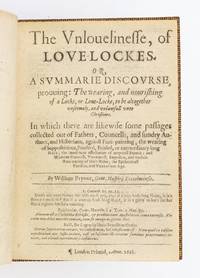
1628ST17855London: n.p. 1628. FIRST EDITION the issue with "needes" in the second line on D2. 184 x 137 mm. 7 1/4 x 5 3/8". 12 p.l. including the initial blank 63 1 pp. pp. 41-48 misnumbered 33-40. <br/> Red crushed morocco by Riviere stamp-signed on front turn-in title and date on front cover raised bands titling in two spine panels gilt edges front joint rather noticeably repaired. In a custom-made folding cloth box with leather label and fleece lining. Front pastedown with book label of Arbury Library; blank with contemporary inscription of Julian Leigh see below for both. STC 20477; ESTC S115447. Rear joint cracked with consequent slight looseness leaves probably washed and resized because extremely fresh and at the same time a shade less than white.<br/> <br/> This is an early work by the Puritan lawyer and indefatigable pamphleteer William Prynne 1600-69 who had a very great deal of advice mostly unsolicited and unwelcomed for the fair sex. In the text here he rails against many things including "face-painting; the wearing of supposititious poudred frizled or extraordinary long haire; the inordinate affectation of corporall beautie; and womens mannish unaturall impudent and unchristian cutting of their haire." While the work can be viewed as a moral diatribe to us it is illuminating as social history talking as it does about the dress and grooming of persons of quality and the responses these evoked in the first half of the 17th century. Prynne graduated from Oriel College Oxford in 1621 became a student at Lincoln's Inn and before long began producing pamphlets that occupy more than 250 entries in STC and Wing. Our work is a forerunner to one of his most infamous and ill-timed works "Historio-mastix" in which he vigorously denounced female actors appearing on the stage--at the same moment Queen Henrietta Maria was preparing a masque to present at court. This misstep led to a conviction for sedition and his sentence included a £5000 fine life imprisonment and the removal of his ears. His later pamphlets were not noticeably less inflammatory and these led to a further sedition charge as well as more disfigurement including a slit nose and a brand on his cheek announcing him as a seditious liar. Our copy is recorded as lot #271 of Sotheby's "Catalogue of Rare and Valuable Books Selected from the Ancient & Celebrated Library at Arbury Hall Warwickshire the Property of Sir Francis Newdigate-Newdegate" 1920. The earliest recorded owner however is an ancestor of Sir Francis: the 17th century gentlewoman whose name is variously given as Juliana or Julian Leigh bap. 1610 d. 1685. She was the daughter of Sir Francis Leigh of Newnham Regis Warwickshire and the granddaughter of Thomas Egerton Viscount Brackley who was Lord High Chancellor of England. In 1632 she married Sir Richard Newdigate 1st Baronet 1602-1678 of Arbury Hall who became Lord Chief Justice. Notably Newdigate was an exact contemporary of Prynne at Oxford and they were both admitted to the bar in 1628 the year our "Love-Lockes" was printed. It is certain that Newdigate and Prynne were well acquainted as together on behalf of the crown they famously prosecuted leaders of the Irish rebellion in 1644 and 1645 resulting in multiple executions for high treason. n.p. unknown
FH-464o.J. Farbholzschnitt, 1912, auf Japan-Bütten, mit Bleistift signiert, datiert, nummeriert und als ?Handdruck? bezeichnet. Darstellungsgröße 24,9:17 cm, Blattgröße 26:19 cm. Nr. 9 von 40 Exx. ? Aus einer Mappe mit 6 Vogel-Darstellungen, die Klemm 1912 in einer Auflage von 40 Exemplaren veröffentlichte.
FH-465o.J. Farbholzschnitt, 1912, auf Japan-Bütten, mit Bleistift signiert, datiert, nummeriert und als ?Handdruck? bezeichnet. Darstellungsgröße 29,8:15 cm, Blattgröße 35:16,8 cm. Nr. 9 von 40 Exx. ? Aus einer Mappe mit 6 Vogel-Darstellungen, die Klemm 1912 in einer Auflage von 40 Exemplaren veröffentlichte.
048-Io.J. Aquarell über Bleistift, mit Gummi arabicum gehöht, auf chamoisfarbenem Velin, links unten signiert ?G. Lory?. 16:21,6 cm. In Albumblatt geklebt, dort bezeichnet ?Lory Fils de Neuchatel?.
257-Eo.J. Aquarell mit Deckweiß gehöht, über Bleistift, auf Zeichenkarton. 21,5:30,5 cm. Papier insgesamt etwas gebräunt, verso Reste alter Verklebung.
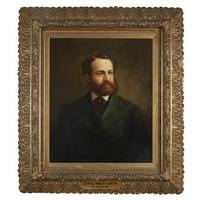
1870690701870. 30" x 24. 30" x 24" A Philadelphia Lawyer Who Served as Pennsylvania's Deputy Attorney General American School 19th Century. Smith Lewis Waln 1846-1881. Portrait of Lewis Waln Smith. Philadelphia c.1870. 24" x 30" image size. Oil on canvas in ornate nineteenth-century gilded wood frame. Some minor nicks and chips to frame gilding slightly dulled otherwise fine. $1800. Lewis Waln Smith was a lawyer who served as Deputy Attorney General for the State of Pennsylvania. This portrait belonged to the Philadelphia Bar Association. Founded in 1802 it is the oldest association of lawyers in the United States. Its library where this portrait was last displayed was renamed the Theodore F. Jenkins Memorial Law Library in 1967. unknown books
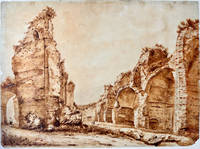
185212381852. Ink wash in brown ink on cream wove paper 9 7/8 x 13 inches 250 x 330 mm titled and dated in brown ink lower right. In fair condition with minor scattered soiling uniform age tone and edge 'nics;' all consistent with age. Laid down to archival mat board. unknown
192395914Hamburg, Gemeinschaftsverlag Hamburgischer Künstler, 1923. 289 S. Mit 6 textabschließenden Orig.-Holzschnitten (von O. Niebuhr u. H. Stegemann), 51 Orig.-Holzschnitten sowie 1 Orig.-Vierfarben-Holzschnitt auf Tafeln. 32 cm. OHLn.
199254379ABBordeaux., capsMusee d'art contemporain de Bordeaux., 1992. 28 x 22 cm. 118 S. OKarton mit OUmschlag., 54379AB 1. Auflage. Gutes Exemplar.
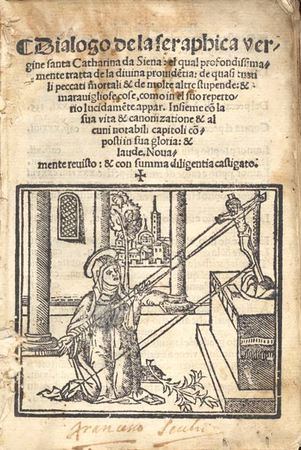
15406505Venetia (Venezia), Marchia Sessa, 1540 ; in-8 ; plein vélin vieil ivoire (reliure de l'époque) ; (32) ff., 224 ff., le dernier verso blanc ; grand bois gravé (88 x 78 mm) en page de titre représentant Sainte Catherine recevant les stigmates et marque d'imprimeur à la suite du collophon, achevé d'imprimer du 29 avril 1540, date anniversaire de la mort de la Sainte (29 avril 1380).
003-Wo.J. Schwarze Kreide, weiß gehöht, je mit schwarzer Kreide gerahmt (rechts beschnitten) und oben rundbogig abgeschlossen, links unten Proben farbiger Kreide, auf blauem Velin. 15,4:18,9 cm. In den Rändern ungleich beschnitten, Knickfalte am linken Rand, verso am Oberrand Reste alter Verklebung. Provenienz: Sammlung H. Geller, Dresden.
Acquaforte e punta secca, 1924. Misure della lastra 85x130 mm. Prova d’autore, firmata a matita in basso “L. Bartolini”. Esemplare rifilato al rame ed applicato su cartoncino coevo. Perfetto stato di conservazione. All’incisione, databile al 1924-25 come altre opere analoghe dell’artista, Bartolini assegnerà poi il titolo definitivo di Tre donne alla fontana. Un’esemplare dell’opera definitiva è passato in asta a Berna nel novembre del 2007: https://www.mutualart.com/Artwork/Tre-donne-alla-fontana/591860B3A0845475 Luigi Bartolini è considerato uno dei maggiori incisori italiani del Novecento, insieme a Giorgio Morandi e Giuseppe Viviani. Oltre ad essere un prolifico incisore (al suo attivo oltre mille acqueforti), fu anche pittore e scrittore. Partecipò sia come pittore che come incisore a diverse edizioni della Biennale di Venezia dal 1928 al 1962. Presente a varie manifestazioni artistiche, sviluppò diverse maniere definite: ‘maniera bionda’, ‘lineare’ e ‘nera’. Ricordiamo soprattutto le acqueforti della serie Marche e della serie Sicilia. Iniziò la sua produzione grafica nel 1914 e il suo stile si rifà alla tradizione naturalistica dell’Ottocento. Molte sue incisioni si possono ricollegare ad alcune opere del Goya, di Telemaco Signorini e di Giovanni Fattori. Eccellente nella rappresentazione della natura morta e del paesaggio, spesso il Bartolini rappresentò dolcemente le cose e gli oggetti più umili, i soggetti di natura più dimessi. In essi ritroviamo il sentimento che diviene immagine e la forma che si sviluppa in espressione. Con Bartolini l’incisione torna ad essere un mezzo di espressione poetica libera dal simbolismo e dal vedutismo allora in voga presso le accademie. Nelle sue acqueforti prevale ora un tratteggio leggero (genere biondo), ora una ricerca del chiaroscuro alla Rembrandt (genere nero). Rara. Etching and drypoint, 1924. Plate size 85x130 mm. Artist's proof, signed in pencil at the bottom "L. Bartolini". Example trimmed to copper and applied on contempoary paperboard. Excellent state of preservation. Rare. Born in Cupramontana near Ancona, Luigi Bartolini was the twentieth century Italian etcher, who came closest to the stature of his great rival, Morandi. As a teenager, he saw the collection of etchings, including work by Callot, owned by the Corradi family in Iesi. From 1907 to 1910 Bartolini studied at the Istituto di Belle Arti in Siena, and started to etch c. 1909. He moved to Rome in 1910, where until 1912 he frequented the Accademia di Belle Arti, while also attending lectures on literature and the history of art, and courses on anatomy at the University in Rome. Bartolini studied the etchings of Goya and took lessons on drawing at the Accademia di Spagna. From there, he went to Florence in 1913, where he attended the Scuola del nudo. Bartolini continued his anatomical research, as well as studying architecture, making himself the most assiduous student of all Italian twentieth century printmakers. He also visited the Uffizi and Florentine print dealers to look at the etchings of Rembrandt and Fattori. Bartolini painted his first oils just before the outbreak of the First World War. Although he painted pictures throughout the rest of his career, and was awarded the Premio Marzotto for them in 1956, they have been far eclipsed in fame by his etchings and writings. During the First World War, Bartolini published his first collection of poetry. A very prolific and accomplished writer, in this field he is best known today as the author of the novel, 'Ladri di biciclette' (Bicycle thieves), of 1946, which was quickly turned into a celebrated film by Vittorio de Sica and Cesar Zavattini. After the First World War, Bartolini held a series of minor teaching posts in Macerata, Sassari, Avezzano, Pola, and Caltagirone, while he continued to etch, and started a long career as a polemical journalist and critic of art and architecture. From 1923 to 1929, he wrote for the Naples periodical, 'Cimento', but he also contributed to 'Il Selvaggio', 'Quadrivio', 'Italia letteraria', and 'L'Ambrosiana'. Bartolini's 1924 exhibition of etchings at the Casa d'Arte Bragaglia in Rome was a great success, and later that year he showed 70 etched landscapes of the Marches at the Casa Palazzo di Roma. The following year he visited Paris, where he paid particular attention to the paintings of Van Gogh. Bartolini's political convictions led him to being assaulted by Fascists and hospitalised in 1928. Two years later, he won a prize at the Venice Biennale, where he had exhibited a portfolio of etchings. In 1930, the Turin publisher, Buratti, began to issue a series of portfolios of etchings by contemporary Italian artists under the editorship of Cipriano Oppi, selecting Bartolini for the first album. The following year, Buratti published 'Le carte parlanti', a portfolio of 10 of Bartolini's etchings, which was published in an edition of 20. In 1932, Bartolini shared the first prize at the Prima mostra dell'incisione moderna at the Uffizi with Morandi and Boccioni. His close friend, the leading anti-Fascist art historian, Lionello Venturi, acted as his agent selling his etchings in Paris. Bartolini's correspondence with his compatriots in exile led to his imprisonment, from which he was released on Mussolini's personal intervention. He was then placed under political surveillance. From 1933 to 1938, Bartolini taught in Merano, where he painted and etched in the open air, finding subjects on the banks of the fast flowing Adige. Despite being under political suspicion, he was given a one - man show of 50 etchings at the second Rome Quadriennale in 1935, when he was awarded the first prize for printmaking. Bartolini still encountered political difficulties, and his 'Modi', published by Edizioni del Cavallino in 1938, was censured by Al...
191371873Berlin-Wilmersdorf, A. R. Meyer, [1913]. 16 nn. S. Mit s/w. Titel-Illustr. (18 x 14 cm). Fadengeheftet.