15 993 résultats
22256o.J.
18066A Amsterdam, Chez Jacques Coeur, à la corne d'Abondance (Paris), 1756. 3 volumes. xii, 372 pp.; 406 pp.; 350 pp. 8vo. Contemporary marbled calf, spines richly gilt in compartments, labels with gilt lettering and numbering. Mars 27; Weulersse, i, p. xxvii; Kress 5526; Goldsmiths 9082; Einaudi 2659; Mattioli 1481; INED 2079; Higgs 1145. First edition, second issue. Einaudi's copy is identical with ours, about the Kress and Goldsmiths copies not much can be said, both collections contain more than one copy and they both indicate that there is one copy with a third volume with the indication 'Nouvelle édition', as does our third volume. According to Mars, Ange Goudar, cet inconnu, essai bio-bibliographique, the third volume came from the same press as the first two volumes but with a different ornamental typography. Between the first issue and this issue, there appeared, according to Mars, a parisian contrefaçon, all published in 1756. This is the main work of Goudar. It was used by the demographer Süssmilch in his Die goetliche ordnung. Voltaire had a copy in his library and Diderot wrote about the book in a letter to Sophie Volland. Preceding Mirabeau's l'Ami des Hommes by a few months, it marks an important date in the history of political economy, and made Goudar one of the leading figures of the school of 'des agrariens et populationnistes', not to be mixed with the Physiocrats, which they preceded and with whom they disagreed on various points. 'Of the pre-physiocratic French writers who approached the population problem in terms of agricultural values and reforms, Ange Goudar (1720-1791) was the most important' (Spengler, French predecessors of Malthus, pp. 56-67.) Spengler's analysis is elaborate and shows the crucial importance of this work. - Some corners somewhat damaged.
17125A Leyde, 1754. Title printed in red and black. vi, (8), 408 pp. 12mo. Contemporary red morocco, gilt fillets on sides, spine richly gilt with gilt stamped ornaments and gilt lettering, all edges gilt, some very, very light wear, one scratch to front cover, corners lightly bumped, a beautiful copy. Kress 5381; Goldsmiths 8916; Higgs 742; Leblanc, De Thomas More à Chaptal, 123; Weulersse, i, p. xix; INED 3607; not in Einaudi (other editions); not in Menger. Second edition. In all, four editions were published in 1754. The work was being published as a translation but was actually written by Louis-Joseph Plumart (or Plumard) de Dangeul who used the pseudonym of John Nickolis. 'd'Argenson admire beaucoup cet ouvrage, qu'il place même audessus de l'Esprit des Lois de Montesquieu.' (Stourm, p. 98). 'Documentation particulièrement riche, accompagnée d'observations personnelles sur la population, les classes sociales, le commerce, l'économie.' (INED) 'Mid-eighteenth-century populationism is best represented in the works of Plumard de Dangeul, Goyon de la Plambaine and Jaubert. Dangeul was concerned primarily to combat celibacy, the principal check (in his opinion) to population growth; for he looked upon such growth as a 'certain sign' of the 'health of the body politic', as a stimulator of agriculture and manufactures, and as a partial source of relief to the taxpayers (the cost of government being relatively fixed).' 'The forces unfavorable to population growth operated more powerfully in some social classes than in others. Both the marriage rate and fertility within marriage were lower in the military class than in any other group; they increased in the following order: magistrates, financiers, merchants, artisans, comfortable laborers, and uncomfortable laborers. In general, Dangeul concluded, the French social system valued least and burdened most heavily the more useful classes, and thereby checked their increase and that of the population as a whole' (Spengler, French predeccessors of Malthus, pp. 82-86). - With a handwritten ex-dono by the author on second blank leaf, binding by Derome (?).
In-4°; pp. (4), 144, bianca F12; al frontespizio incisione su legno con il leone veneziano; con frontespizio proprio con il medesimo legno seguono da p. 117: “Terminazione degl’illustrissimi ed eccell. deputati ed aggionti alla regolazione del commercio e cinqe savi della mercanzia in proposito delle bollette d’uscida”, p. 131: “Obblighi ed incombenze del ragionato appuntadore nella dogana da mar volgarmente detta nuovo stallaggio; approvati dall’eccell. Senato 1761” dove l’ultimo decreto è datato 1780. Bell’esemplare in cartonato rustico coevo. Ex libris papadopoli. Interessante per la grande quantità di merci elencate tra cui anche “libri a a stampa e vecchi usati”, quadri di pittura antica e nuova”, e le mercanzie provenienti dal Levante, ma anche da Bosnia, Erzegovina, Albania.
18392A Amsterdam, Chez Marc-Michel Rey, 1776. 2 volumes. xx, 389, (3) pp.; (4), 474, (2) pp. 8vo. Contemporary marbled calf, spine gilt with red labels and gilt lettering, red edges. INED 4116; Einaudi A.867; not in Kress; not in Goldsmiths; Leblanc 113; Mattioli 3269. First edition of this very interesting expostion dealing with the laws of society, the relation between men, man and society, natural and positive law, the role of economics, demography, luxury, property, religion, individual liberty, liberty of the press, free speech, etc. etc. and how society should be organized, governed and managed, this is both a work of sociology, economics, politics and legislation seeking the well-being and happiness of societies and population through proper and rational legislation and organization. 'Économie politique. Doctrine plus agrarienne que populationniste, très proche de celle des physiocrates' (INED, giving a long and extensive analysis of the work). There are sections discussing population (Schmid advocates a continuous increase), family life, property (he defends private ownership of land), luxury, religious toleration, (Schmid is in favour), taxation (Schmid favours direct over indirect taxation), commerce (he advocates, among other things, free trade for the colonies and an autonomous government) and war. One of the best expositions of the body of economic thought of the time.Further sections deal with: De l'Autorité souveraine; Des Forces de la Société; Des Rapports d'une Société avec les autres Sociétés; Du bonheur de la Société; Des Loix positives. George-Louis Schmid (or Schmidt), born in Avenstein in 1720, entered the service of the Duke of Saxe-Weimar and retired in 1757 to Nyon in the Vaud. He had close relations with Voltaire, Diderot and d'Alembert and the other leading philosophes of the 18th century. He belonged, together with authors such as Rillet de Saussure, Delolme and Iselin to a group of important Swiss authors actively participating in the European debates of those days and historians now believe that Swiss authors like these were unique in their attempts to reconcile traditional republican and Christian standards of social justice with the imperatives of economic growth. For this reason, they came to occupy a central position in European debates and the essay competitions of the Economic Society of Bern were closely watched elsewhere in Europe. - Some occasional browning. An excellent copy of a scarce work.
17789984Madrid: Pedro Marín 1778. First Edition Primera edición. Hardcover Tapa dura. 284x197mm. 11¼x7¾". Madrid Pedro Marín 1778. En folio 284 x 197mm. Frontispicio con el escudo real de España grabado al cobre 2 19 262 pp. Encuadernación en piel de época sin el tejuelo de la lomera. Primera edición del Decreto de Carlo III por el que se establece el comercio libre con América y Filipinas y se finaliza con el monopolio del comercio a las Indias que venían ejerciendo Cádiz y Sevilla permitiendo a otras ciudades que lo soliciten comerciar con el nuevo continente. Este Reglamento articulado en 55 puntos fue promulgado por Carlos III como parte de las reformas borbónicas con el fin de incrementar el intercambio comerical entre España y América; se habilitaron 13 puertos españoles y 24 puertos americanos: San Juan de Puerto Rico Santo Domingo Monte-Christi Santiago de Cuba Batabanó La Habana Isla de Margarita Trinidad Campeche Golfo de Santo Tomás de Castilla Omoa Cartagena de Indias Santa Marta Río de la Hacha Portobelo Chagres Tierra Firme Montevideo Buenos Aires Valparaíso La Concepción Arica Callao y Guayaquil. Se excluyó a Venezuela hasta 1788 para proteger los intereses de la Real Compañía Guipuzcoana de Caracas que se disolvió en 1785 y a México por el temor de que la prosperidad de este territorio provocara la despreocupación hacia otras zonas menos activas lo que iba contra la idea rectora del proyecto. Cuatro años más tarde en 1789 se amplió el comercio libre a México y en 1797 a otros países de Europa. Ejemplar en gran papel de amplios márgenes. Pedro Marín hardcover
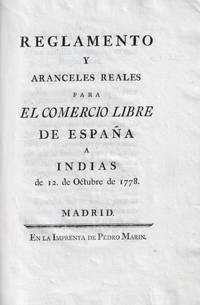
177810011Madrid: Pedro Marín 1778. First Edition Primera edición. Hardcover Tapa dura. 265x195mm. 10½x7¾". Madrid Pedro Marín 1778. En folio 265 x 195mm. Frontispicio con el escudo real de España grabado al cobre 2 19 262 pp. Encuadernación en piel de época sin el tejuelo de la lomera. Primera edición del Decreto de Carlos III por el que se establece el comercio libre con América y Filipinas y se finaliza con el monopolio del comercio a las Indias que venían ejerciendo Cádiz y Sevilla permitiendo a otras ciudades que lo soliciten comerciar con el nuevo continente. Este Reglamento articulado en 55 puntos fue promulgado por Carlos III como parte de las reformas borbónicas con el fin de incrementar el intercambio comerical entre España y América; se habilitaron 13 puertos españoles y 24 puertos americanos: San Juan de Puerto Rico Santo Domingo Monte-Christi Santiago de Cuba Batabanó La Habana Isla de Margarita Trinidad Campeche Golfo de Santo Tomás de Castilla Omoa Cartagena de Indias Santa Marta Río de la Hacha Portobelo Chagres Tierra Firme Montevideo Buenos Aires Valparaíso La Concepción Arica Callao y Guayaquil. Se excluyó a Venezuela hasta 1788 para proteger los intereses de la Real Compañía Guipuzcoana de Caracas que se disolvió en 1785 y a México por el temor de que la prosperidad de este territorio provocara la despreocupación hacia otras zonas menos activas lo que iba contra la idea rectora del proyecto. Cuatro años más tarde en 1789 se amplió el comercio libre a México y en 1797 a otros países de Europa. Ejemplar en gran papel de amplios márgenes. Pedro Marín hardcover
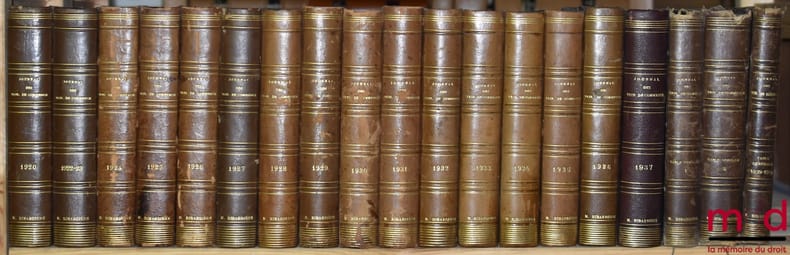
3971, Paris, Videcocq 1852 et s., 85années en 85 vol., demi-basane brune/fauve, tit. & tom. dorés sur dos à faux nerfs, filets simples et filets multiples dorés, rel. au chiffre de «M.Ribardière», (rel. très frottées avec nombreuses épidermures, accrocs et mq. de cuir, coiffes émoussées dont 5arrachées, 2dos manquants, 1vol. dérelié, papier jauni).
17046A Paris, De l'Imprimerie ordinaire du corps législatif, et se vend chez Rondonneau, mars 1806. xii, 224, iv, 164, (4, advertisments) pp. 4to. Contemporary half calf, spine gilt in compartments, gilt lettering, marbled boards, corners, very lightly rubbed. Kress B.5003; Goldsmiths 19258; Einaudi 162; INED 94 (only the last iv, 164 pp.); Martin & Walter, 545. First edition. 'Ambroise-Marie Arnould (1750-1812), a French economist, was director of the board of commerce under the Revolution. His works contain valuable information upon the theory of trade, the state of the balance of trade in Europe during the 18th century, French finances, etc. He advocated the division of France into departments according to their homogeneous economical nature; and appealed to all maritime nations to confederate against the menacing power of England' (Palgrave, i, p. 58). The last 164 pages contain the 'Notes et pièces justificatives', with tables throughout the text.
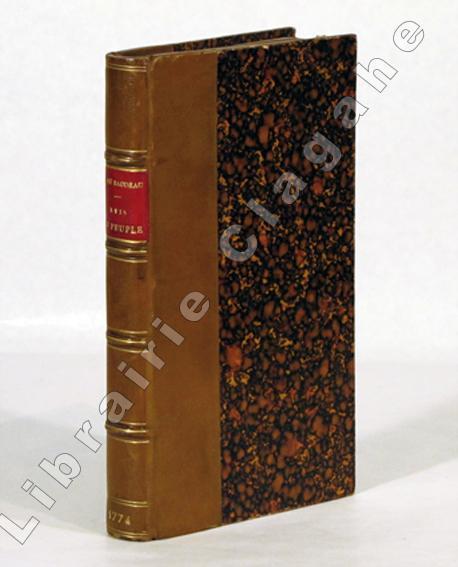
177418311Amsterdam et Paris, Fr. Ambr. Didot aîné, 1774 ; in-12 (178 mm), demi-veau caramel, dos à nerfs décorés de filets dorés, pièce de titre rouge, date en queue, non rogné (reliure du XIXe) ; 324 pp.
18480A Bruxelles, et se trouve à Paris, Chez la Veuve Esprit, 1785. 152 pp. 8vo. Modern half citron morocco, spine gilt with raised bands, gilt lettering, marbled boards, top edge gilt, a lovely copy. Kress B.820; Goldsmiths 12849; INED 735bis; Leblanc, De Thomas More à Chaptal, 132; not in Einaudi. First edition, very rare. It is a reply to Roubaud's work Representation to the Magistrates ...... The author denounces the French policies rergarding wheat and criticizes the absolute freedom of its trade and circulation. He proposes the maintenance of the legislation in force, but he tempers it by proposing the creation of companies of commerce, which will have the sole authority to import or export in the kingdom. They will have to create, in the important cities, granaries where the farmers and proprietors will be able to carry the unsold grains, which are bought for them at a fixed price. The author concludes his study with a critique of Necker's Traité de l'Administration des Finances with regard to the paragraphs relating to grains, which contradict the propositions set out in his own work (Leblanc, our translation). 'The unlimited freedom of the grain trade has many disadvantages for the economy and the population. Bourdon proposes a more moderate system: to set up a trading company entrusted exclusively with the export and import of grain, the establishment of public granaries, the fixing of the price of bread in each place, and so on. This system, moreover, would make it possible to abolish taxes without diminishing the revenues of the king: levying a duty on the quintal of wheat (INED, our translation).
1928141101928 broché in-folio (paperback in-folio), dos et première de couverture rempliée marrons imprimés et ornés de petites illustrations (brown spine and cover printed and decorated with small illustrations), quatrième de couverture fanée (chipped back cover), tranches non rognées (edges no smooth), pages de garde marrons clairs (brown endpapers), tirage limité à 1020 exemplaires - 1 des 1000 exemplaires sur papier Vélin Montgolfier d'Annonay (limited edition - 1020 copies were printed), texte à manchette (marginal note), illustrations : bandeaux - lettrines et culs-de-lampe de (headpieces - dropped initial and tailpieces of) Georges Tcherkessof - poinçons - armoieries et la carte des juridictions des monnaies par (hallmarks - Armoieries and the map of the jurisdictions of change by) René Mourre - serpente légendées pour les gravures hors-texte (tissue with legend for the illustrations full page engraving), naissances de rousseurs (beginning of the redness marks), 356 pages, 1928 à Paris Chez Louis Carré,
1753G115322Paris, chez la Veuve Estienne & fils 1753 2 parties en 1 volume physique, [2bl.] + [2] xii + 280 + 206 + [2] + [2bl.] pp., Première édition en français (traduction 'libre' de la seconde édition espagnole de 1742, la 1ère date de 1724), reliure d'époque à 5 nerfs en plein-cuir (dos orné, coins légèrement abimés, petite manque de cuir en haut du dos), tranches rouges, feuilles de garde décorées, quelques rousseurs, 26cm., bon exemplaire, [Cet ouvrage traite des divers aspects de l'économie appliquée et du commerce international comme des problèmes d'impots, de monopole, de population, etc., ainsi que de la marine espagnole et les colonies espagnoles en Amérique], poids: 1.1kg., G115322
1806PHO-2337A Paris, Colnet, 1806. 3 vol. in-8, 558pp., 469pp., 362pp., demi-basane fauve à coins parchemin ivoire, dos lisse, pièce de titre brune, dos frottés, coins et coupes usés, pièces de tomaisons incomplètes, défauts dont rousseurs, mouillure claire au début de t.3 et fin t.2, petites taches d’encre et fentes sans manque sur la carte). Ouvrage illustré d'une carte dépliante et de 3 plans illustrant la ville de Caracas, le port de la Goayre, la rade et la ville de Porto Cabello.
18343173Exposition de 1834. Mit gest. Titel u. 38 gest. Tafeln. Paris, [L. Tenré, H. Dupuy], 1834. Kl.-4to. (27,4 x 18,4 cm). 160 S. Marmorierter Halblederband mit reicher Rückenvergoldung.
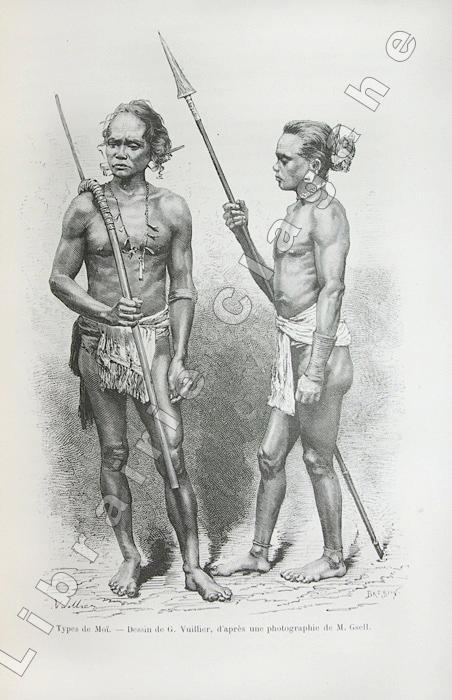
17791Paris, Hachette, 1895 ; grand in-8, demi-chagrin rouge et percaline, dos à nerfs très décoré et doré, tranches dorées (Ch. Magnier) ; XV, 657 pp. , 2 cartes dépliantes de l'Indo-Chine et de la Chine et portrait hors-texte de Francis Garnier.
17904836Mit 2 mehrfach gefalt. gest. Tafeln von [Ludwig Gabriel] Necker nach F. W. König. Ulm, Im Verlag der Stettinischen Buchhandlung, 1790. 8vo. (19,2 x 11,5 cm). 69 S. Neuer Pappband. [6 Warenabbildungen]
18435870Im Auftrag des Großherzoglich Hessischen Gewerbvereins verfaßt. Darmstadt, Gedruckt bei C. W. Leske. In Commission bei Gustav Jonghaus, 1843. Kl.-4to. (26,2 x 21,2 cm). Titel, 336 S. Halbleinwandband d. Zt. mit Rückenschild.
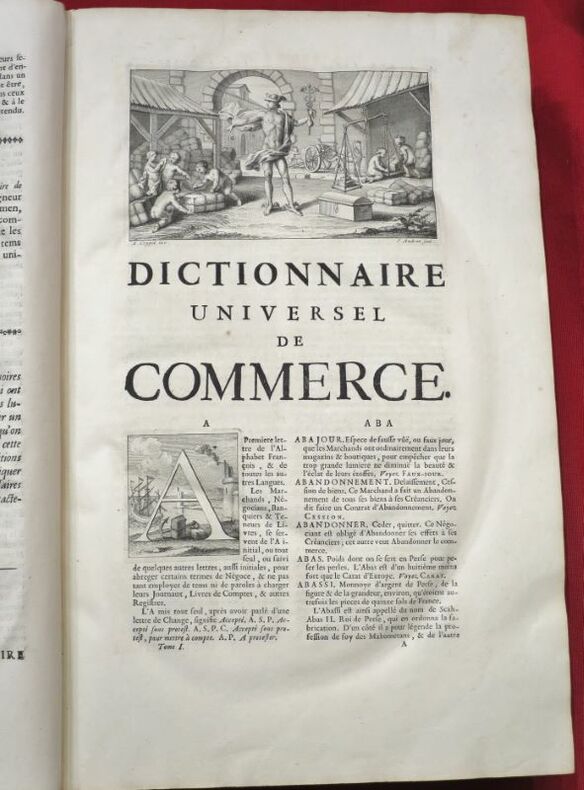
110162A Paris, chez Jacques Estienne, ruë Saint Jacques, à la Vertu, 1723, 2 volumes grand in-folio de 405x260 mm environ, Tome I, A-E : 1f.blanc, 4ff. (faux-titre,titre en rouge et noir, epistre à Monseigneur Amelot avec lettrine et large bandeau), xxviij-2002 colonnes (2 colonnes par page), Privilege, 1f. (fautes à corriger), 1f.blanc, - Tome II, F-Z : 1f.blanc, faux -titre, titre, 1956 colonnes, 1f.blanc, plein veau granité brun, dos à 6 nerfs portant titres et tomaisons dorés, ornés de caissons à riches motifs dorés, coupes dorées, tranches mouchetées de rouge. Papier un peu jauni avec avec rousseurs et taches d'encre anciennes par endroits, cuir très épidermé, rayé et frotté avec des manques et des restaurations 2 coins tapés. Edition originale parue à titre posthume.
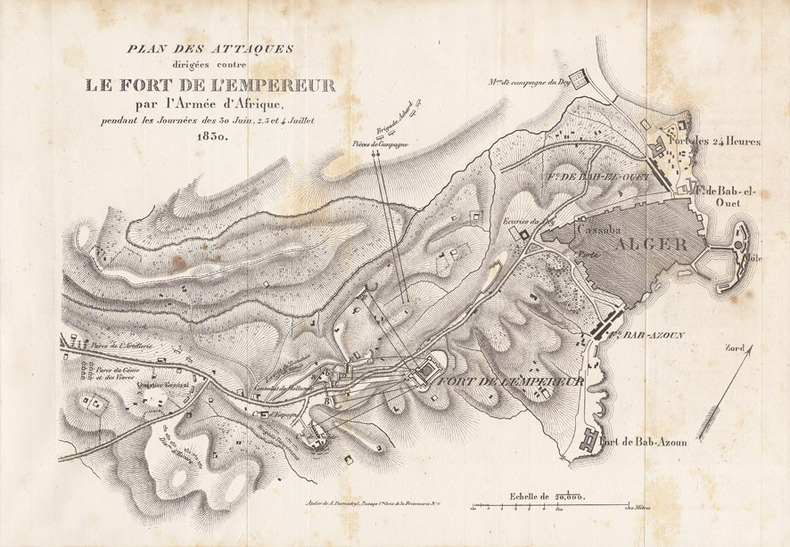
183017233Paris, Ladvocat ; Marseille, Camoin ; Toulon, Laurent, 1830 ; (4), II pp. , (1) f. blanc, 406 pp. , (1) f. errata, très grand plan dépliant lithographié de Alger, Djezair, avec le port, les fortifications, etc.suivi de : [Fernel, commandant] Campagne d'Afrique en 1830, avec le portrait du Dey d'Alger, le tableau de l'organisation de l'armée, et d'un plan des travaux du siège. Paris, Théophile Barrois et Benjamin Duprat, 1831 ; (4), VII, 133 pp. , (1) f. , 5 pp. soit 10 tableaux dépliants, plus dépliant des attaques.Reliés en un volume in-8, demi veau glacé fauve, dos lisse à faux nerfs dorés, titre et fleurons dorés (reliure de l'époque).
18731A Londres, Aux dépens de la Compagnie, 1789. Engraved title within border, 16 tables, some folding. vi, (7)-230 pp. 4to. Modern half calf, marbled boards, corners, gilt lettering to spine. Sabin 32638; Echeverria & Wilkie 789/116; not in Leclerc; not in Fay; not in Howes; cf.: Kress B.1719; cf.: Goldsmiths 13832; not in Einaudi; no French edition in JFBL. Only edition in Quarto, very rare, probably the first French edition. Both Sabin and Echeverria & Wilkie give a 4to edition printed in Rouen. A detailed exposition and statistical comparison of the imports and exports of Great Britain and the United States, from 1700 to 1783. With each edition, Sheffield substantially revised and enlarged the text. Written in opposition to the bill introduced by Pitt in 1783, proposing to relax the navigation laws in favour of the States, the work was influential in determining the abandonment of the motion. Sheffield points up the weak position of America and continually stresses the growing commercial importance and potential of the West Indies and Canada (especially Newfoundland and Nova Scotia, particularly with regard to fisheries, lumber, and ship-building). Howes writes that the work was very influential in shaping England's trade policy from 1783 to 1789, so detrimental to American commerce and shipping interests as to contribute greatly to the formation of a Federal union, better able, than were the separate federated states, to retaliate against British maritime might.The tables provide extensive statistical information, giving a comparative export and import survey of the trade between the United States and other countries. This translation from the English original was due to De Rumare, magistrate at Rouen. The later Mirabeau translation did not include the statistical tables. - Titlepage browned, some scattered spotting, but a good large paper copy.
1751603556London, printed for John & James Rivington and John Crofts, 1751. 2 Bl., VI, XXXIX, 430 S.; 1 Bl., 446 S., 1 Bl. Moderne Halbleder mit Buntpapierbezug. [2 Warenabbildungen]
1891001528Paris Hennuyer 1891
19392091502135501147Binjiang Chamber of Commerce and Industry 1939. Soft Cover. Fine. Number of pages: 2 4 303p Size: 16x24cm Binjiang Chamber of Commerce and Industry paperback
19332091502135307713Not Available 1933. Soft Cover. Fine. Volume: 1 Not Available paperback