World Trade OrganizationBiblio.com

15 993 résultats
2000Manohar-9780521780957Cambridge University Press 2000. Hardcover. New. Cambridge University Press hardcover
19532091502135419069The Electric Association of Japan 1953. Soft Cover. Fine. Number of books: 1 The Electric Association of Japan paperback
19372091502135501205Korea Sinuiju Chamber of Commerce 1937. Soft Cover. Fine. Number of pages: 107p151p Size: B5 size 19x26 cm Number of books: 2 Korea Sinuiju Chamber of Commerce paperback
19392091502135501149Jinzhou Chamber of Commerce 1939. Soft Cover. Fine. Number of pages: 130p 119p Size: A5 size 16x23 cm Jinzhou Chamber of Commerce paperback
25433Amsterdam Chez Pierre Boyer 1734 in 8 (17,5x11,5) 1 volume reliure plein veau foncé de l'époque, dos à nerfs très orné, pièce de titre de cuir vert, tranches teintées rouge, titre imprimé en rouge et noir, 334 pages, avec 2 tableaux dépliants ("Carte contenant le nombre d'ecclesiastiques, la quantité des Maisons religieuses et Couvents de plusieurs Ordres, & le nombre des Religieux qu'ils contiennent dans la Province de Languedoc." et "Recapitulation du produit du Commerce du dedans de la Province de Languedoc."). Nicolas de Lamoignon de Basville, 1648-1724), intendant du roi en Languedoc. Edition originale. Bel exemplaire
19368A Paris, Chez Despilly, Le Clerc, 1761. With engraved frontispiece. xvi, 341, (3) pp. 8vo. Contemporary marbled calf, spine gilt with raised bands, red edges. INED 382; Higgs 2578; Musset-Pathay 1514; not in Kress; Goldsmiths, and Einaudi. First edition. 'Agronomique. De la décadence de l'agriculture, du commerce et des arts dans la province d'Artois, et des moyens de les ranimer. 'Ce n'est pas dans la simple agriculture que consiste le seul bonheur d'un État; c'est dans tous les Arts de nécessité première'' (INED).Contains statistical information on all sorts of commerce in all sorts of products among which wine, cotton, fish, tobacco, etc. as well as on a large number of professions: Peintres, Boulangers, Bouchers, Traiteurs, Miroitiers, Potiers, etc. - Small stamp on title. Very good copy.
18629A Paris, Chez Nyon, Didot le jeune & Saugrain le jeune, 1762. xxxvii (misnumbered xxxvi), (3), 389, (3) pp. 12mo. Contemporary marbled calf, spine gilt with raised bands, red label with gilt lettering, corners very lightly bumped. Kress 6015; Goldsmiths 9786; Einaudi 1688; INED 1644; Higgs 2771. First edition of a study on the relationship between the value of coinage, citing numerous sources, grain prices and other vital commodities. The avertissement compares various European currencies and attempts to establish their real value by referring to workers' and soldiers' wages and assessing their purchase powers, while the introduction proposes a way of determining a fair price for wheat. The author's approach is predominantly historical (the title refers to a 794 edict which fixed the price of grain), providing a wide variety of statistical information. - Title-page and a few pages very lightly spotted.
18485874Mit reich ornamentiertem lithogr. Titel von H. Cordts, Altona. Altona, C. Th. Schlüter 1848. 8vo. (20,5 x 12,4 cm). (III)-VI, 108 S. Bibl.-Halbleinwandband d. Zt.
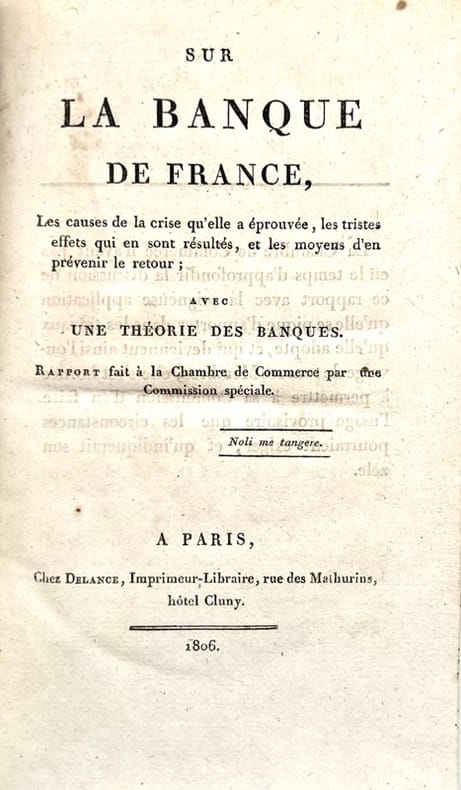
180643238Paris, Delance, 1806. In-8 de (2)-70 pp. Einaudi, 1683. Scrofani (Saviero). Essai sur le commerce général des nations de l'Europe, avec un aperçu sur le commerce de la Sicile en particulier. Traduit de l'italien. Paris, Treuttel et Würtz, an X (1801). In-8 de (4)-IV-91 pp.Kress B.2406 (eo 1792) ; Einaudi, 5195.Gillet. Essai sur les moyens d'extirper la mendicité du sol de la République. Paris, Imprimerie de Gillé fils, an X (1801). In-8 de 60 pp. (saut de pagination 56 à 59). Édition originale. Après avoir exposé les causes de la mendicité, le directeur en chef des ateliers publics à Bruxelles Gillet s'inspirant de l'exemple anglais, propose un plan capable de la supprimer (ateliers nationaux, intervention de l'État etc.). INED, 2032. [Anonyme]. Examen de cette proposition : Est-il préférable, pour l'intêret de l'industrie nationale, et pour celui de l'Etat, de tolérer l'importation des cotons filés et des étoffes de coton de fabrique étrangère, en les assujétissant à un droit d'entrée, ou bien de la prohiber entièrement ? Par un manufacturier. S.l.n.d. (1805). In-8 de 24 pp.FRANÇOIS DE NEUFCHÂTEAU (Nicolas-Louis). Avis aux cultivateurs et propriétaires de troupeaux, sur l'amélioration des laines. Paris, Imprimerie de la République, Prairial an 7 (1799). Nicolas-Louis François de Neufchâteau (1750-1828) homme d’État et littérateur ; député à la Législative, ministre de l’Intérieur, il fut un des Directeurs, et devint sous l’Empire sénateur et comte. In-8 de 16 pp. Titre inconnu de l'INED (1898-1905).[Anonyme]. Instruction pour prévenir les habitans des campagnes contre le méphitisme des marnières, des fosses, mines, puits, celliers, etc. Paris, Imprimerie de la République, an 11 (1803). 6 pp.5 pièces reliées en 1 vol. in-8, basane marbrée, dos lisse orné, pièces de titre en maroquin rouge, initiale P en pied de dos sur maroquin noir, tranches mouchetées (reliure de l'époque).
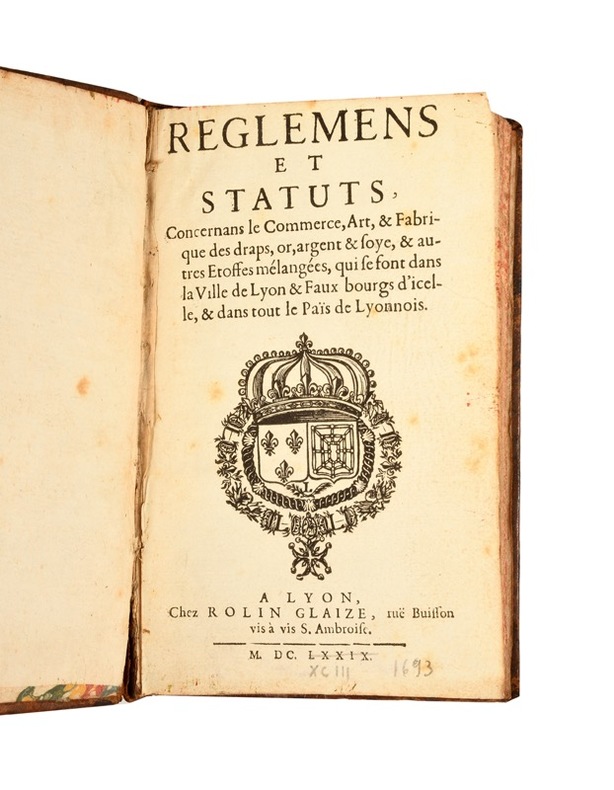
169321679Lyon, Rolin Glaize, 1693 (i.e. 1679) ; in-8, veau épidermé de l’époque, dos à nerfs décoré et doré, sans pièce de titre ; 88, [7] pp. de Table.
Signed, dated and generically inscribed by author/subject upon half-title page. 245 pages. Map endpapers. Black and white photographic plates, including frontispiece photo of author/subject in travel attire. Anderson "recounts his nearly half a century in the Canadian north. By snowshoe and dog team, by canoe, sailboat and steamer, he travelled throughout the woodlands and the Arctic regions of Canada - with numerous side trips to the west coast of Greenland. Includes many a fabulous anecdote - tales of courage and privation, humour in the bivouac and excitement on the trail. Discusses the fur trade and its history, interspersing his narrative with reflections which provide sharp insight to this theme." - from dust jacket. Gift greetings atop half-title page. Light wear to book. Binding intact. Above-average wear to dust jacket which is now preserved in glossy new archival-grade Brodart. Book
1987011299Rivière PAB 1987 In-8 En feuilles, couverture illustrée
171312951713 Prault père, Paris, 1713. 1 volume in-4 plein veau marbré d'époque, dos à cinq nerfs, orné de fleurons et caissons d'or, pièce de titre manquante, tranches rouges, LVI et 724 pages. Bel état malgré un accident à la coiffe supérieure et quelques feuillets très légèrement déboités.
19509297Darmstadt, Fa. Merck, o.J. (ca. 1950). 250 verschiedene Kräuter, Pflanzenteile und sonstige organische Substanzen in unterschiedlich großen Glasröhrchen mit Holzdeckeln. 3 grüne leinwandkaschierte Kästen (20 cm x 40 cm x 16 cm) mit je 4 Fächern, mit jeweils 2 Haltebändern mit Schnallen.
17531764Imprimé à Amsterdam et se trouve à Paris, chez les Frères Estienne, 1753. 2 parties en 1 vol. in-12 de (6)-139 pp. ; 235 pp., veau havane, dos orné à nerfs, pièce de titre en maroquin rouge, tranches rouges (reliure de l'époque).
1973mon0000365085Stationery Office Books 01/08/1973 00:00:01. paperback. Acceptable. in x in x in. Ex-library book usual markings. Well read with wear to spine front chunck of pages are loose from spine cover but still very useable. Stationery Office Books paperback
0211Q8AIZZ1Fair. Worn 3/4 leather lacking title and copyright pages also lacking pages 155 -175. Original leather and marbled boards some rubbing chip at spine tips lacking spine title. xix blank 21-154. pp. Endpapers foxed . Only Good with ex-library marks. Please see our pics. "One of the rarest of Kentucky anti- slavery tracts" Coleman. Clarkson's Essay is a "classic in the crowded field of slavery literature. It aroused a storm of indignation against the African traders which was capitalized by Mr. Wilberforce to introduce the first anti-slave trade motion in Parliament on May 12 1789" Ragatz. Phyllis Wheatley poems featured. Scarce 1816 Kentucky printing. hardcover
1794354283Philadelphia: Printed by Francis Childs and John Swaine 1794. 8pp. Dbd. Contemporary ownership signature on titlepage and manuscript notes on final leaf. Very good. 8pp. Dbd. This copy bears the ownership signature of noted New York jurist and legal scholar James Kent who ran for Congress from New York in 1793 but was defeated by his brother-in-law Theodorus Bailey. He would go on to a distinguished career as a judge on the Chancery court and as an author of legal commentaries. At the conclusion of the text is a manuscript note:<br /> "Mr. Wadsworth stated in the House of Representatives the 19th May 1794 that within the last six months American vessels & property had been captured by the British Privateer in the W. Indies to the extent of one million of dollars - & that other nations had seized American property to ½ mil. dol. & that the total loss to our commerce was 1½ mil. dol."<br /> In this report to President Washington the new Secretary of State Edmund Randolph details the depredations against American shipping caused by the powers involved in the French Revolutionary Wars. He quotes from a study by the "committee of Philadelphia" on the interference with American trade by the British French Spanish and Dutch and summarizes the methods used by those countries. The British impress American sailors into service the French are embargoing American goods etc. He makes no recommendations as to an appropriate response.<br /> OCLC locates four copies. Scarce. EVANS 27917. OCLC 8090321 Printed by Francis Childs and John Swaine unknown
1927250121New York: William Edwin Rudge 1927. First Edition. One of 50 copies specially bound with a double-page frontispiece color reproduction of a trade card for a Mitchell & Crosdale Philadelphia dealer in Sperm Whale Lard & Tanners Oils Candes Rice & c. of Whale killing. XLIV plates uncut. 25 pages of text. 1 vols. 4to. Bound in quarter vellum and patterned boards. Very Fine in remains of original glassine. First Edition. One of 50 copies specially bound with a double-page frontispiece color reproduction of a trade card for a Mitchell & Crosdale Philadelphia dealer in Sperm Whale Lard & Tanners Oils Candes Rice & c. of Whale killing. XLIV plates uncut. 25 pages of text. 1 vols. 4to. William Edwin Rudge unknown
35911TRADE CATALOGUE Portuguese Door Hardware. Braga: circa 1920's. Oblong folio 15 x 18 1.2 inches. Wrappers. 127 plat Scarce Portuguese trade catalogue illustrating hundreds of door and furniture hardware samples drawn to scale. Included are escutcheons pulls strap hing knobs keys etc. Represented are various styles from simple modern styles to elaborate baroque designs. Plates are sepia prints. Many plates signed F. Costa. Plain wrappers worn and chipped and partially missing. Plates have rectangular stamps. unknown
1909List3421Ohio Illinois Michigan and Ontario 1909. Seventy-four letters in thirty-seven envelopes mainly dating between 1885 and 1895. With two undated and one empty envelope. Conditions vary with a few letters having damage intersecting with significant amounts of text and others Near Fine. Overall excellent. A collection of letters mainly sent between Captain William Faragher 1842–1921 and his second wife Harriet Chamberlin 1853–1920 with several from Faragher’s children from his first marriage Burton 1872–1961 and Maude 1875–1952. Most letters are from Chamberlin to Faragher with fourteen from Faragher to Chamberlin.<br /> <br /> Faragher owned and captained several merchant ships in Lake Erie and Lake St. Clair—presumably sailboats as he frequently complains of having been stuck without wind. He also describes more severe weather out on the lake writing from St. Clair Michigan:<br /> <br /> “I am anxious to get down from here but as the day advanced the wind began to frisken and it began to snow hard and as it was freezing hard it had rained then snowed and then froze hard saturday night so the poor Venture was in a sad plight but she was in a worse one when we got to where we lay run as it breezed up fresh and the wind dead ahead the water was flying over her in all directions and froze wherever it fell and besides it had turned into a blinding snow storm but we had a certain point to make . she seemed as anxious to get to a place of safety as I did and as the boys say she got there and none too soon as it has been blowing a gale ever since and snowing and freezing but we are in the lee and at a good dock and are comfortable but oh the wind is whistling through the rigging .†November 20 1887<br /> <br /> In the 1880s steamships were increasing in popularity on the Great Lakes primarily because of sailboats’ susceptibility to both calm and weather; steamboats were bulky for their capacity and slow but more reliable whereas sailboats could carry overall more cargo.1 Generally steamers took packaged goods and passengers and sailboats mainly schooners took bulk cargo. The Great Lakes were the site of much shipping innovation; Faragher’s fleet was not yet behind the times but steam would overtake sail in the 1880s and 90s.<br /> <br /> Faragher’s cargo was mainly produce—apples and grapes—though he does mention picking up salt and other materials. His letters indicate that his business involved both shipping and mercantile aspects: he chose and bought the products shipped them to their destination and then also had to find and sell to customers. The grapes in particular seem to cause a lot of trouble:<br /> <br /> “We left Lorain Sunday morning early and had a nice trip to the Island got there at 4 PM bustled around monday morning and bought 400 baskets of grapes and had them all aboard by dark . it commenced to snow just as we got to Marine City bad bad omen for grapes but imagine my chagrin when I went up town and not a store or commission house wanted a grape folks were full of grapes and there was no sale for them and they said that I had got left and if the truth were known they were glad of it but its a cold day when I get left if trying will lit me out but one thing certain the weather and the lateness of the season were against me but you know I never cross a bridge before I get to it well we hauled up to our old Island Saturday morning and I sold out to my old friend . we had sold since 11 am 190 baskets of grapes . only half our cargo and at a good margin too. People would ask are you the man that was arrested here for selling grapes when told yes they seldom failed to buy but the strangest part was the number of ladies that came to buyâ€. October 28 1887<br /> <br /> Though he does not narrate the incident in which he was arrested for grape peddling—nor does it appear to have made the paper—he later mentions yet another grape-related debacle this time at Port Huron:<br /> <br /> “Sander and I went to town to sell the grapes today . when down came a city official and wanted to know if I had a license to sell . well I couldent sell another grape without paying 5.00 a day license that was a stormer you see the whole sale men were going to drive me out of the market . but they were not as sharp as they thought they were I went and gave a bill of sale of my whole cargo to a citizen here and he appointed one of his agents to sell the grapes†September 20 1888<br /> <br /> Faragher’s letters here do not discuss the financial state of his business but given Chamberlin’s statements it cannot have been all too positive. Chamberlin’s letters depict a woman struggling with her financial circumstances and with how the era’s expectations of her gender intersected with them. In one illustrative letter she writes:<br /> <br /> “A man drove by here Sat. asking for you. Ms. Lawler has given him her note to collect. He says the interest brings it to nearly fifty dollars. I told him I thought you could not meet it just at present but he said he must have the money and would give you just one week and if it was not paid then he would let the law settle it. Marvin and Laird are his lawyers. Mr. Laird is the one who helped get my money from father’s estate. I would not have them connected in this way about you for – O a great deal!! I have thought and planned till it seems as though my brain would burst. I have inquired about that law regarding taking any more married women as teachers. If Mr. Day would work for me it might perhaps be broken. There will be a vacancy in the Detroit building this fall. Will if I possibly can I want to commence teaching in Sept. The children would have to learn to do more about the house and with both of us earning it seems as though some of these harassing debts must be settled after a time. The frequent calls of men with bills against you have taken away all my pride and I believe I am humble enough to do most anything now.†July 11 1887<br /> <br /> In 1887 Ohio passed the Married Women’s Property Act which allowed married women to keep their own property separate from their husbands’—in fact Chamberlin occasionally mentions “her†money in her correspondence. At the same time the state’s Board of Education was debating passing an act that would not only ban school districts from hiring married women as teachers but also fire all the married women it then employed. Newspaper reporting at the time indicates that this measure was not particularly popular not the least because married women tended to be older and more experienced with the job.<br /> <br /> Chamberlin clearly perceives her role as a wife in a rather more progressive way at one point writing to Faragher that “a true wife†is “not a doll-baby to be kept in finery†N.d. after he had taken out a loan to send her money for a new hat. Throughout their correspondence Chamberlin is perhaps surprisingly open with Faragher about her opinions particularly on his work and their financial affairs; for instance:<br /> <br /> “I should like to examine your pocket-book after that $25 tax money left it. What are you going to live on up there while you are hunting for freight Sawdust won’t put any fat on your bones. Sailing up and down past Saginaw bay won’t prolong your life or lessen your grey hairs. What are you sailing for anyway For the sake of wearing yourself out and giving employment to two or three men and keeping the Root from rusting out I guess I am naughty!†May 25 1894<br /> <br /> She also frequently provides her opinion on whether and at what rate Faragher should sell his two other ships besides the Root the Venture and the Sassacus. She continues in the same letter:<br /> <br /> “I know I almost had a regular fight yesterday morning right there on the lounge. I wanted to do my housework and I couldn’t. I wanted to sew and I couldn’t sit up long for that. I wanted to help you and I couldn’t. I wanted to earn money and whereas I used to earn fifty-five cents for every hour I worked now I can not earn anything. Then if I could not do for self and family I wanted to make church and S.S. calls but I couldn’t walk for that.†<br /> <br /> Of course she was at that time prevented from these activities by her health not by gendered standards but she clearly had financial ambitions for herself. After her time as a regular school teacher Chamberlin taught at a Sunday school where she earned a few cents per student and in one letter reported having eighty-one students in a single session. <br /> <br /> Chamberlin also struggles with the expectations of her as step-mother to Faragher’s two children from his first marriage to Emma Humphrey 1848–1880. She writes:<br /> <br /> “I get so discouraged sometimes and it seems as though I am in the wrong place as mother. I think of Emma as my sister. I want to do as she would have me. I look upon my work as sacred. And yet sometimes I feel as though life was not worth living.†November 5 1886<br /> <br /> She frequently describes conflict with Burt who was then in his late teens to early twenties writing that she could not “have quite the very own mother-love for him†though she is “sure that Emma was not more conscientious in her desires to do right by him than I am†May 20 1891. As it still is today the role of step-mother was a difficult and frequently demonized one with the trauma of losing a mother and wife often in conflict with the feminine duty of maintaining perfect domestic harmony. In general Chamberlin seems to have been somewhat out of step with the feminine ideal of the time even telling Faragher in a letter describing the death of an acquaintance’s baby how glad she was to not have any children of her own.<br /> <br /> Overall a look at the private lives and difficulties of a middle-class Ohio household as despite the relative prestige of its head being a captain-owner it struggled with debt. Of interest to both historians of Great Lakes trade and those of women’s roles in the late nineteenth century.<br /> <br /> 1 Dina M. Bazzill “The Missing Link Between Sail and Steam: Steambarges and the Joys of Door County Wisconsin†East Carolina University Program in Maritime Studies Research Report no. 19 2007. unknown
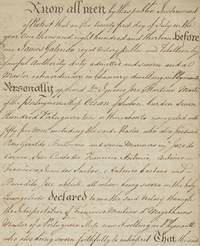
1813List1947Plymouth 1813. Plymouth Devon England: 21st July 1813. Folio 7 pages 13 1/8 x 8 ¼ inches duty blindstamp small ink stamp to upper inner margin of the first page two seals to the last page signed twice by Galindo. Toned some small repaired tears using reversible archival ph-neutral paper-repair tape very good to near fine. Very Good. An interesting document of privateering in the Peninsular war this ‘Public Instrument of Protest‘ documents a Portuguese captain and crew complaint in detail to an English notary. After sailing from Calcutta to Brazil and then from Rio to just outside of Lisbon their ship the 700-ton ‘Oceano’ was seized and comprehensively ransacked by a French privateer the ‘Lion’ out of Lorient. Most of the crew and passengers were offloaded onto a passing American vessel the ‘Leda’ bound for Lisbon. Meanwhile the ‘Lyon’ escorted her prize towards the nearest French port but before a friendly haven was reached they were both set upon by the brigantine HMS ‘Achates’. The ‘Lyon’ escaped but the ‘Ocean’ was captured by Commander Morrison and the ‘Achetes’. The ’Ocean’ was taken to Plymouth and moored in the Hamoaze. The remaining Portuguese crew who had been forced to remain aboard the ‘Ocean’ by the French got a message to the ‘Ocean’s Master Dn. Ignacio Joze Martins and he and the boatswain made their way to Plymouth as quickly as possible. The sworn statement presented here is in English thanks to the translation given by Francisco Martins d' Magalhaens master of a Portuguese ship “now dwelling in Plymouthâ€<br /> <br /> The ’Oceano’ sailed from Calcutta to Brazil arriving 10th February 1813. She left Rio on 4th April all was plain sailing until the afternoon of the 7th June off the Rock of Lisbon when the ‘Lion’ showed up first under false British colors then French. The fighting was fierce the privateer was driven off once but eventually the ‘Oceano’ was taken. The night of the 7th June was spent by the French ‘conveying everything Moveable and Valuable from the Ocean to the Privateer’. The ‘Leda’ the US vessel landed the majority of the ‘Ocean’s crew including the Master in Lisbon on the evening of the 9th June.Monday 14th June the ‘Lyon’ engaged in a running battle with HMS ‘Achates’ and escaped but the ‘Achates’ did capture the ‘Ocean’. Wednesday 16th June the ‘Ocean’ arrived in Plymouth under the watchful eye of the ‘Achates’. Receiving the crew’s message the Captain of the ‘Ocean’ left Lisbon for Falmouth and then Plymouth arriving on the 20th July. The document was dated 21st July 1813.<br /> <br /> Full transcription available. unknown
19505503N.p.: Ministerstvo Pishevoy Promishlennocti 1950. Octavo-sized accordion fold 25 x 18 cm. 24 pages. Illustrated with seventeen color plates by C.B. Popov. FIRST EDITION. A trade catalogue of Russian liquors issued by the Russian Ministry of Food. The spirits are of all types with a wide range of vodkas but also a rich variety of cordials brandies and dessert liqueurs. The handsome color plates all stand out for their single color backgrounds and the printing process would appear to have been a hybrid combining photolithography and lithography and then colored. Whatever one makes of the Soviet cultural landscape in general it did attain high standards in some fields and in a modest way this trade catalogue is a proud reflection of its aesthetic achievement. Clean and bright within. Textured wrappers with debossed copper lettering and gilt ruling; lightly soiled and with wear and some separation at spine. Good. OCLC locates no copies. Ministerstvo Pishevoy Promishlennocti unknown
193882843Paris: American Chamber of Commerce in France Incorporated 1938. Fourteenth Edition stated. Presumed first printing thus. Stiff boards. Good. Format is approximately 5.5 inches by 7.5 inches. xxiv 554 pages. Illustrated endapers. Stamp of the American Embassy on free end paper and stamp and signature and location of previous owner on second fep. Some cover wear and soiling. Cloth strip as page marker. Some looseness at hinges--heavy book for the hinges. Illustrations. Tabbed Sections with unpaginated illustrated dividers. General Index of American Officials Organizations Societies & Clubs Franco-American and International Organizations in which American participate. American Residential Directory: Home Business and Mil Addresses. American Commercial Directory: American firms establishes or represented in France Alphabetical Listing See also American classified trades and professions. American Classified Trades and Professions: See American Commercial Directory for Alphabetical Listing. General Information: Schools for Americans Chamber of Commerce in Paris Clubs and Sports Establishments in Paris Clubs Athletics and gold Environs of Paris Embassies Legations and Consulates in Paris Hotels in Paris Museums Restaurants in Paris Tea-rooms in Paris Theatres Concert-Halls and Motion Picture Houses in Paris Travel in Europe Railways Airways & Information Offices and Steamships Travel; and the final section on Advertisers: Home and Decoration a carpentry contractors decorators electrical installations flooring painting mosaics shades tapestries works of art; b heating plumbing roofing sanitary installation ventilation; Landscapists and Florists Pharmacies and Ambulances etc. This work constitutes a unique book of reference and by the completeness of its contents has become virtually indispensable to all Americans who live in France and to all others who require a convenient and trustworthy source of information concerning their names and addresses and their business and social affiliations. This 1938 fourteenth edition was the published in the last full year of peace before the German onslaught into Poland in September 1939 formally initiated the Second World War. As such it represents a marvelous snapshot in time of Paris before the world was shattered. It provides a unique surviving source of information as to the number and location of American expatriates living in France and also provides insight into the business and recreational entities available to them and American tourists and other visitors to France. Resources such as this would also have been used once the war commenced to the Office of Strategic Services the Special Operations Executive and other military diplomatic and humanitarian assistance organizations during wartime. American Chamber of Commerce in France, Incorporated hardcover
37513Paris: Imp. Kossuth & Cie n. d. 1st printing thus ca 1911. Printed light brown paper wrappers stapled. A VG example. 31 1 pp. Text in French. Illustrated from photographs. 8vo. <br/><br/>Aeroplanes featured herein include: Henry Farman Sommer Bleriot Tellier Voisin Antoinette Maurice Farman R.E.P. & Hanriot. Each is pictured and accompanied by a general description specs & summary of any perfromance records. The above followed by a poweplant section offering Gnome E.N.V. Renault Anzani R.E.P. Labor-Aviation Panhard-Levassor Antoinette Gregoire GYP & Darracq. The catalog concludes with divers other aircraft accessories and components including Carburateur Claudel Pieces Detachees Bleriot Helices Commandes Irreversibles Fixator etc. The company even offers hangar facilities for Bleriot Antoinette Voison & Farman models. Rare early aviation trade catalogue; not found on KVK for the relevant union catalogues nor on OCLC. Imp. Kossuth & Cie unknown books