8 476 résultats
180331718BBBerlin/Wien Pauli/Trattnern 1784-1803. 16 Bände. 8°. Mit insgesamt 115 gestochenen Kupfertafeln. Mit elektrischen, chemischen, metallurgischen, mechanischen und ökonomischen Versuchen. Band 1-4: Halbleder, Rückenschilder, Rückenvergold., 5 Bünde, 3seitiger Rotschnitt - Band 1-9/11-12 Halbleder, Rückenschilder, Rückenvergold., 5 Bünde, 3seitiger Rotschnitt. Band 10 Pappband. Einbände berieben und bestossen, Seiten mit Bräunung, teils fleckig, insgesamt sauber und gut erhalten.
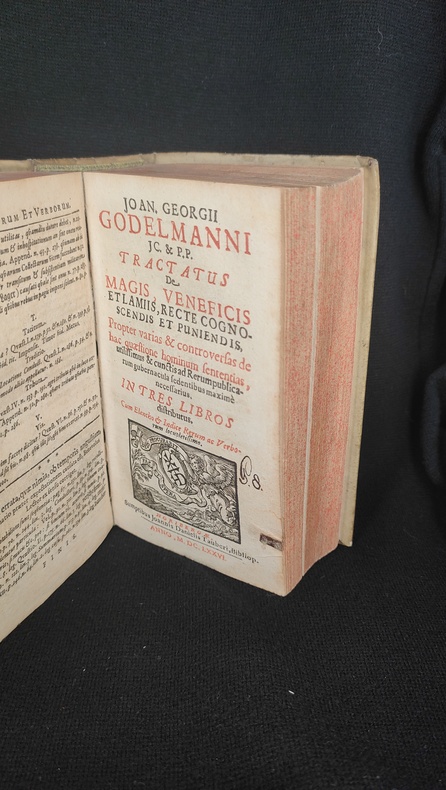
1676GEJ-5Nuremberg: Johann Daniel Tauber, 1676. Book in Latin and German. In-8. [12], 162; 102; 256, [73] pages, including errata leaf at end. Contemporary vellum, ink title on the spine, occasional light foxing. Title in red & black. Later edition of this work on magic and witchcraft by J.G. Godelmann (1559-1611), German diplomat and professor of law at Rostock University. Book contains 3 parts. The 1st and 2nd part contains information on magic, sorcerers, and witches, the 3rd part dedicates to legal procedures in witchcraft cases. The book was placed on the Index of prohibited books in 1601. Bibliography: Ref. VD-17 1:0629512, Caillet 4226, Coumont G 43.5., Thorndike VI, 535-37. USTC 2589027. Not in BL London. Coumont G 43.5. - "Godelmann's greatest achievement lies in his, for this time, exceptionally decisive stance against the belief in witches". Provenance: From the library of André Lambert, with ex-libris. Ownership sticker: Oskar Gershel, Buchhandlung Stuttgart, Kronprinzstrasse 32. bound with Law book by MEVIUS (David) titled: Considerationes juridicae super Sex diversis punctis, indeque resultantibus Quaestionibus, in Causis Proprietariorum Pensionariorum subinde occurrentibus. Hall. Saxon.[Halle-sur-Saale], Sumptibus Simon. Joh. Hubneri, 1675.
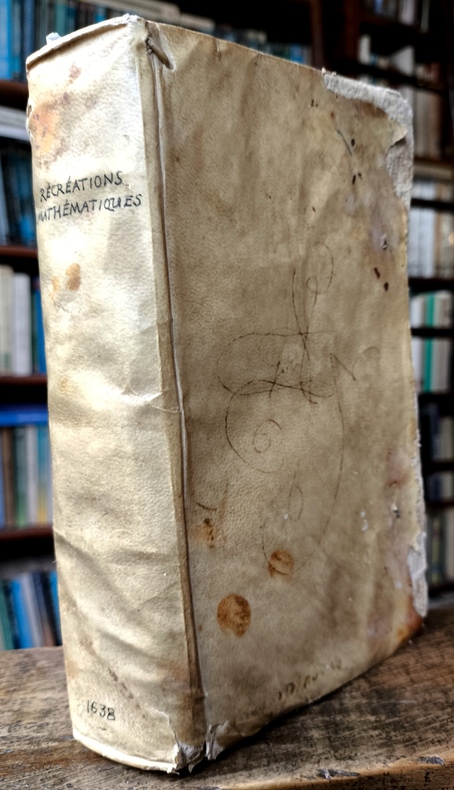
16380032951638 A Paris, Chez Rolet Boutonne, 1638. Quatre parties en un volume in-12 (107 X 163) vélin rigide à coutures apparentes, titre calligraphié à l'encre noire en tête du dos (reliure de l'époque) ; (1) f. blanc, titre, (7) ff., 280 pages, 63 pages (dont titre), (1) page blanche, titre, (1) f. « Au lecteur », 67-106 pages, (5) ff. de table, (1) f. blanc, 39 pages (dont titre), (1) page blanche, (1) f. blanc. Tache brune sur le premier plat.
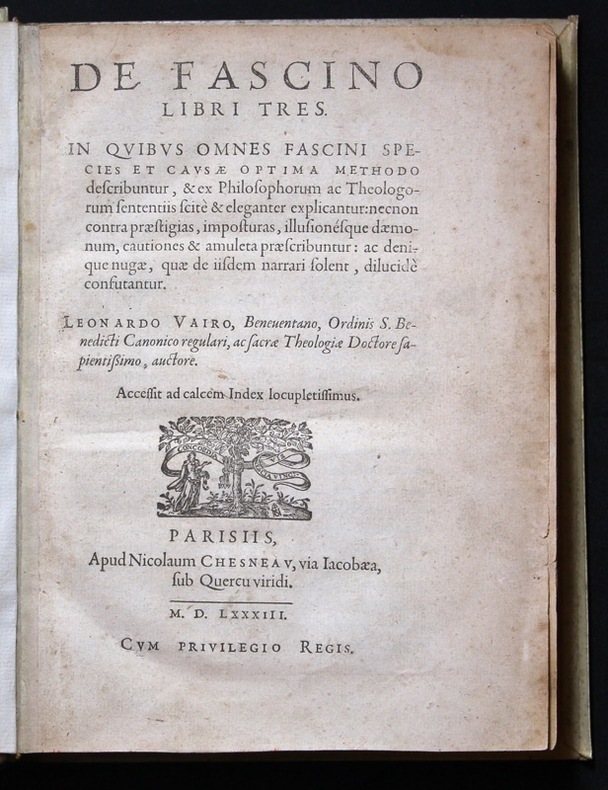
158312463Paris, Nicolas Chesneau, 1583. In-4 de [8]-275-[37] pages, plein vélin à rabats, dos lisse. Reliure fin XIXe, 2 ex-libris modernes. Note manuscrite sur un feuillet blanc XIXe, citant Yve-Plessis.
180163820Berlin, Joachim Pauli, 1788-1801. 8°. Mit 12 (2 ankolor.) gest. Titelvignetten u. 84 gefalt. Kupfertafeln. Zus. ca. 7.000 S., HLdr.-Bde. d. Zt. m. etw. Rückenverg., goldgepr. Rückenschildern u. dreiseitigem Farbschnitt.
in-16, pp. (16), 253, 1 cb, 84, (4), (16), 327, leg. p. perg. molle coeva con tit. mss al d. con nervi. Front. a due colori con testo contornato da fine fregio xilogr. e stemma cardinalizio del Cardinale Gabriele Paleotti, Vescovo di Bologna. La terza parte, dedicata a Francesco Gonzaga, reca un proprio front. con bello stemma xilogr. con le armi della famiglia Gonzaga. Belliss. esempl. del noto manuale di esorcismi di Girolamo Menghi (Viadana di Mantova 1529-1609). L'opera, proibita dalla Sacra Congregazione nel 1709, è un trattato di demonologia suddiviso in tre libri: il primo dedicato alla natura, manifestazione e potere del diavolo; il secondo ai rimedi per liberare dall’ossesso e alla pratica degli esorcismi con le preghiere da recitare; il terzo, già pubblicato autonomamente nel 1584, contiene anch’esso i precetti per gli esorcismi. Manca a Caillet che cita altre edizioni. Ottimo esempl. [053]
1932027073London 1932 Macmillan & Co Hardcover Very Good
2 parti in un gr. vol. in-4, pp. (6), 1070, bella pregevole leg. perg. coeva con impressioni a secco ai piatti, dorso con nervi. Front. animato inc. in rame con scene bibliche. Teologo gesuita (Anversa 1551 - Lovanio 1608), in quest'opera confuta la teoria per cui il Nuovo Testamento avrebbe messo fine all'arte magica, e cita le Sacre Scritture, i concilii, le pratiche degli esorcismi, l'esperienza personale, per sostenere che molti fatti, potendo sembrare frutto della credulità, pur tuttavia lasciano nell'imbarazzo sia chi ha fede sia chi non crede. Immensa e fondamentale opera sulla magia, cui l'A. deve la sua fama, suddivisa in 6 capitoli: 'de magia naturali, artificiali, et praestigiatrice; de magia daemoniaca; de malefico; de prophetia, divinatione et coniectatione; de iudicis officio; de officio confessarij. Include tutti i rituali e processi di accusa alla stregoneria e magia e altri rituali importanti come l'unione sessuale tra demoni e streghe. Caillet 2967: "Ouvrage qui au point de vue documentaire est des plus precieux". Olschki 6446. Graesse II, 355 per altre ediz. Esempl. marginoso anche se, come sempre, debole per la qualità della carta. Front. con pic. perdita di un cm all'angolo bianco destro sup. Forti bruniture non omogenee. [448]
104082Paris, Chez la Vefue Guillaume Cauvellat, au mont S. Hilaire, au Pelican 1597 - 1598, 115x85mm, reliure basane. Reliure plein veau blond. Auteur, tomaison et filets dorés au dos à 4 nerfs. Double encadrement doré sur les deux plats. Bordure triple filets dorés. Toutes tanches dorées. Garde papier marbré. Format elzévirien. Reliure du XIXème siècle en bon état, hormis charnières usées. Intérieur propre - hormis noirceurs avec petits trous sur les pages 52, 53 et 54 du tome sixième, sans atteinte de texte. Erreur de typographie à la numérotation de la page 22 du tome sixième marquée comme 62. Brunet, I, pages 982-983. Yve-Plessis, réf. 236 : “Cette édition comporte 109 charmantes figures finement gravées et certainement par les artistes qui ont exécuté les figures des Epistres d’Ovide en français, de la Métamorphoses d’Ovide figurée, etc. M. Didot croit y reconnaître le dessin de Jean Cousin.” Bel exemplaire.
82273No place 19th century. original paste-grain paper-covered stiff wrappers side stitched. Old ink ownership name; ink and pencil drawings on rear endsheet; wrappers chipped and rubbed. 16mo. Illustrated from hand-colored engravings drawn from various published books. See Ricky Jay Magic Magic Book. An Enquiry into the Venerable History & Operation of the Oldest Trick Conjuring Volumes Designated "Blow Books." "Blow books" are among the earliest recorded magic props handmade and artfully constructed with subtle variations along the fore-edge to allow the performer to selectively flip through the leaves in a variety of ways in order to create the illusion that the contents of the book have been transformed. unknown
82258France 19th century. original decorated paper-covered boards with printed paper label on spine and applied illustrations printed in gold on front and rear panels. . Upper joint rubbed; very nice operating condition. 12mo. Illustrated from hand-colored engravings drawn from various published books. See Ricky Jay Magic Magic Book. An Enquiry into the Venerable History & Operation of the Oldest Trick Conjuring Volumes Designated "Blow Books." "Blow books" are among the earliest recorded magic props handmade and artfully constructed with subtle variations along the fore-edge to allow the performer to selectively flip through the leaves in a variety of ways in order to create the illusion that the contents of the book have been transformed. hardcover
No Date [1854] 1st edition. Original Green Cloth with embossed gilt illustrated front board & spine Small 8vo, [i]-x, [11]-282 pages; with 6 pages of undated ads. Includes 2 dramatic frontispieces separated by a tissue guard, one shows casting out the evil spirits, the other shows table tipping (reproduced in gilt on the front cover), both with attractive young women at the center. Published just 6 years after the founding of the Spritualist movement in America. Spiritualists often set March 31, 1848, as the beginning of their movement. On that date, Kate and Margaret Fox, of Hydesville, New York, reported that they had made contact with a spirit that was later claimed to be the spirit of a murdered peddler whose body was found in the house, though no record of such a person was ever found. The spirit was said to have communicated through rapping noises, audible to onlookers. The evidence of the senses appealed to practically-minded Americans, and the Fox sisters became a sensation .many early participants in Spiritualism were radical Quakers and others involved in the mid-nineteenth-century reforming movement. These reformers were uncomfortable with more prominent churches because those churches did little to fight slavery and even less to advance the cause of women's rights. Such links with reform movements, often radically socialist, had already been prepared in the 1840s, as the example of Andrew Jackson Davis shows. After 1848, many socialists became ardent spiritualists or occultists. Socialist ideas, especially in the Fourierist vein, exerted a decisive influence on Kardec and other Spiritists (Wikipedia). Only one copy has appeared at a major auction house in the last 100 years. OCLC: 504493987. OCLC lists only 1 copy worldwide (British Library). Rear board also attractively embossed. Spine sunned, occasional light foxing. Very Good Condition. An excellent attractive copy of this exceedingly rare book. (AC-22-20)
in-4°; pp. (8), 212, e 90 tavole a piena pagina fuori testo che riproducono oltre mille e duecento figure di mani con le linee evidenziate, Edizione originale. Quest’opera è uno dei migliori e più completi trattati di chiromanzia del XVII secolo, notevole anche per l’enorme quantità di casi di mani; in quesro apparato iconografico praticamente si comprendono tutte le possibilità di cvarianti che si esprimono nell’interpretazione chiromanztica. Inoltre a ogni figura corrisponde la descrizione nel testo. In una ristampa l’opera è attribuita a Jean Taisnier; proprio le sucessive ristampe denotano l’importanza che veniva attribuita all’opera.. Marginali fori di tarlo. Al frontespizio leggero timbro non sul testo. Sabattini 589 “edizione orig. rara”; Cicognara 2467; Caillet 10053; Ainè Biblioteca esoterica 4478 cita solo la II ed.. Legatura in piena pelle con fregi e titolo in oro al dorso.
In Fiorenza, nella Stamperia di Zanobi Pignoni, 1643, volume unico, in-4, legatura settecentesca che riutilizza due pergamene più antiche (probabilmente smontate da rilegature di libri di formato inferiore), con dorso rinforzato in carta decorata antica e titolo calligrafato su tassello in carta, pp. 610, [2]. Frontespizio stampato in rosso e nero con stemma mediceo, 23 incisioni xilografiche nel testo (fra cui forme geometriche, la pianta di un passaggio segreto, mobili a doppio fondo, teschi e ossa umane) e una tavola allegorica in rame fuori testo (che quasi mai si trova) raffigurante un liuto senza una corda su cui si poggia una cicala e con motto latino "Ut suppleat" - simbologie per la stonatura delle perversioni del genere umano, sostenuta però dall'intelletto personificato dall'apollinea cicala -. Rara opera seicentesca sul diritto criminale scritta da Antonio Maria Cospi, giudice in varie sedi dello Stato toscano fra la fine del Cinquecento e l'inizio del Seicento, ed edita postuma dal nipote Ottaviano. Si tratta di un testo di pratica giudiziaria che tenta di organizzare i ricordi e le conoscenze professionali dell'autore. Si spazia infatti dalla trattazione scientifica alla spicciola quotidianità del criminalista, passando per la superstizione e l'aneddotica. Il Cospi si sofferma nella prima parte sulla deontologia del giudice, indicando la lussuria e quindi - in una visione fortemente antifemminile - la donna come "ianua diabuli". Nella seconda parte tratta gli ambiti della criminalità, soprattutto quelli fra reato e peccato, quali la magia, la divinazione, l'eresia, la stregoneria. Nella terza, oltre che su negromanzia, avvelenamenti, stupri, aborti, ladri, zingari e bari (alle carte o ai dadi), si sofferma a lungo sull'importanza della ricognizione del cadavere e del luogo del suo ritrovamento. Ci troviamo di fronte a un quasi manuale per "la scena del crimine", con tanto di descrizioni dettagliate e illustrazioni. L'autore sostiene proprio che il giudice necessiti di conoscenze scientifiche, anatomiche, chimiche e di disegno, oltre a quelle prettamente giuridiche e morali, per poter analizzare al meglio e mettere a verbale ogni caso in modo critico. Altro concetto innovativo e fondamentale è quello della testimonianza, intesa come interrogatorio al fine di trarre indizi dall'esame del reo e vista come unica via laddove la scienza non può arrivare. Dalle bibliografie a nostra disposizione (Piantanida/Diotallevi/Livraghi 1948, Michel 1970 e la rivista "Le Carte e la Storia" edita da Il Mulino 2002) questa del 1643 risulterebbe come prima edizione, anche se, probabilmente in tempi successivi, ne sarebbe stato censito un unico esemplare, alla Biblioteca Nazionale di Firenze, datato invece 1638. Più probabilmente però, secondo la nostra interpretazione, si tratterebbe di un errore tipografico sulla data di quest'ultimo esemplare: MDCXXXVIII (1638) invece di MDCXXXXIII (1643). La carta Oo presenta uno strappo con perdita di qualche carattere; minuto camminamento di tarlo alle 6 carte da Vv3 a Xx4, solamente marginale; alcuni fascicoli leggermente bruniti per la fattura della carta. Comunque un bell'esemplare.
in-4 antico, pp. (8), 249 (i.e. 239), (4), leg. settecentesca m. pelle con tass. e tit. oro al d., angoli. Vignetta inc. in rame al front. Fregi xilogr. Con 50 gr. belle incis. in rame a p. pag. di Jean-Louis Duran raff. divinità, profeti e sibille. Prima rara edizione sull'arte divinatoria presso gli antichi, con la descrizione di indovini, veggenti e dei premonitori del futuro, e nozioni di magia, astrologia, chiromanzia. Casanatense 608. Caillet II, 5191 (per ediz. 1680). Cantamessa n. 5425. Lieve alone marginale, ma bell'esempl. [223]
FDC-14Paris, Rolet Boutonné, 1638, in-8 de 3 parties de 8 ffnch, 280 pp., 106 pp. SUIVI : HENRION (Denis) - D.H.P.E.M. Notes sur les récréations mathématiques, en la fin de divers problèmes servant à l’intelligence des choses difficiles & obscures. Paris, Rolet Boutonné, 1638 de f. blanc, 38 pp., vélin rigide d’époque.
20024Paris, Charles Hulpeau, 1629 pour les 3 premiers textes, S.l.n.d., s.n pour le dernier. 4 ouvrages en 1 vol. in-16, [14]-103 pp. + [8]-152 pp. + 63 pp. + 39 pp., parchemin rigide de l'époque, tranchefile à passe, dos long (exemplaire défraîchi mais solide, annotations).
167814608Lyon, Pierre André, 1678. In-4 de [40]-1108-[24] pages, pleine basane brune du temps, dos à nerfs orné de filets et fleurons dorés.
352141Chez Antoine De Sommaville Paris 1636 In-12 ( 170 X 110 mm ) de 3ff.-417 pages, veau blond granité, dos lisse richement orné d un décor de petits fers dorés en croisillons formant caissons, pièce de titre anthracite, triple filet doré d'encadrement sur les plats, roulettes dorées sur les coupes et les chasses, tranches dorées. Edition originale de cet ouvrage rare, dans une belle reliure du XVIIIe siècle. Réfutation de l'ouvrage de GAFFAREL sur les talismans, dont l'auteur, qui s'était caché sous le pseudonyme de DE L'ISLE, n'est autre que Charles SOREL, sieur de SOUVIGNY ( vers 1582-1674 ). ( Dorbon, 4625 ). Ouvrage très rare et des plus curieux contenant une infinité de recettes et des formules magiques pour la confection des talismans, et des secrets mystérieux pour la guérison des maladies même les plus graves. ( Caillet I, 2944 et III, 10270 ). Le Traité de l'unguent sympathique est étrange et vraiment intéressant. ( Guaita, 985 ).Des talismans, ou figures faites sous certaines constellations pour faire aymer respecter les hommes, les enrichir, guérir leurs maladies, chasser les bestes nuisibles, destourner les orages, accomplir d autres effets merveilleux. Avec des observations contre le livre des Curiositez Inouyes de M.I. GAFFAREL et un traicté de l'unguent des armes ou unguent sympathetique constellé, pour sçavoir si l'on peut guérir une playe l ayant appliqué seulement sur l'épée qui a fait le coup, ou sur un baston ensanglanté, ou sur le pourpoint la chemise du blessé. Le tout tiré de la seconde partie de la science des choses corporelles par le sieur de L'ISLE. Rousseurs sans gravité, mention manuscrite ( compagnonage ? ) datée 1739 sur une garde, bel exemplaire, de toute rareté.
169190853HBAmsterdam:, Daniel van den Dalen, 1691-1693. 4 Bände in 1 Band: 10 Bll., 24, 131 (1) Seiten; 4 Bll., 262 Seiten, 1 Bl.; 4 Bll., 188 Seiten, 1 Bl.; 3 Bll., 277 (3) Seiten [recte: 285 Seiten, 3 nicht paginierte Seiten; Seiten 217-224 mit Paginierungsfehler], Pergamentband der Zeit mit auf den Falz gezogenen Pergamentriemchen, Rückentitel von alter Hand, farbiger Blattschnitt, 19,5 x 15 cm.
In-16 p. (mm. 150x95), 2 parti in 1 volume, p. pergamena coeva (restaur., risg. rifatti), pp. (16),247,(1),102,(2); (16),350; marca tipografica al frontespizio, con grandi iniziali ornate, inc. su legno. Nell'opera: "Remediaque probatissima, ac doctrinam singularem in malignos spiritus expellendos, facturasque et maleficia fuganda de obsessis corporibus complectens; cum suis benedictionibus & omnibus requisitis ad eorum expulsionem". In questa raccolta è stata unita l'altra opera di Mengus “"Fustis Daemonum" adiurationes formidabiles & potentissimas, in malignos spiritus fugandos de oppressis corporibus humanis, con proprio frontesp., sempre datata 1593. Cfr. Caillet,III,7378 che cita numer. altre ediz.: "Curieux recueils d'exorcismes tardivement mis à l'index en 1709" - Bibliotheca Esoterica,3040 per un'ediz. del 1604: "Ces recueils d'exorcismes furent très en usage pendant tout le XVII et une partie du XVIII siècles. L'Auteur qui s'appuie sur l'autorité des Pères de l'Eglise, dit, entre autres, que les démons peuvent habiter dans le corps humain, que ceux-ci se querellent et que l'infidélité des exorcistes peut empecher la délivrance de possédés". Corto del marg. super.; ca. 40 carte restaur. al marg. infer. per fori di tarlo; con arross. e fiorit. interc. nel t.; al verso dell’ultima c.b. antiche frasi mss., ma complessivam. discreto esemplare.
1710025946Rolck, Waldern, Oettingen, Augsburg 1710. Halbpergament Sehr gut
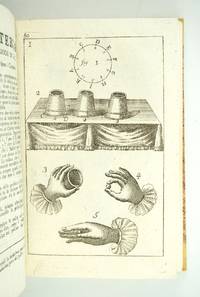
1795ST20614Venice: Giuseppe Orlandelli 1795. Fourth Edition. 180 x 114 mm. 7 x 4 5/8". 154 pp 1 leaf. <br/> Pedestrian 19th century half vellum over pink marbled paper boards smooth spine with old ink lettering. WITH 16 ENGRAVED PLATES SHOWING MAGIC TRICKS and numerous diagrams in the text. Tomash & Williams A56; Riccardi I 15. Marbled paper a little chafed title washed first and last leaf a bit soiled and with repairs at inner and outer margins but no text affected half a dozen other leaves with minor repairs or mounted isolated small smudges or corner creases but still an acceptable copy of a book expected to be found in poor shape--the text clean the impression of the engravings crisp and the binding solid.<br/> <br/> This is a pleasing copy of a rather scarce collection of mathematical puzzles magic tricks and illusions abounding with illustrations and diagrams. Our author Bolognese architect and engineer Giuseppe Antonio Alberti 1712-68 had a varied career which is reflected in his literary output: his publications discuss civil engineering pyrotechnics mathematics and factories among other topics. Described by Tomash and Williams as "the type of book that mischievous uncles like to own" the present work begins with a study of amusing and unusual arithmetic equations and puzzles before discussing magic tricks and illusions including card tricks dice games and even complex stage illusions involving specialized equipment. These are illustrated with a series of delightful copper engravings with labelled mechanisms sometimes operated by lively little figures or disembodied hands with ruffled sleeves. "Giuochi" was first published in Bologna in 1747 and remained in print for a further 20 years after the present edition. Because this is the kind of book that would have been subjected to uncareful use early editions are difficult to find in the attractive condition seen here. Giuseppe Orlandelli unknown
in-4, pp. (12), 210, (8), 1 cb, leg. carta dec. inizi ‘900. Front. a due colori. Gr. vignetta in rame al front., fregi e iniziali xilogr. Prima ediz. Rarissimo trattato sui malocchi, maledizioni e stregonerie: interess. i capitoli dedicati al fascino “diabolico” e ai rimedi per debellare il morbo. Manca a Graesse. Wellcome cita di questo autore un’altra opera. Sconosciuta anche a Hirtsch che cita solo la “Febrilogiae”. Solo 2 copie censite nelle biblioteche italiane.
2000010348New York: Knopf 2000. First American edition of book 3 of the "His Dark Materials" trilogy; A most acceptable copy; 518pp. First U.S. Edition. Hard Cover. VG/VG. Knopf Hardcover