15 963 résultats
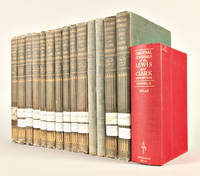
19047900Cleveland: The Arthur H. Clark Co. 1904 32 octavo volumes and large atlas. First edition. Very scarce. Number 555 of 750 complete sets SIGNED and numbered by the publisher. Edited with Notes Introductions Index etc. by Reuben Gold Thwaites. 32 octavo volumes large atlas. Each volume approx. 300 pages. Illustrated with plates from original sources; atlas with 81 plates by Karl Bodmer. All volumes bound in matching burgundy cloth gilt. 2 bookplates on inner cover of all volumes. Slight but even fading to volumes 14-31. Atlas is an ex-library binding. Last 2 volumes provide the index. With the exceptions noted a fine and complete set most volumes are unopened and unread. The large atlas contains 81 full-page plates by Karl Bodmer to illustrate Prince Maximilians travels volumes XXII XXIII and XXIV of the set. An extremely important collection of significant early travels and expeditions of exploration into the uncharted West reprinted from scarce original editions. Contains the journals of Brackenridge Bradbury Bullock De Smet Farnham Flagg Franchere Gregg James Long Maximilian Michaux Nuttall Pattie Ross Wyeth and others. The Arthur H. Clark Co. hardcover books
1905WRCAM52627New York: Dodd Mead & Company 1905. Seven volumes bound in fourteen parts plus atlas volume. Plates many in color facsimiles. Quarto. Original gilt green cloth. Octavo atlas maps laid in a red cloth drop-front box. Cloth somewhat worn particularly at spine ends. Library bookplates with withdrawal stamps on front pastedowns shelf labels on spines reference stamps across top edges. Some occasional offsetting from plates but generally clean internally. A solid set. Text volumes untrimmed. One of 200 large paper sets on Van Gelder paper with the atlas supplied from the reprint edition done by Argosy-Antiquarian Press. "The most elaborate work on this expedition" - Howes. A cornerstone of modern historical research printing for the first time many major primary documents which did not appear in the Biddle edition including the Floyd and Whitehouse journals and material from the Clark-Voorihis papers along with facsimile manuscripts maps portraits and other illustrative matter. Also valuable is Victor Paltsits' bibliography of the Lewis and Clark expedition in the first volume. "This edition is notable for its thorough Introduction covering the history of the expedition and earlier exploration and a detailed account of the original journals and their various editions.In its maps and numerous illustrations the Thwaites edition is an outstanding source of visual materials relating to the expedition" - LITERATURE OF THE LEWIS AND CLARK EXPEDITION. HOWES L320 "c." LITERATURE OF THE LEWIS AND CLARK EXPEDITION 5d.1. WAGNER-CAMP 13:7 note. TWENEY WASHINGTON 76. REESE BEST OF THE WEST 233 note. Dodd, Mead & Company hardcover books
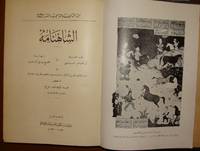
1932000474<p>Cairo: DÄr al-Kutub al-Miá¹£riyya 1932.<br />First edition. Quarto 4to contemporary hardcover binding. Arabic text. Very good condition.<br />This important scholarly Arabic edition of al-ShÄhnÄma comprises two parts bound in one volume. It opens with an extensive 108-page critical introduction by Ê¿Abd al-WahhÄb Ê¿AzzÄm Professor at the Egyptian University followed by the main text in two sections of 389 and 343 pages respectively. The volume is illustrated with several finely reproduced plates of Persian miniature paintings.</p><p>The Arabic text is based on the medieval translation by al-Fatḥ b. Ê¿AlÄ« al-BindÄrÄ« d. 643 AH / 1245 AD one of the earliest and most significant Arabic renderings of FerdowsÄ«'s Persian epic. This edition was carefully collated with the original Persian text with the translation partially completed corrected annotated and critically edited by Ê¿Abd al-WahhÄb Ê¿AzzÄm making it a landmark in modern Arabic–Persian literary scholarship.<br />Printed in a limited edition of 1200 copies only. The Persian source text used for comparison is identified in the editorial apparatus as Inventory no. 000441 a Qajar-period Persian copy printed under the name of AbÅ« al-Fatḥ ShÄh QÄjÄr.<br />A significant modern Arabic edition of one of the greatest monuments of Persian literature combining textual criticism historical scholarship and visual documentation and representing the Egyptian scholarly engagement with classical Persian epic in the early 20th century.</p> Dar ul Kutub al- Misriyya hardcover
106082Gedruckt zu Franckfurt am Mayn, durch Johan Feyerabendt, 1598, 1 volume in-4 de 285x195x25 mm environ, 1f. blanc, 4ff. (titre en rouge et noir avec belle vignette, 134 feuillets (un numéro pour 2 pages), 3 ff. (BeschluB, Register, colophon), demi basane brune, dos à nerfs portant titres en noir sur pièce de titre papier ancien, orné de caissons à froid. Notre exemplaire date de 1598, troisième édition. Illustrations dans le texte de 41 figures gravées sur bois dans le texte+ une vignette de titre gravée sur bois et une gravure sur bois d'armoiries sur la feuille de dédicace, texte agrémenté de délicates lettrines et fins culs-de-lampe. Rousseurs et pages brunies, ex-libris manuscrit ancien sur la page de titre, cartonnage frotté, une galerie de ver sur une coiffe et petite déchirure sur l'autre coiffe, petite déchirure marginale p. 129, intérieur bien conservé, exemplaire complet.
In -4°, pp. (22), 289 (i.e. 379), (9); frontespizio inciso (al fr. la data è 1633) e un ritratto calcografico dell’autore che precede il testo. Carta Yy con prova di penna, con testo ancora leggibile. Saavedra, nato e vissuto a Cordoba fra il XVI e il XVII secolo fu un poeta spagnolo, lontano parente di Cervantes. Fumagalli 428. Il volume è rilegato con la raccolta poetica del figlio di Saavedra, “Ocios de Aganipe divididos en differentes poesias” - pp. (6), 260, frontespizio inciso -, pubblicato anch’esso a Trani nello stesso anno. Due rarissime opere spagnole appartenenti al Siglo de oro. In -4 °, pp. (22), 289 (i.e. 379), (9); engraved title page (the title page date is 1633) and a chalchographic portrait of the author preceding the text. Yy leaf with spoiled with ink, yet the text is still readable. Saavedra, was born and lived in Cordoba between the 16th and 17th centuries, was a Spanish poet, distant relative of Cervantes. Fumagalli 428. The volume is bound with the poetic collection of Saavedra’s son, “Ocios de Aganipe divididos en differentes poesias” - pp. (6), 260, engraved title page -, also published in Trani in the same year. Two very rare Spanish works belonging to the Siglo de oro.
160433228-471Leiden Henricus Hondius 1604-1605. Two printed titles with elaborate engr. architectural borders woodcut initials 1 of 2 engr. portrait in the text and 49 engr. plates in vol. 1 33 34 on 1 leaf and 24 engr. plates in vol. 2. Text printed in 2 cols. 9 of 10 unn. leaves; 3 unn. leaves. Oblong folio 280 x 350 mm. 17th cent. marbled boards new endpapers. Leiden Henricus Hondius 1604-1605. First edition of Vredeman's "Perspective" issued by Hondius and printed simultaneously also in French Dutch and German. Present here is the valuable Latin version "the classical language in which Vredeman's architecture is clad and thus becomes timeless in its character" Millard p. 20f. This is one of the most celebrated works on such a subject and was issued by the Flemish born Hendrik Hondius the Elder 1573-1650. The plates for the most part are engraved and a few signed by him after Hans Vredeman. Plate 14 in part 2 is after Paul Vredeman and 4 plates in this part are signed with the monogram DB probably Theodore de Bry or Bartholomaeus Dolendo. The painter and architect Hans or Jan Vredeman de Vries was born 1527 to a German soldier in Leeuwarden Netherlands and probably died in Antwerp 1604. "The King of Architects" Fowler together with Hans van Schille worked at the fortification of the city of Antwerp and also at the triumphal arches built for the entry of the future Philip II into Antwerp in 1549. As a consequence of the religious upheavals of the period Vredeman worked in Hamburg Danzig and Prague before returning to Holland. He wrote and illustrated the present guidebook on perspective for designers painters and architects. It became one of the major books on this subject and through Vredeman de Vries' various publications he is recognised as the "foremost among sixteenth century Netherlandish architectural authors" Millard p. 19. The two volumes illustrate stage perspective interiors furniture palace and garden architecture. Vredeman de Vries was capable of truly artistic landscaping in the Northern Renaissance and served as a model for some patrician gardens in Germany cf. E. Haupt Baukunst der Renaissance in Frankreich und Deutschland 1916. The book includes a number of scenes and projections employ one-and-multi-point perspective. These were essential demonstrations for artists of those days. This work on perspective summarizes Vredeman's knowledge of art science and geometry. This copy has the same collation as the Fowler copy at Johns Hopkins University library which also lacks at the beginning of vol. 1 the leaf A1v with an engraved portrait on left half and a printed poem on right half of this leaf. There are complete copies known but in fact there is no copy of this Latin edition in the holdings of the BL London the Royal Library The Hague Utrecht Dresden Heidelberg Beinecke or Centre d'Architecture at Montreal. The only two but incomplete copies in Austria are in the holdings of the University of Technology Library at Vienna and in the Univ. Libr. Salzburg. The only copy in Switzerland in the holdings of the ETH- Library in Zurich is also incomplete and a mixed-up one 1st part in Latin 2nd part in French. Other incomplete copies are known in the holdings of the Bavarian State Library Munich the V & A Mus. London the Pierpont Morgan Library New York.- Engr. titles slightly frayed at lower margin some foxing otherwise a neat and rare copy. - Cf. Cicognara 867 French ed.; Millard Northern European Books 139 lacking engr. title to part II; Berlin Cat. 4704; Fowler 432 same collation; cf. Nagler I 1757; Borggrefe Heiner. Hans Vredeman 2002. ART - GENERAL & APPLIED ; SCIENCE: ARCHITECTURE ; SCIENCE: GENERAL ; Leiden, Henricus Hondius hardcover
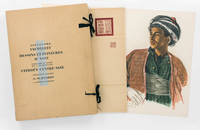
1934122326Paris: Édité sous la direction de Lucien Vogel chez Jules Meynial 1934. First Edition. Paperback. Very Good. Paris Édité sous la direction de Lucien Vogel chez Jules Meynial 1934. A printed box-form thick card portfolio with ribbon ties external dimensions 392 × 290 mm containing a thin volume of text 'Croquis de Route et Notes de Voyage' 36 pages in stab-sewn printed wrappers extensively illustrated and a suite of 50 loose colour plates each printed on a numbered and captioned bifolium. Portfolio tanned bowed and slightly marked with a short split to the foot of the upper joint; ribbon ties frayed; wrappers of the text volume a little creased; plates are generally a little offset onto the conjugate leaf and about a quarter of them have a very short split at the foot of the fold; the first plate is discoloured from contact with the binding of the text volume; these are relatively trifling blemishes that do not detract from what essentially an excellent example of a beautiful publication. Number 117 of 500 copies of the trade edition a further 200 'hors-de-commerce' copies were also printed as well as a deluxe edition of 20 copies. This suite of plates is the lavish pictorial record by the official artist of the Expedition Citroën Centre-Asie colloquially known as the Croisière jaune the Yellow Cruise. Financed by André Citroën and using all-terrain tracked caterpillar-tread vehicles from his factories this trans-Asian motorised expedition covered vast distances in 1931 and 1932. The plates from Iacovleff's striking pastels and watercolours encompass portraits and scenes from Kurdistan to Tonkin by way of Persia Afghanistan Kashmir Mongolia and western China. <p>Provenance: Mary Isobel Barr Smith with a contemporary gift inscription in ink to her 'from Mary Isobel Legoe Christmas 1937'. Mary Isobel Molly Barr Smith 1863-1941 was the wife of Tom Elder Barr Smith 1863-1941 pastoralist and financier; he was the eldest son of Robert Barr Smith 1824-1915. Both were great philanthropists; the library at the University of Adelaide is named the Barr Smith Library in their honour. Molly Legoe was a grand-daughter of Robert Barr Smith; accordingly this portfolio was a Christmas present to her aunt. Édité sous la direction de Lucien Vogel chez Jules Meynial paperback
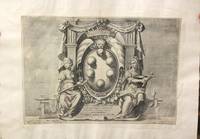
1617B6037Cruger c. 1617. Engravings mounted on watermarked laid paper. Some tears to lower margins not affecting the plates. Staining on one plate. A very good attractive and rare set. Binding: Loose folio in an 18th century wrapper. Notes: c. 1617; exception: one leaf dated 1561 and signed by Antonio Salamanca in Rome. Size: Folio sheets of 405x555m Illustration: Folio set of 14 leaves of copper engravings. References confirm 14 including the tile. Illustrated allegorical title with the Medici arms flanked by female personifications of Justice at left and Faith at right; lettered with a dedication to Cosimo II of Tuscany by Jacobus Chitus with bottom right Teodoro Cruger sculp: 1617 altered in ink to 1618 Florentiae and at lower left five privileges: Cum Privil. S. Pontif S.C. Maiest. Repi. Venet. // M.D. Etrur. Reip Genuens et V.R.Neap. - p. x An.; frontis after self-portrait by Andra Del Sarto; twelve engravings depicting the story of Saint John the Baptist after paintings / frescos and later curtains by Andrea del Sarto at Florence and Franciabigio. References: Hollstein German 6 176 35; Hollstein 33; Le Blanc 1854-1890 2 72 7-20; Virtuelles Kupferstichkabinett 6382 and 6384 mention 14 plates. Pages: Ff: Title; Self-Portrait; 12 engravings. Category: Book Europe Italy; Book Religious Christianity; Book Plate Books General; Cruger unknown
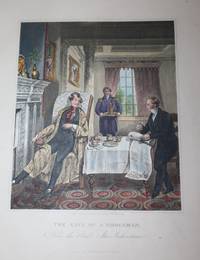
1825007994London: George Henderson. Printed by George Dawe who also was engraver 1825. First Edition. Full Morocco. Near Fine. Suite of nine hand-colored aquatint plates depicting the louche hedonistic and self-destructive life of a young aristocrat. Bound by Riviere & Son in full red morocco with ruled border raised bands other gilt decoration including turn-ins marbled endpapers. N.d. circa 1820s. 4to. 31 by 25 cm. No title page -- this was issued as a suite of plates not in a book form. A blank sheet in front two in back and tissue guards between plates. Each plate is depicting a scene and basically a step in the descent to self-destruction by the young buck aristocrat. Scenes are The Inheritance The First Party The Night House in other words the bordello The Betting Booth at the racetrack The Gambling House The Usurer The Mess Room clearly the dining room of an elite military unit The Duel and finally The Sick Room. We would note that the Usurer has the casual anti-Semitic trope so prevalent throughout history of the hook-nosed lender. The artwork has a pleasant slightly naive quality with the loosest of adherence to perspective. The settings are generally quite resplendent capturing Regency England grandeur perfectly. Scarce. Yale has several copies. Only two other complete sets held by institutions according to OCLC First Search one at Harvard and one somewhat later and published by Tegg at the Art Institute in Chicago. The Henderson version clearly the first was issued without color we would add. The Harvard Hollis catalogue gives no indication whether the copy at Houghton has hand-coloring -- something that Hollis generally will denote if it does. No copies found in commerce on date of this description was prepared. Light wear to binding. Light soiling in the margins of the plates. Pictorial elements consistently bright and attractive. George Henderson. Printed by George Dawe, who also was engraver unknown
175876869Paris: J. Barbou 1758. unbound cord tied housed in a green half-morocco goat over cloth boards clamshell case spine tooled in gold leaf with title author and date. large 12mo. unbound cord tied housed in a green half-morocco goat over cloth boards clamshell case spine tooled in gold leaf with title author and date. 92 3 pages. Pour éclaircir quelques traits de l"histoire de l'Imprimerie & prouver que Guttemberg n'en est pas l'Inventeur. Very rare first edition Bigmore and Wyman p.227. Unbound textblock lightly soiled with minor creasing at corners. Faint moisture staining throughout with some affecting the text. In this text Fournier sets out to prove that Gutenberg was not the inventor of the printing press by examining the history of printing. He believed that the technology Gutenberg made popular existed long before the German printer's work. Fournier also followed up this text with two additional works which are not present: De l'origine et des productions de l'imprimerie primitive en taille de bois 1759 and Observations sur un ouvrage intitulé Vindiciae Typographicae 1760. These two works provided further discussion of the origins of woodcut prints including a passage refuting popular belief about the origin wood engraving and some ideas for further study. <BR> <br /> <BR> <br /> Fournier 1712--1768 was born in Paris and trained as a wood engraver and type founder being a member of the 18th century dynasty of the well-known Fournier family. He later turned to steel engraving. He published a table of the proportions of the different printing characters whose purpose was to propose for all typefaces a fixed measurement in "typographic points" and a systematic gradation. He worked closely with the collaborators of the Encyclopédie providing the printer Le Breton with all the documentation relating to the typographic foundry and plans for his own instruments as well as providing Diderot with his collection of ancient alphabets. Finally after multiple disputes with his Parisian colleagues he became infamous for the printing of his famous Manuel Typographique 1764 1766 just prior to his death. J. Barbou unknown
1732B5857Amsterdam: Rudolf & Jacob Wetstein and G. Smith c.1732. 3 ff. unnumbered and fully engraved with 6 half page illustrations do according to Brunet account for pp. 265-270. Repaired marginal tear to title to Tome 2 repaired corner tear to 327/8; overall a near fine example of this finely illustrated work with text and plates clean and crisp. . Edition: First Edition Binding: Contemporary decorative calf; expertly rebacked; boards with central gilt medallions; spine with five 5 raised bands flanked by horizontal gilt fillet and decorative rolls with gilt designed corners and centres in compartments and gilt lettered title on morocco label on two; all edges red. Notes: Publius Ovidius Naso or Ovid 43 BC – AD 17/18 was a Roman poet who lived during the reign of Augustus. A contemporary of Virgil and Horace he is often ranked one of the three canonical poets of Latin literature and enjoyed enormous popularity. Augustus sent him into exile where he died. Today he is best known for his Metamorphoses a 15-book continuous mythological narrative written in the meter of epic and for works in elegiac couplets such as Ars Amatoria "The Art of Love" and Fasti. His poetry was much imitated during Late Antiquity and the Middle Ages and greatly influenced Western art and literature. The Metamorphoses remains one of the most important sources of classical mythology. <br>The Metamorphoses Ovid's most ambitious work was written in dactylic hexameter about transformations in Greek and Roman mythology set within a loose mytho-historical framework. The characters in this work undergo many different transformations. Within an extent of nearly 12000 verses almost 250 different myths are mentioned; each myth is set outdoors where the mortals are often vulnerable to external influences. The first book describes the formation of the world the ages of man the flood the story of Daphne's rape by Apollo and Io's by Jupiter; the second Phaethon and the love of Jupiter with Callisto and Europa; the third focuses on the mythology of Thebes with the stories of Cadmus Actaeon and Pentheus; the fourth on three pairs of lovers: Pyramus and Thisbe Salmacis and Hermaphroditus and Perseus and Andromeda; the fifth on the song of the Muses which describes the rape of Proserpina; the sixth on the rivalry between gods and mortals beginning with Arachne and ending with Philomela; the seventh on Medea as well as Cephalus and Procris; the eighth on Daedalus' flight the Calydonian boar hunt and the contrast between pious Baucis and Philemon and the wicked Erysichthon; the ninth on Heracles and the incestuous Byblis; the tenth on stories of doomed love such as Orpheus who sings about Hyacinthus as well as Pygmalion Myrrha and Adonis; the eleventh on marriages of Peleus and Thetis and the love of Ceyx and Alcyone; the twelfth moves from myth to history describing the exploits of Achilles the battle of the centaurs and Iphigeneia; the thirteenth discusses the contest over Achilles' arms and Polyphemus; the fourteenth moves to Italy describing the journey of Aeneas Pomona and Vertumnus and Romulus and the final or fifteenth opens with a philosophical lecture by Pythagoras and the deification of Caesar. The end of the poem praises Augustus and expresses Ovid's belief that his poem has earned him immortality.<br>In analyzing the Metamorphoses scholars have focused on Ovid's organization of his vast body of material. Ovid engages creatively with his predecessors alluding creatively to the full spectrum of classical poetry. <br><br>This 1732 first Amsterdam edition is superbly illustrated employing copper plate engravings attributed to the Dutch: Balthasar Bernaerts engraving c.1711–1737; Jacob Folkema 1692–1767; Wouter Jongman engraving c.1712–1744 Joseph Mulder c.1659/60-; Jan Schenk engraving c.1731–1746; Jan Wandelaar 1690–1759 Philip Van Gunst 1685–1732; the Flemish: Martin Bouche c. 1640–1693 Frederic Bouttats c.1610–1675 Peter Paul Bouche c.1646- and the French: Bernard Picart 1673–1733; after the works of the Dutch: Louis Fabritius Dubourg 1693–1775; Godfried Maes 1649-1700; Jan Punt 1711–1779; Jacob De Wit 1695–1754; the French: Charles LeBrun 1619–1690; Sebastien Leclerc 1637–1714; and the Italians: Giulio Romano 1499–1546; and Pietro Testa 1612–1650. <br> Size: folio 455 x300 mm Illustration: Illustrated with allegorical copper engraved frontispiece by Picart and onehundred twenty-nine 129 copper engravings throughout the text by and after illustrious and notable engravers and artists mostly listed under notes. Illustrations also include two 2 red and black ink printed titles each with a large vignette copper engraving; one 1 copper engraved vignette head piece introducing the dedication to the king; numerous in-text decorative wood-cut head and tail pieces and large thematic or ornamental rubricated initials. The French and Latin texts are in two parallel corresponding columns. Volume: Two tomes in one volume Provenance: watermarked on many leafs including on the 1.free endpaper and dedication to tome 1 as well as title to tome 2: “ BEAVUALS†at centre of leaf. 2.title and final page of tome 1: an upside-down design of a fleur de lis 3.lower free endpaper: “C D“ References: Brunet III: 599; Cohen-de Ricci: 768. Transation: Text in Latin with F Pages: Bl. 2 Frontispiece by Picard bl. Tome I: Red and black ink illustrated title bl. dedication 2 preface 6 1-247 bl. with 69 half page copper engravings. Tome 2: Red and black ink vignette illustrated title bl. 249-264 3 ff. of illustrations 271-524 with 60 half page copper engravings table des matieres 4 bl. 2. Category: Book Classics; Book Europe France; Book Plate Books General; Rudolf & Jacob Wetstein and G. Smith, hardcover
1856B6046St. Petersburg;: Vasily Timm c. 1856 . Title leaf slightly soiled; but overall texts and plates are clean and crisp and in very good condition; tears to leaves # 27 28 29 33 have been expertly repaired. A very attractive example in full contemporary binding. . Edition: First 1856 Edition. Binding: Contemporary quarter morocco over marbled boards; spine with six flat gilt ruled bands forming five blind compartments with gilt lettered title on two and gilt date on four. Notes: Text in Russian. The Russian art periodical publication or gazette of printed collections of lithograph scenes was a chronicle of currents of the life of Russia published by leave of the Royal Family and by the artist himself - painter and draftsman - Georg Wilhelm Timm also known as Vasily Fyodorovich Timm or ВаÑилий Фёдорович Тимм 1820-1895 a Baltic-German painter lithographer and ceramic designer known for his genre and battle scenes; the period extending over 12 years from 1851 to 1862 in St. Petersburg. Having travelled extensively throughout Russia serving as a battle painter during the second phase of the Caucasian War he was chosen in 1852 to accompany the Tsar Nicholas I on a visit to Finland his main task continuing to faithfully share his impressions without criticism or analysis. Later he would make sketches of the Siege of Sevastopol at the height of the Crimean War of 1853-1856. In 1855 this earned him the title "Academician" conferred by the Imperial Academy. In 1860 the collection was compiled and an index of drawings prepared. The publication discontinued in 1862 due to the weakening condition of V.F. Timm's eyes. Scenes from Petersburg life portraits of popular figures reproductions from paintings cartoons etc accompanied by brief explanatory texts had been a great success with the public the complete series of having featured 432 illustrations with Timm referred to as the "Russian Gavarni" having primarily worked with lithography and woodcut engravings. Lithographs were printed in two tones along with a brief explanatory text authored by the Russian publicist and publisher N. I. Grech. and Timm's drawings executed by other artists with lithographs prepared in the workshop of A.E. Münster. <br>As of 2013 publications are estimated at 2-2.5 million rubels; in 2007 a reprint of the collection was made in St. Petersburg including three catalogs and three albums with 432 illustrations; publishers have tried to bring all illustrations as close as possible in color to the originals and leather bindings were chosen with covers gilt embossed.<br> Size: oblong folio 528x352mm. Illustration: Illustrated with 19 full-page 16 half-page and 24 smaller lithographs; and one map. Volume: Text leaves and lithogra Pages: 53 text leaves including one map plus 35 large oblong lithographed leaves. Category: Book Russia; Book Plate Books General; Vasily Timm, hardcover
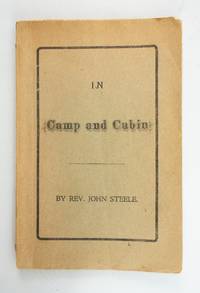
1901ST20777Lodi Wisconsin: J. Steele 1901. FIRST EDITION. 232 x 155 mm. 9 1/8 x 6". 81 pp. <br/> Original green faded to brown printed paper wrappers. Housed in a fine modern caramel-colored morocco clamshell box with gilt lettering on spine. Inside front wrapper with ink signature of M. R. Skinner; occasional pencil underlining in the text. Howes S-924; Graff 3964; Streeter 3027; Wagner-Camp 244 note. Top inch of spine chipped away a little fraying to edges first three leaves with overall browning minor corner creases but QUITE AN EXCELLENT COPY of a very fragile item clean and fresh internally with the insubstantial binding entirely intact against all odds.<br/> <br/> Based on the author's diaries written between September 1850 and July 1853 this work as the introduction tells us lays out events "just as they happened" being "ludicrous solemn serious tragic inexpressibly sad but always interesting." Kurutz calls the book a "detailed and important account of mining life" and notes that Steele "provided important information on mining techniques and laws while laboring in the Coloma District and on the Yuba and Feather rivers." This account includes some fascinating stories about the many hardships and dangers experienced by the author and his associates including nearly constant fatigue and hunger dreadful weather conditions and dicey encounters with desperados dishonest miners and disgruntled frontier men of commerce. John Steele 1832-1905 was only 18 years old when he left his home in Wisconsin for the gold fields of California. After three and a half years of adventuring he returned to the Midwest where he pursued a career in teaching. Steele also volunteered for the Union army during the Civil War and spent the last 30 years of his life as a minister in the Methodist Episcopal Church. The present work was privately printed by the author in a small number of copies and is as expected quite rare on the market now. Besides the present one RBH lists just two other copies sold since 1981 and as of this writing no other dealer seems to be offering one. Furthermore our copy is a remarkably well-preserved survival with its delicate wrappers and text in condition as attractive as one could hope to find. J. Steele unknown
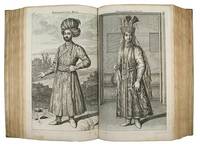
61001Amsterdam R. and G. Wetstein J. Oosterwyk and H. van de Gaete 1714. Folio 33.3 x 21.1 cm. Allegorical frontispiece by Picart dated 1711 title page in red and black; engraved portrait of de Bruyn by G. Kneller vi 472 xii pp.; 260 numbered engraved plates many double folded two large maps and 34 large text engravings not numbered including portraits views etc. Contemporary blind ruled and embossed vellum. Spine with six raised bands title written in ink in a neat contemporary hand. = First edition second issue of one of the most richly illustrated voyages through Russia Persia Iran and adjacent countries and territories made by the Dutch painter Cornelis de Bruin as spelled on title page or de Bruyn as spelled in the portrait 1652-1727. He went by sea from Amsterdam along the coast of Norway above the polar circle to Archangel and travelled southwards by river and overland through Russia and the Caspian Sea to Persia the Gulf and by ship again onward to Batavia now Jakarta Indonesia back to Persia and homewards across the Mediterranean. It is an extensive work important to naval and travel history and includes beautiful large panoramic views of for instance Archangel Moscow and "Spahan" = Isfahan Iran some impressively long when unfolded. The work contains a good deal of zoological illustrations; hence it is recorded in Claus Nissen's Zoologische Buchillustration. Most illustrations are as stated in the title from drawings made on the spot by De Bruin himself. The work was dedicated to Anton Ulrich Duke of Brunswyk and Lunenburg. This edition is identical to the 1711 edition published for the author by Willem and David Goerree. Provenance: armorial bookplate of former private owner David Dunlop "Merito" small pictorial bookplate of E. van Tongeren on front pastedown and one small previous owner's stamp - "A. Noorderbroek Amsterdam" - on the first blank. Old Japanese paper reinforcements to the outer edge of the front flyleaf a few plates may be from another copy same issue tiny weak bookseller's stamp in title page lower margin a pencil annotation below the portrait of De Bruin otherwise clean. In all an excellent copy in a contemporary binding. The plates in a strong impression. Henze I 378; Nissen ZBI 631N; Tiele 207 209. Not in Diba. hardcover
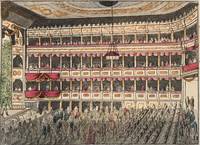
181210794Vienna: Maria Geisler 1812. Contemporary light green glazed paper boards with a ropework roll for an outer frame ochre endleaves gilt-ruled flat spine hinges rubbed gilt-lettered red paper label all edges gilt. The Austro-Hungarian capital in your pocket - her only view book. The prints include theaters opera houses the Imperial Riding School gardens parade grounds a swim club an obelisk coffee houses porcelain and weapons factories hospitals painting galleries the bustling Danube christoph de bac's famous hexadecagon circus building etc. The publisher's address 1200 Graben dates the suite. I have not located a set outside Austria. Individual prints were and are offered for sale. In good condition; two double-page views were likely issued later and are not present here. Two plates have been neatly mounted at the time of issue on the paper stock of the edition nos. 89 and 99. All but two views are in their first or only state.¶Nebehay & Wagner Bibliographie altösterreichischer Ansichtenwerke 193. Maria Geisler unknown books
675816 p.l. 74 leaves. Folio later vellum-backed boards foot of spine defective occasional light soiling & dampstaining. Basel: H. Petri 1529. First edition of the two texts together. The De Temporum Ratione is a significant book in several ways. Most notably "this book helped to establish the custom of counting years from the birth of Christ. When we say that Queen Elizabeth II was born in 1926 not 'in the 16th year of the reign of George V' or 'in the year 2678 after the foundation of Rome' or in the '2nd year of the 481st Olympiad' we are indebted to the Venerable Bede."-Printing & the Mind of Man 16n. "Bede's greatest practical effect was on the Western calendar. His decisions beginning the year calculation of Easter names of days and months calculations of eras and so forth in most instances finally determined usage that was only refined not changed by Gregorian reform."-D.S.B. I p. 565. "The De Ratione Temporum first published in 1505 is particularly important. It contains a remarkable theory of tides based upon Pliny but also upon personal observation; first mention of the establishment of a port i.e. the mean interval between the moon's meridian passage and high water following; this interval is different in different ports."-Sarton I p. 511. Pierre Duhem described Bede's establishment of a port as the only original formulation of nature to be made in the West for some eight centuries. This is the first printing of De Natura Rerum which contains such physical science as was then known. It collects the wisdom of the ancient world on these subjects and has the special merit of referring phenomena to natural causes. It contains a particularly important section - the "De Comptu vel Loquela digitorum" - which is "our main almost our only source for the study of mediaeval finger reckoning or symbolism."-Sarton I pp. 510-11. See also Smith History of Mathematics II p. 200. This work was edited by Johannes Sichardt 1499-1552 professor of law who during the years 1526-30 lived in Basel and while teaching also edited and prepared for printing Latin manuscripts he had found in libraries in monasteries. He also served as adviser to the Basel printers Cratander Bebel and Henricus Petri. Good copy preserved in a box. Early signature of "Mallarii" on title with motto in Greek. Armorial bookplate dated 1915 of Bishop's College Cheshunt an Anglican theological college that closed in 1968. ❧ Sichardt: Bietenholz ed. Contemporaries of Erasmus Vol. III p. 247. hardcover books
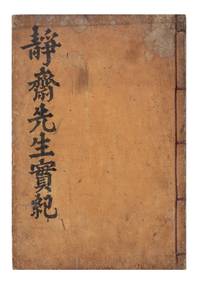
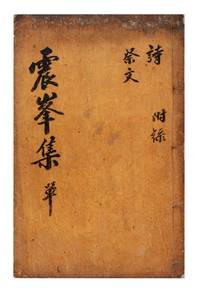
9511Woodblock-printed. 56 folding leaves. Two juan in one vol. Large 8vo 310 x 210 mm. orig. yellow patterned semi-stiff wrappers orig. stitching. YÅngch’Ån: 1854.<br /> <br> <br> <br /> <br /> First edition of this collection including the life and writings of Cho Sang-ch’i or Jo Sang-chi 曺尙治 fl. 1419-55 a prominent official in the early ChosÅn period. From an early age Cho studied “writings on human nature and principle†sÅngni chi sŠ性ç†ä¹‹æ›¸ — that is Neo-Confucianism. As one text on his life put it he “took this Confucian culture of ours as his personal duty.†Cho’s life was tied up with the factional conflicts that saw Sejo’s usurpation of the ChosÅn throne in 1455. Cho was among the “large number†of officials who “viewed the new ruler with distaste on moral grounds†Edward W. Wagner The Literati Purges: Political Conflict in Early Yi Korea p. 9.<br /> <br> <br> After Sejo demoted the previous king giving him the title Prince Nosan and subsequently had him killed Cho “got hold of a stone and neither cutting nor polishing it wrote in his own hand and had it inscribed ‘Here rests Cho Sang-ch’i the exiled Deputy Education Intendant of the court of Nosan’.†As recounted in one of the texts gathered in this collection he thus signaled his opposition to the new king. Cho was posthumously honored in the late 18th century.<br /> <br> <br> The book contains a Prefaces by Pak YÅng-wÅn 朴永元 1791-1854 and Yi Han-Ång æŽæ¼¢è†º 1778-1864 the latter dated 1854 and the colophon by Yi Hwi-ryÅng æŽå½™å¯§ 1788-1861.<br /> <br> <br> Interesting features of our book include the use of the reign of the Korean kings for dating — “kabÅn the sixth year of the reign of the present king Ch’Åljong†上之å…年甲寅 is the date of Yi’s Preface — and the margins that cut through columns where the first character has been raised in deference to the dynasty.<br /> <br> <br> A note toward the end of juan 1 9a says that the two pieces that follow had been missed when the book was “first printed†ch’ogan åˆåˆŠ implying an earlier edition. We are not aware that one is extant however.<br /> <br> <br> Cho SÅg-u is listed as the author in the Korean Old and Rare Collection Information System as well as in the Jangseogak catalogue whence our attribution of authorship.<br /> <br> <br> Fine copy.<br /> <br /> <br> <br> References<br /> <br> <br> Encyclopedia of Korean Culture 한êµë¯¼ì¡±ë¬¸í™”ëŒ€ë°±ê³¼ì‚¬ì „. https://encykorea.aks.ac.kr/ <br /> <br> <br> Digital Jangseogak. https://jsg.aks.ac.kr/ <br /> <br> <br> Korean Old and Rare Collection Information System 한êµê³ 문헌종합목ë¡. unknown
1593CA0273<p><strong>Groundbreaking treatise on exotic botany and tropical medicine</strong></p><p>4586blank leaf pages with numerous woodcut illustrations. Duodecmo 6 1/4 x 3 3/4" octavo bound in quarter leather with five raised spine bands with spine tooled in gilt over brown boards. Translated from the Portuguese into Latin by Carolus Clusius Charles de L'Ecluse. Fourth Edition.<br /><br />Garcia de Orta's groundbreaking treatise on exotic botany and tropical medicine to which are added two other important works on the subject. Orta's contribution comprises pp. 1-2177. It is followed by:<br /><br /><em>Christophori a Costa medici et cheirurgi Aromatum & medicamentorum in Orientali India nascentium</em>. Pp. 225-312. <br /><br /><em>Simplicium medicamentorum ex novo orbe delatorum quorum in medicina usus est historia. descripta à d. Nicolao Monardis.</em> Tertia editio. Pp. 313-4044 <br /><br /><em>Simplicium medicamentorum ex novo orbe delatorum quorum in medicina usus est historia. descripta à d. Nicolao Monardis</em>. Altera editio. Pp. 409-456.<br /><br />Rare combined edition of three major 16th century treatises in the history of botanical and medical knowledge of plants from India and the New World. These Latin editions had all previously been published by Plantin. Garcia da Orta's treatise originally published in 1563 in Goa in Portuguese is the first Indian materia medica written by a European and the first textbook of tropical medicine. The text of Acosta of which L'Ecluse gives an abridgment is a complement to the text of Orta. Finally the Latin translation also abbreviated of the treatises of Nicolas Monardes details the medicines and medicinal herbs of South America and describes their native uses. His text also contains the first representation of tobacco and also that of pepper and even the armadillo. A rare complete copy with the final unpaginated leaves including three privileges the colophon the large printer's device of Plantin and the final blank.<br /><br /><strong>Condition: <br /></strong><br />Some rubbing and wear to covers spine foot chipped; some minor foxing and aging within early ink underlines to the early leaves of the first work else good.</p> Ex officina Plantiniana, apud viduam, & Ioannem Moretum hardcover
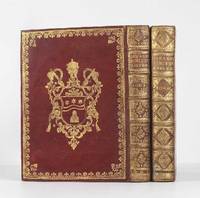
5035Woodcut printer’s device on titles. 4 p.l. xxvii 1 368 pp.; 547 pp. Large 4to cont. Italian red morocco covers of Vol. II a little rubbed sides richly gilt with the arms of Pope Clement XIV in gilt in center of each cover spines richly gilt each tooled slightly differently a.e.g. Faenza: G.A. Archi 1769.<br/> <br/> First edition and a very handsome set with the arms of Pope Clement XIV on covers of the first bio-bibliographical guide to the writers of Ravenna; about 2500 works by more than 600 authors are included. Ginanni 1698-1774 the learned Italian bibliographer and historian was a professor in Florence and then in Ravenna where he developed a great knowledge of Italian history and writers. He formed an important collection of books and medals and was a member of many academic societies. <br/> <br/> Very fine set. Stamp on titles of the Biblioteca Piervissana on titles. From the library of A.R.A. Hobson with bookplate. <br/> <br/> ⧠Besterman 5346. N.B.G. Vol. 20 cols. 570-71. unknown
5035Woodcut printer's device on titles. 4 p.l. xxvii 1 368 pp.; 547 pp. Large 4to cont. Italian red morocco covers of Vol. II a little rubbed sides richly gilt with the arms of Pope Clement XIV in gilt in center of each cover spines richly gilt each tooled slightly differently a.e.g. Faenza: G.A. Archi 1769. First edition and a very handsome set with the arms of Pope Clement XIV on covers of the first bio-bibliographical guide to the writers of Ravenna; about 2500 works by more than 600 authors are included. Ginanni 1698-1774 the learned Italian bibliographer and historian was a professor in Florence and then in Ravenna where he developed a great knowledge of Italian history and writers. He formed an important collection of books and medals and was a member of many academic societies. Very fine set. Stamp on titles of the Biblioteca Piervissana on titles. From the library of A.R.A. Hobson with bookplate. ❧ Besterman 5346. N.B.G. Vol. 20 cols. 570-71. unknown books
737576; 99 folding leaves of which two in Vol. II are in manuscript replacing missing printed leaves. Six parts in two vols. 8vo modern wrappers text leaves lightly browned new stitching. China: Prefaces dated 1754 & 1756.<br /> First edition and very rare not in WorldCat of this collection of the poetry and prose of Ren Huang 1683-1768 one of "the foremost lyrical poets" Ko p. 92 see below of the Guangdong region and a member of the artistic circle whose center was Gu Erniang a famous woman inkstone carver whose shop was located in Zhuanszhu Lane in the imperial city of Suzhou. This collectors and scholars of this circle were both patrons and clients of Gu Erniang and in fact Ren's main asset late in life was his collection of precious carved inkstones.<br /> Ren 1683-1768 whose literary name was Xintian or Shentian Ren was a native of Yongful county in Fujian. Born into a well-educated family of generations of government officials he learned poetry and painting as a child. He received the juren degree in 1702 and served as a county magistrate in Sihui in Guangdong province.<br /> Most of the poetry in this work is from manuscripts and appears here for the first time whereas the essays and other prose writings were previously published. The second preface dated 1754 is signed by Tingheng Xu and the third preface of 1756 is signed by Tiaoyuan Sang 1695-1771 scholar.<br /> A nice set but with two leaves of text replaced in early manuscript. Several natural paper flaws not touching text and mended. With the seal of Yosaburo Takekoshi 1865-1950 Japanese historian and politician. Preserved in a chitsu.<br /> ❧ Dorothy Ko The Social Life of Inkstones. Artisans and Scholars in Early Qing China 2017. unknown books
9506Preface title: “Qiu jiang ji.†76; 99 folding leaves of which two in Vol. II are in manuscript replacing missing printed leaves. Six parts in two vols. 8vo modern wrappers text leaves lightly browned new stitching. China: Prefaces dated 1754 & 1756.<br /> <br> <br> <br /> <br /> First edition and very rare not in WorldCat of this collection of the poetry and prose of Ren Huang 1683-1768 one of “the foremost lyrical poets†Ko p. 92 see below of the Guangdong region and a member of the artistic circle whose center was Gu Erniang a famous woman inkstone carver whose shop was located in Zhuanszhu Lane in the imperial city of Suzhou. This collectors and scholars of this circle were both patrons and clients of Gu Erniang and in fact Ren’s main asset late in life was his collection of precious carved inkstones.<br /> <br> <br> Ren 1683-1768 whose literary name was Xintian or Shentian Ren was a native of Yongful county in Fujian. Born into a well-educated family of generations of government officials he learned poetry and painting as a child. He received the juren degree in 1702 and served as a county magistrate in Sihui in Guangdong province.<br /> <br> <br> Most of the poetry in this work is from manuscripts and appears here for the first time whereas the essays and other prose writings were previously published. The second preface dated 1754 is signed by Tingheng Xu and the third preface of 1756 is signed by Tiaoyuan Sang 1695-1771 scholar.<br /> <br> <br> A nice set but with two leaves of text replaced in early manuscript. Several natural paper flaws not touching text and mended. With the seal of Yosaburo Takekoshi 1865-1950 Japanese historian and politician. Preserved in a chitsu.<br /> <br> <br> ⧠Dorothy Ko The Social Life of Inkstones. Artisans and Scholars in Early Qing China 2017. unknown
942552 folding leaves. Large 8vo 298 x 190 mm. orig. patterned semi-stiff wrappers wrappers a little soiled old stitching stitching partially defective. Korea: Preface dated 1801 Afterword dated 1816.<br /> <br> <br> <br /> A very rare edition of this collection of documents relating to seven men and their actions during the Imjin War and the Manchu invasion of Korea in 1636. The invasions of Korea first by the Japanese in the 1590s and then by the Manchus in the 1620s and 1630s were important moments in the course of events that led to the rise of the Manchu Qing empire in continental East Asia. The large-scale fighting and movement of troops from Japan and China into the Korean peninsula in the late 16th century mark a watershed in Korean history. The cost of the wars also severely weakened the Chinese Ming dynasty which eventually collapsed in 1644 ushering in an entirely new balance of power in the region.<br /> <br> <br> The “seven worthies†of the title include Pak Kwang-jÅn æœ´å…‰å‰ 1526-97 style name Chuk-ch’Ån or Juk-cheon ç«¹å· and his sons KÅn-hyo æœ´æ ¹å 1550-1607 and KÅn-je æ ¹æ‚Œ all of whom distinguished themselves during the Japanese invasion in the 1590s and grandsons and great-grandsons who resisted the Manchus in 1636 as commanders of irregulars.<br /> <br> <br> Our copy has a Preface dated 1801 by Song Hwan-gi 宋煥箕 1728-1807 a ChosÅn scholar-official. Song writes that “in the history of armed invasions of our dynasty none were more brutal than the two disorders of the imjin 1592 and pyÅngja 1636 years.†Four generations of the Pak family — “fathers and sons ancestor and descendants older and younger brothers uncles and nephews†— had distinguished themselves during those trying times. Song ends the Preface by saying that “the person who now came to ask me for my text is Chae-hwan an eighth-generation descendant of Chuk-ch’Ån.†The wording suggests that Pak Chae-hwan edited the work hence our attribution of authorship.<br /> <br> <br> We find no matches to our copy in either WorldCat or the Korean Old and Rare Collection Information System KORCIS. In addition to the Preface dated 1801 our copy has a colophon pal è·‹ by Yi æŽé¶´ä¾† also known as Yi Ch’Ång æŽ 1792-1861 dated 1816. Some copies described in KORCIS have 20 characters per column while our copy has 19 on some pages and 18 on others. Some catalogues ascribe authorship of the book to Pak Chung-hong æœ´é‡æ´ª 1802-72 probably because one edition of the present work was published in 1856 along with a collection of Pak Kwang-jÅn’s works that Pak Chung-hong edited. This is the case with the Harvard-Yenching copy K 5568.2 4398 4 WorldCat 40280697 which has a Preface dated 1856 byÅngjin 丙辰.<br /> <br /> <br> <br> References<br /> <br> <br> Encyclopedia of Korean Culture 한êµë¯¼ì¡±ë¬¸í™”ëŒ€ë°±ê³¼ì‚¬ì „. https://encykorea.aks.ac.kr/ <br /> <br> <br> Korean Old and Rare Collection Information System 한êµê³ 문헌종합목ë¡. https://www.nl.go.kr/korcis/index.do. unknown
599537; 22; 17; 25; 21 folding leaves. Five vols. 8vo orig. wrappers orig. block-printed title labels on upper covers new stitching. Edo Osaka & Kyoto: 1832. First edition in Japanese and an important book. "Kincho or Rikkyo or Rikkei or Ryukei Sugita 1786-1846 the son of the famous Gempaku Sugita published a work in five volumes in 1830 this is wrong or a typo; the correct date is 1832 entitled Yoka shinsen which was a translation of the Dutch translation of Joseph Jakob von Plenck's Compendium institutionum chirurgicarum. Viennae: R. Graeffer 1780. The Yoka shinsen was important as the first complete translation of a Dutch surgical work into the Japanese language."-Mestler A Galaxy of Old Japanese Medical Books. III p. 157. Vols. I and II are concerned with tumors; Vol. III with ulcers; Vol. IV with wounds; and the fifth volume deals with pharmacology. In this volume many of the drugs appear with Latin and Dutch names and Japanese translations. Plenck 1738-1807 a member of the Viennese School was at one time or another professor of chemistry botany surgery anatomy and obstetrics at the Joseph Academy at Vienna. Fine fresh set. ❧ Sugimoto & Swain Science & Culture in Traditional Japan p. 386-"the crucial work on surgery was Yoka shinsen New selections on surgery by Sugita Ryukei 1786-1845; Genpaku's son by a mistress which was printed in 1832.". unknown books
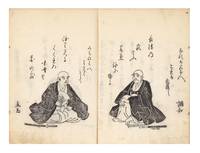
797121 full-page woodcuts. 30; 29; 26; 23; 31 folding leaves. Five vols. 8vo orig. wrappers wrappers rather rubbed & frayed new stitching. Kyoto: Izutsuya Shobei; Edo: Nishimura Uhei 1697.<br/> <br/> First edition of this collection of haikai written by several members of the circle surrounding Matsuo Basho 1644-94 Japan’s best-loved author. The poems were gathered by Taihakudo Torin d. 1719 a friend and disciple of Basho there is speculation that Torin was Basho’s nephew or younger brother. In 1696 to prepare for the third anniversary of Basho’s death Torin retraced Basho’s famous 1689 journey through the main island of Japan which resulted in Basho’s best-known work Oku no Hosomichi a poetic diary in the form known as haibun a combination of prose and haikai.<br/> <br/> Torin inspired by his own journey decided to collect the poems and have them printed in the present work. The poems arranged by the four seasons and with a section of poems written at the time of the third anniversary of Basho’s death were mainly written by a group of Edo-based poets and disciples of Basho.<br/> <br/> Torin has furnished a Preface and some of the poems. Many haiku are printed with the names or pen names of the authors. There is an Afterword by Sodo Yamaguchi 1642-1716 haiku poet flood-control expert and close friend and disciple of Basho.<br/> <br/> The second volume has a series of 20 attractive woodcuts of poets including on facing pages Basho and his disciple or nephew or younger brother Torin.<br/> <br/> Very good set. Extremely rare with no copy in WorldCat. Minor worming in the final volume mended. unknown