15 962 résultats
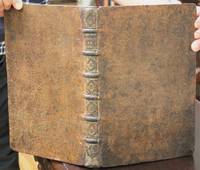
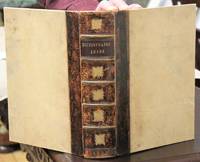
1849B5668Marseille: Carnaud c.1849. A fine example of this rare book. Binding: Contemporary vellum boards rebacked expertly with five raised bands compartments blind and gilt horizontal fillets with elaborate central arabesque gilt motif and gilt lettered morocco title on two. Notes: Text in Arabic. Preface in French Text in Arabic. Germanos Farhat was appointed Maronite Archbishop of Aleppo by Pope Pius IX. He served in this capacity from 1725 until his passing in 1732 as well as a skilled grammarian writer and religious poet. He was an important figure of the so-called Arab Renaissance. A statue in his honour remains erected in Aleppo. His work was revised edited and expanded considerably by the well known historian and commentator Rochaid de Dahdah elevated to knighthood receiving the title of “Count†or Comte by Pope Pius IX. Size: thick quarto 260x185mm Illustration: Illustrated portrait of the author Archbishop Farhat of Aleppo and illustrated gilt lettered title both in Arabic with captions in French. Provenance: Two ex libris stamps on French title: ‘Beirut library’ in blue ink and other unrecognizable. Pages: Frontispiece illustrated title blind Arabic text 723 preface summary French 3 printer’s note title in French. Category: Book Asia Middle East General; Book Literature Carnaud hardcover
007042Quarter Calf. Very Good. A beautiful illuminated manuscript rendering of Lamb's witty and whimsical classic satiric essay which pokes fun at the extremes engendered by the quest for gastronomic bliss. The illustrations are done in a faux Chinese style as befitting the subject matter of the essay. N.p. n.d. 20th century. 4to. 30 by 24 cm. Unpaginated 16 leaves with content on both sides other than title and final text leaf followed by five blank leaves. With 12 watercolored illustrations most half to nearly full paged with text written with a calligraphic hand. The artist and calligrapher we should think were one and the same but remain anonymous other than initials given at the end which given the letter placement could be FME or FEM. Condition: splitting along rear joint of the leather. Revealed are cords and some of the paper gathering. Boards are splayed. Internally clean and bright and one might fairly rank as fine. unknown
1806145411Paris: Barba 1806. A beautiful copy Scarce first edition of this essential culinary encyclopaedia the most popular work published by a professional cook in the 19th century. Viard a worthy competitor to Carême in terms of celebrity dedicated his book to the famed gourmand and restaurant reviewer Grimod de La Reynière praising Grimod and his fellow food enthusiasts for having elevated culinary discourse. "To judge from his practical knowledge Viard must have been a professional cook at one time thought to have been chef de cuisine to Louis Philippe comte de Ségur and Francis Egerton 8th Earl of Bridgewater but he described himself simply as an homme de bouche food expert probably someone in charge of catering for a large household. Despite his book's impressive title Viard declared he was writing for 'all levels of fortune' in this egalitarian society of citoyens and indeed the polished text includes such basics as pea soup quick-cooked rabbit and salt cod provençale. At a higher level he was the first cook to describe the classic puffy soufflé flavoured with chestnuts frangipane white coffee vanilla or potato still a novelty that became such a symbol of France. The book did well even when the restoration of the French monarchy required a hasty title change to Le cuisinier royale and the 'year of revolutions' in 1848 precipitated another change this time to Le cuisinier national. only to revert to impérial once more under Emperor Napoleon III. The text too underwent hundreds of additions first by Viard and later by colleagues allowing it to remain in print until 1875" Willan running to at least thirty-two editions. Food scholar Darra Goldstein notes that Le cuisinier impérial also contains the first published recipe for apple charlotte. Hector Dubois d'Enghien was a trade bookbinder son of the prominent Brussels binder Joseph-François Dubois d'Enghien 1841-1923. He took over his father's workshop c.1918 and partnered with Edmond Dooms a gilder from De Samblanx in 1923. An accomplished scholar Hector Dubois d'Enghien wrote a history of bookbinding in Belgium published in 1954. The first edition of Le cuisinier impérial is rare both institutionally and commercially. WorldCat Library Hub and KVK locate just six copies institutionally: three copies in Germany Badische LB LB Rheinland-Pfalz Sächsische LB two in the US Harvard Schlesinger Indiana and one in France BnF. We can trace four copies at auction since the 1920s only one of which is dated from within the last 45 years. Octavo 192 x 122 mm. Beautifully bound by Dubois d'Enghien-Dooms in early 20th-century dark green straight-grain half morocco smooth spine lettered in gilt separated into compartments with gilt scrollwork rolls and double fillets floral motifs to first third fourth and fifth compartments marbled boards edges sprinkled blue. Bound like Cagle without the first leaf half-title verso a publisher's advertisement. Fine externally; binder's stamp to front pastedown contents evenly browned and generally clean central gatherings foxed and single stain to sig. 7.7 small spot to p. 387 partly obscuring one word a few ink marks to Index. An excellent copy. Cagle 433; Vicaire 860; Willan pp. 258-9. Not in Bitting see note on p. 478 for later editions. Darra Goldstein The Oxford Companion to Sugar and Sweets 2015. hardcover
1872ST17640-G121872-1921. 60 different editions in 61 volumes. <br/> Most items in their original publisher's bindings mostly cloth or wrappers and a few in limp suede; one in half morocco. Condition ranging from very good to very fine; many of the cloth items with light shelfwear rubbing to edges mild soiling fraying to head and tail of spine and minor condition issues internally light scattered foxing and browning a handful of items with more noticeable condition issues spine partially lost rubbed joints moderate browning etc. but on the whole an excellent group.<br/> <br/> Amassed over the course of many years by a passionate collector of the Rubaiyat this is a very substantial and wide-ranging group of 60 works that attest to the work's enduring popularity more than 150 years after Edward FitzGerald introduced it to the West. Son of a wealthy Irish landowner FitzGerald had enough money to pursue a rather desultory literary career as a "genteel gipsy" in Terhune's words before beginning to study languages in middle age. He started his translation of the quatrains "rubáiyát" in Persian attributed to "Umar Khayyam" in 1856; according to DNB about half of FitzGerald's final work paraphrases rather than directly translates portions of the 11th century poem while the rest is original verse inspired by Omar. "The result is generally seen as being in some ways an original English poem one that is much better known than Omar's poem is in Persian." DNB In Jewett's opinion it certainly earned FitzGerald "a prominent place among the immortals of English literature." In 1858 FitzGerald submitted 25 of the "less wicked" verses to "Fraser's Magazine" only to be rejected. He had 250 copies published anonymously at his own expense but had no luck selling them. Admitting defeat he gave 200 copies to Quaritch; these sold so poorly that they were relegated to the penny bin where Potter says they were discovered--and soon celebrated--by Dante Gabriel Rossetti and Algernon Swinburne. Those copies that remained unsold when Quaritch moved to Piccadilly in 1860 were either lost or destroyed but by 1861 Rossetti and his Pre-Raphaelite brethren along with Celtic scholar Whitley Stokes were evangelizing for the work embracing the lush lyrical verse that would move English poetry away from Victorian orthodoxy and convention. According to Day by the end of the 19th century "a copy of the 'Rubaiyat' upon an Oxford table was a symbol of sophistication. Today . . . it remains the most popular single poem of the Victorian era." The present collection is especially strong in illustrated editions with more than 25 artists represented including Edmund Dulac Elihu Vedder Willy Pogany Adelaide Hanscom Gilbert James Edmund J. Sullivan Arthur Szyk René Bull and Abanindro Nath Tagore. Notable text editions in this group include a Third Edition of FitzGerald's translation; a First Published American Edition; and a signed and inscribed copy of Eben Francis Thompson's translation. There is also a small group of fine press printings including examples by the Gregynog Press Thomas Mosher and Elbert Hubbard. There are no duplicated editions in this collection and there are no trade paperbacks. A full list of the collection's contents is available upon request. unknown
1926015082Paris Grasset 1926 In-12 Broché Edition originale
1758141839Paris: J. Barbou 1758. full brown leather border stamped in blind on the front and rear boards gilt ornaments on spine title in second compartment five raised bands all edges stained red marbled endsheets. small 8vo. full brown leather border stamped in blind on the front and rear boards gilt ornaments on spine title in second compartment five raised bands all edges stained red marbled endsheets. 1ff.-92 3 -263 pages. Pour éclaircir quelques traits de l"histoire de l'Imprimerie & prouver que Guttemberg n'en est pas l'Inventeur. Two works bound in one. Very rare first edition Bigmore and Wyman p.228. Private bookplate of Jackson Burke on the verso of the front free endpaper. Contemporary boards with some rubbing to the spine and extremities corners a bit worn gilt on the spine is lightly flaking evidence of bookplate removal to front and rear pastedowns. Else a fine copy of this very scarce work.<BR> <br /> <BR> <br /> Two works bound together. Complete titles are: Dissertation sur l'origine et les progrès de l'art de graver en bois 1758 and De l'origine et des productions de l'imprimerie primitive en taille de bois 1759.<BR> <br /> <BR> <br /> Fournier 1712--1768 was born in Paris and trained as a wood engraver. He later turned to steel engraving. In the first essay Fournier sets out to prove that Gutenberg was not the inventor of the printing press by examining the history of printing. He believes that the technology Gutenberg made popular existed long before the German printer's work. The second volume follows this up with further discussion of the origins of woodcut prints. <BR> <br /> <BR> <br /> Fournier wrongly disputes the dating of Mr. De Bure le Jeune concerning the Gutenberg Bible but he is the first with the help of an observation by Gerard Meerman to note the progressive increase in the number of lines per page in the early stages of Bible production. J. Barbou unknown
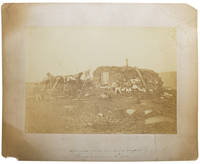
1872303445London 1872. Albumen print measuring 11-5/8 x 16-1/4 in 295 x 412 mm. Laid down on thick cream card with manuscript caption measuring 17 x 21 in. Image slightly faded card chipped with some minor soiling one tear not affecting image. Albumen print measuring 11-5/8 x 16-1/4 in 295 x 412 mm. A rare survival. This image appears in William Bradford's fabled book of photographs Arctic Regions. It was taken by either Dunmore or Critcherson the two professional photographers from Boston who accompanied Bradford on his 1869 expedition to the Arctic on the steamship Panther. It was probably taken at Upernavik a settlement on an island off Greenland's west coast or Godhavn.<br /> <br /> Arctic Regions included 141 albumen prints in addition to Bradford's account of the voyage. The title of the photograph here varies from the printed caption in the book where it reads: "Plate Number: 116 Esquimaux igloe or winter hut made of turf and stones. The entrance is to the left through a door which is about three and a half feet high. The length of the passage is about twelve or fifteen feet and at the farther end is another door through which one almost has to crawl on his hands and knees. After passing through there is then room to stand erect but one is forced to leave very soon owing to the bad air." <br /> <br /> This photograph is slightly larger than the one in the book which is 277 x 365mm. Furthermore the image in the book is cropped closer on the right and left margins. <br /> <br /> The New York Public Library has a folio of 26 images of near identicle size mounted on card. The portfolio was donated to the library in 1892 as part of the Robert Stuart Collection. According to Horch originally all of these images were captioned in manuscript though were later remounted with typed captions as "the original ink-written captions for the photographs had badly faded by 1940." It's interesting that the caption on their duplicate of this image is the same as ours and the image itself has not been cropped. Horch writes that Bradford probably not only selected these images himself but "closely directed the actual taking of the photographs." <br /> <br /> It's entirely likely that Bradford would have had extra prints made to distribute to friends repay favors and most of all to solicit subscribers to what was a very expensive book to publish. Given how it conforms to the examples in the Robert Stuart portfolio this particular image is probably one of them. Horch Frank. "Photographs and Paintings by William Bradford". American Art Journal 5.2 1973: pp 61-70; cf Parr and Badger I p31Prm/photo unknown
6449viii 268 pp. 8vo early 19th-cent. marbled boards spine defective. Amsterdam: P. Yver 1785. The extremely rare French edition there was an edition in Dutch the same year of this catalogue of an impressive sale. A contemporary annotator has supplemented it with prices buyers' names and commentary on the artworks almost all dismissive in the margins. Van Slingelandt 1701-82 a great patron of the arts who lived in Dordrecht amassed one of the most notable Dutch painting collections of the 18th century. This heavily annotated volume is the first and most important part of the sale describing 701! paintings along with eight drawings. The second part of drawings and sculptures followed shortly thereafter. Van Slingelandt's collection consisted of Old Masters and contemporary Dutch artists some of whom the collector himself patronized. The present catalogue details the works of Asselijn Bakhuizen Berghem J. Brueghel père et fils Cuyp 38 lots Dou van Dyck Jordaens Metsu Netscher Adrian and Isaac van Ostade Potter Rembrandt Rubens Ruysdael Steen Teniers ter Borch Wouwerman etc. etc. All lots are priced with buyers' names. It is clear the annotator viewed and attended the sale. For almost every item he has provided the name of the buyer. The annotator likely a connoisseur has written generally disparaging comments on the works for sale deriding them as copies or incorrectly attributed: "mauvais" "bizarre" "lourd" "médiocre" "not by Rembrandt." There are additional remarks on condition and provenance which are very interesting. The rare positive observation praises the work of a young artist or salutes a master's finest painting. This sale presided over by Pierre Yver 1712-87 and Abraham Delfos 1731-1820 the preeminent Dutch art dealers of the period was attended by many of their competitors including Pierre Fouquet who frequently purchased on behalf of the famous French expert Jean Baptiste Pierre Lebrun 1748-1813 as corroborated by several annotations in this copy. Lebrun solidified his position as the leading dealer in Netherlandish pictures by purchasing directly from the source and was buying heavily at sales such as these. Other notes indicate there were dealers from Brussels Lyon Antwerp Amsterdam Germany the Hague and Rotterdam. An extremely interesting annotated copy. A few of the annotations are cropped. ❧ Lugt 3936. Oxford Art online Delfos & Yver. hardcover books
1872303445London 1872. Albumen print measuring 11-5/8 x 16-1/4 in 295 x 412 mm. Laid down on thick cream card with manuscript caption measuring 17 x 21 in. Image slightly faded card chipped with some minor soiling one tear not affecting image. Albumen print measuring 11-5/8 x 16-1/4 in 295 x 412 mm. A rare survival. This image appears in William Bradford's fabled book of photographs Arctic Regions. It was taken by either Dunmore or Critcherson the two professional photographers from Boston who accompanied Bradford on his 1869 expedition to the Arctic on the steamship Panther. It was probably taken at Upernavik a settlement on an island off Greenland's west coast or Godhavn.<br/><br/>Arctic Regions included 141 albumen prints in addition to Bradford's account of the voyage. The title of the photograph here varies from the printed caption in the book where it reads: "Plate Number: 116 Esquimaux igloe or winter hut made of turf and stones. The entrance is to the left through a door which is about three and a half feet high. The length of the passage is about twelve or fifteen feet and at the farther end is another door through which one almost has to crawl on his hands and knees. After passing through there is then room to stand erect but one is forced to leave very soon owing to the bad air." <br/><br/>This photograph is slightly larger than the one in the book which is 277 x 365mm. Furthermore the image in the book is cropped closer on the right and left margins. <br/><br/>The New York Public Library has a folio of 26 images of near identicle size mounted on card. The portfolio was donated to the library in 1892 as part of the Robert Stuart Collection. According to Horch originally all of these images were captioned in manuscript though were later remounted with typed captions as "the original ink-written captions for the photographs had badly faded by 1940." It's interesting that the caption on their duplicate of this image is the same as ours and the image itself has not been cropped. Horch writes that Bradford probably not only selected these images himself but "closely directed the actual taking of the photographs." <br/><br/>It's entirely likely that Bradford would have had extra prints made to distribute to friends repay favors and most of all to solicit subscribers to what was a very expensive book to publish. Given how it conforms to the examples in the Robert Stuart portfolio this particular image is probably one of them. Horch Frank. "Photographs and Paintings by William Bradford". American Art Journal 5.2 1973: pp 61-70; cf Parr and Badger I p31Prm/photo unknown books
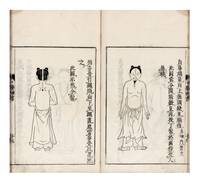
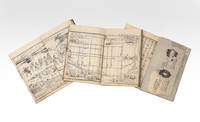
7008Twelve full-page woodcuts & numerous woodcuts in the text. 36 folding leaves. Two parts in one vol. 8vo orig. blue wrappers wrappers rubbed & somewhat wormed orig. block-printed title label on upper cover no longer present modern stitching. "Ichijo-dori" a street in Kyoto: Tomikura Tahei 1690. First edition of this early and rare book providing prescriptions for treatments in the different stages of tuberculosis. The author describes ten drugs made from vegetables that give miraculous results in treating the disease. The second part entitled "Mujo Gengen santen shinden gyokudo shoshi chiden shirochu soho" describes the parasitic worms said to grow in the stomach and intestinal system of patients suffering from tuberculosis. The text illustrations depict many of these parasites. The text is Chinese with Japanese reading marks presumably compiled in the 14th century by Ge 1305-53 a Yuan dynasty physician and writer. He came from a family of hereditary physicians and wrote a number of books. The Japanese reading marks have been provided by Shuhaku Asai 1643-1705 who was a fellow student with Ippo Okamoto of the prominent doctor Sanpaku Ajioka. There are substantial sections on acupuncture and moxibustion several of the full-page woodcuts depict pressure points. Very good copy. Minor marginal worming towards end. unknown books
7008Twelve full-page woodcuts & numerous woodcuts in the text. 36 folding leaves. Two parts in one vol. 8vo orig. blue wrappers wrappers rubbed & somewhat wormed orig. block-printed title label on upper cover no longer present modern stitching. “Ichijo-dori†a street in Kyoto: Tomikura Tahei 1690.<br/> <br/> First edition of this early and rare book providing prescriptions for treatments in the different stages of tuberculosis. The author describes ten drugs made from vegetables that give miraculous results in treating the disease. The second part entitled “Mujo Gengen santen shinden gyokudo shoshi chiden shirochu soho†describes the parasitic worms said to grow in the stomach and intestinal system of patients suffering from tuberculosis. The text illustrations depict many of these parasites.<br/> <br/> The text is Chinese with Japanese reading marks presumably compiled in the 14th century by Ge 1305-53 a Yuan dynasty physician and writer. He came from a family of hereditary physicians and wrote a number of books. The Japanese reading marks have been provided by Shuhaku Asai 1643-1705 who was a fellow student with Ippo Okamoto of the prominent doctor Sanpaku Ajioka. <br/> <br/> There are substantial sections on acupuncture and moxibustion several of the full-page woodcuts depict pressure points.<br/> <br/> Very good copy. Minor marginal worming towards end. unknown
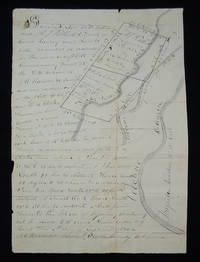
68368A Gold Rush Manuscript Land Survey GOLD RUSH. Gold Rush Map Manuscript. Being a Survey for the adjoining plots of land belonging to H.H. Watson and A.J. Polhill. Placer County California: 1852. Two pages on a single sheet 17 1/8 x 10 7/8 in.; 438 x 275 mm. Manuscript document with map dated variously between 4-24 September 1852 and signed by H.H. Watson A.J. Polhill and others. Sheet with some mild staining and ink blots. Some minor chipping at edges and some separations at the creases. Creases reinforced with nearly invisible tape. Overall a very interesting piece of gold rush history. We could not find any other California mine surveys at auction in the past 50 years. "Survey for H.H. Watson and A.J. Polhill. A Tract of land laying near ville bounded as described in the annex plot commencing point as the S.W. corner of J.H. Hancock survey." "Survey made by N.O. Hinman County Surveyor." "In the present survey the tracts of land being issued to Watson and Polhill are bounded on the right by the Volcano Mining Company Ditch and Volcano Canion sic with the Todds sic Valley Company Ditch running through each plot. The Volcano Gold Gravel Mining Company was one of the most extensive gravel mines during the Gold Rush and hundreds of acres of valuable mining lands were drained by its enterprises. Placer County falls in both the Sacramento Valley and Sierra Nevada regions in what is known as the Gold Country. The discovery of gold in this region in 1848 brought tens of thousands of miners from around the world and thousands more settled in the area to provide goods and services to them. The name "Placer" is taken from the Spanish word for gravel or sand deposits containing gold." From Sotheby's. HBS 68368. $4500 1852 unknown books
1585B6597Paris: Apud Dionysium Duvallium sub Bucephalo in vico Bellouasco; c. April 1585 colophon . A very nice copy of this rarely found work; old minor marginal repair tape of title slight marginal stains and very small in-text and marginal oxidation spots none affecting legibility; light damp staining of the lower margin. Endpapers watermarked. Binding: 17th century mottled calf spine with six 6 raised bands with gilt lettered title on two and remainder of compartments ornamented in floral gilt; all edges speckled red. Notes: This medical work on gynaecology attributed to or by Hippocrates and his school is accompanied by the commentary in French of French Renaissance physician Maurice de La Corde; it is rare with three known exemplars incl. Yale & Oxford. <br> <br> Size: Folio 311x201mm Illustration: Text in Latin and Greek. Text in two columns of Latin and Greek respectively with accompanying Latin commentary in one; except index printed in three columns.<br>Illustrated title depicting determined/ inspired Hippocrates riding on horseback through crises or critical times toward the sun – this with marginal text in Latin and Greek; each major section opens with an elaborate headpiece and initial. <br> References: Pasquale Sfameni in Enciclopedia Italiana 1933; Adams H-615; Choulant 31; Durling 2412. Graesse III 283; Hirsch II 76; Renouard Marques 287; STC French 227. Not in Osler. Pages: Ll: bl. 10 pp. 1-361 6 bl.2. Collation: bl. a1-4 e1-6 A1-Z6 Aa1-Gg6 Hh1-7 bl.2. Category: Book Medical; Book Early Printed 1500; Apud Dionysium Duvallium, sub Bucephalo, in vico Bellouasco; hardcover
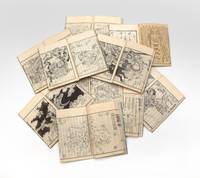
8048Woodcut illus. five are double-page. .5 13 .5 ads; .5 ads 17 .5; .5 ads 14 .5 folding leaves. Three vols. 8vo orig. green patterned semi-stiff wrappers orig. block-printed title labels on upper covers new stitching. Kyoto: Honya Juemon 1789.<br/> <br/> First edition and very rare; this work was written as a result of the devastating Great Kyoto Fire which broke out on 7 March 1788 and lasted several days. It caused serious damage including the destruction of the Imperial Palace and the Nijo-jo Castle. The fire so shocked the bakufu that senior councillor Sadanobu Matsudaira was sent to Kyoto to investigate and consult with the Imperial Court.<br/> <br/> The first woodcut depicts how one can prepare for a quick escape in case of fire. This single-page illustration shows how to leave one’s street clothes at nighttime so that they can be put on quickly for a fast evacuation. The first double-page illustration is a map of Kyoto where the great fire occurred. The following two double-page woodcuts show scenes of the raging fire with citizens fleeing carrying their valuables. The next two-page woodcut shows refugees of all classes on the outskirts of Kyoto moving away from the city. The final double-page woodcut shows survivors beginning to rebuild their houses.<br/> <br/> The text gives detailed instructions on how to prevent fires and in the case of a fire breaking out what to do to contain and extinguish it.<br/> <br/> The block-printed title labels read “Banmin hinoyojin chinki†“Cautionary Instructions on Containing Fires for the Entire Nationâ€.<br/> <br/> Fine copy. Minor mostly marginal worming carefully mended in the first volume. unknown
634118 leaves. Small 4to attractive modern marbled boards red morocco lettering piece on spine. Wittenberg: C. Heyden 1619. First edition of this rare book which is considered by A.D.B. to be the author's most important scientific work; it is a careful record of the third of the three bright comets of 1618-19. Schmidt 1570-1637 was "one of the last of the scholars of Germany who taught the language and literature of Greece in the spirit of Melanchthon. Schmidt was professor first of Greek and next of Mathematics at Wittenberg. His principal work was an edition of Pindar with a Latin translation and a careful commentary 1616."-Sandys II p. 272. Fine copy. ❧ A.D.B. Vol. 32 pp. 27-28. Zinner 4785. hardcover books
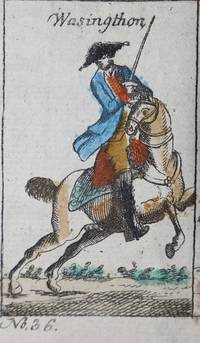
006887Nürnberg: Trautner. Hardcover. Paper pastedown on slightly limp boards. Very Good. Early depiction of General Washington in Germany -- possibly the first such. N.d. circa late 1780s. We can date these generally to the late 1780s because Frederick the Great's death in 1786 is noted but Joseph II is still presented as alive but he died in early 1790. Folio 32 by 20 cm. 33 pages with mounted content including 15 double paged plates measuring 32 by 38.5 cm or thereabouts. The sixteenth plate is double paged half the page height -- this plate was somewhat crudely cut probably in half. In these plates there are about 345 separate images or cells -- the cell count is not hard and fast as there are instances in which two cells can be regarded as a single illustration or cell. The vast majority of the cells or illustrations relate to military men and many of these are equestrian images with the commander or officer mounted on horse. We also find rows of soldiers that can be viewed as if on parade or alternatively like cells in a movie. Military costume and regalia isn't the only subject however. Two of the plates are devoted mostly to the hunt and shooting. In these hunters are shown holding up firearms to various prey. And one plate depicts biblical scenes or subjects. In these plates brief captions can identify the subject. Thus we know that one of the pictures is of Washington who certainly would have been an international celebrity in the late 1780s. The hand-coloring of the prints is a fairly crude stencil and the palette of colors is not extensive. Dominating are blues oranges greens and golds. Not to be slighted is the first page in this album which is an entirely different sort of artwork and seemingly bears no relation to the rest of the contents. This page presents a depiction of Saint Catherine with the saint and her executioner depicted in a printed oval set as a centerpiece surrounded by foliate tracery intricately cut out like lacework. Surrounding all of this is a paper frame all from the same sheet as far as we can discern. The paper and the center oval are mounted onto the album leaf and thus the lacework given the whole thing some dimensionality. The coloring of this specimen of folk art is also richer and more refined than applies to the stenciling of the prints to follow. Scarce -- we could no other examples of Trautner's military prints not to speak of collection of this size on OCLC First Search or elsewhere. Condition: the cover has considerable wear with some crinkling of the paper pastedown some surface loss to the paper and soiling. Spine has a fair amount of paper pastedown loss. The first page with the Saint Catherine artwork has some loss to the tracery but we would also assert that it is remarkable that so much of it has survived intact. The paper framing is considerable soiled with some running of the coloring onto that paper and elsewhere in the artwork. The Trautner prints have light soiling comprised of margin smudging and a light dampstain affecting a few of the prints but overall these read as mostly clean. We noted that the last print is partial. Trautner hardcover
1960014528Paris Galerie Iris Clert 1960 In-8 à l'italienne Broché
19040009174ABERDEEN WASHINGTON WA. Good. 1904. On offer are three 3 original field books most probably written in 1904 and detailing the rebuilding of the city of Aberdeen Washington after a raging fire destroyed the town. On October 16 1903 a raging fire destroyed 140 buildings in the center of Aberdeen Washington. A city constructed primarily of wood including sidewalks Aberdeen had little chance of stopping the fire once it began to spread. Obviously the city needed to rebuild its streets after the fire. Two people one by the name of Weatherwax and the other by the name of Benn seem to have been hired to do the task. Weatherwax is most probably J.M. Weatherwax or George Weatherwax two men who owned a large lumber company in Aberdeen and Benn is most probably Samuel Benn. The three books are labelled P-138 book 44 P-214 book 105 and P-215 book 106. Each book contains an index at the beginning which lays out what streets in the city are written about. For example book P-215 deals with information on old planks new elevations storm sewers street levels and more on the 20 different street including Michigan Ave Jefferson St. Washington St. and more. The books are excellent artifacts of city construction from the early 20th century containing dozens of pages of detailed schematics drawings charts and figures for the city of Aberdeen in the wake of its destruction. There are approximately 450 handwritten pages over the three books. The books each measure 7 ¼ by 4 ¼ inches. All three show sustained use and strong wear. For the most part the structural integrity is still there however the last book P-215 shows the most wear with parts of the book disconnected from the binding. Two of the books shows evidence of taping to the spine and boards. These books are a fascinating look at the intricacies and details of rebuilding a city after its destruction and an intimate part at the history of Aberdeen Washington a place that Kurt Cobain would eventually call home. Background: On October 16 1903 a fire destroys 140 buildings in the center of Aberdeen. Fed by wood-frame structures wooden sidewalks and sawdust fill the fire rages unchecked until some 20 acres have burned. The fire will spur the city leaders to enact a more stringent fire code. On the morning of October 16 1903 a resident of the Arctic Hotel began making breakfast in his room. An accidental fire started and the room was quickly engulfed in flames killing the lone occupant. Within minutes the three-story frame structure was ablaze and the fire spread to adjoining buildings including the fire station and jail.; Manuscript; 8vo - over 7¾" - 9¾" tall; KEYWORDS: HISTORY OF ABERDEEN WASHINGTON FIELD BOOKS TURN OF THE 20TH CENTURY 1903 ABERDEEN FIRE MILL TOWNS J.M. WEATHERWAX GEORGE WEATHERWAX SAMUEL BENN FIELD BOOKS TOWN REBUILDING FIELD BOOKS SURVEY NOTEBOOKS HAND DRAWN AMERICANA HANDWRITTEN MANUSCRIPT DOCUMENT LETTER AUTOGRAPH WRITER HAND WRITTEN DOCUMENTS SIGNED LETTERS MANUSCRIPTS HISTORICAL HOLOGRAPH KEEPSAKE WRITERS AUTOGRAPHS PERSONAL MEMOIR MEMORIAL ARCHIVE DIARY DIARIES JOURNAL LOG ANTIQUITÉ CONTRAT VÉLIN DOCUMENT MANUSCRIT PAPIER ANTIKE BRIEF PERGAMENT DOKUMENT MANUSKRIPT PAPIER OGGETTO DANTIQUARIATO ATTO VELINA DOCUMENTO MANUSCRITTO CARTA ANTIGÜEDAD HECHO VITELA DOCUMENTO MANUSCRITO PAPEL . hardcover
1837626988Philadelphia: The Liberal Union 1837. xvii 2 20-118 pp. missing page 119 1. Black leather spine with gilt titling and marbled endpapers; "Printed at the Office of the National Laborer". Heavy wear and chipping to spine; boards no longer extant. Front free endpaper and first blank page detached but still extant with some chipping to corners. Some staining to bottom corner at gutter of first few pages. Some mild foxing throughout. Final page 119 no longer extant with bottom quarter of following blank missing as well. Some discoloration smoke to tail of final pages. Gatherings still held together quite securely although with some cocking to the top half of the spine. Appears to be a good candidate for recasing or rebinding with a facsimile copy of the final page. Originally published in eight parts under the title "Equality-- A Political Romance" in the Philadelphia deist magazine "The Temple of Reason" this utopian fantasy is commonly accredited to be the first utopian novel written and published in the United States. According to the historian Richard J. Twomey "Equality." marks a turning point in social critique in how it marks private property itself as the root of "social evil" rather than inherited privilege or property. Faherty and White. This scarce edition of 1837 is preceded only by the 1802 serialization. . Hard Cover. Fair. The Liberal Union Hardcover
1930015758Paris Editions Kra - Collection «Club des soixante» n°1 1930 In-4 Reliure Edition originale Dédicacé par l'auteur
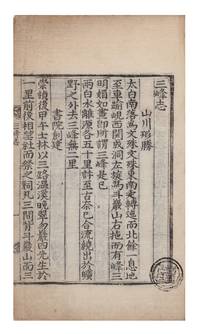
942031 folding leaves. Large 8vo 305 x 190 mm. orig. patterned semi-stiff wrappers wrappers slightly soiled new stitching. Yeongju: 1774.<br /> <BR> <BR> <br /> First edition and very rare of this gazetteer for the Confucian Three Peaks Academy WorldCat 46318280. The word “gazetteer†is used in reference to a genre of East Asian historical and geographical texts generally known in Korea as Åpchi é‚‘å¿— which translates roughly to “local treatises.†The now rare word “gazetteer†is used in analogy with a similar genre that existed in British India. It was not unusual for Korean gazetteers to be published by a local Confucian academy as seems to be the case here. <br /> <BR> <BR> Confucian academies were important centers of intellectual life in ChosÅn Korea. Several of the leading thinkers of the era spent parts of their career teaching at academies thus creating a following. The Three Peaks Academy Sambong sÅwÅn 三峰書院 was founded in the village Valley of Three Peaks sambonggol 三峰谷 in 1654. The colophon explains the genesis of the gazetteer: “The late Mr. Ch’Ål-nam éµå— i.e. Kim Si-hwa é‡‘å§‹éµ 1662-1772 wrote and edited the gazetteer taking note of the geographical features and dates of buildings the positions and names of halls houses ponds and lookouts and recording them for posterity.†Kim Si-hwa furthermore recorded key events in the lives of scholars who had taught at the academy. Kim Wi 金㙔 1709-89 who authored the colophon dated 1774 wrote about the updates that had been made to Kim Si-hwa’s text for our edition. We find no record of an earlier printing; probably Kim Si-hwa’s text was first published in this edition.<br /> <BR> <BR> Nice copy. WorldCat locates only the Berkeley copy.<br /> <BR> <BR> References<br /> <BR> <BR> Digital culture encyclopedia for Yeongju 디지털ì˜ì£¼ë¬¸í™”ëŒ€ì „. http://www.grandculture.net/yeongju <br /> <BR> <BR> Korean Old and Rare Collection Information System í•œêµê³ 문헌종합목ë¡. https://www.nl.go.kr/korcis/index.do<br /> <BR> <BR> PÅk’Ålli taehak Tongasia tosÅgwan sujip Han’guk kojÅnjÅk mongnok 버í´ë¦¬ëŒ€í•™ ë™ì•„시아ë„서관 수집 韓國å¤å…¸ç±ç›®éŒ„. Seoul: KoryÅ taehakkyo minjok munhwa yÅn'guwÅn 2009.<br /> <BR> <BR> “Sambong ha sambong sÅwÅn maÅl ‘Sambonggol’†삼봉三峯 下 삼봉서ì›ä¸‰å³¯æ›¸é™¢ ë§ˆì„ â€˜ì‚¼ë´‰ê³¨ä¸‰å³¯è°·â€™. YÅngju simin sinmun ì˜ì£¼ì‹œë¯¼ì‹ 문 November 26 2018. https://www.yjinews.com/news/articleView.htmlidxno=49174. unknown
8576Many fine black & white double-page & single-page woodcuts throughout. Ten vols. 8vo orig. blue semi-stiff wrappers orig. block-printed title labels on upper covers three labels are somewhat defective new stitching. Osaka: Tenmaya Yasubei; Kyoto: Yoshida Jihei 1835. <br /> <br /> <BR> <BR> with:<br /> <br /> <BR> <BR> — & MATSUKAWA Hanzan; —. Ehon Toyotomi Ryukyu gunki Illustrated Tale of the Ryukyu War. Many fine black & white double-page & single-page woodcuts throughout six in Vol. I are color-printed. Ten vols. 8vo orig. pale blue patterned wrappers orig. block-printed title labels on upper covers new stitching. Osaka: Kawachiya Tobei & Kawachiya Mohei colophon dated 1864; title-page dated 1862.<br /> <BR> <BR> First edition of these finely illustrated stories of the conquest of the Ryukyu kingdom in 1609 by the Shimazu clan of southern Kyushu. The main artist Okada Gyokuzan Issei or Ishida is a rather shadowy figure; he probably studied under the famous Okada Gyokuzan of Osaka but we know very little about him. The second work Ehon Toyotomi Ryukyu gunki has an additional artist Matsukawa Hanzan 1818-82 who studied painting under Suga Shoho and worked in Osaka as a book illustrator.<br /> <BR> <BR> This is a splendid example of an ehon yomihon a type of long novel combining text with frequent illustrations. Our works are finely illustrated throughout with scenes of battles the notable figures in the conquest both winners and losers historical figures scenes of important ceremonies scenes of the extravagant lifestyles of the Ryukyu royal family seen in their gardens famous castles etc. The most useful captions in each woodcut name participants and explain the scene. The woodcuts are clear and impactful; many of the scenes have a pronounced Chinese atmosphere. Several types of battles are shown: conflicts involving cavalry fighting in the water assaults on castles hand to hand combat etc. In the first series Vol. I has a single-page woodcut world map and Vol. III has a fine double-page woodcut map of Ryukyu and its 36 islands. <br /> <BR> <BR> In the first volume of the second series are six full-page woodcut portraits of the heroic leaders of the Shimazu clan’s military forces in full attire with wonderfully delicate color printing.<br /> <BR> <BR> The text furnishes important details on the history of the relationship between Ryukyu and China and Japan; the quantities and types of weapons and number of soldiers drummers and doctors including veterinarians who traveled by ship to Ryukyu; and the major military actions of the conquest. These statistics are broken down by the contributions of men and materiel made by each region of Satsuma. The names of the leaders of each military section are given; we believe this is unique information. Family crests and banner symbols are depicted.<br /> <BR> <BR> Fine and fresh copies. Rare when complete and in excellent condition like our sets; WorldCat lists only the University of Hawaii copies part of the famous Frank Hawley Ryukyu collection. In Vol. 9 of the first series there is misnumbering but the text is absolutely complete and is identical to the set in the National Diet Library. unknown
006479Paris C. L. F. Panckoucke 0 6 volumes in-8 Demi-veau tabac Edition originale
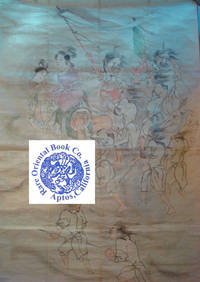
36023801Japan 1860 n.p. Large sheet 96 x 1m 44 cm. gouachevery clean work no worming or other condition issues painted on 16 joined sheets of Washi paper to make one large sheetfine water-color painting. THIS IS AN ORIGINAL PAINTED ART WORK . . . AM ORIGINAL COLOR PAINTING IN GRAND SIZE . . . FROM JAPAN'S OLDEST MYTHOLOGY: . . . THE KOJIKI & NIHON SHOKI PANTHEON . . . THE ORIGINS OF THE EMPEROR . . . OTOHIME GYO RETSU ZU: . . . THE PROCESSION OF OTOHIME DAUGHTER OF THE SEA GOD . . A stunning color painting by Kyosai. Probably done for a temple donation or as an expression of his faith to Japan's historic heroine. . OTOHIME is a goddess in Japanese mythology and is featured in the Kojiki as well as Nihon Shoki. Also known as "Luminous Jewel". A Japanese goddess the beautiful daughter of the sea-king Ryujin. She married Hoori and gave birth to a son after which she turned into a dragon. . Per the Japanese text brushed on the verso upper left corner: "239 ban dated Ansei 7th Kanoe-Saru-doshi 2 gatsu jojun end of February OTOHIME GYO RETSU ZU" . English: "#239 dated Ansei 7th monkey zodiac year end of Feb.: 1860 . PAINTING TITLE PER VERSO: "THE FIGURE OF PRINCESS OTOHIME'S PROCESSION THE DAUGHTER OF THE SEA GOD" . "Toyotama-hime" Japanese for "Lady Bountiful Soul" better known as Otohime is a goddess in Japanese mythology and is featured in the Kojiki as well as Nihon Shoki. She is the beautiful daughter of Ryujin the "God of the Sea." . A STUNNING ORIGINAL POLYCHROME GOUACHE PAINTING: . This original color watercolor painting shows the lively procession of OTOHIME and her hand maid. She is followed by a flag and umbrella bearer. Also following is a man with a pair of deer antlers good omen a man with a small red offering table with peaches the Wind God and his thunder-drum. Another flag bearer his helper followed by two others one holds a staff the other an offering of golden egg. . The items carries are symbolic good fortune and wealth in terms of deer antlers peaches and the golden egg represent ancient Chinese also used by the Japanese of omens of good fortune and good luck. . THE PAINTING: . Per the Japanese brushed text on the verso there is a number found meaning this panel of several was part of a larger work per the chronology found in Clark see below. . This panel of several paintings was part of a restoration of Zojo-ji temple in Shiba. In 1859 KANO Toei & Kyosai "participates in a repair project at the Zojo-ji temple." See Clark. . Although Kyosai had officially left the Kano school in 1854 by participating in the restoration of Tokugawa's family temple in Shiba he was showing loyalty to the Tokugawa family a good reason to volunteer his skills to the temple. It is also noteworthy that his mentor Kano Toei also participated in the restoration and in all likelihood Kyosai joined his master in a sign of respect and loyalty to him. . Based on this chronology it is clear Kyosai was one of the painters who worked at Zojo-ji temple along with his mentor and master teacher Kano Toei. It was not uncommon at this time for schools to volunteer teachers and students to do temple restoration and art work painting replacing or enhancing paintings and large murals. . This item's date matches the restoration dates for the Zojo-ji temple which began in 1859 and continued into 1860. . This panel was unused in the restoration it may have been a precursor to the final painting which was actually used in the restoration project. It matches the scenes found in Zojo-ji temple restoration. The work is the exact style of others painted by Kyosai and his genre. The caricatures of the people in this painting reflect Kyosai's style exactly the theme of his eccentric humor expressing his love for creativity and the joy of painting. . It is entirely within Kyosai's bizarre character to undertake and devote himself to such a project as illustrating the famous myth of OTOHIME in more than 200 deluxe extra-large-size format paintings. . This restoration project could also have been a 'paying job' for Kyosai as at that time he did not seem to be employed but in 1858 he began to design "Kyoga crazy pictures. It was in 1857 he married Okyo the daughter of a Rimpa painter Suzuki Kiitsu but Okyo died in 1859 and he remarried Tose who died in 1860. . It is more than likely Kyosai being a Buddhist he felt it was his religious obligation to do pennants by contributing to and drawing Buddhist or such traditional images as a way to placate the loss of his wife. . THE STORY OF OTOHIME DAUGHTER OF THE SEA GOD: . Because this work was part of the Zojo-ji temple restoration it cannot be considered a commercial painting one that was casually drawn and put on the market for sale. This was part of a commissioned restoration financed by some benefactor to the temple and most likely supported by the Tokugawa family. . ONE OF JAPAN'S EARLIEST AND MOST FAMOUS MYTHS: . The story of OTOHIME DAUGHTER OF THE SEA GOD is one of Japan's oldest and most famous myths known to all Japanese. Treasured as one of the most important in the ancient pantheon it is found in the earliest writing about the origin of Japan and the Emperor in the KOJIKI and the NIHON SHOKI. . This kind of larger paper illustrated story would take months to complete by It would also take devotion to the subject and focus with responsibility to produce a good number of paints daily. This was something Kyosai could and would do ! . THE ARTIST/PAINTER: This work is unsigned which is expected as part of a larger series of paintings. If this was the work of Kyosai it falls entirely within the dates during his period of work produced when he was 29 years old. . The caricature in the faces and fluid bodies in motion the "flowing" style are his. Although there is no signature and it is a true reflection of Kawanabe's work we are attributing it to him. . Another convincing point is that this kind of painting and meticulous style is also found in his famous instructional showing various 'schools' of painting in his KYOSAI GADEN. See below. . WHO WAS KAWANABE GYOSAI/KYOSAI: 1831-1889: Kawanabe Kyosai was a superb artist in the words of a critic "an individualist and an independent perhaps the last virtuoso in traditional Japanese painting". . Living through the Edo period to the Meiji period Kyosai witnessed Japan transform itself from a feudal country into a modern state. Born at Koga he was the son of a Samurai. His first aesthetic shock was at the age of nine when he picked up a human head apart from a corpse in the Kanda river. . After working for a short time as a boy with Utagawa Kuniyoshi he received his artistic training in the Kano school but soon abandoned the formal traditions for the greater freedom of the popular school. During the political ferment which produced and followed the revolution of 1867 Kyosai attained a reputation as a caricaturist. His very long painting on Makimono" scroll The battle of the farts" may be seen as a caricature of this ferment. . He was arrested three times and imprisoned by the authorities of the Shogunate. Soon after the assumption of effective power by the Emperor a great congress of painters and men of letters was held at which Kyosai was present. . He again expressed his opinion of the new movement in a caricature which had a great popular success but also brought him into the hands of the police this time of the opposite party. After this time he changed his name from Kyo crazy or wild to any one of 19 other "Go" studio names he used. However after the police jailed him he avoided use of "Kyo" but returned back to it with three other "GO" that used the same character "Kyo" crazy & wild such as #7 "Baiga Kyosha" #10 "Kyosai #12 Kyosha Gaishi #16 "Shosho Kyosai" Quoted from Roberts below see that reference for more details. . Kyosai is considered by many to be the greatest successor of Hokusai as well as the first political caricaturist of Japan. His work mirrored his life in its wild and undisciplined nature and occasionally reflected his love of drink. . Color photos are posted to our website. . REFERENCE: . More on OTO HIME: heon-org/articles/o/otohime-html KAWANABE Gyosai later known as Kyosai: Is well collected by world museums I GADAN: 1887 4 vol. set: In this work he outlines and exhibits a wide variety of "styles" of painting. In this work there are several examples of this kind or school of painting. Wikipedia stated about this book: "The most important work about Kyosai's art and life was written by himself: Kyosai Gadan or "Kyosai's Treatise on Painting" half autobiography and half painting manual. WESTERN APPRECIATORS: Many westerners came to visit Kyosai and their memoirs about the artist are valuable. The two important ones both rare were: Emile Etienne Guimet Promenades Japonaises Paris 1880. Josiah Conder: "Paintings and Studies by Kawanabe Kyosai" Tokyo 1911. Conder was a serious student of Japanese art; after some initial rejections he was accepted as Kyosai's pupil and accompanied him for ten years until the master's death. Timothy Clark Demon of painting: the art of Kawanabe Kyosai p.186 chronology and the drawing #21 p.58 is very similar to the pose found in our painting of OTOHIME Toyotama-hime both in pose facial quality hair style and the general perspective. ROBERTS Laurance P.: A DICTIONARY OF JAPANESE ARTISTS: PAINTING SCULPTURE CERAMICS PRINTS LACQUER p.100 stated of him: Kyosai ".was marked by a wild eccentric humor.caricatures of full of fantasy and invention." KAWANABE KYOSAI MEMORIAL MUSEUM. KAWANABE KYOSAI DOKU HON. OTOHIME: Nihon Jinmei Daijiten Toyotama-hime. Tokyo: Shogakukan. 2012. . . unknown
16711002105London: E.T. and R.H. for H. Brome B. Tooke and T. Sawbridge 1671. First edition in English of the complete Colloquia Familiaria of Erasmus first published in 1518 and expanded by Erasmus over the next fifteen years a lively collection of Latin dialogues that found a readership far beyond the Renaissance schoolroom. Originally intended to model colloquial conversation for students of Latin the dialogues feature pointed free-thinking exchanges on modern political religious and philosophical questions. In "Of the Abbot and Learned Woman" an ignorant abbot tries and fails to get the better of the classically educated Magdalia a character almost certainly based on Thomas More's eldest daughter: "I think thou art some sophistress thou protest so wittily." Magdalia: "I will not tell thee what I think thou art." And later: "I have often heard it usually spoken that a wise woman is twice a fool." Magdalia: "Indeed it useth to be said so but by fools." The Colloquia Familiaria was widely read and debated across Europe drawing immediate notice for its anticlerical satire: "its influence on the dialogues of Reformation Germany and Tudor England is a critical commonplace" Zlatar Reformation Fictions 11. The original purpose of the Colloquies as a text for teaching Latin postponed its direct translation; this first complete English edition was published more than 150 years after the work's first appearance. The edition opens with a short life of Erasmus and concludes with the first appearance in English of De utilitate colloquiorum Erasmus's 1526 defense of the Colloquies published after the Sorbonne condemned the book for impiety. In response Erasmus makes a case for the educational value of his dialogues' humor: "I cannot tell whether any thing be learned more successfully than that which is learned in playing." Despite his efforts the Colloquies would remain on the Papal Index of banned books through the end of the nineteenth century. Wing E-3190; PMM 53. A very good copy of a humanist landmark in a handsome contemporary binding. Octavo measuring 6.5 x 4.25 inches: 8 555 1. Contemporary Cambridge-style full speckled calf boards ruled and ornamented in blind raised bands red morocco spine label lettered and decorated in gilt top edge stained black. Engraved frontispiece portrait of Erasmus. Final leaf containing second page of bookseller catalogue excised. Joints and spine head expertly repaired; evidence of bookplate removal on front pastedown; effaced signature on title page; some running titles shaved. E.T. and R.H. for H. Brome, B. Tooke, and T. Sawbridge unknown books