Debra or Delia SeavensBiblio.com

7 654 résultats
1910010179Peking Beijing China 1910. Envelope or Cover. Very good. <p>This three-page letter is written on illustrated Chinese stationery each leaf has a different illustration measuring 5" x 9". It was sent on 29 May 1910 by a young woman in Peking Debra or Delia Seavens to her Uncle Wilson Smith in Montclair New Jersey. It is enclosed in a "red-band" envelope that is franked with a 10-cent dragon stamp Scott #129 and bears two Peking postmarks. A Peking transit mark is on the reverse along with an indistinct U.S. receiving mark. The letter was routed "Via Siberia" as indicated on the front of the envelope. A typed onion-skin enclosure is included. In nice shape. Transcript will be included.</p> <br /> <br /> <p>Ms. Seavens was serving within Peking as she references travelling out of the city with a female associate. Although the letter doesn't indicate the mission's name it was likely associated with the Anglican Society to Propagate the Gospel as at the time it had the most prominent presence in the city.<br /> </p> <br /> <br /> <p>Red-band envelopes which were prized by the Chinese for their attractiveness and as a symbol of good luck were usually reserved for sending auspicious personal or commercial messages. They were seldom used by foreigners. As explained by Ms. Seavens </p> <br /> <br /> <p style="margin-left:5%; margin-right:5%;">"Please do not be shocked by the envelope. It is truly Chinese. The proper form of address would be on the red line 'Uncle Wilson Great Man' and at one side 'Please give to Mr. Smith' with the address." She also thanks him and her aunt for a thermos bottle which she used while visiting Chinese families to provide them with untainted cold water and hot milk. </p> <br /> <br /> <p>As well she enclosed a most interesting note from her Board Secretary regarding a visit from a Chinese woman . It reads in part:</p> <br /> <br /> <p style="margin-left:5%; margin-right:5%;">"The caller was a serving woman from one of the more well-to-do- families in the village. She came on an errand when Miss Andrews and Miss Browne were both out. Following her errand she said coyly 'Would you have time to take me up stairs' It was quite evident that she was not used to stairs for she mounts it with great caution feeling of the carpet at every step. Stair carpets are interesting . . . but they can't compete with beds to one who has never dreamed of anything . . . but a k'ang. 'Oh how white and how soft' she said 'how many of you sleep here' This question was answered several times till she really took it in that we had a bed apiece. . . She was dumb founded and crawled half way under the bed to see what could be making it behave so strangely as to regain its shape when vacated. She perched gingerly on the side of a rocking chair so that I expected to see her tip over any minute. . . She picked up a book and proudly showed me that she could read a few characters and fairly swelled with pride . . . as she recited a little hymn running her fingers along the lines pretending that she was reading it. . . Then we sang. . . I hit the tune once in a while and she never by any chance did. . ."</p> <br /> <br /> <p>An original source historic philatelic and visual treasure.</p> . unknown
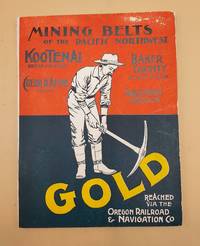
189763736Portland OR: Issued by the Passenger Department of the Oregon Railroad and Navigation Company 1897. First edition. Good. 68pp. With Map. Covers detached but present map still attached to rear wrap. There is a small abraded area in the top fore-edge corner of the title page. The map has a handful of small closed tears. Scarce. The map entitled "Oregon Railroad and Navigation Co. Map of Principal Mining Districts of the Pacific Northwest" has an inset of the "Baker City Mining Region."<br /> <br /> From the opening of the text-<br /> <br /> "What the typical easterner never read or heard or imagined of that vast and varied empire vaguely characterized as The West includes about all there is to be told or written of it. Half the world- a mighty hemisphere incomparable in grandeur incomputable in riches and illimitable in possibilities- lies west of all their geographies. Their maps are all too narrow their ideas all too small. 'Having eyes they see not and having ears they hear not; neither do they understand' that all the boundless productive powers and possibilities of the new-world republic lie in the matchless region which they in their arrogant ignorance stigmatize as 'the wild and wooly west.' Issued by the Passenger Department of the Oregon Railroad and Navigation Company unknown
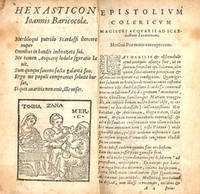
01-0240Venice: Apud Jacobum Simbenium 1572. Small 12mo. Publisher's device on title and 26 woodcut illustrations some repeats. Contemporary vellum. Some soiling light browning of text. There are marginal tears signatures and notations on the title page. Venice: Apud Jacobum Simbenium, 1572. hardcover
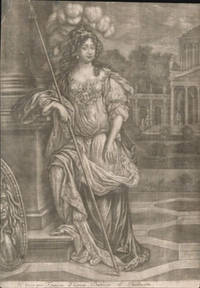
16-4835circa 1678. Mezzotint. 38 x 26.2 cm. Slightly trimmed. Mounted on a support sheet. Portrait standing full-length in character of Minerva holding lance beside a shield with a classical building in background.Bibliographic reference:Chaloner Smith 1883 / British Mezzotinto portraits from the introduction of the art to the early part of the present century circa 1678 unknown
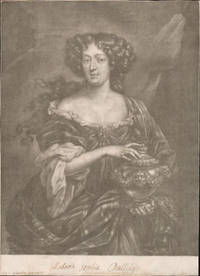
16-4836circa late 17th early 18th Century. Mezzotint. Large version. 33.5 x 25 cm. Portrait; half-length standing to right head turned and glancing towards the viewer left hand on an urn in front of her wearing a loose gown revealing her shoulder and a cloak her hair dressed up with tresses flying behind her back; proof before letters. Titled in ink. This is the the large version described by Chaloner Smith under Gascar no. 3. before the small version by Robert. Reverse image of British Museum no. 18860617.67. Dunkarton.Chaloner Smith 1883 / British Mezzotinto portraits from the introduction of the art to the early part of the present century p. 236-237.Sophia Bulkeley was born Sophia Stewart daughter of Walter Stewart son of Lord Blantyre and as the inscription copied onto the back of the lining canvas attests was the sister of Frances Stewart ''La Belle Stewart'' the celebrated beauty who married the Duke of Richmond. Although she has never equalled her sister's reputation Pepys records seeing her walking with her sister in St James's Park Diary August 30th 1668 and describes her as very handsome. circa late 17th early 18th Century. unknown
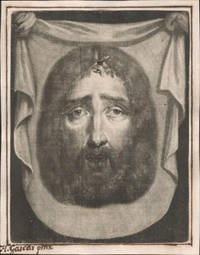
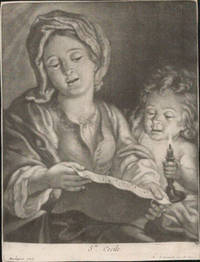
16-4852Circa late 17th- early 18th Century. Mezzotint.18 x 13cm. Slightly trimmed. Mounted on a support sheet. with a contemporary ink annotation: "H. Gascarpinx." Circa late 17th- early 18th Century. unknown
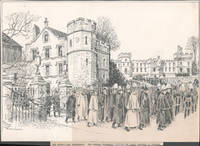
16-6204Windsor: Feb. 7 1901. Ink on board. Signed annotated and dated. 20 x 28.2cm.Intended as an illustration for The Daily Graphic. Caption for the illustration as published is attached.Edward Frank Gillett was born at Worlingham Suffolk on 23 July 1874 and baptised on 19 August 1874 son of Revd Jesse Gillett 1833-3 December 1893 curate of Worlingham and his wife Eliza Marten née Duplock 1842-19 September 1908 who married at Crewe Cheshire on 8 June 1864. In September 1875 his father Jesse was licensed to the vicarage or perpetual curacy of Aldeby near Loddon Norfolk and in 1881 young Edward was a 6-year-old living at The Vicarage Beccles Road Aldeby with his parents 47-year-old Jesse and 38-year-old Eliza and his three siblings Charles William 5 who was born at Worlingham with Emily Harriett 3 and newly born Maud Elizabeth who were both born at Aldeby. After schooling at Gresham School Holt Norfolk Frank became a clerk at Lloyd’s moving to London and together with his older brother Frederick who was also a Lloyd’s clerk both lodging with Frederick Daniels a law writer at 56 Thornton Street Stockwell London. In 1891 an 18-year-old ‘clerk at Lloyds’ lodging at 56 Thornton Street a position he retained until 1896 when he became a full-time illustrator on the staff of the 'Daily Graphic' 1898-1908 moving to 'The Black & White' 1908-1911 and 'The Illustrated Sporting and Dramatic News' 1910-1923. A painter black and white artist and illustrator elected to the Royal Institute of Painters in Water Colours in 1909 and in the same year he became a founder member of the Pencil Society and was also a member of London's Langham Sketching Club. He specialised in foxhunting and hare-coursing scenes including his painting 'Beccles–Coursing' exhibited at Wingfield Sporting Gallery London also exhibiting at Fine Art Society; Royal Glasgow Institute of the Fine Arts; Walker Art Gallery; the Royal Academy and Royal Institute of Painters in Water Colours from St Alban’s Hertfordshire in 1909 London in 1911 and Beccles Suffolk 1918. He illustrated 'St George for England' by G.A. Henty and many other Henty books. In 1901 an artist painter living at 23 Gayton Road Hampstead with his widowed mother and six siblings. He married firstly at St Augustine’s Church Highbury London on 22 April 1903 Elsie Joanna Bastard 1870-4 January 1912 and secondly at Aldeby Norfolk in 1914 Margaret Helen Mickelburgh 12 February 1891-1974 and they had one son David born in 1915. After spending some time in London he returned to Aldeby in 1916. Edward Frank Gillett was of Red Tiles Northgate Street Beccles when he died at the London Hospital on 1 May 1927 aged 52 and after his death his widow remarried in 1948 William Morris. Sometimes known as Frank Edward Gillett. Windsor: Feb. 7, 1901 unknown
195838938Tel Aviv: Edition "Olamenu 1958. First edition. Hardcover. g to vg. Folio. 12172 82281pp. Original red paper-covered boards decorative paper-covered board of deluxe edition of volume two with gilt lettering on cover and spine in original photo-illustrated dustjackets. Illustrated title page in vol. 1 color reproduction of a painting tipped-in on title page of vol. 2. Comprehensive history of the Jews in the administrative division of the Habsburg Monarchy known as the Bukovina an area now spilt between Romania and the Ukraine. Contributions by Dr. Samuel Josef Schulsohn Dr. Manfred Reifer Dr. N. M. Gelber and Dr. Leon Arie Schmelzer give a detailed account of the Jewish migration after the destruction of the first temple and the erection of the second temple tracing Jewish presence in the area north and northwest of the Black Sea Schulsohn the era of the Moldavian Counts from 1360-1774 Reifer the Habsburg Monarchy until 1914 Gelber and the time from 1914-1919 Schmelzer. Additional contributions by various historian cover the whole spectrum of the Jewish culture in Moldavia through the ages. Illustrated with numerous additional plates with b/w photographs mostly portraits groups and relevant architecture. Text in German. Dustjackets rubbed with light sunning of spines. Very light age toning of blocks. Dj in overall good binding and interior in very good condition. Edition "Olamenu hardcover
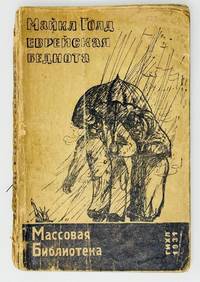
2660Moscow: Gos. izd-vo khud. lit-ry 1931. 214 1 p. 175 × 11 cm. Original illustrated wrappers. Good condition. Spine is chipped and two small fragments are missing from the edges. Minor soiling of the covers. <br /> <br /> Scarce. 1 of 5000 copies. First edition. Second edition followed the next year. Original English version published in 1930. Translated from English by the Soviet translator Mark Volosov 1895-. The book design by Leonid Zusman 1906—1984. At different times Zusman attended private art studios of F. Rerberg and A. Miganadzhian in Moscow the workshop of I. Mashkov etc. In 1924—1926 he studied at the Higher Art and Technical Institute in Leningrad under K. Petrov-Vodkin and in 1927—1929 at the Higher Art and Technical Institute in Moscow under D. Shterenberg. Zusman’s work was closely connected to the illustration of children’s books design of various newspapers and magazines. Some of his most famous works in book design include: Thousand and One Nights 1958—1960Oleshi’s Zavist’ i.e. Envy 1979 etc.<br /> <br /> The Russian translation of a semi-autobiographical novel by the Jewish American writer and lifelong Communist Mike Gold 1894- 1967. The only novel written by the author Yevreyskaya bednota i.e. Jews without Money became a manifestation of the American proletarian spirit of the 1930s. The novel is set in a slum populated mainly by Jewish immigrants from Eastern Europe. The father of the hero is a painter who suffers from lead poisoning. When he falls from a scaffold he is disabled and can no longer work. His business fails and the family is pushed into poverty. Although he is a bright boy young Michael decides he must leave school. On the final page of the book the poor Jewish boy prays for the arrival of a Marxist worker’s revolution that will emancipate the working class.<br /> Born in New York to Romanian Jewish immigrant parents American writer Mike Gold was an ardent supporter of the Bolshevik Revolution. In 1921—1922 Gold became Executive Editor of the magazine The Liberator on the pages of which the journalist wrote: The Russian Bolsheviks will leave the world a better place than Jesus left it. They will leave it on the threshold of the final victory - the poor will have bread and peace and culture in another generation not churches and a swarm of lying parasite minister dogs the legacy of Jesus. Three years later Mike visited Moscow where his fascination with Communism reached its peak. Throughout the 1920s Gold worked on his only novel Jews Without Money. Published in 1930 it was an immediate success and was translated into over 14 languages. The popularity of Jews Without Money made Gold a national figure and cultural commissar of the Communist Party. The Russian society got acquainted with the writings of Mike Gold in the mid-1920s. In the period from 1925 to 1931 Mark Volosov who was the classic translator of the American writer issued 3 Russian translations of Mike’s works: Proklyatyy agitator i.e. The Damned Agitator 1925 120 millionov i.e. 120 Million 1930 and this title 1931; 1932. With the gradual introduction of the anti- semitic campaign in the Soviet Union works by Mike Gold and other Jewish authors vanished from the print. At the age of 19 Volosov was drafted into WWI and taken prisoner by the Nazis. After escaping from captivity Volosov fled to Norway and then to the United States returning to the USSR only in 1923. Knowledge of English allowed him to start translating fiction. With his help Soviet readers got acquainted with such authors as Theodore Dreiser Michael Gold Grace Lampkin etc. Volosov was reported missing during WWII.<br /> <br /> Worldcat shows only one copy in NYPL. unknown
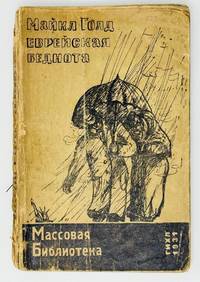
2685Moscow: Gos. izd-vo khud. lit-ry 1931. 214 1 p. 175 × 11 cm. Original illustrated wrappers. Good condition. Spine is chipped and two small fragments are missing from the edges. Minor soiling of the covers.<br /> <br /> Scarce. 1 of 5000 copies. First edition. Second edition followed the next year. Original English version published in 1930. Translated from English by the Soviet translator Mark Volosov 1895-. The book design by Leonid Zusman 1906—1984. At different times Zusman attended private art studios of F. Rerberg and A. Miganadzhian in Moscow the workshop of I. Mashkov etc. In 1924—1926 he studied at the Higher Art and Technical Institute in Leningrad under K. Petrov-Vodkin and in 1927—1929 at the Higher Art and Technical Institute in Moscow under D. Shterenberg. Zusman’s work was closely connected to the illustration of children’s books design of various newspapers and magazines. Some of his most famous works in book design include: Thousand and One Nights 1958—1960Oleshi’s Zavist’ i.e. Envy 1979 etc. The Russian translation of a semi-autobiographical novel by the Jewish American writer and lifelong Communist Mike Gold 1894- 1967. The only novel written by the author Yevreyskaya bednota i.e. Jews without Money became a manifestation of the American proletarian spirit of the 1930s. The novel is set in a slum populated mainly by Jewish immigrants from Eastern Europe. The father of the hero is a painter who suffers from lead poisoning. When he falls from a scaffold he is disabled and can no longer work. His business fails and the family is pushed into poverty. Although he is a bright boy young Michael decides he must leave school. On the final page of the book the poor Jewish boy prays for the arrival of a Marxist worker’s revolution that will emancipate the working class. Born in New York to Romanian Jewish immigrant parents American writer Mike Gold was an ardent supporter of the Bolshevik Revolution. In 1921—1922 Gold became Executive Editor of the magazine The Liberator on the pages of which the journalist wrote: The Russian Bolsheviks will leave the world a better place than Jesus left it. They will leave it on the threshold of the final victory - the poor will have bread and peace and culture in another generation not churches and a swarm of lying parasite minister dogs the legacy of Jesus. Three years later Mike visited Moscow where his fascination with Communism reached its peak. Throughout the 1920s Gold worked on his only novel Jews Without Money. Published in 1930 it was an immediate success and was translated into over 14 languages. The popularity of Jews Without Money made Gold a national figure and cultural commissar of the Communist Party.<br /> <br /> The Russian society got acquainted with the writings of Mike Gold in the mid-1920s. In the period from 1925 to 1931 Mark Volosov who was the classic translator of the American writer issued 3 Russian translations of Mike’s works: Proklyatyy agitator i.e. The Damned Agitator 1925 120 millionov i.e. 120 Million 1930 and this title 1931; 1932. With the gradual introduction of the anti- semitic campaign in the Soviet Union works by Mike Gold and other Jewish authors vanished from the print. At the age of 19 Volosov was drafted into WWI and taken prisoner by the Nazis. After escaping from captivity Volosov fled to Norway and then to the United States returning to the USSR only in 1923. Knowledge of English allowed him to start translating fiction. With his help Soviet readers got acquainted with such authors as Theodore Dreiser Michael Gold Grace Lampkin etc. Volosov was reported missing during WWII.<br /> <br /> Worldcat shows only one copy in NYPL. unknown
1976122182Milano: Rizzoli Editore 1976. Hardbound. VG/VG in VG slipcase. A large weighty book. Red maroon cloth with color pictorial glossy dustjacket all contained in a custom slipcase. Appx. 217 pp. 138 mostly color plates tipped-in to the text portion and 50 full sheet 13.5" x 16" color plates. A most impressive book both by it's content and it volumetric displacement. Vital in the study of Caravaggio. Another version of this appears to have been printed in 1971 and this edition has a few extra illustrations at least and likely some additional or revised text. Text is in Italian. Transit mass would be 272 ounces. A stunning production. Rizzoli Editore hardcover
1775BOOKS050960IParis: Chez Clousier 1775. HC. very good full calf raised bands hardcover EXCEPTIONAL !!. engravings by C. Boissel. Title translates roughly to: "The Philosopher without Claim or the Rare Man Works Physical Chemical Political and Moral." A curious work of science fiction in which the author expounds upon his theories in physics and chemistry. A visitor from Mercury arrives on Earth ina an 'electrical flying machine' as seen in the frontispiece. This machine is considered the first forerunner of the dynamo powered by static electricity when its two globes are rubbed with camphor. The Mercurian Ormaris presents Lafolie's own scientific opinions in the fields of electricity geology mineralogy and chemistry. In addition he scoffs the theories of the fixed air of Priestley as well as the conversion of air into water. The author was the first to discover the yellow dyeing extracted and to successful fix it on wire of the red color of the Indies. Text in French. An exceptional copy of museum quality!!! Frontis is bound instead with Chapter 1. 350pp. Chez Clousier unknown
195474944New York: Alfred A. Knopf 1954. First Edition. Hardcover. Very good/Good. Signed by Ross Macdonald on the title page. The fifth hardboiled mystery featuring Southern California private detective Lew Archer. "Ross Macdonald" was the primary pseudonym employed by American-Canadian writer Kenneth Millar 1915-83 who dropped the "John" after the publication of this novel. Octavo. Original patterned paper-covered boards. The spine is ever so slightly leaning. Faint staining along the extremities of the dust jacket which is a bit toned with some minor shelfwear; else very good. Alfred A. Knopf hardcover
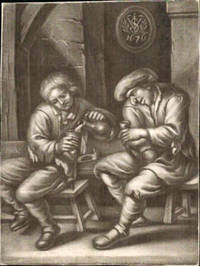
16-48901676. Mezzotint. 26.83x 13.2 cm. On old laid paper. Very rare. Monogrammed and dated in the plate. Likely Dutch. 1676 unknown
1827177815New York: Imprint whereof is at New-York 1827. VG few foxing spots but remarkably clean and tight. No evidence of page removal between pages xxx and xxv as mentioned in research. Original boards with cloth spines and remnants of affixed paper labels. Untrimmed uncut. Volume 1: irregular pagination. 2 blanks tp copyright iii iv-xx xxv-xvii blank 29 30-263. There is ample evidence of three sheets having been excised after pp. xviii and that a sheet numbered xix/xx has been inserted and glued after these three remnants. The text from page xx to the following page xxv appears to be continuous indicating a re-working of the text from the original printed sheets for pages xix-xxiv. An 1877 book auction catalogue lists this publication which was indicated to be 2 volumes as Very Scarce having been suppressed by the author. No auction or sales records found. A copy of part 2 was sold in 1904 as an odd volume as part of aa larger lot. A 1911 auction catalogue notes the following: "2 vols. 12° boards uncut. A caustic satire on New York's Four Hundred in 1827 which led to the prosecution of its author for libel and the mutilation of all copies of the work by the removal of pp. xxi.-xxiv. of A Short Proem its most vitriolic portion." It can be noted that the copy in the American Antiquarian Society lacks 3 sheets xix-xxiv. Their copy was printed in Boston and not New York. Shoemaker R.H. Checklist of American imprints for 1820-1829 29389<br /> Blanck J. Bibliography of American literature 11021<br /> Wright L.H. American fiction 1774-1850 2nd ed. 1510<br /> Hebrew Union College-Jewish Institute of Religion. Jewish Americana 76<br /> Singerman R. Judaica Americana 0448. Imprint whereof is at New-York hardcover
16-4861Circa late 17th- early 18th Century. Mezzotint.19.1 x 14.5 cm. Lettered in black ink lower left: Herluyson; center.; lower right: J. Sarrabat fecit et excudit. Rare. Circa late 17th- early 18th Century. unknown
16-4239Paris: Frederic Leonard 1672. 8vo. 8 616 444 pp. Contemporary limp pigskin with metal clasps one defective 8 hors texte etchings. OCLC Number: 420330371 later edition Paris: Frederic Leonard, 1672 unknown
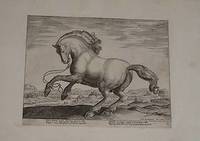
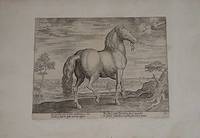
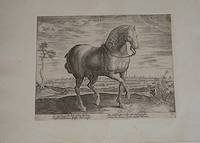
51-4093Antwerp: Theodoor Galle ca 1580. Engraving. 20 x 26 cm. Trimmed to borderline; mounted on an old rag support sheet. Plate 31 in lower right corner. .OCLC Number: 549 49249; The New Hollstein X 125 ff. 2196-2209; Huth 10; Mennessier de la Lance II 537; Lipperheide Tc 13; Hollstein VII 81 484-423 Galle and VIII 113 334-348 Goltzius.Stradanus's series depicts the horses of Don Juan of Austria Governor-General of the Netherlands from 1576 to 1578. His designs were executed between 1578 to 1580 by several prominent engravers including Adriaen Collaert Hieronymus Wierix and Hendrik Goltzius. Don Juan of Austria was the illegitimate son of Charles V and a half-brother to Philip II 1555-1598 King of Spain and the Netherlands. He lead Spanish troops to their decisive victory against the Ottoman Empire at the Battle of Lepanto 1571 and became Governor-General of the Netherlands in 1576. He died of the plague in 1578. It was in the Netherlands that Stadanus drew Don Juan's collection of horses from the different regions of Europe. Mennessier p. 537.Strauss lists an additional 11 engravings not signed by an engraver as by Goltzius and Mauquoy-Hendrickx adds 2 to those bearing Wierix's name.Jan van der Straet is given as draughtsman on most of the plates or in their legends variations of "TheÌodore Galle excudit" on many. Three engravers are named: Adrian Collaert 1 12 Jeronimus Wierix 4-7 9-11 19 22 24 28 29 and Hendrik Goltzius 15 17 34 39. "Ioan Galle excud." 38 39 previously bearing "Phls Galle excud.".Several editions of varying numbers of the engravings variously numbered were issued prior to 1600 by Philip Galle one in 1578 with the title: Equile Joannis Austriaci Caroli V . Antwerp: Theodoor Galle, ca 1580 unknown
51-4090Antwerp: Theodoor or Johannes Galle ca 1580. Engraving. 20.6 x 27 cm. Trimmed to borderline; mounted on an old rag support sheet. Plate 20 in lower right corner. OCLC Number: 54949249; The New Hollstein X 125 ff. 2196-2209; Huth 10; Mennessier de la Lance II 537; Lipperheide Tc 13; Hollstein VII 81 484-423 Galle and VIII 113 334-348 Goltzius.Stradanus's series depicts the horses of Don Juan of Austria Governor-General of the Netherlands from 1576 to 1578. His designs were executed between 1578 to 1580 by several prominent engravers including Adriaen Collaert Hieronymus Wierix and Hendrik Goltzius. Don Juan of Austria was the illegitimate son of Charles V and a half-brother to Philip II 1555-1598 King of Spain and the Netherlands. He lead Spanish troops to their decisive victory against the Ottoman Empire at the Battle of Lepanto 1571 and became Governor-General of the Netherlands in 1576. He died of the plague in 1578. It was in the Netherlands that Stadanus drew Don Juan's collection of horses from the different regions of Europe. Mennessier p. 537.Strauss lists an additional 11 engravings not signed by an engraver as by Goltzius and Mauquoy-Hendrickx adds 2 to those bearing Wierix's name.Jan van der Straet is given as draughtsman on most of the plates or in their legends variations of "TheÌodore Galle excudit" on many. Three engravers are named: Adrian Collaert 1 12 Jeronimus Wierix 4-7 9-11 19 22 24 28 29 and Hendrik Goltzius 15 17 34 39. "Ioan Galle excud." 38 39 previously bearing "Phls Galle excud.".Several editions of varying numbers of the engravings variously numbered were issued prior to 1600 by Philip Galle one in 1578 with the title: Equile Joannis Austriaci Caroli V . Antwerp: Theodoor or Johannes Galle, ca 1580 unknown
51-4092Antwerp: Theodoor or Johannes Galle ca 1580. Engraving. 21 x 26.6 cm. Trimmed to borderline; mounted on an old rag support sheet. Plate 30 in lower right corner. OCLC Number: 54949249; The New Hollstein X 125 ff. 2196-2209; Huth 10; Mennessier de la Lance II 537; Lipperheide Tc 13; Hollstein VII 81 484-423 Galle and VIII 113 334-348 Goltzius.Stradanus's series depicts the horses of Don Juan of Austria Governor-General of the Netherlands from 1576 to 1578. His designs were executed between 1578 to 1580 by several prominent engravers including Adriaen Collaert Hieronymus Wierix and Hendrik Goltzius. Don Juan of Austria was the illegitimate son of Charles V and a half-brother to Philip II 1555-1598 King of Spain and the Netherlands. He lead Spanish troops to their decisive victory against the Ottoman Empire at the Battle of Lepanto 1571 and became Governor-General of the Netherlands in 1576. He died of the plague in 1578. It was in the Netherlands that Stadanus drew Don Juan's collection of horses from the different regions of Europe. Mennessier p. 537.Strauss lists an additional 11 engravings not signed by an engraver as by Goltzius and Mauquoy-Hendrickx adds 2 to those bearing Wierix's name.Jan van der Straet is given as draughtsman on most of the plates or in their legends variations of "TheÌodore Galle excudit" on many. Three engravers are named: Adrian Collaert 1 12 Jeronimus Wierix 4-7 9-11 19 22 24 28 29 and Hendrik Goltzius 15 17 34 39. "Ioan Galle excud." 38 39 previously bearing "Phls Galle excud.".Several editions of varying numbers of the engravings variously numbered were issued prior to 1600 by Philip Galle one in 1578 with the title: Equile Joannis Austriaci Caroli V . Antwerp: Theodoor or Johannes Galle, ca 1580 unknown
1991020314New York NY: HarperCollins Publishers 1991. Book. Near fine condition. Hardcover. Signed by Authors. 1st Edition. Octavo 8vo. xiv 398 pages of text including an index. Hardcover binding in almost new condition except for tiny bumps to the top and bottom of the spine. The unclipped dustjacket is in almost new condition; protected in archival Mylar. Signed by Brian Wilson 1942-2025 on the title page with no further inscription. The text is clean and unmarked. Stated "First Edition" on the copyright page with the number line starting with "1". . HarperCollins Publishers Hardcover
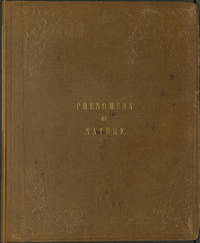
1846007828London: sold at the depository 77 Great Queen Street Lincoln's Inn Fields and 4 Royal Exchange: Society For Promoting Christian Knowledge 1846. 1st Edition . Hardcover. Very Good/Very Good. Folio - over 12 - 15" tall. WHIMPER J.W. or WHYMPER Josiah Wood. 1846. First edition in the publishers marked embossed brown cloth gilt titles. corners bumped. Carefully respined printed paper titles. Internally not paginated but title leaf followed by 30 leaves of Phenomena's depicted in numbered & hand coloured illustration with a descriptive text below blank to versos. 337276 mm. <br/> <br/> Society For Promoting Christian Knowledge hardcover
1661V75228London: William Lee 6th and last edition. 1661. Hardcover. Good. Full page "brasse" plate with 6 heresies scenes of repentance & destruction 7 half-page engraved portraits of "heretics" or "sectaries". . Octavo handsome tan roan on 5 raised bands with red gilt titled spine label covers re-attached. Facing engraved titlepage is a listing of the Sectaries & some contents of the text. Printed title says "added this year 1661 many new additions not heretofore extant in print together with brasse plates of the most eminent Sectaries" 22pp prelims inc. publisher's account of author's life & material added to this 1661 edition 279pp 18pp Postscript index and publisher's catalogue collated complete. Coat of arms of Andrew Robert Vaughan Daubeney 1873-1971 on pastedown 1 leaf with 2 ink crossings out and 2 marginal ink "corrections". Frontispiece and facing page are a bit squeezed into gutter and the plate is cropped at fore-edge but otherwise all margins are good and side notes are not cropped. A nice copy with some signs of use. Highlights include chapters on Brownists and Quakers. There is a plate of an Adamite on p117. Pagitt or Pagit was a committed Royalist. This 6th posthumous edition is the last publication of his most notable work with many more pages of new material and portrait plates added by the publisher William Lee after his 5th edition. The last section with portrait of James Naylor 1618-1660 notably says "The Quaker is an upstart branch of the Anabaptists lately sprung up but thickest set in the North parts; the body of this Heresie is composed and made up out of the dregs of the common people" Referenced by ESTC R24442 Wing CD-Rom 1996 P181. William Lee, 6th and last edition. hardcover
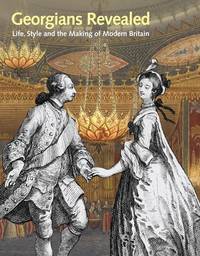
2013Alibris.0022435London: The British Library Publishing Division 2013. First edition. Hard cover. New in new dust jacket. 168 p. Audience: General/trade. The British Library Publishing Division hardcover
179943706London: Published by W. Faden Geographer to His Majesty 1799. 1st Edition. Hardcover. 8vo. 23.6cm first edition second issue with postscript 11661p. complete with half title in the original paper backed blue paper boards untrimmed some slight wear on the board edges and slightly age worn faint ink stamp on the title else very good to fine sound copy rare in boards - with contemporary presentation on the title page date Upper Canada Lande 2207. T.P.L. 734. Sabin 85205. Casey I:853. This is the first published topographical description of Upper Canada. The work is in two parts: the first being the topography of the principal lakes rivers and land formations in the province: the second being a gazetteer of place-names in 18th century Upper Canada. Smith came to Upper Canada in 1792 and serving as quartermaster in the 5th regiment of foot at Niagara he was selected by Simcoe in 1793 to act as first surveyor-general of the new province. This post he filled till his return to England in 1799. The text was written on Simcoe's request to accompany the following map "A Map of the Province of Upper Canada describing all the New Settlements Townships &c. with the countries adjacent from Quebec to Lake Huron. . Published by W. Faden, Geographer to His Majesty hardcover