Salmon, Leib [or Leybe] et alBiblio.com
7 654 résultats
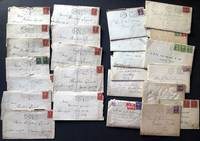
H27660Very good. A remarkable group of 13 letters from Leib or Leybe Salmon 1869-1955 b. in either Lithuania or Poland a Jewish merchant of dry goods sundries shoes glass and silver -- M. Salmon & Son Beaver Falls -- to his cousin Bertha Quint in the Lower East Side of New York City wooing and courting her and arranging to marry her. Their son Jacob was born in 1907 J. Quint Salmon would serve as Judge in the Court of Common Pleas in Beaver County from 1970-1979. These are supplemented by letters to Bertha Quint Salmon from other family members including their son. For the first several years the couple and their child lived with Leib's parents Mayer and Rebekah before getting a place of their own. The letters offer a window into Jewish traditions in western Pennsylvania and into the close-knit ties of family and kinship among immigrant Jews. We will give a short summary of the contents of each of the 13 letters from Leib to Bertha and a general summation of the rest of the letters. Each has its original envelope with clearly legible postmarks and Salmon was a good writer. Although according to censuses Yiddish was their primary language all but one of these letters is in English. 1 Dec. 5 1905. 3 pp. "I am very glad that you got your suit and that you are so pleased with it and trust you look so well in it but you know a good looking girl looks good in anything she wears and that is what I think of you. I only wish I could see you now. I think I can arrange for your furs so you will get a nice set. I wish you would look around and write me what style you would like." He concludes with sincere expressions of affection. 2 Dec. 27 1905. 3 pp. Salmon reports he's working hard up to midnight each night and that in regards to the furs "I don't believe in selecting wearing apparel of that kind for you without you seeing it and have you pleased." He suggests that Bertha go to Lipman & Myers on E. 11th St. and select what would suit her best and that they would treat her right if she presented a letter of introduction from him. "I think that a throw over is a good style so you get it in a nice fur don't get a cheap one and if he has none to suit you don't get any." He expresses sorrow in hearing how hard she is working and hope that it will be better in the future. In a postscript he suggests besides fur Tibet lamb or astrakhan in black "for grays are worn to death." 3 Jan. 28 1906. Leybe is happy she is well pleased with her furs but "In reading your letter between the lines you seem to take it as an imposition from myself on you that you had to get them yourself but I can't see it that way." He recounts going to the theater to see "Hop" Ward in "The Grafter" and that he thought of her all evening as the last time he had been to a play it had been with her and hopes the next time he sees a play it will be with her and "don't forget all the nice things you have to tell me when I come to New York for it may be 3 to 4 weeks before I come." 4 Feb. 22 1906. 2 1/2 pp. He writes of his happiness at the family news she passes on. "Bertha the reason I did not answer your letter before this is I was ready to leave for New York on the 11th but the weather got cold and business revived so I had to postpone my trip and now if nothing happens I intent to leave Sunday March 4th." 5 April 1 1906. 3 pp. He expresses happiness with the letter she wrote him. "Your anxious question in regard to what my folks had to say is quite natural. I assure you that there never has been the least question between my folks and my self in regards to you. the only hint that they gave me was that I should make the wedding in B. F. Beaver Falls and as much as I would like to have them all at our wedding it would be an imposition on me to ask you to do it in as much I am opposed to it my self. Dear Bertha I want you to know that it was not that Wednesday night that I made my mind up it was a settled question with me for a long time: it was absolutely you and you only and when you said yes I was the happiest baby boy and the more I think of you the more happier I am." He concludes with some remarks regarding his cousins Julius and Sadie etc. 6 May 10 1906. 2 1/2 pp. He opens with some remarks about Sadie and her folks and that his mother is recovering from an illness corrects a false impression she might have had of a remark he made about good taste. "Dearest Bertha you want to know my idea if absence makes the heart grow fonder. I would say it does if the love is of the fervid passion nature. I assure you my dear that I am not in that class of lovers. My love for you is pure and honest and I have the greatest faith in you and it makes very little difference to me whether it is in absence or in presence." At the end in a postscript he grouses that she omitted the traditional "xxx" at the end of her last letter and wonders about its significance. 7 June 17 1906. 2 1/2 pp. He expresses happiness that Bertha has left her employment presumably to get ready for the move to Beaver Falls but is defensive about her response to his questions concerning the financial feasibility: "Bertha Dear I don't want an itemized statement of what you are getting it is not my disposition at all I was only trying to make it as easy and light for you as possible neither was I trying to give you lessons on economy it was only to save you a lot of hostling and worry as I know what it means for a girl to get ready for an occasion of that kind." 8 June 28 1906. 6 pp. In this letter he makes plans for the wedding including printing invitations and a possible wedding date -- August 6 -- but begins with a touching sentiment: "My Dear Bertha in accordance with the Hebrew calendar last Sunday was 22 years since we arrived in New York it is just about that time I saw you first you was running around in a little skirt but I had no idea then that in 22 years later will be so near our wedding and I believe you were also ignorant of the fact at that time." It appears that the wedding will not be in Beaver Falls after all: later in the letter he writes "Dearest you also question me in regards to my folks whether they are coming to our wedding. I am very sorry to say that I don't think they will. Father told me some time ago that it is too much for him as he is so unused to traveling and it would be so much harder for Mother to undertake it but don't let this worry you 'dear' I assure you of their anxiety to be at our wedding." 9 July 8 1906. 4 pp. In response to a letter from Bertha he found "full of arguments" Leib defends his choice of August 6th as a wedding date; "I will say the only reason I have for fixing the date on the 15th day of Ab which is the 6th of August is in as much as I don't pause to be pious but I like to observe anything in religion which don't cause me much inconvenience." He then discusses the Hebrew law regarding fasting on a wedding day and the possibility if she wants of the wedding to be held on Sunday August 12th which would probably result in a larger crowd but would also create more work for her and her helper Mary. 10 July 15 1906. 3 1/2 pp. It would appear that Bertha got her wish to change the wedding date to the 12th of August but Leib in this letter informs her that's not going to work either that would be the "21st day of Ab in the Jewish month. Father objects to have it on the old "chodesh" he says it's not right. So the first Sunday in 'Ellul' is 26th of August and I think it's the best we can do now." He reports that the clerks from the store will all be back from their annual vacation by the 10th of August and he will leave after that. He also cautions her against sending any invitations to his side of the family "as it will cause bad feelings for the rest and also look bad for outsiders as I want to be clear of it so I can say I did not invite anybody. When you get them printed 'dear' send me 3 or 4 of them." 11 July 29 1906. 3 pp. Leib refuses a suggestion from Bertha to change his name from Leybe to Louis. "I regret very much that I can't and will not consent to that request as I think Leybe is a much prettier name than Louis. In the Jewish Encyclopedia it is spelled Leib I have thought some time to spell it that way but will not have Louis." He does ask his wife to make some suggestions as to what he should wear at the wedding and also laments that she is shopping for goods for their life together when his dry goods store has all that they would need. 12 August 6 1906. 3 pp. Leybe assures Bertha that he's not angry with her for suggesting a name change but that he has a simple reason -- everyone knows him as Leybe and changing his name would be "silly." He also can't believe six months have passed since their last parting kiss on a railway platform and that in two weeks they would be married. 13 August 13 1906. 3 pp. Leybe has received the printed invitations he's requested but remarks that the date given for the wedding is JUNE 26th not August and that she can correct this before sending out the invitations. He has also implored her a number of times regarding the wedding not to make "a fuss" about it and to keep it simple; on hearing that she's going to have music at the wedding he remarks that music is something he can do without. It's just "common sense " he says. And that's the last letter he wrote before departing for New York on the 15th. The rest of the letters are from the mid-to-late 1930s to 1941: most are from a favorite niece of Bertha's in Brooklyn named Ruth who writes newsy letters about her family and Bertha's with several snapshots enclosed in one of them. A few are from their son Jacob including one written in his late twenties as he's visiting friends in the Boston area remarking on how impressed he was with Harvard's Law Library and its statue of Cardozo seeing it was quite a thrill for him and full portrait of Holmes. A rather longer letter from 1941 by which time he's married expresses concern about his father's health. There is also a letter in Yiddish to Bertha from a Mrs. Nathan Goldfarb dated 1933 from the Cincinnati area. The personalities of Leybe and Jacob come through in these letters: Leybe seems old before his time stuffy and prickly but with an admirable sincerity and a strong capacity to love; Jacob comes across equally sincere and a devoted and caring sort with a fine character. Beaver Falls for a small western Pennsylvania town had a fairly established Jewish population by the turn of the century and by the end of the 1920s the town had at least four synagogues supporting a several-hundred strong community of Jews in the Beaver Valley. unknown
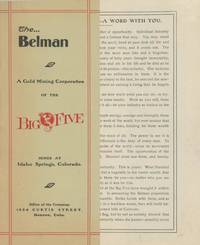
190154020N. P. Denver: Privately printed for The Belman 1901. 1901. COLORADO GOLD MINING. First edition. 8vo. Printed wrappers n. p. 24 pp. double column illustrated mostly from photographs two-page color map in the center two-page color chart titled Belman Mining CO. One of the Big Five. The Big Five-Belman Mine is situated in Idaho Springs Colorado and is historically associated with the Central City Mining District which is currently encompassed within the Arapaho National Forest. It operates as an underground mining operation. The geological formation in this region mainly consists of schist which formed during the Neoproterozoic era approximately 1.00 to 0.54 billion years ago. The area is part of the Southern Rocky Mountains physiographic province within the broader Rocky Mountain System which influences the overall geomorphology of the surrounding landscape. Founded 166 years ago in 1859 by prospectors during the early days of the Pike’s Peak God Rush the town was at the center of the region's mining district throughout the late nineteenth century and where the first substantial gold discovery in Colorado was located. The two-page color map details the Line of the Central Tunnel of the Big Five and a plat of the property and work of the Belman Mining Company. The location was originally known as "Jackson's Diggings". Once the location became a permanent settlement it was variously called "Sacramento City" "Idahoe" "Idaho" "Idaho City" and finally "Idaho Springs". The Belman Mining Company was legally incorporated on December 20th 1901 and capitalized for five million shares of the par value of one dollar each. As of this date the Belman had produced $100000 in gold silver and lead. “Your money is simply on deposit with us until you are satisfied.” The associates of the Big Five “are men of influence and standing everywhere.” Minor wear to the extremities else a very good tight copy. Privately printed for The Belman, [1901]. unknown
002725Illinois State Penitentiary: Vocational School. Dark wraps w/light soiling/staining. RARE. A 44pp. booklet printed at the penitentiary around 1949-53. Probably closer to 1949 as per text Richard Daley was Mayor. There is a story titled 'Straight from the Shoulder" which is printed throughout the booklet. Interspersed are a lot of quotations regarding crime and deterence from Vips from Illinois. The chicago reporter for the Tribune James Doherty started the idea of having "Three Strikes agaisnt Crime" in the city of Chicago. Chester Gould got behind the idea and contributed quite a few drawings and wrote the story including Doherty as "Big Jim" a character in the short novelette. The back cover also incorporates a postcard that was to be sent to the Warden at Stateville for more information about crime prevention. Here is a quote from the forward of the book: "I am one of the guys who traded his name for a number. I work in the print shop at Stateville. Matter of fact I set the type for this booklet.I hear the booklet's going to be handed out to the Chicago High Schools." Size: 12mo - over 6¾" - 7¾" tall . Good. Printed Blue wraps/tracy. Vocational School paperback
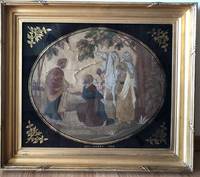
57181London c.1814. The scene is framed by an oval decorative black glass matte with floral decorations in the corners in a decorative wood & plaster gilt frame. Captioned beneath the image on the glass is "Kezia Wilkes 1814". The silk is deteriorated in some areas where there is no embroidery condition is otherwise generally fine and the image very strong. Possibly an old testament scene. The image is about 17 x 14.5 inches the frame measures 24 x 21 inches. The label on the rear is for A. Gardner "Carver Gilder Looking Glass and Picture Frame Manufacturer". This appears to be a memorial item the black glass oval insert presumably created by the framer with the subject's name lettered beneath the image. This is an oversize item and normal postage rates do not apply. Large framed artworks are sometimes available for pickup only. <br/><br/> [London?], c.1814. unknown
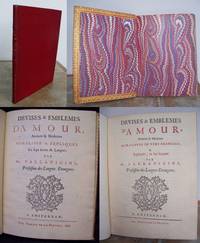
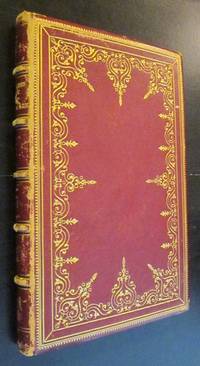
52271<p>Amsterdam Daniel de la Feuille 1696. 1696 LACKS ENGRAVED FRONTISPIECE AMATEUR PALE WATER COLOURED FACSIMILE PASTED IN BEFORE FIRST FREE ENDPAPER. Slim 4to approximately 205 x 150 mm 8 x 5¾ inches 2 title pages printed red and black and with printer's device the first without date and giving the author's name as 'Parravicini' the second worded very slightly differently and with date at foot. On verso first title page a 3 page poem 'Cupidon a la jeunesse' begins whose final page faces the second title page on verso second title page is the explanatory text for the first plate there are 24 numbered plates each with 6 round emblems of love each with a motto above it 144 in total 5 of which signed by the engraver Jan van Vianen on each plate verso is the text for the next one the mottoes are each translated on the facing page into Latin Italian French Spanish Dutch English and German followed by a 4 line verse in French on verso final plate is a publisher's advert leaves: 3 1-24 1 -advert making a total of 54 pages bound in full late 19th or early 20th century red morocco raised bands and gilt lettering to spine all edges gilt ornate gilt inner dentelles turn ins marbled endpapers. A few minor marks and minor scratches to binding very slight rubbing to head and tail of spine and corners small French catalogue cutting and modern handwritten note mounted on verso front endpaper a few professional small repairs to margins at rear hardly noticeable contents otherwise very nice. A very good clean tight copy. Ferrante Pallavicino 1615 1644 was an Italian writer in Venice of numerous antisocial and obscene stories and novels with biblical and profane themes lampoons and satires which according to Edward Muir "were so popular that booksellers and printers bought them from him at a premium." Pallavicino's scandalous satires which cost him his head at the age of twenty-eight were all published under pseudonyms or anonymously. See: Wikipedia. MORE IMAGES ATTACHED TO THIS LISTING ALL ZOOMABLE. FURTHER IMAGES ON REQUEST. POSTAGE AT COST.</p> Amsterdam, Daniel de la Feuille, 1696. hardcover
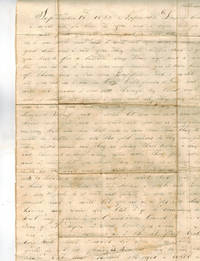
1855007164Sacramento California 1855. Manuscript. Very Good. No Binding. HOLOGRAPH LETTER SIGNED. Two manuscript letters in ink both on ruled paper with folding creases the 1855 letter 8" x 12 1/2" with single spaced writing both sides approx. 500 words. The 1856 letter 15" x 10" folded in half to make 4 pp. approx. 300 words with small blindstamp top left corner depicting an eagle. The earlier letter is headed "September 18th 1855 Naperville Dupage County Illinois" and ends "Michael direct your letters Nevada County Nevada post office California". George writes to his brother Michael in Naperville that he has "seen a good dele sins i rote you they last letter" including a hundred "inshins" and some "Buffellow". He adds that "we had good luck all they way of may we left Council Bluff" and that he is not home sick yet. He then talks of the gold mines river mining what they are paying and the cost of things such as board "from five to ten dollars a week" "Beaf" "wors 15 to 20 cents" and "potato" "4 cent per pound". He adds that he intends to have some gold before he comes home and that "girls are not so plenty here as they are in state". He closes by asking his brother to write him and to remain at home in Illinois to care for their parents. The 1856 letter headed Sacramento august 3th 1856 informs his brother that he is well and "down to Sacramento now" working on a farm feeding a "schrasing" thrashing machine and that "they times is verry hard in California now". He adds that he had some money "stole" while he was in the mountains but since coming down into the valley he was making money and will send some home soon. The letter ends with George wishing to see them all soon and that he is not home sick. The third page of the letter bears a drawing of a wing or leaf eleven smaller versions of the same image interspersed on page 2. A fascinating testimonial on California during the gold rush written in a strong hand and in a wonderful vernacular style by a good observer. unknown
177293442Birminghamiae : Typis Johannis Baskerville 1772. 1st Edition in this form. Hardback. Very good copy in the original gilt-blocked calf-backed marble boards. Slightest suggestion only of dulling and toning to the spine bands and panel edges. Remains particularly well-preserved overall; tight bright clean and strong. ; 307 pages; Physical desc. : 2 307 1 p ; 18 cm. 12mo. . Notes: Sig. G2 is a cancel Gaskell . Subjects; Baskerville John 1706-1775 printer. Latin drama Comedy . Referenced by: Gaskell 47. ESTC t137488. Straus and Dent 94. Language: Latin. Signatures: pi1 A-2Bsup6 2Csup4. Birminghamiae : Typis Johannis Baskerville hardcover
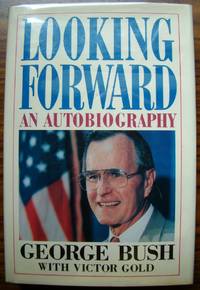
1987010064New York: Doubleday & Company Inc. 1987. First Edition. hardcover. Fine in a Fine dustwrapper. Illustrated with photographs. SIGNED by the former President on the front free endpaper. <br/><br/> Doubleday & Company, Inc. hardcover
1903051627Istanbul: Manuscript - Autograph letter / Letterhead 'Sura-yi Devlet'. H.: 1319 1903. Soft cover. Very Good. 4to - over 9¾ - 12" tall. Original manuscript autograph document signed by Mehmed Said Pasha sent to Trabzon Vilayat Ordu Kaza Hasbamane Nahiya local manager faziletlu 'Mehmed Ali Sevki Beyefendi'. 335x20 cm. Folded. 1 p. In Ottoman script. Mehmed Said Pasha was an Ottoman monarchist senator statesman and editor of the Turkish newspaper Jerid-i-Havadis. He supported the CUP the political party which came to power after the Ottoman coup d'état of 1913. His origin comes from 'Sebazâde family' from Ankara. He became first secretary to Sultan Abdul Hamid II shortly after the Sultan's accession and is said to have contributed to the realizations of his majesty's design of concentrating power in his own hands; later he became successively minister of the interior and then governor of Bursa reaching the high post of grand vizier in 1879. He was grand vizier seven more times under Abdul Hamid II and once under his successor Mehmed V. He was known for his opposition to the extension of foreign influence in Turkey. n 1896 he took refuge at the British embassy in Constantinople and though then assured of his personal liberty and safety remained practically a prisoner in his own house. He came into temporary prominence again during the revolution of 1908. On 22 July he succeeded Mehmed Ferid Pasha as grand vizier but on the 6 August was replaced by the more liberal Kâmil Pasha at the insistence of the Young Turks. Also during 1908 Mehmed Said Pasha bought the famed Istanbul arcade in the Beyoglu Pera district today known as Çiçek Pasaji "Flower Passage". The modern name became common in the 1940s; during Mehmed Said Pasha's ownership in the 1900s and 1910s the arcade was known as Sait Pasa Pasaji "Said Pasha Passage". During the Italian crisis in 1911-12 he was again called to the premiership. He was again removed from power by the Savior Officers who backed the Freedom and Accord Party Liberal Union against the Committee of Union and Progress and replaced by a new cabinet supported by the Officers and the Freedom and Accord Party. The CUP would return to power however the next year after the Ottoman coup d'état of 1913. Source: Wikipedia. Seven lines on special paper with watermark 'Joynson Superfine'. Letter of request to provide teaching for some students in the region. <br/> <br/> Manuscript - Autograph letter / Letterhead 'Sura-yi Devlet'., [H.: 1319] paperback
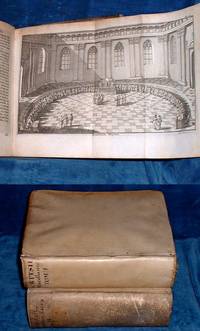
1692V70980Utrecht: Francis Halman Halman & William vande Water BOTH 1st First editions 1692 1700. Hardcover. Good. Frontis of Hebrews with background of sea monsters and emblematic Christ spouting fire with 7 candles by G. Hoet/J. Mulder. Woodcut printers mark to 1st TP & copperplate of a different printer's mark to 2nd TP 5 folding plates one with flap to be lifted. Two Volumes quarto laced through full vellum not quite uniform bindings spine darkened to second volume/tips worn. All edges sprinkled red and both stamped Ambrose Swasey Library to lower fore-edge. Frontis Titlepage with emblematic woodcut printer's mark 24pp Dedication & to Reader 859pp 49pp index Volume 2 titlepage in red and black with copperplate printer's mark 14pp dedication & contents folding portrait if Wits 951pp 56pp indices. There are 11 blindstamps of the Crozier Theological Seminary to each volume none on printed area except that on frontispiece which encroaches on the imprint below illustration. Plates are of building of the Tabernacle includes a neat flap engraved as a curtain that can be lifted to see the inner sactum. Entirely clean though a few pages are minimally more tanned as paper quality varied. Deals with various more esoteric theology such as prophesy revelations ecstacies Beasts of Daniel IV Jewish rites and customs some 60 pages about America etc by this noted Dutch theologian. Text in Latin with Greek and Hebrew. Shoulder notes printed through out and a few large floriated head- and tailpieces. Clean and crisp. Francis Halman + Halman & William vande Water BOTH 1st First editions hardcover
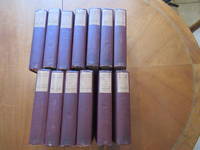
1903047098London : The Grolier Society 1903. 1st Edition . Hardcover. Very Good. Complete In 13 Volumes. Original Red-Brown Buckram With Spine Labels Printed In Red And Black Top Edge Gilt Deckled Edges. Each Volume With A Heraldic Bookplate"Downer / A Cruce Salus" On Front Free Endpaper All Volumes With One Or Two 1 1/2" X 1/2" Tape Ghosts On One Or Both Front Endpapers. Light Wear A Little Fading To Spine Cloth. Light Fraying To Top Edges Of Most Spines. Wear And Fading To Spine Labels Which Often Have Some Light Damp Spotting But With Lettering Clear. From The Library Of U. S. Mideast Diplomat John S. Habib Although Not Marked As Such. International Shipment At Very Much Additional Cost Due To Size And Weight. <br/> <br/> The Grolier Society hardcover
189529628HBDJ CIRCA 1895 1ST EDITION THUS IN GLASSINE DUSTJACKET MAY HAVE BEEN CUT AT BTM LITTLE SHORT small Tears 34 pages full-color illus. in VINTAGE ORIGINAL brown Antique BOX with edge Rub & Small Tears & TITLE LABEL SMALL MARBLELIZED LIKE WITH TITLE ON FRONT WITH GOLD GILT CLOTH CVR WITH PAPER LABEL ON SPINE CVR WITH TINY EXTREMITIES CHIPS WEAR The Hayes Lithographing Company BUFFALO NY hardcover
19291806436Revell. Good/No Dust Wrapper. 1929. Hard Cover. M266 . Revell hardcover
65702Rouen Iean berthelin dans la Court du Palais 1649. 4to. Engr. extra title 50 144 143-158 161-352 pp. The engraved title the title and the following leaf with paper reinforcement and repair at top margins as on leaf 6 Aa1-Aa3 small tear at top of pp. 329-332. Slighlty worn contemporary full calf richly gilt spine with four raised bands gilt initials HT on top comparatment under a crown boards with gilt Coat-of Arms red marbled edges. Owner signature Bennet on the title leaf. From the library of Ericsberg. The third edition of the French translation of â€The Porutraicture of his Sacred Maiestie in his Solitudes and Sufferings†1648. The engraved extra title is here by Rawlins and differs slightly from the frontispiece by Marshall for the English edition. The book is a â€spiritual autobiography of Charles I published ten days after his execution. The royal authorship however was immediatly disputed. After the restaration John Gauden claimed to be the sole author of the work and he was by Charles II made bishop of Exeter as a reward. The book that describes Charles I as a christian martyr became very popular and went into 36 editions in 1649 alone depsite the official disapproval of the protectorate. hardcover
1655London: Collins 1946. First edition. Hardcover. Very Good. Octavo green cloth pp. 256; numerous illustrations. Signed presentation copy inscribed by Grierson to Bert Richardson of the Saskatchewan Star Phoenix dated in December of 1946. A brief typed letter signed from Grierson is laid in. The book was likely sent for the purpose of securing a review and bears occasional ink underlining in the text. Spine slightly faded and with some bubbling to the publisher's cloth covers else very good. Lacks dust jacket. <br/> <br/> London: Collins, 1946. First edition. hardcover
2021x-3030690822Springer Nature 2021. Hardcover. New. 465 pages. 9.25x6.10x1.00 inches. Springer Nature hardcover
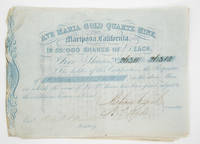
1851101023London: Ave Maria Gold Quartz Mining Association ca. 1851. Oblong 8vo 6-1/2 x 9 inches printed on light blue onionskin paper scalloped left edge with ms insertions and authorizing signatures of Secretary and two committee members description of the Ave Maria Gold Quartz Mining Association printed on verso; light creasing Evidence of London investment in the California Gold Rush 9 certificates 7 for 5 shares each and 2 for 10 shares each of the London-based Ave Maria Gold Quartz Mining Association. A total of 50000 shares were issued at £1 each. The company held half the rights to the Ave Maria Gold Quartz Mine in the Mariposa District California which was worked under a lease with the owner of the other half. Today the Ave Maria River is known as the Stockton Creek. Ave Maria Gold Quartz Mining Association unknown
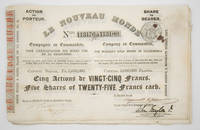
1851101024Paris ca. 1851. Oblong 8vo 6-1/2 x 10 inches text in French and English printed in black and red on onionskin paper with ms insertions ink stamp and authorizing signatures of the Director London agent and committee member; light creasing Evidence of French investment in the California Gild Rush a collection of 9 shares certificates each certificate for 5 shares of 25 francs each unknown
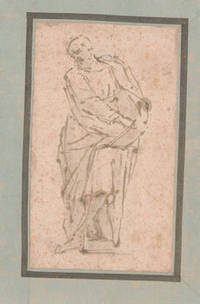
16-633016th or 17th Century. . Drawing in sanguine. 16 x 9cm. Artist's name in pencil verso. Provenance:Né en 1906 à Lezay Deux-Sèvres Jacques Cathy a exercé d’abord la profession de caricaturiste à l’hebdomadaire « Le Rire ». Il a rejoint vers 1927 l’équipe du Cabaret « La Vache Enragée » conduite par Roger Toziny. Jacques Cathy poursuit sa carrière de chansonnier après le décès de Toziny en 1939 et après la guerre il conduit parallèlement une carrière d’acteur dans le cinéma. Jacques Cathy était le 3ème Maire de La Commune Libre de Montmartre à partir de l’élection en 1949.Final provenance: Les Collections Aristophil - 164 bis avenue Charles-de-Gaulle 92200 Neuilly-sur-Seine. 16th or 17th Century. unknown
185070164New York:: S. W. Benedict 1850. First edition. original printed front wrapper; rear wrapper lacking. Some brown spotting covers about 20% of the front wrapper decreasing in extent and color over the next few leaves not affecting legibility. . 8vo. Arguments and reasons submitted to the Honorable the Members of the Senate and House of Representatives of the 31st Congress of the United States. Howes C-771. Sabin 16719. S. W. Benedict, unknown
1958000116aTel- Aviv: Olamenu Publ. House 1958. Hardcover. Near Fine/Near Fine. 2 volumes.1958- 1962. Complete set with the RARE second volume. Original feaux-leather bindings with original dust-jacket. Small fol. RICHLY ILLUSTRATED. A VERY GOOD AND CLEAN SET - <br/> <br/> Olamenu Publ. House hardcover
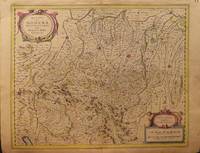
16403044<p>Amsterdam. Very Good. C.1640. Map. Verso text in Latin. Orginal 17th century hand color. Foxing to lower edges. Image size 19 1/3"- 15 1/2". Paper size 20 1/2"- 15 1/2" ; All shipments through USPS insured Priority Mail. .</p>
15556824Padova: Gratioso Perchacino 1555. Original edition. Very Good. Quarto 20 cm; 12 leaves signed a-c4 last leaf blank. Printer's device a crowned salamander ensconced in flames on title page. Woodcut initial at start of text. Bound in recent half morocco over marbled boards. Trimmed close to top edge. Gutters guarded. Some spotting on title page but generally clean. <br /> <br />Reference: EDIT 16 CNCE 57958; For attribution to Lando see Silvana Seidel Menchi Chi fu Ortensio Lando "Rivista storica italiana" #106 1994 501-564. Not in Grendler. <br /><br />This is an essay about death. In particular it is a eulogy on the death of young Elizabetta Dotta who it is stated in the text died recently married at the age of 16 years 8 months 24 days and 12 hours. The cause of her death is not given. It does not indulge in a moment's sorrow over the young woman's early demise. Instead it is an extended encomium of death itself praising death as liberation from the essential misery of life in this corrupt and depraved world. As such it is an eloquent statement of philosophical pessimism the tradition which views life as the soul's exile as suffering and sees death as a preferable alternative. While the text is not signed the author is presumed to be Ortensio Lando the uncomfortable peripatetic humanist who never stayed in one place for very long either physically or philosophically. "What is life" Lando asks. "Smoke a dream a running shadow a ship that leaves no trace an arrow shot to its destination. Gratioso Perchacino hardcover
1828D2439Paris: Firmin Didot pour Lami Denozan 1828. First Edition. Hardcover. Very Good. 8vo 210 x 132mm. viii cxlvi 48pp. notes and glossary. Illustrated with hand-colored engraved title with marginal vignettes of female personifications and muses by Richard Parkes Bonington. Illustrated throughout with 10 half-page lithographs printed on chine-collé carefully hand-colored heightened in gilt and mounted; six are by Richard Parkes Bonington and four are by Henry Monnier and 15 decorative initials highlighted with colors inspired by ornaments found on the Books of Hours printed in the fifteenth and sixteenth centuries. 19th-century full red morocco decoratively tooled in gilt five raised bands gilt doublures marbled endpapers all edges gilt; lightly foxed throughout miniatures remain bright and fresh; spine slightly scuffed. Armorial bookplate of J. Austin Stevens Junior to front pastedown. First Edition of this rare and unusual book OCLC locates only four copies all in German libraries. Férdinand Langlé littérateur dramatist and occasional necromancer focused his literary interests on the nostalgic and the romantic. In 1828 he edited Les Contes du Gay-Sçavoir a witty collection of medieval ballads and fables. The text is printed in Gothic characters and illustrated to imitate the style of medieval manuscript illumination; it is followed by endnotes and a glossary printed in Roman type. The major illustrator of the work Richard Parkes Bonington was an English Romantic landscape painter who also worked in lithography. He was a close and admired friend of painters Eugene Delacroix and Antoine-Jean Gros. Gordon Ray speaking of Bonington says his importance in the development of lithography can hardly be overstated.His designs for Vues pittoresques de lEcosse and Contes des Gay-Sçavoir are by no means negligible. Boningtons career as a lithographer was short but splendid. - Art of the French illus. book pp. 173 & 176. Fine fresh and bright rare colored copy of this nostalgic work on the medieval period. Brunet III 819; Carteret III p. 172 livre tres rare; Curtis 54-60; Ray 114 <br/><br/> Firmin Didot pour Lami Denozan hardcover
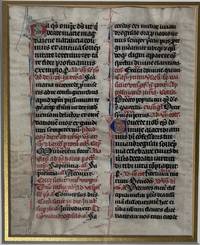
1450007081France 1450. No Binding. Very Good. A fine illuminated leaf on vellum from a Latin Breviary of Book of Hours containing part of the homily XXXIII on the Gospels by St. Gregory the Great read during the Office for the Feast of Saint Mary Magdaline. Written in two columns of 27 lines in a handsome Gothic Textualis Quadrata ruled in red in black and red ink with alternating blue and red initials heightened with delicate pen flourishing extending into the margins. Rubrics in red. The text opens "De sancta Maria Magdalena." recounting Mary Magdalene's penitence and devotion an evocative passage central to her medieval cult. Condition: Fine for its age. Vellum bright and clean with light natural cockling and a few faint handling marks. Inks unfaded rubrication vivid. Handsomely matted and framed with gilt border. Visible area: 5 x 4 in. 127 x 102 mm Frame size: 15 x 11 inches. An attractive and well-preserved example of 15th century devotional manuscript art <br/> <br/> unknown