HUANG, Ren 黄辛田 (or Xintian or Shentian)Biblio.com
7 654 résultats
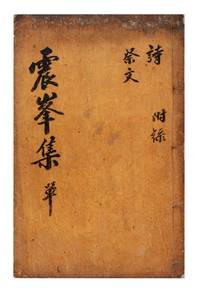
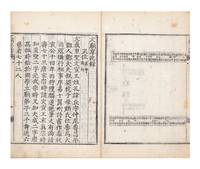
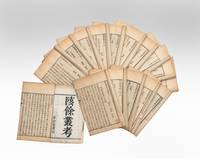
9506Preface title: “Qiu jiang ji.†76; 99 folding leaves of which two in Vol. II are in manuscript replacing missing printed leaves. Six parts in two vols. 8vo modern wrappers text leaves lightly browned new stitching. China: Prefaces dated 1754 & 1756.<br /> <br> <br> <br /> <br /> First edition and very rare not in WorldCat of this collection of the poetry and prose of Ren Huang 1683-1768 one of “the foremost lyrical poets†Ko p. 92 see below of the Guangdong region and a member of the artistic circle whose center was Gu Erniang a famous woman inkstone carver whose shop was located in Zhuanszhu Lane in the imperial city of Suzhou. This collectors and scholars of this circle were both patrons and clients of Gu Erniang and in fact Ren’s main asset late in life was his collection of precious carved inkstones.<br /> <br> <br> Ren 1683-1768 whose literary name was Xintian or Shentian Ren was a native of Yongful county in Fujian. Born into a well-educated family of generations of government officials he learned poetry and painting as a child. He received the juren degree in 1702 and served as a county magistrate in Sihui in Guangdong province.<br /> <br> <br> Most of the poetry in this work is from manuscripts and appears here for the first time whereas the essays and other prose writings were previously published. The second preface dated 1754 is signed by Tingheng Xu and the third preface of 1756 is signed by Tiaoyuan Sang 1695-1771 scholar.<br /> <br> <br> A nice set but with two leaves of text replaced in early manuscript. Several natural paper flaws not touching text and mended. With the seal of Yosaburo Takekoshi 1865-1950 Japanese historian and politician. Preserved in a chitsu.<br /> <br> <br> ⧠Dorothy Ko The Social Life of Inkstones. Artisans and Scholars in Early Qing China 2017. unknown
942552 folding leaves. Large 8vo 298 x 190 mm. orig. patterned semi-stiff wrappers wrappers a little soiled old stitching stitching partially defective. Korea: Preface dated 1801 Afterword dated 1816.<br /> <br> <br> <br /> A very rare edition of this collection of documents relating to seven men and their actions during the Imjin War and the Manchu invasion of Korea in 1636. The invasions of Korea first by the Japanese in the 1590s and then by the Manchus in the 1620s and 1630s were important moments in the course of events that led to the rise of the Manchu Qing empire in continental East Asia. The large-scale fighting and movement of troops from Japan and China into the Korean peninsula in the late 16th century mark a watershed in Korean history. The cost of the wars also severely weakened the Chinese Ming dynasty which eventually collapsed in 1644 ushering in an entirely new balance of power in the region.<br /> <br> <br> The “seven worthies†of the title include Pak Kwang-jÅn æœ´å…‰å‰ 1526-97 style name Chuk-ch’Ån or Juk-cheon ç«¹å· and his sons KÅn-hyo æœ´æ ¹å 1550-1607 and KÅn-je æ ¹æ‚Œ all of whom distinguished themselves during the Japanese invasion in the 1590s and grandsons and great-grandsons who resisted the Manchus in 1636 as commanders of irregulars.<br /> <br> <br> Our copy has a Preface dated 1801 by Song Hwan-gi 宋煥箕 1728-1807 a ChosÅn scholar-official. Song writes that “in the history of armed invasions of our dynasty none were more brutal than the two disorders of the imjin 1592 and pyÅngja 1636 years.†Four generations of the Pak family — “fathers and sons ancestor and descendants older and younger brothers uncles and nephews†— had distinguished themselves during those trying times. Song ends the Preface by saying that “the person who now came to ask me for my text is Chae-hwan an eighth-generation descendant of Chuk-ch’Ån.†The wording suggests that Pak Chae-hwan edited the work hence our attribution of authorship.<br /> <br> <br> We find no matches to our copy in either WorldCat or the Korean Old and Rare Collection Information System KORCIS. In addition to the Preface dated 1801 our copy has a colophon pal è·‹ by Yi æŽé¶´ä¾† also known as Yi Ch’Ång æŽ 1792-1861 dated 1816. Some copies described in KORCIS have 20 characters per column while our copy has 19 on some pages and 18 on others. Some catalogues ascribe authorship of the book to Pak Chung-hong 朴é‡æ´ª 1802-72 probably because one edition of the present work was published in 1856 along with a collection of Pak Kwang-jÅn’s works that Pak Chung-hong edited. This is the case with the Harvard-Yenching copy K 5568.2 4398 4 WorldCat 40280697 which has a Preface dated 1856 byÅngjin 丙辰.<br /> <br /> <br> <br> References<br /> <br> <br> Encyclopedia of Korean Culture í•œêµë¯¼ì¡±ë¬¸í™”ëŒ€ë°±ê³¼ì‚¬ì „. https://encykorea.aks.ac.kr/ <br /> <br> <br> Korean Old and Rare Collection Information System í•œêµê³ 문헌종합목ë¡. https://www.nl.go.kr/korcis/index.do. unknown
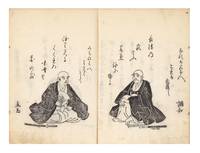
797121 full-page woodcuts. 30; 29; 26; 23; 31 folding leaves. Five vols. 8vo orig. wrappers wrappers rather rubbed & frayed new stitching. Kyoto: Izutsuya Shobei; Edo: Nishimura Uhei 1697.<br/> <br/> First edition of this collection of haikai written by several members of the circle surrounding Matsuo Basho 1644-94 Japan’s best-loved author. The poems were gathered by Taihakudo Torin d. 1719 a friend and disciple of Basho there is speculation that Torin was Basho’s nephew or younger brother. In 1696 to prepare for the third anniversary of Basho’s death Torin retraced Basho’s famous 1689 journey through the main island of Japan which resulted in Basho’s best-known work Oku no Hosomichi a poetic diary in the form known as haibun a combination of prose and haikai.<br/> <br/> Torin inspired by his own journey decided to collect the poems and have them printed in the present work. The poems arranged by the four seasons and with a section of poems written at the time of the third anniversary of Basho’s death were mainly written by a group of Edo-based poets and disciples of Basho.<br/> <br/> Torin has furnished a Preface and some of the poems. Many haiku are printed with the names or pen names of the authors. There is an Afterword by Sodo Yamaguchi 1642-1716 haiku poet flood-control expert and close friend and disciple of Basho.<br/> <br/> The second volume has a series of 20 attractive woodcuts of poets including on facing pages Basho and his disciple or nephew or younger brother Torin.<br/> <br/> Very good set. Extremely rare with no copy in WorldCat. Minor worming in the final volume mended. unknown
8470Folding color-printed woodblock map. 49 folding leaves. Oblong 8vo orig. blue wrappers block-printed title label on upper cover label partly defective new stitching. Edo: Izumiya Shinpachi 1821.<br /> <BR> <BR> First edition and rare; WorldCat locates only one copy in Japan. Danrin is a temple that served as a college and institute to instruct Buddhist priests. In the early 17th century the Tokugawa shogunate recognized 18 temples of the Jodo Shinshu True Pure Land School as danrin: <br /> <BR> <BR> –Musashi Province today it incorporates Tokyo metropolis most of Saitama Prefecture & part of Kanagawa Prefecture: Zojo-ji Minato Tokyo; Denzuin Bunkyo Tokyo; Reigan-ji Koto Tokyo; Reizan-ji Sumida Tokyo; Banzuiin Koganei Tokyo; Renkei-ji Kawagoe Saitama; Shogan-ji Konosu Saitama; Daizen-ji Hachioji Tokyo; and Jokoku-ji Iwatsuki-ku Saitama.<br /> <BR> <BR> –Sagami Province: Komyo-ji Kamakura Kanagawa.<br /> <BR> <BR> –Shimosa Province: Gugyo-ji Yuki Ibaraki; Tozen-ji Matsudo Chiba; Daigan-ji Chiba Chiba; and Gugyo-ji Joso Ibaraki.<br /> <BR> <BR> –Kozuke Province: Daikoin Ota Gunma and Zendo-ji Tatashi Gunma.<br /> <BR> <BR> –Hitachi Province: Jofuku-ji Naka Ibaraki and Dainen-ji Inashiki Ibaraki.<br /> <BR> <BR> Takeo 1782-1839 was a high-ranking Buddhist priest at the main Zojo-ji temple where he was the historian of Jodo Shinshu and of the various temples and maintained the growing archives of the sect. Active as an author throughout his life he retired as a priest in 1821 and became a teacher and tutor for the bakufu and a member of the Edo literati.<br /> <BR> <BR> This book serves as a guide to the 18 danrin temples. It begins with a folding color-printed woodblock map of the region containing these temples. For each temple Takeo provides a valuable history with details of the important buildings and treasures number of students and teachers etc. The book also serves as a rather personal travel guide for pilgrims who want to visit all the temples mentioning distances between establishments sites to see along the way notes on where to cross rivers etc. At the end Takeo provides a “cheat sheet†for simplified chanting and recommends that pilgrims carry with them pickled plums salt towels extra tabi socks fans tissue paper and yatate small personal writing sets.<br /> <BR> <BR> A very good copy preserved in a chitsu. Some worming in the gutter and towards the end the outer corner occasionally touching the text. unknown
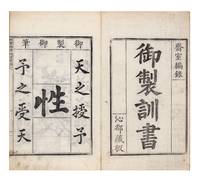
942941 folding leaves. Large 8vo 337 x 206 mm. orig. semi-stiff wrappers new stitching. Korea: Simdo æ²éƒ½ 1756.<br /> <br> <br> <br /> First edition and rare; WorldCat lists only one printed copy at Berkeley. This book of exhortations on good government with striking royal calligraphy was written by King YÅngjo or Yeongjo of ChosÅn 1694-1776 in 1756. At this time YÅngjo was commemorating the death of his father the previous king. According to Fang Chaoying 1908-85 YÅngjo then in his 65th year “could not foresee that he was to live twenty more years and so it appears that he was trying to justify himself in his own mind with regard to posterity as well as to the ancestors whom he expected to face any day†The Asami Library 115. YÅngjo offered three main principles for a king to follow: “to venerate Heaven to love the people and to treat the officials with respect†ibid.<br /> <br> <br> Large standard script characters written by the king himself are reproduced in the beginning of the book. The king’s brush records Confucian assertions such as “the following of human nature is called the Way / the cultivation of the Way is called instruction.†Accepting the Mencian dictum that human nature is inherently good the king continues: “I possess the good human nature / to realize the bright mandate of Heaven.â€<br /> <br> <br> The main text of the book is reproduced in the handwriting of the important scholar-official SÅ MyÅng-Ång or Seo Myeong-eung å¾å‘½è†º 1716-87. SÅ wrote in many genres and had a cosmopolitan outlook. For example he wrote a Preface to one of the major multilingual lexicographical works produced in ChosÅn in the 18th century see Söderblom Saarela “Mandarin over Manchu†379-80.<br /> <br> <br> Very fine and fresh copy beautifully printed.<br /> <br /> <br> <br> References<br /> <br> <br> Fang Chaoying. The Asami Library: A Descriptive Catalog. Edited by Elizabeth Huff. Berkeley: University of California Press 1969.<br /> <br> <br> Söderblom Saarela MÃ¥rten. “Mandarin over Manchu: Court-Sponsored Qing Lexicography and Its Subversion in Korea and Japan.†Harvard Journal of Asiatic Studies 77.2 2017. unknown
200848605London.: Susan Allix. 2008. Full burgundy crushed morocco excised sections with curvilinear edges reveal a checkerboard pattern of gilt pink and café crème paper front board with three applied sections of white paper with monochrome drawings and four colour paintings see below mounted to squares or rectangles of burgundy crushed morocco with magnetic fastenings single painting mounted to rectangle of burgundy morocco affixed to centre of rear board smooth spine with tooled title in black cream handmade patterned paper doublures bronze free endpapers burgundy velvet-lined oatmeal drop-back box with morocco label to spine with title in black. Folio. 290 x 230 mm. Printed text in various types and illustration in various media all on various paper stock in various formats final leaf with justification and colophon. The édition de tête in the deluxe magnetic binding of one of Susan Allix's most extraordinary inventive capricious and whimsical artist books.From the edition limited to 24 numbered copies signed and numbered by Allix in pencil with this one of 8 from the édition de tête in the deluxe binding.Allix's detail regarding the book taken from the colophon is instructive: 'Authors: old or unknown. / Typefaces: various but including Grotesque Gill Granby and Gallia with Caslon ENgravers Roman & altered and un-altered wood letter. / Papers: various including Arches Somerset Zerkall. / Printing: by hand by letterpress; with new intaglio plates and lino-cuts and old printer's blocks.'Also included inserted loose is the prospectus for the book a sheet folded in three 210 x 98 mm folded with printed text recto only together with the price list which also gives detail of the price for 'Pagoda Memories'. 'On a nonsensical scale this book is not deeply nonsensical. It looks like a book; it has pages that turn conventionally and its contents are not gibberish. Most of the words have been around for many years some so long their authors have been forgotten. But they are set in a variety of arrangements using more typefaces than are usually expected in one book. There is a new piece of punctuation I invented some woodletter I altered and some old printers' blocks reprinted . The initial idea . was for the reader to be able to do more than turn the pages; to be able to move or change images. Small pictures on the binding would be turned or re-located over others by the use of magnets. As the results of this were not intended to be serious they would be accompanied by some nonsensical words . The different sizes shapes and tones of the various papers used sustain a vitality in the flow of pages while the limited colour scheme of terracotta red and cream unifies the collection of odd puzzling or humorous verses and extracts.' From Susan Allix's text from the prospectus for the book. (Susan Allix). unknown
1501000683<p>Strasbourg: Argentinae: Ex officina Martini Flach junioris 1501. Half leather. Fine. Folio printed in Strassburg by Martin Flach 7 February 1501; 161 unnumbered leaves. BINDING: new Gothic hand-sewn oak binding by Arthur Green of Ledbury; tawed quarter leather over quarter-sawn oak boards quires hand-sewn on four double-cords creating four raised spine bands board leather blind-tooled with period style rosettes and fleurs-de-lys within panel of diagonal blind triple fillets hand-sewn Gothic double headbands of alternate hand-dyed indigo and undyed linen thread hand-made brass hasps and clasps ornamented in period style; an exceptionally attractive recreation of a Gothic hand-sewn binding employing medieval techniques contemporaneous with the date the book was printed. COLLATION: pi6 a2-8 b-y6 z8 zeta6 antisigma8; leaf a1 excised and subsequent first few lines of a2recto redacted in black ink in the sixteenth century by the inquisitor for its heretical content see below. TEXT: Double column 50 lines and headline gothic type red manuscript rubrication throughout in a contemporary hand with numerous 3 4 and 6 line capitals red paragraph markers and in-text capitals marked out in yellow. CONDITION: indecipherable contemporary manuscript ink inscriptions to title page final two leaves a little soiled new endpapers in complementary period-style paper small professional paper repairs to fore-edges of opening and closing leaves unobtrusive light stain to lower outer page corners well clear of printed text overall a beautifully clean wide-margined copy. BIBLIOGRAPHICAL REFERENCES: Rare not in Adams USTC 696770 citing 32 copies with just 3 in the UK and 2 in the US. Sebonde's Theologia was a celebrated text in its day but is mainly known now through Montaigne's attention and his French translation of the work in 1569. Its prologue asserting the ability of human reason to understand the existence and attributes of God through observation of the natural world was added to the Index Prohibitorum in 1559. A beautiful example of this rare text in an exceptionally fine binding.</p> Argentinae: Ex officina Martini Flach junioris hardcover
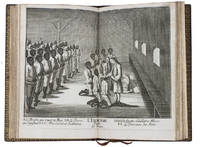
1758H6IG81I49TLCSaxony 1758. 8vo. Brown morocco Lyon ca. 1900 with gold-tooled turn-ins marbled end-papers headbands and ribbon marker in green red and yellow gilt edges signed by Louis GUÉTANT. With title-page printed in red and black and 16 numbered double-page engraved plates. 87 pp. First edition in French published one year after the first German edition of the first work attributed to David Cranz missionary in the Moravian United Brethren best known for his 1765 description of Greenland. The present work gives a history of the United Brethren their beliefs and their practices both in Europe and in their missions in America. The church was established in 1457 but the book concentrates on its history since its establishment in Herrnhut Saxony near the Moravian border under Count Nikolaus Ludwig von Zinzendorf in 1722. Under his guidance the church set up their mission in Greenland in 1733 and a 1747 act of Parliament under George II granted them permission to practice their religion freely in the British colonies in America. The illustrations show ordination induction baptism communion marriage exorcism an agape feast and other activities in the Moravian Church as well as their missionary work among black slaves in the West Indies 2 plates American Indians probably in Pennsylvania and native Greenlanders.With the gold-stamped leather armorial bookplate of Noé de Salvert. In very good condition with occasion light marginal foxing. The beautiful binding by the deluxe binder Louis Guétant active in Lyon ca. 1895-ca. 1920 is in fine condition with only a couple scratches on the back cover. A rare and important primary source for the Moravian United Brethren with remarkable plates of Greenland Eskimos American Indians and black West Indian slaves.l Brunet I col. 1258; James Ford Bell B-426; Sabin 7935 see also 97851 & note before 97846; KVK 3 copies; BN-OPALE plus 2 copies; Kirchenlexikon XVI cols. 324-336; not in Arctic Bibliography; Barbier; Church; Eberstadt; JCB; Quérard; Streeter. ABE CAT Alaska Canada & Greenland hardcover
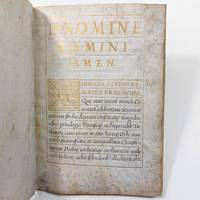
162819730<p><strong>Precious diploma in canon and civil law from the University of Rome calligraphed on vellum with the letterhead and the names of the protagonists written in gold ink.</strong><br /><strong>The document is also entirely underlined and framed in this ink.</strong><br />It was awarded to a certain Guillaume Drouaillet from Dole in Burgundy.</p><p>"<em>IN NOMINE DOMINI AMEN. GLORIOSA STUDIORUM MATER URBS ROMA Quae inter omnes mundi Ciuitates celeberrima Scientiarum omnium studio decorata existit . Dominus Guglielmus Drouaillet. Dolanus in Burgundia . Actum Romae in Gymnasio publico in regione S. Eustachii Anno Domini millesimo sexcentesimo uiges. octavo .</em>"</p><p>At the end of the document are signatures most likely of members of the University of Rome and two additional paragraphs handwritten by two different hands.</p><p>From the library of Bruno Monnier Franc-Comtois bibliophile and owner of the Château de Mantry with iron bookplate on the front flyleaf.</p><p><strong>An interesting testimony to the history of diplomas and writing.</strong></p>
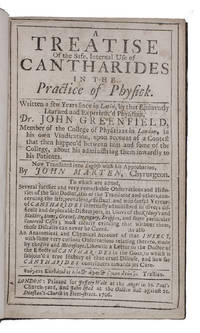
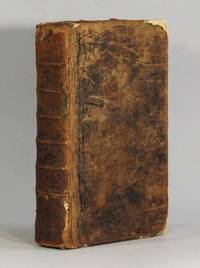
F4CE1CC3UKU0London: Jeffrey Wale John Isted 1706. 19th-century tanned half sheepskin tree-marbled paper sides. 8vo. First English edition of a treatise on the medicinal use of Spanish fly Lytta vesicatoria traditionally classified in the family Canthardiae. Joannes Groenevelt 1648-1715/16 was a Dutch-born physician practising in London from 1675 on. Spanish fly was known for centuries as an aphrodisiac but was also extremely dangerous overdoses sometimes causing death. Greenfield as he called himself in England strongly advocated the use of Spanish fly primarily for the treatment of gout and of bladder and kidney diseases. One of his patients accused him of malpractice and Groenvelt was fined and sent to Newgate prison but obtained permanent freedom through William III's general pardon in 1691. He published the present treatise on the use of Spanish fly as a vindication of his methods. It includes a laudatory poem by Bernard Mandeville detailed descriptions of the various medicinal uses of Spanish fly followed by medical observations and several recipes.l Blake p. 187; ESTC T64914; for the author: Cook "Groenevelt Joannes bap. 1648 d. 1715/16" in: ODNB online ed. Jeffrey Wale, John Isted, unknown
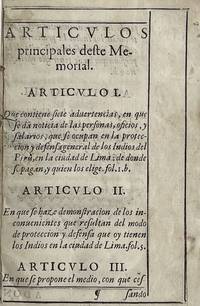
16262256En Madrid: En la Imrenta Real 1626. In later binding using old vellum. Title lettered in ink on the front panel. he engraved title page is not presented. Occasional inkblots and signs in ink and pencil at the margin. Traces of old restoration. 1 I2 restored with minor loss of text 2 G1 h1 “burnt†by ink with minor loss of text A2 “burnt†by ink. Wormholes from C4–F4 at gutter with some loss to the text from H1–I2 at outer margin no effect to the text. In good condition. In later binding using old vellum. Title lettered in ink on the front panel. ff. 2 34. Coll.: 2 A–H4 I2. Scarce first edition of this significant work on the Spanish administration of Peru.<br /> <p><p><br /> Larrinaga’s Memorial is related to the office and the role of the Defensor General of the Indians. In four articles he introduces the institution itself and its history describes its related problems and inconveniences and provides solutions to the problems and a working plan to achieve these proposals. Novoa 2016<br /> The author of the memorial Juan de Larrinaga Salazar 1588–1635 was a procurator for the city of Lima in Spain between 1625 and 1627 served as a regidor of Lima 1611–21 a professor at the San Marcos University in Lima 1618 later oidor in Panama 1628–35. Juan was the eldest son of Leandro de Larrinaga the first Creole lawyer to graduate from the San Marcos and advocate of Indians from 1601 to 1624 and the grandson of the Conquistador Juan de Larrinaga Salazar Ruiz de Urribari 1505–1600. The prominent Larrinaga or la Rynaga Reinaga or Reynaga family was linked to the protectorship institution as advocates of Indians and members of the family authored some of the most important sources of the early history of Peru and the protectorship institution.<br /> <p><p><br /> Extremely scarce. IB/USTC locates only 3 copies worldwide Houghton Library; JCB; Biblioteca Palafoxiana Puebla Mx.<br /> <p><p><br /> Literature:<br /> Novoa Mauricio. The Protectors of Indians in the Royal Audience of Lima: History Careers and Legal Culture 1575-1775. Leiden: Martinus Nijhoff Publishers 2015. [En la Imrenta Real] unknown
153872632Basileae: Roberto Cheimerino = Winter 1538. Second edition folio pp. 8 1900 columns pp. 1; 210 index; printer's woodcut device on verso of final leaf; lightly ruled in red throughout woodcut initials and ornaments; scruffy old calf gilt spine considerably rubbed and worn joints cracked cords holding; internally clean with perhaps 100 early and informed annotations in the margins. Armorial bookplate of Sir Edward W. Watkin Rose Hill Northenden the MP and railway entrepreneur. This copy includes the very extensive index which is not in all copies. Guarino ca. 1450-1537 an Italian Benedictine monk was one of the most significant 16th-century lexicographers. He was appointed bishop of Nocera in 1514 and is best known for producing the first Thesaurus Linguae Graecae. "In 1523 appeared his Etymologicum magnum sive thesaurus universae linguae Graecae ex multis variisque autoribus collectus a compilation which has been frequently reprinted and which has laid subsequent scholars under great though not always acknowledged obligations" EB. Adams P-984. [Roberto Cheimerino = Winter] unknown
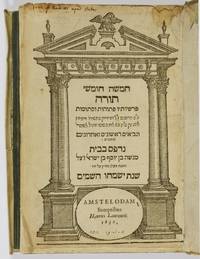
163155459Amsterdam: printed by Menasseh ben Israel for Henricus Laurentius 1631. First edition. Hardcover. Very good-. Octavo 16.8 by 11.4 cm. Collation: aleph-lamed-zayin8 = 296 leaves. 612 i.e. 592 pp: p. 464 erroneously numbered 484 465 as 485 and so on throughout. Two column text in unvocalized Hebrew; every fifth verse numbered in the margin. Title within architectural border; half titles with letterpress ornamentation for the Former and Latter Prophets. Contemporary vellumwith exposed thongs edges stained blue; yapp fore-edges; front joint cracked but holding strong. Intermittent light toning to text outmost leaves a bit more darkened; very occasional small stains. Title-page slighltly trimmed 4 mm at bottom edge; expert marginal repairs at bottom corners of 2 leaves; 1 leaf re-margined at fore-edge with no loss of text else a very good copy with crisp clean text.<br /> <br /> First Hebrew Bible published in Amsterdam printed by the rabbi diplomat publisher and religious thinker Menasseh ben Israel 1604-1657 one of the most distinguished members of the Portuguese Jewish community of Amsterdam and the first Jewish printer in the Northern Netherlands. The Amsterdam printer and publisher Hendrick Laurensz Lauretius provided the financing for this edition along with two other Bible editions and two editions of the Hebrew Psalms printed by Menasseh between 1631 and 1646. "These publications were not only made for the local market but mainly for international trade. Thanks to this financial help Menasseh was able to organize his printing office in a more professional way" Fuks hiring a Jewish compositor Judah Leb ben Mordecai Gimple from Posen and a gentile compositor Bartholomeus Laurensz. <br /> <br /> The printing activity of Menasseh was especially important in the steadily growing productions of the Hebrew press in the Northern Netherlands. Fulfilling the needs of the Sephardic community for Jewish ritual texts eliminated the need for expensive imports from Venice and Poland. Menasseh undersood that the relatively cheap paper and tools available in Amsterdam made it possible to compete in quality and prices with the Hebrew presses of Poland Italy and Basel. "Gentile publishers and booksellers in Amsterdam such as Jansonius and Laurentius were quick to see the opportunity of the opening Eastern European market and financed several of Menasseh's publications" Fuks. Menasseh was the first to introduce in the Netherlands waybertaytsch types for Yiddish publications along with illustrated Hebrew books. He was also the first Jewish printer to adopt the Dutch pocket-book format made famous by the Elzeviers.<br /> <br /> Notes on publication date and issue: The title is dated 1630 in Arabic numerals; the colophon notes the date of completion in Hebrew characters as 5 Adar 5391 = 7 February 1631 along with the printer's apology for being unable to provide the index of pericopes promised on the title-page due to lack of printing material. Darlow and Moule describe this issue as Variant A with a Latin imprint appearing in the cartouche beneath the Hebrew title.<br /> <br /> Provenance and annotations: early entry in brown ink at front paste-down with short Greek inscription Theos. dated 1700; old Latin inscription in black ink at top margin title in reference to Hebrew roots; date of 1812 beside Yiddish entry penned in black ink within imprint cartouche at title; old entry in German penned in black ink at verso title beneath which is an oval cartouche in imitation of the one at the title in which an owner has penned in black ink the Hebrew imprint information regarding Hendrick Laurensz as it would appear in the Varient B issue; old library shelf marks at rear paste-down; recent owner entry in blue ink in Hebrew at front paste-down. References: Darlow and Moule 5123a; Fuks/Fuks-Mansfeld no. 152; pp. 105; 111f.; Steinschneider no. 453; Vinograd Amsterdam 22.<br /> <br /> Full title and imprint: חמשה חומשי תורה פרשיותיו פתוחות וסתומות ×¢"פ ×”×¨×ž×‘× ×–"ל ומדוייק בחסירו' ויתרות להעתק ס"ת ×¢× ×œ×•×— בסופו מועיל לסופרי' ×•× ×‘×™××™× ×¨××©×•× ×™× ×•××—×¨×•× ×™× ×•×›×ª×•×‘×™×: × ×“×¤×¡ בבית ×ž× ×©×” בן ישר×ל ז׳׳צל והוגה בעיון × ×ž×¨×¥ על ידו ×©× ×ª ישמחו השמי×<br /> Amstelodami sumptibus Henrici Laurentii 1630. printed by Menasseh ben Israel for Henricus Laurentius hardcover
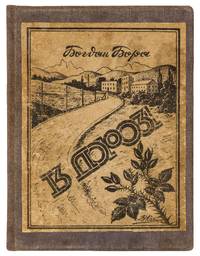
1946423496Rimini Italy: Zyttia w tabori 1946. Hardcover. Very Good. Limited edition one of 280 copies. Mimeographed. Octavo. pp. 1-4 i-iv v-vi 1-104. Illustrated with a portrait of Bogdan and four other full-page illustrations. Bound in original army linen over boards with mimeographed illustration mounted on the front cover. Small contemporary name in ink on front free endpaper slight staining and rubbing to the boards small marginal tears to endpapers very good.<br /> <br /> A very scarce book of poetry by the Ukrainian poet Bogdan Bora 1920-97 written and published at a prison camp in Rimini Italy about one year after World War II. Bora had been captured by British forces and sent to the prison camp in Rimini where he spent the following two years and published three books of poetry including this collection the title of which translated as “On the Road.†Bora’s poems written in Ukrainian are moving works evocative of the turbulent era. The cover design and a full-page portrait of Bogdan Bora were made by fellow inmate Volodimir Kaplun. In 1947 Bora was moved to Britain where he was given his freedom and lived out the rest of his days. Very scarce. OCLC locates only six copies in institutional holdings worldwide. Zyttia w tabori hardcover
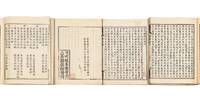
9439Six vols. 8vo orig. blue semi-stiff wrappers orig. block-printed title labels on upper covers label on Vol. I somewhat defective new stitching. Kyoto: Yao KanbÄ“ 八尾勘兵衛 Preface by Nanshi Wenxiu dated 1417 but late 17th or 18th century.<br /> <br> <br> <br /> <br /> First edition to be printed in Japan of this collection of the words and deeds of famous Chinese monks of the Chan J.: Zen 禪 lineages. The Expanded Supplement was edited by Nanshi Wenxiu å—çŸ³æ–‡ç‡ 1345-1418 over a period of 30 years. It was first published in Jiaxing Zhejiang in 1671 a considerable time after Nanshi’s death. We assume that the Japanese edition to which our copy belongs postdates this Chinese edition. The entry for our edition in WorldCat 40222684 estimates that it is from the 17th century.<br /> <br> <br> The genre of records of the “transmission of the lamp†— a metaphor for the Buddhist teachings — fits somewhere between a biography and a collection of recorded sayings. It focuses more on the teachings of the monks featured than on the events of their lives. This makes the genre important for the intellectual history of Buddhism.<br /> <br> <br> Our copy represents the continuation of the genre which originated in the Song period. In 1004 CE the Chinese monk Daoyuan é“原 finished his great collection Jingde chuandeng lu 景德傳燈錄 Record of the Transmission of the Lamp of the Jingde Reign Period of the Song 1004-1007 CE. Daoyuan presented his work to the Song throne and the emperor had it included in the Tripitaka. Dachuan Puji 大å·æ™®æ¿Ÿ 1179-1253 subsequently expanded on Daoyuan’s and others’ works and compiled Wudeng huiyuan 五燈會元 Combined Sources for the Five Lamps published in the year of his death. Nanshi Wenxiu the 62nd abbot of Jingshan Temple in Hangzhou decided to compile the Expanded Supplement to Records of the Transmission of the Lamp upon noticing lacunae in Dachuan Puji’s work. The Expanded Supplement contains information on monks from the Song 960-1279 CE and Yuan 1271-1368 periods. <br /> <br> <br> Japanese reading marks have been added to parts of the text in black and red ink.<br /> <br> <br> Fine and fresh set of a very rare book; WorldCat locates only the Berkeley copy. Preserved in a chitsu. Occasional unimportant worming.<br /> <br /> <br> <br> References<br /> <br /> <br> <br> Digital Dictionary of Buddhism. http://www.buddhism-dict.net/. unknown
1940ST13395Tokyo:: Scientific Papers of the Institute of Physical and Chemical Research 1940. 1940. 8 offprints 1 extract. Original wrappers. From the collection of Abraham Pais. Very good. INVENTORY: 1. TOMONAGA Sin-itiro. Uber den Zusammenstoß des Mesotrons mit Elektronen. Offprint from: Scientific Papers of the Institute of Physical and Chemical Research no. 976 vol. 37 pp. 399-413 June 1940. Original yellow printed wrappers. Signed by Pais. "In 1940 Dr. Tomonaga directed his attention to the meson theory and developed the intermediate coupling theory in order to clarify the structure of the meson cloud around the nucleon." :: Nobel Lectures 1972. 2. TOMONAGA Sin-itiro. Zur Theorie des Mesotrons. I. Offprint from: Scientific Papers of the Institute of Physical and Chemical Research no. 1071 vol. 39 pp. 247-266 Dezember 1941. Original yellow printed wrappers. Signed by Pais. 3. TOMONAGA Sin-itiro. Bemerkung uber die Streuung der Mesotronen am Kernteilchen. Offprint from: Scientific Papers of the Institute of Physical and Chemical Research no. 1105 vol. 40 pp. 73-86 September 1942. Original yellow printed wrappers. Signed by Pais. 4. TOMONAGA Sin-itiro; Miyazima Tatuoki. Zur Theorie des Mesotrons. II. Offprint from: Scientific Papers of the Institute of Physical and Chemical Research no. 1103 vol. 40 pp. 21-67 August 1942. Original yellow printed wrappers. Signed by Pais. 5. TOMONAGA Sin-itiro; Miyazima Tatuoki. On the Mesotron Theory of the Nuclear Forces. Offprint from: Scientific Papers of the Institute of Physical and Chemical Research no. 1124 vol. 40 pp. 274-310 March 1943. Original yellow printed wrappers. Signed by Pais. 6. TOMONAGA Sin-itiro. Remarks on Bloch's Method of Sound Waves applied to Many-Fermion Problems. Offprint from: Progress of Theoretical Physics vol. 5 no. 4 pp.544-569 July-August 1950. Signed by Pais. 7. TOMONAGA Shin-ichiro. Elementary Theory of Quantum-Mechanical Collective Motion of Particles I. Offprint from: Progress of Theoretical Physics vol. 13 no. 5 pp.467-481 May 1955. 8. TOMONAGA Shin-ichiro. Elementary Theory of Quantum-Mechanical Collective Motion of Particles II. Offprint from: Progress of Theoretical Physics vol. 13 no. 5 pp. 482-496 May 1955. 9. TOMONAGA Sin-itiro. Development of Quantum Electrodynamics. Extracted from: Physics Today vol. 19 no. 9 pp. 25-32 September 1966. Signed by Pais. . / BIOGRAPHY: Tomonaga was a prominent Japanese physicist influential in the development of quantum electrodynamics work for which he was jointly awarded the 1965 Nobel Prize in Physics :: along with Richard Feynman and Julian Schwinger :: for the study of QED specifically for the discovery of the renormalization method. Nobel biography: Tomonaga completed work for Rigakushi bachelor's degree in physics at Kyoto Imperial University in 1929 with one of his intimate friends. Dr. Hideki Yukawa Nobel laureate. He was engaged in graduate work for three years at the same university and was then appointed a research associate by Dr. Yoshio Nishina at the Institute of Physical and Chemical Research Tokyo where he started to work in a newly developed frontier of theoretical physics quantum electrodynamics - under the guidance of Dr. Nishina. His paper on the photoelectric pair creation is well-known. Tomonaga stayed in Leipzig Germany from 1937 to 1939 to study nuclear physics and the quantum field theory in collaboration with the theoretical group of Dr. W. Heisenberg where he published a paper "Innere Reibung und Warmeleitfahigkeit der Kernmaterie" which was chosen as the thesis for Rigakuhakushi Doctor of Science at Tokyo Imperial University in December1939. In 1940 Dr. Tomonaga directed his attention to the meson theory and developed the intermediate coupling theory in order to clarify the structure of the meson cloud around the nucleon. He joined the faculty of Tokyo Bunrika University which was absorbed into the Tokyo University of Education in 1949 as Professor of Physics in 1941. It was in 1942 when he first proposed the covariant formulation of the quantum field theory in which the concept of the quantum state was generalized so as to be relativistically covariant. During the Second World War Dr. Tomonaga was interested in developing a theory of microwave systems. He solved the motion of electrons in the magnetron and also developed a unified theory of the systems consisting of wave guides and cavity resonators. As soon as the War was over Tomonaga came back to academic research again with a programme in which he was first to summarize and extend the intermediate coupling theory and secondly to apply the covariant field theory to actual physical systems. His aim was to investigate the nature of field reaction in the meson theory as well as in quantum electrodynamics. He was confident prior to the Lamb-Retherford experiment by means of a model calculation that divergence difficulty in quantumelectrodynamics could be overcome simply by handling the infinite mass and charge due to field reactions in some way or another. It was only a step further for him to develop the renormalization theory with covariant formalism in his right hand and experimental support in his left. Dr. Tomonaga was invited to the Institute for Advanced Study Princeton in 1949 where he was engaged in the investigation of a one-dimensional fermion system. Thus he first succeeded in clarifying the nature of collective oscillations of a quantum-mechanical many-body system and opened a new frontier of theoretical physics modern many-body problem. In 1955 he published an elementary theory of quantum mechanical collective motions. Dr. Tomonaga took the leadership in establishing the Institute for Nuclear Study University of Tokyo in 1955. From 1956 to 1962 he was appointed President of the Tokyo University of Education and since 1963 he has been President of the Science Council of Japan and Director of the Institute for Optical Research Tokyo University of Education. He occupies an important position in various governmental committees for scientific research and policymaking. Tomonaga's honours and awards include the Japan Academy Prize 1948; the Order of Culture 1952; the Lomonosov Medal U.S.S.R. 1964. Dr. Tomonaga is a member of the Japan Academy the Deutsche Akademie der Naturforscher "Leopoldina" and a foreign member of the Royal Swedish Academy of Science. He is a corresponding member of the Bayerische Akademie der Wissenschaften and a foreign associate of the National Academy of Science of U.S.A. Tomonaga has published widely in scientific journals on such subjects as quantum electrodynamics the meson theory nuclear physics cosmic rays and the many-body problem. His book "Quantum Mechanics" was published in 1949 and translated into English in 1963. Scientific Papers of the Institute of Physical and Chemical Research, 1940. unknown
189833202-888St. Petersburg n.pr. 1898. Gold-enhanced chomolithographic Art Nouveau title in red with ms. presentation 2 chromolithogr. plates 3 wood-engraved plates and 1 engraved plate by W. W. Matthé. 272 pp. 1 leaf VI ff. plates. Large 4to 310 x 220 mm. Orig. white cloth richtly decorated and lettered richly in gold and black colored printed endpapers all edges decorated in gold and red with dark red book jacket. In orig. dark red box. St. Petersburg n.pr. 1898. First German edition limited to 100 copies. This is copy no. 51 with a handwritten presentation to "Herrn Medicinalrath Dr. Grödel". Isidor Maximilian Mayer Grödel 1850-1921 was a student of the Munich radiologist G. Rieder and pioneer in balneaolgy and cardiology. This is Vladimir Vasil'evich Stasov's 1824-1906 rare report on the most elaborate book production of Russia in the 19th century N. P. Kondakov's monumental publication on Byzantine Enamels Collection A.V. Zvenigorodskoi. His book appeared in 1892 and is an important document of technological capacity of Russian printing industries. Kondakov's book than cost 120'000 gold roubles by the exchange rate for 1892.- Splendid copy. GREECE; ART; GENERAL & APPLIED ; St. Petersburg, n.pr. hardcover
9430Four leaves of illus. 30 folding leaves. Large 8vo 305 x 208 mm. orig. yellow semi-stiff wrappers upper wrappers somewhat soiled both wrappers with some worming new stitching. Korea: 1765.<br /> <br> <br> <br /> First edition of this book published on royal command by King YÅngjo of ChosÅn. The book was compiled by Kim Kwi-ju 金龜柱 1740-86 the older brother of Queen Consort ChÅngsun 1745-1805. The royal Preface is furthermore written in Kim’s standard script calligraphy. Years after the compilation of this book factional intrigue under YÅngjo’s successor ChÅngjo led to Kim being exiled after which he soon died.<br /> <br> <br> Our book outlines sacrifices at the Confucian temple in Seoul including the KyesÅng å•“è–ç¥ and SongjÅl å´‡ç¯€ç¥ shrines. The KyesÅng shrine built in 1669 was the site of sacrifices to the fathers of several Confucian sages including Confucius and Mencius. At the temple as a whole a number of Chinese and Korean Confucian sages and worthies were worshipped. The book contains illustrations outlining the layout of the shrines with the placement of the tablets for the various Confucian scholars marked with their names.<br /> <br> <br> The royal Preface is dated 1765. Ordering the compilation of a record of past exemplars apparently made the king reflect on his own character and actions. He wrote “when I with my shallow learning recite the writings of the sages and worthies but remain unable to learn the Way of the sages and worthies and when I admire the deeds of the sages and worthies but cannot act in their manner it is like knowing what something tastes like but not get to eat it or like knowing the road but being unable to follow it. Even though I might laugh at people of the past why would people of the future not laugh at me tooâ€<br /> <br> <br> Minor worming mostly marginal towards end. See WorldCat 855527023 for a digital copy. unknown
950843 parts in 16 vols. 8vo orig. wrappers new stitching. China: Zhan yi tang Prefaces dated 1790 & 1791.<br /> <br> <br> <br /> <br /> First edition. Zhao 1727-1814 "was an important poet and historian from Yanghu. He was born poor and supported himself at first as a private tutor. In 1761 he passed the imperial examination and in a long career served in many official capacities. Upon being appointed the prefect of Zhenan Guangxi province in 1766 he showed himself to be a reformer dedicated to helping the common people. From 1784 to 1786 he became the director of the Anting Academy in Yangzhou. In addition to writing a collection of ‘poetry talk’ critical notes on poetry he wrote a dynastic history histories of military campaigns and other important works. He was a friend of Yuan Mei 1716-1798 and was considered along with Yuan Mei and the poet and playwright Jiang Shiquan 1725-1785 one of the three greatest poets of Southern China."–Barnstone & Chou eds. The Anchor Book of Chinese Poetry p. 339.<br /> <br> <br> The present work is a collection of Zhao’s miscellaneous poetry and writings on classical Chinese literature especially poetry history and historiography one volume is devoted to a discussion of the Tongjian Gangmu of 1172 politics dynastic history philosophy and various other subjects. One of the foremost historians of his day he was among the first to turn his attention to the larger more fundamental problems of historiographical method and social and institutional history.<br /> <br> <br> Fine set.<br /> <br> <br> ⧠Nienhauser ed. The Indiana Companion to Traditional Chinese Literature Vol. 1 pp. 229-30–â€Chao’s literary talents were manifold encompassing those of poet essayist calligrapher and critic. He mastered many poetic forms including both old- and new-style verse…Chao was a prolific writer producing many works on a great variety of subjects including history politics and philosophy.â€. unknown
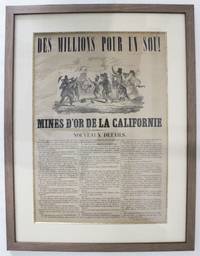
18495043Paris: Typ. Schneider Rue d'Erfurth 1 1849. Very good. Broadside approximately 18 x 13 inches. Matted and framed. A pair of short closed tears repaired at lower edge. Even toning and light creasing. Contemporary manuscript annotation under caption title. A wonderful illustrated faux news broadside published in Paris as gold fever coursed through Europe in 1849. The headline promises "nouveaux détails" of the gold mines in California but the text is in fact a humorous description and light-hearted admonishment of the multitudes thoughtlessly giving up their livelihoods for the hardscrabble life of a gold digger in the California wilderness. The first section runs through a litany of types who are abandoning their lives for adventure and advises them not to consider the difficulties of the journey:<br /> <br /> "En route pour les mines d'or de la Californie! Partez! Il n'est pas néccessaire que vous preniez de lourds baggages : une cassette et une bonne pioche vous suffriont. Ne vous laissez pas décourager par la peur d'une navigation de cinq mois. elle sera peut-être périlleuse. mais le résultat est si consolant : de l'or!. toujours de l'or!. Qu'importent la colique et les fièvres doublées d'un mal de mer brutal. de l'or!. toujours de l'or!. Qu'importe d'être noir ou jaune en mourant du moment qu'on se repose dans un linceul d'or pour l'éternité! Partez!"<br /> <br /> The remainder of the text somewhat sardonically describes life in California and warns prospective travelers not long for the comforts of home but rather to concentrate on their sought-after riches:<br /> <br /> "Par example ne vous attendez pas à jouir de toutes les douceurs de la vie. Vous n'y trouverez ni biftecks au beurre d'anchois ni dinde truffées; car les aliments y sont rares. Mais les racines y sont en grande abondance. Vous vivrez un peu à la manière des anachorètes pour un temps. seulement vous déterrerez de l'or. ce qu'ils ne faisaient pas que l'on sache."<br /> <br /> The illustration which occupies approximately the top third of the broadside depicts men and women from all walks of life carrying pickaxes on their shoulders and racing for a ship about to depart. The image carries the printed signature of "B. Netter;" a contemporary manuscript note under the caption identifies the publication date as February 17 1849. The Bibliothèque Nationale de France estimates that as many as 40000 French men and women made their way to California between 1848 and 1856. The present broadside is an excellent document of California gold fever in France and the pervasive interest in gold rush news in Europe during the mid-19th century. Rare we locate just four copies at Berkeley UCSD California Historical Society and the BNF. Typ. Schneider, Rue d'Erfurth, 1 unknown
1510B6471Paris: Bertholdus Rembolt printer at Rue St. Jacques August 13 1510. . A superb example of fine and decorative early printing. Title is missing as usual otherwise in near fine condition text is clean and vibrant.<br><br>. Edition: Paris Edition. Binding: Contemporary full mottled calf on wooden boards boards with blind-ruled panels and floral corner pieces. Nineteenth century rebacking with raised blind bands gilt title on morocco label on two. Notes: colophon: “In Sole aureo uici Diui Jacobi Par=//rhisiensis.terminatum est hoc solenne Decreta=//lium volumen Per magistrum Bertholdum Rembolt. . anno Domini millesimo quingentesimo decimo die vero XIII. augusti.<br><br>As trained lawyer Pope Gregory edited and systematised the numerous compilations of early legal pronouncements or decisions codifying them while excising portions or “Exravagantes†thereby creating the 1234 Decretalium or Decretals. The work was published by Pope Bonifacius vii. <br>In the present legal example the Decretals are accompanied by flanking commentaries by Bernardus Bottoniensis and Johannes Andreas; the work also includes Dr. Lodovico Bolognini’s legal tables. <br>This body of canonical law would form the basis of canon law until in 1917 the law was further elaborated. Posterity would remember Pope Gregory for his Decretales Papal Inquisition ultimately with devastating long-term effects on Europe and his call for the Crusade of 1239 to retake Jerusalem. In 1233 Gregory IX would institute the Papal Inquisition to bring order and to deal with heresy appointing papal inquisitors - Inquisitores haereticae pravitati – in 1231. A consequence of the Decretals would become the suppression of followers of Judaism. The doctrine of servitus camerae imperialis or servitude immediately subject to the Emperor's authority promulgated by Frederick II directly proceeded from and built on the Decretals. The prevention of Jews to participate in the political life of Christian states continued well into the 19th century. Other population would experience similar suppression or persecution either directly by popes or indirectly their emperors or vassal s kings.<br><br> Size: Folio 385x254mm Illustration: Text in Latin. Gothic script in red and black ink.<br>Commentary in two columns flanking the central text likewise in two columns. <br><br>Illustrated by numerous rubricated ornamental initials; headings and openings mostly in red; the opening of the first of five books ornamented by a large central historiated wood-cut initial large woodcut on recto of cclvii. Provenance: Upper free endpaper and lower margin of fol.I stamped: ‘Bibl. Patr. DOM. S.J./ /IHS/V/MILLTOWN PAR.’ pertaining to an Irish Jesuite parish; few unobtrusive ink marginalia throughout i.e. fol. ccxli and verso of final leaf. References: Renouard ICP I 1510 n° 66; BP16_101501; Brunet general; Andrew Pettegree Malcolm Walsby editors: FB III & IV:Books published in France before 1601 . p.899. Pages: Ll: bl. 2 cccxxx aa1-8 bb1-6 cc1-8 dd1-9 bl.2. Category: Book Legal; Book Religious Christianity Bertholdus Rembolt, printer at Rue St. Jacques hardcover
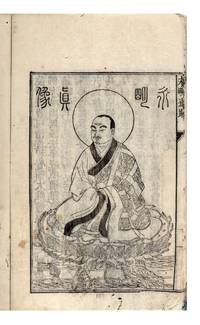
751132 fine full-page woodcuts. 42 folding leaves. Large 8vo orig. blue wrappers wrappers rather rubbed minor soiling modern manuscript label on upper cover new stitching. Japan: from the Japanese colophon on the penultimate leaf: “Nakano Zesui had the woodblocks carved & published this book mid-July 1655.†<br/> <br/> First edition to be published in Japan printed in Chinese with Japanese reading marks. Yongming Yanshou J.: Eimei or Yomei Enju 904-75 was a Chan master who had a profound impact on the development of Buddhism in East Asia. Yanshou was a widely influential proponent of a scripture-based Chan in opposition to the rhetorical and iconoclastic Chan of the Linji school. He became the first master to teach both Meditation and Pure Land Buddhism a synthesis that dominated Chinese Buddhism after the Song dynasty.<br/> <br/> This finely illustrated biography of Yanshou was written by the late Ming monk Dahe. It contains the later notes contributed by Yu Chunxi jinshi 1583 and Huang Ruheng 1558–1626. Yu Chunxi was a good friend of Zhuhong 1535-1615 and active in the late Ming Buddhist revival. Huang Ruheng who moved in the same intellectual circles was a noted calligrapher.<br/> <br/> This rare work is well illustrated with a series of 32 full-page woodcuts starting with a “true image†of Yanshou. The remainder of the woodcuts show the major religious events in his life from his youth to old age. We learn from the final leaf that our edition was copied from the Chinese edition of 1606.<br/> <br/> Some worming throughout. The woodcuts are largely free of worming at the beginning but the final eight leaves are more affected.<br/> <br/> ⧠In WorldCat the authorship of the copy at Harvard accession no. 43420760 is given as Daiei. unknown
1849B5668Marseille: Carnaud c.1849. A fine example of this rare book. Binding: Contemporary vellum boards rebacked expertly with five raised bands compartments blind and gilt horizontal fillets with elaborate central arabesque gilt motif and gilt lettered morocco title on two. Notes: Text in Arabic. Preface in French Text in Arabic. Germanos Farhat was appointed Maronite Archbishop of Aleppo by Pope Pius IX. He served in this capacity from 1725 until his passing in 1732 as well as a skilled grammarian writer and religious poet. He was an important figure of the so-called Arab Renaissance. A statue in his honour remains erected in Aleppo. His work was revised edited and expanded considerably by the well known historian and commentator Rochaid de Dahdah elevated to knighthood receiving the title of “Count†or Comte by Pope Pius IX. Size: thick quarto 260x185mm Illustration: Illustrated portrait of the author Archbishop Farhat of Aleppo and illustrated gilt lettered title both in Arabic with captions in French. Provenance: Two ex libris stamps on French title: ‘Beirut library’ in blue ink and other unrecognizable. Pages: Frontispiece illustrated title blind Arabic text 723 preface summary French 3 printer’s note title in French. Category: Book Asia Middle East General; Book Literature Carnaud hardcover
007042Quarter Calf. Very Good. A beautiful illuminated manuscript rendering of Lamb's witty and whimsical classic satiric essay which pokes fun at the extremes engendered by the quest for gastronomic bliss. The illustrations are done in a faux Chinese style as befitting the subject matter of the essay. N.p. n.d. 20th century. 4to. 30 by 24 cm. Unpaginated 16 leaves with content on both sides other than title and final text leaf followed by five blank leaves. With 12 watercolored illustrations most half to nearly full paged with text written with a calligraphic hand. The artist and calligrapher we should think were one and the same but remain anonymous other than initials given at the end which given the letter placement could be FME or FEM. Condition: splitting along rear joint of the leather. Revealed are cords and some of the paper gathering. Boards are splayed. Internally clean and bright and one might fairly rank as fine. unknown
1806145411Paris: Barba 1806. A beautiful copy Scarce first edition of this essential culinary encyclopaedia the most popular work published by a professional cook in the 19th century. Viard a worthy competitor to Carême in terms of celebrity dedicated his book to the famed gourmand and restaurant reviewer Grimod de La Reynière praising Grimod and his fellow food enthusiasts for having elevated culinary discourse. "To judge from his practical knowledge Viard must have been a professional cook at one time thought to have been chef de cuisine to Louis Philippe comte de Ségur and Francis Egerton 8th Earl of Bridgewater but he described himself simply as an homme de bouche food expert probably someone in charge of catering for a large household. Despite his book's impressive title Viard declared he was writing for 'all levels of fortune' in this egalitarian society of citoyens and indeed the polished text includes such basics as pea soup quick-cooked rabbit and salt cod provençale. At a higher level he was the first cook to describe the classic puffy soufflé flavoured with chestnuts frangipane white coffee vanilla or potato still a novelty that became such a symbol of France. The book did well even when the restoration of the French monarchy required a hasty title change to Le cuisinier royale and the 'year of revolutions' in 1848 precipitated another change this time to Le cuisinier national. only to revert to impérial once more under Emperor Napoleon III. The text too underwent hundreds of additions first by Viard and later by colleagues allowing it to remain in print until 1875" Willan running to at least thirty-two editions. Food scholar Darra Goldstein notes that Le cuisinier impérial also contains the first published recipe for apple charlotte. Hector Dubois d'Enghien was a trade bookbinder son of the prominent Brussels binder Joseph-François Dubois d'Enghien 1841-1923. He took over his father's workshop c.1918 and partnered with Edmond Dooms a gilder from De Samblanx in 1923. An accomplished scholar Hector Dubois d'Enghien wrote a history of bookbinding in Belgium published in 1954. The first edition of Le cuisinier impérial is rare both institutionally and commercially. WorldCat Library Hub and KVK locate just six copies institutionally: three copies in Germany Badische LB LB Rheinland-Pfalz Sächsische LB two in the US Harvard Schlesinger Indiana and one in France BnF. We can trace four copies at auction since the 1920s only one of which is dated from within the last 45 years. Octavo 192 x 122 mm. Beautifully bound by Dubois d'Enghien-Dooms in early 20th-century dark green straight-grain half morocco smooth spine lettered in gilt separated into compartments with gilt scrollwork rolls and double fillets floral motifs to first third fourth and fifth compartments marbled boards edges sprinkled blue. Bound like Cagle without the first leaf half-title verso a publisher's advertisement. Fine externally; binder's stamp to front pastedown contents evenly browned and generally clean central gatherings foxed and single stain to sig. 7.7 small spot to p. 387 partly obscuring one word a few ink marks to Index. An excellent copy. Cagle 433; Vicaire 860; Willan pp. 258-9. Not in Bitting see note on p. 478 for later editions. Darra Goldstein The Oxford Companion to Sugar and Sweets 2015. hardcover