ZAMBRINI.MareMagnum

40 616 résultats
in-8, pp. LIV, 2, 128. Bella leg, mezza pelle rossa e ang., dorso a nervi con fregi e titolo oro. Prima edizione di soli 202 esemplari numerati su carta a mano. Raro trattato di gastronomia italiana di anonimo autore del XIV secolo. Contiene una raccolta di ricette ritrovate in un codice della Biblioteca Universitaria di Bologna, circa 200 ricette del 3-400. Opera assai importante nella storia dela gastronomia italiana. Ottimo esemplare.. Paleari- Rossi. Bemporat, Storia della Gastronomia Itagliana..
045064London: Cambridge University Press for the Hakluyt Society Four works in five volumes. Varied Dates. All with blue cloth on boards gilt titles and gilt profile of Captain James Cook. Charts & Views: 1955 8vo. VG Thin rubbings to head & foot of spine and tiny touch to corners. Edited by R.A. Skelton; envelope fold; clean blue cloth on boards with gilt titles and gilt profile of Captain Cook on the front. Title page with light foxing. 58 plates clean and present. No pamphlets. Ribbon tie to fore-edge with thinly frayed ends. Dj: Good: Edges with tears chips and some areas with sections missing. Spine: 19cm split from centre to top-edge; 7cm split to bottom thirds. Light dusting of soiling and foxings. II The Voyage of the Resolution and Adventure 1772 - 1775; 1961: VG: Edges: moderate foxings. Thin few only foxings to eps gutterings. Frontis: colour water-colour of The Resolution by Henry Roberts. Clean contents. B/w illustrations maps all clean and present. Binding is As New.1021p Dj: VG: light dusting of soiling and rubbings. Spine: old yellowing; head & foot with thin wear splits & chips. Head & foot of flaps spines with small wear splits & chips. The Voyage of the Resolution and Discover 1776 - 1780 Part One 1967: Edges: light soiling and light dusting of soiling. Eps: foxing. Frontis: colour painting 'Portrait of Captain Cook by John Webber. Clean contents. B/w illustrations fldg charts and illustrations clean & present. Binding is As New. 718p Dj: VG: faint dusting of soiling and rubbings. Spine: lightly browned; head & foot with thin wear and chips. head & foot of flaps spines with small wear & chips. The Voyage of the Resolution and Discovery 1776 - 1780 Part Two 1967: Edges: moderate browning and few onl;y foxings. Eps: mild foxings. Frontis: b/w illustration Silhouette portrait of B.M. Egerton MS 2591. Few only pages with a few only foxings to the margins edges. B/w illustrations. Fldg map at refp clean and present. Binding is As New. 723-1647pp Dj: VG: faint dusting of just a little soiling. Spine: mildly browned; head & foot with thin wear chips and a 4cm split to head rearside edge. Head & foot of flaps spines with small wear and chips. The Voyage of the Endeavour 1768 - 1771; 1955. VG: Edges: mild foxing and light dusting of just a little soiling. Eps: moderate foxings. Frontis: colour painting Portrait of Captain Cook by Nathaniel Dance 1776. Eps & Title page light foxings. Clean contents. All fldg maps clean and present. Binding is As New. 684p Dj: Good: Spine: Dj seperated at spines front edge; rearside edge with only a few cms of attachments; head & foot with thin wear and chips. Light dusting of soiling and rubbings. Head & foot of flaps spines with wear small splits and chips. Heavy set: 8 kgs. Hb. VG/VG. Cambridge University Press for the Hakluyt Society Hardcover
DADAX1560766727Wizards of the Coast 0000-00-00. 2nd Edition. hardcover. New. 8.50x0.50x11.00. Buy with confidence. Excellent Customer Service & Return policy. Wizards of the Coast hardcover
2022__0414099990Sweet & Maxwell 2022. Hardcover. New. 6th edition. 1672 pages. 9.49x6.42x2.68 inches. Sweet & Maxwell hardcover
1988314557New Haven & London: Paul Mellon Center for Studies in British Art by Yale University Press 1988. First American Edition. Illustrated. xv 247; xiii 274; xxi 233; 235-669 pp. 4 vols. Folio. Brown cloth. Fine in fine dustjackets. First American Edition. Illustrated. xv 247; xiii 274; xxi 233; 235-669 pp. 4 vols. Folio. "Captain James Cook's three voyages of exploration to the Pacific between 1768 and 1780 were the first of the great European voyages of discovery to carry professional artists. The Art of Captain Cook's Voyages contains all the known drawings and paintings done for these voyages as well as a fascinating narrative and explanatory text by Bernard Smith and Rudiger Joppien. Volume III describing Cook's final voyages is of particular interest for its descriptions of the Pacific Northwest of America as well as Australia New Zealand and the Pacific Islands. Paul Mellon Center for Studies in British Art by Yale University Press unknown
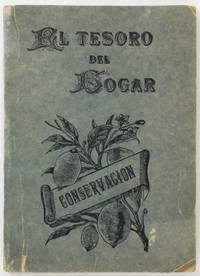
19345081Leon Gto 1934. About very good. 1768pp. Original printed pictorial wrappers. Some chipping and tears to wrappers. Contemporary ownership inscription on title page. Text lightly toned. A Depression-era work from Mexico on the preservation of fruits and vegetables. Each recipe includes a list of ingredients followed by a paragraph of preparation instructions. There are standard recipes for canning salsas catsup pickles compotes as well as more unusual things such as preserving cabeza lengua and numerous other parts of a pig. Sections on juices and butters also included. We locate a single copy in OCLC at the University of Texas at San Antonio. unknown
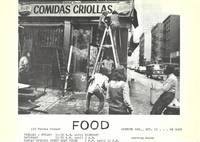
199910037Bremen & Koln: Westfalisches Landesmuseum fur Kunst und Kulturgeschichte & Buchhandlung Walther Konig 1999. Quarto-sized book stapled in wrappers 29.5 x 21 cm. 48 pages. Profusely illustrated in black & white. Text in English and German. FIRST EDITION. This is the informative well-illustrated catalogue for a 1999 exhibition on the "Food" project curated by Catherine Morris for White Columns in New York and shown at Bremen's Westfalisches Landesmuseum fur Kunst und Kulturgeschichte. From 1971 through 1974 "Food" was the unique artist-run restaurant located at the corner of Prince and Wooster Streets in New York's SoHo. It was designed and built by Gordon Matta-Clark - this project marking the first instance of his architectural cutting and reconfiguration - and administered primarily by Matta-Clark Caroline Goodden Tina Girouard Rachel Lew and Suzy Harris. "Food" was conceived as a vibrant yet inexpensive oasis where the local artistic community which included neighbors 112 Greene Street Avalanche Magazine Philip Glass etc. would be able to dine drink and exchange ideas. It became "a creative environment where artists were guest chefs films were made dancers performed and art was discussed inspired and produced". A truly fine example of an important piece of documentation. Westfalisches Landesmuseum fur Kunst und Kulturgeschichte & Buchhandlung Walther Konig unknown
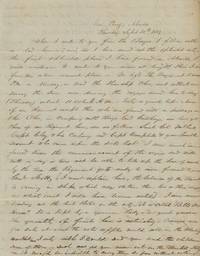
1847List2439Vera Cruz 1847. Folded letter to Wheeling Virginia with learly struck two-line datestamp with "Paid 10" manuscript rate and blue "Steam" handstamp of New Orleans on 1847 with an unusual “Steam†marking applied in New Orleans. Fine condition. Fine. A descriptive and interesting letter from Captain George W. Clutter of Wheeling Virginia describing the scenes and food in Vera Cruz in detail. Clutter had enlisted a detachment of thirty-two men in early 1847 in Monongalia County for service in the war who would eventually become known as the “Mountain Boys of Monongalia.†Clutter was promoted to the captaincy upon the resignation of John Tyler. The company sailed in June of 1847 on the Brig “Tuckahoe†from Old Point Comfort to Point Isabel where they marched to join General Taylor’s forces. <br /> <br /> This interesting letter written by Clutter from Vera Cruz describes the city and cuisine of Vera Cruz in detail. He writes “I am now boarding at the best Hotel in the city - it is called "Bells Stage House'. It is kept by a German lady in great grandeur. The quantity of fruit here is astonishing. Oranges are for sale at about the rate apples would sell in the Wheeling market. I only wish I could send you and the children some of them - such ones as you never eat in the United States as it would be impossible to carry them so far without rotting. <br /> <br /> As we get dinner here at 3 o'clock and no such thing as supper is known I stepped out this evening and obtained a 'cup of chocolate' and 'toast'. If an American or rather United States cook could taste such chocolate as the Mexicans make they never would attempt making the article again - and it is not so much in the simple making of the chocolate but it's in preparing it at the start - for every family even the provost understands making the article from the Cocoa.†Clutter offers additional details on troop movements and logistics of the campaign. Other letters by Clutter during the period are held at the West Virginia Regional History Center at WVU. <br /> <br /> Full contents follow:<br /> <br /> Vera Cruz Mexico<br /> Thursday Sept. 30th 1847<br /> <br /> When I wrote to you from the Brazos I felt in rather a bad humor and as I have arrived at this splendid city the first splendid place I have found in Mexico I will endeavor to write to you more at length than I did from the above named place. We left the Brazos at 5 o'clock P.M. on Monday on board the Steamship Ohio and without ever seeing the sun once during the voyage arrived here today Thursday about 11 o'clock A.M. - truly a quick trip. None of our Regiment except those who were favored with a passage on the Ohio in Company with Brig. Genl. Cushing are here yet. Those of our Regiment here are as follows: Lieut. Col. Withers Capt. Clay & his Company and Capt. Campbell & your humble servant who came upon the sick list. I am much improved since the commencement of the voyage and will with a day or two's rest be able to take up the line of march by the time the Regiment gets ready to move forward to join Genl. Scott. I must explain here the balance of the Regiment is coming in ships which may detain them two or three days in which event I will have become rested. I am now boarding at the best Hotel in the city - it is called "Bells Stage House'. It is kept by a German lady in great grandeur. The quantity of fruit here is astonishing. Oranges are for sale at about the rate apples would sell in the Wheeling market. I only wish I could send you and the children some of them - such ones as you never eat in the United States as it would be impossible to carry them so far without rotting. <br /> <br /> As we get dinner here at 3 o'clock and no such thing as supper is known I stepped out this evening and obtained a 'cup of chocolate' and 'toast'. If an American or rather United States cook could taste such chocolate as the Mexicans make they never would attempt making the article again - and it is not so much in the simple making of the chocolate but it's in preparing it at the start - for every family even the provost understands making the article from the Cocoa.<br /> <br /> In this City may be seen all the fashionable fine buildings and streets to be found in any city of the United States. Also all the various fancy and other goods now in the cities of the North & East can be found here. <br /> <br /> I have not yet found another horse since my arrival but must try and get one tomorrow. I hope my friend Pollock will receive the Mexican roan 'J.B.' which I sent him from Brazos. From hard usage he is not in very good order at present but with little care will be a very useful horse. Don't you ever ask the privilege of riding him however. Mind I know him well. <br /> <br /> As you have heard before this Genl. Scott is in the City of Mexico having sustained a very heavy loss in getting there. We expect to have considerable fighting between here and the City of Mexico ourselves. Time however will reveal all things. <br /> <br /> The soreness in my legs which I complained of is better but I fear exercise will cause it to return. What it will terminate in I am unable to say at present. <br /> <br /> I received a letter from you at this place today which was read with the usual interest notwithstanding it was written on the 13th August 17 days previous to the last one received at Sabinito which was dated 30th August.<br /> <br /> I have just bought five Vera Cruz papers which I will send you. They are half Mexican which half you can dispose of as you see proper. By the bye Mr. Fleeson promised to send you the Matamoros Flag regular. Tell me if you get it. <br /> <br /> Oct. 1st 1847<br /> <br /> This morning I have been all over the city. It would take me a month to describe all the curiosities I have beheld. I will save that for a private chat some long evening after my return. <br /> <br /> I would like to have you Dear little Ada to examine and see the curiosities to be seen. When papa comes home he will bring you some of them. <br /> <br /> My love to Sarah Ann. I would write longer to her had I time. My love to all my friends & acquaintances. <br /> <br /> I am Dearest Sarah<br /> your loving husband<br /> Geo. W. Clutter<br /> <br /> to<br /> Sarah M. Clutter. unknown
19459116District of Columbia: Government Printing Office 1945. Poster 48.3 x 53 cm. folded as issued. Government Printing Office document 1945--O-629743. A government-issued poster encouraging Americans to grow victory gardens to support the war effort. The poster depicts an arrangement of various vegetables including peas in the shell cabbage and carrots in the foreground. In the background is a view of a garden with a man and woman cultivating and weeding. In an official wartime activity begun two and a half decades earlier in the Great War Americans were urged to supplement the food they had available for personal use by planting vegetable gardens both to support the war effort and due to food shortages and rationing. The gardens known as "victory gardens" were promoted widely by both the government and industry. Gardens were planted during World War I as well but were called "war gardens" until the end of the war when the term "victory garden" came into use. Creased at the folds otherwise very near fine. Government Printing Office unknown
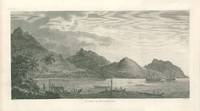
178529428London 1785. Copper engraved images of Tonga Tahiti & the Society Islands from the folio atlas of Cook's 3rd voyage Pacific Ocean exploration. The images illustrate the native islanders rowing out to receive Cook; a reception with warriors demonstrating their strength; a human sacrifice; famous image of Tahitian women dancing and the harbour at Huaheine with Cook's ships Resolution and Discovery in the harbor. Plate numbers included are #1314 25 28 & 31. All with very wide margin. Paper sizes 21 5/8 x 16". Some light marginal dusting overall very good condition. unknown
192612986Los Angeles: Stendahl Art Galleries. Near Fine. 1926. First Edition. Hardcover. A couple spots of wear on the cover. Appears unread. Interior is very fine. ; 8vo 8" - 9" tall . Stendahl Art Galleries hardcover
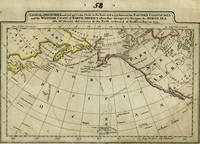
179814495Philadelphia 1798. The Columbia River is added to what is a later imprint of the 1795 edition of this early American map showing Cook's explorations of Hawaii and Alaska. Cary re-engraved a British map of 1784 and added changes reflecting American patriotism. Longitude is measured west from Philadelphia & Greenwich. "Engraved for Cary's American Edition of Guthrie's Geography improved." & "J.T. Scott Sculp." are erased from the printing plate with some light traces left in the impression. Copper engraving impression 292x197 mm engraved surface 283x189 mm. The number "58" is scratched into the top corner as well as penned in the top margin. Rumsey #2542020 is a similar plate although the sizes are a couple of millimeters different possibly because this map is mounted on light card. <br /> <br /> The chart centers on the Pacific Northwest Coast from the Gulf of California the Baja Peninsula to the Alaska Coast Prince William Sound Cook's River the Bering Strait the Aleutian Islands and Russian Kamtschatka. This edition includes the Columbia River which earlier editions did not and it first appeared on a British map of 1798 connecting it with the Missouri from Vancouver's explorations. According to Fiske Captain Gray a New England trader of the ship "Columbia" charted it and shared his maps with Vancouver. The tracks of Capt. Cook in his ship "The Resolution" and Capt. Clerke in "The Discovery" are shown crossing the Pacific from Hawaii to the NW Coast & Kamtschatka. Capt. Clerke took over as Master of "The Resolution" after Cook's death in Hawaii in 1779. Samuel Hearne's discoveries to the north of Hudson's Bay are depicted as well as the area where he located the Coppermine River in 1770. Hearne was the first white man to to cross overland from Hudson's Bay tracing the river to the Arctic Ocean. A faint water mark in the right side of the map with early outline color on the continents. Very good condition overall. unknown
1907641G1672USA: Thompson & Thomas 1907. Book. Fair. Hardcover. Revised and Enlarged 1906 Edition. 8vo - over 7¾" - 9¾" tall. 601 pages. Index at front. Occasional black and white illustrations. "An invaluable collection of practical recipes for merchants grocers saloon keepers physicians druggists tanners shoemakers and harness makers painters jewelers blacksmiths miners gunsmiths furriers barbers bakers dyers renovators farmers and families generally to which have been added a rational treatment of pleurisy inflammation of the lungs and other inflammatory diseases and also for general female weakness and irregularities. with many additions to many departments by the Publishers." - subtitle. .Above-average wear. Hinges open. Front free endpaper and frontispiece loose but present. Many openings along backstrip. External lettering and decoration rubbed but still legible/visible. A worthy reading copy of this stupendous and now antiquarian reference. Thompson & Thomas Hardcover
1957315526New York: Limited Editions Club 1957. Number 122 of 1500 copies signed by the artist and printer Douglas A. Dunstan. Printed at the Griffin Press Adelaide Australia. With a frontispiece in color after the plaque by Flaxman and Illustrations by Australian artist Geoffrey C. Ingelton. 4to. Bound in full blue morocco a.e.g. with maps endpapers bound in at back by Zaehnsdorf for Aspreys. Fine. Number 122 of 1500 copies signed by the artist and printer Douglas A. Dunstan. Printed at the Griffin Press Adelaide Australia. With a frontispiece in color after the plaque by Flaxman and Illustrations by Australian artist Geoffrey C. Ingelton. 4to. Limited Editions Club unknown books
1988314557New Haven & London: Paul Mellon Center for Studies in British Art by Yale University Press 1988. First American Edition. Illustrated. xv 247; xiii 274; xxi 233; 235-669 pp. 4 vols. Folio. Brown cloth. Fine in fine dustjackets. First American Edition. Illustrated. xv 247; xiii 274; xxi 233; 235-669 pp. 4 vols. Folio. "Captain James Cook's three voyages of exploration to the Pacific between 1768 and 1780 were the first of the great European voyages of discovery to carry professional artists. The Art of Captain Cook's Voyages contains all the known drawings and paintings done for these voyages as well as a fascinating narrative and explanatory text by Bernard Smith and Rudiger Joppien. Volume III describing Cook's final voyages is of particular interest for its descriptions of the Pacific Northwest of America as well as Australia New Zealand and the Pacific Islands. Paul Mellon Center for Studies in British Art by Yale University Press unknown books
025280New York; 1888: Selmar Hess. Small Folio. In six volumes. Originally produced in parts then produced in a small 3 volume edition. Clarence Cook was not only the first but also the foremost art critic of the last part of the 19th Century. While Europeans were disdainful of American art he was able to show how Whistler and Gardiner were the equals of the best of Europe's artists. He founded a Pre-Raphaelite organization and led in the "Truth in Art" movement. Besides 188 full page engravings there are hundreds of smaller ones which provide the reader with the best contemporary account of the contemporary art movement in the late 19th Century and providing for the first time examples of why America's finest artists were the equal to any others on the world stage. Rarely found complete in the six volume set. Bound in publisher's brown cloth decorated in black lettered gilt spines black and gilt silk like endpapers all edges gilt volume one with a bit of rubbed white paintmost likely from being against a white painted shelf wall. All volumes in beautiful condition with light spots of wear chipping to head of volume five. Very nice. Selmar Hess unknown books
30413<p>Collection of 434 letters 1241 manuscript pages 8 retained mailing envelopes dated 24 January 1915 - 20 July 1919. </p><p> The bulk of the letters in this collection 364 out of 434 were written by Harry Charles Cook to his fiancée and later wife Frances Blanche Christian. And there are 22 letters written by Blanche to her husband Harry. In early 1916 Harry wrote from <i>"10 Harrington Street N.W"</i> London England where he was enlisted in the Royal Engineers Post Section REPS during World War One. By mid-1916 his letters are addressed<i>"A.P.O. 3"</i> sometimes adding<i>"R.E.P.S."</i> In late 1916 his return address changes to <i>"A.PO.S. I"</i> and sometimes he adds <i>"Boulogne"</i> which means he has moved over into France. This remains his postal box. Several letters mention his address as being <i>"1st Cav Div. Supply Column"</i> which is the 1st Cavalry Division Supply Column." Another couple of letters have his address as being <i>"14 General Hospital Victoria Hotel Boulogne"</i> where he was laid up for a bit. Some of the undated letters has his address as being <i>"5 Frederick Street Kings Cross W.C."</i>which is in London perhaps another residence while with the REPS in London.</p><p>This collection also includes 23 incoming letters to Blanche from various people one of whom Harry's brother Frederick W. Cook was also serving in the military. Frederick writes 7 letters to Blanche. Blanche's brother Edward "Frank" Christian who is also serving in the military wrote Blanche 9 letters. Harry's parents also wrote to Harry. His father Charles Cook wrote 14 letters to his son and his mother Elizabeth sent 9 letters to him. Harry's brother Frederick wrote 2 letters to his Harry.</p><p> The years the letters were written and their quantity are as follows: 1915 23 letters; 1916 63 letters 1917 72 letters; 1918 88 letters 1919 37 letters plus an additional 151 letters that are not dated but do fit into the 1915-1919 time period and could be further put into chronological order upon further examination of the contents of said letters or return addresses. About five of the letters appear to be incomplete.</p><p><b> Harry Charles Cook 1892-</b></p><p> Harry Charles Cook was born in 1892 in Birmingham England the son of Charles G. Cook 1865- and his wife Elizabeth 1864- . Both of his parents were born in Birmingham and had married by about the year 1890. </p><p> During the course of the correspondence offered here 1915-1919 Harry's parents lived at 55 Alton Road in the Selly Oak area of Birmingham. The 1901 English Census found the Cook family living at 34 Cregoe Street in the Ladywood area of Birmingham about three miles from the Alton Street address and by the Census of 1911 they were already living at the Alton Street address.</p><p> Harry had an older brother Frederick William Cook born about 1891. Frederick also served in World War One and is represented in this correspondence with two letters written to Harry and seven to his sister-in-law Blanche Christian Cook he is often mentioned in other letters written by Harry his parents or Blanche. Frederick served in the 14th Battalion Royal Warwickshire Regiment 21st Infantry fighting in France. The 14th Battalion was one of three City of Birmingham battalions that were all deployed to the Western Front in France on 21 November 1915. The 14th Service Battalion 1st Birmingham formed part of 95th Brigade 32nd Division though on 28 December 1915 it was transferred to 13th Brigade 5th Division. The battalion was moved to the Italian Front with the rest of the 5th Division in November 1917 but returned to the Western Front to take part in the defense against the major German offensives of April 1918. On 5 October 1918 it became the Pioneer Battalion of the 5th Division. Through reading correspondence in this collection Frederick is found to have been in the military hospital at Manchester and was then was stationed at #138 Labor Camp B.E.F. in France.</p><p> There were also three other children besides Harry and Frederick that were born to Harry's parents but they were all dead by 1911. In 1901 one of Harry's siblings Horace was still alive. In that year 1901 the family had the help of a live-in domestic servant. </p><p> In the 1901 English Census Harry's father is seen working as a tobacconist on his own account then in 1911 he is found working as a coal agent. Harry and his brother Frederick were children in 1901 however by 1911 Harry is found working as a postman and his brother Frederick as a clerk in an electrical store. In this same 1911 Census we find Harry's grandfather William George Cook living with the family. He was born about 1843 at Great Alne Warwickshire England and was still working as a pipe mount maker.</p><p> Harry married Frances Blanche Christian in the spring of 1916. Her first name actually appears to have been Frances but she went by her middle name of Blanche. Blanche was born 17 January 1892 at Douglas Isle of Man England. She was the daughter of Thomas Christian and Elizabeth Clucas. Blanche's father Thomas was born about 1852 at Lezayre on the Isle of Man and spoke both Manx and English. He was a builder. Blanche's mother Elizabeth was also born on the Isle of Man at Bradden about the year 1862. Blanche had several siblings one of whom a brother Edward Frank Christian was born 4 June 1898. He went by the name of "Frank" and is represented in this correspondence with nine letters written to his sister Blanche while he was serving in the military in WWI. Frank was attached to the Mediterranean Expeditionary Force serving in Egypt and elsewhere.</p><p><b> Royal Engineers Postal Section REPS</b></p><p> When the correspondence begins Harry is in military service with the Royal Engineers Postal Section or "REPS" as it was universally known. In peacetime REPS was a part-time reserve unit made up of England's Government Post Office GPO men who had had a smattering of military training. This unit of postal workers was immediately subsumed into the Army when WW1 broke out but the Army was only in nominal command. This operation was controlled by the GPO. Even questions in Parliament about forces mail were answered by the Postmaster General rather than the War Minister. The 1911 Census showed that Harry was a postman thus when the war broke out he presumably was ushered into military service with the REPS.</p><p> The GPO was already a huge operation before war broke out in 1914. It employed over 250000 people and had revenue of £32m making it the biggest economic enterprise in Britain and the largest single employer of labor in the world according to the British Postal Museum & Archive. But at its peak during the war it was dealing with an extra 12 million letters and a million parcels being sent to soldiers each week. For fighting soldiers it was essential to morale and the British Army knew that. It considered delivering letters to the front as important as delivering rations and ammunition.</p><p> At the outbreak of war the unit almost immediately created a sorting office in London's Regent's Park - a gigantic wooden hut covering several acres. Called the "Home Depot" it employed 2500 staff mainly women to sort post. When this collection of correspondence begins Harry C. Cook is working in London and appears to be living at <i>"10 Harrington Street N.W."</i> other letters show him at "<i>5 Frederick Street Kings Cross W.C." </i>References in Harry's letters to Blanche include information on his work in London.</p><p> Outward mail was sorted by military unit. Each morning bosses would be informed by Whitehall of the latest movements of ships and battalions so each item of mail could be dispatched to the right place. On its outward journey to the Western Front a fleet of three ton army lorries would take the mail to Folkestone or Southampton where ships would shuttle it across to Army Postal Service APS depots in Le Havre Boulogne and Calais. Some of Harry's letters show a couple of different APS addresses for him with one in Boulogne. </p><p> Trains ran back and forth across Picardy now part of Hauts-de-France France under cover of darkness dropping some mail off along the route and unloading the rest at railheads where special REPS lorries took them to the "refilling points" for divisional supplies. Regimental post orderlies would sort the mail at the roadside and carts would be wheeled to the front line to deliver it to individual soldiers. The objective was to hand out letters from home with the evening meal. It's said that no matter how tired and hungry the soldiers were they always read the letter before eating the food.</p><p> Letters back were collected from the men from field post offices. These were equipped as comprehensively as a village sub-office according to "Masters of the Post: The Authorized History of the Royal Mail" by Duncan Campbell Smith. Men could even buy War Savings Certificates there exactly as the population did back home. The mail was date-stamped with the field postmark and sent to the base post office for its journey home.</p><p> At the beginning of the war every letter home was opened and read by a junior officer. It was then opened and read again at the Home Depot to ensure that it contained no classified information about troop movements or casualties. Eventually men could opt for an "Honour Envelope" which meant the letter would only be read in London saving the embarrassment of having their deeply personal endearments read by a censor who they knew. </p><p> Wherever armed forces were engaged REPS would follow delivering to ships of the Royal Navy anywhere in the world and to soldiers away from the fixed positions of the Western Front. Those postal workers who went to war were probably glad to be handling letters and parcels rather than rifles and bayonets but their truly magnificent work was as important to the war effort as the weapons. Indeed mail exchanged between soldiers and loved ones was a weapon. Those who wielded it made a huge contribution to the outcome of the war. </p><p><b> Examples of Letters</b></p><p><i>"10 Harrington St. N.W.</i></p><p><i>My darling Sweetheart</i></p><p><i> .You know dearest how crowded the train was when you saw it well sweetheart we had to change at Rugby and wait for the Holyhead to London. train down. When it arrived it was full up with troops going back to the trenches. We had to scramble in as best we could and it was a picture to see us. Some lying on the floor underneath the others feet others standing as best as they could. One of the fellows who had been drinking a lot wanted to -- well you know. He tried to do it through the carriage window but could not manage it. So what do you think he did Pulled off his boot done it into that and then emptied it through the window. What do you think of it dear eh A bit alright what! Well the train arrived at Euston at 4:20. I hurried to my billet and was in bed at 5 am but sweetheart I was so tired in fact I am now. Well we worked from 8 am to 5 pm. I went to the old billet to get my washing but they could only find my shirt socks and did not know where my pants were so I have to go again. It's a bit thick don't you think so.</i></p><p><i>.I have not heard anything about inoculation yet but as soon as I do I will wire for you and then we will have a glorious time here take you everywhere in the dark streets and everywhere you like.Yours ever loving & affectionate sweetheart Hal"</i></p><p><i>"10 Harrington St N.W. 28. 2. 16</i></p><p><i>My darling Girl</i></p><p><i> .Love nearly all the papers in London are publishing articles about this army and you should read what they call us. It is nothing else but jealousy but it will cause such a lot of discontent amongst the other troops don't you think so. This is one of the poems:</i></p><p><i>What did you do in the great war Daddy</i></p><p><i>Tell me where did you go</i></p><p><i>I joined the R. E.'s - it was only a wheeze-</i></p><p><i>and worked at the G.P.O.</i></p><p><i>Pry what did you get fro that Daddy</i></p><p><i>Was it only a shilling a day</i></p><p><i>But Daddy smiled and winked at his child And said that's not Solomon's way.</i></p><p><i>We fought for the gold not the glory</i></p><p><i>For never a German we saw</i></p><p><i>On behalf of our betters we sorted up letters Right through that terrible war.</i></p><p><i>Say love what do you think of it eh a bit rotten isn't it.</i></p><p><i>Your ever loving sweetheart Hal"</i></p><p><i>"10 Harrington St. 1st April '16</i></p><p><i>My darling Girl</i></p><p><i> How are you this morning I hope you are better. The weather is beautiful down here these last two days. Last night we had another scare love at about 9 pm the Zephs were reported on the way to London. They said there was about 6 of them.</i></p><p><i> So of course the usual thing happened lights out. The whole town was in semi-darkness but anyhow they never paid us the visit.</i></p><p><i>It did us one good turn love we finished at 11 pm instead of 11:30 pm so you see love "it is an ill wind etc. etc. & so on." Darling we have another rotten order and that is everyman is to be indoor by 10 pm.</i></p><p><i>Those who wish to stay out later must give a special reason and obtain a pass until the time required. Love it is nearly as bad as you used to be isn't it only we are likely to be locked up all day & night for be naughty. What do you think of it dear</i></p><p><i>.Your ever loving sweetheart Hal"</i></p><p><i>"10 Harrington St N.W. 13 May '16</i></p><p><i>My darling Girl</i></p><p><i> I trust you are still well and in the pink as I am at present. I have been wishing you was coming to see me again tomorrow. It would be jolly fine wouldn't it if you could. Hone I am so sorry I did not write you everyday last week. But you see dear I only missed once and that was through not having enough stamps. Next week they have changed our duties round about. one two of the days we are to work from 9am to 6 pm and the reminder from 2pm to midnight. A bit rough isn't dear.</i></p><p><i> .Sweetheart don't forget to let me have some money soon so as I can buy the necessary will you love as we don't want to wait until the last day like before but I will not bring my knicks until later as I might be tempted to put them on. I am also trying to get some new putties if I can. They are inspecting every man now to see if he shaves every morning and if he does not they are going to give him pack drill. Goodness only knows where he will get the pack from unless they make him waltz about with some parcel bags. What a life eh dear. Talk about Karno's army nothing in it.With sincere and lasting love your loving sweetheart Hal"</i></p><p><i>"No.133814 A.P.O. 3 Boulogne REPS</i></p><p><i>My darling Wife</i></p><p><i> Just arrived at the above after travelling about France. We left London on Thursday at 11:30 am travelled to the coast arriving there about 3 pm. We embarked at 4:30 pm and did not land until 7:30 am Friday. The sea was awfully rough and the sickness was terrible but fortunately I was not sick at all. We had to go up to a rest camp after arriving until 9 pm. It was a dud time there love nothing to eat but Bully beef and biscuits and the tea we had was rotten. At 9 pm we set off again to another town which we arrived at 7:30 am Saturday. The scenery was lovely. I wish you could have seen it dear I know no one would appreciate it more than you. After staying there until 4:30 pm we started off again for this place. We had quite a jolly time coming here especially with the French soldiers in route. But the trains well they are worse than the Isle of Man trains. They only travel at 5 mile an hour and then stop when the drive thinks he wants his dinner or something to eat. Oh it is quite amusing. All the time we have been travelling we have had nobes at all or anything other to eat only Bully beef biscuits and cheese. Well dear how are you going on are you well I do sincerely hope so Don't forget to write me often as you can.Your loving hubby Hal"</i></p><p><i>"No.133814 R.E.P.S. A.P.O.3 7th June '16</i></p><p><i>My dearest</i></p><p><i> How are you I trust you are in the best of health but don't forget to let me know how you are when you write. I have not heard from you yet but perhaps it is a bit early yet. It does seem strange to be by the sea once again.</i></p><p><i>.It does seem strange to be amongst the French people. Talk about 'parlavous & compre." Nothing in it. Of course we cannot understand them very well. We have to make signs it is like being deaf & dumb to mix with them. we are billeted in a sort of a shed where the rats are and sleeping on boards with one blanket for bedding. What a change eh dear We have to get up at 6 am parade for inspection & breakfast at 8 am but the food is very good considering.I have been told not to shave the upper lip so when you see your hubby again there will be quite a football team on his face. We all have to be in at 9 pm or else the lock up. Oh it is a life I can tell you . Well dearest how are thing going on at home.Your ever loving hubby Hal"</i></p><p><i>"A.P.O.3 July 12 1916</i></p><p><i>My dearest</i></p><p><i> Just a line trusting you are still well and happy.Really speaking this town is quite a change from any in England there is only the sea front to go to. There is some picture houses but nothing compared with those in Birm. So you see love there is not much to enjoy yourself with her.Do you know love these last few days there have been hundreds of wounded men coming down the line to be sent on to England some with their legs off others with their heads badly hurt and it is terrible to see them and do you know love it makes me think of Fred.Last Sunday night love when I was going round the quay I saw a boat bring a body of a British sailor in. His face was nocked about terribly and his feet were decaying but the clothes were in a good condition but the smell was terrible. On the sights here Everyday thousands of troops come in here for the line but they are all cheerful. Love when you have read this be careful not to repeat it to only those you can trust won't you.Your loving hubby Hal"</i></p><p><i>"Lc/Cpl. F.W. Cook #1578 14th Batt R.W. Rgt 29th Infantry base Depot Rouen B.E.F. France 31/7/16</i></p><p><i>Dear Blanche</i></p><p><i> I suppose you must think that I have entirely forgotten to write you but the fact of the matter is I couldn't find your address.I expect I should be going up the line very shortly now. It's a bit rotten Hal & I can't see one another but maybe I shall come across him somewhere or other. He is evidently having a rough & ready time of it "somewhere in France" but according to his letters seems to be enjoying the life. The weather down here is awfully hot what's it like in Birm taking things all round it is much better at the Base than I expected although I consider the parades are very heavy I have been very fortunate to have my old chums along with me from Chiseldon but they have all gone up the line now. How's things going down in general with you Blanche now that the one & only is away on the 'Continog." Let's hope we are all back home safe & soon once again eh that's the talk.Well Blanche the boys seem to be getting a move on now in the West so lets hope it will soon come to an end. I don't think there is really any more news for the present but will write again at first opportunity & don't forget to lets hear from you will you.Au-revoir Blanche Yours etc Fred"</i></p><p><i>"A.P.O.S.1 Nov 16th 1916</i></p><p><i>Dearest</i></p><p><i> Just another letter trusting you are still well and happy. I am so pleased to hear you are feeling A 1 and I sincerely trust you will always remain so. Your previous letter love saying you went over New St. Station and you seemed to be the only looker on made me think you was downhearted. Cheer up love it may not be long before we are together once again and you know I am just s anxious to be with you as you are with me. Let us both look to the bright days in store for us and to think love we are far better off than some especially the poor boys in the trenches up to their necks in mud for it is nothing else here. So cheer up darling and when I return I will do my very best to make you happy.Hal"</i></p><p><i>"Lc/Cpl F.W. Cook #1578 E Ward Red Cross Hospital "Lawnhurst" Didsbury Manchester 27 Nov '16</i></p><p><i>Dear Blanche</i></p><p><i> Just a letter to let you know of my new abode. The doctor at Leicester Rd has marked nearly all of the patients out to other hospitals & convalescent homes to make room for a big convoy that is expected there. Well along with two other chums I have landed at his place & believe me Blanche its "some" house. It's simply fine. The lady who is still resident here has given over the house for convalescent soldiers it's a fine old English style of house splendidly fitted out with billiard room conservatory & everything you could wish for looking out across lawns & gardens. We get excellent food & served in style too for a way of a change. Could you manage to come & have a look round this way at all. If you could I should be very glad.</i></p><p><i> This place comes very welcome for a change from Leicester Rd as I was getting about fed up of that Hospital. I shall still continue to have massage treatment here. My leg is getting much stronger & I can bend it more but I am afraid it will always be slightly stiff. I am still on crutches & unable to bear much weight on the leg.</i></p><p><i>Well Blanche I am fairly stuck up for a razor & have to borrow to shave so if you can manage to send a "safety" razor I should be very glad. How's things going at Warley Blanche. I should very much like to come & see you. Well there is really no more news for the present. So I shall have to conclude trusting you are in the pink.</i></p><p><i>I remain yours etc. Fred"</i></p> books
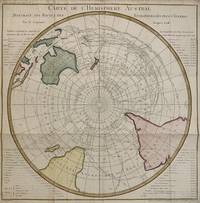
294870Paris. unbound. Bernard Direxit. Map. Engraving with modern hand coloring. Image measures 22 3/4" x 23".<br/><br/> This incredibly detailed polar projection map of the Southern Hemisphere is a French edition of Captain James Cook's famous second voyage to the region. It depicts the coastlines of Australia New Zealand and other Southeast Asian and South Pacific islands in addition to Madagascar and parts of Africa and South America. Most notably the map includes detailed depictions of voyages to the region between 1595 and 1775. Surrounding the projection are latitude and longitudes of islands many discovered in Cook's voyages. Map was beautifully engraved in 1778 by Bernard Direxit and published in the Abrege de l'Histoire Generale des Voyages. The map is in good condition. Shows wear along original fold lines. Minor foxing to top margin does not affect image. <br><BR>Captain Cook 1728 -1779 was among the most famous and important explorer navigator cartographer and captain of his time whose scientific and geographical knowledge influenced his successors well into the 20th century. He started sailing as a teenager and went on to join the Royal Navy in 1755. In 1766 he was commissioned to explore the Pacific and went on the sail thousands of miles across largely uncharted regions of the world. These three historic voyages led him to some of the first sightings of Antarctica his discovery of many Polynesian islands including the Hawaiian Islands first European contact with east Australia the circumnavigation of New Zealand and the first correct mapping of the Pacific Northwest.<br/><br/> unknown books
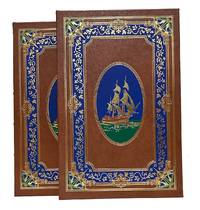
2015638331Easton Press 2015. First Thus. Leather Binding. Fine. Copy #81 of 800 numbered sets of this Easton Press Deluxe Limited Edition. Bound as issued in full brown leather stamped in gilt blue and green all edges gilt marbled endpapers slight finger-marks to gilt edges; mounted Easton bookplate with name in each volume. A TRULY MASSIVE SET. Easton Press unknown
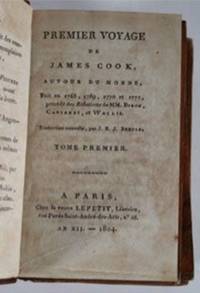
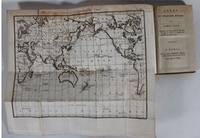
16-5700Paris: Le Petit Bibliothèque portative des Voyages. An XII 1804. . 5 volumes in-16 reliure de plein chagrin dos lisses reliure frottée coiffes manquantes coins émoussés. Série bien complète de son atlas composé d'une carte déreliée et de 23 planches. Quelques rousseurs.OCLC Number / Unique Identifier:493518818:Contents:Le vol. 15 tome 5 a pour titre : "Atlas du premier voyage de James Cook" contenant une carte indicative de la route tenue dans la mer du Sud par MM. Byron Carteret Wallis et James Cook ; et vingt-trois planches en taille-douce;Notes:Sig. a5 A-V6 X5 ; A-X6 Y1 ; A4 B-V6 X5 ; A-T6Le premier voyage de James Cook correspond dans la collection Bibliothèque portative des voyages aux tomes 14-18 Paris,: Le Petit, Bibliothèque portative des Voyages. An XII (1804). unknown
16-5701Paris: Le Petit Bibliothèque portative des Voyages. An XII 1804. . 5 volumes in-16 reliure de plein chagrin dos lisses reliure frottée coiffes manquantes coins émoussés. Série bien complète de son atlas composé une carte dépliante et 23 planches. Quelques rousseurs .OCLC Number / Unique Identifier:173287684.Notes:Vol.s 24-28 in the series.Atlas entitled: Atlas du troisieÌme voyage de James Cook. Contenant une carte geÌneÌrale des trois voyages de Cook et vingt-deux planches en taille-douceAtlas with: Atlas du premier voyage de James Cook. 3 v. in 1 Paris,: Le Petit, Bibliothèque portative des Voyages. An XII (1804). unknown
193484287Stamford Connecticut: Privately Printed at The Overbrook Press 1934. One of only 75 copies printed. Hardcover in slipcase. Very good. Format is approximately 5.25 inches by 7.5 inches in a slightly larger slipcase. Minor wear and soiling noted. Illustrated endpapers. 15 7 pages. Some pages uncut. The dates of the poems range from 1928 to 1934. Among the poems presented are: Awakening Spring in Southern Italy Dawn Expectancy Struggle Creed Fifty-ninth Street Bridge at Night Lines Chansonnette Mon Ame a des Ailes The Memorial Wind Song Cameo and An Admonition. The poetry is equally evocative whether written in English or French. Perhaps the most striking is the poem Fifty-ninth Street Bridge at Night which to this reader retains its sense of immediacy and contemporaneousness within the vision of the narrator. This is an early offering from The Overbrook Press. To some this rare volume is physical evidence of an under-recognized American poet of the early 20th century whose work merits renewed esthetic and scholarly interest. The Overbrook Press was founded in 1934 in Stamford Connecticut by Frank Altschul an investment banker and civic leader with a lifelong interest in book arts and printing. Altschul initially pursued printing as a hobby experimenting with a small press in his New York apartment. In 1934 he was approached by designer Margaret B. Evans who had been working for Ashlar Press. Ashlar was closing and Evans hoped Altschul would continue its work. Altschul set up the press in converted outbuildings on his Stamford farm and hired Evans as designer and compositor and John MacNamara as pressman. The Overbrook Press went on to print an eclectic variety of books and pamphlets as well as ephemera such as awards and certificates. Evans placed great emphasis on technical expertise and craftsmanship and even smaller pieces - political pamphlets such as Towards a More Creative Policy and short books on chess problems - were handled with surprising care. Altschul set up the press in converted outbuildings on his Stamford farm and hired Evans as designer and compositor and John MacNamara as pressman. Overbrook volumes were also known for fine illustrations. In the 1930s the Overbrook Press published an edition of Robert Louis Stevenson's travelogue An Inland Voyage which featured illustrations by French artist Jean Hugo. Hugo was commissioned to follow Stevenson's path through Belgium and France and produce gouaches of scenes along the route. The press worked with many other artists including Valenti Angelo Anna Simons and Bruce Rogers but is most closely associated with T. M. Cleland who illustrated a number of Overbrook volumes. His most ambitious project was an edition of Prevost's Manon Lescaut for which he created elaborate silk-screened illustrations. The volume which was published in 1958 after six years of work is considered one of the highest quality private press books of the time. The Overbrook Press operated for nearly thirty years closing its doors in 1969. Privately Printed at The Overbrook Press hardcover
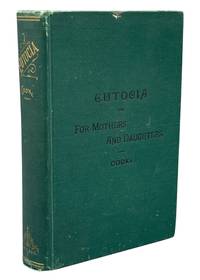
188712755Chicago: Arcade Publishing Company 1887. Octavo 8.5 x 5.75" green cloth with black lettering 396 v 15 pp illustrations from drawings. A medical guide by Dr. Susan Selina Putnam Cook 1817 to 1895. Born in upstate New York Cook taught school at age 17 before marrying Dr. Elihu George Cook after which she graduated from Cleveland Medical College possibly making her "the first woman physician in American to obtain her degree after marriage" "Woman Physician Added to List of Seldom Recognized Women Patriots" Orange County Register 8/28/1964. The two set up separate practices with Elihu becoming a homeopath after the "homeopathic cure of his wife after her life had been despaired of." He was also "an uncompromising abolitionist and during the antebellum excitement his wife was repeatedly threatened" Obituary New York Sun 2/10/1893. <br /> <br /> This treatise meanwhile contains many chapters on the treatment of women: "Menstruation and Care During It" "Painless Childbirth" "Duties and Rights of Women" "To Working Women" "Marriage and Maternity" etc. Other chapters include "Care of Infants' and Children's Rights" "The Evils of a Forced Education" "Causes and Treatment of Insanity" "Tobacco" and "Home Remedies and Treatment." At the end of the book is a nine page illustrated catalog of medical appliances including breast pumps soft nipple shields bed pans ladies' underwaists and more. The book went through several editions in the 1880s most published under the title "For Mothers and Daughters." Three in OCLC for any edition. A good copy with hinges cracked wear and discoloration to covers area of staining to rear cover. Arcade Publishing Company hardcover
199823292Sundance Books. Near Fine with No dust jacket as issued. 1998. First Edition. Hardcover. 0913582662 . VERY RARE SIGNED BY ALL THREE AUTHORS! NUMBERED 996 on half title page. Clean and tight glossy pictorial boards protected in removable clear cover. A terrific SIGNED COPY. ; Signed by All Authors . Sundance Books hardcover
70593A collection of material kept by Gloria Sabath and her husband Fred concerning a McDonald's hamburger franchise location the couple owned in Carson California. The materials in this group include everything from memos about managing worker interest in labor unions to approved McDonald's décor options of the 1970s. There are also marketing reports laying out various corporate strategies of the popular hamburger chain along with workbooks and diplomas related to the Sabath's attendance at Hamburger University in Chicago. The following provides a complete list of the materials in this collection: approximately 50 sheets of McDonald's stationary with the golden arches logo on the top and "licensee of McDonald's System Inc." along the bottom edge; 1984 Ronald McDonald Olympic Coloring Calendar; McDonald's Salutes the Olympic Games 1984 Los Angeles 20 page stapled 8.5 x 11 inch brochure; a black leatherette valise with a gold stamped McDonald's logo on the front containing a welcome letter to Hamburger University for Gloria Sabath along with four McDonald's guidebooks about stat reports a handout on better training and a crew certification program; a document outlining a November 1974 "Guarantee Campaign" promoted by the McDonald's Operators of Southern California; McDonald's Training Aids Catalog for October 1974; McDonald's 1974 First Quarter Promotion program; Master's Degrees in "Hamburgerology" awarded to the Sabath's in 1984 from Hamburger University along with four other framed diplomas and eight photographs of the couple with other McDonald's officials; a variety of McDonald's swag including a French fry box shaped tote bag McDonaldland playdough dried out four plastic trays and 1974 McDonaldland stationary; a legal size folder with marketing materials for McDonalds in 1971 with multiple reports and charts about building repeat customers; a yellow three-ring binder for local store promotion & gift catalog including a price sheet franchise owners could order everything from plastic hand puppets to McDonald's monogrammed golf bags; a 1971 brochure of approved environmental décor for McDonald's showing three schemes: Colonial Contemporary and Mediterranean along with related items; a 1974 Christmas gifts folder with a variety of gifts "you will be proud to give to employees family and friends."; a small 1967 brochure listing all of the McDonald's in the United States with photographs of the products offered; a small brochure circa 1970s that provides an outline of the employee relations tools available to franchise owners including a two hour seminar to "show store management what kinds of issues cause crew people to go to a union for help."; a folding brochure for Hamburger University circa 1975; 1974 order forms for a variety of McDonald's-branded giveaways; a 28-page brochure for the McDonald's Group Insurance Plan for health including dental and life insurance for all fulltime employees updated February 1 1974; a folding brochure dated August 1998 providing nutrition facts for all McDonald's products; a green folder with two pockets providing tips for service enhancement; a red and white folder with two pockets and information about the 1976 celebration of the opening of McDonald's 4000th restaurant in Montreal Quebec; a dozen miscellaneous papers mostly from the McDonald's Los Angeles region about promotions changes in personnel a variety of marketing programs and other issues impacting franchise owners including a 1974 letter about the $2 minimum wage and compliance. unknown books