Ramon Reventos; Pablo PicassoBiblio.com

1 544 résultats
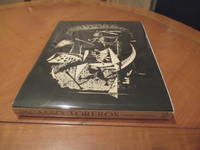
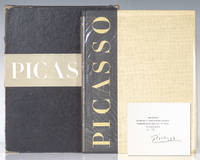
19471909200005Paris- Barcelona Editorial Albor 1947. First Edition. Hardcover. Very Good. Fine printing of Picasso Limited edition no. 104 of 250. Four dry point plates by Picasso with tissue guards. Title engraved in upper cover in red. 28 leaves. Folio 34 cm. Loose as issued. Housed in original wooden boards with cloth ties. Title-page half-titles l 10b initials etc. reproduced from Picasso's lettering. Mornand: Vingt artistes du livre 306. Cramer Picasso livres illustres 44; Bloch 468 471. Catalan. <br> Ramon Reventos was a Catalan writer and with his brother Conti long-time friend of Picasso who wrote one of the first articles published on Picasso's work. When Reventos passed away in 1923 his writings fell into obscurity. Many years later Picasso would write to Conti's son: "I loved your uncle so much that when it occurred to me to make him acknowledged here in Paris because this boy did not enjoy the success that he deserved it was during the war 1939-1945. I often went to the National Library on foot with all of the dangers that this entailed in order to copy these two stories and I copied them all by hand. Someday I will show you in my own handwriting" Reventos i Conti Picasso i els Reventos Barcelona 1972 p 20. <br> This is an oversized or heavy book which requires additional postage for international delivery outside the US. <br> Capvespre d'un faune. Paris- Barcelona, Editorial Albor hardcover
1957N - 2023 - 60<p>Louis Broder 1957 Artaud Antonin. Illustrated with a drypoint engraving in color by Picasso. Third volume of the Collection Miroir du poète. One of the 20 copies on Japon ancien paper signed in pencil by Picasso numbered in Roman numbers from X to XX. Total edition 120 copies. Complete of title text justification and one etching loose as issued in japan wrappers guarded in the original chemise and slipcase. For the engraving Cramer indicates that this is "the only color engraving that Picasso made for a book". Provenance: Collection of the publisher Pierre Cailler 1901-1971 Very good condition. Ref : Cramer 87</p> Louis Broder hardcover
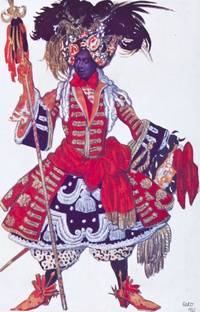
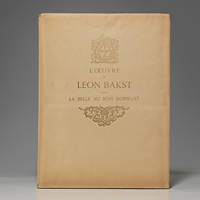
192237572Paris: Maurice de Brunoff 1922. Limited First edition. Paperback. g to g. 1/500. Folio. 8 21 3pp text 54 leaves plates. Uncut. Original glassine on decorative and printed dust-jacket over blind wrappers. Book housed in its original decorative green paper covered slipcase with gold lettering and decoration on spine and along joints. Raised bands. Limitation page signed by both Léon Bakst and Editor Maurice de Brunhoff. Color illustration pasted on title page. Stunning lithographic frontispiece portrait of Bakst after a drawing by Picasso. Decorative head- tailpiece and initial. <br /> <br /> In 1921 the opportunity arose for Sergei Diaghilev the renown Russian ballet impresario and founder of the Ballets Russes to present Tchaikovski's "La Belle au Bois Dormant" at the Alhambra Theatre in London using the notes that the Ballet Master Nicholas Sergeyev had kept from pre-Revolutionary Russia. It was to be a production of great magnificence designed by Léon Bakst and the first time the typically Russian full-length ballet in five scenes would be performed in England. Petipa’s choreography preserved through the use of Stepanov notation was restaged by Nicolas Sergueev stage manager for the Maryinski Theatre. Bronislava Nijinska younger sister to Nijinski and also a dancer and choreographer adjusted several enchaînements and supervised the whole show. Olga Spessivtseva was Aurora Pierre Vladimirov the Prince and Lydia Lopokova alternated with Bronislava Nijinska in the role of the Lilac Fairy. Stanislav Idzikowski proved to be a brilliant Blue Bird. Carlotta Brianza who had created the title role of Sleeping Beauty in 1890 in Saint Petersburg played Carabosse this time. The superb scenery and costumes were designed by Léon Bakst. <br /> <br /> This stunning signed limited first edition contains the complete 54 mounted color plates depicting the exotic sumptuous and richly colored costumes and sets designed by Bakst for this memorable London performance. His ingenious designs in conjunction with Diaghilev’s radical and provocative choreography helped revitalize ballet and lay the framework for modern interpretive dance. Each of the mounted color plates measures 15 1/4 x 11" image appr. 10 1/2 x 6 3/4" and is protected with a captioned tissue guard. One of 500 copies of which this is No.358. <br /> <br /> Gold lettering and decoration partly faded on slipcase. Water staining on boards. Glassine age-toned and chipped at tail of spine. Creasing along dust-jacket's spine. Wrappers intact. Book block separating. 11 plates loose. Moderate and sporadic creasing on tissue-guards. Text in French. Slipcase and glassine in overall fair to good dust-jacket in good wrappers and interior in good plates in very good condition. Maurice de Brunoff paperback
193447317New York:: Random House 1934. Second edition. original spiral-bound stiff wrappers illustrated in color. The white spiral binding is slightly sunned; a few little creases to the front wrapper. . Folio. With a Portrait by Picasso. Texts by Andre Breton Paul Eluard Rrose Selavy Tristan Tzara. Preface by Man Ray. Illustrated from photographs throughout. Random House, unknown
194739474Paris-Barcelone Barcelona: Editions Albor 1947. Picasso. WITH FOUR ORIGINAL DRYPOINTS BY PICASSO IN A MASTER BINDING BY LUCIE WEILL. An outstanding livre d'artiste with four original full-page hors-texte drypoints by Pablo Picasso. Edition limited to 250 numbered copies all printed on fine Lana wove paper. Folio. ELEGANLY BOUND IN FULL BLACK MOROCCO BY LUCIE WEILL signed. Top edge gilt other edges uncut. Original wraps and backstrip preserved. Housed in custom-made slipcase also by Weill preserving the engraved front board of the original wooden chemise. FINE AND BRIGHT WITH NO DEFECTS. Goeppert 45. BEAUTIFUL AND IMPORTANT. <br/><br/> Editions Albor paperback
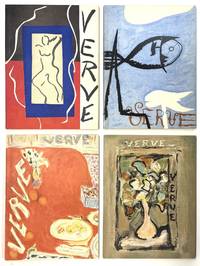
1937510540Verve 1937. First Edition. Paperback. FINE. Complete run of the first four issues of Teriade's legendary art magazine. Beginning with a stunning cover produced by Matisse for the first issue Verve would incorporate fresh artwork into its cover designed newly commissioned by artists such as Miro Picasso Chagall and other leading lights of the French art world. Each issue offered spectacular color lithographs printed by the Paris lithographers Mourlot. Early issues came in litho-printed card wrappers in boxes later volumes would be in paper-over board with litho covers. This choce allowed Teriade to feature the fresh lithographic artwork in the cover design but left the books themselves extremely fragile and succeptible to wear. Additionally the full-page lithographs have been continuous targets for art dealers looking to excise the plates. So condition seen here is quite rare with each volume preserved COMPLETE FINE with no signs of the wear and toning so commonly seen. 'The cover of Verve No. 1 is by Henri Matisse; it consists of three unmodulated colors--red blue and black--that the master cut directly from printers' ink specimen books. . Mattisse's cover for the first issue lithographed by Fernand Mourlot printers was an original work of art created expressly for the magazine--as would be practically all of the Verve's covers. . The painter took great pains to make sure that the cover would turn out exactly as he wished. . THe care Matisse lavished on what others might consider a minor undertaking was one of the hallmarks of Teriade's publications. How did he induce the greatest artists of this century to give the very best of themelves . Matisse and Teriade shared a common ideal. For both of them painting was life itself.' Michel Antonioz VERVE: The Ultimate Review of Art and Literature 35-36. Verve paperback
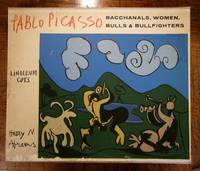
196214645New York: Harry N. Abrams 1962. First. Hardcover. Good. Slipcase with pastedown has gotten a bit chewed up. Several scuffs and nicks and chips of the pastedown edges are visible. Clothbound hardcover is in very good shape. These lino cuts are well preserved and impressive. There is some foxing at the edges and tissue guards are missing so there has been some ghosting on the versos but the images themselves are fresh and bright. Harry N. Abrams hardcover
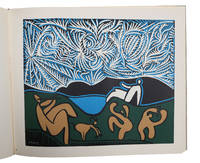
196361834London Thames and Hudson 1963. Folio-oblong 340 x 400 mm. In the original clothbinding with black printed Picasso-drawings on front board. Housed in the original slipcase. Slipcase with some wear and stains otherwise very nice and clean. 14 pp. 45 linocuts by Picasso. <br/><br/><em>The uncommon and exquisitely printed “Linocuts†by Picasso which marked the beginning a new period for him as an artist. The prints were made by carving away part of the surface of a sheet of linoleum then inking and printing the remaining surface. Picasso began creating linoleum cuts to give color a more prominent role in his graphic work having previously considered it a secondary medium. His linoleum cuts emerged from a desire to adapt previous artistic concepts to a new medium and he quickly achieved original results that were not secondary to his pervious works. Inspired by memories of bullfighting from his youth in Arles and Nimes Picasso focused on this theme in his linoleum cuts produced in the fall of 1959. Despite not having seen bullfights in Spain for many years he felt their influence after the town of Vallauris allowed bullfighting under revised rules in 1954. “Just how and when Picasso became attracted by the linoleum technique is not known. Perhaps it was like the instance of the year 1957 when he capriciously finished his “L’ Arlésienne with pigeon feathers picked up from the floor of his home “La Californie.†It must be assumed aware as we are of Picasso’s working methods that his interest in linoleum technique was derived from some insignificant yet real incident as well as from a response to a deep artistic need. The smooth and supple drawings in India ink and lithograph pencil for the “Tauromaquia†which set the tone for the subsequent linoleum cuts reveal a difference something remarkably new and fresh. The ink drawings particularly point the way to heavy and unmodeled designs which are more crisp and more succinct their similarity with a silhouette-like effect is certainly significant. When he began the series of linoleum cuts the artist was already prepared with a wide range of procedures that would adjust his subjects to the flat extended areas that are inherent in this medium. Although Picasso had made only a few woodcuts in the past he immediately adopted a resolute and robust approach to the new technique and interpreted in the widest possible way the rules of carving such an easily yielding material. Formal principles that embody lines and surfaces as well as pictorial and decorative elements are freely applied to create prints that are sometimes produced from a combination of several individual color blocks or more often from a single linoleum block that was cut and recut. Others browns and blacks reminiscent of Greek vase painting became the dominating color scheme permitting a limited range of color variations. As usual Picasso intuitively developed techniques which exhausted the medium.†From the introduction to the present work </em> hardcover
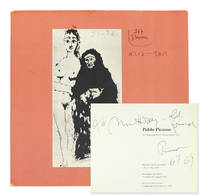
19681243431968. Berlin: Akademie der Künste 1969. <br /> <br /> Square 8vo unpaginated. Black and white photo reproductions of artworks throughout. Text in German. Original pink illustrated wrappers; a very good copy very lightly worn at extremities one small spot on the upper wrapper; inside flap and endpapers with shadows from previous tape and two small remnants a few numbers handwritten on the rear endpaper.<br /> <br /> § Inscribed by Picasso "To Walter Kohner - old friend" and dated 6.7.69. The catalogue of an exhibition of drawings and prints created by Picasso between March 16 and October 5 1968 in Mougins. "The sheets to which the artist gave no title are all dated and numbered in the order in which they were created. In this chronological order they are also shown in the exhibition so that the viewer is drawn into the dramatic tension of this work process in a unique way from page to page and from day to day - sometimes six or seven graphics were created in one day." Introduction translated<br /> <br /> The exhibition was staged in three locations in Germany between June 1 and October 12 1969. The introduction to the catalogue was written by Boris Blacher and short essays were contributed by Friedrich Ahlers-Hestermann and Felix Andreas Baumnn. <br /> <br /> Provenance: Kohner family. The name of the recipient is close to illegible however the family records that Picasso inscribed the book to Walter Kohner a theatrical agent who worked alongside his brother at the legendary Paul Kohner Agency on Hollywood Boulevard representing stars including Greta Garbo and Ingrid Bergman. Walter Paul and a third brother Frederick the novelist screenwriter and author of the "Gidget" books were born in Czechoslovakia but emigrated to California as the Nazis gained sway in Europe. Walter's childhood sweetheart Hanna remained in Europe and miraculously survived internment in four concentration camps including Auschwitz before reuniting with Walter at the end of the war. Their own account of their remarkable story was published in 1984. In 1953 Hanna told their story on This is Your Life - the first non-celebrity ever to appear on the show. unknown
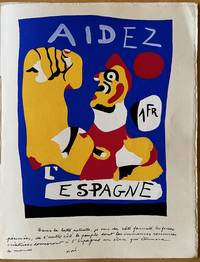
193777186Paris 1937. Stor 4to. Originalt typografisk omslag. Omfatter s. 105-164. Gjennomillustrert i svart/hvitt. Med et pochoir kolorert litografi av Juan Miró - “Aidez l’Espagneâ€. Large 4to. Publishers typographical wrappers. Contains pages 105-164. Illustrated throughout in black and white With one pochoir coloured lithograph by Juan Miró - “Aidez l’Espagneâ€. Éditions “Cahiers d’artâ€. Fransk. <br/><br/><em>Eksemplaret er noe slitt men komplett med det berømte litografiet av Juan Miró - “Aidez l’Espagneâ€. Heftet tar for seg artikler om Picasso og hans verk “Guernicaâ€. Litografiet av Miró i meget god stand. This copy is somewhat worn still complete with the very famous lithograph by Juan Miró. The content deals mostly with the works of Picasso and “Guernicaâ€. The Miró lithograph in very good condition. </em> unknown
19221186471922. First Edition. BAKST Léon. L'Oeuvre de Leon Bakst pour La Belle au Bois Dormant. Preface d'André Levinson. Paris: de Brunoff 1922. Large folio original limp cream paper covers uncut custom chemise. $4500.Signed limited first French edition number 308 of only 500 copies signed by both Bakst and publisher Maurice de Brunoff with 56 mounted color plates 54 full-page costumes and sets for the Ballet Russes with letterpress tissue-guards and a portrait of Bakst by Picasso.A gifted painter Bakst is best remembered for the sets and costumes he designed for Diaghilev's Ballet Russes in the early decades of the 20th century. His exotic and sumptuous designs in conjunction with Diaghilev's radical and provocative choreography helped revitalize ballet and lay the framework for modern interpretive dance. It was the Ballet Russes that first brought Tchaikovsky's Sleeping Beauty renamed Sleeping Princess to the west in 1921 featuring scenery and costumes by Bakst. ""Bakst's greatest claim to theatrical glory lies in his feeling for synthesis in his impeccable instinct for harmony"" Levinson. Without rare original slipcase. Plates and text fine only minor wear to spine of fragile original paper covers. A beautiful copy. unknown
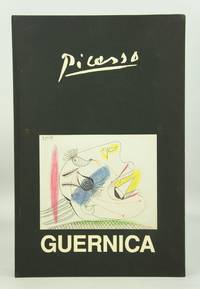
073928New York: Harry N. Abrams Inc. Publishers 1990. Facsimile Mounted Prints in Clamshell Case. Near Fine. Very Large Folio: . Pablo Picasso. This edition which reunites for the first time the preliminary studies on paper that Picasso made for Guernica was printed on April 18 1990 by Akademische Druck-u Verlagsanstalt in Graz Austria. Forty-two color reproductions of select art from Pablo Picasso's work mounted in thirty-one carton mats all present. Housed in a large clamshell case in black with white lettering and color illustration of another facsimile of Picasso's works on paper affixed. Title is from enclosed booklet cover which contains forty-five numbered detailed studies of each piece of art along with the story of the Genesis of Guernica with artistic analysis. Booklet contains many smaller reproductive images of Picasso's works as well. Booklet is 20 pp. Artwork included is mounted as two-pieces per mount and as one piece per mount. Mounts with art measure 23.75" tall x almost 15.75" wide respectively as does the accompanying booklet. Large clamshell case measures 24.75" tall x 16.25" wide x 3" thick. <br><br>CONDITION: All mounted plates are fine. Facsimile art is vivid and striking. Laid in text booklet and clamshell case are VG. Booklet shows moderate wrinkling and some leaves have split along the side of the spine fold at the foot about a third of the way up yet does not badly compromise the booklet's integrity. Case shows indentation along the front spine indicating a heavy book had once been placed on top. Light fading and some soiling on case with a 1/2 inch chip at the head of the back of the clamshell box. Even so this collection is stunning and the art pieces are magnificent. At over 18 lbs. due to this item's size and weight an additional shipping charge will apply and will be delivered with signature required. Full refund if not satisfied. <br><br>EXCERPTS FROM THE BOOKLET: "Few names are as evocative as that of Guernica. The ruthless bombardment of this small Basque town a regional capital and ancient pilgrimage site became one of the blackest and bloodiest spots in the history of the twentieth century. Today it no longer represents only the massacre of a civilian population and a point of no return in the rise of Fascism: Picasso's painting gave to the name of Guernica the scope of a universal symbol that expresses the barbarism of modern warfare. After its militant exhibitions in 1937 Paris and 1939 New York its long exile and its final arrival in Madrid this 'living legend' is displayed behind bulletproof glass in the Cason del Buen Retiro of the Prado Museum. .<br><br>Picasso executed forty-five sketches between May 1 and June 4 1937 some of which stand on their own as complete drawings. They included six compositional studies four studies of the horse one of the bull one of the horse and bull alone ten of heads of the horse and bull ten studies of female heads six of the woman with a dead child one of the horse and the woman with the child three heads of dead warriors a study of a man with raised arms and two studies of hands. He used a variety of mediums: pencil india ink gouache and oils; and supports: white blue and brown paper plywood and canvas.<br><br>These studies are not only extraordinary drawings in their own right but they also show the different states of mind through with Picasso passed as he was working on the painting. They are like a seismograph of his thoughts and feelings and so they permit us to understand what he really wanted to paint in Guernica. <br><br>A study of these sketches reveals the progress of the artist at work - his hesitations his searching the choices he made. They show the slow formation of the images the maturation of the initial idea the successive contributions the departures; in short Picasso's way of working and as such they constitute the laboratory of Guernica. Harry N. Abrams, Inc., Publishers unknown
1961055142New York / Monte Carlo: George Braziller / Andre Sauret 1961. 1st Edition 1st Printing. Hardcover. Fine/Fine. 153 Pp. Red Cloth Stamped In Black. First Edition. Printed In France. With Three Original B/W Lithographs By Picasso Dated In The Plate And One Color Lithograph Dated Twice The Second Date Being The Date Picasso Added Colors. Fine In Fine Black And White Dust Jacket With Price $17.50 With Slight Tanning To Spine Panel. <br/> <br/> George Braziller / Andre Sauret hardcover
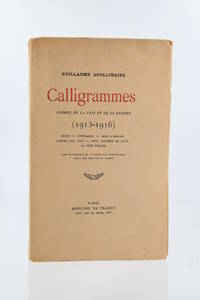
191880044Paris: Mercure de France 1918. Fine. Mercure de France Paris 1918 14.50 x 23 cm relié First edition one of the numbered copies from the first printing. Paper slightly brittle at margins of some leaves as usually found handsome copy. Illustrated work with as frontispiece a portrait of Guillaume Apollinaire by Pablo Picasso. Mercure de France unknown
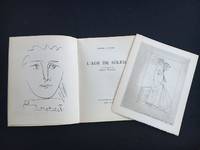
1950N - 2023 - 74<p>L'Age de Soleil. With one original dry point by Picasso. GODET Robert-J. Paris: Aux dépens de l'auteur 1950. One of 100 copies on Vélin du Marais with frontispiece etching "Picasso pour Roby" in black and with an ORIGINAL POINTE-SÈCHE La Torera dated in plate 29 April 1944. In the original stiff wrappers lightly tanned. Ref: Cramer n° 57.</p> Aux dépens de l'auteur
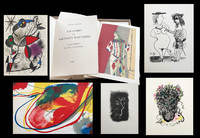
B-2022-0726<p>Jacques Prevert: Le Coeur à L'Ouvrage. Paris & New York: Fenand Morurlot 1972 Alain A.C. Mazo Paris -Leon Amiel New York. Portfolio loose as issue with 25 original lithographs in full page printed in wove paper by Mourlot by: Brianchon Masson Beaudin Fenosa Esteve Guiramond Matisse Terechkovich Braque Derain Picasso Jenkins Miro Cocteau Minaux Villon Chagall Giacometti Buffet Wunderlich Delvaux Vasarely Manessier Lepicque and Sutherland. Limited edition on 800 copies complete of text prints and justification page all guarded in the original clamshell box. </p>Case lightly worn wrappers toned inside in very good conditions.<b> <br /></b>Please ask for complete conditions report.<b><br /></b> Mourlot
1946140734Garden City New York: Doubleday & Company Inc. 1946. Signed limited edition of this compendium of over one hundred reproductions of Picasso's wartime paintings. Quarto original publisher's half buckram illustrated with 135 plates. One of three hundred and fifty numbered copies signed by Pablo Picasso on the limitation page this is number 188. Near fine in the original glassine and rare original slipcase which is in very good condition. An exceptional example. One of the most influential artists of the 20th century Pablo Picasso was extremely prolific throughout the course of his long life and achieved universal renown and immense fortune for his revolutionary artistic accomplishments. Picasso: The Recent Years 1939-1946 offers a selection of over one hundred of Picasso's paintings produced during the second world war. Doubleday & Company, Inc. hardcover
1962126630HARRY N. ABRAMS INC. NEW YORK 1962-01-01. hardcover. Very Good. 0x0x0. 1962 Abrams cloth hardcover in slip case. 45 plates with loose tissue guards. Binding intact but tender. Ownership ink to front paste down. Shelf soil to slip case. oversized and overweight. Please email for photos. HARRY N. ABRAMS INC. NEW YORK hardcover
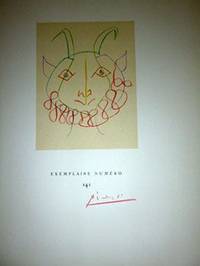
51-5814Paris: Fernand Mourlot 1957. Folio. 44 x 34cm. Original cloth portfolio with 27 drawings after Picasso by Henri Deschamps and Fernand Mourlot. Includes the text but not the 6 hors texte original lithographs. It includes 27 lithographs after Picasso one of which is signed by Picasso Faune. Twelve of the lithographs are full page. One of 275 numbered copies. Portfolio slightly soiled; 2 pages of the index and colophon defective.Cramer no. 88.Picasso signed the limitation page which contains a portrait of a faun by Picasso and is a lithographic reproduction of a drawing by Pablo Picasso. The craftsman that reproduced the drawing by hand was Henri Deschamps Picasso’s favorite and most trusted master printer at the Mourlot Studio. He relied on Deschamps any time that a painting or drawing had to be reproduced and it was not an already original print. They collaborated very closely from 1945 until the death of the artist in 1973.This small lithograph is an “after†as it was reproduced by a craftsman while the artist was alive and had to be supervised and approved by the artist himself. In the case this beautiful little gem of a lithograph was created for the book: Dans L’atelier de Picasso – which was written by Picasso’s secretary and close friend Sabartes and published and printed by Editions Mourlot. It included 13 original lithographs and dozens of reproductions of paintings and drawings. Each book was signed by Picasso on the justification page in red Pencil. However none of the lithographs inside were ever signed. Paris: Fernand Mourlot, 1957 hardcover
19832091202133209853Editions Andre Sauret 1983. Soft Cover. Fine. Number of books: 5 books in total Editions Andre Sauret paperback
19622480Paris Imprimerie Mourlot. 1962. Mourlot 382 Bloch 1298. Original lithograph exhibition poster in 3 colors 652 x482 25.66" x 18.97" on paper with two Arches watermarks. From the edition of 2000 impression published by Alex Maguy. In perfect condition with full deckle edge margins. Alex Maguy
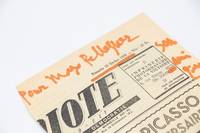
195987544Cannes 1959. Fine. Cannes 25 octobre 1959 17 x 32 cm un feuillet remplié Signed and inscribed newspaper clipping with Picasso's portrait. Newspaper clipping from 'Le Patriote de Nice et du Sud-Est' 25 October 1959 signed and inscribed by Pablo Picasso. A folded leaf inscribed with a large red felt-tip pen. A pictorial and unusual inscription signed by Picasso on the front page of a Nice newspaper celebrating his 78th birthday: For Max Pellequer / his friend / Picasso. A beautiful testimony of friendship in an important political newspaper which featured many of the artist's original creations. Banker and collector Max Pellequer was introduced to Picasso in 1914 by his uncle by marriage André Level. He quickly became one of Picasso's most important collectors and his financial advisor for over 30 years. Pellequer's interest in his art began as early as the 1910's when he purchased a Picasso bronze from art dealer Ambroise Vollard. During the 1930s and 1940s as Picasso's personal banker he made the painter exceptionally wealthy and allowed him to settle comfortably in the South of France. Picasso created a superb ex-libris for him bought him paintings including 'La Mer à L'Estaque' by Cézanne now in the Picasso museum and offered him a few works. Pellequer assembled a vast collection of paintings by the great masters of modern art: Degas Raoul Dufy Paul Gauguin Fernand Léger Henri Matisse Joan Miró Modigliani and Maurice Utrillo today in the most important international museums. The choice of this newspaper of the Nice Communist Party is particularly significant for Picasso. He had joined the Party in 1944 and advocated for peace in the post-war period with the communists. In 1946 he met the paper's future editor-in-chief Georges Tabaraud then a young journalist who had fought in the Resistance. They remained very close until Picasso's death: Le Patriote became in a way 'Picasso's newspaper' especially during the Nice Carnival: in 1951 as a gesture of friendship Picasso created a jester king for the front page of the daily newspaper for that particular day of popular jubilation and then every year from 1958 to 1967. He knew that the press was the main source of information for the French. His direct style is combined with a fraternal feeling a desire to act and work together. Georges Tabaraud and Pablo Picasso joined forces for better but also for worse when the news required serious action"" Picasso Foundation. Picasso had given the Patriote an exclusive portrait in his villa in Cannes for his 78th birthday. Highlighting the date he signs here around his photograph on the front page of the newspaper. The artist is seen sitting next to his Picador a striking linocut depicting a bullfighting scene - a theme dear to the artist throughout his long and versatile career: The painter has in fact just devoted his last weeks to linocut. He created an extraordinary collection of some thirty engravings . The entire team of our newspaper wishes good health for many years to come to the illustrious painter comrade and collaborator who make us the envy of the press all around the world is printed in the insert next to Picasso's red felt-tip pen. unknown
19611385<p>Paris Draeger Fréres. 1961. Picasso Sabartes Jaime. Picasso Toreros. George Braziller. New York. 1961. Oblong 4to. With four original lithographs. Printed in France by Draeger Fréres. The four original Lithographs 3 in black and 1 in 24 colors were printed by Mourlot Freres. With 103 full page reproductions of bull fight scenes. 1st edition. The red cloth over boards binding in excellent conditon like new with the dust jacket also in perfect condition Picasso Toreros. George Braziller. New York. 1961. Oblong 4to. With four original lithographs. Printed in France by Draeger Fréres. The four original lithographs 3 in black and 1 in 24 colors were printed by Mourlot Freres. With 103 full page reproductions of bull fight scenes. 1st edition. The red cloth over boards binding in excellent condition like new with the dust jacket also in perfect condition This a very important and sought after book by the most famous artist of the 20th century.</p> Draeger Fréres. George Braziller.
19611383<p>New York George Braziller 1961. Picasso Sabartes Jaime. Picasso Toreros. George Braziller. New York. 1961. Oblong 4to. With four original lithographs. Printed in France by Draeger Fréres. The four original Lithographs 3 in black and 1 in 24 colors were printed by Mourlot Freres. With 103 full page reproductions of bull fight scenes. 1st edition. The red cloth over boards binding in excellent condition like new with the dust jacket also in perfect condition . The four original Lithographs 3 in black and 1 in 24 colors were printed by Mourlot Freres. Bloch 1014-1017; Freitag no. 7495; Goeppert & Cramer 113 George Braziller</p> George Braziller hardcover
19612704<p>Picasso Toreros. Draeger Freres. 1961. Picasso . George Braziller. New York. 1961. Oblong 4to. With four original lithographs. Printed in France by Draeger Freres. The four original Lithographs 3 in black and 1 in 24 colors were printed by Mourlot Freres. lithographs: La Pique Le Picador II Jeu de la Cape Les Banderilles. Bloch 1014-1017; Mourlot 346 348 349 and 350. black and white plates.153pp. with 103 full page reproductions of bull fight scenes. 1st edition.</p><p>The red cloth over boards binding in excellent condition like new with the dust jacket also in perfect condition.This a very important and sought after book by the most famous artist of the 20th century.LE PICADOR II. 1961. Mourlot 350 Bloch 1017. Lithograph printed in 24 colors. Published in <em>A Los Toros avec Picasso. </em></p><p>The lithographs were issued unsigned for the series A Los Toros avec Picasso and published by Sauret in 1961 in an edition of 125. There was also an edition of 50 signed examples printed from the same lithographic stones by Mourlot Frères at the same time.</p><p>The stone for this lithograph was originally drawn in black as were the other three lithographs in the series. However the publisher Andre Sauret asked Picasso if he would add a little color to the image. Picasso had a box of crayons in 24 different colors and used each of them to color this image. Much to his surprise the Mourlot studio printers succeeded in the difficult task of printing all 24 colors plus black. This explains the two dates on this print. The black version was done 6.3.61 and the colors added 21.4.61</p> Draeger Freres, George Braziller. hardcover