Pablo Picasso (after)Biblio.com
1 544 résultats
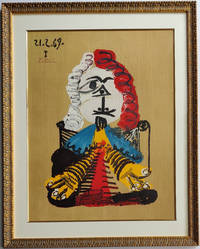
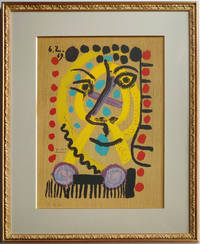
196974883<p>After Pablo Picasso<br />One plate from Les Portraits Imaginaires 1969<br />Lithograph in colors on Arches paper with printed signature as issued<br />Numbered A126 / 250 from the America edition <br />Printed by Marcel Salinas<br />Published by Éditions Cercle D'art<br />Sheet size: 66 x 50 cm<br />Frame size: 87 x 71.5 x 3 cm</p>
196974884<p>After Pablo Picasso<br />One plate from Les Portraits Imaginaires 1969<br />Lithograph in colors on Arches paper with printed signature as issued<br />Numbered F18 / 250 from the French edition with the blindstamp of the publisher/printer<br />Printed by Marcel Salinas<br />Published by Éditions Cercle D'art<br />Sheet size: 66 x 50 cm<br />Frame size: 76.5 x 61 x 2.5 cm</p>
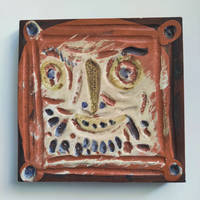
196874908<p>PABLO PICASSO Spanish 1881-1973</p><p>Petit visage barbu A.R. 557</p><p>Verso impressed "Madoura Plein Feu" and "Empreinte Originale de Picasso"<br />Hand-numbered "J139A 9/100"<br />Size 17.2 X 17.2 cm</p><p>Partially glazed and engraved terracotta plaque <br />Conceived in December 1968 - January 1969 and executed in a numbered edition of 100</p>
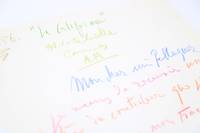
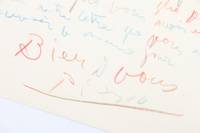
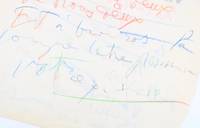
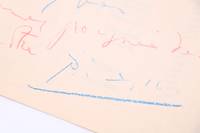
195689529Cannes 1956. Fine. 'I continue my work with passion' Cannes 27 janvier 1956 21 x 27 cm un feuillet Autograph letter by Pablo Picasso to Max Pellequer vividly executed in multiple colours signed and dated by the artist 27 January 1956 addressed from his villa La Californie. Fourteen lines written in green blue pink orange red violet and turquoise pencil on a watermarked BFK Rives sheet.A few negligible transverse folds as expected from mailing. Picasso did not regularly employ colour in his correspondence. Here however he seems to have offered a gracious gesture to his friend and banker Max Pellequer as the more visually striking his letters the more sought-after they become. To speak of his work Picasso turns to red pencil: je continue mon travail avec ardeur - a telling choice that conveys the fervour he wished to bring to his art. Although Picasso maintained a substantial correspondence letters written entirely in his own hand remain exceedingly scarce. As Laurence Madeline observes in her study of this private facet of the artists life: The inertia that paralyses Picasso who prefers his activity as an artist to that of a secretary renders the letters he does choose to write all the more essential and touching Picasso épistolier LHerne no. 106. From his home overlooking Cannes Picasso was assisted by his devoted secretary and childhood companion Jaume Sabartés who penned many of the artists letters - except those destined for Pellequer. To him Picasso wrote every message himself however trivial in a generous flowing script playing with letters and words as though they were graphic elements arranged in an aesthetic dialogue across the sheet far removed from the sobriety of the text. His artistic impulse seems to have seeped into even his most routine administrative exchanges with his banker and impassioned collector. Part of the Picasso-Pellequer correspondence is held today by the Musée national Picasso in Paris. A singular recipient Max Pellequer banker and collector was introduced to Pablo Picasso in 1914 by his uncle by marriage André Level. He quickly emerged as one of the artists foremost collectors and in time became Picassos financial adviser for over three decades. Pellequers engagement with Picassos oeuvre began in the 1910s notably through a bronze jester acquired from Ambroise Vollard. During the 1930s and 1940s he became Picassos personal banker safeguarding the artists wealth and facilitating his comfortable establishment in the South of France. Their friendship was lifelong and intensely collaborative. Among other commissions Picasso executed a splendid copper ex-libris for Pellequer; Pellequer purchased paintings such as Cézannes La mer à LEstaque Musée Picasso Paris; and Picasso reciprocated with gifts of several works. A discerning and avid collector Pellequer assembled one of the finest collections of modern masterworks - Degas Dufy Gauguin Léger Matisse Miró Modigliani and Utrillo - today preserved in major international museums. The epistolary art of Picasso Picassos correspondence served as an outlet for his relentless creative energy expressed across ceramics sculpture photography illustrations collages and poetry. Every letter provided a space for the emergence of genius irrespective of the prosaic content of his exchanges with Pellequer. To counterbalance such banality Picasso took care to arrange his letters diagonally across the page enlivening them with colour from pastels felt pens or coloured pencils. Letters numerals words and sentences became visual and musical elements animated by the painters imaginative force. A striking and vividly visual illustration of Picassos imperative for total self-expression manifested through his correspondence with one of his closest friends and advisers. unknown
1943208661Robert-J. Godet éditeur 1943. Number 23 of 25 such copies. Paperback. Bound book is VG with expected age-toning to the solid covers. Accompanying suite is as good as can be hoped for with the thin paper printed wraps broken at the spine and the 18 prints most with acidic sheets between that are printed on low-quality acidic paper solid clean with a noted printing smudge on one about 1/10 an inch in size and undamaged but wanting some conservation or de-acidification. Again in case you have not noted otherwise THE BLACK AND WHITE SIGNED ETCHING is lacking but the limitation page is signed by both Hugnet and Picasso and there is a unique collage by Hugnet to noted collectors on the half-title. Thick wrapped cardstock glued covers with printed lettering in black and green. Unpaginated 38 pp with the 6 zincographs bound in and then containing in a separate folder a suite of 3 copies each in a different color of the 6 bound zincograph plates from the book. LACKS THE BLACK AND WHITE ETCHING but contains a custom-designed and signed presentation collage by Georges Hugnet to Nannette and Herbert Rothschild on the half-title with painted design and applied materials dated April 9 1956. First edition printed in 525 numbered copies: 25 on Arches vellum signed by the author and illustrator. This is one of the first 25 copies on Arches vellum signed by the author and the painter with the set of three engraving colors red ochre and blue-green in the separate suite and 1 original etching by Pablo Picasso SIGNED ETCHING IS NOT PRESENT IN THIS COPY. The justification indicates: "the illustrations were etched by Pablo Picasso in order to be printed in the text through common typographic means. The etching meant only for the first prints is one of six illustrations printed in intaglio on Roger Lacouriere's printing press." An additional 500 regular copies with no suite and no etching on Lafuma plus VI author's copies on arches and III nominatives on bristol. The request to insert by Paul Eluard is entitled "Pour Georges Hugnet" 1 p. and is present as called for. Also contains some other laid-in items including a dated 1956 photograph of Hugnet along with a lithographed invitation to an exhibition of graphics by Hugnet at Galerie Furstenberg dated 1954 contains a colored illustration on the right inside panel and a printed belly-band of unknown relation to the artist or publication. Robert-J. Godet éditeur paperback
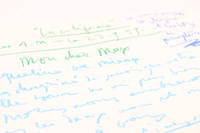
1955855571955. Fine. 20 décembre 1955 26.80 x 20.90 cm un feuillet Multi-colored autograph letter to Max Pellequer Elegant multi-colored autograph letter by Pablo Picasso to Max Pellequer signed and dated 'December 20 1955'. A leaf in multi-color pencil blue green orange and red. Traces of transverse folds. This ""graphic"" letter in the most literal sense constitutes a superb polychrome and artistic link in an epistolary chain that linked Picasso and his prominent patron for decades. Despite his prolific correspondence Picasso's entirely autographed letters are extremely rare as Laurence Madeline points out in her article on the confidential activity of the great artist:The inertia paralyzing Picasso who preferred his work as an artist to that of a secretary made the letters he took pleasure in writing more essential and more touching Laurence Madeline Picasso épistolier L'Herne no. 106. Living on the hills over Cannes the painter was indeed helped by his faithful secretary and childhood friend Jaume Sabartés who was responsible for writing numerous missives save a few correspondents notably Pellequer. Picasso wrote each of Pellequer's letters even the most insignificant in an ample voluptuous script playing with letters and words as graphic objects blending aesthetically in the space of the page in perfect contrast to the prosaic nature of the letter's content. It could even be argued that his artistic soul largely invaded his daily and administrative correspondence with his banker and ardent collector of his works. Part of their correspondence is kept at the National Picasso Museum in Paris. An extraordinary recipient. Banker and collector Max Pellequer was introduced to Picasso in 1914 by his uncle by marriage André Level. He quickly became one of Picasso's most important collectors and his financial advisor for over 30 years. Pellequer's interest in his art began as early as the 1910's when he purchased a Picasso bronze from the art dealer Ambroise Vollard. During the 1930s and 1940s as Picasso's personal banker he secured and enhanced the painter's wealth and allowed him to settle comfortably in the South of France. Picasso created a superb ex-libris on copper for him bought him paintings including La mer à L'Estaque by Cézanne now in the Picasso museum and offered him a few works. Pellequer assembled a vast collection of paintings by the great masters of modern art: Degas Raoul Dufy Paul Gauguin Fernand Léger Henri Matisse Joan Miró Modigliani and Maurice Utrillo today preserved in the most important international museums. The epistolary art of Picasso. Picasso's epistolary production acted as an outlet for his incessant creative energy which was expressed in ceramics sculptures photographs illustrations collages or poetry. Each letter was an opportunity for genius to blossom regardless of the administrative content of his exchanges with Pellequer. Perhaps to counteract the dullness of his work Picasso redoubled his efforts: an explosion of color calligraphic letters across the page. to conjure up beauty and adorn his words in shimmering hues using oil pastels black felt-tip pens or colored pencils.These alphabet letters numbers words and sentences placed on the paper like so many musical scales are literally brought to life by the creative power of the painter. The years of La Californie in Cannes. Living with Jacqueline Roque in the villa La Californie at the time of this letter the painter was producing a series of captivating lithographed portraits of his partner. Paradoxically this colorful letter corresponds to a very monochrome period of his work a superb counterpart to the black washes on zinc. Matisse with whom Pellequer also corresponded had died a month earlier. A very beautiful and visual illustration of Picasso's need for total expression through his correspondence with one of his close advisors and friends. unknown
195148786Paris.: Cercle d'art. 1951. Original publisher's printed wrappers with titles to front cover in black. 4to. 285 x 228 mm. With original lithograph by Picasso and 29 lithographs after Picasso drawings printed by Mourlot. The édition de tête with Picasso's original lithograph.From the edition limited to 150 copies with the original lithograph; this copy exceptionally signed by Picasso in pencil and with the collector's mark WDB.The book published the 29 drawing Picasso made of variations on the theme of peace for the 30th Anniversary of the French Communist Party.Mourlot 203; Cramer 62. Cercle d'art. unknown
1996C129566Kornfeld Et Klipstein & Editions Kornfeld. As New. 1996. Hardcover. 3857730269 .CORRESPONDES TO ISBN: 3857730269/ INCLUDES VOLUMES 1 - VII PLUS ADDENDUM - IN STOCK AND IMMEDIATELY AVAILABLE FOR SHIPMENT - AS NEW THE TEXT BLOCK IS PRISTINE CLEAN UNMARKED AND IN EXCELLENT CONDITION - - Catalogue Raisonné Catalogue Raisonne Catalog Raisonnee Complete Works One Two Three Four Five Six Seven Il Ill IV V VI VII 2 3 4 5 6 7 -- with a bonus offer-- - May be EITHER: out of print OOP and extremely rare in this pristine condition; signed by author or contributor; or a first or special edition; inquire for details . Kornfeld Et Klipstein & Editions Kornfeld hardcover
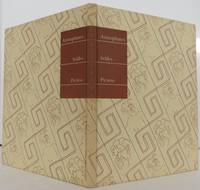
19342502007The Limited Editions Club 1934. signed limited. hardcover. fine. SIGNED Limited edition 1/1500. This being #316. Signed by Picasso. Book fine stiff cover near fine with two small teats to bottom of spine. In very good slipcase partial tears to bottom part. The Limited Editions Club unknown
29341Paris Louis Broder coll. « Écrits et Gravures » n° 2 24 octobre 1956. 1 vol. 185 x 250 mm de 126 p. 8 f. En feuilles sous couverture illustrée chemise illustrée et étui de l'éditeur. . Édition originale posthume du texte de Max Jacob considéré comme ses « Mémoires ». Elle est illustrée par Pablo Picasso de 3 lithographies originales en couleurs et en noir étui couverture et portrait-frontispice 3 pointes-sèches originales et 24 dessins inédits gravés sur bois par Georges Aubert qui rappellent les illustrations du Chef-d’œuvre inconnu. Tirage unique à 170 exemplaires sur vergé de Montval celui-ci un des 30 numérotés en chiffres romains auxquels sont joints 2 états de la lithographie pour l’étui exemplaire n° II signé par Picasso. . Max Jacob livre ici un témoignage de premier ordre celui de ses souvenirs littéraires et artistiques de Montmartre. Il rencontre Pablo Picasso en 1901 à Paris et s'en suit une fraternelle amitié qui fait de lui le témoin quasi quotidien du travail de Picasso désigné comme son héros aux côtés d'Apollinaire lorsqu'il doit écrire sur l'époque de la rue Ravignan. À la mort du marchand Paul Guillaume sa veuve lui demande une préface à un volume des mémoires de son mari. C'est ce projet qui est l'acte fondateur du texte et deviendra ce récit fondamental sur le cubisme : La Chronique des temps héroïques. On y croise outre Picasso et Apollinaire les futuristes et les avant-gardes du XXe siècle. Arrêté et déporté à Drancy où il périra le 5 mars 1944 Jacob ne verra jamais la publication de ces lignes rédigées en 1936-37. Louis Broder se chargera de l'édition d'après un manuscrit complet des huit chapitres et Pablo Picasso se fera un honneur de l'illustrer : il composera une lithographie sur papier report 3 pointes sèches et 2 lithographies en couleurs pour la couverture et l'étui ; 24 gravures sur bois dans le texte de Georges Aubert d'après les dessins de Picasso. Signalons qu'il existe un exemplaire unique sur japon réalisé pour Louis Broder. Il n'existe pas de témoignage aussi vivant et direct que celui-ci sur l'aventure de l'art moderne depuis la bohème montmartroise jusqu'aux frasques des années folles. Complet du bulletin de souscription. Habiles restaurations à la chemise-étui. Paris, Louis Broder, coll. « Écrits et Gravures », n° 2, (24 octobre) 1956. 1 vol. (185 x 250 mm) de 126 p., [8] f. En feuil unknown
195689526Cannes 1956. Fine. A polychrome and artistic link in an epistolary chain that linked Picasso to his prominent patron for decades Cannes 5 juin 1956 13.5 x 21 cm un feuillet Multi-coloured autograph letter from Pablo Picasso to Max Pellequer signed and dated by the artist on June 5 1956. The document includes the autograph address of his villa La Californie. Twelve lines in orange pink blue yellow and purple pencil on one sheet. Minor folds. A very elegant letter written in pastel colours by Pablo Picasso. Despite his prolific correspondence Picasso's entirely autographed letters are extremely rare as Laurence Madeline points out in her article on the confidential activity of the great artist:The inertia paralyzing Picasso who preferred his work as an artist to that of a secretary made the letters he took pleasure in writing more essential and more touching Laurence Madeline Picasso épistolier L'Herne no. 106. Living on the hills over Cannes the painter was indeed helped by his faithful secretary and childhood friend Jaume Sabartés who was responsible for writing numerous missives save a few correspondents notably Pellequer. Picasso wrote each of Pellequer's letters even the most insignificant in an ample voluptuous script playing with letters and words as graphic objects blending aesthetically in the space of the page in perfect contrast to the prosaic nature of the letter's content. It could even be argued that his artistic soul largely invaded his daily and administrative correspondence with his banker and ardent collector of his works. Part of their correspondence is kept at the National Picasso Museum in Paris. An extraordinary recipient. Banker and collector Max Pellequer was introduced to Picasso in 1914 by his uncle by marriage André Level. He quickly became one of Picasso's most important collectors and his financial advisor for over 30 years. Pellequer's interest in his art began as early as the 1910's when he purchased a Picasso bronze from the art dealer Ambroise Vollard. During the 1930s and 1940s as Picasso's personal banker he secured and enhanced the painter's wealth and allowed him to settle comfortably in the South of France. Picasso created a superb ex-libris on copper for him bought him paintings including La mer à L'Estaque by Cézanne now in the Picasso museum and offered him a few works. Pellequer assembled a vast collection of paintings by the great masters of modern art: Degas Raoul Dufy Paul Gauguin Fernand Léger Henri Matisse Joan Miró Modigliani and Maurice Utrillo today preserved in the most important international museums. The epistolary art of Picasso. Picasso's epistolary production acted as an outlet for his incessant creative energy which was expressed in ceramics sculptures photographs illustrations collages or poetry. Each letter was an opportunity for genius to blossom regardless of the administrative content of his exchanges with Pellequer. Perhaps to counteract the dullness of his work Picasso redoubled his efforts: an explosion of color calligraphic letters across the page. to conjure up beauty and adorn his words in shimmering hues using oil pastels black felt-tip pens or colored pencils.These alphabet letters numbers words and sentences placed on the paper like so many musical scales are literally brought to life by the creative power of the painter. The years of La Californie in Cannes. Living with Jacqueline Roque in the villa La Californie at the time of this letter the painter was producing a series of captivating lithographed portraits of his partner. Paradoxically this colorful letter corresponds to a very monochrome period of his work a superb counterpart to the black washes on zinc. Matisse with whom Pellequer also corresponded had died a month earlier. A very beautiful and visual illustration of Picasso's need for total expression through his correspondence with one of his close advisors and friends. unknown
98905Paris Louis Broder 1957. . Limited edition numbered 67 of 120 copies on papier Japon signed by Picasso colour drypoint frontispiece by Picasso; small square 8vo 17 x 15 cm; title-page justification page signed by artist in pencil text in French pp 4 24 4 unsewn as issued in original card wrappers with printed tissue dust jacket board chemise printed on spine black cloth slipcase.<br /> Limited edition number 67 of 120 copies on Japon paper signed by and with colour drypoint frontispiece by Picasso volume III in the series 'Miroir du poete' by Antonin Artaud. <br /><br />Antonin Antoine-Marie-Joseph Artaud 1896-1948 was a French dramatist poet actor and theoretician of the Surrealist movement. He attempted to replace the 'bourgeois' classical theatre with his 'theatre of cruelty' a primitive ceremonial experience intended to liberate the human subconscious and reveal man to himself.<br /> Artist and the Book 239. Paris, Louis Broder, 1957. hardcover
1996C129565Kornfeld Et Klipstein & Editions Kornfeld. As New. 1996. Hardcover. 3857730269 . - IN STOCK AND IMMEDIATELY AVAILABLE FOR SHIPMENT - AS NEW THE TEXT BLOCK IS PRISTINE CLEAN UNMARKED AND IN EXCELLENT CONDITION - Complete seven 7 volume set - Catalogue Raisonné Catalogue Raisonne Catalog Raisonnee Complete Works -- with a bonus offer-- - May be EITHER: out of print OOP and extremely rare in this pristine condition; signed by author or contributor; or a first or special edition; inquire for details . Kornfeld Et Klipstein & Editions Kornfeld hardcover
1958895271958. Fine. 23 septembre 1958 20 x 17.5 cm Deux pages sur un feuillet Multi-coloured autograph letter from Pablo Picasso to Max Pellequer signed and dated by the artist on September 23 1958. The document includes the autograph address of his villa La Californie. 13 lines in a multi-coloured tip pen orange red blue and green on a sheet marked VIA WESTERN UNION.Minor folds. Tear in the lower left corner. Colour is not systematically used in Pablo Picasso's letters. It would seem that the artist wanted to make a kind gesture towards his friend and banker Max Pellequer because the more aesthetically pleasing his letters are the more valuable they are. The use of a multicoloured pen in letter writing was a practice shared by several artists notably Paul Éluard. Despite his prolific correspondence Picasso's entirely autographed letters are extremely rare as Laurence Madeline points out in her article on the confidential activity of the great artist:The inertia paralyzing Picasso who preferred his work as an artist to that of a secretary made the letters he took pleasure in writing more essential and more touching Laurence Madeline Picasso épistolier L'Herne no. 106. Living on the hills over Cannes the painter was indeed helped by his faithful secretary and childhood friend Jaume Sabartés who was responsible for writing numerous missives save a few correspondents notably Pellequer. Picasso wrote each of Pellequer's letters even the most insignificant in an ample voluptuous script playing with letters and words as graphic objects blending aesthetically in the space of the page in perfect contrast to the prosaic nature of the letter's content. It could even be argued that his artistic soul largely invaded his daily and administrative correspondence with his banker and ardent collector of his works. Part of their correspondence is kept at the National Picasso Museum in Paris. An extraordinary recipient. Banker and collector Max Pellequer was introduced to Picasso in 1914 by his uncle by marriage André Level. He quickly became one of Picasso's most important collectors and his financial advisor for over 30 years. Pellequer's interest in his art began as early as the 1910's when he purchased a Picasso bronze from the art dealer Ambroise Vollard. During the 1930s and 1940s as Picasso's personal banker he secured and enhanced the painter's wealth and allowed him to settle comfortably in the South of France. Picasso created a superb ex-libris on copper for him bought him paintings including La mer à L'Estaque by Cézanne now in the Picasso museum and offered him a few works. Pellequer assembled a vast collection of paintings by the great masters of modern art: Degas Raoul Dufy Paul Gauguin Fernand Léger Henri Matisse Joan Miró Modigliani and Maurice Utrillo today preserved in the most important international museums. The epistolary art of Picasso. Picasso's epistolary production acted as an outlet for his incessant creative energy which was expressed in ceramics sculptures photographs illustrations collages or poetry. Each letter was an opportunity for genius to blossom regardless of the administrative content of his exchanges with Pellequer. Perhaps to counteract the dullness of his work Picasso redoubled his efforts: an explosion of color calligraphic letters across the page. to conjure up beauty and adorn his words in shimmering hues using oil pastels black felt-tip pens or colored pencils.These alphabet letters numbers words and sentences placed on the paper like so many musical scales are literally brought to life by the creative power of the painter. The years of La Californie in Cannes. Living with Jacqueline Roque in the villa La Californie at the time of this letter the painter was producing a series of captivating lithographed portraits of his partner. Paradoxically this colorful letter corresponds to a very monochrome period of his work a superb cou unknown
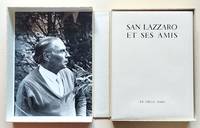
003004Paris: XXe Siecle 1975. Book. Fine. Hardcover. 1st Edition. Published as a tribute to Gualtieri di San Lazzaro the founder of the magazine XXe Siecle. Loose sheets as issued. In original wrappers and cloth clamshell box with the portrait of Gualtieri di San Lazzaro mounted on the inside. With 15 lithographs by Max Bill Alexander Calder Marc Chagall Max Ernst Hans Hartung Joan Miro Henry Moore Graham Sutherland Georges Braque Lucio Fontana Rene Magritte Pablo Picasso Serge Poliakoff and Alberto Magnelli. All but one Chagall printed in color. Text by Gualtieri di San Lazzaro Pierre Volboudt Nina Kandinsky Marc Chagall Andre Verdet Marino Marini and others. This is number 310 of a limited edition of 575 copies all printed on Velin d'Arches by Fernand Mourlot l'Imprimerie Arte Pierre Chave Les Ateliers Bellini and Curwen Studio London. 141vii pp. 38 x 288 x 55 cm. Except from the inevitable offsetting from the lithographs to the facing text pages this is a very fine almost mint copy in collectors condition. . XXe Siecle Hardcover
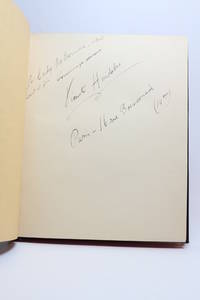
193272296Paris: Editions TotemJosé Corti 1932. Fine. Editions Totem José Corti Paris 1932 17.50 x 22.50 cm relié sous chemise et étui First edition of which there were no deluxe copies. Work illustrated with a portrait of the author by Pablo Picasso and two drawings by Joseph Sima. Half black calf binding with bands smooth spine title and author's name in red boards enhanced with red varnish panels evoking snakeskin red edges covers and spine preserved chemise and slipcase in half black calf black cloth boards black felt lining elegant and spectacular binding signed Georges Leroux. Handsome copy perfectly established in a superb bloody binding by Leroux recalling the sanguinary turpitudes of Gilles de Raiz. Very rare autograph inscription signed by Vicente Huidobro to Lady Rothermere: "". esprit haut et fin."" ""high and refined spirit."" Editions TotemJosé Corti hardcover
195989523Cannes 1959. Fine. A polychrome and artistic link in an epistolary chain that linked Picasso to his prominent patron for decades Cannes 23 septembre 1959 21 x 27 cm un feuillet Multi-coloured autograph letter from Pablo Picasso to Max Pellequer signed and dated by the artist on September 23 1959. The document includes the autograph address of his villa La Californie. Ten lines in blue and green pencils on a watermarked BFK Rives sheet.Minor folds and marks. A very elegant letter written in pastel colours by Pablo Picasso. Despite his prolific correspondence Picasso's entirely autographed letters are extremely rare as Laurence Madeline points out in her article on the confidential activity of the great artist:The inertia paralyzing Picasso who preferred his work as an artist to that of a secretary made the letters he took pleasure in writing more essential and more touching Laurence Madeline Picasso épistolier L'Herne no. 106. Living on the hills over Cannes the painter was indeed helped by his faithful secretary and childhood friend Jaume Sabartés who was responsible for writing numerous missives save a few correspondents notably Pellequer. Picasso wrote each of Pellequer's letters even the most insignificant in an ample voluptuous script playing with letters and words as graphic objects blending aesthetically in the space of the page in perfect contrast to the prosaic nature of the letter's content. It could even be argued that his artistic soul largely invaded his daily and administrative correspondence with his banker and ardent collector of his works. Part of their correspondence is kept at the National Picasso Museum in Paris. An extraordinary recipient. Banker and collector Max Pellequer was introduced to Picasso in 1914 by his uncle by marriage André Level. He quickly became one of Picasso's most important collectors and his financial advisor for over 30 years. Pellequer's interest in his art began as early as the 1910's when he purchased a Picasso bronze from the art dealer Ambroise Vollard. During the 1930s and 1940s as Picasso's personal banker he secured and enhanced the painter's wealth and allowed him to settle comfortably in the South of France. Picasso created a superb ex-libris on copper for him bought him paintings including La mer à L'Estaque by Cézanne now in the Picasso museum and offered him a few works. Pellequer assembled a vast collection of paintings by the great masters of modern art: Degas Raoul Dufy Paul Gauguin Fernand Léger Henri Matisse Joan Miró Modigliani and Maurice Utrillo today preserved in the most important international museums. The epistolary art of Picasso. Picasso's epistolary production acted as an outlet for his incessant creative energy which was expressed in ceramics sculptures photographs illustrations collages or poetry. Each letter was an opportunity for genius to blossom regardless of the administrative content of his exchanges with Pellequer. Perhaps to counteract the dullness of his work Picasso redoubled his efforts: an explosion of color calligraphic letters across the page. to conjure up beauty and adorn his words in shimmering hues using oil pastels black felt-tip pens or colored pencils.These alphabet letters numbers words and sentences placed on the paper like so many musical scales are literally brought to life by the creative power of the painter. The years of La Californie in Cannes. Living with Jacqueline Roque in the villa La Californie at the time of this letter the painter was producing a series of captivating lithographed portraits of his partner. Paradoxically this colorful letter corresponds to a very monochrome period of his work a superb counterpart to the black washes on zinc. Matisse with whom Pellequer also corresponded had died a month earlier. A very beautiful and visual illustration of Picasso's need for total expression through his correspondence with one of his close advisors an unknown
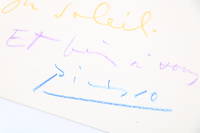
1956895241956. Fine. ""Mistral et soleil"" Mistral and sunshine 7 juin 1956 26.80 x 20.90 cm un feuillet dont deux lignes sur une page Autograph letter in blue and red pencil by Pablo Picasso to Max Pellequer signed and dated by the author on June 7 1956. The document includes the autograph address of his villa La Californie. 12 lines on the front of the letter and two lines on the back on a printed notice announcing the forthcoming publication of a book by Thérèse Leroy. Minor folds and a slight crease in the lower left corner. We have here a rare written account of Pablo Picasso engaging in self-deprecation. In his villa ""Californie"" the painter found a printed poster announcing the forthcoming publication of the book ""La technique du classement"" The Technique of Classification. On this announcement he humorously wrote the following words: ""Je vais m'y mettre. Un peu sur le tard"" I'll get started on it with slight delay well aware that he preferred to devote his time to his art rather than to administrative tasks. Picasso refers here to the topic of his letter the discovery of a new insurance document requested by its recipient. Max Pellequer who managed his finances knew only too well the disorderly nature of his friend the artist with 50000 works to his credit. Picasso's true concerns however seem to reflect in the letter's graphic composition. He changed the colour and size of the characters to highlight what really mattered to him: beauty and friendship. « Mistral et soleil. Allez bien et bonne poignée de main de votre Picasso » ! ""Mistral and sunshine and a proper handshake to you from Picasso""! Despite his prolific correspondence Picasso's entirely autographed letters are extremely rare as Laurence Madeline points out in her article on the confidential activity of the great artist:The inertia paralyzing Picasso who preferred his work as an artist to that of a secretary made the letters he took pleasure in writing more essential and more touching Laurence Madeline Picasso épistolier L'Herne no. 106. Living on the hills over Cannes the painter was indeed helped by his faithful secretary and childhood friend Jaume Sabartés who was responsible for writing numerous missives save a few correspondents notably Pellequer. Picasso wrote each of Pellequer's letters even the most insignificant in an ample voluptuous script playing with letters and words as graphic objects blending aesthetically in the space of the page in perfect contrast to the prosaic nature of the letter's content. It could even be argued that his artistic soul largely invaded his daily and administrative correspondence with his banker and ardent collector of his works. Part of their correspondence is kept at the National Picasso Museum in Paris. An extraordinary recipient. Banker and collector Max Pellequer was introduced to Picasso in 1914 by his uncle by marriage André Level. He quickly became one of Picasso's most important collectors and his financial advisor for over 30 years. Pellequer's interest in his art began as early as the 1910's when he purchased a Picasso bronze from the art dealer Ambroise Vollard. During the 1930s and 1940s as Picasso's personal banker he secured and enhanced the painter's wealth and allowed him to settle comfortably in the South of France. Picasso created a superb ex-libris on copper for him bought him paintings including La mer à L'Estaque by Cézanne now in the Picasso museum and offered him a few works. Pellequer assembled a vast collection of paintings by the great masters of modern art: Degas Raoul Dufy Paul Gauguin Fernand Léger Henri Matisse Joan Miró Modigliani and Maurice Utrillo today preserved in the most important international museums. The epistolary art of Picasso. Picasso's epistolary production acted as an outlet for his incessant creative energy which was expressed in ceramics sculptures photographs illustrations collages or poetry. Each letter unknown
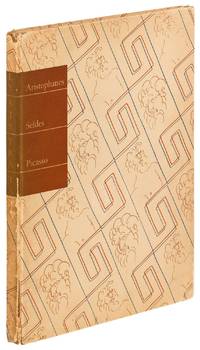
1934419893New York: Limited Editions Club 1934. Hardcover. Near Fine/Near Fine. First edition of this translation. Illustrated by Pablo Picasso with six original etchings in black and 30 lithographs. Tall quarto. Illustrated paper over boards. Light chipping at the spine ends wear at the corners and bottom of the front joint mild offsetting on front endpapers from clippings an about very good copy lacking the original glassine chemise and slipcase. One of 1500 numbered copies Signed by Picasso this is the translator Gilbert Seldes' own copy hand noted as copy number "G.S." Provenance on request. The Artist and The Book 226. Limited Editions Club hardcover
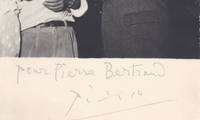
221711/1/50. <p>The most prodigious artistic talent of the twentieth century came from his native Spain to settle in Paris at the turn of the century and art and the art world were never the same again. His companion is writer Pierre Bertrand to whom the photo is inscribed. 6 7/8 x 4 1/2 inches. A half-length <strong>portrait</strong> inscribed on the lower margin:<em> ""Pour Pierre Bertrand / Picasso.""</em></p> unknown
19340101403New York: The Limited Editions Club 1934. Limited edition. Hardcover. 4to. In decorated paper over boards retaining the original glassine jacket blue chemise lined with decorated paper and blue slipcase. With six original etchings in black and illustrations throughout. Very good condition; glassine is age-toned and shows a long tear to the rear panel from the top center across to the rear flap. Chemise shows age-toning to the spine; slipcase is age-toned scuffed with loss to corners and upper seams splitting. Limited edition this copy numbered 612 of 1500; SIGNED by Picasso. The Limited Editions Club hardcover
19542091202133212845Editions Cervle D'Art 1954. Soft Cover. Fine. Volume: 1 Editions Cervle D'Art paperback
199556467San Francisco CA: AW Fine Arts. New. 1995. Hardcover. FREE UPGRADE to Courier/Priority Shipping Upon Request IN STOCK AND IMMEDIATELY AVAILABLE FOR SHIPMENT - FLAWLESS COPY BRAND NEW PRISTINE NEVER OPENED -- - 17 volumes published 1995 - 2004 covering the years 1916-1973 have been published. 5 new volumes are in preparation. Approximately 5500 pp. with 21000 illustrations. Includes many works unknown to Zervos. Titles in French and English. Chronology and concordances to Zervos. Two of the volumes catalogue the printed graphic work and are revisions of the Bloch catalogues II & IV. -- with a bonus offer-- . AW Fine Arts hardcover
1962189240Paris: Berggruen 1962. Picasso experiments with Cut-Outs and photography First edition number 775 of 1000 copies. This Picasso's only foray into the world of photography began as a way to entertain his grandchildren making simple cut-outs of paper masks and animal faces in the style of Matisse. Years later Villers and Picasso met when the young photographer came to take the artist's portrait. The two experimented with photographic printing techniques by exposing cutouts on bromide paper which Villers then re-photographed. Folio. With 30 black and white photographs by Picasso and Villers. Original paper chemise with title to front cover designed by Picasso text and photographs in paper sleeves with printed caption loose as issued. All housed in publisher's cloth portfolio with title and illustration by Picasso. Slipcase rubbed spine toned a few creases to paper sleeves: a near-fine copy. hardcover
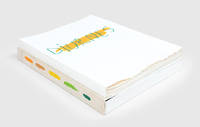
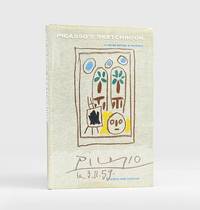
1960185257London: Thames and Hudson 1960. First UK edition one of 250 copies issued. This is a faithful reproduction down to the bindings of a sketchbook kept by Pablo Picasso from 1 November 1955 to 14 January 1956. During this period of time he was working on "Les Femmes d'Alger" and "Jacqueline in Turkish Costume." The influence of Henri Matisse can be seen in these variations which were completed in the year following his death. This copy retains the publisher's supplement featuring a foreword by the art critic Georges Boudaille. The book was first published in 1959 in France under the title Carnet de la Californie. Folio. With 39 lithographs after sketches by Picasso. Original illustrated card wrappers ring-bound as issued and loose in illustrated green cloth boards. With original printed acetate jacket. Together with publisher's supplement. Bumps to extremities of cloth boards; acetate jacket rubbed and lightly chipped 80mm tear to front panel: a near-fine copy. hardcover