4 198 résultats
217112À Paris, Chez Treuttel & Würtz, 1824 in-8, VIII-440 pp., portrait-frontispice, demi-veau caramel, dos lisse orné de filets dorés (reliure de l'époque). Début de fente aux mors. Qqs rousseurs.
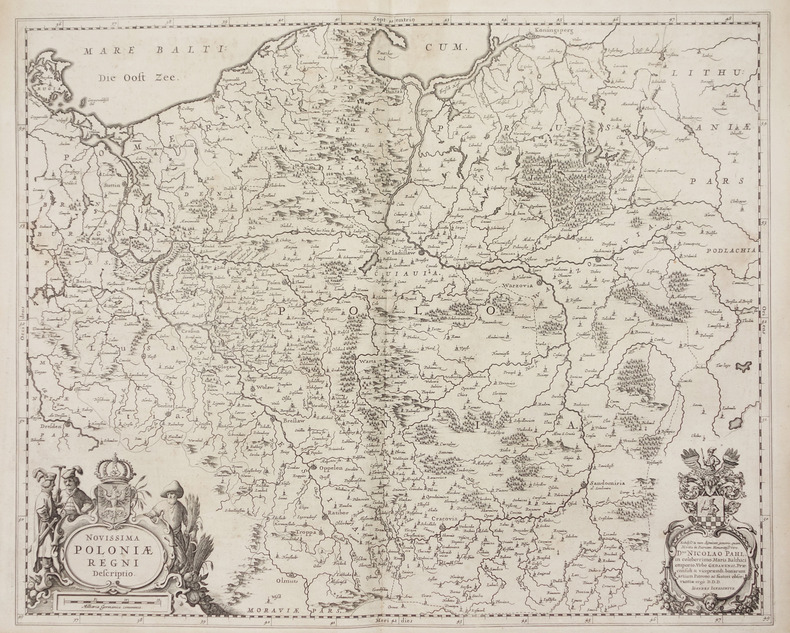
1768LBW-1961[circa 1750]. 478 x 537 mm.
<p>in 8°, (19x13) cm, rilegatura coeva in piena pergamena, titolo in oro su tassello al dorso; pp. (16), 711, (1); una tavola incisa da Felicita Sartori a piena pagina all'antiporta, 2 grandi carte geografiche di cui una con restauro al verso e 10 tavole in gran parte ripiegate fuori testo. </p>
194595822Lodz: Centralna Zydowska Komisja Historyvzna w Polsce 1945. 1st edition. Good. oblong quarto. original chipped boards 38 104 32pp. b/w plates An amazing document drawn largely from "souvenir" photos taken by German soldiers and published immediately after the end of the war. Dual text POLISH RUSSIAN ENGLISH FRENCH & HEBREW. Heavy use inc. loose pages o/w a complete copy of a very scarce not to say rare volume suitable for restoration & rebinding Centralna Zydowska Komisja Historyvzna w Polsce hardcover
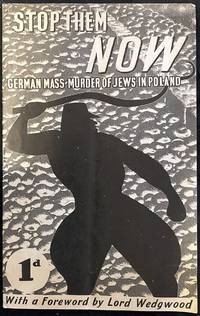
194243347Liberty Publications London 1942. Paperback. 1st edition. Original dramatically illustrated paper wrappers. 12mo 14 pages. Photographic illustrations. <br> With heart-breaking introduction: "It IS True" by the London-based Bundist leader Szmul Zygielbojm who within eight months of this publication committed suicide At the time of his suicide he stated: "By my death I wish to give expression to my most profound protest against the inaction in which the world watches and permits the destruction of the Jewish peopleâ€.<br> Zygielbojm was a “Member of the Polish National Council in London Member of the T.U.C. in Poland and of the Executive of the Jewish Socialist Party “Bund†in Poland.†<br> This dramatic publiction details the horrors against Jews specifically the Polish Jews using information from two documemts from the Polish government. Includes photographs of “a mass grave of massacred Jews in Central Poland†a man tallying the dead bodies and a man holding a starving baby. A copy sold for over USD 800 with commissions at auction in 2013. <br> SUBJECTS: Holocaust Jewish 1939-1945 -- Poland. World War 1939-1945 – Jews. Atrocities. Occupation. <br> OCLC: 22173530. <br> Very Good Condition. HOLO2-159-16-XX-ABLPIII-EBB-'ff. Liberty Publications, London paperback
In folio; (24), 287, (1) pp. e 3 c. di tav. a piena pagina fuori testo. Legatura in mezza pergamena di recupero con piatti foderati con bella carta marmorizzata ottocentesca. Titolo impresso in oro su fascetta in pelle al dorso. Un leggero alone al margine esterno del volume con qualche piccola fioritura. Tagli spruzzati in azzurro. Alcune pagine con leggermente ingiallite. Una leggera macchiolina al margine basso bianco delle ultime 20 carte, non fastidioso od intenso ma per il resto esemplare in discrete-buone condizioni di conservazione. Antip. calcogr. incisa da Marc’Antonio Dal Re su disegno di Francesco Monti. Ritr. del dedicatario disegnato da Felicita Sartori da un dipinto di Rosalba Carriera e inciso da Carlo Orsolini. Ritr. dell’aut. inciso da Francesco Zucchi. Testatine ed iniziali incise. In particolare la testatina presenta lo stemma del Regno di Polonia con l’aquila incoronata ed il cavaliere lituano. Frontespizio stampato in rosso e nero con bellissima vignetta animata calcogr. siglata: “Petrus Salvini inv. et del. Brixiae Daudet sculp. Lug d.”. Prima ed unica edizione di quest’importante opera medica del celebre medico e poeta bresciano il Conte Francesco Roncalli (Brescia, 1692 – 1763 o 1769), noto anche come Francesco Roncalli Parolino, Francesco Parolino Roncalli e Francesco Roncalli Parolini. L’autore, allievo a Padova del Valisnieri, si distinse per varie opere a carattere medico fra le quali, oltre a quella qui presentata, “Medicina Europae” e “Nosocomium locupletatum”. Ampiamente apprezzato come medico e studioso venne chiamato alla corte di Spagna diventando il medico personale del Re di Spagna e per i suoi meriti medici venne anche insignito del titolo di Conte di Polonia dal Principe di Sassonia Federicus Christianus, Re di Polonia e Grande Elettore. Appassionato di botanica scrisse anche una celebre opera dedicata alla flora bresciana “Plantarum in agro brixiano situs, et vires”. Il De Renzi (vol V, pp. 148 e 554) così scrive del Roncalli: “…fu medico dotto ed operosissimo, ed acquistò molta fama per aver concepito e menato a termine un disegno utilissimo in quel tempo: quello cioè di raccogliere le relazioni de’ principali medici di Europa sulla medicina de’ propri paesi, indicando le condizioni topografiche, le malattie endemiche o più frequenti ed i metodi più in uso nel medicare”. L’opera qui presentata tratta in forma di epistole latine, numerose affezioni, tra le quali gli aneurismi, malattie cutanee, l’epilessia, la melanconia, l’ipocondria, l’apoplessia, la scrofola, la miopia, la sifilide, l’asma, i tumori, la lombaggine, la nefrite, varie malattie ginecologiche, etc. ed è considerata un sunto del pensiero medico dell’epoca. Fra gli autori corrispondenti delle “Epistole” si trovano i grandi medici dell’epoca come Paolo Valcarenghi, Carlo Francesco Cogrossi, Andrea Pasta, Giovanni Battista Morgagni, Giovanni Battista Mazzini, Antonio Leprotti ed altri. Rif. Bibl.: Hirsch-H, IV, 511; Wellcome, IV, 554; Rappaport 387 che descrive l’opera come molto importante; Blake, 387; Non in Garrison-Morton e in Waller; Osler, 3830: “I know no work of exactly the same lines”. Sull’A. voce “Roncalli-Parolino” in Michaud, “Biogr. Universelle”, XXXVIII, 544-45.
1891276956O.R. Reisland Leipzig 1891. Hardcover mit Leinenrücken und -ecken 1891-1931. Jahrgänge 1112132526272829303132333839404142464748495051. Der 39. Jahrgang ist nicht gebunden. Zustand: Keine Beschädigungen ehem. Exemplare einer Klosterbibliothek mit Kennungen. Rücken Ecken Kanten sehr gut. O.R. Reisland, Leipzig, hardcover
1894LFA00d24Un ouvrage de 343 pages, format 230 x 280 mm, broché, publié en 1894, Librairie Ancienne de Louis Brun (Lyon), bon état
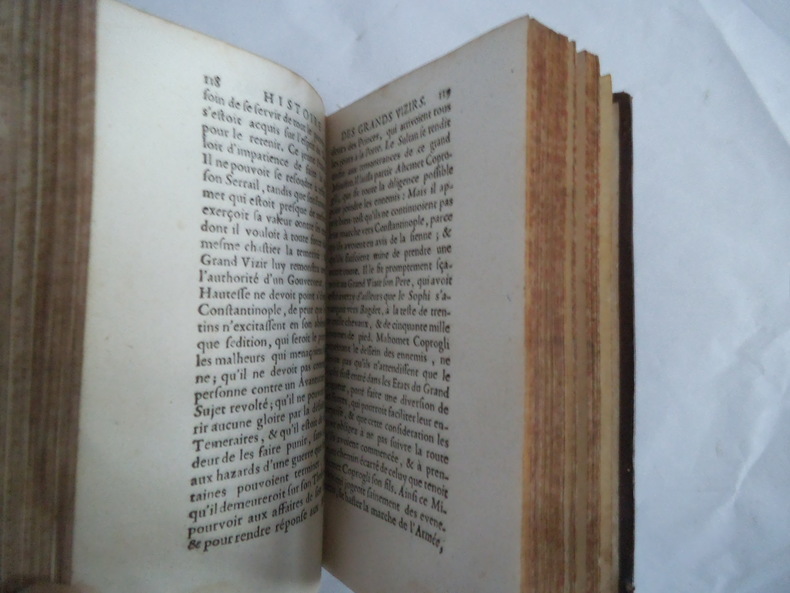
11630Celle des trois derniers grands seigneurs, de leurs Sultans & principales favorites, avec les plus secrètes intrigues du Sérail, et plusieurs autres particularitez des guerres de Dalmaties, Transilvanie, Hongrie, Candie, & Pologne, avec l’histoire du Grand SOBIESKY Roy de Pologne et le plan de bataille de Cotzchin.: Tome premier(?) : in 12 plein cuir fauve raciné à nerfs, pièce de titre cuir, fers, roulette doré, titre, IX-303 pages-7 pages. Tranches mouchetées. A Paris et à la boutique de G. Quinet 1679. Bien complet plan du camp de la bataille de COTZCHIN, gravure de format 385x255mm,contrecollée sur vergé mince (gravure attribuée à Romeyn de Hoogh) ouvrage d'anecdotes et de guerres contre les turcs où s'illustrèrent Jean SOBIESKI et Charles V de Lorraine
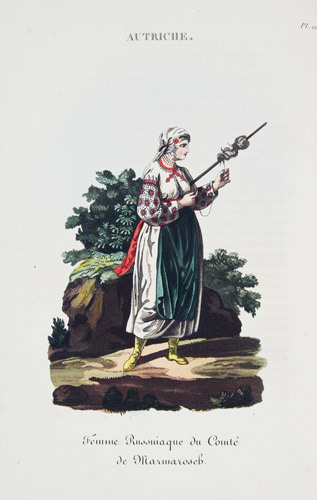
99281aafParis, Librairie de Gide Fils, s.d., (1825), gr. in-8vo, 4 ff. (faux-titre - titre avec vign. gravée - notice sur l’Autriche) + 24 ff. de texte explicatif + 24 planches de costumes réhaussées en couleurs, avec les feuilles de protection originales intercalées, reliure en d.-cuir originale rouge, dos avec titre or, plats avec encadrements gaufrés. Bel exemplaire.
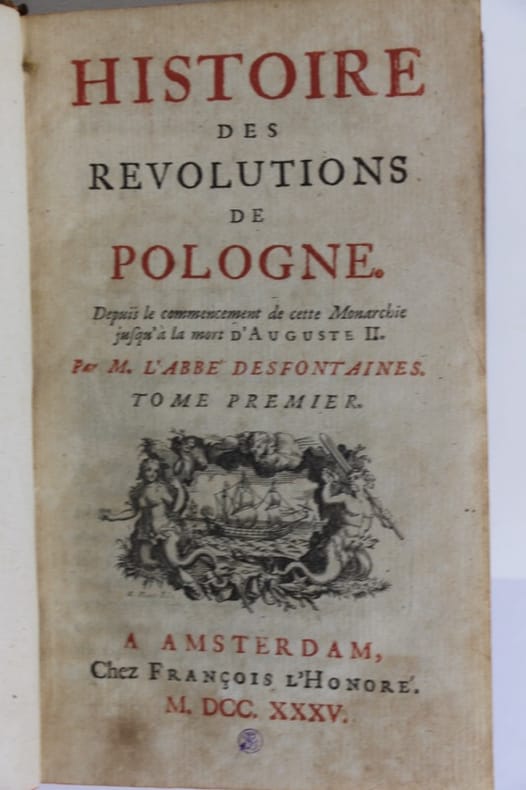
173594406Paris, L'Honoré 1735 2 tomes en un vol. in-12, veau marbré ép., dos à nerfs, caissons ornés, XXIV- 243- 206- 38 pp. Coiffe sup. usée, sinon bel exemplaire.
Varsha [i. E. Warsaw] & Paris: Tsukunft, 1946-49. Paper Wrappers, 4to (tabloid format) , 24 pages each issue. Many issues include photos or illustrations on cover. This Yiddish Socialist bi-monthly newspaper for Young people ran from Dec. 1, 1922 until sometime in 1949, in various formats at different times. Very interesting vision of a postwar world of Jewish Socialism by the surviving rememnant in Poland, clearly expressing the Bund position of Dokeit ("thereness") , remaining to build Jewish life within a socialist framework with other nationalities, rather than Zionism; this even on Polish soil in the immediate of the aftermath of the Shoah. SUBJECT(S) : Jewish socialists -- Poland -- Periodicals. Jewish youth -- Poland -- Periodicals. Jews -- Poland -- Periodicals. OCLC lists only 1 holding (NYPL) . Newsprint, so paper is brown, but for the most part very solid. What wear there is is at the extreme margins, with, no text loss (Y-28A)
17640053411764 Varsovie [Paris], Imprimerie de Psombka, Et se vend à la Science [A.-C. Briasson], 1764. In-12 (113 X 167 mm) veau fauve marbré, dos lisse cloisonné et orné, pièce de titre maroquin rouge, coiffes et coupes filetées, tranches rouges (Reliure de l'époque) ; (2) ff. de faux-titre et titre, 240 pages. Mention manuscrite au verso du premier feuillet de garde : « [1?] 4 Briasson ».
Carta geografica , in bella coloritura coeva. Inserita in "Mercurio geografico overo Guida Geografica in tutte le parti del Mondo conforme le Tavole Geografiche del Sansone Baudran de Cantelli Data in luce con direttione, e cura di Gio. Giacomo de Rossi nella sua stamperia in Roma alla Pace all'insegna di Parigi con Priu: del S. Pont" edita a Roma alla fine del '600. Al verso testo manoscritto descrittivo con inchiostro bruno inerente la carta
172685Paris, Guillaumin, novembre 1833 in-8, 29 pp., broché sous couverture imprimée de l'éditeur.
1st edition. Original printed paper wrappers, 16mo, 47 pages. Stapled tan wrappers with brown and dark blue lettering on the covers. In Polish. Title translates as, "The Camp at Majdanek. " An extremely early Polish-language publication of Soviet novelist and journalist Boris Gorbatovs report on the Majdanek Concentration Camp, and the atrocities committed there and in the area of Lublin, which were first published in Russian in the Soviet newspaper "Pravda" on August 11th and 12th of 1944, shortly after the liberation of the camp by Soviet forces in July. These writings constitute some of the earliest writing on the Holocaust in Eastern Europe. The writing describes the camp and the ongoings there in vivid detail, including interviews with local residents of Lublin. Following Gorbatov's report are two shorter pieces on the the camp, one by by Polish-Soviet Commission on Majdanek, and the other a statement by Hilmar Moser a German lieutenant general. Includes 8 photos of the camp, including images of the crematorium, human remains and victims shoes, as well as reproductions of Moser's written statement. OCLC lists only 2 copies worldwide, (FAU, Polish Union Catalog) . Tiny nick to one corner, otherwise Very Good Condition, an excellent copy. Rare and important (Holo2-139-18)
1658LBW-2739[Amsterdam, 1658]. 432 x 539 mm.
185513068Lefèvre Rouen 1855-59 1 vol. 2 parties en un vol. in-4 oblong, respectivement de 29 et 33 feuillets non chiffrés, demi-chagrin de l'époque, dos à nerfs orné, titre doré sur le premier plat.
240951Genève, J.-J. Paschoud, Paris, F. Buisson, 1809 2 vol. in-8, [4]-XXII-[2]-416 et [4]-422 pp., cartonnage papier brun à la Bradel, filets dorés au dos (reliure de l'époque). Ex-libris Roger Budin, Genève. Bon exemplaire.
In 8° (20,1×13,5 cm); 278, (2) pp. Brossura editoriale con sopraccoperta illustrata editoriale. Qualche lieve strofinatura ma nel complesso esemplare in buone-ottime condizioni di conservazione. Dedica autografa dell’autore alla prima carta. In allegato una lettera autografa a tema letterario scritta da Milosz stesso su carta intestata “Czeslaw Milosz … Berkeley, California” datata 12.06.1990. La firma autografa dell’autore si trova anche al margine alto del fronte della lettera sopra l’indirizzo prestampato. Seconda edizione dopo la prima del 1986, di questa raccolta di poesie del celebre poeta e saggista polacco, Czeslaw Milosz (Šeteniai, 30 giugno 1911 – Cracovia, 14 agosto 2004). L’autore studiò e si formò a Vilnus all’epoca territorio polacco. Il suo debutto letterario si fa risalire al 1930. Fu uno dei fondatori del gruppo letterario “Zagary”. Durante la Seconda Guerra Mondiale vive a Varsavia dove lavora alla stampa underground. Dopo la guerra diventa addetto culturale presso l’Ambasciata polacca a Washington prima e a Parigi poi. Nel 1951 esprime il suo forte scetticismo contro la prospettiva del socialismo reale rompendo con il partito comunista e chiedendo ed ottenendo l’asilo politico in Francia. Da qui si trasferisce negli Stati Uniti dove si stabilisce a Berkeley in California e dove insegna letteratura polacca. In America porta avanti la sua opera poetica cimentandosi anche con grande successo, nella traduzione delle principali opere polacche in lingua inglese, partecipando in questo modo alla diffusione della letteratura polacca nei paesi di lingua inglese. Nel 1980 gli viene conferito il Premio Nobel per « Who with uncompromising clear-sightedness voices man’s exposed condition in a world of severe conflicts. ».
201362Paris, Imprimerie et Librairie militaire de Gaultier-Laguionie, 1841 in-8, [4]-403-[4] pp., portrait-frontispice, carte dépliante en couleurs, bradel demi-percaline brique marbrée (reliure postérieure). Dos en partie décoloré, coupes et coins usés. Rousseurs. Fortes mouillures en début et fin d'ouvrage. Ex-libris et cachet Jean-Jacques Pattyn.
40 p. , paper; first edition, published September 1943. Paperback, 40 pages, 8vo. Published the same year as the uprising, one of the first reports published in the US. Important. What may be the first ever published map of Treblinka, as well as a map of the Warsaw Ghetto on the rear cover. "The ghosts of the heroes of the gehtto battle will forever honor the streets....But persistent reports in the press in spring and summer 1943 indicate that not only their spirit but also their successors survive and carry on the fight there. The curtain may not yet have been rung down" (conclusion). Includes fold-out map with tear at crease. Lacks rear cover, front cover trimmed, stamped, and repaired, spine rebacked, otherwise Good condition. (Holo2-14-11A)
196 pages. Reproductions of dozens of black and white photos. Author documents the dramatic trip which saw her ripped her from her comfortable Polish home on her sixteenth birthday in 1940 and took her thousands of miles, eventually settling in England. Unmarked. Above-average but not excessive wear. Binding intact with some lean to spine. Small address labels inside each cover. A worthy copy of this important and unforgettable true story. Book
292 pages. Index. Maps. Map endpapers. "...Presents for the first time in English a history of Galicia (Halychyna) for this part of Ukraine has for centuries had its own history quite distinct from that of the other parts of the country. It has been subjected to other influences, chiefly Western, and it has had to contend for its rights and the rights of its population under conditions very different from those facing the other Ukrainians." - from Introduction. Text divided into the following four parts: The Princely Period (907-1340); Galicia Under Polish Occupation (1349-1772); Galicia Under The Hapsburgs (1772-1918); Galica from 1914 -1945. This detailed treatment will be of great interest to those pursuing historical and genealogical research in the region. Map on back endpaper provides extremely detailed demographic information on the region based on a census of December 31, 1900. Clean, tight and unmarked with light wear. A high quality copy. Book