29 735 résultats
In-4° oblungo; frontespizio inciso e 50 tavole incise all’acquaforte da Pinelli (1781-1835), raffiguranti scene di costume ambientate nella campagna romana; i personaggi sono dediti a giochi, lavori, attività varie della vita quotidiana, anche a Roma e nel regno di Napoli; le ambientazioni sono in Ciociaria, Cerbara, Tivoli, Albano, Fracati, Pietra Terrazzana, Roma. L’indicazione di responsabilità presente su quasi tutti i rami è “Pinelli Fece 1815 Roma”. Buona copia.
Pianta archeologica di Roma incisa da Giacomo Lauro e pubblicata dalla tipografia de Rossi.In alto al centro il titolo e l’imprint editoriale ROMA ANTIQUA TRIUMPHATRIX AB ANTIQUIS MONUMENTIS ET RERUM GESTARUM MEMORIIS ERUTA HICA IACOBO LAURO ROMANO AUCTORE ET SCULPTORE GRAPHICE EXPRESSA. Io. Iacobus de Rubeis formis Romae ad Templu[m] Pacis cu[m] Priv. S. Pont. In basso al centro Romae Cum Privilegio Summi Pontificis. A destra e sinistra della carta una lunga legenda numerica di 279 rimandi a luoghi e monumenti notabili e due piccole mappe. La carta è circondata da un testo inciso e da venti vignette che simboleggiano momenti significativi nella storia antica della città. Carta priva di orientazione. Acquaforte e bulino, mm 482x736.La carta è circondata da un testo inciso e da venti vignette che simboleggiano momenti significativi nella storia antica della città, mentre due piccole mappe raffigurano i sette colli sui quali sorge Roma. Incerta è la datazione della stessa, che il Frutaz colloca tra il 1612 e prima del 1650. Cartograficamente ispirata a quella realizzata da Etienne Duperac nel 1574, la pianta venne pubblicata da Giacomo de Rossi tra il 1649 e il 1677, anno in cui viene elencata nel celebre Indice della stamperia De Rossi.Acquaforte e bulino, impressa su carta vergata coeva, con margini, colori coevi, lieve restauro con parziale perdita di testo in basso al centro, nel complesso in eccellente stato di conservazione.BibliografiaArrigoni-Bertarelli (1930): p. 10, n. 77; Christie’s (1998): n. 1034; Frutaz (1962): p. 72, n. XXVII, Tavv. 59-61; Hülsen (1915): XXIII, p. 86, n. 107; Iusco. Indice delle stampe de' Rossi, p. 379 (p.16 c.2); Scaccia Scarafoni (1939): pp. 32-33, n. 32. The bird's-eye view of ancient Rome by Giacomo Lauro was derived from Etienne du Pérac's large view of Rome.Printed from two separate plates on two sheets subsequently joined at vertical edges. List of buildings and sites numbered 1-279, keyed to view. At outer margin is a band of 16 engraved scenes from Roman history interspersed with 20 numbered explanatory texts. Heads of the 7 kings of Rome appear at upper left, heads of the 12 Caesars at upper right. Title and imprint at top center. Oriented with east at top.In marginal text, Lauro refers to his Antiquae urbis splendor (published 1612), so the view must have been engraved between that date and his death in 1650. This span is narrowed by the probability that the present view is that signed by Lauro in 1635. It must have been published by Giovanni Giacomo de Rossi between the beginning of his publishing activity in 1649 and the 1677 index of his publications whichincludes this view.Etching with engraving, printed on contemporary laid paper, with margins, contemporary colour, light repair with the loss of part of the text on lower part, otherwise in excellent condition.LiteratureArrigoni-Bertarelli (1930): p. 10, n. 77; Christie’s (1998): n. 1034; Frutaz (1962): p. 72, n. XXVII, Tavv. 59-61; Hülsen (1915): XXIII, p. 86, n. 107; Iusco. Indice delle stampe de' Rossi, p. 379 (p.16 c.2); Scaccia Scarafoni (1939): pp. 32-33, n. 32.
Serie completa di frontespizio e 8 incisioni all’aquaforte, 1835 circa, finemente colorate a mano, che raffigurano il carnevale di Roma tra via del Corso, Piazza del Popolo e Piazza Venezia. Stampato a Roma dall’editore Alessandro Depoletti. Opera rarissima in magnifica coloritura coeva; legata in oblungo. Sconosciuta al Colas. Dimensioni 165x120. A complete series of eight etchings plus the front page, 1835 approximately, fine hand colour. It depicts the Carnival of Rome winding along via del Corso, Piazza del Popolo and Piazza Venezia. This work was printed in Rome by the publisher Alessandro Depoletti. A very rare work, with contemporary colours, oblong bookbinding. This plate was unknown to Colas.
- SECONDO STATO DI CINQUE -Acquaforte e bulino, 1751, con indirizzo e prezzo; esemplare della contemporanea tiratura romana. Magnifica prova, impressa su carta vergata coeva con filigrana "doppio cerchio e giglio", con pieni margini, in perfetto stato di conservazione. Della serie Vedute di Roma. L’opera consiste in 135 lastre prodotte individualmente dal Piranesi per almeno 30 anni, da circa il 1745, fino alla data della sua morte. All’opera sono aggiunte poi due vedute realizzate dal figlio Francesco. Per la prima volta furono edite dall’editore Giovanni Bouchard nel 1751 (34 lastre), successivamente dallo stesso Piranesi editore a Strada Felice prima e Palazzo Tomati poi (indirizzi che appaiono su molte tavole), fino alla stesura definitiva composta da 137 lastre. Successivamente alla morte dell’autore le matrici furono ereditate dal figlio Francesco, che ne curò la pubblicazione prima nella capitale - le cosiddette tirature “postume romane” - e successivamente a Parigi, dove furono stampate tre edizioni – la cosiddetta “prima di Parigi”, una intermedia (entrambe su carta vergata) e quella curata dall’editore Firmin Didot, la prima su carta senza vergelle, dove le tavole presentano l’aggiunta di un numero arabo ordinale. Tutte le tirature parigine sono piuttosto modeste in qualità, lontane da come il Piranesi le aveva pensate e concepite. Le lastre furono poi acquisite dalla Calcografia Camerale, poi Calcografia Nazionale, oggi Istituto Centrale per la Grafica, dove sono tuttora conservate. - THE SECOND STATE OF FIVE -Etching and engraving, 1751, signed on plate.Example from the contemporary Roman Edition. A very good impression, printed on contemporary strong laid paper with "double encircled flur-de-lys" watermark, with margins, very good condition. Taken from Vedute di Roma. The whole work consists of 135 plates which have been individually produced by Piranesi along 30 years, from 1745 circa until his death. Two more works have been subsequently added, two plates by his son Francesco. They have been printed for the first time in 1751 (34 plates) by the editor Giovanni Bouchard, afterwards by Piranesi himself, publisher first in Strada Felice an the in Palazzo Tomati, imprint that can be found in mostly of the plates), until the final edition of 137 plates. After Piranesi's death, his son Francesco inherited the plates, editing them first in Rome and then in Paris, where three editions were printed - the so-called "first Paris edition", an intermediate one (both on laid paper) and the one edited by the publisher Firmin Didot, the first on wowe paper, where the plates have an Arabic ordinal number added. All Parisi issues are rather modest in quality, far from how Piranesi had thought and conceived them. The plates were then acquired by the Calcografia Camerale, then Calcografia Nazionale, today Istituto Centrale per la Grafica, where they are still kept. Hind 21, II/V; Focillon 736.
- PRIMO STATO DI SEI -Acquaforte e bulino, 1760. Esemplare della contemporanea tiratura romana di Bouchard e Gravier, sconosciuto ad Hind. Che descrive come primo stato (di cinque) quello con indirizzo e prezzo. Magnifica prova, impressa su carta vergata coeva con filigrana "cerchio e giglio", con pieni margini, in perfetto stato di conservazione. Della serie Vedute di Roma. L’opera consiste in 135 lastre prodotte individualmente dal Piranesi per almeno 30 anni, da circa il 1745, fino alla data della sua morte. All’opera sono aggiunte poi due vedute realizzate dal figlio Francesco. Per la prima volta furono edite dall’editore Giovanni Bouchard nel 1751 (34 lastre), successivamente dallo stesso Piranesi editore a Strada Felice prima e Palazzo Tomati poi (indirizzi che appaiono su molte tavole), fino alla stesura definitiva composta da 137 lastre. Successivamente alla morte dell’autore le matrici furono ereditate dal figlio Francesco, che ne curò la pubblicazione prima nella capitale - le cosiddette tirature “postume romane” - e successivamente a Parigi, dove furono stampate tre edizioni – la cosiddetta “prima di Parigi”, una intermedia (entrambe su carta vergata) e quella curata dall’editore Firmin Didot, la prima su carta senza vergelle, dove le tavole presentano l’aggiunta di un numero arabo ordinale. Tutte le tirature parigine sono piuttosto modeste in qualità, lontane da come il Piranesi le aveva pensate e concepite. Le lastre furono poi acquisite dalla Calcografia Camerale, poi Calcografia Nazionale, oggi Istituto Centrale per la Grafica, dove sono tuttora conservate. - THE FIRST STATE OF SIX -Etching and engraving, 1760. An early state, not described by Hind, with the Bouchard & Gravier address. The first state (of five) described by Hind id with the addrss and price.Example from the contemporary Roman Edition. A very good impression, printed on contemporary strong laid paper with "encircled flur-de-lys" watermark, with margins, very good condition. Taken from Vedute di Roma. The whole work consists of 135 plates which have been individually produced by Piranesi along 30 years, from 1745 circa until his death. Two more works have been subsequently added, two plates by his son Francesco. They have been printed for the first time in 1751 (34 plates) by the editor Giovanni Bouchard, afterwards by Piranesi himself, publisher first in Strada Felice an the in Palazzo Tomati, imprint that can be found in mostly of the plates), until the final edition of 137 plates. After Piranesi's death, his son Francesco inherited the plates, editing them first in Rome and then in Paris, where three editions were printed - the so-called "first Paris edition", an intermediate one (both on laid paper) and the one edited by the publisher Firmin Didot, the first on wowe paper, where the plates have an Arabic ordinal number added. All Parisi issues are rather modest in quality, far from how Piranesi had thought and conceived them. The plates were then acquired by the Calcografia Camerale, then Calcografia Nazionale, today Istituto Centrale per la Grafica, where they are still kept. Hind 55, prova di stampa, non descritta; Focillon 756.
0822-Bo.J. Radierung, 1763, auf Bütten. 45,5:67,3 cm, Blattgröße 57,8:86,2 cm.- Unten links auf einer Kartusche bezeichnet und signiert ?Piranesi sc.?. Literatur: Focillon 768; Hind 65, I (v.III); Ficacci 936; Wilton-Ely 198. ? Kräftiger Abdruck mit dem vollen Rand, die Ränder mit Stockflecken.
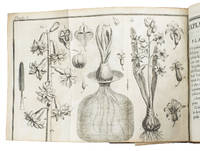
1765L3IEIGJIR4NJ1765. 252 4; 156 pp. Convolute containing the rare second editions of two botanical books one on tulips and the other on hyacinths written by the French priest and botanist Jean Paul Rome dArdène 1689-1769 famous for his studies of flowers which demonstrate his vast erudition as well as providing practical advice. His work is therefore full of information addressed not only to florists and gardeners but to scientists flower lovers and cultivated persons generally and infused with the authors profound love for his subject Oak Spring Flora. The same printer-publisher published the first editions in 1760 and 1759 respectively.Ad 1: Traité des tulipes is an extensive work exclusively devoted to tulips discussing their origin name different varieties cultivation and beauty in 12 chapters. It ends with two folding plates illustrating tulips with an explanation for each plate.Ad 2: Traité sur la connoissance et la culture des jacintes similarly discusses .different aspects of the hyacinth once again in twelve chapters. It covers etymology the right conditions for cultivation and common diseases that affect hyacinths. Like the tulips it ends with two folding plates illustrating hyacinths with an explanation for each plate. It was translated into Italian in 1763. Both first editions are very rare: WorldCat records two copies of each but also only three and four copies of the present second editions of 1765.With a small crease in the first folding engraved plate of Traité des tulipes and a small tear in one text leaf but overall in very good condition.l Ad 1: Hunt 587; Oak Spring flora 76 note p. 294; WorldCat 3 copies; cf. Cat. Lindley libr. p. 10 1760 ed. Ad 2: Oak Spring flora 76 note p. 294; WorldCat 4 copies; cf. Cat. Lindley libr. p. 10 1759 ed.; Hunt 526 note 1759 ed.; neither in: BMC NH; Nissen BBI; Bradley. unknown
LEGATURA IN PIENA PELLE COEVA CON TITOLI ANCHE AL PIATTO, 85 TAVOLE COMPLESSIVE( COMPRESI I FRONTESPIZI ) LE TAVOLE MISURANO CENTIMETRI 44X30.5, LA PARTE INCISA 23X17. OPERA MOLTO RARA formato: ALBUM 46X31.5 stato conservazione: BUONO, ABRASIONI E PICCOLE USURE E MANCANZE ALLA COPERTINA
Acquaforte e bulino, 1773, firmata in lastra in basso a sinistra. Esemplare del primo stato di tre. Magnifica prova, impressa su carta vergata coeva, con margini, in ottimo stato di conservazione. Della serie Vedute di Roma. L’opera consiste in 135 lastre prodotte individualmente dal Piranesi per almeno 30 anni, da circa il 1745, fino alla data della sua morte. All’opera sono aggiunte poi due vedute realizzate dal figlio Francesco. Per la prima volta furono edite dall’editore Giovanni Bouchard nel 1751 (34 lastre), successivamente dallo stesso Piranesi editore a Strada Felice prima e Palazzo Tomati poi (indirizzi che appaiono su molte tavole), fino alla stesura definitiva composta da 137 lastre. Successivamente alla morte dell’autore le matrici furono ereditate dal figlio Francesco, che ne curò la pubblicazione prima nella capitale - le cosiddette tirature “postume romane” - e successivamente a Parigi, dove furono stampate tre edizioni – la cosiddetta “prima di Parigi”, una intermedia (entrambe su carta vergata) e quella curata dall’editore Firmin Didot, la prima su carta senza vergelle, dove le tavole presentano l’aggiunta di un numero arabo ordinale. Tutte le tirature parigine sono piuttosto modeste in qualità, lontane da come il Piranesi le aveva pensate e concepite. Le lastre furono poi acquisite dalla Calcografia Camerale, poi Calcografia Nazionale, oggi Istituto Centrale per la Grafica, dove sono tuttora conservate. Etching and engraving, signed at lower left. Example of the first state of three described by Hind. A fine impression, printed on contemporary laid paper, with margins, very good condition. Taken from Vedute di Roma. The whole work consists of 135 plates which have been individually produced by Piranesi along 30 years, from 1745 circa until his death. Two more works have been subsequently added, two plates by his son Francesco. They have been printed for the first time in 1751 (34 plates) by the editor Giovanni Bouchard, afterwards by Piranesi himself, publisher first in Strada Felice an the in Palazzo Tomati, imprint that can be found in mostly of the plates), until the final edition of 137 plates. After Piranesi's death, his son Francesco inherited the plates, editing them first in Rome and then in Paris, where three editions were printed - the so-called "first Paris edition", an intermediate one (both on laid paper) and the one edited by the publisher Firmin Didot, the first on wowe paper, where the plates have an Arabic ordinal number added. All Parisi issues are rather modest in quality, far from how Piranesi had thought and conceived them. The plates were then acquired by the Calcografia Camerale, then Calcografia Nazionale, today Istituto Centrale per la Grafica, where they are still kept. Wilton Ely 240; Focillon 828; Hind 107 I/III.
[Figurato costumi-Roma] (cm. 30,2x44) solida mz. pelle antica ben restaurata, piatti in carta marmorizzata antica, angoli in pelle. Sguardie antiche. Copertine originali in carta azzurrina conservate. Frontis inciso e 50 tavole numerate incise all' acquaforte. Rara prima edizione della prima raccolta di costumi pittoreschi dell' agro romano, assai celebre e ricercata così definita da Cicognara 1762: "Questi sono tolti la più parte dalle abitudini del popolo romano, e sono espressi con una verità e fedeltà insuperabile". L' ultima tavola rappresenta il riposo dell' autore tra le rovine con il motto scolpito sulla lapide: "Tutto finisce". Bell' esemplare a pieni margini con minime tracce di polvere angolari e rare lievi fioriture al margine. Le incisioni sono in ottima tiratura e molto fresche. * Colas 2370; * Hiler 712; * Lipperheide Ja12; * Rossetti III n° 8195; * Choix 17.803; * Vinet 2294; * Nuc 459; * Benezit x 951; * Nagler XII 480.[f47] Libro
194489156Roma: Documento 1944. Ottimo Fine. Dieci acqueforti originali numerate e firmate dall'Artista cm da 145x195 a 30x195. Foglio cm 355x27. Ogni incisione reca a matita anche un proverbio di Gentilini. Edizione curata dalla Libreria La Margherita. 4to cm 37x285. Ottimo Fine. Prima edizione di 45 esemplari numerati. Prima cartella di incisioni di Franco Gentilini. Documento, unknown
0826-Bo.J. Radierung, 1765, auf Bütten. 44,5:69,5 cm, Blattgröße 58:86 cm. Im Unterrand bezeichnet, links unten signiert ?Cavalier Piranesi F.?. Literatur: Hind 76, I (von III); Focillon 852; Ficacci 947; Wilton-Ely 202. Kräftiger Abdruck mit dem vollen Rand, die Ränder nach außen leicht gebräunt.
16343483Lugduni Batavorum, ex officina Elzeviriana. 1634. in-12 (13 x 7,7 cm), 8 ff., 310 pp., 17 ff., maroquin rouge, dos à cinq nerfs orné, triple filet encadrant les plats, roulette sur les coupes, dentelle intérieure, tranches dorées sur marbrures (reliure ancienne) titre-frontispice et portrait de l'auteur, bandeaux, cul-de-lampe, lettres ornées. Notes bibliophiques manuscrites en début d'ouvrage. Exemplaire aux armes sur les plats de Nicolas Lambert de Thorigny, Président du Parlement. Ex-Libris Mortimer L. Schiff.
2 parti in un vol. in-folio (290x200), pp. (20), 210 (6, ult. 2 bb.); 88; leg. coeva p. perg. molle, tit. ms. al dorso. Stemma di Roma sul titolo, iniz. silogr., testo in car. tondo. Prima edizione degli Statuti riformati da Papa Gregorio XIII, il cui testo rimarrà in vigore fino al XVIII secolo. Dalla bolla papale, che precede, si viene a sapere che i sei libri degli antichi statuti furono ridotti a tre ed il testo fu corretto, riformato e adattato ai nuovi tempi dal giureconsulto Luca Peto. La seconda parte, che trovasi anche stampata a sé, contiene le ''Gratiae Immunitates and facultates per summos Romanos Pontifices Almae Urbi Romae Populoque Romano concessae'', cioè lettere apostoliche in favore di Roma, da quella di Bonifacio VIII (1303) a quella di Gregorio XIII (1574). Ottimo esempl., ben completo dell'errata corrige e del privilegio, con interessanti postille di mano coeva nei margini. (qualche lieve ingiallitura e aloni più marcati nell'angolo alto esterno).. Cat. Senato VI, 131. Manzoni I, 420. Choix d'Olchki 18078..
1770CLL-240Paris, Desprez, 1770 In-folio de (4) ff., XXXVII, 934 pp., (1) f., demi-maroquin vert à coins, dos lisse orné de palettes, filets et motifs dorés, tranches mouchetées (reliure de l'époque).
Grande pianta della città stampata su due fogli, ispirata alla celebre carta del Pirro Ligorio, tratta dal Civitates Orbis Terrarum. Questa straordinaria ricostruzione di Roma durante il regno di Augusto, arricchita da una cospicua legenda con 269 richiami, costituisce il lavorò più ambizioso contenuto nel Civitates Orbis Terrarum, del quale oltretutto è una delle sole tre mappe a doppio foglio. L’opera è inserita nel Civitates Orbis Terrarum, il primo atlante devoto esclusivamente alle piante e vedute delle principali città del mondo. Il primo volume delle Civitates Orbis Terrarum fu pubblicato a Colonia nel 1572. Il sesto e ultimo volume apparve nel 1617. Questo grande atlante di città – cartografia urbana - curato da Georg Braun e inciso in gran parte da Franz Hogenberg, conteneva 546 prospettive, vedute a volo d'uccello e vedute cartografiche di città di tutto il mondo. Franz Hogenberg realizzò le tavole dei primi quattro volumi e Simon van den Neuwel (Novellanus, attivo dal 1580) quelle dei volumi V e VI. Georg Braun (1541-1622), un ecclesiastico di Colonia, fu il principale redattore dell'opera e fu molto aiutato nel suo progetto dalla vicinanza e dal continuo interesse di Abraham Ortelius, il cui Theatrum Orbis Terrarum del 1570 fu, come raccolta sistematica e completa di mappe di stile uniforme, il primo vero atlante. Le Civitates, in effetti, erano destinate ad accompagnare il Theatrum, come indicato dalla somiglianza dei titoli e dai riferimenti contemporanei sulla natura complementare delle due opere. Tuttavia, le Civitates erano progettate per avere un approccio più popolare, senza dubbio perché la novità di una raccolta di piante e vedute di città rappresentava un'impresa commerciale più rischiosa di un atlante mondiale, per il quale c'erano stati diversi precedenti di successo. Franz Hogenberg (1535-1590) era figlio di un incisore di Monaco che si era stabilito a Malines. Incise la maggior parte delle tavole del Theatrum di Ortelius e la maggior parte di quelle delle Civitates, e potrebbe essere anche indicato come il responsabile dell'origine del progetto. Oltre un centinaio di artisti e cartografi diversi, il più importante dei quali fu l'artista di Anversa Georg Hoefnagel (1542-1600), fornirono i disegni per le tavole delle Civitates. Hoefnagel non solo contribuì alla maggior parte del materiale originale per le città spagnole e italiane, ma rielaborò e modificò anche quello di altri collaboratori. Dopo la morte di Hoefnagel, il figlio Jakob continuò il lavoro per le Civitates. Gli autori della raccolta si proponevano di raffigurare "non icones et typi urbium", cioè non immagini generiche e tipizzate, "sed urbes ipsae admirabili caelaturae artificio, spectantium oculis subiectae appareant": non intendeva alludere o idealizzare, ma rappresentare fedelmente sulla carta, riprodurre esattamente, e in tempo reale, ciò che l'occhio vede, come annunciato nella prefazione al primo volume delle Civitates Orbis Terrarum. Incisione in rame, bella coloritura coeva, leggeri restauri perfettamente eseguiti per il resto in buono stato di conservazione. A good example, with fine original colour, of the Braun & Hogenberg Plan of Rome, first published in the 1588 edition of the Civitates Orbis Terrarum.Braun & Hogenberg's view is based upon the work of Pirro Ligorio. However, the title banner and lower key embellishments are completely revised, the former lacking the strapwork used by Braun & Hogenberg and replaced with a tapestry style fringe, while the lower key is now embellished with images of two nobles.Rome is shown from the west in a bird's-eye view that was a major achievement in its day. It includes the most important buildings from antiquity, several aqueducts, the Aurelian Wall and large arterial streets. The three figures in Roman garb in the foreground underscore the aim of meticulous reconstruction.Mont Testaccio is shown on the far side of the Tiber in the lower right-hand edge of the picture, with the Pyramid of Cestius above it to the right. At the center of the illustration the Marcellus Theatre can be identified above the island in the Tiber, with the vast Circus Maximus, used for chariot races, just above it to the right. Above that is the Palatine represented with intricately detailed buildings, an indication of the confusion at the time about how the seat of imperial power actually looked.To the north the Coliseum flanks the Palatine. In the lower left-hand part of the picture field is the Campus Martius, with the stadium of Domitian at the center, site of the modern Piazza Navona. Slightly higher up is the Pantheon with its monumental dome, looking as it does today. On the lower left edge the two great imperial mausoleums are shown as they would have appeared during the Roman epoch. Above the mausoleum of Augustus and below, at the bend in the river, is that of Hadrian.In the lower left-hand corner, the Mons Vaticanus with the Circus built by Caligua and a Neronian palace are recognizable outside the city. The baths of Diocletan dominate the northeastern part of the city. The Castra Praetoria, the barracks of the Praetorian Guard, is shown below the city walls in the upper left-hand corner. The work is included in the Civitates Orbis Terrarum, the first atlas devoted exclusively to plans and views of the world's major cities. Printed in six volumes between 1572 and 1617 it was so successful and widespread that several editions translated into Latin, German and French were printed. The first volume of the Civitates Orbis Terrarum was published in Cologne in 1572. The sixth and the final volume appeared in 1617. This great city atlas, edited by Georg Braun and largely engraved by Franz Hogenberg, eventually contained 546 prospects, bird-eye views and map views of cities from all over the world. Fransz Hogenberg produced the plates for the first four books, and Simon van den Neuwel (Novellanus, active since 1580) those for volumes V and VI. Georg Braun (1541-1622), a cleric of Cologne, was the principal editor of the work, and was greatly assisted in his project by the close, and continued interest of Abraham Ortelius, whose Theatrum Orbis Terrarum of 1570 was, as a systematic and comprehensive collection of maps of uniform style, the first true atlas. The Civitates, indeed, was intended as a companion for the Theatrum, as indicated by the similarity in the titles and by contemporary references regarding the complementary nature of two works. Nevertheless, the Civitates was designs to be more popular in approach, no doubt because the novelty of a collection of city plans and views represented a more hazardous commercial undertaking than a world atlas, for which there had been a number of successful precedents. Franz Hogenberg (1535-1590) was the son of a Munich engraves who settled in Malines. He engraved most of the plates for Ortelius's Theatrum and the majority of those in the Civitates, and may have been responsible for originating the project. Over a hundred of different artists and cartographers, the most significant of w... Fauser, A. 11932; Huelsen (1915) n. 38; Caldana, Roma Antica, p. 84, n. I.17.
Litografia, 1839, firmata e datata in basso a destra e sinistra. Bellissima prova, impressa su quattro fogli di carta coeva uniti, leggere ossidazioni, per il resto in ottimo stato di conservazione. Questo panorama è idealmente preso dalla torre del Campidoglio ruotando da sinistra verso destra di 360 gradi, con una raffigurazione che inizia dal Pincio e si chiude a Piazza del Popolo. L’opera è stampata dalla litografia Kier di Venezia e nel margine inferiore reca una leggenda di 69 numeri. L’impianto della veduta è ancora quello di un pittore di tradizione settecentesca, in sintonia con la definizione che lo stesso Caffi, allora trentenne, dava di se stesso: “pittore prospettico”. Emilio Re nella biografia sull’artista della mostra romana del 1959 definisce, già allora, “rara” la veduta. Bibliografia: Vedute Romane, pp. 13, 50, n. 74; Roma Veduta, p. 221, 67; Le piante di Roma nelle collezioni private, p. 344, 276. Lithograph, 1839, signed and dated on lower right and left. Beautiful work, printed on four sheets of contemporary paper - joined together - light oxidations otherwise in excellent condition. This panorama is ideally seen from the tower of the Campidoglio, rotating towards the right side of 360 degrees, starting from the Pincio and ending in Piazza del Popolo. The work has been printed by the Kier lithography in Venice; on lower margin it bears 69 numbers. The setting of the view recalls that of an XVIII century painter, according to the definition that Caffi himself, at the age of thirty, gave of his art: “perspective painter”. In his biography of the artist, written on the occasion of the 1959 exhibition, Emilio Re defined this subject “rare”. Bibliografia: Vedute Romane, pp. 13, 50, n. 74; Roma Veduta, p. 221, 67; Le piante di Roma nelle collezioni private, p. 344, 276. Dimensioni 1450x145. Vedute Romane, pp. 13, 50, n. 74; M. Gori Sassoli (a cura di), "Roma Veduta", p. 221, s. 67; C. Marigliani, "Le Piante di Roma delle collezioni private", tav. 276.
Grande folio (490 x 320 mm), frontespizio, 52 cc. (incl. 5 carte di testo e 47 fogli con 49 tavole). Le tavole includono un ritratto calcografico del dedicatario dell'opera Cardinal Pietro Ottoboni, pro-nipote del papa Alessandro VIII disegnato da Pietro Lucatelli, 29 tavole disegnate e incise da Pietro Sancti Bartoli (4-8, 24- 45, 49, 50). Leggere fioriture, normalemente non prossime alle incisioni; legatura in piena pelle coeva con minori difetti alle cuffie e agli angoli. Bella copia, completa e genuina. Lo stampatore é indicato al colophon: 'Ex Typographia Io: Francisci de Buagnis'.
Grande pianta della città stampata su due fogli, ispirata alla celebre carta del Pirro Ligorio del 1561.Questa straordinaria ricostruzione di Roma durante il regno di Augusto, arricchita da una cospicua legenda con 269 richiami, costituisce il lavorò più ambizioso contenuto nel Civitates Orbis Terrarum, del quale oltretutto è una delle sole tre mappe a doppio foglio. Incisione in rame, finemente colorata a mano, in eccellente stato di conservazione. Opera tratta dal "Theatrum praecipuarum urbium" celebre teatro delle città del Janssonius, sullo stile del "Civitates Orbis Terrarum" di Braun & Hogenberg. La raccolta, pubblicata ad Amsterdam tra il 1652 ed il 1657, contiene 500 tavole raffiguranti città di ogni parte del mondo. Contrariamente al lavoro degli acerrimi rivali Blaeu, Janssonius si servì per la realizzazione dell'opera delle lastre di precedenti cartografi ed editori. In particolare nel 1653 egli acquisto da Abraham Hogenberg le lastre del "Civitates orbis Terrarum" che incorporò nella sua opera, ristampandole, con alcune modifiche. Per le piante delle città olandesi, ordinò delle nuove lastre basate sull'atlante che Johannes Blaeu diede alla luce nel 1649. Per molte delle opere contenute nel 5° volume, quello dedicato all'Italia e denominato "Theatrum celebriorum urbium Italiae..", si servì delle lastre realizzate da Jodocus Hondius per l'opera "Italia Hodierna.." del 1627. Nella pianta di Roma antica cambia il decoro del cartiglio in alto, mentre in basso ai lati del cartiglio sono aggiunte dei personaggi. Incisione in rame, finemente colorata a mano, in ottimo stato di conservazione. Map of the city printed on two sheets, inspired by the famous work by Pirro Ligorio, printed by Michele Tramezzino in 1561. This extraordinary reconstruction of Rome during the reign of Augustus, enriched by a conspicuous legend with 269 references, constitutes the most ambitious work contained in the Civitates Orbis Terrarum, of which it is one of only three double-sheet maps. Work taken from the "Theatrum praecipuarum urbium" famous theatre of the cities of Janssonius, in the style of Braun & Hogenberg's "Civitates Orbis Terrarum". The collection, published in Amsterdam between 1652 and 1657, contains 500 plates depicting cities from all over the world. Janssonius used the plates of previous cartographers and publishers to create the work. In particular, in 1653 he bought the plates of the "Civitates orbis Terrarum" from Abraham Hogenberg, who incorporated them into his work and reprinted them with some modifications. For many of the works contained in the 5th volume, the one dedicated to Italy and called "Theatrum celebriorum urbium Italiae...", he used the plates made by Jodocus Hondius for the work "Italia Hodierna..." of 1627. In the map of ancient Rome the decoration of the cartouche at the top changes, while at the bottom at the sides of the cartouche are added characters. Copper engraving, finely coloured by hand, in excellent condition.
Rarissima ristampa della lastra anonima - attribuita ad Antonio Lafreri, databile al 1555/60. Esemplare nel quarto stato di quattro descritto in Bifolco-Ronca, pagina 2377, con l'indirizzo di Jollain. In alto a sinistra l’iscrizione Urbis Rome totius olim orbis domitricis, situs: cum adhuc extantibus, sacrosancte vetustatis monumentis PIRRHO LIGORIO NEAP. INVENTOR. Orientazione nei quattro lati al centro con il nome dei punti cardinali SEPTENTRIO, MERIDIES, ORIENS, OCCIDENS, il nord a sinistra. Anonima pianta prospettica della città, basata sulla pianta di Pirro Ligorio, edita da Michele Tramezzini nel 1552. La pianta è inserita in alcuni esemplari dello Speculum Romanae Magnificentiae di Antonio Lafreri, al quale, pertanto, viene attribuita. Il grande interesse storico di questa pianta non è dato dall’opera stessa, una semplice copia del lavoro del Ligorio, ma è rappresentato dalle tirature successive di questa lastra. Il secondo stato, databile alla seconda metà del XVII secolo, è completamente emendato ed arricchito da toponomastica in lingua francese. Viene inserita anche una lunga descrizione della città, sempre in lingua francese. Alla morte di Antonio Lafreri (1577), i due terzi delle lastre furono divisi tra i nipoti Stefano e Claudio Duchetti. Il restante terzo venne suddiviso tra più editori. Questa lastra, quindi, potrebbe avere preso la via di Parigi, dove venne ristampata circa un secolo dopo. In alternativa, la carta potrebbe essere stampata Roma ed emendata in lingua francese. Tale edizione viene descritta da Hülsen (1915), che la annovera tra le “Copie e ristampe”, come "Incisa nel sec. XVII ex.ovvero XVIII. Ne vidi una copia presso il sig. Lang nel 1914" (la libreria antiquaria Lang di Roma). Un altro esemplare, che tuttavia potrebbe essere lo stesso citato da Hülsen, è descritto nella biblioteca della British School of Rome, appartenuto alla celebre collezione di Thomas Ashby (1874-1931), direttore dell’accademia dal 1906 al 1925. Sempre Hülsen cataloga lo stato finale dell’opera, con l’indirizzo dell’editore francese Francois Jollain. L’opera appartiene allo Speculum Romanae Magnificentiae, la prima iconografia della Roma antica. Lo Speculum ebbe origine nelle attività editoriali di Antonio Salamanca e Antonio Lafreri (Lafrery). Durante la loro carriera editoriale romana, i due editori - che hanno lavorato insieme tra il 1553 e il 1563 - hanno avviato la produzione di stampe di architettura, statuaria e vedutistica della città legate alla Roma antica e moderna. Le stampe potevano essere acquistate individualmente da turisti e collezionisti, ma venivano anche acquistate in gruppi più grandi che erano spesso legati insieme in un album. Nel 1573, Lafreri commissionò a questo scopo un frontespizio, dove compare per la prima volta il titolo Speculum Romanae Magnificentiae. Alla morte di Lafreri, due terzi delle lastre di rame esistenti andarono alla famiglia Duchetti (Claudio e Stefano), mentre un altro terzo fu distribuito tra diversi editori. Claudio Duchetti continuò l’attività editoriale, implementando le lastre dello Speculum con copie di quelle “perdute” nella divisione ereditaria, che fece incidere al milanese Amborgio Brambilla. Alla morte di Claudio (1585) le lastre furono cedute – dopo un breve periodo di pubblicazione degli eredi, in particolare nella figura di Giacomo Gherardi - a Giovanni Orlandi, che nel 1614 vendette la sua tipografia al fiammingo Hendrick van Schoel. Stefano Duchetti, al contrario, cedette le proprie matrici all’editore Paolo Graziani, che si associò con Pietro de Nobili; il fondo confluì nella tipografia De Rossi passando per le mani di editori come Marcello Clodio, Claudio Arbotti e Giovan Battista de Cavalleris. Il restante terzo di matrici della divisione Lafreri fu suddiviso e scisso tra diversi editori, in parte anche francesi: curioso vedere come alcune tavole vengano ristampate a Parigi da Francois Jollain alla m... A very rare map of the city, published in Paris in the mid-seventeenth century using the plate made in Rome by Antonio Lafreri. Example of the fourth state of four, with the Jollain's imprint. The map is based on that of Pirro Ligorio, 1552, edited by Michele Tramezini in Rome, and its subsequent and numerous variants. In the upper left the inscription Urbis Rome totius olim orbis domitricis, situs: cum adhuc extantibus, sacrosancte vetustatis monumentis PIRRHO LIGORIO NEAP. INVENTOR. Orientation in the four sides to the center with the name of the cardinal points SEPTENTRIO, MERIDIES, ORIENS, OCCIDENS, the north on the left. Anonymous map of the city, based on the work byPirro Ligorio, published by Michele Tramezzini in 1552. The ma is inserted in some of the Speculum Romanae Magnificentiae of Antonio Lafreri, to which therefore it is attributed. The great historical interest of this map is not given by the work itself, a simple copy of Ligorio's work, but is represented by the subsequent issues of this plate. The second state, datable to the second half of the seventeenth century, is completely amended and enriched by toponymy in French. A long description of the city is also included, again in French. It is known that, at the death of Antonio Lafreri (1577), two thirds of the plates were divided between his nephews Stefano and Claudio Duchetti. The remaining third was divided among several publishers. This plate therefore may have taken the road to Paris, where it was reprinted about a century later. This edition is described by Hülsen (1915), who lists it among the "Copies and reprints", as "Engraved in the seventeenth century ex.ovvero XVIII. According with Bifolco-Ronca this is the final state of the work, with the address of the French publisher Francois Jollain. The work belongs to the Speculum Romanae Magnificentiae, the earliest iconography of ancient Rome. The Speculum originated in the publishing activities of Antonio Salamanca and Antonio Lafreri (Lafrery). During their Roman publishing careers, the two editors-who worked together between 1553 and 1563-started the production of prints of architecture, statuary, and city views related to ancient and modern Rome. The prints could be purchased individually by tourists and collectors, but they were also purchased in larger groups that were often bound together in an album. In 1573, Lafreri commissioned a frontispiece for this purpose, where the title Speculum Romanae Magnificentiae appears for the first time. Upon Lafreri's death, two-thirds of the existing copperplates went to the Duchetti family (Claudio and Stefano), while another third was distributed among several publishers. Claudio Duchetti continued the publishing activity, implementing the Speculum plates with copies of those "lost" in the hereditary division, which he had engraved by the Milanese Amborgio Brambilla. Upon Claudio's death (1585) the plates were sold - after a brief period of publication by the heirs, particularly in the figure of Giacomo Gherardi - to Giovanni Orlandi, who in 1614 sold his printing house to the Flemish publisher Hendrick van Schoel. Stefano Duchetti, on the other hand, sold his own plates to the publisher Paolo Graziani, who partnered with Pietro de Nobili; the stock flowed into the De Rossi typography passing through the hands of publishers such as Marcello Clodio, Claudio Arbotti and Giovan Battista de Cavalleris. The remaining third of plates in the Lafreri division was divided and split among different publishers, some of them French: curious to see how some plates were reprinted in Paris by Francois Jollain in the mid-17th century. Different way had some plates printed by Antonio Salamanca in his early period; through his son Francesco, they goes to Nicolas van Aelst's. Other editors who contributed to the Speculum were the brothers Michele and Francesco Tramezzino (authors of numerous plates that flowed in part to the Lafreri printing house), Tommaso Barlacchi,...
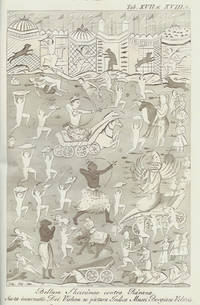
179177<p>4° mm 250x190; pp. XII 326. Al frontespizio vignetta incisa raffigurante Ganesha e <strong>32 tavole fuori testo</strong> di cui una a doppia pagina. Nel testo <strong>caratteri in sanscrito</strong>. Legatura coeva in piena pelle marezzata. Bell'esemplare.</p><p>First edition.</p><p>As the title well explains the Systema Brahmanicum by the Indologist Paulinus of St. Bartholomew - valuable compendium of Brahmanism - is closely based on the collection of <em>Indica reperta</em> from the famous Borgia Museum in Velletri <strong>profusely illustrated by the engravings. The volume therefore can be browsed as a kind of 'exegetical catalog' of the Hindu collection</strong>.<br /><br />The ancient Borgia Museum in Velletri formed between the 17th and 18th centuries by the Roman branch of the Borgia family was greatly enriched and enlarged in the second half of the 18th century by Cardinal Stefano Borgia 1731 – 1804 a man of vast culture who was a scholar of history and ethnology. The Museum famous throughout Europe for the variety and the rarity of the <em>reperta</em> as well as the singularity of the collections included artifacts from all parts of the world and was divided into nine sections one of which dedicated to Hindu manuscripts and relics.</p><p>Paulinus of St. Bartholomew Leithaberge in Lower Austria 1748 - Rome 1806 was an Austrian Carmelite missionary and Orientalist of Croatian origin. <strong>He is credited with being the author of the first Sanskrit grammar to be published in Europe and for being one of the first Orientalists to remark upon the close relationship between Indian and European languages</strong> followed by others such as William Jones and Gaston-Laurent Coeurdoux.<br /><br />Having entered into the seminary of the missions of his order at Rome he did Oriental studies at the College of St Pancratius. He was sent in 1774 as missionary to Malabar India. After spending fourteen years in India he was appointed vicar-general of his order and apostolic visitor. He was very well versed in languages: he spoke German Latin Greek Hebrew Hungarian Italian Portuguese English Malayalam Sanskrit and some other languages of India. He became known in Kerala as Paulinus Paathiri. He was one of the first to detect the similarity between Sanskrit and Indo-European languages though the very first was likely Fr Thomas Stephens SJ.</p><p>Recalled in 1789 to Rome to give an account of the state of the mission in Indostan he was charged with editing books – to correct the Catechisms and elementary books printed at Rome – for the use of missionaries.</p><p>In Rome he came into contact with Cardinal Stefano Borgia 1731 – 1804 Secretary of Propaganda Fide antiquarian scholar and patron who had set up in Velletri his native city the very well-endowed Museo Borgiano. Cardinal Borgia appointed him his private secretary and financed the publication of many volumes of indology including the first European grammar of the Sanskrit language <em>Sidharubam seu Grammatica Samscrdamica</em> published in Rome in 1790.</p> Apud Antonium Fulgonium
In-folio oblungo (415x535 mm) titolo a stampa e 25 grandi tavole incise in rame (320x420 mm e margini), firmate lungo il margine inferiore della lastra "Pinelli dis e inc" e datate 1820 o 21. Legatura mezza pergamena e angoli, titolo su tassello al dorso (difetti alle cuffie). Le grandi tavole raffigurano grandiose e animatissime scene folcloristiche e di vita popolare a Roma all'inizio del secolo XIX: Interno di una Osteria di Roma; Trionfo delle coglitrici di fravole; Il saltarello; La famiglia Ciociara; Uomo che canta le Istorie; la Befana; Salta la Quaglia; Li Pifferai in Roma etc. Costituiscono senza dubbio la più bella e tipica suite di costume e vita romana tra quelle prodotte dall'artista, resa ancora più suggestiva dall'utilizzo della lastra di grande formato. Buon esemplare in prima tiratura, nitidamente impresso, qualche lieve fioritura nel grande margine bianco di alcune tavole.. Fagiolo-Marini, B.Pinelli e il suo tempo, p.309. Colas n.2383. Lipperheide n. 1267..
Acquaforte e bulino, 1752, firmata in lastra . Esemplare della contemporanea tiratura romana, primo stato di quattro, stampato dall'autore nella propria tipografia di Strada Felice. Magnifica prova, impressa su carta vergata coeva con filigrana "doppio cerchio e giglio con lettere CB", con pieni margini, in perfetto stato di conservazione. Della serie Vedute di Roma.L’opera consiste in 135 lastre prodotte individualmente dal Piranesi per almeno 30 anni, da circa il 1745, fino alla data della sua morte. All’opera sono aggiunte poi 2 vedute realizzate dal figlio Francesco. Per la prima volta furono edite dall’editore Giovanni Bouchard nel 1751 (34 lastre), successivamente dallo stesso Piranesi editore a Palazzo Tomati in Roma (scritta che appare su molte tavole), fino alla stesura definitiva composta da 137 lastre. Successivamente alla morte dell’autore le lastre furono ereditate dal figlio Francesco, che ne curò la pubblicazione prima nella capitale, e successivamente a Parigi. Le lastre furono poi acquisite dalla Calcografia Camerale, oggi Calcografia Nazionale, dove sono tuttora conservate. Le opere che proponiamo fanno parte di un album nella stesura definitiva, stampato a Roma tra il 1770 ed il 1780. Etching and engraving, 1752, signed on plate.Example from the contemporary Roman Edition, the first state of four, printed by Piranesi in his tipography of Strada Felice. A very good impression, printed on contemporary laid paper with watermark "double encircled fleur de lys with letters CB", with margins, good condition. Taken from Vedute di Roma; the whole work consists of 135 plates which have been individually produced by Piranesi along 30 years, from 1745 circa until his death. Two more works have been subsequently added, two plates by his son Francesco. They have been printed for the first time in 1751 (34 plates) by the editor Giovanni Bouchard, afterwards by Piranesi himself, publisher in Palazzo Tomati in Rome (as it is written on m,any plates), until the final edition of 137 plates. After Piranesi's death, his son Francesco inherited the plates, editing them first in Rome and then in Paris. The Calcografia Camerale, nowadays Calcografia Nazionale, has then bought the plates which are now kept inside the building. Hind n. 23, I/IV; Focillon 738.
- PRIMO STATO DI SETTE -Acquaforte e bulino, 1750. Tiratura avanti la firma e l'indirizzo di Bouchard e Gravier. Esemplare della contemporanea tiratura romana. Magnifica prova, impressa su carta vergata coeva priva di filigrana, con pieni margini, minimi restauri alla piega centrale, per il resto in perfetto stato di conservazione. Della serie Vedute di Roma. L’opera consiste in 135 lastre prodotte individualmente dal Piranesi per almeno 30 anni, da circa il 1745, fino alla data della sua morte. All’opera sono aggiunte poi due vedute realizzate dal figlio Francesco. Per la prima volta furono edite dall’editore Giovanni Bouchard nel 1751 (34 lastre), successivamente dallo stesso Piranesi editore a Strada Felice prima e Palazzo Tomati poi (indirizzi che appaiono su molte tavole), fino alla stesura definitiva composta da 137 lastre. Successivamente alla morte dell’autore le matrici furono ereditate dal figlio Francesco, che ne curò la pubblicazione prima nella capitale - le cosiddette tirature “postume romane” - e successivamente a Parigi, dove furono stampate tre edizioni – la cosiddetta “prima di Parigi”, una intermedia (entrambe su carta vergata) e quella curata dall’editore Firmin Didot, la prima su carta senza vergelle, dove le tavole presentano l’aggiunta di un numero arabo ordinale. Tutte le tirature parigine sono piuttosto modeste in qualità, lontane da come il Piranesi le aveva pensate e concepite. Le lastre furono poi acquisite dalla Calcografia Camerale, poi Calcografia Nazionale, oggi Istituto Centrale per la Grafica, dove sono tuttora conservate. THE FIRST STATE OF SEVEN -Etching and engraving, 1750, signed on plate at the lower right.Example from the contemporary Roman Edition. A very good impression, printed on contemporary strong laid paper without watermark, with margins, very good condition. The first state of seven, before the retouches of the plate and the address of Bouchard and Gravier. Very rare. Taken from Vedute di Roma. The whole work consists of 135 plates which have been individually produced by Piranesi along 30 years, from 1745 circa until his death. Two more works have been subsequently added, two plates by his son Francesco. They have been printed for the first time in 1751 (34 plates) by the editor Giovanni Bouchard, afterwards by Piranesi himself, publisher first in Strada Felice an the in Palazzo Tomati, imprint that can be found in mostly of the plates), until the final edition of 137 plates. After Piranesi's death, his son Francesco inherited the plates, editing them first in Rome and then in Paris, where three editions were printed - the so-called "first Paris edition", an intermediate one (both on laid paper) and the one edited by the publisher Firmin Didot, the first on wowe paper, where the plates have an Arabic ordinal number added. All Parisi issues are rather modest in quality, far from how Piranesi had thought and conceived them. The plates were then acquired by the Calcografia Camerale, then Calcografia Nazionale, today Istituto Centrale per la Grafica, where they are still kept. Hind 14, I/VII; Focillon 794.
- RARISSIMO PRIMO STATO DI SEI -Acquaforte e bulino, 1760, firmata in lastra in basso a destra. Esemplare nel rarissimo primo stato di sei, prima dell’indirizzo dell’editore Bouchard e Gravier e dei ritocchi a bulino, della contemporanea edizione romana. Magnifica prova, impressa su carta vergata coeva, con pieni margini, in perfetto stato di conservazione. Della serie Vedute di Roma. L’opera consiste in 135 lastre prodotte individualmente dal Piranesi per almeno 30 anni, da circa il 1745, fino alla data della sua morte. All’opera sono aggiunte poi due vedute realizzate dal figlio Francesco. Per la prima volta furono edite dall’editore Giovanni Bouchard nel 1751 (34 lastre), successivamente dallo stesso Piranesi editore a Strada Felice prima e Palazzo Tomati poi (indirizzi che appaiono su molte tavole), fino alla stesura definitiva composta da 137 lastre. Successivamente alla morte dell’autore le matrici furono ereditate dal figlio Francesco, che ne curò la pubblicazione prima nella capitale - le cosiddette tirature “postume romane” - e successivamente a Parigi, dove furono stampate tre edizioni – la cosiddetta “prima di Parigi”, una intermedia (entrambe su carta vergata) e quella curata dall’editore Firmin Didot, la prima su carta senza vergelle, dove le tavole presentano l’aggiunta di un numero arabo ordinale. Tutte le tirature parigine sono piuttosto modeste in qualità, lontane da come il Piranesi le aveva pensate e concepite. Le lastre furono poi acquisite dalla Calcografia Camerale, poi Calcografia Nazionale, oggi Istituto Centrale per la Grafica, dove sono tuttora conservate. - THE VERY RARE FIRST STATE OF SIX -Etching with engraving, 1760, signed on plate. Example belonging to the extremely rare first state out of six, before the address of the editor Bouchard & Gravier and finishing touches (engravings) were added. From the contemporary Roman Edition. A very good impression, printed on contemporary laid paper, with margins, very good condition. Taken from Vedute di Roma. The whole work consists of 135 plates which have been individually produced by Piranesi along 30 years, from 1745 circa until his death. Two more works have been subsequently added, two plates by his son Francesco. They have been printed for the first time in 1751 (34 plates) by the editor Giovanni Bouchard, afterwards by Piranesi himself, publisher first in Strada Felice an the in Palazzo Tomati, imprint that can be found in mostly of the plates), until the final edition of 137 plates. After Piranesi's death, his son Francesco inherited the plates, editing them first in Rome and then in Paris, where three editions were printed - the so-called "first Paris edition", an intermediate one (both on laid paper) and the one edited by the publisher Firmin Didot, the first on wowe paper, where the plates have an Arabic ordinal number added. All Parisi issues are rather modest in quality, far from how Piranesi had thought and conceived them. The plates were then acquired by the Calcografia Camerale, then Calcografia Nazionale, today Istituto Centrale per la Grafica, where they are still kept. Hind 59 I/VI, Focillon 816.