TRAVELS IN CHINABiblio.com
25 870 résultats
1920152667China: 1920. From palace to park lake to shining sea A collection of 230 vernacular photographs recording a couple's trip to Beijing Jinan and Qingdao a decade after the abdication of the last Qing emperor. Arranged chronologically the album combines landscape and architectural views with candid shots of the travellers and the people they met. The appearance of many easily identifiable landmarks more than compensates for a lack of captions. The travellers begin their holiday in Beijing recently the site of the May Fourth demonstrations. The first 35 images capture the serenity of the Summer Palace once an imperial retreat with images showing the East Palace Gate and the exterior Hall of Joyful Longevity. The visitors strike jaunty individual poses on a stone lion and ride regally on the back of a bronze deer statue. The lady is captured from a distance on a balcony overlooking the Kunming Lake the largest body of water in the palace complex with the famous 17-arch bridge visible in the background. Like many before them these travellers are drawn to such architectural wonders as the Glowing Clouds and Holy Land Archway as well as the full-size marble boat restored by the Empress Cixi in the 19th century using funds allocated for outfitting a real navy. Several vistas of the lake show its solitude and remoteness - qualities accentuated by the palace's transition in 1914 from a working royal residence into a publicly accessible monument to China's imperial past. Until 1924 the Forbidden City remained the private residence of the last emperor Pu Yi and this album thus contains only a few images taken in the accessible outer court. The travellers find more freedom however in nearby Beihai Park climbing up to the imposing White Pagoda and snapping several views of Beijing from on high. Also captured here are two soldiers on duty by one of the bridge archways as well as the classic view of the pagoda looming over the park's picturesque lake. China's rapidly growing network of railway lines afforded travellers conveniences unknown even a couple of decades before. The visitors record their journey on the Beijing-Zhangjiakou line the first stretch of railway built by the Chinese government rather than foreign investors alighting near Nankou. There the lady poses in a sedan chair and later with three young children fascinated by a camera held by one of the couple's acquaintances. Visiting the Ming tombs affords many opportunities to photograph and be photographed with the famous stone animal sculptures while in one image the lady lies comfortably in a tree. Back on the train they travel to the Great Wall near Badaling and Qinglongqiao. A dozen pictures taken on the wall show the brickwork in a state of disrepair as was common with sections of the wall by this time and the travellers take refreshments on a level section with some local children for company. A well-earned rest on the return train refreshes them for a visit to the Jade Peak Pagoda on Jade Spring Hill today the site of residences for top political leaders with the camera capturing several nice landscape views of the pagoda and a temple desecrated inside. Following further excursions to the unmissable Temple of Heaven and the Cishou Pagoda they follow the steel rails to Jinan admiring the Yangtze River and waterfront industries in the company of local perhaps warlord troops. The holiday ends in the Japan-controlled coastal resort of Qingdao its station platform teeming with adult and child passengers and its seafront peppered with colonial architecture including the Grand Hotel. The final photographs commemorate time spent at the beach and climbing a nearby mountain most likely Laoshan - the relaxing denouement to a holiday of considerable excitement. Landscape folio 260 x 335 mm. Original brown pebble-grain leatherette tied with brown chord through punch holes front cover lettered in gilt within blind frame covers lined with black moiré-patterned cloth 52 black card leaves with 230 gelatin silver photographs each c. 75 x 130 mm mounted with silver photo corners first blank with pencilled title "China 1920". With 3 gelatin silver photographs 63 x 40 mm loosely inserted. 2 photographs no longer present. Photographs clear most with silver mirroring and a few with corners lifting image loose from its mount and another partially split vertically a few leaves beginning to split at gutter couple of expertly repaired tears: a very good example. hardcover
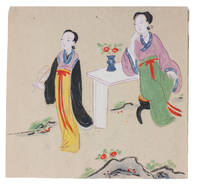
1655E9PFZ6Y3Z0MCChina 1655. Colour drawings 3 ca. 28 x 18 cm the 4th cut down to 16.5 x 17.5 cm apparently showing Manchurian scenes. A series of 4 colour drawings of Manchurian scenes. All mounted on Dutch paper probably from the period 1650-1660. The paper of the drawings themselves ranges in three cases from 27 x 16 cm to 30 x 19.5 cm; the fourth has been cut down to 16.5 x 17.5 cm. The drawings show the following all outdoor scenes:1 a dignitary on horseback with his attendant on foot carrying a parasol.2 2 ladies 1 holding the other's sleeve with a flowering tree and an octagonal stone basin.3 a lady with a flowering plant in a basket with a deer at her side.4 2 ladies: 1 with a fan; the other leaning on a table with a vase of flowers.All 4 backed with matching European paper watermarked with a 7-point foolscap above "4" and 3 balls. The closest matches in the literature Laurentius 431-437 especially 431 and 435 date from 1651 to 1658. unknown
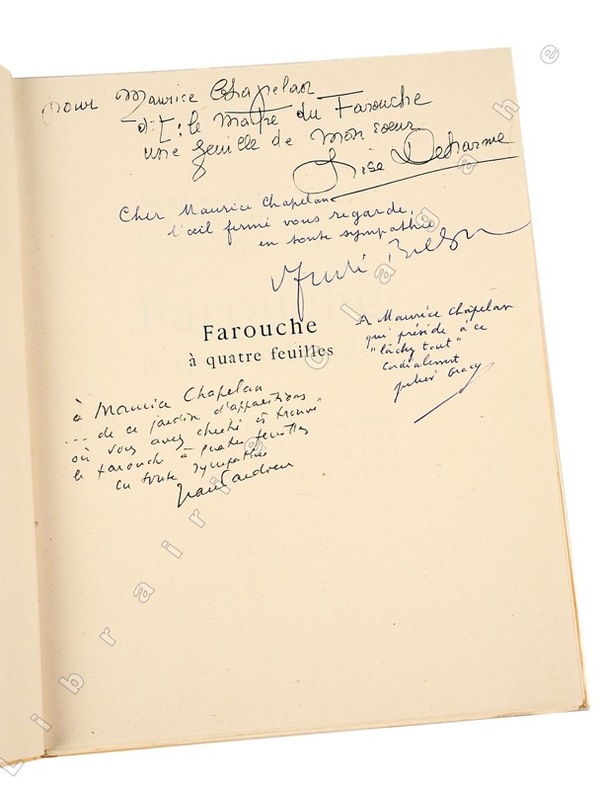
195421470Paris, Chez Grasset, 1954 ; in-quarto tellière broché, chemise-étui moderne ; 140 pp., [2]ff., couverture granitée jaune rempliée, imprimée en noir et chocolat ; page de titre imprimée en noir et vert printemps.
19591040941959 Pekin, The People’s Fine Arts Publishing House, 1959, 405x560mm, titre et 20 planches photographiques en couleurs, en feuilles sous coffret en carton fort recouvert de percaline bordeaux, titre estampé à l’or, motifs à froid en encadrement.L’année 1958 avait marqué pour la Chine le début d’une ère nouvelle ; rapidement transformée par Mao Tsé Toung en une société communiste moderne la nation se préparait à une immense célébration pour ses dix années d’existence, qui nécessitait en particulier l’agrandissement de la place Tienanmen et la construction de trois bâtiments emblématiques : Le Musée National de la Chine, la Gare Centrale de Pékin et le Grand Palais des Peuples.Ce dernier, d’un grand luxe et aussi grand que la Cité Interdite fut construit en moins d’un an. Le livre montre, à travers ses vingt photographies panoramiques le luxe intérieur et extérieur du palais, exagéré par des couleurs vives et une matière très brillante.Avec son luxueux coffret il devient un instrument de propagande parfait. Parfait état.Ruben Lundgren : The Photobooks Review, Novembre 2011, p.20. Parr Lundgren p.182-183.(104094)
In -8°, pp, 88, cartonato, tagli rossi. Sul verso del frontespizio altro titolo: “Lettera del padre Diego di Pantogia della Compagnia di Giesù al Padre Luigi di Guzman Provinciale nella Provincia di Toledo. Scritta in Pachino corte del Rè della Chiana a di 9 di Marzo, dell’anno 1602. Pubblicata originariamente in spagnolo nel 1605 questa lunga lettera, qui nella sua prima versione italiana, si distingue per la chiarezza argomentativa del testo, quasi giornalistica nel riportare dettagli della vita politica, economica, sociale e religiosa cinese. Il libro è valutato nodale anche come testimonianza circa i rapporti fra religione cattolica e Islam: “This is a very early source written by Christian on Muslims in China proper. The almost non-judgmental treatment of Islam is particularly interesting, although it must be noted that the text was written befor the Jesuit-Muslim conflicts fo the later part of the 16th century, so it must be possible to assume that relations at this time were fairly amicable. [...] The descriptions of Muslim life in China are fairly extensive in comparison with other texts of the early 17th century although, like its counterparts, the text focuses more on other religions such as Buddhism, Taoism, Confucianism and Judaism”. (Thomas Davies, John Chesworth, “Christian-Muslim Relations. A Bibliographical History”, 2012, vol. 11, p. 294. Diego de Pantoja o Diego Pantoja (Valdemoro 1571 – Macao 1618) era un gesuita e missionario portoghese in Cina, noto per aver accompagnato Matteo Ricci a Pechino, dove Diego avrebbe lavorato come astronomo, geografo e musicista. Nel 1617 fu processato come nemico degli astronomi cinesi (aveva apportato alcune correzioni al calendario) ed espulso dalla Cina. Published before in Spanish, this long letter, here in its first Italian edition, is valued as remarkable not only about early contacts between Christian Europe and China, but also about the relationship between Catholic religion and Muslim one: “This is a very early source written by Christian on Muslims in China proper. The almost non-judgmental treatment of Islam is particularly interesting, although it must be noted that the text was written befor the Jesuit-Muslim conflicts fo the later part of the 16th century, so it must be possible to assume that relations at this time were fairly amicable. [...] The descriptions of Muslim life in China are fairly extensive in comparison with other texts of the early 17th century although, like its counterparts, the text focuses more on other religions such as Buddhism, Taoism, Confucianism and Judaism”. (Thomas Davies, John Chesworth, “Christian-Muslim Relations. A Bibliographical History”, 2012, vol. 11, p. 294. Diego De Pantoja (1571-1618) was a portuguese jesuit and missionary in China, known for getting along Matteo Ricci to Beijing, where Diego was an astronomer, a geographer and a musician. He purpoused some changes to Chinese calendar, and in 1617 was prosecuted and banished from China.
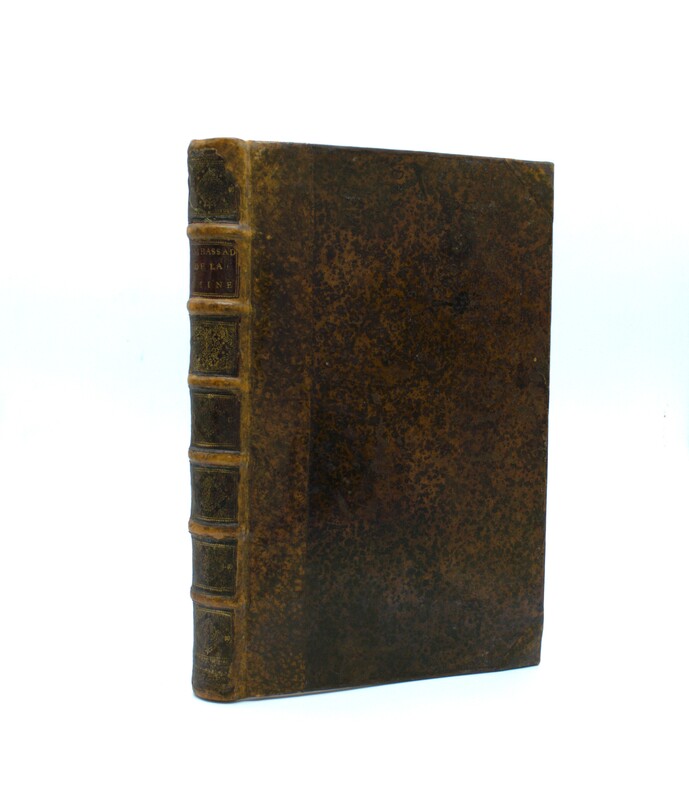
1665PHO-2284Leide, Jacob de Meurs, 1665. In-folio (38x25cm), titre frontispice, portrait, 290pp.-1f-134pp. erreurs de pagination, veau tacheté époque, dos à nerfs orné avec pièce de titre, réparation au dos avec caissons conservés et coins, trou sur la carte, réparations aux feuillets 93 & 188, petit trou de ver en marge, un feuillet (page 59) facsimilé manuscrit ancien, réparation à 1 planches, 2 feuillets renforcés en marge. Illustré d’un titre frontispice, un portrait de Colbert, une carte dépliante, 34 planches doubles et nombreuses vignettes
1797035987London: G. Nicol 1797. 1st Edition 1st Printing. Hardcover. Very Good . 11 1/8" Tall. Frontispieces Plates And Illustrations. Ii Xxxiv518; Ii Xx 626. The Two Complete Text Volumes In Full Size Text Blocks 10 5/8" Tall; The Plates Were Issued 1796 In A Separate Volume Not Present Here; But The Plate Of The Camellia Sesanqua Is Present Between Pp 466 And 467. Original Quarter Morocco Binding Five Bands Morocco Spine Labels Over Boards Covered With Marbled Paper Original Off-White Endpapers Preliminary And Final Blank In Each Volume. Bindings With Old Wear But Nicely Furbished Morocco Labels Clean With Brilliant Gilt A Little Loss Of Leather At Tops Of Spines And At Top Right Front Spine Edge Paper Frayed Along All Edges Of Boards Hinges Tight Contents Clean Just A Few Tiny Foxing Spots. Small Very Old Booksellers' Label Of The China Times Bookseller 94 Consular Road Tientsin. And Another From Sydney. Former Owner's Signature Dated 1894 Erased In Volume 1 Of George Ernest Morrison And A Few Marginalia Which Appear To Be His; George Ernest "G. E." Morrison 1862 - 1920 Also Known As Morrison Of Peking Or Chinese Morrison Was An Australian Adventurer Appointed In February 1897 As The Times Correspondent In Peking Despite His Lack Of Knowledge In The Chinese Language. He Traveled To Vladivostok And Reported To The Times That Russian Engineers Were Making Preliminary Surveys From Kirin Towards Port Arthur Then Sent A Telegram To Say That Russia Had Presented A Five-Day Ultimatum To China Demanding The Right To Construct A Railway To Port Arthur. This Was A Triumph For The Times And Its Correspondent But He Had Also Shown Prophetic Insight In Another Phrase Of His Dispatch When He Stated That "The Importance Of Japan In Relation To The Future Of Manchuria Cannot Be Disregarded". After A Visit To Siam And England Then To Australia 1899-1900 He Returned To Peking. When The Boxer Uprising Broke Out And During The Siege Of The Legations From June To August Morrison As An Acting-Lieutenant Showed Great Courage Always Ready To Volunteer For Every Service Of Danger. After A Siege Of 55 Days The Legations Were Relieved By A Multinational Force Which Then Ransacked Much Of The Palaces In Peking With Morrison Taking Part In The Looting. There Was Great Uncertainty Regarding The Future Of China In The Following Months And Through The Times Morrison Managed To Depict A Skewed Picture Before The British Public. While Russia And Japan United In Opposing Any Dismemberment Of China The Country Was Nevertheless Punished By The Imposition Of A Heavy Indemnity. In 1904 Morrison Became A Correspondent With The Japanese Army. He Was Present At The Entry Of The Japanese Into Port Arthur Early In 1905 And Represented The Times At The Usa Peace Conference. In 1907 He Crossed China From Peking To The French Border Of Tonkin And In 1910 Rode From Honan Across Asia To Russian Turkestan. From Andijan He Took A Train To St Petersburg And Then Traveled To London Arriving On 29 July 1910. A Great Chinese Physician Dr. Wu Lien-Teh Succeeded In Staying The Spread Of This Mortal Sickness Which Seemed To Threaten The Whole World. Morrison Published A Series Of Articles Advocating The Launching Of A Modern Scientific Public Health Service In China. When The Chinese Revolution Began In 1911 Morrison Took The Side Of The Revolutionaries. In August Morrison Resigned His Position On The Times To Become Political Adviser To The Chinese Government And Immediately Went To London To Assist In Floating A Chinese Loan Of £10 Million. In China During The Following Years He Had An Anxious Time Advising And Endeavoring To Deal With The Political Intrigues That Were Continually Going On. He Visited Australia Again In December 1917 And Returned To Peking In February 1918. He Represented China During The Peace Discussions At Versailles In 1919 But His Health Began To Give Way And He Retired To England Well Aware That He Had Only A Short Time To Live. He Died On 30 May 1920 . A Nice Historical Association. Later Ownership Signatures Of G B Wilson. <br/> <br/> G. Nicol hardcover
92946aaf36.5x24.5 cm (passepartout 50x35 cm), 17 planches au total passepartout, 2 couvertures orginales en velours pourpre conservées.
107087aafo.J. XX Jhd. (?), 117x71 cm (Bild), bords en papier de soie / Margen aus Seidepapier, aufgezogen, Orig.-Hängestöcke / montée sur toile 156x83.5 cm. Baton pour suspendre orig.
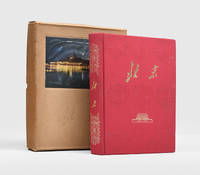
1959185404Beijing: "Beijing" huace bianji weiyuanhui 1959. The splendours of a socialist capital First edition deluxe issue published to mark the tenth anniversary of the founding of the People's Republic of China. Though unmarked as such this copy was owned by Solomon Adler one of the select group of Westerners permanently resident in China during the Mao era. The celebratory photobooks published in 1959 - equivalents were produced for Shanghai and other major cities - were predominantly distributed as gifts to party officials and foreign VIPs the latter group also receiving brochures containing translations of the captions. Among the many plates is an impressive folding panorama of Tiananmen Square and its vicinity showing the Great Hall of the People and the history museums which were all built in record time by a state keen to display communism's accomplishments. Immediately following the title page is a high-quality reproduction of Dong Xiwen's famous painting Kaiguo dadian "The Founding Ceremony". The work was repainted several times over the course of the 1950s as several party leaders present at the founding ceremony fell out of favour with Mao. An economist by training Adler 1909-1994 worked in the US in the 1940s but later fell under suspicion during the "red scare." After a period spent at Cambridge University he moved to China in 1962 living in Beijing until his death three decades later and working on the official Chinese translation into English of Mao's Selected Works. Parr & WassinkLundgren note three other issues: "a special deluxe clothbound issue with a gold brocade box and red cover;. a third edition with 120 selected photos printed on loose pages and placed in a brocade box; and a fourth edition with a silver brocade case". Quarto. With 64 tipped-in colour plates 8 folding 2 folding colour plates; illustrations throughout; title page printed in dark and light brown. Text in Chinese. With publisher's 8-page brochures of English and Russian captions loosely inserted. Original red silk over bevelled boards spine and front cover lettered in gilt spine with decorative gilt patterns front board decoratively blocked in blind with gilt vignette of Tiananmen cream patterned endpapers. Housed in original textured cardboard box front cover with calligraphic title in blind and photographic onlay showing fireworks in Beihai park. Silk bright with just light soiling and marking couple of edge creases to folding plates: a near-fine copy in very good box the onlay with some cockling. Parr & WassinkLundgren The Chinese Photobook: From the 1900s to the Present pp. 180-1. hardcover
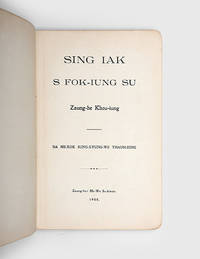
1905184601Shanghai: American Bible Society 1905. The Word on the street First edition traced in two institutions only designed to aid Christian missionaries preaching to China's 18 million Shanghainese speakers. Although unstated on the title page this version was prepared by John Alfred Silsby a presbyterian missionary eventually resident in the city for four decades. During the 19th century Christian missionaries produced transliteration and romanization systems for over 20 Chinese dialects. The first romanized Shanghainese gospel was published in 1856 Matthew edited by Chao Yin Sung and the first romanized New Testament appeared in 1870-1. Silsby 1858-1939 issued the Gospel of Matthew as a standalone work in 1895 and this edition of the gospels followed a decade later. In 1913 he completed his important reference An English-Chinese Vocabulary of the Shanghai Dialect. This work was printed by the Presbyterian Mission Press on behalf of the American Bible Society. Copies are held by Cambridge University and National Taiwan University. Octavo in 4 parts. Original brown moiré cloth over limp card covers spine lettered in gilt. A few contemporary pencilled notes on one page. Spine sunned tidemarks at foot of inner front cover and first blank endleaves browned: very good. Thousand Tongues 252. hardcover
20202081502111900463Chinese book office 2020. Soft Cover. Fine. Size: Hardcover Chinese book office paperback
11281Paris, Imprimerie Goury, avril 1910. 2 volumes in folio. Volume I: 202 pp., reliure moderne plein cuir, couvertures illustrées conservées, richement illustré de 84 planches de reproductions photographiques à pleine page. Volume II: reliure moderne plein cuir, Atlas composé de 64 planches et cartes, la plupart à double page ou dépliantes, représentant les travaux de la construction du Chemin de Fer. Les photos ont été prises dès 1904 jusqu'à l'inauguration de la ligne en 1910. Ouvrages en très bon état.
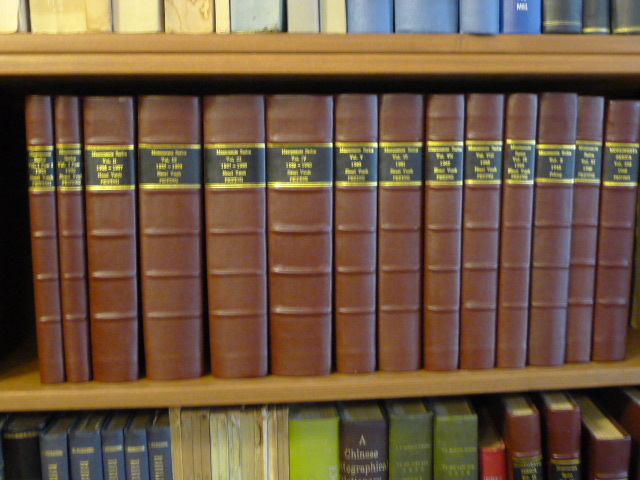
8672Pékin-Peiping, Henri Vetch, 1936-1937-1938 -1939-1940 - 1941 - 1942 - 1943 - 1944 - 1945 - 1946 - 1947 - 1948. 12 forts volumes in-8, enrichis de planches ou illustrations, reliure moderne plein cuir brun, couvertures conservées, très bon état. Ensemble de toutes les publications de Monumenta Serica du 1er numéro au numéro 13 (1949), sauf le No 12 de 1948. La publication sera ensuite éditée au Japon à partir de 1950. A full set of 12 volumes of Monumenta Serica, from Number I to Number XIII (except No XII), published in Peking by the french publisher Henri Vetch. A very scarce collection of books, nicely and identically rebound in fill brown leather,
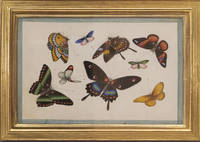
109513Canton ca. 1860. . Watercolour and gouache studies on pith paper overall dimensions 33 x 23.5cm. framed and glazed.<br /> Pith seems not to have been adopted for painting until about 1820. Some European museums claim that their paintings on pith often erroneously called "rice paper" or "mulberry pith" come from the end of the eighteenth century but there do not seem to be any dateable examples that are so early. There is a record of the Kaiser Franz of Austria buying some albums from an English Consul-General Watts in 1826. We know of an Italian Count who visited Canton in 1828 and had over 350 paintings on pith in his baggage when he died in Ambon two years later. In the British Library there is a scrap-book containing six pith paintings and a journal entry by a serving British officer who sent them home from India in 1829. These examples and contemporary accounts by visitors to Canton suggest that there was a flourishing trade in pith paintings by the early 1830s.<br /><br />Pith presumably came into use for painting to satisfy the increasing demand for small inexpensive and easily transported souvenirs following the massive growth in the China Trade in the first quarter of the nineteenth century. Paintings in oils on board and canvas were costly and difficult to carry home. Earlier and more prestigious export water-colours had often been on a larger scale and painted on fine Chinese paper or on paper imported from Europe. The albums of pith paintings and later the little glass-fronted boxes were inexpensive light easy to pack and gave the pictures some protection on the long voyage home. Because many were sold in albums and hence protected from the light they retain their bright colours to this day.<br /><br />Pith comes from the central column of spongy cellular tissue in the stem of a small tree called Tetrapanax Papyrifera native to south-west China. It has had a variety of uses some going back many centuries. At the imperial court both men and women wore coloured flowers made from pith in their hair. For use in painting it is cut by hand with a knife into thin sheets from short lengths of the spongy tissue. Cutting is highly skilled and the constraints of the process mean that the finished sheets for painting seldom if ever measure more than about 30cms by 20cms. The sheets are dried trimmed and used for painting without any further processing.<br /><br />Because of the nature of pith and its cellular structure the gouache used by the Chinese sat on the surface and produced a bright and even sparkling effect. Very fine detail could be achieved but pith did not lend itself to the flat wash of colour favoured for European watercolours. <br /><br />Carl Crossman in his book The Decorative Arts of the China Trade originally published under the title The China Trade gives an excellent list of export painters with a note of those known to have painted on pith. These include Tingqua Sunqua and Youqua. From 1757 until 1842 Canton was the only Chinese port open to trade with the west and it is no surprise that of the eight studios identified by Crossman as producing works on pith six were in Canton. <br /><br />It seems that the 1830s and 1840s may have been the heyday of pith painting. The international trading bases the waterfront 'factories' on the 'Hongs' in Canton where they were produced were partially burnt during the First Opium War 1839-41 and totally destroyed in a fire of 1856. The foreign trading companies then moved to Honan and subsequently put up splendid new offices on reclaimed land at Shamian Island a little up river. As the result of the Treaty of Nanking in 1842 additional Chinese ports were opened up for foreign trade and Hong Kong was established as a major trading centre. <br /><br />By 1860 references to China in the Illustrated London News plentiful three years earlier were few and far between. That is not to say that painting on pith ceased. Nicholas the second was given paintings on pith when he visited Canton in 1891 and the last Emperor is said to have sent him a gift which included pith paintings in 1907 though these could have been examples of much earlier work. <br /><br />Painters on pith did not in general sign their work the sole exception is Sunqua whose name can be found on the face of three paintings on pith. <br /><br />There are collections of paintings on pith in the Ashmolean the British Museum the Fitzwilliam the Hermitage the Peabody/Essex Museum in Massachusetts and the Hong Kong Museum of Art. However because paintings on pith are not in general regarded as fine art they are usually to be found in ethnographic or specialised collections.<br /> Canton, ca. 1860. unknown
19332111902160200105North China Water Conservancy Commission 1933. Soft Cover. Fine. Number of pages: 317 pages of the main volume additional maps Size: 26cm x 18cm Number of books: 4 North China Water Conservancy Commission paperback
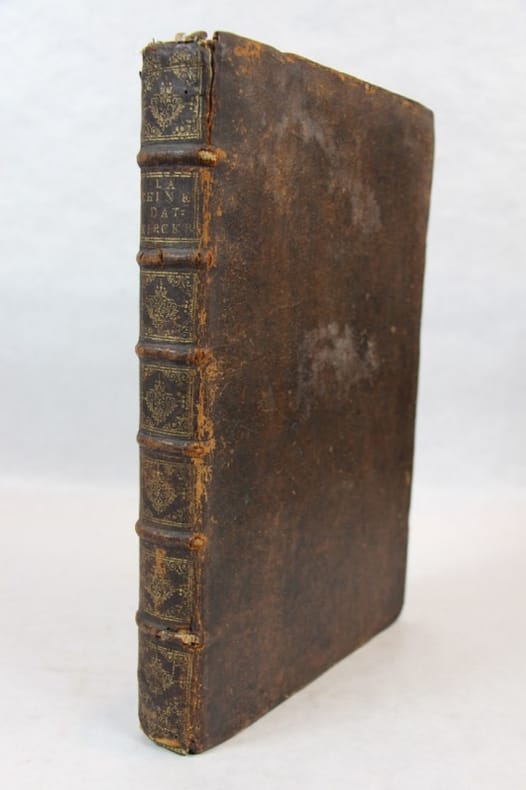
1670139790Amsterdam, Jansson van Waesberge et héritiers Weyerstraet, 1670 In-folio, veau brun, dos à nerfs orné, tranches jaspées Reliure de l'époque, 7] ff. dont titre, préface, table ; portrait de Kircher manquant pas toujours présent pour cette édition ; 367 pp. ; [12] pp. table ; 24 planches hors texte dont 2 cartes certaines sur double-page ou dépliantes ; très nombreuses vignettes gravées sur cuivre dans le texte. Cachets au titre d'une institution jésuite et de la bibliothèque Paul Chapuy, ingénieur des mines. Rousseurs, déchirure sans manque p. 1, coins usés, manques aux coiffes et sur un nerf. Première édition française de l’ouvrage fondateur des études orientales. La traduction de François-Savinien Dalquié est augmentée des réponses du père Johann Grüber et d'un dictionnaire chinois- français. L'ouvrage avait d'abord paru en latin en 1667, chez le même libraire hollandais, qui a dédié cette édition française à François-Michel Le Tellier, alors surintendant général des postes et relais de France. Superbe illustration en taille douce comprenant un titre-frontispice, deux cartes et un grand tableau épigraphique dépliants, 22 planches hors texte et 55 figures dans le texte, couvrant l'ensemble du champ étudié par Kircher : idéogrammes et écriture, costumes, histoire naturelle, religion, monuments, etc. Le jésuite Athanase Kircher 1602-1680, esprit d'une curiosité universelle qui s'est intéressé notamment aux langues orientales, à la cryptographie, à l’occultisme et à la Cabale, traite dans cette somme très importante de la géographie, de l'histoire naturelle, des coutumes, des pratiques religieuses, de l'écriture, de l'architecture de l'Empire du Milieu. Attaché à mettre en lumière le rôle des missionnaires chrétiens en Orient, le polygraphe jésuite entreprend de démontrer la présence, assez surprenante, de la foi chrétienne en Chine dès le VIIe siècle en interprétant une inscription nestorienne trouvée en Chine en 1625.
196879766ABGenève, Collections Baur, 1968-1972. 4°. Mit vielen hundert teils farbigen Tafeln. OLn.-Bde. mit goldpr. Rückentitel, OU. Vol. I-IV in 4 volumes complet. Tadellose Erhaltung.
1969163011969 Dessin original à la mine de plomb et à l'encre de Chine sur papier, collage dans la bulle , signé et daté au verso 1969, 35 x 25 cm., encadré.
1798PHO-1092Deuxième reliure de la première édition. Édition originale in-4 sur grand papier, remise en circulation en 1841 avec un nouveau titre avec la mention fictive "nouvelle édition" (quelques exemplaires imprimés en 1798 n'avaient toujours pas trouvé preneur). Une édition octavo en six volumes a également été publiée. in-4 ,y compris l'atlas. Avec 16 (10 dépliantes) dont 15 cartes gravées, 1 planche gravée et table dépliante. - Beau demi-cuir contemp , dos lisse avec titre et tomaison , petits manques au dos , quelques mouillures intermittentes et vieille trace d’humidité (T1), déchirure carte hydrographique sans manque. xii, cxliv, 628, [3] ; xvi, 676, [2] ;[xi], 431, [1];[2],viii, 158pp.
In-4°; pp. (10), 318, (2),; (8), 161, (3), con un bel ritratto di Francesco Saverio finemente inciso su rame da Theodor Galle; vari esemplari, tra cui quello alla Biblioteca Casanatense di Roma e quella dell’Università di Granada, come il nostro sono prive della carta *6; le Epistole hanno un proprio frontespizio, entrambi con monogramma della Società di Gesù inciso su legno. Nota di possesso manoscritta all’ultima sguardia. Legatura in piena pergamena coeva. Bellissimo esemplare. The third edition of De Vita Francisci Xaverii (the first in Rome 1594, another issues in Antwerp in the same 1596 containing only De vita) and the first of the Epistolae. This 1596 edition of the saint’s biography is better then the one of 1594 because revised by the author and complete. St Francis Xavier (1506-52), a companion of Ignatius of Loyola and co-founder od the Jesuit order, was a leader of the first Jesuit missions to India, southeast Asia and Japan. Orazio Torsellino was an italian Jesuit; he achieved great popularity with this work, which had numerous editions and translations, and with his first and principal early printed collection of Xavier’s letter, including many from Japan, available at the end of the 16th century. This first edition remained standard for many years and also for 17th cent. editions. This is the first collection of writings by St. Francisco Xavier. In 1540, he set off as a missionary to Asia. From there in the midst of ten years of incessant labor, 1542 - 1554, he produced 137 letters and instructions. The translator and editor of this volume, Orazio Torsellini in this place presented 52 letters. This collection of Xavier letters is very important in the story of China and Japan. Streit Iv, p. 290; Cordier col. 128; Sommervogel VIII, col. 140.
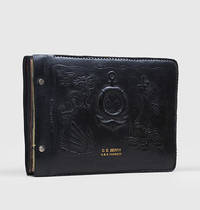
1934115861Chefoo Yantai Shanghai Singapore: 1934-37. Battleships baseball and the Bund An evocative album containing over 300 photographs both personal and from commercial studios recording the active service of the USS Parrott DD-218 on the China Station with the Asiatic Fleet - part of Destroyer Division 58 - including the Asiatic neutrality patrol in 1935 and 1936 offering a wealth of images of China Japan the Philippines and the South Pacific on the eve of the Second Sino-Japanese War 7 July 1937-9 September 1945 and the Second World War. Studio photographs include a number from the renowned commercial photographers Afong based in Yantai formerly Chefoo Joseffa and Skvirsky both established in Shanghai. It was compiled by Yeoman 2nd Class E-5 Charles Edmond Berry and opens with two fine photographs of the officers and crew of the Parrott on deck two colour-tinted photographs showing the ship at anchor and a humorous pictorial advertising photo from the Afong studio including an image of the studio exterior - clearly issued to all ships passing through Yantai - and featuring the Parrott at the centre. There follows an often joyful evocation of life onboard a US Navy destroyer prior to the Second World War with photos of the after-parties at the famed Beach Cafe in Chefoo which featured White Russian "hostesses" and tremendous amounts of alcohol as well as the morning-after breakfasts. Berry has also included panoramic photos of the Asiatic fleet in harbour at Chefoo Yantai and Hong Kong even including a humorous photographic pictorial "Bootlegger's Map of the United States." There are a series of photos showing the other US Navy Clemson-class destroyers on station with the Parrott the USS Pillsbury USS Bulmer USS John D. Ford USS Paul Jones USS Smith Thompson and USS Pope as well as various shipboard shenanigans baseball games battleships and destroyers on maneuvers gunnery practice loading of shells crew pets Liberty parties sailors carousing down the Bund in Shanghai buying souvenirs in Cuba sailing through the Panama Canal sightseeing trips to a walled city in Northern China the Great Wall of China cremation ceremonies in Bali riding rickshaws snake charmers and more. There are photos of Pan American Airways flying boats landing and unloading passengers in China many street scenes in Shanghai Hong Kong Tsing Tao Qingdao including the beheading of Chinese robbers outside the town Peking and Singapore. Of special interest are the series of photos showing Chinese Naval Ships from the Republic of China Navy in the mid-1930s including the CNS Yixian sunk by Japanese aircraft in September 1937; CNS Yisheng which had been converted into a gunboat in 1928 later sunk the CNS Shin Shey built in 1911 converted to a gunboat in 1929 sunk in 1938 and many others. There are also images of Kobe Yokohama street cars in Shanghai parks in Tokyo street scenes in Kyoto and views of the temples there. The USS Parrott DD-218 was a Clemson-class destroyer laid down by William Cramp & Sons Philadelphia and launched in 1919 commissioned in 1920 with a complement of 157 officers and enlisted men. The Parrott spent most of her career sailing with the Asiatic Fleet was awarded the Yangztze Service Medal in part for humanitarian assistance during the flooding of 1931-32 operating through the Chinese Civil War which resulted in considerable naval activity in Chinese waters collecting hydrographic data in and around Saigon then French Indochina in 1935. By 1940 she had served successively as station ship at Amoy Xiamen and Swatow Shantou China. From 7 July to 4 October she patrolled China waters based at Tsing Tao Qingdao and then made calls to other northern Chinese ports returning to Manila on 11 October. There in the early months of 1941 she was refitted with anti-mine and detection gear for anti-submarine warfare. The Parrott saw action in several theatres of war: South China Sea Battle of the Java Sea Atlantic Convoys and the bombardment of Spanish Morocco. She was accidentally rammed by the SS John Morton in Norfolk Naval Shipyard in 1944 and so severely damaged that she was decommissioned that same year and saw no further active service. Thick oblong quarto 380 x 280 x 51 mm. 319 corner-mounted original photographs ranging in size from 102 x 63 mm to 292 x 240 mm including 6 colour-tinted images and 4 panoramas 292 x 145 mm many studio prints captioned in the negative often with the photographer's stamp at lower corner a few with manuscript annotations verso coloured and patterned tissue guards intact white pink blue and jade-green. Contemporary heavily embossed black padded-calf post-binder photo album front board with devices of a Chinese Dragon a junk the Great Wall a life-preserver and anchor title in gilt as above nickel-plate posts rounded corners 52 leaves of black heavy card-stock most of the original tissue guards preserved. Together with a very appealing group of related ephemera and publications including: The Missions to Seamen The Sailors' Institute Anson Road Singapore; The Short Cut to Beauty: Hong Kong's Peak Tram; jocular Subpoena and Summons Extraordinary Royal High Court of the Raging Main Domain of Neptunus Rex two copies; U.S. Naval Despatch USS Parrott; Voyage Smoker USS Henderson en route to Honolulu T.H. to Guam M.I.; Radio Press News en route Manila P.I. to Guam M.I. 23 March 1937; Map of Shanghai dog tags and Bakelite Jesus medallion all preserved together in the original canvas sailcloth bag with stud fasteners. A few slight scuffs to binding occasional creasing to the mounting leaves very minor damage to a couple photographs overall in excellent condition. hardcover
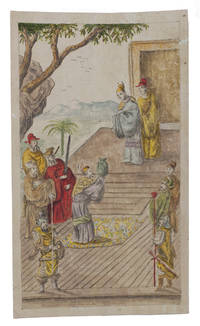
1670E9PF9I9C81WOChina 1670. A series of 8 Chinese drawings ca. 24 x 14.5 cm: 5 coloured 1 also highlighted in gold showing scenes from a Chinese novel many military or diplomatic plus a Chinese watercolour drawing and a Japanese woodblock print. A series of 8 pen and ink drawings 5 coloured 1 also highlighted in gold drawn from Chinese books possibly the 14th-century Sanguo yanyi or Romance of the Three Kingdoms. All mounted on European paper 6 on 3 different patterns of decorated paper. The paper of the drawings ranges from 23.5 x 14 cm to 24 x 15 cm. They show the following outdoor and indoor scenes:1 2 warriors on horseback one of whom has just beheaded the other and carries his head away the beheaded warrior has not yet fallen from his horse while his superior watches on horseback with 2 attendants.2 a man standing with a spear in the prow of a boat while 2 men and a woman sit at a tea table in the boat which flies a flag and pennant.3 5 people on 2 boats one flying a flag and pennant.4 4 soldiers bringing a woman to a dignitary at his house.5 a delegation visiting a dignitary.6 2 men playing go with 4 attendants and a guard.7 a dignitary at a writing table with attendants and visitors.8 a seated dignitary with 6 standing figures 1 with a document at a table.In the backing paper of number 7 one can make out an Amsterdam coat of arms watermark. It is difficult to see clearly but seems to follow the general style of Laurentius 71-95 1662-1675. The 3 patterns of decorated backing paper show: a flower pattern printed in gold on green; 2 patterns with more abstract decorations in a diamond pattern printed in gold on white.With this series we include a watercolour drawing and a woodblock print:9 watercolour drawing of irises along a stream with hills in the background 17 x 22.5 cm.10 rectangular woodblock print of a Samurai at a tea ceremony 14 x 10 cm possibly derived from a Japanese book.Some edges of the drawings a little frayed but otherwise in very good condition. unknown
1926015082Paris Grasset 1926 In-12 Broché Edition originale
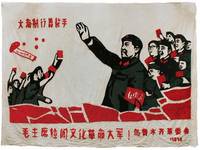
196716838Urumqi XinJiang Uyghur Autonomous Region: Cultural Revolution Committee of Urumqi / Xinjiang Army Divisioni 1967/8. Two extraordinary hand-crafted parade banners ca. 110" x 84" 9 feet x 7 feet one slightly smaller. Each entirely composed of hook-work with colored yarns on white muslin backing. Slight age-toning and soil; a few threads loose but no significant losses; Near Fine condition overall. Folded and stored in original velvet draw-string carrying bags as found. Both banners bear the inscription "Chairman Mao Reviewing the Great Army of the Cultural Revolution" and depict the August 1966 mass rally at Tiananmen Gate where more than 10 million Red Guards from all over China converged to express their solidarity with Mao and his second-in-command Lin Biao. Additional text on the lower banner reads "Long Live Chairman Mao for ten thousand years" and "Sailing in the ocean requires a helmsman" -- both quotes from Lin Biao. The agencies responsible for the banners are identified in lower right of each: "Cultural Revolution Committee of Xinjiang Army Division 1968" upper banner and "Cultural Revolution Committee of Urumqi 1967" lower. <br/><br/>The presence of Biao the figure to the right of Mao holding the Little Red Book in the top banner is of particular interest. Biao compiler of The Quotations of Chairman Mao popularly known as the "Little Red Book" and coiner of the phrase "Maoism" was probably more responsible than any other figure for creating the cult of personality around Mao particularly at the time of the Cultural Revolution. He quickly ascended Party ranks and was widely seen as Mao's obvious successor. But in 1971 Biao was exposed in the process of an apparent coup attempt the details of the event have never been made public. He died in an airplane crash attempting to leave China and from this point forward was officially condemned as a traitor by the Communist Party; any record of his achievements on behalf of the Revolution was expunged from the official record and any positive image of Biao would have been confiscated and destroyed as a matter of course -- suggesting either that these banners left China prior to 1971 or that they remained out of sight until some later date. The second possibility is plausible given whence the banners issued - both were created by Red Guard branches in the Xinjiang Uyghur Autonomous Region an extremely remote province in China's northwest corner and for many years the center of a militant independence movement for Uyghur and other Turkic minorities. In any case the precise manner in which these banners left China will likely never be known; they surfaced at a New England antiques show in 2011. Cultural Revolution Committee of Urumqi / Xinjiang Army Divisioni unknown books