25 870 résultats
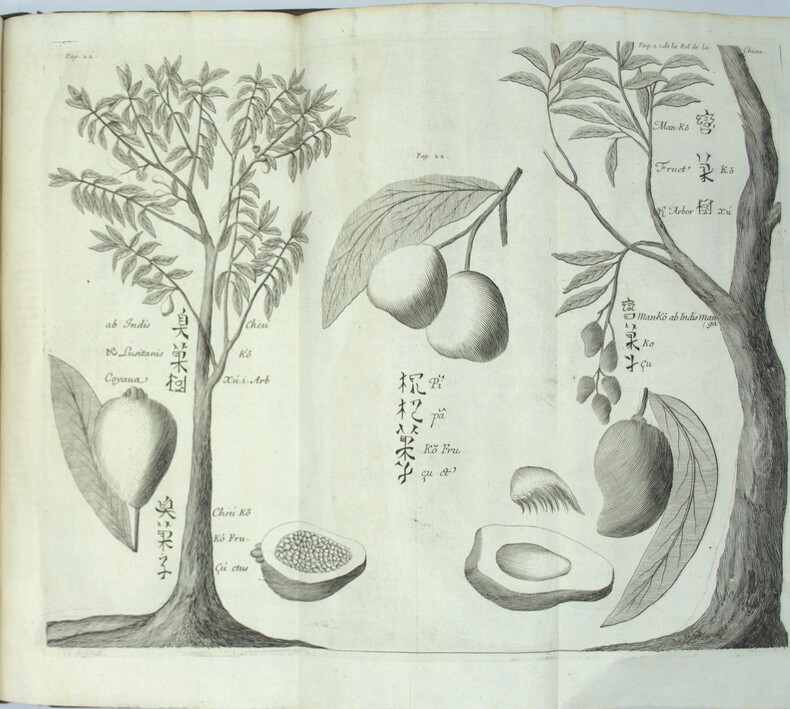
1811111125Paris Nepveu 1811 4 vol. relié 4 vol. in-16, cuir de Russie rouge, dos lisses avec semis de fleurs encadrant le titre et le numéro de tomaison, guirlande de feuilles et grappes de raisins encadrant les plats, fine guirlande dorée intérieure, filet doré sur les coupes, tranches dorées, XXXVI + 144, 172, 188 et 220 pp. + (4 p.). Édition originale comprenant 80 gravures sur cuivre coloriées à la main qui constituent une remarquable documentation sur les us et coutumes de la Chine pendant le règne de Qianlong (1735-1796). Le librairie-éditeur Nepveu réalisa cette édition après avoir pu racheter la collections de peintures et de dessins chinois formée par Léonard Bertin, contrôleur général des Finances et secrétaire d’État de Louis XV. Il fit paraître l'année suivante deux volumes de suppléments qui manquent ici. Ex-libris gravé Louis Taffin de Givenchy (1781-1858). Ravissant exemplaire très joliment relié à l'époque (minimes frottements).
191122701Shanghai mprimerie de la Mission Catholique à l'Orphelinat de T'Ou-Sè-Wè, ZI-KA-Wei 1911/18 -in-8 cartonné 13 volumes, cartonnage à la chinoise avec lacets reliant les plats, rouge et gris-jaune in-octavo Editeur (paperback in-octavo Editor) (25 x 17,5 cm), dos imprimé en noir, plats décorés à la chinoise : mors de toile rouge, plats décorés à froid (plaque spéciale Editeur), 1er plat orné d'une illustration en rouge (différente sur chaque volume), toutes tranches lisses jaspées rouges, abondamment illustré en couleurs : - PREMIERE PARTIE - Premier volume. TOME I N° 1. V. S. n° 32, 1911, XII+VI+146 pages+75 illustrations+10 photos. - Deuxième volume. 1ERE PARTIE - TOME I N° 2. V. S. n° 33, 1911, 70 pages+88 illustrations+1 photo. - Troisième volume. 1ERE PARTIE - TOME II N° 3. V. S. n° 34, 1912, X+106 pages+35 illustrations+2 photos, - Quatrième volume.1ERE PARTIE - TOME II N° 4. V. S. n° 35, 1912, 166 pages+55 illustrations+3 photos, - Cinquième volume.1ERE PARTIE - TOME V V. S. n° 36, 1913, XVII+92 pages+104 illustrations:La lecture des talismans chinois. Explication de ceux qui ont paru dans les N° 1 et n° 2 - 2EME PARTIE - TOME VI: Variétés Sinologiques n° 39, 1914, XII+196 pages+54 illustrations+3 photos.Recherches sur les superstitions en Chine. Deuxième partie, Le panthéon chinois. - 2EME PARTIE - TOME VII.:Variétés sinologiques n° 41, Imprimerie de la Mission catholique, Zi-ka-wei, 1914, VI+102 pages+53 illustrations. - 2EME PARTIE - TOME VIII.: Variétés sinologiques n° 42, Imprimerie de la Mission catholique, Zi-ka-wei, 1914, VIII+164 pages+40 illustrations. - 2EME PARTIE - TOME IX: CHAPITRE IV : Taoïsme : Dieux, Immortels, Génies.: Variétés sinologiques n° 44, Imprimerie de la Mission catholique à lorphelinat de Tou-sé-wé, Zi-ka-wei, 1915, X+218 pages+76 illustrations. -2EME PARTIE - TOME X: CHAPITRE V : Ministères transcendants -Variétés sinologiques n° 45, Imprimerie de la Mission catholique à lorphelinat de Tou-sé-wé, Zi-ka-wei, 1915, VIII+180 pages+39 illustrations. 2EME PARTIE - TOME XI: Chap. VI, Dieux protecteurs et Patrons. Variétés sinologiques n° 46, Imprimerie de la Mission catholique à lorphelinat de Tou-sé-wé, Zi-ka-wei, 1916, XII+192 pages+59 illustrations. 2EME PARTIE - TOME XII. Chapitres VI, Dieux protecteurs et Patrons ; VII, Dieux composites ; VIII, Divinités stellaires. Variétés sinologiques n° 48. Zi-ka-wei, 1918, VIII+234 pages+57 illustr.-TROISIEME PARTIE : Popularisation des trois religions -Section II : Confucius, ses disciples, le confucéisme - A. VIE DE CONFUCIUS ILLUSTRÉE - B. LES 144 SAGES DU TEMPLE DE CONFUCIUS d'après les documents chinois - Recherches sur les superstitions en Chine, TOME XIII.: Variétés sinologiques n° 49, Zi-ka-wei, 1918. XVI+262 pages + 81 illustrations, 1911/1918 Chang-Hai, Imprimerie de la Mission Catholique à l'Orphelinat de T'Ou-Sè-Wè, ZI-KA-Wei EDITEUR
In-8° (cm 15,3x9,3), pp. (8),mezza 336; 1 folding plate representing the plan do the prison where Spinola was imprisoned in Japan. On title page a woodcut with the monogram of Compagnia di Gesù and the “motto” “pulcra ut –luna- electa ut –sol-”. The binding is contemporary half vellum with gilty title on spine, and yellow edges. The dedication is dated Roma 1628 and it refers to the first edition. This bioghrapy of father Spinola is an account of the missionary voyage he made through Portugal, Brasil, Portorico, England, Lisboa, China and eventually Japan, where he wished to die (from page 97 to the end). He died in Nagasaki in 1622, afer being persecuted and imprisoned. Two ink stamps on title page, few restoration on blank margins.
1988198641988 1 Dessin à l'encre de Chine et réhauts de couleur verte, 1988, 20.5 x 13 cm., encadré.
193446404666Paris, Éditions d’Art et d’Histoire, Annales du Musée Guimet, 1934-1935 ; 2 volumes in-4, demi-toile rouge, plats imprimés, entièrement non rogné. (Cartonnage de l’éditeur) X pp., 116 pp., 102 planches en noir - 170 pp., 1 f., 126 planches en noirÉDITION ORIGINALE de ce célèbre ouvrage fondateur de l’étude de la peinture chinoise devenu fort rare. PREMIER TIRAGE des 228 planches montées sur onglets reproduisant en héliotypie de la Börtzells Tryckeri Aktiebolag de Stockholm les peintures chinoises provenant de collections publiques et privées du monde entier. Texte imprimé sur papier vergé fort par les établissements Sainte-Catherine de Bruges. Bel exemplaire
192946404667Bruxelles et Paris, Van Oest, Annales du Musée Guimet, 1929-1930 ; 4 volumes grand in-4, brochés, couvertures oranges imprimées rempliées, entièrement non rogné. (État de parution) 3 ff., 3 (1) pp., 95 (1) pp., 2 ff., 108 planches - 2 ff., 119 (1) pp., 2 ff., illustrations in-texte et 120 planches h-t - 2 ff., 105 (1) pp., 1 f., 128 planches - 2 ff., 100 pp., 2 ff., 120 planchesÉDITION ORIGINALE de cet ouvrage considérable sur l’histoire et l’archéologie chinoises. Les 476 planches photographiques en héliotypie portent pour la plupart plusieurs figures montrant des objets de mobilier : poteries, chaudrons, cloches, garnitures en bronze, pièces de chars en bronze, objets en jade, miroirs, broches, bijoux, lampes, sculptures, monuments et détails d’architecture, etc. Rare exemplaire complet des 4 volumes. Dos et couvertures insolés, un plat en partie détaché. Intérieur frais.
1663PHO-2278A Paris, chez Jacques Langlois, 1663-1666 3 parties en 1 volumes in-folio (38x25cm). Veau tacheté époque, dos à nerfs ornés avec pièce de titre en maroquin et tomaison, tranches jaspées rouges. Réparations au dos et coins, mouillure, quelques rousseurs, réparation au titre, renforcement à la carte. Complet de ses relations de voyage selon Brunet & Camus
First edition, 4to (275 x 215 mm), vii, [1], 526, [2]pp., with the final errata leaf, portrait frontispiece of Lord Amherst, 7 hand-coloured plates, 3 engraved maps (one folding, two lightly spotted), nineteenth-century full blue calf, the covers with wide gilt borders of fillets and floral rolls with corner tools, heavy gilt panel spine with a interlaced pattern in five panels and lettered in gilt on other, marbled endpapers with matching marbled page edges, some minor rubbing, a most attractive copy. "The Amherst embassy in 1816 was the third in a series of unsuccessful British attempts to establish trade relations with the Chinese government... The embassy, which was sent out by George III 'to protest at the ill-treatment of British subjects' was a failure, since Lord Amherst refused to kow-tow to the emperor. Ellis, who published this authorised narrative of the journey and transactions of the embassy, had accompanied Earl Amherst in the capacity of third commissioner."?L?wendahl. Provenance: With the green oval gilt morocco label of Granville Hastings Wheler with his faint signature in ink to head of title. Abbey Travel 536; Cordier Sinica III, 2393; L?wendahl 791; Lust 509.
19371006EAST ASIA<br /><i>Zuijin zhi Dongya Xingshi Tujie </i><i>Map Explaining the Latest Situation in East Asia</i>. Mainichi Shimbun Osaka Office Japan Showa period 1937.<br />Highly pictorial Japanese propaganda map of East Asia issued just six months before the outbreak of the second Sino-Japanese War. The map focuses on China's military situation and shows a separate Manchuria and Jidong Autonomous Region. Heavy industry military communication and supply lines airfields and foreign military bases are delineated with the note that there are '200000 Communists' at the Chinese Communist Party's northern Shaanxi base. The projection of the map is such that it illustrates the 'horseshoe formation' showing Manchuria 'the lifeline of Japan' as being surrounded by Japan's enemies.<br /><br />Chomo-lithographic map of East Asia 780 x 1065 mm. Territories in yellow and identified with a red cross other parts of the globe colored in green or red explanatory title at foot inset world map at lower left labelled mainly in Japanese and Chinese characters. Mild toning long closed tear repaired with old tape some other tears edgewear. Mainichi Shimbun Osaka Office, Japan, Showa period,
191026122Shanghai 1910. Hardcover. Good condition. A remarkable album of images and postcards many taken by a British police officer of the Shanghai Municipal Police which includes numerous vernacular snap shots titled in period ink bound in an elaborately decorated lacquer album.<br /> <br /> The Shanghai Municipal Police SMP was the police force of the Shanghai Municipal Council which governed the Shanghai International Settlement between 1854 and 1943. The SMP's role was to provide stability in the settlement and to protect Western trade interests against pirates and various Chinese nationalist movements and uprisings.<br /> <br /> The SMP was initially made up mostly of Britons; after 1864 it included Chinese. Over the years it grew to include a Sikh Branch 1884 a Japanese contingent 1916 a volunteer part time special police 1918 and a Russian Auxiliary Detachment 1941. <br /> <br /> When the SMP began in 1854 the first detachment of 31 British was on loan from the Hong Kong Police and led by Samuel Clifton. Additional men were recruited from the Royal Irish Constabulary London's Metropolitan Police and from the military presence in Shanghai. .<br /> <br /> The police officer who took these snap shots is identified only by his first name Andy and he appears in one of the 56 original snap shots which he entitles "Chinese Soldiers and your humble". He appears in another which he captions "girls running away from me in country village".<br /> <br /> The album consists of 12 photographs of Shanghai 10 3/4 x 8 1/2" and 8 x 5 3/4" of which<br /> 9 are entitled "Police on Parade" showing the men wearing the ‘Custodian’ police helmet including Indian police and Indian mounted police Sikhs; 4 of Chinese Punishments 3 scenes of decapitations; 1 of people confined in a cangue 6 x 4"; 56 original vernacular snap shots 5 x 4 1/4"; 1 "Parade in Egypt" showing mounted troops in the desert signed G. Lekegian who was the official photographer for the British Army in Egypt beginning in the 1890s; printed color postcards mostly by Kingshill postally unused split backs in fine condition; and 2 period newspapers loosely inserted one Chinese and one American The Catholic News November 14 1914. <br /> <br /> The 56 original vernacular snap shots create a layered impression of contemporary life in China taken by the author and 3 British friends as they travel about the country. They include: the harbour; the jettee; a native court; the race course; street scenes; Up country trip snowy mountain scenes; a country temple; a resort "Mokanshan" sic; Soochow; our boat in Hangchow; trying to bargain market place stall; one of the British men in a wooden cage; getting the bamboos together in the river; a noted gateway up country; Chinese river life; famous bridge; religious ceremony on boat; beggars boats; the Great Lake; Fishing; and hairdressing in the street.<br /> <br /> The 108 postcards include: color printed views of Shanghai one of German consulate & Astor House Garden; Chinese people gardens "thea house" festivals Mandarins opium smoker Chinese trades people; Peking scenes; Yan Chow scenes; and more. <br /> <br /> Oblong 4to 14 x 11" album albumen and silvertone photographs. Black lacquer album cover decorated with inlays of bone and mother of pearl in the form of a rooster 1909 was the year of the rooster. Edges rubbed spine lacking first 5 leaves are loose otherwise all fascicles are bound in. The photographs and postcards bright and clean. Newspapers loosely inserted chipped at edges. Ink manuscript inscription "From Andy" at the front end paper. hardcover
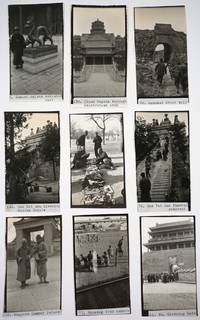
1942287481942. Photography. Very good condition. A collection of black & white photographs in and around Pekin Beijing taken in about 1925. While the photographer is unidentified the photos are clear and well framed. These are unusual images as they seem to have been taken by an American but no American is ever shown in the photographs. The photos illustrate the sites and trades of China and there are also images that refer to Sun Yat Sen including a photo captioned with his name possibly him with a group of others walking in a square. Shot number 76 is of 'Sun Yat Sen Funeral rehersal' sic at the Temple of Azure Clouds" which took place in 1925. <br /> <br /> Famous buildings include the Summer Palace Temple of Heaven Great Wall Altar of Heaven Forbidden City Sleeping Buddha Temple Cloud Tower Taoist Shrine Temple of Universe Summer Palace Marble Boat Pagoda Tientsin Dock the Great Wall etc. There are many street scenes with local people and merchants Tibetans at Lama Temple Pekin Donkey ready for shoeing Toy Peddlar sic with Gong Pekin old man and 2 bird cages Paint Shop Pekin camels Iceman Pekin Coal Carrier Defile near Wall Pekin Beggar Pekin Barber. <br /> <br /> "Unique among 20th-century Chinese leaders Sun is revered by both the Republic of China on Taiwan where he is officially the "Father of the Nation" as well as the People's Republic of China where he is officially the "Forerunner of the Revolution" for his instrumental role in the 1911 Revolution that successfully overthrew the Qing dynasty." wikipedia.<br /> <br /> One additional snapshot of a snowy American scene entitled 'Winter 1941-2" that was developed at the Westchester Photo Finishing Co. with Nutone process 4 1/8 x 5 1/8". The typewritten caption on this photo is consistent with the captions on the photos so it appears to be a cohesive group belonging to one person.<br /> <br /> 154 photographs 2 5/8 x 4 1/2". They are printed on card and are possibly from contact sheets as they there are some slightly rough edges. The majority have a label affixed to the bottom of photo with identifying number and caption which corresponds with a 3pp typewritten index. The list number 157 photos 154 present here so nearly complete. Very good condition. unknown
1940008960Tientsin China: Reprinted in China 1940. Four volumes bound in blue/grey cloth Good the cloth worn and soiled one hinge each in Vols. I and II and both in Vol. IV broken the bindings still holding well. Faint damping bottom edges Vol. III. Interiors clean and unmarked. Prior owner name stamp of Richard W. Powell noted University of Hawaii anthropologist. From the collection of noted East Asian scholar Ruth Meserve her business card for The Mongolian Society which she served as Secretary laid in. The 1940 Chinese reprint of the original 1834 first edition SCARCE in either edition. The first serious study of Genghis Khan. Three folding genealogical charts one in Vol.I and two in Vol. IV; large 1824 folding map of Asia in the13thcentury in pocket at rear of Vol. IV. The charts and the map are Fine. A sturdy and usable set of this important history. . Reprint. Cloth. Good/No Jacket. Small 8vo - over 7¾" - 9¾" Tall. Reprinted in China Hardcover books
193117541London: George W. Jones 1931. 1st. Hardcover. Near Fine. 12.9x10.4x1.7in. Signed by Authors. #257 of 300 copies signed by Leonard Gow; rubbing to covers and scratch to back panel bookseller's sticker on rear pastedown. <br>A lavishly produced catalogue of a superb collection of ceramics of the Kangxi period blue-and-white powder blue familles verte jaune and noire and monochrome. Illustrated with 86 plates most in color. <br>108pp 7.18lb 12.9x10.4x1.7in <br>EXTRA SHIPPING CHARGES NECESSARY George W. Jones hardcover
20212081502111901423Asa hana shubbansha 2021. Soft Cover. Fine. The book is in fine condition. Asa hana shubbansha paperback
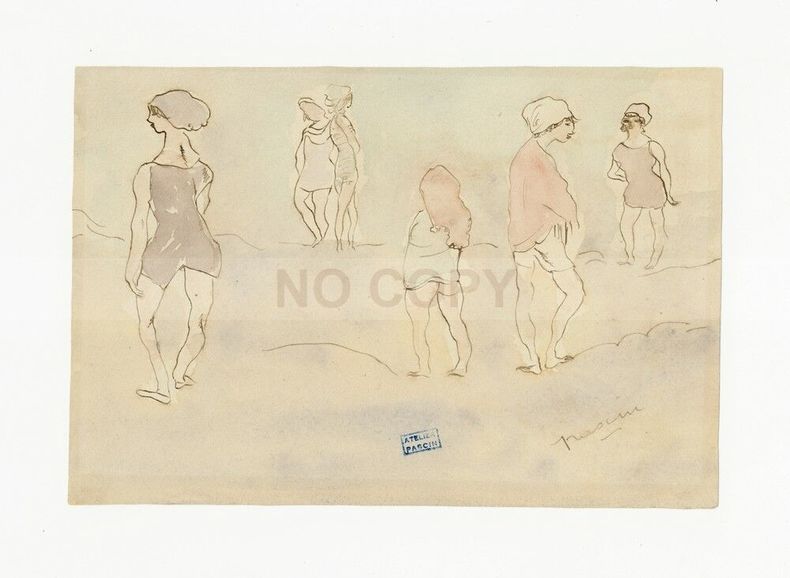
AMO-4031Jules Pascin (Julius Mordecai Pincas dit Jules Pascin, né le 31 mars 1885 à Vidin (Bulgarie), et mort le 2 juin 1930 à Paris, est un peintre et dessinateur américain d'origine bulgare. Dessin original à l'encre brune et lavis d'aquarelle dans les tons de rose et mauve "Six femmes légèrement vêtues" (sans doute des femmes prostituées faisant le trottoir) Dimensions : 22 x 15 cm. Signé en bas à droite. Cachet d'atelier. Au verso de la feuille, tampon "Succesion Pascin, Le Commissaire-Priseur (nom resté en blanc)". Très bon état. A noter une légère marque sur le pourtour du à un ancien encadrement (très peu visible). Voir photo. Détails sur demande. Pièce d'exception pour cet artiste recherché.
880171908 - 14. . 102 photographs size range from 8 x 6 cm to 11 x 16 cm including 2 with stamps of Lai Chong studio on reverse some inscribed in German; margins chipped some with creases several images faded. <br /> A collection of photographs recording German presence in China and Japan in the years 1908 1914. <br /><br />Decades before WWI Germany competed with other industrialised nations to acquire colonies and create "spheres of influence" in the non-European areas interfering in the Chinese domestic affairs. <br />In the wake that followed the murder of two German missionaries in 1898 Chinese government agreed to lease the territory of Tsingtao to Germany as a colony for the period of 99 years in order to appease the German government. Consequently the Germans began to assert their influence across the rest of the province of Shandong. They built the city and port of Tsingtao which became the base of the German Navy's East Asia Squadron that operated in support of German territories in the Pacific.<br /><br />When the WWI erupted in summer 1914 Japan issued an ultimatum ordering the German government to withdraw their warships from Chinese and Japanese waters and transfer control over Tsingtao to Japan. When the ultimatum expired Japan began a bombardment of the port on 2 September 1914. Britain wary of Japanese intentions in the region decided to send troops to assist the Japanese and to keep a watchful eye upon proceedings. The Germany garrison held out for over two months before finally surrendering on 7 November 1914 and handing over the port three days later. The surrender of Tsingtao marked the end of the Germans in China and was a great morale booster to the Japanese.<br /><br />Several photographs show SS Patricia a passenger liner built in 1899 in Germany for the Hamburg-America Packet Steamship Company. In 1914 during WWI she was chartered to the German Government who used it as a troop transport to Tsingtao.<br /> 1908 - 14. unknown
86795ca.1880. . A pair of gelatin silver prints 21 x 28 and 21 x 26.5 cm. <br /> <br /> ca.1880]. unknown
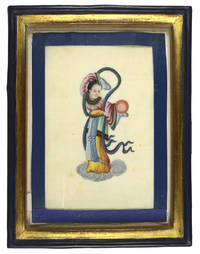
86239Canton c.1860. . A set of 6 watercolour and gouache studies on pith paper each surrounded by blue fabric borders.<br /> Pith seems not to have been adopted for painting until about 1820. Some European museums claim that their paintings on pith often erroneously called "rice paper" or "mulberry pith" come from the end of the eighteenth century but there do not seem to be any dateable examples that are so early. There is a record of the Kaiser Franz of Austria buying some albums from an English Consul-General Watts in 1826. We know of an Italian Count who visited Canton in 1828 and had over 350 paintings on pith in his baggage when he died in Ambon two years later. In the British Library there is a scrap-book containing six pith paintings and a journal entry by a serving British officer who sent them home from India in 1829. These examples and contemporary accounts by visitors to Canton suggest that there was a flourishing trade in pith paintings by the early 1830s.<br /><br />Pith presumably came into use for painting to satisfy the increasing demand for small inexpensive and easily transported souvenirs following the massive growth in the China Trade in the first quarter of the nineteenth century. Paintings in oils on board and canvas were costly and difficult to carry home. Earlier and more prestigious export water-colours had often been on a larger scale and painted on fine Chinese paper or on paper imported from Europe. The albums of pith paintings and later the little glass-fronted boxes were inexpensive light easy to pack and gave the pictures some protection on the long voyage home. Because many were sold in albums and hence protected from the light they retain their bright colours to this day.<br /><br />Pith comes from the central column of spongy cellular tissue in the stem of a small tree called Tetrapanax Papyrifera native to south-west China. It has had a variety of uses some going back many centuries. At the imperial court both men and women wore coloured flowers made from pith in their hair. For use in painting it is cut by hand with a knife into thin sheets from short lengths of the spongy tissue. Cutting is highly skilled and the constraints of the process mean that the finished sheets for painting seldom if ever measure more than about 30cms by 20cms. The sheets are dried trimmed and used for painting without any further processing.<br /><br />Because of the nature of pith and its cellular structure the gouache used by the Chinese sat on the surface and produced a bright and even sparkling effect. Very fine detail could be achieved but pith did not lend itself to the flat wash of colour favoured for European watercolours. <br /><br />Carl Crossman in his book The Decorative Arts of the China Trade originally published under the title The China Trade gives an excellent list of export painters with a note of those known to have painted on pith. These include Tingqua Sunqua and Youqua. From 1757 until 1842 Canton was the only Chinese port open to trade with the west and it is no surprise that of the eight studios identified by Crossman as producing works on pith six were in Canton. <br /><br />It seems that the 1830s and 1840s may have been the heyday of pith painting. The international trading bases the waterfront 'factories' on the 'Hongs' in Canton where they were produced were partially burnt during the First Opium War 1839-41 and totally destroyed in a fire of 1856. The foreign trading companies then moved to Honan and subsequently put up splendid new offices on reclaimed land at Shamian Island a little up river. As the result of the Treaty of Nanking in 1842 additional Chinese ports were opened up for foreign trade and Hong Kong was established as a major trading centre. <br /><br />By 1860 references to China in the Illustrated London News plentiful three years earlier were few and far between. That is not to say that painting on pith ceased. Nicholas the second was given paintings on pith when he visited Canton in 1891 and the last Emperor is said to have sent him a gift which included pith paintings in 1907 though these could have been examples of much earlier work. <br /><br />Painters on pith did not in general sign their work the sole exception is Sunqua whose name can be found on the face of three paintings on pith. <br /><br />There are collections of paintings on pith in the Ashmolean the British Museum the Fitzwilliam the Hermitage the Peabody/Essex Museum in Massachusetts and the Hong Kong Museum of Art. However because paintings on pith are not in general regarded as fine art they are usually to be found in ethnographic or specialised collections.<br /> Canton, c.1860]. unknown
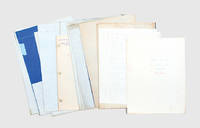
1822188322Various cities and architects: c.1918-22. Building Republican China An appealing collection highlighting the role of foreign finance and architectural expertise in the modernization of Republican China's major commercial centres. The blueprints show business premises Western-style houses and apartments and a theatre. Seven were issued by the architectural firm of Henry Charrey and Marcel Conversy. Based in Jinan the firm was employed from 1918 by the Belgian-French company Crédit Foncier d'Extrême-Orient which financed and oversaw construction in Beijing Shanghai Tianjin and other cities with a foreign presence. In Jinan Charrey & Conversy were involved in the laying out of a new post office compound and designing Western-style houses. Also present are blueprints for offices for the Danish outfit Andersen Meyer & Co. which arrived in the city in 1916 and a hong for the Asiatic Petroleum Company. A second group relates to the Tianjin civil engineers Brossard Mopin & Co. Founded in 1910 it specialized in buildings made with reinforced concrete. A large plan shows the imposing front face of a proposed building for the Gongxian Arsenal one of China's main manufacturers of weaponry and ammunition. In Tianjin Brossard Mopin also contracted for apartments and a new theatre and clubhouse for the China Theatre Company the floorplans here accompanied by textual overviews of the projects. Accompanying these two groups are a 1919 plan of Tsinghua University Beijing and seven blueprints for houses in a "Peking model residential centre" which was proposed by the city authorities in the early 1920s. This collection belonged to the engineer G. Gregoire who worked for the Crédit Foncier d'Extrême-Orient in partnership with both Charrey & Conversy and Brossard-Mopin & Co. His signature as the lead architect appears in the seven Charrey & Conversy blueprints and his ink stamp is on nearly all of the material suggesting his involvement in the wide range of projects. 21 blueprints 217 x 255 mm to 625 x 1130 mm; 2 project booklets in French each 6 pp. duplicate typescript and typescript cover sheet fixed with 3 butterfly clips. Various ink stamps numbers and annotations on booklets and verso of blueprints. General browning and light creasing couple of short splits plan of Tsinghua University slightly faded and lacking contrast but generally a well-preserved collection. unknown
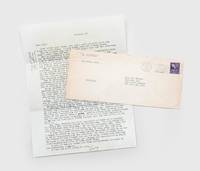
1948178144Higganum Connecticut: 30 November 1948. I hope you won't reply to this" - a sinological circle rent asunder A window onto the collapse of the marriage of Edgar and Helen Snow the 20th century's most important bridges between China and the Western world. As shown in this terse exchange between two of their friends the split sowed distrust and trapped some of the leading lights of American sinology in a quagmire of pettiness. Enjoying privileged access to top Chinese political and social figures Edgar 1905-1972 and Helen Foster Snow 1907-1997 also known as Nym Wales and "Peg" shaped Western views of China and its people to an extent unmatched by any other journalist or academic. Edgar Snow's career was bookended by Red Star Over China 1927 the work that introduced Mao Zedong to the English-speaking world and the historic 1972 Nixon visit to Beijing for which he laid important groundwork in the 1960s. Helen Snow reporting and writing from China in the 1930s and 1940s opened American eyes to the country's deteriorating political and refugee situations earning two nominations for the Nobel Peace Prize. With Rewi Alley the Snows co-founded the Indusco "Gung Ho" co-operative movement to promote economic recovery and they are lionized in China today. Their 1932 marriage ended acrimoniously in the late 1940s following their permanent return to the US and divided their sinological circle. This letter written by the State Department China expert Lawrence Salisbury 1891-1976 was sent in reply to Helen Snow's close friend the medical missionary Ida Pruitt 1888-1985 at the New York headquarters of Indusco. There are no opening niceties. "Your letter just came. You and I must not talk about the Snows to each other. I have known them for fifteen years. Peg is a liar". There follows several paragraphs listing Helen Foster Snow's character faults "unreasonable" "unprincipled" and "willing to blacken people" and her attempts to take advantage of Edgar Snow. "On Ed's side I find no lies. I find that he has been hitched to a selfish self-seeking pathological woman who is set to destroy him financially and/or in reputation. When I told him that Peg was responsible for the arrival at my farm in early this month of two men to serve a writ to attach most unreasonably his car and his river property he would not at first believe me". A pencilled note in the margin states that "I can give many underlined other instances". Salisbury also accuses Helen of greed and money-grabbing and sneers at her "feminist theories" and her inability to produce commercially viable books. In the final third of the letter he flatly rejects Pruitt's suggestion that he intervene to soften Edgar Snow's mind ending with a word of advice: "I hate to see you waste your time and emotional strength in so undeserving a cause. I hope you won't reply to this." Provenance: by descent through the Pruitt family; recently in a private collection in Hong Kong. Single sheet 275 x 215 mm text one side only. With mailing envelope typed address "Miss Ida Pruitt Indusco Inc. 425 Fourth Avenue New York 16 N.Y.". Envelope split along 3 edges otherwise fine. unknown
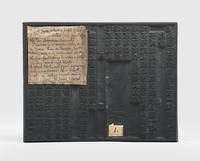
1880183225China: c.1880. China on Thomas Hardy's doorstep Labels on both faces indicate that this artefact of missionary printing was owned by Henry Joseph Moule 1825-1904 a close friend of Thomas Hardy and the brother of two prominent China missionaries. Moule was the first curator of the Dorset County Museum where this woodblock was perhaps displayed to a curious public. Moule's seven brothers included George Evans Moule 1828-1912 consecrated the first Bishop of Mid-China in 1880 and Arthur Evans Moule 1838-1916 who was active in Ningbo and Shanghai and who also wrote prolifically on Chinese history and current affairs. The primary face has the text of the fourth to tenth commandments as given in Deuteronomy and the carving employs a songti character style with serifs. The largest of the labels reads "Block from which a page of a book has been printed; viz. part of the Ten Commandments. Printing is a much older art in China than in Europe but always was and is performed as by the pre-Gutenberg European printers viz. from wood-cut blocks. A rough block with wood-engraving tools accompanies this block; and also an inking brush and a printing pad. The press is used China." Moule is named on a small label on the reverse. Single wooden block 165 x 210 mm engraved in 8-columns on primary face one column of characters and page subdivisions on secondary face 3 manuscript labels the largest covering upper-left quadrant of primary face. Contemporary blue pencil note on secondary face. General signs of handling carved character distinct: very good. unknown
1951173556Guizhou: Junqu zhengzhi bu 1951. Military might. and terror First edition first printing of this internally circulated report on operations undertaken in Guizhou province by the People's Liberation Army. After Chiang Kai-Shek evacuated to Taiwan in early 1949 remnants of his forces in the south-west splintered into different bandit units and mounted a credible threat to the survival of Mao's regime. Of the 1000 copies issued none are located in institutions. In January 1949 Chiang ordered Guizhou's nationalist governor Gu Zhenglun to make the province the final bastion of anti-communist resistance on the mainland. Although Mao proclaimed the founding of a united People's Republic of China in October "the continuing civil war in southwest China pitted ethnic groups local power holders farmers and Nationalist troops against the PLA People's Liberation Army. The occupying army's initial strategy of a rapid military advance leniency and massive grain collection efforts was a recipe for resistance" Brown p. 119. In early 1950 communist cadres and troops withdrew from the majority of the province the party's political control in tatters but a combination of carrot allowing local people to keep more of their agricultural surplus and stick terror eventually brought Guizhou into line. A series of maps demonstrates the oscillating fortunes of anti-communist forces during 1950 Mao's forces being pushed back during the summer months but gaining the decisive upper hand later in the year. Other plans show the grand troop manoeuvres that turned the tide in Beijing's favour. Tables at the end list major battles the names of guerilla organizations and their leaders those leaders killed or captured in the field and those who surrendered. While dated 1950 on the title page the volume was not printed until May 1951. Second and third printings followed in June and July. Octavo. Half-tone portrait photographs of Chairman Mao and Commander-in-Chief Zhu De tipped onto decoratively embossed leaves with tissue guards 5 photographic halftones all with tissue guards showing Liu Bocheng He Long Deng Xiaoping Li Da and Zhang Jichun 15 facsimile calligraphic inscriptions 36 colour maps and battle plans 26 double-page 9 colour bar charts tables in text. Text in Chinese. Original brown cloth spine and front cover lettered in gilt illustrated endpapers green and pink silk bookmarker. Ex-military library with accession stamps on the front free endpaper and title page record card holder on the rear pastedown and "confidential" stamp on the title page; contemporary red pencil marginalia. Extremities rubbed and bumped couple of tips consolidated contents toned as consistent with paper from this period maps plans and graphs well preserved: a very good copy. Jeremy Brown "From Resisting Communists to Resisting America: Civil War and Korean War in Southwest China 1950-51" in Jeremy Brown & Paul G. Pickowicz eds Dilemmas of Victory: The Early Years of the People's Republic of China 2012. hardcover
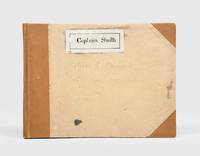
1928174745Likely Shanghai: 1928-34. Mariners are warned to exercise due caution when approaching and when in the waterways A collection of otherwise untraced notices to mariners compiled by a civilian captain who plied the lower Yangtse during the late 1920s and early 1930s. Yangtse shipping was regulated by the Maritime Customs Service which issued around 100 navigational advisories per year. During the late 1920s shipping traffic on the Yangtse rebounded after several years of decline during the Warlord Era. Low water however continued to pose problems for navigators and increased the need for effective river management. The 39 notices are technical directions concerning specific parts of the channel. They specify when vessels may and may not enter stretches of water warning of the persistent presence of Chinese craft not subject to the same notices offer guidance for navigating buoyed channels provide optimum bearings and relay a change to the position of the Bend and Gravener Island beacons due to the erosion of the channel. The majority date from 1929. The identify of the "Captain Smith" referenced on the front cover has proved elusive but he may be the individual pictured in photograph Sw13-045 G. Warren Swire collection SOAS. Landscape octavo. Contemporary brown half cloth binder with metal clasp spine lettered in gilt buff paper sides front board with manuscript label "Captain Smith" boards lined with pink paper typescript list of charts on inner front cover 39 sheets each typed one side only in black or blue most duplicate typescript a few top copy. Boards lightly soiled clasp rusted sheets generally well preserved a few creased or with holes near clasp legibility unaffected typescript list with a few losses to text: a very good example. hardcover
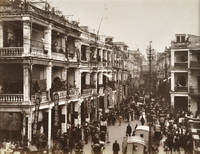
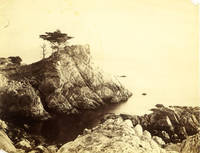
1880J6SGPBJ1IXLV1880. With 12 albumen prints ranging in size from ca. 16.5 x 23 cm to 21 x 28 cm. Collection of 12 vintage photographs from the late 19th century showing China Indonesia the Hawaiian Islands California and Egypt. Of the 4 photographs of China 2 show Hong Kong including one possibly by the famous Chinese photographer Lai Fong ca. 1839-1890 showing Queen's Road Central. The two rarest photographs show several of the 7500 imperial examination cubicles in Canton Guangzhou while a photograph by A Chan Ya Zhen shows the famous five-story pagoda on Kun Yam Hill in 1870. The Indonesian island Java can be seen on 3 photographs including one of lake Telaga Warna by the British firm Woodbury & Page based in Batavia Jakarta. Taken further to the west were 3 photographs of Hawaii probably all taken in or near Honolulu. A rare undated photograph of the statue of King Kamehameha was taken probably right after the unveiling ceremony in 1883 as it shows a small wooden fence around the statue which can be seen in an illustration in The Graphic 28 April 1883 but is absent from all later images. Of the 2 final images one by Isaiah West Taber 1830-1912 shows Midway Point in Monterey California and the other by Hippolyte Arnoux fl. 1860-1890 a group of Arabs and camels waiting for the ferry near El Qantara in Egypt. Most of the photographs are worn at the edges with small tears and folds and a few have small holes; one of the images of Hawaii with a waterstain at the lower margin. unknown