24 761 résultats
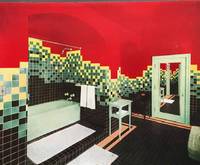
193157130Kyoto Japan: Daimaru Department Store Matsuzaki & Co. Ltd. 1931. Oblong 4to. 12.25 x 9 in. 2 leaves 31 thick leaves w/ tipped-in silver gelatin photographs 6 hand-coloured and 29 retaining their textured printed tissue guards. Ornate & embossed padded leather post-binder tooled panel & borders on front cover of the Daimaru Villa embossed geometrical patterns on spine & back cover wear to fore-edges wear to corners some scuffing head & foot of spine old cloth repair rear hinge occasional tears to tissue guards still a nice copy w/ all the photos bright and w/ excellent contrast. First edition thus of this fascinating photographic souvenir album for the Daimaru Villa a half-timber Tudor Revival home designed by Vories. The American missionary turned noted architect had recently finished the Doremus School in Yokahama and was executing designs for the Daimaru Department Store in Osaka as well as the Kobe College in Nishinomiya City while working on the Villa. Shimomura XXI 1883-1944 was Chairman of the Daimaru Department Store Chain and an accomplished photographer whose talents are well-represented in this album. Opening with a birds-eye view of the recently completed home he presents an interior tour of the home including the Reception Hall Living Room featuring the geometric pattern reproduced on the spine & back cover of the album the Garden Sun Dial the brightly coloured Sun Room Dining Room and Butler’s Pantry the Stair Hall featuring reproductions of the “Unicorn Tapestries†the Family Shrine Weathervane and night view of the home from the garden. One of the hand-coloured photos shows off the vivid Art Deco architectural details and tile in the bathroom filled with reds blacks & greens. The Matsuzaki & Co. Ltd. were well known for producing luggage and leather novelties sold in Daimaru Department Stores in Japan during the 1920’s and 1930’s. Shimomura’s photos were exhibited in the Ashiya Photo Salons of 1935-1937 and also featured later in the art magazine Geijyutu Shinchou. Daimaru Department Store, Matsuzaki & Co., Ltd., hardcover
1969230704052059ybvkTokyo, Kodansha, Showa 42-43 (1968-1969). Each volume with few pages Introduction, some 100 glossy-paper colour-plates tipped-on cardboards, ca. 20 glossy black-and-white plates, ca. 40 pages commentary. - Heavy gilt-titled raw-cloth (silk?) bindings in thick cloth-folders with wings and bone-clasps, protected by publisher's illustrated (clan-signs) matted thick cardboard-boxes; Folio (overall ca. 45 x 32 x 22 cm; ca. 21 kg.)!
19802092902138900104Kodansha 1980. Soft Cover. Fine. Number of books: 3 Kodansha paperback
19742091502135700292Japan Senba Corporation 1974. Soft Cover. Fine. The book is in fine condition. Japan Senba Corporation paperback
20062083002115803876Japan Statistical Association Mainichi Shimbun 2006. Soft Cover. Fine. Number of books: 29 Japan Statistical Association Mainichi Shimbun paperback
2091502135201573Japan Society of Civil Engineers 1936 N.A. Soft Cover. Fine. Number of books: 2 Japan Society of Civil Engineers 1936 paperback
2080502106906417Chuo Keizai Publishing Co. Ltd. N.A. Soft Cover. Fine. The book is in fine condition. Chuo Keizai Publishing Co., Ltd. paperback
20012110502151005605Iwanamishoten 2001. Soft Cover. Fine. Volume: 50 Iwanamishoten paperback
2081002109000147Kodansha N.A. Soft Cover. Fine. Number of pages: 31 books Kodansha paperback
188317192Paris, Quantin, 1883. 2 Bände. Mit sehr zahlreichen Textabbildungen, 13 Radierungen, 21 Heliogravuren, 2 Gravuren und 28 Chromolithographien. 35,4/28 cm. 2 Bl., IV,208 S., 2 Bl./ 2Bl., 369,3 S. Wohl etwas spätere Halbleinenbände mit goldener Rückentitel-Prägung. Deckel mit Buntpapierbezug. Leinen gering fleckig, Kanten berieben und an den unteren Ecken mit leichten Knickspuren. Papier minimal vergilbt. Eine Tafel mit kleinem Einriss im Rand, 1 Tafel und die gegenüberliegende S. etwas gebräunt. Vor 2 Tafeln fehlt das Seidenhemdchen. Vordere Innendeckel mit Exlibris.
4822320243New. Brand new and still unused unknown
997150751XNew. Brand new and still unused unknown
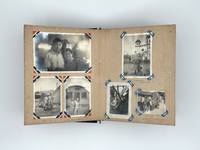
1949370387Kobe or Fukuoka Japan 1949. Approx. 145 photographs mostly 3x2 inches some 1-1/2x1 and a few 4-1/2x3 inches or larger. Inserted on photo corners or with small strips of cellotape at the corners. Many captioned in English or Japanese. Some images missing a few loose photographs inserted. Signed by Tadao Maeda on the rear endpaper. Approx. 7x6 inches. Contemporary dark green cloth minor wear. Approx. 145 photographs mostly 3x2 inches some 1-1/2x1 and a few 4-1/2x3 inches or larger. Inserted on photo corners or with small strips of cellotape at the corners. Many captioned in English or Japanese. Some images missing a few loose photographs inserted. Signed by Tadao Maeda on the rear endpaper. Approx. 7x6 inches. The snapshots comprise mostly images of Japanese soldiers attached to the U.S. regiment outside of barracks or on bases but also street scenes family members unknown
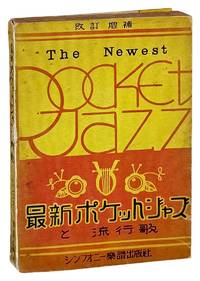
193833168Tokyo: Symphony Publishing Company 1938. Very Good. Tokyo: Symphony Publishing Company 1938. Presumed First Edition. 12mo 15.5 cm; publisher's pictorial yellow and orange card wrappers lettered in black; 1923pp.; brief illus. sheet music throughout. Moderate wear and dust-soiled to wrappers small loss mid-spine briefly affecting text textblock a bit browned and foxed else Very Good bright and sound. <br /> <br /> Evidently unrecorded Japanese guide to popular jazz music the first half almost entirely in Japanese the latter half bilingual primarily in Japanese and English. Includes the music for classics by Jerome Kern like "Ol' Man River" and "Can't Help Lovin' Dat Man"; Romberg and Hammerstein's "Lover Come Back To Me"; Moises Simons' Cuban rumba foxtrot "The Peanut Vendor"; instantly recognizable classics like "Blue Moon" and "La Cucaracha"; and songs by Mabel Wayne and Irving Berlin. The compilation also includes songs in Spanish French and German accompanied by its Japanese translation. <br /> <br /> A fascinating and beautiful little guide documenting the rise in popularity of Jazz music in Japan and Tokyo in particular issued between the devastating earthquake of 1923 and the beginning of World War II. The import of Jazz to Japan was first heralded with the rise in trans-Pacific luxury liners. A Japanese version of "My Blue Heaven" reproduced here became available as early as the 1920s and the popular 1929 Japanese film "Tokyo March" employed Jazz in its soundtrack. The genre was popular enough that Columbia and Victor records formed subsidiary companies in Japan.<br /> <br /> The popularity of jazz in Japan continues to this day touted by one of the country's most prominent public and literary figures Haruki Murakami who first opened his Jazz club right out of college after falling in love with the genre at an Art Blakey and the Jazz Messengers show in Kobe in 1964. <br /> <br /> No copies of this work located in OCLC as of June 2025. <br /> <br /> References: <br /> <br /> "How Japan Came To Love Jazz" online interview with historian E. Taylor Atkins author of "Blue Nippon"<br /> <br /> "Jazz Messenger" by Haruki Murakami available online. Symphony Publishing Company unknown
1950184651950. Photographic archive of ninety-one silver gelatin prints dating from the 1950s to early 1960s documents the daily military and civilian life of an African American soldier stationed in Japan during the early Cold War less than a decade after President Harry S. Truman's 1948 executive order mandating desegregation of the U.S. Armed Forces. The images capture integrated base life among Black and white servicemen recreational sports teams missile operations and family networks extending between the United States and overseas postings. Produced during a period when the U.S. military served as one of the first federally desegregated institutions the archive situates African American service within the broader context of Cold War geopolitics and the American presence in postwar Japan.<br /> <br /> Archive consists of ninety-one original vernacular silver gelatin photographs measuring approximately 4 x 5 inches to 3 x 2 inches. Images depict soldiers in baseball uniforms preparing for games vehicles transporting players and spectators group portraits on base with tanks trucks and jet aircraft visible in the background and individual uniformed portraits including one dated 1957 on the verso. One photograph dated "APR 1959" records a missile launch reflecting the technological environment of mid-century military installations. Additional images show African American children in a classroom family members and friends stateside and leisure scenes including three African American men dressed for golf beside a vehicle while the principal subject leans from the window. Several photographs include handwritten inscriptions on the verso addressed to the soldier's wife. Roughly one-third of the images prominently depict African American servicemen often the same two soldiers interacting with both Black and white peers; others show interactions with Japanese civilians and mixed-race groups on base.<br /> <br /> Created during the consolidation of U.S.-Japan security alliances and amid the evolving implementation of military desegregation the photographs provide visual evidence of integrated service life recreation and family continuity within overseas deployments. The juxtaposition of sports missile testing domestic scenes and cross-cultural encounters reflects the layered realities of African American military experience in the 1950s. Photographs slightly bowed; images crisp with strong detail and clear compositions. Overall very good condition. Cohesive vernacular record of Black military service and everyday life in early Cold War Japan. unknown
19421686141942. JAPAN. Front 1942. In Japanese. Numbers 1-2. Folio bound in original photographic wrappers preserved in a new cloth box. Tokyo: Tohosha 1942. $1500.00 This is the Japanese language edition of the great propaganda magazine Front which appeared in some 15 different languages and is clearly modeled on USSR in Construction. This version combines the first and second number dedicated to the Imperial Navy and its "defense of Asia". Among the stunning photograph are ones showing the attacks on European holdings in Southeast Asia and the attack on Pearl Harbor. Under the direction of Kimura Ihei Front used the talents of some of the most important of Japan's photographers. The layout was designed under the direction of Hara Hiromu. Some wear to wrappers. All issues are extremely rare. Ryuichi and Heiting. The Japanese Photobook no.89. hardcover
19301598251930. JAPANESE COMMERCIAL DESIGN. A Collection of approximately 200 labels for food and drink products. Various sizes mounted in an album. Small folio 305 x 225mm bound in pale blue wrappers in a recent brown chitsu case. NP. ND. Japan 1930's. An eclectic collection of Japanese food and drink labels from the first quarter of the twentieth century. Fruits vegetables spirits candies canned meats and fishes are all represented on colourful labels featuring combined western and Japanese design sensibilities. They are neatly tipped into an accordion style album of thick pale blue paper and mostly remain in fine condition. unknown books
194760276NP Osaka Japan: Liaison Office Osaka Railway Division 1947. 4to. 66 pp. Text primarily in the form of charts includes types and measurements of main locomotives used for passenger and freight trains gasoline cars electric locomotives and cars passenger cars and freight cars. Mounted through the text are 89 original black and white photographs each measuring 4 x 6 inches of the rolling stock including a picture of the "Dixie Limited an express train for exclusive use of the Allied Forces running between Tokyo and Hakata." During World War II many Japanese companies were consolidated as part of the war effort. With Japan's defeat and occupation by allied forces the various conglomerates that had been created were broken up by order of the Supreme Commander Allied Powers. This included the Japanese railway companies though railroads remained a vital means of transportation not only for locals but for the occupying forces. Apparently not recorded on OCLC. Light brown paper-covered boards; black lettered title on front board. A very good copy. <br/><br/> Liaison Office, Osaka Railway Division hardcover books
1957103497BBTokyo, Mikasa-shobô, (1957). 8°. 248 S. mit Abb. auf Tafeln. OPbd. mit goldgepr. Rückentitel, illustr. Orig.-Schutzumschlag, Bauchbinde ("Obi", belly band) u. Cellophan-Schutzumschlag.
1894129426Tokio, Tsoukidji [Flammarion] 1894 2 volumes in-8, broché à la chinoise yamato-toji, 54 - 54 pp., ff. imprimés au recto et repliés, cordons de soie deux en haut et deux en bas, à la fois croisés et liés à l'avant. 29 compositions en couleurs, dont une répétée en couverture et 28 à double page hors-texte, gravées sur bois et portant toutes le sceau de l'artiste, nombreuses vignettes in t. tirées en noir. Pages de titre en noir et bistre. Édition originale, second tirage non justifié, paru la même année que le tirage de luxe de ce célèbre ouvrage illustré de 28 estampes hors-texte en couleurs en double-page par Kajita Hanko, Kano Tomonobu, Okakura Shusui, Kawanabe Kyosui et Eda Mahiko, et de nombreuses vignettes en noir dans le texte. Curieuse édition des fables de La Fontaine appartenant au genre des livres sur papier crépon publiée à Tokyo entre 1885 et le début du XXe siècle à l'intention d'une clientèle occidentale surplace, mais aussi et surtout pour l'exportation. Bon exemplaire.
19732091502135702560Center for Historical Japanese Medicine Kodansha 1973. Soft Cover. Fine. The book is in fine condition. Center for Historical Japanese Medicine Kodansha paperback
Iconic color cover illustration of the Dalai Lama by Boris Chaliapin. Cover story, 'The Escape That Rocked The Reds', describes the Dalai Lama's dramatic two-week flight from the Red Chinese as he travelled from Lhasa to the sanctuary of northern India. Included is a map of the escape route and three photos. An additional article entitled 'Buddhism - The Dalai Lama's Faith' includes a map showing Buddha's hold on Asia. Also of interest is an article on the marriage of Japan's Prince Akihito to the commoner Michiko Shoda, which includes two photos. Complete and unmarked with moderate wear. A sound copy of this special issue. Book
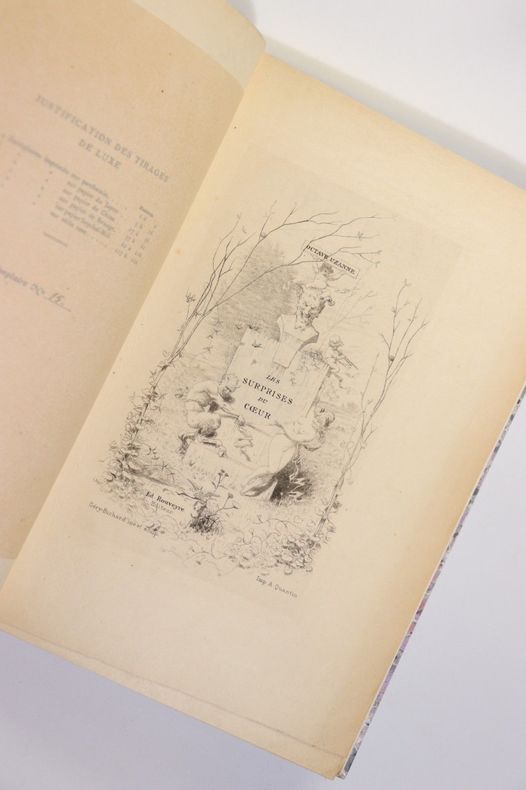
1881AMO-2704aris, Ed. Rouveyre, 1881 1 volume in-8 (22,8 x 15 cm), 187-(2)-(2) pages. Frontispice gravé à l'eau-forte par Géry-Bichard. Reliure moderne bradel demi-maroquin lie de vin, couverture illustrée par Paul Avril conservée (reliure signée honegger), tête dorée, relié sur brochure (non rogné). Exemplaire à l'état proche du neuf. Intérieur parfait. Quelques marques/taches sombres au dos du volume (voir photos). ÉDITION ORIGINALE. TIRAGE PROBABLE A 1.000 EXEMPLAIRES. CELUI-CI, 1 DES 12 EXEMPLAIRES SUR PAPIER DU JAPON. Le tirage de luxe est établi comme suit : 4 ex. sur parchemin, 12 ex. sur Japon (notre ex.), 20 ex. sur Chine, 25 ex. sur Renage, 55 ex. sur Seychall-Mill et 6 ex. sur papier rose, soit un total de 122 exemplaires de luxe. Les exemplaires du tirage ordinaire sont tirés sur papier vergé de type Hollande Van Gelder. Voici comment Octave Uzanne commente lui-même cet ouvrage lors de la vente d'une partie de sa bibliothèque en mars 1894 : "Quatrième et dernier volume de la série Rouveyre (avec Le Bric-à-Brac de l'Amour, le Calendrier de Vénus et Les Caprices d'un Bibliophile) ; quelques bons chapitres, mais deux ou trois vraiment faiblots. La couverture, composée par Paul Avril "est venue" imparfaitement au tirage, mais le frontispice, gravé par Géry-Bichard, d'après sa composition, est d'une grâce, d'une légèreté, d'un charme et d'une fraîcheur de pointe qui rachètent bien les imperfections décoratives des autres parties du volumes." Ce volume contient quelques chapitres sur l'amour et les femmes : A ma maîtresse inconnue (épître), Les Surprises du Coeur, L'Organe du Diable, Les Hasards des petits papiers, Piments. « Me reprocherait-on en outre de spécialiser mes sujets et de reprendre souvent mes mêmes théories sur les femmes et l'amour ? - Aimables lectrices ! vous ne sauriez m'en tenir rigueur, car, mieux que quiconque, vous savez qu'on aime à quitter fort tard ce que la passion nous a fait épouser de bonne heure, et qu'il est toujours temps de regretter ses vices, quand les vices nous abandonnent » Post-face aux Surprises du Cœur (20 juin 1881). Provenance : collection Bertrand Hugonnard-Roche avec son monogramme à l'encre au verso du premier plat (BHR 2018). BEL EXEMPLAIRE FINEMENT RELIÉ PAR HONEGGER DU RARE TRÈS TIRAGE SUR JAPON.
63750Paris, Georges Crès et Cie, 1913 ** Exemplaires sur Vieux Japon N° 2; Reliure de grand luxe réalisée par Ch. De Samblanx, protégée par ub étiu 20 x13.5x4cm bordé de marequin rouge. Plats extérieurs identiques en meroquin brun ornés de quarte cadres. L'extérieur et l'interieur étant constitues par un double filet doré attenant chacun à une ornementation rehaussée au centre fil doré avec à l'interieur une ornementation rehaussée au centrepar un fin continu entourée de 56 feuilles vertes séparrées par des doubles points dorés et agrémentée de 6 rosaces crëme avec au centre ubn bouton vert foncé. Les rebords des plats sont ornés d'un double filet doré. Dos; un encadrement formé par un double filet doré. Au-dessus une ornementation rehaussée par six feuilles vert foncé, séparées par une ligne et six point dorés, une rosace brun clair avec un centre vert foncé et entourée d'un cadre de moulures. Au-dessous une ornementation similaire mais avec trois rosaces et vingt feuilles. Au bas de 3éme rosace la date de reliure ; 1913. Entre ces deux ornementations; le nom de l'auteur et le titre du livre en letters d'or. Les rebords supérieur et inférieur du dos sont ornés de cinq doubles barettes dorées.
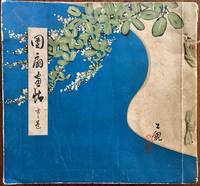
193057126Kyoto Japan: n.p. ca. 1930. 4to. 136 leaves samples on many different coloured papers mixture of colour Japanese woodblock printed samples many hand-painted manuscript designs all w/ stamped artist signature on versos inventory No. and pricing on versos 5 of the leaves are die-cut overlays for the painted designs below on similar coloured paper framing them as they would have appeared in the completed product. Contemporary colour wood-block printed softcovers punch-sewn at gutter margin w/ gold silk braid cover art by Watanabe Kokan 1877-1938 a noted Taisho-era Japanese artist who founded a freelance artists group following World War I occasional tidemark & offsetting in sections some offsetting of inks and images minor wear & thumbing to fore-edges & spine from use still a VG- copy. An exceptional original manuscript and woodblock printed sample book for Japanese fan designs in the early Showa period between the Wars. With all having penciled prices in Arabic numerals this appears to have been intended for the export market to the West with the opening designs on a silk-like woven paper with glittery sheen images including Mt. Fuji cranes snails Ikebana and others. The handpainted designs encompass a Noh actress in the play Izutsu based on painting by Uragami Shunpo 1820-1849 artfully rendered song birds Japanese toys masks and more. The artists for these designs include Watanabe Kokan Konishi Fukunen 1887-1959 and Takehisa Yumeji 1884-1934 who has incorporated haiku into his image of a woman in kimono under a bell and others. In a few of them the Japanese artists appears to have painstakingly painted in dots elaborate ornamental borders and designs reminiscent of white design elements left on indigo kimono textiles with the Katagami paper stencils technique. Many of them reflect bold Art Deco influences vivid and bright primary colours the use of metallic inks and several with traditional Japanese design elements as well as some with bats others with bamboo and botanical specimens and even one with a kite carrying away the flier. No copies located in Worldcat. n.p., paperback