Julien GREENBiblio.com
48 402 résultats
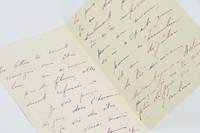
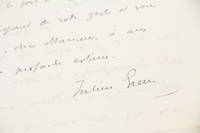
195488366Paris: s. n. 1954. Fine. s. n. Paris 12 Mars 1954 13.50 x 21 cm une page et demi Autograph letter dated and signed one page by Julien Green addressed to Thierry Maulnier 22 lines in black ink. Central folds inherent to postal folding. Julien Green thanks Thierry Maulnier one of the rare defenders of his play l'Ennemi recently staged at the théâtre des Bouffes-Parisiens: ""je n'oublierai pas ce que vous avez fait pour ma pièce alors qu'elle était si vivement attaquée. Vous avez su en parler avec la valeur de la vraie critique et je vous prie de croire que si je suis si sensible aux compliments que vous voulez bien me faire je ne suis pas du tout aveugle aux interprétations de cette oeuvre difficile."" ""I will not forget what you did for my play when it was so vigorously attacked. You knew how to speak about it with the value of true criticism and I beg you to believe that if I am so sensitive to the compliments you are kind enough to pay me I am not at all blind to the interpretations of this difficult work."" Julien Green acknowledges the weight of Thierry Maulnier's favorable intervention: ""Si comme je l'espère elle arrive à se frayer un chemin jusqu'à son vrai public ce sera en grande partie à vous que le devrai. De toute manière et quel que soit le sort de l'Ennemi je vous suis reconnaissant de votre geste."" ""If as I hope it manages to find its way to its true audience it will be largely thanks to you. In any case and whatever the fate of l'Ennemi I am grateful for your gesture."" s. n. unknown
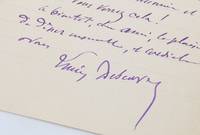
193483171Paris 1934. Fine. Paris 20 avril 1934 13.50 x 21 cm une feuille Autograph letter signed on letterhead of the periodical ""Le journal"" by Lucien Descaves 15 lines in blue ink probably addressed to Raymond Escholier who published at Floury in 1934 a biography of Honoré Daumier. Fold mark inherent to envelope insertion. ""20 avril 34 Cher ami. Je suis désolé de vous avoir oh ! bien involontairement contrarié mais je rendais compte de votre livre comme je parlerai de celui que vous allez m'envoyer et que j'attends avec impatience. Alors je dirai ce que Daumier vous doit et ne doit pas à Suarès. Si j'aime Daumier et ses amis . Vous verrez cela ! A bientôt cher ami le plaisir de dîner ensemble et cordialement vous. Lucien Descaves."" ""20 April 34 Dear friend. I am sorry to have oh! quite involuntarily upset you but I was reviewing your book as I will speak of the one you are going to send me and which I await with impatience. So I will say what Daumier owes you and does not owe to Suarès. If I love Daumier and his friends. You will see that! See you soon dear friend for the pleasure of dining together and cordially yours. Lucien Descaves."" unknown
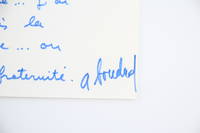
197576776Paris: S. n. 1975. Fine. S. n. Paris 25 Septembre 1975 21 x 29.50 cm une feuille une enveloppe Manuscript letter dated and signed 18 lines from Alphonse Boudard to his great friend and companion of wine-soaked lunches the Brussels journalist André Tillieu who was like Alphonse Boudard a great friend of Georges Brassens but also of Louis Nucéra. Envelope included a fold mark inherent to placing the letter in the envelope. ""Friend thank you for sending me this cutting. I hadn't noticed it. If ""Nouvel Obs"" pays me such compliments it's because the climate is changing a bit. indeed! Didn't receive your note with the article for ""Relax""; the last thing I received was the piece from ""Rail"" I thought it was from you under a pseudonym. See you soon I hope. I had lunch with Louis Nucéra last week. we're waiting for you. greetings and fraternity. Aboudard."" André Tillieu the Brusselsman very close friend and biographer of Georges Brassens maintained an epistolary correspondence with Alphonse Boudard for almost thirty years from 1972 until the latter's death in 2000. The mocking Parisian writer very quickly showed him his friendship considering him as one of the rare critics to understand him perfectly to the point of explaining clearly in his reviews what he himself expressed only incompletely and sometimes confusedly in his books. André Tillieu thus became part of the small circle of Alphonse Boudard's true friends on the same level as le Gros Georges Georges Brassens le Niçois Louis Nucéra and René Fallet with whom he loved to share hearty well-watered meals and cycling trips. As death gradually took away his best friends André Tillieu would remain one of Alphonse's very last pals. S. n. unknown
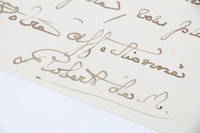
190087789Paris: S. n. 1900. Fine. S. n. Paris s.d. circa 1910 14 x 18.50 cm un feuillet Autograph letter signed by the dandy count 10 lines written in black ink addressed to a female friend. Folding traces inherent to postal handling. ""Chère madame et amie si le Paris-Noël vous tombe sous les yeux faites-moi la grâce d'y lire un mien sonnet qui j'espère vous plaira. Votre affectionné. Robert de M. 15 Déc."" Dear Madam and friend if the Paris-Noël falls under your eyes do me the grace of reading a sonnet of mine which I hope will please you. Your devoted. Robert de M. 15 Dec. S. n. unknown
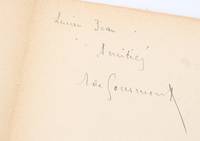
190084926s. l. 1900. Fine. s. l. s. d. ca 1900 8.50 x 11.50 cm une page sur un feuillet double Autograph letter signed by Remy de Gourmont addressed to a writer with whom he collaborates 1 page on a double sheet 14 lines in black ink regarding a sum owed to a publisher: ""On lui doit 3 fr versables quand Ducoté aura donné les fonds du mois de juillet."" ""We owe him 3 francs payable when Ducoté has provided the funds for the month of July."" Two small stains on the verso of the autograph letter. unknown
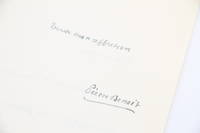
195085247La Roche-Posay 1950. Fine. La Roche-Posay s. d. ca 1950 13.50 x 21 cm une page Autograph letter signed by Pierre Benoit sent from La Roche-Posay 15 lines in blue ink about friendship and his wife's failing health. Central fold marks perforations from filing in a binder causing no losses. ""La Roche-Posay. Very dear friend I will be in Paris from the 27th to October 2nd. Sad journey. My wife is not well at all and I am joining her to try to find out what is wrong. . . I will do everything to see you during my stay. If without these circumstances one didn't bother friends what would they be for"" Don't write to me! I am the one who will telephone you. All my affection. Pierre Benoit."" unknown
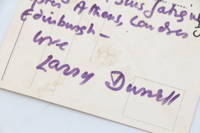
198083025Edimbourg Edinburgh 1980. Fine. Edimbourg Edinburgh 4 octobre 1980 10 x 14.50 cm une carte postale une enveloppe Suggestive autograph postcard signed by Lawrence Durrell addressed to Jani Brun written in violet felt-tip pen on the verso of a reproduction of a sculpture representing a satyr envelope attached. ""Buttons dear. J'arrive mardi pour deux nuits à Paris - au Royale. Si tu es libre de me joindre. faites moi signed. Suis fatigué après Athens Londres Edinburgh! Love. Larry Durrell."" ""Buttons dear. I arrive Tuesday for two nights in Paris - at the Royale. If you are free to join me. let me know. Am tired after Athens London Edinburgh! Love. Larry Durrell."" After many years spent in Greece Egypt and Rhodes the traveling writer Lawrence Durrell was forced to flee Cyprus following popular uprisings that led the island to its independence from the British crown. Rich only with a shirt and a typewriter but crowned with the success of his novel Bitter Lemons of Cyprus Les citrons acides he arrived in France in 1956 and settled in the Languedoc village of Sommières. In the ""Tartès house"" his large dwelling surrounded by trees he wrote the second part of his work his monumental Avignon Quintet devoted himself to painting and received his illustrious friends including the couple Henry Miller and Anaïs Nin violinist Yehudi Menuhin London publisher Alan G. Thomas and his two daughters Penelope and Sappho. Among the olive trees and under the Mediterranean sun he met in the mid-1960s the young and vivacious ""Jany"" Janine Brun a thirty-something woman from Montpellier of devastating beauty who worked at the Antiquities department of the Sorbonne in Paris. She was nicknamed ""Buttons"" in memory of their first meeting where the young woman wore a dress covered with buttons. Henry Miller also fell under the charm of ""Buttons"" praising her beauty and eternal youth in exceptional unpublished letters. The three companions spent memorable Parisian evenings of which we keep precious autograph traces through their epistolary exchanges. Recommended by Durrell she made numerous trips notably to England from where she received extensive correspondence from the writer as well as original works of art signed with his artist pseudonym Oscar Epfs. unknown
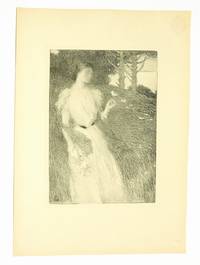
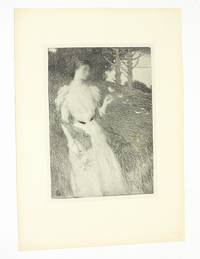
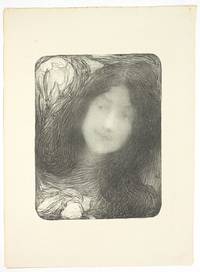
189974622Paris: Imprimerie Champenoispour CH. MassonH. Piazza 1899. Fine. Imprimerie Champenois pour CH. Masson H. Piazza Paris Janvier 1899 22 x 26 cm une feuille Rare original lithograph executed by Charles Guérin for L'Estampe Moderne series number 21 published in January 1899. One of 50 deluxe proofs printed on China paper with wide margins artist's signature in the plate publisher's dry stamp depicting a child's profile in lower margin mounted on a sheet of laid paper with the numbered stamp of the deluxe printing on the reverse some foxing. Lithograph inspired by an extract from Jeux rustiques et divins by Henri de Régnier. Magnificent French monthly publication edited between May 1897 and April 1899 L'Estampe Moderne consists of original chromolithographs which unlike other magazines such as Les Maîtres de l'Affiche and as stipulated on the tissue guards were created specially by each artist for the magazine. Thus 100 prints appeared in total covering the major artistic movements of the late 19th century: Symbolism Art Nouveau Pre-Raphaelites Orientalists and Belle Époque. Each delivery of four prints was issued in 2000 copies sold for 3.50F and 100 on Japan paper offered at 10F. Henri Piazza also planned a confidential very deluxe printing: 50 copies on Japan paper with wide margins and 50 in black on China paper at the considerable price of 30F. This print of handsome format is superbly printed on one of the most prestigious papers: China paper. ""Despite all its qualities China paper too inconsistent owes its reputation not to its own beauty but to its particular affinities with printing ink. Its texture smooth and soft at once is more apt than any other to receive a fine impression. This property makes China paper sought after for printing engravings."" Anatole France. French collectors' interest in artistic posters intensified in the early 1890s. Octave Uzanne to describe this fever invented the term ""affichomanie."" The poster originally popular and plastered on the streets of the capital then became an art object and its ephemeral medium became precious and destined for preservation. Piazza decided to remove the poster from its advertising purpose and elevate it to the rank of a complete work of art on the same level as the deluxe illustrated book. He thus composed a prestigious collection of entirely original works by the most prominent European artists of the moment: Georges de Feure Eugène Grasset Henri Detouche Emile Berchmans Louis Rhead Gaston de Latenay Lucien Lévy-Dhurmer Gustave-Max Stevens Charles Doudelet Hans Christiansen Henri Fantin-Latour Steinlen Ibels Engels Willette Henri Meunier Evenepoël Bellery-Desfontaines Charles Léandre etc. Handsome copy. Imprimerie Champenoispour CH. MassonH. Piazza unknown
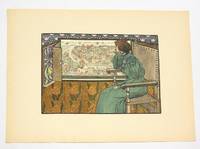
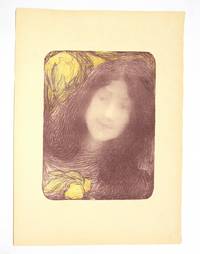
189974621Paris: Imprimerie Champenoispour CH. MassonH. Piazza 1899. Fine. Imprimerie Champenois pour CH. Masson H. Piazza Paris Janvier 1899 22 x 26 cm une feuille et une serpente Rare original color lithograph executed by Henri Guinier for L'Estampe Moderne series number 21 published in January 1899. One of 50 deluxe proofs printed on Japan paper with wide margins artist's signature in the plate publisher's dry stamp depicting a child's profile in lower margin numbered stamp of the deluxe printing on the reverse; engraving preceded by a tissue guard bearing the artist's name title and an extract from a work. Lithograph inspired by an extract from Jeux rustiques et divins by Henri de Régnier reproduced on the tissue guard of the print. Magnificent French monthly publication edited between May 1897 and April 1899 L'Estampe Moderne consists of original chromolithographs which unlike other magazines such as Les Maîtres de l'Affiche and as stipulated on the tissue guards were created specially by each artist for the magazine. Thus 100 prints appeared in total covering the major artistic movements of the late 19th century: Symbolism Art Nouveau Pre-Raphaelites Orientalists and Belle Époque. Each delivery of four prints was issued in 2000 copies sold for 3.50F and 100 on Japan paper offered at 10F. Henri Piazza also planned a confidential very deluxe printing: 50 copies on Japan paper with wide margins and 50 in black on China paper at the considerable price of 30F. This print of handsome format is superbly printed on the most prestigious of papers: Japan paper. Thick silky satined and pearlescent it contributes to making each page a work in its own right. Its quality of ink absorption and its affinity with colors also make it the ideal support for these very fine lithographs. French collectors' interest in artistic posters intensified in the early 1890s. Octave Uzanne to describe this fever invented the term ""affichomanie."" The poster originally popular and plastered on the streets of the capital then became an art object and its ephemeral medium became precious and destined for preservation. Piazza decided to remove the poster from its advertising purpose and elevate it to the rank of a complete work of art on the same level as the deluxe illustrated book. He thus composed a prestigious collection of entirely original works by the most prominent European artists of the moment: Georges de Feure Eugène Grasset Henri Detouche Emile Berchmans Louis Rhead Gaston de Latenay Lucien Lévy-Dhurmer Gustave-Max Stevens Charles Doudelet Hans Christiansen Henri Fantin-Latour Steinlen Ibels Engels Willette Henri Meunier Evenepoël Bellery-Desfontaines Charles Léandre etc. Handsome copy in the Symbolist style. Imprimerie Champenoispour CH. MassonH. Piazza unknown
189874372Paris: Imprimerie Champenoispour CH. MassonH. Piazza 1898. Fine. Imprimerie Champenois pour CH. Masson H. Piazza Paris Mars 1898 25 x 34.50 cm une feuille et une serpente Rare original lithograph executed by Ernest Laurent for L'Estampe Moderne series number 11 published in March 1898. One of 50 deluxe proofs printed on Japan paper with wide margins laid paper mounted on Japan paper artist's signature in the plate publisher's dry stamp showing a child's profile in the lower margin numbered stamp of the deluxe edition on verso; lithograph preceded by a tissue guard inscribed with the artist's name title and a poem; blank tissue guard. Lithograph inspired by a poem by Léon Dierx reproduced on the tissue guard of the print. Magnificent French monthly publication issued between May 1897 and April 1899 L'Estampe moderne consists of original chromolithographs which unlike other magazines such as Les Maîtres de l'Affiche and as stipulated on the tissue guards were created specially by each artist for the magazine. Thus 100 prints appeared in total covering the major artistic movements of the late 19th century: Symbolism Art Nouveau Pre-Raphaelites Orientalists and Belle Époque. Each delivery of four prints was issued in 2000 copies sold for 3.50F and 100 on Japan paper offered at 10F. Henri Piazza also planned a confidential deluxe edition: 50 copies on Japan paper with wide margins and 50 in black on China paper at the considerable price of 30F. This print in a handsome format is superbly printed on the most prestigious paper: Japan. Thick silky satined and pearlescent it contributes to making each page a work in its own right. Its quality of ink absorption and its affinity with colors also make it the ideal support for these very beautiful lithographs. The interest of French collectors in artistic posters intensified at the beginning of the 1890s. Octave Uzanne to describe this fever invented the term ""affichomanie."" The poster originally popular and pasted on the streets of the capital then became an art object and its ephemeral support became precious and devoted to preservation. Piazza decided to remove the poster from its advertising vocation and elevate it to the rank of a complete work of art on the same level as the luxury illustrated book. He thus composed a prestigious collection of entirely original works by the most prominent European artists of the moment: Georges de Feure Eugène Grasset Henri Detouche Emile Berchmans Louis Rhead Gaston de Latenay Lucien Lévy-Dhurmer Gustave-Max Stevens Charles Doudelet Hans Christiansen Henri Fantin-Latour Steinlen Ibels Engels Willette Henri Meunier Evenepoël Bellery-Desfontaines Charles Léandre etc. Handsome copy in the Symbolist style. Imprimerie Champenoispour CH. MassonH. Piazza unknown
189874373Paris: Imprimerie Champenoispour CH. MassonH. Piazza 1898. Fine. Imprimerie Champenois pour CH. Masson H. Piazza Paris Mars 1898 23.50 x 34.50 cm une feuille Rare original lithograph executed by Ernest Laurent for L'Estampe Moderne series number 11 published in March 1898. One of 50 deluxe proofs printed on China paper with large margins artist's signature in the plate publisher's blind stamp representing a child's profile in the lower margin mounted on a sheet of laid paper with the numbered luxury edition stamp on the verso pale marginal foxing. Lithograph inspired by a poem by Léon Dierx. Magnificent French monthly publication issued between May 1897 and April 1899 L'Estampe moderne consisted of original chromolithographs which unlike other periodicals such as Les Maîtres de l'Affiche and as stipulated on the tissue guards were created specially by each artist for the periodical. Thus 100 prints appeared in total covering the major artistic movements of the late 19th century: Symbolism Art Nouveau Pre-Raphaelites Orientalists and Belle Epoque. Each issue of four prints was printed in 2000 copies sold for 3.50F and 100 on Japan paper offered at 10F. Henri Piazza also planned a confidential deluxe printing: 50 copies on Japan paper with large margins and 50 in black on China paper at the considerable price of 30F. This print of handsome format is superbly printed on one of the most prestigious papers: China. ""Despite all its qualities China paper too insubstantial owes its reputation not to its own beauty but to its particular affinities with printing ink. Its texture both smooth and soft is more apt than any other to receive a beautiful impression. This property makes China paper sought after for printing engravings."" Anatole France. French collectors' interest in artistic posters intensified at the beginning of the 1890s. Octave Uzanne to characterize this fever invented the term ""affichomanie."" The poster originally popular and pasted on the streets of the capital then became an art object and its ephemeral medium became precious and destined for preservation. Piazza decided to remove the poster from its advertising purpose and elevate it to the rank of a complete work of art on the same level as the deluxe illustrated book. He thus composed a prestigious collection of entirely original works by the most prominent European artists of the moment: Georges de Feure Eugène Grasset Henri Detouche Emile Berchmans Louis Rhead Gaston de Latenay Lucien Lévy-Dhurmer Gustave-Max Stevens Charles Doudelet Hans Christiansen Henri Fantin-Latour Steinlen Ibels Engels Willette Henri Meunier Evenepoël Bellery-Desfontaines Charles Léandre etc. Handsome copy in the Symbolist style. Imprimerie Champenoispour CH. MassonH. Piazza unknown
189874282Paris: Imprimerie Champenoispour CH. MassonH. Piazza 1898. Fine. Imprimerie Champenois pour CH. Masson H. Piazza Paris Janvier 1898 35 x 25 cm une feuille Rare original lithograph executed by Gustave Max Stevens for L'Estampe Moderne series number 9 published in January 1898. One of 50 deluxe proofs printed on China paper with wide margins artist's signature in the plate publisher's dry stamp depicting a child's profile in the lower margin mounted on a sheet of laid paper with the numbered stamp of the deluxe issue on the verso pale marginal foxing. Lithograph inspired by Solveig's Song lyrics from the music created for the theatrical play Peer Gynt by Henrik Ibsen. Magnificent French monthly publication issued between May 1897 and April 1899 L'Estampe moderne consists of original chromolithographs which unlike other journals such as Les Maîtres de l'Affiche and as stipulated on the tissue guards were created specifically by each artist for the journal. Thus 100 prints appeared in total covering the major artistic movements of the late 19th century: Symbolism Art Nouveau Pre-Raphaelites Orientalists and Belle Epoque. Each issue of four prints was printed in 2000 copies sold for 3.50F and 100 on Japan paper offered at 10F. Henri Piazza also planned a confidential deluxe printing: 50 copies on Japan paper with wide margins and 50 in black on China paper at the considerable price of 30F. This print of beautiful format is superbly printed on one of the most prestigious papers: China paper. ""Despite all its qualities China paper too inconsistent owes its reputation not to its own beauty but to its particular affinities with printing ink. Its texture smooth and soft together is more apt than any other to receive a beautiful impression. This property makes China paper sought after for printing engravings."" Anatole France. French collectors' interest in artistic posters intensified at the beginning of the 1890s. Octave Uzanne to describe this fever invented the term ""affichomanie"". The poster originally popular and posted in the streets of the capital then became an art object and its ephemeral medium became precious and devoted to preservation. Piazza decided to remove the poster from its advertising purpose and elevate it to the rank of a complete work of art on the same level as the deluxe illustrated book. He thus composed a prestigious collection of entirely original works by the most prominent European artists of the moment: Georges de Feure Eugène Grasset Henri Detouche Emile Berchmans Louis Rhead Gaston de Latenay Lucien Lévy-Dhurmer Gustave-Max Stevens Charles Doudelet Hans Christiansen Henri Fantin-Latour Steinlen Ibels Engels Willette Henri Meunier Evenepoël Bellery-Desfontaines Charles Léandre etc. Handsome copy. Imprimerie Champenoispour CH. MassonH. Piazza unknown
189874279Paris: Imprimerie Champenoispour CH. MassonH. Piazza 1898. Fine. Imprimerie Champenois pour CH. Masson H. Piazza Paris Janvier 1898 35 x 25 cm une feuille et une serpente Rare original color lithograph executed by Gustave Max Stevens for L'Estampe Moderne series number 9 published in January 1898. One of 50 deluxe proofs printed on Japan paper with wide margins artist's signature in the plate publisher's dry stamp representing a child's profile in lower margin numbered luxury edition stamp on verso; engraving preceded by a tissue guard captioned with the artist's name title and an extract from a work; blank tissue guard. Lithograph inspired by the Song of Solveig lyrics from the music created for Henrik Ibsen's play Peer Gynt an extract of which is reproduced on the print's tissue guard. Magnificent French monthly publication issued between May 1897 and April 1899 L'Estampe moderne consists of original chromolithographs which unlike other magazines such as Les Maîtres de l'Affiche and as stipulated on the tissue guards were created specifically by each artist for the magazine. Thus 100 prints appeared in total covering the major artistic movements of the late 19th century: Symbolism Art Nouveau Pre-Raphaelites Orientalists and Belle Epoque. Each delivery of four prints was issued in 2000 copies sold at 3.50F and 100 on Japan paper offered at 10F. Henri Piazza also planned a confidential printing of very high luxury: 50 copies on Japan paper with wide margins and 50 in black on China paper at the considerable price of 30F. This print of handsome format is superbly printed on the most prestigious of papers: Japan paper. Thick silky satiny and pearlescent it contributes to making each page a work in its own right. Its ink absorption quality and its affinity with colors also make it the ideal support for these very beautiful lithographs. French collectors' interest in artistic posters grew in the early 1890s. Octave Uzanne to qualify this fever invented the term ""affichomanie."" The poster originally popular and posted in the streets of the capital then became an art object and its ephemeral medium became precious and destined for preservation. Piazza decided to remove the poster from its advertising purpose and elevate it to the rank of a complete work of art on the same level as the illustrated luxury book. He thus composed a prestigious collection of entirely original works by the most prominent European artists of the moment: Georges de Feure Eugène Grasset Henri Detouche Emile Berchmans Louis Rhead Gaston de Latenay Lucien Lévy-Dhurmer Gustave-Max Stevens Charles Doudelet Hans Christiansen Henri Fantin-Latour Steinlen Ibels Engels Willette Henri Meunier Evenepoël Bellery-Desfontaines Charles Léandre etc. Handsome copy in the Pre-Raphaelite style. Imprimerie Champenoispour CH. MassonH. Piazza unknown
189874284Paris: Imprimerie Champenoispour CH. MassonH. Piazza 1898. Fine. Imprimerie Champenois pour CH. Masson H. Piazza Paris Janvier 1898 27 x 35 cm une feuille Rare original lithograph executed by Edmond Aman-Jean for L'Estampe Moderne series number 9 published in January 1898. One of 50 deluxe proofs printed on China paper with wide margins artist's signature in the plate publisher's dry stamp depicting a child's profile in the lower margin mounted on a sheet of wove paper with the numbered stamp of the deluxe printing on verso pale marginal foxing. Magnificent French monthly publication edited between May 1897 and April 1899 L'Estampe moderne consists of original chromolithographs which unlike other magazines such as Les Maîtres de l'Affiche and as stipulated on the tissue guards were created specifically by each artist for the magazine. Thus 100 prints appeared in total covering the major artistic movements of the late 19th century: Symbolism Art Nouveau Pre-Raphaelites Orientalists and Belle Époque. Each delivery of four prints was printed in 2000 copies sold for 3.50F and 100 on Japan paper offered at 10F. Henri Piazza also planned a confidential deluxe printing: 50 copies on Japan paper with wide margins and 50 in black on China paper at the considerable price of 30F. This print of handsome format is superbly printed on one of the most prestigious papers: China paper. ""Despite all its qualities China paper too insubstantial owes its reputation not to its own beauty but to its particular affinities with printing ink. Its texture smooth and soft at once is more apt than any other to receive a fine printing. This property makes China paper sought after for printing engravings."" ""Malgré toutes ses qualités le papier de Chine trop inconsistant doit sa réputation non pas à sa propre beauté mais bien à ses affinités particulières avec l'encre d'impression. Son tissu lisse et mou tout ensemble est plus apte qu'aucun autre à recevoir un beau tirage. Cette propriété fait rechercher le papier de Chine pour le tirage des gravures."" Anatole France. French collectors' interest in artistic posters intensified in the early 1890s. Octave Uzanne to describe this fever invented the term ""affichomanie"". The poster originally popular and posted in the streets of the capital then became an art object and its ephemeral medium became precious and destined for preservation. Piazza decided to remove the poster from its advertising vocation and elevate it to the rank of a work of art in its own right on par with the deluxe illustrated book. He thus composed a prestigious collection of entirely original works by the most prominent European artists of the moment: Georges de Feure Eugène Grasset Henri Detouche Emile Berchmans Louis Rhead Gaston de Latenay Lucien Lévy-Dhurmer Gustave-Max Stevens Charles Doudelet Hans Christiansen Henri Fantin-Latour Steinlen Ibels Engels Willette Henri Meunier Evenepoël Bellery-Desfontaines Charles Léandre etc. Handsome copy in the Symbolist style. Imprimerie Champenoispour CH. MassonH. Piazza unknown
189874283Paris: Imprimerie Champenoispour CH. MassonH. Piazza 1898. Fine. Imprimerie Champenois pour CH. Masson H. Piazza Paris Janvier 1898 27 x 35 cm une feuille et une serpente Rare original color lithograph executed by Edmond Aman-Jean for L'Estampe Moderne series number 9 published in January 1898. One of 50 deluxe proofs printed on Japan paper with wide margins artist's signature in the plate publisher's dry stamp depicting a child's profile in the lower margin numbered stamp of the deluxe issue on the verso; engraving preceded by a tissue guard bearing the artist's name title and presentation of the artist; blank tissue guard. Magnificent French monthly publication issued between May 1897 and April 1899 L'Estampe moderne consists of original chromolithographs which unlike other journals such as Les Maîtres de l'Affiche and as stipulated on the tissue guards were created specifically by each artist for the journal. Thus 100 prints appeared in total covering the major artistic movements of the late 19th century: Symbolism Art Nouveau Pre-Raphaelites Orientalists and Belle Epoque. Each issue of four prints was printed in 2000 copies sold for 3.50F and 100 on Japan paper offered at 10F. Henri Piazza also planned a confidential deluxe printing: 50 copies on Japan paper with wide margins and 50 in black on China paper at the considerable price of 30F. This print of beautiful format is superbly printed on the most prestigious of papers: Japan paper. Thick silky satiny and pearlescent it contributes to making each page a work of art in its own right. Its ink absorption quality and its affinity with colors also make it the ideal support for these very beautiful lithographs. French collectors' interest in artistic posters intensified at the beginning of the 1890s. Octave Uzanne to describe this fever invented the term ""affichomanie"". The poster originally popular and posted in the streets of the capital then became an art object and its ephemeral medium became precious and devoted to preservation. Piazza decided to remove the poster from its advertising purpose and elevate it to the rank of a complete work of art on the same level as the deluxe illustrated book. He thus composed a prestigious collection of entirely original works by the most prominent European artists of the moment: Georges de Feure Eugène Grasset Henri Detouche Emile Berchmans Louis Rhead Gaston de Latenay Lucien Lévy-Dhurmer Gustave-Max Stevens Charles Doudelet Hans Christiansen Henri Fantin-Latour Steinlen Ibels Engels Willette Henri Meunier Evenepoël Bellery-Desfontaines Charles Léandre etc. Handsome copy in the Symbolist style. Imprimerie Champenoispour CH. MassonH. Piazza unknown
190422952Pittsburgh Pa U. S. A.: Standard Sanitary Manufacturing Co. Very Good. 1904. First Edition. Hardcover. The cloth covers are very soiled and damp damaged but the contents are "fine." crammed with beautiful engravings of period fixtures along with prices and desriptions. A massive catalog. The contents have obviously been re-glued in the binding. Not very attractive but does not deminish the quality of those contents. As-is. ; 4to 11" - 13" tall; 484 pages . Standard Sanitary Manufacturing Co. hardcover
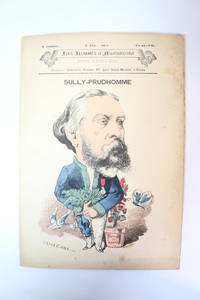
188773941Paris: Léon Vanier 1887. Fine. Léon Vanier Paris s. d. circa 1887 20 x 29.50 cm en feuilles First edition of this issue of the magazine consisting of two folded sheets. Worming and marginal stains on the sheets. On the first a color lithograph depicting Sully-Prudhomme by Emile Cohl. On the following ones text by Paul Verlaine in first edition entitled ""Sully-Prudhomme"". Paul Verlaine always impecunious would be the only contributor to the magazine that Léon Vanier its director would agree to pay in order to provide him with financial assistance. Léon Vanier unknown
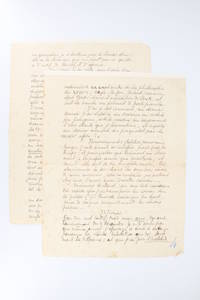
190479603Papeete 1904. Fine. Papeete 10-20 & 23 février 1904 20.70 x 27 cm 4 pages sur 2 feuillets Autograph double letter from Victor Segalen to Emile Mignard. Two pages written in black ink on two leaves. Horizontal folds from mailing scattered foxing. Emile Mignard 1878-1966 also a physician from Brest was one of Segalens closest childhood friends whom he first met at the Jesuit Collège Notre-Dame-de-Bon-Secours in Brest. The writer maintained with him a prolific and sustained correspondence in which he described with humor and intimacy his daily life across the globe. It was at Mignards wedding on 15 February 1905 that Segalen met his future wife Yvonne Hébert. Returning from a medical tour of the Gambier and Pomotou Islands Segalen was back in Papeete where he devoted most of his time to surgery: ""By force of circumstances I found myself the only doctor on the island with any surgical training my last two months in Toulon so that from the outset my hesitations disappeared. Since no one else was willing to operate I did so at first for lack of others now because I enjoy it and because I have had the benefit of a few lucky and successful cases. . Little by little then I set to it and now I have a small clinic of my own my operating room at home! and without pride I am sent the difficult cases !""This intense practice of medicine reveals some of the racial prejudices characteristic of the period: ""I must state first of all that the native or even half-white population provides the ideal ground for bloody operations by virtue of their particular aptitude for healing surgical wounds even septic ones."" Segalen then goes on at length and in detail about the operations he was called upon to perform: ""In this way I have operated with the help of my colleagues or assisting them closely: a strangulated hernia in a half-white man of 50 cured; removal of numerous suspicious lymph nodes cured of lipomas of occupational serous bursae an orbital osteosarcoma that naturally recurs a cured popliteal fossa lipoma a cataract uncertain result a huge abscess of the abdominal wall."" The most substantial account remains that of a urological procedure: "".and finally took part in the removal of an elephantine scrotal tumor of 30 kg. The operation was carried out at my home with my equipment by the newly arrived doctor for the Gambier. A new sheath was made for the penis and a new scrotum; four hours of work until the last suture which is progressing well."" Despite the relentless rhythm of consultations the writer did not neglect his literary endeavors and the creation of his Immémoriaux: ""Amid all this inevitably my literary projects stall somewhat. At first I tried to set aside my mornings for writing the thankless task of fixing the Imaginary of realizing; I would turn out five or six pages; but this had to be preceded by a nocturnal gestation that leaned towards surgical times; I am counting on twelve days in the Leeward Islands to make progress. I have two chapters completed."" The work would eventually appear in 1907 at the Mercure de France under the pseudonym Max-Anély Max in homage to Max Prat and Anély one of his wifes given names Segalen as a military physician not being authorized to sign a work of fiction with his own name. The letter also reveals that the article on Gauguin requested by Saint-Pol-Roux letter of 15 October 1903 « Oh dites-nous quelque chose sur ce malheureux de la Destinée qui fut souvent un grand artiste et à sa manière un Maître. Comment se fait-il que vous n'ayez pas adressé quelque relation sur cette mort au Mercure de France qui l'eût accueillie avec enthousiasme . » had at last been dispatched to France in extraordinary circumstances: ""Have I told you how in the last mail I sent off to the Mercure an article on Gauguin an article punctuated by the cries of a patient I was delivering and dispatched at the last moment unknown
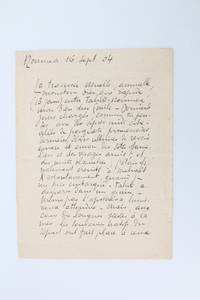
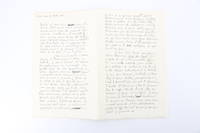
190479663Nouméa 1904. Fine. Nouméa 16 septembre 1904 12.20 x 16.40 cm 3 pages 1/2 sur un double feuillet Autograph letter signed by Victor Segalen addressed to Emile Mignard. Three and a half pages written in black ink on a double sheet. Transverse fold inherent to the mailing. Emile Mignard 1878-1966 also a doctor and from Brest was one of Segalen's closest childhood friends whom he met at the Jesuit college Notre-Dame-de-Bon-Secours in Brest. The writer maintained with this companion an abundant and closely followed correspondence in which he described with humor and intimacy his daily life in the four corners of the globe. It was at Mignard's wedding on February 15 1905 that Segalen met his wife Yvonne Hébert. Segalen's last Polynesian letter written from Nouméa: « La traversée usuelle monotone bien que rapide 13 jours entre Tahiti-Nouméa mon bien cher Emile. » ""The usual monotonous crossing though rapid 13 days between Tahiti-Nouméa my dear Emile."" He relates his last moments on Tahitian soil: « Derniers jours chargés comme tu penses avec des après-midi échevelés de paquets promenades dernières désirs ultimes de revoir encore et encore des sites familiers et des visages amis ; et des nuits blanches ; j'étais finalement éreinté à souhait et volontairement quand je me suis embarqué. » ""Last busy days as you can imagine with frantic afternoons of packing final walks ultimate desires to see again and again familiar sites and friendly faces; and sleepless nights; I was finally exhausted as desired and voluntarily when I embarked."" After almost two years on the island Segalen does not seem to feel sorrow at the idea of returning to his metropolitan life: « Tahiti a disparu dans un grain. Même pas l'apothéose lumineuse attendue. Mais aux cours des longues siestes à la mer le souvenirs hâtifs du départ ont fait place à ceux exquis et lents des deux années mortes. Maintenant dispos et en train j'inhume après embaumement mes souvenirs figés ; je flaire et désire au retour une vie très très active. » ""Tahiti disappeared in a squall. Not even the expected luminous apotheosis. But during the long naps at sea the hasty memories of departure have given way to the exquisite and slow ones of the two dead years. Now alert and in good form I bury after embalming my frozen memories; I scent and desire upon return a very very active life."" unknown
190479614Nouméa 1904. Fine. Nouméa 10 mai 1904 11.50 x 18.10 cm 4 pages sur un double feuillet Autograph letter signed by Victor Segalen addressed to Emile Mignard. Four pages written in black ink and blue colored pencil on a double sheet. Cross fold inherent to the sending. Emile Mignard 1878-1966 also a doctor from Brest was one of Segalen's closest childhood friends whom he met at the Jesuit college of Notre-Dame-de-Bon-Secours in Brest. The writer maintained an abundant and regular correspondence with this friend in which he described with humor and intimacy his daily life in the four corners of the globe. It was at Mignard's wedding on February 15 1905 that Segalen met his wife Yvonne Hébert. A mechanical problem prevents the Durance from leaving Nouméa; Segalen finds himself there after attending the annual health council that brings together each year the doctors from ships of the French Pacific division to decide on convalescences leaves and transfers: ""Tahiti est bien loin mon cher Emile Brest aussi ; tout est loin reculé encore par la grisaille Nouméenne.L'attente.l'incertitude. Voici quinze jours de jeu de balançoire : retournerons-nous à Tahiti Nos chaudières sont agonisantes les répartitions se compliquent. Désarmement à Saïgon Cap-Horn à la voile !!.Mystère."" ""Tahiti is very far my dear Emile Brest too; everything is far pushed back further by Nouméan greyness.The wait.the uncertainty. Here are fifteen days of seesaw game: will we return to Tahiti Our boilers are dying the distributions are getting complicated. Decommissioning in Saigon Cape Horn under sail !!.Mystery."" He languishes for Tahiti: ""Cela me ferait une vraie peine de manquer ce retour à Tahiti. Ce faux départ cet adieu hémiplégique me navrerait. J'ai quitté mon île avec la certitude du retour et néanmoins en faisant matériellement comme si je ne devais jamais y revenir. L'adieu à ce pays a ceci de spécial que c'est un adieu définitif irrémédiable non pas au pays peut-être bien que les chances d'y repasser soient bien minimes mais aux être aimés que l'on retrouvera plus tard vieillis déformés."" ""It would cause me real pain to miss this return to Tahiti. This false departure this hemiplegic farewell would grieve me. I left my island with the certainty of return and nevertheless acting materially as if I should never return. The farewell to this country has this special quality that it is a final irremediable farewell not to the country perhaps although the chances of passing through again are very slim but to loved ones whom one will find later aged deformed."" This forced stop allows him to devote himself to writing his Immémoriaux which would finally appear in 1907 at Mercure de France under the pseudonym Max-Anély Max in homage to Max Prat and Anély one of his wife's first names Segalen not being authorized in his capacity as a military doctor to sign a fictional work with his own name: ""Je profite de cet interminable séjour en une ville insipide pour rédiger rédiger à outrance toutes les notes vécues intensément à Tahiti."" ""I take advantage of this interminable stay in an insipid city to write write excessively all the notes intensely lived in Tahiti."" These notes are found for the most part in the manuscript of Immémoriaux and in the Journal des Îles. unknown
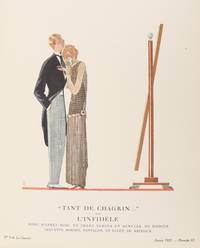
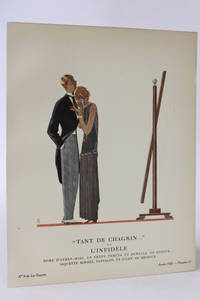
192284793Paris: Lucien Vogel éditeur 1922. Fine. Lucien Vogel éditeur Paris 1922 18 x 24 cm une feuille Original color print very finely heightened with palladium printed on laid paper signed at bottom left of the plate. La Gazette du bon ton one of the most beautiful and influential fashion magazines of the 20th century celebrating the talent of French creators and artists in the full bloom of Art Deco. Famous fashion magazine founded in 1912 by Lucien Vogel La Gazette du bon ton was published until 1925 with an interruption during the War from 1915 to 1920 due to the mobilization of its editor-in-chief. It consists of 69 issues printed in only 2000 copies and is illustrated notably with 573 color plates and 148 sketches representing models by great couturiers. From their publication these luxurious publications ""addressed bibliophiles and worldly aesthetes"" Françoise Tétart-Vittu ""La Gazette du bon ton"" in Dictionnaire de la mode 2016. Printed on beautiful laid paper they use a typeface specially created for the magazine by Georges Peignot the Cochin character adopted in 1946 by Christian Dior. The prints are made using the metal stencil technique heightened in colors and some outlined in gold or palladium. The adventure begins in 1912 when Lucien Vogel man of society and fashion - he had already participated in the magazine Femina - decides to found with his wife Cosette de Brunhoff sister of Jean the father of Babar the Gazette du bon ton whose subtitle was then ""Art modes et frivolités"". Georges Charensol reports the words of the editor-in-chief: ""In 1910 he observes there existed no fashion journal truly artistic and representative of the spirit of its time. I was therefore thinking of making a luxury magazine with truly modern artists . I was certain of success because for fashion no country can rival France."" ""Un grand éditeur d'art. Lucien Vogel"" in Les Nouvelles littéraires n°133 May 1925. The success of the magazine is immediate not only in France but also in the United States and South America. Originally Vogel thus brings together a group of seven artists: André-Édouard Marty and Pierre Brissaud followed by Georges Lepape and Dammicourt; and finally his friends from the École des beaux-arts who are George Barbier Bernard Boutet de Monvel or Charles Martin. Other talents quickly join the team: Guy Arnoux Léon Bakst Benito Boutet de Monvel Umberto Brunelleschi Chas Laborde Jean-Gabriel Domergue Raoul Dufy Édouard Halouze Alexandre Iacovleff Jean Émile Laboureur Charles Loupot Charles Martin Maggie Salcedo. These artists most of them unknown when Lucien Vogel calls upon them would subsequently become emblematic and sought-after artistic figures. These are the same illustrators who create the drawings for the Gazette's advertisements. The plates highlight and sublime the dresses of seven creators of the time: Lanvin Doeuillet Paquin Poiret Worth Vionnet and Doucet. The couturiers provide exclusive models for each issue. Nevertheless some of the illustrations feature no real model but only the idea that the illustrator has of the fashion of the day. La Gazette du bon ton is a decisive step in the history of fashion. Combining aesthetic requirements and plastic unity it brings together for the first time the great talents of the worlds of arts letters and fashion and imposes through this alchemy a completely new image of woman slender independent and audacious also carried by the new generation of couturiers Coco Chanel Jean Patou Marcel Rochas. Taken over in 1920 by Condé Montrose Nast the Gazette du bon ton would largely inspire the new composition and aesthetic choices of the ""little dying journal"" that Nast had bought a few years earlier: Vogue magazine. Lucien Vogel éditeur unknown
192255021Paris: Lucien Vogel éditeur 1922. Fine. Lucien Vogel éditeur Paris 1922 18 x 24 cm une feuille Original color print heightened with palladium printed on vergé paper signed in the plate. An original print used to illustrate the Gazette du bon ton one of the most attractive and influential 20th century fashion magazines featuring the talents of French artists and other contributors from the burgeoning Art Deco movement. A celebrated fashion magazine established in 1912 by Lucien Vogel La Gazette du bon ton appeared until 1925 with a hiatus from 1915 to 1920 due to the war the editor-in-chief having been called up for service. It consisted of 69 issues printed in only 2000 copies each and notably illustrated with 573 color plates and 148 sketches of the models of the great designers. Right from the start this sumptuous publication was aimed at bibliophiles and fashionable society Françoise Tétart-Vittu La Gazette du bon ton in Dictionnaire de la mode 2016 and was printed on fine vergé paper using a type cut specially for the magazine by Georges Peignot known as Cochin later used in 1946 by Christian Dior. The prints were made using stencils heightened in colors some highlighted in gold or palladium. The story began in 1912 when Lucien Vogel a man of the world involved in fashion he had already been part of the fashion magazine Femina decided with his wife Cosette de Brunhoff the sister of Jean creator of Babar to set up the Gazette du bon ton subtitled at the time: Art fashion frivolities. Georges Charensol noted the reasoning of the editor-in-chief: 'In 1910' he observed there was no really artistic fashion magazine nothing representative of the spirit of the time. My dream was therefore to make a luxury magazine with truly modern artists I was assured of success because when it comes to fashion no country on earth can compete with France.' Un grand éditeur d'art. Lucien Vogel in Les Nouvelles littéraires no. 133 May 1925. The magazine was immediately successful not only in France but also in the United States and Latin America. At first Vogel put together a team of seven artists: André-Édouard Marty and Pierre Brissaud followed by Georges Lepape and Dammicourt as well as eventually his friends from school and the School of Fine Arts like George Barbier Bernard Boutet de Monvel and Charles Martin. Other talented people soon came flocking to join the team: Guy Arnoux Léon Bakst Benito Boutet de Monvel Umberto Brunelleschi Chas Laborde Jean-Gabriel Domergue Raoul Dufy Édouard Halouze Alexandre Iacovleff Jean Émile Laboureur Charles Loupot Chalres Martin Maggie Salcedo. These artist mostly unknown when Lucien Vogel sought them out later became emblematic and sought-after artistic figures. It was also they who worked on the advertising drawings for the Gazette. The plates put the spotlight on and celebrate dresses by seven designers of the age: Lanvin Doeuillet Paquin Poiret Worth Vionnet and Doucet. The designers provided exclusive models for each issue. Nonetheless some of the illustrations are not based on real models but simply on the illustrator's conception of the fashion of the day. The Gazette du bon ton was an important step in the history of fashion. Combining aesthetic demands with the physical whole it brought together for the first time the great talents of the artistic literary and fashion worlds; and imposed through this alchemy a completely new image of women: slender independent and daring which was shared by the new generation of designers including Coco Chanel Jean Patou Marcel Rochas and so on Taken over in 1920 by Condé Montrose Nast the Gazette du bon ton was an important influence on the new layout and aesthetics of that little dying paper that Nast had bought a few years earlier: Vogue. Lucien Vogel éditeur unknown
190579002s. l. Paris 1905. Fine. s. l. Paris s. d. 1905-1906 11.50 x 15.90 cm 3 pages sur un double feuillet Autograph letter signed ""Pauline"" by Renée Vivien addressed to Natalie Clifford Barney and written in violet ink on a double sheet bordered with violets. Transverse creases inherent to the mailing. Icy and a fresh attempt at rupture or at the very least a rebuff this letter is completely devoid of courtesy and tenderness: ""Je ne suis pas pareille à toi - j'ai de l'orgueil et de la fierté - cet orgueil tu l'as blessé cette fierté tu l'as froissée - je ne m'exposerai plus à des dégoûts de ce genre. Tes lettres te seront renvoyées sans être lues - ne m'envoie pas de fleurs elles seront refusées. Je vois peu de gens dans l'horreur où je vis des êtres j'en verrai moins encore - cela me procurera peut-être la paix. Je me demande seulement pourquoi tu m'as importunée pour me revoir si ce n'était pour m'humilier et me dégoûter de toi encore davantage. Adieu puisque je ne te reverrai plus de ma vie. Pauline"" ""I am not like you - I have pride and dignity - you have wounded that pride you have bruised that dignity - I will no longer expose myself to such disgust. Your letters will be returned unread - do not send me flowers they will be refused. I see few people in the horror I feel for human beings I will see even fewer - that will perhaps bring me peace. I only wonder why you bothered me to see me again if it was not to humiliate me and disgust me with you even more. Farewell since I will never see you again in my life. Pauline"" Moving letter revealing the suffering and isolation of the Muse of violets sliding inexorably toward her tragic end. It was at the end of 1899 and through the intermediary of Violette Shillito that Renée Vivien - then Pauline Tarn - made the acquaintance of Natalie Clifford Barney ""cette Américaine plus souple qu'une écharpe dont l'étincelant visage brille de cheveux d'or de prunelles bleu de mer de dents implacables"" ""this American more supple than a scarf whose sparkling face shines with golden hair sea-blue eyes implacable teeth"" Colette Claudine à Paris. Natalie who had just experienced a summer idyll with the scandalous Liane de Pougy who had initiated her into Sapphism paid only discrete attention to this new acquaintance. Renée however was completely subjugated by the young American and would relate this coup de foudre in her autobiographical novel Une Femme m'apparut: ""J'évoquai l'heure déjà lointaine où je la vis pour la première fois et le frisson qui me parcourut lorsque mes yeux rencontrèrent ses yeux d'acier mortel ses yeux aigus et bleus comme une lame. J'eus l'obscur prescience que cette femme m'intimait l'ordre du destin que son visage était le visage redouté de mon avenir. Je sentis près d'elle les vertiges lumineux qui montent de l'abîme et l'appel de l'eau très profonde. Le charme du péril émanait d'elle et m'attirait inexorablement. Je n'essayai point de la fuir car j'aurais échappé plus aisément à la mort."" ""I evoked the already distant hour when I saw her for the first time and the shiver that ran through me when my eyes met her mortal steel eyes her sharp blue eyes like a blade. I had the obscure prescience that this woman was giving me destiny's orders that her face was the dreaded face of my future. I felt near her the luminous vertigo that rises from the abyss and the call of very deep water. The charm of peril emanated from her and attracted me inexorably. I did not try to flee her for I would have escaped death more easily."" ""Hiver 1899-1900. Débuts de l'idylle. Un soir Vivien est invitée par sa nouvelle amie dans l'atelier de Mme Barney mère de Natalie 153 avenue Victor-Hugo à l'angle de la rue de Longchamp. Natalie s'enhardit à lire des vers de sa composition. Comme Vivien lui dit aimer ces vers elle lui répond qu'il vaut mieux aimer le poète. Réponse bien digne de l'Amazone."" ""Winter 1899-1900. Beginning of the idyll. One evening Vivie unknown
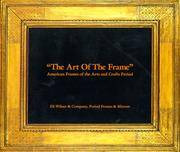
198822922NY: Eli Wilner and Company 1988. staple-bound wrappers as issued. no flaws - clean no writing or markings no tears or bumps. sturdy binding. a well preserved copy.; no isbn. 32pp. 47 b/w illustrations. identifies various frame-makers of the period the marks and labels they used. catalogue reference material. First Edition /First Printing. Soft Cover. Near Fine Plus. Oblong 8vo. Exhibition Catalogue. Eli Wilner and Company Paperback
1988019012New York: Eli Wilner and Company 1988. This is a fine softcover copy of the first printing with no wear. Completely clean inside and out. Published by the famed Eli Wilner frame-makers masters of this craft for a century this catalog highlights the American arts and crafts period frames in their extensive collections. Introduction and essay by Suzanne Smeaton. Illustrated in black & white with additional detail shots of the frame maker signatures or stamps labels etc. Bibliography. Eli Wilner business card laid in. 8" high X 10" wide 32 pages. This book will be securely wrapped and shipped with tracking. . First Printing. Soft Cover. Fine. Eli Wilner and Company Paperback