Emile COHL - Jules LAFORGUEBiblio.com
48 402 résultats
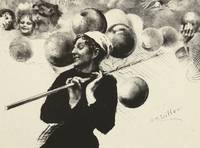
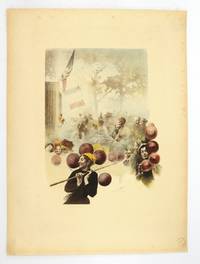
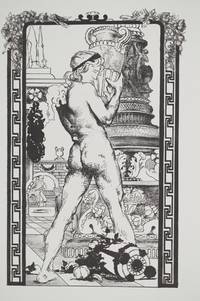
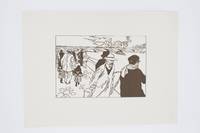
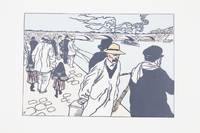
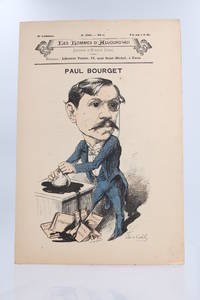
188779320Paris: Léon Vanier 1887. Fine. Léon Vanier Paris s. d. circa 1887 20 x 29.50 cm en feuilles First edition of this issue of the magazine consisting of two folded sheets. Handsome copy despite some minor worming. On the first a color woodcut representing Paul Bourget by Emile Cohl. On the following ones text by Jules Laforgue in first edition entitled ""Paul Bourget"". Léon Vanier unknown
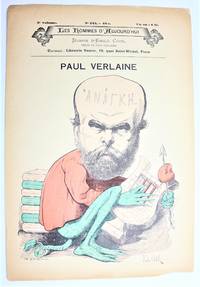
189673436Paris: Léon Vanier 1896. Fine. Léon Vanier Paris 1896 20.30 x 29.80 cm en feuillets Paul Verlaine Les Hommes d'aujourd'hui n° 244 Léon Vanier Paris 1896 20.3 x 29.8 cm loose in sheets The second and definitive edition the first for some parts as expanded by the author himself two folded sheets. On the front a color lithograph showing Paul Verlaine. Léon Vanier unknown
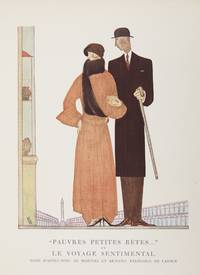
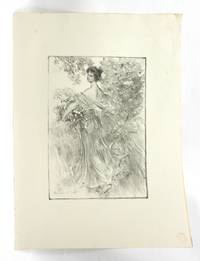
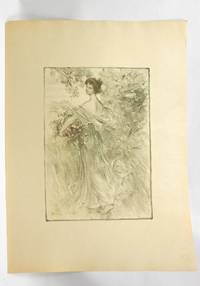
192284731Paris: Lucien Vogel éditeur 1922. Fine. Lucien Vogel éditeur Paris 1922 18 x 24 cm une feuille Original color print on laid paper signed in the lower left of the plate. Original engraving created for the illustration of La Gazette du bon ton one of the most beautiful and influential fashion magazines of the 20th century celebrating the talent of French creators and artists during the flourishing of Art Deco. Famous fashion magazine founded in 1912 by Lucien Vogel La Gazette du bon ton was published until 1925 with an interruption during the War from 1915 to 1920 due to the mobilization of its editor-in-chief. It consists of 69 issues printed in only 2000 copies and is illustrated notably with 573 color plates and 148 sketches representing models by great couturiers. From their publication these luxurious publications ""addressed bibliophiles and worldly aesthetes"" Françoise Tétart-Vittu ""La Gazette du bon ton"" in Dictionnaire de la mode 2016. Printed on fine laid paper they used a typeface specially created for the magazine by Georges Peignot the Cochin character adopted in 1946 by Christian Dior. The prints were created using the metal stencil technique heightened in colors and some highlighted in gold or palladium. The adventure began in 1912 when Lucien Vogel a man of society and fashion - he had already participated in the magazine Femina - decided to found with his wife Cosette de Brunhoff sister of Jean the father of Babar the Gazette du bon ton whose subtitle was then ""Art modes et frivolités"". Georges Charensol reported the words of the editor-in-chief: ""En 1910 observe-t-il il n'existait aucun journal de mode véritablement artistique et représentatif de l'esprit de son époque. Je songeais donc à faire un magazine de luxe avec des artistes véritablement modernes . J'étais certain du succès car pour la mode aucun pays ne peut rivaliser avec la France."" ""In 1910 he observed there was no truly artistic fashion journal representative of the spirit of its time. I therefore thought of making a luxury magazine with truly modern artists . I was certain of success because for fashion no country can rival France."" ""Un grand éditeur d'art. Lucien Vogel"" in Les Nouvelles littéraires n°133 May 1925. The magazine's success was immediate not only in France but also in the United States and South America. Originally Vogel therefore assembled a group of seven artists: André-Édouard Marty and Pierre Brissaud followed by Georges Lepape and Dammicourt; and finally his friends from the École des beaux-arts such as George Barbier Bernard Boutet de Monvel or Charles Martin. Other talents quickly joined the team: Guy Arnoux Léon Bakst Benito Boutet de Monvel Umberto Brunelleschi Chas Laborde Jean-Gabriel Domergue Raoul Dufy Édouard Halouze Alexandre Iacovleff Jean Émile Laboureur Charles Loupot Charles Martin Maggie Salcedo. These artists mostly unknown when Lucien Vogel called upon them would later become emblematic and sought-after artistic figures. These same illustrators created the drawings for the Gazette's advertisements. The plates highlight and sublimate the dresses of seven creators of the era: Lanvin Doeuillet Paquin Poiret Worth Vionnet and Doucet. The couturiers provided exclusive models for each issue. Nevertheless some of the illustrations featured no real model but only the illustrator's idea of the fashion of the day. La Gazette du bon ton is a decisive step in the history of fashion. Combining aesthetic excellence and plastic unity it brought together for the first time the great talents from the worlds of arts letters and fashion and imposed through this alchemy a completely new image of woman slender independent and audacious also carried by the new generation of couturiers Coco Chanel Jean Patou Marcel Rochas. Taken over in 1920 by Condé Montrose Nast the Gazette du bon ton would largely inspire the new composition and aesthetic choices of the ""dying little journal"" that Nast had Lucien Vogel éditeur unknown
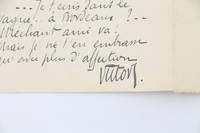
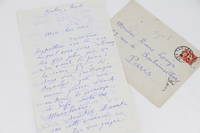
190379496Nouméa 1903. Fine. Nouméa 3 & 6 mai 1903 9.20 x 12.20 cm 4 pages sur une carte lettre Autograph letter signed by Victor Segalen addressed to Emile Mignard. Four pages written in black ink on a letter card. Monogram of Victor Segalen created by him and drawn in his hand at the bottom left of the address. Emile Mignard 1878-1966 also a doctor from Brest was one of Segalen's closest childhood friends whom he met at the Jesuit college Notre-Dame-de-Bon-Secours in Brest. The writer maintained with this comrade an abundant and very regular correspondence in which he described with humor and intimacy his daily life in the four corners of the globe. It was at Mignard's wedding on February 15 1905 that Segalen met his wife Yvonne Hébert. In a letter of March 25 1903 Segalen had spoken to Mignard about the probable creation of a doctor's position in Polynesia: ""Le Gouverneur de Tahiti a demandé en France par le précédent courrier des médecins de renfort pour les îles Gambier l'archipel de la Société et les Pomotous. Ces médecins seraient en même temps administrateurs."" ""The Governor of Tahiti has requested from France by the previous mail reinforcement doctors for the Gambier Islands the Society archipelago and the Pomotous. These doctors would be administrators at the same time."" This new letter written a little more than a month later informs us of the failure of this project: ""Je devais t'avertir mon bien cher Emile des débouchés possibles. Je l'ai fait ; en te les déconseillant sous la forme de fonctions d'administrateur colonial. Je t'en dissuade d'autant plus maintenant que l'on m'apprend le rappel en France du Gouverneur de Tahiti. Avec lui sombrera sans doute son projet. Tu n'as pas à le regretter."" ""I had to warn you my very dear Emile of the possible opportunities. I did so; by advising you against them in the form of colonial administrator functions. I dissuade you all the more now that I am informed of the recall to France of the Governor of Tahiti. With him will undoubtedly sink his project. You need not regret it."" Segalen present in Polynesia since the end of January 1903 is now well integrated with the colonists and natives with whom he now practices hunting: ""Pourtant je te dirai avoir pris quelque plaisir à chasser sur un grand pied le cerf. Comme rabatteurs : des chiens des gendarmes des canaques. Comme armes : des mousquetons Lebel dont nous avions limé les balles pour les transformer en dum-dum balle destinée à s'écraser dans le corps de l'animal sans le traverser Comme gibier une dizaine de cerfs acculés dans une presqu'île."" ""Yet I will tell you that I took some pleasure in hunting deer on a grand scale. As beaters: dogs gendarmes Kanakas. As weapons: Lebel carbines whose bullets we had filed to transform them into dum-dum bullet intended to crush in the animal's body without going through it As game about ten deer cornered on a peninsula."" Despite these very picturesque leisure activities Segalen still thinks about fictional creation: ""Néanmoins j'ai besoin de moins de remue-ménage pour m'attaquer à ce qui me hante. Et mon Promeneur de nuit m'obsède. Pendant mes quinze jours de mer je vais avancer ma documentation pour pouvoir dès mon arrivée à Tahiti me mettre à l'ouvrage."" ""Nevertheless I need less commotion to tackle what haunts me. And my Promeneur de nuit obsesses me. During my fifteen days at sea I will advance my documentation to be able as soon as I arrive in Tahiti to get to work."" The work will finally bear the title Les Immémoriaux and will appear in 1907 at Mercure de France under the pseudonym Max-Anély Max in homage to Max Prat and Anély one of his wife's first names Segalen not being authorized in his capacity as military doctor to sign a fictional work with his patronymic name. For the time being Segalen is ready for all sacrifices to devote himself to this work that obsesses him: ""Je liquide ma femme comme trop absorbante et pas assez maorie : j'ai cha unknown
190886173Toulon 1908. Fine. Toulon 20 Juillet 1908 13.50 x 21.50 cm deux pages et demie sur un double feuillet une enveloppe Autograph letter signed by Claude Farrère then serving in the military 47 lines in blue ink written from Toulon to his friend Pierre Louÿs. Fold marks inherent to mailing envelope included. The soldier Claude Farrère thanks his friend for defending him during a dispute opposing him to a certain Monsieur B even though it was hardly worth devoting so much importance to him: ""Monsieur B read in some Annales that his fierce enemy was busy waging war in Safi against the Muslims. By incredible misfortune it happened that I had returned from there. His stupor was then so great that he lost his head."" ""Now I will never tell you to what extent I was moved by your role and by V.'s role in the whole affair."" Confident in his qualities as a fencer and marksman Claude Farrère allows himself this gentle and humorous jibe at his friend and seeks to reassure him at the risk of falling into anachronism: ""Lose the disastrous habit of seeing me killed each time someone speaks of swords around. On the contrary it is I who will kill the others. I do a great deal of fencing now. And I shoot the pistol like the late William Tell. Therefore be quiet. There. When shall we meet"" unknown
196288332s. l. 1962. Fine. s. l. 24 Novembre 1962 21 x 27 cm un bristol recto verso Autograph letter dated by Jacques Chardonne and signed with his initials to literary critic and novelist Jacques Brenner 52 lines in black ink on a single leaf recto verso regarding the worlds of publishing and literature mired in an overly capitalist vision. Mailing fold as expected. For Jacques Chardonne capitalism rests not on money but on men: ""Money is nothing; it gives nothing saves nothing it's the barometer that's all. Everything rests on men. . this is very clear in publishing. Le Mercure is a good example Charpentier likewise; all the 'literary' publishers for that matter."" . Do reserves of publishers exist when they are lacking in a house Charpentier was a 'publisher'; the Fasquelles were nothing; similarly Arthème Fayard was a publisher; his successors nothing."". ""One can pour capital which is what we do today into a house without a 'publisher' and without authors; it's like pissing on sand"". Jacques Chardonne also attacks a consolation prize that displeases him because of its political connotation the exploitation of misfortune: ""I thought that the 'consolation prize' was a figure of speech: I had no idea that she was really poor. . what I don't much like about this prize is the political background; the exploitation of misfortune. This has gone on long enough."" He also sharply criticizes certain people like Pierre Dumayet: ""You can't imagine Dumayet's behavior. If a nice little lady sings on television quite often it's because she agreed to see him! I know one who fled I had recommended her to Dumayet immediately."" or Roger Nimier: ""I read Boisdeffre's article on 'five years before'. He's right. One feels the emptiness of Roger Nimier; about which he had no illusions. He only wrote one good book one of the very first: 'Un grand d'Espagne'. All this is only more tragic."" The author of Destinées sentimentales concludes his letter with this peremptory impression: ""Perhaps the best book of this hollow era except for journalists is 'Histoire d'O' don't mention it at the Academy. Fine autograph letter from Jacques Chardonne at the twilight of his life full of bitter condemnations of society and men. unknown
198687390Paris 1986. Fine. Paris 11 Avril 1986 21 x 29.50 cm une feuille une enveloppe Manuscript letter dated and signed by Léonor Fini 22 lines in black ink addressed to Gérard Leman from her Parisian residence. Fold marks inherent to postal dispatch envelope included. Gérard Leman wishes the artist to dedicate a photograph he sent her but Leonor Fini is not pleased with the poor treatment her portrait has suffered: ""Mais - mais - mais -vous monsieur vous m'envoyez aussi une photographie belle à à signer et dédicacer. Pour cette photographie vous ne vous êtes même pas donné le peine de chercher une enveloppe longue ou plus grande. Pliée en deux. Vous l'avez malmener. Je ne la signe pas - ni je vous l'envoie."" But - but - but - you sir you also send me a photograph beautiful to sign and dedicate. For this photograph you didn't even take the trouble to look for a long or larger envelope. Folded in two. You have mistreated it. I won't sign it - nor will I send it to you. She is also angered by a dealer from Lille who didn't even take the precaution of keeping her informed about an exhibition of her works for commercial purposes: ""Je la ferai photographier et je l'enverrai à ce monsieur brocanteur déguisé en marchand. Je sais qu'il m'a exposé à Lille sans même m'en avertir."" I will have it photographed and I will send it to this gentleman dealer disguised as a merchant. I know he exhibited me in Lille without even warning me. unknown
189874615Paris: Imprimerie Champenoispour CH. MassonH. Piazza 1898. Fine. Imprimerie Champenois pour CH. Masson H. Piazza Paris Décembre 1898 23 x 35 cm une feuille Rare original lithograph executed by Paul-César Helleu for L'Estampe Moderne series number 20 published in December 1898. One of 50 deluxe proofs printed on China paper with wide margins artist's signature in the plate publisher's dry stamp depicting a child's profile in the lower margin mounted on a sheet of laid paper with the numbered stamp of the deluxe printing on the reverse some foxing. Lithograph inspired by an extract from Polichinelle by Charles Nodier. Magnificent French monthly publication edited between May 1897 and April 1899 L'Estampe moderne consists of original chromolithographs which unlike other magazines such as Les Maîtres de l'Affiche and as stipulated on the tissue guards were created specifically by each artist for the magazine. Thus 100 prints appeared in total covering the major artistic movements of the late 19th century: Symbolism Art Nouveau Pre-Raphaelites Orientalists and Belle Epoque. Each issue of four prints was printed in 2000 copies sold for 3.50F and 100 on Japan paper offered at 10F. Henri Piazza also planned a confidential printing of very grand luxury: 50 copies on Japan paper with wide margins and 50 in black on China paper at the considerable price of 30F. This print of beautiful format is superbly printed on one of the most prestigious papers: China paper. ""Despite all its qualities China paper too inconsistent owes its reputation not to its own beauty but to its particular affinities with printing ink. Its texture smooth and soft together is more apt than any other to receive a beautiful printing. This property makes China paper sought after for printing engravings."" Anatole France. French collectors' interest in artistic posters intensified at the beginning of the 1890s. Octave Uzanne to describe this fever invented the term ""affichomanie."" The poster originally popular and posted in the streets of the capital then became an art object and its ephemeral medium became precious and devoted to preservation. Piazza decided to remove the poster from its advertising vocation and elevate it to the rank of a complete work of art in the same way as the illustrated luxury book. He thus composed a prestigious collection of entirely original works by the most prominent European artists of the moment: Georges de Feure Eugène Grasset Henri Detouche Emile Berchmans Louis Rhead Gaston de Latenay Lucien Lévy-Dhurmer Gustave-Max Stevens Charles Doudelet Hans Christiansen Henri Fantin-Latour Steinlen Ibels Engels Willette Henri Meunier Evenepoël Bellery-Desfontaines Charles Léandre etc. Handsome copy. Imprimerie Champenoispour CH. MassonH. Piazza unknown
189874614Paris: Imprimerie Champenoispour CH. MassonH. Piazza 1898. Fine. Imprimerie Champenois pour CH. Masson H. Piazza Paris Décembre 1898 23 x 35 cm une feuille et une serpente Rare original lithograph executed by Patrice Dillon for L'Estampe Moderne series number 20 published in December 1898. One of 50 deluxe proofs printed on Japan paper with wide margins artist's signature in the plate publisher's dry stamp depicting a child's profile in the lower margin numbered stamp of the deluxe printing on the reverse; engraving preceded by a tissue guard captioned with the artist's name title and an extract from a work. Lithograph inspired by an extract from Polichinelle by Charles Nodier reproduced on the print's tissue guard. Magnificent French monthly publication edited between May 1897 and April 1899 L'Estampe moderne consists of original chromolithographs which unlike other magazines such as Les Maîtres de l'Affiche and as stipulated on the tissue guards were created specifically by each artist for the magazine. Thus 100 prints appeared in total covering the major artistic movements of the late 19th century: Symbolism Art Nouveau Pre-Raphaelites Orientalists and Belle Époque. Each issue of four prints was printed in 2000 copies sold for 3.50F and 100 on Japan paper offered at 10F. Henri Piazza also planned a confidential printing of very grand luxury: 50 copies on Japan paper with wide margins and 50 in black on China paper at the considerable price of 30F. This print of beautiful format is superbly printed on the most prestigious of papers: Japan paper. Thick silky satiny and pearlescent it contributes to making each page a complete work in itself. Its quality of ink absorption and its affinity with colors also make it the ideal medium for these very beautiful lithographs. French collectors' interest in artistic posters intensified at the beginning of the 1890s. Octave Uzanne to describe this fever invented the term ""affichomanie."" The poster originally popular and posted in the streets of the capital then became an art object and its ephemeral medium became precious and devoted to preservation. Piazza decided to remove the poster from its advertising vocation and elevate it to the rank of a complete work of art in the same way as the illustrated luxury book. He thus composed a prestigious collection of entirely original works by the most prominent European artists of the moment: Georges de Feure Eugène Grasset Henri Detouche Emile Berchmans Louis Rhead Gaston de Latenay Lucien Lévy-Dhurmer Gustave-Max Stevens Charles Doudelet Hans Christiansen Henri Fantin-Latour Steinlen Ibels Engels Willette Henri Meunier Evenepoël Bellery-Desfontaines Charles Léandre etc. Handsome copy. Imprimerie Champenoispour CH. MassonH. Piazza unknown
189874595Paris: Imprimerie Champenoispour CH. MassonH. Piazza 1898. Fine. Imprimerie Champenois pour CH. Masson H. Piazza Paris Octobre 1898 23 x 37.50 cm une feuille Rare original lithograph executed by Maurice Desvallières for L'Estampe Moderne series number 18 published in October 1898. One of 50 deluxe proofs printed on China paper with wide margins publisher's dry stamp depicting a child's profile in lower margin mounted on a sheet of laid paper with the numbered luxury edition stamp on the verso pale marginal foxing. Lithograph inspired by an extract from Agonie by Jean Lombard. Magnificent French monthly publication edited between May 1897 and April 1899 L'Estampe moderne consists of original chromolithographs which unlike other magazines such as Les Maîtres de l'Affiche and as stipulated on the tissue guards were created specifically by each artist for the magazine. Thus 100 prints appeared in total covering the major artistic movements of the late 19th century: Symbolism Art Nouveau Pre-Raphaelites Orientalists and Belle Époque. Each delivery of four prints was issued in 2000 copies sold for 3.50F and 100 on Japan paper offered at 10F. Henri Piazza also planned a confidential luxury printing: 50 copies on Japan paper with wide margins and 50 in black on China paper at the considerable price of 30F. This print of handsome format is superbly printed on one of the most prestigious papers: China paper. ""Despite all its qualities China paper too inconsistent owes its reputation not to its own beauty but rather to its particular affinities with printing ink. Its texture smooth and soft together is more apt than any other to receive a fine printing. This property makes China paper sought after for printing engravings."" Anatole France. The interest of French collectors in artistic posters intensified at the beginning of the 1890s. Octave Uzanne to qualify this fever invented the term ""affichomanie"". The poster originally popular and plastered in the streets of the capital then became an art object and its ephemeral medium became precious and destined for preservation. Piazza decided to remove the poster from its advertising vocation and elevate it to the rank of a complete work of art on the same level as the luxury illustrated book. He thus composed a prestigious collection of entirely original works by the most prominent European artists of the moment: Georges de Feure Eugène Grasset Henri Detouche Emile Berchmans Louis Rhead Gaston de Latenay Lucien Lévy-Dhurmer Gustave-Max Stevens Charles Doudelet Hans Christiansen Henri Fantin-Latour Steinlen Ibels Engels Willette Henri Meunier Evenepoël Bellery-Desfontaines Charles Léandre etc. Handsome copy in the Art Nouveau style. Imprimerie Champenoispour CH. MassonH. Piazza unknown
189974828Paris: Imprimerie Champenoispour CH. MassonH. Piazza 1899. Fine. Imprimerie Champenois pour CH. Masson H. Piazza Paris Mars 1899 21 x 29.50 cm une feuille et une serpente Rare original lithograph in crayon manner executed by Félix Bracquemond for L'Estampe Moderne series number 23 published in March 1899. One of 50 deluxe proofs printed on Japan paper with wide margins laid paper mounted on Japan paper artist's initial and date in the plate publisher's dry stamp depicting a child's profile in the lower margin numbered luxury edition stamp on the reverse; engraving preceded by a tissue guard captioned with the artist's name title and a poem. Lithograph inspired by a poem Les amours de Marie by Pierre de Ronsard reproduced on the print's tissue guard. Magnificent French monthly publication edited between May 1897 and April 1899 L'Estampe moderne consists of unpublished chromolithographs which unlike other magazines such as Les Maîtres de l'Affiche and as stipulated on the tissue guards were created specially by each artist for the magazine. Thus 100 prints appeared in total covering the major artistic movements of the late 19th century: Symbolism Art Nouveau Pre-Raphaelites Orientalists and Belle Époque. Each issue of four prints was published in 2000 copies sold at 3.50F and 100 on Japan paper offered at 10F. Henri Piazza also planned a confidential printing of very grand luxury: 50 copies on Japan paper with wide margins and 50 in black on China paper at the considerable price of 30F. This print of handsome format is superbly printed on the most prestigious of papers: Japan paper. Thick silky satined and pearlescent it contributes to making each page a work in its own right. Its quality of ink absorption and its affinity with colors also make it the ideal support for these very beautiful lithographs. French collectors' interest in artistic posters grew at the beginning of the 1890s. Octave Uzanne to qualify this fever invented the term ""affichomanie."" The poster originally popular and pasted on the streets of the capital then became an art object and its ephemeral medium became precious and devoted to conservation. Piazza decided to remove the poster from its advertising vocation and elevate it to the rank of a complete work of art on the same level as the luxury illustrated book. He thus composed a prestigious collection of entirely original works by the most prominent European artists of the moment: Georges de Feure Eugène Grasset Henri Detouche Emile Berchmans Louis Rhead Gaston de Latenay Lucien Lévy-Dhurmer Gustave-Max Stevens Charles Doudelet Hans Christiansen Henri Fantin-Latour Steinlen Ibels Engels Willette Henri Meunier Evenepoël Bellery-Desfontaines Charles Léandre etc. Handsome copy. Imprimerie Champenoispour CH. MassonH. Piazza unknown
189974830Paris: Imprimerie Champenoispour CH. MassonH. Piazza 1899. Fine. Imprimerie Champenois pour CH. Masson H. Piazza Paris Mars 1899 21 x 29.50 cm une feuille Rare original lithograph executed by Félix Bracquemond for L'Estampe Moderne series number 23 published in March 1899. One of 50 deluxe proofs printed on China paper with wide margins printed in blue ink artist's initial and date in the plate publisher's dry stamp depicting a child's profile in the lower margin mounted on a sheet of laid paper with the numbered luxury edition stamp on the reverse some foxing. Lithograph inspired by a poem Les amours de Marie by Pierre de Ronsard. Magnificent French monthly publication edited between May 1897 and April 1899 L'Estampe moderne consists of unpublished chromolithographs which unlike other magazines such as Les Maîtres de l'Affiche and as stipulated on the tissue guards were created specially by each artist for the magazine. Thus 100 prints appeared in total covering the major artistic movements of the late 19th century: Symbolism Art Nouveau Pre-Raphaelites Orientalists and Belle Époque. Each issue of four prints was published in 2000 copies sold at 3.50F and 100 on Japan paper offered at 10F. Henri Piazza also planned a confidential printing of very grand luxury: 50 copies on Japan paper with wide margins and 50 in black on China paper at the considerable price of 30F. This print of handsome format is superbly printed on one of the most prestigious papers: China paper. ""Despite all its qualities China paper too inconsistent owes its reputation not to its own beauty but indeed to its particular affinities with printing ink. Its texture smooth and soft together is more apt than any other to receive a beautiful printing. This property makes China paper sought after for printing engravings."" Anatole France. French collectors' interest in artistic posters grew at the beginning of the 1890s. Octave Uzanne to qualify this fever invented the term ""affichomanie."" The poster originally popular and pasted on the streets of the capital then became an art object and its ephemeral medium became precious and devoted to conservation. Piazza decided to remove the poster from its advertising vocation and elevate it to the rank of a complete work of art on the same level as the luxury illustrated book. He thus composed a prestigious collection of entirely original works by the most prominent European artists of the moment: Georges de Feure Eugène Grasset Henri Detouche Emile Berchmans Louis Rhead Gaston de Latenay Lucien Lévy-Dhurmer Gustave-Max Stevens Charles Doudelet Hans Christiansen Henri Fantin-Latour Steinlen Ibels Engels Willette Henri Meunier Evenepoël Bellery-Desfontaines Charles Léandre etc. Handsome copy. Imprimerie Champenoispour CH. MassonH. Piazza unknown
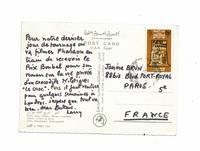
197173360Egypte Egypt 1971. Fine. Egypte Egypt 1971 10.50 x 15 cm une carte postale Autograph postcard signed ""Larry"" by Lawrence Durrell addressed to Jani Brun written in black felt-tip pen on the verso of a photograph of an Egyptian bas-relief. The writer to his young Montpellier lover: ""For our last day of filming we're going to film Pharaoh receiving the Bonbel Prize for his novel about the private life of a Nile crocodile: 'Le croc'. Then I have to return to London for a few weeks. I hope all is well dear Buttons."". After many years spent in Greece Egypt and Rhodes the traveling writer Lawrence Durrell was forced to flee Cyprus following popular uprisings that led the island to its independence from the British crown. Rich only with a shirt and a typewriter but crowned with the success of his novel Bitter Lemons of Cyprus Les citrons acides he arrived in France in 1956 and settled in the Languedoc village of Sommières. In the ""Tartès house"" his large residence surrounded by trees he wrote the second part of his work his monumental Avignon Quintet devoted himself to painting and received his illustrious friends including the couple Henry Miller and Anaïs Nin violinist Yehudi Menuhin London publisher Alan G. Thomas and his two daughters Penelope and Sappho. Among the olive trees and under the Mediterranean sun he met in the mid-1960s the young and sparkling ""Jany"" Janine Brun a thirty-something woman from Montpellier of devastating beauty who worked at the Department of Antiquities at the Sorbonne in Paris. She was nicknamed ""Buttons"" in memory of their first meeting where the young woman wore a dress covered with buttons. Henry Miller also fell under the charm of ""Buttons"" praising her beauty and eternal youth in exceptional unpublished letters. The three companions spent memorable Parisian evenings of which we retain precious autograph traces through their epistolary exchanges. Recommended by Durrell she made numerous trips notably to England from where she received vast correspondence from the writer as well as original works of art signed with his artist pseudonym Oscar Epfs. unknown
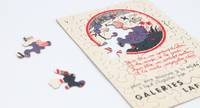
192587656Paris: Galeries Lafayette 1925. Fine. Galeries Lafayette Paris s.d. ca 1925 12 x 17 cm environ 45 pièces cartonnées sous enveloppe de papier cristal First edition of this rare and fragile advertising object for the Galeries Lafayette consisting of 47 cardboard pieces with a medallion illustration designed by Jack Roberts and a children's song of four verses. Handsome copy complete with its original crystal paper envelope.  Galeries Lafayette unknown
198586224Sion-sur-l'Océan Sion-sur-l'Océan 1985. Fine. Sion-sur-l'Océan Sion-sur-l'Océan 13 Août ca 1985 15 x 10 cm une carte postale Autograph postcard signed by Julien Gracq 19 lines in black ink addressed to his friend and monographer Ariel Denis written from his Vendée retreat on the verso of a photographic reproduction showing the Sion-sur-Océan coast from aerial view. Julien Gracq discusses his reading of Joyce and compares the Irish landscapes and climate to those of Vendée : ""Ici aucune trace des brumes d'Irlande il fait inaltérablement beau sans même un orage."" Here no trace of Irish mists the weather is unalterably beautiful without even a storm. and inquires about his friend's professional future : ""Comment s'arrangent vos perspectives universitaires pour l'année à venir Problème qui je sais assombrit toujours un peu vos fins de vacances et dont j'espère qu'il va se régler à votre satisfaction."" How are your university prospects working out for the coming year A problem which I know always casts a slight shadow over your vacation endings and which I hope will be resolved to your satisfaction. unknown
189773963Paris: Imprimerie Champenoispour CH. MassonH. Piazza 1897. Fine. Imprimerie Champenois pour CH. Masson H. Piazza Paris Septembre 1897 24 x 33 cm une feuille Rare original lithograph executed by Maurice Eliot for L'Estampe Moderne series number 5 published in September 1897. One of 50 deluxe proofs printed on China paper with wide margins artist's signature and date in the plate publisher's dry stamp representing a child's profile in the lower margin mounted on a sheet of laid paper with the numbered stamp of the deluxe printing on the verso pale marginal foxing. Magnificent French monthly publication edited between May 1897 and April 1899 L'Estampe moderne consists of original chromolithographs which unlike other magazines such as Les Maîtres de l'Affiche and as stipulated on the tissue guards were created specially by each artist for the magazine. Thus 100 prints appeared in total covering the major artistic movements of the late 19th century: Symbolism Art Nouveau Pre-Raphaelites Orientalists and Belle Epoque. Each delivery of four prints was printed in 2000 copies sold for 3.50F and 100 on Japan paper offered at 10F. Henri Piazza also planned a confidential deluxe printing: 50 copies on Japan paper with wide margins and 50 in black on China paper at the considerable price of 30F. This print of handsome format is superbly printed on one of the most prestigious papers: China paper. ""Despite all its qualities China paper too inconsistent owes its reputation not to its own beauty but to its particular affinities with printing ink. Its texture smooth and soft together is more apt than any other to receive a beautiful printing. This property makes China paper sought after for printing engravings."" Anatole France. French collectors' interest in artistic posters intensified at the beginning of the 1890s. Octave Uzanne to qualify this fever invented the term ""affichomanie"" poster mania. The poster originally popular and posted in the streets of the capital then became an art object and its ephemeral medium became precious and devoted to preservation. Piazza decided to remove the poster from its advertising purpose and elevate it to the rank of a complete work of art on the same level as the deluxe illustrated book. He thus composed a prestigious collection of entirely original works by the most prominent European artists of the moment: Georges de Feure Eugène Grasset Henri Detouche Emile Berchmans Louis Rhead Gaston de Latenay Lucien Lévy-Dhurmer Gustave-Max Stevens Charles Doudelet Hans Christiansen Henri Fantin-Latour Steinlen Ibels Engels Willette Henri Meunier Evenepoël Bellery-Desfontaines Charles Léandre etc. Handsome copy in the Belle époque style. Imprimerie Champenoispour CH. MassonH. Piazza unknown
189773962Paris: Imprimerie Champenoispour CH. MassonH. Piazza 1897. Fine. Imprimerie Champenois pour CH. Masson H. Piazza Paris Septembre 1897 24 x 33 cm une feuille et une serpente Rare original color lithograph executed by Maurice Eliot for L'Estampe Moderne series number 5 published in September 1897. One of 50 deluxe proofs printed on Japan paper with wide margins artist's signature and date in the plate publisher's dry stamp representing a child's profile in the lower margin numbered stamp of the deluxe printing on verso; engraving preceded by a tissue guard inscribed with the artist's name title a poem by Armand Sylvestre and a presentation text; and another blank tissue guard. Magnificent French monthly publication edited between May 1897 and April 1899 L'Estampe moderne consists of original chromolithographs which unlike other magazines such as Les Maîtres de l'Affiche and as stipulated on the tissue guards were created specially by each artist for the magazine. Thus 100 prints appeared in total covering the major artistic movements of the late 19th century: Symbolism Art Nouveau Pre-Raphaelites Orientalists and Belle Epoque. Each delivery of four prints was printed in 2000 copies sold for 3.50F and 100 on Japan paper offered at 10F. Henri Piazza also planned a confidential deluxe printing: 50 copies on Japan paper with wide margins and 50 in black on China paper at the considerable price of 30F. This print of handsome format is superbly printed in color on the most prestigious of papers: Japan paper. Thick silky satin and pearlescent it contributes to making each page a work in its own right. Its quality of ink absorption and its affinity with colors also make it the ideal support for these very beautiful lithographs. French collectors' interest in artistic posters intensified at the beginning of the 1890s. Octave Uzanne to qualify this fever invented the term ""affichomanie"" poster mania. The poster originally popular and posted in the streets of the capital then became an art object and its ephemeral medium became precious and devoted to preservation. Piazza decided to remove the poster from its advertising purpose and elevate it to the rank of a complete work of art on the same level as the deluxe illustrated book. He thus composed a prestigious collection of entirely original works by the most prominent European artists of the moment: Georges de Feure Eugène Grasset Henri Detouche Emile Berchmans Louis Rhead Gaston de Latenay Lucien Lévy-Dhurmer Gustave-Max Stevens Charles Doudelet Hans Christiansen Henri Fantin-Latour Steinlen Ibels Engels Willette Henri Meunier Evenepoël Bellery-Desfontaines Charles Léandre etc. Handsome copy in the Belle époque style. Imprimerie Champenoispour CH. MassonH. Piazza unknown
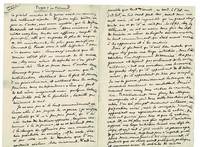
1911761441911. Fine. 29 juin 1911 13.50 x 21 cm 2 pages sur un feuillet double Signed autograph manuscript by Alain bearing the title ""Propos d'un Normand"" and the mention ""sans retard"" in the upper left of the first leaf two pages written in black ink on a double sheet. This text was published in the Propos d'un Normand de 1911. Interesting manuscript written following the appointment of Adolphe Messimy to the post of Minister of War: ""Ce général ministre avait en somme très noblement répondu. Il faudra enfin décider un jour ou l'autre sans aucun mystère que la Défense Nationale est républicaine."" ""This general minister had in sum responded very nobly. We must finally decide one day or another without any mystery that National Defense is republican."" Indeed the newly elected minister sought to redefine relations between political power and military authorities. Alain reproaches the military world for its opacity ""Comment la France sera-t-elle défendue Nous n'en savons rien. . chez nous même les députés ne s'en font aucune idée."" ""How will France be defended We know nothing about it. . even our deputies have no idea."" before proposing solutions: ""Donc il faudrait qu'il soit bien entendu que chaque chef garde une large initiative dans l'exécution d'un programme déterminé. Et ce programme ne dépend pas seulement de la science militaire ; c'est aux ministres avec le conseil des grands chefs qu'il appartient de le déterminer."" ""Therefore it should be well understood that each leader retains broad initiative in executing a determined program. And this program does not depend solely on military science; it is up to ministers with the counsel of senior leaders to determine it."" From 1903 Alain published weekly chronicles titled ""Propos"" in La Dépêche de Rouen et de Normandie. More than 3000 of these ""Propos"" concise articles inspired by daily current events would appear from February 1906 to September 1914. unknown
190084207Biarritz: S. n. 1900. Fine. S. n. Biarritz 7 Mai 1900 13 x 20.50 cm une page Autograph letter signed by Francis Viélé-Griffin 19 lines in black ink on letterhead of the Continental Hotel B. Peyta in Biarritz addressed to Edouard Ducoté poet bibliophile and director of the review l'Ermitage since 1895. Crease marks inherent to folding for mailing. To please the poetess Julia Daudet Francis Viélé-Griffin recommends to Edouard Ducoté a poem by the latter's niece: "". je vous serais très reconnaissant mon cher ami d'accueillir l'oeuvre de cette jeune poétesse."" "". I would be very grateful my dear friend if you would welcome the work of this young poetess."" While vacationing in Biarritz Francis Viélé-Griffin also sends verses to the review directed by Edouard Ducoté. Intimate friend of Stéphane Mallarmé friend of André Gide Paul Valéry Francis Jammes and Emile Verhaeren Francis Viélé-Griffin was an American symbolist poet writing in French. He became with Gustave Kahn one of the principal theorists of free verse. S. n. unknown
193286589Paris: S. n. Mercure de France 1932. Fine. S. n. Mercure de France Paris 22 Mai 1932 21.50 x 17.50 cm une feuille Manuscript publisher's slip written by Sar Péladan for the publication of his Pérégrine & Pérégrin at Mercure de France. Fold mark inherent to mailing. Manuscript with corrections. ""Prière d'insérer Pérégrine & Pérégrin le nouveau roman de Péladan est la peinture d'un dernier amour de celui où les femmes mettent tout leur coeur. Cette passion d'automne qui a les ardeurs de l'été s'encadre à chaque chapitre dans un décor nouveau quii varie l'impression des amants. La jalousie & les transes la volupté & ses réactions sont étudiées avec la même crossed out word pénétratiion subtile qui caractérise l'autuer du Vice suprême& la modestie & vanité. C'est la société du Mercure de France qui édite le dixseptième roman de la décadence latine this sentence having been crossed out."" S. n. [Mercure de France] unknown
189874588Paris: Imprimerie Champenoispour CH. MassonH. Piazza 1898. Fine. Imprimerie Champenois pour CH. Masson H. Piazza Paris Septembre 1898 31.50 x 22 cm une feuille Rare original lithograph executed by Charles Huard for L'Estampe Moderne series number 17 published in September 1898. One of the 50 deluxe proofs printed on China paper with wide margins artist's signature in the plate publisher's dry stamp representing a child's profile in lower margin mounted on a sheet of laid paper with the numbered deluxe edition stamp on the reverse pale marginal foxing. Lithograph inspired by a poem from the collection La Chanson des Gueux by Jean Richepin. Magnificent French monthly publication edited between May 1897 and April 1899 L'Estampe moderne consists of original chromolithographies which unlike other magazines such as Les Maîtres de l'Affiche and as stipulated on the tissue guards were created specifically by each artist for the magazine. Thus 100 prints appeared in total covering the major artistic movements of the late 19th century: Symbolism Art Nouveau Pre-Raphaelites Orientalists and Belle Époque. Each installment of four prints was printed in 2000 copies sold at 3.50F and 100 on Japan paper offered at 10F. Henri Piazza also planned a confidential deluxe printing: 50 copies on Japan with wide margins and 50 in black on China paper at the considerable price of 30F. This print of handsome format is superbly printed on one of the most prestigious papers: China paper. ""Malgré toutes ses qualités le papier de Chine trop inconsistant doit sa réputation non pas à sa propre beauté mais bien à ses affinités particulières avec l'encre d'impression. Son tissu lisse et mou tout ensemble est plus apte qu'aucun autre à recevoir un beau tirage. Cette propriété fait rechercher le papier de Chine pour le tirage des gravures."" ""Despite all its qualities China paper too inconsistent owes its reputation not to its own beauty but rather to its particular affinities with printing ink. Its texture smooth and soft together is more apt than any other to receive a beautiful printing. This property makes China paper sought after for printing engravings."" Anatole France. French collectors' interest in artistic posters intensified at the beginning of the 1890s. Octave Uzanne to describe this fever invented the term ""affichomanie."" The poster originally popular and displayed on the streets of the capital then became an art object and its ephemeral medium became precious and destined for preservation. Piazza decided to remove the poster from its advertising vocation and elevate it to the rank of a work of art in its own right on par with the deluxe illustrated book. He thus composed a prestigious collection of entirely original works by the most prominent European artists of the moment: Georges de Feure Eugène Grasset Henri Detouche Emile Berchmans Louis Rhead Gaston de Latenay Lucien Lévy-Dhurmer Gustave-Max Stevens Charles Doudelet Hans Christiansen Henri Fantin-Latour Steinlen Ibels Engels Willette Henri Meunier Evenepoël Bellery-Desfontaines Charles Léandre etc. Handsome copy. Imprimerie Champenoispour CH. MassonH. Piazza unknown
189874584Paris: Imprimerie Champenoispour CH. MassonH. Piazza 1898. Fine. Imprimerie Champenois pour CH. Masson H. Piazza Paris Septembre 1898 31.50 x 22 cm une feuille et une serpente Rare original lithograph executed by Charles Huard for L'Estampe Moderne series number 17 published in September 1898. One of 50 deluxe proofs printed on Japan paper with wide margins artist's initials in the plate publisher's blind stamp representing a child's profile in the lower margin numbered stamp of the deluxe edition on verso; engraving preceded by a tissue guard inscribed with the artist's name the title and a poem. Lithograph inspired by a poem from the collection La Chanson des Gueux by Jean Richepin reproduced on the tissue guard of the print. Magnificent French monthly publication edited between May 1897 and April 1899 L'Estampe moderne consists of original chromolithographs which unlike other magazines such as Les Maîtres de l'Affiche and as stipulated on the tissue guards were created specifically by each artist for the magazine. Thus 100 prints appeared in total covering the major artistic movements of the late 19th century: Symbolism Art Nouveau Pre-Raphaelites Orientalists and Belle Époque. Each issue of four prints was printed in 2000 copies sold at 3.50F and 100 on Japan paper offered at 10F. Henri Piazza also planned a limited deluxe edition: 50 copies on Japan paper with wide margins and 50 in black on China paper at the considerable price of 30F. This print of handsome format is superbly printed on the most prestigious of papers: Japan paper. Thick silky satin and pearlescent it contributes to making each page a work in its own right. Its quality of ink absorption and its affinity with colors also make it the ideal support for these very fine lithographs. The interest of French collectors in artistic posters intensified at the beginning of the 1890s. Octave Uzanne to describe this fever invented the term ""affichomanie."" The poster originally popular and plastered on the streets of the capital then became an art object and its ephemeral medium became precious and destined for preservation. Piazza decided to remove the poster from its advertising vocation and elevate it to the rank of a complete work of art on the same level as the illustrated deluxe book. He thus composed a prestigious collection of entirely original works by the most prominent European artists of the moment: Georges de Feure Eugène Grasset Henri Detouche Emile Berchmans Louis Rhead Gaston de Latenay Lucien Lévy-Dhurmer Gustave-Max Stevens Charles Doudelet Hans Christiansen Henri Fantin-Latour Steinlen Ibels Engels Willette Henri Meunier Evenepoël Bellery-Desfontaines Charles Léandre etc. Handsome copy. Imprimerie Champenoispour CH. MassonH. Piazza unknown
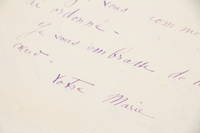
195086579Paris 1950. Fine. Paris s. d. ca 1950 13.50 x 20.50 cm une page recto verso Autograph letter signed by Marie Laurencin addressed to friends whom she calls ""Mes oiseaux"" ""My birds"" in a telegraphic style 22 lines written in violet ink. Folds inherent to postal handling. On holiday in Normandy Marie Laurencin enjoys the invigorating climate and the tranquility of the place: ""Qu'on est bien ici dans la tempête. Hier promenade sous la pluie ruisselante. On revient fière comme un paon on a vraient le temps et quelles bonnes soirées en tête à tête avec les hôtes."" ""How good it is here in the storm. Yesterday walk in the streaming rain. One returns proud as a peacock one truly has time and what good evenings tête-à-tête with the hosts."" and does not even regret the absence of the books she nevertheless cherishes: ""mais rien à lire aussi je tricote."" ""but nothing to read so I knit."" From her haven of peace Marie Laurencin nonetheless inquires about her friends' health: ""Vous soignez-vous comme je vous l'ai ordonné. Je vous embrasse de tout mon coeur."" ""Are you taking care of yourselves as I ordered you to. I embrace you with all my heart."" unknown
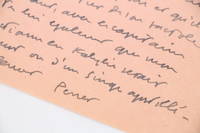
196085174s. l. 1960. Fine. s. l. s. d. ca 1960 21 x 27 cm une page Autograph letter signed by Jacques Perret 22 lines in black ink addressed to a colleague probably Roger Nimier. Fold mark inherent to postal dispatch. Jacques Perret awaits a letter from Roger Nimier that is running late: ""Your note arrived late given that I no longer live on rue de la clé but at 5 rue de l'Ancienne Comédie. Gordon Pym has not yet arrived but that doesn't surprise me coming from him."" and inquires about his correspondent's health: "". I learned that you had heart troubles; before long I will go see if everything has returned to order."" He enthuses about the success his friend Antoine Blondin is enjoying: ""When you see Blondin tell him that my thoughts follow him in his glory and that he should reserve half a setier of his treasure to drink when the day comes. Also tell him that my boy who is operating in Kabylia would be quite pleased with a word or an apostilled sign."" Jacques Perret a royalist writer fierce partisan of French Algeria and virulently anti-Gaullist was stripped of his civil rights and then in 1963 struck from the military medal roll despite protests from some of his fellow writers suspects that his political positions do not favor honorary decorations: ""I find that we were made to sign a manifesto manifestly designed to torpedo my ribbon."" unknown
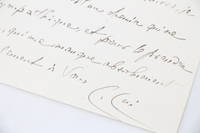
189887018s. l. 1898. Fine. s. l. 28 Mai 1898 13 x 20.50 cm une page Autograph letter dated and signed by César Antonovich Cui 17 lines in black ink. Fold marks inherent to postal handling. The composer urges his correspondent to inform him of the precise date of his coming to Russia so that he can reserve a place for him to have his works performed: ""Puis qu'il le faut j'attendrai jusqu'au mois d'août mais j'ai bien peur que peut-être alors les salles que vous m'indiquerez seront déjà occupées ce qui me désolera. Ne pouvez-vous pas m'indiquer au moins dès à présent le mois de votre arrivée que je tâcherai de vous réserver."" Since it must be so I will wait until the month of August but I am quite afraid that perhaps then the halls you will indicate to me will already be occupied which will distress me. Can't you at least indicate to me now the month of your arrival which I will try to reserve for you. Regarding the dissemination of certain of his compositions and their success in high society he wishes to be lucid and resigned and prefers to renounce it rather than benefit from help: ""Quand à mes opéras si pour les moindres des hautes protections sont absolument nécessaires je crois qu'il faut y renoncer. C'est un chemin qui ne m'a jamais été sympathique et pour le prendre il faut une adresse qui me manque absolument."" As for my operas if for the slightest ones high protections are absolutely necessary I believe one must renounce them. It's a path that has never been congenial to me and to take it requires a skill which I absolutely lack. unknown