108 944 résultats
185563738Paris, Au siège de la Société française de Photographie, 1855-1866, in-8, 12 tomes, , Les douze premières années, rares, du Bulletin de la Société française de photographie, dans une élégante reliure uniforme de la seconde moitié du XIXe siècle. LA SFP est la revue photographie la plus importante de la photographie ancienne. Ensemble complet de tous ses hors-textes : - 2 planches pour la première année, 1855 montrant le pied articulé de voyage et le chassis de Jules Clément ; - 1 planche pour l'année 1857 donnant une reproduction photolithographique (procédé Poitevin) ; - 1 photographie originale pour l'année 1863 : un spécimen des recherches de M. Blanquart-Evrard sur l'intervention de l'art dans la photographie. La première année reproduit les statuts du 15 novembre 1854, la liste des premiers fondateurs, et la Liste des membres titulaires, correspondants et amateurs au 31 décembre 1855. Précieux et bel exemplaire portant l'ex-libris imprimé des Ducs de Luynes, chateau de Dampierre. Rarissime dans une telle condition. Couverture rigide
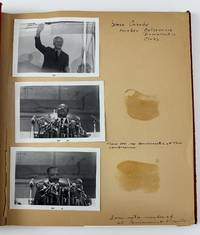
19675899Chicago and New Orleans: September 1967. 21 leaves illustrated with ninety-nine photographs mostly black-and-white but some in color. All ninety-nine images with a printed caption in the margin reading "Sep 67."Square folio. Contemporary red leatherette stamped in gilt on front cover string tied. Minor wear some images loose. Very good. An important photographic record of a notable moment in the interplay between the Civil Rights Movement the Black Power Movement and 1960s white liberalism documenting the 1967 National Conference on New Politics NCNP in Chicago. Simon Hall in his 2003 article in Journal of American Studies entitled "On the Trail of the Panther: Black Power and the 1967 Convention of the National Conference for New Politics" described the event as "one of the most ambitious attempts to forge a broad political alliance of antiwar organizations New Left insurgents and the radical wing of the Civil Rights Movement in 1960s America." The album is captioned on the inside front cover: "The National Conference on New Politics Aug. 31 - Sept. 4 1967 Palmer House Chicago." Seventy-five images document the conference many captioned on the album leaves identifying speakers attendees and settings or providing commentary.<br /> <br /> Chief among the delegates to the conference was Dr. Martin Luther King Jr. who delivered the keynote address on the first night. The title of the speech was "The Three Evils of Society" which King defined as “the sickness of racism excessive materialism and militarism.†The present album includes five candid shots of King from that night. These include four shots of King at the microphones during his keynote address three with captions that read "There are no communists at this conference" "I am not a member of 60 communist fronts" and "We do not believe in violence but rather civil disobedience on a vaster scale than ever before" respectively. The fourth photograph of King shows him sitting with Ralph Abernathy and Michael Wood this image captioned "Center: Michael Wood of the Nat'l Student Assn who blew the whistle on the CIA."<br /> <br /> In addition to the photographs of Dr. King the album includes dozens of candid shots of conference participants that reads like a who's-who of civil rights and Black Power activists of the moment including members of SCLC SNCC CORE and the Black Panthers. These portraits memorialize the conference participation of Julian Bond Dick Gregory Ralph Abernathy one of which catches him sleeping during King's speech and is humorously captioned "The alert audience of ML King" Hunter Pitts "Jack" O'Dell Floyd McKissick James Foreman Lois Allen Vietnam War protester Private Ronald Lockman and a woman from the "Mississippi Freedom Democratic Party" who appears to be Victoria Jackson Gray Adams.<br /> <br /> The album also pictures white members of the New Left or sympathetic supporters of the civil rights movement such as Dr. Benjamin Spock Dr. Donna Allen Women's Strike for Peace Simon Casady influential California Democrat William Pepper Executive Secretary of NCNP Clark Kissinger National Secretary of the Students for a Democratic Society and Robert Scheer publisher of the radical Ramparts magazine. The album also includes some shots of other unnamed notables and additional attendees views from the main conference floor a display of posters featuring "Heroes of the National Liberation Movement" such as Che Guevara Malcolm X and Stokely Carmichael and book displays by vendors such as the Progressive Labor Party Marxist publisher Lou Diskin CADRE Chicago Area Draft Resistors and the Student Mobilization Committee.<br /> <br /> An additional twenty-four color images picture H. Rap Brown Jamil Abdulla al-Amin and various scenes in New Orleans during Brown's trial for weapons charges in September 1967. Brown was a fiery activist who was that time serving as the fifth chairman of SNCC a post he held from May 1967 to June 1968. Incongruously Brown was a controversial head of SNCC for his constant calls for violent political action and even served a dual role as the head of SNCC and as Minister of Justice for the Black Panther Party in 1968. The first page of images featuring Brown in the present album is captioned: "Rap Brown in New Orleans. Arraigned on carrying a weapon in interstate while under criminal indictment in Maryland for inciting to riot & arson" referring to the riot in Cambridge Maryland earlier that summer. Seventeen of these images show Brown and his lawyers talking to reporters outside the courthouse then continuing to do so as Brown walks down the street and gets into a car. Seven of the images show various street scenes around New Orleans. Brown's trial was going on at the same time as the National Conference in Chicago. As such a handful of the latter images show James Foreman of SNCC who according to the manuscript caption "spoke for H. Rap Brown" at the conference. At the time Foreman was the International Affairs Director for SNCC.<br /> <br /> The conference was an odd combination of white liberals Civil Rights legends and Black Power advocates which according to a contemporary source "brought black militants and much of the white left into occasional dialogue and frequent chaos." A retrospective "This Week in History" piece in the Chicago Sun Times in 2021 set the scene of the conference and detailed Dr. King's keynote speech: "A haven for liberal politicians and supporters the National Conference for New Politics took place over Labor Day weekend in 1967. The Chicago Sun-Times extensively covered the conference where politicos activists and anti-war advocates mixed and mingled to excite their base and prepare for the upcoming election season. The highlight of the convention came on Aug. 31 when Dr. Martin Luther King Jr. took to the stage to deliver the keynote address to 4000 people at the Chicago Coliseum. 'The promise of a Great Society has been shipwrecked off the coast of Asia on the dreadful pinnacle of Vietnam' he told conference-goers. The war he said 'has torn up the Geneva agreement seriously impaired the United Nations exacerbated the hatreds between continents and worse still between races: it has frustrated our development at home.If the will of the people continues to be unheeded all men of good will must create a situation in which the 1967-68 elections are made a referendum on the war' he said. 'The American people must have an opportunity to vote into oblivion those who cannot detach themselves from militarism.' King’s speech touched on more than the Vietnam War. He called for a national employment agency noting that capitalism 'was built on the exploitation and suffering of Black slaves and continues to thrive on the exploitation of the poor -- both Black and white -- both here and abroad.' The activist referred to racism as 'that corrosive evil that will bring down the curtain on Western civilization.' King received a standing ovation after his speech. September unknown
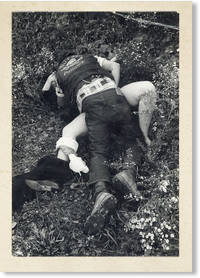
196543698N.p.: S.i. 1965. Original silver gelatin photograph measuring 6" x 8.75" 15.25cm x 22.5cm; mounted to off-white mat board to a total size of 11" x 14" 28cm x 35.5cm. Photographer has titled dated and signed on verso of matting: "McHenry Illinois. Oct.1965. Danny Lyon." Photograph shows some trivial wear to extremities a diagonal crease to upper right corner and faint spidering across center; Very Good. Mild toning to mat board with some scattered foxing and a few faint stains. An outtake from Lyon's 1968 debut The Bikeriders his attempt at recording and glorifying American motorcycle culture. "McHenry Illinois" depicts a member of the Chicago Outlaws motorcycle club of Cicero Illinois mounting his girlfriend in a field of grass and wildflowers. Lyon lived and traveled with the Outlaws between 1963-1967 becoming a member of the club and immersing himself in all aspects of their activities. Provenance: From the collection of Steve Dalber Lyon's roommate at the University of Chicago. S.i. unknown
19151530San Francisco: Waters Company 1915. Very good. 393 silver gelatin photographs each 8 x 10 inches. Each image annotated in pencil on verso corresponding to numbered index sheet. Formerly mounted with remnants of glue on verso. Images generally clean with minor wear and soiling. Several images lightly creased. An extensive photographic archive from the R.J. Waters Company of San Francisco depicting nearly 400 ships from the turn of the century. Vessels range from 19th century clipper ships to the seven-masted behemoths of the early 20th century together with a few schooners whaling barks and the odd steamer or two. Many are British with a good representation of American-built vessels as well as ships from France Germany Australia Sweden and other nations. The ships are sorted here alphabetically and correspond to a numbered print issued by the Waters Company and present here which is titled "Collection over 500 Photographs of Sailing Ships." A further note asks that you "Kindly Order by Number" as each ship is noted with a number next to its name. The images themselves are notated accordingly with name and index number with ships occasionally having more than one view. Ships currently under sail are denoted with an "X". Many of the ships are sailing vessels from the 1880s and 1890s and provide historic detail about the wide variety of ships coming in and out of San Francisco's busy harbor. The views have been taken from various vantages resulting in views of the San Francisco harbor and shoreline as well as at least one shot of Alcatraz in the distance. Many of the vessels have secondary "biographical" information with them adding to the research value of the archive.<br /><br />R.J. Waters 1856-1927 was a California native who first opened a photo studio in Virginia City Nevada in 1886. He opened a commercial photography studio on Sutter Street in San Francisco in 1892 and ten years later added a business partner and changed the name to R.J. Waters and Company. The firm claimed to "photograph anything and anywhere" and as a result had a wide array of images on offer including handsome panoramic views of San Francisco both before and after the Great Earthquake. Maritime photography seemed to have been a matter of opportunity and Waters seems to have spent time both aboard ships and down at the docks making an effort to photograph every substantial vessel which entered San Francisco Bay. There was certainly a market for images of sailing vessels as evidenced by the present archive and its index card and the present archive may have been a shop file used for ordering prints. Altogether an interesting study of maritime history emphasizing San Francisco's importance as a port of call for international trade. Waters Company books
2001007599Tucson: Nazraeli Press 2001. First Edition. Hardcover. Fine/Fine. Special limited edition of this young and important photographer's first book. One of 25 copies plus five artist proofs with original chromogenic print #2745 signed on the rear of the photo. Comes with a fine copy of the first edition of the book which also has been signed. Both book and photo housed in gray clamshell box. All elements in fine condition. <br/><br/> Nazraeli Press hardcover books
1919875901919. PHOTOGRAPHY- JAPAN. HOSHITA Eishô photographer. SCENES ON THE TRANS-SIBERIAN RAILWAYS ZEN SHIBERI TESTUDÔ SHASHIN-CHÔ. Urajio Vladivostok Taishô 8 1919 Contemporary oblong folio rebacked. Album of 250 photo illustrations of the Japanese Imperial Army in the Allied Siberian Expedition 1918-1922 ranging in size from 3 5/8" x 5 1/8" to 8 3/4 x 11 1/2". Includes a panoramic bird's eye view of Vladovostok measuring 7 3/8' x 41 7/8/" and a fold out map of the route of the expedition measuring 14" x 29 3/4". Three-quarter leather stamped in gilt rebacked. The cloth and leather corner pieces are worn and rubbed. Captions in Japanese English and Russian with text in Japanese. title is taken from cover. Includes a number of pictures of partisan sabotage of railway between Chita and Krasnoyarsk. Hoshita Eishô produced at least two such albums of the warfare in the Russian Far East. Very unusual and important record of a "lost war unknown books
1920List419Montana 1920. Sixty-three postcards measuring 4 x 6 inches mixed media images some with graphite and watercolor over photographic exposures. Typewritten captions to versos. Christian F. Schuster was a lumber man boy scout and amateur archaeologist from Holyoke Massachusetts who spent a series of seventeen summers living with the Piegan Blackfeet beginning in 1923. He was given the name Aainiakoi Plitaa or Morning Eagle by the Piegan chief Curly Bear in an adoption ceremony. The collection here documents his adoption by the Piegan tribe. Composed of sixty-three photographs is one of the most striking visual records we have encountered of American Indian life from this period due to the sympathetic eye of the photographer and visually arresting hybrid technique of watercolor pencil and photographic exposure at work in the images. <br /> <br /> We cannot confirm the identity of the artist further but it is possible that it was Lone Wolf or Hart Merriam Schultz the son of James Willard Schultz who was a prolific artist and illustrator during this period. Lone Wolf would later operate a guest house called the Lone Wolf Guest Ranch and Club and we have found another account of a white adoptee purchasing some artwork from Lone Wolf in the early 1930s. The hybrid technique at work here was also used by De Lancey Gill the prominent BAE photographer taught to him by William Henry Holmes. Schuster himself took at least some of the photographs as noted in the captions. <br /> <br /> The images show life among the Blackfeet several decades after the last buffalo hunts had failed in 1882 in a period when this and government policy had made reservation life difficult. Akipuni or James Willard Schultz is featured in several of the images along with Curly Bear Stabs-by-Mistake Red-Boy who Schuster would later advocate for following a wrongful conviction and many others. The images show candid scenes of Piegan life during the period in many aspects: religious<br /> ceremonies hunting singing etc. The transition to reservation life is apparent in both the scenes and the captioning with the Piegan leading a semi-nomadic life limited by the absence of the buffalo and indifferent government policy. Schuster's role as an advocate is on display with one caption reading "My tepee at the flatheads/ they had the poles all set up / the big council was a success / we hired a lawyer / killed the stealing of timber." Another narrates a trip to visit another tribe possibly Crow: "We were on making plans / of our visit to the old time / enemies who lived beyond / the backbones Rocky Mts. We would talk at the great council / about the wrongs to the Indian. We rolled many of our belongings in <br /> bundles and threw them out. We joined the paraders in this song. WE WERE STRIPPED!"<br /> <br /> Schuster's visits to the Blackfeet were reciprocated with a number of Blackfeet visiting Schuster in his Western Massachusetts home and setting up a camp on the banks of the Connecticut River. He would eventually amass a collection of several thousand artifacts which he eventually sold to the Museum of the American Indian. The circumstances of Schuster's adoption are murky. It is possible that it was done as part of a contest as we found record of the Blackfoot author and adoptee James Willard Schultz or Apikuni sponsoring adoption contests through the magazine American Boy. We find records of some other adoption ceremonies during the period. Schuster would later do advocacy work on behalf of the Blackfeet assisting in the eventual pardon of a wrongly-convicted young man named Red-Boy or Peter Stabs-by-Mistake in the 1920s. Later Schuster was also <br /> adopted by the Apinakwi Pits tribe. <br /> <br /> Overall a moving and visually striking account of Piegan life in the 1920s uncommon in its insight and exceptional in its visual appeal. Postcards are well preserved in very good to excellent condition with some light normal wear and some tanning to versos. <br /> <br /> Offered in collaboration with Daniel / Oliver Gallery. unknown books
182426711Paris: C. L. F. Panckoucke 1824. 1st. Hardcover. Good. 9.3x6.8x1.5in. first octavo edition in original 3/4 brown morocco leather and marbled boards spine with red title and volume labels and gilt decoration; leather rubbed at extremities with sections of leather missing at corners armorial bookplate on pastedown owner's signature and date on title page light toning to 25 plates spot of foxing to 9 plates heavier foxing to 8 plates 38 plates unaffected. <br>80 colored stipple-engraved plates with descriptions. Text in French. <br>2.17lb 9.3x6.8x1.5in C. L. F. Panckoucke hardcover
184429058Paris: J.-J. Dubochet et Ce. 1844. Very scarce first edition. 8vo in the publisher's original yellow paper wrappers printed in black. Now housed in an unusual and very attractive black protective box with Plexi protector the lid held in place by stiff panel decorated with an sepia photograph visible through a port. iv 248 pp. A rare first edition copy in fully original state and in the printer's delicate wrappers the text largely unopened and quite fine but for some very minor spotting or mellowing the wrappers with some soiling and wear but completely original and unsophisticated the spine largely worn. FIRST EDITION. VERY RARE IN THE ORIGINAL WRAPPERS THIS COPY IN FULLY ORIGINAL STATE AND LARGELY UNOPENED. ARGUABLY THE FIRST DEFINITIVE MANUAL OF PHOTOGRAPHY. Marc-Antoine Gaudin's full and complete treatise on the Daguerréotype process was at the time the definitive manual on photography and covered virtually every aspect of making both Daguerréotype and the Calotype developed by Talbot. Includes the preparation of plates and their exposure processing printing on paper procedures for reproducing plates techniques for portraiture etc. etc. Marc-Antoine with his brother Alexis were important early pioneers in the business of photography and were responsible for numerous refinements. He held patents in both optics and chemistry and had one of the first photography shops in Paris. Marc-Antoine engaged in research while Alexis was in charge of commercial affairs. In 1851 he purchased the photo-newspaper La Lumiere which he ran until 1867. The Gaudin brothers also set up a stereoscopy company in the United States. J.-J. Dubochet et Ce. unknown
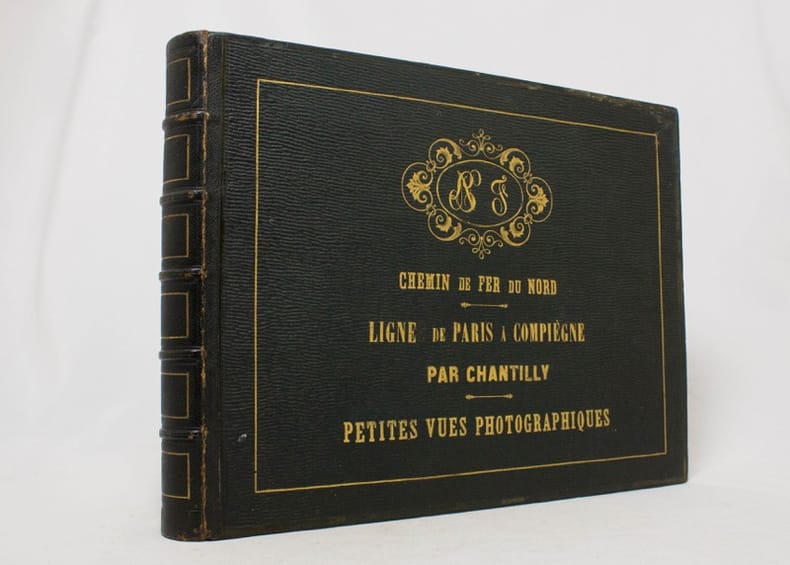
186018778circa 1860. Un volume oblong (24 x 32 cm.), demi-chagrin vert, dos à nerfs orné de caissons doré et muet, titre doré sur le premier plat, tranches dorées.
Set numero 4 della serie in edizione limitata ''Six by Six'' che comprende: Robert and Kerstin Adams, Sally; Edward Burtynsky, Monegros (Dryland Farming); Kenro Izu, Blue; Catherine Opie, The Middle of Somewhere; Doug Rickard, A New American Picture; Issei Suda, Sparrow Island. Ogni libro contiene una fotografia originale sciolta, firmata e numerata dall'Artista (cm 34x27). 6 volumi Esemplare 74/100. 4to (cm 37x29). pp. 32/per volume. . Perfetto (Mint). . Prima edizione di 100 esemplari numerati (First edition of 100 numbered copies). .
189272079S. n. | Paris [à la prison de la Conciergerie] s. d. [6 mai 1892] | 11.70 x 16.90 cm | une photographie
Importante raccolta di 400 fotografie ca. riguardanti la Valle D'Aosta realizzate tra il 1930 e il 1950 da anonimo ma abilissimo fotografo. Tutte sono montate in modo omogeneo e ordinato su cartoncini d'epoca con relativa didascalia, nella maggior parte dei casi dattiloscritta, riportante con precisione localita' e data. Misurano da cm 12 x 17 a 24 x 18 (cui si aggiunge la dimensione del supporto in cartone) e sono contenute in cartelle. Interessante il fatto che il nostro anonimo fotografo abbia ripreso scorci e localita' assolutamente poco usuali e decisamente poco frequentate dal turismo montano dell'epoca che possono rendere evidenti cambiamenti geomorfologici di notevole importanza, oltre ovviamente a descrivere la trasformazioni di luoghi gia' antropizzati. A seguire forniamo una sommaria elencazione delle localita', rispettando la divisione con cui sono ordinate nella raccolta. Valle di Champorcher (15 fotografie): Costone Miserin - Lago Miserin - Catena divisoria con la Val Soana - Dondena - Champocher - Frazione Chatreau. Fondo valle (32 fotografie): Colle Hec Horn - Col de Joux - Pre S. Didier - Chatillon - Bard - Frazione di Aosta - Vallone di Laures - Sommarese - Valdigna - S. Nicolas -Avise - Castello di Monjovet - Arnaz - Chatillon. Castelli (12 fotografie): Fenis - Ussel - Cly - Verres - Villeneuve - Sptumian - Hone. Valpelline (68 fotografie): Oyace - Valpelline - Bionez - Lago lecher - Ghiacciaio Tsa de Tson - Frana di Chamin - Valle D'Ollomont - Rifugio Farinet - Bg. Vaud. Valle D'Ayas (8 fotografie): Ghiacciaio Verra e Bethorn - Lago Blu - Castore - Verso il Mezzalama. Valle di Challant (4 fotografie). Valle Del Lys (135 fotografie): Colle del Lupo - Ghiacciaio Lys - Cappella S. Anna - Vallone Pacoulla - Lago Vergna - Vallone Torrison - Vallone del Loo - Colle Macagno - Vallone Niel - Col D'Oleu -- Fontana Q. Sella - Gressoney Fraz. Staffal - La Trinite - Fontainemore - Vallone Netscio - Lago Torretta - Colle Gragliasco - Lago Balme - Niel. Val Grisanche (20 fotografie): Beauregard - Ghiacciaio del Ruitor - Fraz. Fornet - Fraz. La Bethaz - Valgrisanche - Fr. Laveg - Lago Harion. Valtournanche (26 fotografie): Conca del Breuil - Lago Blu - Fr. Crepin - Albergo Cervino - Finestra D'Erso - Torgnon - Mean e Vatournanche - Vallone di Petite Monde - N. S. Della Guarigione - Cappella S. Pantaleon - Antey. Val Savaranche (19 fotografie): Fr. Tignet - Gran Paradiso - Ghiacciaio Etret - Cianforon - Fraz. Creton - Fraz. Bien - La Grivola - Lago Djouan - Casa D'Orvieille - Point - Rifugio Citta' di Chivasso. Vallone di Champ De Praz (11 fotografie): Lago Valletta - Lago Nero - Cascata Pisoneti - Fraz. Gettaz. Val Clavalite' (12 fotografie): Val di Savoney - Il Piano - C. Fussi - Val Tervisina. Valle di Cogne (8 fotografie): Fr. Epina - Rifugio Sella - Valnontey - Fraz. Gimillian. Valle di Rheme (19 fotografie): Rifugio Benevolo - Fraz. Breuil - Introd - Grande Rousse - Vallone Entrelor - Val di Fos - Ghiacciaio Centelina - Fraz. Melignon. Valle Piccolo S. Bernardo e Gran S. Bernardo (10 fotografie): S. Rhemy - S. Oyen - L. S. Bernardo - Val di Thora - Fraz. Balma. Valle delle Laures (2 fotografie).
Set numero 6 della serie in edizione limitata ''Six by Six'' che comprende: Roger Ballen: Appearances, Disappearances, Reappearances; Mike Brodie: August 29th–September 8th 2012, Oakland, Ca–Oakland Ca, United States; Jim Goldberg: Ruby Every Fall; Katy Grannan/Hannah Hughes: The Glint of Light on Broken Glass; Idris Khan: Church Walk; Marilyn Minter, Florida 1969. Ogni libro contiene una fotografia originale sciolta, firmata e numerata dall'Artista (cm 34x27). 6 volumi Esemplare 74/100. 4to (cm 37x29). pp. 32/per volume. . Perfetto (Mint). . Prima edizione di 100 copie numerate (First edition of 100 numbered copies). .
Set numero 5 della serie in edizione limitata ''Six by Six'' che comprende: Jo Ann Callis, Performance; Thomas Demand, The Stove; Kikuji Kawada, Japan 1951-1960; Michael Kenna, Confessionali; Richard Misrach, Misrach; Andrea Modica, L'amico del cuore. Ogni libro contiene una fotografia originale sciolta, firmata e numerata dall'Artista (cm 34x27). 6 volumi Esemplare 74/100. 4to (cm 37x29). pp. 32/per volume. . Perfetto (Mint). . Prima edizione di 100 esemplari numerati (First edition of 100 numbered copies). .
25582[Nîmes], (Imprimerie Larguier), 1930, grand in-4 (27,5 x 21,7), broché, couverture rouge avec titre en noir, 56 p. Sous chemise de papier rouge et étui.Édition originale. 12 photographies hors-texte dont la dernière avec un collage original de Paul ELUARD et André BRETON. Ce collage est différent pour chaque exemplaire : il recouvre le visage de Louise Roze, marraine du poète (et lointaine descendante du notaire du Marquis de Sade). Un des 90 ex. num. sur couché blanc des papeteries Prioux (tirage total à 103 ex.) celui-ci enrichi d'un envoi autographe signé de Char à Paul NOUGÉ.
Set numero 3 della serie in edizione limitata ''Six by Six'' che comprende: William Christenberry, House Near Akron; Eduardo del Valle e Mirta Gómez, On View; John Divola, LAX NAZ: Los Angeles International Airport Noise Abatement Zone (Exterior Views), 1975; Daido Moriyama, Fishnet; Karin Apollonia Müller, Timber Cove; Carrie Mae Weems, Slow Fade to Black. Ogni libro contiene una fotografia originale sciolta, firmata e numerata dall'Artista (cm 34x27). 6 volumi Esemplare 74/100. 4to (cm 37x29). pp. 32/per volume. . Perfetto (Mint). . Prima edizione di 100 esemplari numerati (First edition of 100 numbered copies). .
Set numero 2 della serie in edizione limitata ''Six by Six'' che comprende: Joe Deal, Karst / Pseudokarst; Tanya Marcuse, Wax Bodies; Joseph Mills, Psycho Path; Stephen Shore, Ashkelon; Alec Soth, Mostly Women; Risaku Suzuki, Atelier of Cezanne. Ogni libro contiene una fotografia originale sciolta, firmata e numerata dall'Artista (cm 34x27). 6 volumi Esemplare 74/100. 4to (cm 37x29). pp. 32/per volume. . Perfetto (Mint). . Prima edizione di 100 esemplari numerati (First edition of 100 numbered copies). .
105476New York, 30 juin 1994, portfolio toilé rouge 545x435x30mm, 12 pages 505x402mm, en feuilles.Titre, colophon, texte d'introduction en espagnol "La palabra y la Mascara" par Luisa Valenzuela et 9 images photographiques imprimées pleine page.
Insieme composto da 12 fotografie originali, silver print, cm 27 x 39,5 ca. Stampa vintage. 1969. Al verso annotazioni manoscritte (Pier Paolo Pasolini, Medea, luglio 1969), ritagli di stampa. Su alcune foto compare il timbro del fotografo: Photographed by Mimmo Cattarinich. Pasolini giro' "Medea" ambientando le scene tra Turchia, Siria e Grado e chiamando Maria Callas a interpretare la protagonista. Questi dodici scatti di Mimmo Cattarinich raccontano alcuni momenti della lavorazione del film fermando quel rapporto di complicita' e di affetto che si creo' tra Pasolini e la cantante. Proprio il regista, parlando in seguito di questa produzione, ebbe modo di dire: "Ho pensato subito a Medea sapendo che il personaggio sarebbe stato lei. Delle volte scrivo la sceneggiatura senza sapere chi sara' l'attore. In questo caso sapevo che sarebbe stata lei, e quindi ho sempre calibrato la mia sceneggiatura in funzione della Callas. [...] Cioe', questa barbarie che e' sprofondata dentro di lei, che viene fuori nei suoi occhi, nei suoi lineamenti, ma non si manifesta direttamente, anzi, la superficie e' quasi levigata, insomma i dieci anni passati a Corinto sarebbero un po' la vita della Callas. Lei viene fuori da un mondo contadino, greco agrario, e poi si e' educata per una civilta' borghese. Quindi in un certo senso ho cercato di concentrare nel suo personaggio quello che e' lei, nella sua totalita' complessa". Mimmo Cattarinich, importante fotografo di scena, incrocio' Pasolini sul set di due film: 'Medea' e 'I racconti di Canterbury' superando ampiamente i limiti del mero lavoro di documentazione delle fasi del film. Come e' stato scritto in occasione della mostra 'La magia della luce. Mimmo Cattarinich fotografo di Pasolini', tenutasi nel 2011 presso il Centro Studi P.P. Pasolini di Casarsa, "le foto di Cattarinich restituiscono frammenti straordinari che vanno ben oltre i limiti ristretti del dossier fotografico, connaturato al mestiere e funzionale alla promozione post-produttiva del film, e invece sanno catturare e fissare momenti di verita' umana, corpi e volti di espressiva plasticita', squarci di paesaggi decantati da sensibilita' pittorica, atmosfere di set in pausa chiassosa e festosa...".
49650Tokyo: Shashin Tsushinasha 1979. First edition. Softcover. near fine. Oblong quarto. Photo-illustrated glossy wrappers with red lettering on the cover black lettering on the spine. With original publisher's tan obi. Signed by Ann Tucker the Houston Museum of Fine Art Curator in pen on the interior front wrapper. This is a beautiful copy of Miyako Ishiuchi's acclaimed first collection of published work. She was recipient of the prestigious Kimura Ihei award in photography in 1979. Wrapper with the most minor of rubbing to extremities. Wrappers and interior in near fine condition overall. Shashin Tsushinasha unknown
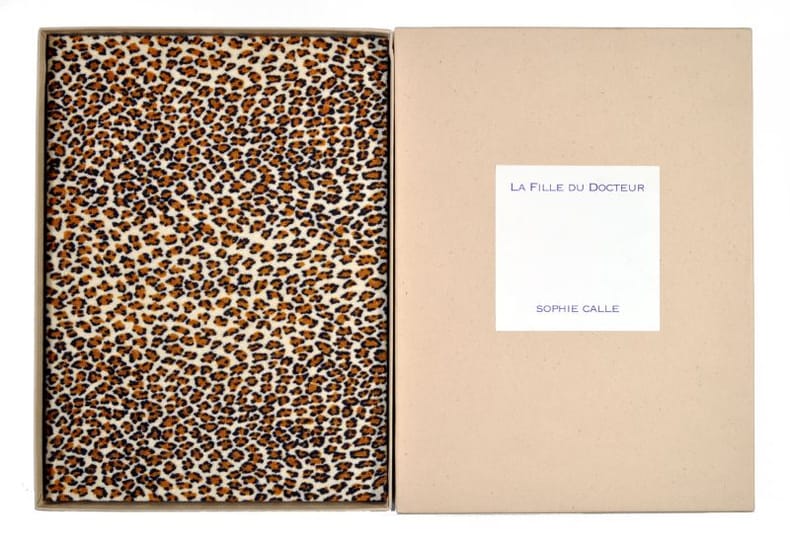
19911054691991 New York, Thea Westreich, 1991, 279x202mm, 68pp., relié en pleine toile imprimée léopard, boîte en carton avec étiquette collée.L'illustration comporte 18 photographies en noir et blanc dont 16 sont imprimées sur papier transparent et accompagnés de cartes de visites contenues dans des enveloppes également transparentes situées en regards des images.Conception graphique de Tony Morgan
21717Paris, Léon Vanier, 1885 ; in-8 (16 x 25 cm), broché. Chemise étui façon galuchat (Atelier Devauchelle), 198 pages. Édition originale limitée à 95 exemplaires paraphés et numérotés par Léon Vanier. Il est illustré de 21 photographies originales contrecollées dans chaque exemplaire - celles-ci furent prises et tirées par Émile Cohl dans son laboratoire du boulevard de Strasbourg, où, quelques années plus tard, il devait inventer le dessin animé. Avant d'être réunis en volume, les " Têtes de Pipes " parurent de février à juillet 1885 dans l'hebdomadaire Lutèce, fondé et dirigé par Léo Trézenik et Georges Rall -L.-G. Mostrailles. La majorité des portraiturés collaboraient eux même à Lutèce. Habituellement réduit à son seul statut de livre illustré par la photographie, *Têtes de Pipes* est aussi le chef-d'œuvre fumiste de la réclame et de la critique littéraire des années 1880. Deux photographies préfigurent les mouvements d'avant-garde à venir et notamment Dada : en guise de portrait de Laurent Tailhade on trouve une main tenant une rose entre ses doigts tandis que pour celui de Léon Cladel c'est une oreille bouchée avec du coton. Bel exemplaire, broché, de ce livre autant rare que fragile.
Splendido Volume in folio massimo (cm. 56) in mezza pelle coeva a sei nervi con titolo e data in oro al piatto anteriore. Roma - Ponte Cestio prima della Riforma 15 Agosto 1886. Raccoglie sei straordinarie foto originali all’albumina su doppia pagina (cm. 40x55 su cartoncino con didascalia di cm. 54x74) + 2 su una sola pagina, che mostrano il ponte prima della demolizione di 2 arcate. Rarissima ed unica documentazione su Ponte Cestio precedente alla parziale demolizione. Antonio D’Alessandri (L’Aquila 1818 - Roma 1893) insieme al fratello Paolo Francesco (L’Aquila 1824 - Roma 1889) fu titolare di uno studio fotografico a Roma. Lo studio, intestato “Fratelli D’Alessandri”, ebbe sede prima in Via del Babuino, poi in via del Corso e, infine, in Via Condotti. Fu tra i più affermati nell’Italia dell’Ottocento e per molti aspetti segnò in modo significativo la storia della fotografia italiana. Annota Silvio Negro, in uno dei suoi scritti sulla storia della fotografia a Roma, che il laboratorio dei fratelli D’Alessandri fu certamente il primo studio professionistico aperto nella Capitale; in tale circostanza don Antonio, come sacerdote cattolico, fu costretto a chiedere una specifica dispensa per esercitare liberamente il mestiere di fotografo, dispensa che l’autorità ecclesiastica gli concesse a patto di non ostentare sul lavoro l’abito ecclesiastico. L’appartenenza di don Antonio al clero, insieme all’indiscusso talento tecnico e artistico, favorirono il successo dell’impresa. I due fratelli ottennero infatti per primi i permessi per entrare in Vaticano e ritrarre il Pontefice Pio IX con la sua corte. Fu la grande Mostra della fotografia romana, tenuta nel 1952, a cura di Silvio Negro, a mettere in luce il ruolo centrale svolto dai D’Alessandri per la conservazione della memoria storica romana e a far conoscere a un grande pubblico il loro lavoro. Axs
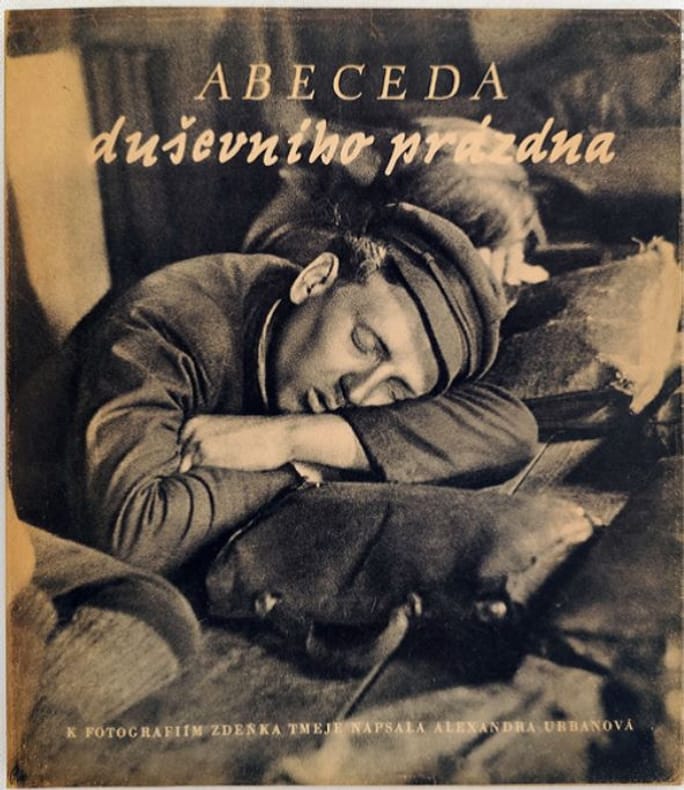
104968Praha, Nakladatelství Zádruha a.s. [Ceská Grafická Unie, 1945], 1946, 239 x 214 mm, [162] pp. Broché, dos carré, couverture illustrée photographique.